



Journal Menu
► ▼ Journal Menu-
- Fermentation Home
- Aims & Scope
- Editorial Board
- Topical Advisory Panel
- Early Career Editorial Board
- Instructions for Authors
- Special Issues
- Topics
- Sections & Collections
- Article Processing Charge
- Indexing & Archiving
- Editor’s Choice Articles
- Most Cited & Viewed
- Journal Statistics
- Journal History
- Journal Awards
- Editorial Office
Journal Browser
► ▼ Journal BrowserNeed Help?
Announcements
19 July 2024
Prof. Dr. Thaddeus Ezeji Appointed Section Editor-in-Chief of Section “Fermentation Process Design” in Fermentation

We are pleased to announce that Prof. Dr. Thaddeus Ezeji has been appointed Section Editor-in-Chief of the “Fermentation Process Design” Section in Fermentation (ISSN: 2311-5637). With his extensive background in scientific research and publishing, he will bring a wealth of knowledge and expertise to this prestigious role.
The following is a short Q&A with Prof. Dr. Thaddeus Ezeji, who shared his vision for the journal with us, as well as his views on the research area and open access publishing:
1. Could you share some information about the main lines of research of your group with us?
My research program focuses on the following areas:
- Development of processes for extracting sugars from lignocellulosic biomass;
- Process and metabolic engineering of fermenting microorganisms to optimize the production of fuels and chemicals;
- Understanding the generation of lignocellulose-derived microbial inhibitory compounds (LDMICs) during the hydrolysis of lignocellulosic biomass, and their effects on fermenting microorganisms;
- Understanding and developing strategies to ameliorate the undesirable effects of lignocellulose LDMICs on fermenting microorganisms;
- Design of fermentation systems compatible with agricultural and industrial wastes;
- To promote sustainable bioproduct production, my laboratory is also actively engaged in recycling food and agricultural wastes by converting them into valuable products as well as the development of effective strategies for the biological treatment of agricultural and industrial wastes (bioremediation).
In collaboration with various Ohio State faculty members, I am actively engaged in outreach programs addressing emerging issues in Ohio's expanding bioenergy sector.
2. What appealed to you about the journal that made you want to become its Section Editor-in-Chief?
I joined the Editorial Board of the Fermentation journal shortly after its inauguration. As a fermentation biologist, I have always felt that there is a gap in the academic world—a dedicated journal with a primary focus on fermentation. While various journals published fermentation-related research, none were specifically devoted to this important field. Considering the significant impact of fermentation on food processing, production, preservation, and the production of drugs and platform chemicals, I believed a dedicated journal was necessary. Consequently, I approached a major American journal publisher with the idea of establishing a dedicated fermentation journal. Despite my enthusiasm, the proposal did not gain much traction. Then, about 9 or 10 years ago, MDPI reached out to me with an offer to serve as one of the Associate Editors for their new Fermentation journal. I accepted the position immediately and have been collaborating with the journal ever since. My commitment to the growth and success of the Fermentation journal is deeply personal. Therefore, when the Section Editor-in-Chief position became available, it was an easy decision to express my interest.
3. What are your plans and vision for the Section and the journal?
As a global publication, my plans and vision for the Fermentation journal include, but are not limited to, the following objectives:
- Uphold and maintain the highest scientific standards, as this is essential for cultivating trust among esteemed scientists;
- Foster inclusivity and a strong commitment to diversity by reaching out to scientists in countries that are currently less familiar with the Fermentation journal;
- Collaborate with authors to ensure the publication of high-quality science, recognizing that scientific publications can significantly influence important private and governmental decisions;
- Position the journal as a leading voice and contributor in the fields of biomanufacturing and sustainability.
4. As an expert in the field of fermentation, which research topics do you think are popular at present, and what does the future of this field of research look like?
I would say they are biomanufacturing and environmental sustainability. According to the Cambridge Dictionary, biomanufacturing involves using living organisms and cells to produce molecules or other biological materials for products such as medicines, food, and drinks. Southern New Hampshire University emphasizes that environmental sustainability aims to balance ecological, economic, and social goals, such as reducing carbon emissions, promoting renewable energy, and ensuring equitable resource access. Clearly, biomanufacturing and environmental sustainability complement each other, and fermentation plays a crucial role in achieving these goals.
5. You have been collaborating with Fermentation as a Guest Editor, leading multiple Special Issues. Can you share with us more about your experience as Guest Editor over the past few years?
My experience with the editorial staff of the Fermentation journal has been wonderful. They are punctual and proactive in planning and executing their work. While there are occasional setbacks, such as authors promising to contribute a manuscript but not following through, this is to be expected in the nature of the business.
6. What do you think of the development of open access in the publishing field?
The introduction of open access in the publishing field is beneficial because it facilitates the free availability of scientific articles to anybody with internet access. This accessibility allows researchers from developing countries or institutions with limited resources to access scientific papers without financial barriers. Additionally, open access publishing fosters greater collaboration among researchers worldwide. This can potentially accelerate scientific discovery and innovation. However, open access also has drawbacks. High publication costs can create barriers for researchers with meager funding or those whose funding does not cover publication expenses. Furthermore, the rise of open access has led to the proliferation of predatory journals, which charge fees without subjecting scientific manuscripts to a rigorous peer review process. I have heard stories of publishers overriding editors' rejections of manuscripts and proceeding with their publication. However, I am pleased to say that the peer review process in the Fermentation journal is rigorous, and editors' recommendations are unequivocally respected.
We wish Prof. Dr. Thaddeus Ezeji every success in his new position, and we look forward to his contributions to the journal.
10 July 2024
MDPI's Newly Launched Journals in June 2024
 Five new journals covering multiple subjects have launched their inaugural issue in June 2024. We are excited to be able to share with you the newest research rooted in the value of open access.
We would like to express our deepest appreciation to all the Editorial Board Members and each journal will ensure its high-quality output using excellent editorial and rigorous peer review processes, to ensure that the articles achieve high impact and visibility.
Please feel free to browse and discover more about the new journals below.
|
Journal |
Founding Editor-in-Chief |
Journal Topics (Selected) |
 |
Prof. Dr. Marco Ranucci, IRCCS Policlinico San Donato, Italy |
anaesthetic medications; blood and fluid management; pain management; critical care; critical illness | view journal scope | submit an article |
 |
Dr. Giovanni E. Cacciamani, University of Southern California, USA |
surgical/procedural complications; complications; perioperative adverse events; postoperative adverse events | view journal scope | submit an article |
 |
Prof. Dr. Gassan Hodaifa, Universidad Pablo de Olavide, Spain |
laboratory management; laboratory safety; protective equipment; laboratory problems and challenges; laboratory Innovation | view journal scope | submit an article |
 |
Prof. Dr. Jan S. Suchodolski, Texas A&M University, USA |
companion animals health and disease; veterinary care and nutrition; genetics and genomics; behavior and welfare; human-animal relations | view journal scope | submit an article |
 |
Prof. Dr. Pierfrancesco De Paola, University of Naples Federico II, Italy |
real estate appraisal; economic and financial valuation of real estate projects; sustainable real estate; housing and urban economics | view journal scope | submit an article |
We wish to thank everyone who has supported the development of open access publishing. You are welcome to send an application here, or contact the New Journal Committee (newjournal-committee@mdpi.com) if you would like to create more new journals.
20 June 2024
2023 Impact Factors for MDPI Journals Released

MDPI is pleased to announce the inclusion of 237 journals in the 2024 release of the Journal Citation Reports (JCR) and share the key results (see above).
This year, journals covered in the Emerging Sources Citation Index (ESCI) received category ranks together with journals in the Science Citation Index Expanded (SCIE) and Social Sciences Citation Index (SSCI). Overall, 139 MDPI journals indexed in ESCI are included in the new unified rankings for the first time.
Enhanced Comparability of Data
According to Clarivate, "the creation of unified category rankings [provides] a simpler and more complete category view for the evaluation of journal performance. [...] The category-first approach simplifies journal performance assessment with a holistic view of all journals in each subject category."
We are thrilled to announce that 72% of our ranked MDPI journals (171 of 237) are above average, in Q1 or Q2. Twenty-nine of our journals received their first Impact Factor this year, accounting for more than 5% of the journals accepted into the Web of Science last year.
MDPI Journals Ranked in JCR
The following data includes all MDPI journals indexed in SCIE, SSCI, ESCI and AHCI.
|
Journal |
Impact Factor |
Rank Quartile |
Category |
|
Q3 |
Acoustics |
||
|
Q2 |
Engineering, Mechanical |
||
|
Q2 |
Instruments & Instrumentation |
||
|
Q2 |
Management |
||
|
Q3 |
Respiratory System |
||
|
Q2 |
Engineering, Aerospace |
||
|
Q1 |
Agronomy |
||
|
Q2 |
Agricultural Engineering |
||
|
Q1 |
Agronomy |
||
|
Q1 |
Plant Sciences |
||
|
Q2 |
Computer Science, Artificial Intelligence |
||
|
Q2 |
Computer Science, Interdisciplinary Applications |
||
|
Q3 |
Computer Science, Artificial Intelligence |
||
|
Q2 |
Computer Science, Theory & Methods |
||
|
Q1 |
Agriculture, Dairy & Animal Science |
||
|
Q1 |
Veterinary Sciences |
||
|
Q1 |
Infectious Diseases |
||
|
Q1 |
Pharmacology & Pharmacy |
||
|
Q3 |
Immunology |
||
|
Q1 |
Biochemistry & Molecular Biology |
||
|
Q1 |
Chemistry, Medicinal |
||
|
Q1 |
Food Science & Technology |
||
|
Q2 |
Chemistry, Multidisciplinary |
||
|
Q1 |
Engineering, Multidisciplinary |
||
|
Q3 |
Materials Science, Multidisciplinary |
||
|
Q2 |
Physics, Applied |
||
|
Q2 |
Computer Science, Information Systems |
||
|
Q2 |
Engineering, Electrical & Electronic |
||
|
Q2 |
Telecommunications |
||
|
N/A |
Humanities, Multidisciplinary |
||
|
Q3 |
Environmental Sciences |
||
|
Q3 |
Meteorology & Atmospheric Sciences |
||
|
Q3 |
Physics, Atomic, Molecular & Chemical |
||
|
Q1 |
Audiology & Speech-language Pathology |
||
|
Q1 |
Mathematics, Applied |
||
|
Q2 |
Electrochemistry |
||
|
Q2 |
Energy & Fuels |
||
|
Q2 |
Materials Science, Multidisciplinary |
||
|
Q2 |
Psychology, Multidisciplinary |
||
|
Q2 |
Food Science & Technology |
||
|
Q2 |
Computer Science, Artificial Intelligence |
||
|
Q2 |
Computer Science, Information Systems |
||
|
Q1 |
Computer Science, Theory & Methods |
||
|
Q2 |
Engineering, Biomedical |
||
|
Q1 |
Biology |
||
|
Q2 |
Biochemistry & Molecular Biology |
||
|
Q2 |
Medicine, Research & Experimental |
||
|
Q1 |
Pharmacology & Pharmacy |
||
|
Q1 |
Engineering, Multidisciplinary |
||
|
Q3 |
Materials Science, Biomaterials |
||
|
Q1 |
Biochemistry & Molecular Biology |
||
|
Q1 |
Chemistry, Analytical |
||
|
Q1 |
Instruments & Instrumentation |
||
|
Q2 |
Nanoscience & Nanotechnology |
||
|
Q3 |
Biotechnology & Applied Microbiology |
||
|
Q1 |
Ornithology |
||
|
Q3 |
Neurosciences |
||
|
Q2 |
Construction & Building Technology |
||
|
Q2 |
Engineering, Civil |
||
|
Q2 |
Materials Science, Multidisciplinary |
||
|
Q1 |
Oncology |
||
|
Q4 |
Cardiac & Cardiovascular Systems |
||
|
Q2 |
Chemistry, Physical |
||
|
Q2 |
Cell Biology |
||
|
Q1 |
Materials Science, Ceramics |
||
|
Q3 |
Materials Science, Multidisciplinary |
||
|
Q2 |
Engineering, Chemical |
||
|
Q3 |
Chemistry, Multidisciplinary |
||
|
Q2 |
Chemistry, Analytical |
||
|
Q2 |
Electrochemistry |
||
|
Q1 |
Instruments & Instrumentation |
||
|
Q2 |
Pediatrics |
||
|
Q2 |
Engineering, Environmental |
||
|
Q2 |
Environmental Sciences |
||
|
Q3 |
Green & Sustainable Science & Technology |
||
|
Q2 |
Meteorology & Atmospheric Sciences |
||
|
Q2 |
Medicine, General & Internal |
||
|
Q3 |
Clinical Neurology |
||
|
Q3 |
Neurosciences |
||
|
Q2 |
Materials Science, Coatings & Films |
||
|
Q3 |
Materials Science, Multidisciplinary |
||
|
Q2 |
Physics, Applied |
||
|
Q3 |
Chemistry, Physical |
||
|
Q2 |
Mathematics, Interdisciplinary Applications |
||
|
Q2 |
Computer Science, Interdisciplinary Applications |
||
|
Q3 |
Physics, Condensed Matter |
||
|
Q2 |
Biochemistry & Molecular Biology |
||
|
Q2 |
Dermatology |
||
|
Q3 |
Computer Science, Information Systems |
||
|
Q2 |
Computer Science, Theory & Methods |
||
|
Q2 |
Crystallography |
||
|
Q3 |
Materials Science, Multidisciplinary |
||
|
Q3 |
Biochemistry & Molecular Biology |
||
|
Q2 |
Oncology |
||
|
Q3 |
Computer Science, Information Systems |
||
|
Q2 |
Multidisciplinary Sciences |
||
|
Q2 |
Dentistry, Oral Surgery & Medicine |
||
|
Q3 |
Dermatology |
||
|
Q3 |
Endocrinology & Metabolism |
||
|
Q1 |
Medicine, General & Internal |
||
|
Q2 |
Medicine, Research & Experimental |
||
|
Q2 |
Biodiversity Conservation |
||
|
Q3 |
Ecology |
||
|
Q1 |
Remote Sensing |
||
|
Q3 |
Environmental Sciences |
||
|
Q3 |
Geosciences, Multidisciplinary |
||
|
Q3 |
Ecology |
||
|
Q3 |
Economics |
||
|
Q2 |
Economics |
||
|
Q1 |
Education & Educational Research |
||
|
Q2 |
Computer Science, Information Systems |
||
|
Q2 |
Engineering, Electrical & Electronic |
||
|
Q2 |
Physics, Applied |
||
|
Q3 |
Energy & Fuels |
||
|
Q2 |
Physics, Multidisciplinary |
||
|
Q2 |
Environmental Sciences |
||
|
Q3 |
Genetics & Heredity |
||
|
Q4 |
Critical Care Medicine |
||
|
Q4 |
Dermatology |
||
|
European Journal of Investigation in Health Psychology and Education |
Q1 |
Psychology, Clinical |
|
|
Q2 |
Biotechnology & Applied Microbiology |
||
|
Q2 |
Materials Science, Multidisciplinary |
||
|
Q2 |
Ecology |
||
|
Q1 |
Forestry |
||
|
Q2 |
Fisheries |
||
|
Q2 |
Marine & Freshwater Biology |
||
|
Q3 |
Mechanics |
||
|
Q3 |
Physics, Fluids & Plasmas |
||
|
Q1 |
Food Science & Technology |
||
|
Q2 |
Multidisciplinary Sciences |
||
|
Q1 |
Forestry |
||
|
Q1 |
Mathematics, Interdisciplinary Applications |
||
|
Q3 |
Energy & Fuels |
||
|
Q3 |
Engineering, Chemical |
||
|
Q2 |
Computer Science, Information Systems |
||
|
Q2 |
Astronomy & Astrophysics |
||
|
Q4 |
Economics |
||
|
Q4 |
Mathematics, Interdisciplinary Applications |
||
|
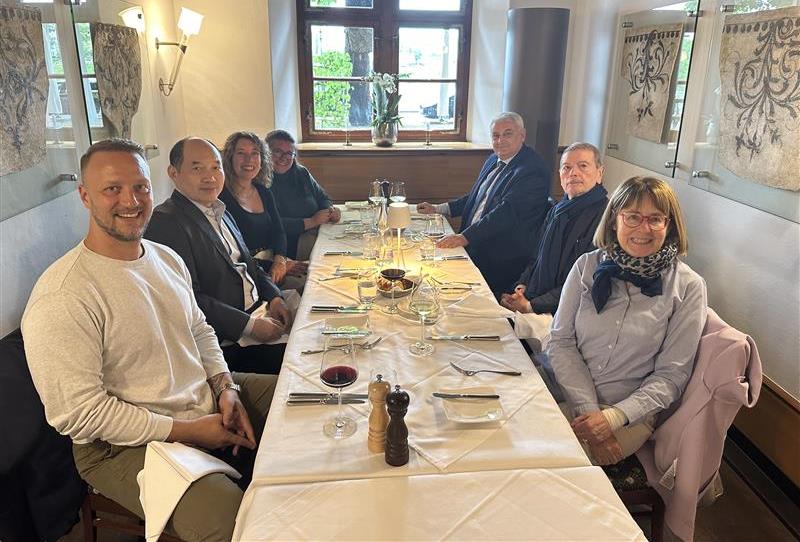
Q4 |
Social Sciences, Mathematical Methods |
||
|
Q3 |
Gastroenterology & Hepatology |
||
|
Q4 |
Gastroenterology & Hepatology |
||
|
Q1 |
Polymer Science |
||
|
Q3 |
Ethnic Studies |
||
|
Q4 |
Family Studies |
||
|
Q3 |
Sociology |
||
|
Q2 |
Genetics & Heredity |
||
|
Q2 |
Geosciences, Multidisciplinary |
||
|
Q3 |
Geriatrics & Gerontology |
||
|
Q2 |
Health Care Sciences & Services |
||
|
Q2 |
Health Policy & Services |
||
|
Q4 |
Hematology |
||
|
Q4 |
Hematology |
||
|
N/A |
Humanities, Multidisciplinary |
||
|
Q2 |
Multidisciplinary Sciences |
||
|
Q1 |
Horticulture |
||
|
N/A |
Humanities, Multidisciplinary |
||
|
Q2 |
Water Resources |
||
|
Q4 |
Immunology |
||
|
Q2 |
Infectious Diseases |
||
|
Q2 |
Computer Science, Interdisciplinary Applications |
||
|
Q3 |
Computer Science, Information Systems |
||
|
Q2 |
Construction & Building Technology |
||
|
Q2 |
Engineering, Civil |
||
|
Q2 |
Transportation Science & Technology |
||
|
Q2 |
Chemistry, Inorganic & Nuclear |
||
|
Q1 |
Entomology |
||
|
Q2 |
Business, Finance |
||
|
Q1 |
Biochemistry & Molecular Biology |
||
|
Q2 |
Chemistry, Multidisciplinary |
||
|
Q1 |
Genetics & Heredity |
||
|
Q1 |
Pediatrics |
||
|
International Journal of Turbomachinery Propulsion and Power |
Q2 |
Engineering, Aerospace |
|
|
Q3 |
Engineering, Mechanical |
||
|
Q2 |
Engineering, Multidisciplinary |
||
|
Q2 |
Computer Science, Information Systems |
||
|
Q2 |
Geography, Physical |
||
|
Q2 |
Remote Sensing |
||
|
Q2 |
Cardiac & Cardiovascular Systems |
||
|
Q1 |
Medicine, General & Internal |
||
|
Q2 |
Materials Science, Composites |
||
|
Q3 |
Developmental Biology |
||
|
Q1 |
Engineering, Biomedical |
||
|
Q2 |
Materials Science, Biomaterials |
||
|
Q1 |
Sport Sciences |
||
|
Q2 |
Microbiology |
||
|
Q1 |
Mycology |
||
|
Q3 |
Imaging Science & Photographic Technology |
||
|
Q1 |
Psychology, Multidisciplinary |
||
|
Q3 |
Engineering, Electrical & Electronic |
||
|
Q2 |
Engineering, Manufacturing |
||
|
Q1 |
Engineering, Mechanical |
||
|
Q2 |
Materials Science, Multidisciplinary |
||
|
Q1 |
Engineering, Marine |
||
|
Q2 |
Engineering, Ocean |
||
|
Q2 |
Oceanography |
||
|
Q2 |
Health Care Sciences & Services |
||
|
Q1 |
Medicine, General & Internal |
||
|
Q2 |
Computer Science, Information Systems |
||
|
Q2 |
Telecommunications |
||
|
Journal of Theoretical and Applied Electronic Commerce Research |
Q1 |
Business |
|
|
Q1 |
Toxicology |
||
|
Q2 |
Biodiversity Conservation |
||
|
Q2 |
Communication |
||
|
Q2 |
Environmental Studies |
||
|
N/A |
Language & Linguistics |
||
|
Q2 |
Linguistics |
||
|
Q1 |
Law |
||
|
Q1 |
Biology |
||
|
Q2 |
Management |
||
|
Q2 |
Operations Research & Management Science |
||
|
Q2 |
Engineering, Mechanical |
||
|
Q2 |
Computer Science, Artificial Intelligence |
||
|
Q2 |
Computer Science, Interdisciplinary Applications |
||
|
Q2 |
Engineering, Electrical & Electronic |
||
|
Q3 |
Engineering, Electrical & Electronic |
||
|
Q2 |
Engineering, Mechanical |
||
|
Q2 |
Chemistry, Inorganic & Nuclear |
||
|
Q3 |
Chemistry, Physical |
||
|
Q3 |
Materials Science, Multidisciplinary |
||
|
Q1 |
Chemistry, Medicinal |
||
|
Q1 |
Pharmacology & Pharmacy |
||
|
Q3 |
Chemistry, Physical |
||
|
Q2 |
Materials Science, Multidisciplinary |
||
|
Q1 |
Metallurgy & Metallurgical Engineering |
||
|
Q2 |
Physics, Applied |
||
|
Q2 |
Physics, Condensed Matter |
||
|
Q2 |
Mathematics, Interdisciplinary Applications |
||
|
Q1 |
Mathematics |
||
|
Q1 |
Medicine, General & Internal |
||
|
Q2 |
Chemistry, Physical |
||
|
Q2 |
Engineering, Chemical |
||
|
Q2 |
Materials Science, Multidisciplinary |
||
|
Q2 |
Polymer Science |
||
|
Q2 |
Biochemistry & Molecular Biology |
||
|
Q3 |
Materials Science, Multidisciplinary |
||
|
Q2 |
Metallurgy & Metallurgical Engineering |
||
|
Q3 |
Biochemical Research Methods |
||
|
Q3 |
Microbiology |
||
|
Q2 |
Chemistry, Analytical |
||
|
Q2 |
Instruments & Instrumentation |
||
|
Q3 |
Nanoscience & Nanotechnology |
||
|
Q2 |
Physics, Applied |
||
|
Q2 |
Microbiology |
||
|
Q2 |
Geochemistry & Geophysics |
||
|
Q2 |
Mineralogy |
||
|
Q2 |
Mining & Mineral Processing |
||
|
Q3 |
Engineering, Multidisciplinary |
||
|
Q4 |
Chemistry, Organic |
||
|
Q2 |
Biochemistry & Molecular Biology |
||
|
Q2 |
Chemistry, Multidisciplinary |
||
|
Q3 |
Computer Science, Artificial Intelligence |
||
|
Q2 |
Computer Science, Cybernetics |
||
|
Q3 |
Computer Science, Information Systems |
||
|
Q2 |
Chemistry, Multidisciplinary |
||
|
Q2 |
Materials Science, Multidisciplinary |
||
|
Q2 |
Nanoscience & Nanotechnology |
||
|
Q2 |
Physics, Applied |
||
|
Q2 |
Clinical Neurology |
||
|
Q3 |
Clinical Neurology |
||
|
Q4 |
Neurosciences |
||
|
Q4 |
Environmental Sciences |
||
|
Q2 |
Biochemistry & Molecular Biology |
||
|
Q2 |
Genetics & Heredity |
||
|
Q1 |
Nursing |
||
|
Q1 |
Nutrition & Dietetics |
||
|
Q3 |
Marine & Freshwater Biology |
||
|
Q3 |
Oceanography |
||
|
Q4 |
Optics |
||
|
Q3 |
Chemistry, Organic |
||
|
Q3 |
Astronomy & Astrophysics |
||
|
Q2 |
Physics, Nuclear |
||
|
Q3 |
Physics, Particles & Fields |
||
|
Q2 |
Microbiology |
||
|
Q2 |
Pathology |
||
|
Q3 |
Pediatrics |
||
|
Q2 |
Chemistry, Medicinal |
||
|
Q1 |
Pharmacology & Pharmacy |
||
|
Q1 |
Pharmacology & Pharmacy |
||
|
Q3 |
Pharmacology & Pharmacy |
||
|
Q2 |
History & Philosophy of Science |
||
|
N/A |
Philosophy |
||
|
Q2 |
Optics |
||
|
Q2 |
Physics, Multidisciplinary |
||
|
Q1 |
Plant Sciences |
||
|
Q3 |
Physics, Fluids & Plasmas |
||
|
Q1 |
Polymer Science |
||
|
Q1 |
Polymer Science |
||
|
Q2 |
Engineering, Chemical |
||
|
Q4 |
Materials Science, Biomaterials |
||
|
Q2 |
Biochemistry & Molecular Biology |
||
|
Q4 |
Psychiatry |
||
|
Q1 |
Information Science & Library Science |
||
|
Q3 |
Instruments & Instrumentation |
||
|
Q3 |
Materials Science, Characterization & Testing |
||
|
Q4 |
Quantum Science & Technology |
||
|
Q2 |
Geosciences, Multidisciplinary |
||
|
Q3 |
Chemistry, Multidisciplinary |
||
|
Q2 |
Green & Sustainable Science & Technology |
||
|
N/A |
Religion |
||
|
Q2 |
Environmental Sciences |
||
|
Q1 |
Geosciences, Multidisciplinary |
||
|
Q2 |
Imaging Science & Photographic Technology |
||
|
Q2 |
Remote Sensing |
||
|
Q3 |
Medicine, General & Internal |
||
|
Q4 |
Obstetrics & Gynecology |
||
|
Q4 |
Reproductive Biology |
||
|
Q2 |
Environmental Sciences |
||
|
Q3 |
Green & Sustainable Science & Technology |
||
|
Q2 |
Business, Finance |
||
|
Q2 |
Robotics |
||
|
Q3 |
Public, Environmental & Occupational Health |
||
|
Q3 |
Pharmacology & Pharmacy |
||
|
Q2 |
Chemistry, Analytical |
||
|
Q2 |
Engineering, Electrical & Electronic |
||
|
Q2 |
Instruments & Instrumentation |
||
|
Q3 |
Chemistry, Analytical |
||
|
Q2 |
Medicine, General & Internal |
||
|
Q3 |
Psychology, Multidisciplinary |
||
|
Q2 |
Social Sciences, Interdisciplinary |
||
|
Q2 |
Womens Studies |
||
|
Q1 |
Engineering, Electrical & Electronic |
||
|
Q1 |
Urban Studies |
||
|
Q2 |
Social Sciences, Interdisciplinary |
||
|
Q2 |
Sociology |
||
|
Q2 |
Soil Science |
||
|
Q3 |
Chemistry, Physical |
||
|
Q3 |
Materials Science, Multidisciplinary |
||
|
Q2 |
Sport Sciences |
||
|
Q4 |
Mathematics, Interdisciplinary Applications |
||
|
Q3 |
Statistics & Probability |
||
|
Q3 |
Chemistry, Physical |
||
|
Q3 |
Materials Science, Multidisciplinary |
||
|
Q4 |
Surgery |
||
|
Q2 |
Environmental Sciences |
||
|
Q2 |
Environmental Studies |
||
|
Q3 |
Green & Sustainable Science & Technology |
||
|
Q2 |
Multidisciplinary Sciences |
||
|
Q1 |
Social Sciences, Interdisciplinary |
||
|
Q1 |
Engineering, Multidisciplinary |
||
|
Q3 |
Telecommunications |
||
|
Q4 |
Hematology |
||
|
Q2 |
Radiology, Nuclear Medicine & Medical Imaging |
||
|
Q2 |
Environmental Sciences |
||
|
Q1 |
Toxicology |
||
|
Q2 |
Food Science & Technology |
||
|
Q1 |
Toxicology |
||
|
Q2 |
Infectious Diseases |
||
|
Q2 |
Parasitology |
||
|
Q1 |
Tropical Medicine |
||
|
Q2 |
Astronomy & Astrophysics |
||
|
Q2 |
Physics, Particles & Fields |
||
|
Q3 |
Environmental Sciences |
||
|
Q3 |
Environmental Studies |
||
|
Q2 |
Geography |
||
|
Q3 |
Regional & Urban Planning |
||
|
Q2 |
Urban Studies |
||
|
Q1 |
Immunology |
||
|
Q1 |
Medicine, Research & Experimental |
||
|
Q2 |
Engineering, Mechanical |
||
|
Q2 |
Transportation Science & Technology |
||
|
Q2 |
Veterinary Sciences |
||
|
Q3 |
Engineering, Mechanical |
||
|
Q3 |
Mechanics |
||
|
Q2 |
Virology |
||
|
Q2 |
Environmental Sciences |
||
|
Q2 |
Water Resources |
||
|
Q2 |
Economics |
||
|
Q2 |
Political Science |
||
|
Q1 |
Social Sciences, Interdisciplinary |
||
|
Q2 |
Engineering, Electrical & Electronic |
||
|
Q2 |
Transportation Science & Technology |
Source: 2023 Journal Impact Factors, Journal Citation Reports TM (Clarivate, 2024)
About MDPI
A pioneer in scholarly, open access publishing, MDPI has supported academic communities since 1996. MDPI is leading the transition to open science by making more research free and accessible to everyone. Over 3.5 million researchers have entrusted MDPI with publishing their scientific discoveries. MDPI’s editorial process is bolstered by a network of dedicated reviewers, a team of 6000 professional, well-trained staff members, and an in-house article submission platform that was designed to ensure efficient processes within its 440 fully open access titles.
11 June 2024
Meet Us at the 28th International ICFMH Conference FOOD MICRO 2024, 8–11 July 2024, BURGOS, Spain

MDPI will be attending the 28th International ICFMH Conference, which will be held from 8 to 11 July 2024, in BURGOS, Spain.
This conference will focus on the latest advances in new technologies in food production and microbiological analysis. It is an opportunity to delve into cutting-edge research and technological breakthroughs, exploring the ways in which innovation is driving improvements in food safety and quality.
The conference covers a range of topics, including new trends in food processing, innovative approaches to food safety and quality, and novel methods for microbial analysis. In addition, some emerging field topics are discussed for the first time, such as microplastics and microbiome interactions.
The following MDPI journals will be represented:
- Foods;
- Microorganisms;
- Pathogens;
- Obesities;
- Applied Microbiology;
- Dietetics;
- Applied Biosciences;
- Dairy;
- Nutrients;
- Life;
- Fermentation;
- Antibiotics.
7 June 2024
MDPI Calls for Greater Open Access to Science for Ocean Protection
On UNESCO’s 2024 Oceans Day, MDPI encourages the scientific community to increase the accessibility of ocean research to accelerate ocean conservation.
Basel, Switzerland, June 7, 2024: MDPI, a leading open access (OA) publisher, is proud to announce its active support for World Oceans Day 2024, celebrated under UNESCO’s Ocean Decade framework. MDPI’s CEO, Stefan Tochev hopes that “the latest ocean research can be made freely accessible to help empower scientists and communities at large to save our oceans,” under UNESCO’s Ocean Decade until 2030.
Open Access: A Catalyst for Ocean Action
MDPI’s presence at the UNESCO Ocean Decade Conference 2024 highlights our unwavering commitment to using OA to advance ocean science, support research communities, and promote sustainable ocean management.
"Our involvement in the UNESCO Ocean Decade Conference underscores MDPI's commitment to the underfunded Ocean SDG. By promoting OA to scientific articles and books on SDGs, we aim to inspire critical actions," said Tochev. "Our initiatives, like the World Sustainability Award and Emerging Sustainability Award, further demonstrate our dedication to advancing sustainability.”
Showcasing MDPI’s Contributions to Ocean Research
Over the past three years, MDPI has published 30,000 papers focused on ocean research and related topics. Key MDPI journals contributing to this body of work include:
- Journal of Marine Science and Engineering (4.9k papers)
- Remote Sensing (2.6k papers)
- Sustainability (2k papers)
- International Journal of Molecular Sciences (IJMS) (1.7k papers)
- Marine Drugs (1.5k papers)
- Water (1.5k papers)
These publications highlight MDPI’s contributions to ocean science, reinforcing our role in the broader sustainability agenda by promoting blue innovation and economy.
Additionally, MDPI has launched Oceans, an international, peer-reviewed forum specifically aimed at publishing studies related to all branches of oceanography with an emphasis on the functioning of the ocean and the sustainable use of its resources and ecosystem services.
Affirming MDPI’s Commitment to Ocean Science
MDPI’s commitment to OA is pivotal in addressing critical global challenges, from climate change to ocean sustainability. Our efforts resonate with Outcome 4 of the UNESCO Ocean Decade action roadmap: an accessible ocean with open and equitable access to data, information, technology, and innovation. By aligning with UNESCO’s goals, MDPI continues to contribute to shaping a sustainable future for our oceans, reinforcing our position as a forward-thinking publisher dedicated to environmental stewardship and scientific excellence.
For more information, contact Rui Duarte at rui.duarte@mdpi.com or +41764313242.
About MDPI
A pioneer in scholarly, open access publishing, MDPI has supported academic communities since 1996. MDPI is leading the transition to open science by making more research free and accessible to everyone. Over 3.5 million researchers have entrusted MDPI with publishing their scientific discoveries. MDPI’s editorial process is bolstered by a network of dedicated reviewers, a team of over 6000 professional, well-trained staff members, and an in-house article submission platform that was designed to ensure efficient processes within its 430 fully open access titles.
5 June 2024
MDPI Sets a New Benchmark for Publishing Excellence

95% of authors rate MDPI’s publication process as excellent or good, setting a new benchmark in scientific publishing – reveals 2023 Annual Report.
Basel, Switzerland, June 4, 2024: MDPI, the leading open access (OA) publisher, proudly announces the release of its 2023 Annual Report, detailing remarkable achievements and reaffirming its leadership in advancing OA publishing. In 2023, MDPI received 655,065 submissions, of which 285,244 articles were published. The company now commands a 17% market share in gold open access articles, with a median publication time of six weeks.
Stefan Tochev, MDPI's CEO, stated, "As a pioneer in open access publishing, MDPI has long been a game-changer in the scholarly community, serving millions of authors around the world to ensure the latest research is freely available. Reflecting on our incredible journey at MDPI, 2023 has been marked by growth in paper submissions, ambitious projects and initiatives aimed at improving our internal processes and delivering top-notch services to our scientists."
MDPI's 2023 Annual Report highlights several key achievements:
- 17% market share in gold open access articles across all disciplines.
- Record satisfaction rates: 95% of authors, 82% of reviewers, and 85% of guest editors.
- Enhanced editorial standards and feedback processes.
- Increased reach and impact with 54 new MDPI journal inclusions in Scopus, 29 in Web of Science, and 77 in DOAJ.
MDPI’s unwavering commitment to advancing OA has transformed the landscape of scholarly publishing, making high-quality research freely accessible to the global scientific community. The continuous improvement in our editorial standards and feedback processes underscores MDPI’s dedication to ensuring academic integrity and excellence.
Global Reach and Collaboration
MDPI’s global footprint continues to expand, with authors from diverse regions: 37% from Asia/Pacific, 36% from Europe, 15% from the Americas, and 12% from other parts of the world. The company’s fully OA platform attracted nearly 14 million monthly visitors in 2023, reflecting its widespread influence in the scientific community.
Commitment to Partnerships
With over 800 institutional partners, MDPI continues to demonstrate its dedication to providing reliable and collaborative publishing services. The introduction of a transparent flat-fee model highlights MDPI's ongoing efforts to enhance affordability and support to the academic community. For more details read our 2023 Annual Report.
For more information, contact Rui Duarte at rui.duarte@mdpi.com or +41764313242.
About MDPI
A pioneer in scholarly, open access publishing, MDPI has supported academic communities since 1996. MDPI is leading the transition to open science by making more research free and accessible to everyone. Over 3.5 million researchers have entrusted MDPI with publishing their scientific discoveries. MDPI’s editorial process is bolstered by a network of dedicated reviewers, a team of over 6000 professional, well-trained staff members, and an in-house article submission platform that was designed to ensure efficient processes within its 430 fully open access titles.
4 June 2024
MDPI Insights: The CEO's Letter #12 - First Term as CEO, Tu Youyou Award, Books Report

Welcome to the MDPI Insights: The CEO's Letter.
In these monthly letters, I will showcase two key aspects of our work at MDPI: our commitment to empowering researchers and our determination to facilitating open scientific exchange.
Opening Thoughts

Renewed Term as CEO of MDPI
I released the first CEO Letter at the end of June 2023, reflecting on my first month as CEO. Looking back at the first release, I’m pleased to see a marked consistency of content – from talking about open access (OA) and highlighting the great work being done at MDPI, to bringing together the science community with our conferences and building relations with our editorial board members and our industry as a whole.
For example, in the first letter, I highlighted our meeting with Dr. Eric O. Freed, the founding and current Editor-in-Chief (EiC) of our journal Viruses. Meeting with Eric is a pleasure, as he has a strong commitment and clear vision for the journal.
On 21 May, 2024 we met with EiC Prof. Dr. Antonino Carbone, and Section EiC Prof. Dr. Alberto Signore (pictured on the left), of our journal Hemato (tracked for Impact Factor, and indexed in Scopus), showing our continued and active collaboration with our chief editors to develop the visions for the journal. Over the course of the day, we gathered feedback and gained an understanding of the journal's expectations and focus on strategic growth.
Reflections on my first year as CEO: achievements and initiatives
During my first year as CEO, there have been many remarkable moments, including a strong focus on bringing people together, focusing on company communications and performance.
According to a recent study of 3,400 people across 10 countries, “Managers impact employees’ mental health (69%) more than doctors (51%) or therapists (41%) — and even the same as a partner (69%).” This is an important topic for me, and perhaps that’s why I place a high value on management culture due to its tangible impact on people’s lives.
When I joined MDPI, I created a weekly meet-up for the Corporate Marketing department and their team leads. On the final Thursday of every month, we hold a Global Marketing meet-up to present projects, share knowledge, and conduct training. For years, I’ve maintained the tradition of ending each of our monthly global calls with a group photo to boost morale, motivation, and productivity, and to finish on a positive note.
In keeping with this, when I stepped into the role of CEO, I launched a bi-weekly management meeting, chairing over 20 MDPI Management Team meetings in my first year. These sessions provide an opportunity for managers to present their team’s work, focusing on their achievements and the challenges they face, while at the same time creating space for sharing knowledge.
“I firmly believe that OA is the future of publishing”
I co-organized and co-led the 2023 MDPI Strategy Management meeting this past October, from which we established an Executive Task Force that meets monthly to prioritize projects aimed at building MDPI into the world’s most trusted publisher. To achieve our goals, we as managers need to maintain collaborative communication and connect to the bigger picture.
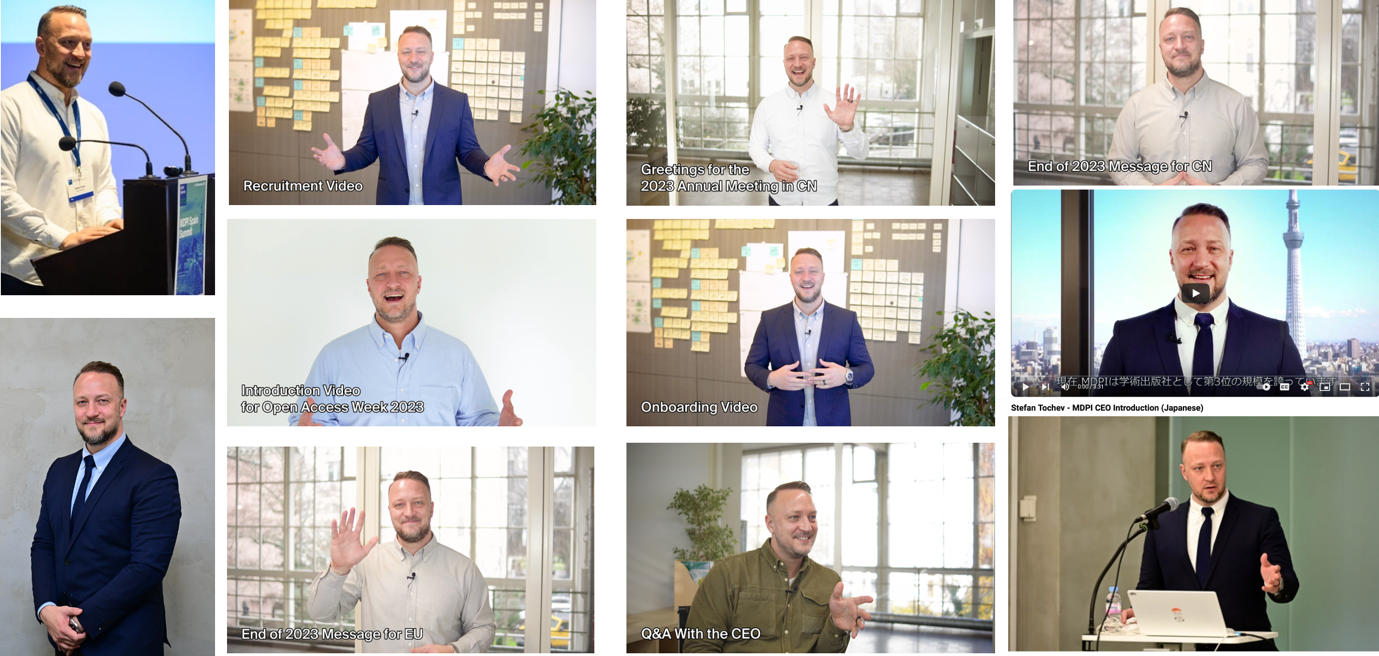
As CEO, I focused on leadership communication by publishing 12 CEO Letters, one for each month of my tenure, to share more about MDPI news and achievements. I also produced ten videos to help further communicate our message.
I was happy to attend eight publishing and conference events, including STM in Frankfurt and Washington, APE, and R2R, and facilitate critical company meetings with Elsevier, Web of Science, ResearchGate, DOAJ, and others. It was a pleasure to meet and have discussions with key organizations and governing bodies such as CAS in China and ANVUR in Italy.
The best part was the opportunity to visit seven MDPI offices across Europe and Asia-Pacific, meeting with local managers and colleagues and supporting them in person. As part of this, I conducted training sessions while continuing to lead the Corporate Marketing department.
Looking ahead
My goal for my second year as CEO is to continue building on the initiatives from the past, including leadership communications, public relations, educational marketing, and company culture, while representing MDPI to the best of my ability. Additionally, I have a few new projects I hope to launch that I believe will be valuable to MDPI and the industry at large.
I firmly believe that OA is the future of publishing, and I am grateful to be in a position to advocate for this belief as part of MDPI, the world's leading open access publisher.
Thank you to our staff and industry friends for your genuine support in this role.
Impactful Research
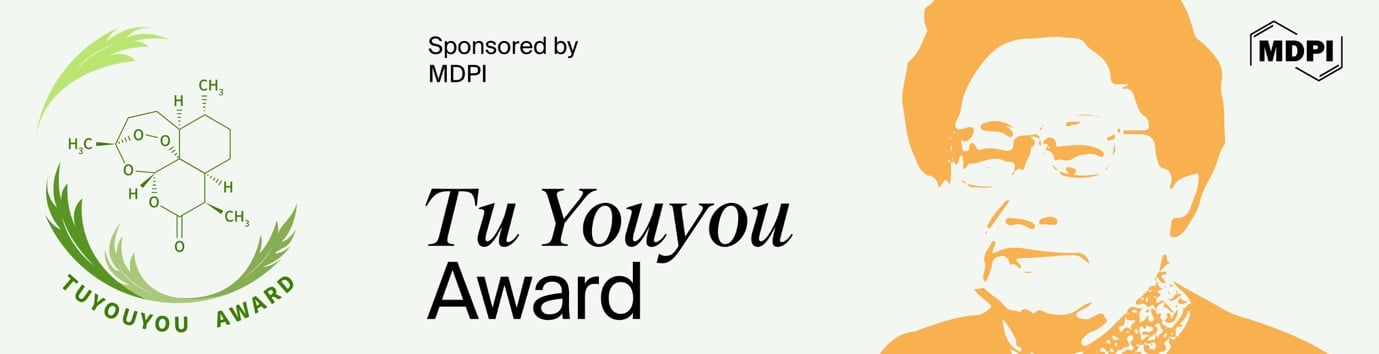
Nominations Open for the Prestigious Tu Youyou Award 2024
I am pleased to share that MDPI has opened nominations for the 2024 Tu Youyou Award, a prestigious recognition established in honour of Professor Tu Youyou, Nobel Laureate, whose work has significantly transformed the global fight against malaria.
The Tu Youyou Award offers CHF 100,000
In 2015, Professor Tu Youyou was awarded the Nobel Prize in Physiology or Medicine for her discovery of artemisinin, significantly reducing mortality rates from malaria and shaping global health policies. Artemisinin-based combination therapies (ACTs) are now the standard treatment endorsed by the World Health Organization (WHO), saving countless lives, especially in regions heavily burdened by malaria.
MDPI Special Issue
To mark Professor Tu’s 80th birthday in 2009, MDPI’s journal Molecules issued a Special Issue focusing on her contributions to medical research. Recognizing her continuous contribution, MDPI created the Tu Youyou Award in 2016 to honour outstanding achievements in natural products and medicinal chemistry.
The deadline for nominations is 31 December 2024
Nominations are open to scientists excelling in natural products and medicinal chemistry. Eligible nominators include academic institutes, universities, and societies. The deadline for nominations is 31 December 2024, with the winners to be announced on 30 April 2025. The Tu Youyou Award offers CHF 100,000, split equally among the winners.
MDPI encourages the academic community to nominate individuals who have demonstrated excellence and innovation in line with Professor Tu’s legacy. This award not only honours individual achievement but also encourages further scientific exploration and discovery in critical areas of medicine.
This award embodies our deep commitment to groundbreaking research that drives societal progress and celebrates the legacy of one of the greatest medical innovators of our time.
Inside MDPI
2023 MDPI Books Report
In past CEO letters, I have highlighted our publishing process and the impactful peer-reviewed articles that represent the core output of scholarly publishing. However, scholarly books are another pillar of publishing that MDPI also services, which our core audience may not be fully aware of. In this section, I highlight the 2023 MDPI Books report, released by our MDPI Books team in May 2024.
Download the 2023 MDPI Books Report
In the report, you will find a summary of MDPI Books’ 10th anniversary, the books indexed in the Web of Science Book Citation Index, our market outreach, and our outlook for 2024.
MDPI Books celebrated its 10th anniversary in 2023
MDPI Books published its first OA Reprint, “From the Renaissance to the Modern World,” in 2013. Over the past ten years, MDPI Books has seen a significant increase in both the volume and nature of published Reprints. As of December 2023, our catalogue includes a total of 7,369 Reprints, with 1,811 of them added in 2023 alone. MDPI Books includes monographs, book series, edited books and reprints of special issues and topical collections, among other book types.

We’re also celebrating the 10-year MDPI anniversary of Laura Wagner, Head of MDPI Books.
Laura Wagner (Head of Books Division)
Laura holds a Bachelor’s degree in Art History and History from the University of Basel. After her studies, she started her career at an art gallery in Basel.
Since joining MDPI in 2014, Laura has held several roles within the company. This included editorial work, development of reprint and book services, and the temporary management of the journal Arts.
Currently Laura holds the role of Head of Books Division and is in charge of the development and strategic direction of MDPI Books.
MDPI Books indexed in Web of Science Book Citation Index
Another milestone in 2023 was the indexing of four book titles in the Web of Science Book Citation Index. The indexing of our open access books is crucial for their reach and accessibility, ensuring higher visibility within the open science community.

- Self-Representation in an Expanded Field: From Self-Portraiture to Selfie, Contemporary Art in the Social Media Age by editor Ace Lehner
- Towards Socially Integrative Cities: Perspectives on Urban Sustainability in Europe and China by editors Bernhard Müller, Jian Liu, Jianming Cai, Paulina Schiappacasse, Hans-Martin Neumann, and Baojun Yang
- Transitioning to Gender Equality by editors Christa Binswanger and Andrea Zimmermann
- Under Construction: Performing Critical Identity by editor Marie-Anne Kohl
If you would like to learn more about MDPI Books, please visit: www.mdpi.com/books
If you are thinking of writing or editing a book, you can submit your proposal at www.mdpi.com/books/publish-with-us, or email us at books@mdpi.com.
Coming Together for Science

Polymers 2024 – Polymers for a Safe and Sustainable Future
Our conference team successfully managed the Polymers 2024 – Polymers for a Safe and Sustainable Future international conference which took place from 28–31 May 2024 in Athens, Greece. The conference was chaired by Prof. Dr. Dimitrios Bikiaris and Prof. Dr. Konstantinos Triantafyllidis from the Aristotle University of Thessaloniki, Greece, and Dr. Ioanna Deligkiozi from AXIA Innovation, Germany. In total, the conference had 259 accepted abstracts and over 300 attendees from 22 different countries.
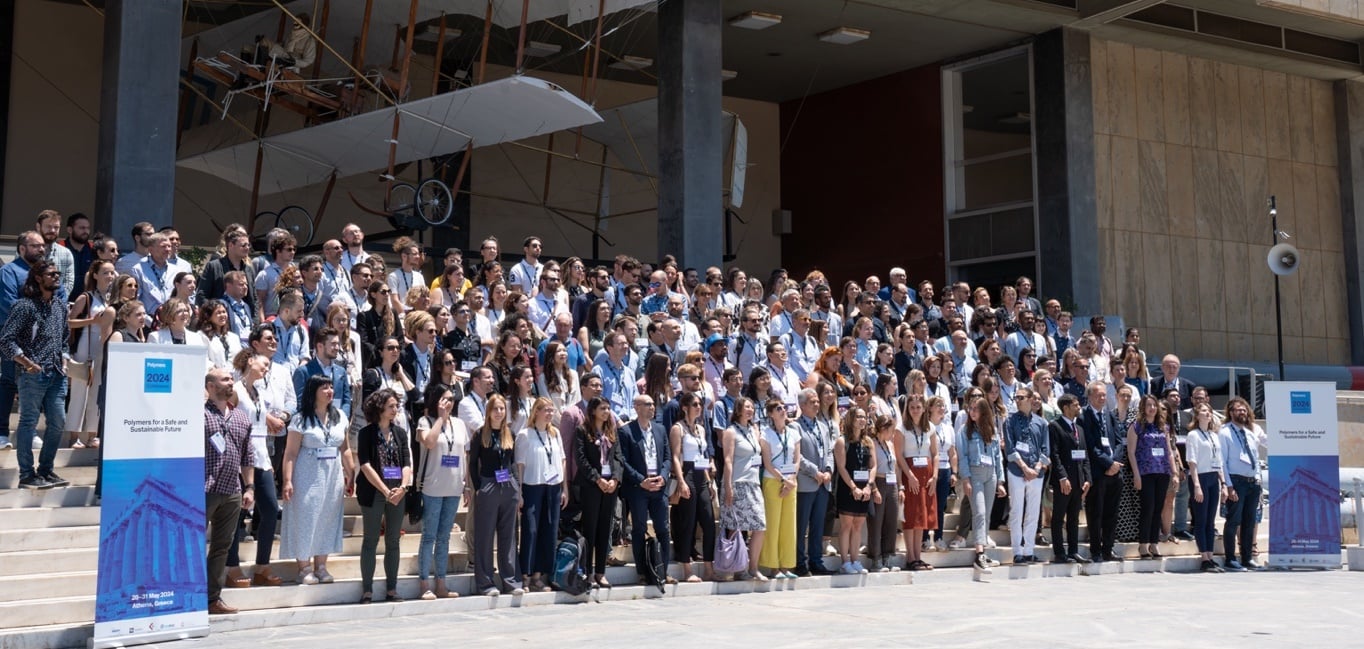
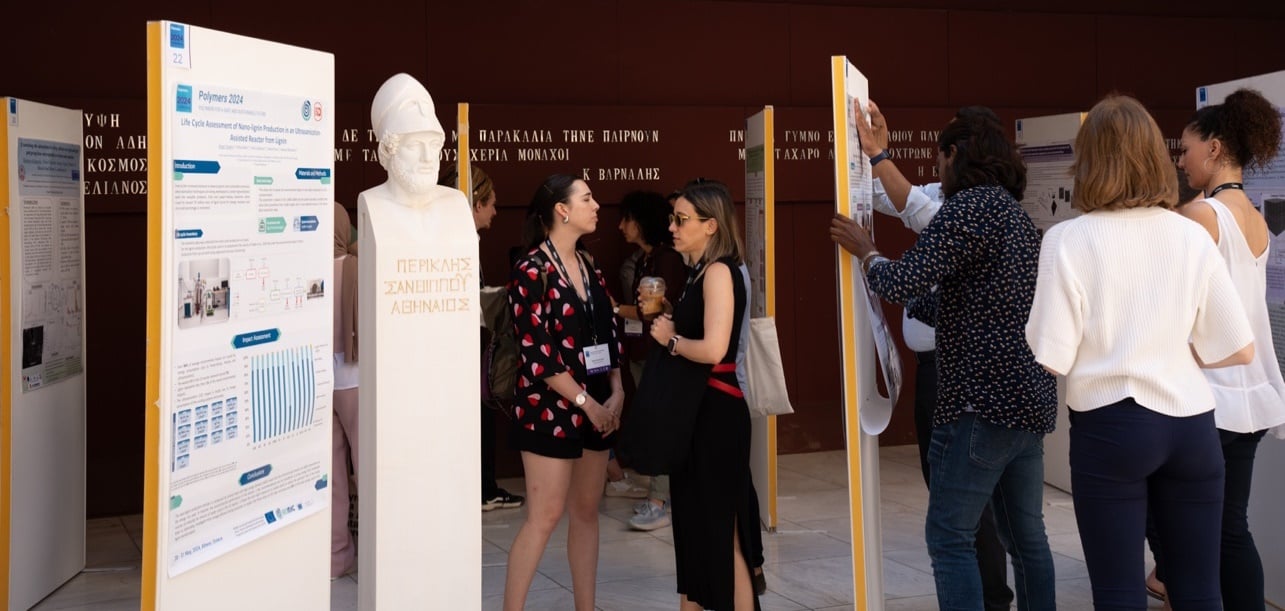
The conference featured three keynote speakers and 12 invited speakers, including esteemed scholars from Europe, Asia, Africa, and Canada. It included 60 selected talks and 189 posters, chosen by the 24 members of the Scientific Committee along with the three Conference Chairs. The event explored the latest scientific advancements and innovations in polymer science, focusing on creating safe, sustainable, and environmentally friendly materials. Emphasizing green polymer chemistry and the use of bioresources, the conference promoted the synthesis of biobased and biodegradable polymers.
The conference featured esteemed scholars from Europe, Asia, Africa, and Canada
Conference awards
The conference also presented three awards: two sponsored by the journal Polymers – The Best Poster Award (€500) and the Best Oral Presentation Award (€600) – and one sponsored by Ossila, the Best Student Poster Award (€500).
Thank you to our 16 sponsors, three partnering societies (Hellenic Polymer Society, European Polymer Federation, and North American Thermal Analysis Society [NATAS]) and eight media partners.
Upcoming in-person event

1–4 August, 2024
The 1st International Conference on AI Sensors & The 10th International Symposium on Sensor Science
Location: Singapore
The AI Sensors 2024 Conference will unite innovators and experts in the realms of sensors, sensing technology, and artificial intelligence.
Find more upcoming MDPI events here.
Closing Thoughts
3rd World Forum Principles of Scientific Publications
I’m pleased to share that MDPI sponsored and attended the 3rd World Forum on Principles of Scientific Publications, which took place from 22–24 May in Malaga, Spain. The event brought together academic professionals and leading researchers to discuss critical topics in the realm of publishing and research. Presentation topics included Open Science, AI in Publishing, Predatory Journals, Fake Publications, Challenges for Non-native English Speakers, and more.
“It was great to see strong support from MDPI authors in the audience”
MDPI presentations
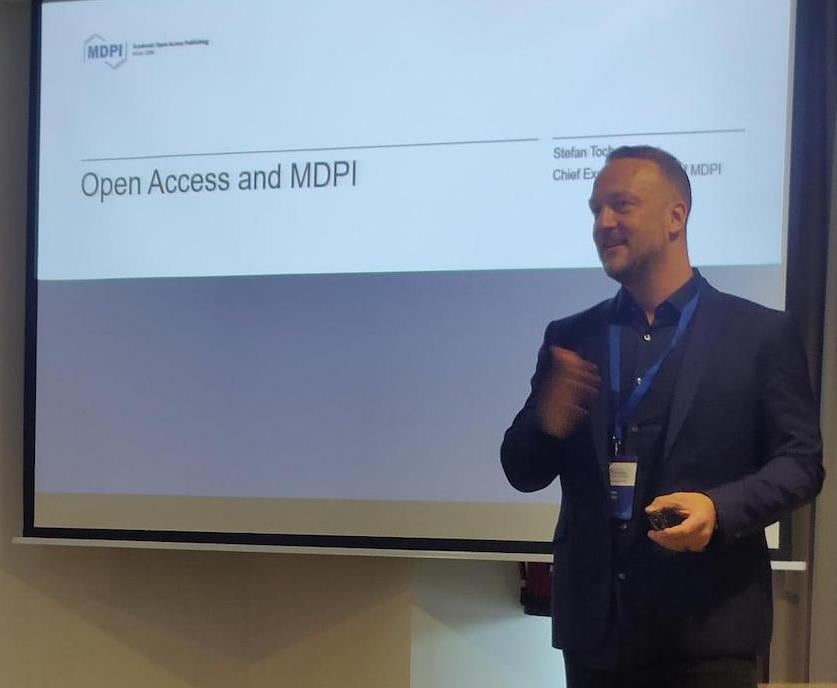
Stefan Tochev (CEO, MDPI) presenting at the 3rd World Forum Principles of Scientific Publications
I had the privilege of attending and presenting at the event, along with my colleague Dr. Enric Sayas (Business Analyst, MDPI) from our Barcelona office, who explored the ethical concerns and opportunities brought by AI in publishing.
I took the opportunity to present on Open Science, the benefits of Open Access, and MDPI’s performance, operations, and investment in ethics. Special thanks to Evan Escamilla (Project Manager, MDPI Books) and Facundo Santomé (Sr. Marketing Manager, MDPI) who also joined the conference.
It was great to see strong support from MDPI authors in the audience who shared their positive experiences publishing with us. Their story reflects the experience of the vast majority of authors who choose to work with MDPI.
We also encountered some conservative views on OA, which created an opportunity for open discussion aimed at addressing concerns about OA and MDPI. Engaging in such discussions is important, as scepticism sometimes arises from misinformation or from a misunderstanding of who we are and how we operate. When we engage in open and honest discussion, we tend to see people getting a better understanding of MDPI, which helps address any misconceptions they may have had.
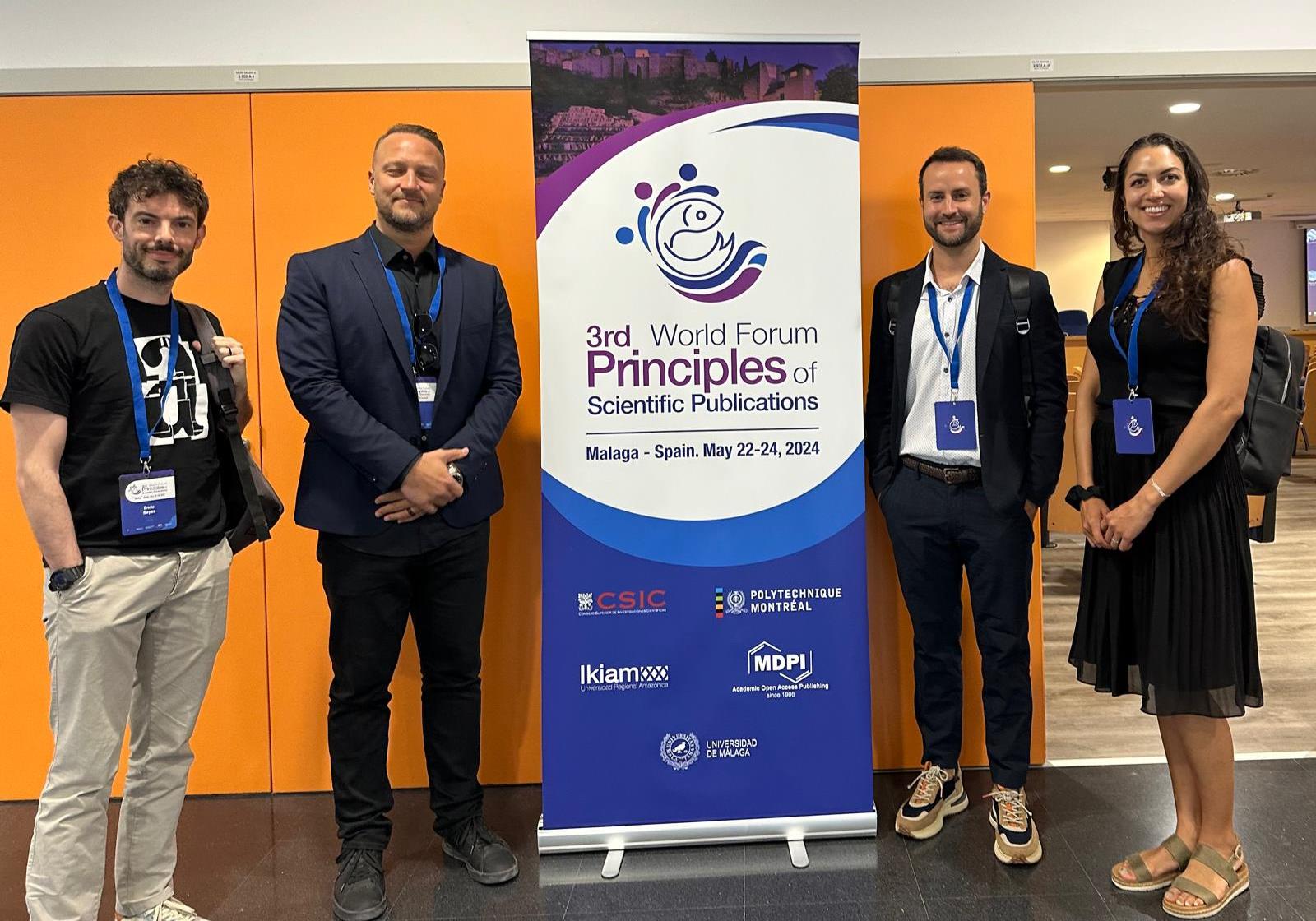
Left to right: Dr. Enric Sayas (Business Analyst, MDPI), Stefan Tochev (CEO, MDPI), Facundo Santomé (Sr. Marketing Manager, MDPI), and Evan Escamilla (Project Manager, MDPI Books) at 3rd World Forum Principles of Scientific Publications
Chief Executive Officer
MDPI AG
30 May 2024
Interview with Dr. Edmar Ramos Oliveira-Filho—Winner of the Fermentation 2023 Outstanding Reviewer Award
We are pleased to announce Dr. Edmar Ramos Oliveira-Filho as one of the winners of the Fermentation 2023 Outstanding Reviewer Award.
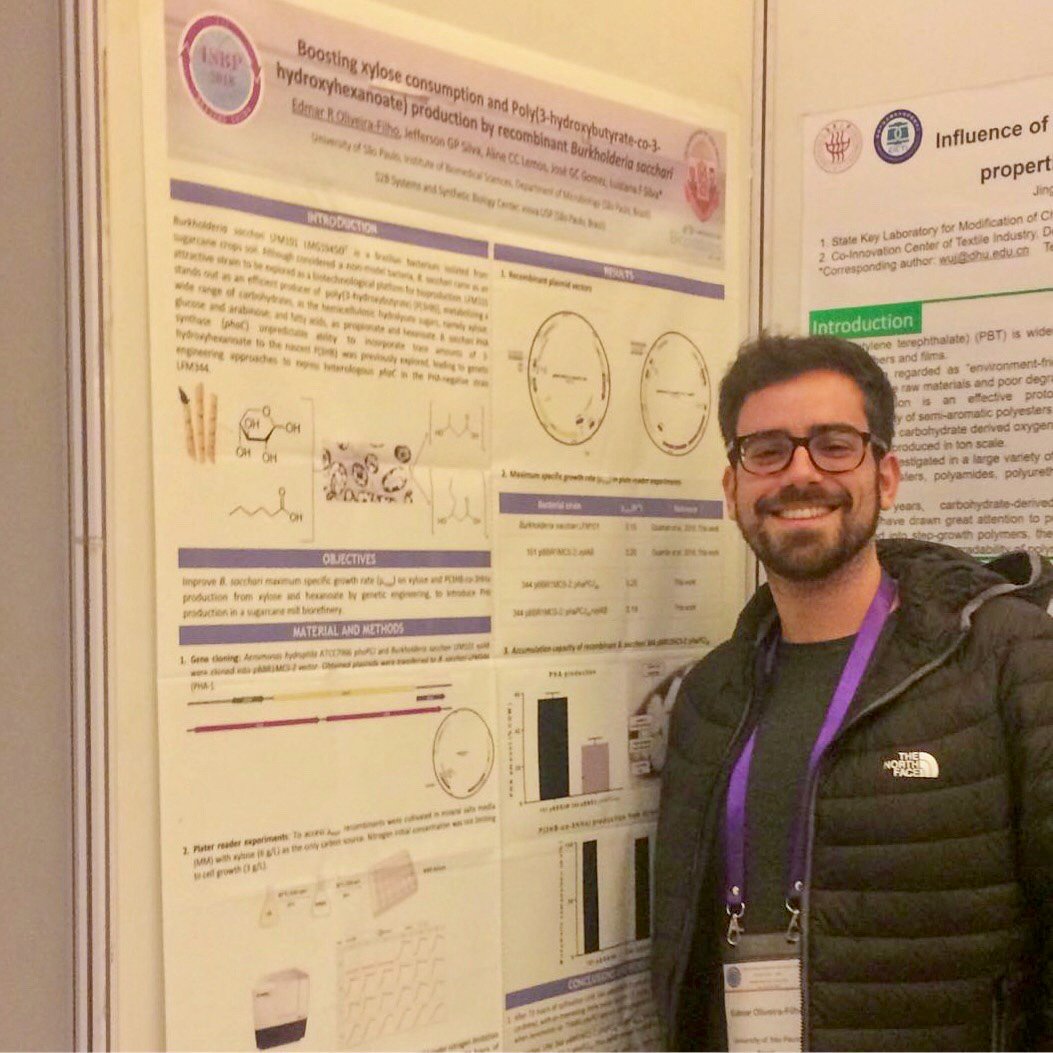
Name: Dr. Edmar Ramos Oliveira-Filho
Affiliation: Department of Horticultural Sciences, Institute of Food and Agricultural Sciences, University of Florida, Florida, USA
Interests: xylose; Paraburkholderia sacchari; polyhydroxyalkanoates; bioreactors; nanoparticles; drug delivery; Pseudomonas; agro-industrial byproducts; metabolic engineering; directed evolution; upscaling; microbial biotechnology; bioproducts; synthetic biology; biorefinery
1. Can you please tell us a little more about yourself and your current research?
I am a biologist, with a Ph.D. in biotechnology. During my master’s and doctoral studies, I have explored the biotechnological production of renewable biopolymers from agro-industrial byproducts. I am currently working with synthetic biology, focused on microbial engineering and the continuous directed evolution of enzymes.
2. Can you please share with us your sentiments upon winning the award?
Winning the award was a great pleasure! I'm delighted that reviewing for Fermentation has positively contributed to the scientific community.
3. Which research topics do you think are of particular interest to the research community in the coming years?
I believe the focus for the coming years will include strategies to mitigate (or deal with) the effects of climate change. Developing upscalable real-world technologies that move us closer to a sustainable society will be essential.
4. Could you share some insights into your approach to reviewing manuscripts? How do you balance thoroughness with efficiency?
My approach to reviewing manuscripts involves taking notes and thinking about potential questions the reader might have when reading the manuscript. It is often necessary to check classic and modern literature to get updated on the study's theme. To ensure a high-quality review, the peer-review process should not be rushed.
5. In your opinion, what are some key qualities that make a review outstanding?
A great review report requires time and dedication. The reviewer must pay attention to details and anticipate questions the readers might have, especially about the techniques used and the results presented.
24 May 2024
Interview with Dr. Thais Suzane Milessi Esteves—Winner of the Fermentation 2023 Outstanding Reviewer Award
We are pleased to announce Dr. Thais Suzane Milessi Esteves as one of the winners of the Fermentation 2023 Outstanding Reviewer Award.

Name: Dr. Thais Suzane Milessi Esteves
Affiliation: Departamento de Engenharia Química, Universidade Federal de São Carlos, São Carlos, Brazil
The following is an interview with Dr. Thais Suzane Milessi Esteves:
1. Can you please tell us a little more about yourself?
I am a biochemical engineer with a master’s degree in industrial biotechnology and a Ph.D. in chemical engineering. I am Brazilian, and I am currently a professor at the Department of Chemical Engineering (DEQ) at the Federal University of São Carlos (UFSCar). My main experience throughout my career is in the field of biochemical engineering, working mainly in the valorization of biomass through fermentation or enzymatic processes.
2. What is your current research focus, and why did you choose this research field?
Currently, my main research focus is on the consolidated bioprocessing of biomass, which is an emerging technology where hydrolytic enzyme production, biomass hydrolysis, and fermentation are performed simultaneously in a single bioreactor. In addition, in my research group, we are also working on second-generation bioethanol, Industry 4.0 technologies applied to bioprocesses, cell and enzyme immobilization, and the production of high value-added bioproducts from biomass.
3. When and how did you first become aware of the open access Fermentation journal? How do you think open access impacts authors?
I became aware of Fermentation when I was searching the literature for recent work in my field and looking for a journal to publish my research. In my opinion, OA journals are good for broadening the reach of published articles, in addition to making articles more accessible to readers.
4. What are the key factors and aspects that you consider most when reviewing a manuscript?
I think that the clarity and organization of the manuscript together with a detailed methodology are key factors when reviewing manuscripts. Statistical treatment and a discussion of results and good-quality figures are also important features. Finally, the most important thing is to make clear the novelty and contribution of the manuscript to the field, especially for review manuscripts.
5. In your opinion, what are some key qualities that make a review outstanding?
I believe that a good review report is based on well-detailed and justified suggestions or questions, always keeping the ethics and respect of the authors. In addition, I believe that to complete a good review, it is necessary that the manuscript is inserted in the field of expertise of the reviewer; I often decline review invitations when I feel that I do not have the necessary expertise.
6. What do you think of receiving the Outstanding Reviewer Award? What advice do you have for future reviewers?
I was happy and honored by the recognition. If I could give any advice, it would be to give the time, attention, and respect that we want a reviewer to give to our own work.
23 May 2024
Transfer Service in MDPI
We are pleased to announce MDPI’s Transfer Service.
This service provides a convenient method of transferring your manuscript file, along with any reviewer comments, to another journal within our publishing portfolio.
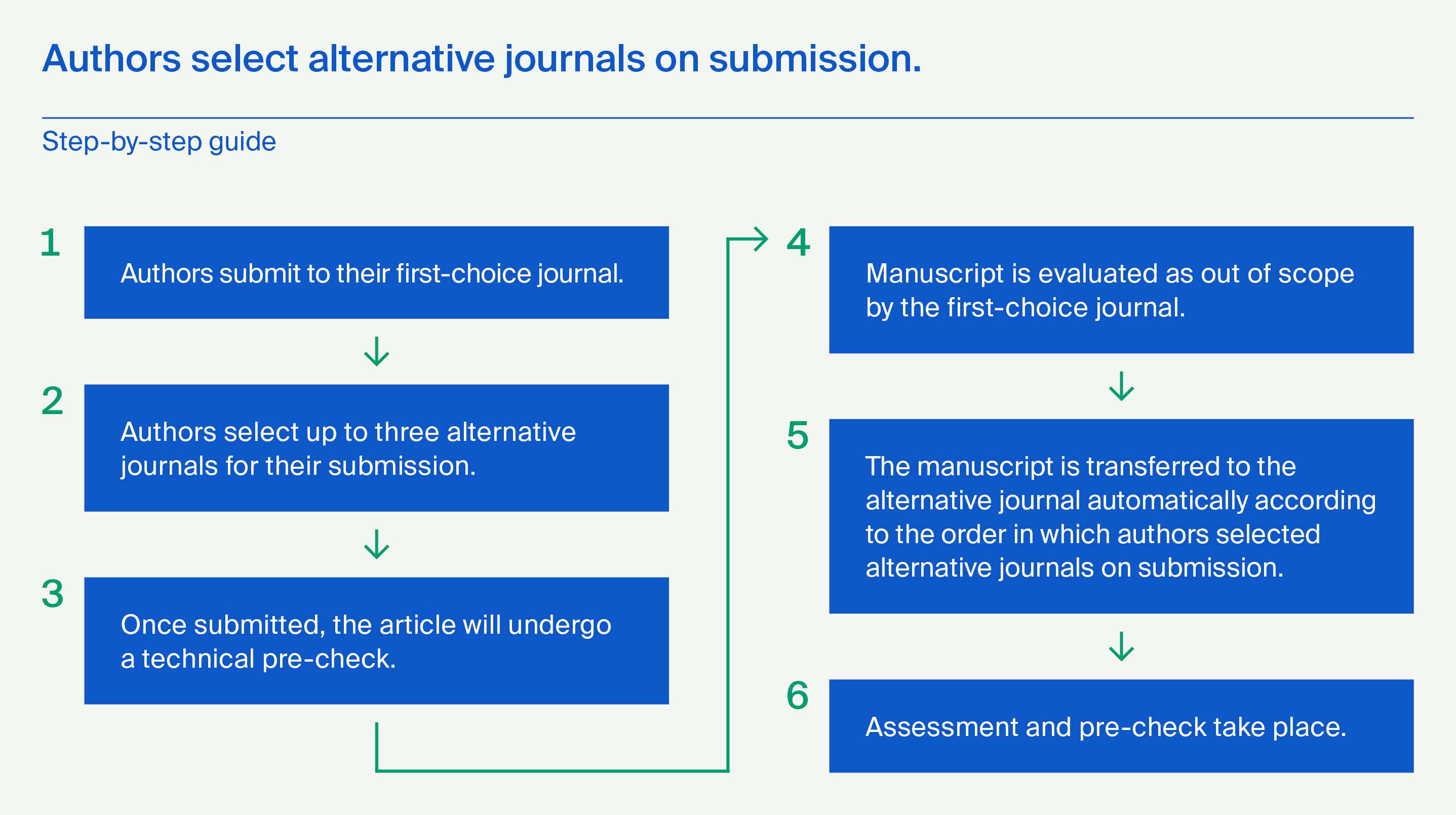
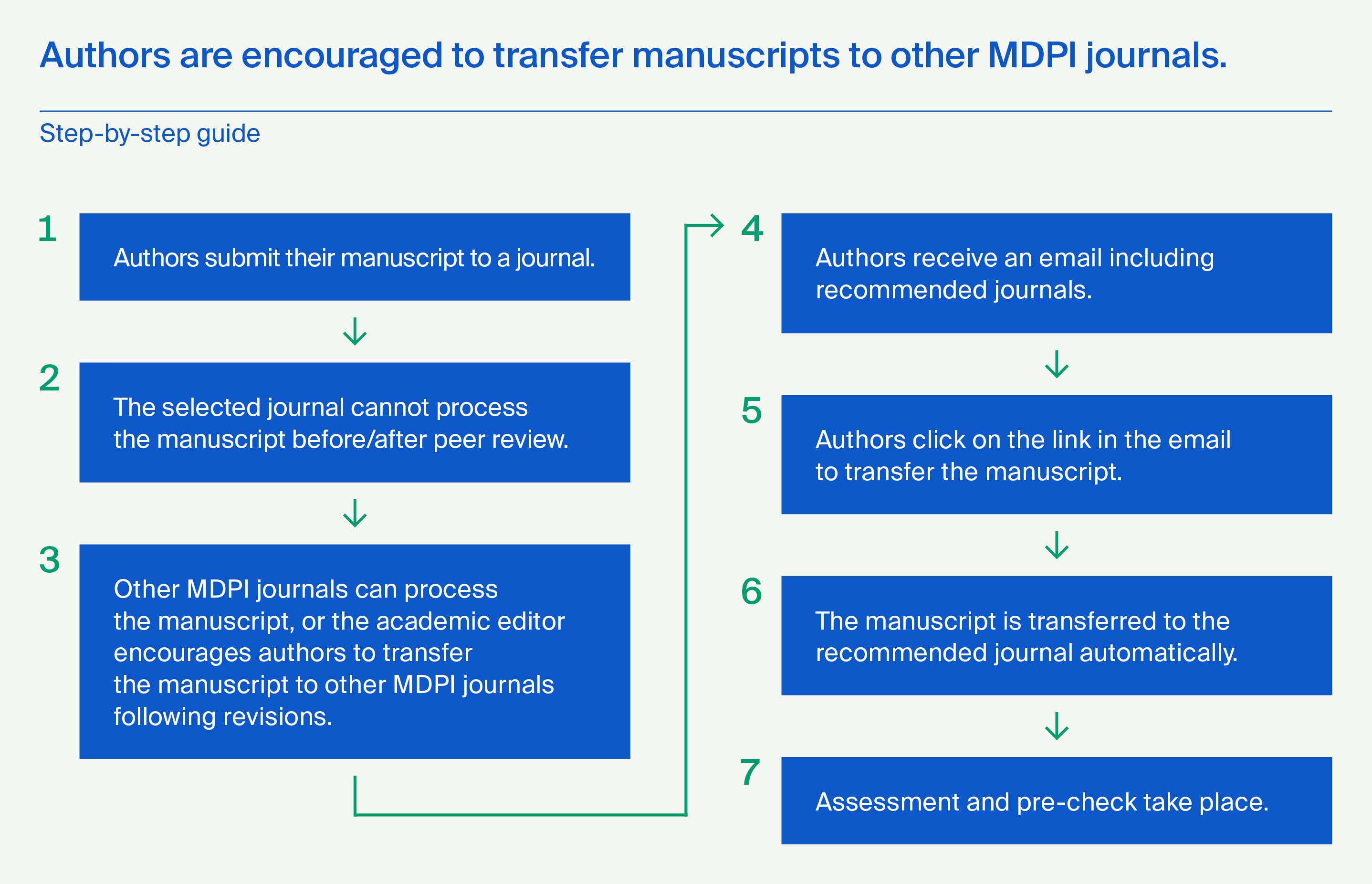
We are committed to helping authors find the right home for their research, and we will provide authors with guidance and technical support through all stages of the transfer process. Authors will be able to choose to transfer in the following two situations:
1. Select alternative journals on submission.
2. Authors are encouraged to transfer manuscripts to other MDPI journals.
More details about the Transfer Service can be found at the following link:
