You are currently viewing a new version of our website. To view the old version click .

Complications

Complications (ISSN 2813-4966) is an international, peer-reviewed, open access journal on the prevention, diagnosis, etiology, and management of complications in all aspects of basic, translational, and clinical research, as well as epidemiology.
The journal seeks to offer best practices and expert experience, and recommendations on intra-operative and post-operative adverse events, published quarterly online by MDPI.

All Articles (43)

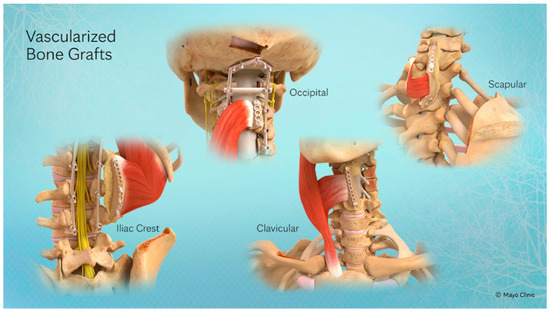
Spinal sarcomas are rare, aggressive tumors requiring wide resection that creates large, challenging defects. Conventional reconstruction using allografts or metallic implants is prone to failure in compromised settings like irradiated or infected tissue. This narrative review synthesizes the literature on biologic reconstruction strategies, focusing on vascularized bone grafts (VBGs) and the ‘spinoplastic’ reconstruction approach, to provide a clinical framework for their application. We performed a narrative literature review using PubMed and Scopus to synthesize clinical studies describing biologic spinal reconstruction in compromised host beds. The main findings show that pedicled VBGs (e.g., rib, iliac crest) and free VBGs (e.g., fibula) function as living structural components. ‘Spinoplastic’ reconstruction leverages these grafts to promote biologic fusion, with clinical series reporting high union rates, even in irradiated or revision settings, offering a durable alternative to avascular constructs. Biologic reconstruction using VBGs is a critical strategy for achieving durable spinal stability in these challenging scenarios, and future directions point toward hybrid strategies combining 3D-printed implants with the biologic power of VBGs.

12 December 2025

Enhanced bony reconstructive ladder for spinal sarcoma reconstruction. Reconstructive options are organized from simpler, purely structural solutions (e.g., non-structural autograft, structural allograft, standard cages) to more complex biologic strategies (non-vascularized bone grafts, pedicled VBGs, free VBGs and hybrid PSI–VBG constructs). Progression up the ladder reflects increasing technical complexity and resource requirements, but also greater potential for durable biologic fusion in compromised hosts.

Complications Associated with Ileal Conduit: A Narrative Review

  • Laura Karina Fumero,
  • Luis G. Medina and
  • Federico Eskenazi
  • + 5 authors

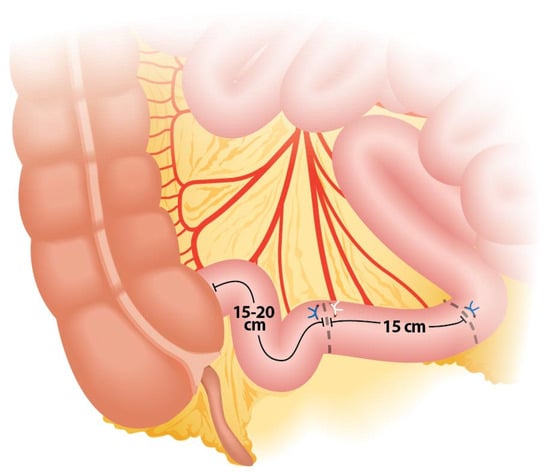
Introduction: Rerouting urine flow is often required following radical cystectomy (RC). In this context, the ileal conduit (IC) has become the most common technique for urinary diversion, primarily due to its technical simplicity and suitability for patients with compromised renal function, elderly individuals, and those unable to perform self-catheterization. Objective: This review aims to highlight the complications of IC and categorize them into metabolic and surgical complications, further subdivided by timing (intraoperative, short-term, intermediate-term, and long-term) and anatomical location (uretero-ileal anastomosis, stoma, and ileal segment). Methods: A comprehensive narrative review was conducted to summarize the most common complications of IC, their clinical presentation, and management using Google Scholar, PubMed, and Embase databases to identify studies published from 1950 to 2024. Results: The morbidity associated with IC, especially when compared to continent diversions, remains a subject of debate. Notably, IC-related complications have been described with an incidence rate ranging from 39% to 67%. Conclusions: Providing a comprehensive overview of IC complications and management strategies can enhance clinical practice and improve patient outcomes.

18 November 2025

Ankle fractures are extremely common and often require surgical management, historically with open reduction and internal fixation (ORIF), although fibular intramedullary nailing (IMN) has demonstrated promising results in recent years. The purpose of this study is to report on risk factors, quality of reduction, and complications in a series of patients undergoing fibular IMN for management of ankle fractures using a novel device via a retrospective case series. Patients undergoing locked fibular IMN with the Flex-Thread nail (Conventus Flower Orthopedics, Horsham, PA, USA) by a single surgeon from January 2023 to March 2025 were included, with at least 6 months of follow-up. Demographics, comorbidities, injury characteristics, reduction quality, and post-operative complications were recorded. Descriptive analyses were reported for categorical variables. A total of 15 patients were included, with a mean age of 58.9 ± 22.0 (range 18–91) and mean BMI of 31.5 ± 5.7 kg/m2. All patients experienced a fall as their mechanism of injury, with 12 Weber B and 3 Weber C fractures. The mean time to surgery from the date of injury was 9.5 ± 5.5 days. Of 15 patients, 66.7% had good reduction quality, 26.7% had fair, and 1 patient experienced poor reduction quality requiring subsequent hardware removal. There was one patient who experienced delayed wound healing. Patients undergoing fibular fixation using the novel Flex-Thread nail experience a fair to good quality of reduction, with limited complications. Both young and elderly patients have relatively positive early post-operative outcomes. Additional research with longer-term follow-up will be required to confirm its efficacy.
17 November 2025

This study analyzed complication rates, perioperative metrics, and hospital readmissions across BMI cohorts in patients undergoing direct anterior approach (DAA) total hip arthroplasty (THA) in a mature hip practice. Currently, the precise BMI cutoff points for risk in THA are not fully understood. A retrospective review was conducted of patients who underwent DAA THA by a single, highly experienced, fellowship-trained surgeon between January 2021 and January 2023. The use of single-surgeon cases allows for control of many potentially confounding variables but may limit the generalizability of the findings. Data collected included patient demographics, hospital readmissions, 12-month complication rates, and intraoperative metrics. Patients with Class II obesity (BMI 35–39.9) kg/m2 and Class I obesity (BMI 30–34.9) kg/m2 had significantly higher intraoperative blood loss and longer operative times compared to the control group (BMI 20–24.9 kg/m2). No statistically significant differences in hospital readmission rates or complication rates were observed between BMI cohorts. Higher BMI was associated with increased intraoperative blood loss and longer operation time; however, no differences were found in hospital readmissions or complication rates between BMI cohorts.

3 November 2025

News & Conferences

Issues

Open for Submission

Editor's Choice

Get Alerted

Add your email address to receive forthcoming issues of this journal.

XFacebookLinkedIn
Complications - ISSN 2813-4966