


Journal Menu
► ▼ Journal Menu-
- Information Home
- Aims & Scope
- Editorial Board
- Reviewer Board
- Topical Advisory Panel
- Instructions for Authors
- Special Issues
- Topics
- Sections & Collections
- Article Processing Charge
- Indexing & Archiving
- Editor’s Choice Articles
- Most Cited & Viewed
- Journal Statistics
- Journal History
- Journal Awards
- Society Collaborations
- Conferences
- Editorial Office
Journal Browser
► ▼ Journal BrowserNeed Help?
Announcements
30 June 2023
Topics Webinar | AI Chatbots: Threat or Opportunity? II, Held on 10 July 2023

On 10 July 2023, MDPI and the journals AI, Algorithms, Big Data and Cognitive Computing, Computers, Educational Sciences, Future Internet, Informatics, Information, Languages and Publications organized the webinar AI Chatbots: Threat or Opportunity? II.
Webinar summary from Dr. Hossein Hassani, the webinar Chair:
The highly anticipated webinar AI Chatbots: Threat or Opportunity?, provided valuable insights on a crucial subject. The event shed light on the various advantages of AI chatbots, such as enhanced learning experience, scalability and accessibility, continuous availability, and consistency in teaching. it also addressed concerning issues, including the lack of human interaction, limited adaptability, technical limitations, and ethical considerations.
During the webinar, the broader implications of these advancements, particularly in relation to the SDG 4 goal of education for all, were discussed. The participants recognized the rapid progress of technology in developed countries while acknowledging the significant disparities in access to the internet and electricity in regions like Africa and Asia, as emphasized in SDG 4 and SDG 7. It was emphasized that taking appropriate action and addressing the existing gaps in SDGs are vital to ensuring that no one is left behind.
I would like to express my sincere gratitude to the panellists, Dr. Chung Kwan Lo and Dr. Jaime Cárdenas-García, my colleagues at MDPI, Marisa Zalabak for the great comments and suggestions, and the various MDPI journals for their invaluable support and for driving this timely and important initiative.
Please note that this webinar is associated with the Topic “AI Chatbots: Threat or Opportunity?”. The abstract submission deadline is 29 February 2024.
In addition, the first webinar of the series was held on 27 June 2023, 3 p.m. (CEST). For more information, or to watch the recording of the first webinar, please visit the webpage via the following link: https://www.mdpi.com/about/announcements/6047.
You can watch the recorded webinar at the following link: https://youtu.be/X5oTzdG5z70.
Webinar Chair and Keynote Speakers:
- Hossein Hassani, Webster Vienna Private University, Vienna, Austria;
- Chung Kwan Lo, Department of Mathematics and Information Technology, The Education University of Hong Kong, Hong Kong SAR, China;
- Jaime F. Cárdenas-García, Department of Mechanical Engineering, University of Maryland, Baltimore County, Baltimore, United States.
28 June 2023
2022 Impact Factors for MDPI Journals
The 2022 citation metrics have been released in the Journal Citation Reports (JCR), and we’re pleased to announce the following results for MDPI journals:
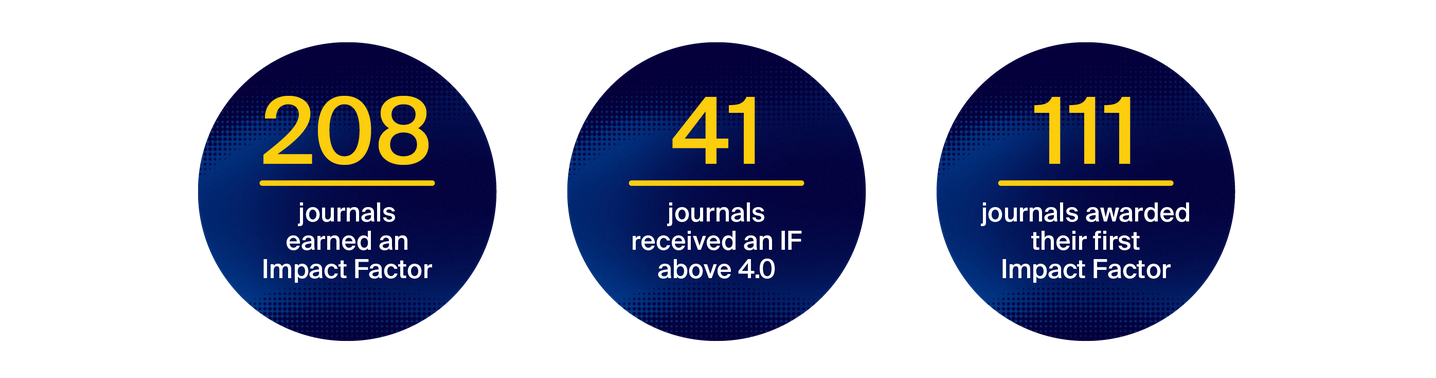
We are thrilled to announce that 90% of our ranked MDPI journals, specifically 86 out of 96 (captured in the table below), are performing above average in Q1 or Q2. This year, Clarivate has expanded its Impact Factor (IF) awards to include journals in the Emerging Sources Citation Index (ESCI) and the Arts and Humanities Citation Index (AHCI), providing greater transparency for the full set of journals indexed in the Web of Science Core Collection. As a result, 111 of MDPI journals have received their first IF in 2023, with 37 journals surpassing an IF of 3.0. In total, 208 MDPI journals have been honored with an IF.
Clarivate explains that by "expanding the coverage but holding to highly selective standards, the [Impact Factor] is now a reliable indicator of trustworthiness, as well as a measure of scholarly impact, at the journal level."
Please visit our blog post where we discuss the release of the latest citation metrics with our Indexing Manager, Dr. Constanze Schelhorn, to find out what's different this time around and how to make use of different metrics available.
| Journal | Impact Factor | Rank Quartile | Category |
| Vaccines | 7.8 | Q1 | Immunology |
| Medicine, Research & Experimental | |||
| Antioxidants | 7.0 | Q1 | Food Science & Technology |
| Biochemistry & Molecular Biology | |||
| Chemistry, Medicinal | |||
| Cells | 6.0 | Q2 | Cell Biology |
| Nutrients | 5.9 | Q1 | Nutrition & Dietetics |
| International Journal of Molecular Sciences | 5.6 | Q1 | Biochemistry & Molecular Biology |
| Q2 | Chemistry, Multidisciplinary | ||
| Journal of Theoretical and Applied Electronic Commerce Research | 5.6 | Q2 | Business |
| Biomolecules | 5.5 | Q1 | Biochemistry & Molecular Biology |
| Biosensors | 5.4 | Q1 | Chemistry, Analytical |
| Instruments & Instrumentation | |||
| Q2 | Nanoscience & Nanotechnology | ||
| Fractal and Fractional | 5.4 | Q1 | Mathematics, Interdisciplinary Applications |
| Marine Drugs | 5.4 | Q1 | Chemistry, Medicinal |
| Pharmacology & Pharmacy | |||
| Pharmaceutics | 5.4 | Q1 | Pharmacology & Pharmacy |
| Nanomaterials | 5.3 | Q1 | Physics, Applied |
| Q2 | Chemistry, Multidisciplinary | ||
| Materials Science, Multidisciplinary | |||
| Nanoscience & Nanotechnology | |||
| Cancers | 5.2 | Q2 | Oncology |
| Foods | 5.2 | Q1 | Food Science & Technology |
| Polymers | 5.0 | Q1 | Polymer Science |
| Remote Sensing | 5.0 | Q1 | Geosciences, Multidisciplinary |
| Q2 | Remote Sensing | ||
| Imaging Science & Photographic Technology | |||
| Environmental Sciences | |||
| Antibiotics | 4.8 | Q1 | Pharmacology & Pharmacy |
| Q2 | Infectious Diseases | ||
| Drones | 4.8 | Q2 | Remote Sensing |
| Journal of Functional Biomaterials | 4.8 | Q2 | Engineering, Biomedical |
| Materials Science, Biomaterials | |||
| Biomedicines | 4.7 | Q1 | Pharmacology & Pharmacy |
| Q2 | Biochemistry & Molecular Biology | ||
| Medicine, Research & Experimental | |||
| Journal of Fungi | 4.7 | Q2 | Mycology |
| Microbiology | |||
| Viruses | 4.7 | Q2 | Virology |
| Bioengineering | 4.6 | Q2 | Engineering, Biomedical |
| Gels | 4.6 | Q1 | Polymer Science |
| Molecules | 4.6 | Q2 | Chemistry, Multidisciplinary |
| Biochemistry & Molecular Biology | |||
| Pharmaceuticals | 4.6 | Q2 | Pharmacology & Pharmacy |
| Chemistry, Medicinal | |||
| Toxics | 4.6 | Q1 | Toxicology |
| Q2 | Environmental Sciences | ||
| Biomimetics | 4.5 | Q1 | Engineering, Multidisciplinary |
| Q2 | Materials Science, Biomaterials | ||
| Microorganisms | 4.5 | Q2 | Microbiology |
| Plants | 4.5 | Q1 | Plant Sciences |
| Biology | 4.2 | Q2 | Biology |
| Chemosensors | 4.2 | Q2 | Instruments & Instrumentation |
| Chemistry, Analytical | |||
| Electrochemistry | |||
| Membranes | 4.2 | Q2 | Engineering, Chemical |
| Materials Science, Multidisciplinary | |||
| Chemistry, Physical | |||
| Polymer Science | |||
| Toxins | 4.2 | Q1 | Toxicology |
| Q2 | Food Science & Technology | ||
| Metabolites | 4.2 | Q2 | Biochemistry & Molecular Biology |
| Batteries | 4.0 | Q2 | Electrochemistry |
| Materials Science, Multidisciplinary | |||
| Q3 | Energy & Fuels | ||
| Catalysts | 3.9 | Q2 | Chemistry, Physical |
| Journal of Clinical Medicine | 3.9 | Q2 | Medicine, General & Internal |
| Land | 3.9 | Q2 | Environmental Studies |
| Sensors | 3.9 | Q2 | Instruments & Instrumentation |
| Chemistry, Analytical | |||
| Engineering, Electrical & Electronic | |||
| Sustainability | 3.9 | Q2 | Environmental Sciences (SCIE) |
| Environmental Studies (SSCI) | |||
| Q3 | Green & Sustainable Science & Technology (SCIE) | ||
| Green & Sustainable Science & Technology (SSCI) | |||
| Buildings | 3.8 | Q2 | Construction & Building Technology |
| Engineering, Civil | |||
| Agronomy | 3.7 | Q1 | Agronomy |
| Q2 | Plant Sciences | ||
| Fermentation | 3.7 | Q2 | Biotechnology & Applied Microbiology |
| Pathogens | 3.7 | Q2 | Microbiology |
| Agriculture | 3.6 | Q1 | Agronomy |
| Diagnostics | 3.6 | Q2 | Medicine, General & Internal |
| Genes | 3.5 | Q2 | Genetics & Heredity |
| Journal of Intelligence | 3.5 | Q2 | Psychology, Multidisciplinary |
| Lubricants | 3.5 | Q2 | Engineering, Mechanical |
| Processes | 3.5 | Q2 | Engineering, Chemical |
| Coatings | 3.4 | Q2 | Materials Science, Coatings & Films |
| Physics, Applied | |||
| Q3 | Materials Science, Multidisciplinary | ||
| ISPRS International Journal of Geo-Information | 3.4 | Q2 | Geography, Physical |
| Q3 | Computer Science, Information Systems | ||
| Remote Sensing | |||
| Materials | 3.4 | Q2 | Metallurgy & Metallurgical Engineering |
| Physics, Applied | |||
| Physics, Condensed Matter | |||
| Q3 | Materials Science, Multidisciplinary | ||
| Chemistry, Physical | |||
| Micromachines | 3.4 | Q2 | Instruments & Instrumentation |
| Physics, Applied | |||
| Chemistry, Analytical | |||
| Q3 | Nanoscience & Nanotechnology | ||
| Water | 3.4 | Q2 | Water Resources |
| Environmental Sciences | |||
| Brain Sciences | 3.3 | Q3 | Neurosciences |
| Energies | 3.2 | Q3 | Energy & Fuels |
| Fire | 3.2 | Q1 | Forestry |
| Q2 | Ecology | ||
| Life | 3.2 | Q2 | Biology |
| Current Issues in Molecular Biology | 3.1 | Q3 | Biochemistry & Molecular Biology |
| Horticulturae | 3.1 | Q1 | Horticulture |
| Animals | 3.0 | Q1 | Agriculture, Dairy & Animal Science |
| Veterinary Sciences | |||
| Insects | 3.0 | Q1 | Entomology |
| Atmosphere | 2.9 | Q3 | Meteorology & Atmospheric Sciences |
| Environmental Sciences | |||
| Electronics | 2.9 | Q2 | Engineering, Electrical & Electronic |
| Physics, Applied | |||
| Q3 | Computer Science, Information Systems | ||
| Forests | 2.9 | Q1 | Forestry |
| Inorganics | 2.9 | Q2 | Chemistry, Inorganic & Nuclear |
| Journal of Marine Science and Engineering | 2.9 | Q1 | Engineering, Marine |
| Q2 | Oceanography | ||
| Engineering, Ocean | |||
| Metals | 2.9 | Q2 | Metallurgy & Metallurgical Engineering |
| Q3 | Materials Science, Multidisciplinary | ||
| Tropical Medicine and Infectious Disease | 2.9 | Q2 | Tropical Medicine |
| Parasitology | |||
| Q3 | Infectious Diseases | ||
| Universe | 2.9 | Q2 | Astronomy & Astrophysics |
| Physics, Particles & Fields | |||
| Healthcare | 2.8 | Q2 | Health Policy & Services (SSCI) |
| Q3 | Health Care Sciences & Services (SCIE) | ||
| Applied Sciences | 2.7 | Q2 | Engineering, Multidisciplinary |
| Physics, Applied | |||
| Q3 | Chemistry, Multidisciplinary | ||
| Materials Science, Multidisciplinary | |||
| Crystals | 2.7 | Q2 | Crystallography |
| Q3 | Materials Science, Multidisciplinary | ||
| Entropy | 2.7 | Q2 | Physics, Multidisciplinary |
| Magnetochemistry | 2.7 | Q2 | Chemistry, Inorganic & Nuclear |
| Q3 | Chemistry, Physical | ||
| Materials Science, Multidisciplinary | |||
| Symmetry | 2.7 | Q2 | Multidisciplinary Sciences |
| Actuators | 2.6 | Q2 | Instruments & Instrumentation |
| Engineering, Mechanical | |||
| Aerospace | 2.6 | Q1 | Engineering, Aerospace |
| Behavioral Sciences | 2.6 | Q2 | Psychology, Multidisciplinary |
| Current Oncology | 2.6 | Q3 | Oncology |
| Machines | 2.6 | Q2 | Engineering, Mechanical |
| Q3 | Engineering, Electrical & Electronic | ||
| Medicina | 2.6 | Q3 | Medicine, General & Internal |
| Separations | 2.6 | Q3 | Chemistry, Analytical |
| Minerals | 2.5 | Q2 | Mining & Mineral Processing |
| Mineralogy | |||
| Geochemistry & Geophysics | |||
| Children | 2.4 | Q2 | Pediatrics |
| Diversity | 2.4 | Q2 | Biodiversity Conservation |
| Q3 | Ecology | ||
| Journal of Cardiovascular Development and Disease | 2.4 | Q3 | Cardiac & Cardiovascular Systems |
| Mathematics | 2.4 | Q1 | Mathematics |
| Photonics | 2.4 | Q3 | Optics |
| Veterinary Sciences | 2.4 | Q1 | Veterinary Sciences |
| Fishes | 2.3 | Q2 | Marine & Freshwater Biology |
| Fisheries | |||
| Axioms | 2.0 | Q2 | Mathematics, Applied |
| Systems | 1.9 | Q2 | Social Sciences, Interdisciplinary |
| Tomography | 1.9 | Q3 | Radiology, Nuclear Medicine & Medical Imaging |
Note: The Journal of Personalized Medicine's Impact Factor was omitted in the original release and will be assigned separately. Please find the data on the journal webpage in due course.
Source: 2022 Journal Impact Factors, Journal Citation Reports TM (Clarivate, 2023)
27 June 2023
Topic AI Chatbots: Threat or Opportunity?

ChatGPT is a language model launched by OpenAI in November 2022. It has many uses, including chatbots, text summarization, language translation, and content creation. Educators view it as potentially concerning, as it offers powerful opportunities for students to produce work for assessment. Some have experimented with ChatGPT and are amazed by the quality of outputs; however, there are calls for a pause in AI development due to concerns about its impact. We hope that the established MDPI Topic “AI Chatbots: Threat or Opportunity?” will provide a suitable communication platform.

|
|
|
|
|
|
|
|
|
|









“AI Chatbots: Threat or Opportunity?”
by Antony Bryant
Informatics 2023, 10(2), 49; https://doi.org/10.3390/informatics10020049
“SAPBERT: Speaker-Aware Pretrained BERT for Emotion Recognition in Conversation”
by Seunguook Lim and Jihie Kim
Algorithms 2023, 16(1), 8; https://doi.org/10.3390/a16010008
“Challenges and Limitations of ChatGPT and Artificial Intelligence for Scientific Research: A Perspective from Organic Materials”
by Hao-Wen Cheng
AI 2023, 4(2), 401-405; https://doi.org/10.3390/ai4020021
“The Role of ChatGPT in Data Science: How AI-Assisted Conversational Interfaces Are Revolutionizing the Field”
by Hossein Hassani and Emmanuel Sirmal Silva
Big Data Cogn. Comput. 2023, 7(2), 62; https://doi.org/10.3390/bdcc7020062
“Can ChatGPT Help in Electronics Research and Development? A Case Study with Applied Sensors”
by Zoltán Tafferner, Illés Balázs, Olivér Krammer and Attila Géczy
Sensors 2023, 23(10), 4879; https://doi.org/10.3390/s23104879
“ChatGPT Challenges Blended Learning Methodologies in Engineering Education: A Case Study in Mathematics”
by Luis M. Sánchez-Ruiz, Santiago Moll-López, Adolfo Nuñez-Pérez, José Antonio Moraño-Fernández and Erika Vega-Fleitas
Appl. Sci. 2023, 13(10), 6039; https://doi.org/10.3390/app13106039
“ChatGPT for Education and Research: Opportunities, Threats, and Strategies”
by Md. Mostafizer Rahman and Yutaka Watanobe
Appl. Sci. 2023, 13(9), 5783; https://doi.org/10.3390/app13095783
“Info-Autopoiesis and the Limits of Artificial General Intelligence”
by Jaime F. Cárdenas-García
Computers 2023, 12(5), 102; https://doi.org/10.3390/computers12050102
“ChatGPT in Supply Chains: Initial Evidence of Applications and Potential Research Agenda”
by Guilherme Francisco Frederico
Logistics 2023, 7(2), 26; https://doi.org/10.3390/logistics7020026
“What Is the Impact of ChatGPT on Education? A Rapid Review of the Literature”
by Chung Kwan Lo
Educ. Sci. 2023, 13(4), 410; https://doi.org/10.3390/educsci13040410

|
|
Topic: “AI Chatbots: Threat or Opportunity?” |

Topics Webinar | AI Chatbots: Threat or Opportunity?
Date and time: 27 June 2023 at 3:00 p.m. (CEST)
Topics Webinar | AI Chatbots: Threat or Opportunity? II
Date and time: 10 July 2023 at 3:00 p.m. (CEST)
This is a free webinar. After registering, you will receive a confirmation email containing information on how to join the webinar

|
|
|
|
|
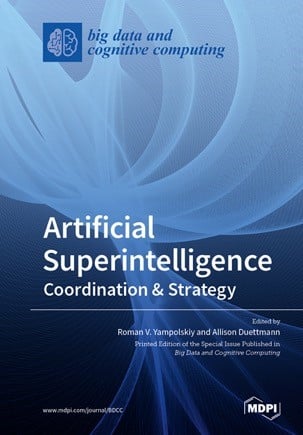
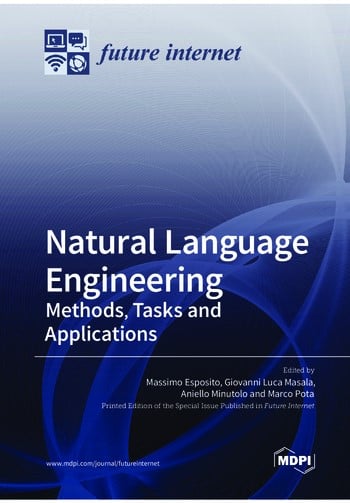
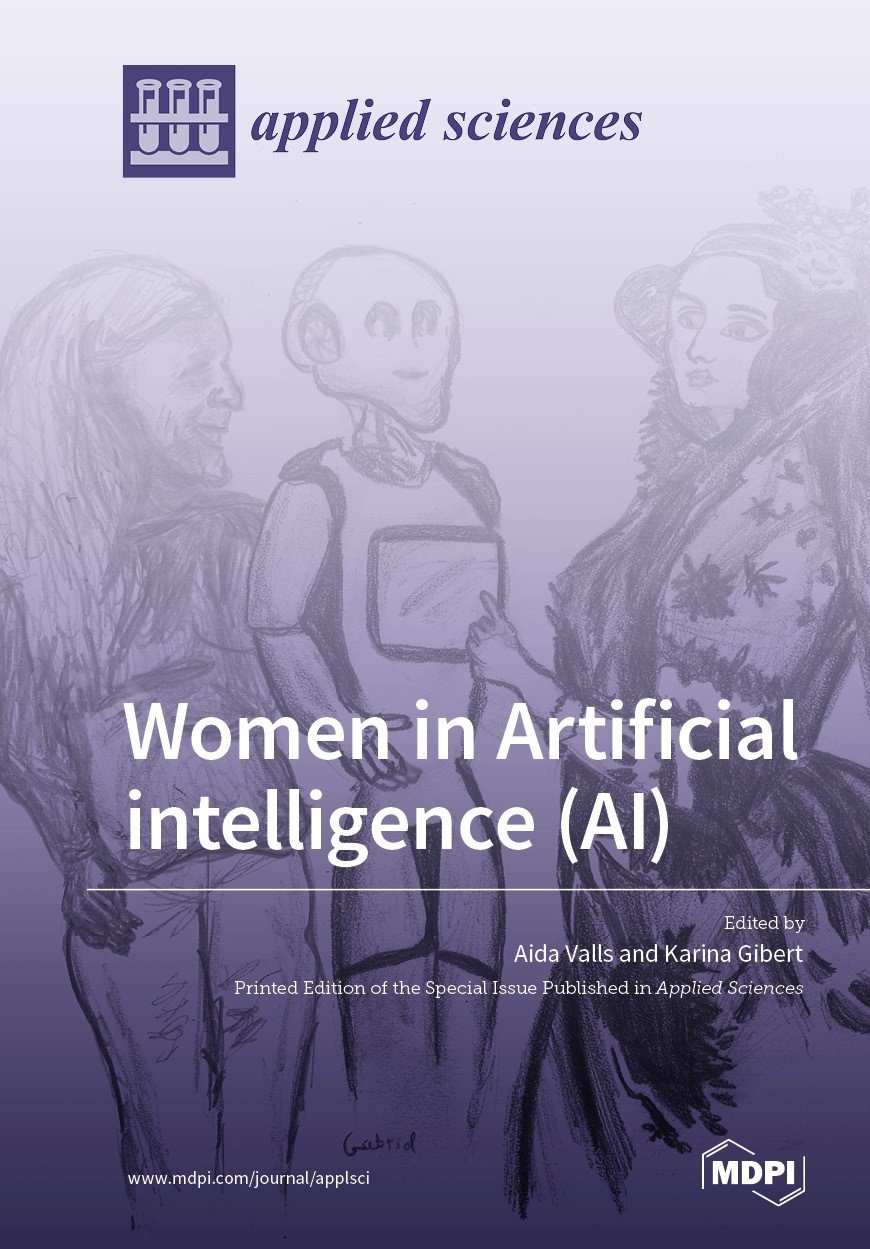
26 June 2023
Information Receives an Increased CiteScore of 5.8

We are pleased to inform you that Information (ISSN: 2078-2489) has received an updated CiteScore of 5.8, an increase of 38% compared with the 2021 metric. The 2022 CiteScore™ was released recently, making an assessment of the scientific influence of journals in the 2019 to 2022 period.
Information’s CiteScore ranks 103 among 379 titles (Q2) in the “Information Systems” category.
For more journal statistics, please visit https://www.mdpi.com/journal/information/stats.
Excellent performance is inseparable from the support and dedication of all journal editors, reviewers, authors, and readers. We would like to take this opportunity to thank all of you who have contributed to the journal.
20 June 2023
Topics Webinar | AI Chatbots: Threat or Opportunity?, Held on 27 June 2023

On 27 June 2023, MDPI, and the journals AI, Algorithms, Big Data and Cognitive Computing (BDCC), Future Internet, Informatics, Information, Languages and Publications, organized the webinar AI Chatbots: Threat or Opportunity?.
The first presentation, delivered by Dr. Ibrahim Demir, tackled “AI Chatbots: Opportunities and Challenges in Engineering Research, Education and Practice”. Dr. Demir is the Director of the UI Hydroinformatics Lab and serves as an Associate Professor in both the Civil and Environmental Engineering and Electrical and Computer Engineering departments at the University of Iowa, Iowa City, USA.
The second presenter was Dr. Haridimos Kondylakis, who presented his paper on “SummaryGPT: Leveraging ChatGPT for Summarizing Knowledge Graphs”. He is a researcher with FORTH-ICS in Greece.
Please note that this webinar is associated with the Topic titled “AI Chatbots: Threat or Opportunity?”. The abstract submission deadline is 29 February 2024.
In addition, the second webinar of the series will be held on 10 July 2023, 3 p.m. (CEST). For more information, or to register for the webinar, please visit the webpage via the following link: https://www.mdpi.com/about/announcements/6117.
You can watch the recorded webinar at the following link: https://youtu.be/lWEDnfGObzI.
Keynote Speakers:
- Ibrahim Demir, University of Iowa, Iowa City, USA;
- Haridimos Kondylakis, Institute of Computer Science, FORTH, Greece.
14 May 2023
2023 World Telecommunication and Information Society Day

The purpose of the World Telecommunication and Information Society Day is to help raise awareness of the possibilities that the use of the Internet and other information and communication technologies (ICTs) can bring to societies and economies, as well as of ways to bridge the digital divide. 17 May marks the anniversary of the signing of the first International Telegraph Convention and the creation of the International Telecommunication Union (ITU).
This year, World Telecommunication and Information Society Day focuses on “Empowering the least developed countries (LDCs) through information and communication technologies.” As the world becomes increasingly adept at leveraging the Internet for value creation, LDCs risk falling further behind. To further explore the information about digital transformation in these LDCs and communication technologies in the rest of the world on the 2023 World Telecommunication and Information Society Day, we have gathered academic research from several journals on the topic of digital communication, all of which are open access, enabling practitioners, policymakers and people around the world to access and share up-to-date scientific knowledge.
Let us celebrate the World Telecommunication and Information Society Day together.

|
|
|
|
|
|
|
|
|
|
|
|
|
|
|
|













|
ParlTech: Transformation Framework for the Digital Parliament |
|
|
Impactful Digital Twin in the Healthcare Revolution |
|
|
Managerial Practices for the Digital Transformation of Manufacturers |
|
|
Blockchain-Enabled IoT for Rural Healthcare: Hybrid-Channel Communication with Digital Twinning |
|
|
Applied Data Science for Social Good |
The Digital Transformation of Healthcare |
|
|
|








|
|
|
|



5 May 2023
Meet Us at the 2023 IEEE International Symposium on Information Theory (ISIT 2023), 25–30 June 2023, Taipei, Taiwan

MDPI will be attending the 2023 IEEE International Symposium on Information Theory (ISIT 2023) in Taipei, Taiwan, which will take place from 25 to 30 June 2023.
ISIT is the premier international conference series dedicated to the advancement of information theory and related areas. It brings together an international community of researchers and practitioners each year to present and discuss new research results and perspectives on future developments relevant to all areas of information theory, including big data analytics, source and channel coding, communication theory and systems, cryptography and security, detection and estimation, emerging applications, networks, network coding, signal processing, and statistical/machine learning.
The following MDPI journals will be represented:
If you are attending this conference, please feel free to stop by our booth. Our delegates look forward to meeting you in person to answer any questions you may have. For more information about the conference, please visit the following link: https://isit2023.org/.
14 March 2023
Obituary—Prof. Mark Burgin

Professor Mark Burgin, a renowned mathematician, logician, computer scientist, and information theoretician, passed away on Saturday, February 18, 2023. He was President-Elect of the IS4SI, International Society for the Study of Information, where he served as Vice-President for Publications for many years and one of the main moving forces of the summit of IS4SI where he organized the conference series “Theoretical and Foundational Problems (TFP) In Information Studies”. Prof. Burgin was a prominent figure in the IS4SI organization, a cohesive force, a highly respected colleague, and a friend.
Prof. Burgin earned his M.A. and Ph.D. in mathematics from Moscow State University. He later went on to receive a Doctor of Science (DSc) in logic and philosophy from the National Academy of Sciences of Ukraine. Throughout his career, he held various academic positions, including Visiting Professor at UCLA, a Professor at the Institute of Education, Kiev, Ukraine, at International Solomon University, Kiev, Ukraine, at Kiev State University, Ukraine, the Head of the Assessment Laboratory of the Research Center of Science at the National Academy of Sciences of Ukraine and the Chief Scientist at Institute of Psychology, Kiev. At the time of his passing, he was affiliated with UCLA, Los Angeles, California, USA.
Prof. Mark Burgin was widely recognized for his groundbreaking contributions to a broad range of fields, including mathematics, information sciences, theory of algorithms, theory of knowledge, computer science, system theory, philosophy, logic, psychology, cognitive sciences, social sciences, pedagogical sciences, and methodology of science. He was the first to address Non-Diophantine arithmetics, and to axiomatize and build mathematical foundations for negative probability used in physics, finance, and economics. He also constructed new classes of automata that overcame the barrier posed by the Church-Turing Thesis in computer science. His recent contribution to Super-Symbolic Computing and the General Theory of Information with Structural Machines is leading to various practical applications in enhancing machine intelligence to solve diverse problems in healthcare and self-regulating software systems in distributed computing environments.
In addition to various contributions in specific areas of science, Prof. Burgin paid great attention to the new development of scientific methodology. He published a number of papers on methodology including “Methodology of Information Ecology in the Context of Modern Academic Research”, “Techn-Ecology and Problems of Education”, “Principles of General Ecology” and “Introduction to Modern Exact Methodology of Science”, as well as the edited book Philosophy and Methodology of Information: The Study of Information in a Transdisciplinary Perspective.
Dr. Burgin authored and co-authored over 500 papers and 21 books, including Theory of Knowledge: Structure and Processes (2016), Structural Reality (2012), Hypernumbers and Extrafunctions: Extending the Classical Calculus (2012), Theory of Named Sets (2011), Theory of Information: Fundamentality, Diversity and Unification (2010), Measuring Power of Algorithms, Computer Programs, and Information Automata (2010), Neoclassical Analysis: Calculus Closer to the Real World (2008), Super-recursive Algorithms (2005), On the Nature and Essence of Mathematics (1998), Intellectual Components of Creativity (1998), Fundamental Structures of Knowledge and Information: Achievement of an Absolute (1997), Non-Diophantine Arithmetics or is it Possible that 2 + 2 ¹ 4’ (1997), Introduction to the Modern Exact Methodology of Science (1994), The Structure-Nominative Analysis of Theoretical Knowledge (1992), and The World of Theories and Power of Mind (1992).
Prof. Mark Burgin was a member of the New York Academy of Sciences, a Senior Member of IEEE, the Society for Computer Modeling and Simulation International, and the International Society for Computers and their Applications. He was also an Honorary Professor of the Aerospace Academy of Ukraine, the Chair of the IEEE San Fernando Valley Computer and Communication Chapter, and the Secretary of the International Society for Computers and their Applications.
He was the editor of the World Scientific Series in Information Studies with 14 already published volumes and two that are forthcoming. Prof. Burgin served as an Associate Editor of the MDPI journal Information.
Prof. Mark Burgin’s extraordinary intellect and pioneering research will continue to inspire future generations of researchers. Prof. Burgin will be remembered for his outstanding contributions to the fields of mathematics, computer science, and information sciences as well as his work on methodology and transdisciplinary science. He was a brilliant scholar who made a significant impact on the academic community. He will be sorely missed by his colleagues, students, and the wider international academic community.
Our thoughts and condolences go out to his family, friends, and colleagues.
International Society for the Study of Information:
Gordana Dodig-Crnkovic, Vice-President for Protocol
Yixin Zhong, President
Pedro Marijuan, President
Gustavo Saldanha, President Elect
Marcin Schroeder, Immediate Past President
Wolfgang Hofkirchner, Vice-President for Funds
José María Díaz Nafría, Vice-President for Transdisciplinary Projects
Xueshan Yan, Vice-President for Institutional Membership
Zhicheng Chen, Vice-President for Special Interest Groups
Shigeo Kawashima, Vice-President for Regional Chapters
Wu Kun, Vice-President for Archives
Krassimir Markov, Vice-President for Research
Yagmur Denizhan, Vice-President for Educational Affairs
Jorge Navarro López, Vice-President for Conferences
Teresa Guarda, Vice-President for Communication
Annette Grathoff, Secretary
Peter N Boltuc, University of Illinois Springfield
Rao Mikkilineni, Golden Gate University
Eugene Eberbach, Rensselaer Polytechnic Institute
Joseph E. Brenner, International Center for the Philosophy of Information, Xi’an Jiaotong University
Bill Seaman, Duke University
13 March 2023
MDPI’s Newly Launched Journals in December 2022
As a leading open access publisher, MDPI provides scholars with a high-quality and rich academic exchange platform by continuously expanding into new and exciting research areas.
In December 2022, MDPI launched five new journals, covering multiple subjects such as life sciences, biology, medicine and pharmacology, social sciences and humanities. These new journals are being edited by established scholars across the world.
|
Journal |
Founding Editor-in-Chief |
Journal Topics (Selected) |
|
|
Prof. Dr. Fabio Gresta, University of Messina, Italy| Editorial | view inaugural issue |
grass/forage/turf production; grassland management; pasture monitoring; grazing and livestock; grass agro-ecosystems| view journal scope | submit an article |
|
|
Prof. Dr. Christos G. Athanassiou, University of Thessaly, Greece| Editorial | view inaugural issue |
pesticides; fungicides; herbicides; fertilizers; soil conditioners| view journal scope | submit an article |
|
|
Prof. Dr. Stephen H. Safe, Texas A&M University, USA| Editorial | view inaugural issue |
receptor structure; receptor function; receptor signaling; receptor expression and regulation; receptor interactions with drugs| view journal scope | submit an article |
|
|
Dr. Jean Jacques Vanden Eynde, University of Mons-UMONS, Belgium| Editorial | view inaugural issue |
drug discovery; medicinal chemistry; preclinical and clinical research; marketed drugs; intellectual property and regulatory affairs| view journal scope | submit an article |
|
|
Prof. Dr. Heather Kanuka, University of Alberta, Canada| Editorial | view inaugural issue |
higher education; tertiary education; policy and practice in higher education; educational leadership in higher education; educational administration and management in higher education| view journal scope | submit an article |





If you are interested in creating more open access journals with us to publish cutting-edge research, please send your journal proposal application to newjournal-committee@mdpi.com.
7 March 2023
Displaying Co-Authors’ Email Addresses on the Webpage of Published Papers
MDPI is pleased to announce that we now display the co-authors’ email addresses in addition to the corresponding author’s email address on the webpage of published papers, protected by Captcha. For more information about this change, please visit the journal’s instructions for authors page.
We believe this change will facilitate academic discussions and advance our cause of open science and research. The corresponding authors are responsible for communicating with their co-authors and indicating in our system (https://susy.mdpi.com/) if co-authors would prefer for their email addresses not to be displayed.
