
Skip to Content
You are currently on the new version of our website. Access the old version .
  • 4.3
    Impact Factor
  • 8.2
    CiteScore
  • 19 days
    Submission to First Decision
  • 4 days
    Acceptance to Publication

Information

Information is a scientific, peer-reviewed, open access journal of information science and technology, data, knowledge, and communication, published monthly online by MDPI. The International Society for the Study of Information (IS4SI) is affiliated with Information and its members receive discounts on the article processing charges.

Get Alerted

Add your email address to receive forthcoming issues of this journal.

All Articles (6,629)

  • Review
  • Open Access

Generative artificial intelligence (GenAI) complicates the interpretation of assessment in chemical engineering education: a correct calculation, coherent report or plausible design may not reveal the student’s own reasoning. This narrative review brings together research on chemical engineering education, related disciplines, assessment validity and academic integrity. It distinguishes model capability, stakeholder perceptions and observed learning outcomes, then identifies four threats to assessment evidence: answer substitution, compression of reasoning into final products, smoothing of design rationales, and loss of individual attribution. Detection, prohibition, disclosure and authentic tasks address these problems only partially. We propose the Authenticity, Process Visibility, Verification, Reflection and Transparency (APVRT) framework to connect these vulnerabilities with complementary evidence functions and the conditions under which observations can support individual judgements. APVRT remains a conceptual proposal; its effects on judgement validity, fairness and workload require empirical evaluation.

Information

14 November 2026

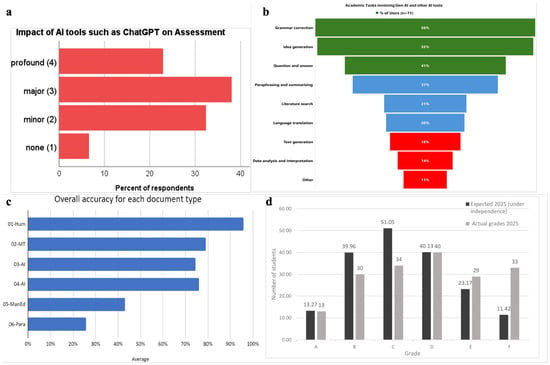
Evidence that GenAI is reshaping the conditions of assessment. (a) Educators’ perceived impact of GenAI on assessment [83]; (b) academic tasks for which students reported using GenAI and other AI tools [82]; (c) accuracy of AI-text detectors across document types [84]; (d) expected and observed grade distributions following a shift from AI-permissive take-home assessment to supervised assessment [80]. (All panels adapted under CC BY 4.0.)
  • Article
  • Open Access

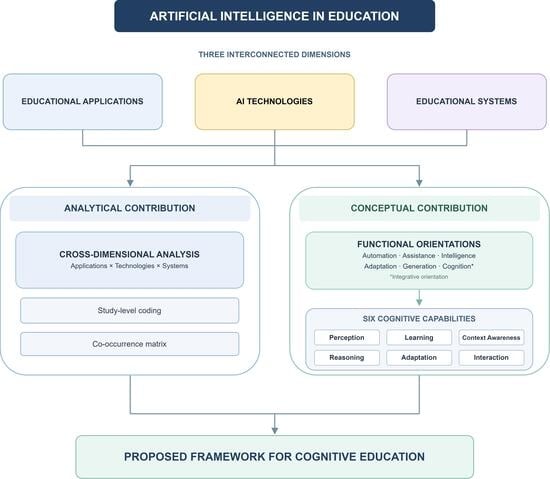
In education, artificial intelligence (AI) plays an increasingly important role and is contributing to the growth of more adaptive, interactive, and personalized forms of learning. This paper considers this evolution from AI-based education toward cognitive education, from three main dimensions: educational applications, AI technologies, and intelligent educational systems. Based on the review of the literature, the paper first presents the main applications of AI in education such as personalized learning, teaching and instructional support, student monitoring and academic integrity, and experiential and immersive learning. Then, it reviews the main technologies used to support these applications, such as machine learning and deep learning, natural language processing, computer vision, knowledge representation and reasoning, and more recent developments in generative AI. The study also examines how these applications and technologies are implemented in intelligent educational systems and platforms. A cross-dimensional analysis examines the relationships between these three dimensions. Complementing this analysis, we propose six functional orientations based on the conceptual synthesis and examine six cognitive capabilities: perception, learning, context awareness, reasoning, adaptation, and interaction. The proposed framework connects the three dimensions and the six capabilities within a continuous feedback loop. Cognitive Education is thus presented as a conceptual research direction requiring empirical validation. Finally, the article discusses the main technical, pedagogical, ethical, and governance challenges, along with emerging trends and directions for future research. Finally, the article discusses the main technical, pedagogical, ethical, and governance challenges and presents emerging trends and possible directions for future research.

Information

13 November 2026

Methodological study selection process.
  • Article
  • Open Access

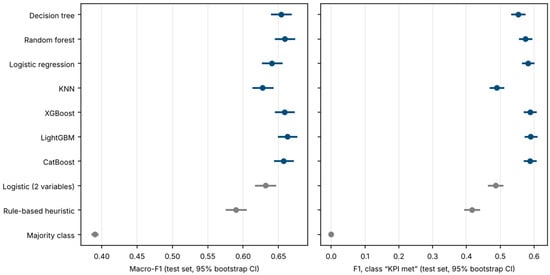
Identifying employees who may need additional professional-learning support could help organisations allocate training resources, but model comparisons in this area often omit trivial baselines and class-specific metrics. We compare seven classifiers (decision tree, random forest, logistic regression, k-nearest neighbours, XGBoost, LightGBM, CatBoost) with a rule-based and a majority-class baseline under one protocol: stratified hold-out, the same tuning procedure, paired bootstrap confidence intervals, a descriptive repeated cross-validation check, and SHAP and LIME explanations. Experiment 1 predicts a KPI label of undocumented origin for 17,415 employees (35.9% positive); it is an illustrative comparison using the label as distributed, not validated evidence about KPI attainment. Experiment 2 predicts promotion for 54,808 employees (8.5% positive), a related task from the same public source and not an external validation. In Experiment 1, learning models reached macro-F1 of 0.628 to 0.663, against 0.590 for the rule-based baseline; a depth-5 decision tree was 0.005 below the reference random forest (95% bootstrap CI −0.016 to +0.005) but was not shown non-inferior at a 0.01 margin. In Experiment 2, boosting models were best (macro-F1 0.734 to 0.739), the decision tree was clearly worse (−0.030), and only about 35% of promoted employees were identified. Associations with training indicators are not causal, and no effect on decisions was tested.

Information

13 November 2026

Macro-F1 and F1 of the “KPI met” class (test set, 95% bootstrap confidence intervals) of the seven learning models, the 2-variable logistic regression, the rule-based heuristic and the majority-class baseline, Experiment 1. Blue markers: the seven learning models; grey markers: the baselines (2-variable logistic regression, rule-based heuristic, majority-class classifier).
  • Article
  • Open Access

In content-based recommendation, a second-stage (L2) reranker decides which retrieved items fill the first screen. Decision models, which answer a typed question about a text with a probability, are an alternative to trained cross-encoders, but whether they separate exact matches from close substitutes is unknown. We cast a decision model as a pointwise reranker that asks whether each candidate exactly matches the request. Under a pre-registered protocol, a gain must hold on both retrieved and fully labelled lists. On Amazon ESCI (1000 requests) and Wayfair WANDS (299), the commercial Jev model, used zero-shot, improves P@10 over embedding order by 0.046 to 0.054 and beats the 0.6B Qwen3-Reranker by 0.02 to 0.03 on ESCI, but not significantly on WANDS. Larger trained cross-encoders (Qwen3-Reranker-4B and 8B, bge-reranker-v2-m3) erase most of this lead: Jev is ahead only on fully labelled ESCI lists. A prompted Qwen3-8B stays behind Jev everywhere. The open decision model CLM-v0.1-8B ranks at random level when scoring a whole list but matches embedding order one product at a time. Jev costs about as much as the 4B model and 13 times bge-reranker-v2-m3. A decision model can serve as an L2 reranker but not demonstrably better than trained cross-encoders.

Information

12 November 2026

Evaluation pipeline, run identically on ESCI and WANDS. Only the L2 model varies; candidate lists are frozen before any reranker is run.

Featured Articles of Last Quarter

Article thumbnail image
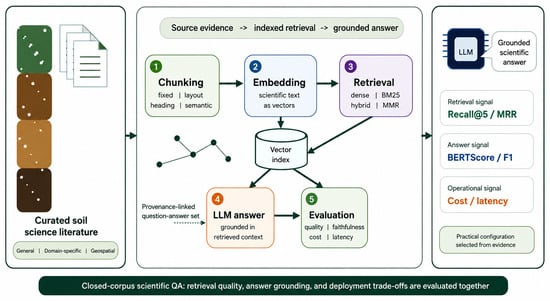
RAG Structure.
PRISMA-informed selection flow, including two focused backward/forward snowballing iterations.
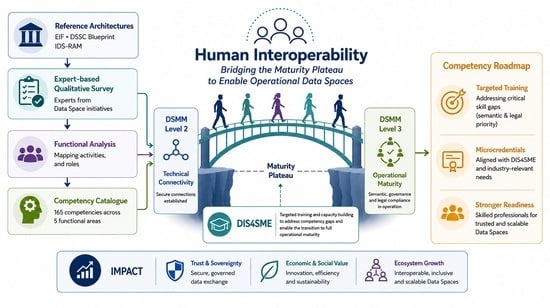
The Data Space Maturity Model: visualisation of the three evolutionary levels and the “evolutionary plateau” at DSMM Level 2, highlighting human interoperability as the driver for DSMM Level 3. The colours are used to improve the visual distinction between the three maturity levels.

Highly Accessed Articles

News & Conferences

Latest Issues

Open for Submission

Journal Sections

XFacebookLinkedIn
Information - ISSN 2078-2489