


Journal Menu
► ▼ Journal Menu-
- Agriculture Home
- Aims & Scope
- Editorial Board
- Reviewer Board
- Topical Advisory Panel
- Early Career Editorial Board
- Instructions for Authors
- Special Issues
- Topics
- Sections
- Article Processing Charge
- Indexing & Archiving
- Editor’s Choice Articles
- Most Cited & Viewed
- Journal Statistics
- Journal History
- Journal Awards
- Conferences
- Editorial Office
Journal Browser
► ▼ Journal BrowserNeed Help?
Announcements
28 June 2023
2022 Impact Factors for MDPI Journals
The 2022 citation metrics have been released in the Journal Citation Reports (JCR), and we’re pleased to announce the following results for MDPI journals:
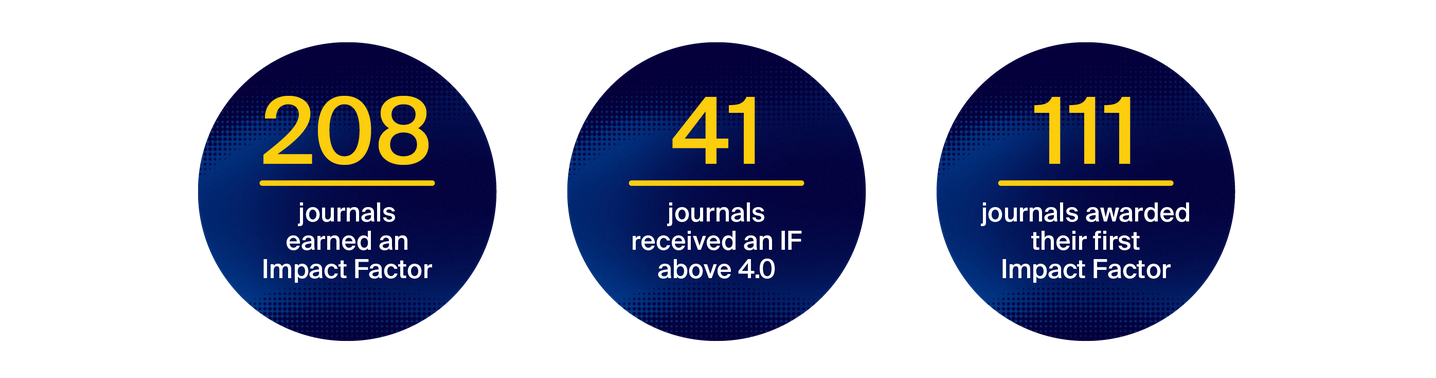
We are thrilled to announce that 90% of our ranked MDPI journals, specifically 86 out of 96 (captured in the table below), are performing above average in Q1 or Q2. This year, Clarivate has expanded its Impact Factor (IF) awards to include journals in the Emerging Sources Citation Index (ESCI) and the Arts and Humanities Citation Index (AHCI), providing greater transparency for the full set of journals indexed in the Web of Science Core Collection. As a result, 111 of MDPI journals have received their first IF in 2023, with 37 journals surpassing an IF of 3.0. In total, 208 MDPI journals have been honored with an IF.
Clarivate explains that by "expanding the coverage but holding to highly selective standards, the [Impact Factor] is now a reliable indicator of trustworthiness, as well as a measure of scholarly impact, at the journal level."
Please visit our blog post where we discuss the release of the latest citation metrics with our Indexing Manager, Dr. Constanze Schelhorn, to find out what's different this time around and how to make use of different metrics available.
| Journal | Impact Factor | Rank Quartile | Category |
| Vaccines | 7.8 | Q1 | Immunology |
| Medicine, Research & Experimental | |||
| Antioxidants | 7.0 | Q1 | Food Science & Technology |
| Biochemistry & Molecular Biology | |||
| Chemistry, Medicinal | |||
| Cells | 6.0 | Q2 | Cell Biology |
| Nutrients | 5.9 | Q1 | Nutrition & Dietetics |
| International Journal of Molecular Sciences | 5.6 | Q1 | Biochemistry & Molecular Biology |
| Q2 | Chemistry, Multidisciplinary | ||
| Journal of Theoretical and Applied Electronic Commerce Research | 5.6 | Q2 | Business |
| Biomolecules | 5.5 | Q1 | Biochemistry & Molecular Biology |
| Biosensors | 5.4 | Q1 | Chemistry, Analytical |
| Instruments & Instrumentation | |||
| Q2 | Nanoscience & Nanotechnology | ||
| Fractal and Fractional | 5.4 | Q1 | Mathematics, Interdisciplinary Applications |
| Marine Drugs | 5.4 | Q1 | Chemistry, Medicinal |
| Pharmacology & Pharmacy | |||
| Pharmaceutics | 5.4 | Q1 | Pharmacology & Pharmacy |
| Nanomaterials | 5.3 | Q1 | Physics, Applied |
| Q2 | Chemistry, Multidisciplinary | ||
| Materials Science, Multidisciplinary | |||
| Nanoscience & Nanotechnology | |||
| Cancers | 5.2 | Q2 | Oncology |
| Foods | 5.2 | Q1 | Food Science & Technology |
| Polymers | 5.0 | Q1 | Polymer Science |
| Remote Sensing | 5.0 | Q1 | Geosciences, Multidisciplinary |
| Q2 | Remote Sensing | ||
| Imaging Science & Photographic Technology | |||
| Environmental Sciences | |||
| Antibiotics | 4.8 | Q1 | Pharmacology & Pharmacy |
| Q2 | Infectious Diseases | ||
| Drones | 4.8 | Q2 | Remote Sensing |
| Journal of Functional Biomaterials | 4.8 | Q2 | Engineering, Biomedical |
| Materials Science, Biomaterials | |||
| Biomedicines | 4.7 | Q1 | Pharmacology & Pharmacy |
| Q2 | Biochemistry & Molecular Biology | ||
| Medicine, Research & Experimental | |||
| Journal of Fungi | 4.7 | Q2 | Mycology |
| Microbiology | |||
| Viruses | 4.7 | Q2 | Virology |
| Bioengineering | 4.6 | Q2 | Engineering, Biomedical |
| Gels | 4.6 | Q1 | Polymer Science |
| Molecules | 4.6 | Q2 | Chemistry, Multidisciplinary |
| Biochemistry & Molecular Biology | |||
| Pharmaceuticals | 4.6 | Q2 | Pharmacology & Pharmacy |
| Chemistry, Medicinal | |||
| Toxics | 4.6 | Q1 | Toxicology |
| Q2 | Environmental Sciences | ||
| Biomimetics | 4.5 | Q1 | Engineering, Multidisciplinary |
| Q2 | Materials Science, Biomaterials | ||
| Microorganisms | 4.5 | Q2 | Microbiology |
| Plants | 4.5 | Q1 | Plant Sciences |
| Biology | 4.2 | Q2 | Biology |
| Chemosensors | 4.2 | Q2 | Instruments & Instrumentation |
| Chemistry, Analytical | |||
| Electrochemistry | |||
| Membranes | 4.2 | Q2 | Engineering, Chemical |
| Materials Science, Multidisciplinary | |||
| Chemistry, Physical | |||
| Polymer Science | |||
| Toxins | 4.2 | Q1 | Toxicology |
| Q2 | Food Science & Technology | ||
| Metabolites | 4.2 | Q2 | Biochemistry & Molecular Biology |
| Batteries | 4.0 | Q2 | Electrochemistry |
| Materials Science, Multidisciplinary | |||
| Q3 | Energy & Fuels | ||
| Catalysts | 3.9 | Q2 | Chemistry, Physical |
| Journal of Clinical Medicine | 3.9 | Q2 | Medicine, General & Internal |
| Land | 3.9 | Q2 | Environmental Studies |
| Sensors | 3.9 | Q2 | Instruments & Instrumentation |
| Chemistry, Analytical | |||
| Engineering, Electrical & Electronic | |||
| Sustainability | 3.9 | Q2 | Environmental Sciences (SCIE) |
| Environmental Studies (SSCI) | |||
| Q3 | Green & Sustainable Science & Technology (SCIE) | ||
| Green & Sustainable Science & Technology (SSCI) | |||
| Buildings | 3.8 | Q2 | Construction & Building Technology |
| Engineering, Civil | |||
| Agronomy | 3.7 | Q1 | Agronomy |
| Q2 | Plant Sciences | ||
| Fermentation | 3.7 | Q2 | Biotechnology & Applied Microbiology |
| Pathogens | 3.7 | Q2 | Microbiology |
| Agriculture | 3.6 | Q1 | Agronomy |
| Diagnostics | 3.6 | Q2 | Medicine, General & Internal |
| Genes | 3.5 | Q2 | Genetics & Heredity |
| Journal of Intelligence | 3.5 | Q2 | Psychology, Multidisciplinary |
| Lubricants | 3.5 | Q2 | Engineering, Mechanical |
| Processes | 3.5 | Q2 | Engineering, Chemical |
| Coatings | 3.4 | Q2 | Materials Science, Coatings & Films |
| Physics, Applied | |||
| Q3 | Materials Science, Multidisciplinary | ||
| ISPRS International Journal of Geo-Information | 3.4 | Q2 | Geography, Physical |
| Q3 | Computer Science, Information Systems | ||
| Remote Sensing | |||
| Materials | 3.4 | Q2 | Metallurgy & Metallurgical Engineering |
| Physics, Applied | |||
| Physics, Condensed Matter | |||
| Q3 | Materials Science, Multidisciplinary | ||
| Chemistry, Physical | |||
| Micromachines | 3.4 | Q2 | Instruments & Instrumentation |
| Physics, Applied | |||
| Chemistry, Analytical | |||
| Q3 | Nanoscience & Nanotechnology | ||
| Water | 3.4 | Q2 | Water Resources |
| Environmental Sciences | |||
| Brain Sciences | 3.3 | Q3 | Neurosciences |
| Energies | 3.2 | Q3 | Energy & Fuels |
| Fire | 3.2 | Q1 | Forestry |
| Q2 | Ecology | ||
| Life | 3.2 | Q2 | Biology |
| Current Issues in Molecular Biology | 3.1 | Q3 | Biochemistry & Molecular Biology |
| Horticulturae | 3.1 | Q1 | Horticulture |
| Animals | 3.0 | Q1 | Agriculture, Dairy & Animal Science |
| Veterinary Sciences | |||
| Insects | 3.0 | Q1 | Entomology |
| Atmosphere | 2.9 | Q3 | Meteorology & Atmospheric Sciences |
| Environmental Sciences | |||
| Electronics | 2.9 | Q2 | Engineering, Electrical & Electronic |
| Physics, Applied | |||
| Q3 | Computer Science, Information Systems | ||
| Forests | 2.9 | Q1 | Forestry |
| Inorganics | 2.9 | Q2 | Chemistry, Inorganic & Nuclear |
| Journal of Marine Science and Engineering | 2.9 | Q1 | Engineering, Marine |
| Q2 | Oceanography | ||
| Engineering, Ocean | |||
| Metals | 2.9 | Q2 | Metallurgy & Metallurgical Engineering |
| Q3 | Materials Science, Multidisciplinary | ||
| Tropical Medicine and Infectious Disease | 2.9 | Q2 | Tropical Medicine |
| Parasitology | |||
| Q3 | Infectious Diseases | ||
| Universe | 2.9 | Q2 | Astronomy & Astrophysics |
| Physics, Particles & Fields | |||
| Healthcare | 2.8 | Q2 | Health Policy & Services (SSCI) |
| Q3 | Health Care Sciences & Services (SCIE) | ||
| Applied Sciences | 2.7 | Q2 | Engineering, Multidisciplinary |
| Physics, Applied | |||
| Q3 | Chemistry, Multidisciplinary | ||
| Materials Science, Multidisciplinary | |||
| Crystals | 2.7 | Q2 | Crystallography |
| Q3 | Materials Science, Multidisciplinary | ||
| Entropy | 2.7 | Q2 | Physics, Multidisciplinary |
| Magnetochemistry | 2.7 | Q2 | Chemistry, Inorganic & Nuclear |
| Q3 | Chemistry, Physical | ||
| Materials Science, Multidisciplinary | |||
| Symmetry | 2.7 | Q2 | Multidisciplinary Sciences |
| Actuators | 2.6 | Q2 | Instruments & Instrumentation |
| Engineering, Mechanical | |||
| Aerospace | 2.6 | Q1 | Engineering, Aerospace |
| Behavioral Sciences | 2.6 | Q2 | Psychology, Multidisciplinary |
| Current Oncology | 2.6 | Q3 | Oncology |
| Machines | 2.6 | Q2 | Engineering, Mechanical |
| Q3 | Engineering, Electrical & Electronic | ||
| Medicina | 2.6 | Q3 | Medicine, General & Internal |
| Separations | 2.6 | Q3 | Chemistry, Analytical |
| Minerals | 2.5 | Q2 | Mining & Mineral Processing |
| Mineralogy | |||
| Geochemistry & Geophysics | |||
| Children | 2.4 | Q2 | Pediatrics |
| Diversity | 2.4 | Q2 | Biodiversity Conservation |
| Q3 | Ecology | ||
| Journal of Cardiovascular Development and Disease | 2.4 | Q3 | Cardiac & Cardiovascular Systems |
| Mathematics | 2.4 | Q1 | Mathematics |
| Photonics | 2.4 | Q3 | Optics |
| Veterinary Sciences | 2.4 | Q1 | Veterinary Sciences |
| Fishes | 2.3 | Q2 | Marine & Freshwater Biology |
| Fisheries | |||
| Axioms | 2.0 | Q2 | Mathematics, Applied |
| Systems | 1.9 | Q2 | Social Sciences, Interdisciplinary |
| Tomography | 1.9 | Q3 | Radiology, Nuclear Medicine & Medical Imaging |
Note: The Journal of Personalized Medicine's Impact Factor was omitted in the original release and will be assigned separately. Please find the data on the journal webpage in due course.
Source: 2022 Journal Impact Factors, Journal Citation Reports TM (Clarivate, 2023)
30 May 2023
Meet Us at the IX Iberian Congress and XVII National Congress of Horticultural Sciences 2023, 5–9 June 2023, Mérida, Spain

The IX Iberian Congress and XVII National Congress of Horticultural Sciences 2023 of the Spanish Society of Horticultural Sciences (SECH), together with the Portuguese Association of Horticulture (APH), will be held in Mérida, Spain from 5 to 9 June 2023.
This congress aims to promote a forum for discussion and cooperation between researchers, technicians, farmers, students, exporters and other agents in the horticulture sector for an exchange of experiences that contributes to increasing the profitability and sustainability of this sector. This will encourage research centers on both sides of Spain and Portugal to concentrate efforts and make the most of existing resources with a view to developing joint projects to find solutions to common problems and improve scientific knowledge.
The congress will include thematic sessions, technical visits and an open day for dissemination that will cover the most important issues of both companies, such as production, transformation, process modernization, by-product recovery, marketing and quality of the horticulture sector.
19 May 2023
2023 International Day for Biological Diversity

The International Day for Biological Diversity will be celebrated on 22 May 2023, under the theme “From Agreement to Action: Build Back Biodiversity”, which aims to raise awareness and understanding of biodiversity issues. Biodiversity refers to the diversity of all life forms on Earth, including genetic, species, and ecosystem diversity. Biological diversity resources are the pillars upon which we build civilizations; however, the loss of biodiversity threatens everything, including our health. We hope that the established MDPI journals on life sciences and biology, including Biology, Diversity, Fishes, Birds, Insects, Water, Forests, Grasses, Life, Seeds, Agriculture, and Agronomy, will provide suitable communication platforms. The aim is to strengthen scientific cooperation in response to the International Day for Biological Diversity and to embrace the potential to promote sustainable development.

|
|
|
|
|
|
|
|
|
|
|
|
|
|
|
|













“Avifaunal Diversity and Abundance in the Proposed Sarasalai Mangrove Reserve, Jaffna, Sri Lanka”
by Nitharsan Aloysius, Shashi Madhushanka and Chathuri Chandrika
Birds 2023, 4(1), 103-116; https://doi.org/10.3390/birds4010009
“Perils of Underestimating Species Diversity: Revisiting Systematics of Psammocambeva Catfishes (Siluriformes: Trichomycteridae) from the Rio Paraíba do Sul Basin, South-Eastern Brazil”
by Wilson J. E. M. Costa, José Leonardo Mattos, Paulo J. Vilardo, Pedro F. Amorim and Axel M. Katz
Taxonomy 2022, 2(4), 491-523; https://doi.org/10.3390/taxonomy2040032
“Environmental DNA Metabarcoding: A Novel Contrivance for Documenting Terrestrial Biodiversity”
by Shahnawaz Hassan, Sabreena, Peter Poczai, Bashir Ah Ganai, Waleed Hassan Almalki, Abdul Gafur and R. Z. Sayyed
Biology 2022, 11(9), 1297; https://doi.org/10.3390/biology11091297
“Dam Construction Impacts Fish Biodiversity in a Subtropical River Network, China”
by Xiongjun Liu, Julian D. Olden, Ruiwen Wu, Shan Ouyang and Xiaoping Wu
Diversity 2022, 14(6), 476; https://doi.org/10.3390/d14060476
“Human Communities in Protected Natural Areas and Biodiversity Conservation”
by Elizabeth Olmos-Martínez, Heidi Leticia Romero-Schmidt, María del Carmen Blázquez, Camilo Arias-González and Alfredo Ortega-Rubio
Diversity 2022, 14(6), 441; https://doi.org/10.3390/d14060441
“Effects of Habitat Fragmentation on the Population Structure and Genetic Diversity of Erythroneurini in the Typical Karst Rocky Ecosystem, Southwest China”
by Chen Xiaoxiao, Jia Jiang, Ni Zhang, Xiao Yang, Yongkuan Chi and Yuehua Song
Insects 2022, 13(6), 499; https://doi.org/10.3390/insects13060499
“Application of Ecological Restoration Technologies for the Improvement of Biodiversity and Ecosystem in the River”
by Li Pushuang, Dan Li, Xiaoqing Sun, Zhaosheng Chu, Ting Xia and Binghui Zheng
Water 2022, 14(9), 1402; https://doi.org/10.3390/w14091402
“Conservation-Status Gaps for Marine Top-Fished Commercial Species”
by Imanol Miqueleiz, Rafael Miranda, Arturo Hugo Ariño and Elena Ojea
Fishes 2022, 7(1), 2; https://doi.org/10.3390/fishes7010002

| Special Issue: “Elasmobranch Biodiversity, Conservation and Management” Edited by: Dr. Fabrizio Serena and Dr. Fabio Fiorentino |
Special Issue: “Systematics, Evolution, and Diversity of Dance Flies (Diptera, Empidoidea)” Edited by: Dr. Christophe Daugeron |
||
|
|
|
||
| Special Issue: “Taxonomy, Biodiversity and Ecology of Mediterranean Plants” Edited by: Dr. Saverio Sciandrello, Dr. Carmelo Maria Musarella and Dr. Ricardo Quinto-Canas |
Special Issue: “Macro-Ecology, Macro-Evolution and Conservation of Animals and Plants” Edited by: Prof. Dr. Youhua Chen, Prof. Dr. Kaiwen Pan and Prof. Dr. Xiaohong Chen |
||
|
|
|

International Day for Biological Diversity
Date and time: 22 May 2023, 9–11 a.m. (CEST)
This is a free webinar. After registering, you will receive a confirmation email containing information on how to join the webinar.

|
|
|
|
|

12 May 2023
Meet Us at the International Workshop “Combating Antimicrobial Resistance Using Bacteriophages for Eco-Sustainable Agriculture and Food Systems (ECOPHAGE)”, 12–13 September 2023, Valencia, Spain

Date: 12–13 September 2023
Location: Valencia, Spain
Venue: Charles Darwin’s Room, Burjassot-Paterna Campus, Valencia
Conference website: https://www.ecophagevalencia2023.com/
The aim of this workshop is to bring together experts in the research of bacteriophages as antimicrobials, covering all food production sectors including agriculture, animal husbandry, and aquaculture, together with farmers, food companies, consumer representatives, and policy makers to identify the next steps in the development of phage-based strategies for preventing antimicrobial resistance in the ago-food system.
This workshop is open to all (students and doctoral researchers). The target audience includes early career and senior scientists working in academia and industry, and also representatives of regulatory authorities, who are interested in food sustainability and antimicrobial research.
4 April 2023
Meet Us at the 11th AOHUPO and 7th AOAPO Congress, 8–10 May 2023, Singapore

MDPI will be attending the 11th AOHUPO and 7th AOAPO Congress, hosted by the SSMS and the Malaysian Proteomics Society (MAPS), which will be held from 8 to 10 May 2023, in Singapore. The 3-day face-to-face joint congress will feature distinguished invited speakers in 5 plenary sessions and 27 concurrent sessions, covering broad topics of proteomics and mass spectrometry technologies and applications in health/biomedical research, agriculture/aquaculture, food, and environmental sciences. Congress participants will have the opportunity to submit abstracts for oral and poster presentations. In addition, the organizers have also planned to hold a Young Scientist Forum (YSF) for young scientists as a preconference activity.
The following MDPI journals will be represented:
If you plan on attending this conference, please feel free to stop by our booth (#A15) and start a conversation with us. Our delegates look forward to meeting you in person and answering any questions that you may have. For more information about the conference, please visit the following link: https://www.aohupo-aoapo-2023.org/.
13 March 2023
MDPI’s Newly Launched Journals in December 2022
As a leading open access publisher, MDPI provides scholars with a high-quality and rich academic exchange platform by continuously expanding into new and exciting research areas.
In December 2022, MDPI launched five new journals, covering multiple subjects such as life sciences, biology, medicine and pharmacology, social sciences and humanities. These new journals are being edited by established scholars across the world.
|
Journal |
Founding Editor-in-Chief |
Journal Topics (Selected) |
|
|
Prof. Dr. Fabio Gresta, University of Messina, Italy| Editorial | view inaugural issue |
grass/forage/turf production; grassland management; pasture monitoring; grazing and livestock; grass agro-ecosystems| view journal scope | submit an article |
|
|
Prof. Dr. Christos G. Athanassiou, University of Thessaly, Greece| Editorial | view inaugural issue |
pesticides; fungicides; herbicides; fertilizers; soil conditioners| view journal scope | submit an article |
|
|
Prof. Dr. Stephen H. Safe, Texas A&M University, USA| Editorial | view inaugural issue |
receptor structure; receptor function; receptor signaling; receptor expression and regulation; receptor interactions with drugs| view journal scope | submit an article |
|
|
Dr. Jean Jacques Vanden Eynde, University of Mons-UMONS, Belgium| Editorial | view inaugural issue |
drug discovery; medicinal chemistry; preclinical and clinical research; marketed drugs; intellectual property and regulatory affairs| view journal scope | submit an article |
|
|
Prof. Dr. Heather Kanuka, University of Alberta, Canada| Editorial | view inaugural issue |
higher education; tertiary education; policy and practice in higher education; educational leadership in higher education; educational administration and management in higher education| view journal scope | submit an article |





If you are interested in creating more open access journals with us to publish cutting-edge research, please send your journal proposal application to newjournal-committee@mdpi.com.
7 March 2023
Displaying Co-Authors’ Email Addresses on the Webpage of Published Papers
MDPI is pleased to announce that we now display the co-authors’ email addresses in addition to the corresponding author’s email address on the webpage of published papers, protected by Captcha. For more information about this change, please visit the journal’s instructions for authors page.
We believe this change will facilitate academic discussions and advance our cause of open science and research. The corresponding authors are responsible for communicating with their co-authors and indicating in our system (https://susy.mdpi.com/) if co-authors would prefer for their email addresses not to be displayed.
16 February 2023
Increasing Visibility for Preprints.org – Clarivate adds the Preprint Citation Index to the Web of Science

On 9 February 2023, Clarivate, a global leader in providing trusted insights and analytics, added the Preprint Citation Index to the Web of Science platform, streamlining the research process by allowing researchers to locate and link to preprints alongside other trusted content in the database.
The Preprint Citation Index will act as a bridge to connect cutting-edge preprints with peer-reviewed journal articles published within the Web of Science Core Collection. Alerts can be easily set to monitor new research across several repositories and authors will also be able to include preprints on their Web of Science Research Profile to more accurately display their various research outputs.
As of its launch, the Preprint Citation Index will provide nearly two million preprints from various repositories, including MDPI’s own Preprints.org.
MDPI's Preprints Platform – Preprints.org
To advance Open Science and the fast dissemination of research, MDPI offers researchers a free multidisciplinary preprint platform. Preprints.org accepts submissions from all research areas and offers authors high visibility, permanent archiving, article-level Metrics and immediately citable content by assigning a Digital Object Identifier (DOI) to all preprints.
During submission to any MDPI journal, authors have the option to share their research as a preprint. After an initial screening, the manuscript is available online in 48 hours or less. Once online, preprints can be downloaded, shared, commented on, and cited, providing authors maximum visibility.
We invite you to join the ranks of the over 100k researchers using Preprints.org and share your research.
For more information, please visit Preprints.org.
29 December 2022
Welcoming Prof. Dr. Bernhard Huchzermeyer to the Editorial Board of Agriculture

We are pleased to announce that Prof. Dr. Bernhard Huchzermeyer has been appointed as an Editorial Board Member of the Section “Crop Production” in Agriculture (ISSN: 2077-0472).
Prof. Dr. Bernhard Huchzermeyer is a retired professor of plant biochemistry and physiology. His team’s research focused on (i) primary reactions of photosynthesis including reaction mechanisms of herbicides, and (ii) plant response to abiotic stress. In cooperative research projects, the team tested the significance of biochemical markers to evaluate the degree of perceived stress and the correlation between stress perception and the reduction of biomass production.
He is the speaker of the Biotechnology chapter of the German Association of Engineers (VDI) in Hannover and is a board member of the association, which involves coordinating activities in Life Sciences, including editing technical and laboratory (good practice) guidelines. The second focus of the VDI and its more than 130,000 members lies in outreach activities to improve teaching quality and attract the interest of children to aspects of natural sciences.
The VDI was founded as a national association 150 years ago, fostering the transfer of knowledge, developing quality standards, and making working places in the industry safer. Today, the VDI is active in the triangle of education, research, and industrial application. This includes the integration of international guests and linking companies (employers) to students (future employees).
We warmly welcome Prof. Dr. Bernhard Huchzermeyer to the Editorial Board of the Section “Crop Production”, and we look forward to his contributions to the continued success of the journal.
A complete list of publications can be found at:
https://scholar.google.com/citations?user=wxTK4c8AAAAJ&hl=en
ORCID: 0000-0002-7738-7464
Homepages:
https://www.botanik.uni-hannover.de
https://www.vdi-hannover.de
Short CV:
Doctoral Degree
1975 - Dr. rer. nat., Botany, Technical University of Hannover
Habilitation (teaching and examination admittance)
1990 - Dr. rer. nat. habil., Botany, Hannover University of Veterinary Medicine
Chair of Botany
2005 - Leibniz Universitaet Hannover
adj. Professor of Plant Physiology and Biochemistry
2006 - Northeastern University Boston
2017 - retired professor
Currently:
Board member, German Association of Engineers (VDI)
Reviewer and consultant of the Senior Expert Service Bonn (curriculum development in Life Sciences)
Contact:
VDI – Biotechnology
Hanomag Str. 12, 30449 Hannover, Germany
Tel.: +49 (0) 511 169 799 - 30
E-mail: info@vdi-hannover.de
Home office:
Lothringer Str. 54 A, 30559 Hannover, Germany
E-mail: Bernhard.Huchzermeyer@gmx.de
22 December 2022
Special Issue Mentor Program
We are pleased to announce the launch of a new initiative—the MDPI Special Issue Mentor Program.
This program will enable early career researchers (who must hold a Ph.D. in a related field) to experience editing a Special Issue in MDPI journals, under the mentorship of our experienced Editorial Board Members or other experienced scientists. The mentor program will provide an excellent opportunity for early career scientists to gain editorial experience, and to cultivate their ability to edit scientific research.
The mentee’s responsibilities include:
- Proposing a Special Issue title and assisting the mentor in preparing a summary (around 200–400 words) and 3–10 keywords describing the background, importance, and goal of the Issue;
- Writing a brief promotion plan for the Special Issue;
- Preparing a list of scholars who may be interested in the Issue and personally e-mailing invitations on behalf of Guest Editors;
- Writing an editorial for the online Special Issue together with the mentor.
The mentor’s responsibilities include:
- Conducting a final check before the Special Issue is published online;
- Performing editorial control of the Special Issue and quality control of the publications, both of which must be carried out in a timely manner;
- Providing suggestions to younger scholars if they have any doubts or concerns regarding submissions;
- Organizing video calls with young scholars and the Editorial Office regularly to discuss problems and improvement suggestions for the Special Issue;
- Making and submitting decisions regarding submissions with the assistance of mentees.
Certificates and awards:
After the Special Issue closes, the Editorial Office will provide official certificates for all the mentors and early career researchers.
If you are interested in this opportunity, please send your Special Issue proposal to the Editorial Office of a journal you choose, and we will discuss the process (i.e., mentor collaboration, Special Issue topic feasibility analysis, etc.) in further detail. The full list of MDPI journals is as follows: https://www.mdpi.com/about/journals.
In addition to the new Special Issue Mentor Program, we will continue to welcome all Special Issue proposals focusing on hot research topics.
