

- Article

Impact of Seeding Depth on Emergence and Seedling Establishment of Different Rice Cultivars
- Ahmad Jawad,
- Shahbaz Hussain and
- Samreen Nazeer
- + 4 authors
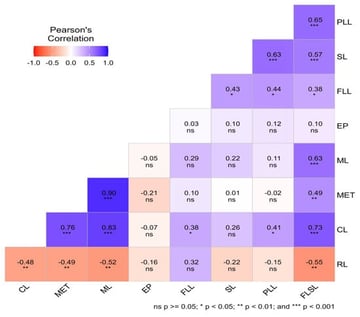
Direct seeded rice, being less water- and labor-intensive, can be an alternative approach to conventional rice planting methods. However, uneven and poor stand establishment caused by deep sowing in the field is one of the major hurdles in the adoption of direct seeding technology. Varieties with the potential to emerge from deeper layers of soil may have a positive impact on crop establishment. To evaluate the behavior of ten rice cultivars against their potential to emerge from different soil depths (0, 2.5, and 5.0 cm), a pot experiment was conducted under semi-controlled conditions at the PARC Rice Programme, Kala Shah Kaku, Lahore. Data on different seedling parameters were collected. The results showed that the highest mean seedling emergence percentage (95%) was achieved by the tested genotypes at a 2.5 cm seeding depth, while surface sowing and placement of seeds at a 5 cm depth demonstrated a similar mean emergence percentage (89%). Seeding depth, genotypes, and their interactions significantly affected mean emergence time, mesocotyl and coleoptile lengths, and root and shoot lengths. Sowing seeds at a 5 cm depth increased mean emergence time by 28%. However, increasing sowing depth increased the coleoptile length, mesocotyl length, first leaf sheath length, and shoot length of rice seedlings. Mesocotyls and coleoptile lengths showed a linear relationship with mean emergence time. Mesocotyl and coleoptile are key structures of the apical–basal axis in grasses that elongate to facilitate the emergence of germinating seeds under deep sowing. The longest coleoptiles (1.47 cm) and mesocotyls (3.27 cm) were measured from seedlings sown at a depth of 5 cm. Among genotypes, PK-1121 exhibited maximum coleoptile elongation (2.10 cm) under deep sowing (5 cm), while the longest mesocotyls were recorded from deep-sown (5 cm) seedlings of Chenab Basmati. Root length was found to be inversely proportional to sowing depth. PK-1121 aromatic, Kisan Basmati, Punjab Basmati, and Chenab Basmati produced longer shoots (22.61, 23.37, 23.32, and 21.05 cm, respectively) and took a relatively short time for emergence when sown deep. These varieties may have better potential to emerge from deeper soil layers, which may have a positive impact on even germination and better crop stand establishment.
2 February 2026