Next Issue
Volume 23, February
Previous Issue
Volume 22, December
 
 
molecules-logo

Journal Browser

Journal Browser

Molecules, Volume 23, Issue 1 (January 2018) – 219 articles

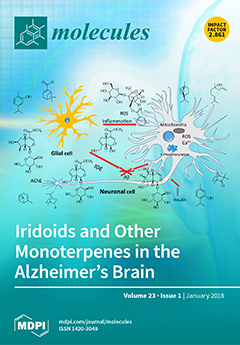
Cover Story (view full-size image): These are small molecules with a 10-carbon skeleton called monoterpenes, which show great structural diversity within the iridoids group. The aglycone and glycoside forms of these compounds appear to target several pathological markers of Alzheimer’s disease both in vitro and in animal models. At a molecular level, beta amyloids (Aβ) formation, precipitation and neurotoxicity, mechanisms of tau phosphorylation, reactive oxygen species-Aβ crosstalk, and various oxidative and inflammatory cascades are targeted. What then would the prospects of these compounds be as drugs? View this paper
  • Issues are regarded as officially published after their release is announced to the table of contents alert mailing list.
  • You may sign up for e-mail alerts to receive table of contents of newly released issues.
  • PDF is the official format for papers published in both, html and pdf forms. To view the papers in pdf format, click on the "PDF Full-text" link, and use the free Adobe Reader to open them.
Order results
Result details
Section
Select all
Export citation of selected articles as:

Editorial

Jump to: Research, Review, Other

4 pages, 189 KB  
Editorial
Structure, Chemical Analysis, Biosynthesis, Metabolism, Molecular Engineering, and Biological Functions of Phytoalexins
by Philippe Jeandet
Research Unit “Induced Resistance and Plant Bioprotection” EA 4707, SFR Condorcet FR CNRS 3417, Faculty of Sciences, University of Reims Champagne-Ardenne, PO Box 1039, 51687 Reims CEDEX 2, France
Molecules 2018, 23(1), 61; https://doi.org/10.3390/molecules23010061 - 28 Dec 2017
Cited by 16 | Viewed by 6482
Abstract
Plants in their natural environment are facing large numbers of pathogenic microorganisms, mainly fungi and bacteria.[…] Full article
9 pages, 256 KB  
Editorial
Breakthroughs in Medicinal Chemistry: New Targets and Mechanisms, New Drugs, New Hopes–2
by Diego Muñoz-Torrero 1,*, Arduino A. Mangoni 2, Hong Liu 3, Christopher Hulme 4, Jarkko Rautio 5, Rafik Karaman 6,7, Maria Emília De Sousa 8,9, Katalin Prokai-Tatrai 10, Jean-Marc Sabatier 11, Carlo Siciliano 12, F. Javier Luque 13, George Kokotos 14, Rino Ragno 15, Simona Collina 16, Catherine Guillou 17, Michael Gütschow 18 and Luigi A. Agrofoglio 19
1 Laboratory of Pharmaceutical Chemistry, Faculty of Pharmacy and Food Sciences, and Institute of Biomedicine (IBUB), University of Barcelona, Av. Joan XXIII, 27-31, E-08028 Barcelona, Spain
2 Department of Clinical Pharmacology, College of Medicine and Public Health, Flinders University and Flinders Medical Centre, Bedford Park, SA 5042, Australia
3 State Key Laboratory of Drug Research, Key Laboratory of Receptor Research, Shanghai Institute of Materia Medica, Chinese Academy of Sciences, 555 Zu Chong Zhi Road, Shanghai 201203, China
4 Department of Pharmacology and Toxicology, and Department of Chemistry and Biochemistry, College of Pharmacy, The University of Arizona, Biological Sciences West Room 351, 1041 East Lowell Street, Tucson, AZ 85721, USA
5 School of Pharmacy, Faculty of Health Sciences, University of Eastern Finland, P.O. Box 1627, FI-70211 Kuopio, Finland
6 Pharmaceutical & Medicinal Chemistry Department, Faculty of Pharmacy, Al-Quds University, POB 20002 Jerusalem, Palestine
7 Department of Sciences, University of Basilicata, Viadell’Ateneo Lucano 10, 85100 Potenza, Italy
8 Laboratório de Química Orgânica e Farmacêutica, Departamento de Ciências Químicas, Faculdade de Farmácia, Universidade do Porto, Rua Jorge Viterbo Ferreira 228, 4050-313 Porto, Portugal
9 Interdisciplinar de Investigação Marinha e Ambiental (CIIMAR/CIMAR), Universidade do Porto, Terminal de Cruzeiros do Porto de Leixões, Avenida General Norton de Matos, S/N 4450-208 Matosinhos, Portugal
10 Center for Neuroscience Discovery, Department of Pharmaceutical Sciences, University of North Texas, Health Science Center, 3500 Camp Bowie Blvd, FortWorth, TX 76107, USA
11 Laboratory INSERM UMR 1097, Aix-Marseille University, 163, Parc Scientifique et Technologique de Luminy, Avenue de Luminy, Bâtiment TPR2, Case 939, 13288 Marseille, France
12 Department of Pharmacy, Health and Nutritional Sciences, University of Calabria, I-87036 Arcavacata di Rende, Italy
13 Department of Nutrition, Food Science, and Gastronomy and Institute of Biomedicine, University of Barcelona, Av. Prat de la Riba 171, 08921 Santa Coloma de Gramenet, Spain
14 Laboratory of Organic Chemistry, Department of Chemistry, National and Kapodistrian University of Athens, Panepistimiopolis, 15771 Athens, Greece
15 Rome Center for Molecular Design, Dipartimento di Chimica e Tecnologie del Farmaco, Sapienza Università di Roma, P. le A. Moro 5, 00185 Roma, Italy
16 Department of Drug Sciences, Medicinal Chemistry and Pharmaceutical Technology Section, Centre for Health Technologies (CHT), University of Pavia, Viale Taramelli 12, 27100 Pavia, Italy
17 Institut de Chimie des Substances Naturelles, CNRS UPR 2301, Unversité de Paris-Saclay, 91198 Gif-sur-Yvette, France
18 Pharmaceutical Institute, University of Bonn, An der Immenburg 4, 53115 Bonn, Germany
19 ICOA UMR CNRS 6005, Universite d’Orleans, Rue de Chartres, 45067 Orleans CEDEX 2, France
add Show full affiliation list remove Hide full affiliation list

Molecules 2018, 23(1), 65; https://doi.org/10.3390/molecules23010065 - 28 Dec 2017
Cited by 4 | Viewed by 6712
Abstract
Breakthroughs in Medicinal Chemistry: New Targets and Mechanisms, New Drugs, New Hopes is a series of Editorials, which are published on a biannual basis by the Editorial Board of the Medicinal Chemistry section of the journal Molecules [...]
Full article
1 pages, 160 KB  
Editorial
Removal of Expression of Concern: Segneanu et al. Helleborus purpurascens—Amino Acid and Peptide Analysis Linked to the Chemical and Antiproliferative Properties of the Extracted Compounds. Molecules 2015, 20, 22170–22187
by Derek J. McPhee 1,* and Isabel C. F. R. Ferreira 2,*
1 MDPI AG. Molecules Editorial Office, St. Alban-Anlage 66, 4052 Basel, Switzerland
2 Mountain Research Centre, School of Agriculture, Polytechnic Institute of Bragança, Campus de Santa Apolónia, 1172, 5300-253 Bragança, Portugal
Molecules 2018, 23(1), 136; https://doi.org/10.3390/molecules23010136 - 10 Jan 2018
Viewed by 3856
Abstract
The article [1] published in Molecules was the subject of a law suit related to authorship. We previously published an Expression of Concern to highlight this fact to readers[...] Full article
51 pages, 331 KB  
Editorial
Acknowledgement to Reviewers of Molecules in 2017
by Molecules Editorial Office
MDPI AG, St. Alban-Anlage 66, 4052 Basel, Switzerland
Molecules 2018, 23(1), 138; https://doi.org/10.3390/molecules23010138 - 10 Jan 2018
Viewed by 10635
Abstract
Peer review is an essential part in the publication process, ensuring that Molecules maintains high quality standards for its published papers.[...] Full article
2 pages, 146 KB  
Editorial
The Chemistry of Alliums
by Martin C. H. Gruhlke and Alan J. Slusarenko *
Department of Plant Physiology, RWTH Aachen University, D-52056 Aachen, Germany
Molecules 2018, 23(1), 143; https://doi.org/10.3390/molecules23010143 - 11 Jan 2018
Cited by 9 | Viewed by 5642
Abstract
Physiologically active sulfur-containing compounds produced by Allium spp. have long fascinated chemists, biochemists, and biologists.[...] Full article
(This article belongs to the Special Issue The Chemistry of Alliums)

Research

Jump to: Editorial, Review, Other

13 pages, 959 KB  
Article
Comparative Study between Direct and Pseudomorphic Transformation of Rice Husk Ash into MFI-Type Zeolite
by Hallah Ahmad Alyosef 1, Hans Roggendorf 2, Denise Schneider 1, Alexandra Inayat 3, Julia Welscher 3, Wilhelm Schwieger 3, Tom Münster 4, Gert Kloess 4, Suzan Ibrahim 5 and Dirk Enke 1,*
1 Institute of Chemical Technology, Universität Leipzig, Linnéstr. 3, 04103 Leipzig, Germany
2 Institute of Physics, Martin-Luther-University Halle-Wittenberg, 06120 Halle (Saale), Germany
3 Institute of Chemical Reaction Engineering, Friedrich-Alexander University Erlangen-Nürnberg (FAU), Egerlandstr. 3, 91058 Erlangen, Germany
4 Institute of Mineralogy, Crystallography and Materials Science, Universität Leipzig, Scharnhorststrasse 20, 04275 Leipzig, Germany
5 Central Metallurgical Research & Development Institute (CMRDI), P.O. Box 87, Helwan 11421, Egypt
Molecules 2018, 23(1), 1; https://doi.org/10.3390/molecules23010001 - 21 Dec 2017
Cited by 11 | Viewed by 8147
Abstract
Pre-shaped mesoporous amorphous rice husk ash (RHA) and MCM-41 derived from RHA as a silica source were transformed into MFI-type zeolites using two different structure-directing agents. Tetrapropylammonium hydroxide (TPAOH) was utilized as an alkali source for silica dissolution and structure control during the [...] Read more.
Pre-shaped mesoporous amorphous rice husk ash (RHA) and MCM-41 derived from RHA as a silica source were transformed into MFI-type zeolites using two different structure-directing agents. Tetrapropylammonium hydroxide (TPAOH) was utilized as an alkali source for silica dissolution and structure control during the direct transformation of RHA into zeolite. A monopropylamine (PA)-containing alkaline solution (NaOH) was used for the pseudomorphic transformation of RHA or MCM-41 into zeolite. The hydrothermal conversion of RHA or MCM-41 into MFI-type zeolites was investigated as a function of reaction time at 175 °C. With PA as template, the crystallization took place inside and on the outer surface of RHA or MCM-41 without losing the original shape of the initial silica sources, while TPAOH led to the formation of conventional MFI-type zeolite crystals due to the complete dissolution of RHA. The final products were characterized by X-ray diffraction, nitrogen adsorption, scanning electron microscopy, and optical emission spectroscopy. Full article
Show Figures

Figure 1

13 pages, 5363 KB  
Article
Energetic Di- and Trinitromethylpyridines: Synthesis and Characterization
by Yiying Zhang, Xiaoyu Sun, Shannan Yu, Lingxiang Bao, Chenghui Sun * and Siping Pang *
School of Material Science & Engineering, Beijing Institute of Technology, Beijing 100081, China
Molecules 2018, 23(1), 2; https://doi.org/10.3390/molecules23010002 - 21 Dec 2017
Cited by 9 | Viewed by 6609
Abstract
Pyridine derivatives based on the addition of trinitromethyl functional groups were synthesized by the reaction of N2O4 with the corresponding pyridinecarboxaldoximes, then they were converted into dinitromethylide hydrazinium salts. These energetic compounds were fully characterized by IR and NMR spectroscopy, [...] Read more.
Pyridine derivatives based on the addition of trinitromethyl functional groups were synthesized by the reaction of N2O4 with the corresponding pyridinecarboxaldoximes, then they were converted into dinitromethylide hydrazinium salts. These energetic compounds were fully characterized by IR and NMR spectroscopy, elemental analysis, differential scanning calorimetry (DSC), and X-ray crystallography. These pyridine derivatives have good densities, positive enthalpies of formation, and acceptable sensitivity values. Theoretical calculations carried out using Gaussian 03 and EXPLO5 programs demonstrated good to excellent detonation velocities and pressures. Each of these compounds is superior in performance to TNT, while 2,6-bis(trinitromethyl)pyridine (D = 8700 m·s−1, P = 33.2 GPa) shows comparable detonation performance to that of RDX, but its thermal stability is too low, making it inferior to RDX. Full article
(This article belongs to the Collection Heterocyclic Compounds)
Show Figures

Figure 1

13 pages, 3102 KB  
Article
Antinociceptive and Antibacterial Properties of Anthocyanins and Flavonols from Fruits of Black and Non-Black Mulberries
by Hu Chen, Wansha Yu, Guo Chen, Shuai Meng, Zhonghuai Xiang and Ningjia He *
State Key Laboratory of Silkworm Genome Biology, Southwest University, Beibei, Chongqing 400715, China
Molecules 2018, 23(1), 4; https://doi.org/10.3390/molecules23010004 - 21 Dec 2017
Cited by 94 | Viewed by 9597
Abstract
Anthocyanins and flavones are important pigments responsible for the coloration of fruits. Mulberry fruit is rich in anthocyanins and flavonols, which have multiple uses in traditional Chinese medicine. The antinociceptive and antibacterial activities of total flavonoids (TF) from black mulberry (MnTF, TF of [...] Read more.
Anthocyanins and flavones are important pigments responsible for the coloration of fruits. Mulberry fruit is rich in anthocyanins and flavonols, which have multiple uses in traditional Chinese medicine. The antinociceptive and antibacterial activities of total flavonoids (TF) from black mulberry (MnTF, TF of Morus nigra) and non-black mulberry (MmTF, TF of Morus mongolica; and MazTF, TF of Morus alba ‘Zhenzhubai’) fruits were studied. MnTF was rich in anthocyanins (11.3 mg/g) and flavonols (0.7 mg/g) identified by ultra-performance liquid chromatography–tunable ultraviolet/mass single-quadrupole detection (UPLC–TUV/QDa). Comparatively, MmTF and MazTF had low flavonol contents and MazTF had no anthocyanins. MnTF showed significantly higher antinociceptive and antibacterial activities toward Escherichia coli, Pseudomonas aeruginosa and Staphylococcus aureus than MmTF and MazTF. MnTF inhibited the expression of interleukin 6 (IL-6), inducible nitric oxide synthase (iNOS), phospho-p65 (p-p65) and phospho-IκBα (p-IκBα), and increased interleukin 10 (IL-10). Additionally, mice tests showed that cyanidin-3-O-glucoside (C3G), rutin (Ru) and isoquercetin (IQ) were the main active ingredients in the antinociceptive process. Stronger antinociceptive effect of MnTF was correlated with its high content of anthocyanins and flavonols and its inhibitory effects on proinflammatory cytokines, iNOS and nuclear factor-κB (NF-κB) pathway-related proteins. Full article
(This article belongs to the Special Issue Advances in Anthocyanin Research 2018)
Show Figures

Figure 1

19 pages, 1757 KB  
Article
Application of a General Computer Algorithm Based on the Group-Additivity Method for the Calculation of Two Molecular Descriptors at Both Ends of Dilution: Liquid Viscosity and Activity Coefficient in Water at Infinite Dilution
by Rudolf Naef 1,* and William E. Acree 2
1 Department of Chemistry, University of Basel, 4003 Basel, Switzerland
2 Department of Chemistry, University of North Texas, Denton, TX 76203, USA
Molecules 2018, 23(1), 5; https://doi.org/10.3390/molecules23010005 - 21 Dec 2017
Cited by 15 | Viewed by 8649
Abstract
The application of a commonly used computer algorithm based on the group-additivity method for the calculation of the liquid viscosity coefficient at 293.15 K and the activity coefficient at infinite dilution in water at 298.15 K of organic molecules is presented. The method [...] Read more.
The application of a commonly used computer algorithm based on the group-additivity method for the calculation of the liquid viscosity coefficient at 293.15 K and the activity coefficient at infinite dilution in water at 298.15 K of organic molecules is presented. The method is based on the complete breakdown of the molecules into their constituting atoms, further subdividing them by their immediate neighborhood. A fast Gauss–Seidel fitting method using experimental data from literature is applied for the calculation of the atom groups’ contributions. Plausibility tests have been carried out on each of the calculations using a ten-fold cross-validation procedure which confirms the excellent predictive quality of the method. The goodness of fit (Q2) and the standard deviation (σ) of the cross-validation calculations for the viscosity coefficient, expressed as log(η), was 0.9728 and 0.11, respectively, for 413 test molecules, and for the activity coefficient log(γ) the corresponding values were 0.9736 and 0.31, respectively, for 621 test compounds. The present approach has proven its versatility in that it enabled the simultaneous evaluation of the liquid viscosity of normal organic compounds as well as of ionic liquids. Full article
Show Figures

Figure 1

13 pages, 2388 KB  
Article
The Major Chromophore Arising from Glucose Degradation and Oxidative Stress Occurrence during Lens Proteins Glycation Induced by Glucose
by Felipe Ávila 1,*, Guillermo Schmeda-Hirschmann 2 and Eduardo Silva 3
1 Escuela de Nutrición y Dietética, Facultad de Ciencias de la Salud, Universidad de Talca, Talca 3460000, Chile
2 Instituto de Química de los Recursos Naturales, Universidad de Talca, Talca 3460000, Chile
3 Laboratorio de Química Biológica, Facultad de Química, Pontificia Universidad Católica de Chile, Santiago 7820436, Chile
Molecules 2018, 23(1), 6; https://doi.org/10.3390/molecules23010006 - 22 Dec 2017
Cited by 18 | Viewed by 6523
Abstract
Glucose autoxidation has been proposed as a key reaction associated with deleterious effects induced by hyperglycemia in the eye lens. Little is known about chromophores generated during glucose autoxidation. In this study, we analyzed the effect of oxidative and dicarbonyl stress in the [...] Read more.
Glucose autoxidation has been proposed as a key reaction associated with deleterious effects induced by hyperglycemia in the eye lens. Little is known about chromophores generated during glucose autoxidation. In this study, we analyzed the effect of oxidative and dicarbonyl stress in the generation of a major chromophore arising from glucose degradation (GDC) and its association with oxidative damage in lens proteins. Glucose (5 mM) was incubated with H2O2 (0.5–5 mM), Cu2+ (5–50 μM), glyoxal (0.5–5 mM) or methylglyoxal (0.5–5 mM) at pH 7.4, 5% O2, 37 °C, from 0 to 30 days. GDC concentration increased with incubation time, as well as when incubated in the presence of H2O2 and/or Cu2+, which were effective even at the lowest concentrations. Dicarbonylic compounds did not increase the levels of GDC during incubations. 1H, 13C and FT-IR spectra from the purified fraction containing the chromophore (detected by UV/vis spectroscopy) showed oxidation products of glucose, including gluconic acid. Lens proteins solutions (10 mg/mL) incubated with glucose (30 mM) presented increased levels of carboxymethyl-lysine and hydrogen peroxide that were associated with GDC increase. Our results suggest a possible use of GDC as a marker of autoxidative reactions occurring during lens proteins glycation induced by glucose. Full article
(This article belongs to the Special Issue Protein Modifications and Bioconjugation)
Show Figures

Graphical abstract

11 pages, 233 KB  
Article
Resveratrol-Induced Changes in MicroRNA Expression in Primary Human Fibroblasts Harboring Carnitine-Palmitoyl Transferase-2 Gene Mutation, Leading to Fatty Acid Oxidation Deficiency
by Virginie Aires 1,2, Dominique Delmas 1,2, Fatima Djouadi 3, Jean Bastin 3, Mustapha Cherkaoui-Malki 1 and Norbert Latruffe 1,*
1 Laboratory BioPeroxIL, University of Bourgogne-Franche Comté, 6 Blvd Gabriel, 21000 Dijon, France
2 INSERM UMR 866, Blvd Jeanne d’Arc, 21490 Dijon, France
3 INSERM U1124, Université Paris-Descartes, Rue des Saints-Pères, 75000 Paris, France
Molecules 2018, 23(1), 7; https://doi.org/10.3390/molecules23010007 - 22 Dec 2017
Cited by 16 | Viewed by 5187
Abstract
Carnitine palmitoyltransferase-2 (CPT2) is a mitochondrial enzyme involved in long-chain fatty acid entry into mitochondria for their β-oxidation and energy production. Two phenotypes are associated with the extremely reduced CPT2 activity in genetically deficient patients: neonatal lethality or, in milder forms, [...] Read more.
Carnitine palmitoyltransferase-2 (CPT2) is a mitochondrial enzyme involved in long-chain fatty acid entry into mitochondria for their β-oxidation and energy production. Two phenotypes are associated with the extremely reduced CPT2 activity in genetically deficient patients: neonatal lethality or, in milder forms, myopathy. Resveratrol (RSV) is a phytophenol produced by grape plant in response to biotic or abiotic stresses that displays anti-oxidant properties, in particular through AP-1, NFκB, STAT-3, and COX pathways. Some beneficiary effects of RSV are due to its modulation of microRNA (miRNA) expression. RSV can enhance residual CPT2 activities in human fibroblasts derived from CPT2-deficient patients and restores normal fatty acid oxidation rates likely through stimulation of mitochondrial biogenesis. Here, we report changes in miRNA expression linked to CPT2-deficiency, and we identify miRNAs whose expression changed following RSV treatment of control or CPT2-deficient fibroblasts isolated from patients. Our findings suggest that RSV consumption might exert beneficiary effects in patients with CPT2-deficiency. Full article
Show Figures

Graphical abstract

10 pages, 967 KB  
Article
Recyclable Keggin Heteropolyacids as an Environmentally Benign Catalyst for the Synthesis of New 2-Benzoylamino-N-phenyl-benzamide Derivatives under Microwave Irradiations at Solvent-Free Conditions and the Evaluation of Biological Activity
by Karima Ighilahriz-Boubchir 1,2, Baya Boutemeur-Kheddis 1,*, Cherifa Rabia 3, Malika Makhloufi-Chebli 1,2, Maamar Hamdi 1 and Artur M. S. Silva 4
1 Laboratoire de Chimie Organique Appliquée (Equipe Hétérocycles), Faculté de Chimie, Université des Sciences et de la Technologie Houari Boumediène, BP 32, El-Alia, Bab-Ezzouar 16111, Algeria
2 Laboratoire de Physique et Chimie des Matériaux (LPCM), Université Mouloud Mammeri, BP17RP, Tizi Ouzou 15000, Algeria
3 Laboratoire de Chimie du Gaz Naturel, Faculté de Chimie, Université des Sciences et de la Technologie Houari Boumediène, BP 32, El-Alia, Bab-Ezzouar 16111, Algeria
4 Department of Chemistry & QOPNA, University of Aveiro, 3810-193 Aveiro, Portugal
Molecules 2018, 23(1), 8; https://doi.org/10.3390/molecules23010008 - 21 Dec 2017
Cited by 13 | Viewed by 5648
Abstract
2-Benzoylamino-N-phenyl-benzamide derivatives (5ah) were prepared from 2-phenyl-3,1-(4H)-benzoxazin-4-one 3 and substituted anilines 4ah in the presence of a Keggin-type heteropolyacids series (H3PW12O40·13H2O; H4SiW12 [...] Read more.
2-Benzoylamino-N-phenyl-benzamide derivatives (5ah) were prepared from 2-phenyl-3,1-(4H)-benzoxazin-4-one 3 and substituted anilines 4ah in the presence of a Keggin-type heteropolyacids series (H3PW12O40·13H2O; H4SiW12O40·13H2O; H4SiMo12O40·13H2O; and H3PMo12O40·13H2O) as catalysts without solvent and under microwave irradiation. We found that the use of H3PW12O40·13H2O acid coupled to microwave irradiation allowed obtaining a high-yielding reaction with a short time. The compound structures were established by 1H-NMR and 13C-NMR. The antibacterial and antifungal activities of the synthesized compounds exhibited an inhibition of the growth of bacteria and fungi. Full article
(This article belongs to the Special Issue Chemical Transformation of Renewable Material for Green Chemistry)
Show Figures

Graphical abstract

8 pages, 1331 KB  
Article
Cytotoxicity of the Defensive Secretion from the Medicinal Insect Blaps rynchopetera
by Huai Xiao 1,2,3, Jian-Wei Dong 1, Di-Jiao Zhou 1, Xiu-Mei Wu 2,3, Jian-Rong Luo 2, Cheng-Gui Zhang 2,3, Na-Na Guo 2,4, Yue Li 2,3, Le Cai 1 and Zhong-Tao Ding 1,*
1 Functional Molecules Analysis and Biotransformation Key Laboratory of Universities in Yunnan Province, School of Chemical Science and Technology, Yunnan University, Kunming 650091, China
2 Yunnan Provincial Key Laboratory of Entomological Biopharmaceutical R&D, Dali University, Dali 671000, China
3 National-Local Joint Engineering Research Center of Entomoceutics, Dali 671000, China
4 Basic Medical College, Chengde Medical University, Chengde 067000, China
Molecules 2018, 23(1), 10; https://doi.org/10.3390/molecules23010010 - 21 Dec 2017
Cited by 24 | Viewed by 7039
Abstract
Blaps rynchopetera Fairmaire has long been used as a folk medicine by the Yi and Bai ethnic groups in China to treat fever, cough, gastritis, boils, and tumors. In the present study, the cytotoxicity of the defensive secretion (TDS) of B. rynchopetera against [...] Read more.
Blaps rynchopetera Fairmaire has long been used as a folk medicine by the Yi and Bai ethnic groups in China to treat fever, cough, gastritis, boils, and tumors. In the present study, the cytotoxicity of the defensive secretion (TDS) of B. rynchopetera against AGS Caco-2, HepG2 U251 and Bel-7402 was tested, and the results revealed that TDS had potent cytotoxicity against testing cells with IC50 values of 45.8, 17.4, 53.6, 98.4 and 23.4 μg/mL, respectively. Gas chromatography-mass spectrometry (GC-MS) analysis was employed to clarify the cytotoxic constituents in TDS of B. rynchopetera and five volatile compounds, including 2-ethyl-2,5-cyclohexadiene-1,4-dione (3, 31.00%), 1-tridecene (5, 28.02%), 2-methyl-2,5-cyclohexadiene-1,4-dione (2, 22.86%), hydroquinone (4, 1.33%), and p-benzoquinone (1, 1.01%), were identified. Chemical constituent investigation on TDS further supported the presence of 5 above compounds. A cytotoxic assay indicated that compounds 1, 2, 3 and 4 exhibited significant cytotoxicity against the testing cell lines, implying that benzoquinones and hydroquinone played important roles in the cytotoxicity of TDS of B. rynchopetera. TDS is a cytotoxic natural material and further studies investigating mechanisms and inhibitory activities on other cell lines is warranted. Full article
(This article belongs to the Collection Recent Advances in Flavors and Fragrances)
Show Figures

Graphical abstract

17 pages, 3778 KB  
Article
Anticoagulants Influence the Performance of In Vitro Assays Intended for Characterization of Nanotechnology-Based Formulations
by Edward Cedrone 1, Barry W. Neun 1, Jamie Rodriguez 1, Alison Vermilya 1, Jeffrey D. Clogston 1, Scott E. McNeil 1, Yechezkel Barenholz 2, Janos Szebeni 3,4 and Marina A. Dobrovolskaia 1,*
1 Nanotechnology Characterization Lab, Frederick National Laboratory for Cancer Research, Frederick, MD 21702, USA
2 Department of Biochemistry, Institute for Medical Research Israel-Canada, Hebrew University-Hadassah Medical School, P.O.B. 12272, Jerusalem 91120, Israel
3 Nanomedicine Research and Education Center, Institute of Pathophysiology, Semmelweis University Nagyvárad tér 4, 1089 Budapest, Hungary
4 SeroScience Ltd., Nagyvárad tér 4, 1089 Budapest, Hungary
Molecules 2018, 23(1), 12; https://doi.org/10.3390/molecules23010012 - 21 Dec 2017
Cited by 31 | Viewed by 10743
Abstract
The preclinical safety assessment of novel nanotechnology-based drug products frequently relies on in vitro assays, especially during the early stages of product development, due to the limited quantities of nanomaterials available for such studies. The majority of immunological tests require donor blood. To [...] Read more.
The preclinical safety assessment of novel nanotechnology-based drug products frequently relies on in vitro assays, especially during the early stages of product development, due to the limited quantities of nanomaterials available for such studies. The majority of immunological tests require donor blood. To enable such tests one has to prevent the blood from coagulating, which is usually achieved by the addition of an anticoagulant into blood collection tubes. Heparin, ethylene diamine tetraacetic acid (EDTA), and citrate are the most commonly used anticoagulants. Novel anticoagulants such as hirudin are also available but are not broadly used. Despite the notion that certain anticoagulants may influence assay performance, a systematic comparison between traditional and novel anticoagulants in the in vitro assays intended for immunological characterization of nanotechnology-based formulations is currently not available. We compared hirudin-anticoagulated blood with its traditional counterparts in the standardized immunological assay cascade, and found that the type of anticoagulant did not influence the performance of the hemolysis assay. However, hirudin was more optimal for the complement activation and leukocyte proliferation assays, while traditional anticoagulants citrate and heparin were more appropriate for the coagulation and cytokine secretion assays. The results also suggest that traditional immunological controls such as lipopolysaccharide (LPS ) are not reliable for understanding the role of anticoagulant in the assay performance. We observed differences in the test results between hirudin and traditional anticoagulant-prepared blood for nanomaterials at the time when no such effects were seen with traditional controls. It is, therefore, important to recognize the advantages and limitations of each anticoagulant and consider individual nanoparticles on a case-by-case basis. Full article
(This article belongs to the Section Nanochemistry)
Show Figures

Graphical abstract

9 pages, 420 KB  
Article
Antimicrobial Furoquinoline Alkaloids from Vepris lecomteana (Pierre) Cheek & T. Heller (Rutaceae)
by Ariane Dolly Kenmogne Kouam 1,2, Achille Nouga Bissoue 1, Alain Tadjong Tcho 3, Emmanuel Ngeufa Happi 1, Alain François Kamdem Waffo 1, Norbert Sewald 2,* and Jean Duplex Wansi 1,*
1 Department of Chemistry, University of Douala, Faculty of Sciences, 24157 Douala, Cameroon
2 Organic and Bioorganic Chemistry, Department of Chemistry, Bielefeld University, 33501 Bielefeld, Germany
3 Department of Chemistry, University of Buea, Faculty of Sciences, 63 Buea, Cameroon
Molecules 2018, 23(1), 13; https://doi.org/10.3390/molecules23010013 - 21 Dec 2017
Cited by 19 | Viewed by 6964
Abstract
Three new prenylated furoquinoline alkaloids named lecomtequinoline A (1), B (2), and C (3), together with the known compounds anhydroevoxine (4), evoxine (5), dictamnine (6), N-methylflindersine (7), evoxanthine [...] Read more.
Three new prenylated furoquinoline alkaloids named lecomtequinoline A (1), B (2), and C (3), together with the known compounds anhydroevoxine (4), evoxine (5), dictamnine (6), N-methylflindersine (7), evoxanthine (8), hesperidin, lupeol, β-sitosterol, stigmasterol, β-sitosterol-3-O-β-d-glucopyranoside, stearic acid, and myristyl alcohol, were isolated by bioassay-guided fractionation of the methanolic extracts of leaves and stem of Vepris lecomteana. The structures of compounds were determined by spectroscopic methods (NMR, MS, UV, and IR) and by comparison with previously reported data. Crude extracts of leaves and stem displayed high antimicrobial activity, with Minimum Inhibitory Concentration (MIC) (values of 10.1–16.5 and 10.2–20.5 µg/mL, respectively, against Escherichia coli, Bacillus subtilis, Pseudomonas agarici, Micrococcus luteus, and Staphylococcus warneri, while compounds 16 showed values ranging from 11.1 to 18.7 µg/mL or were inactive, suggesting synergistic effect. The extracts may find application in crude drug preparations in Western Africa where Vepris lecomteana is endemic, subject to negative toxicity results in vivo. Full article
(This article belongs to the Collection Bioactive Compounds)
Show Figures

Graphical abstract

12 pages, 3068 KB  
Article
The Effect of Resveratrol on Cell Viability in the Burkitt’s Lymphoma Cell Line Ramos
by Paola Jara 1, Johana Spies 1, Constanza Cárcamo 1, Yennyfer Arancibia 1, Gabriela Vargas 1, Carolina Martin 2, Mónica Salas 1, Carola Otth 3,4 and Angara Zambrano 1,4,*
1 Instituto de Bioquímica y Microbiología, Facultad de Ciencias, Universidad Austral de Chile, Valdivia 5090000, Chile
2 Escuela de Tecnología Medica, Universidad Austral de Chile, Sede Puerto Montt 5480000, Chile
3 Instituto de Microbiología Clínica, Facultad de Medicina, Universidad Austral de Chile, Valdivia 5090000, Chile
4 Center for Interdisciplinary Studies on the Nervous System (CISNe), Universidad Austral de Chile, Valdivia 5090000, Chile
Molecules 2018, 23(1), 14; https://doi.org/10.3390/molecules23010014 - 21 Dec 2017
Cited by 23 | Viewed by 8473
Abstract
Resveratrol is a polyphenolic natural compound produced by a variety of crops. Currently, resveratrol is considered a multi-target anti-cancer agent with pleiotropic activity, including the ability to prevent the proliferation of malignant cells by inhibiting angiogenesis and curtailing invasive and metastatic factors in [...] Read more.
Resveratrol is a polyphenolic natural compound produced by a variety of crops. Currently, resveratrol is considered a multi-target anti-cancer agent with pleiotropic activity, including the ability to prevent the proliferation of malignant cells by inhibiting angiogenesis and curtailing invasive and metastatic factors in many cancer models. However, the molecular mechanisms mediating resveratrol-specific effects on lymphoma cells remain unknown. To begin tackling this question, we treated the Burkitt’s lymphoma cell line Ramos with resveratrol and assessed cell survival and gene expression. Our results suggest that resveratrol shows a significant anti-proliferative and pro-apoptotic activity on Ramos cells, inducing the DNA damage response, DNA repairing, and modulating the expression of several genes that regulate the apoptotic process and their proliferative activity. Full article
Show Figures

Graphical abstract

15 pages, 1119 KB  
Article
Characterization of Polyphenolic Content in the Aquatic Plants Ruppia cirrhosa and Ruppia maritima —A Source of Nutritional Natural Products
by Kjersti Hasle Enerstvedt 1, Anders Lundberg 2 and Monica Jordheim 1,*
1 Department of Chemistry, University of Bergen, Allégt. 41, N-5007 Bergen, Norway
2 Department of Geography, University of Bergen, Fosswinckelsft. 6, N-5020 Bergen, Norway
Molecules 2018, 23(1), 16; https://doi.org/10.3390/molecules23010016 - 22 Dec 2017
Cited by 8 | Viewed by 5357
Abstract
Herein, the polyphenolic content in extracts of Ruppia cirrhosa (Petagna) Grande and Ruppia maritima L.was fully characterized for the first time. High amounts of the main compound chicoric acid (CA) (≤30.2 ± 4.3 mg/g) were found in both Ruppia species. In [...] Read more.
Herein, the polyphenolic content in extracts of Ruppia cirrhosa (Petagna) Grande and Ruppia maritima L.was fully characterized for the first time. High amounts of the main compound chicoric acid (CA) (≤30.2 ± 4.3 mg/g) were found in both Ruppia species. In addition, eight flavonoids, namely the 3-O-glucopyranosides and 3-O-galactopyranosides, as well as malonylated 3-O-glycosides of quercetin and isorhamnetin, were isolated and identified. The antioxidant activity of Ruppia cirrhosa extracts and isolated compounds was investigated spectrophotometrically by a 1,1-diphenyl-2-picrylhydrazyl (DPPH·) radical scavenging assay. IC50 values were 31.8–175.7 μg/mL for Ruppia cirrhosa extracts and 12.1–88.4 μg/mL for isolated flavonoids. Both individual and total phenolic and flavonoid content were quantified in crude extracts using analytical HPLC. The relative high amount of total flavonoids ranged from 5.9 to 14.7 mg/g in both species, with concentrations of individual flavonoids ranging from 0.4 to 2.9 mg/g dry weight. The content of chicoric acid was twofold more in Ruppia maritima than in Ruppia cirrhosa. Seasonal variation of the quantitative content in Ruppia cirrhosa was examined. Total flavonoid content ranged from 8.4 mg/g in October to 14.7 mg/g in August, whereas the highest concentration of chicoric acid was observed in March (29.2 mg/g). Full article
(This article belongs to the Section Natural Products Chemistry)
Show Figures

Graphical abstract

14 pages, 3654 KB  
Article
Potent and Selective Carboxylic Acid Inhibitors of Tumor-Associated Carbonic Anhydrases IX and XII
by Ylenia Cau 1, Daniela Vullo 2, Mattia Mori 1,3, Elena Dreassi 1,*, Claudiu T. Supuran 2,4 and Maurizio Botta 1,5
1 Dipartimento di Biotecnologie, Chimica e Farmacia, Università degli Studi di Siena, via Aldo Moro 2, I-53100 Siena, Italy
2 Dipartimento di Chimica, Laboratorio di Chimica Bioinorganica, Università degli Studi di Firenze, Polo Scientifico, Via della Lastruccia 3, 50019 Sesto Fiorentino (Firenze), Italy
3 Center for Life Nano Science@Sapienza, Istituto Italiano di Tecnologia, viale Regina Elena 291, I-00161 Roma, Italy
4 Dipartimento NEUROFARBA, Sezione di Scienze Farmaceutiche, Università degli Studi di Firenze, Via Ugo Schiff 6, 50019 Sesto Fiorentino (Firenze), Italy
5 Sbarro Institute for Cancer Research and Molecular Medicine, Center for Biotechnology, College of Science and Technology, Temple University, BioLife Science Building, Suite 333, 1900 N 12th Street, Philadelphia, PA 19122, USA
Molecules 2018, 23(1), 17; https://doi.org/10.3390/molecules23010017 - 22 Dec 2017
Cited by 16 | Viewed by 5925
Abstract
Selective inhibition of tumor-associated carbonic anhydrase (CA; EC 4.2.1.1) isoforms IX and XII is a crucial prerequisite to develop successful anticancer therapeutics. Herein, we confirmed the efficacy of the 3-nitrobenzoic acid substructure in the design of potent and selective carboxylic acid derivatives as [...] Read more.
Selective inhibition of tumor-associated carbonic anhydrase (CA; EC 4.2.1.1) isoforms IX and XII is a crucial prerequisite to develop successful anticancer therapeutics. Herein, we confirmed the efficacy of the 3-nitrobenzoic acid substructure in the design of potent and selective carboxylic acid derivatives as CAs inhibitors. Compound 10 emerged as the most potent inhibitor of the tumor-associated hCA IX and XII (Ki = 16 and 82.1 nM, respectively) with a significant selectivity with respect to the wide spread hCA II. Other 3-nitrobenzoic acid derivatives showed a peculiar CA inhibition profile with a notable potency towards hCA IX. Full article
(This article belongs to the Special Issue Medicinal Chemistry in Europe)
Show Figures

Graphical abstract

10 pages, 1988 KB  
Article
Substituent Effects in Multivalent Halogen Bonding Complexes: A Combined Theoretical and Crystallographic Study
by Antonio Bauzá *, David Quiñonero and Antonio Frontera *
Department of Chemistry, Universitat de les Illes Balears, Crta de Valldemossa km 7.5, 07122 Palma de Mallorca (Baleares), Spain
Molecules 2018, 23(1), 18; https://doi.org/10.3390/molecules23010018 - 22 Dec 2017
Cited by 9 | Viewed by 5053
Abstract
In this manuscript, we combined ab initio calculations (RI-MP2/def2-TZVPD level of theory) and a search in the CSD (Cambridge Structural Database) to analyze the influence of aromatic substitution in charge-assisted multivalent halogen bonding complexes. We used a series of benzene substituted iodine derivatives [...] Read more.
In this manuscript, we combined ab initio calculations (RI-MP2/def2-TZVPD level of theory) and a search in the CSD (Cambridge Structural Database) to analyze the influence of aromatic substitution in charge-assisted multivalent halogen bonding complexes. We used a series of benzene substituted iodine derivatives C6H4(IF4)Y (Y = H, NH2, OCH3, F, CN, and CF3) as Lewis acids and used Cl as electron rich interacting atoms. We have represented the Hammett’s plot and observed a good regression coefficient (interaction energies vs. Hammett’s σ parameter). Additionally, we demonstrated the direct correlation between the Hammett’s σ parameter and the value of molecular electrostatic potential measured at the I atom on the extension of the C–I bond. Furthermore, we have carried out AIM (atoms in molecules) and NBO (natural bonding orbital) analyses to further describe and characterize the interactions described herein. Finally, we have carried out a search in the CSD (Cambridge Structural Database) and found several X-ray structures where these interactions are present, thus giving reliability to the results derived from the calculations. Full article
(This article belongs to the Special Issue Halogen Bonds and Beyond)
Show Figures

Graphical abstract

7 pages, 2178 KB  
Communication
Chiral Symmetry Breaking in Magnetoelectrochemical Etching with Chloride Additives
by Iwao Mogi 1,*, Ryoichi Aogaki 2 and Kohki Takahashi 1
1 Institute for Materials Research, Tohoku University, 2-1-1 Katahira, Aoba-ku, Sendai 980-8577, Japan
2 Polytechnic University, Sumida-ku, Tokyo 130-0026, Japan
Molecules 2018, 23(1), 19; https://doi.org/10.3390/molecules23010019 - 22 Dec 2017
Cited by 11 | Viewed by 4405
Abstract
Magnetoelectrolysis (electrolysis under magnetic fields) produces chiral surfaces on metal thin films, which can recognize the enantiomers of amino acids. Here, the chiral surface formation on copper films is reported in magnetoelectrochemical etching (MEE) at 5T with chloride additives. In the absence of [...] Read more.
Magnetoelectrolysis (electrolysis under magnetic fields) produces chiral surfaces on metal thin films, which can recognize the enantiomers of amino acids. Here, the chiral surface formation on copper films is reported in magnetoelectrochemical etching (MEE) at 5T with chloride additives. In the absence of additives, the surface chirality signs of MEE films depended on the magnetic field polarity. On the contrary, the MEE films prepared with the additives exhibited only d-activity in both magnetic field polarities. This result implies that the specific adsorption of chloride additives induces the chiral symmetry breaking for the magnetic field polarity. Full article
(This article belongs to the Special Issue Chirality in Health and Environment: Recent developments)
Show Figures

Graphical abstract

11 pages, 12677 KB  
Article
Research on Characteristics, Antioxidant and Antitumor Activities of Dihydroquercetin and Its Complexes
by Yan Zhang *, Juan Yu, Xiao-Dan Dong and Hai-Yu Ji
1 Key Laboratory of Food Nutrition and Safety, Ministry of Education, School of Food Engineering and Biotechnology, Tianjin University of Science and Technology, Tianjin 300457, China
These authors contributed equally to this work.
Molecules 2018, 23(1), 20; https://doi.org/10.3390/molecules23010020 - 22 Dec 2017
Cited by 42 | Viewed by 7321
Abstract
Dihydroquercetin is a kind of dihydroflavonol compounds with antioxidant, antitumor, antivirus and radioresistance activities. This study attempted to produce the dihydroquercetin complexes with lecithin and β-cyclodextrin, and research their characteristics and bioactivities via ultraviolet spectrum (UV), infrared spectroscopy (IR), scanning electron microscope (SEM), [...] Read more.
Dihydroquercetin is a kind of dihydroflavonol compounds with antioxidant, antitumor, antivirus and radioresistance activities. This study attempted to produce the dihydroquercetin complexes with lecithin and β-cyclodextrin, and research their characteristics and bioactivities via ultraviolet spectrum (UV), infrared spectroscopy (IR), scanning electron microscope (SEM), differential scanning calorimetry (DSC), X-ray diffraction spectrum (XRD), and MTT assay. Results showed that the complexes with lecithin and β-cyclodextrin could improve the solubility and dissolution rate, and remove the characteristic endothermic peak of dihydroquercetin. IR spectra proved their interaction, and results of SEM and XRD showed the amorphous characteristics of the dihydroquercetin compounds. These results indicated that dihydroquercetin was combined by lecithin or β-cyclodextrin with better physical and chemical properties, which would effectively improve the application value in the food and drug industries. Full article
Show Figures

Graphical abstract

11 pages, 924 KB  
Article
The Antioxidant and Safety Properties of Spent Coffee Ground Extracts Impacted by the Combined Hot Pressurized Liquid Extraction–Resin Purification Process
by María Salomé Mariotti-Celis 1,*, Maximiliano Martínez-Cifuentes 1, Nils Huamán-Castilla 2,3, Mario Vargas-González 4, Franco Pedreschi 2 and José Ricardo Pérez-Correa 2
1 Programa Institucional de Fomento a la Investigación, Desarrollo e Innovación, Universidad Tecnológica Metropolitana, Ignacio Valdivieso 2409, P.O. Box 9845, Santiago 8940577, Chile
2 Chemical and Bioprocess Engineering Department, School of Engineering, Pontificia Universidad Católica de Chile, Vicuña Mackenna 4860, P.O. Box 306, Santiago 7820436, Chile
3 Escuela de Ingeniería Agroindustrial, Universidad Nacional de Moquegua, Prolongación calle Ancash s/n, Moquegua 18001, Peru
4 Departamento de Química, Universidad Tecnológica Metropolitana, Las Palmeras 3360, P.O. Box 9845, Santiago 7800003, Chile
Molecules 2018, 23(1), 21; https://doi.org/10.3390/molecules23010021 - 22 Dec 2017
Cited by 33 | Viewed by 7826
Abstract
Hot pressurized liquid extraction has been used to obtain polyphenols; however, its operating conditions can generate hydroxymethylfurfural, a potential human carcinogen. The addition of ethanol can reduce process temperatures and retain extraction efficiencies, but the ethanol may reduce the recovery of polyphenols in [...] Read more.
Hot pressurized liquid extraction has been used to obtain polyphenols; however, its operating conditions can generate hydroxymethylfurfural, a potential human carcinogen. The addition of ethanol can reduce process temperatures and retain extraction efficiencies, but the ethanol may reduce the recovery of polyphenols in the subsequent purification stage, affecting the antioxidant properties of the extracts. This study evaluates a combined hot pressurized liquid extraction—resin purification process to obtain polyphenol extracts from spent ground coffee reduced in hydroxymethylfurfural. A multifactorial design was developed to determine the combined effect of the extraction (ethanol content: 0–16% and temperature: 60–90 °C) and purification (ethanol: 60–80%) conditions on some chemical properties of the extracts. The highest recovery of polyphenols (~8 mg GAE/g dry coffee solids) and reduction of hydroxymethylfurfural (95%) were obtained at 90 °C and 16% of ethanol during extraction and 80% of ethanol during purification. These operating conditions retained the antioxidant capacity of the crude extract between 60% and 88% depending on the determination method and recovered 90, 98, and 100% of 4-feruloylquinic acid, epicatechin, and 5-feruloylquinic acid, respectively after purification. The combined process allows differential polyphenols’ recovery and enhances the safety of the extracts. Our computational chemistry results ruled out that the overall selectivity of the integrated process was correlated with the size of the polyphenols. Full article
Show Figures

Graphical abstract

15 pages, 5516 KB  
Article
Synthesis, Crystal Structure, and Supramolecular Understanding of 1,3,5-Tris(1-phenyl-1H-pyrazol-5-yl)benzenes
by Marcos A. P. Martins 1,*, Alexandre R. Meyer 1, Paulo R. S. Salbego 1, Daniel M. Dos Santos 1, Guilherme A. De Moraes 2, Helio G. Bonacorso 1, Nilo Zanatta 1, Clarissa P. Frizzo 1 and Manfredo Hörner 2
1 Núcleo de Química de Heterociclos (NUQUIMHE), Department of Chemistry, Federal University of Santa Maria (UFSM), 97105-900 Santa Maria, Brazil
2 Núcleo de Investigação de Triazenos e Complexos (NITRICO), Department of Chemistry, Federal University of Santa Maria (UFSM), 97105-900 Santa Maria, Brazil
Molecules 2018, 23(1), 22; https://doi.org/10.3390/molecules23010022 - 22 Dec 2017
Cited by 7 | Viewed by 7087
Abstract
Understanding the supramolecular environment of crystal structures is necessary to facilitate designing molecules with desirable properties. A series of 12 novel 1,3,5-tris(1-phenyl-1H-pyrazol-5-yl)benzenes was used to assess the existence of planar stacking columns in supramolecular structures of pyrazoles. This class [...] Read more.
Understanding the supramolecular environment of crystal structures is necessary to facilitate designing molecules with desirable properties. A series of 12 novel 1,3,5-tris(1-phenyl-1H-pyrazol-5-yl)benzenes was used to assess the existence of planar stacking columns in supramolecular structures of pyrazoles. This class of molecules with different substituents may assist in understanding how small structural changes affect the supramolecular environment. The obtained compounds did not present the formation of planar stacking interactions between benzenes in solid or liquid states. This supposition was indicated by single crystal diffraction, Density Functional Theory (DFT) and quantum theory of atoms in molecules (QTAIM) calculations, and concentration-dependent liquid-state 1H nuclear magnetic resonance (NMR). NMR showed that chemical shifts of benzene and pyrazole hydrogens confirm that planar stacking interactions are not formed in solution. The crystalline structures presented different molecular conformations. The molecular structures of 5 and 9b are in a twisted conformation, while compound 7 showed a conformation analogous to a calyx form. Full article
(This article belongs to the Special Issue Pyrazole Derivatives)
Show Figures

Graphical abstract

13 pages, 3176 KB  
Article
Analysis of Chemical Variations between Crude and Salt-Processed Anemarrhenae rhizoma Using Ultra-High-Performance Liquid Chromatography–Mass Spectrometry Methods
by De Ji 1,2,3,*, Xiaonan Su 1,2,3, Ziyan Huang 1,2,3, Lialin Su 1,2,3, Lin Li 1,2,3,* and Tulin Lu 1,2,3
1 College of Pharmacy, Nanjing University of Chinese Medicine, Nanjing 210023, China
2 State Key Laboratory Cultivation Base for TCM Quality and Efficacy, Nanjing University of Chinese Medicine, Nanjing 210023, China
3 Key Research Laboratory of Chinese Medicine Processing of Jiangsu Province, Nanjing University of Chinese Medicine, Nanjing 210023, China
Molecules 2018, 23(1), 23; https://doi.org/10.3390/molecules23010023 - 22 Dec 2017
Cited by 18 | Viewed by 4730
Abstract
The present study was designed to systematically investigate the chemical profile differences between crude Anemarrhenae rhizoma (CAR) and salt-processed Anemarrhenae rhizoma (SAR). Ultra-high-performance liquid chromatography–quadrupole time-of-flight mass spectrometry (UHPLC–QTOF-MS), coupled with multivariate statistical analysis was used for the discrimination of chemical profiles and [...] Read more.
The present study was designed to systematically investigate the chemical profile differences between crude Anemarrhenae rhizoma (CAR) and salt-processed Anemarrhenae rhizoma (SAR). Ultra-high-performance liquid chromatography–quadrupole time-of-flight mass spectrometry (UHPLC–QTOF-MS), coupled with multivariate statistical analysis was used for the discrimination of chemical profiles and the identification of the differentiation of the chemical constitutions of CAR and SAR. In addition, seven main constituents of CAR and SAR were simultaneously determined by ultra-high-performance liquid chromatography–quadrupole mass spectrometry (UHPLC–MS) for analyzing the content variations. A total of 24 components were found to be the main contributors to the significant difference between CAR and SAR. The structures of the marker compounds were identified based on their chromatographic behaviors, intact precursor ions, and characteristic MS fragmentation patterns. The potential structural transformation mechanism of furostanol saponins during salt processing was explored. The results may provide a scientific foundation for deeply elucidating the processing mechanism of Anemarrhenae rhizoma. Full article
(This article belongs to the Section Analytical Chemistry)
Show Figures

Figure 1

14 pages, 5027 KB  
Article
Design and Discovery of Quinazoline- and Thiourea-Containing Sorafenib Analogs as EGFR and VEGFR-2 Dual TK Inhibitors
by Shaofeng Sun, Jingwen Zhang, Ningning Wang, Xiangkai Kong, Fenghua Fu, Hongbo Wang * and Jianwen Yao *
1 School of Pharmacy, Key Laboratory of Molecular Pharmacology and Drug Evaluation ( Yantai University), Ministry of Education, Collaborative Innovation Center of Advanced Drug Delivery System and Biotech Drugs in Universities of Shandong, Yantai University, Yantai 264005, China
These authors contributed equally to this work.
Molecules 2018, 23(1), 24; https://doi.org/10.3390/molecules23010024 - 23 Dec 2017
Cited by 48 | Viewed by 6612
Abstract
Both EGFR and VEGFR-2 play a critical role in tumor growth, angiogenesis and metastasis, and targeting EGFR and VEGFR-2 simultaneously represents a promising approach to cancer treatment. In this work, a series of novel quinazoline- and thiourea-containing sorafenib analogs (10av [...] Read more.
Both EGFR and VEGFR-2 play a critical role in tumor growth, angiogenesis and metastasis, and targeting EGFR and VEGFR-2 simultaneously represents a promising approach to cancer treatment. In this work, a series of novel quinazoline- and thiourea-containing sorafenib analogs (10av) were designed and synthesized as EGFR and VEGFR-2 dual TK inhibitors. Their in vitro enzymatic inhibitory activities against EGFR and VEGFR-2, and antiproliferative activities against HCT-116, MCF-7 and B16 cell lines were evaluated and described. Most of the compounds showed potent activities against both cell lines and TK kinases. Compounds 10b and 10q which exhibited the most potent inhibitory activities against EGFR (IC50 = 0.02 µM and 0.01 µM, respectively), VEGFR-2 (IC50 = 0.05 µM and 0.08 µM, respectively), and good antiproliferative activities, also displayed competitive anti-tumor activities than sorafenib in vivo by B16 melanoma xenograft model test. Full article
(This article belongs to the Section Medicinal Chemistry)
Show Figures

Graphical abstract

18 pages, 3356 KB  
Article
Comparative Transcriptome Analysis of Genes Involved in Anthocyanin Biosynthesis in Red and Green Walnut (Juglans regia L.)
by Yongzhou Li 1,2,3, Xiang Luo 2, Cuiyun Wu 3, Shangyin Cao 2, Yifei Zhou 1, Bo Jie 1,3,4, Yalong Cao 1,3,4, Haijun Meng 1,4 and Guoliang Wu 1,3,4,*
1 College of Horticultural Science, Henan Agricultural University, Zhengzhou 450002, China
2 Institute of Fruit Science, China Academy of Agricultural Science, Zhengzhou 450009, China
3 Xinjiang Production & Construction Corps Key Laboratory of Protection and Utilization of Biological Resources in Tarim Basin, Alar 843300, China
4 Henan Key Laboratory of fruit and Cucurbit Biology, Zhengzhou 450002, China
Molecules 2018, 23(1), 25; https://doi.org/10.3390/molecules23010025 - 22 Dec 2017
Cited by 50 | Viewed by 7495
Abstract
Fruit color is an important economic trait. The color of red walnut cultivars is mainly attributed to anthocyanins. The aim of this study was to explore the differences in the molecular mechanism of leaf and peel color change between red and green walnut. [...] Read more.
Fruit color is an important economic trait. The color of red walnut cultivars is mainly attributed to anthocyanins. The aim of this study was to explore the differences in the molecular mechanism of leaf and peel color change between red and green walnut. A reference transcriptome of walnut was sequenced and annotated to identify genes related to fruit color at the ripening stage. More than 290 million high-quality reads were assembled into 39,411 genes using a combined assembly strategy. Using Illumina digital gene expression profiling, we identified 4568 differentially expressed genes (DEGs) between red and green walnut leaf and 3038 DEGs between red and green walnut peel at the ripening stage. We also identified some transcription factor families (MYB, bHLH, and WD40) involved in the control of anthocyanin biosynthesis. The trends in the expression levels of several genes encoding anthocyanin biosynthetic enzymes and transcription factors in the leaf and peel of red and green walnut were verified by quantitative real-time PCR. Together, our results identified the genes involved in anthocyanin accumulation in red walnut. These data provide a valuable resource for understanding the coloration of red walnut. Full article
(This article belongs to the Section Molecular Diversity)
Show Figures

Figure 1

14 pages, 9904 KB  
Article
Design and Synthesis of Malonamide Derivatives as Antibiotics against Methicillin-Resistant Staphylococcus aureus
by Jung-Chen Su 1,2, Yu-Ting Huang 1, Chang-Shi Chen 3, Hao-Chieh Chiu 4,* and Chung-Wai Shiau 1,5,*
1 Institute of Biopharmaceutical Sciences, National Yang-Ming University, Taipei 11221, Taiwan
2 Faculty of Pharmacy, National Yang-Ming University, Taipei 11221, Taiwan
3 Institute of Basic Medical Sciences, National Cheng Kung University, Tainan 70101, Taiwan
4 Department of Clinical Laboratory Sciences and Medical Biotechnology, National Taiwan University, Taipei 10617, Taiwan
5 Department of Chemistry, Chung-Yuan Christian University, Chungli 32023, Taiwan
Molecules 2018, 23(1), 27; https://doi.org/10.3390/molecules23010027 - 22 Dec 2017
Cited by 11 | Viewed by 7755
Abstract
Methicillin-resistant Staphylococcus aureus (MRSA) is a serious threat to humans. Most existing antimicrobial drugs, including the β-lactam and quinoxiline classes, are not effective against MRSA. In this study, we synthesized 24 derivatives of malonamide, a new class of antibacterial agents and potentiators of [...] Read more.
Methicillin-resistant Staphylococcus aureus (MRSA) is a serious threat to humans. Most existing antimicrobial drugs, including the β-lactam and quinoxiline classes, are not effective against MRSA. In this study, we synthesized 24 derivatives of malonamide, a new class of antibacterial agents and potentiators of classic antimicrobials. A derivative that increases bacterial killing and biofilm eradication with low cell toxicity was created. Full article
Show Figures

Figure 1

15 pages, 3750 KB  
Article
Identification of Inhibitors Targeting Ferredoxin-NADP+ Reductase from the Xanthomonas citri subsp. citri Phytopathogenic Bacteria
by Marta Martínez-Júlvez 1, Guillermina Goñi 1, Daniel Pérez-Amigot 1, Rubén Laplaza 1,2, Irina Alexandra Ionescu 1,†, Silvana Petrocelli 3, María Laura Tondo 3, Javier Sancho 1, Elena G. Orellano 3 and Milagros Medina 1,*
1 Departamento de Bioquímica y Biología Molecular y Celular, Facultad de Ciencias, and Institute of Biocomputation and Physics of Complex Systems (BIFI-IQFR and CBsC-CSIC Joint Units), Universidad de Zaragoza, Pedro Cerbuna, 12, 50009 Zaragoza, Spain
2 Departamento de Química Física, Universidad de Santiago de Compostela, 15782 Santiago de Compostela, Spain
3 Molecular Biology Division, Instituto de Biología Molecular y Celular de Rosario (IBR), CONICET, Facultad de Ciencias Bioquímicas y Farmacéuticas, Universidad Nacional de Rosario, Rosario 2000, Argentina
Present Address: FMC Corporation, Genvej 2, 2790 Hørsholm, Denmark.
Molecules 2018, 23(1), 29; https://doi.org/10.3390/molecules23010029 - 24 Dec 2017
Cited by 10 | Viewed by 6343
Abstract
Ferredoxin-NADP(H) reductases (FNRs) deliver NADPH or low potential one-electron donors to redox-based metabolism in plastids and bacteria. Xanthomonas citri subsp. citri (Xcc) is a Gram-negative bacterium responsible for citrus canker disease that affects commercial citrus crops worldwide. The Xcc fpr gene [...] Read more.
Ferredoxin-NADP(H) reductases (FNRs) deliver NADPH or low potential one-electron donors to redox-based metabolism in plastids and bacteria. Xanthomonas citri subsp. citri (Xcc) is a Gram-negative bacterium responsible for citrus canker disease that affects commercial citrus crops worldwide. The Xcc fpr gene encodes a bacterial type FNR (XccFPR) that contributes to the bacterial response to oxidative stress conditions, usually found during plant colonization. Therefore, XccFPR is relevant for the pathogen survival and its inhibition might represent a strategy to treat citrus canker. Because of mechanistic and structural differences from plastidic FNRs, XccFPR is also a potential antibacterial target. We have optimized an activity-based high-throughput screening (HTS) assay that identifies XccFPR inhibitors. We selected 43 hits from a chemical library and narrowed them down to the four most promising inhibitors. The antimicrobial effect of these compounds was evaluated on Xcc cultures, finding one with antimicrobial properties. Based on the functional groups of this compound and their geometric arrangement, we identified another three XccFPR inhibitors. Inhibition mechanisms and constants were determined for these four XccFPR inhibitors. Their specificity was also evaluated by studying their effect on the plastidic Anabaena PCC 7119 FNR, finding differences that can become interesting tools to discover Xcc antimicrobials. Full article
(This article belongs to the Special Issue Flavoenzymes)
Show Figures

Graphical abstract

10 pages, 4329 KB  
Article
Structural Basis for the Substrate Inhibition of Proline Utilization A by Proline
by David A. Korasick 1, Travis A. Pemberton 2, Benjamin W. Arentson 3, Donald F. Becker 3 and John J. Tanner 1,2,*
1 Department of Biochemistry, University of Missouri, Columbia, MO 65211, USA
2 Department of Chemistry, University of Missouri, Columbia, MO 65211, USA
3 Department of Biochemistry, Redox Biology Center, University of Nebraska, Lincoln, NE 68588, USA
Molecules 2018, 23(1), 32; https://doi.org/10.3390/molecules23010032 - 23 Dec 2017
Cited by 11 | Viewed by 5252
Abstract
Proline utilization A (PutA) is a bifunctional flavoenzyme that catalyzes the two-step oxidation of l-proline to l-glutamate using spatially separated proline dehydrogenase (PRODH) and l-glutamate-γ-semialdehyde dehydrogenase (GSALDH) active sites. Substrate inhibition of the coupled PRODH-GSALDH reaction by proline is a [...] Read more.
Proline utilization A (PutA) is a bifunctional flavoenzyme that catalyzes the two-step oxidation of l-proline to l-glutamate using spatially separated proline dehydrogenase (PRODH) and l-glutamate-γ-semialdehyde dehydrogenase (GSALDH) active sites. Substrate inhibition of the coupled PRODH-GSALDH reaction by proline is a common kinetic feature of PutAs, yet the structural basis for this phenomenon remains unknown. To understand the mechanism of substrate inhibition, we determined the 2.15 Å resolution crystal structure of Bradyrhizobium japonicum PutA complexed with proline. Proline was discovered in five locations remote from the PRODH active site. Most notably, strong electron density indicated that proline bound tightly to the GSAL binding site of the GSALDH active site. The pose and interactions of proline bound in this site are remarkably similar to those of the natural aldehyde substrate, GSAL, implying that proline inhibits the GSALDH reaction of PutA. Kinetic measurements show that proline is a competitive inhibitor of the PutA GSALDH reaction. Together, the structural and kinetic data show that substrate inhibition of the PutA coupled reaction is due to proline binding in the GSAL site. Full article
(This article belongs to the Special Issue Flavoenzymes)
Show Figures

Graphical abstract

14 pages, 1571 KB  
Article
DL_ANALYSER Notation for Atomic Interactions (DANAI): A Natural Annotation System for Molecular Interactions, Using Ethanoic Acid Liquid as a Test Case
by Chin W. Yong 1,2,* and Ilian T. Todorov 1
1 Scientific Computing Department, Science and Technology Facilities Council, Daresbury Laboratory, Sci-Tech Daresbury, Warrington WA4 4AD, UK
2 Manchester Pharmacy School, Faculty of Medical and Human Sciences, University of Manchester, Manchester M13 9NT, UK
Molecules 2018, 23(1), 36; https://doi.org/10.3390/molecules23010036 - 24 Dec 2017
Cited by 15 | Viewed by 6611
Abstract
The DL_ANALYSER Notation for Atomic Interactions, DANAI, is the notation syntax to describe interactions between molecules. This notation can annotate precisely the detailed atomistic interactions without having to resolve to diagrammatic illustrations, and yet can be interpreted easily by both human users and [...] Read more.
The DL_ANALYSER Notation for Atomic Interactions, DANAI, is the notation syntax to describe interactions between molecules. This notation can annotate precisely the detailed atomistic interactions without having to resolve to diagrammatic illustrations, and yet can be interpreted easily by both human users and computational means. By making use of the DL_F Notation, a universal atom typing scheme for molecular simulations, DANAI contains the expression of atomic species in a natural chemical sense. It is implemented within DL_ANALYSER, a general analysis software program for DL_POLY molecular dynamics simulation software. By making references to the molecular dynamics simulations of pure ethanoic acid liquid, it is shown that DL_ANALYSER can identify and distinguish a variety of hydrogen bond and hydrophobic contact networks through the use of the DANAI expression. It was found that the carboxylic groups preferentially orientated in a “head-to-tail” conformation to form hydrogen bonds between the carbonyl oxygen and hydroxyl hydrogen, resulting in a series of linear structures that intertwined with pockets of methyl clusters. Full article
(This article belongs to the Section Computational and Theoretical Chemistry)
Show Figures

Figure 1

15 pages, 2021 KB  
Article
Dietary Copper Reduces the Hepatotoxicity of (−)-Epigallocatechin-3-Gallate in Mice
by Najeeb Ahmed Kaleri 1,†, Kang Sun 1,†, Le Wang 1, Jin Li 1, Wenzheng Zhang 2, Xuan Chen 1,* and Xinghui Li 1,*
1 Tea Research Institute, Nanjing Agricultural University, Nanjing 210095, China
2 Department of Regenerative and Cancer Cell Biology, Albany Medical College, Albany, NY 12208, USA
These authors contributed equally to this work.
Molecules 2018, 23(1), 38; https://doi.org/10.3390/molecules23010038 - 23 Dec 2017
Cited by 12 | Viewed by 5359
Abstract
We developed Cu-deficient, -sufficient and -super nutrition mice models by feeding them with diet containing 1.68, 11.72 or 51.69 mg of Cu/kg for 28 days, respectively. Then, the mice were treated to (−)-epigallocatechin-3-gallate (EGCG, 750 mg/kg BW) by oral in order to assess [...] Read more.
We developed Cu-deficient, -sufficient and -super nutrition mice models by feeding them with diet containing 1.68, 11.72 or 51.69 mg of Cu/kg for 28 days, respectively. Then, the mice were treated to (−)-epigallocatechin-3-gallate (EGCG, 750 mg/kg BW) by oral in order to assess the acute toxicity of the drug. Following EGCG treatment, the survival rates were 12.5%, 50% and 100% in the Cu-deficient, -sufficient and Cu-super nutrition groups of mice, respectively. Cu level and ceruloplasmin activity in serum were significantly increased with the increase of dietary Cu. However, the Cu supplementation did not produce any obvious impact on serum superoxide dismutase activity. Furthermore, ceruloplasmin, in vitro, significantly promotes EGCG oxidation accompanied with increasing oxidation products and decreasing levels of reactive oxygen species. These results, therefore, suggest that Cu can relieve EGCG hepatotoxicity, possibly by up-regulating ceruloplasmin activity, which can be used to promote EGCG applications. Full article
(This article belongs to the Special Issue Catechin in Human Health and Disease)
Show Figures

Graphical abstract

15 pages, 3181 KB  
Article
Extracting Fitness Relationships and Oncogenic Patterns among Driver Genes in Cancer
by Xindong Zhang 1,2, Lin Gao 1,* and Songwei Jia 3
1 School of Computer Science and Technology, Xidian University, Xi’an 710000, China
2 School of Computer Science, Xi’an Polytechnic University, Xi’an 710000, China
3 School of Software, Xidian University, Xi’an 710000, China
Molecules 2018, 23(1), 39; https://doi.org/10.3390/molecules23010039 - 25 Dec 2017
Cited by 1 | Viewed by 4878
Abstract
Driver mutation provides fitness advantage to cancer cells, the accumulation of which increases the fitness of cancer cells and accelerates cancer progression. This work seeks to extract patterns accumulated by driver genes (“fitness relationships”) in tumorigenesis. We introduce a network-based method for extracting [...] Read more.
Driver mutation provides fitness advantage to cancer cells, the accumulation of which increases the fitness of cancer cells and accelerates cancer progression. This work seeks to extract patterns accumulated by driver genes (“fitness relationships”) in tumorigenesis. We introduce a network-based method for extracting the fitness relationships of driver genes by modeling the network properties of the “fitness” of cancer cells. Colon adenocarcinoma (COAD) and skin cutaneous malignant melanoma (SKCM) are employed as case studies. Consistent results derived from different background networks suggest the reliability of the identified fitness relationships. Additionally co-occurrence analysis and pathway analysis reveal the functional significance of the fitness relationships with signaling transduction. In addition, a subset of driver genes called the “fitness core” is recognized for each case. Further analyses indicate the functional importance of the fitness core in carcinogenesis, and provide potential therapeutic opportunities in medicinal intervention. Fitness relationships characterize the functional continuity among driver genes in carcinogenesis, and suggest new insights in understanding the oncogenic mechanisms of cancers, as well as providing guiding information for medicinal intervention. Full article
Show Figures

Figure 1

18 pages, 1907 KB  
Article
Design, Synthesis and Structure-Activity Relationship of Novel Aphicidal Mezzettiaside-Type Oligorhamnosides and Their Analogues
by Hui Zhao 1,†, Zhuwen Wei 1,†, Zhiyan Jiang 2,3, Sumei Li 4, Yixian Liao 1, Yiming Guo 1, Yongmei Tang 1, Weihao Chen 1, Guohua Zhong 2,3,* and Gaopeng Song 1,*
1 College of Materials and Energy, South China Agricultural University, Guangzhou 510642, China
2 Key Laboratory of Crop Integrated Pest Management in South China, Ministry of Agriculture, Guangzhou 510642, China
3 Lab of Insect Toxicology, South China Agricultural University, Guangzhou 510642, China
4 Department of Human anatomy, School of Medicine, Jinan University, Guangzhou 510632, China
These authors contributed equally to this work.
Molecules 2018, 23(1), 41; https://doi.org/10.3390/molecules23010041 - 26 Dec 2017
Cited by 3 | Viewed by 4404
Abstract
Oligosaccharides have been used for an environmentally friendly insect control in the agricultural industry. In order to discover novel eco-friendly pesticides, a series of partially acetylated oligorhamnoses mezzettiasides, 28, and their analogues, 914, with biosurfactant characteristics were [...] Read more.
Oligosaccharides have been used for an environmentally friendly insect control in the agricultural industry. In order to discover novel eco-friendly pesticides, a series of partially acetylated oligorhamnoses mezzettiasides, 28, and their analogues, 914, with biosurfactant characteristics were designed and synthesized, some of which exhibited comparable to or even stronger aphicidal activity than pymetrozine. Preliminary SAR studies demonstrated that the aphicidal activity of mezzettiasides analogs is highly dependent on their structures, including both the sugar length and the substitutes on the sugar. Among them, trirhamnolipid 9 displayed the strongest aphicidal activity, with an LC50 of 0.019 mmol/L, indicating that the biosurfactant 9 may have potential for use as an environmentally friendly agricultural pesticide. Full article
(This article belongs to the Section Natural Products Chemistry)
Show Figures

Figure 1

12 pages, 2854 KB  
Article
Fascaplysin Sensitizes Anti-Cancer Effects of Drugs Targeting AKT and AMPK
by Taek-In Oh 1,†, Jun Ho Lee 1,†, Seongman Kim 1, Taek-Jin Nam 1, Young-Seon Kim 1, Byeong Mo Kim 2, Woo Jong Yim 3 and Ji-Hong Lim 1,4,*
1 Department of Biomedical Chemistry, College of Biomedical & Health Science, Konkuk University, Chungju 27478, Chungbuk, Korea
2 Severance Integrative Research Institute for Cerebral & Cardiovascular Diseases (SIRIC), Yonsei University College of Medicine, 50 Yonsei-ro, Seodaemun-gu, Seoul 03722, Korea
3 Jung-Ang Microbe Research Institute (JM), 398, Jikji-daero, Heungdeok-gu, Cheongju 28576, Chungbuk, Korea
4 Nanotechnology Research Center, Konkuk University, Chungju 27478, Korea
These authors contributed equally to this work.
Molecules 2018, 23(1), 42; https://doi.org/10.3390/molecules23010042 - 24 Dec 2017
Cited by 22 | Viewed by 6111
Abstract
Fascaplysin, a natural product isolated from marine sponges, is a potential candidate for the development of anti-cancer drugs. However, the mechanism underlying its therapeutic effect of strengthening anti-cancer efficacy of other drugs is poorly understood. Here, we found that fascaplysin increases phosphorylation of [...] Read more.
Fascaplysin, a natural product isolated from marine sponges, is a potential candidate for the development of anti-cancer drugs. However, the mechanism underlying its therapeutic effect of strengthening anti-cancer efficacy of other drugs is poorly understood. Here, we found that fascaplysin increases phosphorylation of protein kinase B (PKB), also known as AKT, and adenosine monophosphate-activated protein kinase (AMPK), which are considered therapeutic targets for cancer treatment due to their anti-apoptotic or pro-survival functions in cancer. A cell viability assay revealed that pharmacological suppression of AKT using LY294002 enhanced the anti-cancer effect of fascaplysin in various cancer cells. Similarly, fascaplysin was observed to have improved anti-cancer effects in combination with compound C, a selective AMPK inhibitor. Another challenge showed that fascaplysin increased the efficacy of methotrexate (MTX)-mediated cancer therapy by suppressing genes related to folate and purine metabolism. Overall, these results suggest that fascaplysin may be useful for improving the anti-cancer efficacy of targeted anti-cancer drugs, such as inhibitors of phosphoinositide 3-kinase AKT signaling, and chemotherapeutic agents, such as MTX. Full article
Show Figures

Figure 1

13 pages, 2541 KB  
Article
Amine-Functionalized Sugarcane Bagasse: A Renewable Catalyst for Efficient Continuous Flow Knoevenagel Condensation Reaction at Room Temperature
by Yanhui Qiao 1,2, Junjiang Teng 2, Shuangfei Wang 1,3,* and Hao Ma 2,*
1 School of Chemistry and Chemical Engineering, Guangxi University, Nanning 530004, China
2 College of Chemical Engineering, Guangdong University of Petrochemical Technology, Maoming 525000, China
3 College of Light Industry and Food Engineering, Guangxi University, Nanning 530004, China
Molecules 2018, 23(1), 43; https://doi.org/10.3390/molecules23010043 - 24 Dec 2017
Cited by 16 | Viewed by 6466
Abstract
A biomass-based catalyst with amine groups (–NH2), viz., amine-functionalized sugarcane bagasse (SCB-NH2), was prepared through the amination of sugarcane bagasse (SCB) in a two-step process. The physicochemical properties of the catalyst were characterized through FT-IR, elemental analysis, XRD, TG, [...] Read more.
A biomass-based catalyst with amine groups (–NH2), viz., amine-functionalized sugarcane bagasse (SCB-NH2), was prepared through the amination of sugarcane bagasse (SCB) in a two-step process. The physicochemical properties of the catalyst were characterized through FT-IR, elemental analysis, XRD, TG, and SEM-EDX techniques, which confirmed the –NH2 group was grafted onto SCB successfully. The catalytic performance of SCB-NH2 in Knoevenagel condensation reaction was tested in the batch and continuous flow reactions. Significantly, it was found that the catalytic performance of SCB-NH2 is better in flow system than that in batch system. Moreover, the SCB-NH2 presented an excellent catalytic activity and stability at the high flow rate. When the flow rate is at the 1.5 mL/min, no obvious deactivation was observed and the product yield and selectivity are more than 97% and 99% after 80 h of continuous reaction time, respectively. After the recovery of solvent from the resulting solution, a white solid was obtained as a target product. As a result, the SCB-NH2 is a promising catalyst for the synthesis of fine chemicals by Knoevenagel condensation reaction in large scale, and the modification of the renewable SCB with –NH2 group is a potential avenue for the preparation of amine-functionalized catalytic materials in industry. Full article
(This article belongs to the Special Issue Cellulose Chemical Modifications—Towards Sustainable Materials)
Show Figures

Figure 1

10 pages, 909 KB  
Article
Semisynthesis and Biological Evaluation of Oleanolic Acid 3-O-β-d-Glucuronopyranoside Derivatives for Protecting H9c2 Cardiomyoblasts against H2O2-Induced Injury
by Yu Tian 1, Zhonghao Sun 1, Wenqian Wang 2, Hai Shang 1, Baoqi Wang 3, Di Deng 3, Guoxu Ma 1, Haifeng Wu 1, Nailiang Zhu 1, Xudong Xu 1,*, Guibo Sun 1,* and Xiaobo Sun 1,*
1 Beijing Key Laboratory of Innovative Drug Discovery of Traditional Chinese Medicine (Natural Medicine) and Translational Medicine, Key Laboratory of Bioactive Substances and Resources Utilization of Chinese Herbal Medicine, Ministry of Education, Key Laboratory of Efficacy Evaluation of Chinese Medicine against Glycolipid Metabolic Disorders, State Administration of Traditional Chinese Medicine, Zhong Guan Cun Open Laboratory of the Research and Development of Natural Medicine and Health Products, Institute of Medicinal Plant Development, Chinese Academy of Medical Sciences & Peking Union Medical College, Beijing 100193, China
2 Tianjin Institute of Pharmaceutical Research, Tianjin 300193, China
3 Center of Research and Development on Life Sciences and Environment Sciences, Harbin University of Commerce, Harbin 150076, Heilongjiang, China
Molecules 2018, 23(1), 44; https://doi.org/10.3390/molecules23010044 - 10 Jan 2018
Cited by 8 | Viewed by 5376
Abstract
A series of novel oleanolic acid 3-O-β-d-glucuronopyranoside derivatives have been designed and synthesized. Biological evaluation has indicated that some of the synthesized compounds exhibit moderate to good activity against H2O2-induced injury in rat [...] Read more.
A series of novel oleanolic acid 3-O-β-d-glucuronopyranoside derivatives have been designed and synthesized. Biological evaluation has indicated that some of the synthesized compounds exhibit moderate to good activity against H2O2-induced injury in rat myocardial cells (H9c2). Particularly, derivative 28-N-isobutyl ursolic amide 3-O-β-d-galactopyranoside (8a) exhibited a greater protective effect than the positive control oleanolic acid 3-O-β-d-glucuronopyranoside, indicating that it possesses a great potential for further development as a cardiovascular disease modulator by structural modification. Full article
(This article belongs to the Special Issue Directed Drug Design and Molecular Therapy)
Show Figures

Figure 1

15 pages, 1480 KB  
Article
Synthesis and Evaluation of Biological Activities of Aziridine Derivatives of Urea and Thiourea
by Aleksandra Kowalczyk 1,†, Adam M. Pieczonka 2,*,†, Michał Rachwalski 2, Stanisław Leśniak 2 and Paweł Stączek 1,*
1 Department of Microbial Genetics, Faculty of Biology and Environmental Protection, University of Lodz, Banacha 12/16, 90-237 Lodz, Poland
2 Department of Organic and Applied Chemistry, Faculty of Chemistry, University of Lodz, Tamka 12, 91-403 Lodz, Poland
These authors contributed equally to this work.
Molecules 2018, 23(1), 45; https://doi.org/10.3390/molecules23010045 - 25 Dec 2017
Cited by 26 | Viewed by 7388
Abstract
In the present paper, we report the synthesis and evaluation of in vitro antimicrobial activities of aziridine-thiourea derivatives. A series of aziridines in reaction with isocyanates and isothiocyanates to obtain urea and thiourea derivatives were used. The structures of all new products were [...] Read more.
In the present paper, we report the synthesis and evaluation of in vitro antimicrobial activities of aziridine-thiourea derivatives. A series of aziridines in reaction with isocyanates and isothiocyanates to obtain urea and thiourea derivatives were used. The structures of all new products were confirmed based on spectroscopic data (1H-NMR, 13C-NMR, HR-MS). These compounds were screened for their in vitro antimicrobial activity against a panel of Gram-positive and Gram-negative strains of bacteria. Six of the tested compounds appeared to be promising agents against reference strains of Escherichia coli, Staphylococcus aureus and Staphylococcus epidermidis. Subsequently, compounds exhibiting promising antibacterial activity were tested against twelve clinical isolates of S. aureus from three different sources of infection. The most bactericidal compounds (MIC = 16–32 µg/mL) showed better antibacterial activity against MRSA than ampicillin and streptomycin. The in vitro cytotoxicity analysis on L929 murine fibroblast and HeLa human tumor cell line using the MTT assay allowed us to select the least toxic compounds for future investigation. Full article
(This article belongs to the Section Bioorganic Chemistry)
Show Figures

Graphical abstract

7 pages, 188 KB  
Article
Antitumor and Immunoregulatory Activities of Seleno-β-Lactoglobulin on S180 Tumor-Bearing Mice
by Su-jun Sun, Ying-ying Feng, Yan Zhang *,†, Hai-yu Ji, Juan Yu and An-jun Liu *
1 Key Laboratory of Food Nutrition and Safety, Ministry of Education, School of Food Engineering and Biotechnology, Tianjin University of Science and Technology, Tianjin 300457, China
These authors contributed equally to this work.
Molecules 2018, 23(1), 46; https://doi.org/10.3390/molecules23010046 - 28 Dec 2017
Cited by 11 | Viewed by 4101
Abstract
Degeneration of immune organs like thymus and spleen has been discovered in tumor-bearing mice; which increases the difficulties on oncotherapy. More effective drugs which target the protection of immune organs are expected to be researched. In this study; we aim to analyze the [...] Read more.
Degeneration of immune organs like thymus and spleen has been discovered in tumor-bearing mice; which increases the difficulties on oncotherapy. More effective drugs which target the protection of immune organs are expected to be researched. In this study; we aim to analyze the antitumor and immunoregulatory activities of seleno-β-lactoglobulin (Se-β-lg) on S180 tumor-bearing mice. Results indicated that Se-β-lg exhibited a remarkable inhibitory effect on S180 solid tumors with the inhibition rate of 48.38%; and protected the thymuses and spleens of S180-bearing mice. In addition, Se-β-lg could also balance the proportions of CD4+ and CD8+ T cells in spleens; thymuses and peripheral bloods; and improve Levels of IL-2; IFN-γ; TNF-α in mice serums. β-lg showed weaker bioactivities while SeO2 showed stronger toxicity on mice. Therefore our results demonstrated that Se-β-lg possessed stronger antitumor and immunoregulatory activities with lower side effects and had the potential to be a novel immunopotentiator and antitumor agent. Full article
Show Figures

Graphical abstract

16 pages, 1803 KB  
Article
Design, Synthesis and Cytotoxic Evaluation of Novel Chalcone Derivatives Bearing Triazolo[4,3-a]-quinoxaline Moieties as Potent Anticancer Agents with Dual EGFR Kinase and Tubulin Polymerization Inhibitory Effects
by Mohamed Alswah 1, Ashraf H. Bayoumi 1, Kamal Elgamal 1,2, Ahmed Elmorsy 1, Saleh Ihmaid 3 and Hany E. A. Ahmed 3,*
1 Pharmaceutical Organic Chemistry Department, Faculty of Pharmacy, Al-Azhar University, Cairo, Nasr City 11884, Egypt
2 Pharmaceutical Organic Chemistry Department, Faculty of Pharmacy, Delta University for Science and Technology, Mansoura 11152, Egypt
3 Pharmacognosy and Pharmaceutical Chemistry Department, Pharmacy College, Taibah University, Al-Madinah Al-Munawarah 41477, Saudi Arabia
Molecules 2018, 23(1), 48; https://doi.org/10.3390/molecules23010048 - 27 Dec 2017
Cited by 107 | Viewed by 9290
Abstract
A series of hybrid of triazoloquinoxaline-chalcone derivatives 7ak were designed, synthesized, fully characterized, and evaluated for their cytotoxic activity against three target cell lines: human breast adenocarcinoma (MCF-7), human colon carcinoma (HCT-116), and human hepatocellular carcinoma (HEPG-2). The preliminary results showed [...] Read more.
A series of hybrid of triazoloquinoxaline-chalcone derivatives 7ak were designed, synthesized, fully characterized, and evaluated for their cytotoxic activity against three target cell lines: human breast adenocarcinoma (MCF-7), human colon carcinoma (HCT-116), and human hepatocellular carcinoma (HEPG-2). The preliminary results showed that some of these chalcones like 7bc, and 7eg exhibited significant antiproliferative effects against most of the cell lines, with selective or non-selective behavior, indicated by IC50 values in the 1.65 to 34.28 µM range. In order to investigate the mechanistic aspects of these active compounds, EGFR TK and tubulin inhibitory activities were measured as further biological assays. The EGFR TK assay results revealed that the derivatives 7ac, 7e, and 7g could inhibit the EGFR TK in the submicromolar range (0.093 to 0.661 µM). Moreover, an antitubulin polymerization effect was noted for the active derivatives compared to the reference drug colchicine, with compounds 7e and 7g displaying 14.7 and 8.4 micromolar activity, respectively. Furthermore, a molecular docking study was carried out to explain the observed effects and the binding modes of these chalcones with the EGFR TK and tubulin targets. Full article
Show Figures

Graphical abstract

14 pages, 4155 KB  
Article
Discrimination of Stereoisomers by Their Enantioselective Interactions with Chiral Cholesterol-Containing Membranes
by Hironori Tsuchiya 1,* and Maki Mizogami 2
1 Department of Dental Basic Education, Asahi University School of Dentistry, Mizuho, Gifu 501-0296, Japan
2 Department of Anesthesiology and Reanimatology, University of Fukui Faculty of Medical Sciences, Eiheiji-cho, Fukui 910-1193, Japan
Molecules 2018, 23(1), 49; https://doi.org/10.3390/molecules23010049 - 25 Dec 2017
Cited by 19 | Viewed by 9758
Abstract
Discrimination between enantiomers is an important subject in medicinal and biological chemistry because they exhibit markedly different bioactivity and toxicity. Although stereoisomers should vary in the mechanistic interactions with chiral targets, their discrimination associated with the mode of action on membrane lipids is [...] Read more.
Discrimination between enantiomers is an important subject in medicinal and biological chemistry because they exhibit markedly different bioactivity and toxicity. Although stereoisomers should vary in the mechanistic interactions with chiral targets, their discrimination associated with the mode of action on membrane lipids is scarce. The aim of this study is to reveal whether enantiomers selectively act on chiral lipid membranes. Different classes of stereoisomers were subjected at 5–200 μM to reactions with biomimetic phospholipid membranes containing ~40 mol % cholesterol to endow the lipid bilayers with chirality and their membrane interactions were comparatively evaluated by measuring fluorescence polarization. All of the tested compounds interacted with cholesterol-containing membranes to modify their physicochemical property with different potencies between enantiomers, correlating to those of their experimental and clinical effects. The rank order of membrane interactivity was reversed by changing cholesterol to C3-epimeric α-cholesterol. The same selectivity was also obtained from membranes prepared with 5α-cholestan-3β-ol and 5β-cholestan-3α-ol diastereomers. The opposite configuration allows molecules to interact with chiral sterol-containing membranes enantioselectively, and the specific β configuration of cholesterol’s 3-hydroxyl group is responsible for such selectivity. The enantioselective membrane interaction has medicinal implications for the characterization of the stereostructures with higher bioactivity and lower toxicity. Full article
(This article belongs to the Special Issue Chirality in Health and Environment: Recent developments)
Show Figures

Figure 1

16 pages, 18140 KB  
Article
Antrodia cinnamomea Oligosaccharides Suppress Lipopolysaccharide-Induced Inflammation through Promoting O-GlcNAcylation and Repressing p38/Akt Phosphorylation
by Junping Zheng 1,2,3, Siming Jiao 3, Qiongyu Li 3, Peiyuan Jia 3, Heng Yin 1, Xiaoming Zhao 1, Yuguang Du 3,* and Hongtao Liu 3,4,*
1 Liaoning Provincial Key Laboratory of Carbohydrates, Dalian Institute of Chemical Physics Chinese Academy of Sciences, Dalian 116023, China
2 University of Chinese Academy of Sciences, Beijing 100049, China
3 State Key Laboratory of Biochemical Engineering and Key Laboratory of Biopharmaceutical Production & Formulation Engineering, PLA, Institute of Process Engineering, Chinese Academy of Sciences, Beijing 100190, China
4 Zhengzhou Institute of Emerging Industrial Technology, Zhengzhou 450000, China
Molecules 2018, 23(1), 51; https://doi.org/10.3390/molecules23010051 - 26 Dec 2017
Cited by 24 | Viewed by 6488
Abstract
Antrodia cinnamomea (AC), an edible fungus growing in Taiwan, has various health benefits. This study was designed to examine the potential inhibitory effects of AC oligosaccharides on lipopolysaccharide (LPS)-induced inflammatory responses in vitro and in vivo. By trifluoroacetic acid degradation, two oligosaccharide products [...] Read more.
Antrodia cinnamomea (AC), an edible fungus growing in Taiwan, has various health benefits. This study was designed to examine the potential inhibitory effects of AC oligosaccharides on lipopolysaccharide (LPS)-induced inflammatory responses in vitro and in vivo. By trifluoroacetic acid degradation, two oligosaccharide products were prepared from AC polysaccharides at 90 °C (ACHO) or 25 °C (ACCO), which showed different oligosaccharide identities. Compared to ACCO, ACHO displayed better inhibitory effects on LPS-induced mRNA expression of pro-inflammatory cytokines including IL-6, IL-8, IL-1β, TNF-α and MCP-1 in macrophage cells. Further, ACHO significantly suppressed the inflammation in lung tissues of LPS-injected C57BL/6 mice. The potential anti-inflammatory molecular mechanism may be associated with the promotion of protein O-GlcNAcylation, which further skewed toward the marked suppression of p38 and Akt phosphorylation. Our results suggest that the suppressive effect of AC oligosaccharides on inflammation may be an effective approach for the prevention of inflammation-related diseases. Full article
(This article belongs to the Collection Bioactive Compounds)
Show Figures

Figure 1

10 pages, 225 KB  
Article
Selecting Feature Subsets Based on SVM-RFE and the Overlapping Ratio with Applications in Bioinformatics
by Xiaohui Lin *, Chao Li, Yanhui Zhang, Benzhe Su, Meng Fan and Hai Wei
School of Computer Science and Technology, Dalian University of Technology, Dalian 116024, China
Molecules 2018, 23(1), 52; https://doi.org/10.3390/molecules23010052 - 26 Dec 2017
Cited by 142 | Viewed by 7264
Abstract
Feature selection is an important topic in bioinformatics. Defining informative features from complex high dimensional biological data is critical in disease study, drug development, etc. Support vector machine-recursive feature elimination (SVM-RFE) is an efficient feature selection technique that has shown its power in [...] Read more.
Feature selection is an important topic in bioinformatics. Defining informative features from complex high dimensional biological data is critical in disease study, drug development, etc. Support vector machine-recursive feature elimination (SVM-RFE) is an efficient feature selection technique that has shown its power in many applications. It ranks the features according to the recursive feature deletion sequence based on SVM. In this study, we propose a method, SVM-RFE-OA, which combines the classification accuracy rate and the average overlapping ratio of the samples to determine the number of features to be selected from the feature rank of SVM-RFE. Meanwhile, to measure the feature weights more accurately, we propose a modified SVM-RFE-OA (M-SVM-RFE-OA) algorithm that temporally screens out the samples lying in a heavy overlapping area in each iteration. The experiments on the eight public biological datasets show that the discriminative ability of the feature subset could be measured more accurately by combining the classification accuracy rate with the average overlapping degree of the samples compared with using the classification accuracy rate alone, and shielding the samples in the overlapping area made the calculation of the feature weights more stable and accurate. The methods proposed in this study can also be used with other RFE techniques to define potential biomarkers from big biological data. Full article
9 pages, 757 KB  
Communication
Evaluation of Bioactive Compounds, Minerals and Antioxidant Activity of Lingonberry (Vaccinium vitis-idaea L.) Fruits
by Paulina Dróżdż 1,*, Vaida Šėžienė 2, Józef Wójcik 1 and Krystyna Pyrzyńska 3
1 Laboratory of the Natural Environment Chemistry, Forest Research Institute, Sękocin Stary, Braci Leśnej 3, 05-090 Raszyn, Poland
2 Ecology Department, Lithuanian Research Centre for Agriculture and Forestry, Instituto al. 1, Akademija, 58344 Kėdainiai Distr., Lithuania
3 Department of Chemistry, University of Warsaw, Pasteura 1, 02-093 Warsaw, Poland
Molecules 2018, 23(1), 53; https://doi.org/10.3390/molecules23010053 - 26 Dec 2017
Cited by 60 | Viewed by 6557
Abstract
The extraction efficiency of major classes of phenolics from lingonberries grown in the central region of Poland was evaluated. The ethanol–water solution (60:40, v/v) resulted in the highest extraction yields; however, the results obtained for ethyl acetate were only slightly [...] Read more.
The extraction efficiency of major classes of phenolics from lingonberries grown in the central region of Poland was evaluated. The ethanol–water solution (60:40, v/v) resulted in the highest extraction yields; however, the results obtained for ethyl acetate were only slightly lower. Total phenolics estimated by Folin-Ciocalteu assay ranged from 468 to 661 mg of GA/100 g fresh weight (fw), while total flavonoids were in the range of 53.2–67.8 μmol/100 g fw. Both solvents exhibited comparable potential for monomeric anthocyanin extraction (26.1–43.0 mg CGE/100 g of fw). The content of several minerals in these fruits and in soil collected from the same places were compared. The essential metal concentrations in all samples increased in the following order: Cr < Cu < Zn < Fe. The levels of toxic elements (Cd, Pb) were acceptable to human consumption for most tested samples. The ethanol-water extracts exhibited the highest scavenging activity against 1,1-diphenyl-2-picryl-hydrazyl (DPPH) radicals, while the highest reducing capacity evaluated by cupric reducing antioxidant capacity (CUPRAC) was obtained for ethyl acetate extracts. Full article
Show Figures

Figure 1

16 pages, 1450 KB  
Article
Secondary Metabolite Profiling of Species of the Genus Usnea by UHPLC-ESI-OT-MS-MS
by Francisco Salgado 1, Laura Albornoz 1, Carmen Cortéz 1, Elena Stashenko 2, Kelly Urrea-Vallejo 3, Edgar Nagles 1, Cesar Galicia-Virviescas 1, Alberto Cornejo 4, Alejandro Ardiles 5, Mario Simirgiotis 6,7, Olimpo García-Beltrán 3,* and Carlos Areche 1,*
1 Departamento de Química, Facultad de Ciencias, Universidad de Chile, Las Palmeras 3425, Nuñoa, Santiago 7800024, Chile
2 Research Center of Excellence CENIVAM, CIBIMOL, Universidad Industrial de Santander, Building 45, UIS, Carrera 27, Calle 9, Bucaramanga 680002, Colombia
3 Facultad de Ciencias Naturales y Matemáticas, Universidad de Ibagué, Carrera 22 Calle 67, Ibagué 730001, Colombia
4 Escuela de Tecnología Médica, Facultad de Medicina, Universidad Andrés Bello, Sazié 2315, Santiago 8370092, Chile
5 Facultad de Ciencias de la Salud, Universidad Arturo Prat, Casilla 121, Iquique 1100000, Chile
6 Instituto de Farmacia, Facultad de Ciencias, Universidad Austral de Chile, Campus Isla Teja, Valdivia 5090000, Chile
7 Center for Interdisciplinary Studies on the Nervous System, Universidad Austral de Chile, Campus Isla Teja, Valdivia 5090000, Chile
Molecules 2018, 23(1), 54; https://doi.org/10.3390/molecules23010054 - 27 Dec 2017
Cited by 71 | Viewed by 10764
Abstract
Lichens are symbiotic associations of fungi with microalgae and/or cyanobacteria, which are considered among the slowest growing organisms, with strong tolerance to adverse environmental conditions. There are about 400 genera and 1600 species of lichens and those belonging to the Usnea genus comprise [...] Read more.
Lichens are symbiotic associations of fungi with microalgae and/or cyanobacteria, which are considered among the slowest growing organisms, with strong tolerance to adverse environmental conditions. There are about 400 genera and 1600 species of lichens and those belonging to the Usnea genus comprise about 360 of these species. Usnea lichens have been used since ancient times as dyes, cosmetics, preservatives, deodorants and folk medicines. The phytochemistry of the Usnea genus includes more than 60 compounds which belong to the following classes: depsides, depsidones, depsones, lactones, quinones, phenolics, polysaccharides, fatty acids and dibenzofurans. Due to scarce knowledge of metabolomic profiles of Usnea species (U. barbata, U. antarctica, U. rubicunda and U. subfloridana), a study based on UHPLC-ESI-OT-MS-MS was performed for a comprehensive characterization of their secondary metabolites. From the methanolic extracts of these species a total of 73 metabolites were identified for the first time using this hyphenated technique, including 34 compounds in U. barbata, 21 in U. antarctica, 38 in U. rubicunda and 37 in U. subfloridana. Besides, a total of 13 metabolites were not identified and reported so far, and could be new according to our data analysis. This study showed that this hyphenated technique is rapid, effective and accurate for phytochemical identification of lichen metabolites and the data collected could be useful for chemotaxonomic studies. Full article
(This article belongs to the Section Metabolites)
Show Figures

Graphical abstract

11 pages, 1190 KB  
Article
Improved Physicochemical Properties of Yogurt Fortified with Fish Oil/γ-Oryzanol by Nanoemulsion Technology
by Jinfeng Zhong, Rong Yang, Xiaoyi Cao, Xiong Liu and Xiaoli Qin *
College of Food Science, Southwest University, Chongqing 400715, China
Molecules 2018, 23(1), 56; https://doi.org/10.3390/molecules23010056 - 2 Jan 2018
Cited by 98 | Viewed by 8829
Abstract
Fish oil has several dietary benefits, but its application in food formulations is limited because of its poor water-solubility, easy oxidation and strong odor. The purposes of this study were to produce a fish oil/γ-oryzanol nanoemulsion and to evaluate the effect of adding [...] Read more.
Fish oil has several dietary benefits, but its application in food formulations is limited because of its poor water-solubility, easy oxidation and strong odor. The purposes of this study were to produce a fish oil/γ-oryzanol nanoemulsion and to evaluate the effect of adding this nanoemulsion on the physicochemical and sensory characteristics of yogurts. Adding fish oil/γ-oryzanol nanoemulsion resulted in a significant reduction in the acidity and syneresis of yogurt. Yogurt with the nanoemulsion had significantly lower peroxide value (0.28 mmol/L after 21 days) and higher retention of eicosapentaenoic acid and docosahexaenoic acid contents (decreased to 95% and 94% of its initial value, respectively) than yogurt with fish oil/γ-oryzanol (peroxide value = 0.65 mmol/L; eicosapentaenoic acid and docosahexaenoic acid contents decreased to 72% and 53% of its initial value, respectively). Fish oil/γ-oryzanol nanoemulsion incorporated into yogurt had closer sensory attributes scores to plain yogurt. This study may have important implications for the application of fish oil/γ-oryzanol nanoemulsion in yogurt. Full article
(This article belongs to the Section Nanochemistry)
Show Figures

Graphical abstract

10 pages, 907 KB  
Communication
Cytotoxic Terpenoids from the Roots of Dracocephalum taliense
by Yanyan Deng, Juan Hua, Wenjia Wang, Zhonglang Zhan, Anqi Wang and Shihong Luo *
College of Bioscience and Biotechnology, Shenyang Agricultural University, Shenyang 110866, China
Molecules 2018, 23(1), 57; https://doi.org/10.3390/molecules23010057 - 27 Dec 2017
Cited by 17 | Viewed by 6040
Abstract
A chemical investigation of methanol extract from the roots of Dracocephalum taliense led to the isolation of a new aromatic abietane diterpenoid, 12-methoxy-18-hydroxy-sugiol (1), and one highly-oxygenated ursane triterpenoid, 2α,3α-dihydroxy-11α,12α-epoxy-urs-28,13β-olide (2), together with 15 known natural products (3 [...] Read more.
A chemical investigation of methanol extract from the roots of Dracocephalum taliense led to the isolation of a new aromatic abietane diterpenoid, 12-methoxy-18-hydroxy-sugiol (1), and one highly-oxygenated ursane triterpenoid, 2α,3α-dihydroxy-11α,12α-epoxy-urs-28,13β-olide (2), together with 15 known natural products (317). Among these, compounds 113 and 1517 were detected for the first time in the genus of Dracocephalum. The structures of all of these isolates were determined by extensively spectroscopic analyses. In the anti-inflammatory assay, compounds 1 and 2 had no obvious inhibitory activity on the release of cytokine IL-2 in lipopolysaccharide-induced RAW 264.7 macrophages. However, compound 2 exhibited significant cytotoxic activity against cell lines HepG2 (IC50 = 6.58 ± 0.14 μM) and NCI-H1975 (IC50 = 7.17 ± 0.26 μM). Full article
(This article belongs to the Collection Herbal Medicine Research)
Show Figures

Graphical abstract

11 pages, 3346 KB  
Article
Flaccidoxide-13-Acetate Extracted from the Soft Coral Cladiella kashmani Reduces Human Bladder Cancer Cell Migration and Invasion through Reducing Activation of the FAK/PI3K/AKT/mTOR Signaling Pathway
by Choo-Aun Neoh 1, Wen-Tung Wu 2, Guo-Fong Dai 3, Jui-Hsin Su 4, Chih-I Liu 5, Tzu-Rong Su 6,* and Yu-Jen Wu 3,*
1 Department of Research, Pingtung Christian Hospital, Pingtung 90059, Taiwan
2 Department of Food Science and Nutrition, Meiho University, Pingtung 91202, Taiwan
3 Department of Biological Technology, Meiho University, Pingtung 91202, Taiwan
4 National Museum of Marine Biology and Aquarium, Pingtung 94450, Taiwan
5 Department of Nursing, Meiho University, Pingtung 91202, Taiwan
6 Antai Medical Care Cooperation Antai Tian-Sheng Memorial Hospital, Pingtung 92842, Taiwan
Molecules 2018, 23(1), 58; https://doi.org/10.3390/molecules23010058 - 27 Dec 2017
Cited by 31 | Viewed by 7655
Abstract
Metastasis of cancer is the cause of the majority of cancer deaths. Active compound flaccidoxide-13-acetate, isolated from the soft coral Cladiella kashmani, has been found to exhibit anti-tumor activity. In this study, Boyden chamber analysis, Western blotting and gelatin zymography assays indicated [...] Read more.
Metastasis of cancer is the cause of the majority of cancer deaths. Active compound flaccidoxide-13-acetate, isolated from the soft coral Cladiella kashmani, has been found to exhibit anti-tumor activity. In this study, Boyden chamber analysis, Western blotting and gelatin zymography assays indicated that flaccidoxide-13-acetate exerted inhibitory effects on the migration and invasion of RT4 and T24 human bladder cancer cells. The results demonstrated that flaccidoxide-13-acetate, in a concentration-dependent manner, reduced the levels of matrix metalloproteinase-2 (MMP-2), MMP-9, urokinase-type plasminogen activator receptor (uPAR), focal adhesion kinase (FAK), phosphatidylinositide-3 kinases (PI3K), p-PI3K, AKT, p-AKT, mammalian target of rapamycin (mTOR), p-mTOR, Ras homolog gene family, member A (Rho A), Ras, mitogen-activated protein kinase kinase 7 (MKK7) and mitogen-activated protein kinase kinase kinase 3 (MEKK3), and increased the expressions of tissue inhibitor of metalloproteinase-1 (TIMP-1) and TIMP-2 in RT4 and T24 cells. This study revealed that flaccidoxide-13-acetate suppressed cell migration and invasion by reducing the expressions of MMP-2 and MMP-9, regulated by the FAK/PI3K/AKT/mTOR pathway. In conclusion, our study was the first to demonstrate that flaccidoxide-13-acetate could be a potent medical agent for use in controlling the migration and invasion of bladder cancer. Full article
Show Figures

Figure 1

17 pages, 7341 KB  
Article
Design, Synthesis, and Biological Evaluation of Novel 1,3,4-Thiadiazole Derivatives as Potential Antitumor Agents against Chronic Myelogenous Leukemia: Striking Effect of Nitrothiazole Moiety
by Mehlika Dilek Altıntop 1,*,†, Halil Ibrahim Ciftci 2,3,†, Mohamed O. Radwan 2,4, Belgin Sever 1, Zafer Asım Kaplancıklı 1, Taha F. S. Ali 2,5, Ryoko Koga 2, Mikako Fujita 6, Masami Otsuka 2,* and Ahmet Özdemir 1
1 Department of Pharmaceutical Chemistry, Faculty of Pharmacy, Anadolu University, Eskişehir 26470, Turkey
2 Department of Bioorganic Medicinal Chemistry, School of Pharmacy, Kumamoto University, Kumamoto 862-0973, Japan
3 Stanford PULSE Institute, SLAC National Accelerator Laboratory, Menlo Park, CA 94025, USA
4 Department of Chemistry of Natural Compounds, National Research Center, Dokki, 12622 Cairo, Egypt
5 Department of Medicinal Chemistry, Faculty of Pharmacy, Minia University, 61519 Minia, Egypt
6 Research Institute for Drug Discovery, School of Pharmacy, Kumamoto University, Kumamoto 862-0973, Japan
These authors contributed equally to this work.
Molecules 2018, 23(1), 59; https://doi.org/10.3390/molecules23010059 - 27 Dec 2017
Cited by 67 | Viewed by 8036
Abstract
In an attempt to develop potent antitumor agents, new 1,3,4-thiadiazole derivatives were synthesized and evaluated for their cytotoxic effects on multiple human cancer cell lines, including the K562 chronic myelogenous leukemia cell line that expresses the Bcr-Abl tyrosine kinase. N-(5-Nitrothiazol-2-yl)-2-((5-((4-(trifluoromethyl)phenyl)amino)-1,3,4-thiadiazol-2-yl)thio)acetamide (2 [...] Read more.
In an attempt to develop potent antitumor agents, new 1,3,4-thiadiazole derivatives were synthesized and evaluated for their cytotoxic effects on multiple human cancer cell lines, including the K562 chronic myelogenous leukemia cell line that expresses the Bcr-Abl tyrosine kinase. N-(5-Nitrothiazol-2-yl)-2-((5-((4-(trifluoromethyl)phenyl)amino)-1,3,4-thiadiazol-2-yl)thio)acetamide (2) inhibited the Abl protein kinase with an IC50 value of 7.4 µM and showed selective activity against the Bcr-Abl positive K562 cell line. Furthermore, a Bcr-Abl-compound 2 molecular modelling simulation highlighted the anchoring role of the nitrothiazole moiety in bonding and hydrophobic interaction with the key amino acid residues. These results provide promising starting points for further development of novel kinase inhibitors. Full article
(This article belongs to the Section Medicinal Chemistry)
Show Figures

Graphical abstract

18 pages, 1789 KB  
Article
Synthesis and Biological Evaluation of New Thiosemicarbazone Derivative Schiff Bases as Monoamine Oxidase Inhibitory Agents
by Betül Kaya Çavuşoğlu 1, Begüm Nurpelin Sağlık 1,2, Derya Osmaniye 1,2, Serkan Levent 1,2, Ulviye Acar Çevik 1,2, Abdullah Burak Karaduman 3, Yusuf Özkay 1,2,* and Zafer Asım Kaplancıklı 1,2
1 Department of Pharmaceutical Chemistry, Faculty of Pharmacy, Anadolu University, 26470 Eskişehir, Turkey
2 Doping and Narcotic Compounds Analysis Laboratory, Faculty of Pharmacy, Anadolu University, 26470 Eskişehir, Turkey
3 Department of Pharmaceutical Toxicology, Faculty of Pharmacy, Anadolu University, 26470 Eskişehir, Turkey
Molecules 2018, 23(1), 60; https://doi.org/10.3390/molecules23010060 - 28 Dec 2017
Cited by 25 | Viewed by 5264
Abstract
Twenty-six novel thiosemicarbazone derivative B1B26 were synthesized via condensation reactions between the corresponding thiosemicarbazides and aldehydes. The chemical characterization of the compounds was carried out by infrared (IR), mass (MS), proton and carbon nuclear magnetic resonance (1H- and 13 [...] Read more.
Twenty-six novel thiosemicarbazone derivative B1B26 were synthesized via condensation reactions between the corresponding thiosemicarbazides and aldehydes. The chemical characterization of the compounds was carried out by infrared (IR), mass (MS), proton and carbon nuclear magnetic resonance (1H- and 13C-NMR) spectroscopic analyses. The compounds were investigated for their monoamine oxidase A (MAO-A) and monoamine oxidase B (MAO-B) inhibitory activity and most of them were more potent against MAO-A enzyme when compared with MAO-B enzyme. N-Cyclohexyl-2-[4-[(4-chlorophenyl)thio]benzylidene]hydrazine-1-carbothioamide (B24) was the most active compound against MAO-A. The enzyme kinetics study revealed that compound B24 has a reversible and competitive mode of binding. Interaction modes between compound B24 and MAO-A were clarified by docking studies. In addition, the favourable absorption, distribution, metabolism, and excretion (ADME) properties and non-toxic nature of compound B24 make this compound a promising MAO-A inhibitor. Full article
(This article belongs to the Section Medicinal Chemistry)
Show Figures

Graphical abstract

13 pages, 2800 KB  
Article
Extraction of a Novel Cold-Water-Soluble Polysaccharide from Astragalus membranaceus and Its Antitumor and Immunological Activities
by An-jun Liu, Juan Yu, Hai-yu Ji, Hong-cui Zhang, Yan Zhang and Hui-ping Liu *
Key Laboratory of Food Nutrition and Safety, Ministry of Education, College of Food Engineering and Biotechnology, Tianjin University of Science and Technology, Tianjin 300457, China
Molecules 2018, 23(1), 62; https://doi.org/10.3390/molecules23010062 - 28 Dec 2017
Cited by 100 | Viewed by 9522
Abstract
The polysaccharides of Astragalus membranaceus have received extensive study and attention, but there have been few reports on the extraction of these polysaccharides using cold water (4 °C). In this study, we fractionated a novel cold-water-soluble polysaccharide (cAMPs-1A) from Astragalus membranaceus with a [...] Read more.
The polysaccharides of Astragalus membranaceus have received extensive study and attention, but there have been few reports on the extraction of these polysaccharides using cold water (4 °C). In this study, we fractionated a novel cold-water-soluble polysaccharide (cAMPs-1A) from Astragalus membranaceus with a 92.00% carbohydrate content using a DEAE-cellulose 52 anion exchange column and a Sephadex G-100 column. Our UV, Fourier-transform infrared spectroscopy (FTIR), high-performance gel permeation chromatography, and ion chromatography analysis results indicated the monosaccharide composition of cAMPs-1A with 1.23 × 10⁴ Da molecular weight to be fucose, arabinose, galactose, glucose, and xylose, with molar ratios of 0.01:0.06:0.20:1.00:0.06, respectively. The UV spectroscopy detected no protein and nucleic acid in cAMPs-1A. We used FTIR analysis to characterize the α-d-pyranoid configuration in cAMPs-1A. In addition, we performed animal experiments in vivo to evaluate the antitumor and immunomodulatory effects of cAMPs-1A. The results suggested that cAMPs-1A oral administration could significantly inhibit tumor growth with the inhibitory rate of 20.53%, 36.50% and 44.49%, respectively, at the dosage of 75,150, and 300 mg/kg. Moreover, cAMPs-1A treatment could also effectively protect the immune organs, promote macrophage pinocytosis, and improve the percentages of lymphocyte subsets in the peripheral blood of tumor-bearing mice. These findings demonstrate that the polysaccharide cAMPs-1A has an underlying application as natural antitumor agents. Full article
(This article belongs to the Section Natural Products Chemistry)
Show Figures

Graphical abstract

9 pages, 536 KB  
Communication
Molecularly Imprinted Microrods via Mesophase Polymerization
by Ortensia Ilaria Parisi 1,2, Luca Scrivano 1, Sebastiano Candamano 3, Mariarosa Ruffo 2, Anna Francesca Vattimo 2, Maria Vittoria Spanedda 4 and Francesco Puoci 1,2,*
1 Department of Pharmacy, Health and Nutritional Sciences, University of Calabria, 87036 Rende (CS), Italy
2 Macrofarm s.r.l., c/o Department of Pharmacy, Health and Nutrition Sciences, University of Calabria, 87036 Rende (CS), Italy
3 Department of Environmental and Chemical Engineering, University of Calabria, 87036 Rende (CS), Italy
4 Faculty of Pharmacy, CAMB, UMR 7199, CNRS-University of Strasbourg, 67400 Illkirch, France
Molecules 2018, 23(1), 63; https://doi.org/10.3390/molecules23010063 - 28 Dec 2017
Cited by 14 | Viewed by 5186
Abstract
The aim of the present research work was the synthesis of molecularly imprinted polymers (MIPs) with a rod-like geometry via “mesophase polymerization”. The ternary lyotropic system consisting of sodium dodecyl sulfate (SDS), water, and decanol was chosen to prepare a hexagonal mesophase to [...] Read more.
The aim of the present research work was the synthesis of molecularly imprinted polymers (MIPs) with a rod-like geometry via “mesophase polymerization”. The ternary lyotropic system consisting of sodium dodecyl sulfate (SDS), water, and decanol was chosen to prepare a hexagonal mesophase to direct the morphology of the synthesized imprinted polymers using theophylline, methacrylic acid, and ethylene glycol dimethacrylate as a drug model template, a functional monomer, and a crosslinker, respectively. The obtained molecularly imprinted microrods (MIMs) were assessed by performing binding experiments and in vitro release studies, and the obtained results highlighted good selective recognition abilities and sustained release properties. In conclusion, the adopted synthetic strategy involving a lyotropic mesophase system allows for the preparation of effective MIPs characterized by a rod-like morphology. Full article
(This article belongs to the Special Issue Synthesis and Applications of Molecularly Imprinted Polymers)
Show Figures

Graphical abstract

10 pages, 861 KB  
Article
Activation Profile Analysis of CruCA4, an α-Carbonic Anhydrase Involved in Skeleton Formation of the Mediterranean Red Coral, Corallium rubrum
by Sonia Del Prete 1, Daniela Vullo 2, Didier Zoccola 3, Sylvie Tambutté 3, Claudiu T. Supuran 4,* and Clemente Capasso 1,*
1 Istituto di Bioscienze e Biorisorse, CNR, Via Pietro Castellino 111, 80131 Napoli, Italy
2 Dipartimento Di Chimica, Laboratorio di Chimica Bioinorganica, Università degli Studi di Firenze, Polo Scientifico, Via della Lastruccia 3, 50019 Sesto Fiorentino (Florence), Italy
3 Centre Scientifique de Monaco, 8 Quai Antoine 1°, 98000 Monaco, Monaco
4 Dipartimento Neurofarba, Sezione di Scienze Farmaceutiche e Nutraceutiche, Università degli Studi di Firenze, Via U. Schiff 6, 50019 Sesto Fiorentino (Florence), Italy
Molecules 2018, 23(1), 66; https://doi.org/10.3390/molecules23010066 - 28 Dec 2017
Cited by 6 | Viewed by 4732
Abstract
CruCA4, a coral α-carbonic anhydrase (CA, EC 4.2.1.1) involved in the biomineralization process of the Mediterranean red coral, Corallium rubrum, was investigated for its activation with a panel of amino acids and amines. Most compounds showed considerable activating properties, with a rather [...] Read more.
CruCA4, a coral α-carbonic anhydrase (CA, EC 4.2.1.1) involved in the biomineralization process of the Mediterranean red coral, Corallium rubrum, was investigated for its activation with a panel of amino acids and amines. Most compounds showed considerable activating properties, with a rather well defined structure–activity relationship. The most effective CruCA4 activators were d-His, 4-H2N-l-Phe, Histamine, Dopamine, Serotonin, 1-(2-Aminoethyl)-piperazine, and l-Adrenaline, with activation constants in the range of 8–98 nM. Other amines and amino acids, such as d-DOPA, l-Tyr, 2-Pyridyl-methylamine, 2-(2-Aminoethyl) pyridine and 4-(2-Aminoethyl)-morpholine, were submicromolar CruCA4 activators, with KA ranging between 0.15 and 0.93 µM. Since it has been shown that CA activators may facilitate the initial phases of in-bone mineralization, our study may be relevant for finding modulators of enzyme activity, which can enhance the formation of the red coral skeleton. Full article
(This article belongs to the Special Issue Metalloenzyme Inhibitors and Activators)
Show Figures

Figure 1

8 pages, 763 KB  
Article
Chrysin Induces Antidiabetic, Antidyslipidemic and Anti-Inflammatory Effects in Athymic Nude Diabetic Mice
by Juan José Ramírez-Espinosa 1, Johann Saldaña-Ríos 2, Sara García-Jiménez 2, Rafael Villalobos-Molina 3, Gabriela Ávila-Villarreal 4,5, Angélica Nallelhy Rodríguez-Ocampo 4,5, Germán Bernal-Fernández 2,* and Samuel Estrada-Soto 2,*
1 Instituto de Ciencias Biomédicas, Universidad Autónoma de Ciudad Juárez, Juárez 32310, Chihuahua, Mexico
2 Facultad de Farmacia, Universidad Autónoma del Estado de Morelos, Cuernavaca 62209, Morelos, Mexico
3 UBIMED, FES-Iztacala, Universidad Nacional Autónoma de México, Tlalnepantla 54090, Estado de México, Mexico
4 Unidad Académica de Ciencias Químico Biológicas y Farmacéuticas, Universidad Autónoma de Nayarit, Tepic 63000, Nayarit, Mexico
5 Centro Nayarita de Innovación y Transferencia de Tecnología “Unidad especializada en I+D+i en Calidad de Alimentos y Productos Naturales”, Universidad Autónoma de Nayarit, Tepic 63173, Nayarit, Mexico
Molecules 2018, 23(1), 67; https://doi.org/10.3390/molecules23010067 - 28 Dec 2017
Cited by 72 | Viewed by 7427
Abstract
Extensive knowledge of diabetes and its complications is helpful to find new drugs for proper treatment to stop degenerative changes derived from this disease. In this context, chrysin (5,7-dihydroxyflavone) is a natural product that occurs in a variety of flowers and fruits with [...] Read more.
Extensive knowledge of diabetes and its complications is helpful to find new drugs for proper treatment to stop degenerative changes derived from this disease. In this context, chrysin (5,7-dihydroxyflavone) is a natural product that occurs in a variety of flowers and fruits with anti-inflammatory and antidiabetic effects, among others. Thus, a diabetic model in athymic nude mice was developed and used to establish the ability of chrysin to decrease the secretion of pro-inflammatory cytokines. Also, it was determined the acute (50 mg/kg) and sub-acute (50 mg/kg/day/10 days) antidiabetic and antihyperlipidemic activities after the period of time treatment. Results indicate that chrysin has significant acute antihyperglycemic and antidiabetic effects in nude diabetic mice (p < 0.05). Moreover, triglyceride blood levels were reduced and IL-1β and TNF-α were diminished after 10 days’ treatment compared with control group (p < 0.05). In conclusion, it was found that chrysin could produce similar effects as metformin, a drug used for the treatment of diabetes, since both test samples decreased glucose and triglycerides levels, they impaired the generation of pro-inflammatory cytokines involved in the development of diabetes and its consequences, such as atherosclerosis and other cardiovascular diseases. Full article
(This article belongs to the Section Natural Products Chemistry)
Show Figures

Graphical abstract

13 pages, 2295 KB  
Article
Molecular Basis for Converting (2S)-Methylsuccinyl-CoA Dehydrogenase into an Oxidase
by Simon Burgener 1, Thomas Schwander 1, Elvira Romero 2, Marco W. Fraaije 2 and Tobias J. Erb 1,3,*
1 Department of Biochemistry and Synthetic Metabolism, Max Planck Institute for Terrestrial Microbiology, Karl-von-Frisch-Str. 10, 35043 Marburg, Germany
2 Molecular Enzymology Group, Groningen Biomolecular Sciences and Biotechnology Institute, University of Groningen, Nijenborgh 4, 9747 AG Groningen, The Netherlands
3 LOEWE Center for Synthetic Microbiology, University of Marburg, 35043 Marburg, Germany
Molecules 2018, 23(1), 68; https://doi.org/10.3390/molecules23010068 - 28 Dec 2017
Cited by 14 | Viewed by 6477
Abstract
Although flavoenzymes have been studied in detail, the molecular basis of their dioxygen reactivity is only partially understood. The members of the flavin adenosine dinucleotide (FAD)-dependent acyl-CoA dehydrogenase and acyl-CoA oxidase families catalyze similar reactions and share common structural features. However, both enzyme [...] Read more.
Although flavoenzymes have been studied in detail, the molecular basis of their dioxygen reactivity is only partially understood. The members of the flavin adenosine dinucleotide (FAD)-dependent acyl-CoA dehydrogenase and acyl-CoA oxidase families catalyze similar reactions and share common structural features. However, both enzyme families feature opposing reaction specificities in respect to dioxygen. Dehydrogenases react with electron transfer flavoproteins as terminal electron acceptors and do not show a considerable reactivity with dioxygen, whereas dioxygen serves as a bona fide substrate for oxidases. We recently engineered (2S)-methylsuccinyl-CoA dehydrogenase towards oxidase activity by rational mutagenesis. Here we characterized the (2S)-methylsuccinyl-CoA dehydrogenase wild-type, as well as the engineered (2S)-methylsuccinyl-CoA oxidase, in detail. Using stopped-flow UV-spectroscopy and liquid chromatography-mass spectrometry (LC-MS) based assays, we explain the molecular base for dioxygen reactivity in the engineered oxidase and show that the increased oxidase function of the engineered enzyme comes at a decreased dehydrogenase activity. Our findings add to the common notion that an increased activity for a specific substrate is achieved at the expense of reaction promiscuity and provide guidelines for rational engineering efforts of acyl-CoA dehydrogenases and oxidases. Full article
(This article belongs to the Special Issue Flavoenzymes)
Show Figures

Graphical abstract

17 pages, 2981 KB  
Article
Structure Related Inhibition of Enzyme Systems in Cholinesterases and BACE1 In Vitro by Naturally Occurring Naphthopyrone and Its Glycosides Isolated from Cassia obtusifolia
by Srijan Shrestha 1, Su Hui Seong 1, Pradeep Paudel 1, Hyun Ah Jung 2,* and Jae Sue Choi 1,*
1 Department of Food and Life Science, Pukyong National University, Busan 48513, Korea
2 Department of Food Science and Human Nutrition, Chonbuk National University, Jeonju 54896, Korea
Molecules 2018, 23(1), 69; https://doi.org/10.3390/molecules23010069 - 28 Dec 2017
Cited by 28 | Viewed by 6864
Abstract
Cassia obtusifolia Linn. have been used to improve vision, inflammatory diseases, and as hepatoprotective agents and to promote urination from ancient times. In the present study, we investigated the influence of glycosylation of components of C. obtusifolia and structure-activity relationships (SARs) with respect [...] Read more.
Cassia obtusifolia Linn. have been used to improve vision, inflammatory diseases, and as hepatoprotective agents and to promote urination from ancient times. In the present study, we investigated the influence of glycosylation of components of C. obtusifolia and structure-activity relationships (SARs) with respect to the inhibition of acetylcholinesterase (AChE), butyrylcholinesterase (BChE), and β-site amyloid precursor protein (APP)-cleaving enzyme 1 (BACE1), which are related to Alzheimer’s disease (AD). All six C. obtusifolia-derived compounds, rubrofusarin (1), rubrofusarin 6-O-β-d-glucopyranoside (2), rubrofusarin 6-O-β-d-gentiobioside (3), nor-rubrofusarin 6-O-β-d-glucoside (4), isorubrofusarin 10-O-β-d-gentiobioside (5), and rubrofusarin 6-O-β-d-triglucoside (6) showed promising inhibitory activity against AChE/BACE1. Compounds 3 and 4 showed most significant inhibition against AChE and BACE1, respectively. The SARs results emphasized the importance of gentiobiosyl moiety in the rubrofusarin for AChE inhibition, whereas the presence of hydroxyl group at C-8 and the glucosyl moiety at the C-6 position in the nor-rubrofusarin appeared to largely determine BACE1 inhibition. Kinetics and docking studies showed the lowest binding energy and highest affinity for mixed-type inhibitors, 3 and 4. Hydrophobic bonds interactions and the number of hydrogen bonds determined the strength of the protein-inhibitor interaction. These results suggest that C. obtusifolia and its constituents have therapeutic potential, and that the SARs of its active components are further explored with a view towards developing a treatment for AD. Full article
Show Figures

Figure 1

12 pages, 337 KB  
Article
Hydrazone Derivatives Enhance Antileishmanial Activity of Thiochroman-4-ones
by Esteban Vargas 1, Fernando Echeverri 1, Yulieth A. Upegui 2, Sara M. Robledo 2 and Wiston Quiñones 1,*
1 Química Orgánica de Productos Naturales, Instituto de Química, Facultad de Ciencias Exactas y Naturales, Universidad de Antioquia, Calle 70 No. 52–21, Medellín A. A 1226, Colombia
2 PECET-Programa de Estudio y Control de Enfermedades Tropicales. Facultad de Medicina, Universidad de Antioquia, Calle 70 No. 52–21, Medellín A. A 1226, Colombia
Molecules 2018, 23(1), 70; https://doi.org/10.3390/molecules23010070 - 29 Dec 2017
Cited by 31 | Viewed by 5591
Abstract
Cutaneous leishmaniasis (CL) is a neglected tropical disease, which causes severe skin lesions. Due to the lack of effective vaccines, and toxicity or reduced effectiveness of available drugs in addition to complex and prolonged treatments, there is an urgent need to develop alternatives [...] Read more.
Cutaneous leishmaniasis (CL) is a neglected tropical disease, which causes severe skin lesions. Due to the lack of effective vaccines, and toxicity or reduced effectiveness of available drugs in addition to complex and prolonged treatments, there is an urgent need to develop alternatives for the treatment for CL with different mechanisms of action. In our effort to search for new promising hits against Leishmania parasites we prepared 18 acyl hydrazone derivatives of thiochroman-4-ones. Compounds were evaluated for their in vitro antileishmanial activity against the intracellular amastigote form of Leishmania panamensis and cytotoxic activity against human monocytes (U-937 ATCC CRL-1593.2). Our results show that derivatization of the thiochroman-4-ones with acyl hydrazones significantly enhances the antileishmanial activity. Among the compounds tested semicarbazone and thiosemicarbazone derivatives of thioflavanone 19 and 20 displayed the highest antileishmanial activities, with EC50 values of 5.4 and 5.1 µM and low cytotoxicities (100.2 and 50.1 µM respectively), resulting in higher indexes of selectivity (IS). Full article
(This article belongs to the Section Medicinal Chemistry)
Show Figures

Scheme 1

14 pages, 2531 KB  
Article
A Peptide Nucleic Acid against MicroRNA miR-145-5p Enhances the Expression of the Cystic Fibrosis Transmembrane Conductance Regulator (CFTR) in Calu-3 Cells
by Enrica Fabbri 1, Anna Tamanini 2, Tiziana Jakova 3, Jessica Gasparello 1, Alex Manicardi 3,†, Roberto Corradini 3, Giuseppe Sabbioni 1, Alessia Finotti 1, Monica Borgatti 1, Ilaria Lampronti 1, Silvia Munari 2, Maria Cristina Dechecchi 2, Giulio Cabrini 2 and Roberto Gambari 1,*
1 Department of Life Sciences and Biotechnology, University of Ferrara, 44121 Ferrara, Italy
2 Laboratory of Molecular Pathology, University-Hospital, 37126 Verona, Italy
3 Department of Chemistry, Life Sciences and Environmental Sustainability, University of Parma, 43124 Parma, Italy
Current address: Department of Organic and Macromolecular Chemistry, Ghent University, Krijgslaan 281 S4 B-9000 Gent, Belgium.
Molecules 2018, 23(1), 71; https://doi.org/10.3390/molecules23010071 - 29 Dec 2017
Cited by 44 | Viewed by 7462
Abstract
Peptide nucleic acids (PNAs) are very useful tools for gene regulation at different levels, but in particular in the last years their use for targeting microRNA (anti-miR PNAs) has provided impressive advancements. In this respect, microRNAs related to the repression of cystic fibrosis [...] Read more.
Peptide nucleic acids (PNAs) are very useful tools for gene regulation at different levels, but in particular in the last years their use for targeting microRNA (anti-miR PNAs) has provided impressive advancements. In this respect, microRNAs related to the repression of cystic fibrosis transmembrane conductance regulator (CFTR) gene, which is defective in cystic fibrosis, are of great importance in the development of new type of treatments. In this paper we propose the use of an anti-miR PNA for targeting miR-145, a microRNA reported to suppress CFTR expression. Octaarginine-anti-miR PNA conjugates were delivered to Calu-3 cells, exerting sequence dependent targeting of miR-145-5p. This allowed to enhance expression of the miR-145 regulated CFTR gene, analyzed at mRNA (RT-qPCR, Reverse Transcription quantitative Polymerase Chain Reaction) and CFTR protein (Western blotting) level. Full article
(This article belongs to the Special Issue Molecular Properties and the Applications of Peptide Nucleic Acids)
Show Figures

Figure 1

12 pages, 3153 KB  
Article
Chemical Constituents of the Ethyl Acetate Extract from Diaphragma juglandis Fructus and Their Inhibitory Activity on Nitric Oxide Production In Vitro
by Dan Wang 1,2, Yan Mu 1, Hongjing Dong 1, Huijiao Yan 1, Cui Hao 1, Xiao Wang 1,* and Lisi Zhang 3,*
1 Shandong Key Laboratory of TCM Quality Control Technology, Shandong Analysis and Test Center, Qilu University of Technology (Shandong Academy of Sciences), 19 Keyuan Street, Jinan 250014, China
2 College of Food Science and Engineering, Shandong Agricultural University, 61 Daizong Street, Taian 271018, China
3 Shandong Institute of Pomology, Shandong Academy of Agricultural Sciences, 66 Longtan Street, Taian 271000, China
Molecules 2018, 23(1), 72; https://doi.org/10.3390/molecules23010072 - 29 Dec 2017
Cited by 47 | Viewed by 6808
Abstract
Diaphragma juglandis fructus contains various bioactive constituents. Fourteen compounds were isolated from Diaphragma juglandis fructus by preparative high performance liquid chromatography (pre-HPLC) and high-speed counter-current chromatography (HSCCC). Their structures were identified by nuclear magnetic resonance (NMR) and electrospray ionization mass spectrometry (ESI-MS). Compounds [...] Read more.
Diaphragma juglandis fructus contains various bioactive constituents. Fourteen compounds were isolated from Diaphragma juglandis fructus by preparative high performance liquid chromatography (pre-HPLC) and high-speed counter-current chromatography (HSCCC). Their structures were identified by nuclear magnetic resonance (NMR) and electrospray ionization mass spectrometry (ESI-MS). Compounds (+)-dehydrovomifoliol (12), (6R,9R)-9-hydroxymegastigman-4-en-3-one (13) and (6R,9S)-9-hydroxymegastigman-4-en-3-one (14) are found from Juglans regia L. for the first time. Compounds dihydrophaseic acid (2), blumenol B (3) and (4S)-4-hydroxy-1-tetralone (11) are isolated from Diaphragma juglandis fructus for the first time. The anti-inflammatory effects of isolated compounds were evaluated by an in vitro model of lipopolysaccharide (LPS)-stimulated RAW 264.7 macrophages. Compounds gallic acid (1), ethyl gallate (9) and (+)-dehydrovomifoliol (12) exhibited inhibitory activity on the nitric oxide production of RAW 264.7 at a concentration of 25 μM. The result indicated that the combination HSCCC with pre-HPLC is an effective way for compound separation and purification. And Diaphragma juglandis fructus constituents have the potential for the treatment of inflammatory-related diseases. Full article
(This article belongs to the Section Natural Products Chemistry)
Show Figures

Graphical abstract

13 pages, 3587 KB  
Article
In Silico and In Vitro Study of the Bromelain-Phytochemical Complex Inhibition of Phospholipase A2 (Pla2)
by Fatahiya Mohamed Tap 1, Fadzilah Adibah Abd Majid 2,*, Hassan Fahmi Ismail 3, Tet Soon Wong 3, Kamyar Shameli 1, Mikio Miyake 1 and Nurul Bahiyah Ahmad Khairudin 1,*
1 Malaysia Japan International Institute of Technology, Universiti Teknologi Malaysia, Jalan Sultan Yahya Petra, Kuala Lumpur 54100, Malaysia
2 Institute of Marine Biotechnology, Universiti Malaysia Terengganu, Kuala Terengganu 21030, Malaysia
3 Department of Bioprocess and Polymer Engineering, Faculty of Chemical and Energy Engineering, Universiti Teknologi Malaysia, Johor Bahru 81310, Malaysia
Molecules 2018, 23(1), 73; https://doi.org/10.3390/molecules23010073 - 19 Jan 2018
Cited by 11 | Viewed by 7309
Abstract
Phospholipase A2 (Pla2) is an enzyme that induces inflammation, making Pla2 activity an effective approach to reduce inflammation. Therefore, investigating natural compounds for this Pla2 inhibitory activity has important therapeutic potential. The objective of this study was to investigate the potential in bromelain-phytochemical [...] Read more.
Phospholipase A2 (Pla2) is an enzyme that induces inflammation, making Pla2 activity an effective approach to reduce inflammation. Therefore, investigating natural compounds for this Pla2 inhibitory activity has important therapeutic potential. The objective of this study was to investigate the potential in bromelain-phytochemical complex inhibitors via a combination of in silico and in vitro methods. Bromelain-amenthoflavone displays antagonistic effects on Pla2. Bromelian-asiaticoside and bromelain-diosgenin displayed synergistic effects at high concentrations of the combined compounds, with inhibition percentages of more than 70% and 90%, respectively, and antagonistic effects at low concentrations. The synergistic effect of the bromelain-asiaticoside and bromelain-diosgenin combinations represents a new application in treating inflammation. These findings not only provide significant quantitative data, but also provide an insight on valuable implications for the combined use of bromelain with asiaticoside and diosgenin in treating inflammation, and may help researchers develop more natural bioactive compounds in daily foods as anti-inflammatory agent. Full article
Show Figures

Figure 1

11 pages, 2243 KB  
Article
Phytoestrogenic Activity of Blackcurrant Anthocyanins Is Partially Mediated through Estrogen Receptor Beta
by Naoki Nanashima 1,*, Kayo Horie 1 and Hayato Maeda 2
1 Department of Bioscience and Laboratory Medicine, Hirosaki University Graduate School of Health Sciences, 66-1 Hon-cho, Hirosaki, Aomori 036-8564, Japan
2 Faculty of Agriculture and Life Science, Hirosaki University, 3 Bunkyo-cho, Hirosaki, Aomori 036-8561, Japan
Molecules 2018, 23(1), 74; https://doi.org/10.3390/molecules23010074 - 29 Dec 2017
Cited by 44 | Viewed by 8044
Abstract
Phytoestrogens are plant compounds with estrogenic effects found in many foods. We have previously reported phytoestrogen activity of blackcurrant anthocyanins (cyanidin-3-glucoside, cyanidin-3-rutinoside, delphinidin-3-glucoside, and delphinidin-3-rutinoside) via the estrogen receptor (ER)α. In this study, we investigated the participation of ERβ in the phytoestrogen activity [...] Read more.
Phytoestrogens are plant compounds with estrogenic effects found in many foods. We have previously reported phytoestrogen activity of blackcurrant anthocyanins (cyanidin-3-glucoside, cyanidin-3-rutinoside, delphinidin-3-glucoside, and delphinidin-3-rutinoside) via the estrogen receptor (ER)α. In this study, we investigated the participation of ERβ in the phytoestrogen activity of these anthocyanins. Blackcurrant anthocyanin induced ERβ-mediated transcriptional activity, and the IC50 of ERβ was lower than that of ERα, indicating that blackcurrant anthocyanins have a higher binding affinity to ERβ. In silico docking analysis of cyanidin and delphinidin, the core portions of the compound that fits within the ligand-binding pocket of ERβ, showed that similarly to 17β-estradiol, hydrogen bonds formed with the ERβ residues Glu305, Arg346, and His475. No fitting placement of glucoside or rutinoside sugar chains within the ligand-binding pocket of ERβ-estradiol complex was detected. However, as the conformation of helices 3 and 12 in ERβ varies depending on the ligand, we suggest that the surrounding structure, including these helices, adopts a conformation capable of accommodating glucoside or rutinoside. Comparison of ERα and ERβ docking structures revealed that the selectivity for ERβ is higher than that for ERα, similar to genistein. These results show that blackcurrant anthocyanins exert phytoestrogen activity via ERβ. Full article
(This article belongs to the Special Issue Advances in Anthocyanin Research 2018)
Show Figures

Figure 1

15 pages, 3365 KB  
Article
Curcumin Analog DK1 Induces Apoptosis in Human Osteosarcoma Cells In Vitro through Mitochondria-Dependent Signaling Pathway
by Muhammad Nazirul Mubin Aziz 1, Yazmin Hussin 1, Nurul Fattin Che Rahim 1, Noraini Nordin 1, Nurul Elyani Mohamad 1, Swee Keong Yeap 2, Chean Yeah Yong 3, Mas Jaffri Masarudin 1, Yoke Kqueen Cheah 4, Nadiah Abu 5, Muhammad Nadeem Akhtar 6 and Noorjahan Banu Alitheen 1,*
1 Department of Cell and Molecular Biology, Faculty of Biotechnology and Biomolecular Sciences, Universiti Putra Malaysia, UPM, Serdang 43400, Selangor, Malaysia
2 China-ASEAN College of Marine Sciences, Xiamen University Malaysia, Sepang 43900, Selangor, Malaysia
3 Department of Microbiology, Faculty of Biotechnology and Biomolecular Sciences, Universiti Putra Malaysia, UPM, Serdang 43400, Selangor, Malaysia
4 Department of Biomedical Science, Faculty of Medicine and Health Science, Universiti Putra Malaysia, UPM, Serdang 43400, Selangor, Malaysia
5 UKM Medical Molecular Biology Institute (UMBI), UKM Medical Centre, Cheras, Kuala Lumpur 56000, Malaysia
6 Faculty of Industrial Sciences & Technology, Universiti Malaysia Pahang, Lebuhraya Tun Razak 26300, Kuantan Pahang, Malaysia
Molecules 2018, 23(1), 75; https://doi.org/10.3390/molecules23010075 - 5 Jan 2018
Cited by 28 | Viewed by 8902
Abstract
Osteosarcoma is one of the primary malignant bone tumors that confer low survival rates for patients even with intensive regime treatments. Therefore, discovery of novel anti-osteosarcoma drugs derived from natural products that are not harmful to the normal cells remains crucial. Curcumin is [...] Read more.
Osteosarcoma is one of the primary malignant bone tumors that confer low survival rates for patients even with intensive regime treatments. Therefore, discovery of novel anti-osteosarcoma drugs derived from natural products that are not harmful to the normal cells remains crucial. Curcumin is one of the natural substances that have been extensively studied due to its anti-cancer properties and is pharmacologically safe considering its ubiquitous consumption for centuries. However, curcumin suffers from a poor circulating bioavailability, which has led to the development of a chemically synthesized curcuminoid analog, namely (Z)-3-hydroxy-1-(2-hydroxyphenyl)-3-phenylprop-2-en-1-one (DK1). In this study, the cytotoxic effects of the curcumin analog DK1 was investigated in both U-2OS and MG-63 osteosarcoma cell lines using 3-(4,5-dimethylthiazol-2-yl)-2,5-diphenyltetrazolium bromide (MTT) assay and cell death was microscopically examined via acridine orange/propidium iodide (AO/PI) double staining. Flow cytometer analysis including Annexin V/Fluorescein isothiocyanate (FITC), cell cycle analysis and JC-1 were adapted to determine the mode of cell death. Subsequently in order to determine the mechanism of cell death, quantitative polymerase chain reaction (qPCR) and proteome profiling was carried out to measure the expression of several apoptotic-related genes and proteins. Results indicated that DK1 induced U-2 OS and MG-63 morphological changes and substantially reduced cell numbers through induction of apoptosis. Several apoptotic genes and proteins were steadily expressed after treatment with DK1; including caspase 3, caspase 9, and BAX, which indicated that apoptosis occurred through a mitochondria-dependent signaling pathway. In conclusion, DK1 could be considered as a potential candidate for an anti-osteosarcoma drug in the near future, contingent upon its ability to induce apoptosis in osteosarcoma cell lines. Full article
(This article belongs to the Collection Natural Products: Anticancer Potential and Beyond)
Show Figures

Graphical abstract

9 pages, 1165 KB  
Article
Anticonvulsant Activity of Halogen-Substituted Cinnamic Acid Derivatives and Their Effects on Glycosylation of PTZ-Induced Chronic Epilepsy in Mice
by Ye Cuan 1,†, Xirui He 1,†, Yuhui Zhao 1, Jiajun Yang 1, Yajun Bai 1,2, Yin Sun 1, Qiang Zhang 1, Zefeng Zhao 1, Xiaoyang Wei 1 and Xiaohui Zheng 1,*
1 Key Laboratory of Resource Biology and Biotechnology in Western China, Ministry of Education, The College of Life Sciences, Northwest University, 229 Taibai Road, Xi’an 710069, China
2 Key Laboratory of Synthetic and Natural Functional Molecule Chemistry of the Ministry of Education, College of Chemistry & Materials Science, Northwest University, Xi’an 710127, China
These authors contributed equally to this paper and share co-first authorship.
Molecules 2018, 23(1), 76; https://doi.org/10.3390/molecules23010076 - 29 Dec 2017
Cited by 10 | Viewed by 5369
Abstract
Epilepsy is a common chronic neurological disorder disease, and there is an urgent need for the development of novel anticonvulsant drugs. In this study, the anticonvulsant activities and neurotoxicity of 12 cinnamic acid derivatives substituted by fluorine, chlorine, bromine, and trifluoromethyl groups were [...] Read more.
Epilepsy is a common chronic neurological disorder disease, and there is an urgent need for the development of novel anticonvulsant drugs. In this study, the anticonvulsant activities and neurotoxicity of 12 cinnamic acid derivatives substituted by fluorine, chlorine, bromine, and trifluoromethyl groups were screened by the maximal electroshock seizure (MES) and rotarod tests (Tox). Three of the tested compounds (compounds 3, 6 and 12) showed better anticonvulsant effects and lower neurotoxicity. They showed respective median effective dose (ED50) of 47.36, 75.72 and 70.65 mg/kg, and median toxic dose (TD50) of them was greater than 500 mg/kg, providing better protective indices. Meanwhile, they showed a pentylenetetrazol (PTZ) ED50 value of 245.2, >300 and 285.2 mg/kg in mice, respectively. Especially, the most active compound 3 displayed a prominent anticonvulsant profile and had lower toxicity. Therefore, the antiepileptic mechanism of 3 on glycosylation changes in chronic epilepsy in mice was further investigated by using glycomics techniques. Lectin microarrays results showed that epilepsy was closely related to abnormal glycosylation, and 3 could reverse the abnormal glycosylation in scPTZ-induced epilepsy in mice. This work can provide new ideas for future discovery of potential biomarkers for evaluation of antiepileptic drugs based on the precise alterations of glycopatterns in epilepsy. Full article
Show Figures

Figure 1

15 pages, 4808 KB  
Article
A Polarizable Atomic Multipole-Based Force Field for Molecular Dynamics Simulations of Anionic Lipids
by Huiying Chu 1,†, Xiangda Peng 1,2,†, Yan Li 1,†, Yuebin Zhang 1 and Guohui Li 1,*
1 Laboratory of Molecular Modeling and Design, State Key Laboratory of Molecular Reaction Dynamics, Dalian Institute of Chemical Physics, Chinese Academy of Science, 457 Zhongshan Road, Dalian 116023, China
2 Chinese Academy of Science, University of Chinese Academy Sciences, Beijing 100049, China
These authors contributed equally to this work.
Molecules 2018, 23(1), 77; https://doi.org/10.3390/molecules23010077 - 31 Dec 2017
Cited by 12 | Viewed by 7005
Abstract
In all of the classical force fields, electrostatic interaction is simply treated and explicit electronic polarizability is neglected. The condensed-phase polarization, relative to the gas-phase charge distributions, is commonly accounted for in an average way by increasing the atomic charges, which remain fixed [...] Read more.
In all of the classical force fields, electrostatic interaction is simply treated and explicit electronic polarizability is neglected. The condensed-phase polarization, relative to the gas-phase charge distributions, is commonly accounted for in an average way by increasing the atomic charges, which remain fixed throughout simulations. Based on the lipid polarizable force field DMPC and following the same framework as Atomic Multipole Optimized Energetics for BiomoleculAr (AMOEBA) simulation, the present effort expands the force field to new anionic lipid models, in which the new lipids contain DMPG and POPS. The parameters are compatible with the AMOEBA force field, which includes water, ions, proteins, etc. The charge distribution of each atom is represented by the permanent atomic monopole, dipole and quadrupole moments, which are derived from the ab initio gas phase calculations. Many-body polarization including the inter- and intramolecular polarization is modeled in a consistent manner with distributed atomic polarizabilities. Molecular dynamics simulations of the two aqueous DMPG and POPS membrane bilayer systems, consisting of 72 lipids with water molecules, were then carried out to validate the force field parameters. Membrane width, area per lipid, volume per lipid, deuterium order parameters, electron density profile, electrostatic potential difference between the center of the bilayer and water are all calculated, and compared with limited experimental data. Full article
(This article belongs to the Special Issue Phospholipids: Structure and Function)
Show Figures

Graphical abstract

22 pages, 3098 KB  
Article
Compressional-Puffing Pretreatment Enhances Neuroprotective Effects of Fucoidans from the Brown Seaweed Sargassum hemiphyllum on 6-Hydroxydopamine-Induced Apoptosis in SH-SY5Y Cells
by Chun-Yung Huang *, Chia-Hung Kuo and Po-Wei Chen
Department of Seafood Science, National Kaohsiung Marine University, No. 142, Haijhuan Rd., Nanzih District, Kaohsiung 81157, Taiwan
Molecules 2018, 23(1), 78; https://doi.org/10.3390/molecules23010078 - 29 Dec 2017
Cited by 48 | Viewed by 5635
Abstract
In this study, a compressional-puffing process (CPP) was used to pretreat Sargassum hemiphyllum (SH) and then fucoidan was extracted from SH by hot water. Three fucoidan extracts, namely SH1 (puffing at 0 kg/cm2); SH2 (puffing at 1.7 kg/cm2); and [...] Read more.
In this study, a compressional-puffing process (CPP) was used to pretreat Sargassum hemiphyllum (SH) and then fucoidan was extracted from SH by hot water. Three fucoidan extracts, namely SH1 (puffing at 0 kg/cm2); SH2 (puffing at 1.7 kg/cm2); and SH3 (puffing at 10.0 kg/cm2) were obtained, and their compositions and biological activities were evaluated. The results indicate that CPP increased the extraction yield, total sugar content, and molar ratios of sulfate/fucose of fucoidan and decreased molecular weight and impurities of fucoidan. The SH1–SH3 extracts exhibited characteristics of fucoidan as demonstrated by the analyses of composition, FTIR spectroscopy, NMR spectroscopy, and molecular weight. All SH1–SH3 extracts showed antioxidant activities. The SH1–SH3 extracts protected SH-SY5Y cells from 6-hydroxydopamine (6-OHDA)-induced apoptosis as illustrated by cell cycle distribution, cytochrome c release, activation of caspase-8, -9, and -3, and DNA fragmentation analyses. Additional experiments revealed that phosphorylation of Akt is involved in the opposing effects of SH1–SH3 on 6-OHDA-induced neurotoxicity. SH3 exhibited a relatively high extraction yield, the lowest levels of impurities, and was the most effective at reversing the 6-OHDA-induced neurotoxicity of SH-SY5Y cells among SH1–SH3, which taken together indicate that it may have potential as a candidate therapeutic agent for the preventive therapy of neurodegenerative diseases. Full article
(This article belongs to the Section Natural Products Chemistry)
Show Figures

Figure 1

13 pages, 2313 KB  
Article
Exploring the Chemical Diversity of Algerian Plants: Three New Pentacyclic Triterpenoids from Launaea acanthoclada Roots
by Nabila Zergainoh 1,2, Maria Letizia Ciavatta 1,*, Marianna Carbone 1, Fatma Bitam 3, Mohamed Cherif Aberkane 2 and Margherita Gavagnin 1
1 National Research Council (CNR), Institute of Biomolecular Chemistry (ICB), Via Campi Flegrei, 34, 80078 Pozzuoli (Naples), Italy
2 Laboratory of Chemistry and Environmental Chemistry (L.C.C.E), Department of Chemistry, Faculty of Sciences of the Matter, University of Batna 1, 05000 Batna, Algeria
3 Department of Pharmacy, University of Batna 2, Faculty of Medicine, 05000 Batna, Algeria
Molecules 2018, 23(1), 80; https://doi.org/10.3390/molecules23010080 - 30 Dec 2017
Cited by 10 | Viewed by 5040
Abstract
The chemical study of Launaea acanthoclada from South-East Algeria led to the isolation of twelve oxygenated terpenoid compounds, including three new pentacyclic triterpenoids 13 with either lupane or ursane rearranged skeletons. The structure and the stereochemistry of these compounds were established [...] Read more.
The chemical study of Launaea acanthoclada from South-East Algeria led to the isolation of twelve oxygenated terpenoid compounds, including three new pentacyclic triterpenoids 13 with either lupane or ursane rearranged skeletons. The structure and the stereochemistry of these compounds were established by spectroscopic methods, including NMR techniques. The chemical pattern of L. acanthoclada is in accordance with the triterpenoid scenario of the genus Launaea embracing to date lupane, oleane, ursane and taraxastane skeletons. However, the carbon frameworks exhibited by new compounds 13 have never been reported from Launaea species. Full article
(This article belongs to the Special Issue Diversity of Terpenoids)
Show Figures

Figure 1

15 pages, 2846 KB  
Article
Design, Synthesis and Biological Evaluation of New Substituted Diquinolinyl-Pyridine Ligands as Anticancer Agents by Targeting G-Quadruplex
by Rabindra Nath Das 1, Edith Chevret 2, Vanessa Desplat 3, Sandra Rubio 1, Jean-Louis Mergny 1,4,* and Jean Guillon 1,*
1 Université de Bordeaux, ARNA laboratory, INSERM U1212, UMR CNRS 5320, UFR des Sciences Pharmaceutiques, 33076 Bordeaux CEDEX, France
2 Université de Bordeaux, INSERM U1053, Cutaneous Lymphoma Oncogenesis Team, 33076 Bordeaux CEDEX, France
3 Université de Bordeaux, INSERM U1035, Cellules souches hématopoïétiques normales et leucémiques, UFR des Sciences Pharmaceutiques, 33076 Bordeaux CEDEX, France
4 Institute of Biophysics of the CAS, v.v.i., Královopolská 135, 612 65 Brno, Czech Republic
Molecules 2018, 23(1), 81; https://doi.org/10.3390/molecules23010081 - 30 Dec 2017
Cited by 22 | Viewed by 5816
Abstract
G-quadruplexes (G4) are stacked non-canonical nucleic acid structures found in specific G-rich DNA or RNA sequences in the human genome. G4 structures are liable for various biological functions; transcription, translation, cell aging as well as diseases such as cancer. These structures are therefore [...] Read more.
G-quadruplexes (G4) are stacked non-canonical nucleic acid structures found in specific G-rich DNA or RNA sequences in the human genome. G4 structures are liable for various biological functions; transcription, translation, cell aging as well as diseases such as cancer. These structures are therefore considered as important targets for the development of anticancer agents. Small organic heterocyclic molecules are well known to target and stabilize G4 structures. In this article, we have designed and synthesized 2,6-di-(4-carbamoyl-2-quinolyl)pyridine derivatives and their ability to stabilize G4-structures have been determined through the FRET melting assay. It has been established that these ligands are selective for G4 over duplexes and show a preference for the parallel conformation. Next, telomerase inhibition ability has been assessed using three cell lines (K562, MyLa and MV-4-11) and telomerase activity is no longer detected at 0.1 μM concentration for the most potent ligand 1c. The most promising G4 ligands were also tested for antiproliferative activity against the two human myeloid leukaemia cell lines, HL60 and K562. Full article
(This article belongs to the Special Issue G-Quadruplex Ligands and Cancer)
Show Figures

Figure 1

14 pages, 4529 KB  
Article
Lithium Complexes Derived of Benzylphosphines: Synthesis, Characterization and Evaluation in the ROP of rac-Lactide and ε-Caprolactone
by Ernesto Rufino-Felipe, Miguel-Ángel Muñoz-Hernández and Virginia Montiel-Palma *
Centro de Investigaciones Químicas, Instituto de Investigación en Ciencias Básicas y Aplicadas, Universidad Autónoma del Estado de Morelos, Cuernavaca 62209, Mexico
Molecules 2018, 23(1), 82; https://doi.org/10.3390/molecules23010082 - 30 Dec 2017
Cited by 6 | Viewed by 5348
Abstract
A series of lithium complexes ([Ph2P(o-C6H4-CH2Li·TMEDA)] (1-Li), [PhP(o-C6H4-CH3)(o-C6H4-CH2Li·TMEDA)] (2-Li), [PhP(o-C6 [...] Read more.
A series of lithium complexes ([Ph2P(o-C6H4-CH2Li·TMEDA)] (1-Li), [PhP(o-C6H4-CH3)(o-C6H4-CH2Li·TMEDA)] (2-Li), [PhP(o-C6H4-CH2Li·TMEDA)2] (2-Li2) and [P(o-C6H4-CH2Li·TMEDA)3] (3-Li3)) was prepared from mono-, di- and tri-benzylphosphines and varying amounts of nBuLi and was characterized extensively by IR and 1H, 7Li, 13C and 31P NMR spectroscopy. The molecular structures of complexes 1-Li and 2-Li were determined by single-crystal X-ray diffraction studies. The two complexes have monomeric structures in the solid state comprising seesaw lithium atoms. In each case, the ligand exhibits an asymmetric C-C η2-coordination mode and an intramolecular P-Li bond interaction. Theoretical calculations at Density functional theory (DFT) level M06/6111+G(2d,p) show that indeed a P-Li bond is established which can be explained as the P lone pair (sp1.26) being partially delocalized on an available sp2 orbital on Li (sp2.04) and additional bonding contribution of the phosphorous atom to Li stems from further delocalization of a σ P-C orbital into the sp2 orbital on Li. The observed short contact distances between an aromatic ipso carbon and Li in the crystal structures of 1-Li and 2-Li are explained as due to the interaction of a σ C-Li orbital into the π* orbital of a C-C aromatic bond. Preliminary tests show compounds 1-Li, 2-Li, 2-Li2 and 3-Li3 are active catalysts in the solvent free ring-opening polymerization (ROP) of ε-caprolactone (ε-CL) and rac-lactide (rac-LA). High conversions to polycaprolactones were obtained in short periods of time: 1–6 min at 25 °C. Additionally, all four lithium complexes behave as moderately good initiators for the ROP of rac-LA showing high conversions to polylactides at 140 °C in one hour. Full article
(This article belongs to the Section Organometallic Chemistry)
Show Figures

Graphical abstract

16 pages, 2800 KB  
Article
Synthesis of Selenium-Quinone Hybrid Compounds with Potential Antitumor Activity via Rh-Catalyzed C-H Bond Activation and Click Reactions
by Guilherme A. M. Jardim 1, Daisy J. B. Lima 3, Wagner O. Valença 1, Daisy J. B. Lima 3, Bruno C. Cavalcanti 3, Claudia Pessoa 3, Jamal Rafique 4, Antonio L. Braga 4, Claus Jacob 2,*, Eufrânio N. Da Silva Júnior 1,* and Eduardo H. G. Da Cruz 1,2
1 Department of Chemistry, Institute of Exact Sciences, Federal University of Minas Gerais, UFMG, 31270-901 Belo Horizonte, Brazil
2 Division of Bioorganic Chemistry, Department of Pharmacy, University of Saarland, Campus B2 1, D-66123 Saarbruecken, Germany
3 Department of Physiology and Pharmacology, Federal University of Ceará, CEP 60180-900 Fortaleza, Brazil
4 Department of Chemistry, Federal University of Santa Catarina, 88040-900 Florianópolis, Brazil
Molecules 2018, 23(1), 83; https://doi.org/10.3390/molecules23010083 - 30 Dec 2017
Cited by 68 | Viewed by 10265
Abstract
In continuation of our quest for new redox-modulating catalytic antitumor molecules, selenium-containing quinone-based 1,2,3-triazoles were synthesized using rhodium-catalyzed C-H bond activation and click reactions. All compounds were evaluated against five types of cancer cell lines: HL-60 (human promyelocytic leukemia cells), HCT-116 (human colon [...] Read more.
In continuation of our quest for new redox-modulating catalytic antitumor molecules, selenium-containing quinone-based 1,2,3-triazoles were synthesized using rhodium-catalyzed C-H bond activation and click reactions. All compounds were evaluated against five types of cancer cell lines: HL-60 (human promyelocytic leukemia cells), HCT-116 (human colon carcinoma cells), SF295 (human glioblastoma cells), NCIH-460 (human lung cells) and PC3 (human prostate cancer cells). Some compounds showed good activity with IC50 values below 1 µM. The cytotoxic potential of the naphthoquinoidal derivatives was also evaluated in non-tumor cells, exemplified by L929 cells. Overall, these compounds represent promising new lead derivatives and stand for a new class of chalcogenium-containing derivatives with potential antitumor activity. Full article
(This article belongs to the Special Issue Small Molecule Catalysts with Therapeutic Potential)
Show Figures

Graphical abstract

13 pages, 2271 KB  
Article
Synthesis and Smo Activity of Some Novel Benzamide Derivatives
by Huaiwei Ding, Kai Chen, Bingke Song, Chenglong Deng, Wei Li, Li Niu, Mengxuan Bai, Hongrui Song * and Lijuan Zhang *
Key Laboratory of Structure-Based Drug Design and Discovery, Ministry of Education, Shenyang Pharmaceutical University, Shenyang 110016, China
Molecules 2018, 23(1), 85; https://doi.org/10.3390/molecules23010085 - 31 Dec 2017
Cited by 6 | Viewed by 5457
Abstract
Two series of benzamides compounds bearing piperidine groups were synthesized and the Gli-luc luciferase activity was screened by Gys-luc luciferase gene detection method. Compound 5q showed promising inhibition of hedgehog (Hh) signaling pathway. To further verify whether the Hh inhibitory activities of the [...] Read more.
Two series of benzamides compounds bearing piperidine groups were synthesized and the Gli-luc luciferase activity was screened by Gys-luc luciferase gene detection method. Compound 5q showed promising inhibition of hedgehog (Hh) signaling pathway. To further verify whether the Hh inhibitory activities of the target compounds are derived from their inhibition to the Smoothened (Smo) receptor, the compounds with good potency were evaluated in a fluorescence competitive displacement assays, the results showed the Smo inhibitory potency of these compounds correlated well with their Hh inhibition, which suggested that the observed Hh activity was driven by Smo inhibitors. Full article
(This article belongs to the Section Medicinal Chemistry)
Show Figures

Figure 1

13 pages, 3650 KB  
Article
Characterization of Vasorelaxant Principles from the Needles of Pinus morrisonicola Hayata
by Guan-Heng Chen 1, Yue-Chiun Li 1, Nan-Hei Lin 1, Ping-Chung Kuo 2,* and Jason T. C. Tzen 1,*
1 Graduate Institute of Biotechnology, National Chung-Hsing University, Taichung 402, Taiwan
2 School of Pharmacy, College of Medicine, National Cheng Kung University, Tainan 701, Taiwan
Molecules 2018, 23(1), 86; https://doi.org/10.3390/molecules23010086 - 31 Dec 2017
Cited by 14 | Viewed by 5580
Abstract
Pinus morrisonicola Hayata, usually called Taiwan five-leaf pine (5LP), is an endemic species in Taiwan and is traditionally used to relieve hypertension symptoms and improve cardiovascular function. In this study, the needle extract of 5LP was fractionated and analyzed by LC/MS/MS to search [...] Read more.
Pinus morrisonicola Hayata, usually called Taiwan five-leaf pine (5LP), is an endemic species in Taiwan and is traditionally used to relieve hypertension symptoms and improve cardiovascular function. In this study, the needle extract of 5LP was fractionated and analyzed by LC/MS/MS to search for possible antihypertensive candidates. In addition, bioassay-guided purification of the bioactive components was performed by Ca2+ fluorescent signal (Fluo 4-AM) assays. Two dihydrobenzofuran lignans, pinumorrisonide A (1) and icariside E4 (2), and one acylated flavonoid glycoside, kaempferol 3-O-α-(6‴-p-coumaroylglucosyl-β-1,4-rhamnoside) (3) were characterized from the active fractions. The structure of a new compound 1 was established on the basis of 2D NMR spectroscopic and mass spectrometric analyses, and the known compounds 2 and 3 were identified by comparison of their physical and spectroscopic data with those reported in the literature. The purified compounds 13 exhibited significant inhibition of Ca2+ fluorescence with IC50 values of 0.71, 0.36, and 0.20 mM, respectively. A mechanism study showed that these compounds showed vasorelaxant effects by blocking the voltage-operated Ca2+ channel (VOCC) and inhibiting Ca2+ influx to the cytoplasmic. These results suggested that 5LP and the three characterized components could be promising antihypertensive candidates for the use as VOCC blockers. Full article
(This article belongs to the Section Natural Products Chemistry)
Show Figures

Figure 1

10 pages, 1011 KB  
Article
Lupane Triterpenes from the Leaves of Acanthopanax gracilistylus
by Xiao-Jun Li 1,2,†, Qin-Peng Zou 3,†, Xiang Wang 1, Kwan-Woo Kim 2, Mao-Fang Lu 1, Sung-Kwon Ko 4, Chang-Soo Yook 5, Youn-Chul Kim 2,* and Xiang-Qian Liu 1,*
1 School of Pharmacy, Hunan University of Chinese Medicine, Changsha 410208, Hunan, China
2 College of Pharmacy, Wonkwang University, Iksan 570-749, Korea
3 Broad-Ocean Bio-Science and Technique Co., Ltd. of Changsha, Changsha 410205, Hunan, China
4 Department of Oriental Medical Food & Nutrition, Semyung University, Jecheon 27136, Korea
5 School of Pharmacy, KyungHee University, Seoul 130-701, Korea
These authors contribute equally to this work.
Molecules 2018, 23(1), 87; https://doi.org/10.3390/molecules23010087 - 1 Jan 2018
Cited by 16 | Viewed by 5553
Abstract
The phytochemical study on the leaves of Acanthopanax gracilistylus (Araliaceae) resulted in the discovery of a new lupane-triterpene compound, acangraciligenin S (1), and a new lupane-triterpene glycoside, acangraciliside S (2), as well as two known ones, 3α,11α-dihydroxy-lup-20(29)-en-23,28-dioic acid ( [...] Read more.
The phytochemical study on the leaves of Acanthopanax gracilistylus (Araliaceae) resulted in the discovery of a new lupane-triterpene compound, acangraciligenin S (1), and a new lupane-triterpene glycoside, acangraciliside S (2), as well as two known ones, 3α,11α-dihydroxy-lup-20(29)-en-23,28-dioic acid (3) and acankoreoside C (4). Their chemical structures were elucidated by mass, 1D- and 2D-nuclear magnetic resonance (NMR) spectroscopy. The chemical structures of the new compounds 1 and 2 were determined to be 1β,3α-dihydroxy-lup-20(29)-en-23, 28-dioic acid and 1β,3α-dihydroxy-lup-20(29)-en-23,28-dioic acid 28-O-[α-l-rhamnopyranosyl-(1→4)-β-d-glucopyranosyl-(1→6)-β-d-glucopyranosyl] ester, respectively. The anti-neuroinflammatory activity of the selective compounds, 1 and 3, were evaluated with lipopolysaccharide (LPS)-induced BV2 microglia. The tested compounds showed moderate inhibitory effect of nitric oxide (NO) production. Full article
(This article belongs to the Section Natural Products Chemistry)
Show Figures

Figure 1

13 pages, 4757 KB  
Article
Network-Based Differential Analysis to Identify Molecular Features of Tumorigenesis for Esophageal Squamous Carcinoma
by Suxia Jiang 1, Qi Zhang 1, Yansen Su 2,* and Linqiang Pan 1,3,*
1 School of Electrical and Information Engineering, Zhengzhou University of Light Industry, Zhengzhou 450002, China
2 Institute of Bio-inspired Intelligence and Mining Knowledge, School of Computer Science and Technology, Anhui University, Hefei 230039, China
3 Key Laboratory of Image Processing and Intelligent Control, School of Automation, Huazhong University of Science and Technology, Wuhan 430074, China
Molecules 2018, 23(1), 88; https://doi.org/10.3390/molecules23010088 - 1 Jan 2018
Cited by 18 | Viewed by 4714
Abstract
Esophageal cancer has a poor prognosis and high mortality rate across the world. The diagnosis and treatment of esophageal cancer are hindered by the limited knowledge about the pathogenesis mechanisms of esophageal cancer. Esophageal cancer has two major subtypes, squamous and adenocarcinoma. In [...] Read more.
Esophageal cancer has a poor prognosis and high mortality rate across the world. The diagnosis and treatment of esophageal cancer are hindered by the limited knowledge about the pathogenesis mechanisms of esophageal cancer. Esophageal cancer has two major subtypes, squamous and adenocarcinoma. In this work, we proposed a method to select candidate biomarkers of esophageal squamous carcinoma based on the topological differential analysis between the gene–gene interaction networks for esophageal squamous carcinoma and normal cells. We established the gene–gene interaction networks for esophageal squamous carcinoma and normal based on the correlation of genes. For each gene, we firstly calculated and compared five centrality measures, which could reflect the topological property of a network. According to five centrality measures, the genes with large differences between the two networks were regarded as candidate biomarkers for esophageal squamous carcinoma. A total of 21 candidate biomarkers were identified for esophageal squamous carcinoma, and seven of them have been confirmed to be biomarkers of esophageal-12 squamous carcinoma by previous research. In addition, six genes (RBPMS2, PDK4, IGK, SBSN, IFIT3 and HSPB6) were likely to be the biomarkers of tumorigenesis for esophageal squamous carcinoma due to the fact that the biological processes in which they participate are closely related with the development of esophageal squamous carcinoma. Statistical analysis indicates that effectiveness of the detected biomarkers of esophageal squamous carcinoma. The proposed method could be extended to other complex diseases for detecting the molecular features of pathopoiesis and targets for targeted therapy. Full article
Show Figures

Figure 1

11 pages, 1915 KB  
Article
Biotinylated Cyclooligosaccharides for Paclitaxel Solubilization
by Eunae Cho 1 and Seunho Jung 2,*
1 Institute for Ubiquitous Information Technology and Applications (UBITA) & Center for Biotechnology Research in UBITA (CBRU), Konkuk University, 120 Neungdong-ro, Gwangjin-gu, Seoul 05029, Korea
2 Department of Bioscience and Biotechnology, Microbial Carbohydrate Resource Bank (MBRC) & Center for Biotechnology Research in UBITA (CBRU), Konkuk University, 120 Neungdong-ro, Gwangjin-gu, Seoul 05029, Korea
Molecules 2018, 23(1), 90; https://doi.org/10.3390/molecules23010090 - 2 Jan 2018
Cited by 10 | Viewed by 5233
Abstract
The poor water solubility of paclitaxel causes significant problems in producing cancer therapeutic formulations. Here, we aimed to solubilize paclitaxel using biocompatible cyclic carbohydrates. Generally recognized as safe, labeled β-cyclodextrin (β-CD), a cyclic α-1,4-glucan consisting of seven glucoses, was prepared, and bio-sourced cyclosophoraoses [...] Read more.
The poor water solubility of paclitaxel causes significant problems in producing cancer therapeutic formulations. Here, we aimed to solubilize paclitaxel using biocompatible cyclic carbohydrates. Generally recognized as safe, labeled β-cyclodextrin (β-CD), a cyclic α-1,4-glucan consisting of seven glucoses, was prepared, and bio-sourced cyclosophoraoses (CyS), which are unbranched cyclic β-1,2-glucans with 17–23 glucose units, were purified using various chromatographic methods from Rhizobium leguminosarum cultural broth. For effective targeting, CyS and β-CD were modified with a biotinyl moiety in a reaction of mono-6-amino CyS and mono-6-amino-β-CD with N-hydroxysuccinimide ester of biotinamidohexanoic acid. Interestingly, the aqueous solubility of paclitaxel was enhanced 10.3- and 3.7-fold in the presence of biotinyl CyS and biotinyl β-CD, respectively. These findings suggest that biotin-appended cyclooligosaccharides can be applied to improve the delivery of paclitaxel. Full article
(This article belongs to the Special Issue Polysaccharide-based Materials)
Show Figures

Graphical abstract

14 pages, 4258 KB  
Article
Immunosuppressive Effect of Geniposide on Mitogen-Activated Protein Kinase Signalling Pathway and Their Cross-Talk in Fibroblast-Like Synoviocytes of Adjuvant Arthritis Rats
by Feng Li 1,†, Miaomiao Dai 2,†, Hong Wu 1,*, Ran Deng 1, Jun Fu 1, Zhengrong Zhang 1, Li Dai 1, Wenyu Wang 1, Xuejing Dai 1, Xiang Zhan 1 and Yan Wang 1
1 College of Pharmacy, Anhui University of Chinese Medicine, Key Laboratory of Modernized Chinese, Medicine in Anhui Province, Hefei 230012, Anhui, China
2 Hefei Anderson Pharmaceutical Co., Ltd., Hefei 230088, Anhui, China
Feng Li and Miao-Miao Dai contributed equally to this work
Molecules 2018, 23(1), 91; https://doi.org/10.3390/molecules23010091 - 2 Jan 2018
Cited by 26 | Viewed by 5159
Abstract
Geniposide (GE), an iridoid glycoside compound derived from Gardenia jasminoides Ellis fruit, is known to have anti-inflammatory and immunoregulatory activities. The aim of this study was to investigate the protective mechanism of GE in the regulation of the mitogen-activated protein kinase (MAPK) signalling [...] Read more.
Geniposide (GE), an iridoid glycoside compound derived from Gardenia jasminoides Ellis fruit, is known to have anti-inflammatory and immunoregulatory activities. The aim of this study was to investigate the protective mechanism of GE in the regulation of the mitogen-activated protein kinase (MAPK) signalling pathway and the cross-talk among the MAPK signalling pathway in fibroblast-like synoviocytes (FLS) of adjuvant arthritis (AA) rats. AA was induced by injecting with Freund’s complete adjuvant. Male SD rats and FLS were subjected to treatment with GE (30, 60 and 120 mg/kg) in vivo from day 14 to 21 after immunization and GE (25, 50 and 100 μg/mL) in vitro, respectively. The proliferation of FLS was assessed by MTT. IL-4, IL-17, IFN-γ, and TGF-β1 were determined by ELISA. Key proteins in the MAPK signalling pathway were detected by Western blot. GE significantly reduced the proliferation of FLS, along with decreased IFN-γ and IL-17 and increased IL-4 and TGF-β1. In addition, GE decreased the expression of p-JNK, p-ERK1/2 and p-p38 in FLS of AA rats. Furthermore, disrupting one MAPK pathway inhibited the activation of other MAPK pathways, suggesting cross-talk among MAPK signalling. In vivo study, it was also observed that GE attenuated histopathologic changes in the synovial tissue of AA rats. Collectively, the mechanisms by which GE exerts anti-inflammatory and immunoregulatory effects may be related to the synergistic effect of JNK, ERK1/2 and p38. Targeting MAPK signalling may be a new therapeutic strategy in inflammatory/autoimmune diseases. Full article
Show Figures

Figure 1

11 pages, 6241 KB  
Article
Supported Ni Catalyst for Liquid Phase Hydrogenation of Adiponitrile to 6-Aminocapronitrile and Hexamethyenediamine
by Chengqiang Wang 1, Zekun Jia 1, Bin Zhen 1,2 and Minghan Han 1,*
1 Department of Chemical Engineering, Tsinghua University, Beijing 100084, China
2 College of Chemistry and Chemical Engineering, Tianjin University of Technology, Tianjin 300384, China
Molecules 2018, 23(1), 92; https://doi.org/10.3390/molecules23010092 - 4 Jan 2018
Cited by 21 | Viewed by 8471
Abstract
Supported Ni catalysts prepared under different conditions, for liquid phase hydrogenation of adiponitrile (ADN) to 6-aminocapronitrile (ACN) and hexamethyenediamine (HMD), were investigated. The highly reactive imine intermediate can form condensation byproducts with primary amine products (ACN and HMD), which decreased the yield coefficient [...] Read more.
Supported Ni catalysts prepared under different conditions, for liquid phase hydrogenation of adiponitrile (ADN) to 6-aminocapronitrile (ACN) and hexamethyenediamine (HMD), were investigated. The highly reactive imine intermediate can form condensation byproducts with primary amine products (ACN and HMD), which decreased the yield coefficient of primary amines. The catalysts support, condition of catalyst preparation and dosage of additive were studied to improve the yield. A highly dispersed Ni/SiO2 catalyst prepared by the direct reduction of Ni(NO3)2/SiO2 suppressed the condensation reactions by promoting the hydrogenation of adsorbed imines, and it gave the improved hydrogenation activity of 0.63 mol·kgcat−1·min−1 and primary amine selectivity of 94% when NaOH was added into the reactor. Full article
(This article belongs to the Special Issue Base Metal Catalysis and Green Synthesis)
Show Figures

Figure 1

18 pages, 10374 KB  
Article
Exogenous 24-Epibrassinolide Interacts with Light to Regulate Anthocyanin and Proanthocyanidin Biosynthesis in Cabernet Sauvignon (Vitis vinifera L.)
by Yali Zhou 1, Chunlong Yuan 1,2, Shicheng Ruan 3, Zhenwen Zhang 1,2, Jiangfei Meng 1,2,* and Zhumei Xi 1,2,*
1 College of Enology, Northwest A&F University, Yangling 712100, China
2 Shaanxi Engineering Research Center for Viti-Viniculture, Yangling 712100, China
3 Chateau Changyu Rena Co., Ltd., Xianyang 712000, China
Molecules 2018, 23(1), 93; https://doi.org/10.3390/molecules23010093 - 9 Jan 2018
Cited by 36 | Viewed by 5980
Abstract
Anthocyanins and proanthocyanidins (PAs) are crucial factors that affect the quality of grapes and the making of wine, which were stimulated by various stimuli and environment factors (sugar, hormones, light, and temperature). The aim of the study was to investigate the influence of [...] Read more.
Anthocyanins and proanthocyanidins (PAs) are crucial factors that affect the quality of grapes and the making of wine, which were stimulated by various stimuli and environment factors (sugar, hormones, light, and temperature). The aim of the study was to investigate the influence of exogenous 24-Epibrassinolide (EBR) and light on the mechanism of anthocyanins and PAs accumulation in grape berries. Grape clusters were sprayed with EBR (0.4 mg/L) under light and darkness conditions (EBR + L, EBR + D), or sprayed with deionized water under light and darkness conditions as controls (L, D), at the onset of veraison. A large amount of anthocyanins accumulated in the grape skins and was measured under EBR + L and L treatments, whereas EBR + D and D treatments severely suppressed anthocyanin accumulation. This indicated that EBR treatment could produce overlay effects under light, in comparison to that in dark. Real-time quantitative PCR analysis indicated that EBR application up-regulated the expression of genes (VvCHI1, VvCHS2, VvCHS3, VvDFR, VvLDOX, VvMYBA1) under light conditions. Under darkness conditions, only early biosynthetic genes of anthocyanin biosynthesis responded to EBR. Furthermore, we also analyzed the expression levels of the BR-regulated transcription factor VvBZR1 (Brassinazole-resistant 1) and light-regulated transcription factor VvHY5 (Elongated hypocotyl 5). Our results suggested that EBR and light had synergistic effects on the expression of genes in the anthocyanin biosynthesis pathway. Full article
(This article belongs to the Special Issue Advances in Anthocyanin Research 2018)
Show Figures

Figure 1

15 pages, 2552 KB  
Article
Separation and Characterization of Antioxidative and Angiotensin Converting Enzyme Inhibitory Peptide from Jellyfish Gonad Hydrolysate
by Qin Zhang 1, Chengcheng Song 1, Jun Zhao 2,3, Xiaomei Shi 1, Meiling Sun 1, Jing Liu 1, Yinghuan Fu 2,3,*, Wengang Jin 4 and Beiwei Zhu 2,*
1 School of Food Science and Technology, Dalian Polytechnic University, Dalian 116034, China
2 National Engineering Research Center of Seafood, Dalian 116034, China
3 School of Light Industry and Chemical Engineering, Dalian Polytechnic University, Dalian 116034, China
4 Bio-resources Key Laboratory of Shanxi Province, School of Biological Science and Engineering, Shanxi University of Science & Technology, Hanzhong 723001, China
Molecules 2018, 23(1), 94; https://doi.org/10.3390/molecules23010094 - 5 Jan 2018
Cited by 57 | Viewed by 6342
Abstract
The gonad of jellyfish (Rhopilema esculentum Kishinouye), containing high protein content with a rich amino acid composition, is suitable for the preparation of bioactive peptides. Jellyfish gonad was hydrolysed with neutral protease to obtain jellyfish gonad protein hydrolysate (JGPH), which was [...] Read more.
The gonad of jellyfish (Rhopilema esculentum Kishinouye), containing high protein content with a rich amino acid composition, is suitable for the preparation of bioactive peptides. Jellyfish gonad was hydrolysed with neutral protease to obtain jellyfish gonad protein hydrolysate (JGPH), which was then purified sequentially by ultrafiltration, gel filtration chromatography, and RP-HPLC. The peptides were characterized with HPLC-MS/MS. One peptide with amino acid sequence Ser-Tyr (SY) was identified and synthesized, which showed good ACE inhibitory and antioxidant activity. The IC50 of this peptide on DPPH, ·OH, super oxygen anion scavenging activities, and ACE inhibitory activity are 84.623 μM, 1177.632 μM, 456.663 μM, and 1164.179 μM, respectively. The anchor in the binding site of SY and ACE C-domain (ACE-C) was obtained by molecular simulations. The results showed that the dipeptide purified from jellyfish gonad protein hydrolysates can be used as functional food material and is helpful in the study of antioxidant and inhibition of ACE. Full article
(This article belongs to the Special Issue Bioactive Natural Peptides As A Pipeline For Therapeutics)
Show Figures

Figure 1

17 pages, 3336 KB  
Article
The Impact of Lipid Types and Liposomal Formulations on Osteoblast Adiposity and Mineralization
by Shun-Fu Chang 1,†, Chih-Chang Yeh 2,†, Pin-Jyun Chen 3 and Hsin-I Chang 3,*
1 Department of Medical Research and Development, Chang Gung Memorial Hospital Chiayi Branch, Chiayi 61363, Taiwan
2 Department of Orthopaedics, Chiayi Branch, Taichung Veterans General Hospital, No. 600, Sec. 2, Shixian Road, West District, Chiayi City 60090, Taiwan
3 Department of Biochemical Science and Technology, National Chia Yi University, No. 300, Syuefu Rd, Chiayi City 60004, Taiwan
These authors contributed equally to this work.
Molecules 2018, 23(1), 95; https://doi.org/10.3390/molecules23010095 - 2 Jan 2018
Cited by 17 | Viewed by 6318
Abstract
Recent studies have demonstrated that fat accumulation in bone cells is detrimental to bone mass. Both adipocytes and osteoblasts are derived from common multipotent mesenchymal stem cells (MSCs) and hence the presence of fat may increase adipocyte proliferation, differentiation and fat accumulation while [...] Read more.
Recent studies have demonstrated that fat accumulation in bone cells is detrimental to bone mass. Both adipocytes and osteoblasts are derived from common multipotent mesenchymal stem cells (MSCs) and hence the presence of fat may increase adipocyte proliferation, differentiation and fat accumulation while inhibiting osteoblast differentiation and bone formation. Lipids are common constituents in supramolecular vesicles (e.g., micelles or liposomes) that serve as drug delivery systems. Liposomal formulations such as Meriva® were proven to decrease joint pain and improve joint function in osteoarthritis (OA) patients. In this study, we evaluated how lipid types and liposomal formulations affect osteoblast behavior including cell viability, differentiation, mineralization and inflammation. Various liposomal formulations were prepared using different types of lipids, including phosphatidylcholine (PC), 1,2-dioleoyl-sn-glycero-3-phospho-ethanolamine (DOPE), cholesterol (Chol), 3β-[N-(N′,N′-dimethylaminoethane)-carbamoyl] cholesterol hydrochloride (DC-cholesterol HCl), and 1,2-dioleoyl-3-trimethylammonium-propane chloride salt (DOTAP) to investigate the impact on osteoblast differentiation and inflammation. The results indicated that cationic lipids, DC-cholesterol and DOTAP, presented higher dose-dependent cytotoxicity and caused high level of inflammatory responses. Due to the natural properties of lipids, all the lipids can induce lipid droplet formation in osteoblasts but the level of lipid droplet accumulation was different. In comparison with cationic lipids, neutral lipids induced less adiposity, and maintained high osteoblast mineralization. Similar to previous researches, we also confirmed an inverse relationship between lipid droplet formation and osteoblast mineralization in 7F2 mouse osteoblasts. Importantly, PC containing liposomes (PC only and PC/DOTAP) suppressed IL-1β-induced gene expression of COX-2 and MMP-3 but not Chol/DOTAP liposomes or DC-Chol/DOPE liposomes. Taken together, we suggested that PC contained liposomes could provide the best liposomal formulation for the treatment of bone diseases. Full article
(This article belongs to the Special Issue Liposomes as Drug Carriers)
Show Figures

Figure 1

12 pages, 7462 KB  
Article
Preparation of Starch-Hard Carbon Spherules from Ginkgo Seeds and Their Phenol-Adsorption Characteristics
by Hongxia Chen 1,2, Chengzhang Wang 1,2,3,*, Jianzhong Ye 1,2, Hao Zhou 1,2,3, Ran Tao 1,2 and Wenjun Li 1,2
1 Institute of Chemical Industry of Forest Products, Chinese Academy of Forestry, Nanjing 210042, China
2 Key and Open Laboratory on Forest Chemical Engineering, State Forestry Administration of the People’s Republic of China, Nanjing 210042, China
3 Institute of New Technology of Forestry, Chinese Academy of Forestry, Beijing 10091, China
Molecules 2018, 23(1), 96; https://doi.org/10.3390/molecules23010096 - 2 Jan 2018
Cited by 8 | Viewed by 4271
Abstract
Carbon spherules from ginkgo seed starch were prepared through stabilization and carbonization processes. The ginkgo seed starch was first stabilized at 195 °C for 18 h, then carbonized at 500 °C for 2 h under an N2 atmosphere. The characterization results confirmed [...] Read more.
Carbon spherules from ginkgo seed starch were prepared through stabilization and carbonization processes. The ginkgo seed starch was first stabilized at 195 °C for 18 h, then carbonized at 500 °C for 2 h under an N2 atmosphere. The characterization results confirmed that carbon spherules were in the size range of 10–20 μm. Experimental data were also evaluated to find out the kinetic characteristics of phenols on the carbon spherules during the adsorption process. Adsorption processes for phenol, p-nitrophenol and p-chlorophenol were found to follow the pseudo-first order kinetic model with R2 values of 0.995, 0.997 and 0.998, while the rate constants k1 = 0.014, 0.009 and 0.011 min−1 showed that the adsorption is mainly controlled by adsorbate diffusion. The equilibrium data were analyzed with the Langmuir, Freundlich and Temkin–Pyzhev models and the best fit was observed with the Freundlich isotherm, suggesting the physical adsorption of phenols. From the thermodynamic functions, ∆G, ∆H, and ∆S were calculated, which showed that adsorption is more favorable at low temperature and is an exothermic process, and the adsorption of p-nitrophenol and p-chlorophenol were more advantageous than that of phenol. Full article
Show Figures

Figure 1

11 pages, 938 KB  
Article
Pichia cactophila and Kluyveromyces lactis are Highly Efficient Microbial Cell Factories of Natural Amino Acid-Derived Aroma Compounds
by Ewelina Celińska 1,*, Radosław Bonikowski 2, Wojciech Białas 1, Anna Dobrowolska 1, Barbara Słoma 1, Monika Borkowska 1, Monika Kubiak 1, Paulina Korpys 1 and Włodzimierz Grajek 1
1 Department of Biotechnology and Food Microbiology, Poznan University of Life Sciences, ul. Wojska Polskiego 48, 61-627 Poznań, Poland
2 Institute of General Food Chemistry, Lodz University of Technology, ul. Stefanowskiego 4/10, 90-924 Łódź, Poland
Molecules 2018, 23(1), 97; https://doi.org/10.3390/molecules23010097 - 2 Jan 2018
Cited by 19 | Viewed by 6429
Abstract
The pivotal role of non-conventional yeast (NCY) species in formation of valuable aroma compounds in various food commodities is widely acknowledged. This fact inspires endeavors aiming at exploitation of food-derived NCYs as biocatalysts in natural aromas production. In this study, we isolated, characterized [...] Read more.
The pivotal role of non-conventional yeast (NCY) species in formation of valuable aroma compounds in various food commodities is widely acknowledged. This fact inspires endeavors aiming at exploitation of food-derived NCYs as biocatalysts in natural aromas production. In this study, we isolated, characterized and evaluated aroma-producing capacity of two NCY representatives—Pichia cactophila 7.20 and Klyuveromyces lactis 6.10 strains. The strains were isolated from food-related habitats—goat-milk regional cheese and Swiss-type ripening cheese, respectively. Aroma profiles generated by the two strains cultured in a general rich medium were analyzed through solvent extraction and GC-MS analysis of the compounds retained in the culture media. Finally, the strains were tested in bioconversion cultures with branched chain- or aromatic amino acids as the sole nitrogen source, to assess capability of the strains towards formation of amino acid-derived aromas. The results showed extraordinary capacity of both strains for production of 2-phenylethanol (at more than 3 g/L) and isoamyl alcohol (approx. 1.5 g/L). A distinctive trait of 2-phenylethyl acetate synthesis at high concentrations (0.64 g/L) was revealed for P. cactophila 7.20 strain. Highly valued disulfide dimethyl as well as methionol acetate were identified amongst the aroma compounds synthesized by the strains. Full article
Show Figures

Figure 1

7 pages, 670 KB  
Article
New Alkaloid and Aromatic Glucoside from the Flowers of Cymbidium Lunagrad Eternal Green
by Li-Yan Song, Fang Huang, Yan Wang, Zu-Jian Wu and Ming-An Ouyang *
State Key Laboratory of Ecological Pest Control for Fujian and Taiwan Crops, Institute of Plant Virology, Fujian Agriculture and Forestry University, Fuzhou 350002, Fujian, China
Molecules 2018, 23(1), 99; https://doi.org/10.3390/molecules23010099 - 3 Jan 2018
Cited by 3 | Viewed by 5042
Abstract
In this paper, we investigated the chemical components of the flowers of Cymbidium Lunagrad Eternal Green for the first time. In the whole post-fertilization, a new alkaloid, named Lunagrad A (1), and a new aromatic glucoside, named Lunagrad B (2 [...] Read more.
In this paper, we investigated the chemical components of the flowers of Cymbidium Lunagrad Eternal Green for the first time. In the whole post-fertilization, a new alkaloid, named Lunagrad A (1), and a new aromatic glucoside, named Lunagrad B (2), were isolated from the MeOH extract of the flowers of Cymbidium Lunagrad Eternal Green, along with other six known aromatic compounds (38) and three flavone glucosides (911). These structures were determined on the basis of NMR experiments, as well as chemical evidence. Full article
Show Figures

Graphical abstract

11 pages, 2783 KB  
Article
Bioactivity-Guided Screening of Wound-Healing Active Constituents from American Cockroach (Periplaneta americana)
by Juan-Juan Zhu 1, Shun Yao 2, Xin Guo 1, Bi-Song Yue 1, Xiu-Ying Ma 3 and Jing Li 1,*
1 Key Laboratory of Bio-Resource and Eco-Environment of Ministry of Education, College of Life Sciences, Sichuan University, Chengdu 610065, China
2 Department of Pharmaceutical and Biological Engineering, School of Chemical Engineering, Sichuan University, Chengdu 610065, China
3 Sichuan Gooddoctor-Panxi Pharmaceutical Co., Ltd., Xichang 615000, China
Molecules 2018, 23(1), 101; https://doi.org/10.3390/molecules23010101 - 20 Jan 2018
Cited by 59 | Viewed by 9750
Abstract
Ethanol extract (EE) from Periplaneta americana (PA) is the main ingredient of Kangfuxin, which is a popular traditional chinese medicine (TCM) and has long been used for the clinical treatment of burns, wounds and ulcers. We compared the wound-healing activities of three extracts [...] Read more.
Ethanol extract (EE) from Periplaneta americana (PA) is the main ingredient of Kangfuxin, which is a popular traditional chinese medicine (TCM) and has long been used for the clinical treatment of burns, wounds and ulcers. We compared the wound-healing activities of three extracts of PA using cutaneous wound-healing in mice as the bioactivity model. These three extracts were EE, total polysaccharide and total protein. We also tracked bioactive fractions in the EE by organic reagent extraction, column chromatography and HPLC. Seven compounds were successfully identified from the water elution fraction of the EE of PA using UPLC-MS. Among these compounds, four compounds (P2, P3, P4, P5(1)) were first reported in PA. Some of these compounds have been previously reported to have various pharmacological activities that could contribute to the high wound-healing activity of PA. Full article
(This article belongs to the Collection Bioactive Compounds)
Show Figures

Figure 1

19 pages, 2733 KB  
Article
Rational Design of a New Class of Toll-Like Receptor 4 (TLR4) Tryptamine Related Agonists by Means of the Structure- and Ligand-Based Virtual Screening for Vaccine Adjuvant Discovery
by Jan Honegr 1,2, Rafael Dolezal 1,3,4, David Malinak 1,3, Marketa Benkova 1, Ondrej Soukup 1, Joyce S. F. D. de Almeida 5, Tanos C. C. Franca 4,5, Kamil Kuca 1,2 and Roman Prymula 1,*
1 Biomedical Research Centre, University Hospital Hradec Kralove, Sokolska 581, 50005 Hradec Kralove, Czech Republic
2 Department of Forensic Medicine and Intensive Medicine, Faculty of Medicine, University of Ostrava, Syllabova 19, Ostrava 70300, Czech Republic
3 Department of Chemistry, Faculty of Science, University of Hradec Kralove, Rokitanskeho 62, 50003 Hradec Kralove, Czech Republic
4 Center for Basic and Applied Research, Faculty of Informatics and Management, University of Hradec Kralove, Rokitanskeho 62, 50003 Hradec Kralove, Czech Republic
5 Laboratory of Molecular Modeling Applied to Chemical and Biological Defense, Military Institute of Engineering, Praca General Tiburcio 80, Rio de Janeiro 22290-270, Brazil
Molecules 2018, 23(1), 102; https://doi.org/10.3390/molecules23010102 - 4 Jan 2018
Cited by 12 | Viewed by 7244
Abstract
In order to identify novel lead structures for human toll-like receptor 4 (hTLR4) modulation virtual high throughput screening by a peta-flops-scale supercomputer has been performed. Based on the in silico studies, a series of 12 compounds related to tryptamine was rationally [...] Read more.
In order to identify novel lead structures for human toll-like receptor 4 (hTLR4) modulation virtual high throughput screening by a peta-flops-scale supercomputer has been performed. Based on the in silico studies, a series of 12 compounds related to tryptamine was rationally designed to retain suitable molecular geometry for interaction with the hTLR4 binding site as well as to satisfy general principles of drug-likeness. The proposed compounds were synthesized, and tested by in vitro and ex vivo experiments, which revealed that several of them are capable to stimulate hTLR4 in vitro up to 25% activity of Monophosphoryl lipid A. The specific affinity of the in vitro most potent substance was confirmed by surface plasmon resonance direct-binding experiments. Moreover, two compounds from the series show also significant ability to elicit production of interleukin 6. Full article
(This article belongs to the Section Medicinal Chemistry)
Show Figures

Figure 1

13 pages, 2312 KB  
Article
Synergistic Promotion on Tyrosinase Inhibition by Antioxidants
by Yan Wang 1,†, Mi-Mi Hao 1,†, Ying Sun 1, Li-Feng Wang 1, Hao Wang 1, Yan-Jun Zhang 1, Hong-Yan Li 2, Peng-Wei Zhuang 1,* and Zhen Yang 1,*
1 Chinese Material Medical College, Tianjin State Key Laboratory of Modern Chinese Medicine, Tianjin University of Traditional Chinese Medicine, Tianjin 300193, China
2 Tianjin JiaShiTang Technology Co., Ltd., Tianjin 300457, China
These two authors contributed equally to this work.
Molecules 2018, 23(1), 106; https://doi.org/10.3390/molecules23010106 - 4 Jan 2018
Cited by 86 | Viewed by 9271
Abstract
When exposed to ultraviolet radiation, the human skin produces profuse reactive oxygen species (ROS), which in turn activate a variety of biological responses. Mounting ROS levels activate tyrosinase by mobilizing α-melanocyte-stimulating hormone in the epidermis and finally stimulates the melanocytes to produce melanin. [...] Read more.
When exposed to ultraviolet radiation, the human skin produces profuse reactive oxygen species (ROS), which in turn activate a variety of biological responses. Mounting ROS levels activate tyrosinase by mobilizing α-melanocyte-stimulating hormone in the epidermis and finally stimulates the melanocytes to produce melanin. Meanwhile, the Keap1-Nrf2/ARE pathway, which removes ROS, is activated at increased ROS levels, and antioxidant compounds facilitates the dissociation of Nrf2. In this study, we explored the possible suppressing effects of antioxidant compounds and tyrosine inhibitors on melanin formation and the promotory effects of these compounds on ROS scavenging. The antioxidant activity of glabridin (GLA), resveratrol (RES), oxyresveratrol (OXYR), and phenylethylresorcinol (PR) were investigated via the stable free radical 2,2-diphenyl-1-picrylhydrazyl method. The inhibitory effects of the four compounds and their mixtures on tyrosinase were evaluated. l-Tyrosine or 3-(3,4-dihydroxyphenyl)-l-alanine (l-DOPA) was used as a substrate. The results showed that all mixtures did not exhibit synergistic effects with the l-tyrosine as a substrate, suggesting that l-tyrosine is not suitable as a substrate. However, the mixtures of “GLA:RES,” “GLA:OXYR,” “OXYR:RES,” and “PR:RES” demonstrated synergistic effects (CI < 0.9, p < 0.05), whereas “GLA:RES” and “PR:OXYR” indicated an additive effect (0.9 ditive1, p < 0.05). Furthermore, we used a molecular docking strategy to study the interactions of the four compounds with tyrosinase and l-DOPA. The molecular docking result is consistent with that of the experiment. Finally, we selected RES + OXYR and used PIG1 cells to verify whether OXYR synergistically promotes RES activity on tyrosinase. The two agents had a synergistic inhibitory effect on tyrosinase activity. These results provided a novel synergistic strategy for antioxidants and tyrosinase inhibitors, and this strategy is useful in skin injury treatment. Full article
Show Figures

Figure 1

12 pages, 973 KB  
Article
Characterization of Physico-Chemical Properties and Antioxidant Capacities of Bioactive Honey Produced from Australian Grown Agastache rugosa and its Correlation with Colour and Poly-Phenol Content
by Sushil Anand 1, Edwin Pang 1, George Livanos 2 and Nitin Mantri 1,*
1 The Pangenomics Group, School of Science, RMIT University, Melbourne 3083, Victoria, Australia
2 Kenkay Pharmaceuticals Pty Ltd., Smeaton Grange 2567, NSW, Australia
Molecules 2018, 23(1), 108; https://doi.org/10.3390/molecules23010108 - 5 Jan 2018
Cited by 73 | Viewed by 9204
Abstract
The antioxidant and antimicrobial components of honey vary based on sourced of nectar. Medicinal plants with the therapeutic value have potential to produce honey with greater bioactivity. The aim of the present study was to characterize the physico-chemical and antioxidant capacities of Agastache [...] Read more.
The antioxidant and antimicrobial components of honey vary based on sourced of nectar. Medicinal plants with the therapeutic value have potential to produce honey with greater bioactivity. The aim of the present study was to characterize the physico-chemical and antioxidant capacities of Agastache honey produced from Agastache rugosa and compare them with other popular commercial honeys sold in Australia. The total phenolics, total flavonoids, moisture content, colour, pH, protein content and antioxidant capacity were evaluated for Agastache, Manuka, Jelly bush, Tea tree, Super manuka and Jarrah honeys. The results reveal that the moisture content ranged from 17–21%, pH ranged from 3.8–4.3 and estimated protein content ranged from 900–2200 µg/g. The DPPH•, ABTS•+, ORAC and FRAP methods were used to measure the antioxidant capacity of the honey samples. The DPPH• % inhibition, ABTS•+, ORAC and FRAP values for Agastache honey were 9.85 (±1.98 µmol TE/g), 26.88 (±0.32 µmol TE/g), 19.78 (±1.1 µmol TE/g) and 3.61 (±0.02 µmol TE/g) whereas the highest antioxidant capacity values obtained were 18.69 (±0.9 µmol TE/g), 30.72 (±0.27 µmol TE/g), 26.95 (±0.9 µmol TE/g) and 3.68 (±0.04 µmol TE/g), respectively. There was a positive correlation between colour, total phenolic content and DPPH• scavenging activity for most of the honeys except Tea tree honey. However, there was no clear correlation with ABTS•+, ORAC and FRAP values. The measured antioxidant capacity of samples varied with the assays used. The DPPH• assay clearly indicated that the phenolic compounds contribute to the scavenging activity of the honeys. Nevertheless, all assays confirm that Agastache honey has significant antioxidant capacity. Therefore, Agastache honey can be important to human nutrition and health. Full article
Show Figures

Figure 1

9 pages, 918 KB  
Communication
Modulation of Inducible Nitric Oxide Synthase Expression in LPS-Stimulated BV-2 Microglia by Prenylated Chalcones from Cullen corylifolium (L.) Medik. through Inhibition of I-κBα Degradation
by Do Hee Kim 1, Hua Li 1, Yeong Eun Han 1, Ji Hye Jeong 1, Hwa Jin Lee 2,* and Jae-Ha Ryu 1,*
1 Research Institute of Pharmaceutical Sciences, College of Pharmacy, Sookmyung Women’s University, Seoul 04310, Korea
2 Department of Natural Medicine Resources, Semyung University, Jecheon 27136, Korea
Molecules 2018, 23(1), 109; https://doi.org/10.3390/molecules23010109 - 4 Jan 2018
Cited by 46 | Viewed by 7031
Abstract
The overproduction of nitric oxide (NO) and prostaglandin E2 (PGE2) by microglia may cause neurodegenerative diseases, such as Alzheimer’s disease and Parkinson’s disease. From the activity-guided purification of Cullen corylifolium (L.) Medik. (syn. Psoralea corylifolia L.), three prenylated chalcones were [...] Read more.
The overproduction of nitric oxide (NO) and prostaglandin E2 (PGE2) by microglia may cause neurodegenerative diseases, such as Alzheimer’s disease and Parkinson’s disease. From the activity-guided purification of Cullen corylifolium (L.) Medik. (syn. Psoralea corylifolia L.), three prenylated chalcones were identified: isobavachalcone (1), bavachromene (2), and kanzonol B (3). These prenylated chalcones showed concentration-dependent inhibitory effects on NO and PGE2 production in lipopolysaccharide (LPS)-activated microglia. Western blotting and RT-PCR analysis demonstrated that these prenylchalcones reduced the expression of protein and mRNA of inducible nitric oxide synthase (iNOS) and cyclooxygenase-2 (COX-2) in LPS-activated microglia. Furthermore, three prenylated chalcones blocked the inhibitory-κBα (I-κBα) degradation and down-regulated nuclear factor κB (NF-κB) level of nucleus in LPS-stimulated BV-2 microglia. Therefore, these prenylated chalcones from Psoralea corylifolia may be beneficial for the treatment of neuro-inflammatory diseases by modulating iNOS and COX-2 expressions in activated microglial cells. Full article
(This article belongs to the Collection Bioactive Compounds)
Show Figures

Graphical abstract

15 pages, 3434 KB  
Article
Cytotoxic Effects and Anti-Angiogenesis Potential of Pistachio (Pistacia vera L.) Hulls against MCF-7 Human Breast Cancer Cells
by Maryam Seifaddinipour 1, Reyhaneh Farghadani 2, Farideh Namvar 3,*, Jamaludin Mohamad 1 and Habsah Abdul Kadir 1,*
1 Institute of Biological Sciences, Faculty of Science, University of Malaya, Kuala Lumpur 50603, Malaysia
2 Department of Molecular Medicine, Faculty of Medicine, University of Malaya, Kuala Lumpur 50603, Malaysia
3 Faculty of Medicine, Mashhad Branch, Islamic Azad University, Mashhad 917568, Iran
Molecules 2018, 23(1), 110; https://doi.org/10.3390/molecules23010110 - 5 Jan 2018
Cited by 47 | Viewed by 8861
Abstract
Pistachio (Pistacia vera L.) hulls (PVLH) represents a significant by-product of industrial pistachio processing that contains high amounta of phenolic and flavonoid compounds known to act as antioxidants. The current study was designed to evaluate the anti-tumor and anti-angiogenic potentials of PVLH [...] Read more.
Pistachio (Pistacia vera L.) hulls (PVLH) represents a significant by-product of industrial pistachio processing that contains high amounta of phenolic and flavonoid compounds known to act as antioxidants. The current study was designed to evaluate the anti-tumor and anti-angiogenic potentials of PVLH extracts. The cytotoxic effects of hexane, ethyl acetate, methanol, and water PVLH extracts toward human colon cancer (HT-29 and HCT-116), breast adenocarcinoma (MCF-7), lung adenocarcinoma (H23), liver hepatocellular carcinoma (HepG2), cervical cancer (Ca Ski), and normal fibroblast (BJ-5ta) cells were assessed using a MTT cell viability assay. Apoptosis induction was evaluated through the different nuclear staining assays and confirmed by flow cytometry analysis. Anti-angiogenic activities were also determined using chorioallantoic membrane (CAM) assay. PVLH ethyl acetate extracts (PVLH-EAE) demonstrated a suppressive effect with an IC50 value of 21.20 ± 1.35, 23.00 ± 1.2 and 25.15 ± 1.85 µg/mL against MCF-7, HT-29 and HCT-116, respectively, after 72 h of treatment. Morphological assessment and flow cytometry analysis showed the potential of PVLH-EAE to induce apoptosis. PVLH-EAE at the highest concentration demonstrated significant inhibition of angiogenesis as comparing with control group. Also the expression of Bax increased and the expression of Bcl-2 decreased in treated MCF-7 cells. Thus, the apoptosis induction and angiogenesis potential of PVLH-EAE make it to be the most suitable for further cancer research study to deal with selective antitumor active substances to human cancers especially breast cancer. Full article
(This article belongs to the Collection Natural Products: Anticancer Potential and Beyond)
Show Figures

Figure 1

16 pages, 1200 KB  
Article
Characterization of Two VAO-Type Flavoprotein Oxidases from Myceliophthora thermophila
by Alessandro R. Ferrari 1, Henriëtte J. Rozeboom 1, Aniek S. C. Vugts 2, Martijn J. Koetsier 2, Robert Floor 2 and Marco W. Fraaije 1,*
1 Molecular Enzymology, Groningen Biomolecular Sciences and Biotechnology Institute, University of Groningen, 9747AG Groningen, The Netherlands
2 Dupont Industrial Biosciences, 6709PA Wageningen, The Netherlands
Molecules 2018, 23(1), 111; https://doi.org/10.3390/molecules23010111 - 5 Jan 2018
Cited by 8 | Viewed by 6159
Abstract
The VAO flavoprotein family consists mostly of oxidoreductases harboring a covalently linked flavin cofactor. The linkage can be either monocovalent at position 8 with a histidine or tyrosine or bicovalent at position 8 with a histidine and at position 6 with a cysteine. [...] Read more.
The VAO flavoprotein family consists mostly of oxidoreductases harboring a covalently linked flavin cofactor. The linkage can be either monocovalent at position 8 with a histidine or tyrosine or bicovalent at position 8 with a histidine and at position 6 with a cysteine. Bicovalently bound flavoproteins show a preference for bulkier substrates such as oligosaccharides or secondary metabolites. The genome of the thermophilic fungus Myceliophthora thermophila C1 was found to be rich in genes encoding putative covalent VAO-type flavoproteins. Enzymes from this fungus have the advantage of being rather thermostable and homologous overexpression in M. thermophila C1 is feasible. Recently we discovered a new and VAO-type carbohydrate oxidase from this fungus: xylooligosaccharide oxidase. In this study, two other putative VAO-type oxidases, protein sequence XP_003663615 (MtVAO615) and XP_003665713 (MtVAO713), were expressed in M. thermophila C1, purified and characterized. Enzyme MtVAO615 was found to contain a bicovalently bound FAD, while enzyme MtVAO713 contained a monocovalent histidyl-bound FAD. The crystal structures of both proteins were obtained which revealed atypical active site architectures. It could be experimentally verified that both proteins, when reduced, rapidly react with molecular oxygen, a hallmark of flavoprotein oxidases. A large panel of alcohols, including carbohydrates, steroids and secondary alcohols were tested as potential substrates. For enzyme MtVAO713 low oxidase activity was discovered towards ricinoleic acid. Full article
(This article belongs to the Special Issue Flavoenzymes)
Show Figures

Figure 1

18 pages, 3565 KB  
Article
Contribution of Secondary Metabolites to the Gastroprotective Effect of Aqueous Extract of Ximenia americana L. (Olacaceae) Stem Bark in Rats
by Ticiana Parente Aragão 1,2, Lady Dayane Kalline Travassos dos Prazeres 1, Samara Alves Brito 1, Pedro José Rolim Neto 3, Larissa Araújo Rolim 4, Jackson Roberto Guedes da Silva Almeida 5, Germana Freire Rocha Caldas 6 and Almir Gonçalves Wanderley 1,7,*
1 Department of Pharmaceutical Sciences, Federal University of Pernambuco, Recife 50740-521, PE, Brazil
2 Department of Nutrition, University of Pernambuco, Petrolina 56328-903, PE, Brazil
3 Laboratory of Medication Technology, Federal University of Pernambuco, Recife 50740-521, PE, Brazil
4 Central of Analysis of Drugs, Medicines and Food, Federal University of San Francisco Valley, Petrolina 56304-205, PE, Brazil
5 Center for Studies and Research of Medicinal Plants, Federal University of San Francisco Valley, Petrolina 56304-205, PE, Brazil
6 Graduate Program in Health Sciences, Biological and Health Sciences Center, Federal University of Maranhão, São Luís 65080-805, MA, Brazil
7 Department of Physiology and Pharmacology, Federal University of Pernambuco, Recife 50670-901, PE, Brazil
Molecules 2018, 23(1), 112; https://doi.org/10.3390/molecules23010112 - 9 Jan 2018
Cited by 22 | Viewed by 6108
Abstract
Ximenia americana L. (Olacaceae) is used in ethnomedicine as cicatrizant and for the treatment of gastric disorders. This study identified the chemical constituents of the aqueous extract of X. americana (XaAE) and evaluated its antiulcerogenic activity. After lyophilization, XaAE was analyzed by liquid [...] Read more.
Ximenia americana L. (Olacaceae) is used in ethnomedicine as cicatrizant and for the treatment of gastric disorders. This study identified the chemical constituents of the aqueous extract of X. americana (XaAE) and evaluated its antiulcerogenic activity. After lyophilization, XaAE was analyzed by liquid chromatography-mass spectrometry (LC-MS) and its antiulcerogenic effect was evaluated in acute gastric lesions induced by ethanol, acidified ethanol, and indomethacin. Antisecretory action, mucus production and the participation of sulfhydryl groups (–SH) and nitric oxide (NO) were also investigated. The chromatographic analysis identified procyanidins B and C and catechin/epicatechin as major compounds. Oral administration of XaAE (100, 200 and 400 mg/kg) inhibited the gastric lesions induced by ethanol (76.1%, 77.5% and 100%, respectively), acidified ethanol (44.9%, 80.6% and 94.9%, respectively) and indomethacin (56.4%, 52.7% and 64.9%, respectively). XaAE reduced gastric contents and acidity (51.4% and 67.7%, respectively) but did not alter the production of gastric mucus. The reduction of the -SH and NO groups promoted by N-ethylmaleimide (NEM) and Nω-nitro-l-arginine-methyl-ester (L-NAME) respectively, reduced the gastroprotective effect of XaAE. In conclusion, XaAE has gastroprotective activity mediated in part by -SH, NO and antisecretory activity. This antiulcer action was initially correlated to its major constituents, procyanidins B and C and catechin/epicatechin. Full article
Show Figures

Figure 1

12 pages, 1832 KB  
Article
Design, Synthesis and Biological Evaluation of Novel N-Pyridyl-Hydrazone Derivatives as Potential Monoamine Oxidase (MAO) Inhibitors
by Gülhan Turan-Zitouni 1,*, Weiam Hussein 1,2, Begüm Nurpelin Sağlık 1,3, Aouatef Tabbi 1,4 and Büşra Korkut 5
1 Department of Pharmaceutical Chemistry, Faculty of Pharmacy, Anadolu University, 26470 Eskişehir, Turkey
2 Department of Pharmaceutical Chemistry, Faculty of Pharmacy, Aden University, 6075 Aden, Yemen
3 Doping and Narcotic Compounds Analysis Laboratory, Faculty of Pharmacy, Anadolu University, 26470 Eskişehir, Turkey
4 Department of Chemistry, Faculty of Sciences, Mentouri University, 325 Constantine, Algeria
5 Department of Pharmaceutical Toxicology, Faculty of Pharmacy, Anadolu University, 26470 Eskişehir, Turkey
Molecules 2018, 23(1), 113; https://doi.org/10.3390/molecules23010113 - 8 Jan 2018
Cited by 28 | Viewed by 5170
Abstract
A new series of N-pyridyl-hydrazone derivatives was synthesized by using a simple and efficient method. The final compounds obtained were screened for their inhibitory potency against monoamine oxidase (MAO) A and B. The newly synthesized compounds 2a2n specifically inhibited monoamine [...] Read more.
A new series of N-pyridyl-hydrazone derivatives was synthesized by using a simple and efficient method. The final compounds obtained were screened for their inhibitory potency against monoamine oxidase (MAO) A and B. The newly synthesized compounds 2a2n specifically inhibited monoamine oxidases, displaying notably low IC50 values. Compounds 2i and 2j, with a CF3 and OH group on the 4-position of the phenyl ring, respectively, showed considerable MAO-A and MAO-B inhibitory activities. Compounds 2k, 2l and 2n, with N-methylpyrrole, furan and pyridine moieties instead of the phenyl ring, were the most powerful and specific inhibitors of MAO-A, with IC50 values of 6.12 μM, 10.64 μM and 9.52 μM, respectively. Moreover, these active compounds were found to be non-cytotoxic to NIH/3T3 cells. This study supports future studies aimed at designing MAO inhibitors to obtain more viable medications for neurodegenerative disorders, such as Parkinson’s disease. Full article
(This article belongs to the Section Bioorganic Chemistry)
Show Figures

Figure 1

10 pages, 1611 KB  
Communication
Characterization of New Bioactive Enzyme Inhibitors from Endophytic Bacillus amyloliquefaciens RWL-1
by Raheem Shahzad 1, Abdul Latif Khan 2, Liaqat Ali 2,3, Saqib Bilal 1, Muhammad Imran 1, Kyung-Sook Choi 4, Ahmed Al-Harrasi 2 and In-Jung Lee 1,*
1 School of Applied Biosciences, Kyungpook National University, Daegu 41566, Korea
2 UoN Chair of Oman’s Medicinal Plants & Marine Natural Products, University of Nizwa, Nizwa 616, Oman
3 Department of Chemistry, University of Sargodha, Sub-Campus Mianwali, Mianwali 42200, Pakistan
4 School of Agricultural Civil & Bio-Industrial Machinery Engineering, Kyungpook National University, Daegu 41566, Korea
Molecules 2018, 23(1), 114; https://doi.org/10.3390/molecules23010114 - 5 Jan 2018
Cited by 21 | Viewed by 6406
Abstract
Endophytic bacteria are known to produce a wide array of bioactive secondary metabolites with beneficial effects on human health. In the current study, a novel endophytic bacterial strain, Bacillus amyloliquefaciens RWL-1, was isolated from the seeds of Oryza sativa. Initially, the crude extract [...] Read more.
Endophytic bacteria are known to produce a wide array of bioactive secondary metabolites with beneficial effects on human health. In the current study, a novel endophytic bacterial strain, Bacillus amyloliquefaciens RWL-1, was isolated from the seeds of Oryza sativa. Initially, the crude extract of RWL-1 was assessed for potential biological effects of enzyme inhibition and cytotoxicity and was found to exhibit a broad spectrum inhibition for α-glucosidase (37 ± 0.09%) and urease (49.4 ± 0.53%). The screening results were followed by bioassay-guided isolation of secondary metabolite(s) from RWL-1. Extensive chromatographic and spectrophotometry analyses revealed the presence of compound 1 (S)-2-hydroxy-N-((S)-1-((S)-8-hydroxy-1-oxoisochroman-3-yl)-3-methylbutyl)-2-((S)-5-oxo-2,5-dihydrofuran-2-yl)acetamide. Further bioassays of compound 1 showed significant inhibition of α-glucosidase (52.98 ± 0.8%) and urease (51.27 ± 1.0%), compared with positive control values of 79.14 ± 1.9% and 88.24 ± 2.2%, and negative controls (0.08 ± 0.1% and 0.05 ± 0.01%), respectively. The current study suggests that bacterial endophytes are a rich source of novel bioactive compounds with high therapeutic value. Full article
(This article belongs to the Section Metabolites)
Show Figures

Figure 1

16 pages, 3105 KB  
Article
Bacterial Production, Characterization and Protein Modeling of a Novel Monofuctional Isoform of FAD Synthase in Humans: An Emergency Protein?
by Piero Leone 1,†, Michele Galluccio 2,†, Alberto Barbiroli 3, Ivano Eberini 4, Maria Tolomeo 1, Flavia Vrenna 2, Elisabetta Gianazza 4, Stefania Iametti 3, Francesco Bonomi 3, Cesare Indiveri 2,5 and Maria Barile 1,*
1 Department of Bioscience, Biotechnology and Biopharmaceutics, University of Bari, via Orabona, 4, I-70126 Bari, Italy
2 Department of Biology, Ecology and Earth Science (DiBEST), Unit of Biochemistry and Molecular Biotechnology, University of Calabria, Via P. Bucci 4c, I-87036 Arcavacata di Rende, Italy
3 Dipartimento di Scienze per gli Alimenti, la Nutrizione e l’Ambiente (DeFENS), Università degli Studi di Milano, via G. Celoria 2, I-20133 Milano, Italy
4 Gruppo di Studio per la Proteomica e la Struttura di Proteine, Dipartimento di Scienze Farmacologiche e Biomolecolari (DiSFeB), Università degli Studi di Milano, via Balzaretti 9, I-20133 Milano, Italy
5 Institute of Biomembranes, Bioenergetics and Molecular Biotechnology (IBIOM)—CNR, Via Giovanni Amendola 165/A-70126 Bari, Italy
These authors contributed equally to this work.
Molecules 2018, 23(1), 116; https://doi.org/10.3390/molecules23010116 - 6 Jan 2018
Cited by 34 | Viewed by 6582
Abstract
FAD synthase (FADS, EC 2.7.7.2) is the last essential enzyme involved in the pathway of biosynthesis of Flavin cofactors starting from Riboflavin (Rf). Alternative splicing of the human FLAD1 gene generates different isoforms of the enzyme FAD synthase. Besides the well characterized isoform [...] Read more.
FAD synthase (FADS, EC 2.7.7.2) is the last essential enzyme involved in the pathway of biosynthesis of Flavin cofactors starting from Riboflavin (Rf). Alternative splicing of the human FLAD1 gene generates different isoforms of the enzyme FAD synthase. Besides the well characterized isoform 1 and 2, other FADS isoforms with different catalytic domains have been detected, which are splice variants. We report the characterization of one of these novel isoforms, a 320 amino acid protein, consisting of the sole C-terminal 3′-phosphoadenosine 5′-phosphosulfate (PAPS) reductase domain (named FADS6). This isoform has been previously detected in Riboflavin-Responsive (RR-MADD) and Non-responsive Multiple Acyl-CoA Dehydrogenase Deficiency (MADD) patients with frameshift mutations of FLAD1 gene. To functionally characterize the hFADS6, it has been over-expressed in Escherichia coli and purified with a yield of 25 mg·L−1 of cell culture. The protein has a monomeric form, it binds FAD and is able to catalyze FAD synthesis (kcat about 2.8 min−1), as well as FAD pyrophosphorolysis in a strictly Mg2+-dependent manner. The synthesis of FAD is inhibited by HgCl2. The enzyme lacks the ability to hydrolyze FAD. It behaves similarly to PAPS. Combining threading and ab-initio strategy a 3D structural model for such isoform has been built. The relevance to human physio-pathology of this FADS isoform is discussed. Full article
(This article belongs to the Special Issue Flavoenzymes)
Show Figures

Graphical abstract

20 pages, 5347 KB  
Article
Speeding Up the Identification of Cystic Fibrosis Transmembrane Conductance Regulator-Targeted Drugs: An Approach Based on Bioinformatics Strategies and Surface Plasmon Resonance
by Marco Rusnati 1,†, Davide Sala 2,3,†, Alessandro Orro 2,†, Antonella Bugatti 1, Gabriele Trombetti 2, Elena Cichero 3, Chiara Urbinati 1, Margherita Di Somma 1, Enrico Millo 4,5, Luis J. V. Galietta 6, Luciano Milanesi 2, Paola Fossa 3,* and Pasqualina D’Ursi 2,*
1 Department of Molecular and Translational Medicine, University of Brescia, 25123 Brescia, Italy
2 Institute for Biomedical Technologies, National Research Council (ITB-CNR), 20090 Segrate, Italy
3 Department of Pharmacy, Section of Medicinal Chemistry, School of Medical and Pharmaceutical Sciences, University of Genoa, 16132 Genoa, Italy
4 Department of Experimental Medicine, Section of Biochemistry, University of Genoa, 16132 Genoa, Italy
5 Center of Excellence for Biomedical Research (CEBR), University of Genoa, 16132 Genoa, Italy
6 Istituto Giannina Gaslini, 16147 Genoa, Italy
These authors contributed equally to this work.
Molecules 2018, 23(1), 120; https://doi.org/10.3390/molecules23010120 - 8 Jan 2018
Cited by 15 | Viewed by 6570
Abstract
Cystic fibrosis (CF) is mainly caused by the deletion of Phe 508 (ΔF508) in the cystic fibrosis transmembrane conductance regulator (CFTR) protein that is thus withheld in the endoplasmic reticulum and rapidly degraded by the ubiquitin/proteasome system. New drugs able to rescue ΔF508-CFTR [...] Read more.
Cystic fibrosis (CF) is mainly caused by the deletion of Phe 508 (ΔF508) in the cystic fibrosis transmembrane conductance regulator (CFTR) protein that is thus withheld in the endoplasmic reticulum and rapidly degraded by the ubiquitin/proteasome system. New drugs able to rescue ΔF508-CFTR trafficking are eagerly awaited. An integrated bioinformatics and surface plasmon resonance (SPR) approach was here applied to investigate the rescue mechanism(s) of a series of CFTR-ligands including VX809, VX770 and some aminoarylthiazole derivatives (AAT). Computational studies tentatively identified a large binding pocket in the ΔF508-CFTR nucleotide binding domain-1 (NBD1) and predicted all the tested compounds to bind to three sub-regions of this main pocket. Noticeably, the known CFTR chaperone keratin-8 (K8) seems to interact with some residues located in one of these sub-pockets, potentially interfering with the binding of some ligands. SPR results corroborated all these computational findings. Moreover, for all the considered ligands, a statistically significant correlation was determined between their binding capability to ΔF508-NBD1 measured by SPR and the pockets availability measured by computational studies. Taken together, these results demonstrate a strong agreement between the in silico prediction and the SPR-generated binding data, suggesting a path to speed up the identification of new drugs for the treatment of cystic fibrosis. Full article
(This article belongs to the Section Medicinal Chemistry)
Show Figures

Graphical abstract

11 pages, 2527 KB  
Article
VSP-17, a New PPARγ Agonist, Suppresses the Metastasis of Triple-Negative Breast Cancer via Upregulating the Expression of E-Cadherin
by Yuhui Wang 1,†, Menglin Zhu 1,†, Bo Yuan 1, Kefeng Zhang 1, Mingli Zhong 1, Wei Yi 2, Xiaotian Xu 1,* and Xiaoqun Duan 1,*
1 Guangxi Colleges and Universities Key Laboratory of Pharmacology, Guilin Medical University, 109 Huanchengbei Road Two, Guilin 541004, China
2 Shanghai Institute of Materia Medica, Chinese Academy of Sciences, Shanghai 201203, China
These authors equally contributed to this paper.
Molecules 2018, 23(1), 121; https://doi.org/10.3390/molecules23010121 - 8 Jan 2018
Cited by 15 | Viewed by 5010
Abstract
Triple-negative breast cancer (TNBC), an aggressive subtype of breast cancer, shows higher metastases and relapse rates than other subtypes. The metastasis of TNBC is the main reason for the death of TNBC patients. Increasing evidence has shown that inhibiting the metastasis of TNBC [...] Read more.
Triple-negative breast cancer (TNBC), an aggressive subtype of breast cancer, shows higher metastases and relapse rates than other subtypes. The metastasis of TNBC is the main reason for the death of TNBC patients. Increasing evidence has shown that inhibiting the metastasis of TNBC is a good method for TNBC treatment. Here, VSP-17 was designed and synthesized as an agonist of PPARγ, evidenced by upregulating the expression of CD36 and increasing the activity of PPARγ reporter gene. VSP-17 obviously inhibited the migration and invasion process of MDA-MB-231 cells but showed little effect on the viability of MDA-MB-231 cells. Notably, VSP-17 could selectively promote the expression of E-cadherin without affecting the expression of BRMS1, CXCL12, MMP9, Orai1, Stim1, TGF-β, and VEGF. In addition, VSP-17 significantly suppressed the metastasis of liver and promoted the expression of E-cadherin in MDA-MB-231 xenograft model. In conclusion, VSP-17 inhibited the metastasis process of TNBC via upregulating the expression of E-cadherin. Full article
Show Figures

Figure 1

13 pages, 4103 KB  
Article
Novel 4-Methylumbelliferone Amide Derivatives: Synthesis, Characterization and Pesticidal Activities
by Yan Wei, Kai-Long Miao and Shuang-Hong Hao *
1 Research Center of Agro-Bionic Engineering & Technology of Shandong Province, College of Chemistry & Pharm., Qingdao Agricultural University, Qingdao 266109, China
These authors contributed equally to this article.
Molecules 2018, 23(1), 122; https://doi.org/10.3390/molecules23010122 - 8 Jan 2018
Cited by 12 | Viewed by 8695
Abstract
A series of novel 4-methylumbelliferone amide derivatives were designed, synthesized and characterized by 1H NMR, 13C NMR and HR-ESI-MS. The structures of compounds 4bd and 4be (compounds named by authors) were further confirmed by X-ray single crystal diffraction. The acaricidal, herbicidal [...] Read more.
A series of novel 4-methylumbelliferone amide derivatives were designed, synthesized and characterized by 1H NMR, 13C NMR and HR-ESI-MS. The structures of compounds 4bd and 4be (compounds named by authors) were further confirmed by X-ray single crystal diffraction. The acaricidal, herbicidal and antifungal activities of the synthesized compounds were assayed for their potential use as pesticide. The results indicated that compounds 4bi, 4ac and 4bd were strong acaricidals against Tetranychus cinnabarinus, with 72h corrected mortalities of greater than 80% at 1000 mg/L. Meanwhile, compounds 4bh and 4bf exhibit the strongest inhibition against the taproot development of Digitaria sanguinalis and Chenopodium glaucum, and were even more potent than the commercial herbicide Acetochlor against D. sanguinalis. In addition, compounds 4bk, 4bh and 4bp showed the highest antifungal activity against the mycelium growth of Valsa mali, which makes them more effective than commercial fungicide Carbendazim. Full article
Show Figures

Figure 1

13 pages, 1249 KB  
Article
Chemical Composition and Evaluation of the Biological Properties of the Essential Oil of the Dietary Phytochemical Lippia citriodora
by Eleni Fitsiou 1, Gregoria Mitropoulou 1, Katerina Spyridopoulou 1, Manolis Vamvakias 2, Haido Bardouki 2, Alex Galanis 1, Katerina Chlichlia 1, Yiannis Kourkoutas 1, Mihalis Ι. Panayiotidis 3,* and Aglaia Pappa 1,*
1 Department of Molecular Biology and Genetics, Democritus University of Thrace, University Campus, Dragana, 68100 Alexandroupolis, Greece
2 VIORYL S.A., Chemical & Agricultural Industry, Research S.A., 19014 Afidnes, Greece
3 Department of Applied Sciences, Northumbria University, Newcastle Upon Tyne NE1 8ST, UK
Molecules 2018, 23(1), 123; https://doi.org/10.3390/molecules23010123 - 12 Jan 2018
Cited by 48 | Viewed by 8016
Abstract
The aim of the study was to characterize the chemical composition and biological properties of the essential oil from the plant Lippia citriodora grown in Greece. The essential oil volatiles were analyzed by gas chromatography–mass spectrometry GC-MS indicating citral as the major component. [...] Read more.
The aim of the study was to characterize the chemical composition and biological properties of the essential oil from the plant Lippia citriodora grown in Greece. The essential oil volatiles were analyzed by gas chromatography–mass spectrometry GC-MS indicating citral as the major component. Τhe antimicrobial properties were assayed using the disk diffusion method and the minimum inhibitory and non-inhibitory concentration values were determined. Listeria monocytogenes, Staphylococcus epidermidis, Staphylococcus aureus, Saccharomyces cerevisiae, and Aspergillus niger were sensitive to Lippia citriodora oil, but not Escherichia coli, Salmonella Enteritidis, Salmonella typhimurium, and Pseudomonas fragi. Adversely, all microbes tested were sensitive to citral. 2,2-Diphenyl-1-picrylhydrazyl (DPPH) and 2,2′-azino-bis(3-ethylbenzothiazoline-6-sulphonic acid) (ABTS) assays were used to assess direct antioxidant activity, which proved to be weak for both agents, while comet assay was utilized to study the cytoprotective effects against H2O2-induced oxidative damage in Jurkat cells. Interestingly, the oil showed a more profound cytoprotective effect compared to citral. The antiproliferative activity was evaluated in a panel of cancer cell lines using the sulforhodamine B (SRB) and 2,3-bis(2-methoxy-4-nitro-5-sulfophenyl)-S-(phenylamino) carbonyl-2-tetrazolium hydroxide (XTT) assays and both agents demonstrated potent antiproliferative activity with citral being more cytotoxic than the oil. Taken together, the essential oil of Lippia citriodora and its major component, citral, exert diverse biological properties worthy of further investigation. Full article
Show Figures

Figure 1

14 pages, 1365 KB  
Article
Effects of Agitation, Aeration and Temperature on Production of a Novel Glycoprotein GP-1 by Streptomyces kanasenisi ZX01 and Scale-Up Based on Volumetric Oxygen Transfer Coefficient
by Yong Zhou 1,†, Li-Rong Han 1,2,†, Hong-Wei He 1, Bu Sang 3, Dai-Lin Yu 3, Jun-Tao Feng 1,2 and Xing Zhang 1,2,*
1 Research and Development Center of Biorational Pesticides, Northwest Agriculture & Forestry University, Yangling 712100, Shaanxi, China
2 Shaanxi Research Center of Biopesticide Engineering & Technology, Yangling 712100, Shaanxi, China
3 Agriculture Research Institute, Tibet Academy of Agricultural and Animal Husbandry Science, Lhasa 850032, Tibet, China
These authors contributed equally to this work.
Molecules 2018, 23(1), 125; https://doi.org/10.3390/molecules23010125 - 11 Jan 2018
Cited by 149 | Viewed by 13338
Abstract
The effects of temperature, agitation and aeration on glycoprotein GP-1 production by Streptomyces kanasenisi ZX01 in bench-scale fermentors were systematically investigated. The maximum final GP-1 production was achieved at an agitation speed of 200 rpm, aeration rate of 2.0 vvm and temperature of [...] Read more.
The effects of temperature, agitation and aeration on glycoprotein GP-1 production by Streptomyces kanasenisi ZX01 in bench-scale fermentors were systematically investigated. The maximum final GP-1 production was achieved at an agitation speed of 200 rpm, aeration rate of 2.0 vvm and temperature of 30 °C. By using a dynamic gassing out method, the effects of agitation and aeration on volumetric oxygen transfer coefficient (kLa) were also studied. The values of volumetric oxygen transfer coefficient in the logarithmic phase increased with increase of agitation speed (from 14.53 to 32.82 h−1) and aeration rate (from 13.21 to 22.43 h−1). In addition, a successful scale-up from bench-scale to pilot-scale was performed based on volumetric oxygen transfer coefficient, resulting in final GP-1 production of 3.92, 4.03, 3.82 and 4.20 mg/L in 5 L, 15 L, 70 L and 500 L fermentors, respectively. These results indicated that constant volumetric oxygen transfer coefficient was appropriate for the scale-up of batch fermentation of glycoprotein GP-1 by Streptomyces kanasenisi ZX01, and this scale-up strategy successfully achieved 100-fold scale-up from bench-scale to pilot-scale fermentor. Full article
Show Figures

Figure 1

9 pages, 5005 KB  
Article
Monitoring Reaction Paths Using Vibrational Spectroscopies: The Case of the Dehydrogenation of Propane toward Propylene on Pd-Doped Cu(111) Surface
by Wei Hu 1 and Xinrui Cao 2,*
1 School of Chemistry and Materials Science, University of Science and Technology of China, iChEM (Collaborative Innovation Center of Chemistry for Energy Materials), Hefei 230026, China
2 Department of Physics and Institute of Theoretical Physics and Astrophysics, Xiamen University, Xiamen 361005, China
Molecules 2018, 23(1), 126; https://doi.org/10.3390/molecules23010126 - 10 Jan 2018
Cited by 10 | Viewed by 4873
Abstract
Monitoring reaction paths is not only a fundamental scientific issue but also helps us to understand and optimize the catalytic process. Infrared (IR) and Raman spectroscopies are powerful tools for detecting particular molecules or intermediate products as a result of their ability to [...] Read more.
Monitoring reaction paths is not only a fundamental scientific issue but also helps us to understand and optimize the catalytic process. Infrared (IR) and Raman spectroscopies are powerful tools for detecting particular molecules or intermediate products as a result of their ability to provide the molecular “finger-print”. However, theoretical modeling for the vibrational spectra of molecular adsorbates on metallic surfaces is a long-standing challenge, because accurate descriptions of the electronic structure for both the metallic substrates and adsorbates are required. In the present work, we applied a quasi-analytical IR and Raman simulation method to monitor the dehydrogenation of propane towards propylene on a Pd-doped Cu(111) surface in real-time. Different Pd ensembles were used to construct the single-atom catalyst (SAC). We found that the number of sublayer Pd atoms could only affect the intensity of the peak rather than the peak position on the vibrational spectra. However, with the dehydrogenation reaction proceeding, both IR and Raman spectra were changed greatly, which indicates that every reaction step can be distinguished from the point of view of vibrational spectroscopies. Additionally, we found that the catalytic process, which starts from different initial states, shows different spectral profiles. The present results suggest that the vibrational spectroscopies obtained by the high-precision simulations pave the way for identifying different catalytic reaction paths. Full article
(This article belongs to the Special Issue Palladium Catalysts 2018)
Show Figures

Graphical abstract

11 pages, 609 KB  
Article
Synthesis of Novel Reactive Disperse Silicon-Containing Dyes and Their Coloring Properties on Silicone Rubbers
by Ning Yu 1,2, Shufen Zhang 1,*, Bingtao Tang 1, Wei Ma 1 and Jinjing Qiu 1
1 State Key Laboratory of Fine Chemicals, Dalian University of Technology, Dalian 116024, China
2 Department of Production & Operation, China National Chemical Corporation, Beijing 100080, China
Molecules 2018, 23(1), 127; https://doi.org/10.3390/molecules23010127 - 9 Jan 2018
Cited by 9 | Viewed by 5801
Abstract
Novel red and purple reactive disperse silicon-containing dyes were designed and synthesized using p-nitroaniline and 6-bromo-2,4-dinitro-aniline as diazonium components, the first condensation product of cyanuric chloride and 3-(N,N-diethyl)amino-aniline as coupling component, and 3-aminopropylmethoxydimethylsilane, 3-aminopropylmethyldimethoxysilane, and 3-aminopropyltrimethoxysilane as silicone [...] Read more.
Novel red and purple reactive disperse silicon-containing dyes were designed and synthesized using p-nitroaniline and 6-bromo-2,4-dinitro-aniline as diazonium components, the first condensation product of cyanuric chloride and 3-(N,N-diethyl)amino-aniline as coupling component, and 3-aminopropylmethoxydimethylsilane, 3-aminopropylmethyldimethoxysilane, and 3-aminopropyltrimethoxysilane as silicone reactive agents. These dyes were characterized by UV-Vis, 1H-NMR, FT-IR, and MS. The obtained reactive disperse silicon-containing dyes were used to color silicone rubbers and the color fastness of the dyes were evaluated. The dry/wet rubbing and washing fastnesses of these dyes all reached 4–5 grade and the sublimation fastness was also above 4 grade, indicating outstanding performance in terms of color fastness. Such colored silicone rubbers showed bright and rich colors without affecting its static mechanical properties. Full article
(This article belongs to the Special Issue Advanced Functional Dyes)
Show Figures

Figure 1

14 pages, 3943 KB  
Article
How and How Much Molecular Conformation Affects Electronic Circular Dichroism: The Case of 1,1-Diarylcarbinols
by Daniele Padula 1 and Gennaro Pescitelli 2,*
1 Department of Chemistry, University of Liverpool, Liverpool L69 7ZD, UK
2 Department of Chemistry and Industrial Chemistry, University of Pisa, Via G. Moruzzi 13, 56124 Pisa, Italy
Molecules 2018, 23(1), 128; https://doi.org/10.3390/molecules23010128 - 9 Jan 2018
Cited by 24 | Viewed by 7656
Abstract
Chiroptical spectra such as electronic circular dichroism (ECD) are said to be much more sensitive to conformation than their non-chiroptical counterparts, however, it is difficult to demonstrate such a common notion in a clear-cut way. We run DFT and TDDFT calculations on two [...] Read more.
Chiroptical spectra such as electronic circular dichroism (ECD) are said to be much more sensitive to conformation than their non-chiroptical counterparts, however, it is difficult to demonstrate such a common notion in a clear-cut way. We run DFT and TDDFT calculations on two closely related 1,1-diarylmethanols which show mirror-image ECD spectra for the same absolute configuration. We demonstrate that the main reason for the different chiroptical response of the two compounds lies in different conformational ensembles, caused by a single hydrogen-to-methyl substitution. We conclude that two compounds, having the same configuration but different conformation, may exhibit mirror-image ECD signals, stressing the importance and impact of conformational factors on ECD spectra. Full article
(This article belongs to the Section Analytical Chemistry)
Show Figures

Graphical abstract

15 pages, 2466 KB  
Article
On the Tautomerism of N-Substituted Pyrazolones: 1,2-Dihydro-3H-pyrazol-3-ones versus 1H-Pyrazol-3-ols
by Eglė Arbačiauskienė 1, Sonata Krikštolaitytė 1, Aiva Mitrulevičienė 1, Aurimas Bieliauskas 2, Vytas Martynaitis 1, Matthias Bechmann 3, Alexander Roller 4, Algirdas Šačkus 1,2,* and Wolfgang Holzer 5,*
1 Department of Organic Chemistry, Kaunas University of Technology, Radvilėnų pl. 19, LT-50254 Kaunas, Lithuania
2 Institute of Synthetic Chemistry, Kaunas University of Technology, K. Baršausko g. 59, LT-51423 Kaunas, Lithuania
3 Institute of Organic Chemistry, Johannes Kepler University Linz, Altenberger Straße 69, A-4040 Linz, Austria
4 X-ray Structure Analysis Centre, Faculty of Chemistry, University of Vienna, Währinger Straße 42, A-1090 Vienna, Austria
5 Department of Pharmaceutical Chemistry, Faculty of Life Sciences, University of Vienna, Althanstrasse 14, A-1090 Vienna, Austria
Molecules 2018, 23(1), 129; https://doi.org/10.3390/molecules23010129 - 9 Jan 2018
Cited by 23 | Viewed by 8729
Abstract
The tautomerism of 1-phenyl-1,2-dihydro-3H-pyrazol-3-One was investigated. An X-ray crystal structure analysis exhibits dimers of 1-phenyl-1H-pyrazol-3-ol units. Comparison of NMR (nuclear magnetic resonance) spectra in liquid state (1H, 13C, 15N) with those of “fixed” derivatives, as [...] Read more.
The tautomerism of 1-phenyl-1,2-dihydro-3H-pyrazol-3-One was investigated. An X-ray crystal structure analysis exhibits dimers of 1-phenyl-1H-pyrazol-3-ol units. Comparison of NMR (nuclear magnetic resonance) spectra in liquid state (1H, 13C, 15N) with those of “fixed” derivatives, as well as with the corresponding solid state NMR spectra reveal this compound to exist predominantly as 1H-pyrazol-3-ol molecule pairs in nonpolar solvents like CDCl3 or C6D6, whereas in DMSO-d6 the corresponding monomers are at hand. Moreover, the NMR data of different related 1H-pyrazol-3-ol derivatives are presented. Full article
(This article belongs to the Special Issue Pyrazole Derivatives)
Show Figures

Graphical abstract

30 pages, 8201 KB  
Article
Chlorophyll-Inspired Red-Region Fluorophores: Building Block Synthesis and Studies in Aqueous Media
by Rui Liu 1, Mengran Liu 1, Don Hood 2, Chih-Yuan Chen 3, Christopher J. MacNevin 3, Dewey Holten 2,* and Jonathan S. Lindsey 1,*
1 Department of Chemistry, North Carolina State University, Raleigh, NC 27695-8204, USA
2 Department of Chemistry, Washington University, St. Louis, MO 63130-4889, USA
3 NIRvana Sciences, Inc., Research Triangle Park, NC 27709, USA
Molecules 2018, 23(1), 130; https://doi.org/10.3390/molecules23010130 - 10 Jan 2018
Cited by 14 | Viewed by 6683
Abstract
Fluorophores that absorb and emit in the red spectral region (600–700 nm) are of great interest in photochemistry and photomedicine. Eight new target chlorins (and 19 new chlorins altogether)—analogues of chlorophyll—of different polarities have been designed and synthesized for various applications; seven of [...] Read more.
Fluorophores that absorb and emit in the red spectral region (600–700 nm) are of great interest in photochemistry and photomedicine. Eight new target chlorins (and 19 new chlorins altogether)—analogues of chlorophyll—of different polarities have been designed and synthesized for various applications; seven of the chlorins are equipped with a bioconjugatable tether. Hydrophobic or amphiphilic chlorins in a non-polar organic solvent (toluene), polar organic solvent (DMF), and aqueous or aqueous micellar media show a sharp emission band in the red region and modest fluorescence quantum yield (Φf = 0.2–0.3). A Poisson analysis implies most micelles are empty and few contain >1 chlorin. Water-soluble chlorins each bearing three PEG (oligoethyleneglycol) groups exhibit narrow emission bands (full-width-at-half maximum <25 nm). The lifetime of the lowest singlet excited state and the corresponding yields and rate constants for depopulation pathways (fluorescence, intersystem crossing, internal conversion) are generally little affected by the PEG groups or dissolution in aqueous or organic media. A set of chlorin–avidin conjugates revealed a 2-fold increase in Φf with increased average chlorin/avidin ratio (2.3–12). In summary, the chlorins of various polarities described herein are well suited as red-emitting fluorophores for applications in aqueous or organic media. Full article
(This article belongs to the Special Issue Advanced Functional Dyes)
Show Figures

Graphical abstract

12 pages, 1387 KB  
Article
Prognostic Significance of Activated Leukocyte Cell Adhesion Molecule (ALCAM) in Association with Promoter Methylation of the ALCAM Gene in Breast Cancer
by Young Ju Jeong 1, Hoon Kyu Oh 2, Sung Hwan Park 1 and Jin Gu Bong 1,*
1 Department of Surgery, School of Medicine, Catholic University of Daegu, Daegu 42471, Korea
2 Department of Pathology, School of Medicine, Catholic University of Daegu, Daegu 42471, Korea
Molecules 2018, 23(1), 131; https://doi.org/10.3390/molecules23010131 - 9 Jan 2018
Cited by 11 | Viewed by 5822
Abstract
Activated leukocyte cell adhesion molecule (ALCAM) has been implicated in tumorigenesis. In this study, we studied DNA methylation status of the ALCAM gene using pyrosequencing in breast cancer tissues. We analyzed the association between the methylation status of the ALCAM gene and its [...] Read more.
Activated leukocyte cell adhesion molecule (ALCAM) has been implicated in tumorigenesis. In this study, we studied DNA methylation status of the ALCAM gene using pyrosequencing in breast cancer tissues. We analyzed the association between the methylation status of the ALCAM gene and its expression. Also, the effects of inflammation on the ALCAM gene methylation and its expression were investigated. The ALCAM gene methylation was associated with the ALCAM transcripts in tumor tissues. The methylation status of the ALCAM gene was not significantly different between tumor and normal tissues. The level of ALCAM transcripts was associated with the expression of TNFα, NF-κB p50, IL-4, and intratumoral inflammation. The IHC expression of ALCAM was associated with histologic grade, HER2 overexpression and molecular subtype. The expression of TNFα, NF-κB p50, and IL-4 showed significant association with the clinicopathologic characteristics. In conclusion, the ALCAM gene methylation was related to the level of ALCAM transcripts. Also, the level of ALCAM transcripts was associated with the inflammatory markers in breast cancer. Our results suggest that the methylation of the ALCAM gene contributes to the decreased expression of ALCAM. Also, ALCAM is linked to the inflammatory response in breast cancer. Full article
(This article belongs to the Special Issue Modulators of Histone Methylation: A Medicinal Chemistry Perspective)
Show Figures

Figure 1

9 pages, 1178 KB  
Article
A Tri-O-Bridged Diels-Alder Adduct from Cortex Mori Radicis
by An-Qi Lu 1,†, Ming-Hua Chen 2,†, Jie Gao 3, Lu Wang 1, Han-Yu Yang 1, Lan Li 1, Bo Zhang 1, Hao-Ke He 1 and Su-Juan Wang 1,*
1 State Key Laboratory of Bioactive Substance and Function of Natural Medicines, Institute of Materia Medica, Chinese Academy of Medical Sciences and Peking Union Medical College, Beijing 100050, China
2 Institute of Medicinal of Biotechnology, Chinese Academy of Medical Sciences and Peking Union Medical College, Beijing 100050, China
3 GRU Cancer Center, Augusta University, Augusta, GA 30912, USA
These authors contributed equally to this paper.
Molecules 2018, 23(1), 133; https://doi.org/10.3390/molecules23010133 - 9 Jan 2018
Cited by 11 | Viewed by 5227
Abstract
Sanggenon X, an unusual tri-O-bridged Diels-Alder adduct, was isolated from Cortex Mori Radicis. Its structure was established by spectroscopic analysis, including NMR and HR-MS (High Resolution Mass Spectrometry). Sanggenon X contained three O-bridged rings, where the oxygenated bridgeheads were all [...] Read more.
Sanggenon X, an unusual tri-O-bridged Diels-Alder adduct, was isolated from Cortex Mori Radicis. Its structure was established by spectroscopic analysis, including NMR and HR-MS (High Resolution Mass Spectrometry). Sanggenon X contained three O-bridged rings, where the oxygenated bridgeheads were all quaternary carbons. Chemical methylation was carried out to deduce the linkages of the three O-bridges. The absolute configuration was determined by calculating the ECD (Electronic Circular Dichroism) using the TDDFT (Time-Dependent Density Functional Theory) method. Sanggenon X showed significant antioxidant activity against Fe2+-Cys-induced lipid peroxidation in rat liver microsomes, and was as effective as the positive control, curcumin. Full article
(This article belongs to the Section Natural Products Chemistry)
Show Figures

Graphical abstract

15 pages, 1787 KB  
Article
New Thiazoline-Tetralin Derivatives and Biological Activity Evaluation
by Gülhan Turan-Zitouni 1,*, Leyla Yurttaş 1, Aouatef Tabbi 2, Gülşen Akalın Çiftçi 3, Halide Edip Temel 3 and Zafer Asım Kaplancıklı 1
1 Department of Pharmaceutical Chemistry, Faculty of Pharmacy, Anadolu University, 26470 Eskisehir, Turkey
2 Department of Chemistry, Faculty of Sciences, Mentouri University, 25000 Constantin, Algeria
3 Department of Biochemistry, Faculty of Pharmacy, Anadolu University, 26470 Eskisehir, Turkey
Molecules 2018, 23(1), 135; https://doi.org/10.3390/molecules23010135 - 10 Jan 2018
Cited by 21 | Viewed by 5820
Abstract
In this study, novel N′-(3-cyclohexyl/phenyl-4-(substituted phenyl)thiazole-2(3H)-ylidene)-2-[(5,6,7,8-tetrahydronaphthalen-2-yl)oxy]acetohydrazide (4a4k) derivatives were synthesized and their anticancer potency were evaluated on human breast adenocarcinoma cell line (MCF-7), human lung carcinoma cell line (A549) and mouse embryoblast cell line (NIH/3T3) using [...] Read more.
In this study, novel N′-(3-cyclohexyl/phenyl-4-(substituted phenyl)thiazole-2(3H)-ylidene)-2-[(5,6,7,8-tetrahydronaphthalen-2-yl)oxy]acetohydrazide (4a4k) derivatives were synthesized and their anticancer potency were evaluated on human breast adenocarcinoma cell line (MCF-7), human lung carcinoma cell line (A549) and mouse embryoblast cell line (NIH/3T3) using the MTT method, DNA synthesis inhibition and flow cytometric analysis. Compound 4e bearing 4-methoxyphenyl moiety exhibited the highest antitumor efficiency against MCF-7 cell line with higher DNA synthesis inhibition and apoptotic cell percentages (ealy+late apoptotic cell). On the other hand, compounds 4f, 4g, and 4h bearing 4-bromo, 4-chloro and 4-florophenyl moieties, respectively caused excellent apoptosis levels against A549 cell line when treated with lower concentration even than cisplatin. Anticholinesterase activity of the compounds were also tested, compound 4h showed 49.92% inhibition of acetylcholinesterase (AChE). Full article
(This article belongs to the Section Medicinal Chemistry)
Show Figures

Graphical abstract

11 pages, 2709 KB  
Article
Optimization of Fermentation Conditions and Bench-Scale for Improvement of a Novel Glycoprotein GP-1 Production by Streptomyces kanasenisi ZX01
by Yong Zhou 1, Xin Zhou 1, Dai-Lin Yu 2, Bu Sang 2, Jun-Tao Feng 1,3, Li-Rong Han 1,3,* and Xing Zhang 1,3,*
1 Research and Development Center of Biorational Pesticide, Northwest Agriculture & Forestry University, Yangling 712100, China
2 Agriculture Research Institute, Tibet Academy of Agricultural and Animal Husbandry Science, Lhasa 850032, China
3 Shaanxi Research Center of Biopesticide Engineering & Technology, Yangling 712100, China
Molecules 2018, 23(1), 137; https://doi.org/10.3390/molecules23010137 - 10 Jan 2018
Cited by 5 | Viewed by 4521
Abstract
GP-1 is a novel glycoprotein produced by Streptomyces kanasenisi ZX01 that was isolated from soil near Kanas Lake with significant bioactivity against tobacco mosaic virus. However, extremely low fermentation production has largely hindered further research and market applications on glycoprotein GP-1. In this [...] Read more.
GP-1 is a novel glycoprotein produced by Streptomyces kanasenisi ZX01 that was isolated from soil near Kanas Lake with significant bioactivity against tobacco mosaic virus. However, extremely low fermentation production has largely hindered further research and market applications on glycoprotein GP-1. In this study, response surface methodology was used to optimize fermentation conditions in a shake flask for higher glycoprotein GP-1 production. When the optimized fermentation conditions were inoculum volume of 6%, initial pH of 6.5, and rotating speed of 150 rpm, glycoprotein GP-1 production could reach 0.9253 mg/L, which was increased by 52.14% compared to the original conditions. In addition, scale-up fermentation was conducted in a 5-L bioreactor to preliminarily explore the feasibility for mass production of glycoprotein GP-1 in a large fermentor, obtaining GP-1 production of 2.54 mg/L under the same conditions, which was 2.75 times higher than the production obtained from a shake flask of 0.9253 mg/L. This work will be helpful to improve GP-1 production on a large scale and lay the foundations for developing it as a novel agent against plant virus. Full article
(This article belongs to the Section Metabolites)
Show Figures

Figure 1

14 pages, 2889 KB  
Article
Preparative Purification of Polyphenols from Aronia melanocarpa (Chokeberry) with Cellular Antioxidant and Antiproliferative Activity
by Ningxuan Gao, Yuehua Wang, Xinyao Jiao, Shurui Chou, Enhui Li and Bin Li *
Department of Food Science, College of Food, Shenyang Agriculture University, Shenyang 110161, China
Molecules 2018, 23(1), 139; https://doi.org/10.3390/molecules23010139 - 10 Jan 2018
Cited by 50 | Viewed by 7655
Abstract
The aim of this study was the purification process of polyphenols from Aronia melanocarpa (chokeberry), and the purification parameters were optimised by adsorption and desorption tests. By comparing adsorption and desorption ability of polyphenols from chokeberry on six kinds of macroporous resin, XAD-7 [...] Read more.
The aim of this study was the purification process of polyphenols from Aronia melanocarpa (chokeberry), and the purification parameters were optimised by adsorption and desorption tests. By comparing adsorption and desorption ability of polyphenols from chokeberry on six kinds of macroporous resin, XAD-7 resin was selected. Experiments prove that the best purification parameters of static adsorption and desorption were sample pH = 4.0 with 4 h of adsorption; and desorption solvent is 95% ethanol (pH = 7.0) with 2 h of desorption. The best dynamic parameters were 9.3 bed volume (BV) of sample loading amount at a feeding flow rate of 2 BV/h, and washing the column with 5.8 BV of water, followed by subsequent elution with an eluent volume of 5.0 mL at an elution flow rate of 2 BV/h. Next the antioxidant and antiproliferative activity of polyphenols from chokeberry, blueberries, haskap berries was studied on HepG2 human liver cancer cells. The results show that polyphenol from chokeberry has a strong antioxidant effect. Taking into account the content of polyphenols in fruit, polyphenols from chokeberry represent a very valuable natural antioxidant source with antiproliferative products. Full article
Show Figures

Figure 1

13 pages, 1803 KB  
Article
Asymmetric Conjugate Addition of α,α-Disubstituted Aldehydes to Nitroalkenes Organocatalyzed by Chiral Monosalicylamides from trans-Cyclohexane-1,2-Diamines
by José R. Martínez-Guillén 1, Jesús Flores-Ferrándiz 1, Cecilia Gómez 1, Enrique Gómez-Bengoa 2,* and Rafael Chinchilla 1,*
1 Department of Organic Chemistry, Faculty of Sciences, and Institute of Organic Synthesis (ISO), University of Alicante, P.O. Box 99, 03080 Alicante, Spain
2 Department of Organic Chemistry I, University of the Basque Country, P.O. Box 1072, 20080 San Sebastíán, Spain
Molecules 2018, 23(1), 141; https://doi.org/10.3390/molecules23010141 - 11 Jan 2018
Cited by 9 | Viewed by 5477
Abstract
Primary amine-salicylamides derived from chiral trans-cyclohexane-1,2-diamines are used as organocatalysts for the enantioselective conjugate addition of α,α-disubstituted aldehydes to arylated and heteroarylated nitroalkenes. The reaction is performed in the presence of 4-dimethylaminopyridine as an additive in dichloromethane as a solvent at room [...] Read more.
Primary amine-salicylamides derived from chiral trans-cyclohexane-1,2-diamines are used as organocatalysts for the enantioselective conjugate addition of α,α-disubstituted aldehydes to arylated and heteroarylated nitroalkenes. The reaction is performed in the presence of 4-dimethylaminopyridine as an additive in dichloromethane as a solvent at room temperature. The corresponding enantioenriched γ-nitroaldehydes are obtained with enantioselectivities up to 95%. Theoretical calculations are used to justify the reasons of the stereoinduction. Full article
(This article belongs to the Special Issue Stereogenic Centers)
Show Figures

Graphical abstract

22 pages, 3440 KB  
Article
Enantiomeric Resolution and Docking Studies of Chiral Xanthonic Derivatives on Chirobiotic Columns
by Ye‛ Zaw Phyo 1,2, Sara Cravo 2,3, Andreia Palmeira 2,3, Maria Elizabeth Tiritan 2,3,4, Anake Kijjoa 1,2, Madalena M. M. Pinto 2,3,* and Carla Fernandes 2,3,*
1 ICBAS-Instituto de Ciências Biomédicas Abel Salazar, Universidade do Porto, Rua de Jorge Viterbo Ferreira, 228, 4050-313 Porto, Portugal
2 Interdisciplinary Centre of Marine and Environmental Research (CIIMAR), Edifício do Terminal de Cruzeiros do Porto de Leixões, Av. General Norton de Matos s/n, 4050-208 Matosinhos, Portugal
3 Laboratório de Química Orgânica e Farmacêutica, Departamento de Ciências Químicas, Faculdade de Farmácia, Universidade do Porto, Rua de Jorge Viterbo Ferreira, 228, 4050-313 Porto, Portugal
4 CESPU, Instituto de Investigação e Formação Avançada em Ciências e Tecnologias da Saúde (IINFACTS), Rua Central de Gandra, 1317, 4585-116 Gandra PRD, Portugal
Molecules 2018, 23(1), 142; https://doi.org/10.3390/molecules23010142 - 11 Jan 2018
Cited by 39 | Viewed by 5637
Abstract
A systematic study of enantioresolution of a library of xanthonic derivatives, prepared “in-house”, was successfully carried out with four commercially available macrocyclic glycopeptide-based columns, namely ChirobioticTM T, ChirobioticTM R, ChirobioticTM V and ChirobioticTM TAG. Evaluation was conducted in multimodal [...] Read more.
A systematic study of enantioresolution of a library of xanthonic derivatives, prepared “in-house”, was successfully carried out with four commercially available macrocyclic glycopeptide-based columns, namely ChirobioticTM T, ChirobioticTM R, ChirobioticTM V and ChirobioticTM TAG. Evaluation was conducted in multimodal elution conditions: normal-phase, polar organic, polar ionic and reversed-phase. The effects of the mobile phase composition, the percentage of organic modifier, the pH of the mobile phase, the nature and concentration of different mobile phase additives on the chromatographic parameters are discussed. ChirobioticTM T and ChirobioticTM V, under normal-phase and reversed-phase modes, respectively, presented the best chromatographic parameters. Considering the importance of understanding the chiral recognition mechanisms associated with the chromatographic enantioresolution, and the scarce data available for macrocyclic glycopeptide-based columns, computational studies by molecular docking were also carried out. Full article
(This article belongs to the Special Issue Chirality in Health and Environment: Recent developments)
Show Figures

Figure 1

13 pages, 2559 KB  
Article
Immobilization of Enzymes on a Phospholipid Bionically Modified Polysulfone Gradient-Pore Membrane for the Enhanced Performance of Enzymatic Membrane Bioreactors
by Yizong Guo 1, Xueyan Zhu 1, Fei Fang 1, Xiao Hong 1, Huimin Wu 1, Dajing Chen 2,* and Xiaojun Huang 1,*
1 MOE Key Laboratory of Macromolecular Synthesis and Functionalization, Department of Polymer Science and Engineering, Zhejiang University, Hangzhou 310027, China
2 College of Biomedical Engineering & Instrument Science, Zhejiang University, Hangzhou 310027, China
Molecules 2018, 23(1), 144; https://doi.org/10.3390/molecules23010144 - 11 Jan 2018
Cited by 23 | Viewed by 5047
Abstract
Enzymatic membrane bioreactors (EMBRs), with synergistic catalysis-separation performance, have increasingly been used for practical applications. Generally, the membrane properties, particularly the pore structures and interface interactions, have a significant impact on the catalytic efficiency of the EMBR. Therefore, a biomimetic interface based on [...] Read more.
Enzymatic membrane bioreactors (EMBRs), with synergistic catalysis-separation performance, have increasingly been used for practical applications. Generally, the membrane properties, particularly the pore structures and interface interactions, have a significant impact on the catalytic efficiency of the EMBR. Therefore, a biomimetic interface based on a phospholipid assembled onto a polysulfone hollow-fiber membrane with perfect radial gradient pores (RGM-PSF) has been prepared in this work to construct a highly efficient and stable EMBR. On account of the special pore structure of the RGM-PSF with the apertures decreasing gradually from the inner side to the outer side, the enzyme molecules could be evenly distributed on the three-dimensional skeleton of the membrane. In addition, the supported phospholipid layer in the membrane, prepared by physical adsorption, was used for the immobilization of the enzymes, which provides sufficient linkage to prevent the enzymes from leaching but also accommodates as many enzyme molecules as possible to retain high bioactivity. The properties of the EMBR were studied by using lipase from Candida rugosa for the hydrolysis of glycerol triacetate as a model. Energy-dispersive X-ray and circular dichroism spectroscopy were employed to observe the effect of lecithin on the membrane and structure changes in the enzyme, respectively. The operational conditions were investigated to optimize the performance of the EMBR by testing substrate concentrations from 0.05 to 0.25 M, membrane fluxes from 25.5 to 350.0 L·m−2·h−1, and temperatures from 15 to 55 °C. As a result, the obtained EMBR showed a desirable performance with 42% improved enzymatic activity and 78% improved catalytic efficiency relative to the unmodified membrane. Full article
Show Figures

Figure 1

14 pages, 2071 KB  
Article
Investigation into Improving the Aqueous Solubility of the Thieno[2,3-b]pyridine Anti-Proliferative Agents
by Ayesha Zafar 1, Lisa I. Pilkington 1, Natalie A. Haverkate 1, Michelle Van Rensburg 1, Euphemia Leung 2, Sisira Kumara 2, William A. Denny 2, David Barker 1, Ali Alsuraifi 3, Clare Hoskins 3 and Jóhannes Reynisson 1,*
1 School of Chemical Sciences, University of Auckland, 23 Symonds Street, 1142 Auckland, New Zealand
2 Auckland Cancer Society Research Centre and Department of Molecular Medicine and Pathology, University of Auckland, 1142 Auckland, New Zealand
3 Institute for Science and Technology in Medicine, Keele University, Stoke-on-Trent ST4 7QB, UK
Molecules 2018, 23(1), 145; https://doi.org/10.3390/molecules23010145 - 11 Jan 2018
Cited by 20 | Viewed by 6595
Abstract
It is now established that the thieno[2,3-b]pyridines are a potent class of antiproliferatives. One of the main issues encountered for their clinical application is their low water solubility. In order to improve this, two strategies were pursued. First, a morpholine moiety [...] Read more.
It is now established that the thieno[2,3-b]pyridines are a potent class of antiproliferatives. One of the main issues encountered for their clinical application is their low water solubility. In order to improve this, two strategies were pursued. First, a morpholine moiety was tethered to the molecular scaffold by substituting the sulphur atom with nitrogen, resulting in a 1H-pyrrolo[2,3-b]pyridine core structure. The water solubility was increased by three orders of magnitude, from 1.2 µg/mL (1-thieno[2,3-b]pyridine) to 1.3 mg/mL (3-pyrrolo[2,3-b]pyridine), however, it was only marginally active against cancer cells. The second strategy involved loading a very potent thieno[2,3-b]pyridine derivative (2) into a cholesteryl-poly(allylamine) polymer matrix for water solubilisation. Suppression of human pancreatic adenocarcinoma (BxPC-3) viability was observed to an IC50 value of 0.5 μg/mL (1.30 μM) in conjunction with the polymer, which is a five-fold (×5) increase in potency as compared to the free drug alone, demonstrating the utility of this formulation approach. Full article
(This article belongs to the Special Issue Hit Generation and Verification for Novel Lead Compounds)
Show Figures

Graphical abstract

13 pages, 471 KB  
Article
α-Glucosidase Inhibition and Antibacterial Activity of Secondary Metabolites from the Ecuadorian Species Clinopodium taxifolium (Kunth) Govaerts
by Vladimir Morocho 1,*, Andrea Valle 1, Jessica García 1, Gianluca Gilardoni 1, Luis Cartuche 1 and Alírica I. Suárez 1,2
1 Departamento de Química y Ciencias Exactas, Universidad Técnica Particular de Loja (UTPL), Loja 1101608, Ecuador
2 Facultad de Farmacia, Universidad Central de Venezuela, Caracas 1040, Venezuela
Molecules 2018, 23(1), 146; https://doi.org/10.3390/molecules23010146 - 11 Jan 2018
Cited by 22 | Viewed by 5968
Abstract
The phytochemical investigation of both volatile and fixed metabolites of Clinopodium taxifolium (Kunth) Govaerts (Lamiaceae) was performed for the first time. It allowed the isolation and characterization of the essential oil and six known compounds: carvacrol (1), squalane (2), [...] Read more.
The phytochemical investigation of both volatile and fixed metabolites of Clinopodium taxifolium (Kunth) Govaerts (Lamiaceae) was performed for the first time. It allowed the isolation and characterization of the essential oil and six known compounds: carvacrol (1), squalane (2), uvaol (3), erythrodiol (4), ursolic acid (5), and salvigenin (6). Their structures were identified and characterized by Nuclear Magnetic Resonance (NMR) and Gas Chromatography coupled to Mass Spectroscopy (GC-MS), and corroborated by literature. The essential oil of the leaves was obtained by hydrodistillation in two different periods and analyzed by GC-MS and GC coupled to Flame Ionization Detector (GC-FID). A total of 54 compounds were detected, of which 42 were identified (including trace constituents). The major constituents were carvacrol methyl ether (18.9–23.2%), carvacrol (13.8–16.3%) and, carvacryl acetate (11.4–4.8%). The antibacterial activities were determined as Minimum Inhibition Concentration (MIC) against Staphylococcus aureus, Enterococcus faecalis, Escherichia coli, Klebsiella pneumoniae, Proteus vulgaris, Pseudomonas aeruginosa and Micrococcus luteus. The hexane and methanol extracts exhibited activity only against Klebsiella pneumoniae (250 and 500 μg/mL respectively), while the ethyl acetate extract was inactive. The hypoglycemic activity was evaluated by the in vitro inhibition of α-glucosidase. The ethyl acetate (EtOAc) extract showed strong inhibitory activity with IC50 = 24.88 µg/mL, however methanolic and hexanic extracts showed weak activity. As a pure compound, only ursolic acid showed a strong inhibitory activity, with IC50 = 72.71 μM. Full article
(This article belongs to the Section Natural Products Chemistry)
Show Figures

Figure 1

12 pages, 2373 KB  
Article
Determination of Branched-Chain Keto Acids in Serum and Muscles Using High Performance Liquid Chromatography-Quadrupole Time-of-Flight Mass Spectrometry
by You Zhang, Bingjie Yin, Runxian Li and Pingli He *
State Key Laboratory of Animal Nutrition, College of Animal Science and Technology, China Agricultural University, Beijing 100193, China
Molecules 2018, 23(1), 147; https://doi.org/10.3390/molecules23010147 - 11 Jan 2018
Cited by 11 | Viewed by 8080
Abstract
Branched-chain keto acids (BCKAs) are derivatives from the first step in the metabolism of branched-chain amino acids (BCAAs) and can provide important information on animal health and disease. Here, a simple, reliable and effective method was developed for the determination of three BCKAs [...] Read more.
Branched-chain keto acids (BCKAs) are derivatives from the first step in the metabolism of branched-chain amino acids (BCAAs) and can provide important information on animal health and disease. Here, a simple, reliable and effective method was developed for the determination of three BCKAs (α-ketoisocaproate, α-keto-β-methylvalerate and α-ketoisovalerate) in serum and muscle samples using high performance liquid chromatography-quadrupole time-of-flight mass spectrometry (HPLC-Q-TOF/MS). The samples were extracted using methanol and separated on a 1.8 μm Eclipse Plus C18 column within 10 min. The mobile phase was 10 mmol L−1 ammonium acetate aqueous solution and acetonitrile. The results showed that recoveries for the three BCKAs ranged from 78.4% to 114.3% with relative standard deviation (RSD) less than 9.7%. The limit of quantitation (LOQ) were 0.06~0.23 μmol L−1 and 0.09~0.27 nmol g−1 for serum and muscle samples, respectively. The proposed method can be applied to the determination of three BCKAs in animal serum and muscle samples. Full article
Show Figures

Figure 1

14 pages, 2262 KB  
Article
Modification of Boc-Protected CAN508 via Acylation and Suzuki-Miyaura Coupling
by Martin Pisár 1, Eva Schütznerová 2, Filip Hančík 1, Igor Popa 3, Zdeněk Trávníček 3 and Petr Cankař 1,*
1 Department of Organic Chemistry, Faculty of Science, Palacký University, 17. listopadu 1192/12, 771 46 Olomouc, Czech Republic
2 Institute of Molecular and Translation Medicine, Faculty of Medicine, Palacký University, Hněvotínská 5, 779 00 Olomouc, Czech Republic
3 Department of Inorganic Chemistry, Faculty of Science, Palacký University, 17. listopadu 1192/12, 771 46 Olomouc, Czech Republic
Molecules 2018, 23(1), 149; https://doi.org/10.3390/molecules23010149 - 12 Jan 2018
Cited by 3 | Viewed by 8109
Abstract
The cyclin-dependent kinase inhibitor, CAN508, was protected with di-tert-butyl dicarbonate to access the amino-benzoylated pyrazoles. The bromo derivatives were further arylated by Suzuki-Miyaura coupling using the XPhos Pd G2 pre-catalyst. The coupling reaction provided generally the para-substituted benzoylpyrazoles in the [...] Read more.
The cyclin-dependent kinase inhibitor, CAN508, was protected with di-tert-butyl dicarbonate to access the amino-benzoylated pyrazoles. The bromo derivatives were further arylated by Suzuki-Miyaura coupling using the XPhos Pd G2 pre-catalyst. The coupling reaction provided generally the para-substituted benzoylpyrazoles in the higher yields than the meta-substituted ones. The Boc groups were only utilized as directing functionalities for the benzoylation step and were hydrolyzed under conditions of Suzuki-Miyaura coupling, which allowed for elimination of the additional deprotection step. Full article
(This article belongs to the Special Issue Pyrazole Derivatives)
Show Figures

Figure 1

7 pages, 1266 KB  
Article
Arnica Tincture Cures Cutaneous Leishmaniasis in Golden Hamsters
by Sara M. Robledo 1, Ivan D. Vélez 1 and Thomas J. Schmidt 2,*
1 PECET-School of Medicine, University of Antioquia, Calle 70 # 52-21, 0500100 Medellin, Colombia
2 Institute of Pharmaceutical Biology and Phytochemistry (IPBP), University of Münster, PharmaCampus-Corrensstrasse 48, D-48149 Münster, Germany
Molecules 2018, 23(1), 150; https://doi.org/10.3390/molecules23010150 - 12 Jan 2018
Cited by 12 | Viewed by 6334
Abstract
In search for potential therapeutic alternatives to existing treatments for cutaneous Leishmaniasis, we have investigated the effect of Arnica tincture Ph. Eur. (a 70% hydroethanolic tincture prepared from flowerheads of Arnica montana L.) on the lesions caused by infection with Leishmania braziliensis in [...] Read more.
In search for potential therapeutic alternatives to existing treatments for cutaneous Leishmaniasis, we have investigated the effect of Arnica tincture Ph. Eur. (a 70% hydroethanolic tincture prepared from flowerheads of Arnica montana L.) on the lesions caused by infection with Leishmania braziliensis in a model with golden hamsters. The animals were treated topically with a daily single dose of the preparation for 28 days. Subsequently, the healing process was monitored by recording the lesion size in intervals of 15 days up to day 90. As a result, Arnica tincture fully cured three out of five hamsters while one animal showed an improvement and another one suffered from a relapse. This result was slightly better than that obtained with the positive control, meglumine antimonate, which cured two of five hamsters while the other three showed a relapse after 90 days. This result encourages us to further investigate the potential of Arnica tincture in the treatment of cutaneous Leishmaniasis. Full article
Show Figures

Graphical abstract

24 pages, 10264 KB  
Article
Rapid Screening and Identification of Daidzein Metabolites in Rats Based on UHPLC-LTQ-Orbitrap Mass Spectrometry Coupled with Data-Mining Technologies
by Wenjing Zhao 1, Zhanpeng Shang 1, Qinqing Li 2, Moran Huang 1, Wenbin He 2, Zhibin Wang 1,3,* and Jiayu Zhang 1,3,*
1 School of Chinese Pharmacy, Beijing University of Chinese Medicine, Beijing 100102, China
2 Shanxi Key Laboratory of Chinese Medicine Encephalopathy, Shanxi University of Chinese Medicine, Jinzhong 030619, China
3 Beijing Research Institute of Chinese Medicine, Beijing University of Chinese Medicine, Beijing 100029, China
Molecules 2018, 23(1), 151; https://doi.org/10.3390/molecules23010151 - 12 Jan 2018
Cited by 46 | Viewed by 8203
Abstract
Daidzein, the main bioactive soy isoflavone in Nature, has been found to possess many biological functions. It has been investigated in particular as a phytoestrogen owing to the similarity of its structure with that of the human hormone estrogen. Due to the lack [...] Read more.
Daidzein, the main bioactive soy isoflavone in Nature, has been found to possess many biological functions. It has been investigated in particular as a phytoestrogen owing to the similarity of its structure with that of the human hormone estrogen. Due to the lack of comprehensive studies on daidzein metabolism, further research is still required to clarify its in vivo metabolic fate and intermediate processes. In this study, an efficient strategy was established using UHPLC-LTQ-Orbitrap mass spectrometry to profile the metabolism of daidzein in rats. Meanwhile, multiple data-mining methods including high-resolution extracted ion chromatogram (HREIC), multiple mass defect filtering (MMDF), neutral loss fragment (NLF), and diagnostic product ion (DPI) were utilized to investigate daidzein metabolites from the HR-ESI-MS1 to ESI-MSn stage in both positive and negative ion modes. Consequently, 59 metabolites, including prototype compounds, were positively or tentatively elucidated based on reference standards, accurate mass measurements, mass fragmentation behaviors, chromatographic retention times, and corresponding calculated ClogP values. As a result, dehydration, hydrogenation, methylation, dimethylation, glucuronidation, glucosylation, sulfonation, ring-cleavage, and their composite reactions were ascertained to interpret its in vivo biotransformation. Overall, our results not only revealed the potential pharmacodynamics forms of daidzein, but also aid in establishing a practical strategy for rapid screening and identifying metabolites of natural compounds. Full article
Show Figures

Graphical abstract

17 pages, 2973 KB  
Article
Fermentation-Guided Natural Products Isolation of a Grape Berry Triacylglyceride that Enhances Ethyl Ester Production
by Christopher L. Blackford 1,2, Eric G. Dennis 2,†, Robert A. Keyzers 3, Claudia Schueuermann 2,‡, Robert D. Trengove 1 and Paul K. Boss 2,*
1 Separation Science and Metabolomics Laboratory, 90 South Street, Murdoch University, Murdoch, WA 6150, Australia
2 CSIRO Agriculture and Food, PMB 2, Glen Osmond, SA 5064, Australia
3 School of Chemical and Physical Sciences, Victoria University of Wellington, P.O. Box 600, Wellington 6140, New Zealand
Current Address: Department of Chemistry, The University of British Columbia, Okanagan Campus, 3333 University Way, Kelowna, BC V1V 1V7, Canada.
Current Address: Institute für Molekulare Biowissenschaften, Goethe Universität Frankfurt, Max-von-Laue-Str. 9, 60438 Frankfurt am Main, Germany.
Molecules 2018, 23(1), 152; https://doi.org/10.3390/molecules23010152 - 12 Jan 2018
Cited by 6 | Viewed by 5308
Abstract
A full understanding of the origin, formation and degradation of volatile compounds that contribute to wine aroma is required before wine style can be effectively managed. Fractionation of grapes represents a convenient and robust method to simplify the grape matrix to enhance our [...] Read more.
A full understanding of the origin, formation and degradation of volatile compounds that contribute to wine aroma is required before wine style can be effectively managed. Fractionation of grapes represents a convenient and robust method to simplify the grape matrix to enhance our understanding of the grape contribution to volatile compound production during yeast fermentation. In this study, acetone extracts of both Riesling and Cabernet Sauvignon grape berries were fractionated and model wines produced by spiking aliquots of these grape fractions into model grape juice must and fermented. Non-targeted SPME-GCMS analyses of the wines showed that several medium chain fatty acid ethyl esters were more abundant in wines made by fermenting model musts spiked with certain fractions. Further fractionation of the non-polar fractions and fermentation of model must after addition of these fractions led to the identification of a mixture of polyunsaturated triacylglycerides that, when added to fermenting model must, increase the concentration of medium chain fatty acid ethyl esters in wines. Dosage-response fermentation studies with commercially-available trilinolein revealed that the concentration of medium chain fatty acid ethyl esters can be increased by the addition of this triacylglyceride to model musts. This work suggests that grape triacylglycerides can enhance the production of fermentation-derived ethyl esters and show that this fractionation method is effective in segregating precursors or factors involved in altering the concentration of fermentation volatiles. Full article
(This article belongs to the Collection Wine Chemistry)
Show Figures

Figure 1

17 pages, 3945 KB  
Article
Novel 6- and 7-Substituted Coumarins with Inhibitory Action against Lipoxygenase and Tumor-Associated Carbonic Anhydrase IX
by Aikaterini Peperidou 1,2, Silvia Bua 1, Murat Bozdag 3, Dimitra Hadjipavlou-Litina 2 and Claudiu T. Supuran 1,*
1 Dipartimento Neurofarba, Sezione di Scienze Farmaceutiche e Nutraceutiche, Università degli Studi di Firenze, Via Ugo Schiff 6, 50019 Sesto Fiorentino (Firenze), Italy
2 Department of Pharmaceutical Chemistry, School of Pharmacy, Faculty of Health Sciences, 54124 Thessaloniki, Greece
3 Dipartimento di Chimica, Laboratorio di Chimica Bioinorganica, Università degli Studi di Firenze, Via della Lastruccia 3, 50019 Sesto Fiorentino (Firenze), Italy
Molecules 2018, 23(1), 153; https://doi.org/10.3390/molecules23010153 - 12 Jan 2018
Cited by 34 | Viewed by 5680
Abstract
A series of carboxamide derivatives of 6- and 7-substituted coumarins have been prepared by an original procedure starting from the corresponding 6- or 7-hydroxycoumarins which were alkylated with ethyl iodoacetate, and the obtained ester was converted to the corresponding carboxylic acids which were [...] Read more.
A series of carboxamide derivatives of 6- and 7-substituted coumarins have been prepared by an original procedure starting from the corresponding 6- or 7-hydroxycoumarins which were alkylated with ethyl iodoacetate, and the obtained ester was converted to the corresponding carboxylic acids which were thereafter reacted with a series of aromatic/aliphatic/heterocyclic amines leading to the desired amides. The new derivatives were investigated as inhibitors of two enzymes, human carbonic anhydrases (hCAs) and soy bean lipoxygenase (LOX). Compounds 4a and 4b were potent LOX inhibitors, whereas many effective hCA IX inhibitors (KIs in the range of 30.2–30.5 nM) were detected in this study. Two compounds, 4b and 5b, showed the phenomenon of dual inhibition. Furthermore, these coumarins did not significantly inhibit the widespread cytosolic isoforms hCA I and II, whereas they were weak hCA IV inhibitors, making them hCA IX-selective inhibitors. As hCA IX and LOX are validated antitumor targets, these results are promising for the investigation of novel drug targets involved in tumorigenesis. Full article
(This article belongs to the Special Issue Metalloenzyme Inhibitors and Activators)
Show Figures

Scheme 1

12 pages, 1605 KB  
Article
A Mild Aqueous Sonogashira Reaction as a Fluorescent Labeling Strategy for 5-Bromide-2′-Deoxyuridine
by Shufang Wang 1, Yongxin Gao 2, Shigang Shen 3, Hui Wen 1 and Huaqing Cui 1,*
1 State Key Laboratory of Bioactive Substances and Function of Natural Medicine, Institute of Materia Medica, Peking Union Medical College and Chinese Academy of Medical Sciences, Beijing 100050, China
2 Beijing Key Laboratory of Active Substances Discovery and Drugability Evaluation, Institute of Materia Medica, Peking Union Medical College and Chinese Academy of Medical Sciences, Beijing 100050, China
3 Key Lab of Analytical Science and Technology of Hebei Province, College of Chemistry and Environmental Science, Hebei University, Baoding 071000, China
Molecules 2018, 23(1), 154; https://doi.org/10.3390/molecules23010154 - 12 Jan 2018
Cited by 10 | Viewed by 7033
Abstract
C5-modified uridines are a valuable class of nucleoside analogues, both as potent chemotherapy agents and through their use as the conjunction site in DNA labeling strategies. As an important C5-modified uridine, BrdU has been used in cell proliferation assays since the 1980s. Currently, [...] Read more.
C5-modified uridines are a valuable class of nucleoside analogues, both as potent chemotherapy agents and through their use as the conjunction site in DNA labeling strategies. As an important C5-modified uridine, BrdU has been used in cell proliferation assays since the 1980s. Currently, the detection of BrdU relies on traditional immunostaining; however, this approach has its limitations. Thus, it is desirable, albeit difficult, to develop chemistry methods to fluorescently label BrdU in a cellular context. In the present study, we report our efforts toward developing a robust chemistry methodology for BrdU fluorescent labeling. The Sonogashira reaction was chosen as the key reaction, and various alkynyl groups (aliphatic or aryl) containing fluorescent dyes were synthesized to cross-couple with BrdU. Various bases and catalyst systems were screened to evaluate the optimum conditions. A mild aqueous Sonogashira reaction (K2PdCl4, S-Phos, n-Bu4N+OH, Sodium d-isoascorbate, EtOH/H2O = 1:1, 37 °C, Ar) was obtained to enable high-yielding BrdU fluorescent labeling. Full article
Show Figures

Graphical abstract

14 pages, 4980 KB  
Article
Design, Synthesis, and Safener Activity of Novel Methyl (R)-N-Benzoyl/Dichloroacetyl-Thiazolidine-4-Carboxylates
by Li-Xia Zhao, Hao Wu, Yue-Li Zou, Qing-Rui Wang, Ying Fu, Chun-Yan Li and Fei Ye *
College of Science, Northeast Agricultural University, Harbin 150030, China
Molecules 2018, 23(1), 155; https://doi.org/10.3390/molecules23010155 - 12 Jan 2018
Cited by 6 | Viewed by 4131
Abstract
A series of novel methyl (R)-N-benzoyl/dichloroacetyl-thiazolidine-4-carboxylates were designed by active substructure combination. The title compounds were synthesized using a one-pot route from l-cysteine methyl ester hydrochloride, acyl chloride, and ketones. All compounds were characterized by IR, 1H [...] Read more.
A series of novel methyl (R)-N-benzoyl/dichloroacetyl-thiazolidine-4-carboxylates were designed by active substructure combination. The title compounds were synthesized using a one-pot route from l-cysteine methyl ester hydrochloride, acyl chloride, and ketones. All compounds were characterized by IR, 1H NMR, 13C NMR, and HRMS. The structure of 4q was determined by X-ray crystallography. The biological tests showed that the title compounds protected maize from chlorimuron-ethyl injury to some extent. The ALS activity assay showed that the title compounds increased the ALS activity of maize inhibited by chlorimuron-ethyl. Molecular docking modeling demonstrated that Compound 4e competed against chlorimuron-ethyl to combine with the herbicide target enzyme active site, causing the herbicide to be ineffective. Full article
(This article belongs to the Section Organic Chemistry)
Show Figures

Figure 1

18 pages, 2345 KB  
Article
Synthesis, Structural Characterization, Antimicrobial Activity, and In Vitro Biocompatibility of New Unsaturated Carboxylate Complexes with 2,2′-Bipyridine
by Gina Vasile Scăețeanu 1, Mariana Carmen Chifiriuc 2,3, Coralia Bleotu 4, Crina Kamerzan 2,3,5, Luminiţa Măruţescu 2,3, Constantin G. Daniliuc 6, Cătălin Maxim 7, Larisa Calu 7, Rodica Olar 7,* and Mihaela Badea 7,*
1 Department of Soil Sciences, University of Agronomical Sciences and Veterinary Medicine, 59 Mărăşti Str., Sector 1, 011464 Bucharest, Romania
2 Department of Microbiology, Faculty of Biology, University of Bucharest, 1–3 Aleea Portocalelor Str., 60101 Bucharest, Romania
3 Research Institute of the University of Bucharest–ICUB, Life, Environmental and Earth Sciences Division, Spl. Independentei 91–95, 010271 Bucharest, Romania
4 Stefan S. Nicolau Institute of Virology, 285 Mihai Bravu Ave., 030304 Bucharest, Romania
5 SC Sanimed International Impex SRL, Sos Bucuresti Magurele, nr. 70F, Sector 5, 051434 Bucharest, Romania
6 Organisch-Chemisches Institut, Westfälische Wilhelms-Universität Münster, Corrensstrasse 40, 48149 Münster, Germany
7 Department of Inorganic Chemistry, Faculty of Chemistry, University of Bucharest, 90–92 Panduri Str., 050663 Bucharest, Romania
Molecules 2018, 23(1), 157; https://doi.org/10.3390/molecules23010157 - 12 Jan 2018
Cited by 41 | Viewed by 6121
Abstract
The synthesis, structural characterization, cytotoxicity, and antimicrobial properties of four new complexes formed by employing acrylate anion and 2,2′-bipyridine are reported herein. X-ray crystallography revealed the trinuclear nature of [Mn3(2,2′-bipy)2(C3H3O2)6] ( [...] Read more.
The synthesis, structural characterization, cytotoxicity, and antimicrobial properties of four new complexes formed by employing acrylate anion and 2,2′-bipyridine are reported herein. X-ray crystallography revealed the trinuclear nature of [Mn3(2,2′-bipy)2(C3H3O2)6] (1), meanwhile complexes with general formula [M(2,2′-bipy)(C3H3O2)2(H2O)x]∙yH2O ((2) M: Ni, x = 1, y = 0; (3) M: Cu, x = 1, y = 0; (4) M: Zn, x = 0, y = 1; 2,2′-bipy: 2,2′-bipyridine; C3H3O2: acrylate anion) were shown to be mononuclear. The lowest minimum inhibitory concentration (MIC) of 128 μg mL−1 was recorded for all four tested complexes against Candida albicans, for complex (3) against Escherichia coli, and for complex (4) against Staphylocococcus aureus. Compounds (3) and (4) were also potent efflux pumps activity inhibitors (EPI), proving their potential for use in synergistic combinations with antibiotics. Complexes (1)–(4) revealed that they were not cytotoxic to HCT-8 cells. They also proved to interfere with the cellular cycle of tumour HCT-8 cells by increasing the number of cells found in the S and G2/M phases. Taken together, these results demonstrate the potential of zinc and copper complexes for use in the development of novel antimicrobial and anti-proliferative agents. Full article
(This article belongs to the Section Inorganic Chemistry)
Show Figures

Graphical abstract

10 pages, 4845 KB  
Article
Small Peptides Able to Suppress Prostaglandin E2 Generation in Renal Mesangial Cells
by Sofia Vasilakaki 1, Oleksandr Pastukhov 2, Thomas Mavromoustakos 1, Andrea Huwiler 2 and George Kokotos 1,*
1 Laboratory of Organic Chemistry, Department of Chemistry, National and Kapodistrian University of Athens, Panepistimiopolis, Athens 15771, Greece
2 Institute of Pharmacology, University of Bern, Bern 3010, Switzerland
Molecules 2018, 23(1), 158; https://doi.org/10.3390/molecules23010158 - 13 Jan 2018
Cited by 8 | Viewed by 4364
Abstract
Peptide drug discovery may play a key role in the identification of novel medicinal agents. Here, we present the development of novel small peptides able to suppress the production of PGE2 in mesangial cells. The new compounds were generated by structural alterations [...] Read more.
Peptide drug discovery may play a key role in the identification of novel medicinal agents. Here, we present the development of novel small peptides able to suppress the production of PGE2 in mesangial cells. The new compounds were generated by structural alterations applied on GK115, a novel inhibitor of secreted phospholipase A2, which has been previously shown to reduce PGE2 synthesis in rat renal mesangial cells. Among the synthesized compounds, the tripeptide derivative 11 exhibited a nice dose-dependent suppression of PGE2 production, similar to that observed for GK115. Full article
(This article belongs to the Special Issue Phospholipases and Lipases: Targets for Drug Development)
Show Figures

Graphical abstract

11 pages, 1560 KB  
Article
Structural Determination of Ruthenium Complexes Containing Bi-Dentate Pyrrole-Ketone Ligands
by Ya-Wen Tsai 1, Yun-Fan Chen 1, Yong-Jie Li 1, Kuan-Hung Chen 1, Chia-Her Lin 2 and Jui-Hsien Huang 1,*
1 Department of Chemistry, National Changhua University of Education, Changhua 50058, Taiwan
2 Department of Chemistry, Chung-Yuan Christian University, Chun-Li 320, Taiwan
Molecules 2018, 23(1), 159; https://doi.org/10.3390/molecules23010159 - 13 Jan 2018
Cited by 7 | Viewed by 5744
Abstract
A series of ruthenium compounds containing a pyrrole-ketone bidentate ligand, 2-(2′-methoxybenzoyl)pyrrole (1), have been synthesized and characterized. Reacting 1 with [(η6-cymene)RuCl2]2 and RuHCl(CO)(PPh3)3 generated Ru(η6-cymene)[C4H3N-2-(CO-C6H [...] Read more.
A series of ruthenium compounds containing a pyrrole-ketone bidentate ligand, 2-(2′-methoxybenzoyl)pyrrole (1), have been synthesized and characterized. Reacting 1 with [(η6-cymene)RuCl2]2 and RuHCl(CO)(PPh3)3 generated Ru(η6-cymene)[C4H3N-2-(CO-C6H4-2-OMe)]Cl (2) and {RuCl(CO)(PPh3)2[C4H3N-2-(COC6H4-2-OMe)]} (3), respectively, in moderate yields. Successively reacting 2 with sodium cyanate and sodium azide gave {Ru(η6-cymene)[C4H3N-2-(CO-C6H4-2-OMe)]X} (4, X=OCN; 5, X=N3) with the elimination of sodium chloride. Compounds 25 were all characterized by 1H and 13C-NMR spectra and their structures were also determined by X-ray single crystallography. Full article
(This article belongs to the Section Inorganic Chemistry)
Show Figures

Graphical abstract

18 pages, 4188 KB  
Article
Cool-Climate Red Wines—Chemical Composition and Comparison of Two Protocols for 1H–NMR Analysis
by Violetta Aru 1, Klavs Martin Sørensen 1, Bekzod Khakimov 1, Torben Bo Toldam-Andersen 2 and Søren Balling Engelsen 1,*
1 Department of Food Science, University of Copenhagen, Rolighedsvej 26, DK-1958 Frederiksberg, Denmark
2 Department of Plant and Environmental Sciences, University of Copenhagen, Højbakkegård Alle 13, DK-2630 Taastrup, Denmark
Molecules 2018, 23(1), 160; https://doi.org/10.3390/molecules23010160 - 13 Jan 2018
Cited by 26 | Viewed by 8607
Abstract
This study investigates the metabolome of 26 experimental cool-climate wines made from 22 grape varieties using two different protocols for wine analysis by proton nuclear magnetic resonance (1H–NMR) spectroscopy. The wine samples were analyzed as-is (wet) and as dried samples. The [...] Read more.
This study investigates the metabolome of 26 experimental cool-climate wines made from 22 grape varieties using two different protocols for wine analysis by proton nuclear magnetic resonance (1H–NMR) spectroscopy. The wine samples were analyzed as-is (wet) and as dried samples. The NMR datasets were preprocessed by alignment and mean centering. No normalization or scaling was performed. The “wet” method preserved the inherent properties of the samples and provided a fast and effective overview of the molecular composition of the wines. The “dried” method yielded a slightly better sensitivity towards a broader range of the compounds present in wines. A total of 27 metabolites including amino acids, organic acids, sugars, and alkaloids were identified in the 1H–NMR spectra of the wine samples. Principal component analysis was performed on both NMR datasets evidencing well-defined molecular fingerprints for ‘Baco Noir’, ‘Bolero’, ‘Cabernet Cantor’, ‘Cabernet Cortis’, ‘Don Muscat’, ‘Eszter’, ‘Golubok’, ‘New York Muscat’, ‘Regent’, ‘Rondo’, ‘Triomphe d’Alsace’, ‘Précose Noir’, and ‘Vinoslivy’ wines. Amongst the identified metabolites, lactic acid, succinic acid, acetic acid, gallic acid, glycerol, and methanol were found to drive sample groupings. The 1H–NMR data was compared to the absolute concentration values obtained from a reference Fourier transform infrared method, evidencing a high correlation. Full article
(This article belongs to the Collection Wine Chemistry)
Show Figures

Graphical abstract

14 pages, 1235 KB  
Article
Multinuclear NMR Measurements and DFT Calculations for Capecitabine Tautomeric Form Assignment in a Solution
by Piotr Cmoch 1,*, Piotr Krzeczyński 2 and Andrzej Leś 2,3
1 NMR laboratory, Institute of Organic Chemistry Polish Academy of Sciences, Kasprzaka 44/52, 01-224 Warsaw, Poland
2 Department of Chemistry, Pharmaceutical Research Institute, Rydygiera 8, 01-793 Warsaw, Poland
3 Faculty of Chemistry, University of Warsaw, Pasteura 1, 02-093 Warsaw, Poland
Molecules 2018, 23(1), 161; https://doi.org/10.3390/molecules23010161 - 13 Jan 2018
Cited by 7 | Viewed by 5512
Abstract
The molecular structure of capecitabine (a widely applied prodrug of 5-fluorouracil) was studied by multinuclear NMR measurements and DFT quantum mechanical calculations. One or two tautomeric forms in a solution were detected depending on the solvent used. In the organic solvents, a mixture [...] Read more.
The molecular structure of capecitabine (a widely applied prodrug of 5-fluorouracil) was studied by multinuclear NMR measurements and DFT quantum mechanical calculations. One or two tautomeric forms in a solution were detected depending on the solvent used. In the organic solvents, a mixture of two forms of capecitabine was observed: carbamate and imine tautomers. In the aqueous solution, only the carbamate form was found. The methylation of capecitabine yields mainly two products in different proportions: N3-methylcapecitabine and N7-methylcapecitabine. The protonation of capecitabine in organic solvents with perchloric acid occurs at the N3 nitrogen atom. DFT calculations strongly support the results coming from the analysis of the NMR spectra. Full article
Show Figures

Graphical abstract

10 pages, 1069 KB  
Article
Chiral and Molecular Recognition through Protonation between Aromatic Amino Acids and Tripeptides Probed by Collision-Activated Dissociation in the Gas Phase
by Akimasa Fujihara 1,*, Hikaru Inoue 1, Masanobu Sogi 1, Michiko Tajiri 2 and Yoshinao Wada 2
1 Department of Chemistry, Osaka Prefecture University, Osaka 599-8531, Japan
2 Department of Molecular Medicine, Osaka Women’s and Children’s Hospital, Osaka 594-1101, Japan
Molecules 2018, 23(1), 162; https://doi.org/10.3390/molecules23010162 - 13 Jan 2018
Cited by 8 | Viewed by 5211
Abstract
Chiral and molecular recognition through protonation was investigated through the collision-activated dissociation (CAD) of protonated noncovalent complexes of aromatic amino acid enantiomers with l-alanine- and l-serine-containing tripeptides using a linear ion trap mass spectrometer. In the case of l-alanine-tripeptide (AAA), [...] Read more.
Chiral and molecular recognition through protonation was investigated through the collision-activated dissociation (CAD) of protonated noncovalent complexes of aromatic amino acid enantiomers with l-alanine- and l-serine-containing tripeptides using a linear ion trap mass spectrometer. In the case of l-alanine-tripeptide (AAA), NH3 loss was observed in the CAD of heterochiral H+(d-Trp)AAA, while H2O loss was the main dissociation pathways for l-Trp, d-Phe, and l-Phe. The protonation site of heterochiral H+(d-Trp)AAA was the amino group of d-Trp, and the NH3 loss occurred from H+(d-Trp). The H2O loss indicated that the proton was attached to the l-alanine tripeptide in the noncovalent complexes. With the substitution of a central residue of l-alanine tripeptide to l-Ser, ASA recognized l-Phe by protonation to the amino group of l-Phe in homochiral H+(l-Phe)ASA. For the protonated noncovalent complexes of His enantiomers with tripeptides (AAA, SAA, ASA, and AAS), protonated His was observed in the spectra, except for those of heterochiral H+(d-His)SAA and H+(d-His)AAS, indicating that d-His did not accept protons from the SAA and AAS in the noncovalent complexes. The amino-acid sequences of the tripeptides required for the recognition of aromatic amino acids were determined by analyses of the CAD spectra. Full article
(This article belongs to the Special Issue Recent Advances in Chiroptical Spectroscopy)
Show Figures

Graphical abstract

15 pages, 3989 KB  
Article
Structural Examination of Halogen-Bonded Co-Crystals of Tritopic Acceptors
by Stefan N. L. Andree, Abhijeet S. Sinha and Christer B. Aakeröy *
Department of Chemistry, Kansas State University, Manhattan, KS 66506, USA
Molecules 2018, 23(1), 163; https://doi.org/10.3390/molecules23010163 - 13 Jan 2018
Cited by 10 | Viewed by 6120
Abstract
A series of tritopic N-heterocyclic compounds containing electrostatically and geometrically equivalent binding sites were synthesized and subjected to systematic co-crystallizations with selected perfluoroiodoarenes in order to map out their structural landscapes. More than 70% of the attempted reactions produced a co-crystal as [...] Read more.
A series of tritopic N-heterocyclic compounds containing electrostatically and geometrically equivalent binding sites were synthesized and subjected to systematic co-crystallizations with selected perfluoroiodoarenes in order to map out their structural landscapes. More than 70% of the attempted reactions produced a co-crystal as indicated by IR spectroscopy. Four new crystal structures are reported and in all of them, at least one potential binding site on the acceptor is left vacant. The absence of halogen bonds to all sites can be ascribed primarily due to deactivation of the σ-hole on the iodo-arene donors and partially due to steric hindrance. The tritopic acceptors containing 5,6-dimethylbenzimidazole derivatives yield discrete tetrameric aggregates in the solid state, whereas the pyrazole and imidazole analogues assemble into halogen-bonded 1-D chains. Full article
(This article belongs to the Special Issue Halogen Bonds and Beyond)
Show Figures

Figure 1

18 pages, 12063 KB  
Article
A Xylenol Orange-Based Screening Assay for the Substrate Specificity of Flavin-Dependent para-Phenol Oxidases
by Tom A. Ewing 1, Aster Van Noord 1, Caroline E. Paul 2 and Willem J. H. Van Berkel 1,*
1 Laboratory of Biochemistry, Wageningen University & Research, Stippeneng 4, 6708 WE Wageningen, The Netherlands
2 Laboratory of Organic Chemistry, Wageningen University & Research, Stippeneng 4, 6708 WE Wageningen, The Netherlands
Molecules 2018, 23(1), 164; https://doi.org/10.3390/molecules23010164 - 14 Jan 2018
Cited by 20 | Viewed by 10351
Abstract
Vanillyl alcohol oxidase (VAO) and eugenol oxidase (EUGO) are flavin-dependent enzymes that catalyse the oxidation of para-substituted phenols. This makes them potentially interesting biocatalysts for the conversion of lignin-derived aromatic monomers to value-added compounds. To facilitate their biocatalytic exploitation, it is important [...] Read more.
Vanillyl alcohol oxidase (VAO) and eugenol oxidase (EUGO) are flavin-dependent enzymes that catalyse the oxidation of para-substituted phenols. This makes them potentially interesting biocatalysts for the conversion of lignin-derived aromatic monomers to value-added compounds. To facilitate their biocatalytic exploitation, it is important to develop methods by which variants of the enzymes can be rapidly screened for increased activity towards substrates of interest. Here, we present the development of a screening assay for the substrate specificity of para-phenol oxidases based on the detection of hydrogen peroxide using the ferric-xylenol orange complex method. The assay was used to screen the activity of VAO and EUGO towards a set of twenty-four potential substrates. This led to the identification of 4-cyclopentylphenol as a new substrate of VAO and EUGO and 4-cyclohexylphenol as a new substrate of VAO. Screening of a small library of VAO and EUGO active-site variants for alterations in their substrate specificity led to the identification of a VAO variant (T457Q) with increased activity towards vanillyl alcohol (4-hydroxy-3-methoxybenzyl alcohol) and a EUGO variant (V436I) with increased activity towards chavicol (4-allylphenol) and 4-cyclopentylphenol. This assay provides a quick and efficient method to screen the substrate specificity of para-phenol oxidases, facilitating the enzyme engineering of known para-phenol oxidases and the evaluation of the substrate specificity of novel para-phenol oxidases. Full article
(This article belongs to the Special Issue Flavoenzymes)
Show Figures

Graphical abstract

13 pages, 3754 KB  
Article
Exogenous Melatonin Alleviates Cold Stress by Promoting Antioxidant Defense and Redox Homeostasis in Camellia sinensis L.
by Xin Li 1,†, Ji-Peng Wei 1,†, Eric R. Scott 2, Jian-Wei Liu 3, Shuai Guo 4, Yang Li 1, Lan Zhang 1 and Wen-Yan Han 1,*
1 Key Laboratory of Tea Quality and Safety Control, Ministry of Agriculture, Tea Research Institute, Chinese Academy of Agricultural Sciences, 9 Meiling Road, Hangzhou 310008, China
2 Department of Biology, Tufts University, Medford, MA 02155, USA
3 Agricultural Technology Extension Center of Fuyang District, 118 Guihua West Road, Hangzhou 330183, China
4 Hangzhou Botanical Garden, 1 Taoyuanling, Hangzhou 310013, China
These authors contributed equally to this work.
Molecules 2018, 23(1), 165; https://doi.org/10.3390/molecules23010165 - 15 Jan 2018
Cited by 198 | Viewed by 10028
Abstract
The unprecedented early spring frost that appears as a cold stress adversely affects growth and productivity in tea (Camellia sinensis L.); therefore, it is indispensable to develop approaches to improve the cold tolerance of tea. Here, we investigated the effect of pretreatment [...] Read more.
The unprecedented early spring frost that appears as a cold stress adversely affects growth and productivity in tea (Camellia sinensis L.); therefore, it is indispensable to develop approaches to improve the cold tolerance of tea. Here, we investigated the effect of pretreatment with exogenous melatonin on the net photosynthetic rate, the maximum photochemical efficiency of PSII, chlorophyll content, lipid peroxidation, reactive oxygen species (ROS) accumulation, antioxidant potential, and redox homeostasis in leaves of tea plants following cold stress. Our results revealed that cold treatment induced oxidative stress by increasing ROS accumulation, which in turn affected the photosynthetic process in tea leaves. However, treatment with melatonin mitigated cold-induced reductions in photosynthetic capacity by reducing oxidative stress through enhanced antioxidant potential and redox homeostasis. This study provides strong evidence that melatonin could alleviate cold-induced adverse effects in tea plants. Full article
Show Figures

Figure 1

12 pages, 3446 KB  
Article
GC-MS Analysis of the Volatile Constituents in the Leaves of 14 Compositae Plants
by Yiguang Wang, Xiran Li, Qinjie Jiang, Hainan Sun, Jiafu Jiang, Sumei Chen, Zhiyong Guan, Weimin Fang and Fadi Chen *
College of Horticulture, Nanjing Agricultural University, Key Laboratory of Landscape Agriculture, Ministry of Agriculture, Nanjing 210095, China
Molecules 2018, 23(1), 166; https://doi.org/10.3390/molecules23010166 - 18 Jan 2018
Cited by 74 | Viewed by 13925
Abstract
The green organs, especially the leaves, of many Compositae plants possess characteristic aromas. To exploit the utility value of these germplasm resources, the constituents, mainly volatile compounds, in the leaves of 14 scented plant materials were qualitatively and quantitatively compared via gas chromatography-mass [...] Read more.
The green organs, especially the leaves, of many Compositae plants possess characteristic aromas. To exploit the utility value of these germplasm resources, the constituents, mainly volatile compounds, in the leaves of 14 scented plant materials were qualitatively and quantitatively compared via gas chromatography-mass spectrometry (GC-MS). A total of 213 constituents were detected and tentatively identified in the leaf extracts, and terpenoids (especially monoterpene and sesquiterpene derivatives), accounting for 40.45–90.38% of the total compounds, were the main components. The quantitative results revealed diverse concentrations and compositions of the chemical constituents between species. Principal component analysis (PCA) showed that different groups of these Compositae plants were characterized by main components of α-thujone, germacrene D, eucalyptol, β-caryophyllene, and camphor, for example. On the other hand, cluster memberships corresponding to the molecular phylogenetic framework, were found by hierarchical cluster analysis (HCA) based on the terpenoid composition of the tested species. These results provide a phytochemical foundation for the use of these scented Compositae plants, and for the further study of the chemotaxonomy and differential metabolism of Compositae species. Full article
(This article belongs to the Special Issue Diversity of Terpenoids)
Show Figures

Graphical abstract

12 pages, 642 KB  
Article
Spirostane-Type Saponins Obtained from Yucca schidigera
by Lu Qu 1, Jianli Wang 2, Jingya Ruan 1, Xiaoyong Yao 3, Peijian Huang 2, Yue Wang 2, Haiyang Yu 2, Lifeng Han 2, Yi Zhang 1,2,* and Tao Wang 1,2,*
1 Tianjin State Key Laboratory of Modern Chinese Medicine, 312 Anshanxi Road, Nankai District, Tianjin 300193, China
2 Tianjin Key Laboratory of TCM Chemistry and Analysis, Institute of Traditional Chinese Medicine, Tianjin University of Traditional Chinese Medicine, 312 Anshanxi Road, Nankai District, Tianjin 300193, China
3 Risun Bio-Tech Inc., D/17F, Haibo Business Building, FengCheng 9th Road, Xi’an 710018, China
Molecules 2018, 23(1), 167; https://doi.org/10.3390/molecules23010167 - 14 Jan 2018
Cited by 22 | Viewed by 5967
Abstract
It is well known that spirostane-type saponins show various bioactivities. In our on-going program of screening these kinds of constituents from natural products, Yucca schidigera was found to be rich in them, and nine new spirostanol saponins, Yucca spirostanosides A1 (1 [...] Read more.
It is well known that spirostane-type saponins show various bioactivities. In our on-going program of screening these kinds of constituents from natural products, Yucca schidigera was found to be rich in them, and nine new spirostanol saponins, Yucca spirostanosides A1 (1), A2 (2), B1 (3), B2 (4), B3 (5), C1 (6), C2 (7), C3 (8), and D1 (9), together with five known ones (1014) were isolated from the plant. Their structures were elucidated by extensive spectroscopic methods, including 1D and 2D NMR and MS spectra, and comparing with published data. Full article
(This article belongs to the Section Natural Products Chemistry)
Show Figures

Figure 1

11 pages, 3444 KB  
Article
Structure Characterization of Honey-Processed Astragalus Polysaccharides and Its Anti-Inflammatory Activity In Vitro
by Jingzhu Liao 1,†, Chanyi Li 1,†, Jing Huang 1, Wuping Liu 1, Hongce Chen 2, Shuangye Liao 1, Hongyuan Chen 2 and Wen Rui 1,3,4,*
1 Centre Laboratory, Guangdong Pharmaceutical University, Guangzhou 510006, China
2 Department of Pathogen Biology and Immunology, School of Basic Course, Guangdong Pharmaceutical University, Guangzhou 510006, China
3 Key Laboratory of Digital Quality Evaluation of Chinese Materia Medica of State Administration of TCM, Guangzhou 510006, China
4 Guangdong Engineering & Technology Research Center of Topical Precise Drug Delivery System, Guangdong Pharmaceutical University, Guangzhou 510006, China
These authors contributed equally to this paper.
Molecules 2018, 23(1), 168; https://doi.org/10.3390/molecules23010168 - 15 Jan 2018
Cited by 88 | Viewed by 8553
Abstract
Honey-processed Astragalus is a dosage form of Radix Astragalus mixed with honey by a traditional Chinese medicine processing method which strengthens the tonic effect. Astragalus polysaccharide (APS), perform its immunomodulatory effects by relying on the tonic effect of Radix Astragalus, therefore, the [...] Read more.
Honey-processed Astragalus is a dosage form of Radix Astragalus mixed with honey by a traditional Chinese medicine processing method which strengthens the tonic effect. Astragalus polysaccharide (APS), perform its immunomodulatory effects by relying on the tonic effect of Radix Astragalus, therefore, the improved pharmacological activity of honey-processed Astragalus polysaccharide (HAPS) might be due to structural changes during processing. The molecular weights of HAPS and APS were 1,695,788 Da, 2,047,756 Da, respectively, as determined by high performance gel filtration chromatography combined with evaporative light scattering detection (HPGFC-ELSD). The monosaccharide composition was determined by ultra-performance liquid chromatogram quadrupole time-of-flight mass spectrometry (UPLC/ESI-Q-TOF-MS) after pre-column derivatization with 1-phenyl-3-methyl-5-pyrazolone (PMP). The results showed that the essential components were mannose, glucose, xylose, arabinose, glucuronic acid and rhamnose, is molar ratios of 0.06:28.34:0.58:0.24:0.33:0.21 and 0.27:12.83:1.63:0.71:1.04:0.56, respectively. FT-IR and NMR analysis of HAPS results showed the presence of uronic acid and acetyl groups. The anti-inflammatory activities of HAPS were more effective than those of APS according to the NO contents and the expression of IFN-γ, IL-1β, IL-22 and TNF-α in lipopolysaccharide (LPS)-induced RAW264.7 cells. This findings suggest that the anti-inflammatory and bioactivity improvement might be associated with molecular structure changes, bearing on the potential immunomodulatory action. Full article
Show Figures

Figure 1

8 pages, 835 KB  
Article
In Vitro Anticoagulant Activity and Active Components of Safflower Injection
by Kai-Hong Wang 1, Shi-Fei Li 1, Yi Zhao 2, Hong-Xia Li 2 and Li-Wei Zhang 1,*
1 Institute of Molecular Science, Key Laboratory of Chemical Biology and Molecular Engineering of Ministry of Education, Shanxi University, Taiyuan 030006, China
2 Biology Institute of Shanxi, Taiyuan 030006, China
Molecules 2018, 23(1), 170; https://doi.org/10.3390/molecules23010170 - 15 Jan 2018
Cited by 38 | Viewed by 10381
Abstract
Safflower injection is well-known as a traditional Chinese medicine used to improve the blood circulation. In this study, seven safflower injection samples from different companies were evaluated for their in vitro anticoagulant activity by measuring their activated partial thromboplastin time (APTT) and prothrombin [...] Read more.
Safflower injection is well-known as a traditional Chinese medicine used to improve the blood circulation. In this study, seven safflower injection samples from different companies were evaluated for their in vitro anticoagulant activity by measuring their activated partial thromboplastin time (APTT) and prothrombin time (PT) against human plasma. The screening results suggested that the safflower injections exhibited a significant prolonging influence on APTT (p < 0.05 vs. the control group), but not on prolonging PT (p > 0.05 vs. the control group). The safflower injection was separated into four fractions, and among them, fraction four demonstrated the most anticoagulant activity, with an APTT of 95.4 ± 1.4 s at a concentration of 4.0 μg/μL (p < 0.01 vs. control group). In addition, three active components, p-hydroxybenzaldehyde, p-hydroxy-cinnamic acid, and (8Z)-decaene-4,6-diyne-1-O-β-d-glucopyranoside were isolated from fraction four with Sephadex LH-20 and C18 column chromatography. All three active components showed significant prolonging of APTT (p < 0.05 vs. control group). Among them, p-hydroxy-cinnamic acid exhibited the most activity (p < 0.01 vs. control group). The results indicated that safflower injection strongly affects the intrinsic coagulation system, and we suggest that this might be the mechanism by which the safflower injection activates and promotes blood circulation. Full article
(This article belongs to the Section Natural Products Chemistry)
Show Figures

Graphical abstract

14 pages, 8069 KB  
Article
Regioselectivity in Reactions between Bis(2-benzothiazolyl)ketone and Vinyl Grignard Reagents: C- versus O-alkylation—Part III
by Carla Boga 1,*, Silvia Bordoni 1, Lucia Casarin 1, Gabriele Micheletti 1,* and Magda Monari 2
1 Department of Industrial Chemistry ‘Toso Montanari’, Alma Mater Studiorum–Università di Bologna Viale Del Risorgimento 4, 40136 Bologna, Italy
2 Department of Chemistry ‘Giacomo Ciamician’, Alma Mater Studiorum–Università di Bologna Via Selmi 2, 40126 Bologna, Italy
Molecules 2018, 23(1), 171; https://doi.org/10.3390/molecules23010171 - 15 Jan 2018
Cited by 5 | Viewed by 6445
Abstract
The reaction between bis(2-benzothiazolyl)ketone and vinyl Grignard reagents bearing different substituents on the vinyl moiety gave the product derived from attack on the carbonylic carbon- and/or oxygen-atom. The regioselectivity of the attack depends on the kind of substituents bound to the vinylic carbon [...] Read more.
The reaction between bis(2-benzothiazolyl)ketone and vinyl Grignard reagents bearing different substituents on the vinyl moiety gave the product derived from attack on the carbonylic carbon- and/or oxygen-atom. The regioselectivity of the attack depends on the kind of substituents bound to the vinylic carbon atoms and on their relative position. The reaction between vinylmagnesium bromide and 2-methyl-1-propenylmagnesium bromide was carried out under different experimental conditions and in the presence of radical scavengers. The results indicate a plausible mechanistic pathway involving radical intermediates in the case of O-alkylation, but a polar ones in the case of classic C-alkylation. This agrees with our previous reports indicating a key role played by the delocalization ability of the substituents bound to the carbonyl group in driving the regioselectivity of the vinylmagnesium bromide attack towards O-alkylation. Further support of this was obtained by diffractometric analysis of four distinct bis(heteroaryl)ketones. Full article
(This article belongs to the Collection Heterocyclic Compounds)
Show Figures

Figure 1

17 pages, 4650 KB  
Article
Reference Gene Selection for Quantitative Real-Time Reverse-Transcriptase PCR in Annual Ryegrass (Lolium multiflorum) Subjected to Various Abiotic Stresses
by Qiuxu Liu 1,†, Xiao Qi 2,†, Haidong Yan 3, Linkai Huang 1, Gang Nie 1 and Xinquan Zhang 1,*
1 Department of Grassland Science, Animal Science and Technology College, Sichuan Agricultural University, Chengdu 611130, China
2 National Animal Husbandry Service, Ministry of Agriculture, Beijing 100000, China
3 Department of Horticulture, Virginia Polytechnic Institute and State University, 490 West Campus Dr., Blacksburg, VA 24061, USA
These authors contributed equally to this work.
Molecules 2018, 23(1), 172; https://doi.org/10.3390/molecules23010172 - 16 Jan 2018
Cited by 43 | Viewed by 5545
Abstract
To select the most stable reference genes in annual ryegrass (Lolium multiflorum), we studied annual ryegrass leaf tissues exposed to various abiotic stresses by qRT-PCR and selected 11 candidate reference genes, i.e., 18S rRNA, E2, GAPDH, eIF4A, HIS3, SAMDC, TBP-1, Unigene71, [...] Read more.
To select the most stable reference genes in annual ryegrass (Lolium multiflorum), we studied annual ryegrass leaf tissues exposed to various abiotic stresses by qRT-PCR and selected 11 candidate reference genes, i.e., 18S rRNA, E2, GAPDH, eIF4A, HIS3, SAMDC, TBP-1, Unigene71, Unigene77, Unigene755, and Unigene14912. We then used GeNorm, NormFinder, and BestKeeper to analyze the expression stability of these 11 genes, and used RefFinder to comprehensively rank genes according to stability. Under different stress conditions, the most suitable reference genes for studies of leaf tissues of annual ryegrass were different. The expression of the eIF4A gene was the most stable under drought stress. Under saline-alkali stress, Unigene14912 has the highest expression stability. Under acidic aluminum stress, SAMDC expression stability was highest. Under heavy metal stress, Unigene71 expression had the highest stability. According to the software analyses, Unigene14912, HIS3, and eIF4A were the most suitable for analyses of abiotic stress in tissues of annual ryegrass. GAPDH was the least suitable reference gene. In conclusion, selecting appropriate reference genes under abiotic stress not only improves the accuracy of annual ryegrass gene expression analyses, but also provides a theoretical reference for the development of reference genes in plants of the genus Lolium. Full article
Show Figures

Figure 1

12 pages, 1123 KB  
Article
Pharmacokinetics of Schizandrin and Its Pharmaceutical Products Assessed Using a Validated LC–MS/MS Method
by Chi-Lin Li 1, Yung-Yi Cheng 1, Chen-Hsi Hsieh 1,2,3,* and Tung-Hu Tsai 1,4,5,6,*
1 Institute of Traditional Medicine, School of Medicine, National Yang-Ming University, Taipei 112, Taiwan
2 Division of Radiation Oncology, Department of Radiology, Far Eastern Memorial Hospital, Taipei 220, Taiwan
3 Faculty of Medicine, School of Medicine, National Yang-Ming University, Taipei 112, Taiwan
4 Graduate Institute of Acupuncture Science, China Medical University, Taichung 404, Taiwan
5 School of Pharmacy, College of Pharmacy, Kaohsiung Medical University, Kaohsiung 807, Taiwan
6 Department of Chemical Engineering, National United University, Miaoli 36063, Taiwan
Molecules 2018, 23(1), 173; https://doi.org/10.3390/molecules23010173 - 15 Jan 2018
Cited by 19 | Viewed by 5852
Abstract
Schisandra chinensis has been used as an important component in various prescriptions in traditional Chinese medicine and, more recently, in Western-based medicine for its anti-hepatotoxic effect. The aim of this study was to develop a selective, rapid, and sensitive ultra-performance liquid chromatography-tandem mass [...] Read more.
Schisandra chinensis has been used as an important component in various prescriptions in traditional Chinese medicine and, more recently, in Western-based medicine for its anti-hepatotoxic effect. The aim of this study was to develop a selective, rapid, and sensitive ultra-performance liquid chromatography-tandem mass spectrometry method for pharmacokinetic studies of schizandrin in rats. Liquid-liquid extraction was used for plasma sample preparation. A UHPLC reverse-phase C18e column (100 mm × 2.1 mm, 2 μm) coupled with a mobile phase of methanol-0.1% formic acid (85:15, v/v) was used for sample separation. A triple quadrupole tandem mass spectrometer was used to detect the analytes in the selected reaction monitoring mode. The linear range of schizandrin in rat plasma was 5.0–1000 ng/mL (r2 > 0.999), with a lower limit of quantification of 5 ng/mL. The method was validated with regard to accuracy, intra-day and inter-day precision, linearity, stability, recovery, and matrix effects in rat plasma, which were acceptable according to the biological method validation guidelines developed by the FDA. This method was successfully applied to a pharmacokinetic study after oral administration of 3 g/kg and 10 g/kg of Schisandra chinensis products, which yielded a maximum concentration of schizandrin of 0.08 ± 0.07 and 0.15 ± 0.09 μg/mL, respectively. A parallel study design was used to investigate the oral bioavailability of single compound of schizandrin and the herbal extract, the single compound of pure schizandrin (10 mg/kg, i.v.), pure schizandrin (10 mg/kg, p.o.), and the herbal extract of Schisandra chinensis (3 g/kg and 10 g/kg, p.o.) were given individually. The dose of Schisandra chinensis (3 g/kg) equivalent to schizandrin (5.2 mg/kg); the dose of Schisandra chinensis (10 g/kg) equivalent to schizandrin (17.3 mg/kg). The result demonstrated that the oral bioavailability of schizandrin was approximately 15.56 ± 10.47% in rats, however the oral bioavailability of herbal extract was higher than single compound. The method was successfully applied to the pharmacokinetic study of pure schizandrin after oral administration of its pharmaceutical industry products in rats. Full article
Show Figures

Figure 1

11 pages, 2348 KB  
Article
Mechano-Enzymatic Deconstruction with a New Enzymatic Cocktail to Enhance Enzymatic Hydrolysis and Bioethanol Fermentation of Two Macroalgae Species
by Sameh Amamou 1, Cecilia Sambusiti 1, Florian Monlau 1,2, Eric Dubreucq 1 and Abdellatif Barakat 1,3,*
1 UMR, Ingénierie des Agropolymères et des Technologies Emergentes (IATE), CIRAD, Montpellier SupAgro, INRA, Université de Montpellier, 34060 Montpellier, France
2 APESA, Plateau Technique, Cap Ecologia, Avenue Fréderic Joliot Curie, 64230 Lescar, France
3 AgroBioSciences, Mohammed VI Polytechnic University, Lot 660-Hay Moulay Rachid, Ben Guerir 43150, Morocco
Molecules 2018, 23(1), 174; https://doi.org/10.3390/molecules23010174 - 17 Jan 2018
Cited by 47 | Viewed by 6326
Abstract
The aim of this study was to explore the efficiency of a mechano-enzymatic deconstruction of two macroalgae species for sugars and bioethanol production, by using a new enzymatic cocktail (Haliatase) and two types of milling modes (vibro-ball: VBM and centrifugal milling: CM). By [...] Read more.
The aim of this study was to explore the efficiency of a mechano-enzymatic deconstruction of two macroalgae species for sugars and bioethanol production, by using a new enzymatic cocktail (Haliatase) and two types of milling modes (vibro-ball: VBM and centrifugal milling: CM). By increasing the enzymatic concentration from 3.4 to 30 g/L, the total sugars released after 72 h of hydrolysis increased (from 6.7 to 13.1 g/100 g TS and from 7.95 to 10.8 g/100 g TS for the green algae U. lactuca and the red algae G. sesquipedale, respectively). Conversely, total sugars released from G. sesquipedale increased (up to 126% and 129% after VBM and CM, respectively). The best bioethanol yield (6 geth/100 g TS) was reached after 72 h of fermentation of U. lactuca and no increase was obtained after centrifugal milling. The latter led to an enhancement of the ethanol yield of G. sesquipedale (from 2 to 4 g/100 g TS). Full article
(This article belongs to the Special Issue Efficient Technology for the Pretreatment of Biomass)
Show Figures

Graphical abstract

7 pages, 1718 KB  
Communication
Host-Guest Interaction of Cucurbit[8]uril with N-(3-Aminopropyl)cyclohexylamine: Cyclohexyl Encapsulation Triggered Ternary Complex
by Yu Xia 1, Chuan-Zeng Wang 1, Mengkui Tian 1, Zhu Tao 1, Xin-Long Ni 1,*, Timothy J. Prior 2 and Carl Redshaw 2,*
1 Key Laboratory of Macrocyclic and Supramolecular Chemistry of Guizhou Province, Guizhou University, Guiyang 550025, China
2 Department of Chemistry, School of Mathematics and Physical Sciences, University of Hull, Hull HU6 7RX, UK
Molecules 2018, 23(1), 175; https://doi.org/10.3390/molecules23010175 - 15 Jan 2018
Cited by 7 | Viewed by 5837
Abstract
The host-guest interaction of a series of cyclohexyl-appended guests with cucurbit[8]uril (Q[8]) was studied by 1H NMR spectroscopy, isothermal titration calorimetry (ITC), and X-ray crystallography. The X-ray structure revealed that two cycloalkane moieties can be simultaneously encapsulated in the hydrophobic cavity of [...] Read more.
The host-guest interaction of a series of cyclohexyl-appended guests with cucurbit[8]uril (Q[8]) was studied by 1H NMR spectroscopy, isothermal titration calorimetry (ITC), and X-ray crystallography. The X-ray structure revealed that two cycloalkane moieties can be simultaneously encapsulated in the hydrophobic cavity of the Q[8] host to form a ternary complex for the first time. Full article
(This article belongs to the Special Issue Calixarenes, Pillararenes, and Cucurbiturils)
Show Figures

Graphical abstract

14 pages, 276 KB  
Article
The Effect of Combining Natural Terpenes and Antituberculous Agents against Reference and Clinical Mycobacterium tuberculosis Strains
by Elwira Sieniawska 1,*, Rafal Sawicki 2, Marta Swatko-Ossor 2, Agnieszka Napiorkowska 3, Agata Przekora 2, Grazyna Ginalska 2, Marta Swatko-Ossor 2 and Ewa Augustynowicz-Kopec 3
1 Department of Pharmacognosy with Medicinal Plant Unit, Medical University of Lublin, 20-093 Lublin, Poland
2 Department of Biochemistry and Biotechnology, Medical University of Lublin, 20-093 Lublin, Poland
3 Department of Microbiology, National Tuberculosis and Lung Diseases Research Institute, 01-138 Warsaw, Poland
Molecules 2018, 23(1), 176; https://doi.org/10.3390/molecules23010176 - 15 Jan 2018
Cited by 49 | Viewed by 6412
Abstract
Background: On account of emergence of multi- and extensively drug-resistant Mycobacterium tuberculosis (Mtb) strains, combinations of drugs with natural compounds were tested to search for antibiotic activity enhancers. In this work we studied terpenes (α-pinene, bisabolol, β-elemene, (R)-limonene, (S [...] Read more.
Background: On account of emergence of multi- and extensively drug-resistant Mycobacterium tuberculosis (Mtb) strains, combinations of drugs with natural compounds were tested to search for antibiotic activity enhancers. In this work we studied terpenes (α-pinene, bisabolol, β-elemene, (R)-limonene, (S)-limonene, myrcene, sabinene), which are the main constituents of essential oil obtained from Mutellina purpurea L., a plant with described antitubercular activity, to investigate their interactions with antibiotics against reference Mtb strains and multidrug-resistant clinical isolates. Methods: The serial dilution method was used to evaluate the minimal inhibitory concentration (MIC) of tested compounds, while the fractional inhibitory concentration index (FICI) was calculated for characterization of interactions. Moreover, IC50 values of tested compounds were determined using monkey kidney epithelial cell line (GMK). Results: The combinations of all studied terpenes with ethambutol or rifampicin resulted in a synergistic interaction. Bisabolol and (R)-limonene decreased the MIC for rifampicin at least two-fold for all tested strains, however no synergistic action was observed against virulent strains. The tested terpenes showed slight (bisabolol) or no cytotoxic effect against normal eukaryotic cells in vitro. Conclusions: The obtained enhanced activity (FICI < 0.5) of ethambutol and rifampicin against H37Ra strain under the influence of the studied terpenes may be correlated to the capability of essential oil constituents to modify bacterial resistance mechanisms in general. The observed differences in avirulent and virulent bacteria susceptibility to terpenes tested separately and in combinations with antibiotics can be correlated with the differences in the cell wall structure between H37Ra mutant and all virulent strains. Full article
(This article belongs to the Special Issue Essential Oils as Antimicrobial and Anti-infectious Agents)
8 pages, 813 KB  
Communication
Tetrasubstituted Imidazolium Salts as Potent Antiparasitic Agents against African and American Trypanosomiases
by Ouldouz Ghashghaei 1, Nicola Kielland 1, Marc Revés 1, Martin C. Taylor 2, John M. Kelly 2, Ornella Di Pietro 3, Diego Muñoz-Torrero 3, Belén Pérez 4 and Rodolfo Lavilla 1,*
1 Laboratory of Organic Chemistry, Faculty of Pharmacy and Food Sciences, University of Barcelona, Barcelona Science Park, Baldiri Reixac 10-12, 08028 Barcelona, Spain
2 Department of Pathogen Molecular Biology, London School of Hygiene and Tropical Medicine, London WC1E 7HT, UK
3 Laboratory of Pharmaceutical Chemistry (CSIC Associated Unit), Faculty of Pharmacy and Food Sciences, and Institute of Biomedicine (IBUB), University of Barcelona, 08028 Barcelona, Spain
4 Department of Pharmacology, Therapeutics and Toxicology, Institute of Neurosciences, Autonomous University of Barcelona, 08193 Bellaterra, Barcelona, Spain
Molecules 2018, 23(1), 177; https://doi.org/10.3390/molecules23010177 - 16 Jan 2018
Cited by 8 | Viewed by 5579
Abstract
Imidazolium salts are privileged compounds in organic chemistry, and have valuable biological properties. Recent studies show that symmetric imidazolium salts with bulky moieties can display antiparasitic activity against T. cruzi. After developing a facile methodology for the synthesis of tetrasubstituted imidazolium salts [...] Read more.
Imidazolium salts are privileged compounds in organic chemistry, and have valuable biological properties. Recent studies show that symmetric imidazolium salts with bulky moieties can display antiparasitic activity against T. cruzi. After developing a facile methodology for the synthesis of tetrasubstituted imidazolium salts from propargylamines and isocyanides, we screened a small library of these adducts against the causative agents of African and American trypanosomiases. These compounds display nanomolar activity against T. brucei and low (or sub) micromolar activity against T. cruzi, with excellent selectivity indexes and favorable molecular properties, thereby emerging as promising hits for the treatment of Chagas disease and sleeping sickness. Full article
(This article belongs to the Special Issue Multicomponent Reaction-Based Synthesis of Bioactive Molecules)
Show Figures

Graphical abstract

15 pages, 282 KB  
Article
Effects of Chitosan–PVA and Cu Nanoparticles on the Growth and Antioxidant Capacity of Tomato under Saline Stress
by Hipólito Hernández-Hernández 1, Susana González-Morales 2, Adalberto Benavides-Mendoza 1, Hortensia Ortega-Ortiz 3, Gregorio Cadenas-Pliego 3 and Antonio Juárez-Maldonado 4,*
1 Departamento de Horticultura, Universidad Autónoma Agraria Antonio Narro, Saltillo 25315, Mexico
2 Cátedras CONACyT, Departamento de Horticultura, Universidad Autónoma Agraria Antonio Narro, Saltillo 25315, Mexico
3 Centro de Investigación en Química Aplicada, Saltillo 25294, Mexico
4 Departamento de Botánica, Universidad Autónoma Agraria Antonio Narro, Saltillo 25315, Mexico
Molecules 2018, 23(1), 178; https://doi.org/10.3390/molecules23010178 - 16 Jan 2018
Cited by 160 | Viewed by 9560
Abstract
Chitosan is a natural polymer, which has been used in agriculture to stimulate crop growth. Furthermore, it has been used for the encapsulation of nanoparticles in order to obtain controlled release. In this work, the effect of chitosan–PVA and Cu nanoparticles (Cu NPs) [...] Read more.
Chitosan is a natural polymer, which has been used in agriculture to stimulate crop growth. Furthermore, it has been used for the encapsulation of nanoparticles in order to obtain controlled release. In this work, the effect of chitosan–PVA and Cu nanoparticles (Cu NPs) absorbed on chitosan–PVA on growth, antioxidant capacity, mineral content, and saline stress in tomato plants was evaluated. The results show that treatments with chitosan–PVA increased tomato growth. Furthermore, chitosan–PVA increased the content of chlorophylls a and b, total chlorophylls, carotenoids, and superoxide dismutase. When chitosan–PVA was mixed with Cu NPs, the mechanism of enzymatic defense of tomato plants was activated. The chitosan–PVA and chitosan–PVA + Cu NPs increased the content of vitamin C and lycopene, respectively. The application of chitosan–PVA and Cu NPs might induce mechanisms of tolerance to salinity. Full article
(This article belongs to the Special Issue Polysaccharide-based Materials)
6 pages, 492 KB  
Article
Two Novel Proline-Containing Catechin Glucoside from Water-Soluble Extract of Codonopsis pilosula
by Fu-Ying Qin 1,2,3, Li-Zhi Cheng 4, Yong-Ming Yan 4, Bao-Hua Liu 4 and Yong-Xian Cheng 1,2,4,*
1 State Key Laboratory of Phytochemistry and Plant Resources in West China, Kunming Institute of Botany, Chinese Academy of Sciences, Kunming 650201, China
2 School of Pharmacy, Henan University of Chinese Medicine, Zhengzhou 450008, China
3 University of Chinese Academy of Sciences, Beijing 100049, China
4 Guangdong Key Laboratory for Genome Stability & Disease Prevention, School of Pharmaceutical Sciences, School of Medicine, Shenzhen University Health Science Center, Shenzhen 518060, China
Molecules 2018, 23(1), 180; https://doi.org/10.3390/molecules23010180 - 16 Jan 2018
Cited by 19 | Viewed by 5507
Abstract
Choushenflavonoids A (1) and B (2), two unusual proline-containing catechin glucosides, were isolated from the roots of Codonopsis pilosula cultivated in a high-altitude location of Yunnan province. Their structures were determined by spectroscopic data and chemical methods. Specifically, the [...] Read more.
Choushenflavonoids A (1) and B (2), two unusual proline-containing catechin glucosides, were isolated from the roots of Codonopsis pilosula cultivated in a high-altitude location of Yunnan province. Their structures were determined by spectroscopic data and chemical methods. Specifically, the absolute configuration of glucose residue in 1 and 2 was assigned by acid hydrolysis followed by derivatization and gas chromatography (GC) analysis. In addition, biological evaluation of 1 and 2 against Sirtuin 1 (SIRT1) was carried out. Full article
(This article belongs to the Section Natural Products Chemistry)
Show Figures

Graphical abstract

16 pages, 3847 KB  
Article
Influence of Kartogenin on Chondrogenic Differentiation of Human Bone Marrow-Derived MSCs in 2D Culture and in Co-Cultivation with OA Osteochondral Explant
by Timea Spakova 1,*, Jana Plsikova 1, Denisa Harvanova 1, Marek Lacko 2, Stefan Stolfa 2 and Jan Rosocha 1
1 Associated Tissue Bank of Faculty of Medicine of P. J. Safarik University and L. Pasteur University Hospital, Trieda SNP 1, 04011 Kosice, Slovakia
2 Department of Orthopaedics and Traumatology of Faculty of Medicine of P. J. Safarik University and L. Pasteur University Hospital, Trieda SNP 1, 04011 Kosice, Slovakia
Molecules 2018, 23(1), 181; https://doi.org/10.3390/molecules23010181 - 16 Jan 2018
Cited by 36 | Viewed by 6799
Abstract
Articular cartilage has limited capacity for natural regeneration and repair. In the present study, we evaluated kartogenin (KGN), a bioactive small heterocyclic molecule, for its effect on in vitro proliferation and chondrogenic differentiation of human bone marrow-derived mesenchymal stromal cells (hBMSCs) in monolayer [...] Read more.
Articular cartilage has limited capacity for natural regeneration and repair. In the present study, we evaluated kartogenin (KGN), a bioactive small heterocyclic molecule, for its effect on in vitro proliferation and chondrogenic differentiation of human bone marrow-derived mesenchymal stromal cells (hBMSCs) in monolayer culture and in co-culture models in vitro. OA osteochondral cylinders and hBMSCs were collected during total knee replacement. The effect of KGN on hBMSCs during 21 days of culture was monitored by real-time proliferation assay, immunofluorescence staining, histological assay, scanning electron microscopy (SEM) (imaging and multiplex enzyme-linked immunosorbent assay) ELISA assay. The rate of proliferation of hBMSCs was significantly increased by treatment with 10 µM KGN during nine days of culture. Histological and SEM analyses showed the ability of hBMSCs in the presence of KGN to colonize the surface of OA cartilage and to produce glycosaminoglycans and proteoglycans after 21 days of co-culture. KGN treated hBMSCs secreted higher concentrations of TIMPs and the secretion of pro-inflammatory molecules (MMP 13, TNF-α) were significantly suppressed in comparison with control without hBMSCs. Our preliminary results support the concept that 10 µM KGN enhances proliferation and chondrogenic differentiation of hBMSCs and suggest that KGN is a potential promoter for cell-based therapeutic application for cartilage regeneration. Full article
(This article belongs to the Section Chemical Biology)
Show Figures

Figure 1

10 pages, 625 KB  
Article
Chemical Composition, Antimicrobial and Antioxidant Activities of the Flower Volatile Oils of Fagopyrum esculentum, Fagopyrum tataricum and Fagopyrum Cymosum
by Jianglin Zhao 1,2, Lan Jiang 1, Xiaohui Tang 1, Lianxin Peng 1, Xing Li 1, Gang Zhao 2 and Lingyun Zhong 1,2,*
1 College of Pharmacy and Biological Engineering, Chengdu University, Chengdu 610106, Sichuan, China
2 Key Laboratory of Coarse Cereals Processing, Ministry of Agriculture, Chengdu 610106, Sichuan, China
Molecules 2018, 23(1), 182; https://doi.org/10.3390/molecules23010182 - 22 Jan 2018
Cited by 59 | Viewed by 8092
Abstract
The purpose of this study was to investigate the chemical composition and biological activity of the volatile oils (VOs) from the flowers of three buckwheat species, Fagopyrum esculentum, Fagopyrum tataricum and Fagopyrum cymosum. The VOs were obtained from the fresh buckwheat [...] Read more.
The purpose of this study was to investigate the chemical composition and biological activity of the volatile oils (VOs) from the flowers of three buckwheat species, Fagopyrum esculentum, Fagopyrum tataricum and Fagopyrum cymosum. The VOs were obtained from the fresh buckwheat flowers by hydrodistillation, and were analyzed for their chemical composition by gas chromatography-mass spectrometry (GC-MS). Nonanoic acid (7.58%), (E)-3-hexen-1-ol (6.52%), and benzothiazole (5.08%) were the major constituents among the 28 identified components which accounted for 92.89% of the total oil of F. esculentum. 2-Pentadecanone (18.61%), eugenol (17.18%), 1,2-benzenedicarboxylic acid, bis(2-methylpropyl) ester (13.19%), and (E,E)-farnesylacetone (7.15%) were the major compounds among the 14 identified components which accounted for 88.48% of the total oil of F. tataricum. Eugenol (12.22%), (E)-3-hexen-1-yl acetate (8.03%), linalool oxide (7.47%), 1-hexanol (7.07%), and benzothiazole (6.72%) were the main compounds of the 20 identified components which accounted for 90.23% of the total oil of F. cymosum. The three VOs were screened to have broad spectrum antibacterial activity with minimum inhibitory concentration (MIC) values ranged from 100.0 μg/mL to 800.0 μg/mL against the tested bacteria, and their median inhibitory concentration (IC50) values were from 68.32 μg/mL to 452.32 μg/mL. Xanthomonas vesicatoria was the most sensitive bacterium. Moreover, the flower VOs of F. esculentum, F. tataricum and F. cymosum also exhibited noteworthy antioxidant capacity with the IC50 value of 354.15 μg/mL, 210.63 μg/mL, and 264.92 μg/mL for the 1,1-diphenyl-2-picrylhydrazyl (DPPH) free radical scavenging assay, and the value of 242.06 μg/mL, 184.13 μg/mL, and 206.11 μg/mL respectively for the β-carotene-linoleic bleaching test. These results suggested the volatile oils of buckwheat flowers could be potential resource of natural antimicrobial and antioxidant agents. Full article
(This article belongs to the Special Issue Essential Oils as Antimicrobial and Anti-infectious Agents)
Show Figures

Figure 1

15 pages, 5209 KB  
Article
Functional Impact of the N-terminal Arm of Proline Dehydrogenase from Thermus thermophilus
by Mieke M. E. Huijbers 1, Ilona Van Alen 1, Jenny W. Wu 1, Arjan Barendregt 2,3, Albert J. R. Heck 2,3 and Willem J. H. Van Berkel 1,*
1 Laboratory of Biochemistry, Wageningen University & Research, Stippeneng 4, 6708 WE Wageningen, The Netherlands
2 Biomolecular Mass Spectrometry and Proteomics, Bijvoet Center for Biomolecular Research and Utrecht Institute of Pharmaceutical Sciences, Utrecht University, Padualaan 8, 3584 Utrecht, The Netherlands
3 Netherlands Proteomics Center, Padualaan 8, 3584 Utrecht, The Netherlands
Molecules 2018, 23(1), 184; https://doi.org/10.3390/molecules23010184 - 16 Jan 2018
Cited by 7 | Viewed by 6936
Abstract
Proline dehydrogenase (ProDH) is a ubiquitous flavoenzyme that catalyzes the oxidation of proline to Δ1-pyrroline-5-carboxylate. Thermus thermophilus ProDH (TtProDH) contains in addition to its flavin-binding domain an N-terminal arm, consisting of helices αA, αB, and αC. Here, we report the [...] Read more.
Proline dehydrogenase (ProDH) is a ubiquitous flavoenzyme that catalyzes the oxidation of proline to Δ1-pyrroline-5-carboxylate. Thermus thermophilus ProDH (TtProDH) contains in addition to its flavin-binding domain an N-terminal arm, consisting of helices αA, αB, and αC. Here, we report the biochemical properties of the helical arm truncated TtProDH variants ΔA, ΔAB, and ΔABC, produced with maltose-binding protein as solubility tag. All three truncated variants show similar spectral properties as TtProDH, indicative of a conserved flavin-binding pocket. ΔA and ΔAB are highly active tetramers that rapidly react with the suicide inhibitor N-propargylglycine. Removal of the entire N-terminal arm (ΔABC) results in barely active dimers that are incapable of forming a flavin adduct with N-propargylglycine. Characterization of V32D, Y35F, and V36D variants of ΔAB established that a hydrophobic patch between helix αC and helix α8 is critical for TtProDH catalysis and tetramer stabilization. Full article
(This article belongs to the Special Issue Flavoenzymes)
Show Figures

Graphical abstract

15 pages, 1517 KB  
Article
Synergistic Antifungal, Allelopatic and Anti-Proliferative Potential of Salvia officinalis L., and Thymus vulgaris L. Essential Oils
by Ersilia Alexa 1, Renata Maria Sumalan 2,*, Corina Danciu 3, Diana Obistioiu 4, Monica Negrea 1, Mariana-Atena Poiana 1, Cristian Rus 1, Isidora Radulov 5, Georgeta Pop 5 and Cristina Dehelean 3
1 Faculty of Food Processing Techology, Banat’s University of Agricultural Sciences and Veterinary Medicine “King Michael I of Romania” from Timisoara, Calea Aradului, No. 119, Timisoara 300645, Romania
2 Faculty of Horticulture and Forestry, Banat’s University of Agricultural Sciences and Veterinary Medicine “King Michael I of Romania” from Timisoara, Calea Aradului, No. 119, Timisoara 300645, Romania
3 Faculty of Pharmacy, “Victor Babes“ University of Medicine and Pharmacy Timisoara, Eftimie Murgu Square, No. 2, Timisoara 300041, Romania
4 Interdisciplinary Research Platform, Banat’s University of Agricultural Sciences and Veterinary Medicine “King Michael I of Romania” from Timisoara, Calea Aradului, No. 119, Timisoara 300645, Romania
5 Faculty of Agriculture, Banat’s University of Agricultural Sciences and Veterinary Medicine “King Michael I of Romania” from Timisoara, Calea Aradului, No. 119, Timisoara 300645, Romania
Molecules 2018, 23(1), 185; https://doi.org/10.3390/molecules23010185 - 16 Jan 2018
Cited by 69 | Viewed by 9085
Abstract
The current study aimed to investigate the chemical composition and the synergistic potential of two essential oils (EOs), as obtained from Salvia officinalis L. (SEO), and Thymus vulgaris L. (TEO). The antifungal potential was tested in vitro against Fusarium graminearum (Fg 06_17), the [...] Read more.
The current study aimed to investigate the chemical composition and the synergistic potential of two essential oils (EOs), as obtained from Salvia officinalis L. (SEO), and Thymus vulgaris L. (TEO). The antifungal potential was tested in vitro against Fusarium graminearum (Fg 06_17), the herbicidal effect was studied using weed seeds of Amaranthus retroflexus (ARET), Chenopodium album (CALB), Echinochloa crus-galli (EGAL), but also wheat seeds (WS) of the Lovrin variety and tomato seeds Saint-Pierre of the variety. The GC-MS profile highlights that the mains compounds identified in SEO were: caryophyllene (25.364%), camphene (14.139%), eucalyptol (13.902%), and β-pinene (11.230%), while in TEO, the predominant phytochemicals were: γ-terpinene (68.415%) and p-thymol (24.721%). The results indicated that the tested EOs alone as well as in combination have allelopathic effect against investigated seeds, while the synergistic effect of TEO and SEO in terms of fungal growth was demonstrated at a level of 0.06%. Thyme and sage EOs exhibited in vitro anti-proliferative activity on two melanoma cell lines, namely A375 human melanoma and B164A5 mouse melanoma alone, as well as in combination. SEO was most effective in terms of decreasing the cell viability of murine and human melanoma cell lines when compared to TEO. Full article
(This article belongs to the Special Issue Essential Oils as Antimicrobial and Anti-infectious Agents)
Show Figures

Figure 1

21 pages, 4766 KB  
Article
Synthesis, Anti-Proliferative Activity Evaluation and 3D-QSAR Study of Naphthoquinone Derivatives as Potential Anti-Colorectal Cancer Agents
by Julio Acuña 1,†, Jhoan Piermattey 2,†, Daneiva Caro 1, Sven Bannwitz 3, Luis Barrios 1,4, Jairo López 2, Yanet Ocampo 1, Ricardo Vivas-Reyes 4,5, Fabio Aristizábal 6, Ricardo Gaitán 2, Klaus Müller 3 and Luis Franco 1,*
1 Biological Evaluation of Promising Substances Group, Faculty of Pharmaceutical Sciences, University of Cartagena, 130014 Cartagena, Colombia
2 Natural Products Group, Faculty of Pharmaceutical Sciences, University of Cartagena, 130014 Cartagena, Colombia
3 Institute of Pharmaceutical and Medicinal Chemistry, PharmaCampus, Westphalian Wilhelms University, Corrensstraße 48, D-48149 Münster, Germany
4 Theoretical and Computational Chemistry Group, Faculty of Natural and Exact Sciences, University of Cartagena, 130015 Cartagena, Colombia
5 CipTec Group, Faculty of Engineering, Fundación Tecnológico Comfenalco de Cartagena, 130015 Cartagena, Colombia
6 Cancer Pharmacogenetics Research Group, National University of Colombia, 111321 Bogotá, Colombia
These authors contributed equally to this work, as first authors.
Molecules 2018, 23(1), 186; https://doi.org/10.3390/molecules23010186 - 17 Jan 2018
Cited by 21 | Viewed by 7583
Abstract
Colorectal cancer (CRC) is a disease with high incidence and mortality, constituting the fourth most common cause of death from cancer worldwide. Naphthoquinones are attractive compounds due to their biological and structural properties. In this work, 36 naphthoquinone derivatives were synthesized and their [...] Read more.
Colorectal cancer (CRC) is a disease with high incidence and mortality, constituting the fourth most common cause of death from cancer worldwide. Naphthoquinones are attractive compounds due to their biological and structural properties. In this work, 36 naphthoquinone derivatives were synthesized and their activity evaluated against HT-29 cells. Overall, high to moderate anti-proliferative activity was observed in most members of the series, with 15 compounds classified as active (1.73 < IC50 < 18.11 μM). The naphtho[2,3-b]thiophene-4,9-dione analogs showed potent cytotoxicity, 8-hydroxy-2-(thiophen-2-ylcarbonyl)naphtho[2,3-b]thiophene-4,9-dione being the compound with the highest potency and selectivity. Our results suggest that the toxicity is improved in molecules with tricyclic naphtho[2,3-b]furan-4,9-dione and naphtho[2,3-b]thiophene-4,9-dione systems 2-substituted with an electron-withdrawing group. A 3D-QSAR study of comparative molecular field analysis (CoMFA) was carried out, resulting in the generation of a reliable model (r2 = 0.99 and q2 = 0.625). This model allowed proposing five new compounds with two-fold higher theoretical anti-proliferative activity, which would be worthwhile to synthesize and evaluate. Further investigations will be needed to determine the mechanism involved in the effect of most active compounds which are potential candidates for new anticancer agents. Full article
Show Figures

Figure 1

20 pages, 1916 KB  
Article
High-Resolution Lipidomics of the Early Life Stages of the Red Seaweed Porphyra dioica
by Elisabete Da Costa 1, Vitor Azevedo 1, Tânia Melo 1, Andreia M. Rego 2, Dmitry V. Evtuguin 3, Pedro Domingues 1, Ricardo Calado 4, Rui Pereira 2, Maria H. Abreu 2 and Maria R. Domingues 1,*
1 Centro de Espectrometria de Massa, Departamento de Química & QOPNA, Universidade de Aveiro, Campus Universitário de Santiago, 3810-193 Aveiro, Portugal
2 ALGAplus—Produção e Comercialização de Algas e seus Derivados, Lda., 3830-196 Ílhavo, Portugal
3 Departamento de Química & CICECO, Universidade de Aveiro, Campus Universitário de Santiago, 3810-193 Aveiro, Portugal
4 Departamento de Biologia & CESAM & ECOMARE, Universidade de Aveiro, Campus Universitário de Santiago, 3810-193 Aveiro, Portugal
Molecules 2018, 23(1), 187; https://doi.org/10.3390/molecules23010187 - 17 Jan 2018
Cited by 48 | Viewed by 9371
Abstract
Porphyra dioica is a commercial seaweed consumed all over the world, mostly in the shape of nori sheets used for “sushi” preparation. It is a well-known part of the Asian diet with health benefits, which have been associated, among others, to the high [...] Read more.
Porphyra dioica is a commercial seaweed consumed all over the world, mostly in the shape of nori sheets used for “sushi” preparation. It is a well-known part of the Asian diet with health benefits, which have been associated, among others, to the high levels of n-3 and n-6 fatty acids in this red alga. However, other highly valued lipids of Porphyra are polar lipids that remain largely undescribed and can have both nutritional value and bioactivity, thus could contribute to the valorization of this seaweed. In this context, the present work aims to identify the lipidome of two life cycle stages of the Atlantic species Porphyra dioica: the early life stage conchocelis produced in an indoor-nursery, and young blades produced outdoors using an integrated multitrophic aquaculture (IMTA) framework. Both the blades (gametophyte) and conchocelis (sporophyte) are commercialized in the food and cosmetics sectors. Liquid chromatography coupled to Q–Exactive high resolution-mass spectrometry (MS) platform was used to gain insight into the lipidome of these species. Our results allowed the identification of 110 and 100 lipid molecular species in the lipidome of the blade and conchocelis, respectively. These lipid molecular species were distributed as follows (blade/conchocelis): 14/15 glycolipids (GLs), 93/79 phospholipids (PLs), and 3/6 betaine lipids. Both life stages displayed a similar profile of GLs and comprised 20:4(n-6) and 20:5(n-3) fatty acids that contribute to n-3 and n-6 fatty acid pool recorded and rank among the molecular species with higher potential bioactivity. PLs’ profile was different between the two life stages surveyed, mainly due to the number and relative abundance of molecular species. This finding suggests that differences between both life stages were more likely related with shifts in the lipids of extraplastidial membranes rather than in plastidial membranes. PLs contained n-6 and n-3 precursors and in both life stages of Porphyra dioica the n-6/n-3 ratio recorded was less than 2, highlighting the potential benefits of using these life stages in human diet to prevent chronic diseases. Atherogenic and thrombogenic indexes of blades (0.85 and 0.49, respectively) and conchocelis (0.34 and 0.30, respectively) are much lower than those reported for other Rhodophyta, which highlights their potential application as food or as functional ingredients. Overall, MS-based platforms represent a powerful tool to characterize lipid metabolism and target lipids along different life stages of algal species displaying complex life cycles (such as Porphyra dioica), contributing to their biotechnological application. Full article
Show Figures

Graphical abstract

11 pages, 2644 KB  
Article
Preparation of Cyano-Substituted Tetraphenylethylene Derivatives and Their Applications in Solution-Processable OLEDs
by Xiaoyi Sun 1, Lele Zhao 1,2, Xiao Han 1, Hui Liu 1, Yu Gao 1, Yanchun Tao 1, Haiquan Zhang 2, Bing Yang 1 and Ping Lu 1,*
1 State Key Laboratory of Supramolecular Structure and Materials, Jilin University, 2699 Qianjin Avenue, Changchun 130012, China
2 State Key Laboratory of Metastable Materials Science and Technology, Yanshan University, Qinhuangdao 066004, China
Molecules 2018, 23(1), 190; https://doi.org/10.3390/molecules23010190 - 17 Jan 2018
Cited by 11 | Viewed by 6724
Abstract
Creation of organic luminescent materials with high solid-state efficiency is of vital importance for their applications in optoelectronic fields. Here, a series of AIE luminogens (AIE gens), (Z)-2,3-bis(4-(9,9-bis(6-(9H-carbazol-9-yl)hexyl)-9H-fluoren-2-yl)phenyl)-3-phenylacrylonitrile (SFC), and 2,3-bis(4-(9,9-bis(6-(9H-carbazol-9-yl)hexyl)-9H-fluoren-2-yl)phenyl)fumaronitrile (DFC), [...] Read more.
Creation of organic luminescent materials with high solid-state efficiency is of vital importance for their applications in optoelectronic fields. Here, a series of AIE luminogens (AIE gens), (Z)-2,3-bis(4-(9,9-bis(6-(9H-carbazol-9-yl)hexyl)-9H-fluoren-2-yl)phenyl)-3-phenylacrylonitrile (SFC), and 2,3-bis(4-(9,9-bis(6-(9H-carbazol-9-yl)hexyl)-9H-fluoren-2-yl)phenyl)fumaronitrile (DFC), utilizing 2,3,3-triphenylacrylonitrile and 2,3-diphenylfumaronitrile as respective centers, are designed and synthesized by Suzuki coupling reactions with high yields. The cis- and trans-isomers of DFC are also successfully obtained. All of them are thermally stable and show good solubility in common organic solvents. They all emit weakly in solution, but become strong emitters when fabricated into solid films. It is found introduction of one additional cyano group in DFC induced a big red-shift in solid-state emission, owing to its high electron-withdrawing ability. The cis- and trans-DFC show similar photophysical and Cyclic voltammogram (CV) behaviors. Non-doped solution-processed organic light-emitting diodes (OLEDs) using the three compounds as light-emitting layers are fabricated. SFC gives the best device performance with a maximum luminance of 5201 cd m−2, a maximum current efficiency of 3.67 cd A−1 and a maximum external quantum efficiencies (EQE) of 1.37%. Red-shifted EL spectra are observed for cis- and trans-DFC-based device, and the OLED using trans-DFC as active layer exhibits better performance, which might derive from their different conformation in film state. Full article
Show Figures

Figure 1

15 pages, 17160 KB  
Article
Immobilization of Staphylococcus aureus Sortase A on Chitosan Particles and Its Applications in Peptide-to-Peptide Ligation and Peptide Cyclization
by Min Yang, Haofei Hong, Shaozhong Liu, Xinrui Zhao and Zhimeng Wu *
Key Laboratory of Carbohydrate Chemistry & Biotechnology, Ministry of Education, School of Biotechnology, Jiangnan University, Wuxi 214122, China
Molecules 2018, 23(1), 192; https://doi.org/10.3390/molecules23010192 - 19 Jan 2018
Cited by 6 | Viewed by 6034
Abstract
Chitosan macro-particles prepared by the neutralization method were applied to Sortase A (SrtA) immobilization using glutaraldehyde as a crosslinking agent. The particles were characterized by Fourier transform infrared spectroscopy (FTIR) and scanning electron microscopy (SEM). Response surface methodology (RSM) was employed to optimize [...] Read more.
Chitosan macro-particles prepared by the neutralization method were applied to Sortase A (SrtA) immobilization using glutaraldehyde as a crosslinking agent. The particles were characterized by Fourier transform infrared spectroscopy (FTIR) and scanning electron microscopy (SEM). Response surface methodology (RSM) was employed to optimize the immobilization process. An average specific activity of 3142 U (mg protein)−1 was obtained under optimized immobilization conditions (chitosan concentration 3%, SrtA concentration 0.5 mg·mL−1, glutaraldehyde concentration 0.5%, crosslinking and immobilization at 20 °C, crosslinking for 3 h, and an immobilization time of 8 h). The transpeptidase activity of immobilized SrtA was proved by a peptide-to-peptide ligation with a conversion yield approximately at 80%, and the immobilized catalyst was successfully reused for five cycles without obvious activity loss. Moreover, the scale-up capability of using immobilized SrtA to catalyze a head-to-tail peptide cyclization was investigated in a batch reaction and the conversion yield was more than 95% when using 20 mg of peptide as a substrate. Full article
(This article belongs to the Special Issue Chemoselective Ligations)
Show Figures

Graphical abstract

8 pages, 1735 KB  
Article
Honokiol Improves Liver Steatosis in Ovariectomized Mice
by Yeon-Hui Jeong 1, Haeng Jeon Hur 1, Eun-Joo Jeon 1, Su-Jin Park 1, Jin Taek Hwang 1, Ae Sin Lee 2, Kyong Won Lee 2 and Mi Jeong Sung 1,*
1 Division of Nutrition and Diet, Korea Food Research Institute, Jeollabuk-Do 55365, Korea
2 Division of Functional Food Research, Korea Food Research Institute, Jeollabuk-Do 55365, Korea
Molecules 2018, 23(1), 194; https://doi.org/10.3390/molecules23010194 - 17 Jan 2018
Cited by 33 | Viewed by 7781
Abstract
Nonalcoholic fatty liver disease (NAFLD) is the most common liver disease, and is associated with the development of metabolic syndrome. Postmenopausal women with estrogen deficiency are at a higher risk of progression to NAFLD. Estrogen has a protective effect against the progression of [...] Read more.
Nonalcoholic fatty liver disease (NAFLD) is the most common liver disease, and is associated with the development of metabolic syndrome. Postmenopausal women with estrogen deficiency are at a higher risk of progression to NAFLD. Estrogen has a protective effect against the progression of the disease. Currently, there are no safe and effective treatments for these liver diseases in postmenopausal women. Honokiol (Ho), a bioactive natural product derived from Magnolia spp, has anti-inflammatory, anti-angiogenic, and anti-oxidative properties. In our study, we investigated the beneficial effects of Ho on NAFLD in ovariectomized (OVX) mice. We divided the mice into four groups, as follows: SHAM, OVX, OVX+β-estradiol (0.4 mg/kg of bodyweight), and OVX+Ho (50 mg/kg of diet). Mice were fed diets with/without Ho for 12 weeks. The bodyweight, epidermal fat, and weights of liver tissue were lower in the OVX group than in the other groups. Ho improved hepatic steatosis and reduced proinflammatory cytokine levels. Moreover, Ho markedly downregulated plasma lipid levels. Our results indicate that Ho ameliorated OVX-induced fatty liver and inflammation, as well as associated lipid metabolism. These findings suggest that Ho may be hepatoprotective against NAFLD in postmenopausal women. Full article
Show Figures

Figure 1

9 pages, 2164 KB  
Communication
Anionic Water Cluster Polymers [(H2O)18(OH)2]n2n Is Stabilized by Bis(2,2′-bipyridine) Cupric Chloride [Cu(bipy)2Cl]
by E Liu and Fangfang Jian *
School of Chemical Engineering and Pharmaceutics, Henan University of Science and Technology, Luoyang 471023, China
Molecules 2018, 23(1), 195; https://doi.org/10.3390/molecules23010195 - 19 Jan 2018
Cited by 6 | Viewed by 4049
Abstract
Anionic water clusters have long been studied to infer properties of the bulk hydrated electron. In particular, the question of whether the excess electron is on the surface of the cluster or in the interior of the clusters has been the subject of [...] Read more.
Anionic water clusters have long been studied to infer properties of the bulk hydrated electron. In particular, the question of whether the excess electron is on the surface of the cluster or in the interior of the clusters has been the subject of much speculation. The successes of solid-state physics are built on exploiting the regularity of atomic arrangements in crystal. Describing the crystalline order of solids is relatively straightforward. Here we report the crystal structure of an anionic water cluster polymer [(H2O)18(OH)2]n2n moiety that is stabilized by bis(2,2′-bipyridine) cupric chloride [Cu(bipy)2Cl] host. Full article
(This article belongs to the Section Inorganic Chemistry)
Show Figures

Graphical abstract

12 pages, 4069 KB  
Article
Dietary Total Prenylflavonoids from the Fruits of Psoralea corylifolia L. Prevents Age-Related Cognitive Deficits and Down-Regulates Alzheimer’s Markers in SAMP8 Mice
by Zhi-Jing Chen, Yan-Fang Yang, Ying-Tao Zhang * and Dong-Hui Yang
1 School of Pharmaceutical Sciences, Peking University, Beijing 100191, China
These authors contributed equally to this work.
Molecules 2018, 23(1), 196; https://doi.org/10.3390/molecules23010196 - 18 Jan 2018
Cited by 36 | Viewed by 6594
Abstract
Alzheimer’s disease (AD) is a serious threat for the aging society. In this study, we examined the preventive effect of the total prenylflavonoids (TPFB) prepared from the dried fruits of Psoralea corylifolia L., using an age-related AD mouse model SAMP8. We found that [...] Read more.
Alzheimer’s disease (AD) is a serious threat for the aging society. In this study, we examined the preventive effect of the total prenylflavonoids (TPFB) prepared from the dried fruits of Psoralea corylifolia L., using an age-related AD mouse model SAMP8. We found that long-term dietary TPFB at 50 mg/kg·day significantly improved cognitive performance of the SAMP8 mice in Morris water maze tests, similar to 150 mg/kg·day of resveratrol, a popular neuro-protective compound. Furthermore, TPFB treatment showed significant improvements in various AD markers in SAMP8 brains, which were restored to near control levels of the normal mice, SAMR1. TPFB significantly reduced the level of amyloid β-peptide 42 (Aβ42), inhibited hyperphosphorylation of the microtubule-associated protein Tau, induced phosphorylation of Ser9 of the glycogen synthase kinase 3β (GSK-3β), and decreased the expression of the proinflammatory cytokines TNFα, IL-6, and IL-1β. Finally, TPFB also markedly reduced the level of serum derivatives of reactive oxygen metabolites (d-ROMs), a biomarker of oxidative stress in vivo. These results showed that dietary TPFB could effectively prevent age-related cognitive deficits and AD-like neurobiochemical changes, and may have a potential role in the prevention of Alzheimer’s disease. Full article
(This article belongs to the Special Issue Plant Derived Natural Products and Age Related Diseases)
Show Figures

Graphical abstract

15 pages, 14023 KB  
Article
β-Escin Effectively Modulates HUVECs Proliferation and Tube Formation
by Lenka Varinská 1,2,†, Lenka Fáber 1,†, Martin Kello 1, Eva Petrovová 3, Ľudmila Balážová 4, Peter Solár 5, Matúš Čoma 1, Peter Urdzík 6, Ján Mojžiš 1, Emil Švajdlenka 7,8, Pavel Mučaji 9 and Peter Gál 1,2,9,*
1 Department of Pharmacology, Faculty of Medicine, Pavol Jozef Šafárik University, 040 11 Košice, Slovakia
2 Department of Biomedical Research, East-Slovak Institute of Cardiovascular Diseases, Inc., 040 11 Košice, Slovakia
3 Department of Anatomy, Histology and Physiology, University of Veterinary Medicine and Pharmacy, 040 11 Košice, Slovakia
4 Department of Pharmacognosy and Botany, University of Veterinary Medicine and Pharmacy, 041 81 Košice, Slovakia
5 Department of Medical Biology, Faculty of Medicine, Pavol Jozef Šafárik University, 040 11 Košice, Slovakia
6 Department of Gynaecology and Obstetrics, Faculty of Medicine, Pavol Jozef Šafárik University, 040 11 Košice, Slovakia
7 Department of Chemical Theory of Drugs, Faculty of Pharmacy, Comenius University, 831 04 Bratislava, Slovakia
8 Eurofins SK, Testing Laboratory Bratislava, 811 07 Bratislava, Slovakia
9 Department of Pharmacognosy and Botany, Faculty of Pharmacy, Comenius University, 831 04 Bratislava, Slovakia
These authors contributed equally to this work.
Molecules 2018, 23(1), 197; https://doi.org/10.3390/molecules23010197 - 17 Jan 2018
Cited by 25 | Viewed by 7361
Abstract
In the present study we evaluated the anti-angiogenic activities of β-escin (the major active compound of Aesculus hippocastanum L. seeds). Human umbilical-vein endothelial cells (HUVECs) were used as an in vitro model for studying the molecular mechanism underlying the anti-angiogenic effect of β-escin. [...] Read more.
In the present study we evaluated the anti-angiogenic activities of β-escin (the major active compound of Aesculus hippocastanum L. seeds). Human umbilical-vein endothelial cells (HUVECs) were used as an in vitro model for studying the molecular mechanism underlying the anti-angiogenic effect of β-escin. We investigated the in vitro effects on proliferation, migration, and tube formation of HUVECs and in vivo anti-angiogenic activity was evaluated in a chick chorioallantoic membrane (CAM) angiogenesis assay. Moreover, the effect on gene expressions was determined by the RT2 ProfilerTM human angiogenesis PCR Array. It was found that β-escin exerts inhibitory effect on the basic fibroblast growth factor (bFGF)-induced proliferation, migration and tube formation, as well as CAM angiogenesis in vivo. The inhibition of critical steps of angiogenic process observed with β-escin could be partially explained by suppression of Akt activation in response to bFGF. Moreover, the anti-angiogenic effects of β-escin could also be mediated via inhibition of EFNB2 and FGF-1 gene expressions in endothelial cells. In conclusion, β-escin affects endothelial cells as a negative mediator of angiogenesis in vitro and in vivo and may therefore be considered as a promising candidate for further research elucidating its underlying mechanism of action. Full article
Show Figures

Figure 1

18 pages, 1734 KB  
Article
Synthesis and Antimicrobial Activity of 4-Substituted 1,2,3-Triazole-Coumarin Derivatives
by Priscila López-Rojas 1, Monika Janeczko 2, Konrad Kubiński 2, Ángel Amesty 1,*, Maciej Masłyk 2,* and Ana Estévez-Braun 1,*
1 Instituto Universitario de Bio-Orgánica Antonio González (CIBICAN), Departamento de Química Orgánica, Universidad de La Laguna, Avda. Astrofísico Fco. Sánchez 2, 38206 La Laguna, Tenerife, Spain
2 Department of Molecular Biology, The John Paul II Catholic University of Lublin, ul. Konstantynów 1i, 20-708 Lublin, Poland
Molecules 2018, 23(1), 199; https://doi.org/10.3390/molecules23010199 - 18 Jan 2018
Cited by 106 | Viewed by 12252
Abstract
A new series of coumarin-1,2,3-triazole conjugates with varied alkyl, phenyl and heterocycle moieties at C-4 of the triazole nucleus were synthesized using a copper(I)-catalysed Huisgen 1,3-dipolar cycloaddition reaction of corresponding O-propargylated coumarin (3) or N-propargylated coumarin (6) [...] Read more.
A new series of coumarin-1,2,3-triazole conjugates with varied alkyl, phenyl and heterocycle moieties at C-4 of the triazole nucleus were synthesized using a copper(I)-catalysed Huisgen 1,3-dipolar cycloaddition reaction of corresponding O-propargylated coumarin (3) or N-propargylated coumarin (6) with alkyl or aryl azides. Based on their minimal inhibitory concentrations (MICs) against selected microorganisms, six out of twenty-six compounds showed significant antibacterial activity towards Enterococcus faecalis (MIC = 12.5–50 µg/mL). Moreover, the synthesized triazoles show relatively low toxicity against human erythrocytes. Full article
(This article belongs to the Section Medicinal Chemistry)
Show Figures

Figure 1

21 pages, 10006 KB  
Article
Liposomal TriCurin, A Synergistic Combination of Curcumin, Epicatechin Gallate and Resveratrol, Repolarizes Tumor-Associated Microglia/Macrophages, and Eliminates Glioblastoma (GBM) and GBM Stem Cells
by Sumit Mukherjee 1,2, Juliet N. E. Baidoo 1, Samay Sampat 3, Andrew Mancuso 1,2, Lovena David 4, Leah S. Cohen 2, Shuiqin Zhou 2 and Probal Banerjee 2,4,*
1 Ph.D. Program in Biochemistry, The Graduate Center, City University of New York, New York, NY 10016, USA
2 Department of Chemistry, City University of New York, The College of Staten Island, Staten Island, NY 10314, USA
3 College of Arts and Science, New York University, New York, NY 10003, USA
4 Center for Developmental Neuroscience, City University of New York, The College of Staten Island, Staten Island, NY 10314, USA
Molecules 2018, 23(1), 201; https://doi.org/10.3390/molecules23010201 - 18 Jan 2018
Cited by 94 | Viewed by 12736
Abstract
Glioblastoma (GBM) is a deadly brain tumor with a current mean survival of 12–15 months. Despite being a potent anti-cancer agent, the turmeric ingredient curcumin (C) has limited anti-tumor efficacy in vivo due to its low bioavailability. We have reported earlier a strategy [...] Read more.
Glioblastoma (GBM) is a deadly brain tumor with a current mean survival of 12–15 months. Despite being a potent anti-cancer agent, the turmeric ingredient curcumin (C) has limited anti-tumor efficacy in vivo due to its low bioavailability. We have reported earlier a strategy involving the use two other polyphenols, epicatechin gallate (E) from green tea and resveratrol (R) from red grapes at a unique, synergistic molar ratio with C (C:E:R: 4:1:12.5, termed TriCurin) to achieve superior potency against HPV+ tumors than C alone at C:E:R (μM): 32:8:100 (termed 32 μM+ TriCurin). We have now prepared liposomal TriCurin (TrLp) and demonstrated that TrLp boosts activated p53 in cultured GL261 mouse GBM cells to trigger apoptosis of GBM and GBM stem cells in vitro. TrLp administration into mice yielded a stable plasma concentration of 210 nM C for 60 min, which, though sub-lethal for cultured GL261 cells, was able to cause repolarization of M2-like tumor (GBM)-associated microglia/macrophages to the tumoricidal M1-like phenotype and intra-GBM recruitment of activated natural killer cells. The intratumor presence of such tumoricidal immune cells was associated with concomitant suppression of tumor-load, and apoptosis of GBM and GBM stem cells. Thus, TrLp is a potential onco-immunotherapeutic agent against GBM tumors. Full article
(This article belongs to the Special Issue Catechin in Human Health and Disease)
Show Figures

Figure 1

14 pages, 245 KB  
Article
A Comparison of the Chemical Composition, In Vitro Bioaccessibility and Antioxidant Activity of Phenolic Compounds from Rice Bran and Its Dietary Fibres
by Guanghe Zhao 1,2, Ruifen Zhang 1,2,*, Lihong Dong 1, Fei Huang 1, Lei Liu 1, Yuanyuan Deng 1, Yongxuan Ma 1, Yan Zhang 1, Zhencheng Wei 1, Juan Xiao 1 and Mingwei Zhang 1,*
1 Sericultural & Agri-Food Research Institute, Guangdong Academy of Agricultural Sciences/Key Laboratory of Functional Foods, Ministry of Agriculture/Guangdong Key Laboratory of Agricultural Products Processing, Guangzhou 510610, China
2 College of Food Science & Technology, Huazhong Agricultural University, Wuhan 430070, China
Molecules 2018, 23(1), 202; https://doi.org/10.3390/molecules23010202 - 18 Jan 2018
Cited by 67 | Viewed by 7181
Abstract
The composition, in vitro bioaccessibility and antioxidant activities of the phenolic compounds in defatted rice bran (DRB) and its soluble and insoluble dietary fibres were systematically evaluated in this study. The total phenolic content of insoluble dietary fibre from DRB (IDFDRB) was much [...] Read more.
The composition, in vitro bioaccessibility and antioxidant activities of the phenolic compounds in defatted rice bran (DRB) and its soluble and insoluble dietary fibres were systematically evaluated in this study. The total phenolic content of insoluble dietary fibre from DRB (IDFDRB) was much higher than that of the soluble dietary fibre from DRB (SDFDRB) but was 10% lower than that of DRB. Bound phenolics accounted for more than 90% of the total phenolics in IDFDRB, whereas they accounted for 34.2% and 40.5% of the total phenolics in DRB and SDFDRB, respectively. Additionally, the phenolic profiles and antioxidant activities were significantly different in DRB, SDFDRB and IDFDRB. The phenolic compounds in IDFDRB were much less bioaccessibility than those in DRB and SDFDRB due to the higher proportion of bound phenolics in IDFDRB. Considering that bound phenolics could be released from food matrices by bacterial enzymes in the large intestine and go on to exert significant beneficial health effects in vivo, further studies on IDFDRB are needed to investigate the release of the phenolics from IDFDRB via gut microbiota and the related health benefits. Full article
10 pages, 801 KB  
Article
Characterization of Odors of Wood by Gas Chromatography-Olfactometry with Removal of Extractives as Attempt to Control Indoor Air Quality
by Ru Liu, Chen Wang, Anmin Huang * and Bin Lv
1 Research Institute of Wood Industry, Chinese Academy of Forestry, Beijing 100091, China
These authors contributed equally to this work.
Molecules 2018, 23(1), 203; https://doi.org/10.3390/molecules23010203 - 18 Jan 2018
Cited by 37 | Viewed by 8832
Abstract
Indoor air quality problems are usually revealed by occupants’ complaints. In this study, the odors of two types of hardwood species, namely, Cathy poplar (Populus cathayana Rehd.) and rubberwood (Hevea brasiliensis) were selected and extracted with ethanol-toluene for removal of [...] Read more.
Indoor air quality problems are usually revealed by occupants’ complaints. In this study, the odors of two types of hardwood species, namely, Cathy poplar (Populus cathayana Rehd.) and rubberwood (Hevea brasiliensis) were selected and extracted with ethanol-toluene for removal of extractives in an attempt to eliminate the odors. The odorous components of neat and extracted woods were identified by gas chromatography-mass spectrometry/olfactometry (GC-MS/O). The results showed that about 33 kinds of key volatile compounds (peak area above 0.2%) were detected from the GC-MS, and about 40 kinds of odorants were identified from GC-O. The components were concentrated between 15 and 33 min in GC-O, which was different from the concentration time in GC-MS. Lots of the odors identified from GC-O were unpleasant to humans, and variously described as stinky, burnt, leather, bug, herb, etc. These odors may originate from the thermos-oxidation of wood components. After extraction, the amounts and intensities of some odorants decreased, while some remained. However, the extraction process resulted in a benzene residue and led to increased benzene odor. Full article
Show Figures

Graphical abstract

18 pages, 10554 KB  
Article
Comparison of Antioxidative Effects of Insect Tea and Its Raw Tea (Kuding Tea) Polyphenols in Kunming Mice
by Xin Zhao 1,2,3,4,†, Jia-Le Song 5,†, Ruokun Yi 1,2,3,4, Guijie Li 1,2,3,4, Peng Sun 1,2,3,4, Kun-Young Park 1,6,* and Huayi Suo 7,*
1 Chongqing Collaborative Innovation Center for Functional Food, Chongqing University of Education, Chongqing 400067, China
2 Chongqing Engineering Research Center of Functional Food, Chongqing University of Education, Chongqing 400067, China
3 Chongqing Engineering Laboratory for Research and Development of Functional Food, Chongqing University of Education, Chongqing 400067, China
4 College of Biological and Chemical Engineering, Chongqing University of Education, Chongqing 400067, China
5 Department of Nutrition and Food Hygiene, School of Public Health, Guilin Medical University, Guilin 541004, Guangxi, China
6 Department of Food Science and Biotechnology, Cha University, Seongnam 13488, Gyeongghi-do, Korea
7 College of Food Science, Southwest University, Chongqing 400715, China
These authors contributed equally to this work.
Molecules 2018, 23(1), 204; https://doi.org/10.3390/molecules23010204 - 19 Jan 2018
Cited by 55 | Viewed by 7874
Abstract
Kudingcha is a traditional Chinese tea, and insect tea is a special drink produced by the metabolism of insect larvae using the raw Kuding tea. Insect tea polyphenols (ITP) and its raw tea (Kuding tea) polyphenols (KTP) are high-purity polyphenols extracted by centrifuge [...] Read more.
Kudingcha is a traditional Chinese tea, and insect tea is a special drink produced by the metabolism of insect larvae using the raw Kuding tea. Insect tea polyphenols (ITP) and its raw tea (Kuding tea) polyphenols (KTP) are high-purity polyphenols extracted by centrifuge precipitation. The present study was designed to compare the antioxidative effects of insect tea polyphenols (ITP) and its raw tea (Kuding tea) polyphenols (KTP) on d-galactose-induced oxidation in Kunming (KM) mice. KM mice were treated with ITP (200 mg/kg) and KTP (200 mg/kg) by gavage, and vitamin C (VC, 200 mg/kg) was also used as a positive control by gavage. After determination in serum, liver and spleen, ITP-treated mice showed higher superoxide dismutase (SOD), glutathione peroxidase (GSH-Px), and glutathione (GSH) activities and lower nitric oxide (NO), malonaldehyde (MDA) activities than VC-treated mice, KTP-treated mice and untreated oxidation mice (control group). By H&E section observation, the mice induced by d-galactose-induced oxidation showed more changes than normal mice, and oxidative damage appeared in liver and spleen tissues; ITP, VC and KTP improved oxidative damage of liver and spleen tissues, and the effects of ITP were better than VC and KTP. Using quantitative polymerase chain reaction (qPCR) and western blot experiments, it was observed that ITP could increase the mRNA and protein expression of neuronal nitric oxide synthase (nNOS), endothelial nitric oxide synthase (eNOS), manganese superoxide dismutase (Mn-SOD), cupro/zinc superoxide dismutase (Cu/Zn-SOD), catalase (CAT), heme oxygenase-1 (HO-1), nuclear factor erythroid 2 related factor 2 (Nrf2), gamma glutamylcysteine synthetase (γ-GCS), and NAD(P)H:quinone oxidoreductase 1 (NQO1) and reduce inducible nitric oxide synthase (iNOS) expression in liver and spleen tissues compared to the control group. These effects were stronger than for VC and KTP. Both ITP and KTP had good antioxidative effects, and after the transformation of insects, the effects of ITP were better than that of KTP and even better than VC. Thus, ITP can be used as an antioxidant and anti-ageing functional food. Full article
(This article belongs to the Special Issue Nutraceuticals and Their Medicinal Importance)
Show Figures

Figure 1

11 pages, 1733 KB  
Article
Regioselective Synthesis of Procyanidin B6, A 4-6-Condensed (+)-Catechin Dimer, by Intramolecular Condensation
by Yusuke Higashino 1, Taisuke Okamoto 1, Kazuki Mori 1, Takashi Kawasaki 2, Masahiro Hamada 3, Noriyuki Nakajima 3 and Akiko Saito 1,*
1 Graduate School of Engineering, Osaka Electro-Communication University (OECU), 18-8 Hatsu-cho, Neyagawa-shi, Osaka 572-8530, Japan
2 College of Pharmaceutical Sciences, Ritsumeikan University, 1-1-1 Nojihigashi, Kusatsu, Shiga 525-8577, Japan
3 Department of Pharmaceutical Engineering, Faculty of Engineering, Toyama Prefectural University (TPU), 5180, Kurokawa, Imizu, Toyama 939-0398, Japan
Molecules 2018, 23(1), 205; https://doi.org/10.3390/molecules23010205 - 18 Jan 2018
Cited by 18 | Viewed by 6361
Abstract
Proanthocyanidins, also known as condensed tannins or oligomeric flavonoids, are found in many edible plants and exhibit interesting biological activities. Herein, we report a new, simple method for the stereoselective synthesis of procyanidin B6, a (+)-catechin-(4-6)-(+)-catechin dimer, by Lewis acid-catalyzed intramolecular condensation. The [...] Read more.
Proanthocyanidins, also known as condensed tannins or oligomeric flavonoids, are found in many edible plants and exhibit interesting biological activities. Herein, we report a new, simple method for the stereoselective synthesis of procyanidin B6, a (+)-catechin-(4-6)-(+)-catechin dimer, by Lewis acid-catalyzed intramolecular condensation. The 5-O-t-butyldimethylsilyl (TBDMS) group of 5,7,3′4′-tetra-O-TBDMS-(+)-catechin was regioselectively removed using trifluoroacetic acid, leading to the “regio-controlled” synthesis of procyanidin B6. The 5-hydroxyl group of the 7,3′,4′-tri-O-TBDMS-(+)-catechin nucleophile and the 3-hydroxyl group of 5,7,3′,4′-tetra-O-benzylated-(+)-catechin electrophile were connected with an azelaic acid. The subsequent SnCl4-catalyzed intramolecular condensation proceeded smoothly to give the 4-6-condensed catechin dimer. This is the first report on the complete regioselective synthesis of a 4-6-connected oligomer without modifying the 8-position. Full article
(This article belongs to the Special Issue Hit Generation and Verification for Novel Lead Compounds)
Show Figures

Graphical abstract

15 pages, 1436 KB  
Article
Contribution of the Ratio of Tocopherol Homologs to the Oxidative Stability of Commercial Vegetable Oils
by Mathias Zaunschirm 1,†, Marc Pignitter 1,†, Julia Kienesberger 1, Natalie Hernler 1, Christoph Riegger 2, Manfred Eggersdorfer 2 and Veronika Somoza 1,*
1 Department of Physiological Chemistry, Faculty of Chemistry, University of Vienna, 1090 Vienna, Austria
2 Department of Human Nutrition and Health, DSM Nutritional Products Ltd., 4303 Kaiseraugst, Switzerland
These authors contributed equally to this work.
Molecules 2018, 23(1), 206; https://doi.org/10.3390/molecules23010206 - 19 Jan 2018
Cited by 59 | Viewed by 7319
Abstract
The antioxidant activity of tocopherols in vegetable oils was shown to chiefly depend on the amount and the tocopherol homolog present. However, the most effective ratio of tocopherol homologs with regard to the antioxidant capacity has not been elucidated so far. The present [...] Read more.
The antioxidant activity of tocopherols in vegetable oils was shown to chiefly depend on the amount and the tocopherol homolog present. However, the most effective ratio of tocopherol homologs with regard to the antioxidant capacity has not been elucidated so far. The present study analyzed the effect of different tocopherol concentrations, homologs and ratios of homologs on markers of lipid oxidation in the most commonly consumed vegetable oils (canola, sunflower, soybean oil) stored in a 12 h light/dark cycle at 22 ± 2 °C for 56 days under retail/household conditions. After 56 days of storage, the α-tocopherol-rich canola and sunflower oil showed the strongest rise in lipid peroxides, yielding 25.1 ± 0.03 meq O2/kg (+25.3-fold) and 24.7 ± 0.05 meq O2/kg (+25.0-fold), respectively. ESR experiments, excluding effects of the oils’ matrices and other minor constituents, confirmed that a food representative tocopherol ratio of (γ + δ)/α = 4.77, as represented in soybean oil, led to a more pronounced delay of lipid oxidation than a lower ratio in canola (1.39) and sunflower oil (0.06). An optimum (γ + δ)/α -tocopherol ratio contributing to the oxidative quality of vegetable oils extending their shelf life has to be investigated. Full article
(This article belongs to the Section Analytical Chemistry)
Show Figures

Figure 1

13 pages, 2749 KB  
Article
Comparison of Binding Affinities of Water-Soluble Calixarenes with the Organophosphorus Nerve Agent Soman (GD) and Commonly-Used Nerve Agent Simulants
by Jayne A. Ede 1, Peter J. Cragg 2 and Mark R. Sambrook 1,*
1 CBR Division, Dstl, Porton Down, Salisbury, Wiltshire SP4 0JQ, UK
2 School of Pharmacy and Biomolecular Sciences, University of Brighton, Brighton BN2 4GJ, UK
Molecules 2018, 23(1), 207; https://doi.org/10.3390/molecules23010207 - 19 Jan 2018
Cited by 20 | Viewed by 6478
Abstract
The formation of inclusion complexes of the water-soluble p-sulfonatocalix[n]arenes, where n = 4 or 6, with the Chemical Warfare Agent (CWA) GD, or Soman, and commonly used dialkyl methylphosphonate simulants has been studied by experimental solution NMR methods and by [...] Read more.
The formation of inclusion complexes of the water-soluble p-sulfonatocalix[n]arenes, where n = 4 or 6, with the Chemical Warfare Agent (CWA) GD, or Soman, and commonly used dialkyl methylphosphonate simulants has been studied by experimental solution NMR methods and by Molecular Mechanics (MMFF) and semi-empirical (PM6) calculations. Complex formation in non-buffered and buffered solutions is driven by the hydrophobic effect, and complex stoichiometry determined as 1:1 for all host:guest pairs. Low affinity complexes (Kassoc < 100 M−1) are observed for all guests, attributed to poor host–guest complementarity and the role of buffer cation species accounts for the low affinity of the complexes. Comparison of CWA and simulant behavior adds to understanding of CWA–simulant correlations and the challenges of simulant selection. Full article
(This article belongs to the Special Issue Calixarenes, Pillararenes, and Cucurbiturils)
Show Figures

Graphical abstract

14 pages, 1538 KB  
Article
Synthesis and Evaluation of the Antioxidant Activity of Lipophilic Phenethyl Trifluoroacetate Esters by In Vitro ABTS, DPPH and in Cell-Culture DCF Assays
by Roberta Bernini 1,*, Maurizio Barontini 1, Valentina Cis 1, Isabella Carastro 1, Daniela Tofani 2,3,*, Rosa Anna Chiodo 2, Paolo Lupattelli 4 and Sandra Incerpi 2
1 Department of Agricultural and Forestry Sciences (DAFNE), University of Tuscia, Via S. Camillo de Lellis, 01100 Viterbo, Italy
2 Department of Sciences, University Roma Tre, Viale G. Marconi 446, 00146 Rome, Italy
3 Centro Interdipartimentale di Servizi per la Didattica della Chimica (CIDSiC), University Roma Tre, Via della Vasca Navale 79, 00146 Rome, Italy
4 Department of Sciences, University of Basilicata, Via dell’Ateneo Lucano 10, 85100 Potenza, Italy
Molecules 2018, 23(1), 208; https://doi.org/10.3390/molecules23010208 - 19 Jan 2018
Cited by 47 | Viewed by 8120
Abstract
Polyphenols are natural compounds showing a variety of health-promoting effects. Unfortunately, due to low lipid solubility, their applications in the pharmaceutical, food, and cosmetic industries are limited. With the aim of obtaining novel lipophilic derivatives, the present study reports the synthesis of a [...] Read more.
Polyphenols are natural compounds showing a variety of health-promoting effects. Unfortunately, due to low lipid solubility, their applications in the pharmaceutical, food, and cosmetic industries are limited. With the aim of obtaining novel lipophilic derivatives, the present study reports the synthesis of a series of phenethyl trifluoroacetate esters containing up to two hydroxyl groups in the aromatic ring. Experimental logP values confirmed a greater lipophilicity of the novel compounds compared to the parent compounds. The radical scavenging capacity of all phenethyl trifluoroacetate esters was evaluated by in vitro assays (ABTS, DPPH) and in cultured cells (L6 myoblasts and THP-1 leukemic monocytes) using 2′,7′-dichlorodihydrofluorescein diacetate. These data revealed that the esters showed a good antioxidant effect that was strictly dependent on the grade of hydroxylation of the phenyl ring. The lack of toxicity, evaluated by the MTT assay and proliferation curves, makes these trifluoroacetates attractive derivatives for pharmaceutical, food, and cosmetic applications. Full article
(This article belongs to the Section Medicinal Chemistry)
Show Figures

Graphical abstract

12 pages, 988 KB  
Article
icMRCI+Q Study of the Spectroscopic Properties of the 14 Λ-S and 49 Ω States of the SiN Anion in the Gas Phase
by Wei Xing 1,2, Jinfeng Sun 1,3,*, Deheng Shi 3 and Zunlue Zhu 3
1 School of Materials Science and Engineering, Henan University of Science and Technology, Luoyang 471023, China
2 College of Physics and Electronic Engineering, Xinyang Normal University, Xinyang 464000, China
3 College of Physics and Material Science, Henan Normal University, Xinxiang 453007, China
Molecules 2018, 23(1), 210; https://doi.org/10.3390/molecules23010210 - 20 Jan 2018
Viewed by 3816
Abstract
This paper calculates the potential energy curves of the 14 Λ-S and 49 Ω states, which come from the first three dissociation channels of the SiN anion. These calculations are conducted using the valence internally contracted multireference configuration interaction and the Davidson [...] Read more.
This paper calculates the potential energy curves of the 14 Λ-S and 49 Ω states, which come from the first three dissociation channels of the SiN anion. These calculations are conducted using the valence internally contracted multireference configuration interaction and the Davidson correction approach. Core-valence correlation and scalar relativistic corrections are taken into account. The potential energies are extrapolated to the complete basis set limit. The spin-orbit coupling is computed using the state interaction approach with the Breit–Pauli Hamiltonian. We found that the X1Σ+ (υ′′ = 0–23) and a3Σ+ (υ′ = 0–2) states of SiN are stable at the computed adiabatic electron affinity value of 23,262.27 cm−1 for SiN. Based on the calculated potential energy curves, the spectroscopic parameters and vibrational levels were determined for all stable and metastable Λ-S and Ω states. The computed adiabatic electron affinity of SiN and the spectroscopic constants of SiN (X1Σ+) are all in agreement with the available experimental data. The d3Σ+, 25Σ+, 15Δ, and 15Σ quasi-bound states caused by avoided crossings were found. Calculations of the transition dipole moment of a3Σ+1 to X1Σ+0+ are shown. Franck-Condon factors, Einstein coefficients, and radiative lifetimes of the transition from the a3Σ+1 (υ′ = 0–2) to the X1Σ+0+ state are evaluated. Full article
(This article belongs to the Section Physical Chemistry)
Show Figures

Figure 1

18 pages, 3268 KB  
Article
Development of Antimicrobial Biocomposite Films to Preserve the Quality of Bread
by Kelly J. Figueroa-Lopez 1, Margarita María Andrade-Mahecha 2,* and Olga Lucía Torres-Vargas 3
1 Optoelectronics Group, Interdisciplinary Science Institute, Faculty of Basic Science and Technologies, Universidad del Quindío, Carrera 15 Calle 12 Norte, Armenia 630004, Colombia
2 Group of Research on Agroindustrial Processes (GIPA), Universidad Nacional de Colombia, Palmira 763533, Colombia
3 Group of Agro-industrial Sciences, Faculty of Agro-industrial Sciences, Universidad del Quindío, Carrera 15 Calle 12 Norte, Armenia 630004, Colombia
Molecules 2018, 23(1), 212; https://doi.org/10.3390/molecules23010212 - 19 Jan 2018
Cited by 48 | Viewed by 6575
Abstract
This study focused on the development of gelatin-based films with incorporation of microcrystalline cellulose as reinforcement material. Clove (Syzygium aromaticum), nutmeg (Myristica fragrans), and black pepper (Piper nigrum) oleoresins containing antimicrobial compounds of natural origin were incorporated [...] Read more.
This study focused on the development of gelatin-based films with incorporation of microcrystalline cellulose as reinforcement material. Clove (Syzygium aromaticum), nutmeg (Myristica fragrans), and black pepper (Piper nigrum) oleoresins containing antimicrobial compounds of natural origin were incorporated into the films. The mechanical, thermal, optical, and structural properties, as well as color, seal strength and permeability to water vapor, light, and oil of the films were determined. Adding oleoresins to the gelatin matrix increased the elongation of the material and significantly diminished its permeability to water vapor and oil. Evaluation of the potential use of films containing different oleoresins as bread packaging material was influenced by the film properties. The biocomposite film containing oleoresin from black pepper was the most effective packaging material for maintaining bread’s quality characteristics. Full article
(This article belongs to the Special Issue Advances in Biodegradable Polymers)
Show Figures

Graphical abstract

15 pages, 4506 KB  
Article
Molecular Characterization and Expression Profiles of Sp-uchl3 and Sp-uchl5 during Gonad Development of Scylla paramamosain
by Kunhuang Han 1,2, Yanbin Dai 1, Ziping Zhang 3, Zhihua Zou 1 and Yilei Wang 1,*
1 Key Laboratory of Healthy Mariculture for the East China Sea, Ministry of Agriculture, Fisheries College, Jimei University, Xiamen 361021, China
2 State Key Laboratory of Large Yellow Croaker Breeding, Ningde Fufa Fisheries Company Limited, Ningde 352103, China
3 College of Animal Science, Fujian Agriculture and Forestry University, Fuzhou 350002, China
Molecules 2018, 23(1), 213; https://doi.org/10.3390/molecules23010213 - 19 Jan 2018
Cited by 15 | Viewed by 5551
Abstract
Ubiquitin C-terminal hydrolases (UCHLs) are a subset of deubiquitinating enzymes, and are involved in numerous physiological processes. However, the role of UCHLs during gonad development has not been studied in crustaceans. In this study, we have first cloned and analyzed expression profiling of [...] Read more.
Ubiquitin C-terminal hydrolases (UCHLs) are a subset of deubiquitinating enzymes, and are involved in numerous physiological processes. However, the role of UCHLs during gonad development has not been studied in crustaceans. In this study, we have first cloned and analyzed expression profiling of Sp-uchl3 and Sp-uchl5 genes from mud crab Scylla paramamosain. The full-length cDNA of Sp-uchl3 is of 1804 bp. Its expression level in the ovary was significantly higher than in other tissues (p < 0.01), and during gonadal development, its expression in both O1 and O5 stages was significantly higher than in the other three stages of ovaries (p < 0.05), while in T3 it was higher than in the former two stages of testes (p < 0.05). Meanwhile, the full-length cDNA of Sp-UCHL5 is 1217 bp. The expression level in the ovary was significantly higher than in other tissues (p < 0.01). Its expression in ovaries was higher than in testes during gonadal development (p < 0.05). The expression level in the O5 stage was the highest, followed by the O3 stage in ovarian development, and with no significant difference in the testis development (p > 0.05). These results provide basic data showing the role of Sp-UCHL3 and Sp-UCHL5 in the gonad development of the crab. Full article
Show Figures

Graphical abstract

14 pages, 2743 KB  
Article
Identification of Cyclic Dipeptides from Escherichia coli as New Antimicrobial Agents against Ralstonia Solanacearum
by Shihao Song 1,2,†, Shuna Fu 1,2,3,†, Xiuyun Sun 1,2,3,†, Peng Li 4, Ji’en Wu 5, Tingyan Dong 1,2, Fei He 3 and Yinyue Deng 1,2,3,*
1 State Key Laboratory for Conservation and Utilization of Subtropical Agro-Bioresources, South China Agricultural University, Guangzhou 510642, China
2 Guangdong Innovative Research Team of Sociomicrobiology, College of Agriculture, South China Agricultural University, Guangzhou 510642, China
3 Integrative Microbiology Research Centre, South China Agricultural University, Guangzhou 510642, China
4 School of Biological and Science Technology, University of Jinan, Jinan 250022, China
5 Department of Chemistry, National University of Singapore, Science Drive 3, Singapore 117543, Singapore
These authors have contributed equally to this work.
Molecules 2018, 23(1), 214; https://doi.org/10.3390/molecules23010214 - 19 Jan 2018
Cited by 30 | Viewed by 6593
Abstract
Ralstonia solanacearum is a causative agent of bacterial wilt in many important crops throughout the world. How to control bacterial wilt caused by R. solanacearum is a major problem in agriculture. In this study, we aim to isolate the biocontrol agents that have [...] Read more.
Ralstonia solanacearum is a causative agent of bacterial wilt in many important crops throughout the world. How to control bacterial wilt caused by R. solanacearum is a major problem in agriculture. In this study, we aim to isolate the biocontrol agents that have high efficacy in the control of bacterial wilt. Three new bacterial strains with high antimicrobial activity against R. solanacearum GMI1000 were isolated and identified. Our results demonstrated that these bacteria could remarkably inhibit the disease index of host plant infected by R. solanacearum. It was indicated that strain GZ-34 (CCTCC No. M 2016353) showed an excellent protective effect to tomato under greenhouse conditions. Strain GZ-34 was characterized as Escherichia coli based on morphology, biochemistry, and 16S rRNA analysis. We identified that the main antimicrobial compounds produced by E. coli GZ-34 were cyclo(l-Pro-d-Ile) and cyclo(l-Pro-l-Phe) using electrospray ionization mass spectrometry (ESI-MS) and nuclear magnetic resonance (NMR) analysis. The two active compounds also interfered with the expression levels of some pathogenicity-contributors of R. solanacearum. Furthermore, cyclo(l-Pro-l-Phe) effectively inhibited spore formation of Magnaporthe grisea, which is a vital pathogenesis process of the fungal pathogen, suggesting cyclic dipeptides from E. coli are promising potential antimicrobial agents with broad-spectrum activity to kill pathogens or interfere with their pathogenesis. Full article
(This article belongs to the Section Natural Products Chemistry)
Show Figures

Figure 1

16 pages, 4860 KB  
Article
Curcumin Attenuates on Carbon Tetrachloride-Induced Acute Liver Injury in Mice via Modulation of the Nrf2/HO-1 and TGF-β1/Smad3 Pathway
by Xinyan Peng 1,*,†, Chongshan Dai 2,†, Quanwen Liu 1, Junke Li 1 and Jingru Qiu 1
1 College of Food Engineering, Ludong University, 186 Middle Hongqi Road, Yantai 264025, China
2 College of Veterinary Medicine, China Agricultural University, 2 Yuanmingyuan West Road, Beijing 100193, China
These authors contributed equally to this work.
Molecules 2018, 23(1), 215; https://doi.org/10.3390/molecules23010215 - 19 Jan 2018
Cited by 119 | Viewed by 10674
Abstract
This study aimed to investigate the protective effect of curcumin against carbon tetrachloride (CCl4)-induced acute liver injury in a mouse model, and to explain the underlying mechanism. Curcumin at doses of 50, 100 and 200 mg/kg/day were administered orally once daily [...] Read more.
This study aimed to investigate the protective effect of curcumin against carbon tetrachloride (CCl4)-induced acute liver injury in a mouse model, and to explain the underlying mechanism. Curcumin at doses of 50, 100 and 200 mg/kg/day were administered orally once daily for seven days prior to CCl4 exposure. At 24 h, curcumin-attenuated CCl4 induced elevated serum transaminase activities and histopathological damage in the mouse’s liver. Curcumin pre-treatment at 50, 100 and 200 mg/kg significantly ameliorated CCl4-induced oxidative stress, characterized by decreased malondialdehyde (MDA) formations, and increased superoxide dismutase (SOD), catalase (CAT) activities and glutathione (GSH) content, followed by a decrease in caspase-9 and -3 activities. Curcumin pre-treatment significantly decreased CCl4-induced inflammation. Furthermore, curcumin pre-treatment significantly down-regulated the expression of TGF-β1 and Smad3 mRNAs (both p < 0.01), and up-regulated the expression of nuclear-factor erythroid 2-related factor 2 (Nrf2) and HO-1 mRNA (both p < 0.01) in the liver. Inhibition of HO-1 attenuated the protective effect of curcumin on CCl4-induced acute liver injury. Given these outcomes, curcumin could protect against CCl4-induced acute liver injury by inhibiting oxidative stress and inflammation, which may partly involve the activation of Nrf2/HO-1 and inhibition of TGF-β1/Smad3 pathways. Full article
Show Figures

Figure 1

20 pages, 3203 KB  
Article
From Extraction of Local Structures of Protein Energy Landscapes to Improved Decoy Selection in Template-Free Protein Structure Prediction
by Nasrin Akhter 1,†,‡ and Amarda Shehu 1,2,3,*,†,‡
1 Department of Computer Science, George Mason University, Fairfax, VA 22030, USA
2 Department of Bioengineering, George Mason University, Fairfax, VA 22030, USA
3 School of Systems Biology, George Mason University, Mansassas, VA 20110, USA
Current address: 4400 University Dr., MS 4A5, Fairfax, VA 22030, USA.
These authors contributed equally to this work.
Molecules 2018, 23(1), 216; https://doi.org/10.3390/molecules23010216 - 19 Jan 2018
Cited by 36 | Viewed by 6333
Abstract
Due to the essential role that the three-dimensional conformation of a protein plays in regulating interactions with molecular partners, wet and dry laboratories seek biologically-active conformations of a protein to decode its function. Computational approaches are gaining prominence due to the labor and [...] Read more.
Due to the essential role that the three-dimensional conformation of a protein plays in regulating interactions with molecular partners, wet and dry laboratories seek biologically-active conformations of a protein to decode its function. Computational approaches are gaining prominence due to the labor and cost demands of wet laboratory investigations. Template-free methods can now compute thousands of conformations known as decoys, but selecting native conformations from the generated decoys remains challenging. Repeatedly, research has shown that the protein energy functions whose minima are sought in the generation of decoys are unreliable indicators of nativeness. The prevalent approach ignores energy altogether and clusters decoys by conformational similarity. Complementary recent efforts design protein-specific scoring functions or train machine learning models on labeled decoys. In this paper, we show that an informative consideration of energy can be carried out under the energy landscape view. Specifically, we leverage local structures known as basins in the energy landscape probed by a template-free method. We propose and compare various strategies of basin-based decoy selection that we demonstrate are superior to clustering-based strategies. The presented results point to further directions of research for improving decoy selection, including the ability to properly consider the multiplicity of native conformations of proteins. Full article
Show Figures

Figure 1

19 pages, 1071 KB  
Article
Single, 14-Day, and 13-Week Repeated Dose Toxicity Studies of Daily Oral Gelidium elegans Extract Administration to Rats
by Jia Choi 1,†, Su-Jung Ryu 1,†, Kui-Jin Kim 1, Hyung-Min Kim 2, Hee-Chul Chung 2 and Boo-Yong Lee 1,*
1 Department of Food Science and Biotechnology, College of Life Science, CHA University, Seongnam, Kyonggi 13488, Korea
2 Newtree, Seongnam, Kyonggi, 127-16 Korea
These authors contributed equally to this work.
Molecules 2018, 23(1), 217; https://doi.org/10.3390/molecules23010217 - 20 Jan 2018
Cited by 8 | Viewed by 8219
Abstract
Gelidium elegans extract (GEE) is derived from a red alga from the Asia–Pacific region, which has antioxidant, anti-adipogenic, and anti-hyperglycemic effects. However, detailed studies of the toxicology of GEE have not been performed. We evaluated the single oral dose toxicity of GEE in [...] Read more.
Gelidium elegans extract (GEE) is derived from a red alga from the Asia–Pacific region, which has antioxidant, anti-adipogenic, and anti-hyperglycemic effects. However, detailed studies of the toxicology of GEE have not been performed. We evaluated the single oral dose toxicity of GEE in male and female Sprague-Dawley (CD) rats. GEE did not cause deaths or have toxic effects at dosages of 5000 mg/kg/day, although compound-colored stools and diarrhea were observed in both sexes, which lasted <2 days. Therefore, the LD50 of GEE is likely to be >5000 mg/kg. We next evaluated the repeated oral dose toxicity of GEE in CD rats over 14 days and 13 weeks. GEE did not induce any significant toxicological changes in either sex at 2000 mg/kg/day. Repeated oral dose toxicity studies showed no adverse effects, in terms of clinical signs, mortality, body mass, food consumption, ophthalmic examination, urinalysis, hematology, serum biochemistry, necropsy, organ masses, or histopathology, at dosages of 500, 1000, or 2000 mg/kg/day. The no observed adverse effect level (NOAEL) for GEE is thus likely to be >2000 mg/kg/day, and no pathology was identified in potential target organs. Therefore, this study indicates that repeated oral dosing with GEE is safe in CD rats. Full article
Show Figures

Figure 1

11 pages, 1204 KB  
Article
Synthesis and Antimicrobial Activity of Sulfur Derivatives of Quinolinium Salts
by Anna Empel 1, Ewa Kisiel 1, Robert D. Wojtyczka 2, Małgorzata Kępa 2, Danuta Idzik 2, Aleksander Sochanik 3, Tomasz J. Wąsik 2 and Andrzej Zięba 1,*
1 Department of Organic Chemistry, School of Pharmacy and Division of Laboratory Medicine in Sosnowiec, Medical University of Silesia in Katowice, Jagiellońska 4, 41-200 Sosnowiec, Poland
2 Department and Institute of Microbiology and Virology, School of Pharmacy and Division of Laboratory Medicine in Sosnowiec, Medical University of Silesia in Katowice, Jagiellońska 4, 41-200 Sosnowiec, Poland
3 Center for Translational Research and Molecular Biology of Cancer, Maria Skłodowska-Curie Mamorial Cancer Center and Institute of Oncology, Wybrzeże AK 15, 44-101 Gliwice, Poland
Molecules 2018, 23(1), 218; https://doi.org/10.3390/molecules23010218 - 20 Jan 2018
Cited by 18 | Viewed by 5647
Abstract
A novel method for cleavage of the dithiine ring in 5,12-(dimethyl)-thioqinantrenium bis-chloride 1 “via” reaction with sodium hydrosulfide leads to 1-methyl-3-mercaptoquinoline-4(1H)-thione 2. Further transformation of thiol and thione functions of compound 2 leads to a series of sulfide and disulfide [...] Read more.
A novel method for cleavage of the dithiine ring in 5,12-(dimethyl)-thioqinantrenium bis-chloride 1 “via” reaction with sodium hydrosulfide leads to 1-methyl-3-mercaptoquinoline-4(1H)-thione 2. Further transformation of thiol and thione functions of compound 2 leads to a series of sulfide and disulfide derivatives of quinolinium salts 4 and 6. 1-Methyl-4-chloro-3-benzylthioquinoline chloride 8 was obtained by N-alkylating 4-chloro-3-benzylthioquinoline using dimethyl sulfate. Antimicrobial activity of the obtained compounds was investigated using six Gram-positive and six Gram-negative bacterial strains, as well as Candida albicans yeast. Greater activity was demonstrated towards Gram-positive strains. MIC values for compounds and with benzylthio 4d and benzoylthio 4f substituents in 3-quinoline position were found to be in the 0.5–1 μg/mL range, at a level similar to that of ciprofloxacin (reference). Compounds 4d and 4f also demonstrated interesting antifungal properties (MIC = 1). Full article
(This article belongs to the Section Medicinal Chemistry)
Show Figures

Graphical abstract

10 pages, 2890 KB  
Communication
5-Bromo-4′,5′-bis(dimethylamino)fluorescein: Synthesis and Photophysical Studies
by Jun Yeon Hwang 1, Jung-Yean Lee 1, Chang-Woo Cho 1, Wonjun Choi 2, Yejin Lee 2, Sangdeok Shim 2,* and Gil Tae Hwang 1,*
1 Department of Chemistry and Green-Nano Materials Research Center, Kyungpook National University, Daegu 41566, Korea
2 Department of Chemistry, Sunchon National University, 255 Jungang-ro, Sunchon, Jeonnam 57922, Korea
Molecules 2018, 23(1), 219; https://doi.org/10.3390/molecules23010219 - 20 Jan 2018
Cited by 3 | Viewed by 7423
Abstract
In this study, three new fluorescein derivatives—5-bromo-4′,5′-dinitrofluorescein (BDNF), 5-bromo-4′,5′-diaminofluorescein (BDAF), and 5-bromo-4′,5′-bis(dimethylamino)fluorescein (BBDMAF)—were synthesized and their pH-dependent protolytic equilibria were investigated. In particular, BBDMAF exhibited pH-dependent fluorescence, showing strong emission only at pH 3–6. BBDMAF bears a [...] Read more.
In this study, three new fluorescein derivatives—5-bromo-4′,5′-dinitrofluorescein (BDNF), 5-bromo-4′,5′-diaminofluorescein (BDAF), and 5-bromo-4′,5′-bis(dimethylamino)fluorescein (BBDMAF)—were synthesized and their pH-dependent protolytic equilibria were investigated. In particular, BBDMAF exhibited pH-dependent fluorescence, showing strong emission only at pH 3–6. BBDMAF bears a bromine moiety and thus, can be used in various cross-coupling reactions to prepare derivatives and take advantage of its unique emission properties. To confirm this, the Suzuki and Sonogashira reactions of BBDMAF with phenylboronic acid and phenylacetylene, respectively, were performed, and the desired products were successfully obtained. Full article
(This article belongs to the Section Organic Chemistry)
Show Figures

Graphical abstract

11 pages, 2146 KB  
Article
Supported Zeolite Beta Layers via an Organic Template-Free Preparation Route
by Stephanie Reuss 1, Dirk Sanwald 1, Marion Schülein 1, Wilhelm Schwieger 1,*, Shaeel A. Al-Thabaiti 2, Mohamed Mokhtar 2 and Sulaiman N. Basahel 2
1 Department of Chemical Reaction Engineering, Friedrich-Alexander Universität Erlangen-Nürnberg, Egerlandstraße 3, 91058 Erlangen, Germany
2 Chemistry Department, Faculty of Science, King Abdulaziz University, 21589 Jeddah, Saudi Arabia
Molecules 2018, 23(1), 220; https://doi.org/10.3390/molecules23010220 - 21 Jan 2018
Cited by 7 | Viewed by 6258
Abstract
Layers of high silica zeolites, synthesized with an organic structure directing agent (OSDA) and grown onto porous support structures, frequently suffer from the thermal stress during the removal of OSDA via the calcination process. The different thermal expansion coefficients of the zeolite and [...] Read more.
Layers of high silica zeolites, synthesized with an organic structure directing agent (OSDA) and grown onto porous support structures, frequently suffer from the thermal stress during the removal of OSDA via the calcination process. The different thermal expansion coefficients of the zeolite and the support material, especially when stainless steel is used as a support, causes enormous tension resulting in defect formation in the zeolite layer. However, the calcination is an easy procedure to decompose the OSDA in the pore system of the zeolite. Recently, methods to synthesize zeolite beta without the use of an organic structure directing agent have been described. In the present study, a seed-directed synthesis is used to prepare OSDA-free zeolite beta layers on stainless steel supports via an in situ preparation route. For the application as membrane, a porous stainless steel support has been chosen. The beta/stainless steel composites are characterized by X-ray diffraction (XRD) and scanning electron microscopy (SEM). To prove its possible application as a membrane, the beta/stainless steel composites were also tested by single gas permeances of H2, He, CO2, N2, and CH4. Full article
Show Figures

Figure 1

19 pages, 2951 KB  
Article
A Diverse and Versatile Regiospecific Synthesis of Tetrasubstituted Alkylsulfanylimidazoles as p38α Mitogen-Activated Protein Kinase Inhibitors
by Francesco Ansideri 1, Stanislav Andreev 1, Annette Kuhn 1, Wolfgang Albrecht 2, Stefan A. Laufer 1 and Pierre Koch 1,*
1 Institute of Pharmaceutical Sciences, Department of Medicinal and Pharmaceutical Chemistry, Eberhard Karls Universität Tübingen, Auf der Morgenstelle 8, 72076 Tübingen, Germany
2 Teva-ratiopharm, Graf-Arco-Str. 3, 89079 Ulm, Germany
Molecules 2018, 23(1), 221; https://doi.org/10.3390/molecules23010221 - 20 Jan 2018
Cited by 7 | Viewed by 6312
Abstract
An alternative strategy for the synthesis of 1-aryl- and 1-alkyl-2-methylsulfanyl-4-(4-fluorophenyl)-5-(pyridin-4-yl)imidazoles as potential p38α mitogen-activated protein kinase inhibitors is reported. The regioselective N-substitution of the imidazole ring was achieved by treatment of α-aminoketones with different aryl or alkyl isothiocyanates. In contrast to previously [...] Read more.
An alternative strategy for the synthesis of 1-aryl- and 1-alkyl-2-methylsulfanyl-4-(4-fluorophenyl)-5-(pyridin-4-yl)imidazoles as potential p38α mitogen-activated protein kinase inhibitors is reported. The regioselective N-substitution of the imidazole ring was achieved by treatment of α-aminoketones with different aryl or alkyl isothiocyanates. In contrast to previously published synthesis routes starting from 2-amino-4-methylpyridine, the presented route is characterized by a higher flexibility and a lower number of steps. This strategy was also applied to access 1-alkyl-2-methylsulfanyl-5-(4-fluorophenyl)-4-(pyridin-4-yl)imidazoles in six steps starting from 2-chloro-4-methylpyridine. Full article
(This article belongs to the Section Organic Chemistry)
Show Figures

Figure 1

11 pages, 1767 KB  
Article
Antioxidant and Cytoprotective Effects of the Di-O-Caffeoylquinic Acid Family: The Mechanism, Structure–Activity Relationship, and Conformational Effect
by Xican Li 1,2,*,†, Ke Li 3,4,†, Hong Xie 1,2, Yulu Xie 1,2, Yueying Li 1, Xiaojun Zhao 1,2, Xiaohua Jiang 5 and Dongfeng Chen 3,4,*
1 School of Chinese Herbal Medicine, Guangzhou University of Chinese Medicine, Waihuan East Road No. 232, Guangzhou Higher Education Mega Center, Guangzhou 510006, China
2 Innovative Research & Development Laboratory of TCM, Guangzhou University of Chinese Medicine, Waihuan East Road No. 232, Guangzhou Higher Education Mega Center, Guangzhou 510006, China
3 School of Basic Medical Science, Guangzhou University of Chinese Medicine, Waihuan East Road No. 232, Guangzhou Higher Education Mega Center, Guangzhou 510006, China
4 The Research Center of Basic Integrative Medicine, Guangzhou University of Chinese Medicine, Waihuan East Road No. 232, Guangzhou Higher Education Mega Center, Guangzhou 510006, China
5 School of Biomedical Sciences, Faculty of Medicine, The Chinese University of Hong Kong, Sha Tin, Hong Kong 999077, China
These authors contributed equally to this work.
Molecules 2018, 23(1), 222; https://doi.org/10.3390/molecules23010222 - 20 Jan 2018
Cited by 78 | Viewed by 6828
Abstract
In this study, a series of di-O-caffeoylquinic acids (di-COQs) were systematically investigated for their antioxidant and cytoprotective effects towards •OH-damaged bone marrow-derived mesenchymal stem cells (bmMSCs). Five di-COQs were measured using a set of antioxidant assays. The results show [...] Read more.
In this study, a series of di-O-caffeoylquinic acids (di-COQs) were systematically investigated for their antioxidant and cytoprotective effects towards •OH-damaged bone marrow-derived mesenchymal stem cells (bmMSCs). Five di-COQs were measured using a set of antioxidant assays. The results show that adjacent 4,5-Di-O-caffeoylquinic acid (4,5-COQ) and 3,4-di-O-caffeoylquinic acid (3,4-COQ) always gave lower IC50 values than did non-adjacent di-COQs. In the Fe2+-chelating assay, 4,5-COQ and 3,4-COQ presented greater UV-Vis spectra and darker colors than did non-adjacent di-COQs. In the UPLC-ESI-MS/MS analysis, no corresponding radical adduct formation (RAF) peak was found in the reaction products of di-COQs with PTIO•. In the MTT assay, all di-COQs (especially 1,5-COQ, 1,3-COQ, and 4,5-COQ) dose-dependently increased the cellular viabilities of •OH-damaged bmMSCs. Based on this evidence, we conclude that the five antioxidant di-COQs can protect bmMSCs from •OH-induced damage. Their antioxidant mechanisms may include electron-transfer (ET), H+-transfer, and Fe2+-chelating, except for RAF. Two adjacent di-COQs (4,5-COQ and 3,4-COQ) always possessed a higher antioxidant ability than the non-adjacent di-COQs (1,3-COQ, 1,5-COQ, and 3,5-COQ) in chemical models. However, non-adjacent 1,3-COQ and 1,5-COQ exhibited a higher cytoprotective effect than did adjacent di-COQs. These differences can be attributed to the relative positions of two caffeoyl moieties and, ultimately, to the conformational effect from the cyclohexane skeleton. Full article
(This article belongs to the Special Issue Structure-Activity Relationship of Natural Products 2018)
Show Figures

Figure 1

12 pages, 6979 KB  
Article
Protective Mechanism of the Antioxidant Baicalein toward Hydroxyl Radical-Treated Bone Marrow-Derived Mesenchymal Stem Cells
by Yage Tian 1,2,†, Xican Li 3,4,*,†, Hong Xie 3,4, Xiaozhen Wang 3, Yulu Xie 3,4, Chuanbing Chen 3 and Dongfeng Chen 1,5,*
1 School of Basic Medical Science, Guangzhou University of Chinese Medicine, Guangzhou 510006, China
2 International Institute for Translational Chinese Medicine, Guangzhou University of Chinese Medicine, Guangzhou 510006, China
3 School of Chinese Herbal Medicine, Guangzhou University of Chinese Medicine, Guangzhou 510006, China
4 Innovative Research & Development Laboratory of TCM, Guangzhou University of Chinese Medicine, Guangzhou 510006, China
5 The Research Center of Basic Integrative Medicine, Guangzhou University of Chinese Medicine, Guangzhou 510006, China
These authors contributed equally to this work.
Molecules 2018, 23(1), 223; https://doi.org/10.3390/molecules23010223 - 20 Jan 2018
Cited by 46 | Viewed by 7158
Abstract
Our study explores the antioxidant and cytoprotective effects of baicalein and further discusses the possible mechanisms. A methyl thiazolyl tetrazolium (MTT) assay revealed that baicalein could considerably enhance the viability of hydroxyl radical-treated bone marrow-mesenchymal stem cells (bmMSCs) at 37–370 µM. The highest [...] Read more.
Our study explores the antioxidant and cytoprotective effects of baicalein and further discusses the possible mechanisms. A methyl thiazolyl tetrazolium (MTT) assay revealed that baicalein could considerably enhance the viability of hydroxyl radical-treated bone marrow-mesenchymal stem cells (bmMSCs) at 37–370 µM. The highest viability rate was 120.4%. In subsequent studies, baicalein was observed to effectively scavenge hydroxyl radical and PTIO• radicals, reducing Fe3+ and Cu2+ ions. In the Fe2+-chelating UV-vis spectra, mixing of baicalein with Fe2+ yielded two evident redshifts (275 → 279 nm and 324 → 352 nm) and a broad absorption peak (λmax ≈ 650 nm, ε = 1.6 × 10³ L mol−1·cm−1). Finally, we compared the Fe2+-chelating UV-vis spectra of baicalein and its analogues, including 5-hydroxyflavone, 6-hydroxyflavone, 7-hydroxyflavone, catechol, pyrogallol, and chrysin. This analysis revealed that the 4-keto group of the C-ring played a role. The 5,6,7-trihydroxy-group (pyrogallol group) in the A-ring served as an auxochrome, enhancing the absorbance of the UV-vis spectra and deepening the color of the Fe2+-complex. We concluded that baicalein, as an effective hydroxyl radical-scavenger, can protect bmMSCs from hydroxyl radical-mediated oxidative stress. Its hydroxyl radical-scavenging effects are likely exerted via two pathways: direct scavenging of hydroxyl radicals, possibly through electron transfer, and indirect inhibition of hydroxyl radical generation via Fe2+ chelation through the 4-keto-5,6,7-trihydroxy groups. Full article
Show Figures

Figure 1

11 pages, 1642 KB  
Article
A Semi-Pilot Photocatalytic Rotating Reactor (RFR) with Supported TiO2/Ag Catalysts for Water Treatment
by Carlos Montalvo-Romero, Claudia Aguilar-Ucán *, Roberto Alcocer-Dela hoz, Miguel Ramirez-Elias and Victor Cordova-Quiroz
Department of Chemical Sciences, Universidad Autónoma del Carmen, Calle 56 No. 4, Avenida Concordia, Ciudad del Carmen, Campeche 24180, Mexico
Molecules 2018, 23(1), 224; https://doi.org/10.3390/molecules23010224 - 20 Jan 2018
Cited by 12 | Viewed by 5602
Abstract
A four stage semi-pilot scale RFR reactor with ceramic disks as support for TiO2 modified with silver particles was developed for the removal of organic pollutants. The design presented in this article is an adaptation of the rotating biological reactors (RBR) and [...] Read more.
A four stage semi-pilot scale RFR reactor with ceramic disks as support for TiO2 modified with silver particles was developed for the removal of organic pollutants. The design presented in this article is an adaptation of the rotating biological reactors (RBR) and its coupling with the modified catalyst provides additional advantages to designs where a catalyst in suspension is used. The optimal parameter of rotation was 54 rpm and the submerged surface of the disks offer a total contact area of 387 M2. The modified solid showed a decrease in the value of its bandgap compared to commercial titanium. The system has a semi-automatic operation with a maximum reaction time of 50 h. Photo-activity tests show high conversion rates at low concentrations. The results conform to the Langmuir heterogeneous catalysis model. Full article
(This article belongs to the Section Photochemistry)
Show Figures

Figure 1

11 pages, 1548 KB  
Article
Distribution Assessments of Coumarins from Angelicae Pubescentis Radix in Rat Cerebrospinal Fluid and Brain by Liquid Chromatography Tandem Mass Spectrometry Analysis
by Yan-Fang Yang, Lei Zhang and Xiu-Wei Yang *
State Key Laboratory of Natural and Biomimetic Drugs, Department of Natural Medicines, School of Pharmaceutical Sciences, Peking University, No. 38, Xueyuan Road, Haidian District, Beijing 100191, China
Molecules 2018, 23(1), 225; https://doi.org/10.3390/molecules23010225 - 20 Jan 2018
Cited by 25 | Viewed by 6181
Abstract
Angelicae Pubescentis Radix (APR) is a widely-used traditional Chinese medicine. Pharmacological studies have begun to probe its biological activities on neurological disorders recently. To assess the brain penetration and distribution of APR, a validated ultra-performance liquid chromatography tandem mass spectrometry method was applied [...] Read more.
Angelicae Pubescentis Radix (APR) is a widely-used traditional Chinese medicine. Pharmacological studies have begun to probe its biological activities on neurological disorders recently. To assess the brain penetration and distribution of APR, a validated ultra-performance liquid chromatography tandem mass spectrometry method was applied to the simultaneous determinations of the main coumarins from APR in the rat cerebrospinal fluid (CSF) and brain after oral administration of APR extract, including psoralen, xanthotoxin, bergapten, isoimperatorin, columbianetin, columbianetin acetate, columbianadin, oxypeucedanin hydrate, angelol B, osthole, meranzin hydrate and nodakenetin. Most of the tested coumarins entered the rat CSF and brain quickly, and double-peak phenomena in concentration-time curves were similar to those of their plasma pharmacokinetics. Columbianetin had the highest concentration in the CSF and brain, while psoralen and columbianetin acetate had the largest percent of CSF/plasma and brain/plasma, indicating that these three coumarins may be worthy of further research on the possible nervous effects. Correlations between the in vivo brain distributions and plasma pharmacokinetics of these coumarins were well verified. These results provided valuable information for the overall in vivo brain distribution characteristics of APR and also for its further studies on the active substances for the central nervous system. Full article
Show Figures

Figure 1

14 pages, 1590 KB  
Article
A Comparative Pharmacokinetic Study by UHPLC-MS/MS of Main Active Compounds after Oral Administration of Zushima-Gancao Extract in Normal and Adjuvant-Induced Arthritis Rats
by Jinjun Shan 1,†, Wenjuan Qian 2,†, Linxiu Peng 2, Lianghui Chen 2, An Kang 1,2, Tong Xie 1 and Liuqing Di 1,2,3,*
1 Jiangsu Key Laboratory of Pediatric Respiratory Disease, Institute of Pediatrics, Nanjing University of Chinese Medicine, Nanjing 210023, China
2 State Key Laboratory Cultivation Base for TCM Quality and Efficacy, School of Pharmacy, Nanjing University of Chinese Medicine, Nanjing 210023, China
3 Jiangsu Key Laboratory for Functional Substance of Chinese Medicine, Nanjing 210023, China
These authors contributed equally to this work.
Molecules 2018, 23(1), 227; https://doi.org/10.3390/molecules23010227 - 22 Jan 2018
Cited by 9 | Viewed by 5210
Abstract
A sensitive and rapid ultra high-performance liquid-chromatography tandem mass spectrometry (UHPLC-MS/MS) method has been applied to investigate the influence of rheumatoid arthritis (RA) on the pharmacokinetics of nine analytes (daphnetin, daphnoretin, 7-hydroxycoumarin, liquiritin, isoliquiritin, liquiritigenin, isoliquiritigenin, glycyrrhizin, and glycyrrhetinic acid), which are major [...] Read more.
A sensitive and rapid ultra high-performance liquid-chromatography tandem mass spectrometry (UHPLC-MS/MS) method has been applied to investigate the influence of rheumatoid arthritis (RA) on the pharmacokinetics of nine analytes (daphnetin, daphnoretin, 7-hydroxycoumarin, liquiritin, isoliquiritin, liquiritigenin, isoliquiritigenin, glycyrrhizin, and glycyrrhetinic acid), which are major active components in Zushima-Gancao extract. The analytes and internal standard (IS) were separated in a Hypersil Gold C18 column and detected on a triple-stage quadrupole mass spectrometer using the validated method. All analytes exhibited good linearities (R2 > 0.98), and the lower limit of quantification (LLOQs) were sufficient for quantitative analysis. Intra- and inter-batch precision were all within 14.96% while the accuracy of nine analytes ranged from −17.99 to 14.48%, and these results were all within acceptance criteria. The extraction recoveries, matrix effects, and stabilities were all satisfactory. Main pharmacokinetic parameters of each compound were compared, and significant differences were found in parameters of daphnetin, daphnoretin, liquiritin, isoliquiritin, isoliquiritigenin, glycyrrhizin, and glycyrrhetinic acid, especially the last one, between the two groups. Therefore, adjuvant-induced arthritis has different effects on the pharmacokinetics of ingredients in Zushima-Gancao extract. The comparative pharmacokinetic study between normal and adjuvant-induced arthritis rats might provide more comprehensive information to guide the clinical usage of Zushima-Gancao extract for treating RA. Full article
Show Figures

Figure 1

13 pages, 3182 KB  
Article
Towards a Novel Class of Multitarget-Directed Ligands: Dual P2X7–NMDA Receptor Antagonists
by Olga Karoutzou 1, Seung-Hwa Kwak 2, So-Deok Lee 2, Daina Martínez-Falguera 3, Francesc X. Sureda 3, Santiago Vázquez 1, Yong-Chul Kim 2,* and Marta Barniol-Xicota 1,*
1 Laboratori de Química Farmacèutica (Unitat Associada al CSIC), Facultat de Farmàcia i Ciències de l’Alimentació, and Institute of Biomedicine (IBUB), Universitat de Barcelona, Av. Joan XXIII 27–31, E-08028 Barcelona, Spain
2 School of Life Sciences, Gwangju Institute of Science and Technology (GIST), Cheomdangwagi-ro, Buk-gu, 123, Gwangju 61005, Korea
3 Unitat de Farmacologia, Facultat de Medicina i Ciències de la Salut, Universitat Rovira i Virgili, c./St. Llorenç 21, E-43201 Reus, Spain
Molecules 2018, 23(1), 230; https://doi.org/10.3390/molecules23010230 - 21 Jan 2018
Cited by 24 | Viewed by 8007
Abstract
Multi-target-directed ligands (MTDLs) offer new hope for the treatment of multifactorial complex diseases such as Alzheimer’s Disease (AD). Herein, we present compounds aimed at targeting the NMDA and the P2X7 receptors, which embody a different approach to AD therapy. On one hand, we [...] Read more.
Multi-target-directed ligands (MTDLs) offer new hope for the treatment of multifactorial complex diseases such as Alzheimer’s Disease (AD). Herein, we present compounds aimed at targeting the NMDA and the P2X7 receptors, which embody a different approach to AD therapy. On one hand, we are seeking to delay neurodegeneration targeting the glutamatergic NMDA receptors; on the other hand, we also aim to reduce neuroinflammation, targeting P2X7 receptors. Although the NMDA receptor is a widely recognized therapeutic target in treating AD, the P2X7 receptor remains largely unexplored for this purpose; therefore, the dual inhibitor presented herein—which is open to further optimization—represents the first member of a new class of MTDLs. Full article
Show Figures

Figure 1

11 pages, 2293 KB  
Article
Chemical Constituents from Apios americana and Their Inhibitory Activity on Tyrosinase
by Jang Hoon Kim 1, Hyo Young Kim 1, Si Yong Kang 1, Jin-Baek Kim 1, Young Ho Kim 2 and Chang Hyun Jin 1,*
1 Advanced Radiation Technology Institute, Korea Atomic Energy Research Institute, Jeongeup, Jeollabuk-do 56212, Korea
2 College of Pharmacy, Chungnam National University, Daejeon 34134, Korea
Molecules 2018, 23(1), 232; https://doi.org/10.3390/molecules23010232 - 22 Jan 2018
Cited by 22 | Viewed by 6950
Abstract
The goal of this study was to identify phytochemicals with inhibitory activity against tyrosinase. Nine compounds 19 were isolated from the tubers of Apios americana. This is the first report of aromadendrin 5-methyl ether (1) being isolated from the [...] Read more.
The goal of this study was to identify phytochemicals with inhibitory activity against tyrosinase. Nine compounds 19 were isolated from the tubers of Apios americana. This is the first report of aromadendrin 5-methyl ether (1) being isolated from the Apios species. Among them, compounds 2 and 8 showed inhibitory activity toward tyrosinase. Based on a Dixon plot, the potential Ki values of competitive inhibitors 2 and 8 were calculated as 10.3 ± 0.8 µM and 44.2 ± 1.7 µM, respectively. An IC50 value of 13.2 ± 1.0 µM was calculated for the slow-binding inhibitor 2 after preincubation with tyrosinase. Additionally, the predicted binding sites between the receptor and ligand, as well as secondary structure changes, in the presence of 2 were examined by molecular simulation. Full article
(This article belongs to the Collection Herbal Medicine Research)
Show Figures

Graphical abstract

10 pages, 1648 KB  
Article
One-Pot Synthesis of 3-Functionalized 4-Hydroxycoumarin under Catalyst-Free Conditions
by Yang Gao 1, Guo-Ning Zhang 2, Juxian Wang 2, Xiaoguang Bai 2, Yiliang Li 3,* and Yucheng Wang 2,*
1 Department of Pharmacy, Xuanwu Hospital Capital Medical University, Beijing 100053, China
2 Institute of Medicinal Biotechnology, Chinese Academy of Medical Science and Peking Union Medical College, Beijing 100050, China
3 Tianjin Key Laboratory of Radiation Medicine and Molecular Nuclear Medicine, Institute of Radiation Medicine, Peking Union Medical College & Chinese Academy of Medical Sciences, Tianjin 300192, China
Molecules 2018, 23(1), 235; https://doi.org/10.3390/molecules23010235 - 22 Jan 2018
Cited by 9 | Viewed by 5891
Abstract
A concise and efficient one-pot synthesis of 3-functionalized 4-hydroxycoumarin derivatives via a three-component domino reaction of 4-hydroxycoumarin, phenylglyoxal and 3-arylaminocyclopent-2-enone or 4-arylaminofuran-2(5H)-one under catalyst-free and microwave irradiation conditions is described. This synthesis involves a group-assisted purification process, which avoids traditional recrystallization [...] Read more.
A concise and efficient one-pot synthesis of 3-functionalized 4-hydroxycoumarin derivatives via a three-component domino reaction of 4-hydroxycoumarin, phenylglyoxal and 3-arylaminocyclopent-2-enone or 4-arylaminofuran-2(5H)-one under catalyst-free and microwave irradiation conditions is described. This synthesis involves a group-assisted purification process, which avoids traditional recrystallization and chromatographic purification methods. Full article
(This article belongs to the Section Organic Chemistry)
Show Figures

Figure 1

10 pages, 3461 KB  
Article
Biochemical Analysis of the Role of Leucine-Rich Repeat Receptor-Like Kinases and the Carboxy-Terminus of Receptor Kinases in Regulating Kinase Activity in Arabidopsis thaliana and Brassica oleracea
by Eun-Seok Oh 1,†, Yeon Lee 1,†, Won Byoung Chae 2,†, Jana Jeevan Rameneni 3, Yong-Soon Park 1, Yong Pyo Lim 3 and Man-Ho Oh 1,*
1 Department of Biological Sciences, College of Biological Sciences and Biotechnology, Chungnam National University, Daejeon 34134, Korea
2 Vegetable Research Division, National Institute of Horticultural and Herbal Science, RDA, Wanju 55365, Korea
3 Department of Horticulture, College of Agriculture and Life Science, Chungnam National University, Daejeon 34134, Korea
These authors contributed equally to this work.
Molecules 2018, 23(1), 236; https://doi.org/10.3390/molecules23010236 - 22 Jan 2018
Cited by 8 | Viewed by 6982
Abstract
Protein post-translational modification by phosphorylation is essential for the activity and stability of proteins in higher plants and underlies their responses to diverse stimuli. There are more than 300 leucine-rich repeat receptor-like kinases (LRR-RLKs), a major group of receptor-like kinases (RLKs) that plays [...] Read more.
Protein post-translational modification by phosphorylation is essential for the activity and stability of proteins in higher plants and underlies their responses to diverse stimuli. There are more than 300 leucine-rich repeat receptor-like kinases (LRR-RLKs), a major group of receptor-like kinases (RLKs) that plays an important role in growth, development, and biotic stress responses in higher plants. To analyze auto- and transphosphorylation patterns and kinase activities in vitro, 43 full-length complementary DNA (cDNA) sequences were cloned from genes encoding LRR-RLKs. Autophosphorylation activity was found in the cytoplasmic domains (CDs) of 18 LRR-RLKs; 13 of these LRR-RLKs with autophosphorylation activity showed transphosphorylation in Escherichia coli. BRI1-Associated Receptor Kinase (BAK1), which is critically involved in the brassinosteroid and plant innate immunity signal transduction pathways, showed strong auto- and transphosphorylation with multi-specific kinase activity within 2 h of induction of Brassica oleraceae BAK1-CD (BoBAK1-CD) in E. coli; moreover, the carboxy-terminus of LRR-RLKs regulated phosphorylation and kinase activity in Arabidopsis thaliana and vegetative crops. Full article
(This article belongs to the Special Issue Protein Modifications and Bioconjugation)
Show Figures

Graphical abstract

6 pages, 910 KB  
Article
HnRNPA1 Specifically Recognizes the Base of Nucleotide at the Loop of RNA G-Quadruplex
by Xiao Liu and Yan Xu *
Division of Chemistry, Department of Medical Sciences, Faculty of Medicine, University of Miyazaki, 5200 Kihara, Kiyotake, Miyazaki 889-1692, Japan
Molecules 2018, 23(1), 237; https://doi.org/10.3390/molecules23010237 - 22 Jan 2018
Cited by 25 | Viewed by 8464
Abstract
Human telomere RNA performs various cellular functions, such as telomere length regulation, heterochromatin formation, and end protection. We recently demonstrated that the loops in the RNA G-quadruplex are important in the interaction of telomere RNA with heterogeneous nuclear ribonucleoprotein A1 (hnRNPA1). Here, we [...] Read more.
Human telomere RNA performs various cellular functions, such as telomere length regulation, heterochromatin formation, and end protection. We recently demonstrated that the loops in the RNA G-quadruplex are important in the interaction of telomere RNA with heterogeneous nuclear ribonucleoprotein A1 (hnRNPA1). Here, we report on a detailed analysis of hnRNPA1 binding to telomere RNA G-quadruplexes with a group of loop variants using an electrophoretic mobility shift assay (EMSA) and circular dichroism (CD) spectroscopy. We found that the hnRNPA1 binds to RNA G-quadruplexes with the 2’-O-methyl and DNA loops, but fails to bind with the abasic RNA and DNA loops. These results suggested that hnRNPA1 binds to the loop of the RNA G-quadruplex by recognizing the base of the loop’s nucleotides. The observation provides the first evidence that the base of the loop’s nucleotides is a key factor for hnRNPA1 specifically recognizing the RNA G-quadruplex. Full article
(This article belongs to the Special Issue G-Quadruplex Ligands and Cancer)
Show Figures

Figure 1

Review

Jump to: Editorial, Research, Other

31 pages, 8603 KB  
Review
Synthesis of Non-Racemic Pyrazolines and Pyrazolidines by [3+2] Cycloadditions of Azomethine Imines
by Franc Požgan 1, Hamad Al Mamari 2, Uroš Grošelj 1, Jurij Svete 1 and Bogdan Štefane 1,2,*
1 Faculty of Chemistry and Chemical Technology, University of Ljubljana, Večna pot 113, SI 1000 Ljubljana, Slovenia
2 Department of Chemistry, College of Science, Sultan Qaboos University, P.O. Box 36, Al Khoud Muscat, Oman
Molecules 2018, 23(1), 3; https://doi.org/10.3390/molecules23010003 - 21 Dec 2017
Cited by 33 | Viewed by 9035
Abstract
Asymmetric [3+2] cycloadditions of azomethine imines comprise a useful synthetic tool for the construction of pyrazole derivatives with a variable degree of saturation and up to three stereogenic centers. As analogues of pyrrolidines and imidazolidines that are abundant among natural products, pyrazoline and [...] Read more.
Asymmetric [3+2] cycloadditions of azomethine imines comprise a useful synthetic tool for the construction of pyrazole derivatives with a variable degree of saturation and up to three stereogenic centers. As analogues of pyrrolidines and imidazolidines that are abundant among natural products, pyrazoline and pyrazolidine derivatives represent attractive synthetic targets due to their extensive applications in the chemical and medicinal industries. Following the increased understanding of the mechanistic aspect of metal-catalyzed and organocatalyzed [3+2] cycloadditions of 1,3-dipoles gained over recent years, significant strides have been taken to design and develop new protocols that proceed efficiently under mild synthetic conditions and duly benefit from superior functional group tolerance and selectivity. In this review, we represent the current state of the art in this field and detailed methods for the synthesis of non-racemic pyrazolines and pyrazolidines via [3+2] metal and organocatalyzed transformations reported since the seminal work of Kobayashi et al. and Fu et al. in 2002 and 2003 up to the end of year 2017. Full article
(This article belongs to the Special Issue Pyrazole Derivatives)
Show Figures

Figure 1

25 pages, 2899 KB  
Review
Magnetic Nanoparticles in the Central Nervous System: Targeting Principles, Applications and Safety Issues
by Federico D’Agata 1,†, Federico Alessandro Ruffinatti 1,†, Silvia Boschi 1,2, Ilaria Stura 3, Innocenzo Rainero 1, Ornella Abollino 4, Roberta Cavalli 5 and Caterina Guiot 1,*
1 Department of Neuroscience, University of Turin, 10124 Turin, Italy
2 Department of Neuroscience, Psychology, Drug Research and Child Health (NEUROFARBA), University of Florence, 50139 Florence, Italy
3 Department of Clinical and Biological Sciences, University of Turin, 10124 Turin, Italy
4 Department of Chemistry, University of Turin, 10124 Turin, Italy
5 Department of Drug Science and Technology, University of Turin, 10124 Turin, Italy
These authors contributed equally to this work.
Molecules 2018, 23(1), 9; https://doi.org/10.3390/molecules23010009 - 21 Dec 2017
Cited by 94 | Viewed by 15183
Abstract
One of the most challenging goals in pharmacological research is overcoming the Blood Brain Barrier (BBB) to deliver drugs to the Central Nervous System (CNS). The use of physical means, such as steady and alternating magnetic fields to drive nanocarriers with proper magnetic [...] Read more.
One of the most challenging goals in pharmacological research is overcoming the Blood Brain Barrier (BBB) to deliver drugs to the Central Nervous System (CNS). The use of physical means, such as steady and alternating magnetic fields to drive nanocarriers with proper magnetic characteristics may prove to be a useful strategy. The present review aims at providing an up-to-date picture of the applications of magnetic-driven nanotheranostics agents to the CNS. Although well consolidated on physical ground, some of the techniques described herein are still under investigation on in vitro or in silico models, while others have already entered in—or are close to—clinical validation. The review provides a concise overview of the physical principles underlying the behavior of magnetic nanoparticles (MNPs) interacting with an external magnetic field. Thereafter we describe the physiological pathways by which a substance can reach the brain from the bloodstream and then we focus on those MNP applications that aim at a nondestructive crossing of the BBB such as static magnetic fields to facilitate the passage of drugs and alternating magnetic fields to increment BBB permeability by magnetic heating. In conclusion, we briefly cite the most notable biomedical applications of MNPs and some relevant remarks about their safety and potential toxicity. Full article
(This article belongs to the Special Issue Applications of Magnetic Nanoparticles in Biomedicine)
Show Figures

Figure 1

10 pages, 588 KB  
Review
Bioactive Compounds in Brassicaceae Vegetables with a Role in the Prevention of Chronic Diseases
by Assunta Raiola 1, Angela Errico 1, Ganna Petruk 2, Daria Maria Monti 2, Amalia Barone 1,* and Maria Manuela Rigano 1,*
1 Department of Agricultural Sciences, University of Naples Federico II, Via Università 100, 80055 Naples, Italy
2 Department of Chemical Sciences, University of Naples Federico II, Complesso Universitario di Monte Sant’Angelo, 80055 Naples, Italy
Molecules 2018, 23(1), 15; https://doi.org/10.3390/molecules23010015 - 23 Dec 2017
Cited by 129 | Viewed by 12053
Abstract
The beneficial role of the Mediterranean diet in the prevention of chronic diseases, including cardiovascular diseases, diabetes, and obesity, is well-recognized. In this context, Brassicaceae are considered important vegetables due to several evidences of their health promoting effects that are associated to bioactive [...] Read more.
The beneficial role of the Mediterranean diet in the prevention of chronic diseases, including cardiovascular diseases, diabetes, and obesity, is well-recognized. In this context, Brassicaceae are considered important vegetables due to several evidences of their health promoting effects that are associated to bioactive compounds present in the edible parts of the plants. In this review, the mechanisms of action and the factors regulating the levels of the bioactive compounds in Brassicaceae have been discussed. In addition, the impact of industrial and domestic processing on the amount of these compounds have been considered, in order to identify the best conditions that are able to preserve the functional properties of the Brassicaceae products before consumption. Finally, the main strategies used to increase the content of health-promoting metabolites in Brassica plants through biofortification have been analyzed. Full article
Show Figures

Figure 1

14 pages, 232 KB  
Review
Biochemical Properties and Neuroprotective Effects of Compounds in Various Species of Berries
by Erin Kelly, Poorva Vyas and John T. Weber *
School of Pharmacy, Memorial University of Newfoundland, St. John’s, NL A1B3V6, Canada
Molecules 2018, 23(1), 26; https://doi.org/10.3390/molecules23010026 - 22 Dec 2017
Cited by 87 | Viewed by 11793
Abstract
Several species of berries, such as blueberries (Vaccinium angustifolium) and lingonberries (Vaccinium vitis-idaea L.), have attracted much scientific attention in recent years, especially due to their reported antioxidant and anti-inflammatory properties. Berries, as with other types of plants, have developed [...] Read more.
Several species of berries, such as blueberries (Vaccinium angustifolium) and lingonberries (Vaccinium vitis-idaea L.), have attracted much scientific attention in recent years, especially due to their reported antioxidant and anti-inflammatory properties. Berries, as with other types of plants, have developed metabolic mechanisms to survive various environmental stresses, some of which involve reactive oxygen species. In addition, the fruits and leaves of berries have high amounts of polyphenols, such as flavonoids, which act as potent antioxidants. These compounds could potentially be beneficial for brain aging and neurodegenerative disorders. There are now several studies documenting the beneficial effects of various berries in cell models of neurotoxicity as well as in vivo models of neurodegenerative disease. In the current review, we discuss the metabolic strategies that plants and animals have developed in order to combat reactive oxygen species. We then discuss issues of bioavailability of various compounds in mammals and provide a synopsis of studies demonstrating the neuroprotective ability of berries and polyphenols. We also summarize findings from our own research group. For example, we have detected various polyphenols in samples of blueberries and lingonberries and have found that the leaves have a much higher antioxidant capacity than the fruits. Extracts from these species have also demonstrated neuroprotective effects in cellular models of toxicity and inflammation, which are being further pursued in animal models. Full article
21 pages, 1480 KB  
Review
Saffron: An Old Medicinal Plant and a Potential Novel Functional Food
by María José Bagur 1,2, Gonzalo Luis Alonso Salinas 3, Antonia M. Jiménez-Monreal 2, Soukaina Chaouqi 1,4, Silvia Llorens 5, Magdalena Martínez-Tomé 2 and Gonzalo L. Alonso 1,*
1 Cátedra de Química Agrícola, E.T.S.I. Agrónomos y de Montes, Universidad de Castilla-La Mancha, Campus Universitario, 02071 Albacete, Spain
2 Department of Food Science, Universidad de Murcia, Regional Campus of International Excellence, Campus International de Excelencia Regional “Campus Mare Nostrum”, CIBERobn, ISCIII, 30100 Murcia, Spain
3 Heart Failure Unit, Department of Cardiology, Hospital Ramon y Cajal, 28034 Madrid, Spain
4 Laboratory of Materials, Environment and Electrochemistry, Faculty of Science, Ibn Tofaïl University, P.O. Box 242, 14000 Kénitra, Morocco
5 Department of Medical Sciences, School of Medicine and Regional Centre for Biomedical Research (CRIB), University of Castilla-La Mancha, 02008 Albacete, Spain
Molecules 2018, 23(1), 30; https://doi.org/10.3390/molecules23010030 - 23 Dec 2017
Cited by 185 | Viewed by 23944
Abstract
The spice saffron is made from the dried stigmas of the plant Crocus sativus L. The main use of saffron is in cooking, due to its ability to impart colour, flavour and aroma to foods and beverages. However, from time immemorial it has [...] Read more.
The spice saffron is made from the dried stigmas of the plant Crocus sativus L. The main use of saffron is in cooking, due to its ability to impart colour, flavour and aroma to foods and beverages. However, from time immemorial it has also been considered a medicinal plant because it possesses therapeutic properties, as illustrated in paintings found on the island of Santorini, dated 1627 BC. It is included in Catalogues of Medicinal Plants and in the European Pharmacopoeias, being part of a great number of compounded formulas from the 16th to the 20th centuries. The medicinal and pharmaceutical uses of this plant largely disappeared with the advent of synthetic chemistry-produced drugs. However, in recent years there has been growing interest in demonstrating saffron’s already known bioactivity, which is attributed to the main components—crocetin and its glycosidic esters, called crocins, and safranal—and to the synergy between the compounds present in the spice. The objective of this work was to provide an updated and critical review of the research on the therapeutic properties of saffron, including activity on the nervous and cardiovascular systems, in the liver, its antidepressant, anxiolytic and antineoplastic properties, as well as its potential use as a functional food or nutraceutical. Full article
(This article belongs to the Section Natural Products Chemistry)
Show Figures

Figure 1

28 pages, 4190 KB  
Review
CO2 Recycling to Dimethyl Ether: State-of-the-Art and Perspectives
by Enrico Catizzone 1,*, Giuseppe Bonura 2, Massimo Migliori 1, Francesco Frusteri 2 and Girolamo Giordano 1
1 Department of Environmental and Chemical Engineering, University of Calabria, Via P. Bucci, 87036 Rende (CS), Italy
2 CNR-ITAE “Nicola Giordano”, Via S. Lucia Sopra Contesse 5, 98126 Messina, Italy
Molecules 2018, 23(1), 31; https://doi.org/10.3390/molecules23010031 - 24 Dec 2017
Cited by 200 | Viewed by 20864
Abstract
This review reports recent achievements in dimethyl ether (DME) synthesis via CO2 hydrogenation. This gas-phase process could be considered as a promising alternative for carbon dioxide recycling toward a (bio)fuel as DME. In this view, the production of DME from catalytic hydrogenation [...] Read more.
This review reports recent achievements in dimethyl ether (DME) synthesis via CO2 hydrogenation. This gas-phase process could be considered as a promising alternative for carbon dioxide recycling toward a (bio)fuel as DME. In this view, the production of DME from catalytic hydrogenation of CO2 appears as a technology able to face also the ever-increasing demand for alternative, environmentally-friendly fuels and energy carriers. Basic considerations on thermodynamic aspects controlling DME production from CO2 are presented along with a survey of the most innovative catalytic systems developed in this field. During the last years, special attention has been paid to the role of zeolite-based catalysts, either in the methanol-to-DME dehydration step or in the one-pot CO2-to-DME hydrogenation. Overall, the productivity of DME was shown to be dependent on several catalyst features, related not only to the metal-oxide phase—responsible for CO2 activation/hydrogenation—but also to specific properties of the zeolites (i.e., topology, porosity, specific surface area, acidity, interaction with active metals, distributions of metal particles, …) influencing activity and stability of hybridized bifunctional heterogeneous catalysts. All these aspects are discussed in details, summarizing recent achievements in this research field. Full article
Show Figures

Figure 1

13 pages, 2893 KB  
Review
Recent Advances in Organocatalyzed Domino C–C Bond-Forming Reactions
by Cleo S. Evans and Lindsey O. Davis *
Department of Chemistry and Biochemistry, Berry College, P.O. Box 495016, Mt. Berry, GA 30149, USA
Molecules 2018, 23(1), 33; https://doi.org/10.3390/molecules23010033 - 23 Dec 2017
Cited by 41 | Viewed by 7603
Abstract
Reactions that form a C–C bond make up a foundational pillar of synthetic organic chemistry. In addition, organocatalysis has emerged as an easy, environmentally-friendly way to promote this type of bond formation. Since around 2000, organocatalysts have been used in a variety of [...] Read more.
Reactions that form a C–C bond make up a foundational pillar of synthetic organic chemistry. In addition, organocatalysis has emerged as an easy, environmentally-friendly way to promote this type of bond formation. Since around 2000, organocatalysts have been used in a variety of C–C bond-forming reactions including Michael and aldol additions, Mannich-type reactions, and Diels–Alder reactions, to name a few. Many of these methodologies have been refined and further developed to include cascade and domino processes. This review will focus on recent advances in this area with an emphasis on methodologies having applications in the synthesis of biologically-significant compounds. Full article
(This article belongs to the Collection Recent Advances in Organocatalysis)
Show Figures

Figure 1

20 pages, 1493 KB  
Review
Molecular Targets for Components of Essential Oils in the Insect Nervous System—A Review
by Milena Jankowska 1,*, Justyna Rogalska 2, Joanna Wyszkowska 1 and Maria Stankiewicz 1
1 Department of Biophysics, Faculty of Biology and Environmental Protection, Nicolaus Copernicus University, Toruń, Poland; Lwowska 1, 87-100 Toruń, Poland
2 Department of Animal Physiology, Faculty of Biology and Environmental Protection, Nicolaus Copernicus University, Toruń, Poland; Lwowska 1, 87-100 Toruń, Poland
Molecules 2018, 23(1), 34; https://doi.org/10.3390/molecules23010034 - 23 Dec 2017
Cited by 405 | Viewed by 23002
Abstract
Essential oils (EOs) are lipophilic secondary metabolites obtained from plants; terpenoids represent the main components of them. A lot of studies showed neurotoxic actions of EOs. In insects, they cause paralysis followed by death. This feature let us consider components of EOs as [...] Read more.
Essential oils (EOs) are lipophilic secondary metabolites obtained from plants; terpenoids represent the main components of them. A lot of studies showed neurotoxic actions of EOs. In insects, they cause paralysis followed by death. This feature let us consider components of EOs as potential bioinsecticides. The inhibition of acetylcholinesterase (AChE) is the one of the most investigated mechanisms of action in EOs. However, EOs are rather weak inhibitors of AChE. Another proposed mechanism of EO action is a positive allosteric modulation of GABA receptors (GABArs). There are several papers that prove the potentiation of GABA effect on mammalian receptors induced by EOs. In contrast, there is lack of any data concerning the binding of EO components in insects GABArs. In insects, EOs act also via the octopaminergic system. Available data show that EOs can increase the level of both cAMP and calcium in nervous cells. Moreover, some EO components compete with octopamine in binding to its receptor. Electrophysiological experiments performed on Periplaneta americana have shown similarity in the action of EO components and octopamine. This suggests that EOs can modify neuron activity by octopamine receptors. A multitude of potential targets in the insect nervous system makes EO components interesting candidates for bio-insecticides. Full article
Show Figures

Figure 1

14 pages, 1329 KB  
Review
Hot Spots for Protein Partnerships at the Surface of Cholinesterases and Related α/β Hydrolase Fold Proteins or Domains—A Structural Perspective
by Yves Bourne * and Pascale Marchot *
Centre National de la Recherche Scientifique, Aix-Marseille Université, “Architecture et Fonction des Macromolécules Biologiques” Laboratory, 13288 Marseille, France
Molecules 2018, 23(1), 35; https://doi.org/10.3390/molecules23010035 - 23 Dec 2017
Cited by 7 | Viewed by 5408
Abstract
The hydrolytic enzymes acetyl- and butyryl-cholinesterase, the cell adhesion molecules neuroligins, and the hormonogenic macromolecule thyroglobulin are a few of the many members of the α/β hydrolase fold superfamily of proteins. Despite their distinctive functions, their canonical subunits, with a molecular surface area [...] Read more.
The hydrolytic enzymes acetyl- and butyryl-cholinesterase, the cell adhesion molecules neuroligins, and the hormonogenic macromolecule thyroglobulin are a few of the many members of the α/β hydrolase fold superfamily of proteins. Despite their distinctive functions, their canonical subunits, with a molecular surface area of ~20,000 Å2, they share binding patches and determinants for forming homodimers and for accommodating structural subunits or protein partners. Several of these surface regions of high functional relevance have been mapped through structural or mutational studies, while others have been proposed based on biochemical data or molecular docking studies. Here, we review these binding interfaces and emphasize their specificity versus potentially multifunctional character. Full article
Show Figures

Graphical abstract

17 pages, 2796 KB  
Review
Dopamine and Levodopa Prodrugs for the Treatment of Parkinson’s Disease
by Fatma Haddad, Maryam Sawalha, Yahya Khawaja, Anas Najjar and Rafik Karaman *
Department of Bioorganic & Pharmaceutical Chemistry, Faculty of Pharmacy, Al-Quds University, Jerusalem P.O. Box 20002, Palestine
Molecules 2018, 23(1), 40; https://doi.org/10.3390/molecules23010040 - 25 Dec 2017
Cited by 180 | Viewed by 35099
Abstract
Background: Parkinson’s disease is an aggressive and progressive neurodegenerative disorder that depletes dopamine (DA) in the central nervous system. Dopamine replacement therapy, mainly through actual dopamine and its original prodrug l-dopa (LD), faces many challenges such as poor blood brain barrier [...] Read more.
Background: Parkinson’s disease is an aggressive and progressive neurodegenerative disorder that depletes dopamine (DA) in the central nervous system. Dopamine replacement therapy, mainly through actual dopamine and its original prodrug l-dopa (LD), faces many challenges such as poor blood brain barrier penetration and decreased response to therapy with time. Methods: The prodrugs described herein are ester, amide, dimeric amide, carrier-mediated, peptide transport-mediated, cyclic, chemical delivery systems and enzyme-models prodrugs designed and made by chemical means, and their bioavailability was studied in animals. Results: A promising ester prodrug for intranasal delivery has been developed. LD methyl ester is currently in Phase III clinical trials. A series of amide prodrugs were synthesized with better stability than ester prodrugs. Both amide and dimeric amide prodrugs offer enhanced blood brain barrier (BBB) penetration and better pharmacokinetics. Attaching LD to sugars has been used to exploit glucose transport mechanisms into the brain. Conclusions: Till now, no DA prodrug has reached the pharmaceutical market, nevertheless, the future of utilizing prodrugs for the treatment of PD seems to be bright. For instance, LD ester prodrugs have demonstrated an adequate intranasal delivery of LD, thus enabling the absorption of therapeutic agents to the brain. Most of the amide, cyclic, peptidyl or chemical delivery systems of DA prodrugs demonstrated enhanced pharmacokinetic properties. Full article
(This article belongs to the Section Medicinal Chemistry)
Show Figures

Graphical abstract

19 pages, 3847 KB  
Review
Mesoporous Silica Nanoparticles for Drug Delivery: Current Insights
by María Vallet-Regí 1,2,*, Montserrat Colilla 1,2, Isabel Izquierdo-Barba 1,2 and Miguel Manzano 1,2
1 Departamento de Química Inorgánica y Bioinorgánica, Facultad de Farmacia, Universidad Complutense de Madrid, Instituto de Investigación Sanitaria Hospital 12 de Octubre i+12, Plaza Ramón y Cajal s/n, 28040 Madrid, Spain
2 Centro de Investigación Biomédica en Red de Bioingeniería, Biomateriales y Nanomedicina (CIBER-BBN), 28040 Madrid, Spain
Molecules 2018, 23(1), 47; https://doi.org/10.3390/molecules23010047 - 25 Dec 2017
Cited by 480 | Viewed by 27383
Abstract
This manuscript reviews the recent progress on mesoporous silica nanoparticles as drug delivery systems. Their intrinsic structural, textural and chemical features permit to design versatile multifunctional nanosystems with the capability to target the diseased tissue and release the cargo on demand upon exposition [...] Read more.
This manuscript reviews the recent progress on mesoporous silica nanoparticles as drug delivery systems. Their intrinsic structural, textural and chemical features permit to design versatile multifunctional nanosystems with the capability to target the diseased tissue and release the cargo on demand upon exposition to internal or external stimuli. The degradation rate of these nanocarriers in diverse physiological fluids is overviewed obeying their significance for their potential translation towards clinical applications. To conclude, the balance between the benefits and downsides of this revolutionary nanotechnological tool is also discussed. Full article
(This article belongs to the Special Issue Mesoporous Silica in Biomedical Applications)
Show Figures

Figure 1

8 pages, 886 KB  
Review
A Concise Review of the Conflicting Roles of Dopamine-1 versus Dopamine-2 Receptors in Wound Healing
by Alexandra R. Vaughn 1,2, Michael James Davis 3, Raja K. Sivamani 1,4 and Roslyn Rivkah Isseroff 1,5,*
1 Department of Dermatology, University of California–Davis, Sacramento, CA 95816, USA
2 Drexel University College of Medicine, Philadelphia, PA 19129, USA
3 Emory University School of Medicine, Atlanta, GA 30307, USA
4 Department of Biological Sciences, California State University–Sacramento, Sacramento, CA 95819, USA
5 Veterans Administration, Northern California Health Care System, Department of Dermatology, Mather, CA 95655, USA
Molecules 2018, 23(1), 50; https://doi.org/10.3390/molecules23010050 - 26 Dec 2017
Cited by 19 | Viewed by 8940
Abstract
Catecholamines play an important regulatory role in cutaneous wound healing. The exact role of dopamine in human epidermis has yet to be fully elucidated. Current published evidence describes its differential effects on two separate families of G protein coupled receptors: D1-like and D2-like [...] Read more.
Catecholamines play an important regulatory role in cutaneous wound healing. The exact role of dopamine in human epidermis has yet to be fully elucidated. Current published evidence describes its differential effects on two separate families of G protein coupled receptors: D1-like and D2-like dopamine receptors. Dopamine may enhance angiogenesis and wound healing through its action on dopamine D1 receptors, while impairing wound healing when activating D2 receptors. This review summarizes the evidence for the role of dopamine in wound healing and describes potential mechanisms behind its action on D1 versus D2-like receptors in the skin. Full article
Show Figures

Figure 1

29 pages, 3448 KB  
Review
Amyloid Biomarkers in Conformational Diseases at Face Value: A Systematic Review
by Maria Fernanda Avila-Vazquez 1,2, Nelly F. Altamirano-Bustamante 3 and Myriam M. Altamirano-Bustamante 1,*
1 Unidad de Investigación en Enfermedades Metabólicas, Centro Médico Nacional Siglo XXI, IMSS, Mexico City 06720, Mexico
2 Health Department, Universidad Iberoamericana, Mexico City 01219, Mexico
3 Instituto Nacional de Pediatría, Mexico City 04530, Mexico
Molecules 2018, 23(1), 79; https://doi.org/10.3390/molecules23010079 - 29 Dec 2017
Cited by 7 | Viewed by 7207
Abstract
Conformational diseases represent a new aspect of proteomic medicine where diagnostic and therapeutic paradigms are evolving. In this context, the early biomarkers for target cell failure (neurons, β-cells, etc.) represent a challenge to translational medicine and play a multidimensional role as biomarkers and [...] Read more.
Conformational diseases represent a new aspect of proteomic medicine where diagnostic and therapeutic paradigms are evolving. In this context, the early biomarkers for target cell failure (neurons, β-cells, etc.) represent a challenge to translational medicine and play a multidimensional role as biomarkers and potential therapeutic targets. This systematic review, which follows the PICO and Prisma methods, analyses this new-fangled multidimensionality, its strengths and limitations, and presents the future possibilities it opens up. The nuclear diagnosis methods are immunoassays: ELISA, immunodot, western blot, etc., while the therapeutic approach is focused on pharmaco- and molecular chaperones. Full article
(This article belongs to the Special Issue 25th Anniversary of the Amyloid Hypothesis and Alzheimer Disease)
Show Figures

Figure 1

16 pages, 1971 KB  
Review
ROS Modulator Molecules with Therapeutic Potential in Cancers Treatments
by Carole Nicco * and Frédéric Batteux
Department “Development, Reproduction and Cancer”, Cochin Institute, INSERM U1016, University Paris Descartes, Paris 75014, France
Molecules 2018, 23(1), 84; https://doi.org/10.3390/molecules23010084 - 31 Dec 2017
Cited by 57 | Viewed by 9527
Abstract
Reactive Oxygen Species (ROS) are chemically reactive chemical species containing oxygen. The redox status of a cell is function of the relative concentrations of oxidized and reduced forms of proteins, enzymes, ROS, molecules containing thiol and other factors. In the organism, the redox [...] Read more.
Reactive Oxygen Species (ROS) are chemically reactive chemical species containing oxygen. The redox status of a cell is function of the relative concentrations of oxidized and reduced forms of proteins, enzymes, ROS, molecules containing thiol and other factors. In the organism, the redox balance is based on the generation and elimination of ROS produced by endogenous and exogenous sources. All living organisms must maintain their redox equilibrium to survive and proliferate. Enzymatic and molecular pathways control ROS levels tightly but differentially depending on the type of cell. This review is an overview of various molecules that modulate ROS production/detoxification and have a synergistic action with the chemotherapies to kill cancer cells while preserving normal cells to avoid anticancer drugs side effects, allowing a better therapeutic index of the anticancer treatments. Full article
(This article belongs to the Special Issue Small Molecule Catalysts with Therapeutic Potential)
Show Figures

Figure 1

25 pages, 7462 KB  
Review
Recent Advances in the Chemistry of Glycoconjugate Amphiphiles
by Laurent Latxague, Alexandra Gaubert and Philippe Barthélémy *
ARNA Laboratory, Inserm U1212, CNRS UMR 5320, Université de Bordeaux, F-33000 Bordeaux, France
Molecules 2018, 23(1), 89; https://doi.org/10.3390/molecules23010089 - 2 Jan 2018
Cited by 28 | Viewed by 7337
Abstract
Glyconanoparticles essentially result from the (covalent or noncovalent) association of nanometer-scale objects with carbohydrates. Such glyconanoparticles can take many different forms and this mini review will focus only on soft materials (colloids, liposomes, gels etc.) with a special emphasis on glycolipid-derived nanomaterials and [...] Read more.
Glyconanoparticles essentially result from the (covalent or noncovalent) association of nanometer-scale objects with carbohydrates. Such glyconanoparticles can take many different forms and this mini review will focus only on soft materials (colloids, liposomes, gels etc.) with a special emphasis on glycolipid-derived nanomaterials and the chemistry involved for their synthesis. Also this contribution presents Low Molecular Weight Gels (LMWGs) stabilized by glycoconjugate amphiphiles. Such soft materials are likely to be of interest for different biomedical applications. Full article
Show Figures

Figure 1

15 pages, 899 KB  
Review
Beneficial Effects of Monascus sp. KCCM 10093 Pigments and Derivatives: A Mini Review
by Daehwan Kim 1,2 and Seockmo Ku 3,*
1 Laboratory of Renewable Resources Engineering, Purdue University, West Lafayette, IN 47907-2022, USA
2 Department of Agricultural and Biological Engineering, Purdue University, West Lafayette, IN 47907-2093, USA
3 Fermentation Science Program, School of Agribusiness and Agriscience, College of Basic and Applied Sciences, Middle Tennessee State University, Murfreesboro, TN 37132, USA
Molecules 2018, 23(1), 98; https://doi.org/10.3390/molecules23010098 - 3 Jan 2018
Cited by 110 | Viewed by 9049
Abstract
The production of Monascus pigments and related byproducts, via microbial fermentation, has been broadly utilized as coloring by traditional food industries and as a natural textile dye. In addition to these traditional purposes, Monascus pigments have been recently favored for a variety of [...] Read more.
The production of Monascus pigments and related byproducts, via microbial fermentation, has been broadly utilized as coloring by traditional food industries and as a natural textile dye. In addition to these traditional purposes, Monascus pigments have been recently favored for a variety of commercial and academic purposes. Pigments and derivatives formed during Monascus fermentation have pharmaceutical and clinical properties that can counteract common diseases, including obesity, type-2 diabetes, and cancer. Various research attempts have investigated the optimum conditions for this derived compound synthesis, as well as the still-unknown bio-functional effects. Recently, several studies were conducted using Monascus sp. KCCM 10093 and its derivatives. These experimental outcomes potentially reflect the bio-functional features of Monascus sp. KCCM 10093. However, no publication to date provides an overview of Monascus sp. KCCM 10093’s unique metabolite products, functionalities, or biological pathways. In order to develop profitable commercial applications of Monascus sp. KCCM 10093, it is necessary not only to conduct continuous research, but also to systematically organize previous Monascus studies. The goals of this review are to investigate the current derivatives of Monascus sp. KCCM 10093 pigments—some of which have demonstrated newly-identified functionality—and the relevant uses of these molecules for pharmaceutical or nutraceutical purposes. Full article
Show Figures

Figure 1

17 pages, 1967 KB  
Review
Increasing the Strength and Production of Artemisinin and Its Derivatives
by Syed Lal Badshah 1,*, Asad Ullah 1, Nasir Ahmad 1, Zainab M. Almarhoon 2 and Yahia Mabkhot 2,*
1 Department of Chemistry, Islamia College University Peshawar, Peshawar 25120, Pakistan
2 Department of Chemistry, College of Sciences, King Saud University, Riyadh 11451, Saudi Arabia
Molecules 2018, 23(1), 100; https://doi.org/10.3390/molecules23010100 - 3 Jan 2018
Cited by 39 | Viewed by 13865
Abstract
Artemisinin is a natural sesquiterpene lactone obtained from the Artemisia annua herb. It is widely used for the treatment of malaria. In this article, we have reviewed the role of artemisinin in controlling malaria, spread of resistance to artemisinin and the different methods [...] Read more.
Artemisinin is a natural sesquiterpene lactone obtained from the Artemisia annua herb. It is widely used for the treatment of malaria. In this article, we have reviewed the role of artemisinin in controlling malaria, spread of resistance to artemisinin and the different methods used for its large scale production. The highest amount of artemisinin gene expression in tobacco leaf chloroplast leads to the production of 0.8 mg/g of the dry weight of the plant. This will revolutionize the treatment and control of malaria in third world countries. Furthermore, the generations of novel derivatives of artemisinin- and trioxane ring structure-inspired compounds are important for the treatment of malaria caused by resistant plasmodial species. Synthetic endoperoxide-like artefenomel and its derivatives are crucial for the control of malaria and such synthetic compounds should be further explored. Full article
(This article belongs to the Special Issue Artemisinin: Against Malaria, Cancer and Viruses)
Show Figures

Figure 1

22 pages, 297 KB  
Review
Phytotherapy in the Management of Diabetes: A Review
by Paolo Governa 1,2,3,*, Giulia Baini 1,2, Vittoria Borgonetti 1,2, Giulia Cettolin 1,2, Daniela Giachetti 1,2, Anna Rosa Magnano 1,2, Elisabetta Miraldi 1,2 and Marco Biagi 1,2
1 Department of Physical Sciences, Earth and Environment, University of Siena, Via Laterina 8, 53100 Siena, Italy
2 Italian Society of Phytotherapy, Via Laterina 8, 53100 Siena, Italy
3 Department of Biotechnology, Chemistry and Pharmacy, University of Siena, Via Aldo Moro 2, 53100 Siena, Italy
Molecules 2018, 23(1), 105; https://doi.org/10.3390/molecules23010105 - 4 Jan 2018
Cited by 156 | Viewed by 19323
Abstract
Phytotherapy has long been a source of medicinal products and over the years there have been many attempts to use herbal medicines for the treatment of diabetes. Several medicinal plants and their preparations have been demonstrated to act at key points of glucidic [...] Read more.
Phytotherapy has long been a source of medicinal products and over the years there have been many attempts to use herbal medicines for the treatment of diabetes. Several medicinal plants and their preparations have been demonstrated to act at key points of glucidic metabolism. The most common mechanisms of action found include the inhibition of α-glucosidase and of AGE formation, the increase of GLUT-4 and PPARs expression and antioxidant activity. Despite the large amount of literature available, the actual clinical effectiveness of medicinal plants in controlling diabetes-related symptoms remains controversial and there is a crucial need for stronger evidence-based data. In this review, an overview of the medicinal plants, which use in the management of diabetes is supported by authoritative monographs, is provided. References to some species which are currently under increasing clinical investigation are also reported. Full article
(This article belongs to the Special Issue Bioactive Compounds for Metabolic Syndrome and Type 2 Diabetes)
14 pages, 3480 KB  
Review
Biomolecule-Functionalized Smart Polydiacetylene for Biomedical and Environmental Sensing
by Eunae Cho 1 and Seunho Jung 2,*
1 Institute for Ubiquitous Information Technology and Applications (UBITA) & Center for Biotechnology Research in UBITA (CBRU), Konkuk University, 120 Neungdong-ro, Gwangjin-gu, Seoul 05029, Korea
2 Department of Bioscience and Biotechnology, Microbial Carbohydrate Resource Bank (MBRC) & Center for Biotechnology Research in UBITA (CBRU), Konkuk University, 120 Neungdong-ro, Gwangjin-gu, Seoul 05029, Korea
Molecules 2018, 23(1), 107; https://doi.org/10.3390/molecules23010107 - 4 Jan 2018
Cited by 31 | Viewed by 10479
Abstract
Polydiacetylene (PDA) has attracted interest for use as a sensing platform in biomedical, environmental, and chemical engineering applications owing to its capacity for colorimetric and fluorescent transition in response to external stimuli. Many researchers have attempted to develop a tailor-made PDA sensor via [...] Read more.
Polydiacetylene (PDA) has attracted interest for use as a sensing platform in biomedical, environmental, and chemical engineering applications owing to its capacity for colorimetric and fluorescent transition in response to external stimuli. Many researchers have attempted to develop a tailor-made PDA sensor via conjugation of chemical or biological substances to PDA. Here, we review smart bio-conjugates of PDA with various biomolecules such as carbohydrates, lipids, nucleic acids, and proteins. In addition, materialization and signal amplification strategies to improve handling and sensitivity are described. Full article
(This article belongs to the Section Analytical Chemistry)
Show Figures

Graphical abstract

17 pages, 1686 KB  
Review
Zeolites as Catalysts for Fuels Refining after Indirect Liquefaction Processes
by Arno De Klerk
Department of Chemical and Materials Engineering, University of Alberta, 9211-116th Street, Edmonton, AB T6G 1H9, Canada
Molecules 2018, 23(1), 115; https://doi.org/10.3390/molecules23010115 - 6 Jan 2018
Cited by 30 | Viewed by 8221
Abstract
The use of zeolite catalysts for the refining of products from methanol synthesis and Fisher–Tropsch synthesis was reviewed. The focus was on fuels refining processes and differences in the application to indirect liquefaction products was compared to petroleum, which is often a case [...] Read more.
The use of zeolite catalysts for the refining of products from methanol synthesis and Fisher–Tropsch synthesis was reviewed. The focus was on fuels refining processes and differences in the application to indirect liquefaction products was compared to petroleum, which is often a case of managing different molecules. Processes covered were skeletal isomerisation of n-butenes, hydroisomerisation of n-butane, aliphatic alkylation, alkene oligomerisation, methanol to hydrocarbons, ethanol and heavier alcohols to hydrocarbons, carbonyls to hydrocarbons, etherification of alkenes with alcohols, light naphtha hydroisomerisation, catalytic naphtha reforming, hydroisomerisation of distillate, hydrocracking and fluid catalytic cracking. The zeolite types that are already industrially used were pointed out, as well as zeolite types that have future promise for specific conversion processes. Full article
Show Figures

Figure 1

23 pages, 1029 KB  
Review
Iridoids and Other Monoterpenes in the Alzheimer’s Brain: Recent Development and Future Prospects
by Solomon Habtemariam
Pharmacognosy Research Laboratories & Herbal Analysis Services, University of Greenwich, Central Avenue, Chatham-Maritime, Kent ME4 4TB, UK
Molecules 2018, 23(1), 117; https://doi.org/10.3390/molecules23010117 - 7 Jan 2018
Cited by 51 | Viewed by 12087
Abstract
Iridoids are a class of monoterpenoid compounds constructed from 10-carbon skeleton of isoprene building units. These compounds in their aglycones and glycosylated forms exist in nature to contribute to mechanisms related to plant defenses and diverse plant-animal interactions. Recent studies have also shown [...] Read more.
Iridoids are a class of monoterpenoid compounds constructed from 10-carbon skeleton of isoprene building units. These compounds in their aglycones and glycosylated forms exist in nature to contribute to mechanisms related to plant defenses and diverse plant-animal interactions. Recent studies have also shown that iridoids and other structurally related monoterpenes display a vast array of pharmacological effects that make them potential modulators of the Alzheimer’s disease (AD). This review critically evaluates the therapeutic potential of these natural products by assessing key in vitro and in vivo data published in the scientific literature. Mechanistic approach of scrutiny addressing their effects in the Alzheimer’s brain including the τ-protein phosphorylation signaling, amyloid beta (Aβ) formation, aggregation, toxicity and clearance along with various effects from antioxidant to antiinflammatory mechanisms are discussed. The drug likeness of these compounds and future prospects to consider in their development as potential leads are addressed. Full article
(This article belongs to the Special Issue 25th Anniversary of the Amyloid Hypothesis and Alzheimer Disease)
Show Figures

Graphical abstract

38 pages, 12618 KB  
Review
Quantum-Chemical Insights into the Self-Assembly of Carbon-Based Supramolecular Complexes
by Joaquín Calbo 1, Juan Carlos Sancho-García 2, Enrique Ortí 1 and Juan Aragó 1,*
1 Institute of Molecular Science, University of Valencia, 46980 Paterna (Valencia), Spain
2 Department of Physical Chemistry, University of Alicante, E-03080 Alicante, Spain
Molecules 2018, 23(1), 118; https://doi.org/10.3390/molecules23010118 - 7 Jan 2018
Cited by 14 | Viewed by 7728
Abstract
Understanding how molecular systems self-assemble to form well-organized superstructures governed by noncovalent interactions is essential in the field of supramolecular chemistry. In the nanoscience context, the self-assembly of different carbon-based nanoforms (fullerenes, carbon nanotubes and graphene) with, in general, electron-donor molecular systems, has [...] Read more.
Understanding how molecular systems self-assemble to form well-organized superstructures governed by noncovalent interactions is essential in the field of supramolecular chemistry. In the nanoscience context, the self-assembly of different carbon-based nanoforms (fullerenes, carbon nanotubes and graphene) with, in general, electron-donor molecular systems, has received increasing attention as a means of generating potential candidates for technological applications. In these carbon-based systems, a deep characterization of the supramolecular organization is crucial to establish an intimate relation between supramolecular structure and functionality. Detailed structural information on the self-assembly of these carbon-based nanoforms is however not always accessible from experimental techniques. In this regard, quantum chemistry has demonstrated to be key to gain a deep insight into the supramolecular organization of molecular systems of high interest. In this review, we intend to highlight the fundamental role that quantum-chemical calculations can play to understand the supramolecular self-assembly of carbon-based nanoforms through a limited selection of supramolecular assemblies involving fullerene, fullerene fragments, nanotubes and graphene with several electron-rich π-conjugated systems. Full article
Show Figures

Figure 1

22 pages, 845 KB  
Review
Towards Comprehension of the ABCB1/P-Glycoprotein Role in Chronic Myeloid Leukemia
by Raquel C. Maia 1,*, Flavia C. Vasconcelos 1, Paloma S. Souza 1 and Vivian M. Rumjanek 2
1 Laboratório de Hemato-Oncologia Celular e Molecular and Programa de Hemato-Oncologia Molecular, Instituto Nacional de Câncer (INCA), Praça da Cruz Vermelha, 23, 6° andar, CEP 20230-130 Rio de Janeiro, Brazil
2 Laboratório de Imunologia Tumoral, Instituto de Bioquímica Médica Leopoldo de Meis, Universidade Federal do Rio de Janeiro (UFRJ), Av. Carlos Chagas Filho, 373, Cidade Universitária, CEP 21941-902 Rio de Janeiro, Brazil
Molecules 2018, 23(1), 119; https://doi.org/10.3390/molecules23010119 - 7 Jan 2018
Cited by 58 | Viewed by 8803
Abstract
Abstract: The introduction of imatinib (IM), a BCR-ABL1 tyrosine kinase inhibitor (TKI), has represented a significant advance in the first-line treatment of chronic myeloid leukemia (CML). However, approximately 30% of patients need to discontinue IM due to resistance or intolerance to [...] Read more.
Abstract: The introduction of imatinib (IM), a BCR-ABL1 tyrosine kinase inhibitor (TKI), has represented a significant advance in the first-line treatment of chronic myeloid leukemia (CML). However, approximately 30% of patients need to discontinue IM due to resistance or intolerance to this drug. Both resistance and intolerance have also been observed in treatment with the second-generation TKIs—dasatinib, nilotinib, and bosutinib—and the third-generation TKI—ponatinib. The mechanisms of resistance to TKIs may be BCR-ABL1-dependent and/or BCR-ABL1-independent. Although the role of efflux pump P-glycoprotein (Pgp), codified by the ABCB1 gene, is unquestionable in drug resistance of many neoplasms, a longstanding question exists about whether Pgp has a firm implication in TKI resistance in the clinical scenario. The goal of this review is to offer an overview of ABCB1/Pgp expression/activity/polymorphisms in CML. Understanding how interactions, associations, or cooperation between Pgp and other molecules—such as inhibitor apoptosis proteins, microRNAs, or microvesicles—impact IM resistance risk may be critical in evaluating the response to TKIs in CML patients. In addition, new non-TKI compounds may be necessary in order to overcome the resistance mediated by Pgp in CML. Full article
(This article belongs to the Special Issue Counteracting Drug Resistant Mechanisms in Cancer)
Show Figures

Figure 1

19 pages, 3287 KB  
Review
Single-Labeled Oligonucleotides Showing Fluorescence Changes upon Hybridization with Target Nucleic Acids
by Gil Tae Hwang
Department of Chemistry and Green-Nano Materials Research Center, Kyungpook National University, Daegu 41566, Korea
Molecules 2018, 23(1), 124; https://doi.org/10.3390/molecules23010124 - 8 Jan 2018
Cited by 28 | Viewed by 10587
Abstract
Sequence-specific detection of nucleic acids has been intensively studied in the field of molecular diagnostics. In particular, the detection and analysis of single-nucleotide polymorphisms (SNPs) is crucial for the identification of disease-causing genes and diagnosis of diseases. Sequence-specific hybridization probes, such as molecular [...] Read more.
Sequence-specific detection of nucleic acids has been intensively studied in the field of molecular diagnostics. In particular, the detection and analysis of single-nucleotide polymorphisms (SNPs) is crucial for the identification of disease-causing genes and diagnosis of diseases. Sequence-specific hybridization probes, such as molecular beacons bearing the fluorophore and quencher at both ends of the stem, have been developed to enable DNA mutation detection. Interestingly, DNA mutations can be detected using fluorescently labeled oligonucleotide probes with only one fluorophore. This review summarizes recent research on single-labeled oligonucleotide probes that exhibit fluorescence changes after encountering target nucleic acids, such as guanine-quenching probes, cyanine-containing probes, probes containing a fluorophore-labeled base, and microenvironment-sensitive probes. Full article
(This article belongs to the Collection New Frontiers in Nucleic Acid Chemistry)
Show Figures

Graphical abstract

86 pages, 35179 KB  
Review
Synthesis and Pharmacological Activities of Pyrazole Derivatives: A Review
by Khalid Karrouchi 1,2,3, Smaail Radi 2,*, Youssef Ramli 1, Jamal Taoufik 1, Yahia N. Mabkhot 4,*, Faiz A. Al-aizari 4 and M’hammed Ansar 1
1 Medicinal Chemistry Laboratory, Faculty of Medicine and Pharmacy, Mohammed V University, 10100 Rabat, Morocco
2 LCAE, Department of Chemistry, Faculty of Sciences, University Mohamed I, 60000 Oujda, Morocco
3 Physicochemical Service, Drugs Quality Control Laboratory, Division of Drugs and Pharmacy, Ministry of Health, 10100 Rabat, Morocco
4 Department of Chemistry, Faculty of Science, King Saud University, P.O. Box 2455, Riyadh 11451, Saudi Arabia
Molecules 2018, 23(1), 134; https://doi.org/10.3390/molecules23010134 - 12 Jan 2018
Cited by 947 | Viewed by 74000
Abstract
Pyrazole and its derivatives are considered a pharmacologically important active scaffold that possesses almost all types of pharmacological activities. The presence of this nucleus in pharmacological agents of diverse therapeutic categories such as celecoxib, a potent anti-inflammatory, the antipsychotic CDPPB, the anti-obesity drug [...] Read more.
Pyrazole and its derivatives are considered a pharmacologically important active scaffold that possesses almost all types of pharmacological activities. The presence of this nucleus in pharmacological agents of diverse therapeutic categories such as celecoxib, a potent anti-inflammatory, the antipsychotic CDPPB, the anti-obesity drug rimonabant, difenamizole, an analgesic, betazole, a H2-receptor agonist and the antidepressant agent fezolamide have proved the pharmacological potential of the pyrazole moiety. Owing to this diversity in the biological field, this nucleus has attracted the attention of many researchers to study its skeleton chemically and biologically. This review highlights the different synthesis methods and the pharmacological properties of pyrazole derivatives. Studies on the synthesis and biological activity of pyrazole derivatives developed by many scientists around the globe are reported. Full article
(This article belongs to the Special Issue Pyrazole Derivatives)
Show Figures

Figure 1

21 pages, 3271 KB  
Review
Dinuclear Nickel(I) and Palladium(I) Complexes for Highly Active Transformations of Organic Compounds
by Takahiro Inatomi, Yuji Koga and Kouki Matsubara *
Fukuoka University, 8-19-1 Nanakuma, Fukuoka 814-0180, Japan
Molecules 2018, 23(1), 140; https://doi.org/10.3390/molecules23010140 - 11 Jan 2018
Cited by 49 | Viewed by 11158
Abstract
In typical catalytic organic transformations, transition metals in catalytically active complexes are present in their most stable valence states, such as palladium(0) and (II). However, some dimeric monovalent metal complexes can be stabilized by auxiliary ligands to form diamagnetic compounds with metal–metal bonding [...] Read more.
In typical catalytic organic transformations, transition metals in catalytically active complexes are present in their most stable valence states, such as palladium(0) and (II). However, some dimeric monovalent metal complexes can be stabilized by auxiliary ligands to form diamagnetic compounds with metal–metal bonding interactions. These diamagnetic compounds can act as catalysts while retaining their dimeric forms, split homolytically or heterolytically into monomeric forms, which usually have high activity, or in contrast, become completely deactivated as catalysts. Recently, many studies using group 10 metal complexes containing nickel and palladium have demonstrated that under specific conditions, the active forms of these catalyst precursors are not mononuclear zerovalent complexes, but instead dinuclear monovalent metal complexes. In this mini-review, we have surveyed the preparation, reactivity, and the catalytic processes of dinuclear nickel(I) and palladium(I) complexes, focusing on mechanistic insights into the precatalyst activation systems and the structure and behavior of nickel and palladium intermediates. Full article
(This article belongs to the Special Issue Bimetallic Catalysis)
Show Figures

Graphical abstract

27 pages, 2394 KB  
Review
Current NMR Techniques for Structure-Based Drug Discovery
by Toshihiko Sugiki 1, Kyoko Furuita 1, Toshimichi Fujiwara 1 and Chojiro Kojima 1,2,*
1 Institute for Protein Research, Osaka University, Osaka 565-0871, Japan
2 Graduate School of Engineering, Yokohama National University, Yokohama 240-8501, Japan
Molecules 2018, 23(1), 148; https://doi.org/10.3390/molecules23010148 - 12 Jan 2018
Cited by 116 | Viewed by 18958
Abstract
A variety of nuclear magnetic resonance (NMR) applications have been developed for structure-based drug discovery (SBDD). NMR provides many advantages over other methods, such as the ability to directly observe chemical compounds and target biomolecules, and to be used for ligand-based and protein-based [...] Read more.
A variety of nuclear magnetic resonance (NMR) applications have been developed for structure-based drug discovery (SBDD). NMR provides many advantages over other methods, such as the ability to directly observe chemical compounds and target biomolecules, and to be used for ligand-based and protein-based approaches. NMR can also provide important information about the interactions in a protein-ligand complex, such as structure, dynamics, and affinity, even when the interaction is too weak to be detected by ELISA or fluorescence resonance energy transfer (FRET)-based high-throughput screening (HTS) or to be crystalized. In this study, we reviewed current NMR techniques. We focused on recent progress in NMR measurement and sample preparation techniques that have expanded the potential of NMR-based SBDD, such as fluorine NMR (19F-NMR) screening, structure modeling of weak complexes, and site-specific isotope labeling of challenging targets. Full article
(This article belongs to the Special Issue Recent Advances in Biomolecular NMR Spectroscopy)
Show Figures

Figure 1

49 pages, 3628 KB  
Review
Structural Diversity and Biological Activities of Cyclic Depsipeptides from Fungi
by Xiaohan Wang, Xiao Gong, Peng Li, Daowan Lai and Ligang Zhou *
Department of Plant Pathology, College of Plant Protection, China Agricultural University, Beijing 100193, China
Molecules 2018, 23(1), 169; https://doi.org/10.3390/molecules23010169 - 15 Jan 2018
Cited by 122 | Viewed by 14623
Abstract
Cyclic depsipeptides (CDPs) are cyclopeptides in which amide groups are replaced by corresponding lactone bonds due to the presence of a hydroxylated carboxylic acid in the peptide structure. These peptides sometimes display additional chemical modifications, including unusual amino acid residues in their structures. [...] Read more.
Cyclic depsipeptides (CDPs) are cyclopeptides in which amide groups are replaced by corresponding lactone bonds due to the presence of a hydroxylated carboxylic acid in the peptide structure. These peptides sometimes display additional chemical modifications, including unusual amino acid residues in their structures. This review highlights the occurrence, structures and biological activities of the fungal CDPs reported until October 2017. About 352 fungal CDPs belonging to the groups of cyclic tri-, tetra-, penta-, hexa-, hepta-, octa-, nona-, deca-, and tridecadepsipeptides have been isolated from fungi. These metabolites are mainly reported from the genera Acremonium, Alternaria, Aspergillus, Beauveria, Fusarium, Isaria, Metarhizium, Penicillium, and Rosellina. They are known to exhibit various biological activities such as cytotoxic, phytotoxic, antimicrobial, antiviral, anthelmintic, insecticidal, antimalarial, antitumoral and enzyme-inhibitory activities. Some CDPs (i.e., PF1022A, enniatins and destruxins) have been applied as pharmaceuticals and agrochemicals. Full article
(This article belongs to the Section Natural Products Chemistry)
Show Figures

Figure 1

13 pages, 2874 KB  
Review
Lewis Pair Catalysts in the Polymerization of Lactide and Related Cyclic Esters
by Xinlei Li 1, Changjuan Chen 1,2 and Jincai Wu 1,*
1 State Key Laboratory of Applied Organic Chemistry, College of Chemistry and Chemical Engineering, Key Laboratory of Nonferrous Metal Chemistry and Resources Utilization of Gansu Province, Lanzhou University, Lanzhou 730000, China
2 College of Chemistry and Pharmaceutical Engineering, Huanghuai University, Zhumadian 463000, China
Molecules 2018, 23(1), 189; https://doi.org/10.3390/molecules23010189 - 17 Jan 2018
Cited by 38 | Viewed by 9406
Abstract
Polyesters, especially poly(lactide) (PLA), are used widely as biodegradable and biocompatible materials, yet their controllable synthesis, especially the stereoselective synthesis of polyesters, is still a challenge. Recently some excellent Lewis pair catalysts for ring-opening polymerization (ROP) of lactide and related cyclic esters have [...] Read more.
Polyesters, especially poly(lactide) (PLA), are used widely as biodegradable and biocompatible materials, yet their controllable synthesis, especially the stereoselective synthesis of polyesters, is still a challenge. Recently some excellent Lewis pair catalysts for ring-opening polymerization (ROP) of lactide and related cyclic esters have emerged. This review article will highlight the key advances in the ROP catalyzed by Lewis pair compounds with the aim of encouraging the wider application of Lewis pair catalysts in the polymerization of lactide and related cyclic esters. Full article
Show Figures

Graphical abstract

28 pages, 3974 KB  
Review
Mitochondria, Oxidative Stress and the Kynurenine System, with a Focus on Ageing and Neuroprotection
by Katalin Sas 1, Elza Szabó 1 and László Vécsei 1,2,*
1 Department of Neurology, Faculty of Medicine, Albert Szent-Györgyi Clinical Center, University of Szeged, Semmelweis u. 6, 6725 Szeged, Hungary
2 MTA-SZTE Neuroscience Research Group, Semmelweis u. 6, 6725 Szeged, Hungary
Molecules 2018, 23(1), 191; https://doi.org/10.3390/molecules23010191 - 17 Jan 2018
Cited by 184 | Viewed by 16395
Abstract
In this review, the potential causes of ageing are discussed. We seek to gain insight into the main physiological functions of mitochondria and discuss alterations in their function and the genome, which are supposed to be the central mechanisms in senescence. We conclude [...] Read more.
In this review, the potential causes of ageing are discussed. We seek to gain insight into the main physiological functions of mitochondria and discuss alterations in their function and the genome, which are supposed to be the central mechanisms in senescence. We conclude by presenting the potential modulating role of the kynurenine pathway in the ageing processes. Mitochondrial dynamics are supposed to have important physiological roles in maintaining cell homeostasis. During ageing, a decrease in mitochondrial dynamics was reported, potentially compromising the function of mitochondria. Mitochondrial biogenesis not only encompasses mitochondrial dynamics, but also the regulation of transcription and translation of genes, and mitochondria are supposed to play a prominent role in cell death during senescence. Defects in the mtDNA replication machinery and failure in the repair of mtDNA might result in the accumulation of mutations, leading to mitochondrial dysfunction and bioenergetic failure of the cell. The role of reactive oxygen species (ROS) in the ageing processes is widely acknowledged. Exaggerated oxidative damage to mDNA is supposed to take place during senescence, including single-nucleotide base alterations, nucleotide base pair alterations, chain breaks and cross linkage. A broad repertoire for the repair of DNA faults has evolved, but they do not function efficiently during senescence. Poly (ADP-ribose) polymerase (PARP) is an enzyme that assists in DNA repair, i.e., it participates in the repair of single-stranded DNA nicks, initiating base excision repair (BER). In the case of extensive DNA damage, PARP-1 becomes overactivated and rapidly depletes the intracellular NAD+ and ATP pools. This results in a profound energy loss of the cell and leads to cell dysfunction, or even cell death. Alterations in the kynurenine system have been linked with ageing processes and several age-related disorders. The kynurenine pathway degrades tryptophan (TRP) to several metabolites, among others kynurenine (KYN), kynurenic acid (KYNA) and quinolinic acid (QUIN). The end product of the route is NAD+. The first metabolic reaction is mediated by TRP-2,3-dioxygenase (TDO) or indolamine-2,3-dioxygenases (IDO), the latter being induced by inflammation, and it is thought to have a significant role in several disorders and in ageing. Research is currently focusing on the KYN pathway, since several intermediates possess neuro- and immunoactive properties, and hence are capable of modulating the activity of certain brain cells and inflammatory responses. During ageing, and in many age-associated disorders like obesity, dyslipidaemia, hypertension, insulin resistance and neurodegenerative diseases, low-grade, sustained inflammation and upregulation of IDO have been reported. However, TRP downstream catabolites create a negative feedback loop by weakening the activated immune system through several actions, including a decline in the Th1 response and an enhancement of Th2-type processes. The broad actions of the KYN-intermediates in brain excitation/inhibition and their role in regulating immune responses may provide the possibility of modifying the pathological processes in an array of age-associated diseases in the future. Full article
(This article belongs to the Special Issue Neuroprotective Agents)
Show Figures

Figure 1

9 pages, 1041 KB  
Review
The Relationship between Autism Spectrum Disorder and Melatonin during Fetal Development
by Yunho Jin 1,2,3, Jeonghyun Choi 1,2,3, Jinyoung Won 2,3,4 and Yonggeun Hong 1,2,3,4,*
1 Department of Rehabilitation Science, Graduate School of Inje University, Gimhae 50834, Korea
2 Ubiquitous Healthcare & Anti-aging Research Center (u-HARC), Inje University, Gimhae 50834, Korea
3 Biohealth Products Research Center (BPRC), Inje University, Gimhae 50834, Korea
4 Department of Physical Therapy, College of Healthcare Medical Science & Engineering, Inje University, Gimhae 50834, Korea
Molecules 2018, 23(1), 198; https://doi.org/10.3390/molecules23010198 - 18 Jan 2018
Cited by 43 | Viewed by 24068
Abstract
The aim of this review is to clarify the interrelationship between melatonin and autism spectrum disorder (ASD) during fetal development. ASD refers to a diverse range of neurodevelopmental disorders characterized by social deficits, impaired communication, and stereotyped or repetitive behaviors. Melatonin, which is [...] Read more.
The aim of this review is to clarify the interrelationship between melatonin and autism spectrum disorder (ASD) during fetal development. ASD refers to a diverse range of neurodevelopmental disorders characterized by social deficits, impaired communication, and stereotyped or repetitive behaviors. Melatonin, which is secreted by the pineal gland, has well-established neuroprotective and circadian entraining effects. During pregnancy, the hormone crosses the placenta into the fetal circulation and transmits photoperiodic information to the fetus allowing the establishment of normal sleep patterns and circadian rhythms that are essential for normal neurodevelopment. Melatonin synthesis is frequently impaired in patients with ASD. The hormone reduces oxidative stress, which is harmful to the central nervous system. Therefore, the neuroprotective and circadian entraining roles of melatonin may reduce the risk of neurodevelopmental disorders such as ASD. Full article
Show Figures

Graphical abstract

14 pages, 1099 KB  
Review
Tamm–Horsfall Protein is a Potent Immunomodulatory Molecule and a Disease Biomarker in the Urinary System
by Tsai-Hung Wu 1, Ko-Jen Li 2, Chia-Li Yu 2 and Chang-Youh Tsai 3,*
1 Division of Nephrology, Taipei Veterans General Hospital and National Yang-Ming University, Taipei 112, Taiwan
2 Division of Rheumatology, Immunology & Allergy, Department of Internal Medicine, National Taiwan University Hospital, Taipei 100, Taiwan
3 Division of Allergy, Immunology & Rheumatology, Taipei Veterans General Hospital and National Yang-Ming University, 201 Shih-Pai Road, Sec 2, Taipei 112, Taiwan
Molecules 2018, 23(1), 200; https://doi.org/10.3390/molecules23010200 - 22 Jan 2018
Cited by 54 | Viewed by 28021
Abstract
Tamm–Horsfall protein (THP), or uromodulin (UMOD), is an 80–90-kDa phosphatidylinositol-anchored glycoprotein produced exclusively by the renal tubular cells in the thick ascending limb of the loop of Henle. Physiologically, THP is implicated in renal countercurrent gradient formation, sodium homeostasis, blood pressure regulation, and [...] Read more.
Tamm–Horsfall protein (THP), or uromodulin (UMOD), is an 80–90-kDa phosphatidylinositol-anchored glycoprotein produced exclusively by the renal tubular cells in the thick ascending limb of the loop of Henle. Physiologically, THP is implicated in renal countercurrent gradient formation, sodium homeostasis, blood pressure regulation, and a defense molecule against infections in the urinary system. Investigations have also revealed that THP is an effective binding ligand for serum albumin, immunoglobulin G light chains, complement components C1 and C1q, interleukin (IL)-1β, IL-6, IL-8, tumor necrosis factor (TNF)-α, and interferon-γ through its carbohydrate side chains for maintaining circulatory and renal immune homeostasis. Thus, THP can be regarded as part of the innate immune system. UMOD mutations play crucial roles in congenital urolithiasis, hereditary hyperuricemia/gout, and medullary cystic kidney diseases. Recent investigations have focused on the immunomodulatory effects of THP on immune cells and on THP as a disease biomarker of acute and chronic kidney diseases. Our studies have suggested that normal urinary THP, through its epidermal growth factor (EGF)-like domains, binds to the surface-expressed EGF-like receptors, cathepsin G, or lactoferrin to enhance polymorphonuclear leukocyte phagocytosis, proinflammatory cytokine production by monocytes/macrophages, and lymphocyte proliferation by activating the Rho family and mitogen-activated protein kinase signaling pathways. Furthermore, our data support both an intact protein core structure and carbohydrate side chains are important for the different protein-binding capacities of THP. Prospectively, parts of the whole THP molecule may be used for anti-TNF-α therapy in inflammatory diseases, autoantibody-depleting therapy in autoimmune disorders, and immune intensification in immunocompromised hosts. Full article
Show Figures

Graphical abstract

18 pages, 695 KB  
Review
Brassicaceae Mustards: Traditional and Agronomic Uses in Australia and New Zealand
by Mahmudur Rahman, Amina Khatun, Lei Liu and Bronwyn J. Barkla *
Southern Cross Plant Science, Southern Cross University, Lismore, NSW-2480, Australia
Molecules 2018, 23(1), 231; https://doi.org/10.3390/molecules23010231 - 21 Jan 2018
Cited by 124 | Viewed by 16511
Abstract
Commonly cultivated Brassicaceae mustards, namely garlic mustard (Alliaria petiolata), white mustard (Brassica alba), Ethiopian mustard (B. carinata), Asian mustard (B. juncea), oilseed rape (B. napus), black mustard (B. nigra), rapeseed ( [...] Read more.
Commonly cultivated Brassicaceae mustards, namely garlic mustard (Alliaria petiolata), white mustard (Brassica alba), Ethiopian mustard (B. carinata), Asian mustard (B. juncea), oilseed rape (B. napus), black mustard (B. nigra), rapeseed (B. rapa), white ball mustard (Calepina irregularis), ball mustard (Neslia paniculata), treacle mustard (Erysimum repandum), hedge mustard (Sisymbrium officinale), Asian hedge mustard (S. orientale), smooth mustard (S. erysimoides) and canola are the major economically important oilseed crops in many countries. Mustards were naturalized to Australia and New Zealand and Australia is currently the second largest exporter of Brassicaceae oilseeds to meet the global demand for a healthy plant-derived oil, high in polyunsaturated fats. Apart from providing edible oil, various parts of these plants and many of their phytochemicals have been used traditionally for both agronomic as well as medicinal purposes, with evidence of their use by early Australian and New Zealand settlers and also the indigenous population. This review provides an overview of the current knowledge of traditional and agronomic uses of Brassicaceae oilseeds and mustards with a focus on their importance in Australia and New Zealand. Full article
(This article belongs to the Special Issue Natural Products Research in Australia and New Zealand)
Show Figures

Figure 1

19 pages, 2469 KB  
Review
The Potential of Phytomelatonin as a Nutraceutical
by Marino B. Arnao * and Josefa Hernández-Ruiz
Department of Plant Biology (Plant Physiology), Faculty of Biology, University of Murcia, 30100 Murcia, Spain
Molecules 2018, 23(1), 238; https://doi.org/10.3390/molecules23010238 - 22 Jan 2018
Cited by 79 | Viewed by 21652
Abstract
Phytomelatonin (plant melatonin) is chemically related to the amino acid tryptophan and has many diverse properties. Phytomelatonin is an interesting compound due to its outstanding actions at the cellular and physiological level, especially its protective effect in plants exposed to diverse stress situations, [...] Read more.
Phytomelatonin (plant melatonin) is chemically related to the amino acid tryptophan and has many diverse properties. Phytomelatonin is an interesting compound due to its outstanding actions at the cellular and physiological level, especially its protective effect in plants exposed to diverse stress situations, while its vegetable origin offers many opportunities because it is a natural compound. We present an overview of its origin, its action in plants in general (particularly in plant species with high levels of phytomelatonin), and its possibilities for use as a nutraceutical with particular attention paid to the beneficial effects that it may have in human health. The differences between synthetic melatonin and phytomelatonin, according to its origin and purity, are presented. Finally, the current market for phytomelatonin and its limits and potentials are discussed. Full article
Show Figures

Figure 1

Other

10 pages, 2203 KB  
Technical Note
SistematX, an Online Web-Based Cheminformatics Tool for Data Management of Secondary Metabolites
by Marcus Tullius Scotti 1,*, Chonny Herrera-Acevedo 1, Tiago Branquinho Oliveira 2,3, Renan Paiva Oliveira Costa 1, Silas Yudi Konno de Oliveira Santos 1, Ricardo Pereira Rodrigues 1, Luciana Scotti 1 and Fernando Batista Da-Costa 3
1 Postgraduate Program in Natural Products and Synthetic Bioactive, IPeFarM, Federal University of Paraíba, Campus I, Cidade Universitária, João Pessoa 58051-900, PB, Brazil
2 Department of Pharmacy, Federal University of Sergipe (UFS-SE), Av. Marechal Rondon s/n, Jd. Rosa Elze, São Cristóvão 49100-000, SE, Brazil
3 AsterBioChem Research Team, Laboratory of Pharmacognosy, School of Pharmaceutical Sciences of Ribeirão Preto, University of São Paulo (USP), Av. do Café s/n, Ribeirão Preto 14040-903, SP, Brazil
Molecules 2018, 23(1), 103; https://doi.org/10.3390/molecules23010103 - 3 Jan 2018
Cited by 52 | Viewed by 9698
Abstract
The traditional work of a natural products researcher consists in large part of time-consuming experimental work, collecting biota to prepare and analyze extracts and to identify innovative metabolites. However, along this long scientific path, much information is lost or restricted to a specific [...] Read more.
The traditional work of a natural products researcher consists in large part of time-consuming experimental work, collecting biota to prepare and analyze extracts and to identify innovative metabolites. However, along this long scientific path, much information is lost or restricted to a specific niche. The large amounts of data already produced and the science of metabolomics reveal new questions: Are these compounds known or new? How fast can this information be obtained? To answer these and other relevant questions, an appropriate procedure to correctly store information on the data retrieved from the discovered metabolites is necessary. The SistematX (http://sistematx.ufpb.br) interface is implemented considering the following aspects: (a) the ability to search by structure, SMILES (Simplified Molecular-Input Line-Entry System) code, compound name and species; (b) the ability to save chemical structures found by searching; (c) compound data results include important characteristics for natural products chemistry; and (d) the user can find specific information for taxonomic rank (from family to species) of the plant from which the compound was isolated, the searched-for molecule, and the bibliographic reference and Global Positioning System (GPS) coordinates. The SistematX homepage allows the user to log into the data management area using a login name and password and gain access to administration pages. In this article, we introduced a modern and innovative web interface for the management of a secondary metabolite database. With its multiplatform design, it is able to be properly consulted via the internet and managed from any accredited computer. The interface provided by SistematX contains a wealth of useful information for the scientific community about natural products, highlighting the locations of species from which compounds are isolated. Full article
Show Figures

Graphical abstract

Previous Issue
Next Issue
Back to TopTop