
Skip to Content
You are currently on the new version of our website. Access the old version .
  • 5.1
    Impact Factor
  • 10.3
    CiteScore
  • 16 days
    Submission to First Decision
  • 4 days
    Acceptance to Publication

Molecules

Molecules is a leading international, peer-reviewed, open access journal of chemistry published semimonthly online by MDPI. The International Society of Nucleosides, Nucleotides & Nucleic Acids (IS3NA), Spanish Society of Medicinal Chemistry (SEQT) and International Society of Heterocyclic Chemistry (ISHC) are affiliated with Molecules and their members receive discounts on the article processing charges.

Get Alerted

Add your email address to receive forthcoming issues of this journal.

All Articles (66,415)

  • Article
  • Open Access

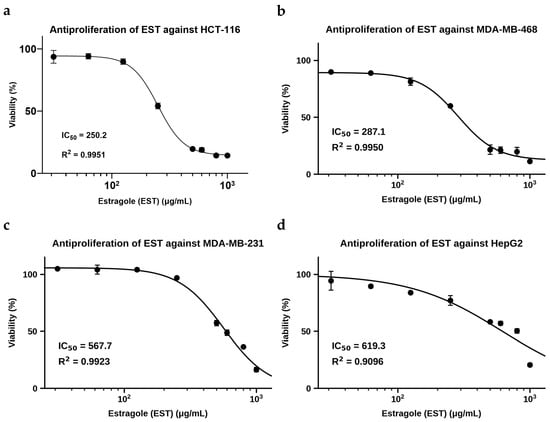
Estragole (EST), a naturally occurring phenylpropanoid found in several aromatic plants and essential oils, has demonstrated a range of biological effects, including cytotoxic activity in experimental cancer models. However, its molecular effects on colorectal cancer (CRC) cells remain poorly understood, particularly in view of its reported genotoxic potential. This study investigated the effects of EST in human cancer cell lines and characterized the associated molecular alterations in HCT-116 CRC cells using liquid chromatography–tandem mass spectrometry (LC–MS/MS)-based label-free quantitative proteomics. Cell viability assays demonstrated concentration-dependent growth inhibition across multiple cancer cell lines, with HCT-116 cells exhibiting the highest sensitivity. Based on these findings, HCT-116 cells were selected for proteomic analysis following 24 h and 48 h of EST exposure. Quantitative proteomic profiling revealed time-dependent alterations in proteins involved in mitochondrial function, oxidative phosphorylation, respiratory electron transport, oxidative stress responses, metabolic regulation, and cell-cycle progression. Early EST exposure was associated with alterations in mitochondrial and metabolic homeostasis, whereas prolonged exposure revealed broader changes in proteins involved in cellular proliferation, stress responses, and apoptosis-related processes. Notably, several proteins associated with tumor growth and proliferation, including DNMT1, RRM2, SLC2A1, and EREG, were significantly downregulated following 48 h of EST treatment. These findings demonstrate that EST exposure induces extensive proteomic remodeling in HCT-116 cells, affecting mitochondrial metabolism, cellular stress responses, and proliferation-associated pathways. The findings provide a molecular characterization of its cellular effects, which warrant further mechanistic investigation.

Molecules

14 November 2026

Dose–response curves of EST against (a) HCT-116 colorectal carcinoma, (b) MDA-MB-468 triple-negative breast carcinoma, (c) MDA-MB-231 triple-negative breast carcinoma, and (d) HepG2 hepatocellular carcinoma cells (72 h MTT assay). Data points represent mean ± SD of two independent experiments (n = 8 technical replicates). Solid curves are four-parameter logistic (4-PL) fitted models; for HepG2, the top of the curve was constrained to 100%, and the bottom to 0%. The IC50 values were 250.2 µg/mL (95% CI 238.5–262.5) for (a), 287.1 µg/mL (95% CI 235.4–350.4) for (b), 567.7 µg/mL (95% CI 373.4–862.9) for (c), and 619.3 µg/mL (95% CI 458.2–837.0) for (d), with R2 values of 0.9951, 0.9950, 0.9923, and 0.9096, respectively. These IC50 values correspond to 1688, 1937, 3831, and 4179 µM. In (d), the fitted IC50 lies below the concentration at which measured viability first fell below 50% (between 800 and 1000 µg/mL), because the lower asymptote was constrained to a value that the data do not reach over the range tested.
  • Article
  • Open Access

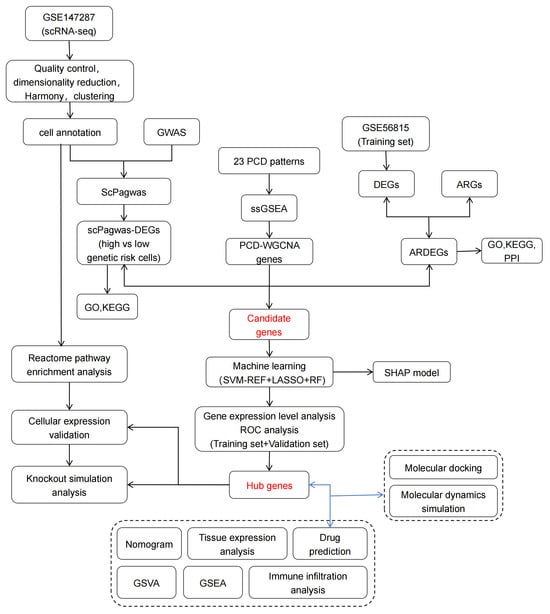
Background: Postmenopausal osteoporosis (PMOP) is a systemic metabolic bone disease characterized by impaired microarchitecture and increased fracture risk. Although angiogenesis and programmed cell death (PCD) play essential roles in bone homeostasis, how their associated transcriptional programs relate to PMOP pathogenesis within the bone marrow niche at single-cell and genetic levels remains incompletely defined. Methods: An integrative framework was established combining scRNA-seq, GWAS-derived transcriptome risk scores (scPagwas), bulk transcriptomics and machine learning (LASSO, RF and SVM-RFE with SHAP). WGCNA identified co-expression modules linked to angiogenesis-related genes and dysregulated PCD modes. Candidates were further examined in a second cohort. A two-gene nomogram was constructed in the training cohort. Tissue localisation and scTenifoldKnk virtual knockout were explored, and candidate compounds were assessed by drug-signature enrichment, blind docking and 100-ns molecular dynamics (MD). Results: Single-cell profiling categorized 11 distinct cell types in the osteoporotic microenvironment, with neutrophils and fibroblasts constituting the predominant populations. ScPagwas analysis identified 1169 TRS-associated candidate DEGs, which were enriched in osteoclast differentiation and myeloid cell lineage pathways. Intersection across scPagwas-DEGs, ARDEGs, and PCD-WGCNA modules yielded candidate targets, from which EGFL7 and PROC were prioritized as dual-feature hub biomarkers. Both hub genes exhibited consistent upregulation in PMOP and the two-gene nomogram showed an apparent AUC of 0.800 (95% CI 0.658–0.942). Exploratory ssGSEA of 28 immune cell-related gene sets in the monocyte cohort identified four gene sets that differed between groups after Benjamini–Hochberg correction and showed weak correlations with EGFL7 and PROC. Virtual knockout (scTenifoldKnk) of PROC in pDCs and EGFL7 in ProB cells predicted perturbations of chronic inflammatory and translational programmes. Drug-signature enrichment nominated norgestimate as the top-ranked compound for the PROC expression signature; blind docking (−8.3 kcal/mol) and 100-ns MD indicated that the predicted pose remained stable over the trajectory. Conclusion: This study presents an integrative single-cell and multi-omics framework linking angiogenic and programmed-cell-death programmes in PMOP at single-cell and genetic resolution, and nominates EGFL7 and PROC as candidate dual-feature biomarkers with cell-type-specific localisation. It further generates a structural hypothesis for a PROC–norgestimate interaction, providing a concrete starting point for target validation and drug repurposing in PMOP. These findings are exploratory and await experimental validation.

Molecules

14 November 2026

Study workflow diagram.
  • Review
  • Open Access

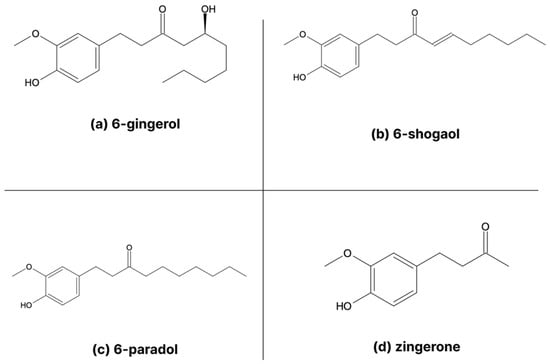
Cancer remains a major global health challenge, highlighting the need for novel therapeutic strategies that combine anticancer efficacy with improved safety profiles. Ginger (Zingiber officinale Roscoe) contains several bioactive compounds, particularly 6-gingerol and 6-shogaol, which have demonstrated promising anticancer properties in preclinical studies. From a structural perspective, 6-gingerol is characterized by the presence of three distinct pharmacophoric regions: an aromatic vanillyl moiety, a β-hydroxyketone fragment, and a hydrophobic aliphatic side chain. Through the dehydration of its β-hydroxyketone fragment, 6-gingerol can be converted into 6-shogaol. This review summarizes current data on the cellular and molecular mechanisms underlying the anticancer effects of these compounds. Particular attention is given to their impact on cell cycle arrest, oxidative stress, apoptosis, autophagy, ferroptosis, inflammation, and invasiveness. In summary, based on current research findings, 6-gingerol and 6-shogaol are promising subjects for further study as potential agents to support conventional anticancer therapies.

Molecules

14 November 2026

Chemical structures of the principal vanilloid constituents of Zingiber officinale. All four (a–d) share a common vanillyl (4-hydroxy-3-methoxyphenyl) head group but differ in the central linker and aliphatic side chain.
  • Review
  • Open Access

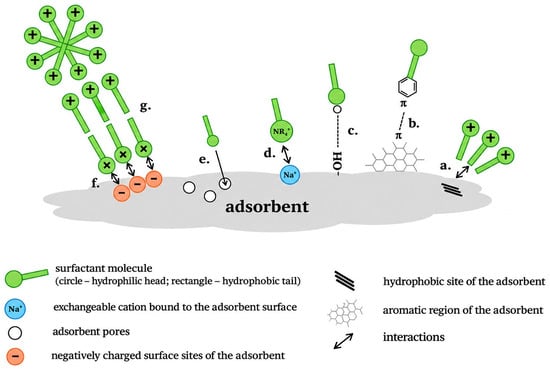
Surfactants are widely used chemicals whose continuous release into aquatic environments may pose environmental risks. Adsorption represents a promising approach for their removal owing to its operational simplicity, process flexibility, and the possibility of using a wide range of conventional and low-cost adsorbents. This review summarises and critically evaluates current knowledge on the adsorption of anionic, cationic, and non-ionic surfactants from aqueous solutions, with particular emphasis on the adsorbent materials employed, factors affecting the adsorption process, and adsorption mechanisms. Conventional carbon-based and mineral adsorbents, biopolymers, biochars, natural and waste-derived materials, as well as advanced and surface-modified adsorbents, are discussed. Analysis of the published literature indicates that adsorption performance is governed by the interplay between the molecular structure and ionic character of the surfactant, the surface properties and porous structure of the adsorbent, and experimental conditions, particularly pH, initial surfactant concentration, contact time and adsorbent dose. Surfactant adsorption generally involves a combination of electrostatic, hydrophobic, and dispersion interactions, hydrogen bonding, ion exchange, and interactions between adsorbed molecules, with the relative contribution of individual mechanisms varying with surfactant concentration and surface coverage. A major challenge remains the limited comparability of published data due to differences in experimental conditions and the metrics used to evaluate adsorption performance. Future research should therefore focus on more standardised evaluation of adsorption systems, adsorbent regeneration and reuse, and, particularly, validation under practically relevant conditions using complex real wastewater matrices.

Molecules

14 November 2026

Schematic representation of the principal interactions and transport processes involved in surfactant adsorption: (a) hydrophobic interactions; (b) π–π interactions; (c) hydrogen bonding; (d) ion exchange; (e) pore diffusion; (f) electrostatic interactions; and (g) lateral hydrophobic interactions.

Featured Articles of Last Quarter

Highly Accessed Articles

News & Conferences

Latest Issues

Open for Submission

Journal Sections

XFacebookLinkedIn
Molecules - ISSN 1420-3049