



19 pages, 1776 KB  
Article
LCD-VRD: An Explainable Ensemble Deep Learning Framework for Lung Cancer Detection from CT Scans
by Noor S. Jozi, Ghaida A. Al-Suhail and Viet-Thanh Pham
BioMedInformatics 2026, 6(3), 36; https://doi.org/10.3390/biomedinformatics6030036 (registering DOI) - 15 Jun 2026
Abstract
Lung cancer is the deadliest cause of cancer-related deaths worldwide, and early and accurate detection is key to improving patient outcomes. IQ-OTH/NCCD CT scan images are used in this study to present an optimized computer-aided diagnosis (CAD) framework for lung cancer detection. In [...] Read more.
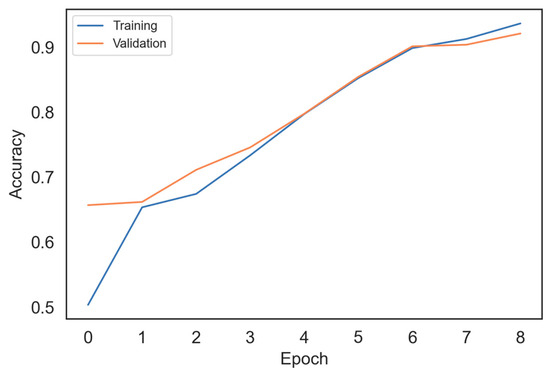
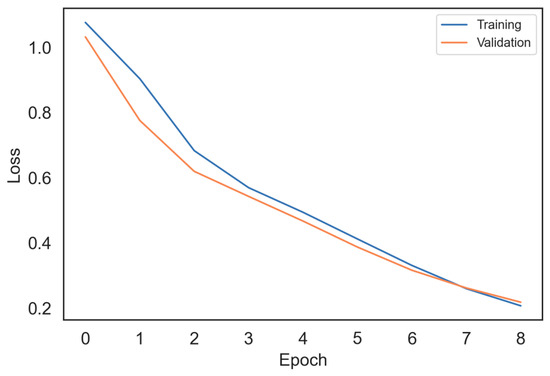
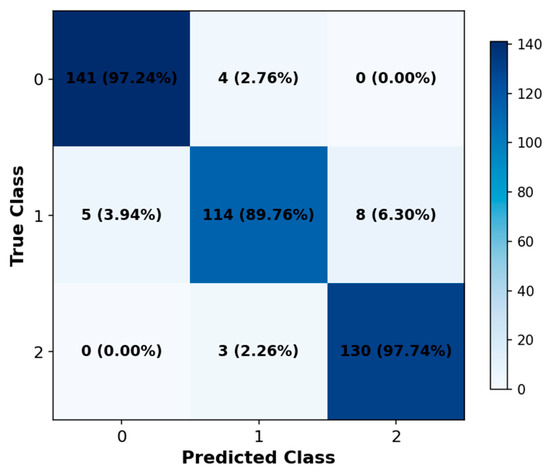
Lung cancer is the deadliest cause of cancer-related deaths worldwide, and early and accurate detection is key to improving patient outcomes. IQ-OTH/NCCD CT scan images are used in this study to present an optimized computer-aided diagnosis (CAD) framework for lung cancer detection. In order to extract deep features and improve diagnostic accuracy, a weighted geometric mean (WGM) ensemble of pretrained convolutional neural networks (CNNs) called the LCD-VRD model—comprising VGG16, ResNet50V2, and DenseNet121—provides robust feature extraction and strong generalization capabilities for accurately classifying normal, benign, and malignant (cancerous) cases. To actively mitigate data imbalance and reduce model overfitting, real-time data augmentation alongside rigorous class weighting was implemented. The results show that, with 97.27% accuracy and a 97.24% F1-score, the WGM ensemble of these models performs exceptionally well. Furthermore, Gradient-weighted Class Activation Mapping (Grad-CAM) visualization was investigated on CT images to provide an exploratory qualitative visualization of the image regions associated with model predictions. While the proposed framework shows promise as an effective tool for automated lung cancer diagnosis, its validation is currently limited to the IQ-OTH/NCCD dataset. External dataset evaluation will be essential to fully establish robustness and clinical applicability. Full article
10 pages, 10586 KB  
Case Report
A Rare Case Reveals Important Consideration of the Diagnosis of Giant Cell Arteritis in Patients with Bilateral Painful Optic Perineuritis
by Jordan Santos, Faraz Behzadi, S. Mozammil Alam, Thomas C. Varkey, David C. Maeng, Ghassan J. Ibrahim, Trent H. Smith and Alan Wang
Reports 2026, 9(2), 187; https://doi.org/10.3390/reports9020187 (registering DOI) - 15 Jun 2026
Abstract
Background and Clinical Significance: Giant cell arteritis (GCA) is an autoimmune vasculitis of both medium and large-sized vessels typically affecting females 50 years of age or older. Severe complications can include permanent visual loss, acute coronary syndrome, or stroke. This case will present [...] Read more.
Background and Clinical Significance: Giant cell arteritis (GCA) is an autoimmune vasculitis of both medium and large-sized vessels typically affecting females 50 years of age or older. Severe complications can include permanent visual loss, acute coronary syndrome, or stroke. This case will present an atypical presentation of bilateral OPN which can be a rare manifestation of GCA; Case Report: Our patient developed acute, painful worsening central vision loss progressing from right eye to left with bilateral extraocular motility restriction and magnetic resonance image (MRI) revealed bilateral, circumferential optic nerve sheath enhancement suggesting optic perineuritis (OPN). Temporal artery biopsy confirmed GCA with bilateral temporal arteritis. The patient was treated with a high dose course of corticosteroids followed by a taper and was started on upadacitinib with symptomatic improvement; Conclusion: This case underscores OPN as a rarer manifestation of giant cell arteritis that can present with bilateral painful eye movements and vision loss. Early recognition and prompt corticosteroid therapy are essential to prevent irreversible visual impairment. Full article
41 pages, 14242 KB  
Article
Assessing Community and Protected Area Exposure to Wildfires in Navarra, Spain
by Fermín Alcasena, Alan Ager, Julia Loján, Isabel Pinto, Ignacio García, Pere Gelabert, Mikel Repáraz and Cristóbal Molina
Forests 2026, 17(6), 699; https://doi.org/10.3390/f17060699 (registering DOI) - 15 Jun 2026
Abstract
The unprecedented 2022 wildfire season in Navarra, northern Spain, marked a turning point in regional wildfire management, when seven simultaneous large fires during a June heatwave burned more than 17,000 ha in just a few days, overwhelming suppression capacity and highlighting the limits [...] Read more.
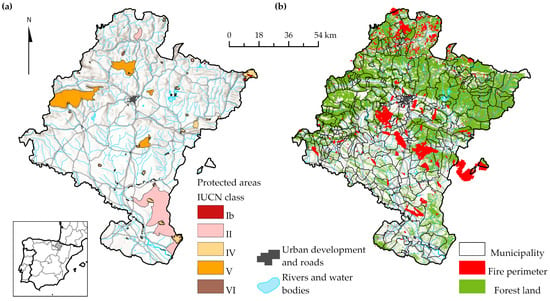
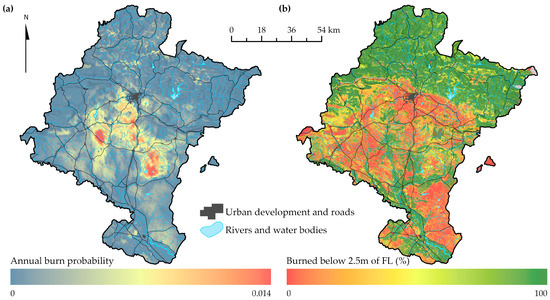
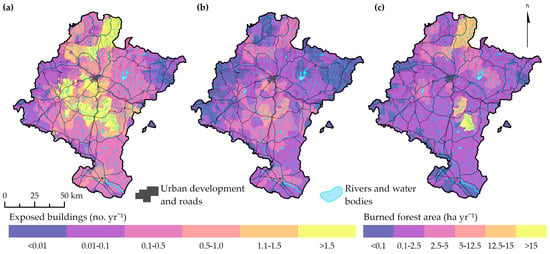
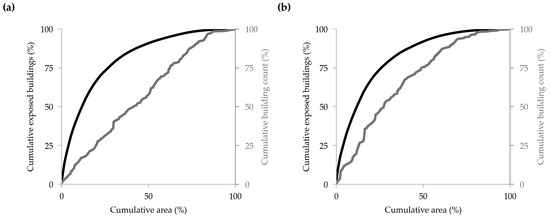
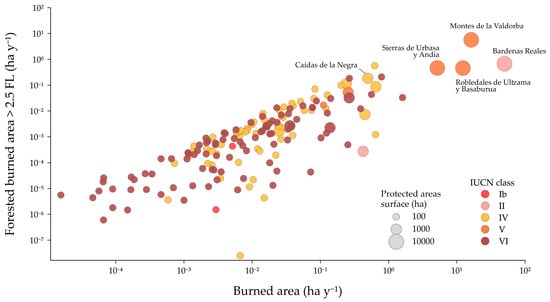
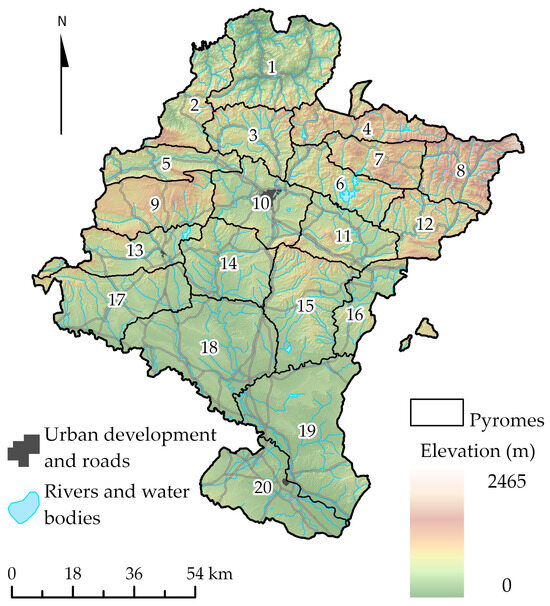
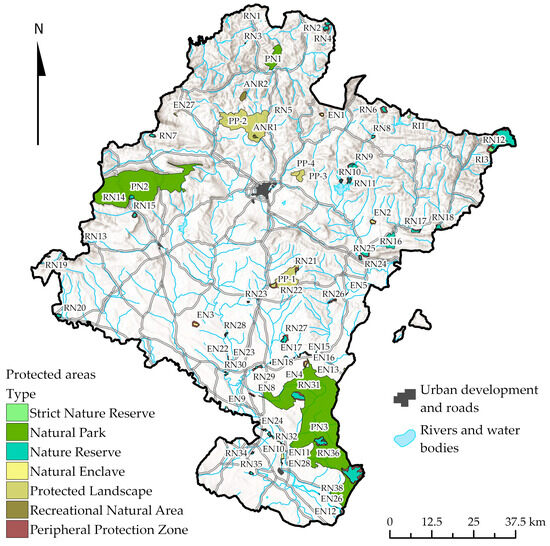
The unprecedented 2022 wildfire season in Navarra, northern Spain, marked a turning point in regional wildfire management, when seven simultaneous large fires during a June heatwave burned more than 17,000 ha in just a few days, overwhelming suppression capacity and highlighting the limits of a strategy based primarily on ignition prevention and fire suppression. In this study, we implemented a stochastic wildfire modeling system based on the Minimum Travel Time algorithm, historical ignition patterns, spatial fuel data, and spatiotemporal weather variability to assess community and protected area exposure to wildfire. We simulated more than 50,000 fire season replicates under extreme fire weather conditions, estimating annual burn probability across fire intensity classes at 50 m spatial resolution. We then intersected modeled fire perimeters with building footprints representing residential and industrial structures, as well as protected areas, to assess the spatial distribution of exposure across the region. Results showed strong concentration of community exposure, with three fourths of residential and industrial exposure concentrated in just over one third of the total municipal area. Across Navarra, mean annual modeled exposure summed to 120 residential buildings and 16 industrial structures. Across the protected area network, mean annual burned area summed to 90 ha year−1, including 68 ha year−1 at flame lengths greater than 2.5 m, while burned forest area was 16 ha year−1. Protected areas in southern Navarra and forested protected areas in central and northern Navarra showed the highest modeled exposure, identifying priority landscapes where prevention, restoration, and evaluation of managed fire options could support more resilient ecosystems. This study provides a scientific basis for improving wildfire risk governance and strengthening the resilience of communities and protected areas under increasing wildfire pressure in the region. Full article
(This article belongs to the Special Issue Forest Fire Detection, Prevention and Management)
Show Figures

Figure 1

26 pages, 990 KB  
Article
Biotechnological Potential of Rhizospheric Bacillus Strains from Lonquimay, Chile, as Producers of Antimicrobial Biosurfactants
by Claudio Lamilla, Olga Rubilar, Ignacio San Martin, David Troncoso, Sebastián Rojas, Daniel Martínez-Cisterna, Diana L. Cárdenas-Chávez, María Cristina Diez and Andrés Quiroz
Int. J. Mol. Sci. 2026, 27(12), 5401; https://doi.org/10.3390/ijms27125401 (registering DOI) - 15 Jun 2026
Abstract
Biosurfactants are surface-active microbial molecules with increasing industrial relevance as sustainable alternatives to synthetic surfactants. Among them, lipopeptides produced by Bacillus species, particularly surfactin, exhibit strong interfacial activity and biological functionality. In this study, rhizospheric soils from the La Araucanía region, Chile, were [...] Read more.
Biosurfactants are surface-active microbial molecules with increasing industrial relevance as sustainable alternatives to synthetic surfactants. Among them, lipopeptides produced by Bacillus species, particularly surfactin, exhibit strong interfacial activity and biological functionality. In this study, rhizospheric soils from the La Araucanía region, Chile, were explored as a source of biosurfactant-producing bacteria. Eighteen strains were isolated, and two high-performing strains, Solo 1 and Solo 4, were identified as Bacillus amyloliquefaciens and Bacillus subtilis, respectively. Both strains harbored the srfAA gene and produced surfactin isoforms confirmed by MALDI-TOF MS. Kinetic analysis revealed distinct production profiles, with Solo 1 reaching a maximum of 90 mg L−1 at 24 h, whereas Solo 4 showed continuous production up to 224.4 mg L−1 at 72 h. Both biosurfactants exhibited high emulsification capacity (>80%) and stability across wide ranges of temperature, pH, and salinity. Importantly, cell-free supernatants from both strains showed antibacterial and antibiofilm activity against Staphylococcus aureus, with Solo 4 reaching 81% biofilm inhibition. In addition, surfactin-enriched extracts inhibited the pathogenic bacterium Pseudomonas syringae and the filamentous fungus Fusarium oxysporum, with Solo 4 consistently showing stronger antimicrobial performance. Overall, these findings identify Solo 4 as a promising native Bacillus strain for future development of biosurfactant-based systems aimed at antimicrobial control, biofilm management, agricultural pathogen suppression, surface sanitation, and environmentally compatible biotechnological processes. Full article
(This article belongs to the Special Issue Antimicrobial Materials: Molecular Developments and Applications)
19 pages, 3812 KB  
Article
Potential Causal Relationship Between Hypertension and Type 2 Diabetic Nephropathy: Integrating Mendelian Randomization Evidence with Global Burden of Disease 2021 Analysis
by Dongsen Hu, Runze Wang, Pengfei Xie, Yexin Chen, Lili Zhang and Linhua Zhao
Healthcare 2026, 14(12), 1725; https://doi.org/10.3390/healthcare14121725 (registering DOI) - 15 Jun 2026
Abstract
Background: Hypertension (HTN) and type 2 diabetes mellitus are major global health challenges, and diabetic nephropathy (DN) is a critical complication of diabetes. Although observational studies link HTN to DN progression, causal evidence remains limited. We investigated the potential causal relationship between HTN [...] Read more.
Background: Hypertension (HTN) and type 2 diabetes mellitus are major global health challenges, and diabetic nephropathy (DN) is a critical complication of diabetes. Although observational studies link HTN to DN progression, causal evidence remains limited. We investigated the potential causal relationship between HTN and DN and quantified the global burden of HTN-attributable type 2 diabetic nephropathy (HTN-T2DN). Methods: We integrated two-sample Mendelian randomization (MR), Bayesian weighted MR, and sensitivity analyses with Global Burden of Disease (GBD) 2021 analyses. The burden of HTN-T2DN was assessed from 1990 to 2021 and projected to 2045. Results: MR provided genetic evidence supporting a potential causal role of HTN in DN (inverse-variance weighted odds ratio = 4.219, 95% CI: 1.807–9.853; p = 0.001). Globally, HTN-T2DN deaths increased to 50,689 and DALYs to 1,151,216 in 2021. Females had higher age-standardized mortality and DALY rates than males, and low-middle sociodemographic index (SDI) regions had the highest burden. By 2045, deaths and DALYs were projected to reach 162,392 and 4.04 million, respectively. Conclusions: HTN may play a potential causal role in DN development and progression. Strengthened blood pressure control, early screening, and tailored policies are essential, particularly for women, older adults, and populations in lower-SDI settings. Full article
(This article belongs to the Special Issue Chronic Disease Prevention and Risk Control)
29 pages, 430 KB  
Article
How Fintech Improves Financial Performance of Banks in China: The Context of Green Finance and ESG
by Tong Zeng, Mara Ridhuan Che Abdul Rahman and Roslan Ja’afar
Sustainability 2026, 18(12), 6164; https://doi.org/10.3390/su18126164 (registering DOI) - 15 Jun 2026
Abstract
Fintech has become an important driver of digital transformation and sustainable development in the banking industry. However, existing studies report inconsistent findings regarding the relationship between fintech and bank financial performance. This study examines the impact of fintech adoption on the financial performance [...] Read more.
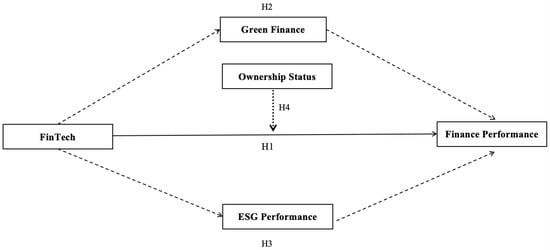
Fintech has become an important driver of digital transformation and sustainable development in the banking industry. However, existing studies report inconsistent findings regarding the relationship between fintech and bank financial performance. This study examines the impact of fintech adoption on the financial performance of Chinese listed commercial banks and investigates the mediating roles of green finance and ESG performance, as well as the moderating role of ownership status. Using panel data from 42 Chinese A-share-listed commercial banks between 2015 and 2024, this study employs panel regression analysis to evaluate the direct, mediating, and moderating relationships among the variables. The results indicate that fintech significantly improves market valuation, operational profitability, and asset utilisation efficiency in Chinese listed commercial banks. In addition, green finance and ESG performance partially mediate the relationship between fintech and financial performance, suggesting that fintech contributes to sustainable financial value creation through sustainability-oriented mechanisms. The findings further show that ownership status significantly moderates the fintech–financial performance relationship, with fintech generating stronger positive effects among non-state-owned banks than state-owned banks. Furthermore, the instrumental variable and other robustness tests confirm the robustness of the findings after addressing potential reverse causality concerns. This paper suggests that the effectiveness of fintech depends not only on technological investment but also on sustainability capabilities and institutional conditions. This study provides empirical evidence on fintech-driven sustainable banking transformation in China and offers practical implications for regulators and commercial banks seeking to promote digital finance and sustainable development. Full article
(This article belongs to the Special Issue Green Innovation and Digital Transformation in a Sustainable Economy)
Show Figures

Figure 1

30 pages, 2490 KB  
Article
Modeling One-Dimensional Consolidation Problems Using Physics-Informed Neural Networks with Domain Decomposition
by Yang Chen, De’an Sun and Jie Zhou
Appl. Sci. 2026, 16(12), 6065; https://doi.org/10.3390/app16126065 (registering DOI) - 15 Jun 2026
Abstract
Soil consolidation modeling is essential for estimating settlement and pore-water pressure dissipation, but analytical solutions are limited for layered soils with complex drainage and interface conditions. This study evaluates physics-informed neural networks (PINNs) for one-dimensional consolidation of saturated soils and extends them to [...] Read more.
Soil consolidation modeling is essential for estimating settlement and pore-water pressure dissipation, but analytical solutions are limited for layered soils with complex drainage and interface conditions. This study evaluates physics-informed neural networks (PINNs) for one-dimensional consolidation of saturated soils and extends them to a domain-decomposed XPINN framework for two-layered soils. Governing equations, boundary conditions, interface-continuity constraints, and synthetic measurement data are embedded in the loss function. Layer-wise locally adaptive activation functions (L-LAAF) and residual-based adaptive resampling (RAR) are used to improve training stability. For homogeneous soil, the PINN accurately reproduces the analytical solution, although conventional finite difference methods remain more efficient for simple single-query forward analysis. For heterogeneous soil, the full XPINN model achieves a relative L2 error of 0.0173 ± 0.0058, whereas removing RAR, L-LAAF, or domain decomposition increases the error to 0.0578 ± 0.0555, 0.1488 ± 0.0378, and 0.1673 ± 0.0104, respectively. In inverse tests using synthetic noisy measurements, denser and lower-noise observations improve the identification of unknown drainage coefficients. The framework provides a meshless and continuous representation for forward and inverse layered consolidation problems, but validation with laboratory or field data remains necessary. Full article
(This article belongs to the Section Civil Engineering)
24 pages, 4842 KB  
Article
Valorization of Maize Lime-Cooking Wastewater Through Lipid and Carotenoid Production by Rhodotorula glutinis Yeast: An Approach Using Pulse Fed-Batch Culture and Techno-Economic Assessment
by Carolina Ramírez-Martínez, Gael Jesús Molina-Benítez, Mariana Franco-Morgado and Alberto Ordaz
Fermentation 2026, 12(6), 285; https://doi.org/10.3390/fermentation12060285 (registering DOI) - 15 Jun 2026
Abstract
The increasing generation of agro-industrial residues like nejayote (maize lime-cooking wastewater from the maize nixtamalization process) poses significant environmental challenges in Mexico due to its elevated chemical oxygen demand (COD) and organic load. This study evaluates the physical separation of nejayote via membranes [...] Read more.
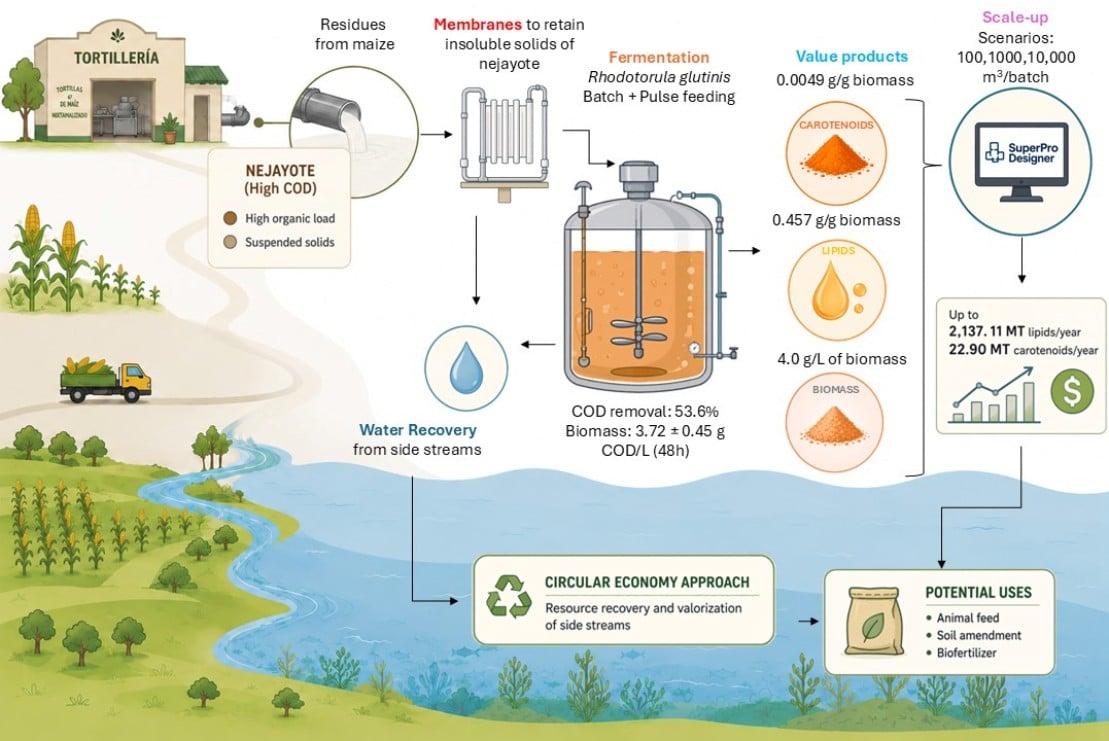
The increasing generation of agro-industrial residues like nejayote (maize lime-cooking wastewater from the maize nixtamalization process) poses significant environmental challenges in Mexico due to its elevated chemical oxygen demand (COD) and organic load. This study evaluates the physical separation of nejayote via membranes and its use as a low-cost substrate for producing lipids and carotenoids using Rhodotorula glutinis. A batch culture followed by pulse-feeding achieved a COD removal efficiency of 53.6% (0.22 g COD/(L h)) and a biomass concentration of 3.72 ± 0.45 g COD/L within 48 h. The yeast demonstrated a high specific metabolic efficiency, yielding 0.457 g of lipids and 0.0049 g of carotenoids per gram of biomass, with an oleaginous fraction of 46.21% in dry weight. Experimental data calibrated a process model in SuperPro Designer, simulating full-scale processes treating 100, 1000, and 10,000 m3 of nejayote per batch, producing up to 2137.11 MT of lipids and 22.90 MT of carotenoids annually. A techno-economic analysis estimated the investment, operating costs, and financial indicators for all scenarios. Strategies like evaporation and reverse osmosis to concentrate nejayote significantly improved profitability by reducing equipment size. Additionally, a circular economy approach was modeled, recovering process water and nutrient-rich side streams. These findings confirm that integrated physical and biological treatment, coupled with resource recovery, transforms this particularly agro-industrial residue into a technically robust and economically viable biorefinery feedstock, aligning industrial production with sustainable waste management. Full article
Show Figures

Graphical abstract

22 pages, 2987 KB  
Article
Serum Neuron-Specific Enolase as a Prognostic Biomarker in Pediatric Convulsive Status Epilepticus: A Single-Center Retrospective Cohort Study
by Merve Yavuz and Ibrahim Bingol
Children 2026, 13(6), 820; https://doi.org/10.3390/children13060820 (registering DOI) - 15 Jun 2026
Abstract
Background/Objectives: Serum neuron-specific enolase (NSE) is a biomarker of neuronal injury, but its prognostic role in pediatric convulsive status epilepticus (CSE) remains uncertain. We evaluated the association between serum NSE levels and short-term neurological outcome, assessed model calibration with internal bootstrap validation, and [...] Read more.
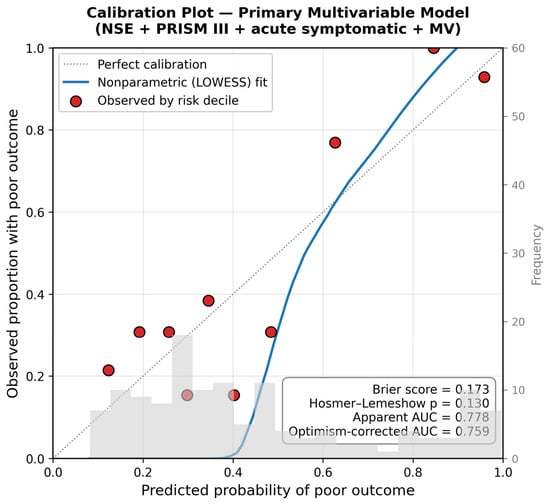
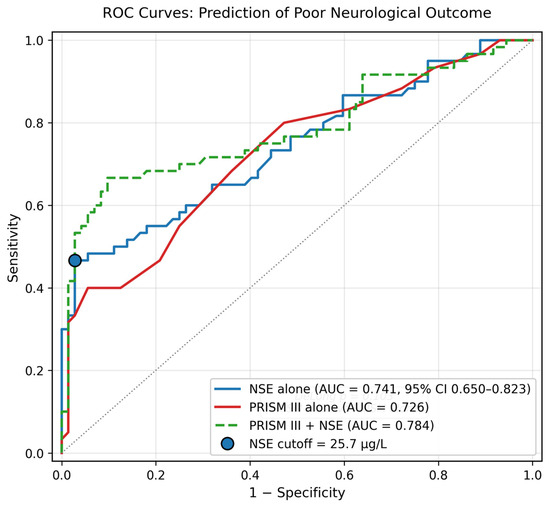
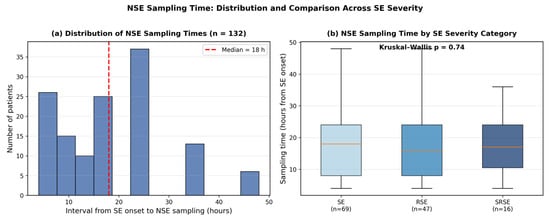
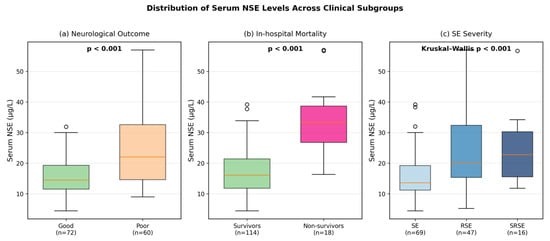
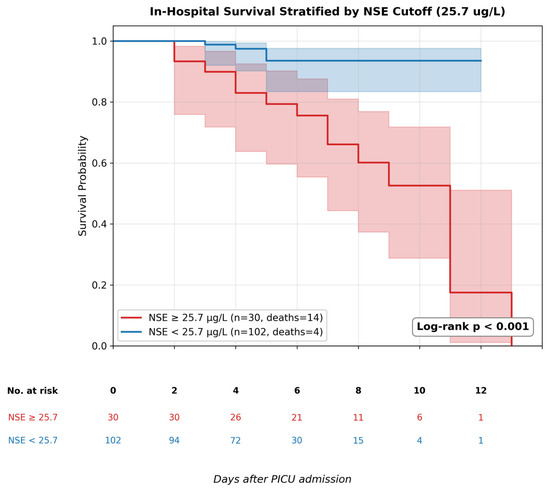
Background/Objectives: Serum neuron-specific enolase (NSE) is a biomarker of neuronal injury, but its prognostic role in pediatric convulsive status epilepticus (CSE) remains uncertain. We evaluated the association between serum NSE levels and short-term neurological outcome, assessed model calibration with internal bootstrap validation, and examined whether NSE provides incremental discrimination beyond established clinical severity scores. Methods: This was a single-center retrospective cohort study of children aged 1 month to 18 years admitted to a tertiary pediatric intensive care unit (PICU) with CSE as the primary admission diagnosis between January 2024 and November 2025. The primary outcome was poor neurological outcome at hospital discharge, defined as a worsening of ≥1 point in the Pediatric Cerebral Performance Category (PCPC) score from baseline (ΔPCPC ≥ 1) or in-hospital death. A multivariable logistic regression model adjusting for NSE, PRISM III, acute symptomatic etiology, and mechanical ventilation was developed, with bootstrap optimism-corrected internal validation (2000 resamples) and formal calibration assessment. Separate models for in-hospital mortality and for neurological deterioration among survivors were conducted as secondary analyses. Diagnostic operating characteristics were reported with 95% Wilson confidence intervals. The study followed the STROBE and TRIPOD reporting guidelines. Results: Of 132 children included (median age 26 months, 56.1% male), 60 (45.5%) had a poor neurological outcome including 18 deaths (13.6%). Serum NSE was significantly higher in the poor-outcome group (median 22.0 vs. 14.4 μg/L; p < 0.001). In the primary multivariable model, NSE (adjusted OR 1.11 per μg/L; 95% CI 1.06–1.19; p = 0.001) and PRISM III (adjusted OR 1.15; 95% CI 1.03–1.37; p = 0.013) were independently associated with poor outcome. The model showed acceptable calibration (Hosmer–Lemeshow p = 0.130) and a bootstrap optimism-corrected AUC of 0.759. NSE remained independently associated with both in-hospital mortality (aOR 1.13) and with ΔPCPC ≥ 1 in survivors (aOR 1.09). The AUC for NSE alone was 0.741 (95% CI 0.65–0.82) for poor outcome and 0.885 (0.79–0.96) for mortality. The combined PRISM III + NSE model showed a numerically higher but not statistically significant AUC compared with PRISM III alone (0.784 vs. 0.726; DeLong p = 0.103). Conclusions: Higher serum NSE is independently associated with adverse short-term neurological outcome and mortality in pediatric CSE, including in survivor-only analysis. However, the present data do not demonstrate clinically meaningful incremental prognostic value beyond PRISM III, and the proposed cutoff was derived and tested in the same cohort and is therefore optimistic. These findings are hypothesis-generating and require external validation in prospective multicenter cohorts with serial sampling and long-term neurodevelopmental follow-up before routine clinical use can be advocated. Full article
Show Figures

Figure 1

24 pages, 1281 KB  
Review
Going in Circles: Integrating Food, Energy and Water Sectors to Enable a Thriving Circular Bioeconomy
by Dana Cordell, Melita Jazbec, Saori Miyake, Simon Fane, Elsa Dominish, Andrea Turner, Fiona Berry and Laure-Elise Ruoso
Sustainability 2026, 18(12), 6165; https://doi.org/10.3390/su18126165 (registering DOI) - 15 Jun 2026
Abstract
Recirculating organic byproducts like food waste, wastewater and manure efficiently and at scale in a circular bioeconomy will be critical to ensuring future food security, energy security, climate resilience, water security and environmental health. Ultimately, we will not be able to live within [...] Read more.
Recirculating organic byproducts like food waste, wastewater and manure efficiently and at scale in a circular bioeconomy will be critical to ensuring future food security, energy security, climate resilience, water security and environmental health. Ultimately, we will not be able to live within the safe operating space of our planetary boundaries if we do not stop our wasteful and inefficient habits. Our food, waste, energy and water sectors are starting to transform towards circularity, driven by a diverse range of drivers, from net zero emissions targets, to food waste policies, and to rising fertiliser prices and geopolitical risks. However, these sectors are often not transforming in a coordinated manner, risking unintended consequences like competition between end-uses, technology lock-in, the prevention of scalability, or failure to achieve key sustainability targets, causing rebound effects. For example, society’s organic waste is being earmarked for the production of bioenergy, sustainable aviation fuels, biomaterials, and biofertilisers; however, it is not clear if there will be a sufficient supply of organic waste to meet these diverse demands. Phosphorus flow analyses indicate that we will need to secure almost all of the nutrients in organic waste as fertiliser raw material to produce food. There are some existing pockets of innovation within sectors related to food waste, water and wastewater, fertilisers and agriculture, and bioenergy. However, many initiatives are being driven by short-term challenges, are not operating at scale, or are not sufficiently integrated across sectors. In this paper, we provide examples of innovations and challenges from around the world, including Italy, Australia, Sri Lanka, the UK, Japan, and Malawi. This paper identifies a pathway to navigate tensions to achieve co-existing sustainability goals, including key enablers and barriers, ranging from overcoming regulatory fragmentation to a lack of capital investments. Creating a truly viable circular economy for organic byproducts requires the integration of policies, markets, technologies and people. This means engaging diverse stakeholders, from local councils and private waste contractors, farmers, and fertiliser companies to energy retailers and wastewater utilities, NGOs, informal collectors, and environmental regulators and policy-makers. Full article
(This article belongs to the Special Issue Sustainable Development and Climate, Energy, and Food Security Nexus)
20 pages, 2371 KB  
Article
Beyond Accuracy: A Multi-dimensional Cognitive Audit of Medical Large Vision–Language Models in Fundus Image Interpretation
by Jingling Zhang, Shuting Zheng, Xiangfei Liu and Jia Gu
Appl. Sci. 2026, 16(12), 6064; https://doi.org/10.3390/app16126064 (registering DOI) - 15 Jun 2026
Abstract
Reliance on standalone accuracy limits credible assessment of fundus-focused large vision–language models (LVLMs), as high scores often stem from linguistic shortcuts rather than real visual reasoning. This work develops the Cognitive Audit Framework (CAF), a four-module automated auditing pipeline that dissects model reasoning [...] Read more.
Reliance on standalone accuracy limits credible assessment of fundus-focused large vision–language models (LVLMs), as high scores often stem from linguistic shortcuts rather than real visual reasoning. This work develops the Cognitive Audit Framework (CAF), a four-module automated auditing pipeline that dissects model reasoning flaws: Visual–Linguistic Decoupling (textual dependency via modality ablation), Hierarchical Logical Consistency (lesion–diagnosis contradiction detection), Reasoning Fidelity Gap (chain-of-thought unfaithfulness scoring), and Contextual Robustness (positional bias under option permutation). Experiments on six 7B–31B LVLMs over FunBench reveal a notable gap between benchmark accuracy and reasoning quality: high accuracy coexists with measurable textual dependency, logical inconsistencies across diagnostic levels, limited chain-of-thought faithfulness, and non-trivial positional sensitivity. CAF serves as a reproducible complement to pure accuracy metrics for validating clinical competence of ophthalmic multimodal models. Full article
20 pages, 1443 KB  
Article
Work-Related Stressors and Their Perceived Impact on Veterinary Work and Personal Life: A Multi-Country European Study
by Marietta Máté, Claire Helen Várnai and László Ózsvári
Vet. Sci. 2026, 13(6), 583; https://doi.org/10.3390/vetsci13060583 (registering DOI) - 15 Jun 2026
Abstract
Work-related stress is an important concern in veterinary medicine because it may affect veterinarians’ work, personal life, and well-being. This study described self-reported work-related stressors and their perceived effects on professional and personal life among veterinarians from selected European countries. Between July 2021 [...] Read more.
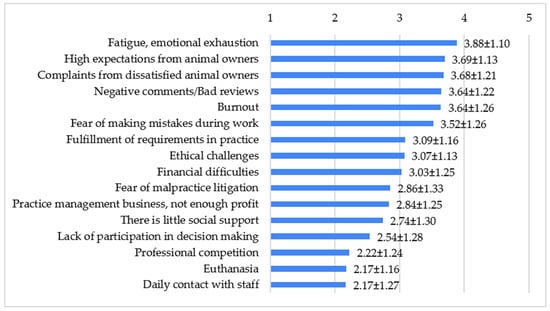
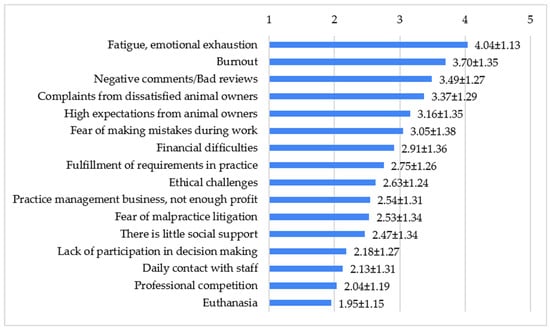
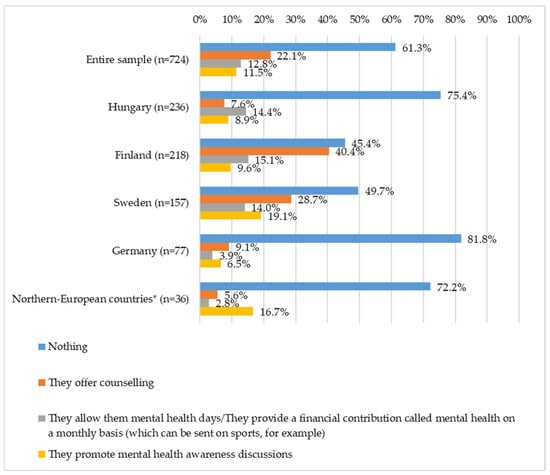
Work-related stress is an important concern in veterinary medicine because it may affect veterinarians’ work, personal life, and well-being. This study described self-reported work-related stressors and their perceived effects on professional and personal life among veterinarians from selected European countries. Between July 2021 and February 2022, an online questionnaire was completed by 724 veterinarians from Hungary, Finland, Sweden, Germany, Denmark, Estonia, and Norway. Participants were recruited through convenience sampling via online channels and professional veterinary networks. The questionnaire assessed 16 stressors, including fatigue, emotional exhaustion, burnout-related symptoms, fear of making mistakes, client expectations, and negative online comments. Mean Likert-scale scores were analyzed using one-way ANOVA and Pearson’s χ2 tests. Fatigue and emotional exhaustion were among the most burdensome internal stressors, with the highest mean score in the Hungarian sample (mean: 4.15 ± 1.05) and the lowest in the Finnish sample (mean: 3.68 ± 1.06; ANOVA: p < 0.0001). Euthanasia-related stress was rated lower in Finland (mean: 1.68 ± 0.83) and Sweden (mean: 1.88 ± 0.95) than in Germany (mean: 2.41 ± 1.17) and Hungary (mean: 2.64 ± 1.27; ANOVA: p < 0.0001). In Hungary, younger and female veterinarians reported greater sensitivity to several stressors. The findings are descriptive and exploratory rather than representative cross-country comparisons. Full article
Show Figures

Figure 1

27 pages, 1809 KB  
Article
Failure Probability Assessment Method for Offshore Oil and Gas Systems Based on Interval-Valued T-Spherical Fuzzy Set and Credal Networks
by Shibo Wu, Changrun Chen, Zhaoyu Wang and Lin Song
Mathematics 2026, 14(12), 2151; https://doi.org/10.3390/math14122151 (registering DOI) - 15 Jun 2026
Abstract
Probabilistic risk assessment of complex offshore oil and gas systems is often challenged by scarce statistical data and multiple uncertainties. Traditional point-value probability and standard Bayesian networks cannot fully represent and propagate these uncertainties, which may mislead high-risk security decision-making. To address this [...] Read more.
Probabilistic risk assessment of complex offshore oil and gas systems is often challenged by scarce statistical data and multiple uncertainties. Traditional point-value probability and standard Bayesian networks cannot fully represent and propagate these uncertainties, which may mislead high-risk security decision-making. To address this issue, this paper proposes a new hybrid risk assessment framework that combines interval-valued T-spherical fuzzy sets (IVTSFS) with credal networks (CN). First, IVTSFS is used to quantify the subjective risk perception of multiple experts, effectively capturing hesitancy, fuzziness, and group disagreement. An improved probability mapping mechanism is introduced to align linguistic evaluations with objective failure frequency spaces, thereby avoiding systemic transformation biases. Subsequently, the interval conditional probability table is constructed using the imprecise leakage noise-OR model, which alleviates the problem of parameter dimension explosion in complex causal structure and explicitly retains the parameter uncertainty. The 2U algorithm is then applied to perform accurate interval inference in CN. The feasibility and comparative advantages of the method are illustrated in the actual case of the single-point mooring system. The results clearly output the upper and lower bounds of the system failure risk, and identify the key vulnerable nodes through diagnostic reasoning and sensitivity analysis. This study has theoretical contributions in fuzzy decision-making and uncertainty modeling. By unifying advanced fuzzy cognitive quantification and imprecise probability propagation, it provides a structured uncertainty representation tool for expert-informed risk screening under data scarcity. Full article
(This article belongs to the Special Issue Advances in Fuzzy Systems and Decision Making Theory)
19 pages, 7124 KB  
Article
Cutting Tool Wear Condition Monitoring in Milling Using Deep Learning and Data Fusion
by Cikala Bagalwa Bienvenu, Kilundu Y’Ebondo Bovic, Katamba Mpoyi Dany, Caterina Casavola and Giovanni Pappalettera
Appl. Sci. 2026, 16(12), 6063; https://doi.org/10.3390/app16126063 (registering DOI) - 15 Jun 2026
Abstract
Tool wear directly affects surface quality, dimensional accuracy, and manufacturing cost in milling operations, making reliable wear state classification essential for process control. This paper presents an offline deep learning framework for multiclass tool wear classification using the UC Berkeley milling dataset (NASA-Ames). [...] Read more.
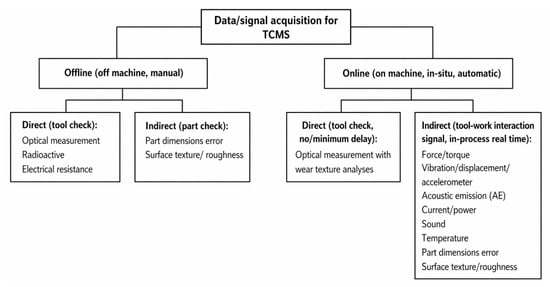
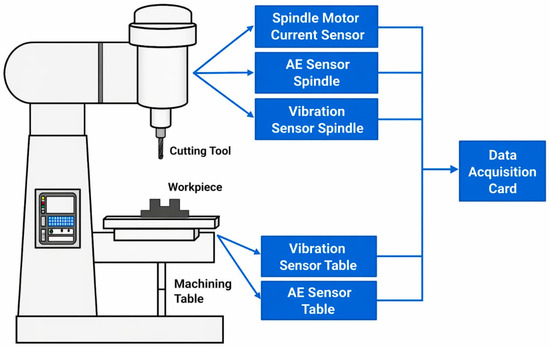
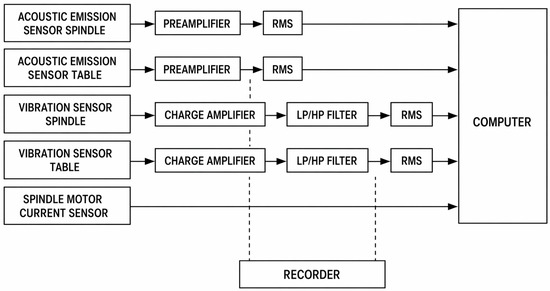
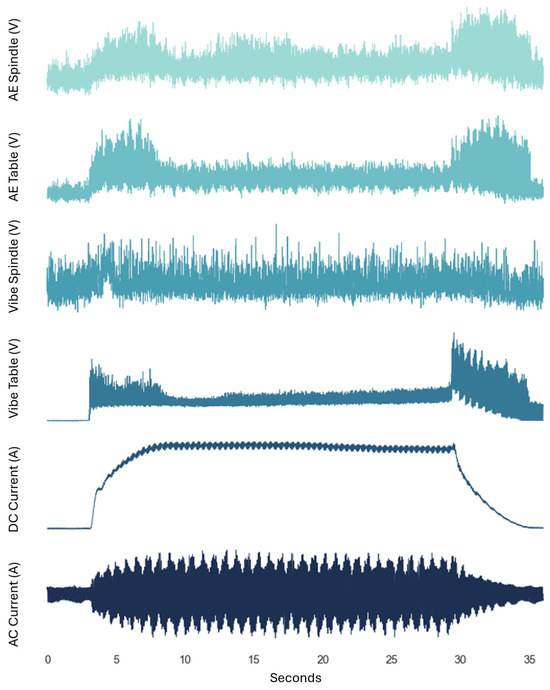
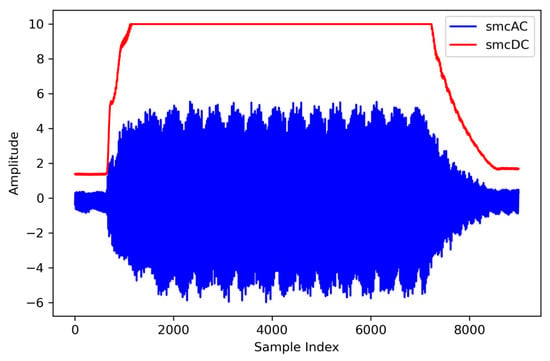
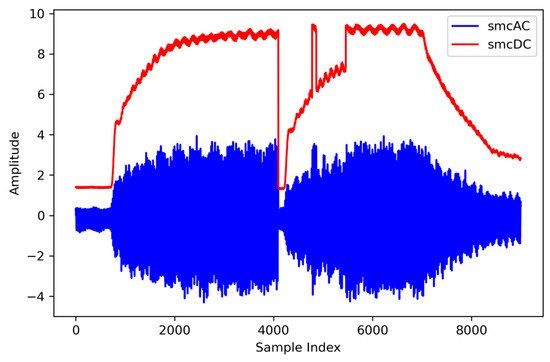
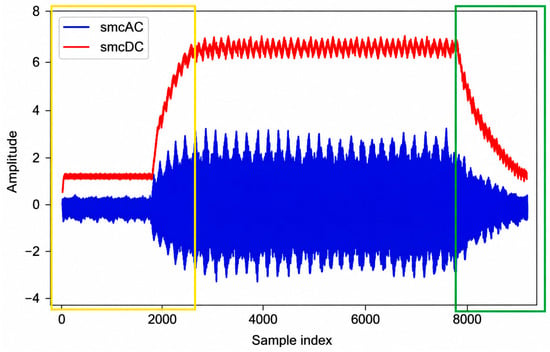
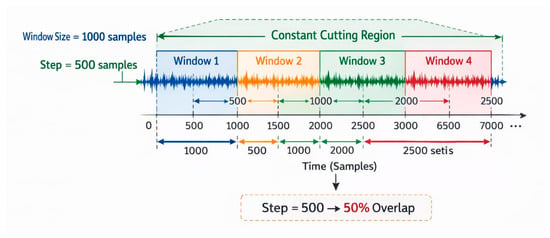
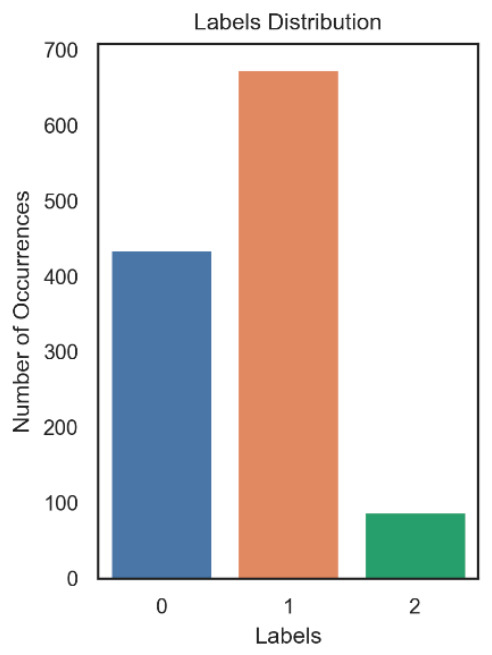
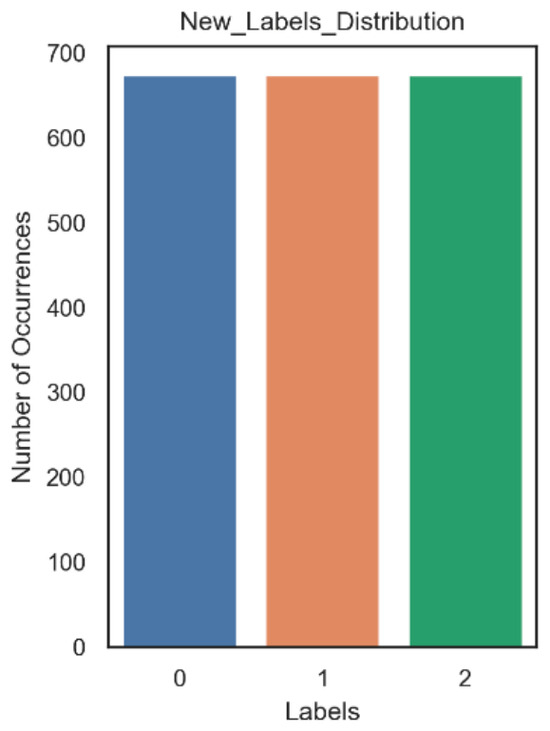
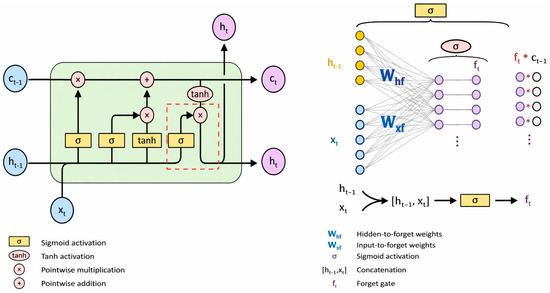
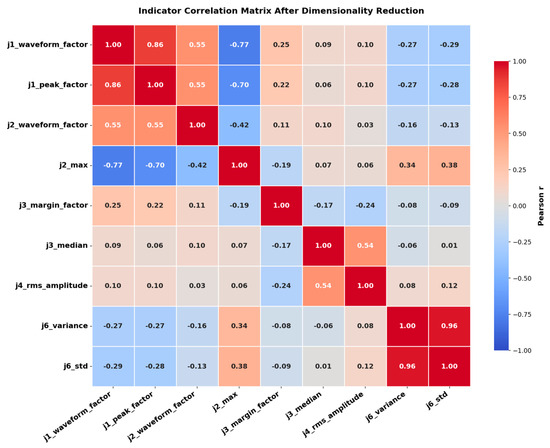
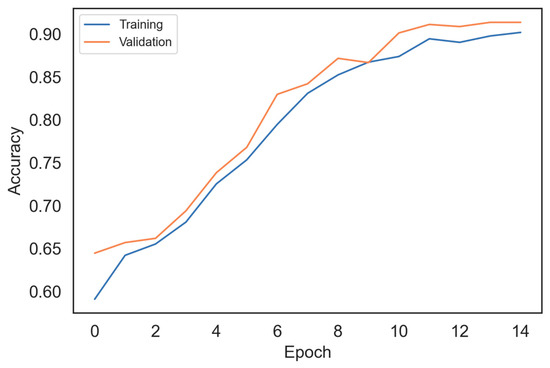
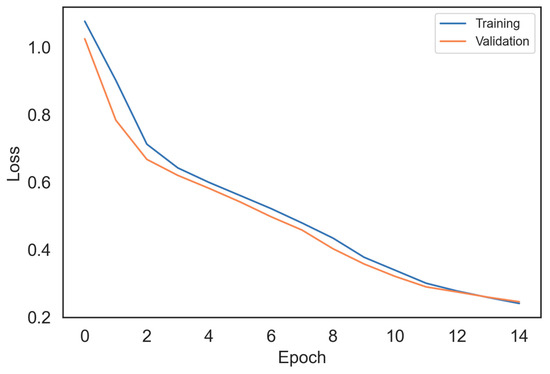
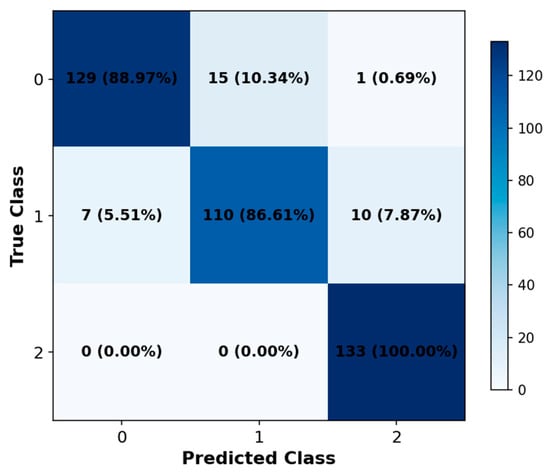
Tool wear directly affects surface quality, dimensional accuracy, and manufacturing cost in milling operations, making reliable wear state classification essential for process control. This paper presents an offline deep learning framework for multiclass tool wear classification using the UC Berkeley milling dataset (NASA-Ames). Statistical features are extracted from vibration, acoustic emission, and spindle motor current signals, and dimensionality is reduced from 78 to 9 informative variables using LASSO regression. A four-layer Long Short-Term Memory (LSTM) network then models the temporal evolution of tool degradation across three wear states: healthy, degraded, and failed. Two model variants are compared: Model A uses sensor-derived features only, while Model B additionally incorporates feed rate and depth of cut as inputs. To prevent data leakage, partitioning is performed at the machining-case level rather than at the individual window level. Model A achieves 92% classification accuracy; Model B reaches 95%, demonstrating that cutting conditions provide contextual information that resolves ambiguity between wear states produced under different machining regimes. These results confirm that combining multisensor feature fusion, LASSO-based selection, and sequential deep learning constitutes an effective framework for tool wear classification in milling. Full article
(This article belongs to the Special Issue Structural Health Monitoring Using Ultrasonic and Vibrational Methods)
Show Figures

Figure 1

32 pages, 1813 KB  
Article
A Dual-Branch Lightweight Network for Multimodal Image Fusion with Mamba and INN
by Nan Li, Hongxin Li and Lin Tian
Sensors 2026, 26(12), 3814; https://doi.org/10.3390/s26123814 (registering DOI) - 15 Jun 2026
Abstract
Multimodal image fusion aims to integrate complementary information from heterogeneous imaging modalities into a single informative image. However, many deep learning-based fusion methods rely on complex feature extractors, leading to high computational cost and limited suitability for real-time deployment on resource-constrained devices. To [...] Read more.
Multimodal image fusion aims to integrate complementary information from heterogeneous imaging modalities into a single informative image. However, many deep learning-based fusion methods rely on complex feature extractors, leading to high computational cost and limited suitability for real-time deployment on resource-constrained devices. To address this issue, this paper proposes a lightweight Mamba-INN dual-branch network for efficient multimodal image fusion. The proposed model decouples global structure modeling from local detail preservation. A simplified Mamba-inspired branch is designed to capture long-range contextual dependencies, while a lightweight invertible neural network branch preserves high-frequency textures and edge information through information-preserving transformations. The lightweight INN branch preserves high-frequency texture and edge information during the forward feature transformation process through reversible feature partitioning, coupled transformations, and exponential scale modulation, thereby reducing the loss of detail caused by feature compression. Compact shallow feature refinement, module reuse, low-dimensional channel design, and a streamlined decoder are further introduced to reduce redundant computation. Experiments on infrared-visible and medical image fusion benchmarks, including MSRS, TNO, RoadScene, MRI-CT, MRI-PET, and MRI-SPECT datasets, demonstrate that the proposed method achieves competitive fusion quality with low model complexity. The proposed method achieves performance comparable to or better than that of methods such as CDDFuse, U2Fusion, CNN and SDNet on metrics including MI, VIF, Qabf, and SSIM for infrared-visible and medical image fusion tasks, while containing only 0.24 million parameters and requiring 24.04 GFLOPs of computational power at an input resolution of 256 × 256. Compared to CDDFuse, our method significantly reduces model complexity, enhancing the potential for lightweight deployment while maintaining fusion quality. Full article
17 pages, 1144 KB  
Article
A Transformer-Based Neural Network to Predict Credit Card Default
by Zongqi Hu and Chai Kiat Yeo
Electronics 2026, 15(12), 2656; https://doi.org/10.3390/electronics15122656 (registering DOI) - 15 Jun 2026

Abstract
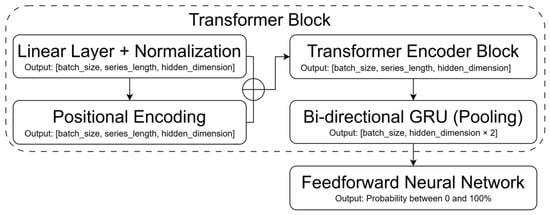
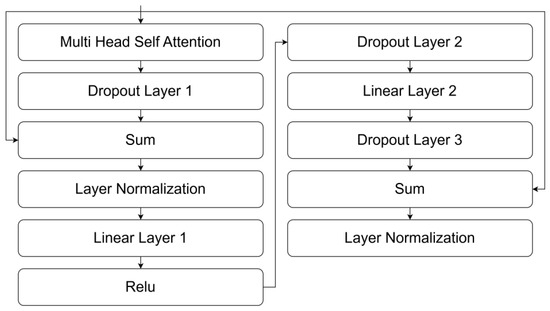
We propose a transformer-based neural network for predicting credit card default using raw multivariate credit data represented as a 2D time series, eliminating the need for manual feature engineering. Unlike existing state-of-the-art (SOTA) tree-based models that rely heavily on handcrafted features, our model [...] Read more.
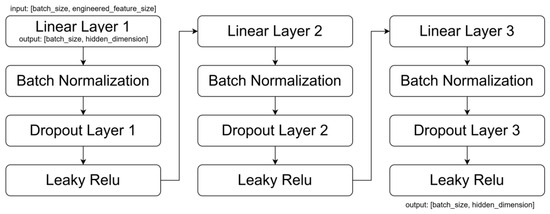
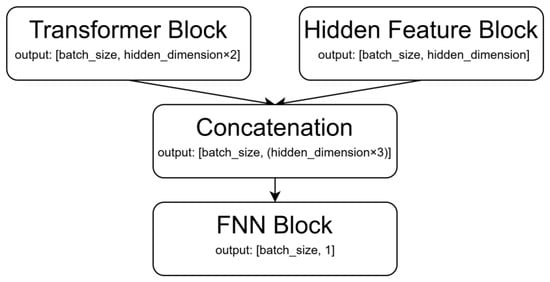
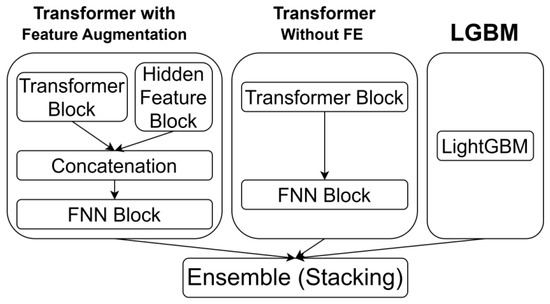
We propose a transformer-based neural network for predicting credit card default using raw multivariate credit data represented as a 2D time series, eliminating the need for manual feature engineering. Unlike existing state-of-the-art (SOTA) tree-based models that rely heavily on handcrafted features, our model leverages self-attention to extract latent temporal patterns directly from the raw data. Evaluated on two real-world datasets, our approach outperforms the popular LightGBM baselines and achieves performance on par with the leading ensemble methods. To further explore if our proposed model can enhance common ensemble methods, we incorporate it into an ensemble together with LightGBM. Experimental results show that the ensemble integrating our proposed transformer-based model outperforms existing ensemble approaches. Designed with deployment in mind, the model architecture is lightweight, generalizable, and maintainable, making it suitable for integration into real-world credit risk pipelines. Our results demonstrate strong practical relevance and a clear path towards scalable deployment in financial applications. In addition, we have built in an optional feature augmentation extension to the proposed model to facilitate hybrid adoption of our model by existing users who are accustomed to engineered features from domain expertise and industry practice. Hence, our model is user-friendly and can leverage hybrid learning to support both user-crafted and model-learned features to improve model performance and deployment. Full article
(This article belongs to the Section Computer Science & Engineering)
Show Figures

Figure 1

34 pages, 2114 KB  
Systematic Review
A Tale of Three Words: Knowledge, Safety, and Graphs
by Francesco Simone, Andrea Montaruli, Kristopher Hernandez Fandino and Riccardo Patriarca
Information 2026, 17(6), 599; https://doi.org/10.3390/info17060599 (registering DOI) - 15 Jun 2026
Abstract
The growing complexity of modern systems has pushed safety science beyond tradition-al analysis methods. In a world where the unknown matters as much as the known, knowledge graphs emerge as a powerful means for representing, connecting, and extending knowledge. However, the intersection between [...] Read more.
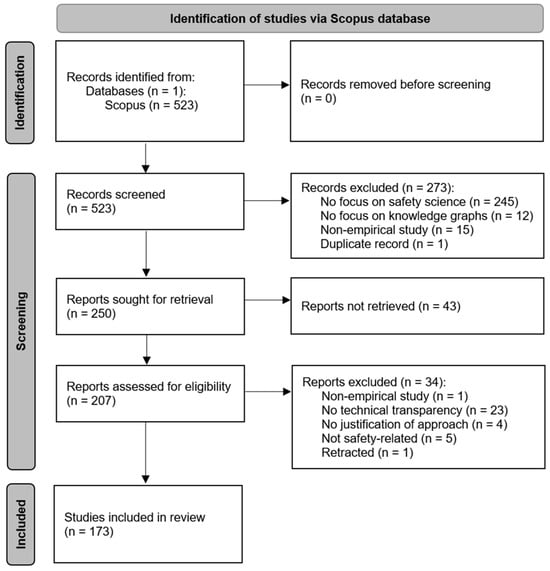
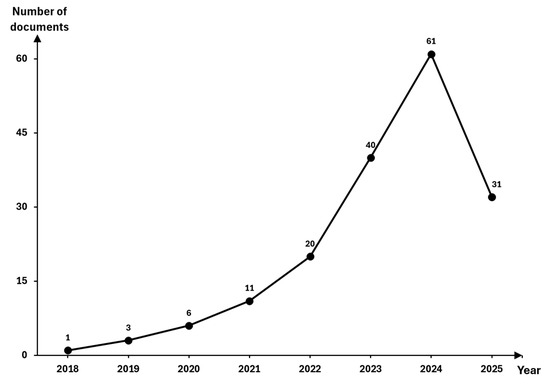
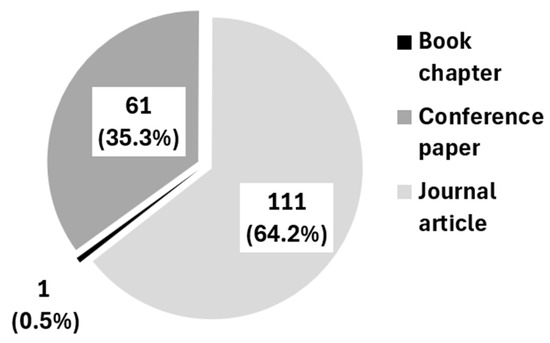
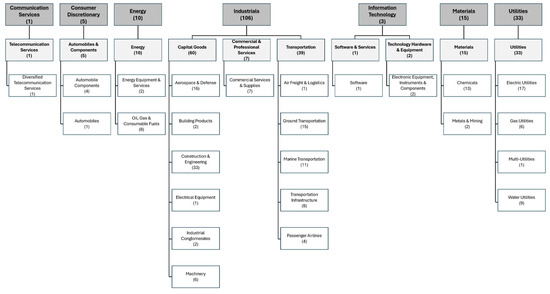
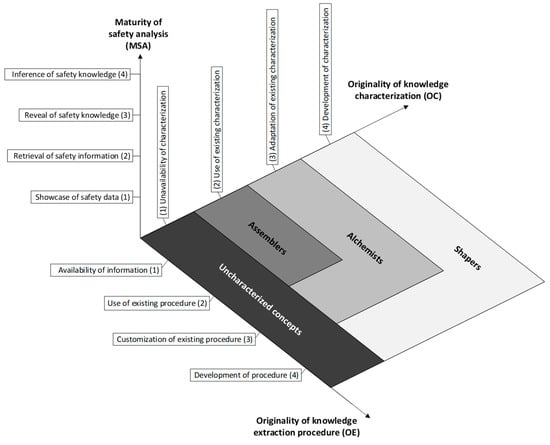
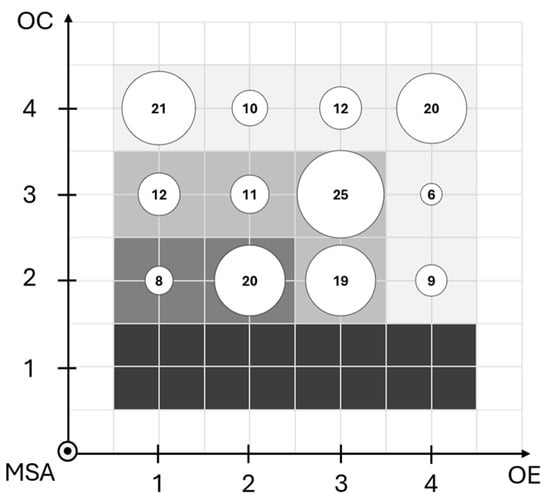
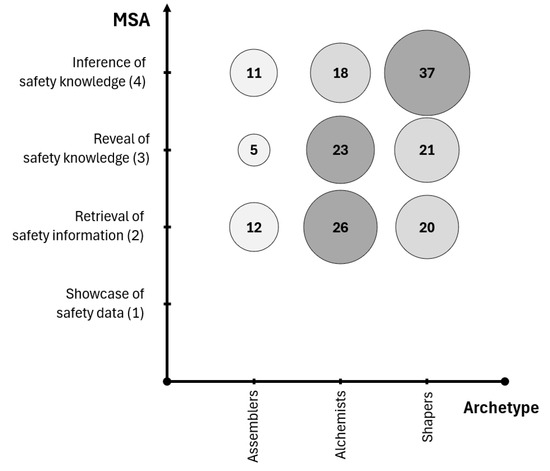
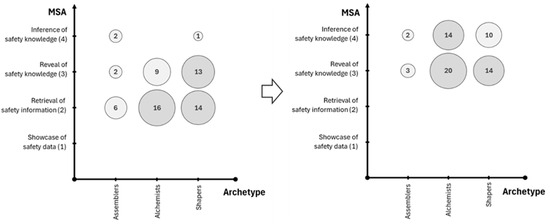
The growing complexity of modern systems has pushed safety science beyond tradition-al analysis methods. In a world where the unknown matters as much as the known, knowledge graphs emerge as a powerful means for representing, connecting, and extending knowledge. However, the intersection between safety science and knowledge graphs remains largely unexplored. Which communities of researchers are leveraging knowledge graphs for safety? Is there any common pattern in how they are being used? This paper addresses these questions by presenting a systematic review of the literature on the use of knowledge graphs in the context of safety. Based on 173 eligible documents, we propose a classification framework structured around three dimensions: the originality of knowledge characterization, the originality of knowledge extraction, and the maturity of safety analysis. The framework identifies three archetypes of knowledge graph users: Assemblers, who rely on existing models and tools; Alchemists, who adapt available knowledge structures or extraction procedures; and Shapers, who develop novel ontologies, extraction methods, or both. The obtained results show how the latter represents the largest group among the reviewed studies, suggesting a tension between analytical maturity and the need for customized solutions. More broadly, the classification framework presented in this review may support researchers from both the safety and the artificial intelligence communities in fostering a shared path for the scientific development of these disciplines. Full article
(This article belongs to the Special Issue Knowledge Graph Technology and Its Applications, 3rd Edition)
Show Figures

Figure 1

12 pages, 4364 KB  
Article
Fracture Resistance of 3D-Printed Partial and Conventional Veneers
by Abdulrahman Alshabib, Silvia Rojas-Rueda, Saad Alotaibi, Carlos A. Jurado, Mark A. Antal, Brian R. Morrow and Franklin Garcia-Godoy
J. Funct. Biomater. 2026, 17(6), 298; https://doi.org/10.3390/jfb17060298 (registering DOI) - 15 Jun 2026
Abstract
Background: The purpose of this in vitro study was to evaluate and compare the fracture resistance of 3D-printed partial veneers with finish lines at three different locations and conventional full veneers with finish lines at the gingival level. All restorations were digitally designed [...] Read more.
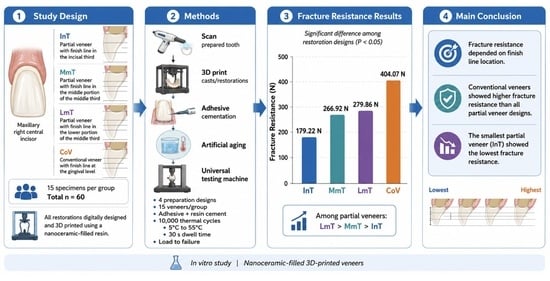
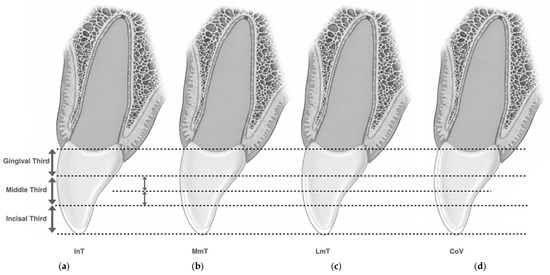
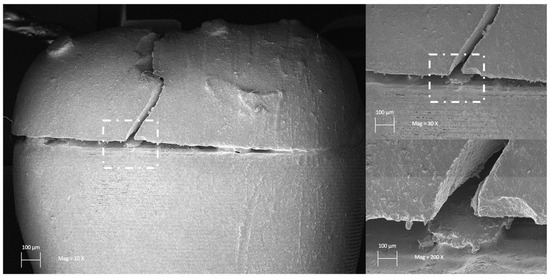
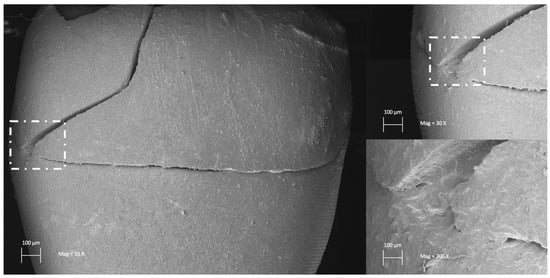
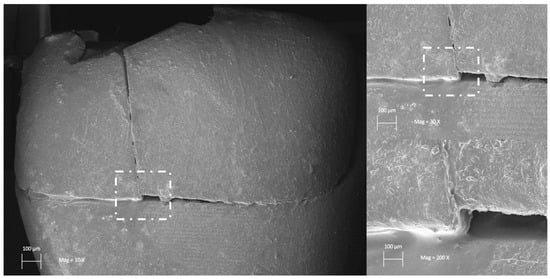
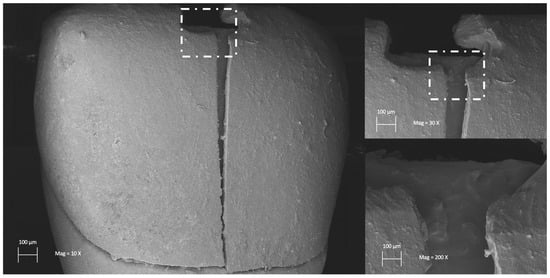
Background: The purpose of this in vitro study was to evaluate and compare the fracture resistance of 3D-printed partial veneers with finish lines at three different locations and conventional full veneers with finish lines at the gingival level. All restorations were digitally designed and 3D printed using a nanoceramic filled resin specifically developed for veneer restorations. Methods: Four maxillary right central incisor typodont teeth were prepared for labial veneers with finish lines at different locations: incisal third (InT), middle portion of the middle third (MmT), lower portion of the middle third (LmT), and conventional veneer with the finish line at the gingival level (CoV). Each preparation was scanned, and 15 casts were 3D printed from each scan. A total of 60 3D-printed veneers were fabricated (n = 15 per group) using a nanoceramic-filled resin designed for veneer restorations. The restorations were cemented to the 3D-printed dies using the manufacturer’s adhesive and resin cement. The specimens were artificially aged with 10,000 thermal cycles between 5 °C and 55 °C, with a dwell time of 30 s, and then loaded to failure using a universal testing machine. Fracture load values were analyzed using one-way ANOVA and the Tukey honestly significant difference post hoc test (α = 0.05). In addition, fracture patterns were evaluated using scanning electron microscopy images for descriptive purposes. Results: The mean fracture resistance of the 3D-printed partial and conventional labial veneers differed significantly depending on restoration design (p < 0.05). Among the partial veneers, the LmT group showed the highest fracture resistance (279.86 N), followed by the MmT group (266.92 N), while the InT group showed the lowest value (179.22 N). The conventional veneer group (CoV) demonstrated higher fracture resistance (404.07 N) than all partial veneer groups. Conclusions: The fracture resistance of 3D-printed partial and conventional labial veneers fabricated with nanoceramic-filled resins differed according to finish line location. Conventional veneers demonstrated higher fracture resistance than all partial veneer designs. The smallest partial veneer, with the margin located in the incisal third, showed lower fracture resistance than the partial veneer designs with finish lines in the middle third. Full article
(This article belongs to the Special Issue Digital Technologies and Materials in Restorative Dentistry)
Show Figures

Graphical abstract

31 pages, 2825 KB  
Review
Physicochemical Aspects of Mixed Micelle Formation Between Amphiphilic Drugs and Surfactants
by Ádám Juhász, Bianka Torma, Egon F. Várkonyi, László Seres, Norbert Varga, Árpád Turcsányi and Edit Csapó
Int. J. Mol. Sci. 2026, 27(12), 5400; https://doi.org/10.3390/ijms27125400 (registering DOI) - 15 Jun 2026
Abstract
The rational design of mixed micellar systems has emerged as a cornerstone of modern nanomedicine, offering unprecedented control over the solubility and bioavailability of challenging therapeutic agents. This review provides a comprehensive analysis of the physicochemical principles governing the assembly of amphiphilic drugs [...] Read more.
The rational design of mixed micellar systems has emerged as a cornerstone of modern nanomedicine, offering unprecedented control over the solubility and bioavailability of challenging therapeutic agents. This review provides a comprehensive analysis of the physicochemical principles governing the assembly of amphiphilic drugs and surfactants into synergistic nanostructures. By articulating the transition from traditional guest/host solubilization to “drug-as-component” models, we highlight the critical role of molecular interactions in achieving therapeutic precision. It further outlines the experimental methodologies used to investigate these systems and elucidates how they enhance the solubility, stability, and bioavailability of poorly water-soluble drugs. Special emphasis is placed on the practical applications of synergy in reducing systemic toxicity and optimizing drug release kinetics, providing a roadmap for the development of next-generation nano-pharmaceuticals. The functionality of these systems is significantly influenced by the molecular interactions among their constituents; thus, quantitative analysis of these interactions might enhance the formulation of more effective pharmaceuticals. This review outlines the key physicochemical principles of mixed micelle formation, including thermodynamics and synergistic interactions of amphiphiles, while emphasizing their relevance in current research and practical pharmaceutical applications. Various experimental methods, such as surface tension measurement, conductometric and calorimetric tests, and spectroscopic techniques, are compared in terms of their conditions of application and performance in understanding micelle formation and micelle structure. We clearly point out that the interpretation and evaluation of the properties of colloidal systems containing drug molecules solubilized by mixed micelles and an amphiphilic drug incorporated into micelles must be discussed and evaluated separately. Understanding the limitations and characteristics of the physical/chemical principles applied is essential for the rational design of mixed micelle carriers tailored to specific therapeutic needs. Full article
(This article belongs to the Special Issue Nanotechnology in Drug Delivery: Applications and Perspectives)
19 pages, 2027 KB  
Article
Melatonin Modulates Macrophage Polarization and Immunometabolic Responses in the Colostrum of Obese Mothers
by Silvia Hannah Bilotti Ratto Gomes da Silva, Danielle Cristina Honorio França, Kênia Maria Resende Silva, Emanuelle Carolina Honorio França, Viviane Francelina Luz, Arce dos Santos Sfredo, Tassiane Cristina Morais, Eduardo Luzía França and Adenilda Cristina Honorio-França
Metabolites 2026, 16(6), 420; https://doi.org/10.3390/metabo16060420 (registering DOI) - 15 Jun 2026
Abstract
Background/Objectives: Obesity is a major public health problem associated with chronic inflammation and functional alterations in multiple organs and systems. Few studies have examined colostrum from obese mothers, particularly with respect to macrophage function, enzyme and cytokine concentrations, and the role of [...] Read more.
Background/Objectives: Obesity is a major public health problem associated with chronic inflammation and functional alterations in multiple organs and systems. Few studies have examined colostrum from obese mothers, particularly with respect to macrophage function, enzyme and cytokine concentrations, and the role of melatonin in immune modulation. This study aimed to evaluate melatonin levels and their effects on macrophage polarization, cytokine concentrations, nitric oxide synthase [iNOS], and arginase in colostrum from obese mothers. Colostrum samples were collected from eutrophic mothers [BMI: 18.5–24.9 kg/m2] and obese mothers [BMI: ≥30 kg/m2]. Methods: Macrophages were isolated by density gradient and treated with melatonin. The expression of M1 and M2 macrophages and cytokine concentrations were assessed by flow cytometry, while melatonin levels in colostrum supernatants, iNOS, and arginase in cell lysates were determined by ELISA. Results: An endogenous increase in melatonin was also observed in the colostrum of obese mothers. Maternal obesity has been shown to reduce M1 and M2 macrophage expression, increase nitric oxide synthase [NOS] activity, and elevate interleukin-6 [IL-6] and interleukin-17 [IL-17] levels. However, melatonin treatment restored M1 and M2 macrophage levels and reduced inducible nitric oxide synthase [iNOS] and arginase production to levels similar to those observed in mothers of healthy weight. Conclusions: these findings suggest that maternal obesity creates a pro-inflammatory environment in colostrum, characterized by altered macrophage polarization, altered cytokine secretion, and an imbalance in the enzymatic activities of iNOS and arginase within the L-arginine metabolic pathway. Both natural and supplemental melatonin exhibited immunomodulatory, antioxidant, and anti-inflammatory effects, helping to restore immune balance in colostrum. These results emphasize the potential benefits of melatonin as an immunometabolic modulator and its contribution to understanding immunometabolic regulation in obese mothers. Full article
16 pages, 730 KB  
Article
Green Tea Consumption and Risk of All-Cause Mortality: Findings from a Prospective Cohort Study
by Ngoan Tran Le, Yen Thi-Hai Pham, Hieu Lan Nguyen, Linh Thuy Le, Ninh Thi Nguyen, Thao Thu Thi Vu, Chihaya Koriyama, Ha Nguyen, Tin C. Nguyen, Nam S. Vo, Lang Wu, Jennifer Cullen and Hung N. Luu
Nutrients 2026, 18(12), 1937; https://doi.org/10.3390/nu18121937 (registering DOI) - 15 Jun 2026
Abstract
Background/Objectives: There has been a growing concern about excessive caffeine consumption among heavy green tea drinkers on health outcomes, such as cardiovascular diseases or cancer. We evaluated the association between green tea consumption and risk of all-cause mortality in Vietnam. Methods: We used [...] Read more.
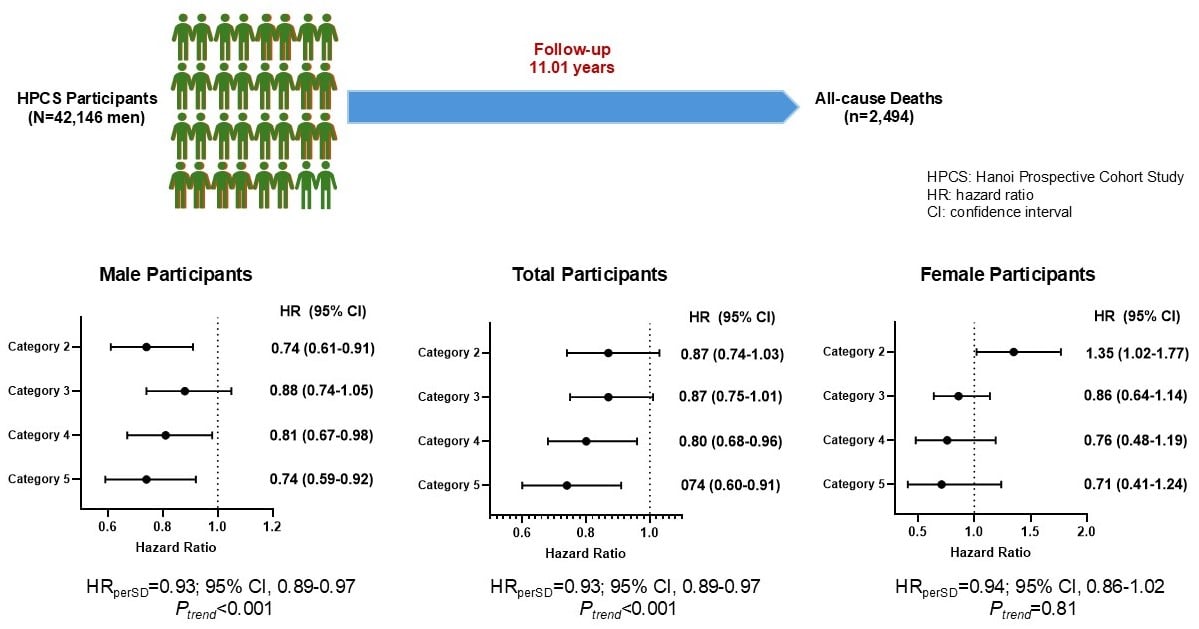
Background/Objectives: There has been a growing concern about excessive caffeine consumption among heavy green tea drinkers on health outcomes, such as cardiovascular diseases or cancer. We evaluated the association between green tea consumption and risk of all-cause mortality in Vietnam. Methods: We used data from the Hanoi Prospective Cohort Study, an ongoing study comprising 42,146 participants aged 10 or older in Northern Vietnam who have been followed up between 2007 and 2019. Green tea intake was derived from a validated semi-quantitative food frequency questionnaire. We performed a Cox proportional hazard regression model to calculate the hazard ratio (HR) and respective 95% confidence intervals (95% CIs) for the association between green tea consumption and risk of all-cause mortality, adjusted for potential confounding factor. Results: After a median follow-up of 11 years (range: 0.13–11.64 years), we identified 2494 deaths. Overall, there was an inverse association between green tea intake and risk of all-cause mortality (HRperSDincrement = 0.93; 95% CI, 0.89–0.97, Ptrend < 0.001). This pattern was more pronounced in males (HRperSDincrement = 0.93; 95% CI, 0.89–0.97, Ptrend < 0.001) but not in females (HRperSDincrement = 0.94; 95% CI, 0.86–1.02, Ptrend = 0.12; Pheterogeneity = 0.81). In stratified analysis, the inverse association pattern was seen in both younger and old age groups, in individuals with BMI < 23 kg/m2, in both ever and never smokers, among ever alcohol drinkers and never coffee drinkers, and in individuals with and without history of type 2 diabetes (Pheterogeneity = 0.31). Conclusions: Findings from the current study, the first prospective cohort study in Vietnam, suggest a protective effect of green tea consumption on risk of all-cause mortality. Further studies are warranted to validate our findings in similar population and settings. Full article
(This article belongs to the Section Nutritional Epidemiology)
Show Figures

Graphical abstract

31 pages, 1555 KB  
Review
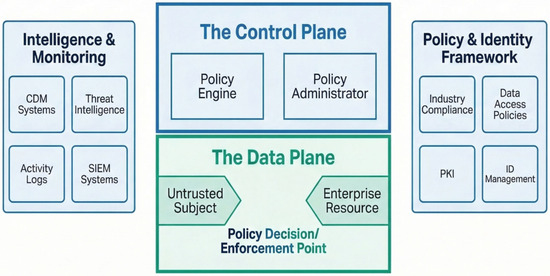
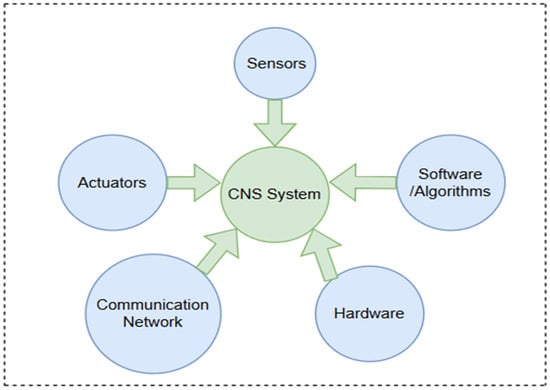
A Review of Zero Trust Architecture: Principles, Applications, and Implementation Challenges in Communication, Navigation, and Surveillance (CNS) Systems
by Nompilo Ngema, Bakhe Nleya and Rito Clifford Maswanganyi
Sensors 2026, 26(12), 3813; https://doi.org/10.3390/s26123813 (registering DOI) - 15 Jun 2026
Abstract
The increasing interconnectivity and digital transformation of Communication, Navigation, and Surveillance (CNS) systems have expanded their attack surface, rendering traditional perimeter-based security models inadequate for protecting these critical infrastructures. Zero Trust Architecture (ZTA), founded on the principle of “never trust, always verify,” offers [...] Read more.
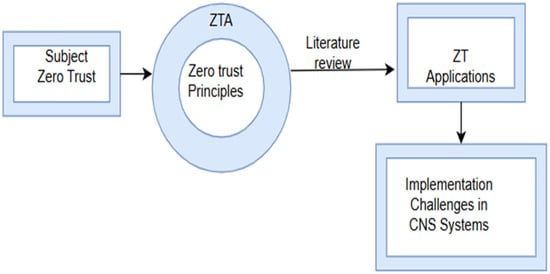
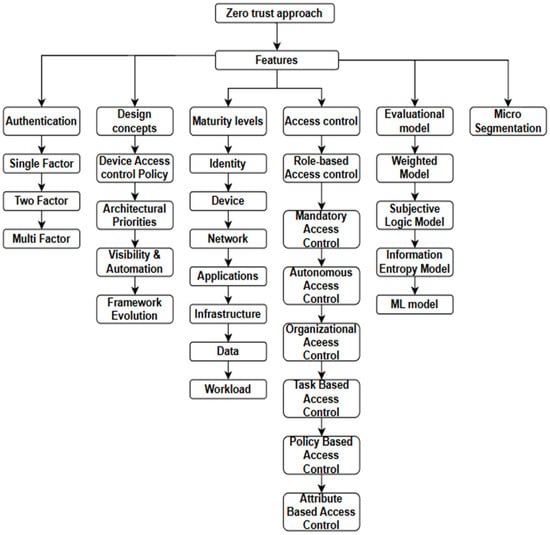
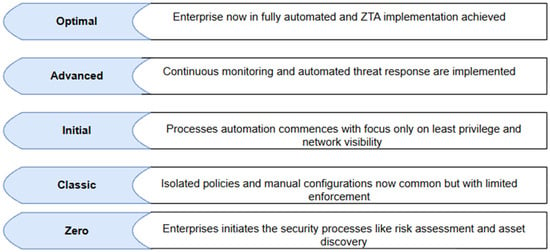
The increasing interconnectivity and digital transformation of Communication, Navigation, and Surveillance (CNS) systems have expanded their attack surface, rendering traditional perimeter-based security models inadequate for protecting these critical infrastructures. Zero Trust Architecture (ZTA), founded on the principle of “never trust, always verify,” offers a paradigm shift towards continuous, context-aware security. This paper presents a literature review investigating the application of ZTA principles to secure modern CNS ecosystems, following the guidelines of the International Civil Aviation Organization (ICAO) through its Cybersecurity Strategy and Plan. We analyze the alignment of ZTA core tenets—such as least-privilege access, micro-segmentation, and continuous authentication—with the unique operational requirements of CNS systems. This paper also presents a cybersecurity framework, under development within the Future Communications Digital Infrastructure (FCDI) project of the SESAR JU program, which aims to assist CNS stakeholders in collaboratively identifying cybersecurity threats within their scope of responsibility. The review critically examines implementation challenges for specific CNS subsystems: secure aeronautical communications (e.g., LDACS), resilient PNT (Positioning, Navigation, and Timing) services, and integrated surveillance networks (e.g., ADS-B, multilateration). Furthermore, we identify and evaluate domain-specific challenges, including integration with legacy avionics and ground systems, managing stringent latency and reliability constraints, and protecting against sophisticated threats targeting supply chains and data fusion processes. By synthesizing current research and practical deployment insights, this review aims to provide a foundational reference for aerospace engineers, cybersecurity specialists, and policymakers, offering a roadmap to enhance the cyber-resilience of vital CNS infrastructure in an era of evolving digital threats. Full article

(This article belongs to the Section Navigation and Positioning)
Show Figures

Figure 1

11 pages, 686 KB  
Review
Summary of Guidelines for Identifying and Risk-Stratifying Patients with Metabolic Dysfunction-Associated Steatotic Liver Disease: A Primer for Family Physicians
by Mitchell P. Wilson, Abdel-Aziz Shaheen, Victoria Leung, An Tang, Andreu F. Costa, Casey Hurrell and Gavin Low
Diagnostics 2026, 16(12), 1854; https://doi.org/10.3390/diagnostics16121854 (registering DOI) - 15 Jun 2026
Abstract
Multiple North American and European societies now endorse a combined serological and imaging-based clinical care pathway for non-invasive risk stratification of patients with metabolic dysfunction-associated steatotic liver disease (MASLD). A multidisciplinary group of Canadian radiologists, hepatologists, family physicians, and other health professionals have [...] Read more.
Multiple North American and European societies now endorse a combined serological and imaging-based clinical care pathway for non-invasive risk stratification of patients with metabolic dysfunction-associated steatotic liver disease (MASLD). A multidisciplinary group of Canadian radiologists, hepatologists, family physicians, and other health professionals have recently published consensus guidelines for identification and risk stratification of patients with suspected MASLD. Screening should be performed with the FIB-4 score, and those with an indeterminate FIB-4 (between 1.32.67) should undergo imaging-based liver stiffness evaluation either with transient elastography (FibroScan), ultrasound shear wave elastography, or magnetic resonance elastography as a second step. While the implementation of these techniques for measuring liver stiffness differ, there is no clinically significant difference in their diagnostic performance. This narrative review, intended for Family Physicians, summarizes recommendations for serological investigations and imaging modalities of liver steatosis and stiffness. Practical guidance includes an algorithm with thresholds. We discuss current challenges and future directions of risk-stratifying patients with MASLD in the community. Full article
(This article belongs to the Special Issue Clinical Diagnosis and Management of Liver Diseases)
16 pages, 764 KB  
Article
Association Between Food Environment Characteristics and Overweight and Anemia in Socially Vulnerable Children Living in Favelas
by Luiz Gonzaga Ribeiro Silva-Neto, Risia Cristina Egito de Menezes, Vanessa Sá Leal, Thays Lane Ferreira dos Santos and Telma Maria de Menezes Toledo Florêncio
Int. J. Environ. Res. Public Health 2026, 23(6), 801; https://doi.org/10.3390/ijerph23060801 (registering DOI) - 15 Jun 2026
Abstract
Background: The food environment plays a significant role in determining children’s nutritional status, especially in socially vulnerable settings, where the high availability of ultra-processed beverages can contribute to both overweight and nutritional deficiencies, such as anemia. Thus, this study aimed to assess the [...] Read more.
Background: The food environment plays a significant role in determining children’s nutritional status, especially in socially vulnerable settings, where the high availability of ultra-processed beverages can contribute to both overweight and nutritional deficiencies, such as anemia. Thus, this study aimed to assess the association between the availability of fruits, vegetables, and ultra-processed beverages in the food environment and the occurrence of overweight and anemia in children living in socially vulnerable areas. Methods: This is a cross-sectional study with an ecological component, conducted between 2020 and 2021, involving 665 children residing in 40 favelas and urban communities in Maceió, Alagoas, Brazil. Socioeconomic, anthropometric, and hematological data were collected, along with a characterization of the food environment in 624 establishments using the AUDITNOVA tool, focusing on the availability of fruits, vegetables, and ultra-processed beverages. The outcomes investigated were overweight (BMI-for-age z-score > +2) and anemia (hemoglobin < 11 g/dL). Multilevel models were used to assess the associations between the food environment and the outcomes of interest. Results: The prevalence of overweight was 19.7%, while anemia affected 50.4% of the children assessed. Greater availability of fruits and vegetables was associated with a lower chance of being overweight (OR: 0.82; 95% CI: 0.79–0.98). In contrast, high availability of ultra-processed beverages was associated with a higher chance of being overweight (OR: 1.35; 95% CI: 1.07–1.84) and anemia (OR: 1.53; 95% CI: 1.04–2.29). Conclusion: Food environments characterized by widespread availability of ultra-processed beverages were associated with a higher prevalence of overweight and anemia among children. In comparison, greater availability of fresh or minimally processed foods was associated with a lower prevalence of overweight. These findings highlight the importance of public policies that promote healthier food environments in socially vulnerable areas. Full article
18 pages, 1056 KB  
Article
Beyond Pain Relief: Quality of Life and Functional Outcomes Following Minimally Invasive Excision of Deep Endometriosis
by Andrei Manu, Elena Poenaru, Arina-Ilinca Gheorghe, Smaranda Stoleru, Alexandra Irma Gabriela Baușic, Bogdan-Cătălin Coroleucă, Ciprian-Andrei Coroleucă, Cristina-Maria Iacob, Mihaela Arina Banu, Anca-Mihaela Hashemi, Maria-Bianca Nițescu, Oana-Miruna Peiu and Elvira Brătilă
Diseases 2026, 14(6), 216; https://doi.org/10.3390/diseases14060216 (registering DOI) - 15 Jun 2026
Abstract
Background: Deep infiltrating endometriosis (DIE), particularly when involving the bowel, significantly impairs health-related quality of life (HRQoL) and gastrointestinal function. This study aimed to evaluate the short- and mid-term impact of minimally invasive excision on these parameters in a large multicenter cohort. Methods: [...] Read more.
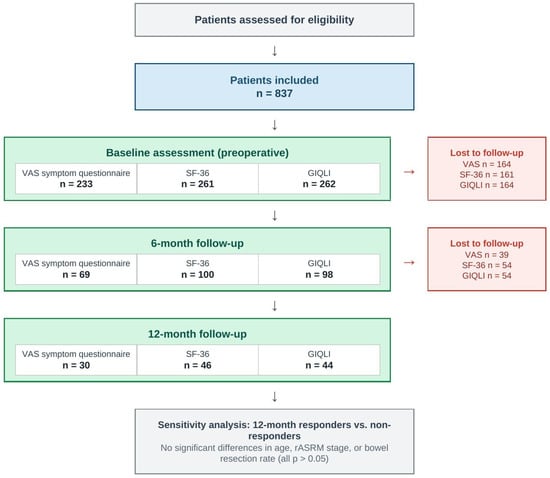
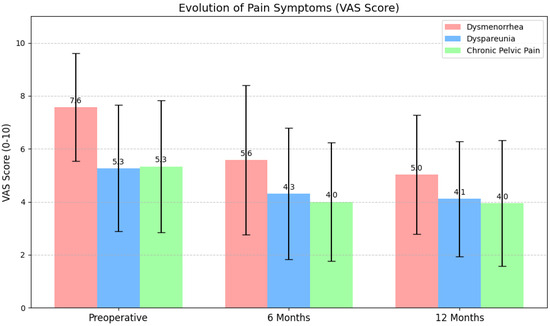
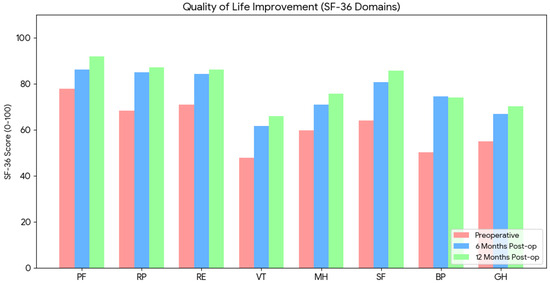
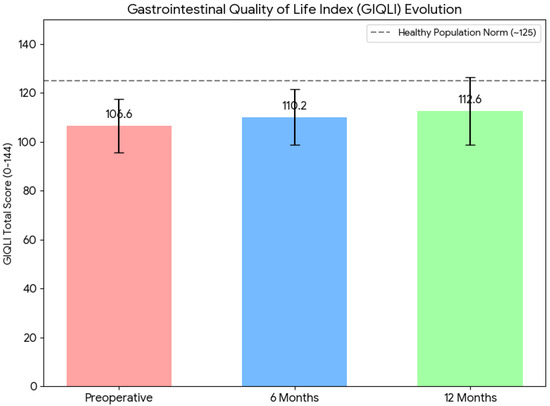
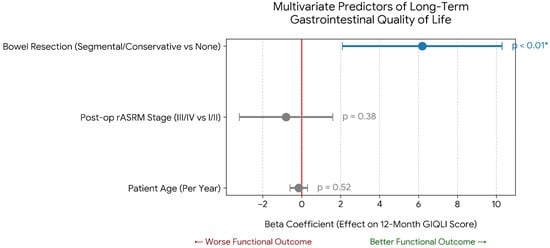
Background: Deep infiltrating endometriosis (DIE), particularly when involving the bowel, significantly impairs health-related quality of life (HRQoL) and gastrointestinal function. This study aimed to evaluate the short- and mid-term impact of minimally invasive excision on these parameters in a large multicenter cohort. Methods: A retrospective observational study was conducted on 837 patients treated for endometriosis in two tertiary referral centers between 2018 and 2024. All patients underwent laparoscopic or robotic-assisted excision. Quality of life was assessed preoperatively and at 6 months (VAS: n = 69; SF-36: n = 100; GIQLI: n = 98) and 12 months (VAS: n = 30; SF-36: n = 46; GIQLI: n = 44) postoperatively, using validated patient-reported outcome measures (PROMs): the Visual Analog Scale (VAS) for pain, the Short Form-36 (SF-36) survey, and the Gastrointestinal Quality of Life Index (GIQLI). Results: The study population presented with predominantly advanced disease (Stage III–IV in 83.4% of cases), with 39.7% of patients undergoing segmental bowel resection. Postoperatively, a statistically significant reduction was observed in dysmenorrhea (VAS 7.6 vs. 5.0, p < 0.001) and chronic pelvic pain. The SF-36 scores improved significantly across all eight domains at 6 months, with the most dramatic recovery seen in Role Physical (p < 0.001) and Bodily Pain (p < 0.001). Regarding digestive function, the mean GIQLI score showed a progressive increase, reaching statistical significance at 12 months compared to baseline (112.6 vs. 106.6, p = 0.027), indicating superior long-term functional outcomes. Conclusions: Multidisciplinary minimally invasive surgery for deep infiltrating endometriosis was associated with significant and sustained improvements in quality of life among patients with available follow-up. Gastrointestinal quality of life, as measured by GIQLI, improved significantly at 12 months postoperatively, including in patients who underwent segmental bowel resection. Systematic use of PROMs is essential for accurate patient counseling and outcome monitoring. Full article
Show Figures

Figure 1

22 pages, 1156 KB  
Article
Personalized Course Recommendation Based on Attribute-Interaction Joint Encoding and Hypergraph Reconstruction
by Jun Yi, Xiaoqi Han, Wei Zhou, Shan Xiao and Ming Liu
Information 2026, 17(6), 598; https://doi.org/10.3390/info17060598 (registering DOI) - 15 Jun 2026
Abstract
Course recommendation systems based on deep learning have demonstrated powerful feature extraction capabilities in dealing with information overload in massive open online courses (MOOCs), and have become an irreplaceable mainstream method. However, the learner–course interactions are usually scarce in reality, which limits the [...] Read more.
Course recommendation systems based on deep learning have demonstrated powerful feature extraction capabilities in dealing with information overload in massive open online courses (MOOCs), and have become an irreplaceable mainstream method. However, the learner–course interactions are usually scarce in reality, which limits the representation power of course recommendation. In addition, the contribution of learner and course attribute information to course recommendation has not been sufficiently explored by most existing methods. To tackle these challenges, a personalized course recommendation model based on attribute-interaction joint encoding and hypergraph reconstruction (AIHR-PCRM) is proposed in this paper. Specifically, a course hypergraph reconstruction (CHR) method is designed to construct higher-order associations for each course to explore more reliable global collaboration signals. Unlike existing hypergraph constructions that directly take learners as hyperedges, CHR explicitly couples three steps, including invalid learner elimination, high-order reachability induction, and similarity-based hyperedge filtering, to substantially raise the signal-to-noise ratio of the resulting hypergraph. Based on this, a hypergraph global collaborative learning module (HGM) can alleviate the issue of data sparsity. Then, a joint encoding module (JEM) is utilized to enhance learner behavior sequence representations by simultaneously fusing hypergraph-level global signals with attribute-level local semantics. Finally, a bidirectional self-attention module (BSM) is introduced to blend the contextual information of the learner behavior sequence, and to further provide a recommendation. Experimental results on three real-world datasets revealed that the proposed model has already achieved the best recall and ndcg scores compared to those of several existing models. Full article
(This article belongs to the Topic Explainable AI in Education)

Open Access Journals

Browse by Indexing Browse by Subject Selected Journals
Back to TopTop