Serum Neuron-Specific Enolase as a Prognostic Biomarker in Pediatric Convulsive Status Epilepticus: A Single-Center Retrospective Cohort Study

Highlights
- Serum neuron-specific enolase (NSE) measured within 48 h of PICU admission was independently associated with poor neurological outcome (adjusted OR 1.11 per μg/L; 95% CI 1.06–1.19; p = 0.001) and showed good discrimination for in-hospital mortality (AUC 0.885; 95% CI 0.79–0.96) in 132 children with convulsive status epilepticus. The association persisted in separate analyses restricted to mortality (n = 132) and to neurological deterioration among survivors (n = 114).
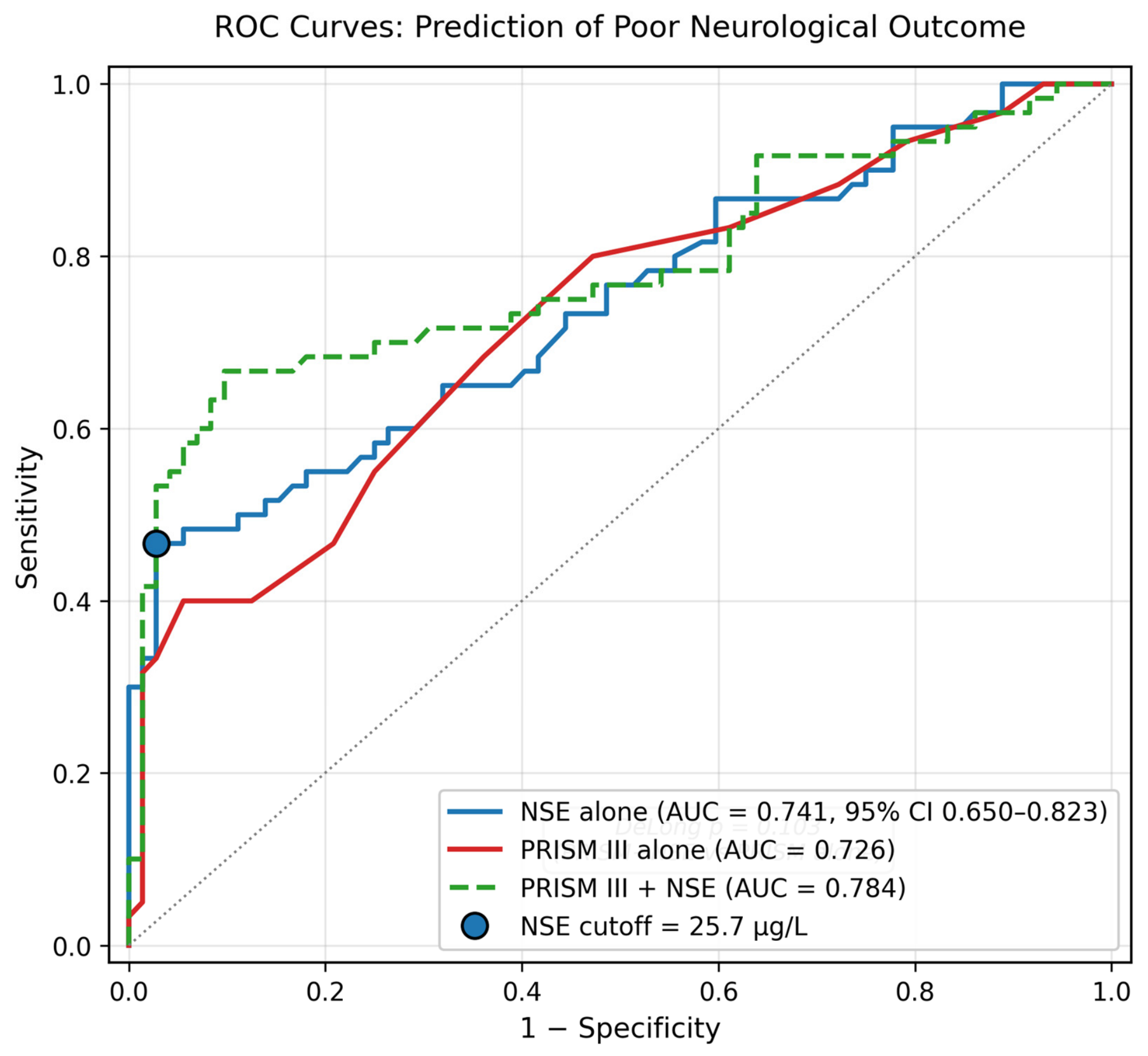
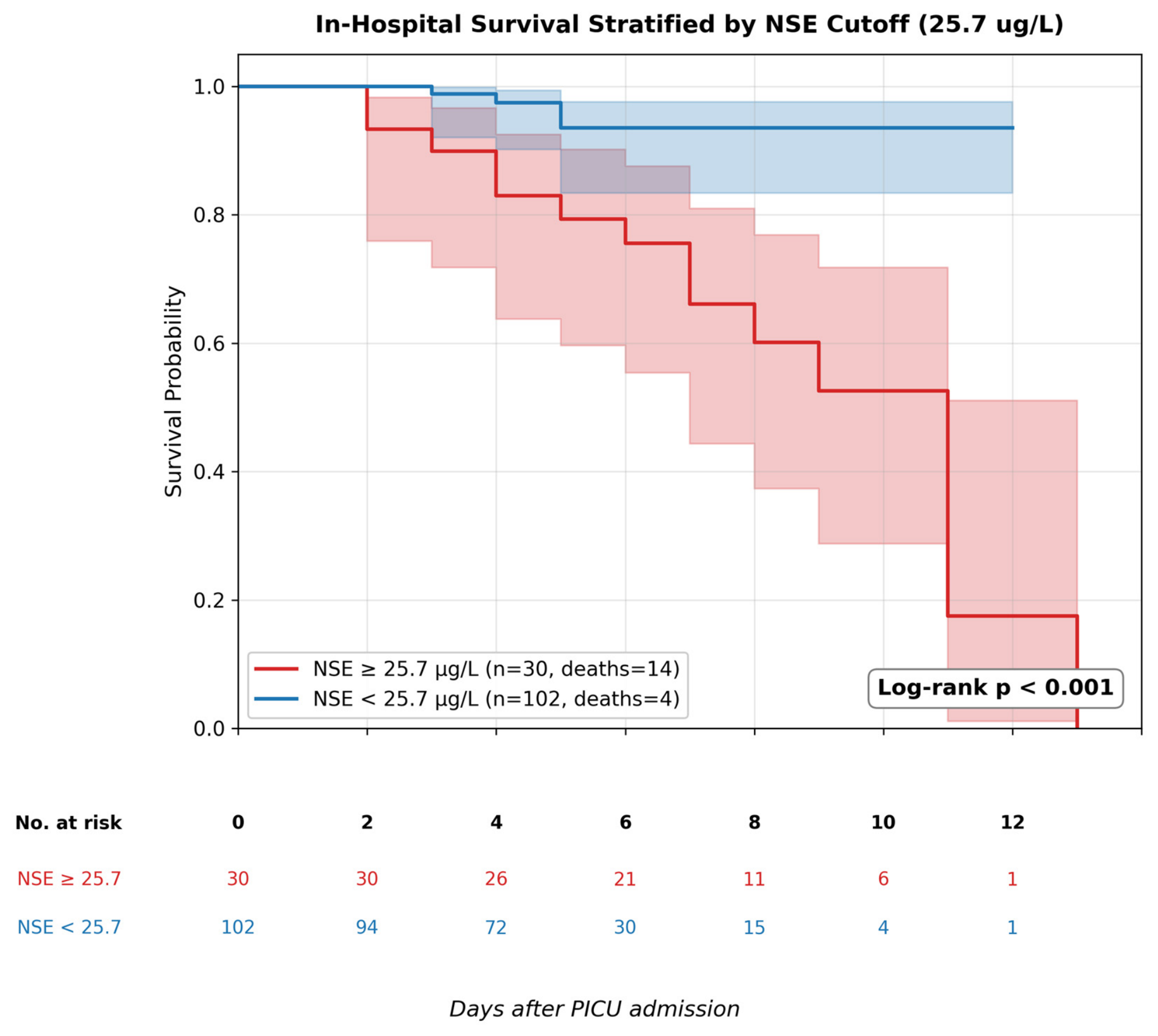
- An exploratory NSE cutoff of 25.7 μg/L, closely approximating the institutional upper reference limit (25.0 μg/L), identified high-risk patients with high specificity (97.2%, 95% CI 90.4–99.2) and PPV (93.3%, 95% CI 78.7–98.2) but limited sensitivity (46.7%, 95% CI 34.6–59.1), consistent with a rule-in rather than screening profile.
- These findings are hypothesis-generating. The combination of NSE with PRISM III did not significantly improve discrimination over PRISM III alone (DeLong p = 0.103), and the absolute AUC gain (+0.058) is modest. PRISM III, which is inexpensive and immediately available at the bedside, remains the appropriate first-line severity assessment in pediatric CSE.
- Prospective multicenter studies with standardized serial NSE sampling, formal long-term neurodevelopmental follow-up, and external validation are required before serum NSE can be advocated for routine clinical use as a prognostic biomarker in pediatric status epilepticus.
Abstract
1. Introduction
2. Materials and Methods
2.1. Study Design and Ethics Approval
2.2. Study Population
2.3. Clinical Definitions and Classification
2.4. Data Collection
- Demographic data: age (months), sex, body weight, and nationality.
- SE characteristics: etiology, seizure duration (minutes), SE severity classification (SE, RSE, or SRSE), number and type of antiseizure medications administered, and first- and second-line treatments used.
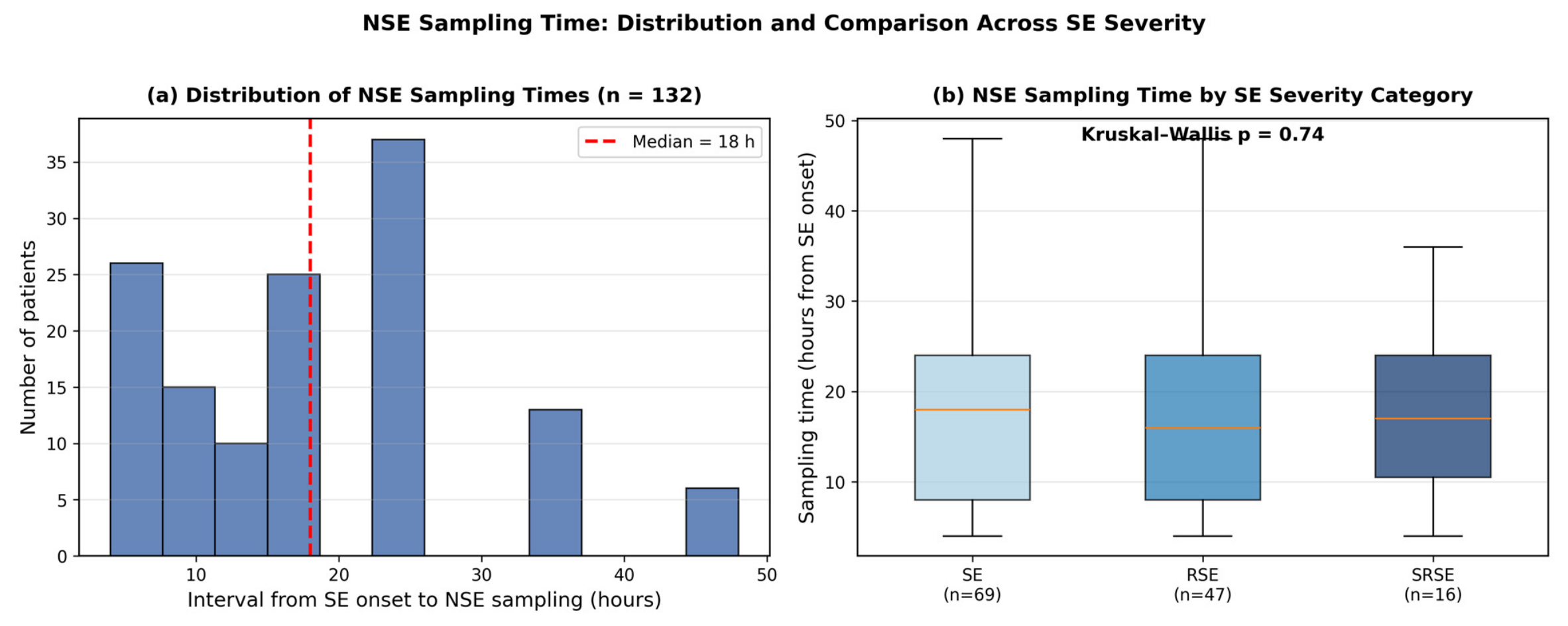
- Laboratory data: Serum NSE (μg/L) was the primary biomarker of interest. At our institution, serum NSE measurement is routinely performed as part of the standard neuronal injury assessment panel for all children admitted to the PICU with neurological emergencies, including status epilepticus, encephalitis, traumatic brain injury, and hypoxic–ischemic encephalopathy. For this study, the first available NSE value obtained within 48 h of PICU admission was used. To account for potential variability in sampling time, the interval between SE onset and blood sampling was recorded and considered in subsequent analyses. NSE was measured using an electrochemiluminescence immunoassay (ECLIA) on a Cobas e 411 analyzer (Roche Diagnostics, Mannheim, Germany) (institutional upper reference limit: 25.0 μg/L). Additional laboratory parameters recorded included C-reactive protein (CRP), serum lactate, albumin, and white blood cell count. S100B measurements were available in only 2 patients and were therefore not analyzed further.
- Clinical severity scores: The Pediatric Risk of Mortality III (PRISM III) score was calculated using the worst physiological values recorded within the first 24 h of PICU admission, as originally described by Pollack et al. [21]. The Pediatric Logistic Organ Dysfunction-2 (PELOD-2) score was calculated to quantify the degree of organ dysfunction [22]. The Glasgow Coma Scale (GCS) score was recorded at both admission and discharge [23].
- PICU data: requirement for and duration of invasive mechanical ventilation (MV), need for continuous anesthetic infusion (third-line therapy), PICU length of stay (LOS), and total hospital LOS.
- Neuroimaging and electroencephalography: EEG and MRI findings were not included in the primary analyses because their acquisition was not standardized across the study cohort. Continuous EEG monitoring was unavailable, and routine EEG recordings could only be performed in clinically stable patients. Likewise, MRI examinations were obtained only when patients were clinically stable and the procedure was considered feasible. As a result, both the availability and timing of EEG and MRI assessments varied considerably among patients, introducing potential selection and timing biases. Therefore, these data were collected and reported descriptively but were not incorporated into the regression models. EEG findings were categorized as normal, generalized slowing, focal slowing, epileptiform discharges (focal or generalized), burst-suppression, or electrocerebral inactivity. MRI findings were categorized as normal, chronic structural lesion, nonspecific changes, acute inflammatory changes, hypoxic–ischemic injury, temporal lobe involvement (atrophy or signal change), focal signal change, multifocal lesion, or diffuse edema. The proportions of patients with available EEG and MRI and the categorical breakdown of findings are reported in the Results.
2.5. Outcome Assessment
2.6. Artificial Intelligence (AI) Disclosure
2.7. Statistical Analysis
2.8. Sample Size Considerations
3. Results
3.1. Patient Characteristics
3.2. Primary Outcome: Neurological Outcome at Discharge
3.3. Correlation Between NSE and Clinical Variables
3.4. Univariate and Multivariable Logistic Regression
3.5. Model Performance, Internal Validation, and Separate Outcome Models
3.6. ROC Analysis, Prognostic Cutoff, and Sampling-Time Sensitivity
3.7. Secondary Outcomes
3.8. Subgroup Analyses by Etiology and Imaging Findings
4. Discussion
4.1. NSE as a Prognostic Biomarker in Pediatric CSE
4.2. Exploratory NSE Cutoff and Its Operational Profile
4.3. Incremental Value over PRISM III
4.4. Brain-Specific Injury Versus Systemic Illness Severity
4.5. Etiological Considerations
4.6. Limitations
4.7. Implications and Future Directions
5. Conclusions
Supplementary Materials
Author Contributions
Funding
Institutional Review Board Statement
Informed Consent Statement
Data Availability Statement
Acknowledgments
Conflicts of Interest
Abbreviations
| CSE | Convulsive Status Epilepticus |
| CI | Confidence Interval |
| CNS | Central Nervous System |
| CRP | C-Reactive Protein |
| EEG | Electroencephalography |
| GCS | Glasgow Coma Scale |
| ICU | Intensive Care Unit |
| IQR | Interquartile Range |
| LOS | Length of Stay |
| MRI | Magnetic Resonance Imaging |
| MV | Mechanical Ventilation |
| NSE | Neuron-Specific Enolase |
| OR | Odds Ratio |
| aOR | Adjusted Odds Ratio |
| PCPC | Pediatric Cerebral Performance Category |
| PELOD-2 | Pediatric Logistic Organ Dysfunction-2 |
| PICU | Pediatric Intensive Care Unit |
| PPV | Positive Predictive Value |
| NPV | Negative Predictive Value |
| LR+ | Positive Likelihood Ratio |
| LR− | Negative Likelihood Ratio |
| PRISM III | Pediatric Risk of Mortality III |
| ROC | Receiver Operating Characteristic |
| AUC | Area Under the Curve |
| RSE | Refractory Status Epilepticus |
| SD | Standard Deviation |
| SE | Status Epilepticus |
| SRSE | Super-Refractory Status Epilepticus |
| STROBE | Strengthening the Reporting of Observational Studies in Epidemiology |
| TRIPOD | Transparent Reporting of a Multivariable Prediction Model for Individual Prognosis Or Diagnosis |
| ILAE | International League Against Epilepsy |
| VIF | Variance Inflation Factor |
References
- Trinka, E.; Cock, H.; Hesdorffer, D.; Rossetti, A.O.; Scheffer, I.E.; Shinnar, S.; Shorvon, S.; Lowenstein, D.H. A definition and classification of status epilepticus—Report of the ILAE Task Force on Classification of Status Epilepticus. Epilepsia 2015, 56, 1515–1523. [Google Scholar] [CrossRef]
- Chin, R.F.M.; Neville, B.G.R.; Peckham, C.; Bedford, H.; Wade, A.; Scott, R.C.; NLSTEPSS Collaborative Group. Incidence, cause, and short-term outcome of convulsive status epilepticus in childhood: Prospective population-based study. Lancet 2006, 368, 222–229. [Google Scholar] [CrossRef] [PubMed]
- Glauser, T.; Shinnar, S.; Gloss, D.; Alldredge, B.; Arya, R.; Bainbridge, J.; Bare, M.; Bleck, T.; Dodson, W.E.; Garrity, L.; et al. Evidence-based guideline: Treatment of convulsive status epilepticus in children and adults. Epilepsy Curr. 2016, 16, 48–61. [Google Scholar] [CrossRef]
- Pujar, S.S.; Martinos, M.M.; Cortina-Borja, M.; Chong, W.K.K.; De Haan, M.; Gillberg, C.; Neville, B.G.R.; Scott, R.C.; Chin, R.F.M. Long-term prognosis after childhood convulsive status epilepticus: A prospective cohort study. Lancet Child Adolesc. Health 2018, 2, 103–111. [Google Scholar] [CrossRef]
- Giovannini, G.; Meletti, S. Fluid biomarkers of neuro-glial injury in human status epilepticus: A systematic review. Int. J. Mol. Sci. 2023, 24, 12519. [Google Scholar] [CrossRef] [PubMed]
- Walker, M.C.; White, H.S.; Sander, J.W. Disease modification in partial epilepsy. Brain 2002, 125, 1937–1950. [Google Scholar] [CrossRef] [PubMed]
- Isgrò, M.A.; Bottoni, P.; Scatena, R. Neuron-specific enolase as a biomarker: Biochemical and clinical aspects. Adv. Exp. Med. Biol. 2015, 867, 125–143. [Google Scholar]
- Stammet, P.; Collignon, O.; Hassager, C.; Wise, M.P.; Hovdenes, J.; Åneman, A.; Horn, J.; Devaux, Y.; Erlinge, D.; Kjaergaard, J.; et al. Neuron-specific enolase as a predictor of death or poor neurological outcome after out-of-hospital cardiac arrest and targeted temperature management at 33 °C and 36 °C. J. Am. Coll. Cardiol. 2015, 65, 2104–2114. [Google Scholar] [CrossRef]
- DeGiorgio, C.M.; Heck, C.N.; Rabinowicz, A.L.; Gott, P.S.; Smith, T.; Correale, J. Serum neuron-specific enolase in the major subtypes of status epilepticus. Neurology 1999, 52, 746–749. [Google Scholar] [CrossRef]
- DeGiorgio, C.M.; Gott, P.S.; Rabinowicz, A.L.; Heck, C.N.; Smith, T.D.; Correale, J.D. Neuron-specific enolase, a neuronal injury marker, is increased after complex partial status epilepticus. Epilepsia 1996, 37, 606–609. [Google Scholar] [CrossRef]
- Hanin, A.; Demeret, S.; Lambrecq, V.; Rohaut, B.; Marois, C.; Bouguerra, M.; Demoule, A.; Beuvon, F.; Pichon, S.; Bielle, F.; et al. Cerebrospinal fluid and blood biomarkers of status epilepticus. Epilepsia 2020, 61, 6–18. [Google Scholar] [CrossRef]
- Hanin, A.; Lambrecq, V.; Denis, J.A.; Imbert-Bismut, F.; Rucheton, B.; Lamari, F.; Bonnefont-Rousselot, D.; Demeret, S.; Navarro, V. Cerebrospinal fluid and blood biomarkers of status epilepticus: An update. Biomark. Med. 2022, 16, 583–593. [Google Scholar] [CrossRef]
- Mu, J.; Wang, T.; Li, M.; Guan, T.; Guo, Y.; Zhang, X.; Zhang, G.; Kong, J. Serum and cerebrospinal fluid levels of neuron-specific enolase in patients with epilepsy: A meta-analysis. Medicine 2024, 103, e37464. [Google Scholar]
- Wang, Z.; Wang, X.; Han, J.; Liu, M.; Hou, J.; Zhang, Q.; Liu, Y. Serum neuron-specific enolase and outcomes of children with convulsive status epilepticus. Eur. J. Pediatr. 2024, 183, 1671–1679. [Google Scholar]
- Ansari, M.A.; Hamid, S.; Bashir, S.; Hassan, M. Correlation of serum neuron-specific enolase levels with EEG findings in pediatric convulsive status epilepticus. Eur. J. Paediatr. Neurol. 2024, 48, 67–72. [Google Scholar]
- Wong, M.; Suh, M.; Smith, K.; Yang, E.; Pearl, P.L. Serum neuron-specific enolase levels in children with seizures: Utility and limitations in pediatric neurology. J. Child Neurol. 2014, 29, 1727–1731. [Google Scholar]
- von Elm, E.; Altman, D.G.; Egger, M.; Pocock, S.J.; Gøtzsche, P.C.; Vandenbroucke, J.P. The Strengthening the Reporting of Observational Studies in Epidemiology (STROBE) statement: Guidelines for reporting observational studies. Ann. Intern. Med. 2007, 147, 573–577. [Google Scholar] [CrossRef]
- Collins, G.S.; Reitsma, J.B.; Altman, D.G.; Moons, K.G. Transparent reporting of a multivariable prediction model for individual prognosis or diagnosis (TRIPOD): The TRIPOD statement. Ann. Intern. Med. 2015, 162, 55–63. [Google Scholar] [CrossRef]
- Shorvon, S.; Ferlisi, M. The treatment of super-refractory status epilepticus: A critical review of available therapies and a clinical treatment protocol. Brain 2011, 134, 2802–2818. [Google Scholar] [CrossRef] [PubMed]
- Trinka, E.; Höfler, J.; Zerbs, A. Causes of status epilepticus. Epilepsia 2012, 53, 127–138. [Google Scholar] [CrossRef]
- Pollack, M.M.; Patel, K.M.; Ruttimann, U.E. PRISM III: An updated Pediatric Risk of Mortality score. Crit. Care Med. 1996, 24, 743–752. [Google Scholar] [CrossRef] [PubMed]
- Leteurtre, S.; Duhamel, A.; Salleron, J.; Grandbastien, B.; Lacroix, J.; Leclerc, F.; Groupe Francophone de Réanimation et d’Urgences Pédiatriques. PELOD-2: An update of the PEdiatric Logistic Organ Dysfunction score. Crit. Care Med. 2013, 41, 1761–1773. [Google Scholar] [CrossRef] [PubMed]
- Teasdale, G.; Jennett, B. Assessment of coma and impaired consciousness: A practical scale. Lancet 1974, 2, 81–84. [Google Scholar] [CrossRef]
- Fiser, D.H. Assessing the outcome of pediatric intensive care. J. Pediatr. 1992, 121, 68–74. [Google Scholar] [CrossRef] [PubMed]
- Peduzzi, P.; Concato, J.; Kemper, E.; Holford, T.R.; Feinstein, A.R. A simulation study of the number of events per variable in logistic regression analysis. J. Clin. Epidemiol. 1996, 49, 1373–1379. [Google Scholar] [CrossRef]
- Steyerberg, E.W.; Harrell, F.E.; Borsboom, G.J.; Eijkemans, M.J.; Vergouwe, Y.; Habbema, J.D. Internal validation of predictive models: Efficiency of some procedures for logistic regression analysis. J. Clin. Epidemiol. 2001, 54, 774–781. [Google Scholar] [CrossRef]
- Hosmer, D.W.; Lemeshow, S. Applied Logistic Regression, 2nd ed.; John Wiley & Sons: New York, NY, USA, 2000. [Google Scholar]
- Van Calster, B.; McLernon, D.J.; van Smeden, M.; Wynants, L.; Steyerberg, E.W. Calibration: The Achilles heel of predictive analytics. BMC Med. 2019, 17, 230. [Google Scholar] [CrossRef]
- DeLong, E.R.; DeLong, D.M.; Clarke-Pearson, D.L. Comparing the areas under two or more correlated receiver operating characteristic curves: A nonparametric approach. Biometrics 1988, 44, 837–845. [Google Scholar] [CrossRef]
- Hanin, A.; Lambrecq, V.; Denis, J.A.; Imbert-Bismut, F.; Rucheton, B.; Lamari, F.; Bonnefont-Rousselot, D.; Demeret, S.; Navarro, V. Usefulness of S100B protein and neuron-specific enolase as biomarkers of brain injury in patients with status epilepticus. J. Neurol. 2022, 269, 5057–5068. [Google Scholar] [CrossRef]



| Variable | Total (n = 132) | Good Outcome (n = 72) | Poor Outcome (n = 60) | p |
|---|---|---|---|---|
| Demographics | ||||
| Male sex, n (%) | 74 (56.1) | 44 (61.1) | 30 (50.0) | 0.269 |
| Age, months, median (IQR) | 26 (16–53) | 29 (17–60) | 24 (14–42) | 0.252 |
| SE Characteristics | ||||
| Seizure duration, min, median (IQR) | 26 (16–43) | 20 (12–31) | 36 (21–59) | <0.001 |
| SE, n (%) | 69 (52.3) | 46 (63.9) | 23 (38.3) | 0.004 |
| RSE, n (%) | 47 (35.6) | 22 (30.6) | 25 (41.7) | |
| SRSE, n (%) | 16 (12.1) | 4 (5.6) | 12 (20.0) | |
| Etiology, n (%) | ||||
| Febrile SE | 42 (31.8) | 28 (38.9) | 14 (23.3) | 0.013 |
| Acute symptomatic—CNS infection | 23 (17.4) | 6 (8.3) | 17 (28.3) | |
| Acute symptomatic—metabolic | 8 (6.1) | 2 (2.8) | 6 (10.0) | |
| Acute symptomatic—other | 14 (10.6) | 9 (12.5) | 5 (8.3) | |
| Remote symptomatic/structural | 18 (13.6) | 12 (16.7) | 6 (10.0) | |
| Unknown/cryptogenic | 27 (20.5) | 15 (20.8) | 12 (20.0) | |
| Acute symptomatic (combined), n (%) | 45 (34.1) | 17 (23.6) | 28 (46.7) | 0.006 |
| Clinical Severity Scores | ||||
| PRISM III, median (IQR) | 8 (5–10) | 6 (4–8) | 9 (7–14) | <0.001 |
| PELOD-2, median (IQR) | 3 (2–6) | 3 (1–4) | 4 (3–8) | <0.001 |
| Admission GCS, median (IQR) | 9 (7–11) | 11 (9–12) | 8 (6–9) | <0.001 |
| Laboratory Parameters | ||||
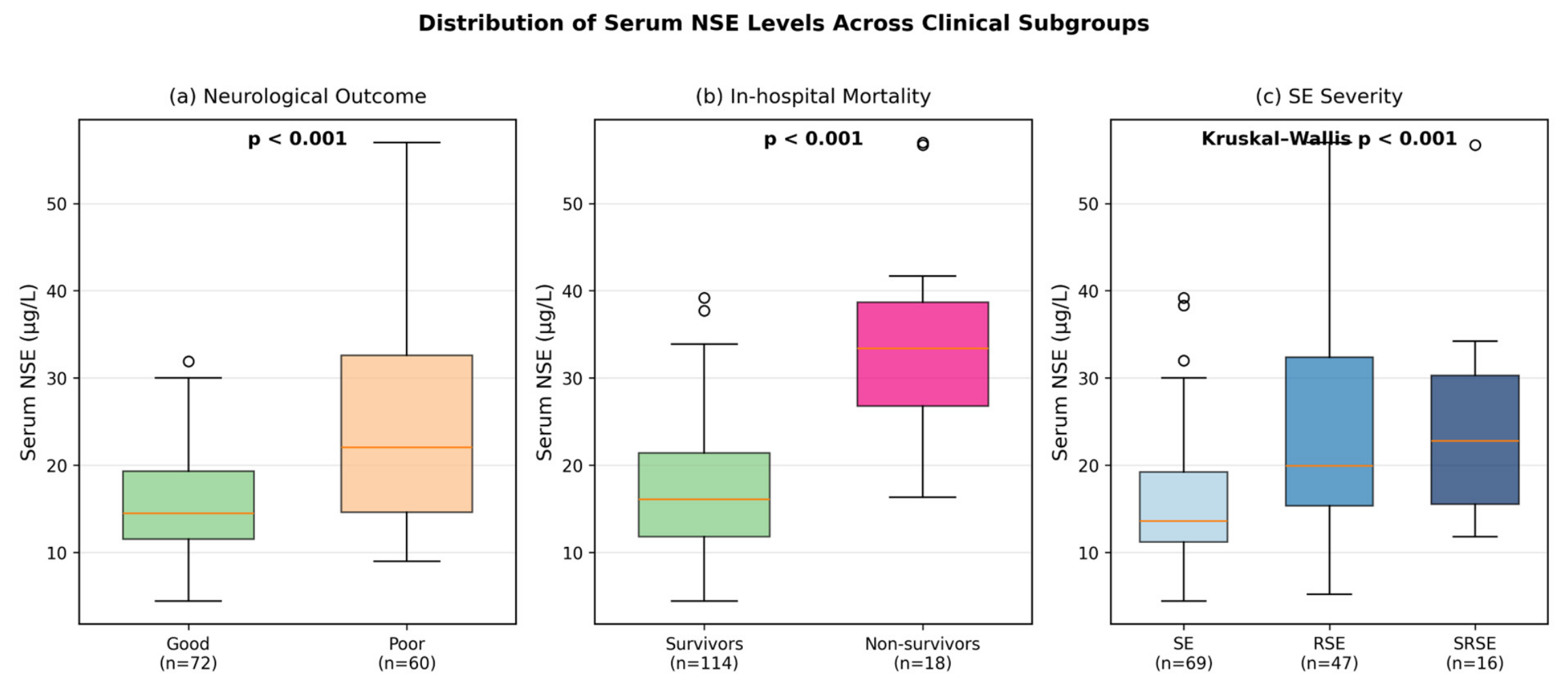
| Serum NSE, μg/L, median (IQR) | 17.1 (12.0–23.7) | 14.4 (11.5–19.3) | 22.0 (14.6–32.6) | <0.001 |
| NSE sampling time, h, median (IQR) | 18 (8–24) | 18 (8–24) | 17 (8–24) | 0.928 |
| Lactate, mmol/L, median (IQR) | 2.3 (1.4–3.3) | 1.9 (1.1–2.7) | 2.8 (1.9–4.1) | <0.001 |
| CRP, mg/L, median (IQR) | 14.0 (7.9–37.3) | 13.9 (7.2–27.3) | 16.4 (8.2–64.2) | 0.127 |
| PICU Data | ||||
| Mechanical ventilation, n (%) | 44 (33.3) | 16 (22.2) | 28 (46.7) | 0.005 |
| PICU LOS, days, median (IQR) | 5 (4–7) | 4 (3–6) | 6 (4–9) | <0.001 |
| In-hospital mortality, n (%) | 18 (13.6) | 0 (0) | 18 (30.0) | – |
| Variable | OR | 95% CI | p |
|---|---|---|---|
| Serum NSE (per 1 μg/L) | 1.137 | 1.092–1.199 | <0.001 |
| PRISM III (per point) | 1.231 | 1.130–1.389 | <0.001 |
| PELOD-2 (per point) | 1.285 | 1.157–1.528 | <0.001 |
| Age (per month) | 0.996 | 0.985–1.004 | 0.306 |
| Seizure duration (per min) | 1.021 | 1.006–1.055 | 0.002 |
| Admission GCS (per point) | 0.609 | 0.484–0.715 | <0.001 |
| Serum lactate (per mmol/L) | 1.819 | 1.431–2.524 | <0.001 |
| CRP (per mg/L) | 1.013 | 1.004–1.025 | 0.004 |
| Mechanical ventilation | 3.067 | 1.522–7.154 | 0.004 |
| RSE/SRSE | 2.846 | 1.438–6.400 | 0.001 |
| Acute symptomatic etiology | 2.853 | 1.367–6.041 | 0.005 |
| Predictor | Primary Parsimonious | Full Sensitivity | ||||
|---|---|---|---|---|---|---|
| aOR | 95% CI | p | aOR | 95% CI | p | |
| Serum NSE (per 1 μg/L) | 1.109 | 1.058–1.190 | 0.001 | 1.094 | 1.036–1.183 | 0.005 |
| PRISM III (per point) | 1.154 | 1.032–1.368 | 0.013 | 1.122 | 1.001–1.298 | 0.048 |
| Acute symptomatic etiology | 1.889 | 0.823–4.647 | 0.158 | 1.612 | 0.652–4.012 | 0.301 |
| Mechanical ventilation | 1.102 | 0.394–2.889 | 0.839 | 0.876 | 0.291–2.654 | 0.812 |
| RSE/SRSE classification | — | — | — | 1.342 | 0.572–3.157 | 0.500 |
| Serum lactate (per mmol/L) | — | — | — | 1.310 | 1.012–1.749 | 0.041 |
| NSE sampling time (per hour) | — | — | — | 1.006 | 0.968–1.055 | 0.745 |
| Model performance | ||||||
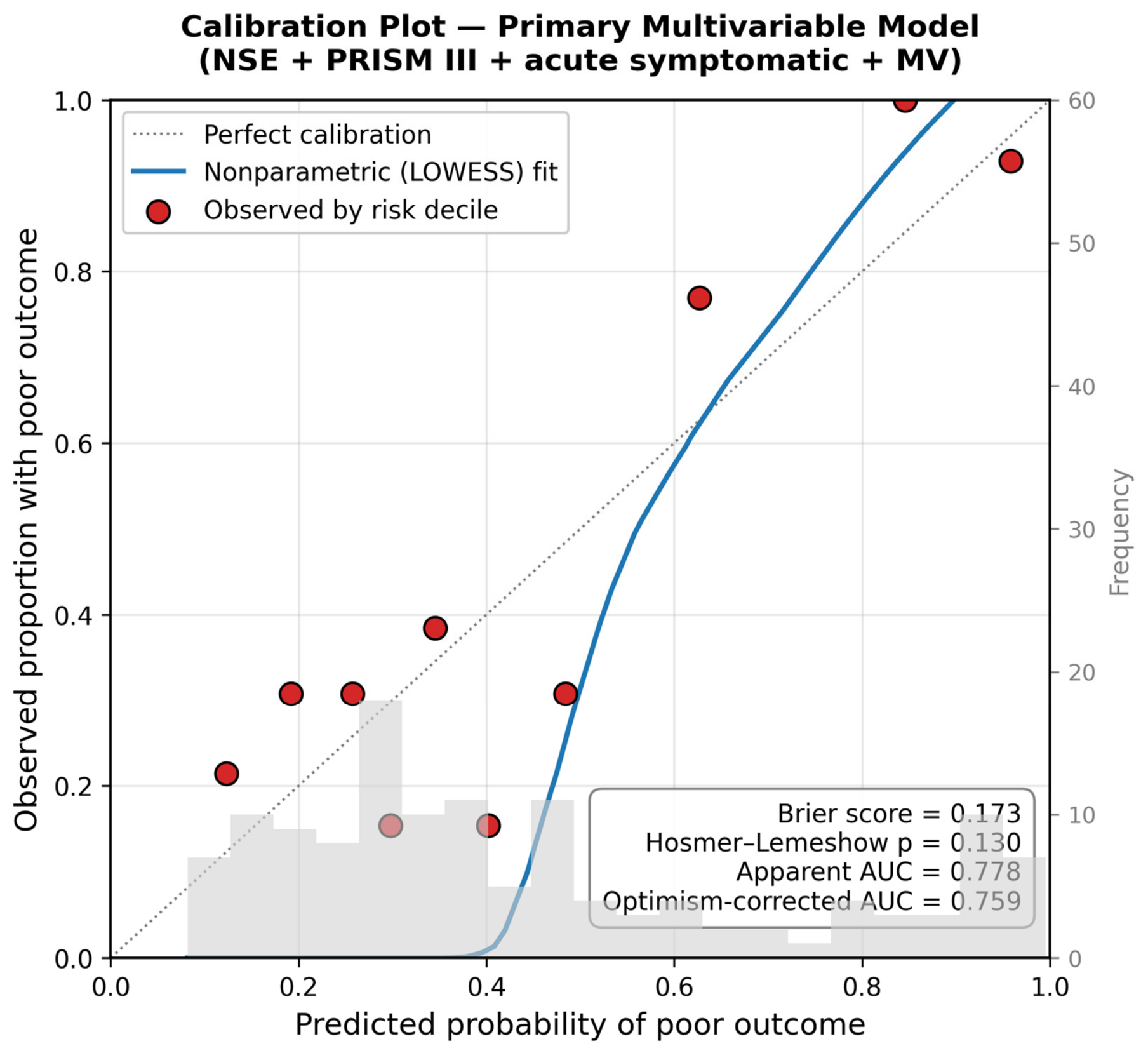
| Apparent AUC | 0.778 | — | — | 0.794 | — | — |
| Optimism-corrected AUC | 0.759 | — | — | 0.757 | — | — |
| Hosmer–Lemeshow p | 0.130 | — | — | 0.176 | — | — |
| Brier score | 0.173 | — | — | 0.171 | — | — |
| Calibration slope (optimism-corrected) | 0.900 | — | — | 0.814 | — | — |
| Calibration intercept (optimism-corrected) | 0.003 | — | — | −0.005 | — | — |
| Maximum VIF | 1.41 | — | — | 1.72 | — | — |
| Predictor | Mortality-Only | Survivors-Only (ΔPCPC ≥ 1) | ||||
|---|---|---|---|---|---|---|
| (n = 132, Events = 18) | (n = 114, Events = 42) | |||||
| aOR | 95% CI | p | aOR | 95% CI | p | |
| Serum NSE (per 1 μg/L) | 1.126 | 1.043–1.322 | 0.003 | 1.094 | 1.035–1.178 | 0.005 |
| PRISM III (per point) | 1.277 | 1.093–2.010 | 0.002 | 1.127 | 0.991–1.370 | 0.056 |
| Acute symptomatic etiology | 1.708 | 0.242–21.36 | 0.469 | 2.014 | 0.876–5.047 | 0.129 |
| Mechanical ventilation | — | — | — | 0.740 | 0.235–1.990 | 0.559 |
| Model performance | ||||||
| Apparent AUC | 0.927 | — | — | 0.706 | — | — |
| Optimism-corrected AUC | 0.913 | — | — | 0.676 | — | — |
| Hosmer–Lemeshow p | — | — | — | 0.243 | — | — |
| Brier score | 0.078 | — | — | 0.215 | — | — |
| Calibration slope (optimism-corrected) | — | — | — | 0.856 | — | — |
| Calibration intercept (optimism-corrected) | — | — | — | 0.003 | — | — |
| Model | AUC | 95% CI | Cutoff | Sens % | Spec % | PPV % | NPV % | LR+ | LR− |
|---|---|---|---|---|---|---|---|---|---|
| NSE alone | 0.741 | 0.650–0.823 | 25.7 μg/L | 46.7 (34.6–59.1) | 97.2 (90.4–99.2) | 93.3 (78.7–98.2) | 68.6 (59.1–76.8) | 16.8 | 0.55 |
| PRISM III alone | 0.726 | 0.637–0.815 | – | – | – | – | – | – | – |
| PELOD-2 alone | 0.709 | 0.619–0.799 | – | – | – | – | – | – | – |
| PRISM III + NSE | 0.784 | 0.706–0.862 | – | – | – | – | – | – | – |
Disclaimer/Publisher’s Note: The statements, opinions and data contained in all publications are solely those of the individual author(s) and contributor(s) and not of MDPI and/or the editor(s). MDPI and/or the editor(s) disclaim responsibility for any injury to people or property resulting from any ideas, methods, instructions or products referred to in the content. |
© 2026 by the authors. Licensee MDPI, Basel, Switzerland. This article is an open access article distributed under the terms and conditions of the Creative Commons Attribution (CC BY) license.
Share and Cite
Yavuz, M.; Bingol, I. Serum Neuron-Specific Enolase as a Prognostic Biomarker in Pediatric Convulsive Status Epilepticus: A Single-Center Retrospective Cohort Study. Children 2026, 13, 820. https://doi.org/10.3390/children13060820
Yavuz M, Bingol I. Serum Neuron-Specific Enolase as a Prognostic Biomarker in Pediatric Convulsive Status Epilepticus: A Single-Center Retrospective Cohort Study. Children. 2026; 13(6):820. https://doi.org/10.3390/children13060820
Chicago/Turabian StyleYavuz, Merve, and Ibrahim Bingol. 2026. "Serum Neuron-Specific Enolase as a Prognostic Biomarker in Pediatric Convulsive Status Epilepticus: A Single-Center Retrospective Cohort Study" Children 13, no. 6: 820. https://doi.org/10.3390/children13060820
APA StyleYavuz, M., & Bingol, I. (2026). Serum Neuron-Specific Enolase as a Prognostic Biomarker in Pediatric Convulsive Status Epilepticus: A Single-Center Retrospective Cohort Study. Children, 13(6), 820. https://doi.org/10.3390/children13060820