


Advancing Open Science
A global leader in open access publishing, supporting research
communities and accelerating scientific discovery
 
20 pages, 259 KB  
Article
Narrative Empathy, Subtle Pejorative, and Religious Agenda-Setting: A Close Reading of “Report in Slavery and Racism in the History of the Southern Baptist Theological Seminary”
by Jeff Miller
Religions 2026, 17(5), 615; https://doi.org/10.3390/rel17050615 (registering DOI) - 20 May 2026
Abstract
This article offers a rhetorical close reading of the Southern Baptist Theological Seminary’s Report on Slavery and Racism in the History of the Southern Baptist Theological Seminary. While the report presents itself as an institutional reckoning with a legacy of slavery, racism, and [...] Read more.
This article offers a rhetorical close reading of the Southern Baptist Theological Seminary’s Report on Slavery and Racism in the History of the Southern Baptist Theological Seminary. While the report presents itself as an institutional reckoning with a legacy of slavery, racism, and white supremacy, this analysis argues that its rhetoric simultaneously minimizes the significance of those injustices. Three recurring rhetorical moves structure this dynamic. First, the report centers the experiences and dilemmas of the seminary’s white leadership, producing narrative empathy for institutional actors while decentering the experiences of those harmed by the institution’s history. Second, it employs subtly pejorative characterizations of external critics and other historical actors, reinforcing an evangelical “embattled identity.” Third, the report rhetorically constructs the concept of the “gospel” in a manner that separates core Christian doctrine from concerns of racial justice. Drawing on agenda-setting theory, this study introduces the concept of religious agenda-setting to describe how religious leaders rhetorically prioritize certain moral concerns while marginalizing others. Together, these strategies allow for the report to confess historical wrongdoing while simultaneously preserving institutional legitimacy and authority. Full article
17 pages, 237 KB  
Review
Positioning Artificial Intelligence Research in East Asia and Latin America: A Comparative Bibliometric Analysis
by Joaquim Jose Carvalho Proença, Nelson Jesús Campos Rosendo and Soratna Veronica Navas Gotopo
Information 2026, 17(5), 503; https://doi.org/10.3390/info17050503 (registering DOI) - 20 May 2026
Abstract
This study aims to provide a comprehensive cross-regional bibliometric analysis of artificial intelligence (AI) research in East Asia and Latin America from 2020 to 2025. By quantifying publication trends, authorship, institutional productivity, collaboration networks, and citation impact, the research seeks to identify regional [...] Read more.
This study aims to provide a comprehensive cross-regional bibliometric analysis of artificial intelligence (AI) research in East Asia and Latin America from 2020 to 2025. By quantifying publication trends, authorship, institutional productivity, collaboration networks, and citation impact, the research seeks to identify regional leaders, thematic clusters, and disparities in visibility and impact between these two regions. Design/methodology/approach; Scopus-indexed publications containing the phrases “artificial intelligence research” or “artificial intelligence innovation” in their title, abstract, or keywords were retrieved for the period 2020–2025. Inclusion criteria required at least one author’s affiliation in any of the fourteen specified countries across East Asia or Latin America. All document types (articles, reviews, conference papers, book chapters) were considered. Metadata were manually extracted from Scopus database ranking to identify the top-cited papers, most prolific authors, leading institutions, thematic and subject-area concentrations, and crossnational collaboration patterns. Findings; this bibliometric review clarifies the dynamic trajectory of AI research in East Asia and Latin America, revealing significant disparities in productivity, visibility, and thematic focus. The findings underscore the need for targeted investments in research capacity building, strategic international partnerships, and thematic realignment particularly for Latin America to enhance global visibility and align with emerging AI trends. Originality; by contrasting two understudied regions (East Asia vs. Latin America), we capture shifts in the AI landscape—specifically, the generative AI boom across subfields and regions that no single region or pre 2022 study can. By highlighting structural disparities in productivity, citation impact, and institutional support, it offers policymakers, funding agencies, and academic leaders novel insights. Full article
(This article belongs to the Section Information and Communications Technology)
20 pages, 1867 KB  
Systematic Review
Green Finance Transformation and Intellectual Growth: A Systematic Bibliometric Analysis of Thematic Evolution and Geographic Research Disparities (2015–2026)
by Janah Nada, El Ganich Said, Yahyaoui Taoufiq and Kouchrad Ikhlass
J. Risk Financial Manag. 2026, 19(5), 368; https://doi.org/10.3390/jrfm19050368 (registering DOI) - 20 May 2026
Abstract
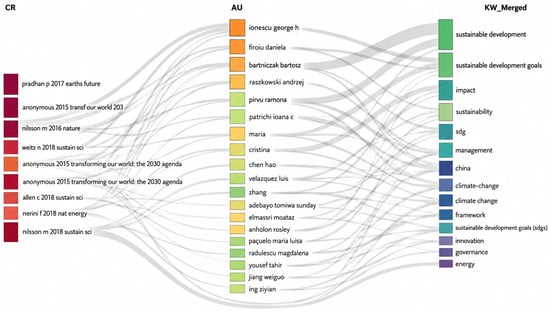
In this research, the primary aim is to conduct a systematic review of the thematic evolution of green finance, which remains fragmented and unevenly represented in global academic debates. The objective of this analysis is to scientifically map out the scholarly output on [...] Read more.
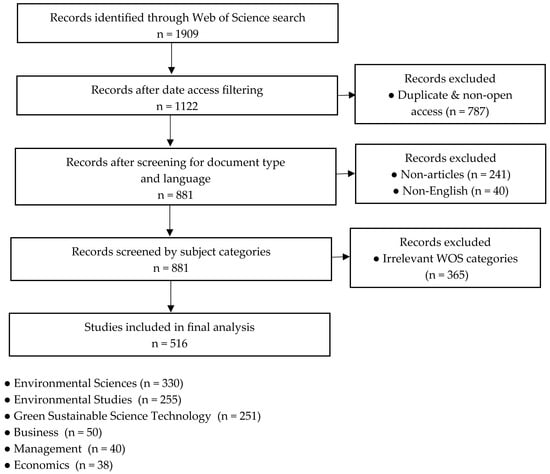
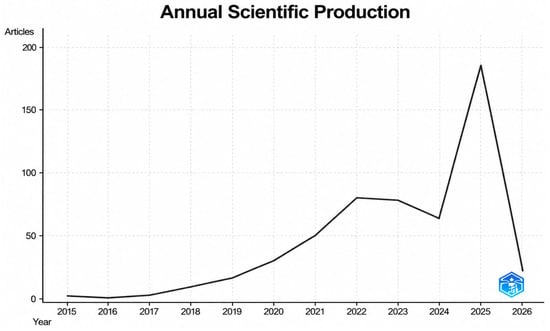
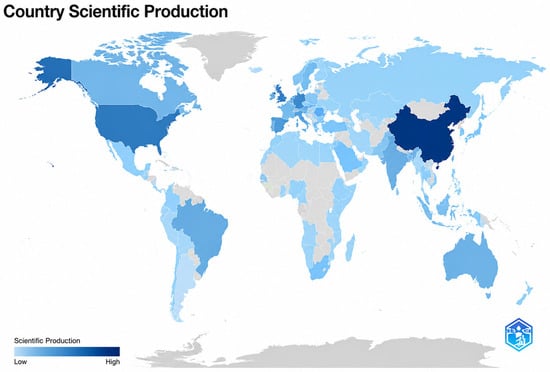
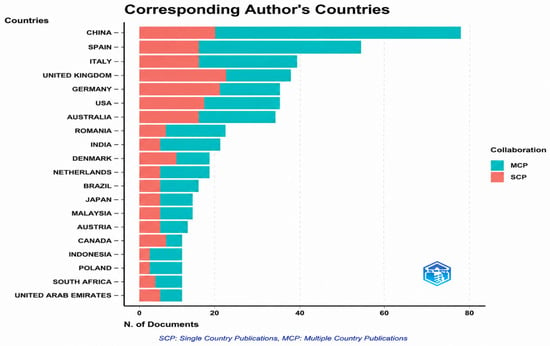
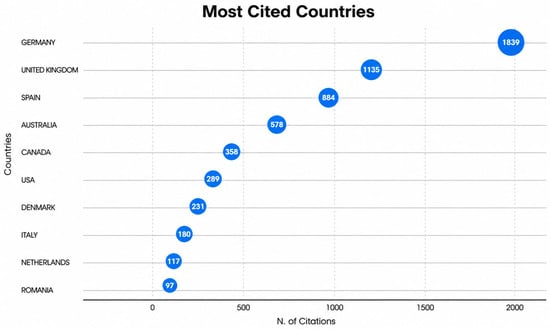
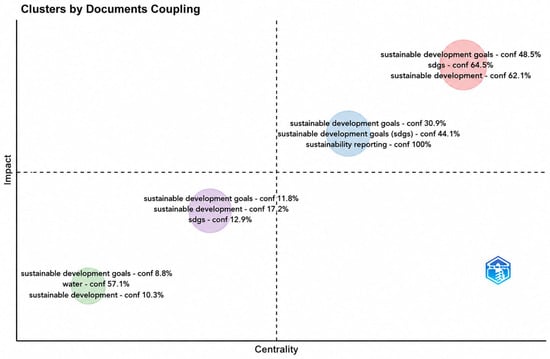
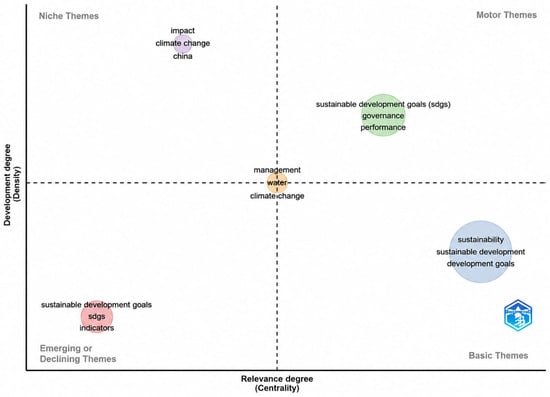
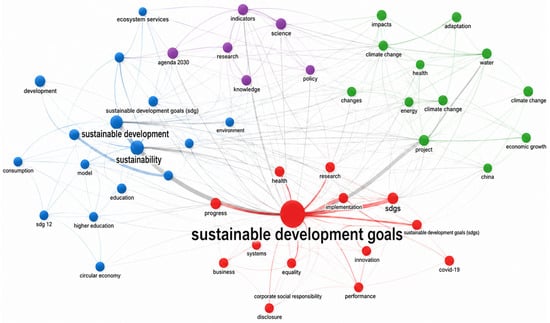
In this research, the primary aim is to conduct a systematic review of the thematic evolution of green finance, which remains fragmented and unevenly represented in global academic debates. The objective of this analysis is to scientifically map out the scholarly output on green finance from 2015 to 2026, detailing its intellectual structure, trends, thematic clusters, and emerging lacunae in the field. Primary data extraction from Web of Science was employed to construct the bibliometric database, whereas the identification, screening, and selection of the final dataset were conducted in accordance with the PRISMA guidelines to ensure the study’s transparency and reliability. The main findings highlighted an increasing scholarly interest in the field’s publications from 2019 onward. Key occurrences and citation maps, using RStudio (version 4.1) and Biblioshiny (version 4.5.2), indicate dispersed clusters comprising sustainability transitions, digital finance, bibliometric methods, and a weak link to governance and behavioral perspectives. The co-authorship and country analyses confirm a pronounced geographic imbalance of green finance-related research in academia, with an overrepresentation in the Global North and an underrepresentation in Africa, Latin America, and the MENA region. The analysis further emphasizes the growing role of institutional and ESG regulatory frameworks in shaping research trajectories, while also identifying a limited integration of emerging technological dimensions such as digital finance and artificial intelligence. Thus, the study’s contribution to the literature relies on its critical understanding and structuring of the field’s evolution. The implications include synthesizing research gaps and the need for outcome-oriented impact assessments and mechanism-based models of green finance to ensure significant inclusivity and resilience in the subject’s future agenda. Full article
(This article belongs to the Special Issue The Future of Sustainable Finance: Digital and Circular Synergies)
Show Figures

Figure 1

29 pages, 8624 KB  
Article
Optimal Geomechanical Parameter Selection for Enhanced ROP Modeling: A Systematic Field-Based Comparative Study
by Ahmed S. Alhalboosi, Musaed N. J. AlAwad, Faisal S. Altawati, Mohammed A. Khamis and Mohammed A. Almobarky
Processes 2026, 14(10), 1646; https://doi.org/10.3390/pr14101646 (registering DOI) - 19 May 2026
Abstract
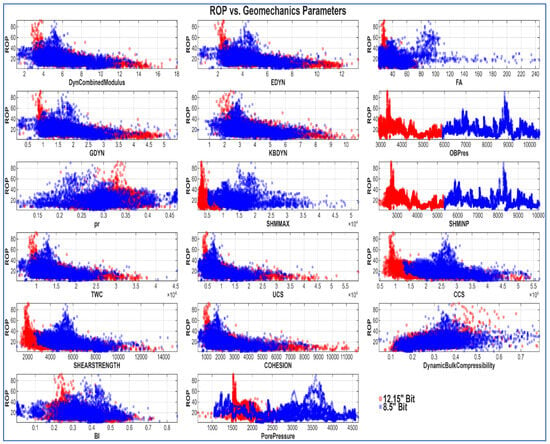
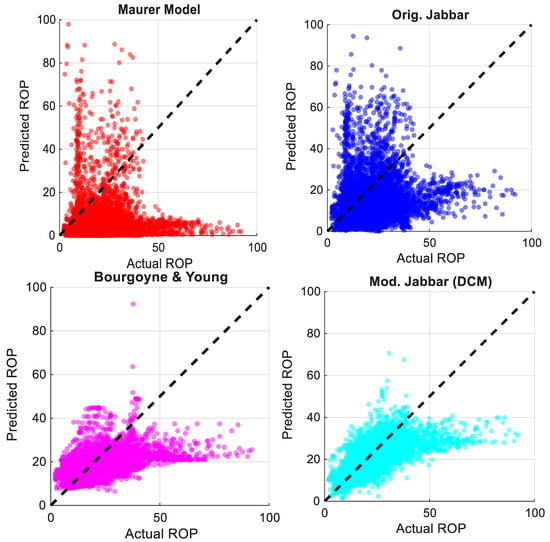
Accurate prediction of Rate of Penetration (ROP) in carbonate formations remains constrained by the arbitrary selection of geomechanical input parameters in empirical drilling models. This study presents the first systematic field-based evaluation of sixteen geomechanical properties—grouped into three categories: strength parameters [...] Read more.
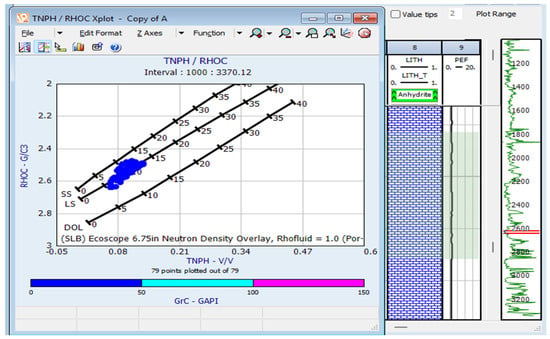
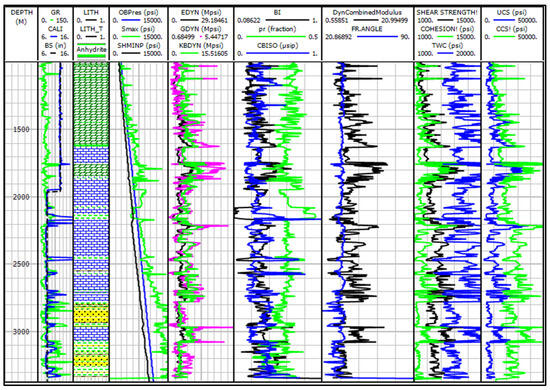
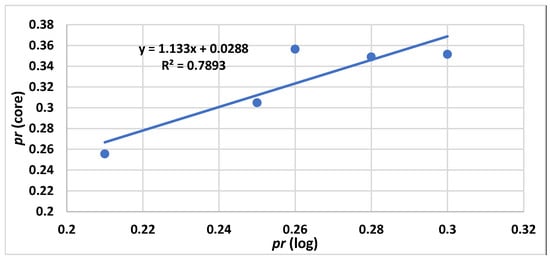
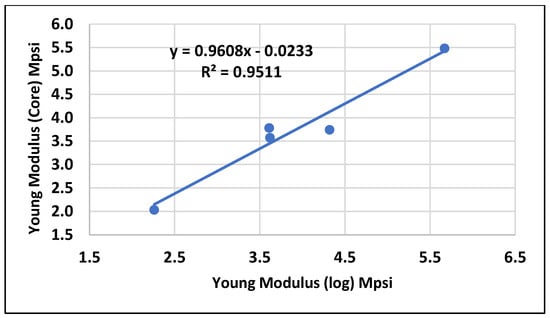
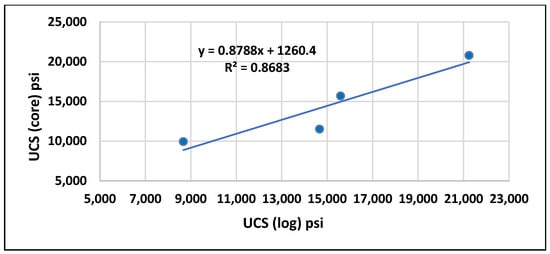
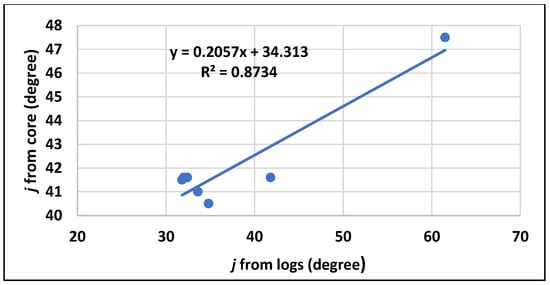
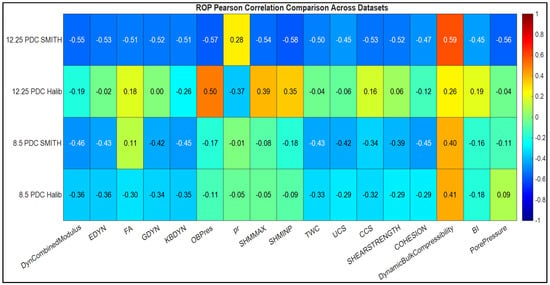
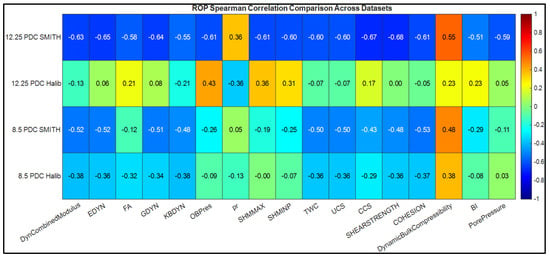
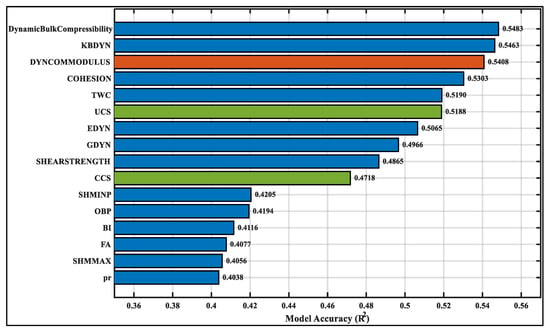
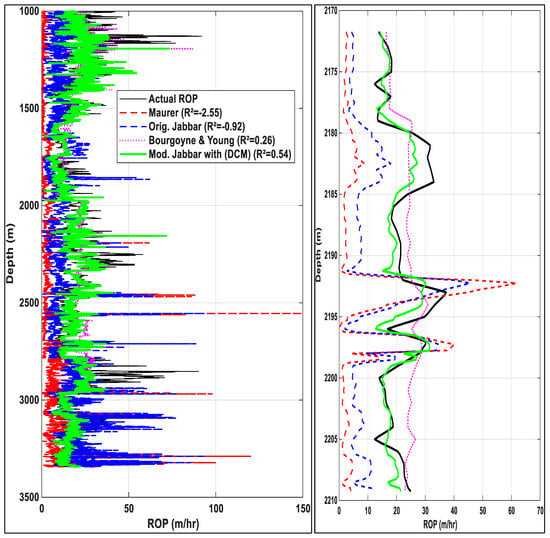
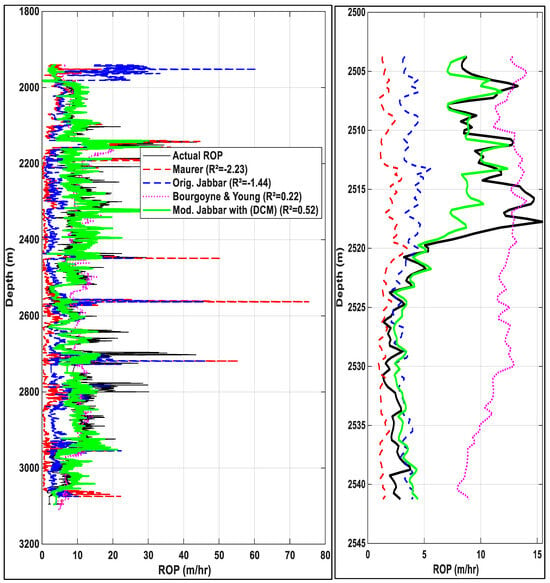
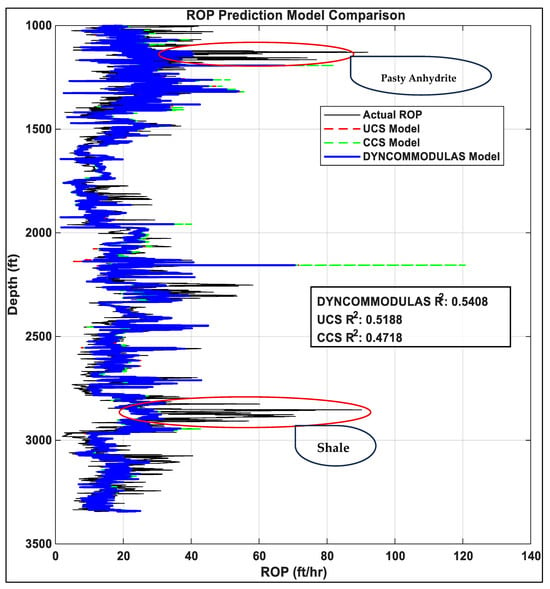
Accurate prediction of Rate of Penetration (ROP) in carbonate formations remains constrained by the arbitrary selection of geomechanical input parameters in empirical drilling models. This study presents the first systematic field-based evaluation of sixteen geomechanical properties—grouped into three categories: strength parameters (uniaxial compressive strength (UCS), confined compressive strength (CCS), shear strength, thick-walled cylinder strength (TWC), friction angle, and cohesion), elastic moduli (Young’s modulus, shear modulus, bulk modulus, bulk compressibility, dynamic combined modulus (DCM), Poisson’s ratio, brittleness index), and in situ stress parameters (overburden pressure, minimum, and maximum horizontal stresses)—to identify optimal predictors for ROP modeling across PDC bit sizes of 12.25″ and 8.5″. Continuous wireline log data from two vertical carbonate wells in the Middle East (Well A: 1000–3370 m; Well B: 1945 to 3128 m; total intervals of 2370 m and 1183 m, respectively) penetrating formations comprising limestone, dolomite, sandstone, shale, anhydrite, and marly limestone were used. All sixteen geomechanical properties were computed using Interactive Petrophysics (IP) software with lithology-specific empirical correlations and validated against laboratory core measurements (R2 = 0.79–0.95). Pearson and Spearman correlation analyses quantified parameter–ROP relationships, and the Al-Abduljabbar empirical model, recalibrated via multiple nonlinear regression, served as the evaluation framework. DCM consistently exhibited the strongest negative correlation with ROP across both bit sizes and achieved the highest model accuracy (R2 = 0.54, AAPE = 25.33%), significantly outperforming the Bourgoyne and Young model (R2 = 0.26, AAPE = 36.55%). A statistically validated scale-dependent effect was identified: Fisher’s Z-transformation tests confirmed that the correlation reversal between CCS and UCS across bit sizes is statistically significant (CCS: Z = −16.84, p < 0.001; UCS: Z = −6.75, p < 0.001), establishing CCS as the superior predictor at 12.25″ and UCS as the superior predictor at 8.5″—a finding not previously reported in the ROP literature. This reversal is attributed to the larger contact area of the 12.25″ bit, which promotes confinement-dominated rock failure better described by CCS, whereas the smaller bit produces localized stress concentration better represented by UCS. These results establish that (1) optimal geomechanical input selection is bit-size dependent, (2) nonlinear modeling outperforms linear frameworks for strength–ROP relationships, and (3) parameter relevance outweighs coefficient tuning in model robustness. DCM is recommended as the most operationally practical universal input, requiring only conventional compressional sonic and density logs. This study provides a systematic framework for geomechanical parameter selection with direct implications for drilling optimization in heterogeneous carbonate reservoirs. Full article
(This article belongs to the Special Issue Development of Advanced Drilling Engineering)
Show Figures

Figure 1

14 pages, 1150 KB  
Article
Cytotoxicity of Self-Etch Versus Etch-and-Rinse Dentin Adhesives After 48 h: An In Vitro Study
by Kamelia Parkhoo, Lea Aylin Schmitz, Luisa Fröb, Nicole Grüßner, Georgios E. Romanos, Eva Herrmann and Susanne Gerhardt-Szép
Dent. J. 2026, 14(5), 312; https://doi.org/10.3390/dj14050312 (registering DOI) - 19 May 2026
Abstract
Objectives: Six dentin adhesives were tested in vitro regarding their cytotoxicity toward human fibroblasts. AdheSE, Clearfil SE Bond, Hybrid Bond, One-up Bond F Plus, Optibond Solo Plus, and Syntac were tested using a cell culture model. The several components of dentin adhesives, [...] Read more.
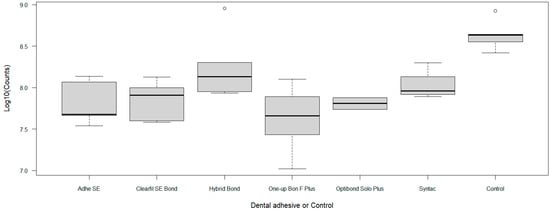
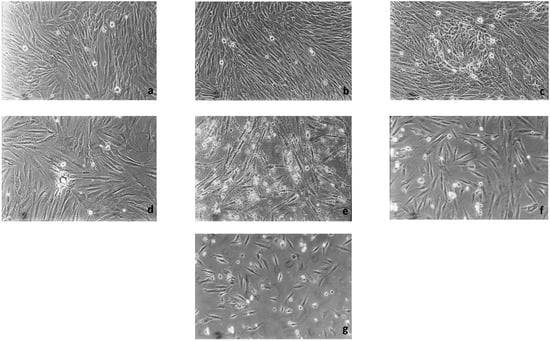
Objectives: Six dentin adhesives were tested in vitro regarding their cytotoxicity toward human fibroblasts. AdheSE, Clearfil SE Bond, Hybrid Bond, One-up Bond F Plus, Optibond Solo Plus, and Syntac were tested using a cell culture model. The several components of dentin adhesives, like the primer and bonding, were analyzed as single and additive applied components as specified by the manufacturer for application in vivo. Methods: Seventy-five Petri dishes were produced per adhesive and control group, and all 525 Petri dishes were evaluated using multiparametric strategies, i.e., using multiple methods to strengthen the reliability of the results. The multiparametric strategies consisted of automated cell counting for viability, microscopic morphological assessment and lastly of reactivity grading according to ISO 10993-5. These assessments were performed after our initial investigation, and the observation period was extended from 24 h to 48 h. Results: AdheSE, Clearfil SE Bond, One-up Bond F Plus, and Optibond Solo Plus showed statistically significant reductions in viable cells relative to the cell control. All dentin adhesives except Clearfil SE Bond showed a statistically significant difference regarding the reactivity index in the application comparison. Conclusions: The test materials showed a moderate degree of cytotoxicity, with no statistically significant difference between the tested self-etch and etch-and-rinse dentin adhesives. However, the results show statistically significant differences between the adhesives when applied sequentially and once. Further research addressing mechanisms of cytotoxicity is needed for advancement in this field. Full article
Show Figures

Figure 1

18 pages, 4735 KB  
Article
Plants and Seasons Influence Sediment Organic Carbon Through Their Effects on Microbes in Two Types of Wetlands
by Yan Wang, Zeming Wang, Ruirui Yang, Xin Li and Jian Liu
Water 2026, 18(10), 1232; https://doi.org/10.3390/w18101232 (registering DOI) - 19 May 2026
Abstract
As vital carbon pools within terrestrial ecosystems, wetlands store sediment organic carbon (SOC), a process influenced by plant communities, seasonal variations, and wetland types. Microbial communities, fundamental to wetland ecosystems, are hypothesized to regulate carbon storage. We investigated sediment microbial communities and carbon [...] Read more.
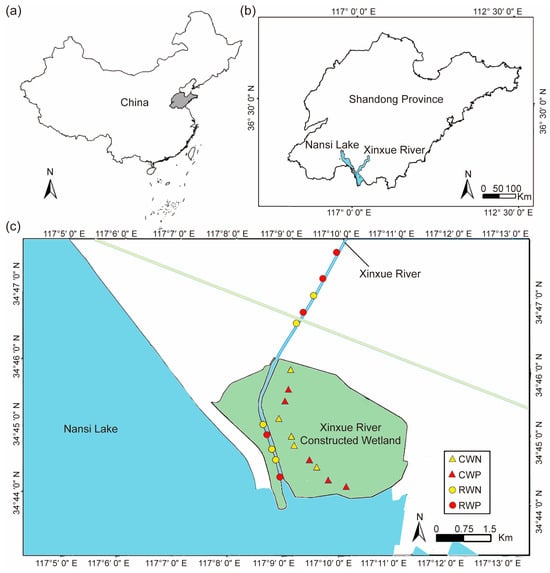
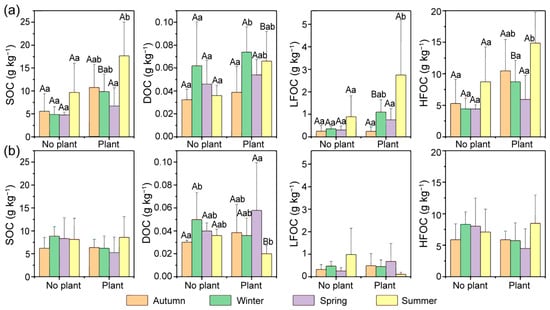
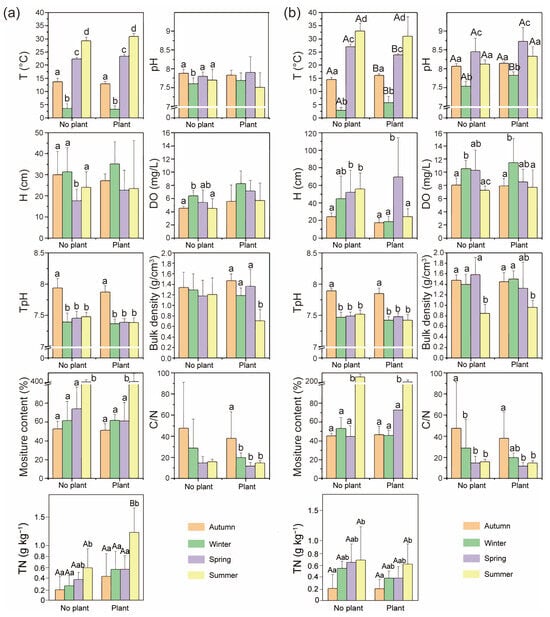
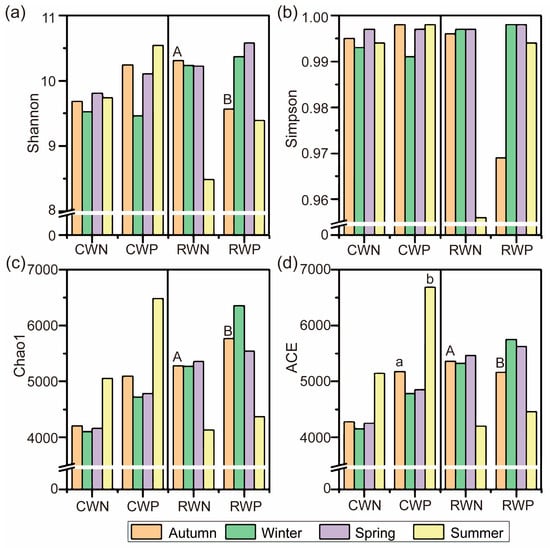
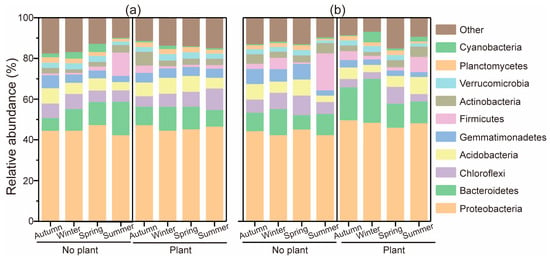
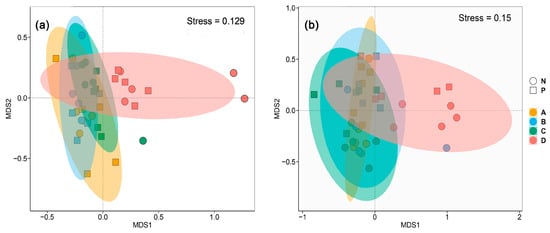
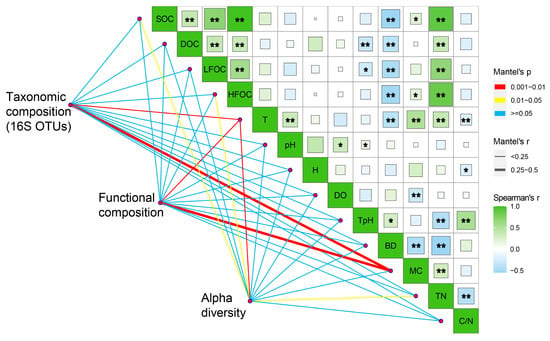
As vital carbon pools within terrestrial ecosystems, wetlands store sediment organic carbon (SOC), a process influenced by plant communities, seasonal variations, and wetland types. Microbial communities, fundamental to wetland ecosystems, are hypothesized to regulate carbon storage. We investigated sediment microbial communities and carbon storage in different seasonal and plant conditions in two types of wetlands. Sediment organic carbon, the associated environmental factors, and microbial community characteristics were detected to explore the impacts of seasons and plants on SOC. Plants and seasons significantly influenced the content of SOC in constructed wetland, while only altered the content of dissolved organic carbon (DOC) in river wetland. In river wetland, plants increased the microbial function of Amino Acid Metabolism through the input of exogenous dissolved organic carbon (DOC) and the effect on moisture content. The functional traits of Carbohydrate Metabolism in sediment were higher in river wetland than that in constructed wetland. Our results indicated that plants and seasons influenced SOC in wetlands through their effects on sediment microbial community and function. Compared with the river wetland, the constructed wetland had more stable microbial communities and might be easier to fix organic carbon from plants. This study highlights the importance of the carbon sequestration potential of constructed wetlands due to the stable microbial communities. Full article
(This article belongs to the Section Ecohydrology)
Show Figures

Figure 1

26 pages, 10416 KB  
Article
A Lightweight FFT-Domain Co-Channel Interference Detection Method for Narrowband Wireless Systems
by Yuqi Qin, Jinbai Zou, Lingxiao Chen and Qing Zhou
Electronics 2026, 15(10), 2195; https://doi.org/10.3390/electronics15102195 (registering DOI) - 19 May 2026
Abstract
Co-channel interference (CCI) remains a critical factor affecting link reliability in narrowband wireless systems, especially in scenarios with intensive frequency reuse, overlapping coverage, and dense terminal access. Existing interference detection methods are either computationally simple but insufficiently sensitive to short-term spectral variations, or [...] Read more.
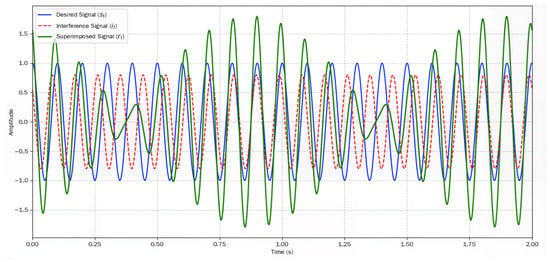
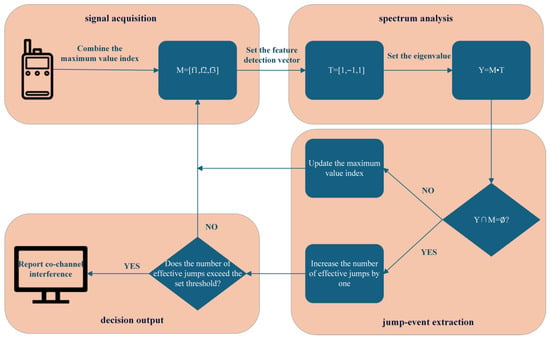
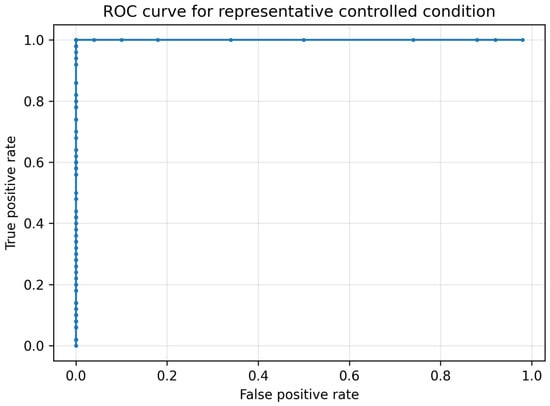
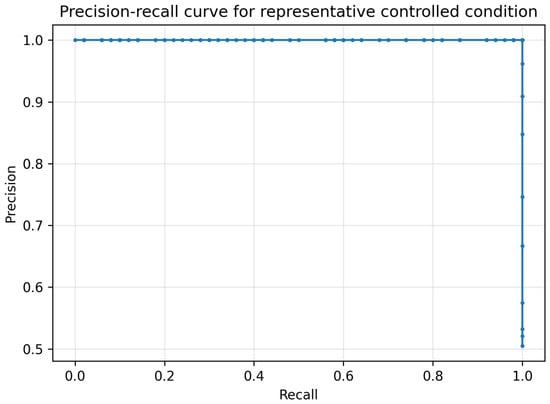
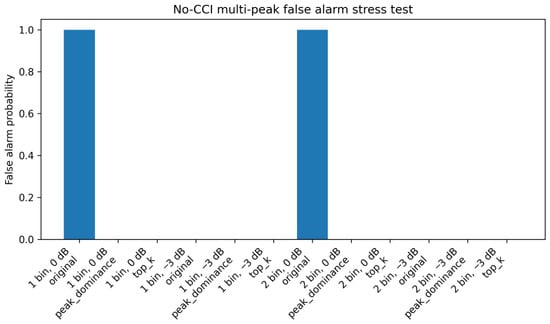
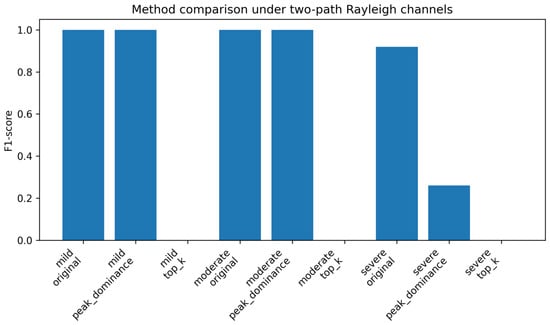
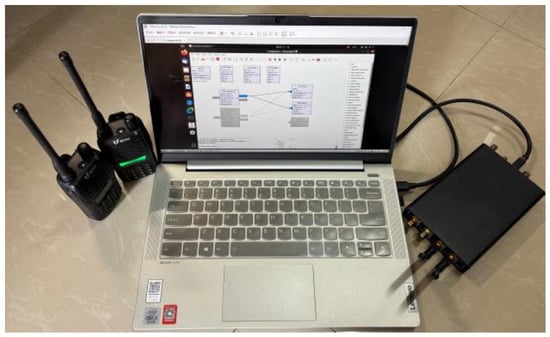
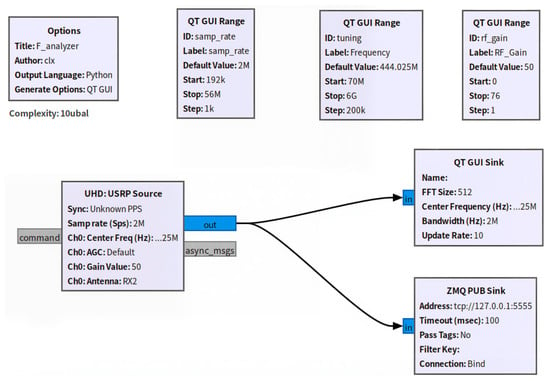
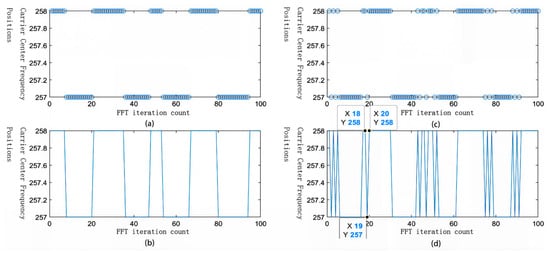
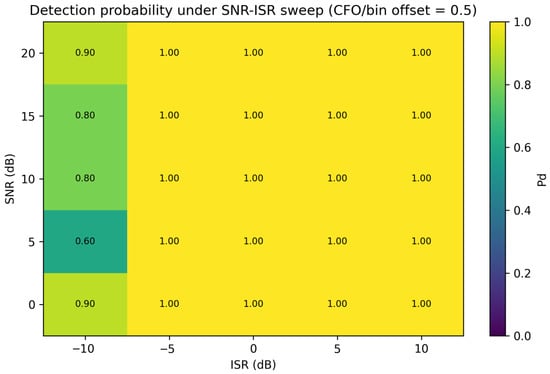
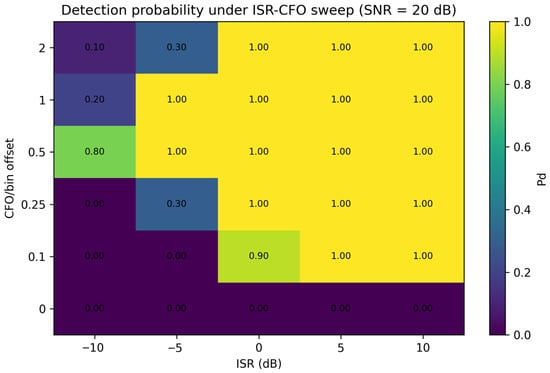
Co-channel interference (CCI) remains a critical factor affecting link reliability in narrowband wireless systems, especially in scenarios with intensive frequency reuse, overlapping coverage, and dense terminal access. Existing interference detection methods are either computationally simple but insufficiently sensitive to short-term spectral variations, or highly accurate but dependent on labeled data and nontrivial inference resources. To address this issue, this paper proposes a lightweight CCI detection method in the FFT domain based on spectrum-jump analysis. The proposed method does not rely on absolute power growth as the primary interference indicator. Instead, it tracks the temporal inconsistency of dominant spectral-bin indices across consecutive FFT frames and converts recurrent peak-bin migration into an interference decision through a short-window counting mechanism. The method is computationally efficient, interpretable, and suitable for real-time deployment without offline model training. SDR-based measurements are combined with controlled repeated experiments to assess detector performance under varying signal-to-noise ratio (SNR), interference-to-signal ratio (ISR), carrier-frequency offset (CFO), multi-peak ambiguity, and two-path Rayleigh fading conditions. On the measured SDR record, the proposed method captures all interference-positive windows after the marked onset, while the controlled SNR/ISR experiments yield an overall detection probability of 96.0% over 250 CCI trials with no false alarms over 250 normal trials. ROC and precision–recall analyses further show that the selected threshold lies within a broad validation plateau. The results also reveal clear applicability boundaries: when the CFO approaches zero, when the interference is very weak, or when multiple stationary peaks have nearly equal power, dominant-bin migration may be weak or ambiguous. Therefore, the proposed approach is a low-complexity online detector for CCI cases that induce observable FFT-bin instability, and it can also serve as a front-end trigger for more advanced interference analysis modules. Full article
(This article belongs to the Section Microwave and Wireless Communications)
Show Figures

Figure 1

24 pages, 3629 KB  
Article
Compact Orbits and Topological Sensitivity on Locally Compact Spaces
by Sanil Jose and Vinod Kumar P.B.
Mathematics 2026, 14(10), 1752; https://doi.org/10.3390/math14101752 (registering DOI) - 19 May 2026
Abstract
We introduce a cover-based formulation of topological sensitivity and sensitivity at a point for continuous self-maps on locally compact spaces, extending the classical metric framework. Using the one-point compactification, we analyze the basin of attraction of infinity and relate it to escaping dynamics. [...] Read more.
We introduce a cover-based formulation of topological sensitivity and sensitivity at a point for continuous self-maps on locally compact spaces, extending the classical metric framework. Using the one-point compactification, we analyze the basin of attraction of infinity and relate it to escaping dynamics. We study the set K(f) consisting of points whose forward orbits are contained in a compact subset of the phase space, establishing its fundamental topological properties under suitable assumptions on the map f. In particular, we show that for proper maps, K(f) coincides with the complement of the escaping set. Under additional hypotheses on f, we prove that the boundary of the set of points with compact orbits, the boundary of the basin of attraction of infinity, and the set of sensitive points coincide. This provides a topological generalization of the classical dichotomy between Fatou and Julia sets in complex dynamics. Full article
24 pages, 31267 KB  
Article
Jurassic–Cretaceous Boundary Silicic Volcanism and Paleo-Pacific Slab Rollback in Eastern Guangdong, Southeast China: Evidence from Zircon U–Pb–Hf Isotopes and Trace Elements
by Yuefu Liu, Liyan Wei, Wenjing Huang, Wenjie Lin and Huawen Qi
Minerals 2026, 16(5), 550; https://doi.org/10.3390/min16050550 (registering DOI) - 19 May 2026
Abstract
Late Jurassic–Early Cretaceous silicic volcanism is widespread along the Southeast China continental margin, yet the timing, magma plumbing, and geodynamic drivers of individual volcanic centers remain debated. Here, we integrate whole-rock geochemistry with zircon U–Pb geochronology, zircon trace elements, and in situ zircon [...] Read more.
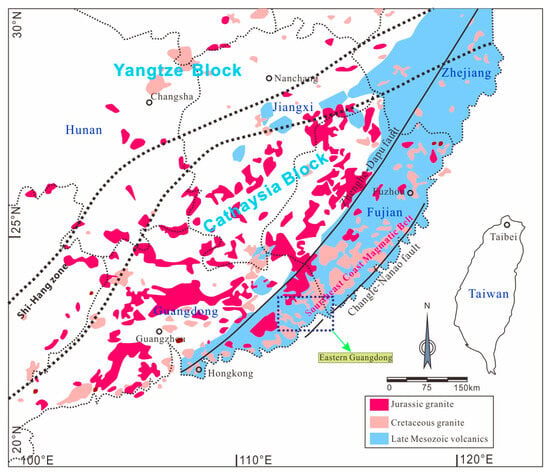
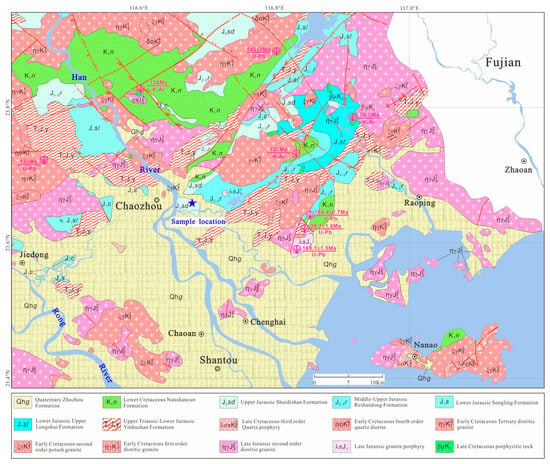
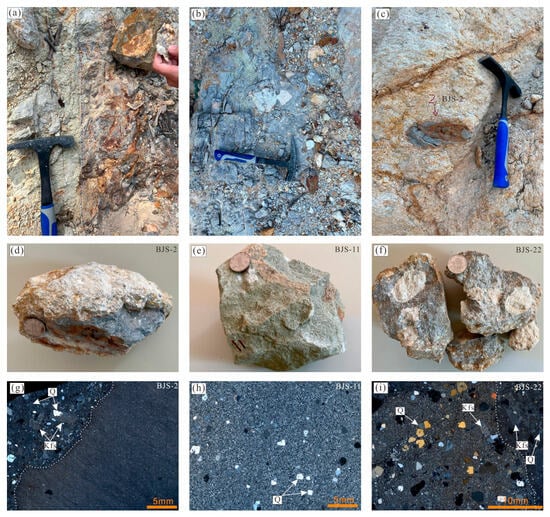
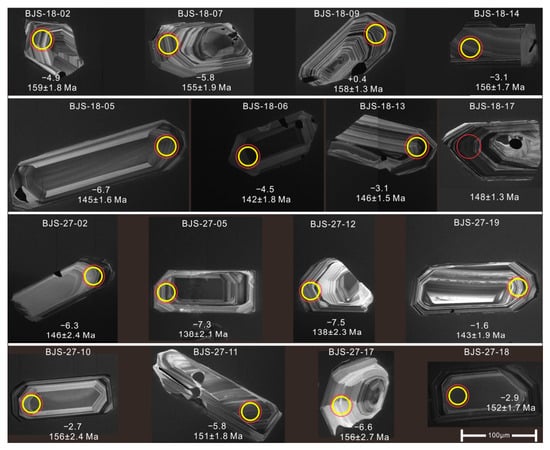
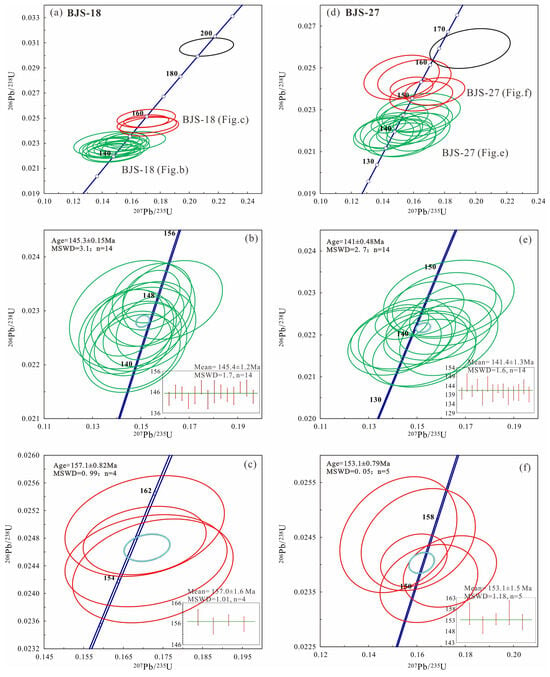
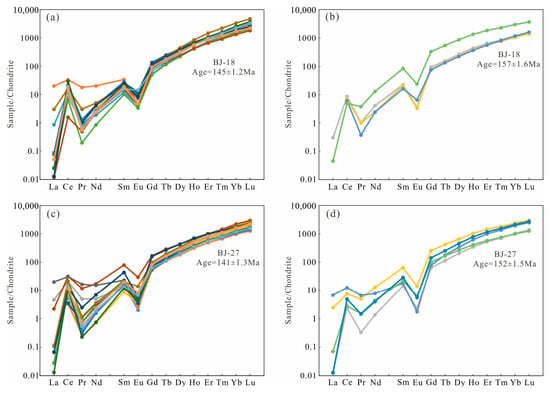
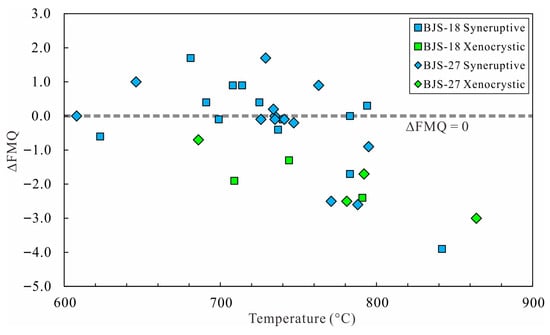
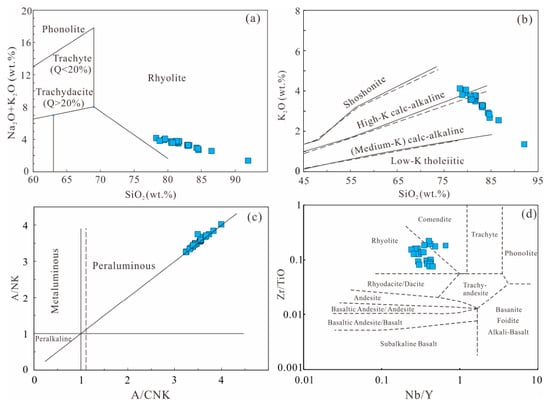
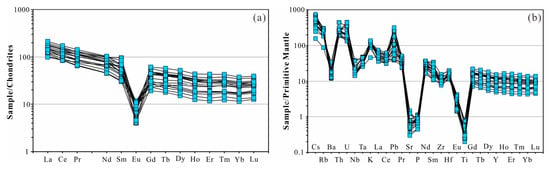
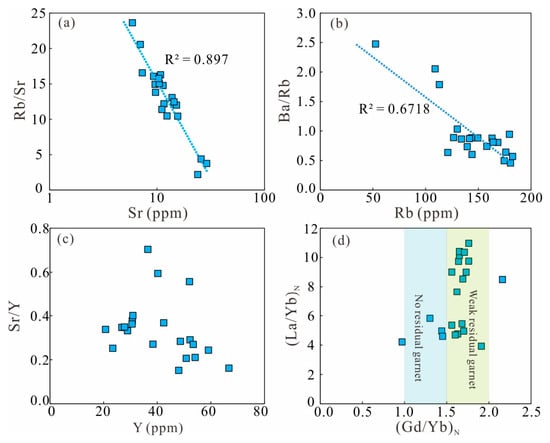
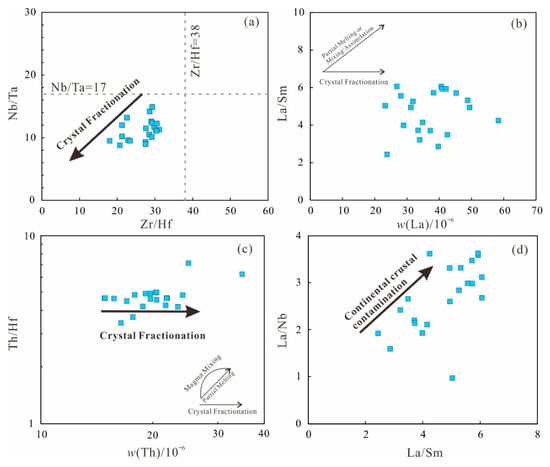
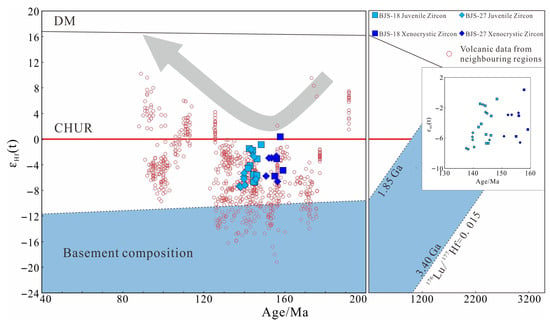
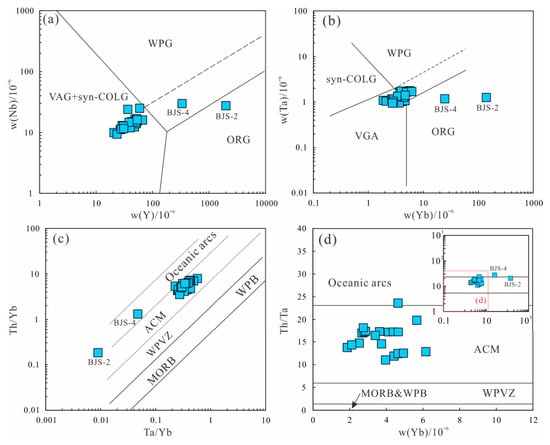
Late Jurassic–Early Cretaceous silicic volcanism is widespread along the Southeast China continental margin, yet the timing, magma plumbing, and geodynamic drivers of individual volcanic centers remain debated. Here, we integrate whole-rock geochemistry with zircon U–Pb geochronology, zircon trace elements, and in situ zircon Lu–Hf isotopes for high-silica rhyolites from the Bijiashan volcanic complex, eastern Guangdong, to constrain magmatic evolution and its link to Paleo-Pacific subduction dynamics. LA–ICP–MS zircon U–Pb analyses were used to define two dominant crystallization populations: 145.4 ± 1.2 Ma (n = 14; MSWD = 1.7) for sample BJS-18 and 141.4 ± 1.3 Ma (n = 14; MSWD = 1.6) for sample BJS-27, yielding dominant zircon U–Pb age populations of 141.1–145.4 Ma, thereby constraining the timing of the main silicic volcanism (magma crystallization immediately preceding eruption) to the Jurassic–Cretaceous boundary. Minor older peaks at 157.0 ± 1.6 Ma (BJS-18) and 153.1 ± 1.5 Ma (BJS-27) suggest antecrystic or inherited components from a long-lived trans-crustal magmatic system. Whole-rock data indicate subalkaline, high-K calc-alkaline rhyolitic affinities, with apparent peraluminous signatures affected by post-magmatic alkali mobility. The rhyolites are characterized by pronounced negative Eu anomalies (Eu/Eu* = 0.085–0.395), low Sr contents (5.9–29.0 ppm), and arc-like trace-element signatures with Nb–Ta–Ti depletions. Zircon trace elements indicate crystallization temperatures of 608–842 °C and redox states from ΔFMQ = −3.90 to +1.71, with syneruptive grains clustering near FMQ ± 1 and xenocrystic grains systematically more reduced and hotter, implying vertically and temporally zoned magma storage. Zircon εHf(t) values (−7.4 to −0.9) and Mesoproterozoic TDM2 ages (1.18–1.66 Ga) indicate substantial reworking of ancient Cathaysian crust. In contrast, the relatively radiogenic upper εHf(t) values and the occurrence of mafic lithic fragments suggest limited juvenile or mantle-derived input into the crust-dominated magmatic system. Together with tectonic discrimination diagrams indicating a continental arc affinity, these results support Early Cretaceous arc-related silicic magmatism during a regional transition from compression to extension, plausibly linked to Paleo-Pacific slab rollback beneath Southeast China. Full article
(This article belongs to the Section Mineral Geochemistry and Geochronology)
Show Figures

Figure 1

21 pages, 579 KB  
Article
Facilitators and Barriers for Participation in Physical Activity Among Norwegian Physically Active First-Year Students: A Qualitative Study
by Friedolin Steinhardt, Stine Pedersen Bøtun and Line Dverseth Tjærandsen
Int. J. Environ. Res. Public Health 2026, 23(5), 673; https://doi.org/10.3390/ijerph23050673 (registering DOI) - 19 May 2026
Abstract
Regular physical activity is essential for physical and mental health, yet participation among Norwegian university students remains below nationally recommended levels. This study explored facilitators and barriers for physical activity among first-year students, using the COM-B model as a conceptual framework. Fifteen physically [...] Read more.
Regular physical activity is essential for physical and mental health, yet participation among Norwegian university students remains below nationally recommended levels. This study explored facilitators and barriers for physical activity among first-year students, using the COM-B model as a conceptual framework. Fifteen physically active first-year students from two higher education campuses in Bodø were interviewed in spring 2025, and the data were analysed using inductive thematic analysis. Analysis showed that students’ activity behaviours were shaped by a dynamic interaction between physical and psychological capabilities, particularly in relation to technical competence, previous injuries, and self-regulation strategies. Opportunity-related factors—such as time constraints, financial limitations, commuting distance, and access to facilities—substantially influenced students’ ability to maintain regular activity, while social support from friends, family, and peers functioned as an important facilitator. Motivation emerged through a mixture of automatic processes—including stress reduction, enjoyment, and habits—and reflective processes such as goal-setting and health-oriented decision-making. For students in physically demanding study programmes, professional identity and body-related expectations also contributed to their engagement. Overall, this study highlights the need for institutional strategies that simultaneously address structural, social, and psychological factors to support sustainable physical activity habits during the transition to university life. Full article
(This article belongs to the Section Exercise and Health-Related Quality of Life)
27 pages, 7085 KB  
Article
Hybrid Mechanistic–Data-Driven Virtual Metering Models and Methodologies for Conventional Gas Fields
by Minhao Wang, Zhenjia Wang, Gangping Chen, Jun Zhou, Jian Luo, Fang Qin, Yue Wu, Pan Zhou and Chuqi Lin
Modelling 2026, 7(3), 99; https://doi.org/10.3390/modelling7030099 (registering DOI) - 19 May 2026
Abstract
Virtual flow metering (VFM) serves as an effective alternative to traditional physical flow meters, significantly reducing gas-field metering costs and operational complexity. However, conventional VFM typically employs a single-modeling approach, failing to address metering requirements across varying production conditions and data types. Focusing [...] Read more.
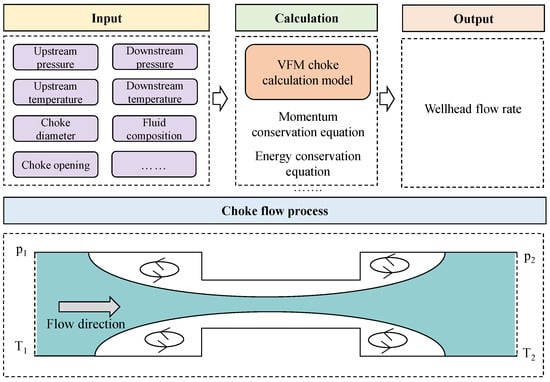
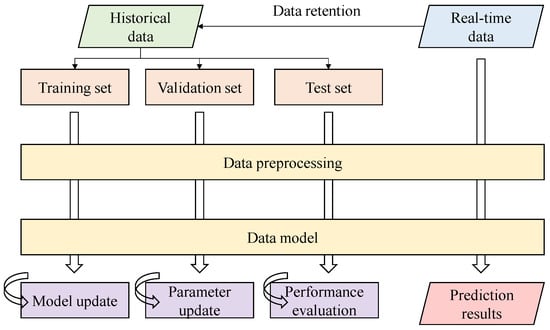
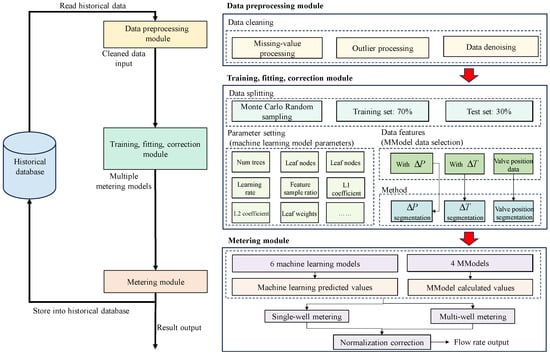
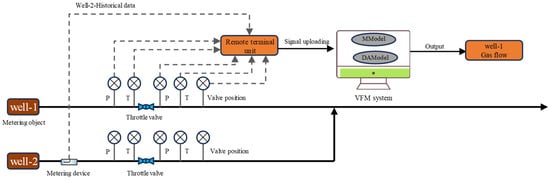
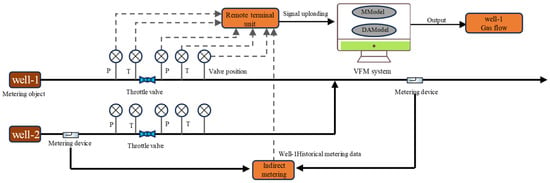
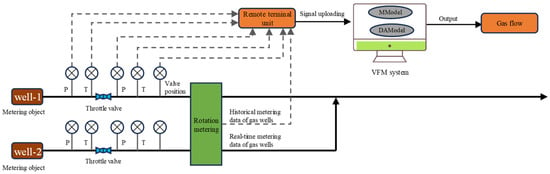
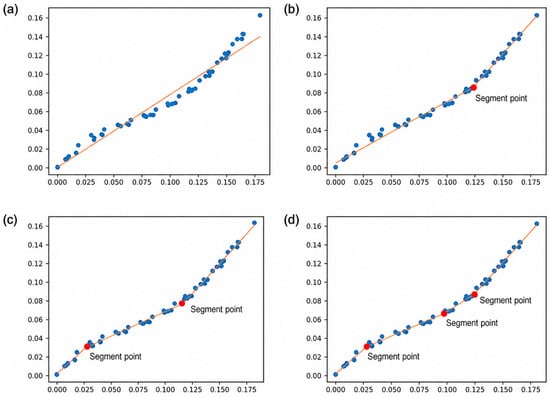
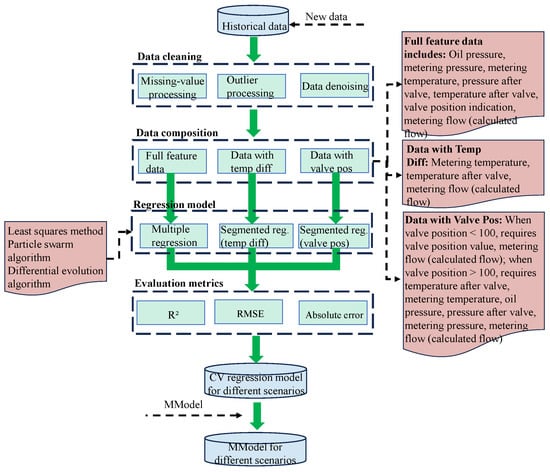
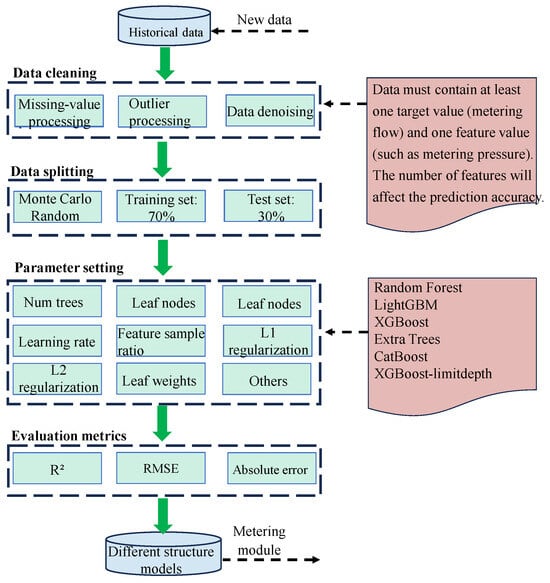
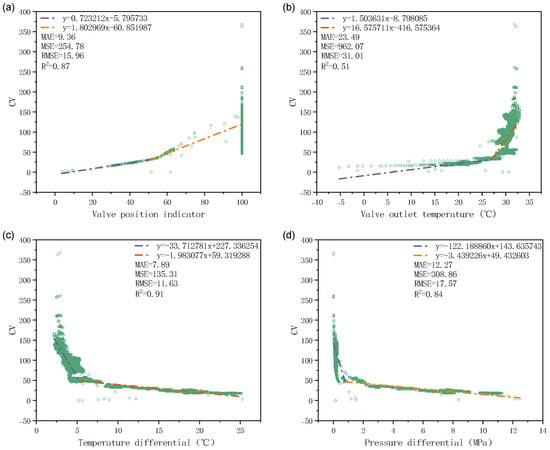
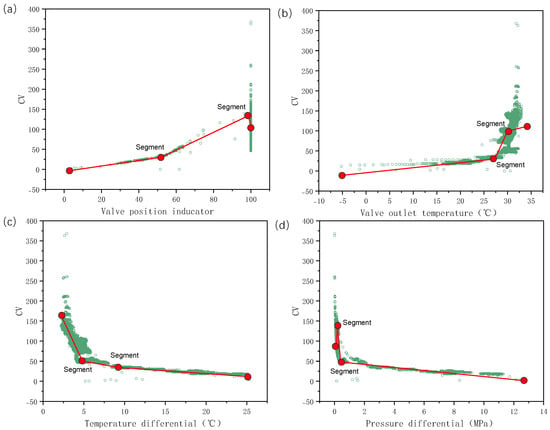
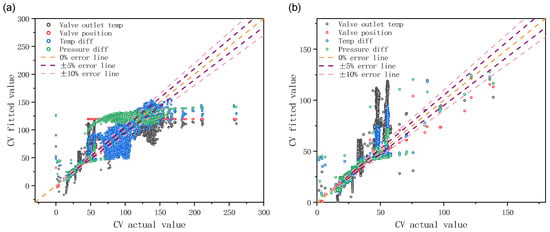
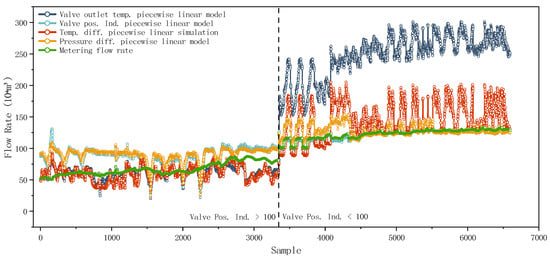
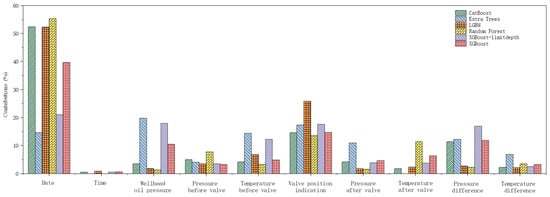
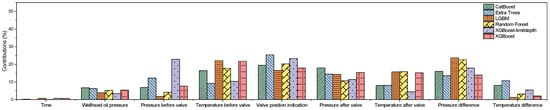
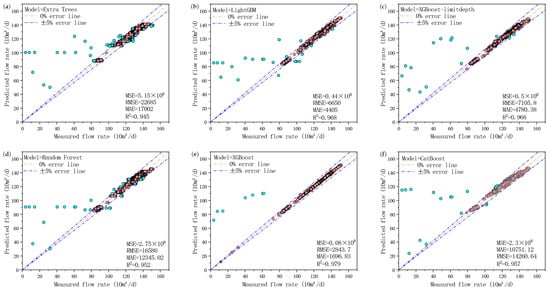
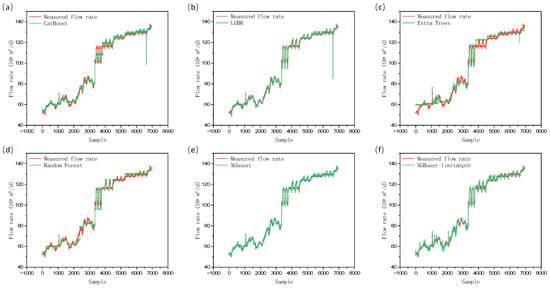
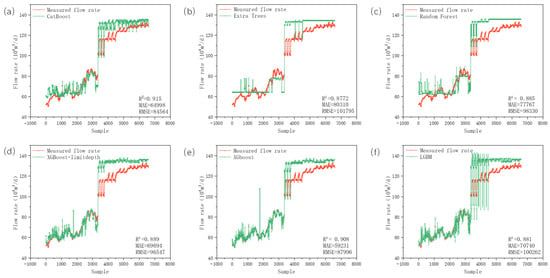
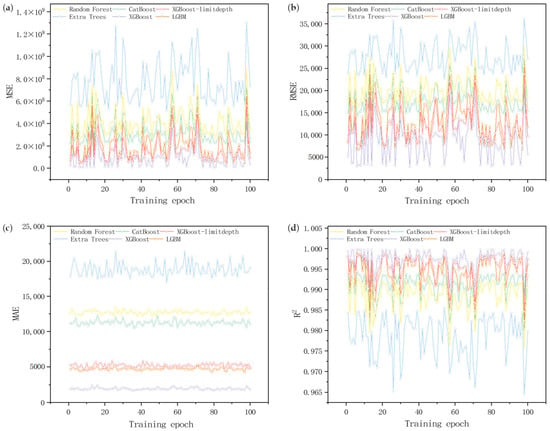
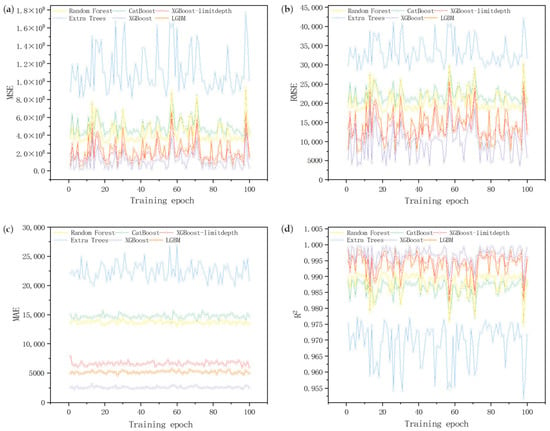
Virtual flow metering (VFM) serves as an effective alternative to traditional physical flow meters, significantly reducing gas-field metering costs and operational complexity. However, conventional VFM typically employs a single-modeling approach, failing to address metering requirements across varying production conditions and data types. Focusing on wellhead choke equipment, four mechanistic models (MModels) based on choke-flow dynamics are constructed using piecewise linear regression, alongside six machine learning models. Hyperparameters are optimized via grid search and cross-validation, establishing a hybrid mechanistic and data-driven multi-model VFM method for gas wells. Systematic testing utilizes field data from gas wells in the Southwest Oil and Gas Field, with the Shapley additive explanations (SHAP) method quantifying feature contributions. MModel results indicate superior overall performance by the temperature-difference piecewise linear model, yielding a training R2 of 0.91 and a mean test error of 4.59%. Under different valve-position conditions, the downstream-temperature piecewise linear model demonstrates better predictive capability when the valve position is equal to 100, whereas the valve-position piecewise linear model achieves higher accuracy when the valve position is less than 100. MLModel results reveal that among ten feature parameters, “Date” and “Valve Position Indication” contribute most significantly to prediction accuracy, accounting for over 50% of cumulative contribution in GBoost (extreme gradient boosting) and CatBoost (categorical boosting) models. Notably, the XGBoost model exhibits optimal predictive performance, achieving a training R2 of 0.979 and a mean test error of merely 0.13%. Random sampling results show coefficient of variation values below 0.1 for all metrics, demonstrating exceptional robustness, providing an effective technical solution and solid theoretical support for gas-field VFM. Full article
Show Figures

Figure 1

28 pages, 7788 KB  
Article
GeoHybridGNN: A Hybrid Intelligent Mapping Framework for Porphyry Copper Prospectivity Mapping Integrating Remote Sensing, Geology, and Geochemistry
by Muhammad Atif Bilal, Yongzhi Wang, Kateryna Hlyniana and Zubair Nabi
Remote Sens. 2026, 18(10), 1638; https://doi.org/10.3390/rs18101638 - 19 May 2026
Abstract
The Western Chagai Belt of Pakistan hosts major porphyry Cu-Au systems, but prospectivity mapping in this arc remains difficult because favorable lithology, intrusive bodies, fault corridors, hydrothermal alteration, and Cu geochemical anomalies are spatially heterogeneous across a structurally complex and arid terrain. These [...] Read more.
The Western Chagai Belt of Pakistan hosts major porphyry Cu-Au systems, but prospectivity mapping in this arc remains difficult because favorable lithology, intrusive bodies, fault corridors, hydrothermal alteration, and Cu geochemical anomalies are spatially heterogeneous across a structurally complex and arid terrain. These conditions create a scientific need for an integrated mapping framework that can combine remote sensing alteration evidence, geology, structure, and geochemistry within a unified and reproducible workflow. This study presents GeoHybridGNN, a hybrid deep learning framework for porphyry copper prospectivity mapping in the Western Chagai Belt. The framework integrates multi-source raster evidence, including remote sensing-derived spectral alteration indices, a Cu geochemical raster, and distance-to-fault information, with graph-based node representations that combine regular neighborhood adjacency on retained grid cells with node attributes derived from lithology and aligned geoscientific raster summaries. All predictors were harmonized to a common 30 m reference raster grid and evaluated using five-fold spatial block cross-validation to provide a more spatially realistic assessment than ordinary random splitting. The implemented model combines a CNN-based raster patch encoder with a GraphSAGE-based graph classifier. Raster patches extracted around graph nodes are encoded into 64-dimensional embeddings, and these embeddings are concatenated with node-level graph features before full-batch graph learning and prediction. Copper occurrences were used only for supervised label assignment and evaluation and were not used as predictive inputs. The results show that GeoHybridGNN produces spatially coherent prospectivity maps, stable fold-wise prediction patterns, and improved target delineation relative to the tested comparison models. Cu geochemical integration produces only a limited change in global discrimination but provides modest local target sharpening in selected zones. These results indicate that GeoHybridGNN can serve as an uncertainty-aware and geologically constrained decision support workflow for porphyry copper targeting. More broadly, the framework provides a transparent strategy for exploration screening in structurally complex and data-heterogeneous metallogenic belts where remote sensing, geological, structural, and geochemical evidence must be integrated consistently. Full article
(This article belongs to the Special Issue Machine Learning for Remote-Sensing Data Processing and Analysis)
20 pages, 800 KB  
Article
Motivational Factors Influencing Ethiopian Student Teachers’ Self-Efficacy in Adopting AI in Education
by Adula Bekele Hunde, Eyvind Elstad, Knut-Andreas Abben Christophersen, Are Turmo, Fekede Tuli Gemeda and Eyueil Abate Demissie
Educ. Sci. 2026, 16(5), 800; https://doi.org/10.3390/educsci16050800 (registering DOI) - 19 May 2026
Abstract
Understanding the motivational factors influencing student teachers’ self-efficacy in adopting Artificial Intelligence (AI) is essential in technology-driven learning environments, but this area has received less research attention in resource-scarce settings like Ethiopia. To this end, this study was initiated to explore the motivational [...] Read more.
Understanding the motivational factors influencing student teachers’ self-efficacy in adopting Artificial Intelligence (AI) is essential in technology-driven learning environments, but this area has received less research attention in resource-scarce settings like Ethiopia. To this end, this study was initiated to explore the motivational factors influencing the self-efficacy in adopting AI among Ethiopian student teachers. The study employed structural equation modeling to analyze data collected from 278 student teachers enrolled in teacher education programs to determine the relationship between motivational factors (commitment to the teaching profession, along with intrinsic, extrinsic, and altruistic motivations) and dimensions of self-efficacy (teaching AI skills, planning and classroom management, and student affective domains). The result demonstrated that strong and positive associations were found between affective commitment to teaching and self-efficacy (p < 0.01) in AI teaching skills, planning and managing the classroom, and addressing the student affective domain. In addition, positive and moderate associations were noted between extrinsic motivation and self-efficacy (p < 0.05) in the student affective and teaching AI skills domains. No significant relationships were observed for intrinsic or altruistic motivations. Thus, by highlighting the role of commitment and extrinsic motivation, the findings can inform teacher education programs aiming to enhance the holistic development and effectiveness of future educators and contribute to developing targeted recruitment and training strategies that nurture motivated and technologically proficient teachers. Full article
(This article belongs to the Special Issue Holistic Education: What It Is and How It Works)
16 pages, 1719 KB  
Article
Bioengineering Insights into Orientation and Structural Stability of Phenyl Methyl Thiazole Derivative with β-Cyclodextrin Through Computational Modeling
by Eswaran Kamaraj, Arumugam Anitha, Moorthiraman Murugan and Rajaram Rajamohan
Bioengineering 2026, 13(5), 583; https://doi.org/10.3390/bioengineering13050583 (registering DOI) - 19 May 2026
Abstract
This study explores the formation of inclusion complexes between a newly synthesized N-(2-(butylamino)-2-oxoethyl)-2-(3-cyano-4-isobutoxyphenyl)-4-methylthiazole-5-carboxamide with β-cyclodextrin using density functional theory with dispersion correction (DFT-D3) at the B3LYP-GD3/3-21G, 6-31G(d), 6-31G’(d), and 6-311G(d) levels. Two orientations are considered: in Orientation A, the 3-cyano-4-isobutoxyphenyl moiety interacts with [...] Read more.
This study explores the formation of inclusion complexes between a newly synthesized N-(2-(butylamino)-2-oxoethyl)-2-(3-cyano-4-isobutoxyphenyl)-4-methylthiazole-5-carboxamide with β-cyclodextrin using density functional theory with dispersion correction (DFT-D3) at the B3LYP-GD3/3-21G, 6-31G(d), 6-31G’(d), and 6-311G(d) levels. Two orientations are considered: in Orientation A, the 3-cyano-4-isobutoxyphenyl moiety interacts with the primary hydroxyl rim of β-cyclodextrin, while in Orientation B, the amide side chain faces the wider rim. Complexation energies and thermodynamic parameters are calculated to determine stability. Electronic properties, including HOMO-LUMO energies, and global reactivity descriptors, such as electronegativity (χ), chemical potential (μ), hardness (η), and electrophilicity index (ω), are evaluated. Non-covalent interaction (NCI) analysis is also performed to visualize interaction sites. The results reveal the significant influence of orientation on the host–guest complex stability and electronic properties, providing valuable insights into cyclodextrin-based encapsulation systems. The study provides a computational blueprint for engineering cyclodextrin-based bio-functional systems, where orientation-controlled inclusion governs stability, reactivity, and performance. This can significantly impact the development of smart drug delivery systems, biosensors, and multifunctional biomaterials in modern bioengineering. Full article
21 pages, 16318 KB  
Article
Evolution Characteristics of Overlying Strata Caving and Failure Under Sublevel Caving Mining: A Field Monitoring Study
by Fuhua Peng, Weijun Wang, Jingyun Hu, Yinghua Huang and Congcong Zhao
GeoHazards 2026, 7(2), 59; https://doi.org/10.3390/geohazards7020059 (registering DOI) - 19 May 2026
Abstract
Dynamically grasping the scope of the caving zone and fractured zone in overlying strata is crucial for ground pressure control in sublevel caving mining. Taking Dahongshan Iron Mine as the research object, this study systematically analyzed the evolutionary characteristics of overlying strata caving [...] Read more.
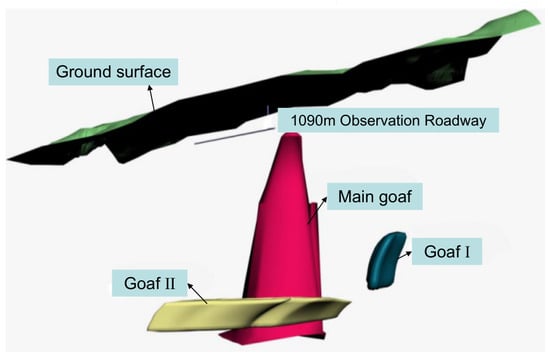
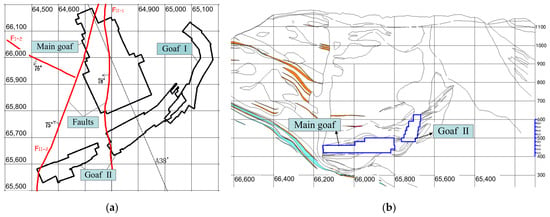
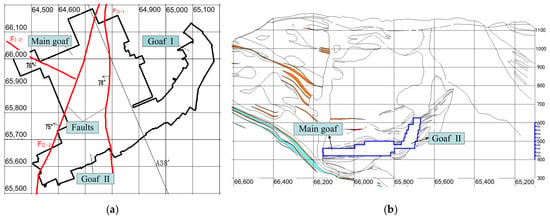
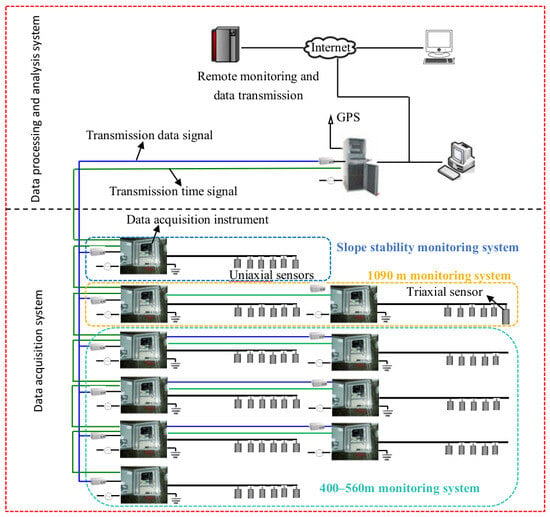
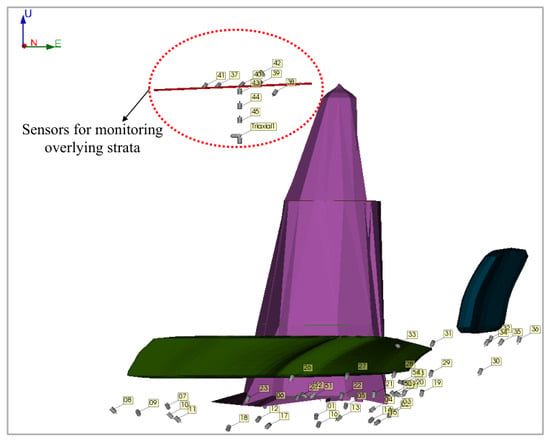
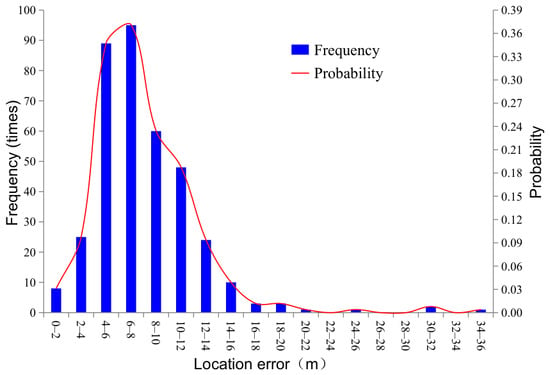
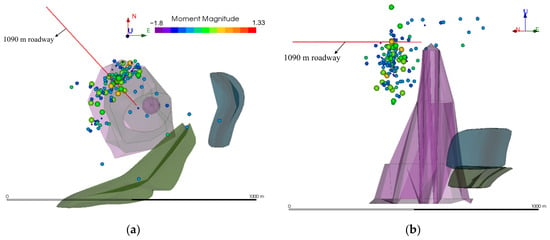
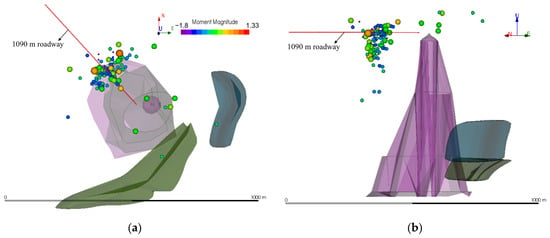
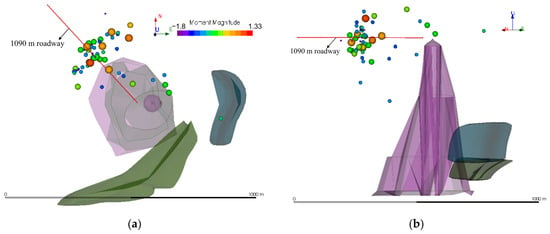
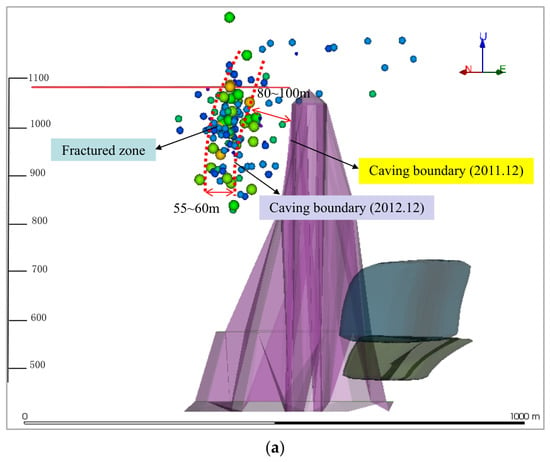
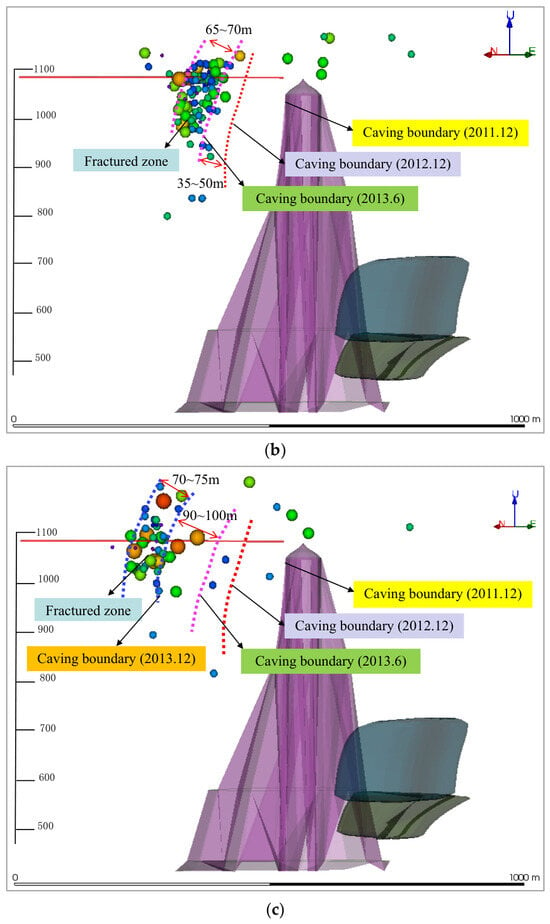
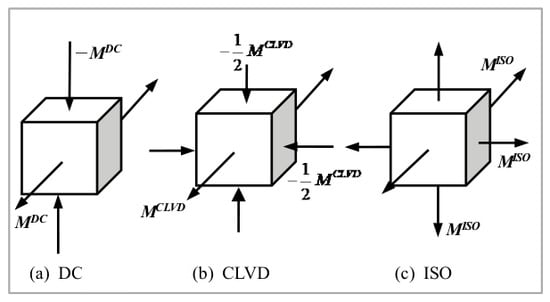
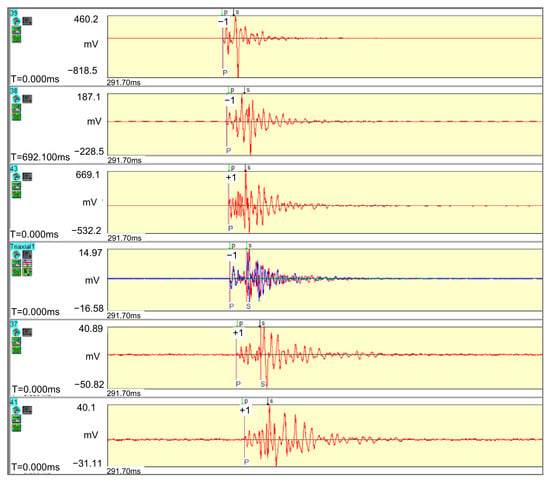
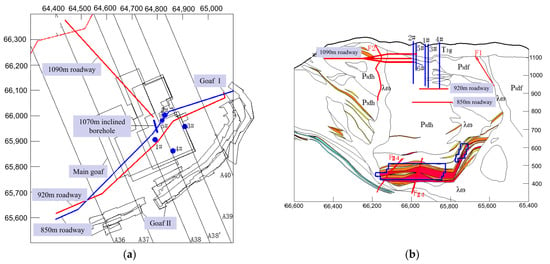
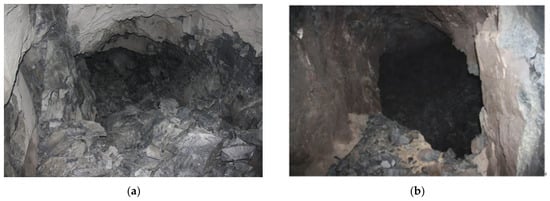
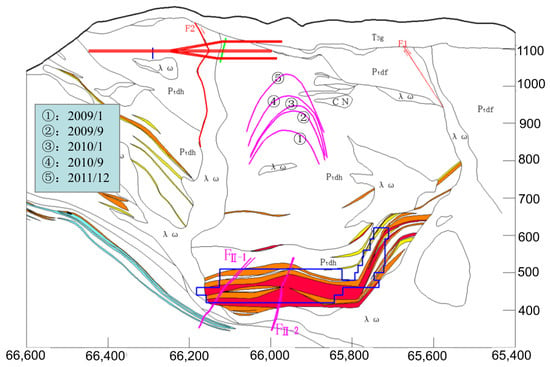
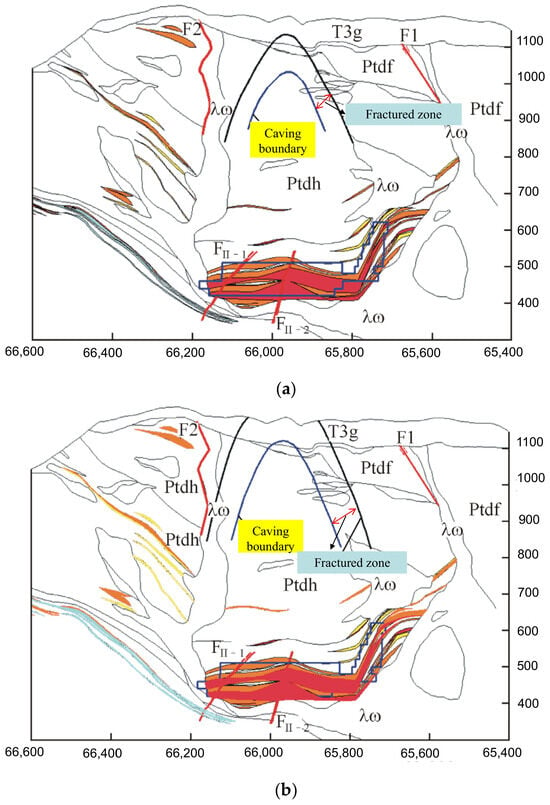
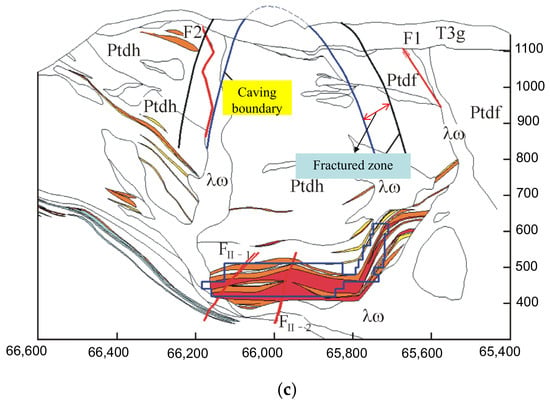
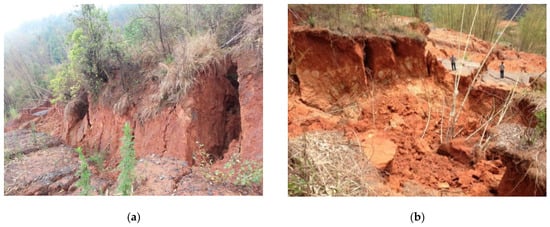
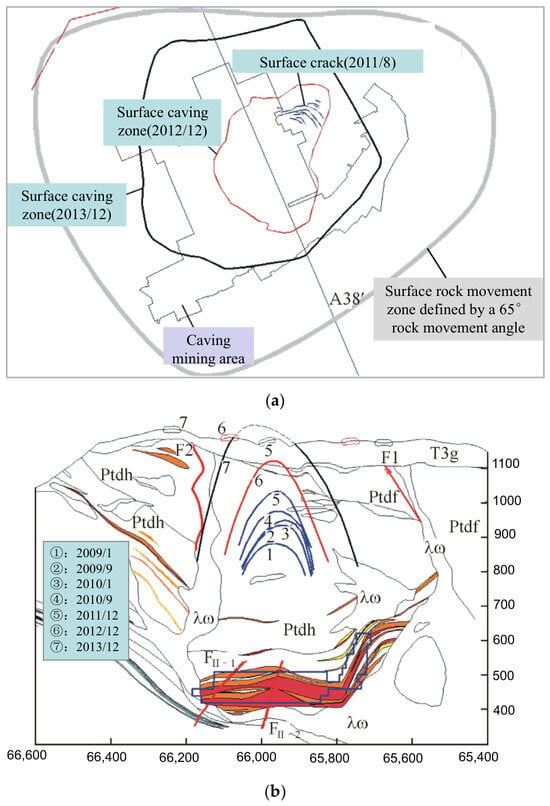
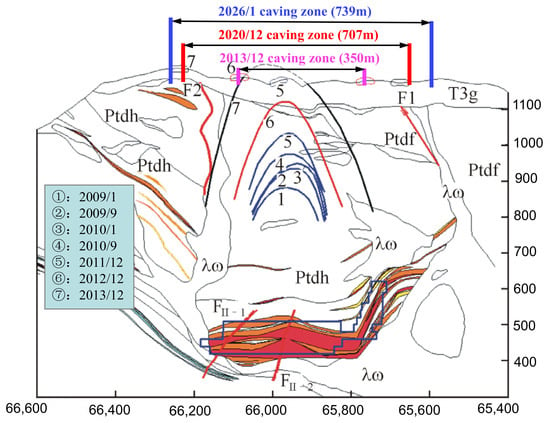
Dynamically grasping the scope of the caving zone and fractured zone in overlying strata is crucial for ground pressure control in sublevel caving mining. Taking Dahongshan Iron Mine as the research object, this study systematically analyzed the evolutionary characteristics of overlying strata caving during sublevel caving mining from 2009 to 2013. Microseismic monitoring was employed as the main method to monitor and locate rock mass fracturing, while roadway monitoring and borehole monitoring were used as auxiliary means to determine the caving boundary and fractured zone scope of overlying strata. Comprehensive analysis of the monitoring data showed that the elevation of the overlying strata caving zone expanded from 930 m to 1215 m, and the width of the fractured zone varied from 50 m to 75 m in different periods. To clarify the rock mass fracture mechanism, P-wave first-motion moment tensor inversion and the Ohtsu moment tensor decomposition method were adopted to classify fracture types. The results indicated that tensile fracturing-related microseismic events accounted for 76.2–80.2% of all events in different periods, demonstrating that tensile failure dominated the fracturing of overlying strata. After December 2012, the caving scope extended to the surface, and a surface collapse area of 290,000 m2 was formed by December 2013, which effectively eliminated the threat of sudden overlying strata caving disasters to the mine. The research results provide reliable technical support for ensuring mine safety production and can serve as a reference for similar sublevel caving mining projects. Full article
Show Figures

Figure 1

28 pages, 623 KB  
Article
A PUF-Based Secure and Lightweight Authentication Protocol for Medical IoT Environments
by Hyeongeun Lim, Yohan Park and Youngho Park
Sensors 2026, 26(10), 3223; https://doi.org/10.3390/s26103223 - 19 May 2026
Abstract
The development of sensor and communication technology has enabled the Internet of Things in healthcare. In Medical Internet of Things (MIoT) environments, sensors support real-time patient monitoring, remote diagnosis, and early disease detection. However, communication between users and sensors over public channels is [...] Read more.
The development of sensor and communication technology has enabled the Internet of Things in healthcare. In Medical Internet of Things (MIoT) environments, sensors support real-time patient monitoring, remote diagnosis, and early disease detection. However, communication between users and sensors over public channels is vulnerable to various security attacks, making secure and lightweight authentication with session key establishment essential for protecting medical data. Recently, a lightweight and anonymous authentication protocol for MIoT environments was proposed using Physical Unclonable Functions (PUFs); however, we show that their protocol is vulnerable to eavesdropping, stolen verifier, and ephemeral secret leakage attacks, and fails to guarantee untraceability. To address these weaknesses, we propose a secure and lightweight PUF-based authentication protocol for MIoT environments. The security of our protocol is formally verified using Burrows–Abadi–Needham logic, the Real-or-Random model, and the Scyther tool. Furthermore, the practical validation of the proposed protocol is conducted on a hardware platform along with an evaluation of energy consumption based on the MIRACL cryptographic library. Performance comparisons demonstrate that our protocol achieves enhanced security properties with minimal computational overhead and communication costs. Ultimately, this research provides a secure and robust architectural option for healthcare applications aiming to preserve patient privacy in resource-constrained MIoT. Full article
33 pages, 1883 KB  
Review
Fibroblast Activation Protein Inhibitor (FAPI) PET: A Scoping Review of Emerging Oncologic and Fibroinflammatory Applications
by Emmanouil Panagiotidis, Filippos Koinis, Jules Zhang-Yin, George Angelidis, Varvara Valotassiou, Ioannis Tsougos, Athanasios Kotsakis and Panagiotis Georgoulias
Diagnostics 2026, 16(10), 1542; https://doi.org/10.3390/diagnostics16101542 - 19 May 2026
Abstract
This scoping review was conducted in accordance with the Preferred Reporting Items for Systematic Reviews and Meta-Analyses Extension for Scoping Reviews (PRISMA-ScR) guidelines. It summarizes advances in fibroblast activation protein inhibitor (FAPI) positron emission tomography (PET) for oncologic and fibroinflammatory diseases. FAP is [...] Read more.
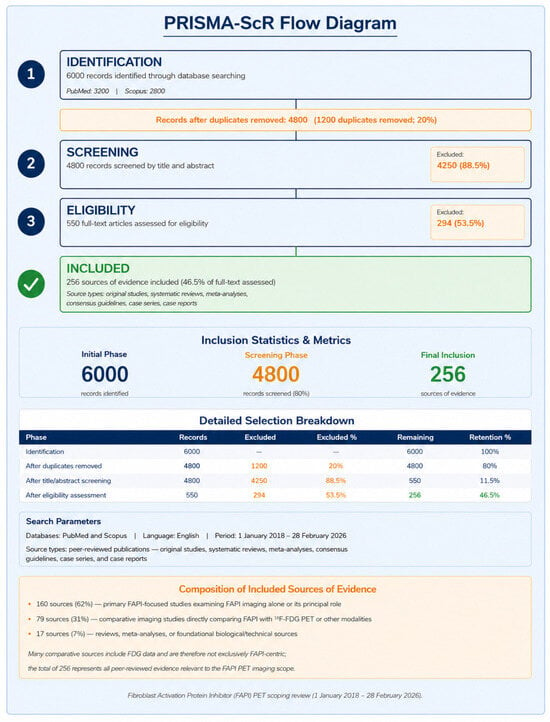
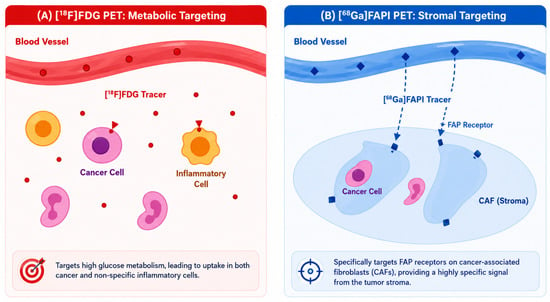
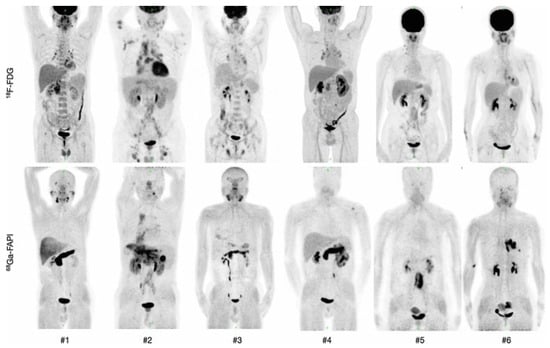
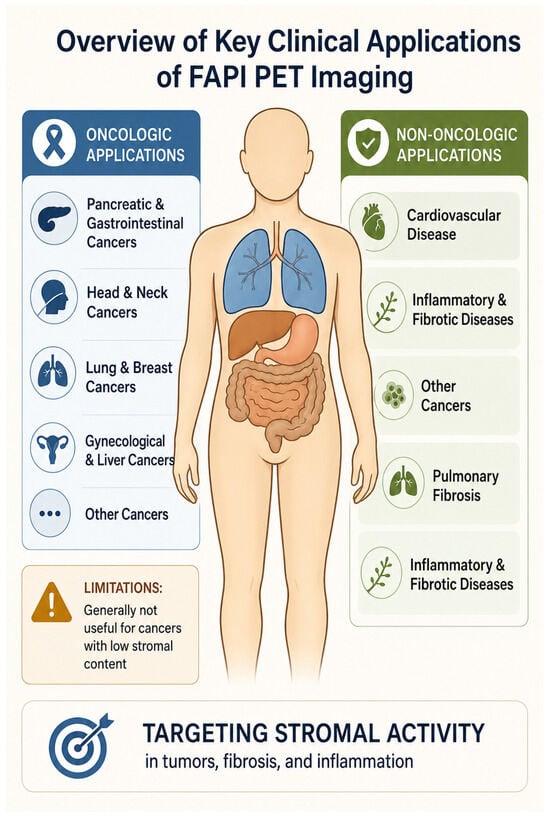
This scoping review was conducted in accordance with the Preferred Reporting Items for Systematic Reviews and Meta-Analyses Extension for Scoping Reviews (PRISMA-ScR) guidelines. It summarizes advances in fibroblast activation protein inhibitor (FAPI) positron emission tomography (PET) for oncologic and fibroinflammatory diseases. FAP is expressed broadly on activated mesenchymal cells—including cancer-associated fibroblasts (CAFs) and myofibroblasts within desmoplastic tumor stroma, FAP-positive tumor cells in selected sarcomas, and activated fibroblasts in chronic fibroinflammatory disorders such as rheumatoid arthritis, Crohn’s disease, and organ fibrosis. By targeting these activated fibroblasts, [68Ga]- and [18F]-labeled FAPI tracers provide high tumor-to-background contrast, particularly in desmoplastic and stromal-rich cancers. Compared with [18F]FDG, FAPI PET demonstrates superior lesion conspicuity in selected malignancies and enables a streamlined, non-fasting imaging workflow. Beyond oncology, FAPI PET is emerging as a promising tool for assessing cardiac fibrosis, pulmonary inflammation, and autoimmune conditions characterized by fibroblast activation. A systematic literature search of PubMed and Scopus was performed for peer-reviewed publications from 1 January 2018 to 28 February 2026. Inclusion criteria encompassed original studies, systematic reviews, meta-analyses, clinical guidelines, case series, and case reports reporting on FAPI-targeted PET in human subjects or translational models, published in English. After screening, 256 sources met the eligibility criteria and are included. The development of standardized SNMMI/EANM imaging protocols, along with ongoing multicenter trials and the first prospective phase 2 clinical trial of 68Ga-FAPI-46 PET with histopathological confirmation, now supports the reproducible implementation of FAPI PET across institutions. FAPI PET demonstrates strong translational potential, largely due to its favorable biodistribution, safety profile, and theranostic flexibility. However, its widespread use in routine clinical practice is contingent upon large-scale clinical validation, structured reader training, and formal regulatory approval. In conclusion, FAPI PET represents a maturing molecular imaging platform targeting activated fibroblasts across oncologic and fibroinflammatory diseases. Its widespread adoption into clinical practice requires large-scale prospective trials, reader training, standardized reporting, and regulatory approval—all of which are now actively underway. Full article
Show Figures

Figure 1

27 pages, 2160 KB  
Article
A Two-Criteria Remodelling Model for Loading-Dependent Morphological Adaptation of Individual Trabeculae
by Zihao Liu, Simin Li and Vadim V. Silberschmidt
Biomechanics 2026, 6(2), 48; https://doi.org/10.3390/biomechanics6020048 - 19 May 2026
Abstract
Background: Trabecular-bone adaptation (TBA) continuously reshapes the trabecular-bone (TB) microstructure at the microscale in response to mechanical loading. While organ-scale adaptation has been extensively studied, the mechanisms governing the evolution of individual trabeculae remain inadequately understood. Methods: This study proposes a new remodelling [...] Read more.
Background: Trabecular-bone adaptation (TBA) continuously reshapes the trabecular-bone (TB) microstructure at the microscale in response to mechanical loading. While organ-scale adaptation has been extensively studied, the mechanisms governing the evolution of individual trabeculae remain inadequately understood. Methods: This study proposes a new remodelling model: under finite remodelling capacity, surface regions that satisfy mechanostat criteria compete for remodelling events according to the spatial non-uniformity of local mechanical stimulus. This model uses a two-criteria remodelling scheme that combines (i) a mechanostat criterion for bone formation and resorption and (ii) a distance-weighted non-uniformity criterion. The model is implemented with a 2D finite-element framework using a USDFLD subroutine in the Abaqus/Standard software package. Idealised X- and I-shaped trabecular geometries are subjected to controlled bending, compression, and shear load cases to examine loading-dependent morphology evolution. Results: Compared with the corresponding one-criterion models, the two-criteria framework produces a lower fraction of active remodelling surface and a more clearly bounded convergence process. The numerical simulations reproduce characteristic plate-like morphologies of trabeculae under bending and rod-like morphologies under compression, while additional variations in thresholds and loading conditions shift the response towards resorption-biased structures. Conclusions: The results indicate that the mechanostat criterion primarily stabilises the global bone mass, whereas the non-uniformity criterion governs where remodelling is preferentially located on the trabecular surface. The proposed framework therefore provides a microscale and mechanistically interpretable basis for analysing loading-dependent morphological adaptation of individual trabeculae. Full article
(This article belongs to the Section Tissue and Vascular Biomechanics)
16 pages, 455 KB  
Article
Cognitive Style Shaped by Framing: Implications for Rational vs. Intuitive Thinking
by Marcus Selart
Behav. Sci. 2026, 16(5), 823; https://doi.org/10.3390/bs16050823 (registering DOI) - 19 May 2026
Abstract
This article investigates how cognitive style shaped by framing influences rational and intuitive thinking. We extend existing research on cognitive styles, specifically the construct of holistic dependence/independence on framing, and examine its relationship with reasoning performance, self-rated intuition, and analytical intelligence. We conduct [...] Read more.
This article investigates how cognitive style shaped by framing influences rational and intuitive thinking. We extend existing research on cognitive styles, specifically the construct of holistic dependence/independence on framing, and examine its relationship with reasoning performance, self-rated intuition, and analytical intelligence. We conduct tests with university students and find that individuals with high holistic independence on framing perform better on rationality tests and are better predictors of rational thinking than traditional measures of intelligence. Additionally, holistic independence on framing was found to be marginally related to lower self-rated reliance on intuition. These findings suggest that holistic dependence/independence on framing may provide additional insight into reasoning styles beyond traditional intelligence measures, highlighting its potential relevance for understanding individual differences in decision-making processes. Full article
16 pages, 1139 KB  
Article
Phosphate Fertilizer Sources and Doses Affect Yield and Nutritional Quality of Kale Under Organic Management
by Thatiane Nepomuceno Alves, Joseantonio Ribeiro de Carvalho, Ramón De Marchi Garcia, Vitor Augusto dos Santos Garcia, Santino Seabra Júnior and Antonio Ismael Inácio Cardoso
Horticulturae 2026, 12(5), 631; https://doi.org/10.3390/horticulturae12050631 (registering DOI) - 19 May 2026
Abstract
The search for a healthy diet has increased the consumption of kale, a vegetable recognized for its high nutritional value, mineral content, and antioxidant properties. Phosphorus is an essential nutrient in this context, acting in energy transfer and root development, which favors productivity [...] Read more.
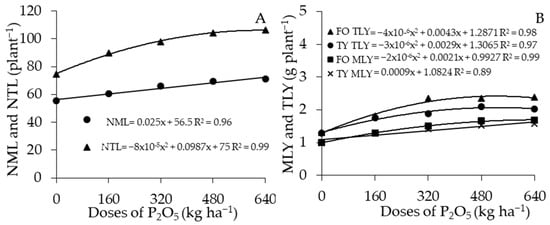
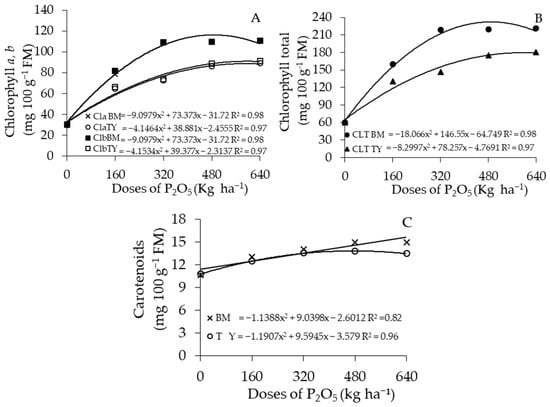
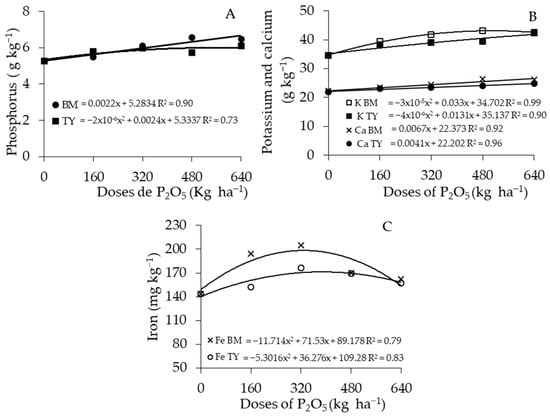
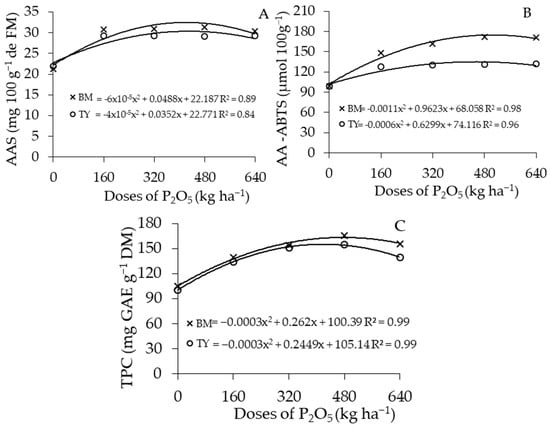
The search for a healthy diet has increased the consumption of kale, a vegetable recognized for its high nutritional value, mineral content, and antioxidant properties. Phosphorus is an essential nutrient in this context, acting in energy transfer and root development, which favors productivity and product quality. This study evaluated the effect of two phosphorus sources, bone meal (BM) and thermophosphate Yoorin® (TY), and five phosphorus (P2O5) doses (0, 160, 320, 480, and 640 kg ha−1) on kale yield and quality. The experiment used a randomized complete block design with four replications and ten treatments in a 2 × 5 factorial arrangement in a protected environment over a cycle of 155 days after transplanting. Marketable yield with BM reached an estimated maximum of 1.54 kg plant−1 at 525 kg ha−1 P2O5 (54% over control), while TY showed a linear increase up to 1.57 kg plant−1 (59%). Photosynthetic pigments, antioxidant activity, ascorbic acid, and total phenolic compounds fitted quadratic models, with gains of up to 36%, 73%, 51%, and 57%, respectively. Contents of P, K, Ca, and Fe increased significantly with P doses, with Fe gains reaching 110–180%. Phosphate fertilization with BM, a renewable P source, increases kale yield and nutritional quality, highlighting its potential for organic farming systems. Full article
(This article belongs to the Special Issue Nutrient Dynamics in Horticultural Crops from Absorption to Quality)
Show Figures

Figure 1

22 pages, 738 KB  
Article
Effects of a Complex Functional Ingredient Based on Beef Offal Paste and Plant Ingredients on the Quality, Fatty Acid Profile, Texture, and Storage Stability of Meat Cutlets
by Anuarbek Suychinov, Eleonora Okuskhanova, Zhanibek Yessimbekov and Guldana Kapasheva
Processes 2026, 14(10), 1645; https://doi.org/10.3390/pr14101645 - 19 May 2026
Abstract
This study developed a complex functional ingredient based on beef offal paste, whey, rapeseed and sunflower cake powder, and flax flour, and evaluated its effect on beef cutlets formulated with 0, 5, 10, and 15% additive. The study examined chemical composition, pH, water [...] Read more.
This study developed a complex functional ingredient based on beef offal paste, whey, rapeseed and sunflower cake powder, and flax flour, and evaluated its effect on beef cutlets formulated with 0, 5, 10, and 15% additive. The study examined chemical composition, pH, water activity, functional and technological properties, color, fatty acid profile, texture, sensory quality, and refrigerated storage stability. The additive improved the nutritional profile of the cutlets by increasing the protein content from 16.20% in the control to 17.78% at the highest inclusion level, while reducing fat content from 12.50% to 11.20%. The lipid fraction also became more favorable, as total polyunsaturated fatty acids increased from 7.03% to 13.34%, and α-linolenic acid appeared only in additive-containing samples. The additive also modified the functional and structural characteristics of the products. The 10% formulation showed the most pronounced improvement in texture, with the highest hardness, gumminess, and chewiness values, while sensory quality remained comparable to the control at 5 and 10% inclusion but declined at 15%. During 7 days of refrigerated storage, additive-containing samples showed lower acid and peroxide values than the control, together with a slight reduction in microbial growth. Overall, the developed additive acted as a multifunctional ingredient that improved nutritional and technological quality. Among the tested formulations, the 10% inclusion level provided the best balance between quality, storage stability, and sensory acceptability. Full article
24 pages, 3478 KB  
Article
Perspective for Improving Energy Efficiency and Indoor Climate Towards Prediction of Energy Use: A Generalized LSTM-Based Model for Non-Residential Buildings
by Anna Romańska, Marek Dudzik, Piotr Dudek, Mariusz Górny, Sabina Kuc and Mark Bomberg
Energies 2026, 19(10), 2446; https://doi.org/10.3390/en19102446 - 19 May 2026
Abstract
The emergence of Artificial Neural Networks (ANNs) and their deep learning form called Artificial Intelligence (AI) opened a new path to improve energy efficiency and the indoor environment. A small collaborating network team is now extending the passive house approach, in a book [...] Read more.
The emergence of Artificial Neural Networks (ANNs) and their deep learning form called Artificial Intelligence (AI) opened a new path to improve energy efficiency and the indoor environment. A small collaborating network team is now extending the passive house approach, in a book entitled Retrofitting, the Energy and Environment of Buildings (Gruyter Publishers), and presenting generalized AI modeling in the following paper. This concept uses a long-term neural network with a short-term memory (LSTM) and three stages (training, validation, and test) for optimalization to hourly data collected for one full year. The non-residential buildings are less affected by the space occupants. This paper examines the feasibility of a uniform, climate modified technology, as our objective is to create a universal and affordable approach to buildings assisting in slowing the rate of climate change. Hence, the idea of creating a generalized neural network for predicting electricity consumption linked with weather conditions was born. This network is to forecast the electricity consumption for buildings linked to the local weather conditions, but different categories of buildings are put together in one set. While this will lower the large set precision, still our question is if such a network would work. If so, in the future we will create multi-variant, local residential systems with the capability of predicting energy use. Full article
(This article belongs to the Special Issue Science and Practice of Energy Technology in Residential Buildings)
18 pages, 6817 KB  
Article
An Investigation of the Influence of the Main Wellbore on the Wellbore Stability of Sidetracked Wellbore of the Deep Earth TK-1
by Xuwu Luo, Ning Li, Yan Jin, Jiaqi Luo, Wentong Fan, Yang Xia and Yunhu Lu
Processes 2026, 14(10), 1644; https://doi.org/10.3390/pr14101644 - 19 May 2026
Abstract
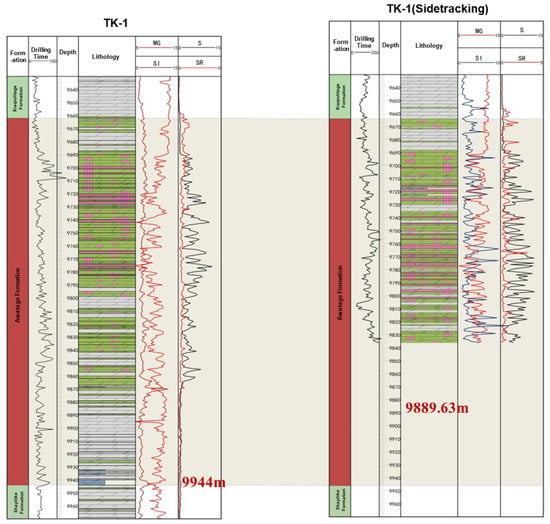
Deep Earth TK-1, China’s first 10,000 m scientific exploration well, encountered severe wellbore instability during sidetracking at a depth of approximately 9500 m under ultra-deep, high-stress conditions (maximum horizontal stress σH = 230 MPa, minimum horizontal stress σh = 200 MPa). [...] Read more.
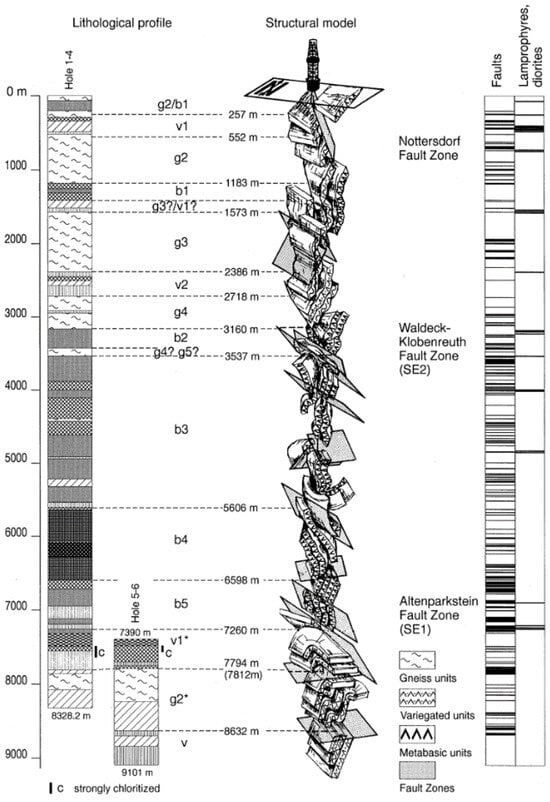
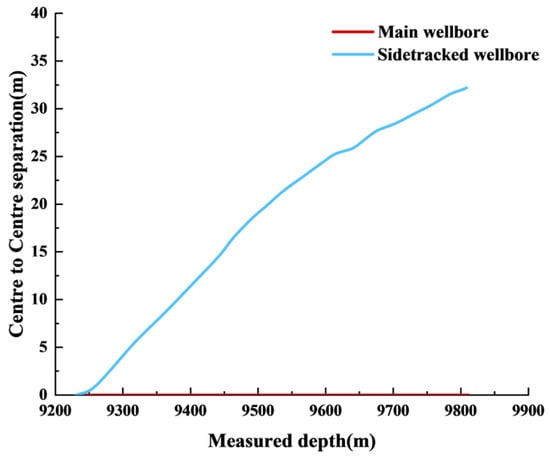
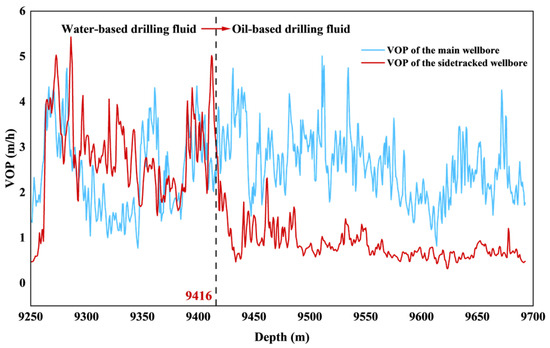
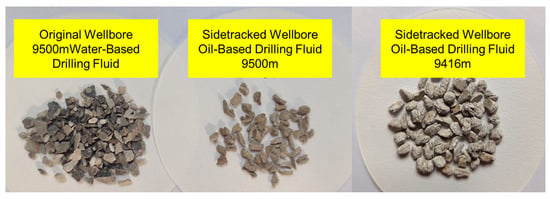
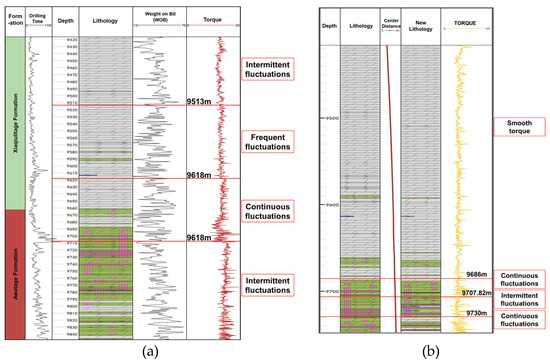
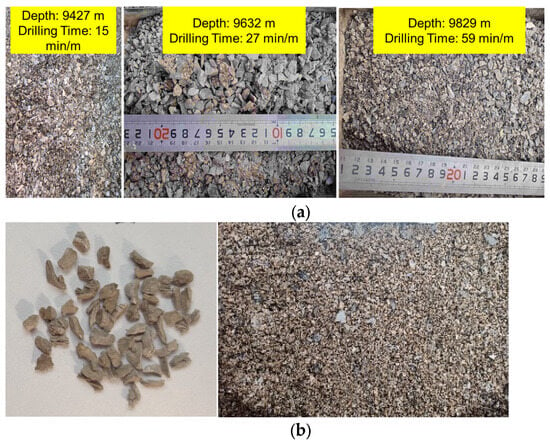
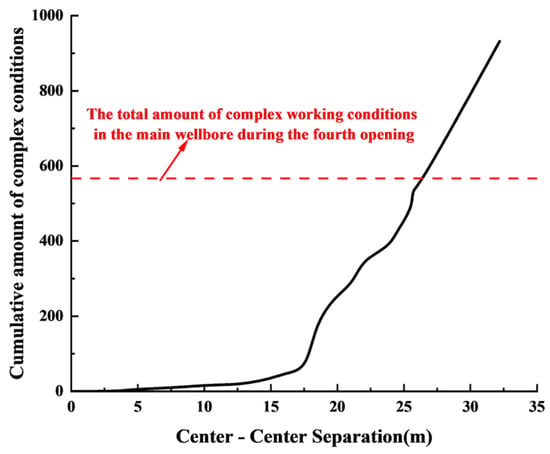
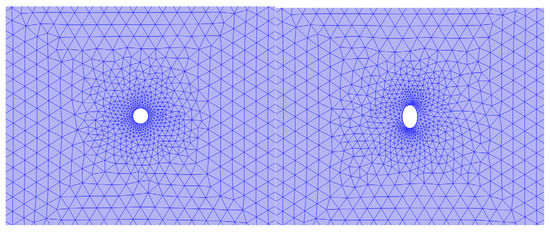
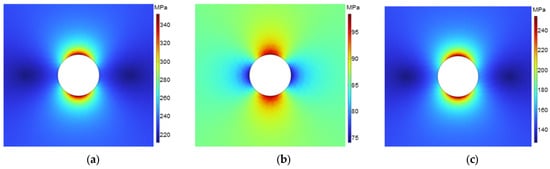
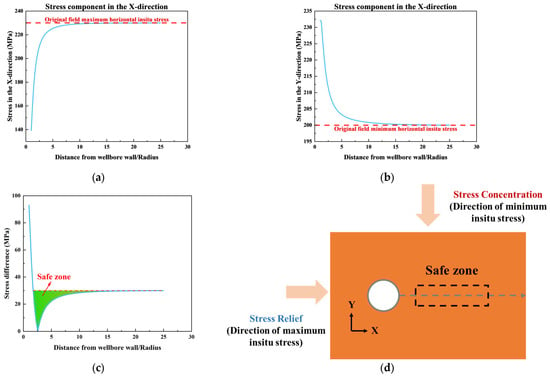
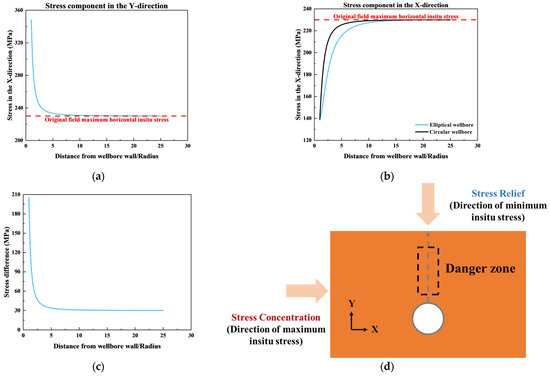
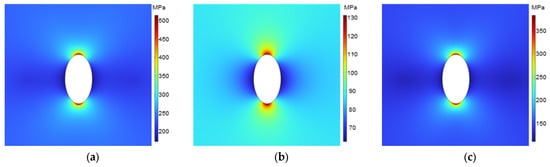
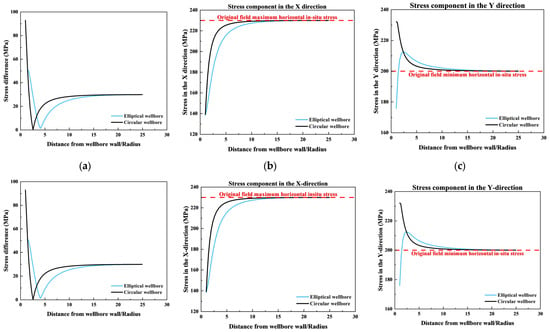
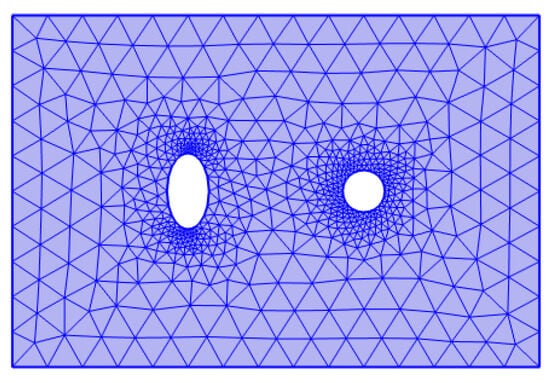
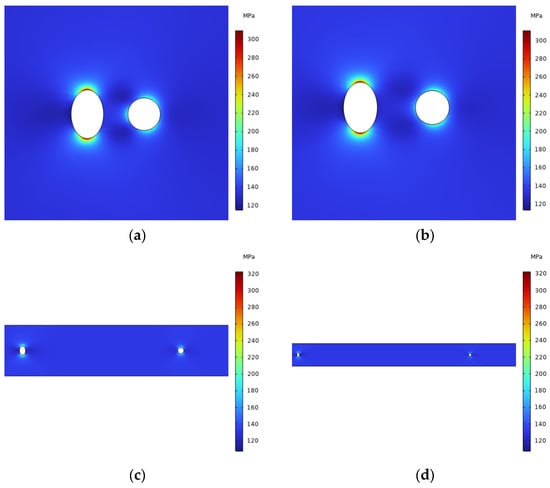
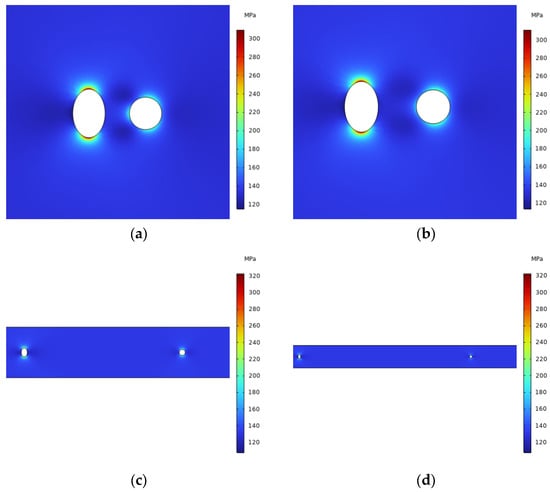
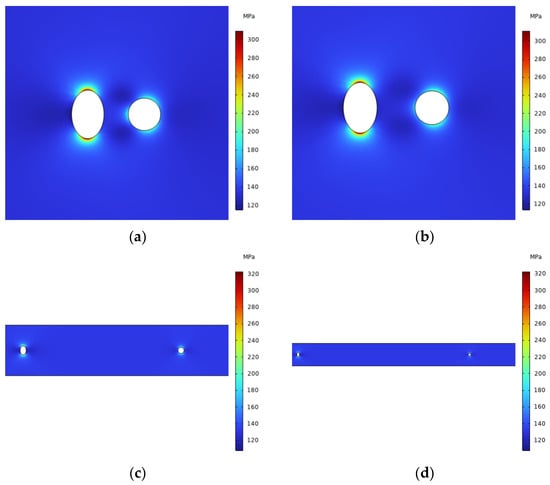
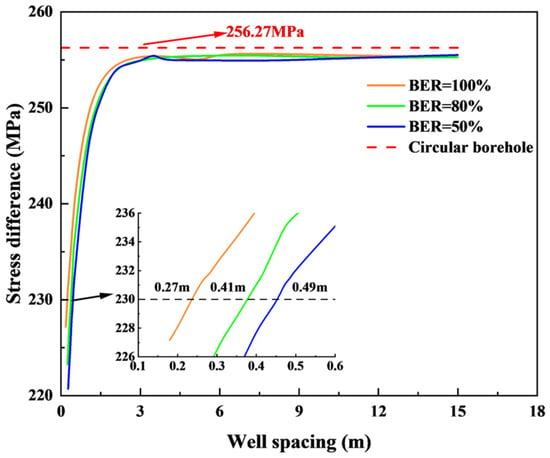
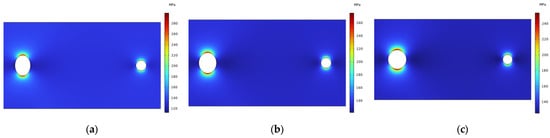
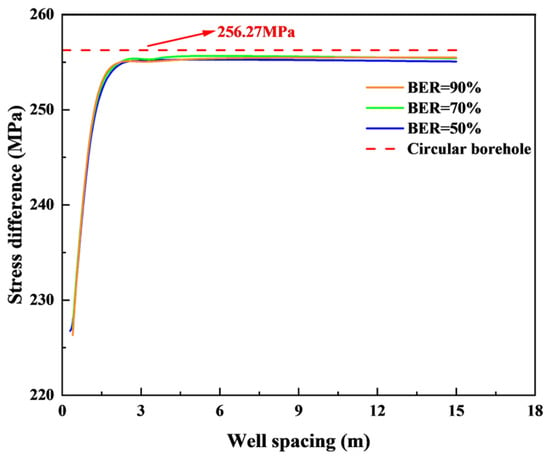
Deep Earth TK-1, China’s first 10,000 m scientific exploration well, encountered severe wellbore instability during sidetracking at a depth of approximately 9500 m under ultra-deep, high-stress conditions (maximum horizontal stress σH = 230 MPa, minimum horizontal stress σh = 200 MPa). To clarify how the original wellbore affects the stability of the sidetracked wellbore, single- and dual-well numerical models were established in COMSOL Multiphysics using the solid mechanics module and finite element method. The stress redistribution around the wellbore was analyzed before and after the collapse of the main wellbore, and the influences of well spacing and breakout geometry were quantified. The results show that a stress-relief “safe zone” forms along the direction of maximum horizontal stress before collapse and expands after collapse, allowing safer sidetracking within this range. In the dual-well model, the maximum stress difference around the sidetracked wellbore increases with well spacing and eventually approaches that of a single circular wellbore. The safe zone boundary was quantified for well spacings between 2.0 m and 3.5 m, depending on the major-axis enlargement ratio of the collapsed main wellbore. A larger major-axis enlargement ratio reduces far-field stress interference and expands the safe zone, whereas changes in the minor-axis enlargement ratio have little effect. These findings provide theoretical support for optimizing sidetracking design in ultra-deep wells. Full article
Show Figures

Figure 1

26 pages, 10963 KB  
Article
Noise-Resilient Whitened Domain Adaptation for Intelligent Mechanical Fault Diagnosis Under Non-Stationary Sensor Signals
by Qinyue Chen and Yunxin Xie
Sensors 2026, 26(10), 3222; https://doi.org/10.3390/s26103222 - 19 May 2026
Abstract
Intelligent mechanical fault diagnosis plays a key role in maintaining rotating machinery. Although data-driven unsupervised domain adaptation methods have achieved considerable progress, their industrial applications are often restricted by low-quality sensor data. Non-stationary vibration signals and background noise easily corrupt target pseudo-labels, while [...] Read more.
Intelligent mechanical fault diagnosis plays a key role in maintaining rotating machinery. Although data-driven unsupervised domain adaptation methods have achieved considerable progress, their industrial applications are often restricted by low-quality sensor data. Non-stationary vibration signals and background noise easily corrupt target pseudo-labels, while conventional methods focusing on global statistical matching usually neglect local structures, leading to confirmation bias under dynamic loads. To improve diagnostic reliability, we propose a Noise-Resilient Whitened Domain Adaptation (NRWDA) framework. To handle covariance fluctuations caused by changing working conditions, a Lipschitz-bounded Temporal Whitening (LTW) module is designed as a low-pass filter. An Entropy-guided Prototype Truncation (EPT) mechanism is adopted to discard ambiguous labels and better calibrate semantic centers. In addition, a Dispersion-Adaptive Contrastive Sharpening (DACS) strategy is introduced to dynamically adjust the contrastive temperature based on predictive dispersion, thus tightening decision boundaries. The proposed method is evaluated on CWRU, PU, and MFPT datasets. The PU dataset, featuring fluctuating loads and non-stationary signals, poses a strict test, yet our model maintains its stability even at a 0 dB SNR—a condition where standard approaches usually break down. During the P0P3 transfer task involving substantial radial force variations, NRWDA secures a 72.36% accuracy and surpasses established baselines. These findings confirm that our technique successfully isolates dependable diagnostic features from corrupted sensor measurements within actual industrial settings. Full article
11 pages, 462 KB  
Article
Prevalence of Hepatitis E Virus Infection Among Pregnant Women in Tunisia: Findings from a Large Cohort Study
by Kaouther Ayouni, Mariem Gdoura, Rania Allègue, Majdi Ben Ameur, Henda Touzi, Nesrine Abderahmane, Khaoula Magdoud, Hiba Mkadmi, Rim Ben Hmid, Henda Triki and Anissa Chouikha
Pathogens 2026, 15(5), 549; https://doi.org/10.3390/pathogens15050549 - 19 May 2026
Abstract
Hepatitis E is a liver inflammation caused by the hepatitis E virus (HEV). In pregnant women, the infection significantly increases the risk of acute liver failure, fetal loss, and maternal death. According to the World Health Organization, infection by HEV during the third [...] Read more.
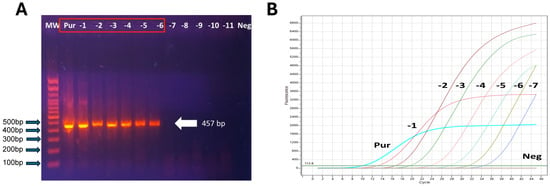
Hepatitis E is a liver inflammation caused by the hepatitis E virus (HEV). In pregnant women, the infection significantly increases the risk of acute liver failure, fetal loss, and maternal death. According to the World Health Organization, infection by HEV during the third trimester of pregnancy may increase the risk of maternal mortality in 20–25% of cases. In Tunisia, little is known about HEV infection and its outcome, especially in pregnant women. This study aims to evaluate the prevalence of HEV infection in a large cohort of pregnant women in Tunisia. A total of 891 women who attended the Centre of Maternity and Neonatology of Tunis during 2021–2023 were included. Serum samples were screened to detect HEV-antibodies and RNA using commercial ELISA tests and molecular assays, respectively. Statistical analyses were conducted using SPSS 21.0 software and the EPISTAT package version 7.2.6. Seroprevalence of HEV infection was 3.82%, based on the detection of anti-HEV IgG. The distribution of the seroprevalence according to age was statistically significant (p < 0.05), showing a higher seroprevalence among women over 30 years. Among the 51 women with composite outcomes, viral RNA was detected in one case by real-time RT-PCR. Our findings indicate a low HEV prevalence among pregnant women in Tunisia. Expanding the study to other cohorts and to environmental surveillance would improve understanding of HEV burden in Tunisia and support hepatitis elimination efforts. Full article
(This article belongs to the Special Issue Hepatitis E: Virus, Disease and Vaccine)
Show Figures

Figure 1

17 pages, 695 KB  
Article
Detection and Measurement of Hypopyon on Slit Lamp Examination Versus Anterior Segment Optical Coherence Tomography
by Kamini N. Reddy, Folahan Ibukun, Kaiyang Huang, Ji Yi, Elesh Jain, Subeesh Kuyyadiyil, Gautam Parmar and Nakul S. Shekhawat
Bioengineering 2026, 13(5), 582; https://doi.org/10.3390/bioengineering13050582 (registering DOI) - 19 May 2026
Abstract
Purpose: To compare hypopyon detection using anterior segment optical coherence tomography (ASOCT) versus slit lamp examination (SLE) in microbial keratitis, and to evaluate intra- and inter-grader agreement for ASOCT hypopyon measurement. Methods: Two masked graders independently evaluated ASOCT images for hypopyon [...] Read more.
Purpose: To compare hypopyon detection using anterior segment optical coherence tomography (ASOCT) versus slit lamp examination (SLE) in microbial keratitis, and to evaluate intra- and inter-grader agreement for ASOCT hypopyon measurement. Methods: Two masked graders independently evaluated ASOCT images for hypopyon presence or absence in eyes with microbial keratitis, with disagreements resolved by consensus. A subset of hypopyon eyes underwent triplicate height measurement using two methods (endothelial length and vertical height). The proportion of eyes with hypopyon, Cohen’s kappa, and intraclass correlation coefficients (ICCs) were calculated comparing diagnostic performance of ASOCT versus SLE. Results: Inter-grader agreement for hypopyon detection on ASOCT was excellent (κ = 0.94; 95% CI 0.84–1.00) and intra-grader agreement was excellent (κ = 0.89–1.00). ASOCT detected hypopyon in 67.1% of eyes versus 57.0% by SLE. Using ASOCT consensus grading as the reference standard, SLE demonstrated a detection proportion of 83.0% (95% CI, 71.4–92.1%). Intra-grader reproducibility was excellent for both endothelial length and vertical height measurements (ICC 0.977–0.996). Inter-grader agreement was good for endothelial length (ICC 0.831) and vertical height (ICC 0.827), though a statistically significant inter-grader bias was identified for vertical height only (Wilcoxon exact p = 0.006). Conclusions: Among eyes with gradable ASOCT images, ASOCT detected a greater proportion of hypopyon than SLE and demonstrated excellent intra-grader and good inter-grader measurement reproducibility. Endothelial length showed slightly superior inter-grader concordance to vertical height measurement. Full article

Open Access Journals

Browse by Indexing Browse by Subject Selected Journals
Back to TopTop