Article

An Investigation of the Influence of the Main Wellbore on the Wellbore Stability of Sidetracked Wellbore of the Deep Earth TK-1

1
PetroChina Tarim Oilfield Company, Korla 841000, China
2
Research and Development Center for Ultra Deep Complex Reservoir Exploration and Development, China National Petroleum Corporation, Beijing 100007, China
3
Engineering Research Center for Ultra-Deep Complex Reservoir Exploration and Development, Korla 841000, China
4
Xinjiang Key Laboratory of Ultra-Deep Oil and Gas, Korla 841000, China
5
College of Petroleum Engineering, China University of Petroleum (Beijing), Beijing 102249, China
*
Author to whom correspondence should be addressed.
Processes 2026, 14(10), 1644; https://doi.org/10.3390/pr14101644
Submission received: 21 April 2026 / Revised: 14 May 2026 / Accepted: 18 May 2026 / Published: 19 May 2026

Abstract

Deep Earth TK-1, China’s first 10,000 m scientific exploration well, encountered severe wellbore instability during sidetracking at a depth of approximately 9500 m under ultra-deep, high-stress conditions (maximum horizontal stress σ H = 230 MPa, minimum horizontal stress σ h = 200 MPa). To clarify how the original wellbore affects the stability of the sidetracked wellbore, single- and dual-well numerical models were established in COMSOL Multiphysics using the solid mechanics module and finite element method. The stress redistribution around the wellbore was analyzed before and after the collapse of the main wellbore, and the influences of well spacing and breakout geometry were quantified. The results show that a stress-relief “safe zone” forms along the direction of maximum horizontal stress before collapse and expands after collapse, allowing safer sidetracking within this range. In the dual-well model, the maximum stress difference around the sidetracked wellbore increases with well spacing and eventually approaches that of a single circular wellbore. The safe zone boundary was quantified for well spacings between 2.0 m and 3.5 m, depending on the major-axis enlargement ratio of the collapsed main wellbore. A larger major-axis enlargement ratio reduces far-field stress interference and expands the safe zone, whereas changes in the minor-axis enlargement ratio have little effect. These findings provide theoretical support for optimizing sidetracking design in ultra-deep wells.

1. Introduction

With the vigorous development of the petroleum industry, oil exploration and development have advanced into the ultra-deep strata. Compared to traditional shallow and medium-depth wells, ultra-deep wells encounter numerous complex challenges during the drilling process, such as a narrow safe density window for drilling fluids and poor wellbore stability [1,2].
The Deep Earth TK-1 well is located in Shaya County, within the hinterland of the Taklamakan Desert in the Xinjiang Uygur Autonomous Region. It is China’s first 10,000 m scientific exploration well, marking a major new breakthrough in the country’s series of deep earth exploration technologies and heralding the dawn of the “10,000 m era” for drilling capabilities.
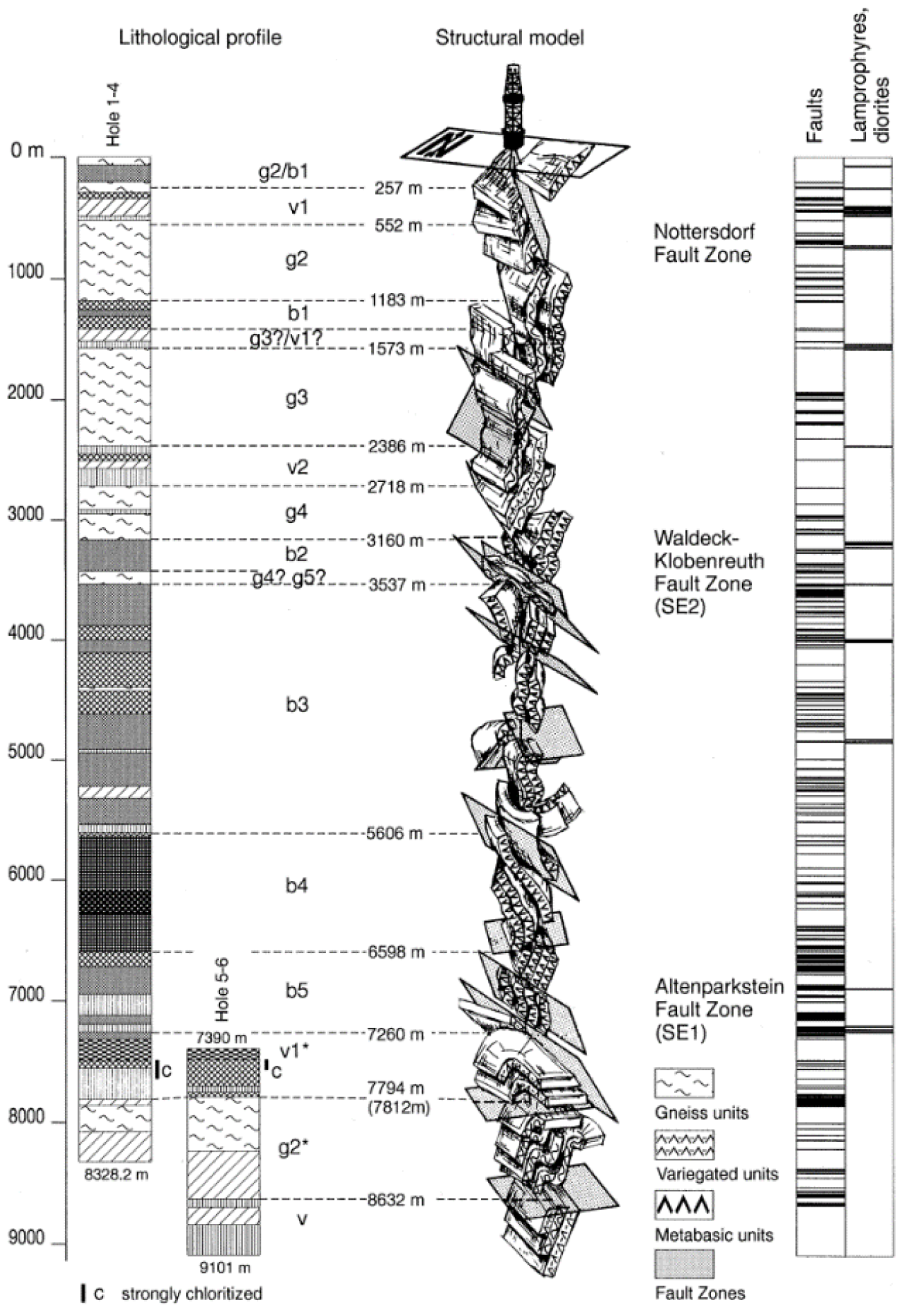
Studies have shown that multiple deep wells have encountered wellbore instability problems under different complex geological conditions. For instance, in the SG3 well, formations below 8000 m are predominantly composed of biotite-gneiss with well-developed fractures, resulting in extremely complex geological conditions and frequent occurrences of instability [3]. Similarly, as shown in Figure 1, in the KTB well, sections at 6850–7300 m, 7490 m, and 7523 m exhibited abundant altered amphibolite and chlorite, leading to numerous weak planes in the formation that easily triggered breakouts. This well was ultimately drilled to a total depth of 9101 m [4,5]. Additionally, when the Jida-4 well penetrated the Sumsar Formation and the Hanabad-Rishton Formation, it encountered fragmented and fractured strata, causing severe breakouts and instability, with a final drilling depth of 6596 m [6,7]. Likewise, the Kuff well, while drilling through the Fiqa, Halul, and Thamama formations, encountered vuggy and fractured carbonate rocks, which also led to serious wellbore collapse and breakouts. The well was finally drilled to a depth of 6408 m [8,9].
To summarize, wellbore instability is a common issue in ultra-deep wells. When facing severe and complex instability, sidetracking often serves as a solution. Recent international research offers new insights: Marc Willerth et al. [10] quantified the economic costs of unplanned sidetracking, revealing that equipment loss and geological issues are primary triggers, emphasizing the importance of prevention for cost savings; Elshan Ismayilov’s [11] research indicates that engineering optimizations like dual-casing sidetracking, wellbore calibration, and ECD control can reduce non-productive time in slim-hole sidetracking; John Campbell et al. [12] improved the reliability of open-hole sidetracking through tool enhancements and innovative application of anchored cement systems; Marsel Akhmetov et al. [13] successfully executed sidetracking in eight wells by adopting rotary steerable systems (RSSs) and performance drilling motors (PDM) to optimize sidetracking initiation techniques, significantly boosting production and reducing non-productive time. These achievements provide valuable technical references for the sidetracking operations in the Deep Earth TK-1 well.
In addition to the engineering-oriented studies mentioned above, substantial progress has been made in numerical modeling of wellbore stability. The evolution of numerical models can be broadly categorized into four types based on their constitutive formulations and physical process coverage. The elastic model is the most fundamental approach. Assuming linear elastic behavior of rock, it solves the stress distribution around a circular hole subject to far-field in situ stresses [14,15]. Elastic models provide a computationally efficient first-order approximation for evaluating stress concentration and are widely adopted as the baseline for wellbore stability analysis. However, elastic models cannot capture plastic yielding and post-failure behavior near the wellbore. To address this limitation, elastoplastic models have been developed by incorporating failure criteria (e.g., Mohr–Coulomb, Drucker–Prager) and plastic flow rules, allowing for the simulation of plastic zone evolution and breakout growth [16]. The transition from elastic to elastoplastic formulations represents a major advancement in reproducing realistic wellbore failure geometries.
Recognizing that wellbore stability in deep and ultra-deep formations is influenced by multiple physical fields, thermo–hydro–mechanical (THM) coupled models have been proposed. These models integrate pore pressure diffusion, thermal stress induced by temperature gradients between drilling fluid and formation, and mechanical deformation. Fully coupled THM formulations, as well as thermo–poroelastic–plastic approaches, have been successfully applied to predict time-dependent wellbore behavior in high-temperature and high-pressure environments [17]. More recently, multi-field coupling has been extended to include chemical effects (THMC models), particularly for chemically active shale formations [18,19]. These advanced models offer high predictive accuracy but require extensive input parameters and significant computational resources.
Another emerging direction is the investigation of multi-well interference. While wellbore stability analysis has traditionally focused on isolated single wellbores, field operations increasingly involve adjacent wells in densely drilled fields, sidetracking from existing wellbore, and infill drilling. Previous studies on multi-well stress interaction have mainly addressed fracture propagation between parent and child wells in unconventional reservoirs [20]. However, systematic numerical investigations of stress interference between a collapsed original wellbore and a sidetracked wellbore—particularly the quantification of the “safe zone” along the maximum horizontal principal stress direction and its dependence on well spacing and breakout geometry—remain limited in the existing literature.
The present study fills this gap by establishing single- and dual-well numerical models using the finite element method. Targeting the specific ultra-deep, high-stress carbonate formation of the TK-1 well (fourth drilling section), this work quantifies the stress redistribution before and after the main wellbore collapse, identifies the “safe zone” for sidetracking along the maximum horizontal principal stress direction, and systematically analyzes the effects of well spacing and major-/minor-axis enlargement ratios of the collapsed wellbore on the stability of the sidetracked wellbore. Compared with advanced THM or elastoplastic formulations, the present elastic model offers a computationally efficient and physically transparent first-order approximation, which is particularly suitable for guiding field sidetracking designs where rapid parametric analysis is required. The findings provide direct theoretical support for optimizing sidetracking direction, controlling well spacing within the safe zone, and leveraging beneficial stress relief from the main wellbore collapse in ultra-deep well-drilling operations.
This study focuses on the wellbore instability encountered in the fourth drilling section of the TK-1 well. By integrating field operational parameters and employing finite element simulation, it analyzes the variations in stress field distribution before and after the instability of the main wellbore, as well as the stress interference effects on the sidetracked wellbore. The collapse mechanisms of both the main and sidetracked wellbores are elucidated, thereby providing a scientific theoretical basis for optimizing the drilling program.

2. Deep Earth TK-1 Well Multi-Bore Quadruple Drilling Operations

2.1. Geological Characteristics and Wellbore Trajectory

The drilling operations in the ultra-deep well TK-1 face extreme and harsh wellbore conditions characterized by ultra-deep depth, ultra-high temperature, ultra-high pressure, and high sulfur content—often summarized as the “three ultras and one high” [21,22,23]. This makes the well prone to complex downhole situations such as wellbore instability.
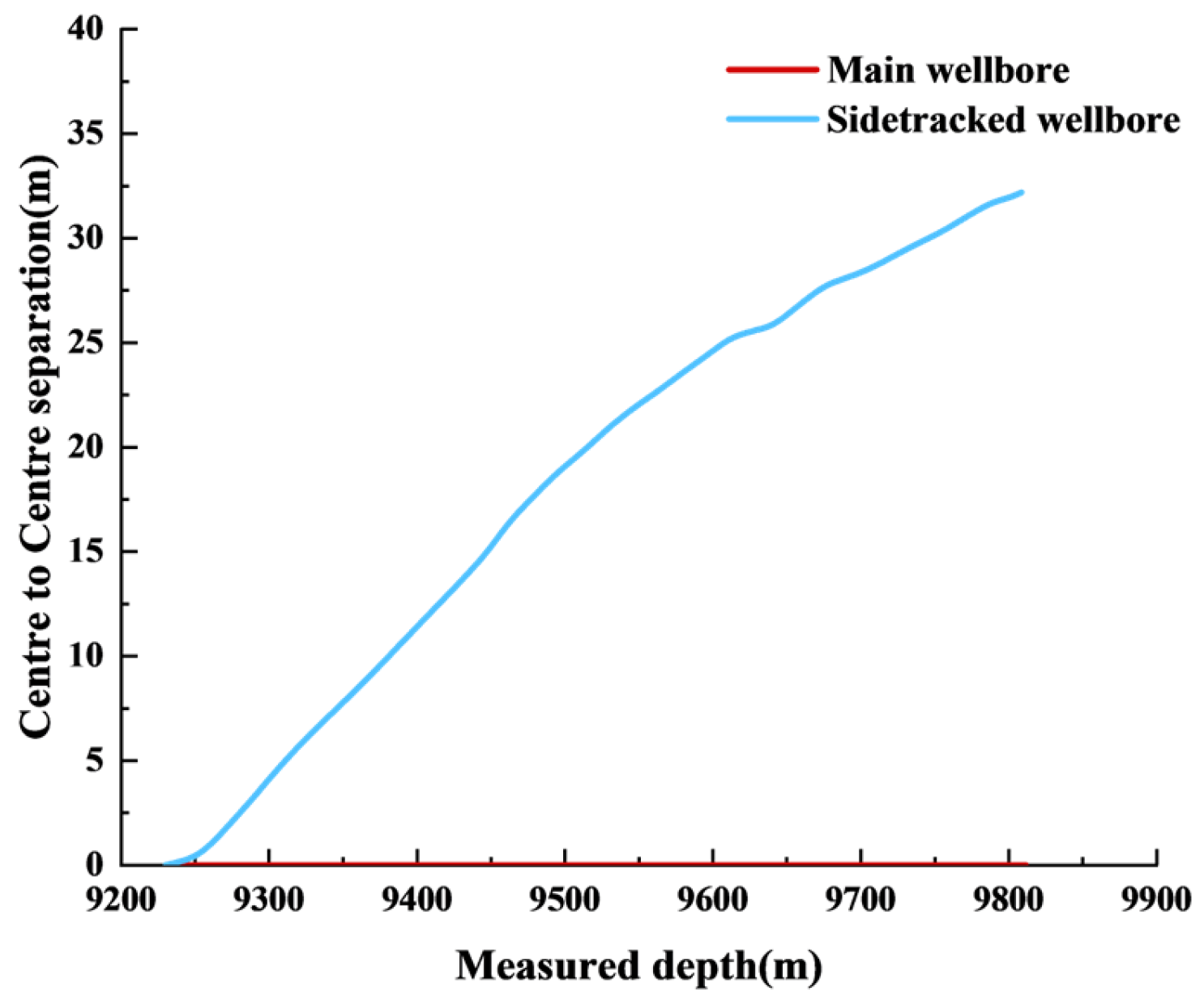
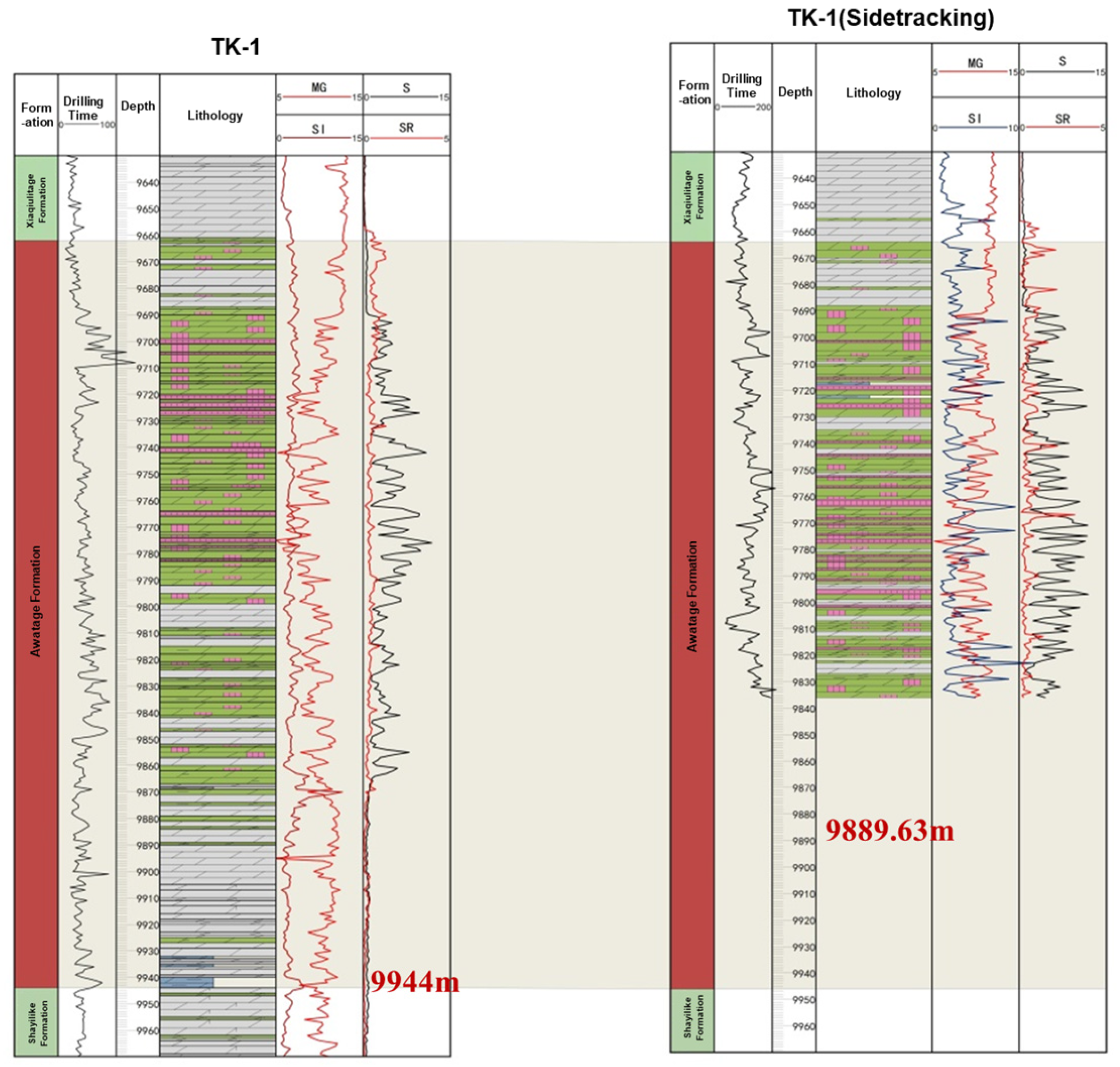
During the fourth drilling phase, the main borehole experienced severe instability, producing abundant cavings and leading to drill string failure. A sidetrack was initiated at ~9230 m from the main borehole wall, drilled along the maximum horizontal principal stress direction with inclination < 4.5° (Figure 2). The final center-to-center distance between the two boreholes reached 32.9 m (Figure 3).

2.2. Comparison of Drilling Parameters and Cuttings Characteristics

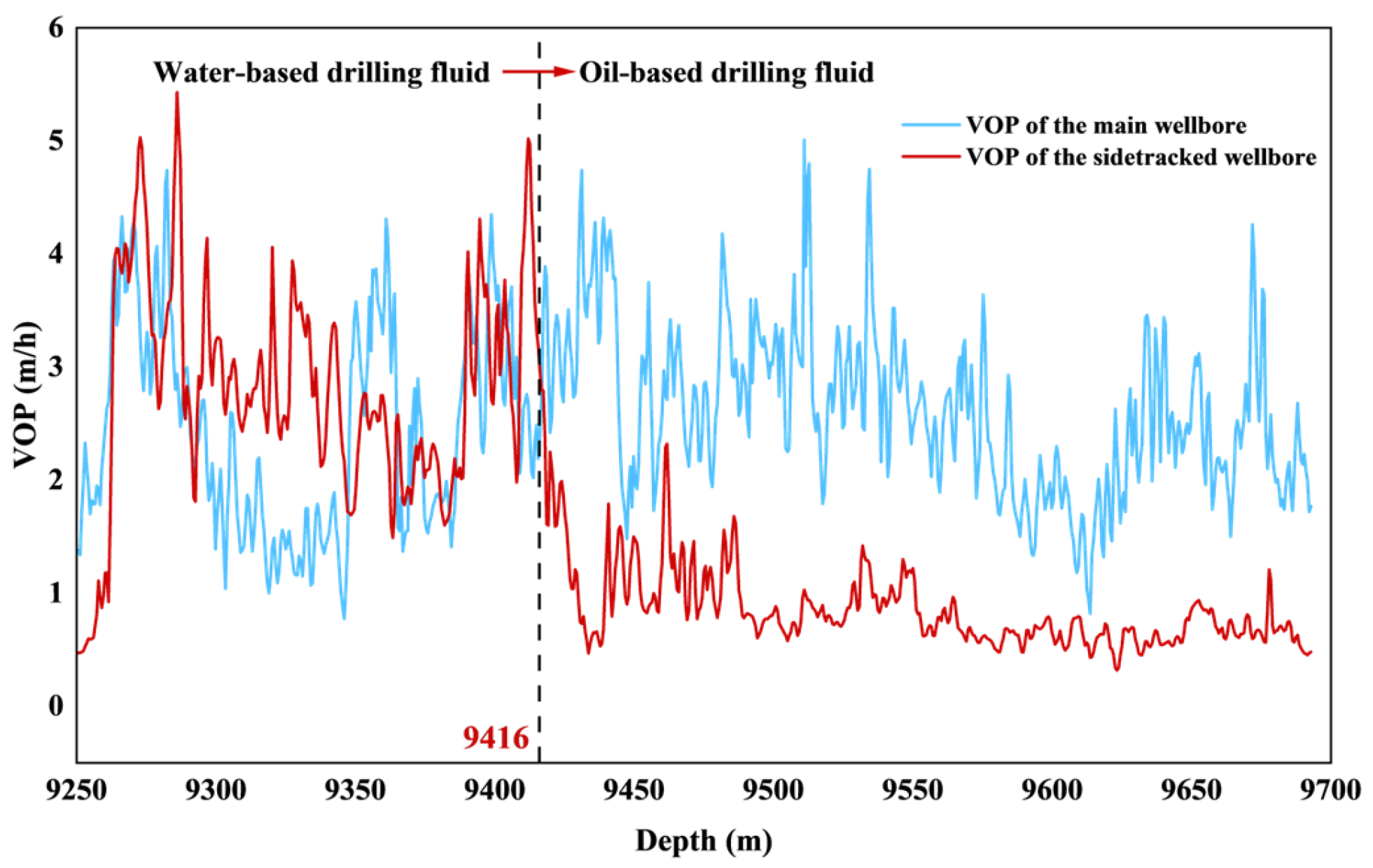
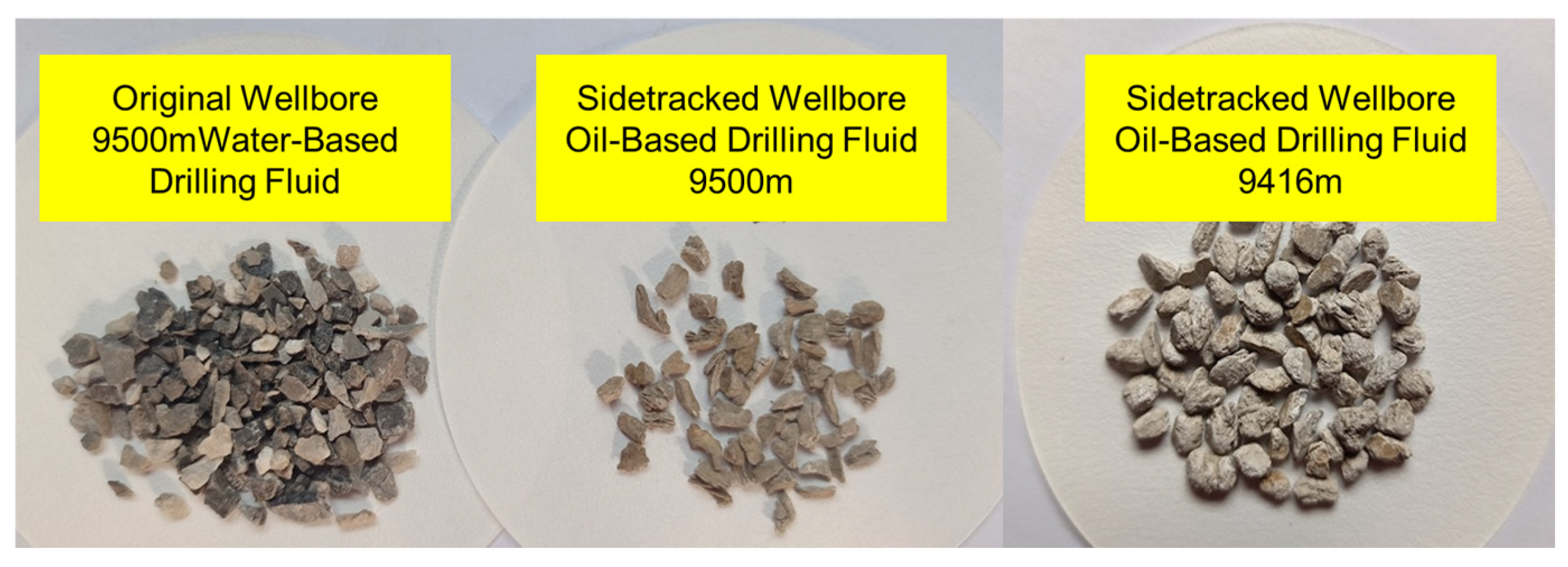
The original borehole used water-based mud (average ROP 2.05 m/h). The sidetracked borehole used water-based mud to 9416 m then switched to oil-based mud. Drilling efficiency deteriorated significantly after the switch (mechanical ROP fell from 2.54 to 0.65 m/h; Figure 4). Cuttings from the original borehole were mostly fragmented (<5% cleavage surfaces), whereas sidetrack cuttings exhibited cleavage features in >60% of samples (Figure 5).

2.3. Torque and Cavings Situation

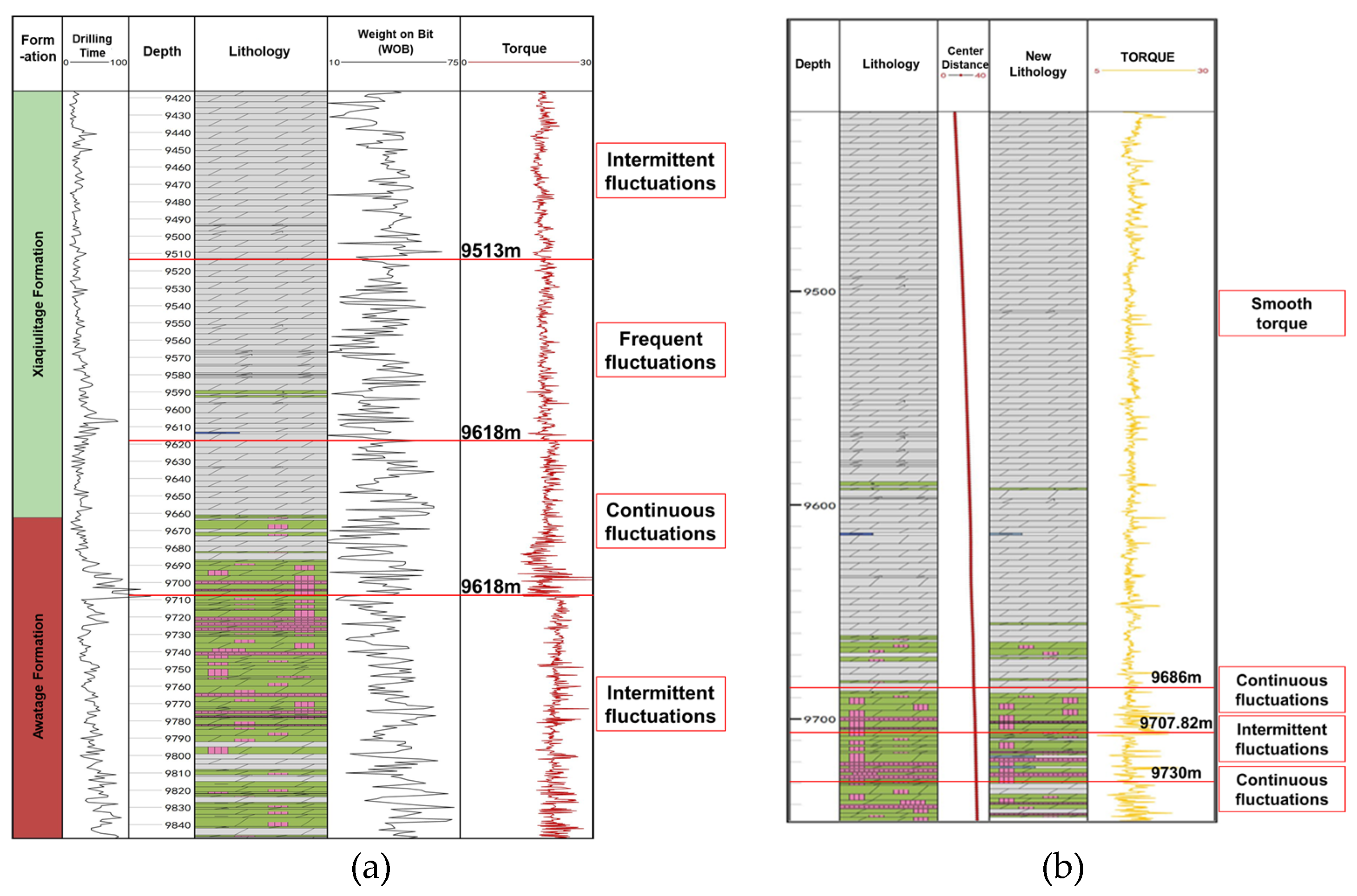
Torque fluctuations in the original borehole were frequent and sustained (Figure 6a). In the sidetracked borehole, torque was largely stable at shallower depths but became fluctuating beyond ~9686 m (Figure 6b).
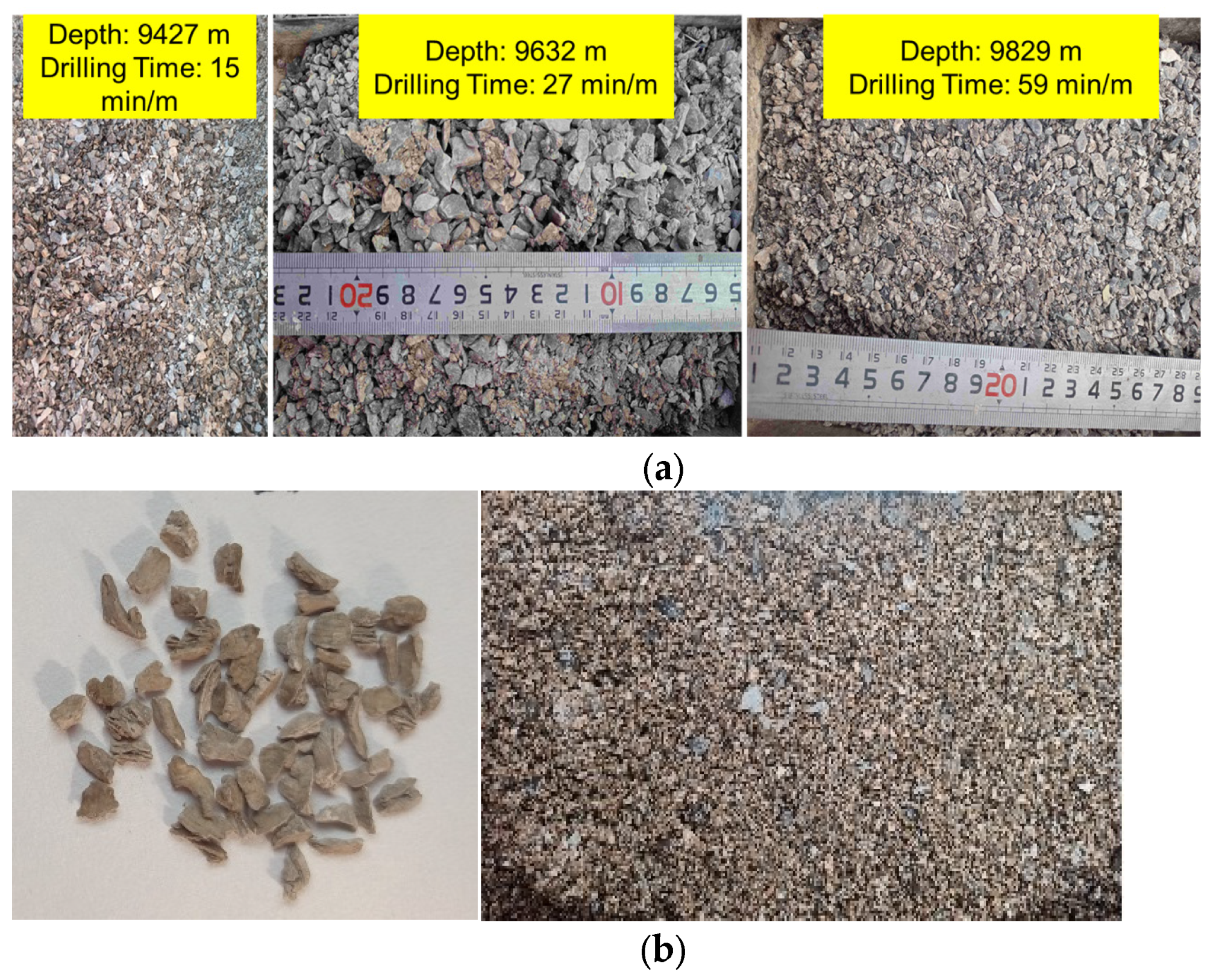
Analysis of field-cuttings returns revealed that the original wellbore predominantly yielded fragmented cuttings. Except for isolated depth intervals exhibiting minimal cavings, blocky and flaky cavings constituted 10–40% of the total cuttings volume as shown in Figure 7a. In contrast, the sidetracked wellbore primarily produced cleavage-featured cuttings, demonstrating the superior representative nature of the formations (Figure 7b). Throughout this interval, excluding reaming sections and sporadic zones, cavings remained minimal overall, with detailed data compiled in Table 1.

2.4. Analysis of Logging Results from Sidetracked Wellbore

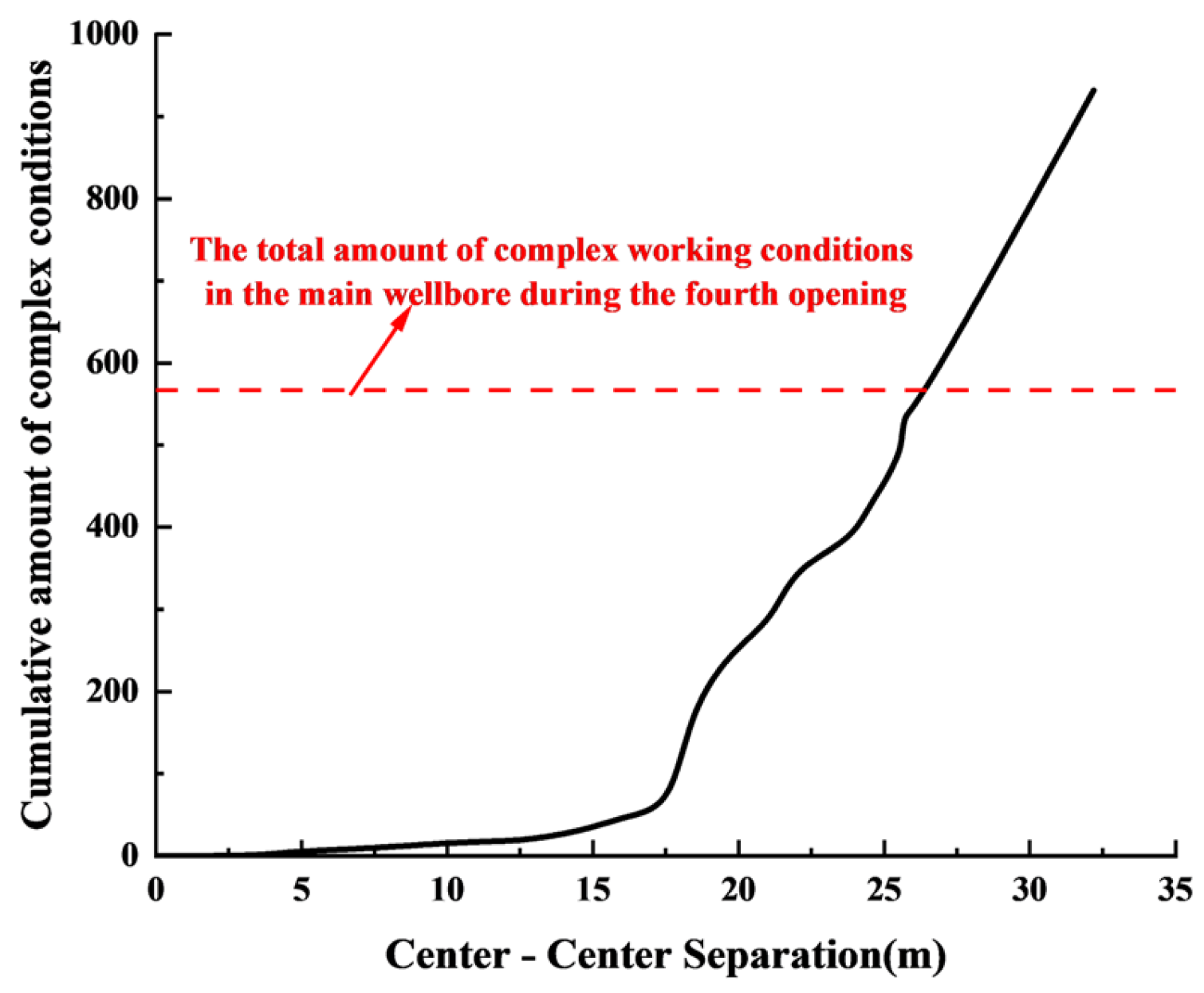
Caliper logs show five intervals: (1) 7856–9000 m: stable; (2) 9000–9230 m: small enlargement; (3) 9230–9416 m (water-based sidetrack): much lower enlargement than original borehole, confirming stress relief; (4) 9416–9700 m (oil-based): enlargement larger but still below original; (5) 9700–9889 m: good stability. Overall, sidetracking initially progressed smoothly, but as the well spacing increased, instability events (stuck pipe, hanging, top drive stalling) and cavings returns grew. Figure 8 shows the trend: complex conditions remain low at small spacings but rise markedly beyond a certain distance. Furthermore, during the sidetracking process, each drilling run exhibited a typical characteristic in torque fluctuation. When a new drill bit is first run in the hole, the drilling torque is relatively stable; after a certain period, torque fluctuation increases, which is analyzed as being an overall, namely, the sidetracked wellbore maintained stability and smooth drilling initially. However, as operations progressed, the distance between the new and original wellbores gradually exceeded the stress influence range. Subsequently, wellbore instability issues emerged, including stuck pipe, hanging, and top drive stalling, accompanied by a significant amount of cuttings returns. Figure 8, based on statistics of complex conditions in field sidetracked wellbores, reveals this trend. Therefore, numerical simulation is essential to investigate the influence of the mechanism of the main wellbore on the stability of the sidetracked wellbore, providing support for optimizing drilling design.
Due to minor bit damage leading to the loss of mechanical balance, drill string instability was induced, thus causing significant torque fluctuations.

3. Wellbore Stability Analysis in Single-Well Model

3.1. Single-Well Modeling and Solution

In this study, the fourth drilling section of the TK-1 well consists mainly of tight carbonate rocks with high brittleness. Under the short-term drilling conditions considered in this study, time-dependent effects are negligible, and prior to failure the rock primarily deforms elastically. So, the rock is treated as a homogeneous, isotropic, and linearly elastic material. Given the exclusion of time-dependent effects, the analysis is confined to static elasticity theory. Consequently, the solid mechanics module in COMSOL Multiphysics® v. 6.4 is employed to numerically solve the problem via the finite element method, which proves suitable for addressing this linear problem [24,25,26].
1.
Initial and Boundary Conditions
The model’s initial state is assumed null, meaning that at the simulation onset, all variables remain static or in equilibrium states.
Within the scope of this study, the outer boundaries are defined as formation boundaries and remain constant throughout the investigation period. Along the X-axis direction, the model is subjected to the maximum horizontal in situ stress, while the minimum horizontal in situ stress acts along the Y-axis direction.
2.
Meshing
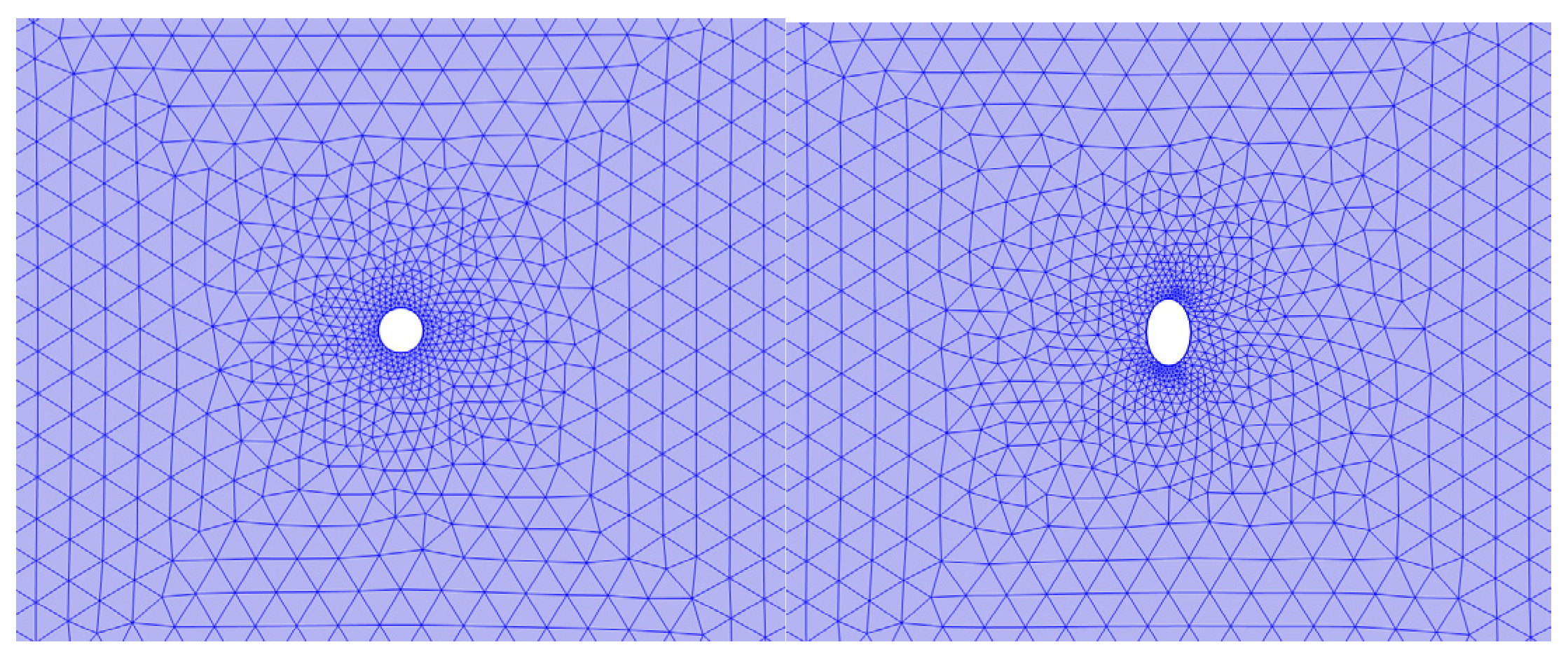
The model employs a free triangular mesh for discretization. To accurately capture the stress field distribution around the wellbore, mesh refinement is implemented in the near-wellbore region, as illustrated in Figure 9.
3.
Applicability and limitations of the 2D plane-strain elastic model.
The sidetracked wellbore in the TK-1 well has an inclination angle below 4.5° (see Section 2.1), making it nearly vertical. For vertical or near-vertical wellbores subjected to horizontal principal stresses, the stress distribution around the wellbore is essentially independent of the vertical coordinate, and the plane-strain condition is a standard and well-validated approximation in wellbore mechanics. Therefore, a 2D cross-section perpendicular to the wellbore axis suffices to capture the primary stress concentration and relief mechanisms. Previous work [27] shows that the 2D solution is the asymptote of the 3D solution, further validating the applicability of the 2D model for stress analysis away from discontinuities.
The linear elastic assumption, as justified above, is appropriate for the tight, brittle carbonate rocks of the fourth drilling section under short-term drilling conditions prior to failure. Time-dependent effects and thermal transients are negligible in this low-permeability formation. Due to the extremely low permeability, pore pressure diffusion is negligible over the short drilling exposure time; consequently, poroelastic effects on the stress field are not considered.
However, the following limitations should be recognized: (1) the model does not account for formation heterogeneity or well deviation beyond 5°; (2) thermo–hydro–mechanical (THM) coupling effects, which may become significant in highly permeable, ductile, or high-temperature formations, are omitted; (3) the elastic model cannot capture plastic-yielding or post-failure deformation. For the specific conditions of the TK-1 well, these simplifications are acceptable and provide a first-order quantitative understanding of stress redistribution. For highly deviated wells or long-term exposure, a full 3D or THM analysis would be required. Based on field data from the TK-1 primary wellbore and field geomechanical parameters (as shown in Table 2), a single-well model was constructed.
4.
Basic Parameters.

3.2. Pre-Failure Wellbore Stress Distribution

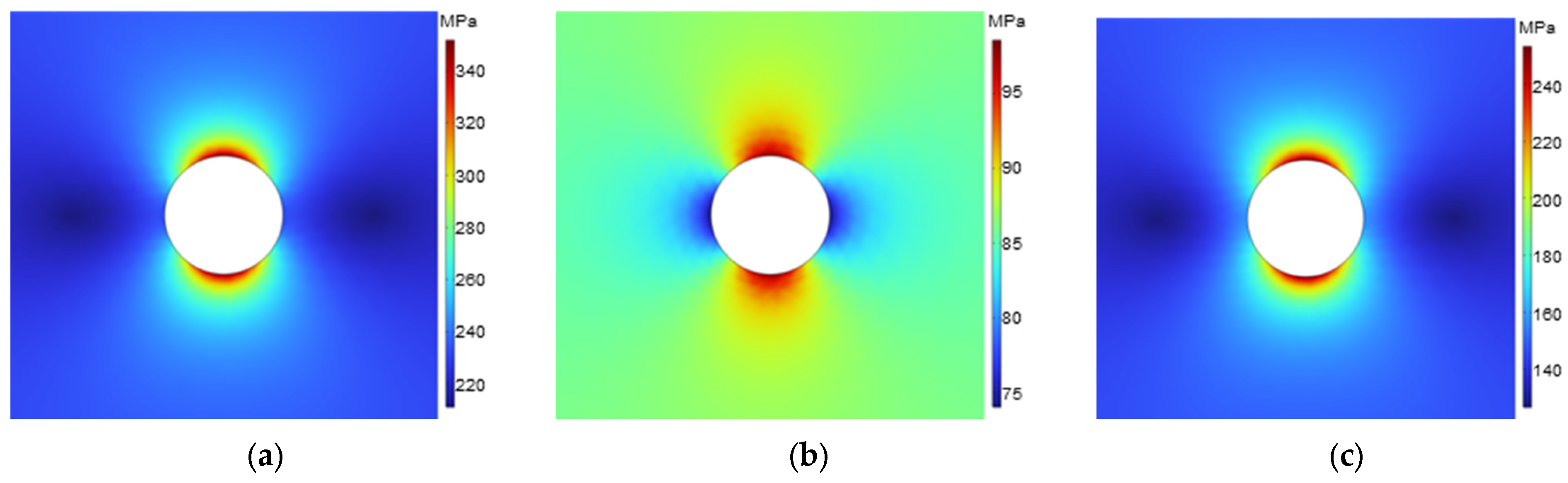
Contour maps of maximum principal stress, minimum principal stress, and principal stress difference distribution around the wellbore are plotted in Figure 10. The results indicate stress concentration along the direction of the minimum horizontal in situ stress (Y-axis), whereas stress relief occurs along the maximum horizontal in situ stress direction (X-axis). The peak stress difference around the wellbore reaches 256.27 MPa.
In response to the aforementioned phenomena, in-depth analysis is conducted on the stress components along both principal directions around the wellbore.
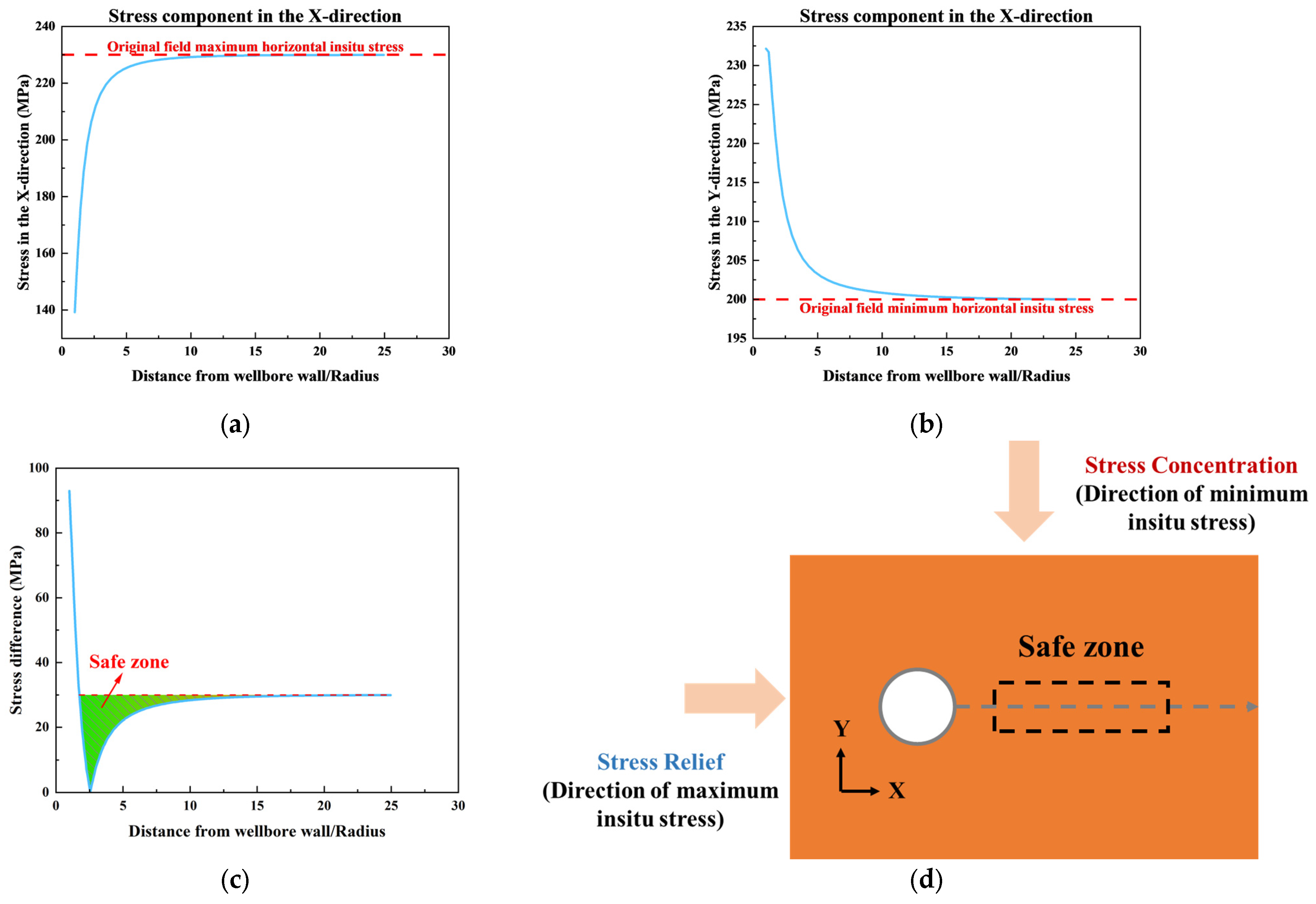
As shown in Figure 11, due to the formation of the main wellbore, stress release occurs along the direction of the maximum horizontal in situ stress in the formation—manifested as a stress level lower than the original in situ stress in the X-direction (as shown in Figure 11a)—while stress concentration occurs in the Y-direction, where the stress exceeds the original in situ stress (as shown in Figure 11b). Due to the stress release in the direction of maximum in situ stress and the stress concentration in the direction of minimum in situ stress, an area with a differential stress lower than the original stress difference forms around the wellbore (as shown in Figure 11c), which is referred to as the “safe zone,” as illustrated in Figure 11d.
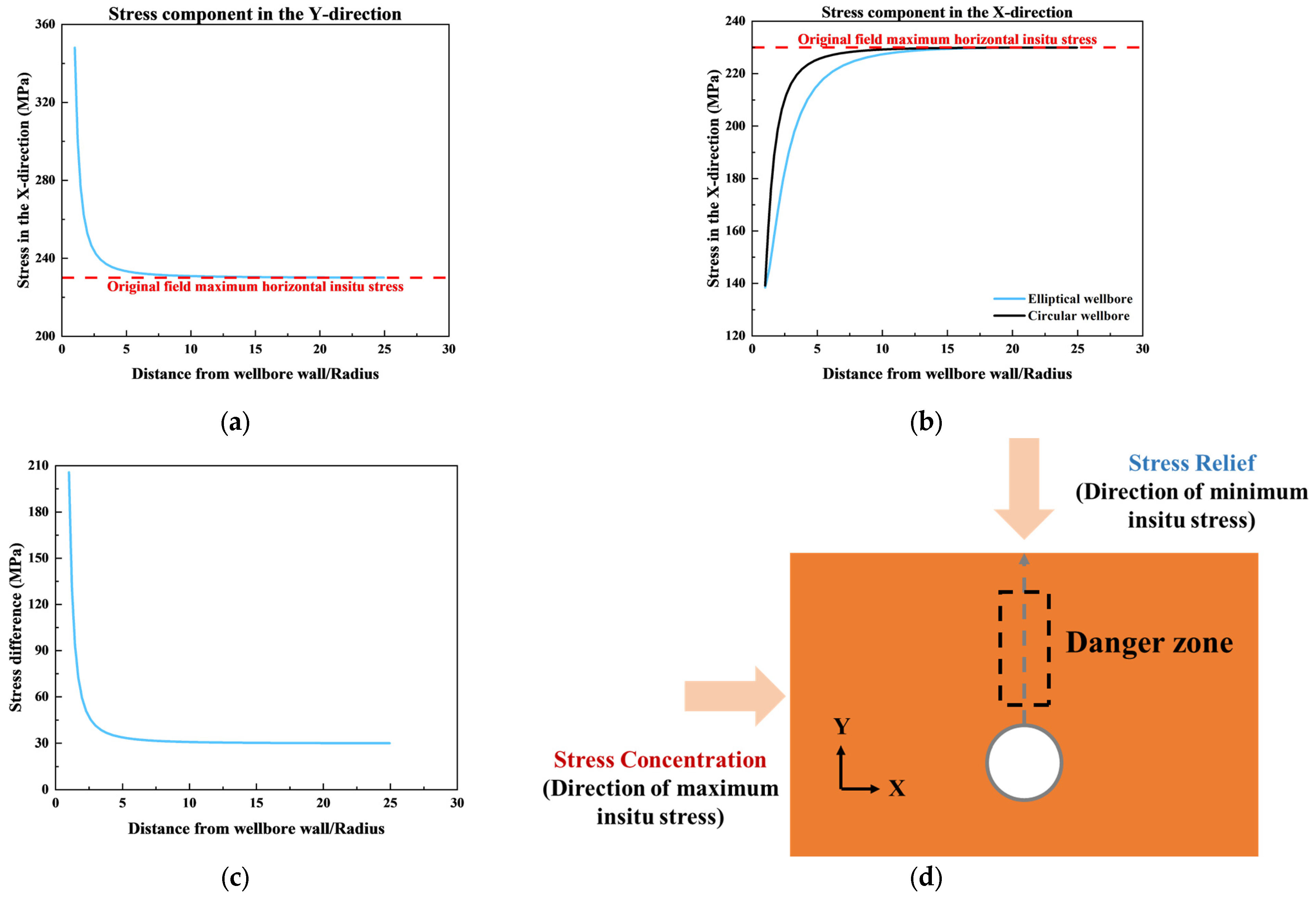
Conversely, along the direction of the minimum horizontal in situ stress in the formation, stress concentration occurs in the X-direction (with stress higher than the original in situ stress) (as shown in Figure 12a), while stress release occurs in the Y-direction (with stress lower than the original in situ stress) (as shown in Figure 12b). Due to the stress release in the direction of the minimum in situ stress and the stress concentration in the direction of the maximum in situ stress, the differential stress around the wellbore is generally greater than the original stress difference (as shown in Figure 12c). Directional drilling along the orientation of the minimum in situ stress is more hazardous, as shown in Figure 12d.

3.3. Post-Failure Wellbore Stress Distribution

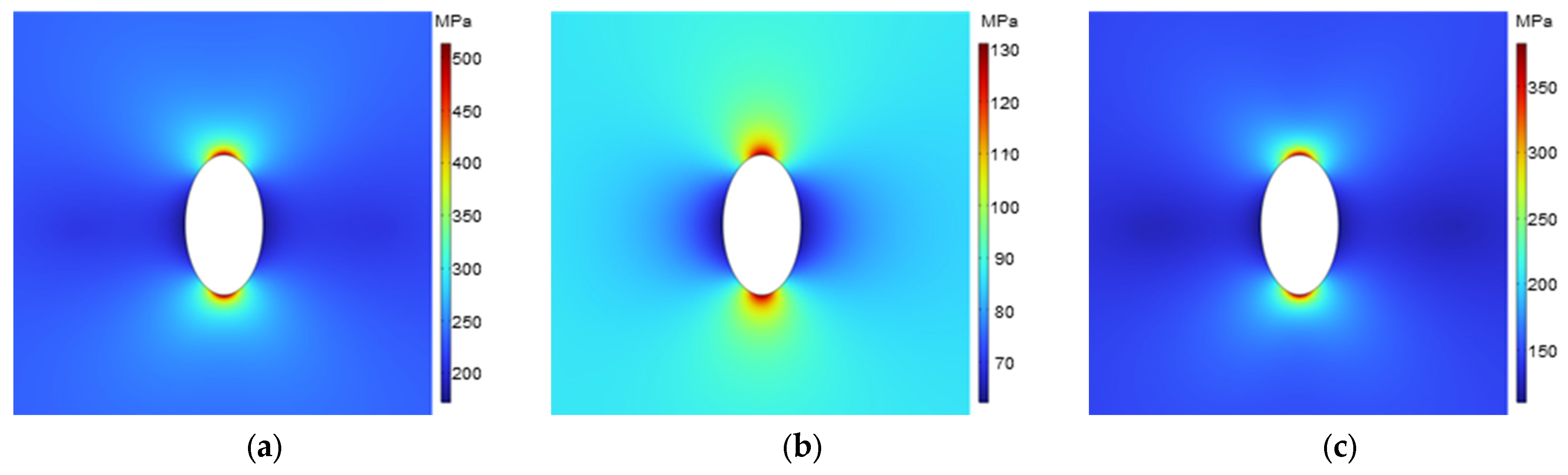
Following the wellbore collapse, the primary wellbore deforms from a circular to an elliptical shape, specifically exhibiting an increase in the wellbore radius along the minimum principal stress orientation. Contour maps of the maximum principal stress, minimum principal stress, and principal stress difference distribution around the wellbore are illustrated in Figure 13.
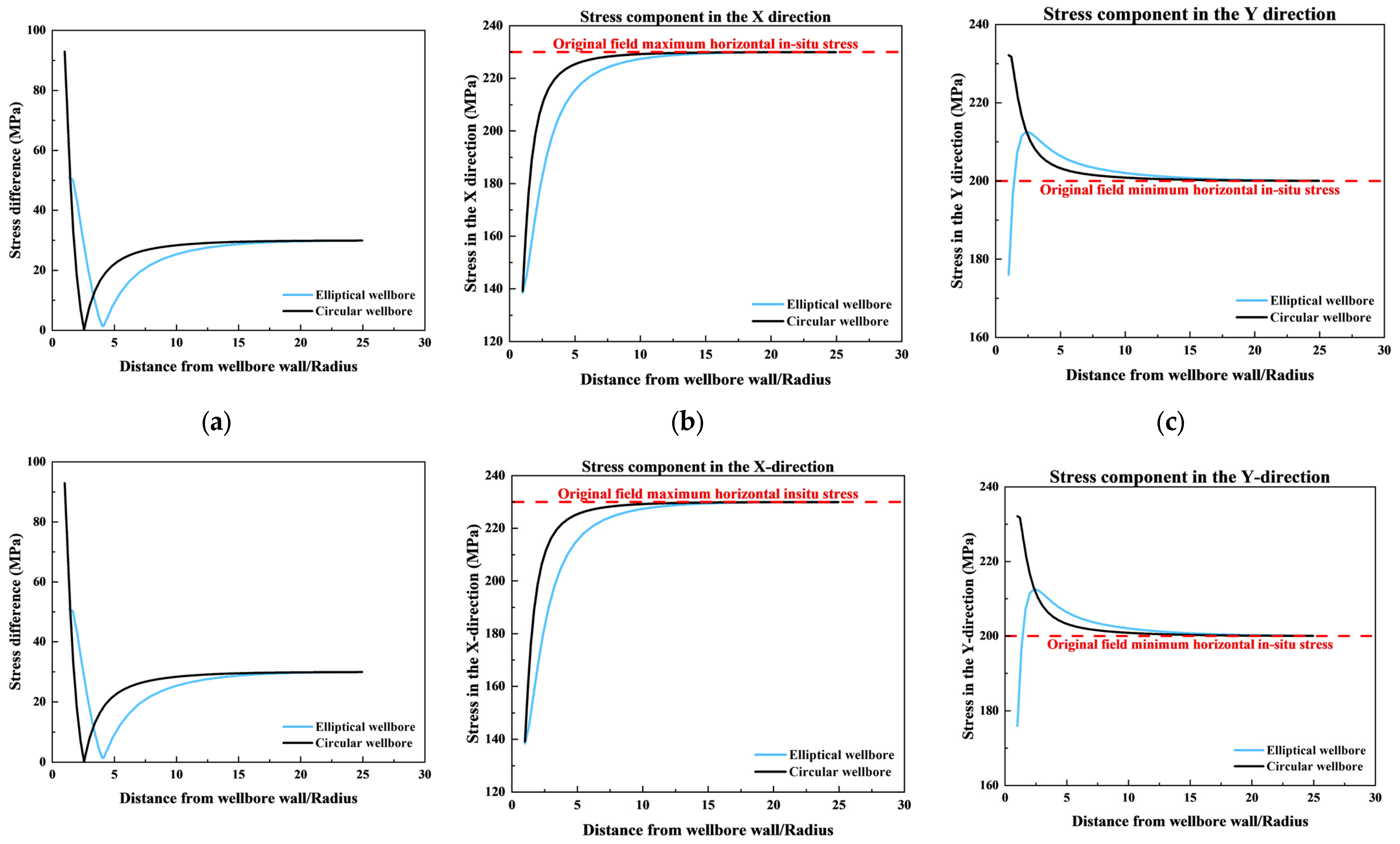
As shown in Figure 14, along the direction of the maximum horizontal in situ stress in the formation, after collapse, the maximum in situ stress is further released, manifested as a decrease in the principal stress along the short axis X-direction ( as shown in Figure 14a), while the minimum in situ stress becomes more concentrated, manifested as an increase in the principal stress along the short-axis Y-direction within a certain area ( as shown in Figure 14b). Therefore, the range of the “safe zone” increases (as shown in Figure 14c).
Simulation results demonstrate that a “safe zone” forms along the maximum horizontal in situ stress direction before and after wellbore collapse of the primary wellbore. Within this zone, sidetracking operations can be safely executed. However, as operations progress, the increasing inter-well distance eventually exceeds the safe zone boundaries. This leads to elevated differential stresses, triggering secondary wellbore instability—a phenomenon validated by field observations.
The single-well analysis above reveals that a “safe zone” exists along the maximum horizontal principal stress direction. However, in the field, the sidetracked wellbore is not isolated—it interacts with the pre-existing, collapsed main wellbore. To quantify this interaction and its dependence on well spacing and breakout geometry, a dual-well model is established in the following section.

4. Dual-Well Wellbore Stability Analysis

4.1. Dual-Well Modeling

Building upon the single-well model with unchanged geological parameters, boundary conditions, and fundamental assumptions, the primary wellbore is artificially deformed from circular to elliptical [28,29]. This elliptical approximation is based on caliper log observations from the collapsed TK-1 main wellbore, which show an approximately elliptical enlargement after failure, with the major axis aligned with the minimum horizontal principal stress direction.
The dual-well model employs a domain size that varies with the well spacing to maintain sufficient distance from the outer boundaries (typically >50 times the wellbore radius) and avoid boundary effects on the stress field. The left boundary is loaded with the maximum horizontal principal stress, and the lower boundary with the minimum horizontal principal stress. The upper and right boundaries are set as roller supports (zero normal displacement). Both the minor axis of the main wellbore and the radius of the sidetracked circular wellbore are 0.12 m. The main wellbore is artificially deformed into an elliptical shape according to specified major-axis and minor-axis enlargement ratios (see Section 4.2 and Section 4.3).
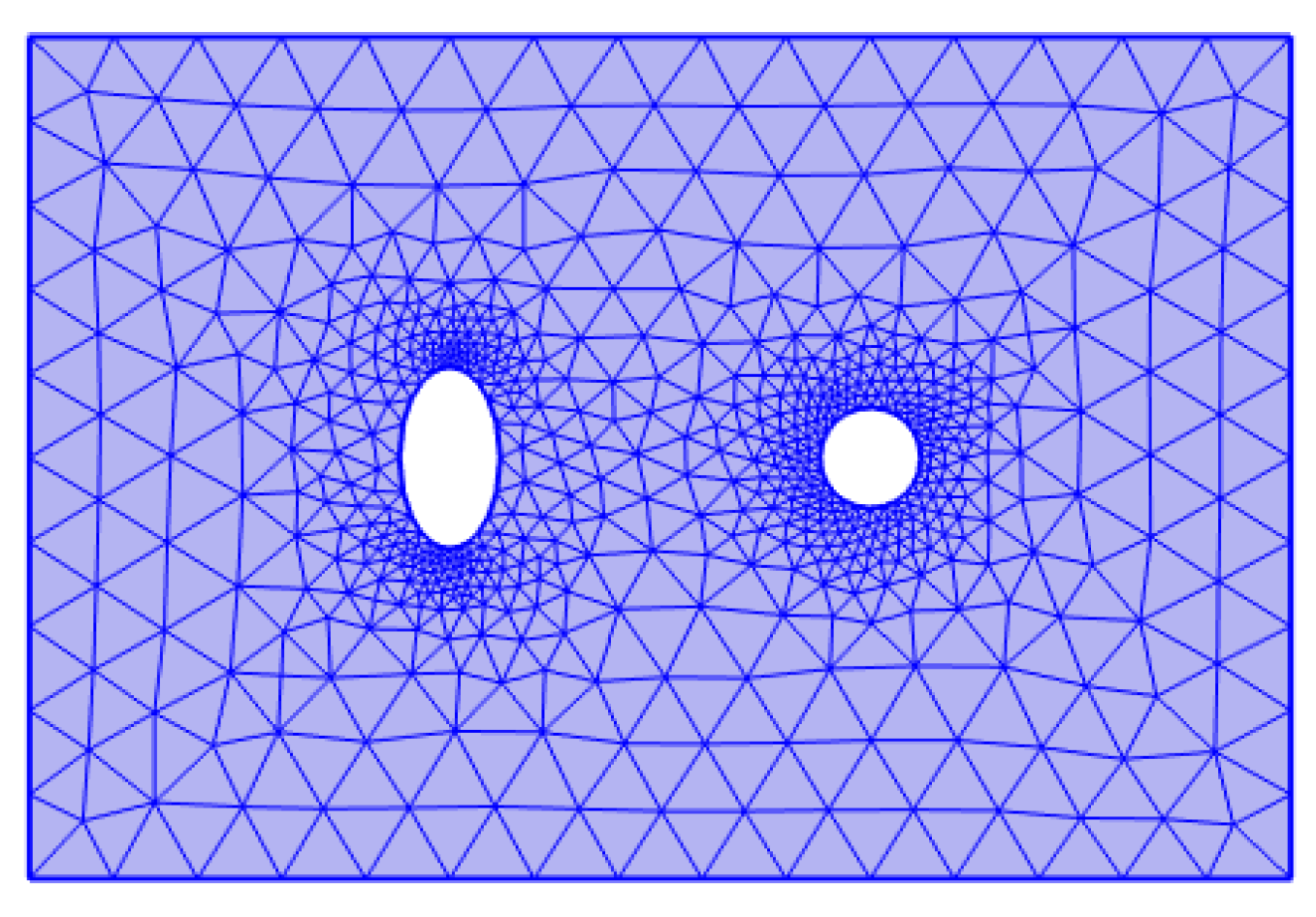
For meshing, a free triangular mesh is used. The near-wellbore regions are locally refined through COMSOL’s automatic adaptive mesh refinement to resolve high stress gradients, while the element size gradually increases toward the outer boundaries, as illustrated in Figure 15. This approach balances computational efficiency and numerical accuracy without requiring manually prescribed element sizes.

4.2. Post-Enlargement Wellbore Stress Distribution Along Major Axis

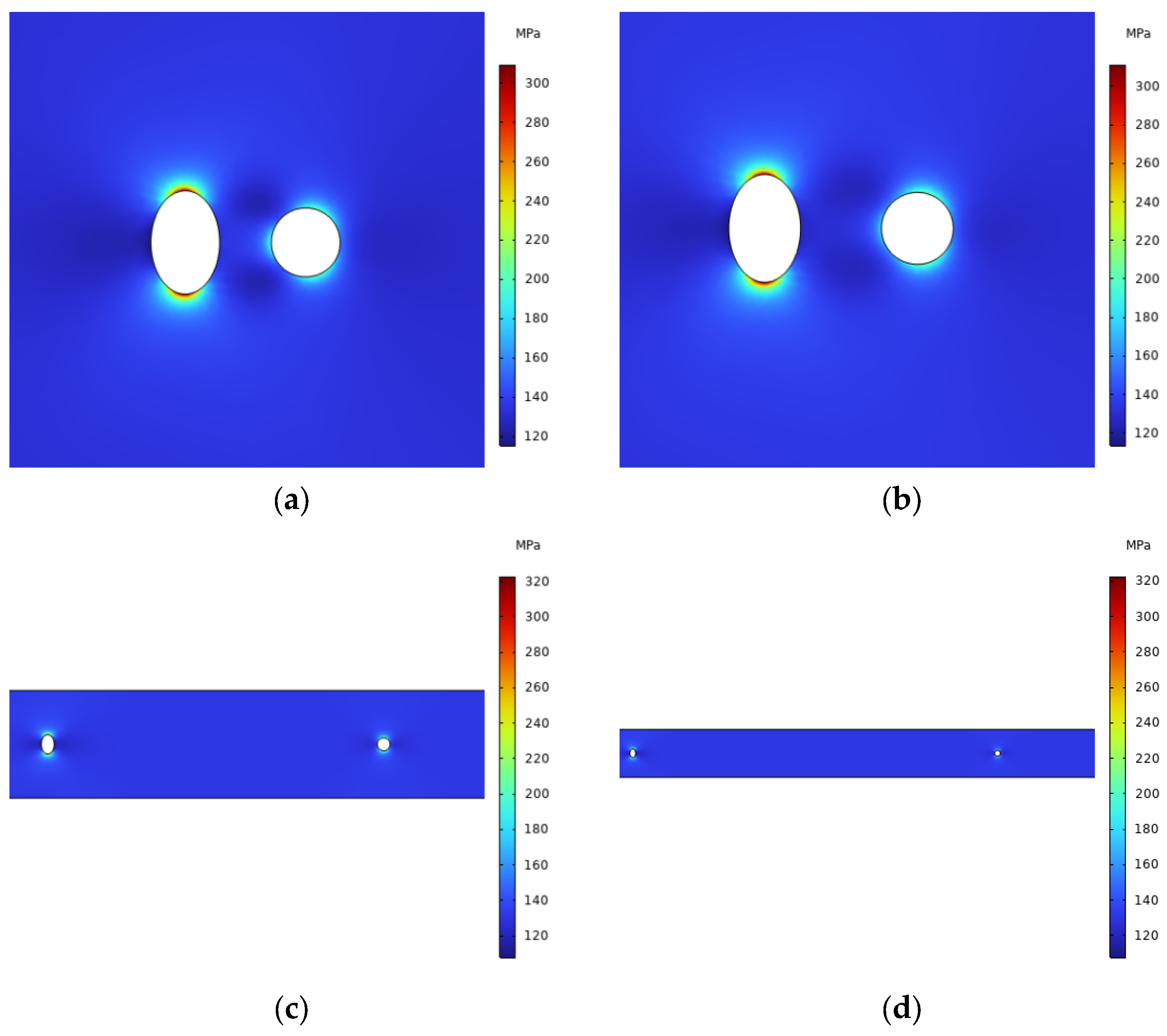
Under identical geological conditions, simulations are performed for wellbore stress distributions at major-axis enlargement rates of 50%, 80%, and 100% in the primary wellbore, while calculating the maximum stress difference around the sidetracked wellbore.
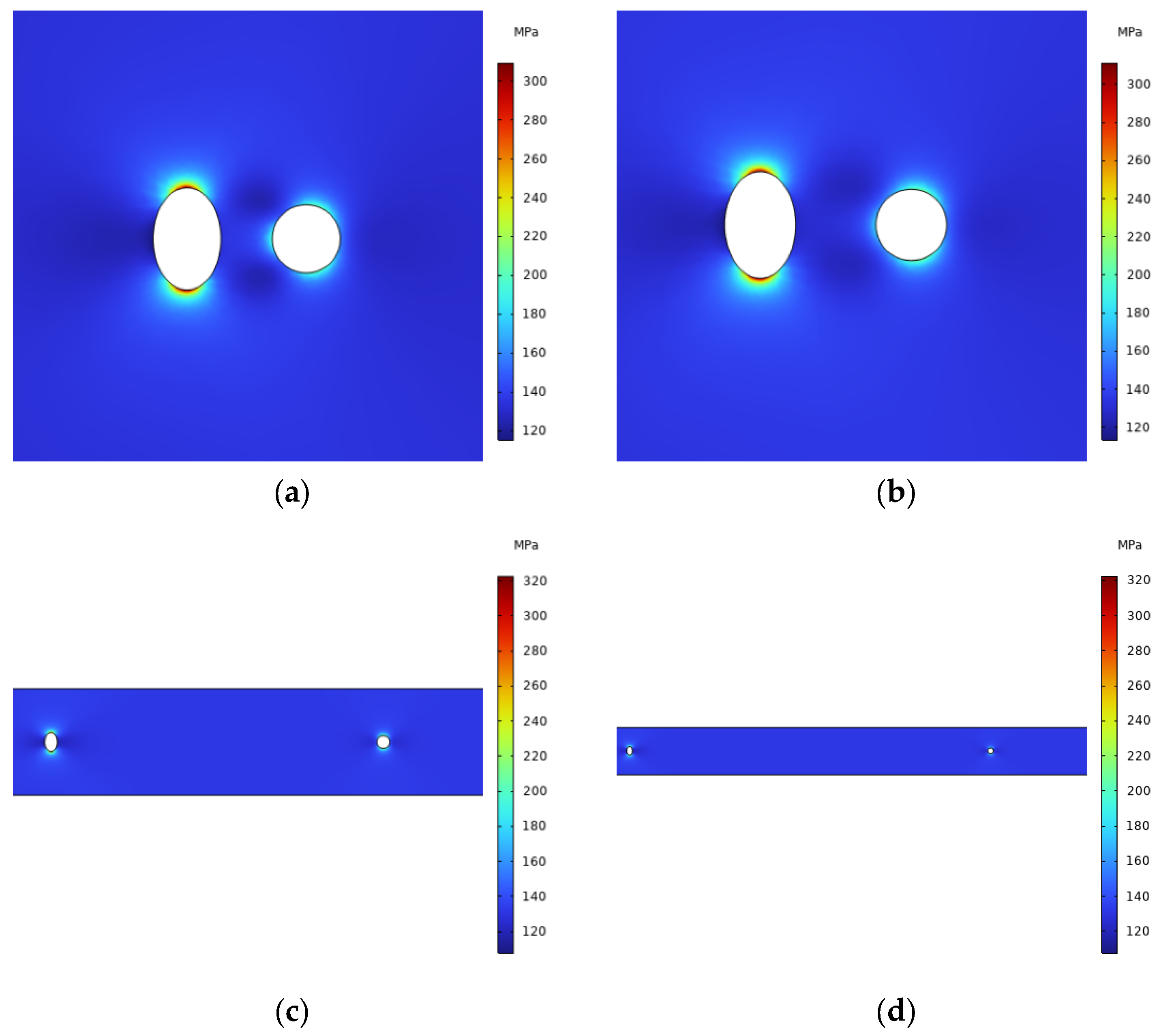
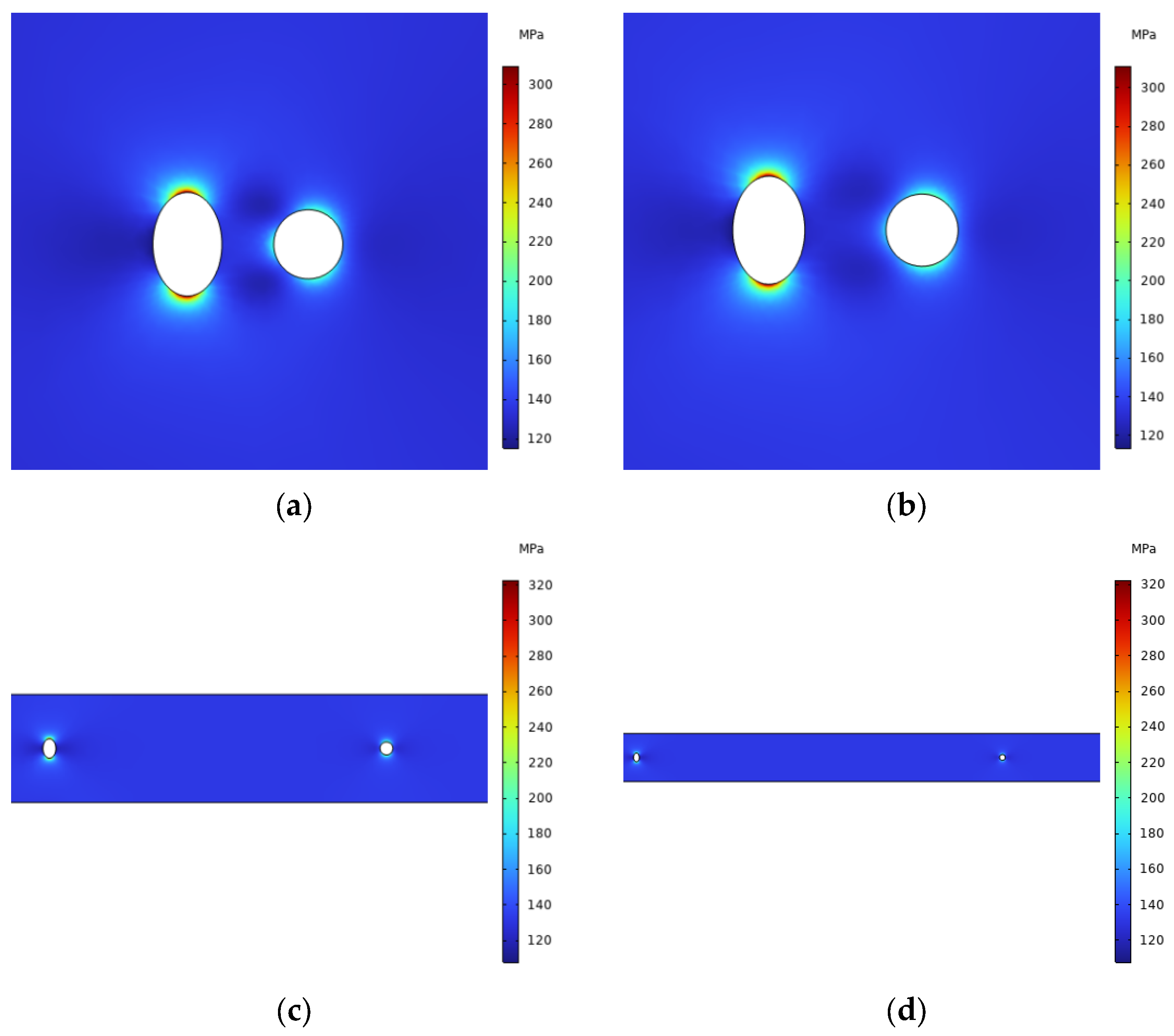
When the major-axis enlargement rate is 50% with a well-to-well distance of 2 m, the maximum stress difference around the sidetracked wellbore resembles that of the circular single-well model and subsequently stabilizes, as shown in Figure 16.
When the major-axis enlargement rate reaches 80% with a well-to-well distance of 3 m, the maximum stress difference around the sidetracked wellbore approximates that of the circular single-well model and subsequently stabilizes, as shown in Figure 17.
When the major-axis enlargement rate is 100% with a well-to-well distance of 3.5 m, the maximum stress difference around the sidetracked wellbore closely matches that of the circular single-well model and subsequently stabilizes, as shown in Figure 18.
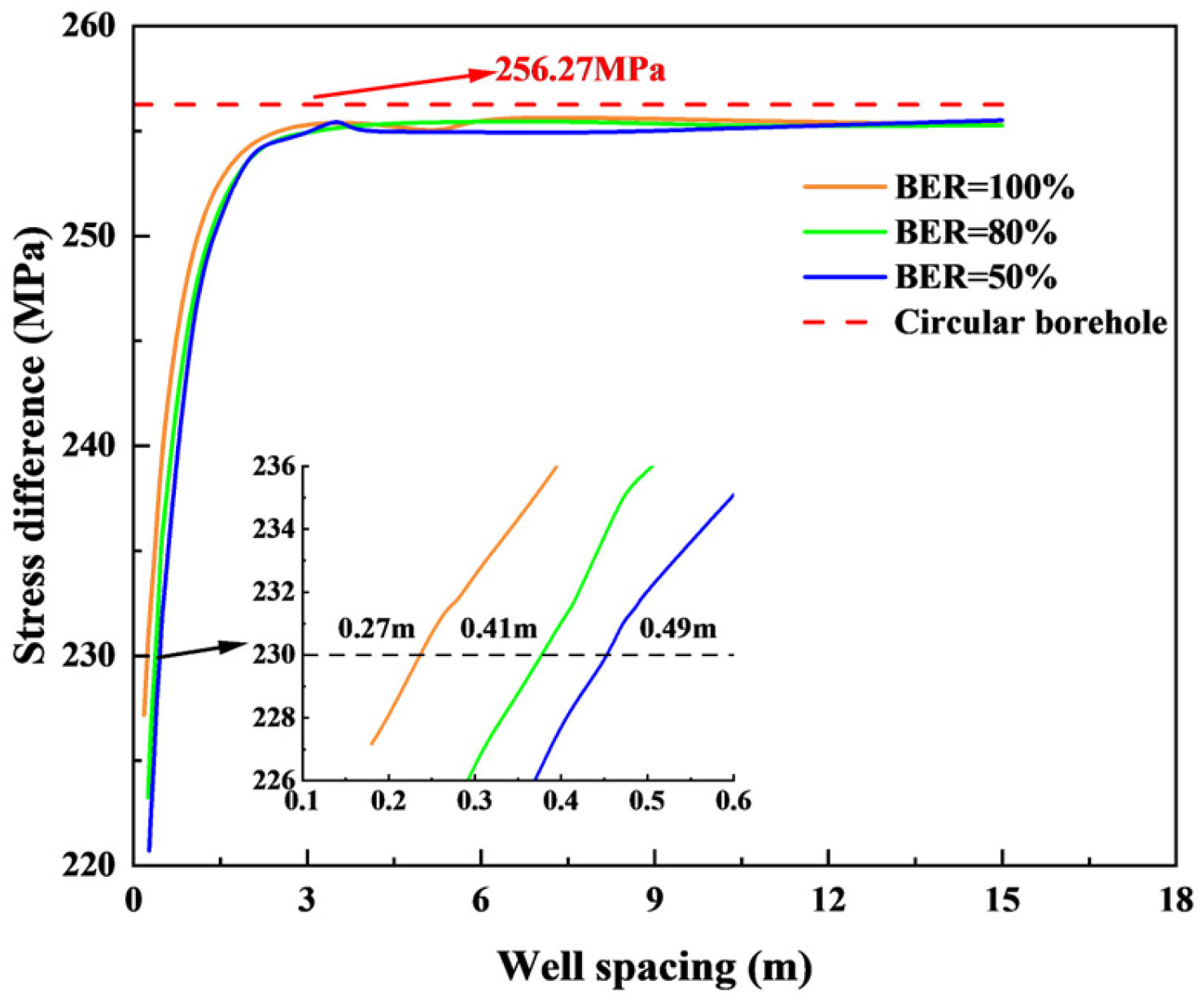
Under varying major-axis enlargement rates, correlation curves between the maximum stress difference around the sidetracked wellbore and well-to-well distance were constructed for different spacing configurations, as shown in Figure 19.
As shown in Figure 19, under varying major-axis enlargement rates of the primary wellbore, the stress difference around the sidetracked wellbore initially increases then stabilizes with increasing well-to-well distance, ultimately approaching the stress difference of the circular single-well model. Critically, higher enlargement rates reduce stress differences in the sidetracked wellbore at identical well spacings, thereby delaying wellbore instability. Concurrently, larger enlargement rates diminish the far-field stress influence radius, enabling a shorter well-to-well distance to achieve the baseline circular single-well stress difference. This phenomenon expands the extent of the “safe zone”, validating that increased enlargement rates enhance drilling safety margins.

4.3. Post-Enlargement Wellbore Stress Distribution Along Minor Axis

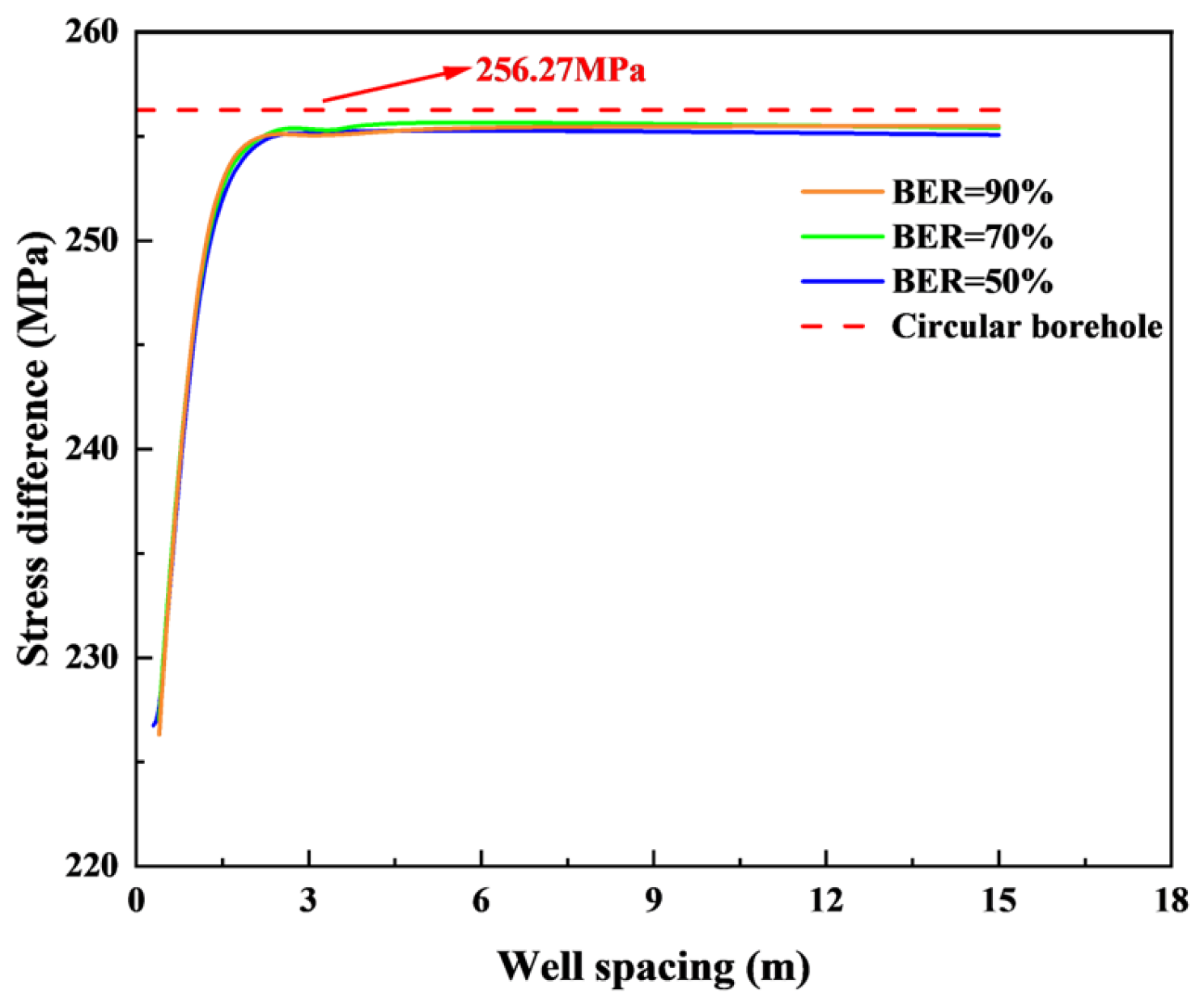
Under identical geological conditions, simulations were conducted for wellbore stress distributions with the primary wellbore’s major-axis enlargement rate fixed at 100% and minor-axis enlargement rates at 50%, 70%, and 90% while calculating the maximum stress difference around the sidetracked wellbore.
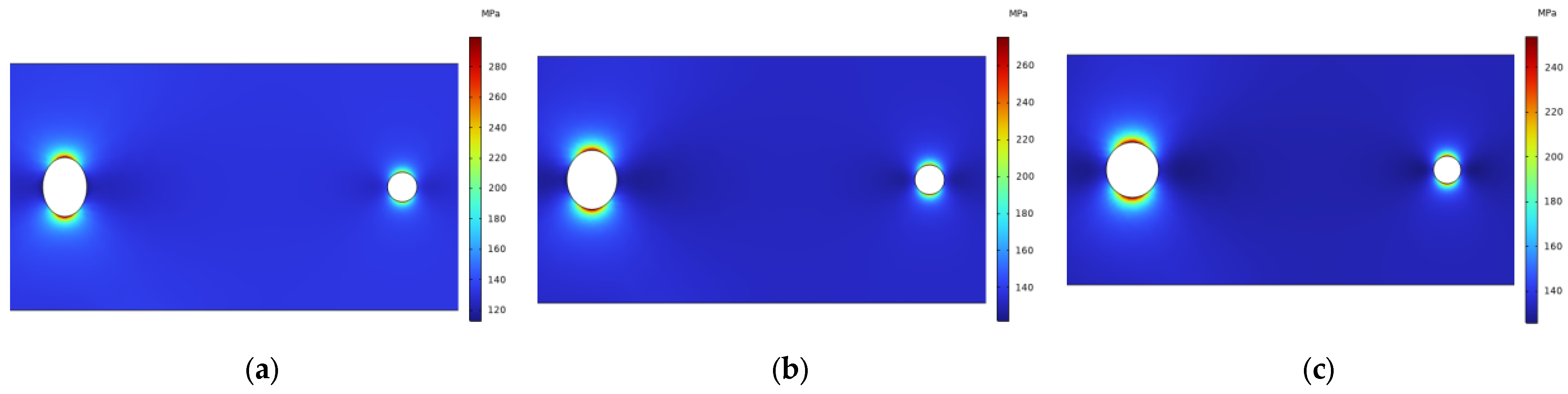
Simulation results reveal that with the major-axis enlargement rate held constant, the maximum stress difference around the sidetracked wellbore converges to that of the circular single-well model at a well-to-well distance of 2.5 m across all tested minor-axis enlargement rates, subsequently stabilizing, as shown in Figure 20.
Under varying minor-axis enlargement rates, correlation curves between the maximum stress difference around the sidetracked wellbore and well-to-well distance were constructed for different spacing configurations, as shown in Figure 21.
As shown in Figure 21, under varying minor-axis enlargement rates of the primary wellbore, the stress difference around the sidetracked wellbore initially increases then stabilizes with increasing well-to-well distance, ultimately approaching the stress difference of the circular single-well model. However, unlike the effect of major-axis enlargement rates, variations in the minor-axis enlargement rate do not alter the influence radius on the far-field stress distribution.

4.4. Engineering Implications and Model Validation

The dual-well numerical results provide direct theoretical support for optimizing sidetracking design in ultra-deep wells, and their validity is verified by field observations from the TK-1 well.
First, the optimal sidetracking direction is clearly identified as the maximum horizontal principal stress direction, where a stress-relief “safe zone” exists with lower principal stress difference. Drilling along the minimum horizontal principal stress direction will lead to severe stress concentration and significantly increase wellbore instability risk.
Second, moderate collapse of the main wellbore has a beneficial effect on subsequent sidetracking. A larger major-axis enlargement ratio of the collapsed main wellbore reduces the far-field stress influence radius and expands the safe zone. In contrast, changes in the minor-axis enlargement ratio have a negligible effect on the stress distribution around the sidetracked wellbore.
Third, the quantitative safe zone criterion is established. The safe zone is defined as the region where the maximum principal stress difference around the sidetracked wellbore ( Δ σ ) is less than that of a single isolated wellbore ( Δ σ s i n g l e ). The critical well spacing d c r i t (distance at which Δ σ = Δ σ s i n g l e ) varies with the major-axis enlargement ratio: ~2.0 m for 50% enlargement, ~3.0 m for 80% enlargement, and ~3.5 m for 100% enlargement. Field observations (Figure 8) show that complex conditions became pronounced at approximately 4 m, which is slightly larger than the simulated values. This discrepancy is expected due to model simplifications, but the overall trend of “stability at small spacings and instability beyond a threshold” is fully consistent, validating the safe zone concept at a semi-quantitative level.

5. Conclusions

1. A stress-relief “safe zone” develops along the maximum horizontal principal stress direction. After the main wellbore collapse (enlargement along the minimum stress direction), this zone expands, providing a more favorable stress environment for sidetracking ( Δ σ < Δ σ s i n g l e ).
2. Significant stress interference exists between the main wellbore and the sidetracked wellbore. The maximum stress difference around the sidetracked wellbore increases with well spacing and eventually approaches that of a single isolated wellbore. Larger major-axis enlargement ratios reduce the far-field stress influence radius, allowing safe sidetracking at closer distances.
3. The following engineering guidelines are proposed for ultra-deep well sidetracking operations: (1) sidetrack along the maximum horizontal principal stress direction to utilize the stress-relief effect; (2) keep the well spacing within the safe zone to retain the beneficial stress interference from the main wellbore; (3) a moderately collapsed main wellbore is advantageous as it enlarges the safe zone, while changes in the minor-axis enlargement ratio can be neglected.
4. The 2D plane-strain elastic model adopted in this study is suitable for near-vertical, tight, brittle carbonate formations under short-term drilling conditions. However, several limitations should be noted: (1) the model does not account for thermos–hydro–mechanical-chemical (THMC) coupling effects, which may explain the discrepancy between the predicted expanded safe zone and the observed drop in ROP after switching to oil-based mud; (2) the 2D approximation is reasonable for the safe-zone range (2–4 m) but cannot fully capture the 3D geometry near the sidetrack window; (3) the study uses a relative definition of the safe zone based on the collapsed single wellbore, without incorporating a failure criterion to provide quantitative factors of safety. Future work will extend parametric analysis to include in situ stress ratio, elastic modulus, wellbore diameter and formation anisotropy, and incorporate a suitable failure criterion with measured strength parameters to generalize the quantitative criteria to a wider range of ultra-deep well conditions.

Author Contributions

Conceptualization, X.L. and Y.X.; methodology, X.L. and N.L.; software, J.L. and W.F.; validation, X.L. and N.L.; formal analysis, X.L. and W.F.; investigation, N.L., Y.J. and Y.L.; resources, Y.J. and Y.L.; data curation, X.L., N.L., Y.J., Y.L. and J.L.; writing—review and editing, X.L.; visualization, J.L. and W.F.; supervision, Y.X.; project administration, Y.X.; funding acquisition, Y.J. and Y.X. All authors have read and agreed to the published version of the manuscript.

Funding

The authors gratefully acknowledge support from National Natural Science Foundation of China (Grant NO. 52374021, Grant NO. U24B2029).

Data Availability Statement

The data that support the findings of this study are available from the corresponding author upon reasonable request.

Conflicts of Interest

Authors Xuwu Luo, Ning Li, Wentong Fan were employed by the PetroChina Tarim Oilfield Company and China National Petroleum Corporation. The remaining authors declare that the research was conducted in the absence of any commercial or financial relationships that could be construed as a potential conflict of interest.

References

  1. Li, X.; Zhang, C.; Feng, Y.; Wei, Y.; Chen, X.; Weng, H.; Deng, J. An Integrated Geomechanics Approach to Evaluate and Manage Wellbore Stability in a Deep Graben Formation in Tarim Basin. J. Pet. Sci. Eng. 2022, 208, 109391. [Google Scholar] [CrossRef]
  2. Sheng, Y.; Ye, Y.; Zhou, Z.; Zhou, G.; Luo, W.; Ren, L.; Song, H. Study on Wellbore Instability Mechanism and Drilling Fluid Optimization of Yingsha Block in Southwest Tarim Basin. E3S Web Conf. 2021, 252, 03045. [Google Scholar] [CrossRef]
  3. Savchenko, S.N.; Kozyrev, A.A. Current Stresses in the Rock Mass near the Kola Superdeep Borehole (SG-3). Int. J. Rock. Mech. Min. Sci. 2003, 40, 1271–1276. [Google Scholar] [CrossRef]
  4. Borm, G.; Engeser, B.; Hoffers, B.; Kutter, H.K.; Lempp, C. Borehole Instabilities in the KTB Main Borehole. J. Geophys. Res. 1997, 102, 18507–18517. [Google Scholar] [CrossRef]
  5. Brudy, M.; Zoback, M.D.; Fuchs, K.; Rummel, F.; Baumgärtner, J. Estimation of the Complete Stress Tensor to 8 km Depth in the KTB Scientific Drill Holes: Implications for Crustal Strength. J. Geophys. Res. 1997, 102, 18453–18475. [Google Scholar] [CrossRef]
  6. Yu, Z.; Wang, W.; An, C.; Lv, X.; Zhang, Z.; Ai, G. Comprehensive & Associated Drilling Technology for Ultra-Deep Well Jida 4. In Proceedings of the IADC/SPE Asia Pacific Drilling Technology Conference and Exhibition, Tianjin, China, 9–11 July 2012; Society of Petroleum Engineers: Richardson, TX, USA, 2012. [Google Scholar]
  7. Lin, Y.; Wu, T.; Kong, L.; Zheng, J.; Song, L.; Tan, L.; Guo, C. A Research of High-Quality Sandstone Reservoirs in Deep Formation in the Central Depression of the Fergana Basin, Central Asia. In Proceedings of the SPE Annual Technical Conference and Exhibition, Calgary, AB, Canada, 23–25 October 2019; Society of Petroleum Engineers: Richardson, TX, USA, 2019. [Google Scholar]
  8. Samhouri, F.A.; Al-Chalabi, A. Deep Drilling into Khuff Formation. J. Pet. Technol. 1984, 36, 1703–1711. [Google Scholar] [CrossRef]
  9. Taher, A.; Al Aryani, F.; Al Zaabi, M.R. Tight Hydrocarbon Exploration Potential in Central Onshore Abu Dhabi Giant Field. In Proceedings of the SPE Middle East Oil & Gas Show and Conference, Manama, Bahrain, 6–9 March 2017; Society of Petroleum Engineers: Richardson, TX, USA, 2017. [Google Scholar]
  10. Willerth, M.; Dodson, B.; McCue, K. Fifty Ways to Leave Your Wellbore: An Honest Look at the Causes and Costs of Unplanned Sidetracks. In Proceedings of the IADC/SPE International Drilling Conference and Exhibition, Galveston, TX, USA, 8–10 March 2022; Society of Petroleum Engineers: Richardson, TX, USA, 2022. [Google Scholar]
  11. Ismayilov, E.; Mahmudov, G. Optimizing Drilling Operations with Slimhole Sidetracking Techniques: Challenges and Solutions. In Proceedings of the SPE Caspian Technical Conference and Exhibition, Baku, Azerbaijan, 21–23 November 2024; Society of Petroleum Engineers: Richardson, TX, USA, 2024. [Google Scholar]
  12. Dewey, C.; Swadi, S.; Campbell, J.; Desai, P. New Tools and Procedures Increase Reliability of Openhole Sidetracking Operations. In Proceedings of the IADC/SPE Drilling Conference and Exhibition, San Diego, CA, USA, 6–8 March 2012; Society of Petroleum Engineers: Richardson, TX, USA, 2012. [Google Scholar]
  13. Akhmetov, M.; Maximov, M.; Lymarev, M.; Malyshev, Y.; Vasilyev, R.; Glushenko, N.; Rakhmangulov, F.; Frolov, D. Drilling Extended Reach Well with Eight Fishbone Sidetracks: East Messoyakha Field. In Proceedings of the SPE Russian Petroleum Technology Conference, Moscow, Russia, 22–24 October 2019; Society of Petroleum Engineers: Richardson, TX, USA, 2019. [Google Scholar]
  14. Chen, Z.; Zhu, W.; Di, Q. Elasticity Solution for the Casing under Linear Crustal Stress. Eng. Fail. Anal. 2018, 84, 185–195. [Google Scholar] [CrossRef]
  15. Svanadze, M. External Boundary Value Problems in the Quasi Static Theory of Elasticity for Triple Porosity Materials: Theory of Elasticity for Triple Porosity Materials. Proc. Appl. Math. Mech. 2016, 16, 495–496. [Google Scholar] [CrossRef]
  16. Papanastasiou, P.; Thiercelin, M.; Cook, J.; Durban, D. Behaviour and stability analysis of a wellbore embedded in an elastoplastic medium. In Proceedings of the 1st North American Rock Mechanics Symposium (NARMS), Austin, TX, USA, 1–3 June 1994. [Google Scholar]
  17. Chen, Y.; Zhang, D.; Wang, H. Fully coupled thermo-hydro-mechanical model for wellbore stability analysis in deep gas-bearing unsaturated formations based on thermodynamics. Rock. Mech. Rock. Eng. 2024, 58, 33–64. [Google Scholar]
  18. Xu, G.; Sui, H.; Reddish, D. Numerical modelling of wellbore instability: A review. In Mining Science and Technology; CRC Press: Boca Raton, FL, USA, 2004. [Google Scholar]
  19. Jingyou, X.; Kenji, F. Coupled Thermal-Hydro-Mechanical-Chemical Modeling for Time-Dependent Anisotropic Wellbore Stability Analysis. In Proceedings of the EGU General Assembly Conference Abstracts, Online, 19–30 April 2021. [Google Scholar]
  20. Liao, Y.; Wang, Z.; Chao, M.; Sun, X.; Wang, J.; Zhou, B.; Sun, B. Coupled Wellbore–Reservoir Heat and Mass Transfer Model for Horizontal Drilling through Hydrate Reservoir and Application in Wellbore Stability Analysis. J. Nat. Gas. Sci. Eng. 2021, 95, 104216. [Google Scholar] [CrossRef]
  21. Cao, Y.; Wang, S.; Zhang, Y.; Yang, M.; Yan, L.; Zhao, Y.; Zhang, J.; Wang, X.; Zhou, X.; Wang, H. Petroleum Geological Conditions and Exploration Potential of Lower Paleozoic Carbonate Rocks in Gucheng Area, Tarim Basin, China. Pet. Explor. Dev. 2019, 46, 1165–1181. [Google Scholar] [CrossRef]
  22. Gu, Y.; Wan, Y.; Huang, J.; Zhuang, X.; Wang, B.; Li, M. Prospects for Ultra-Deep Oil and Gas in the “Deep Burial and High Pressure” Tarim Basin. Pet. Geol. Exp. 2019, 41, 157–164. [Google Scholar]
  23. Yang, H.; Wang, C.; Yang, X.; Zhang, Z.; Guo, X.; Sun, C.; Lyu, X.; Liu, J. Technological Progress and Scientific Significance of the Drilling of the Ten-Thousand-Meter Ultra-Deep Well TK1, Tarim Basin, NW China. Pet. Explor. Dev. 2025, 52, 1329–1339. [Google Scholar] [CrossRef]
  24. COMSOL Multiphysics® v. 6.4. COMSOL AB: Stockholm, Sweden. Available online: https://www.comsol.com/ (accessed on 11 April 2026).
  25. Zhang, C.; Duan, P.; Cheng, Y.; Chen, N.; Huang, H.; Xiong, F.; Dong, S. A 2D Stability Analysis of the Rock Surrounding Underground Liquified Natural Gas Storage Cavern Based on COMSOL Multiphysics. Energy Geosci. 2024, 5, 100301. [Google Scholar] [CrossRef]
  26. Shan, Z.; Wang, Z.; Wei, S.; Liu, P.; Li, E.; Zhang, J.; Sun, B. Horizontal Wellbore Stability in the Production of Offshore Natural Gas Hydrates via Depressurization. Sustainability 2025, 17, 8738. [Google Scholar] [CrossRef]
  27. Zhang, J.; Yin, S. A three-dimensional solution of hydraulic fracture width for wellbore strengthening applications. Pet. Sci. 2019, 16, 808–815. [Google Scholar] [CrossRef]
  28. Kiran, R.; Salehi, S.; Mokhtari, M.; Kumar, A. Effect of Irregular Shape and Wellbore Breakout on Fluid Dynamics and Wellbore Stability. In Proceedings of the 53rd U.S. Rock Mechanics/Geomechanics Symposium, New York, NY, USA, 23–26 June 2019. [Google Scholar]
  29. Wang, X.; Sterling, R.L. Stability Analysis of a Borehole Wall during Horizontal Directional Drilling. Tunn. Undergr. Space Technol. 2007, 22, 620–632. [Google Scholar] [CrossRef]
Figure 1. Geological profile of the KTB well [4].
Processes 14 01644 g001
Figure 2. Stratigraphic comparison diagram of the original wellbore and sidetrack wellbore.
Processes 14 01644 g002
Figure 3. Side drilling wellbore center distance.
Processes 14 01644 g003
Figure 4. Comparison of mechanical drilling speeds between old and new wellbores.
Processes 14 01644 g004
Figure 5. Cuttings returned from old and new wellbores.
Processes 14 01644 g005
Figure 6. Torque conditions in the four open well sections of old and new wells: (a) old wellbore drill bit (water-based); (b) new wellbore drill bit (oil-based).
Processes 14 01644 g006
Figure 7. Typical rock cuttings from old and new wells: (a) old wellbore; (b) new wellbore.
Processes 14 01644 g007
Figure 8. Relationship curve between the total amount of complex conditions in sidetracked wellbore and the central distance.
Processes 14 01644 g008
Figure 9. Gridding of single-well model before and after collapse.
Processes 14 01644 g009
Figure 10. Cloud view of stress distribution around a single-well model well before collapse: (a) maximum principal stress; (b) minimum principal stress; (c) principal stress difference.
Processes 14 01644 g010
Figure 11. Variation of stress components in X- and Y-directions of maximum geostress direction in single-well model before collapse: (a) variation of stress component in X-direction; (b) variation of stress component in Y-direction; (c) variation of stress difference; (d) schematic diagram of safe zone.
Processes 14 01644 g011
Figure 12. Variation of stress components in X- and Y- directions of minimum geostress direction in single well model before collapse: (a) variation of stress component in X-direction; (b) variation of stress component in Y-direction; (c) variation of stress difference; (d) schematic diagram of danger zone.
Processes 14 01644 g012
Figure 13. Cloud view of stress distribution around a single-well model well after collapse: (a) maximum principal stress; (b) minimum principal stress; (c) principal stress difference.
Processes 14 01644 g013
Figure 14. Variation of stress components in X- and Y-directions of maximum geostress direction in single well model after collapse: (a) variation of stress component in X-direction; (b) variation of stress component in Y-direction; (c) variation of stress difference.
Processes 14 01644 g014
Figure 15. Gridding of dual-well model.
Processes 14 01644 g015
Figure 16. Cloud view of stress distribution of a dual-well model with 50% long axis dilatancy: (a) well spacing = 0.18 m, maximum stress difference = 227.16 MPa; (b) well spacing = 0.27 m, maximum stress difference = 231.56 MPa; (c) well spacing = 2 m, maximum stress difference = 255.32 MPa; (d) well spacing = 15 m, maximum stress difference = 255.29 MPa.
Processes 14 01644 g016
Figure 17. Cloud view of stress distribution of a dual-well model with 80% long axis dilatancy: (a) well spacing = 0.25 m, maximum stress difference = 223.23 MPa; (b) well spacing = 0.41 m, maximum stress difference = 231.44 MPa; (c) well spacing = 3 m, maximum stress difference = 254.91 MPa; (d) well spacing = 15 m, maximum stress difference = 255.28 MPa.
Processes 14 01644 g017
Figure 18. Cloud view of stress distribution of a dual-well model with 100% long axis dilatancy: (a) well spacing =0.27 m, maximum stress difference = 220.70 MPa; (b) well spacing = 0.49 m, maximum stress difference = 231.64 MPa; (c) well spacing = 3.5 m, maximum stress difference = 254.91 MPa; (d) well spacing = 15 m, maximum stress difference = 255.52 MPa.
Processes 14 01644 g018
Figure 19. Variation curves of stress difference in sidetracked wellbore with different long axis expansion rates.
Processes 14 01644 g019
Figure 20. Cloud view of stress distributions of the dual-well model with different short-axis dilatation rates: (a) short-axis dilation rate: 50%, maximum stress difference: 255.20 MPa; (b) short-axis dilation rate: 70%, maximum stress difference: 255.45 MPa; (c) short-axis dilation rate: 90%, maximum stress difference: 255.18 MPa.
Processes 14 01644 g020
Figure 21. Variation curves of stress difference in sidetracked wellbore with different short-shaft expansion rates.
Processes 14 01644 g021
Table 1. Overall development of rock debris falling from new wellbore.
Depth Interval/mCavings ConditionPrimary Morphology
9416~9493Sporadically observed
5–10% cavings content
Flaky
9493~951120–40% cavings contentFragmented, Flaky
9511~95555~10% sporadically observed,
5–10% cavings content
Flaky
9555~9661Cavings content increases to 15–20%Flaky
9661~9685Cavings content decreases below 5%Flaky
9685~9723Sporadically observed, 10–15% cavings contentFlaky, Fragmented
9723~9734Cavings content decreases below 5%Flaky
9734~9770Cavings content increases to 10–15%; sporadic intervals with <5% contentFlaky, Blocky
Table 2. Geomechanical parameters of single-well model.
ParameterValue/Unit
Wellbore Radius0.12/m
Target Formation Depth9530/m
Maximum Horizontal In Situ Stress230/MPa
Minimum Horizontal In Situ Stress200/MPa
Elastic Modulus75/GPa
Poisson’s Ratio0.2
Equivalent Circulating Density (ECD) 1.46 / g · cm−3
Gravitational Acceleration 10 / m · s−2
Disclaimer/Publisher’s Note: The statements, opinions and data contained in all publications are solely those of the individual author(s) and contributor(s) and not of MDPI and/or the editor(s). MDPI and/or the editor(s) disclaim responsibility for any injury to people or property resulting from any ideas, methods, instructions or products referred to in the content.