



Journal Menu
► ▼ Journal Menu-
- Smart Cities Home
- Aims & Scope
- Editorial Board
- Reviewer Board
- Early Career Editorial Board
- Instructions for Authors
- Special Issues
- Topics
- Sections & Collections
- Article Processing Charge
- Indexing & Archiving
- Most Cited & Viewed
- Journal Statistics
- Journal History
- Journal Awards
- Society Collaborations
- Conferences
- Editorial Office
Journal Browser
► ▼ Journal BrowserNeed Help?
Announcements
30 January 2024
Acknowledgment of the Reviewers of Smart Cities in 2023
In recognizing the exceptional efforts of our reviewers in 2023, we express our sincere gratitude for upholding the high standards of Smart Cities. Their commitment ensured the rigorous peer review that is integral to quality academic publishing.
In 2023, Smart Cities received 621 review reports, from 572 reviewers. This past year, we worked with reviewers from 64 countries and regions, reflecting the diversity in our collaboration with research communities. Their dedication shapes scholarly discourse and advances global research. The editorial team expresses gratitude for the vital role played by each reviewer in the Smart Cities family throughout 2023, and we look forward to their continued support in 2024.
The following are the reviewers who have consented to show their names:
| Abdellatif Elmouatamid | Lucas Osco |
| Abhik Banerjee | Maciej Kruszyna |
| Ádám Szalai | Magdalena Wyrwicka |
| Aftab Hameed Memon | Manoharan Premkumar |
| Agnieszka Bitner | Marcello Della Corte |
| Agnieszka Szmelter-Jarosz | Marcelo García |
| Alan Ricardo da Silva | Marcin Janusz |
| Aleksander Król | Marcin Komańda |
| Aleksandra Jezierska-Thöle | Maren Schnieder |
| Alessandro Pagano | María J. Andrade |
| Alexander Petrov | María Verónica Alderete |
| Alexander Sutor | Maria Vittoria Corazza |
| Alvaro Manuel Rodriguez-Rodriguez | Mariano Gallo |
| Alvise Rabitti | Marius Constantin |
| Amin Hosseinian-Far | Mariusz Ligarski |
| Anna Adamik | Marta Kiraga |
| Armando Silva Afonso | Martin Bayon |
| Artūras Serackis | Martina Bosone |
| Athanasios Chassiakos | Mateusz Malinowski |
| Bianca Weber-Lewerenz | Mhamed Sayyouri |
| Bing Sun | Michael Cope |
| Borna Abramovic | Michela Buzzetti |
| Borut Jereb | Miguel Pincheira |
| Bożena Gajdzik | Miguel Sellitto |
| Carlo Rindi Nuzzolo | Mihaela Popa |
| Carmen Gallardo-Montes | Min Zhang |
| Catalin Iosif Ciontea | Mohamed Darweesh |
| Catalin Silvestru | Mohamed Hanine |
| Catalin Vrabie | Mohammad Paydar |
| Chao Sun | Mohammed H. Alsharif |
| Cicerone Laurentiu Popa | Moises Jimenez-Martinez |
| Cornelis Kikkert | Monica Alcindor |
| Cristian Poliziani | Muftah Fraifer |
| Daiane Maria de Genaro Chiroli | Muhammad Munir |
| Danuta Szpilko | Muhammad Umair Hassan |
| Diana Dmitrieva | Osvaldo Gervasi |
| Diana Rusu | Oyeyemi Olayode |
| Dogacan Ozturk | Patrick Miller |
| Dominika Matuszewska | Pedro Aceituno-Aceituno |
| Dragos Dinca | Petar Milić |
| Ducsun Lim | Petra Marková |
| Eduardo Stefani | Radoslaw Wolniak |
| Ekaterina Glebova | Radwan Almasri |
| Eleftherios Sdoukopoulos | Ragab El-Sehiemy |
| Elena Marchigiani | Rajkumar Rathore |
| Elisa Rojas | Raymond Low |
| Eunice Fontão | Regragui Taki |
| Evaldo Costa | Richard Watson |
| Fabio Borghetti | Rishabh Das |
| Fernando Luis-Ferreira | Roberta Palmieri |
| Fernando Ribeiro | Rolando-Arturo Cubillos-González |
| Fotini Kehagia | Rosendo Romero-Andrade |
| George Botzoris | Rui Jose |
| George Fernandez Savari | Sabina Necula |
| Georgia Papadopoulou | Sahar Zavareh Hofmann |
| Georgios Chatzistelios | Sanjoy Paul |
| Giacomo Bergami | Sevastian Liviu |
| Gilberto Pérez-Lechuga | Seyedeh Yasaman Hosseini Mirmahaleh |
| Gintarė Vaznonienė | Shadab Alam |
| Giuseppe Piras | Shaohua Lei |
| Gonçalo Dias | Sharad Kumar Soni |
| Gordon Parker | Sharaf Malebary |
| Graciela Padilla-Castillo | Shreyas Ramakrishna |
| Grigorios Kyriakopoulos | Siham Benhadou |
| Grzegorz Michalski | Silviu Beciu |
| H. Patricia Mckenna | Sotiris Karetsos |
| Haitao Yu | Stephen Coates |
| Hector Eduardo Roman | Sukhjit Sehra |
| Helena Navas | Suleiman Mamman |
| Ho-Hsuan Chang | Syed Asad Abbas Bokhari |
| Hongchu Yu | Syed Hammad Hussain Shah |
| Hongxia Wang | Tanweer Alam |
| Hrvoje Glavaš | Taras Hutsol |
| Hugo Wai Leung Mak | Tasneem Miqdady |
| Ihor Savchyn | Teng Zhou |
| Ilaria Montella | Tihana Cegur Radović |
| Ilinca Cornel | Tomasz Rokicki |
| Inmaculada Martínez Pérez | Tomislav Letnik |
| Irena Fryc | Usman Safder |
| Irineu Brito Junior | Vahid Khaligh |
| Iryna Bashynska | Valerio Brescia |
| Isidora Đurić | Vasco N. G. J. Soares |
| Ivan Artyukhov | Vera Kuklina |
| Ivaylo Ivanov | Victor Novikov |
| Jaime Santos-Reyes | Virgil Dobrota |
| Jalil Kianfar | Vladimir Rotkin |
| James Finckenauer | Wei Wei |
| James Hutson | Weiwei Jiang |
| Jaroslaw Uglis | Wenzheng Xu |
| Jarosław Witkowski | Wisam Al-Shohani |
| Jihoon Moon | Wojciech Lewicki |
| Jinxin Zhu | Xiao Xu |
| João Reis | Xin Yang |
| Jorge Vargas-Florez | Xu Chen |
| Jozef Kubas | Yanru Lyu |
| Jozef Ristvej | Yihang Zhao |
| Kambiz Tehrani | Yin Zhang |
| Karel Stanek | Youssef El Archi |
| Khaled Riad | Yuan Gao |
| Kristina Marintseva | Yunchao Tang |
| Krzysztof Wandachowicz | Yury Yasyukevich |
| Kuang-Ting Huang | Yuxi Xie |
| Lasse Berntzen | Zhaoyun Zhang |
| Leo Ordinez | Zhe Kang |
| Leonardo Santos | Zhenbo Zhu |
| Letícia Hardt | Zhenyu Zhou |
| Lorena Parra | Zhonglin Lin |
23 January 2024
Smart Cities | Top Cited Papers in 2022–2023
1. “The Metaverse as a Virtual Form of Smart Cities: Opportunities and Challenges for Environmental, Economic, and Social Sustainability in Urban Futures”
by Zaheer Allam, Ayyoob Sharifi, Simon Elias Bibri, David Sydney Jones and John Krogstie
Smart Cities 2022, 5(3), 771–801; https://doi.org/10.3390/smartcities5030040
Available online: https://www.mdpi.com/2624-6511/5/3/40
2. “The Social Shaping of the Metaverse as an Alternative to the Imaginaries of Data-Driven Smart Cities: A Study in Science, Technology, and Society”
by Simon Elias Bibri
Smart Cities 2022, 5(3), 832–874; https://doi.org/10.3390/smartcities5030043
Available online: https://www.mdpi.com/2624-6511/5/3/43
3. “Implementing Data-Driven Smart City Applications for Future Cities”
by Yamuna Kaluarachchi
Smart Cities 2022, 5(2), 455–474; https://doi.org/10.3390/smartcities5020025
Available online: https://www.mdpi.com/2624-6511/5/2/25
4. “Barcelona under the 15-Minute City Lens: Mapping the Accessibility and Proximity Potential Based on Pedestrian Travel Times”
by Carles Ferrer-Ortiz, Oriol Marquet, Laia Mojica and Guillem Vich
Smart Cities 2022, 5(1), 146–161; https://doi.org/10.3390/smartcities5010010
Available online: https://www.mdpi.com/2624-6511/5/1/10
5. “Participatory Governance of Smart Cities: Insights from e-Participation of Putrajaya and Petaling Jaya, Malaysia”
by Seng Boon Lim and Tan Yigitcanlar
Smart Cities 2022, 5(1), 71–89; https://doi.org/10.3390/smartcities5010005
Available online: https://www.mdpi.com/2624-6511/5/1/5
6. “Technology Developments and Impacts of Connected and Autonomous Vehicles: An Overview”
by Hafiz Usman Ahmed, Ying Huang, Pan Lu and Raj Bridgelall
Smart Cities 2022, 5(1), 382–404; https://doi.org/10.3390/smartcities5010022
Available online: https://www.mdpi.com/2624-6511/5/1/22
7. “Models for Supporting Mobility as a Service (MaaS) Design”
by Giuseppe Musolino, Corrado Rindone and Antonino Vitetta
Smart Cities 2022, 5(1), 206–222; https://doi.org/10.3390/smartcities5010013
Available online: https://www.mdpi.com/2624-6511/5/1/13
8. “Smart Cities—A Structured Literature Review”
by Jose Sanchez Gracias, Gregory S. Parnell, Eric Specking, Edward A. Pohl and Randy Buchanan
Smart Cities 2023, 6(4), 1719–1743; https://doi.org/10.3390/smartcities6040080
Available online: https://www.mdpi.com/2624-6511/6/4/80
9. “SmartNoshWaste: Using Blockchain, Machine Learning, Cloud Computing and QR Code to Reduce Food Waste in Decentralized Web 3.0 Enabled Smart Cities”
by Somdip Dey, Suman Saha, Amit Kumar Singh and Klaus McDonald-Maier
Smart Cities 2022, 5(1), 162–176; https://doi.org/10.3390/smartcities5010011
Available online: https://www.mdpi.com/2624-6511/5/1/11
10. “Renewable Energy Communities in Positive Energy Districts: A Governance and Realisation Framework in Compliance with the Italian Regulation”
by Riccardo Trevisan, Emilio Ghiani and Fabrizio Pilo
Smart Cities 2023, 6(1), 563–585; https://doi.org/10.3390/smartcities6010026
Available online: https://www.mdpi.com/2624-6511/6/1/26
11. “Energy and Sustainable Development in Smart Cities: An Overview”
by Mohamed G. Moh Almihat, M. T. E. Kahn, Khaled Aboalez and Ali M. Almaktoof
Smart Cities 2022, 5(4), 1389–1408; https://doi.org/10.3390/smartcities5040071
Available online: https://www.mdpi.com/2624-6511/5/4/71
12. “Citizens' Data Privacy in China: The State of the Art of the Personal Information Protection Law (PIPL)”
by Igor Calzada
Smart Cities 2022, 5(3), 1129–1150; https://doi.org/10.3390/smartcities5030057
Available online: https://www.mdpi.com/2624-6511/5/3/57
13. “The Application of Blockchain Technology to Smart City Infrastructure”
by Mohammed S. Alnahari and Samuel T. Ariaratnam
Smart Cities 2022, 5(3), 979–993; https://doi.org/10.3390/smartcities5030049
Available online: https://www.mdpi.com/2624-6511/5/3/49
14. “Smart Sustainable Cities: The Essentials for Managers’ and Leaders’ Initiatives within the Complex Context of Differing Definitions and Assessments”
by Fabienne T. Schiavo and Cláudio F. de Magalhães
Smart Cities 2022, 5(3), 994–1024; https://doi.org/10.3390/smartcities5030050
Available online: https://www.mdpi.com/2624-6511/5/3/50
15. “Urban Planning in the 15-Minute City: Revisited under Sustainable and Smart City Developments until 2030”
by Georgia Pozoukidou and Margarita Angelidou
Smart Cities 2022, 5(4), 1356–1375; https://doi.org/10.3390/smartcities5040069
Available online: https://www.mdpi.com/2624-6511/5/4/69
16. “Harmonic and Supraharmonic Emissions of Plug-In Electric Vehicle Chargers”
by Andrea Mariscotti
Smart Cities 2022, 5(2), 496–521; https://doi.org/10.3390/smartcities5020027
Available online: https://www.mdpi.com/2624-6511/5/2/27
17. “Visual Communication in Shared Mobility Systems as an Opportunity for Recognition and Competitiveness in Smart Cities”
by Katarzyna Turoń, Andrzej Kubik, Martin Ševčovič, János Tóth and András Lakatos
Smart Cities 2022, 5(3), 802–818; https://doi.org/10.3390/smartcities5030041
Available online: https://www.mdpi.com/2624-6511/5/3/41
18. “The Dual Role of Artificial Intelligence in Developing Smart Cities”
by Maria Enrica Zamponi and Enrico Barbierato
Smart Cities 2022, 5(2), 728–755; https://doi.org/10.3390/smartcities5020038
Available online: https://www.mdpi.com/2624-6511/5/2/38
19. “Privacy and Security Concerns in the Smart City”
by Brian F. G. Fabrègue and Andrea Bogoni
Smart Cities 2023, 6(1), 586–613; https://doi.org/10.3390/smartcities6010027
Available online: https://www.mdpi.com/2624-6511/6/1/27
20. “Guidelines for Renewal and Securitization of a Critical Infrastructure Based on IoT Networks”
by Cristina Villar Miguelez, Victor Monzon Baeza, Raúl Parada and Carlos Monzo
Smart Cities 2023, 6(2), 728–743; https://doi.org/10.3390/smartcities6020035
Available online: https://www.mdpi.com/2624-6511/6/2/35
2 January 2024
MDPI Insights: The CEO's Letter #7 - Nobel Laureates Entrust MDPI with Their Research

Welcome to the MDPI Insights: The CEO's Letter.
In these monthly letters, I will showcase two key aspects of our work at MDPI: our commitment to empowering researchers and our determination to facilitating open scientific exchange.
Opening Thoughts
Nobel Prize Laureates Entrust MDPI with Their Research
The Nobel Prize stands as a hallmark of distinction, honouring ground-breaking research across disciplines. Annually, the Nobel Prizes are awarded in six categories: Physics, Chemistry, Medicine or Physiology, Literature, Peace, and Economic Sciences.
Through the years, renowned scholars have entrusted MDPI with their work. As at December 2023, 26 Nobel laureates have contributed to more than 75 articles across 25 MDPI journals, including: Antibiotics, Applied Sciences, Biology, Biomedicines, Cancers, Catalysts, Cells, Crystals, Entropy, Games, IJMS, Life, Materials, Micromachines, Molecules, Pharmaceuticals, Pharmaceutics, Photonics, Quantum Beam Science, Remote Sensing, Sensors, Solids, Universe, Vaccines, and Viruses.
The best of the best trust us with their work.
Nobel Prize Laureates Who Have Published with MDPI
We are proud to list the names of Pierre Agostini, Hiroshi Amano, Werner Arber, Aaron Ciechanover, Robert H. Grubbs, Oliver Hart, Gerard ‘t Hooft, Michael Houghton, Harald zur Hausen, Katalin Karikó, Jean-Marie Lehn, Gérard Mourou, Ferid Murad, Shuji Nakamura, William Nordhaus, Kostya S. Novoselov, Giorgio Parisi, Charles M. Rice, Alvin E. Roth, Donna Strickland, K. Barry Sharpless, George F. Smoot, Anne L’Huillier, Drew Weissman, Kurt Wüthrich, Ada Yonath.
The privilege of hosting such contributors resonates deeply with our editorial teams. For instance, in this interview, the Editor-in-Chief (EiC) of Universe speaks on the significance of publishing a paper by Nobel laureate Gerard ’t Hooft within the journal.
2023 Nobel Prize Winners Published by MDPI
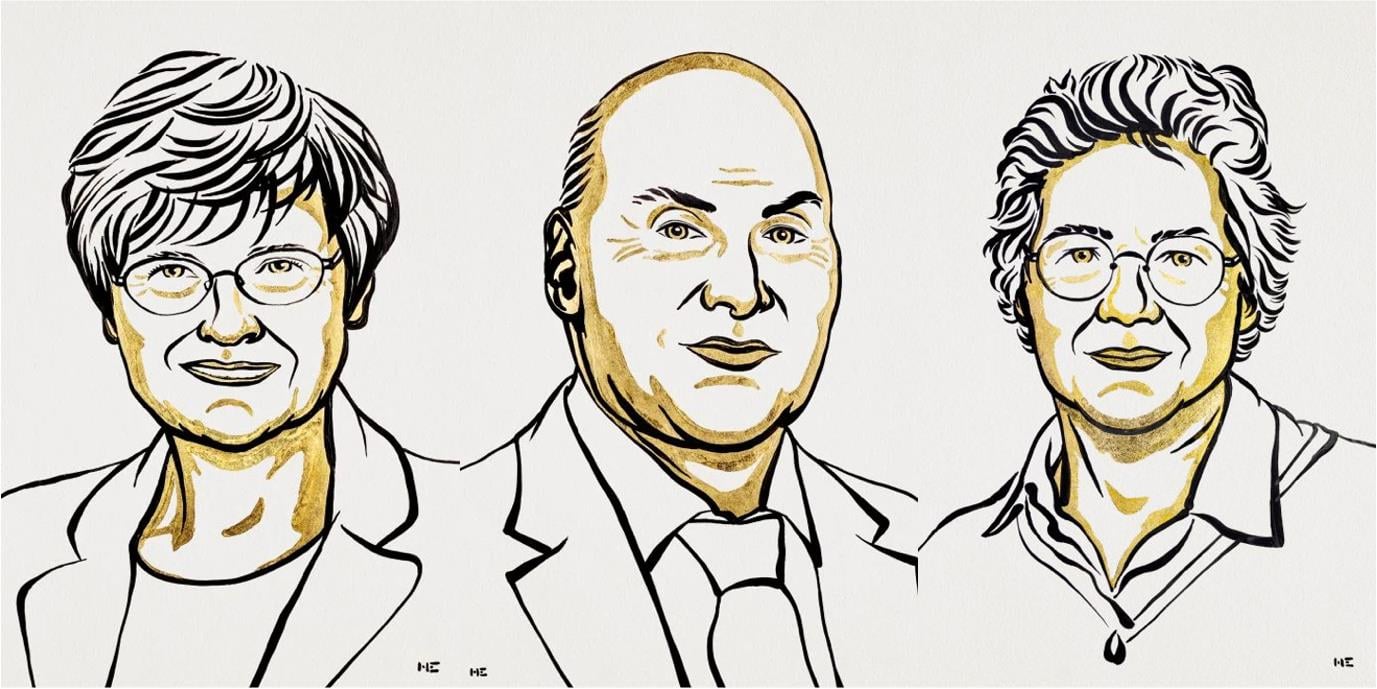
Nobel Prize Winners, 2023: Katalin Karikó, Drew Weissman, Anne L’Huillier (Ill. Niklas Elmehed © Nobel Prize Outreach)
Three laureates from the 2023 Nobel Prize cohort have trusted MDPI as their publishing platform. Notably, in a 2022 Pharmaceutics paper, molecular biologist Katalin Karikó and her team presented a methodology for evaluating mRNA capping efficiency, pivotal for therapeutic applications. Pharmaceutics had previously dedicated a Special Issue to “mRNA Therapeutics: A Themed Issue in Honor of Professor Katalin Karikó”, spotlighting ten articles from August 2021 to February 2022.
In the journal Vaccines, Professor Drew Weissman, collaborating with scholars from Pennsylvania University and George Mason University, contributed an influential review titled “Nanomaterial Delivery Systems for mRNA Vaccines”. His collaborative efforts spanned five papers across MDPI journals between 2021 and 2023.
Furthermore, Anne L'Huillier of Lund University, only the fifth female recipient of the Physics Prize, co-authored an article in Applied Sciences focusing on "Advanced EUV and X-Ray Optics". Similarly, Pierre Agostini, an Emeritus Professor from Ohio State University, co-authored an article featured in the special issue "Attosecond Science and Technology: Principles and Applications".
We extend heartfelt congratulations to all Nobel Prize laureates and express sincere gratitude for their confidence in MDPI as a platform for their scholarly contributions.
Read more:
Impactful Research

MDPI Journals Newly Indexed in 2023
The aim of indexing is to enhance the quality and credibility of published research, ensuring that researchers access the most credible resources available. While the principle behind citation indexing is straightforward, it remains one of the most dependable methods for tracking an idea's evolution across various scientific disciplines.
Throughout the year, MDPI works to expand the reach of our publications across premier multidisciplinary databases like Web of Science, Scopus, EBSCO, and ProQuest. This initiative is spearheaded by MDPI's Indexing team, under the leadership of Dr. Constanze Schelhorn.
In 2023, MDPI achieved 54 new acceptances in Scopus, 29 in Web of Science, 52 in EBSCO, and 83 in DOAJ: Directory of Open Access Journals.
The team prioritizes ensuring that our journals feature in numerous specialized databases, including PMC, PubMed, MEDLINE, Inspec, CAS, and FSTA, among others. Currently, MDPI collaborates with over 65 renowned international databases, consistently enhancing our database affiliations annually.
MDPI’s journals are indexed in all major global databases.
Furthermore, we collaborate with universities and government organizations to list our journals in country-specific ranking lists and relevant institutional repositories. This ensures compliance with requirements often set by funders or institutions for authors to publish in specific journals.
Web of Science Adds 24 MDPI Journals to Emerging Sources Citation Index (ESCI)
Clarivate recently analysed MDPI’s new journals, resulting in 24 journals, mainly established in 2020, being added to the ESCI in November and December 2023. Additionally, five journals passed this assessment earlier in the year. For a complete list of our journals in Web of Science, refer here. Journals in the ESCI meet 24 quality criteria, ensuring editorial rigor. They may be considered for inclusion in broader indices like the Science Citation Index Expanded (SCIE), the Social Sciences Citation Index (SSCI), or the Arts and Humanities Citation Index (AHCI), based on four impact criteria.
Read more:
Inside MDPI

MDPI Appoints New Chief Operating Officer (COO)

Alistair Freeland returned to MDPI and assumed the role of Chief Operating Officer in November 2023, a position he previously held from 2013 to 2019. He succeeds Dr. Yu Lin, who will remain a member of MDPI’s Board of Directors, overseeing significant financial decisions for the company. I would like to express my sincere thanks to Dr. Yu Lin for his service as COO.
Alistair brings extensive experience not only in scholarly publishing but also in technology and business management. Prior to rejoining MDPI, he was associated with SIX Group, the entity responsible for Switzerland's financial market infrastructure. There, he played a pivotal role in developing the blockchain-based platform SDX (SIX Digital Exchange), which has gained traction among major Swiss banks and the Swiss National Bank.
As COO, Alistair will collaborate with the MDPI management team to improve the practices and services we offer to scholarly communities. I am pleased to welcome Alistair back to MDPI and look forward to his contributions going forward.
Coming Together for Science

MDPI’s 2024 In-Person Academic Events Schedule
MDPI's Conference Team is dedicated to organizing and hosting in-person academic events across Europe, Asia-Pacific, and North America. We recognize conferences as invaluable platforms for scientific collaboration, scholarly exchange, discussions on contemporary topics, networking, and forging collaborations.
Here's a glimpse of the notable events we currently have scheduled for 2024:
|
|
14–16 February, 2024 |
|
|
24–26 April, 2024 |
|
|
28–31 May, 2024 |
|
|
1–4 August, 2024 |
Upcoming events with details to be announced:
- September 2024, Materials 2024 – Basel, Switzerland
- 19–21 September 2024, International Conference on Nanomaterials Sciences 2024 – Beijing, China
- October 2024, ncRNA 2024 – Basel, Switzerland
- November 2024, Pharmaceuticals 2024 – Barcelona, Spain
- 22–26 November 2024, International Conference on Science of Electronics – Wuhan, China
- Stay tuned for more details on the Sustainable Publishing Forum 2024.
Click here for all upcoming MDPI events.
Organize Your Event with MDPI’s Sciforum
Sciforum is MDPI’s platform dedicated to the organization of scientific events. In line with our mission to promote science, Sciforum supports scholars, societies, research networks, and universities at all stages of organizing in-person events, virtual events and webinars. Our platforms are efficient, user-friendly, and cost-effective. We handle all steps related to event management. Contact us for details.
Closing Thoughts

Reflecting on 2023 and Looking Ahead to 2024
As we approach 2024, I reflect on the incredible journey we’ve had together at MDPI this year. The past 12 months have been marked by ambitious projects and initiatives to improve our internal processes, and a commitment to continue delivering top-notch services to our stakeholders. I’d like to thank each and every one of our staff members for contributing to the positive experiences our stakeholders have reported in our surveys. Your dedication to speed, efficiency, and effective communication with our stakeholders is very much recognized and appreciated.
Becoming a stronger organisation
While we have encountered challenges in 2023, it’s important to understand that these are a part of our growth process. Difficulties provide us with opportunities to reflect, address problems at their roots, and ultimately evolve into a stronger organization. Our stakeholders expect us to overcome tough times, and it’s an expectation that we have for ourselves.
I extend my sincere appreciation to every MDPI employee, from our editorial office and IT department to marketing, indexing, IOAP, societies, Scientific Office board, products, production, conferences, finance, operations, admin, and beyond. To our newest team members, a warm welcome; to our longstanding colleagues, your dedication is invaluable.
“I am committed to taking MDPI to a new level of excellence.”
Interacting with many of you during my visits to our offices and representing MDPI at external events has been a personal highlight. I am deeply grateful to Dr. Lin for entrusting me with the role of CEO of MDPI. Looking forward, I am committed to working closely with our management team to lead MDPI and take it to a new level of excellence, aiming to establish it as the most trusted publisher in open access worldwide. This is a collective endeavour, with each of us shaping MDPI’s reputation. I therefore encourage us to take pride in our work, as it represents not only our craft but also MDPI as a whole.
Accountability and communication
As we look forward to 2024, there’s a lot to be excited about. Together, we’ll navigate challenges, seize growth opportunities, and refine our practices. To solidify MDPI’s position as the premier open access publisher globally, we must bolster accountability, improve stakeholder communication, share MDPI’s best practices, champion the open access philosophy, and educate stakeholders about our mission, methodologies, and motivations.
Thank you for engaging with the CEO Letter over the past six months of 2023. I will continue to release this newsletter as a method of sharing the great work being done at MDPI. Please feel free to connect directly with any insights or questions.
Here’s to a joyous and prosperous 2024!
Chief Executive Officer
MDPI AG
30 November 2023
MDPI Insights: The CEO's Letter #6 - MDPI Spain Summit and ResearchGate
Welcome to the MDPI Insights: The CEO's Letter.
In these monthly letters, I will showcase two key aspects of our work at MDPI: our commitment to empowering researchers and our determination to facilitating open scientific exchange.
Opening Thoughts

MDPI Spain Summit
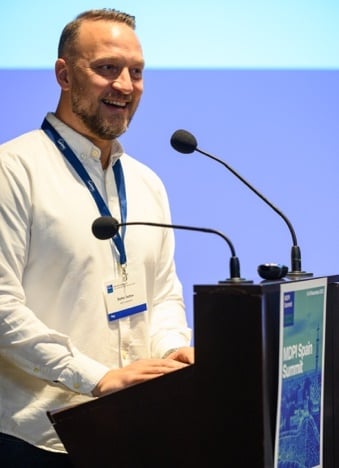
Stefan Tochev (CEO, MDPI) gives the opening speech at the MDPI Spain Summit.
On Friday 10 November 2023 I was in Barcelona, Spain, to deliver the opening presentation and participate in a panel at MDPI’s Spain Summit, a two-day event, inspired by our salon events in China.
With 16 Editors-in-Chief (EiCs) and 20 Editorial Board Members (EBMs) in attendance, the event, organized by our conference team and Barcelona office, featured presentations on open access (OA), MDPI, and publishing market trends in Spain.
The event provided a great opportunity to engage with stakeholders from various MDPI journals, including Nutrients, Vaccines, Buildings, IJMS, and others. We were able to gather feedback and have open conversations around manuscript quality, the peer-review process, and journal development, as well as accreditation agencies.
The main objective of this Summit was to bring together Editors representing MDPI journals across various disciplines within Spanish universities and research centers, primarily from the Barcelona area. The aim was to facilitate an open and fruitful discussion regarding the development of their journals, the future of OA in Spain, and to provide meaningful interactions and networking opportunities.
Connecting with Editorial Board Members
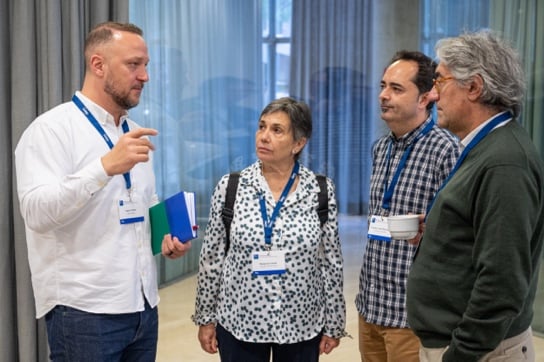
Stefan Tochev in conversation with Summit participants: "Our EBMs are passionate about the journals they serve."
Interacting with our EBMs in person provides a valuable opportunity to show how important it is to us to connect with them, hear their perspectives on their journals and learn more about their own experience collaborating with MDPI.
From my conversations, it was clear that our EBMs are passionate about the journals they serve. I know the advice they provide may sometimes involve just small tweaks, but these can lead to important improvements. As the saying goes, small hinges swing open big doors.
As at November 2023, MDPI has over 6,300 EBMs affiliated with Spanish institutions, with more than 30 of them serving as EiCs or section EiCs. Furthermore, over 68,000 Spanish scholars have contributed as reviewers in MDPI journals.
Open Access in Spain
In 2023, Spain implemented legislation mandating immediate OA for all publicly funded research, aligning with the EU’s Plan S initiative to expedite the transition to OA. The Spanish government also approved a four-year, €23.8 million annual budget for the first national OA strategy, aiming to make publicly funded research freely accessible upon publication. This strategy aims to strengthen the quality and transparency of research in Spain, and to help promote movement towards a digital, low-carbon economy.
For further details of Spain's OA policy and the history of government mandates, click here.
Spain has already seen a notable decline in subscription-only articles, decreasing by 62% over a 10-year period, while gold OA increased by 42%. Green OA slightly decreased, suggesting a shift towards publishing in gold OA journals rather than traditional subscription-based ones. Here are some statistics from Scopus.
A big thank-you to the various MDPI teams, including our conference team and the Barcelona office, for organizing this very successful event!
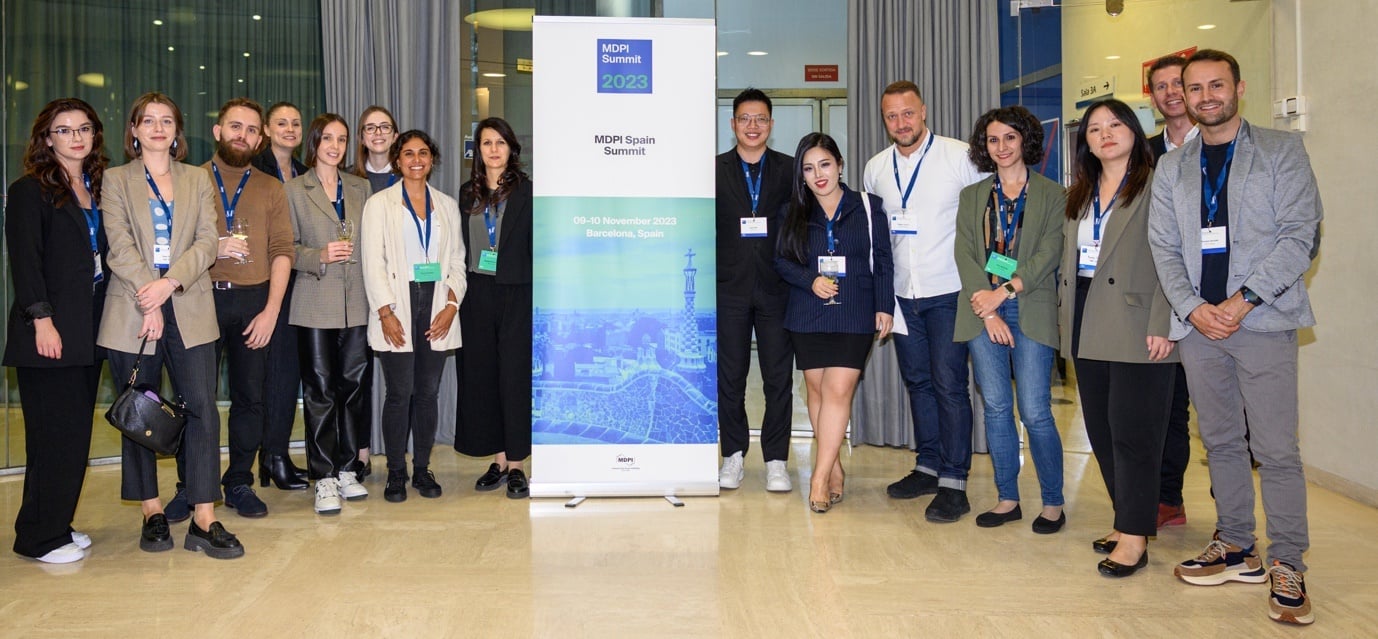
MDPI colleagues from various offices gathered to host and support the first MDPI Spain Summit, in Barcelona, Spain.
I think this type of gathering has the potential to become an annual event in various locations. For example, Manchester could be an option, as we have over 30 EiCs and over 3,000 EBMs in the UK, a top market for MDPI that publishes high-quality research.
Impactful Research

769 Editorial Board Members of MDPI Journals Recognized as Highly Cited Researchers in 2023
Congratulations to our 769 Editorial Board Members from 40 countries/territories who have been awarded Highly Cited Researcher status for 2023 by Clarivate. This recognition is based on their outstanding scientific research contributions and significant influence in various fields, as evidenced by Web of Science data.
Click here to view the full list of 769 Editorial Board Members.
Clarivate's Highly Cited ResearchersTM list identifies individuals with exceptional impact in scientific and social science domains over the past decade. Their papers rank in the top 1% of citations in 21 fields analysed in ‘Essential Science Indicators,’ showcasing their substantial influence.
This year, 7,125 Highly Cited Researcher 2023 designations were issued to 6,849 individuals from 67 countries, representing just 1 in 1,000 researchers worldwide.
These researchers demonstrate exceptional influence, representing a small fraction of contributors pushing the boundaries of knowledge, contributing to global well-being, sustainability, and security.
Congratulations to these scholars for their remarkable achievement: we are honoured to have them on board with our journals!
Inside MDPI

Corporate Marketing and Communications Strategy Session

Members of MDPI’s Corporate Marketing & Communications team.
For the past few years, I have led the Corporate Marketing & Communications department in our annual strategy session.
This typically involves 2–3 days of focused sessions covering key topics including budgeting, hiring targets, campaign reviews, and planning for the upcoming year, department strategy, and structure.
We are constantly exploring ways to optimize the Corporate Marketing & Communications department to support MDPI’s primary objectives and better convey the MDPI story while serving the scholarly community.
The strategy session also serves as a team-building activity, during which the team voted on bowling!
Strategy Session
In this strategy session, we looked at how to align our teams in order to better streamline our content with our campaigns, build a dedicated marketing team to strategically support our core MDPI products, expand our communications teams and functionalities to focus on company-critical campaigns and press releases, align our new brand design system with our marketing initiatives, set up a community and engagement team to support various teams with their outreach and communication efforts, and increase our use of data in the evaluation of campaign performance.
To grow in these areas, we will be hiring for various positions, including those of Public Relations Manager, Communications Manager, Internal Communications Manager, Campaign Manager, Marketing Associate, and Editorial Engagement Manager.
I am grateful for the way our Corporate Marketing & Communications department has grown and gelled over the years, and I look forward to supporting the department teams and their ideas for the future.
Coming Together for Science

ResearchGate and MDPI Partner to Boost the Visibility of Open Access Content through Journal Home
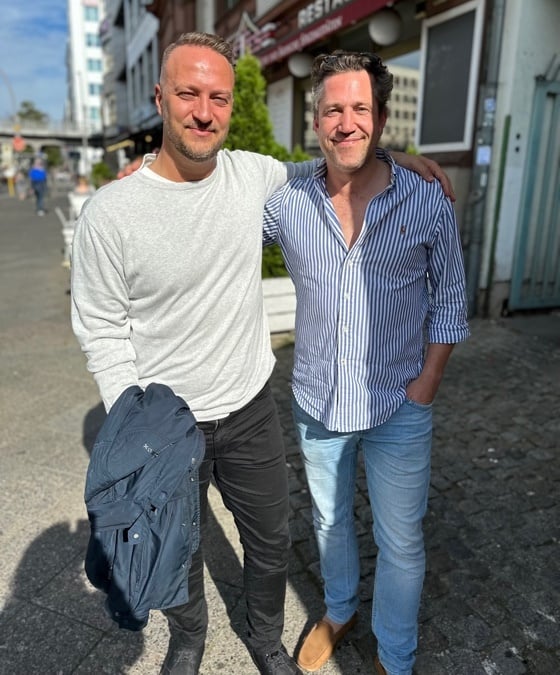
Stefan Tochev (CEO, MDPI) and Sören Hofmayer (Co-Founder and Chief Strategy Officer, ResearchGate) meet in Berlin, Germany to take their ongoing discussion further.
When I assumed the role of CEO at MDPI, my primary focus was to initiate the building of essential partnerships and collaborations within our industry. After all, I am a firm believer in achieving our goals by helping others achieve theirs and focusing on co-opetition wherever there is an opportunity. I first touched on the notion of co-opetition in MDPI Insights: The CEO's Letter #3, particularly when discussing collaborations with Elsevier.
In light of this, Sören Hofmayer (Co-Founder and Chief Strategy Officer at ResearchGate) and I connected recently to continue a discussion that had been ongoing for months. I was quickly brought up to speed and felt there was an opportunity for MDPI journals to pilot the Journal Home service that ResearchGate had launched. This would provide a new way for MDPI to engage with authors and readers and amplify the visibility of our journals.
While I receive many offers and opportunities for discussions with vendors, I am a firm believer that timing is everything, and in this case, the time for us is now. Sören and I met in person during my recent visit to Berlin and decided to proceed with piloting ten MDPI journals with the Journal Home service.
The press release below provides further details.
Press Release: Berlin (Germany) and Basel (Switzerland), 15 November 2023
ResearchGate, the professional network for researchers, and MDPI, the largest open access publisher in the world and a pioneer in open access publishing, today announced a partnership that will see ten of MDPI’s open access journals benefit from an enhanced presence on ResearchGate through its innovative Journal Home offering.
This new partnership will expand the reach and visibility of MDPI’s participating flagship journals with ResearchGate’s highly relevant community of more than 25 million researchers globally.
Around 210,000 version-of-record articles from these 10 titles will be readily available on ResearchGate, including the full archive material and all new articles as they are published. These journals also benefit from enhanced brand visibility, with dedicated journal profiles, prominent representation on all associated article pages and all relevant touchpoints across the ResearchGate network – keeping the journals top-of-mind with their reader and author audiences. All articles covered by the new partnership will automatically be added to the authors’ publication records in ResearchGate. This not only reduces MDPI authors’ needs for direct management but also offers them valuable insights into the impact of their work, including data about readership and citations.
Closing Thoughts

November is Men’s Health Awareness Month

Stefan Tochev (CEO, MDPI) listening to music as he writes at a coffee shop in Basel, Switzerland.
November is dedicated to raising awareness of various men’s health issues. I have been fortunate to have positive male role models in my life, and I strive to share my experiences with others.
I used to take part in Movember, growing my moustache throughout November to raise awareness and funds and to help “change the face of men’s health.” With male family and friends impacted by physical and mental health issues, I have recently become more interested in men’s overall well-being.
Men often face stigma involving the perceived need always to be strong and have things figured out. Recently, I’ve had meaningful conversations with male friends and colleagues about issues we rarely discuss, and it was a positive experience.
Various factors impact men’s health and well-being, all too easily leading to risky health behaviours including a lack of health awareness, poor health education, and negative, culturally induced, behaviour patterns in our work and personal lives. I hope we can break down these barriers in our work environment.
Healthy men help build healthy families and a healthy society
Men are less likely than women to seek help with their physical and mental health struggles. This is a reminder to prioritize your overall well-being. I hope that as men, we will continue to open up to one another, becoming vulnerable in order to share what we are going through. By sharing and by supporting each other, we can learn and grow together. You are not alone, and when you fall, you can still get up and stand tall.
From one broski to another, you are loved and appreciated. I hope this mindset carries into December and beyond.
Mindfulness
Our content team recently released a handful of articles on mindfulness, a practice that I believe provides a good opportunity for stress release and self-reflection:
Chief Executive Officer
MDPI AG
21 November 2023
769 Editorial Board Members of MDPI Journals Achieve Highly Cited Researcher Recognition in 2023

We extend our sincere congratulations to the 769 Editorial Board Members of our journals – from 40 different countries/territories – who have been recognized as Highly Cited Researchers for the year 2023 by Clarivate. They are being recognized for their high-quality scientific research achievements and outstanding contributions to their professional fields, as indicated by Web of Science data.
Clarivate's annual list of Highly Cited ResearchersTM identifies the most highly cited scientists for the past decade who stand out for their significant and broad influence in various scientific and social science domains. Their impactful papers are among the top 1 per cent in the citation distribution of one or more of 21 fields analyzed in the "Essential Science Indicators", distinguishing them as hugely influential among their peers.
This year, 7,125 Highly Cited Researcher 2023 designations were issued to 6,849 individuals from 67 countries, representing just 1 in 1,000 researchers worldwide.
This means that these researchers have demonstrated an incredible level of significant and broad influence in their chosen field or fields over the last decade. They represent a small fraction of the researcher population whose contributions disproportionately push the boundaries of knowledge, enhancing global well-being, sustainability, and security.
Congratulations to the scholars for their noteworthy achievement – we are honored to have them on board with our journals!
|
Abate, Antonio |
Jaiswal, Amit K. |
Shen, Zexiang |
1 November 2023
MDPI Insights: The CEO's Letter #5 - OA Week, UK, and Strategy
Welcome to the MDPI Insights: The CEO's Letter.
In these monthly letters, I will showcase two key aspects of our work at MDPI: our commitment to empowering researchers and our determination to facilitating open scientific exchange.
Opening Thoughts

Open Access Week 2023 – the Global Drive to Open Continues
As the world's largest open-access (OA) publisher, we believe that unrestricted access to research findings is the cornerstone of transparency, efficiency, and quality control across scientific disciplines. At MDPI, we provide free, immediate access to scientific papers, empowering scientists to examine, validate, replicate, and build upon existing results. This minimizes redundancy, optimizes resources, and fosters innovative approaches.
International OA Week, held from 23 to 29 October 2023, provided a unique opportunity to link the global movement toward open sharing and open science with the progress of policy changes at the local level. Our mission, during OA Week and all the year round, is to offer educational resources highlighting the benefits of open-access publishing. The MDPI Blog is a valuable resource for information on open access and open science.
Core principles of OA publishing
Accessibility, transparency, and collaboration are core principles of OA publishing. OA aims to break down barriers that have traditionally restricted research access, ensuring that knowledge is available to all, regardless of financial situation or institutional affiliations. Our commitment to diverse pathways for OA publishing worldwide includes discounts for researchers. You can learn more about how MDPI supports scientific communities here.
One of the key strengths of OA publishing is its ability to facilitate interdisciplinary research. By removing paywalls and promoting knowledge-sharing across disciplines, OA encourages collaboration and innovation. Researchers from various fields can access and build upon each others’ work, fostering a holistic approach to addressing complex global challenges.
OA holds the potential to democratize knowledge, advance science, and drive positive societal change.
Policy driving change
Governments, institutions, and funding agencies have recognized the transformative potential of OA and have implemented policies to promote it. These policies often require publicly funded research to be made openly accessible, accelerating the growth of OA repositories and journals. Check out our spotlights on OA policies in the US, EU and China.
OA publishing is continuously evolving, with community-driven models and technologies shaping its future. Initiatives such as “Plan S” and “cOAlition S” promote OA publishing from the perspective of national funders, requiring grantees to publish their research openly. A new policy announced by the US administration last year mandates that, with effect from January 2026, all US federally funded research should be freely and immediately available after publication.
Additionally, preprint servers such as MDPI's Preprints.org, which allow researchers to share their findings before formal peer review, have gained popularity, enhancing the speed at which new knowledge is disseminated. The rise of blockchain technology is also being explored to ensure transparency and authenticity in scholarly publishing.
For more than two decades, OA publishing has been revolutionizing academic publishing by promoting accessibility, transparency, and collaboration. Its support for interdisciplinary research, evolving policies, and innovative practices all contribute to its growing influence in the global research community. As OA continues to expand, it holds the potential to democratize knowledge, advance science, and drive positive societal change.
MDPI is proud to lead the transition to open access.
Read more:
Impactful Research

Spotlight on Smart Cities
Smart cities will serve as a cornerstone for future human development. Their implementation will help us tackle many of the significant challenges we are facing – climate change, ageing populations, waste management, public safety, travel, and so on. Recognising the importance of this multifaceted field, MDPI launched the inaugural issue of Smart Cities in 2018 to provide an advanced forum for research into smart technology and society. Here we take a look at how this journal has developed, and its impact in this exciting field.
As at 30 October, 2023, Smart Cities has published 421 papers and has an Impact Factor of 6.4. It also has a CiteScore of 8.5, and more than one quarter of its published papers – 124 – have been cited 10 times or more.
Highly cited papers in Smart Cities
Below are several highly cited papers recently published in Smart Cities. Citation metrics are current as at 31 October 2023.
1. “Introducing the “15-Minute City”: Sustainability, Resilience and Place Identity in Future Post-Pandemic Cities”
Authors: Carlos Moreno, Zaheer Allam, Didier Chabaud, Catherine Gall and Florent Pratlong
Smart Cities 2021, 4(1), 93-111; https://doi.org/10.3390/smartcities4010006
Citations: Crossref (338), Scopus (366), Web of Science (270), Google Scholar (710)
The paper discusses the socio-economic impacts of the COVID-19 on cities, including increasing inequalities and rising unemployment. It introduces the concept of the "15-Minute City," a form of "chrono-urbanism," as a response to the challenges posed by the pandemic.
2. “A Review on Electric Vehicles: Technologies and Challenges”
Authors: Julio A. Sanguesa, Vicente Torres-Sanz, Piedad Garrido, Francisco J. Martinez and Johann M. Marquez-Barja
Smart Cities 2021, 4(1), 372-404; https://doi.org/10.3390/smartcities4010022
Citations: Crossref (359), Scopus (363), Web of Science (268), Google Scholar (558)
This paper provides an overview of the progress in Electric Vehicles (EVs), focusing on battery technology, charging methods, and emerging research challenges. It also analyzes the global EV market and its future outlook.
3. “IoT in Smart Cities: A Survey of Technologies, Practices and Challenges”
Authors: Abbas Shah Syed, Daniel Sierra-Sosa, Anup Kumar and Adel Elmaghraby
Smart Cities 2021, 4(2), 429-475; https://doi.org/10.3390/smartcities4020024
Citations: Crossref (121), Scopus (151), Web of Science (91), Google Scholar (215)
This paper gives an overview of the Internet of Things (IoT) in the context of Smart Cities, discussing the fundamental components, technologies, architectures, networking technologies, and artificial algorithms that underpin IoT-based Smart City systems.
4. “Artificial Intelligence Techniques in Smart Grid: A Survey”
Authors: Olufemi A. Omitaomu and Haoran Niu
Smart Cities 2021, 4(2), 548-568; https://doi.org/10.3390/smartcities4020029
Citations: Crossref (76), Scopus (94), Web of Science (57), Google Scholar (120)
This survey paper reviews the utilization of artificial intelligence (AI) techniques in the context of the smart grid. It covers various applications of AI in load forecasting, power grid stability assessment, fault detection, and security issues in the smart grid and power systems.
5. “The Metaverse as a Virtual Form of Smart Cities: Opportunities and Challenges for Environmental, Economic, and Social Sustainability in Urban Futures”
Authors: Zaheer Allam, Ayyoob Sharifi, Simon Elias Bibri, David Sydney Jones and John Krogstie
Smart Cities 2022, 5(3), 771-801; https://doi.org/10.3390/smartcities5030040
Citations: Crossref (72), Scopus (75), Web of Science (43), Google Scholar (176)
This paper discusses the concept of the Metaverse, a virtual world introduced by Meta (formerly Facebook), and its potential impact on urban life. It explores how emerging technologies such as AI, Big Data, IoT, and Digital Twins could reshape urban design and services in the context of the Metaverse.
Testimonial
“It was indeed a great and pleasant experience with MDPI regarding our recent publication. The submission process was very straightforward and less time-consuming than the norm. The review process was very fast compared to many other open access journals, which is praiseworthy. The support from the Editorial Office during the revision process was highly useful as well. We look forward to publishing with MDPI in the future, and I will most definitely recommend MDPI to my colleagues and collaborators.” – Dr. Luís Rosa, University of Minho
Article in Smart Cities: Mobile Networks and Internet of Things Infrastructures to Characterize Smart Human Mobility
Inside MDPI

MDPI Manchester office, UK Visit

Allie Shi (Editorial Director, MDPI), Stefan Tochev (CEO, MDPI), Jamie Anderson (Manchester Office Manager, MDPI), Michael O’Sullivan (Senior Scientific Officer, MDPI), Hushneara Akhtar, and Becky Castellon (IOAP Team Lead, MDPI), dining out in Manchester, UK.
In October, I visited MDPI’s new office in Manchester. During the visit, I connected with our English Editing (EE) managers, Scientific Officer, members of the Editorial team, the Marketing team, and IOAP Team Lead.
Our Manchester office focuses primarily on EE services and provides local support for the UK market. Additionally, we regularly visit Editorial Board members and participate in local conferences.
I would like to thank Jamie Anderson, Manchester Office Manager, and her team, for their deep commitment to our Manchester staff and to MDPI’s impact on the UK market.
The UK by numbers
The UK is a hub for the world’s top universities, making it a key market for MDPI and the publishing world in general. It is home to two of the top-five-ranked universities globally, 11 in the top 100, and 15 in the top 200.
As a result, the UK plays a key role in MDPI’s global market. As at October 2023, it ranks as the seventh-largest contributor to the total number of papers published by MDPI. We have 3,500 Editorial Board members affiliated with UK institutions, including 34 serving as Editors-in-Chief (EiCs). Our commitment to collaboration with institutions is evident in the UK, where we have successfully established some 60 Institutional Open Access Program (IOAP) agreements with esteemed institutions, such as the University of Oxford, the University of Cambridge, Imperial College London, the University of Edinburgh, and more.
According to InCites Dataset + ESCI for the period 2018–2022, as at October 2023, nearly 65% of UK papers are now published as OA. Just over 10% of total OA publications are by UK authors. UK papers are known for their high quality, with an average of 11 citations per paper. Furthermore, 2.16% of UK papers are in the top 1% of cited papers, and 14.61% are in the top 10% of cited papers, showcasing their impact.
We are currently hiring EEs in various locations worldwide.
English Editing at MDPI
Our English Editing (EE) department consists of two main branches, Quality Control and Learning and Development, reflecting our priorities. We are continuously enhancing the quality of our English Editing services and have raised the relevant standards, which now extend to company-wide communications. English editors participate in international interviews, conduct English assessments, and provide colleagues with presentations on ways to improve their use of written and spoken English.
While expanding, the EE department has proactively refocused its efforts on the quality of our work and how the English Editing department can benefit the company more broadly. We currently have approximately 140 full-time English Editors based across five offices worldwide, supplemented by over 700 freelance English editors.
Our Manchester office serves as the hub for the EE Department, with EE Managers situated there, except for Kurtis Jackson, who serves as the Head of EE and is located in our Basel office. Manchester EEs play a critical role in establishing and developing EE teams in our other offices, overseeing management and recruitment. The EE department plays a vital role in MDPI’s operations, as it is the department that touches every published paper. If this work interests you, I encourage you to explore our available EE positions, whether you are seeking full-time or freelance opportunities.
Testimonials
“MDPI provides an excellent service compared to any other previously used services. It delivers fast and high-quality results but at an affordable price.” – Ardha Apriyanto, University of Potsdam
“In my role as a professor, I consider that MDPI Author Services offer an excellent quality in the editing of Western academic writing while maintaining the required standards of clarity, precision and rigor. Additionally, delivery times are fast compared to other available services.” – Jesus Insuasti, University of Nariño
Read more:
Coming Together for Science

STM and Frankfurt Book Fair
Attending STM
MDPI has been a proud sponsor of the STM Conference for several years. The STM Conference is a dynamic event featuring interactive sessions, expert panellists, idea-sharing, and ample networking opportunities. On 16 October, the event kicked off with arrival drinks, sponsored by MDPI, followed by a welcoming dinner, providing a great chance to connect and network with industry professionals. The following day was filled with speakers, sessions, and further opportunities to connect. STM exemplifies the collaborative spirit of the scientific community, with session topics including achieving open, visible, and impactful research at scale; maintaining research integrity in a rapidly changing world; and exploring the impact of ever-evolving technology in the scholarly community.
Meeting with Web of Science
On a personal note, one of the highlights of STM was a candid and productive conversation with Nandita Quaderi, Editor-in-Chief and SVP at Web of Science. During our discussion, we talked about MDPI, Web of Science, the IJERPH delisting, and ways of moving forward. This open conversation aimed at fostering better collaboration for the future.
“We discussed ways to improve our communication and collaboration.”
I appreciated our frank discussion and felt that Nandita wholeheartedly supports open access. She also expressed her appreciation for the monthly CEO Letter, which she sees as a way to add personality to the MDPI brand and provide insight into the great work we do at MDPI. While we highlighted the positives, we also discussed ways to improve our communication and collaboration moving forward. This meeting alone made the trip worthwhile, and I hope Nandita doesn’t mind my sharing that she found our chat to be “the most honest and constructive discussion” she’s had with someone from MDPI in recent years.
75th Frankfurt Book Fair
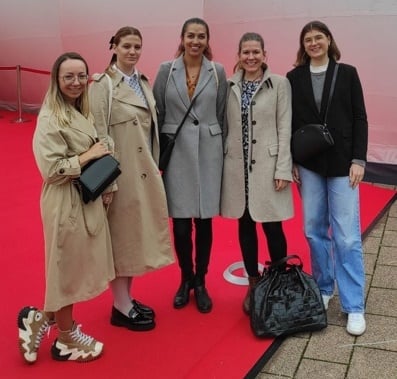
Jelena Milojevic (Book Editor, MDPI), Jovana Dubajic (Book Editor, MDPI), Evan Escamilla (Project Manager, MDPI), Laura Wagner (Head of Books, MDPI), and Jenny Knowles (Commissioning Editor, MDPI), at the Frankfurt Book Fair in Frankfurt am Main, Germany.
For the 75th time, the Frankfurter Buchmesse opened its doors in October to celebrate exciting stories and their authors. If you haven’t yet had the chance to visit the Frankfurt Book Fair, I highly recommend it. It’s the largest book fair in the world, attracting thousands of visitors from around the globe. This is the place to gain valuable industry insights from top-class publishing professionals, connect with publishers directly, and learn about the latest trends in publishing.
MDPI Books
Our Books team was also present at the Frankfurt Book Fair, networking and learning from various panels. Did you know that our MDPI Books department publishes OA Books?
The book publishing program includes monographs, book series, edited books and reprints of special issues and topical collections, among other book types.
If you have a book proposal you would like to discuss, please feel free to contact our Books team to understand the benefits and methods of publishing your next book with the OA model.
Closing Thoughts

MDPI Strategy Meeting
As the newly appointed CEO, this is my first year leading the MDPI Senior Management Strategy session. I saw it as an opportunity to explore what MDPI has the potential to become in the next five years. Guided by the vision of its founder and President, Dr. Shu-kun Lin, the company has accomplished remarkable feats over the past 27 years and currently holds the position as the world’s third-largest academic publisher, following Springer Nature and Elsevier.
Our primary objective is to build upon the milestones of the past decades and consolidate MDPI’s position as well-established publishing brand. The two-day meeting emphasized the importance of communicating MDPI’s values more actively via its brand and adopting a straightforward yet impactful approach to managing MDPI as a mature academic publisher.
“Our primary objective is to consolidate MDPI’s position as well-established publishing brand”
As the world’s number one open-access publisher, MDPI has long been a game-changer in the scholarly community, serving millions of authors. The challenge in being a trailblazer is the need to continuously improve and at the same time explore the next blue-ocean strategy, while also maintaining the smooth operation of the business. Our collection model, featuring guest-curated thematic topics in the form of Special Issues, has disrupted the industry. Other publishers closely study us and attempt to replicate our models. The future of this collection model is something we are actively addressing – while, of course, looking ahead to what comes next!
Chief Executive Officer
MDPI AG
19 October 2023
Open Access Week 2023 – the Global Drive to Open Continues

MDPI has been a strong proponent of the open access publishing model right from the beginning. As one of the pioneering fully open access publishers, we firmly believe that unrestricted access to research findings forms the foundation for better transparency, efficiency, and quality control across all scientific disciplines.
In December 2022, we reached a significant milestone by surpassing one million articles published. That is one million articles freely available to all, to circulate and build upon!
Offering free and immediate access to scientific papers empowers scientists to examine, validate, replicate, and expand upon existing results. This not only helps prevent redundancy and optimizes how resources are used but also paves the way for innovative new approaches.
The International Open Access Week takes place from 23 to 29 October 2023, providing a unique opportunity to connect the global movement towards open sharing and open science with the progress of policy transformations at the local level.
Our goal, during Open Access Week as well as throughout the year, is to offer resources for educating people about the benefits of open access publishing. The MDPI Blog offers a wealth of information around open access and open science.
Promoting the values of accessibility, transparency, and collaboration
Open access publishing embodies the fundamental values of democratizing knowledge and fostering global accessibility. It aims to break down barriers that have traditionally limited access to scholarly work, ensuring that knowledge is available to all, regardless of their financial or institutional affiliations.
Discounts are part of our commitment to ensuring there are diverse pathways to Open Access publishing for researchers worldwide. MDPI supports scientific communities in several different ways.
One of the key strengths of open access publishing lies in its ability to facilitate interdisciplinary research. By removing paywalls and promoting the sharing of knowledge across disciplines, OA encourages collaboration and innovation. Researchers from diverse fields can access and build upon each other's work, fostering a holistic approach to addressing complex global challenges.
Funders' policies are getting aligned with open science
Governments, institutions, and funding agencies have recognized the transformative potential of open access and have implemented policies to promote it. These policies often mandate that publicly funded research should be made openly accessible. Such initiatives have accelerated the growth of open access repositories and journals, reinforcing the commitment to open access principles. Check our spotlights on OA policies in the US, EU and China.
Open access publishing is continually evolving, with innovative and community-driven models and technologies shaping its future. Initiatives like "Plan S" and "cOAlition S" promote the adoption of OA publishing from the national funders’ perspective by requiring grantees to publish their research openly. A new policy announced by the US administration last year requires that, as of January 2026, all US federally funded research be made freely and immediately available after publication.
Additionally, preprint servers such as MDPI's Preprints.org, which allow researchers to share their findings before formal peer review, have gained popularity, enhancing the speed at which new knowledge is disseminated. The rise of blockchain technology is also being explored to ensure transparency and authenticity in scholarly publishing.
For more than twenty years, open access scholarly publishing has been revolutionizing academia by promoting the values of accessibility, transparency, and collaboration. Its support for interdisciplinary research, evolving policies, and innovative practices all contribute to its growing influence in the global research community. As open access continues to expand, it holds the potential to democratize knowledge, advance science, and drive positive societal change.
MDPI is proud to be a leader in the transition to open access.
2 October 2023
MDPI Insights: The CEO's Letter #4 - MDPI Presence in China
Welcome to the MDPI Insights: The CEO's Letter.
In these monthly letters, I will showcase two key aspects of our work at MDPI: our commitment to empowering researchers and our determination to facilitating open scientific exchange.
Opening Thoughts
Open Access in China
It is Saturday, 23 September, and I have just returned from an unforgettable 12-day trip to China, visiting our main offices in Beijing and Wuhan. In the wake of a packed and very enjoyable agenda of internal and external meetings, I would like to use this edition of the CEO Letter to showcase how MDPI supports the scholarly community in China.
Coincidentally, Jack McKenna, Communications Associate from MDPI’s corporate content team, has just released a blog article discussing China’s open access (OA) policy. It is a timely read, providing a concise overview of the development of the OA movement in China and reflecting on its future. I shall draw some content from Jack’s piece and use this edition of the CEO Letter to highlight the various ways in which MDPI is involved in this market. And it would be remiss of me not to include some pictures and highlights from my travels!
Open Access Policy in China
As per Jack’s post, in 2020, China became the world’s leading producer of research articles. Today, China is experiencing a “substantial growth rate in OA [Open Access] publication”. This growth is supported by the State’s commitment to research & development and its policy “requiring the promotion of open science”.
Over the past two decades, there have been gradual developments in China’s OA framework, with repositories and platforms being developed in a consistent manner. Currently, key institutions across China – including the National Science Library, the National Science and Technology Library, and the Natural Science Foundation of China – support OA. The State aims to establish consistent policies across government agencies – a framework for a more encompassing embrace of OA across institutions.
In China, the number of subscription-only articles decreased by nearly 30% over the 10-year period of 2011–2021, while gold OA increased by 22%. Between 2017 and 2020 alone, China published 800,921 academic papers in an OA format.
In 2023, as the leading publisher of academic research, China is pursuing “self-reliance”. Therefore, the State will be establishing consistent policies across government agencies, including those related to OA. Additionally, it will want to ensure that Chinese people can access the research that is supported by Chinese funding and produced by Chinese academics. For this reason, “Open Access is a matter of priority in China”.
MDPI Offices in China
While the history of MDPI begins in Basel, Switzerland, the story of MDPI’s founder is very much rooted in China. Dr. Shu-kun Lin, Founder and President of MDPI, graduated with a BSc from Wuhan University in 1982. He also studied physical chemistry at the Lanzhou Institute of Chemical Physics, Chinese Academy of Sciences (1982–1986; MSc in 1985), and at the University of Louisville, USA (1987–1989). Dr. Lin completed his doctorate in organic chemistry at the Swiss Federal Institute of Technology (ETH-Zürich) in 1992.
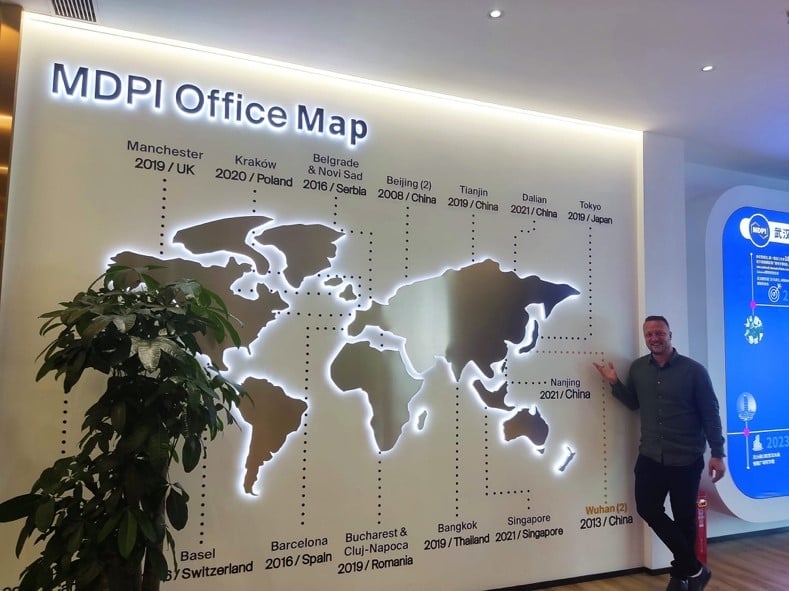
Stefan Tochev (CEO, MDPI) at MDPI’s Wuhan office.
In 2002, MDPI’s Basel headquarters moved to Matthäusstrasse 11, 4052 Basel, and Dr. Lin opened an editorial office in Qingdao, China, which launched the journal Marine Drugs in the following year. Below is a list of MDPI’s current offices in China and their respective dates of inauguration:
- 2008: Beijing (Tongzhou, Haidian)
- 2013: Wuhan (Hankou, Guanggu)
- 2019: Tianjin
- 2021: Dalian
- 2021: Nanjing
Our Strength is in Our People
With over 6,000 MDPI staff, across 20 offices in 11 countries, MDPI is able to offer authors responsive and efficient round-the-clock support, enabling a rapid publication process.
In my experience, stakeholders are genuinely surprised when they realize the extent of our global operations. My response is to reiterate that our people are our strength. This is why we have fast and efficient processes and top-notch responsiveness. Our global presence ensures that your manuscript is constantly attended to, rather than sitting on someone’s desk. We prioritize our authors’ needs and act quickly to move things through the various stages of publication. MDPI is built on speed, convenience, and competence, which I believe are core pillars for success in any industry. We continually strive to improve our systems and processes on the basis of these core strengths. We literally have over 6,000 staff worldwide dedicated to serving your needs. It’s not magic: it’s people; it’s real.
Impactful Research

MDPI Awards
To support the academic community, and especially young researchers, and also to enhance communication among scientists, MDPI journals offer various awards in specific fields. We serve the scientific community by funding research to facilitate the development of sustainable global solutions through our annual World Sustainability Award and Emerging Sustainability Leader Award.
In 2022, MDPI made awards totalling over US$1 million in recognition and support of researchers worldwide.
Across our journal catalogue, we have granted over 2,000 awards to recognize and support researchers from all disciplines. Since 2016, these awards have served as a source of recognition, acknowledging the impact of research by heightening the influence of talented individuals. The award types mainly include the Young Investigator Award, the Best PhD Thesis Award, the Best Paper Award, and the Outstanding Reviewer Award.
To learn more about MDPI Awards and to find out which are currently available, please click here.
MDPI Awards to Scholars from China
Since 2021, there have been 23 Best Paper Awards granted to authors affiliated with Chinese institutions, identifying their papers as having high-quality scientific impact. A total of 45 Chinese scholars have received awards such as the Young Investigator Award, the Best PhD Thesis Award, the Outstanding Reviewer Award, and the Tu Youyou Award, among others. Prizes for these awards include MDPI grants for paid publications, totalling over CHF 70,000 for scholars affiliated with Chinese institutions.
MDPI’s Tu Youyou Award
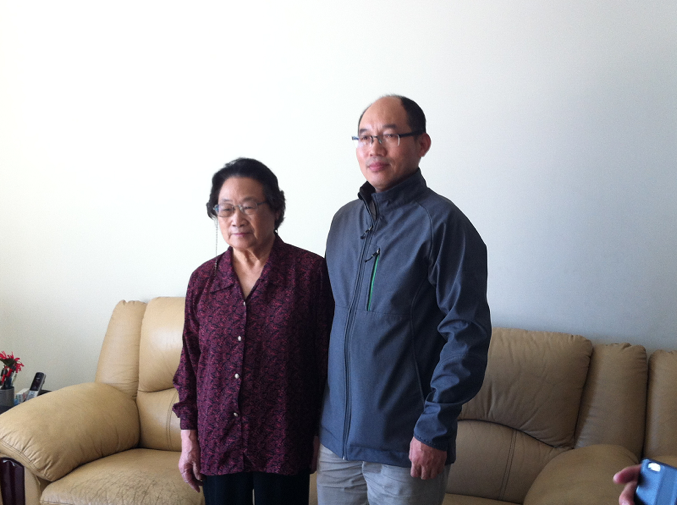
Prof. Tu Youyou (left), Dr. Shu-Kun Lin (President, MDPI).
In 2015, Professor Tu Youyou was awarded the Nobel Prize in Physiology or Medicine “for her discoveries concerning a novel therapy against Malaria.” In order to commemorate Professor Tu’s contributions to human health and to promote the passion and spirit conveyed by her experiences, MDPI in 2016 established the ‘Tu Youyou Award’, which runs biennially to recognize outstanding scholars dedicated to the research of natural products and medicinal chemistry.
The 2022 Tu Youyou Award was granted to Prof. Dr. Xiaoguang Lei of Peking University. Click here to access the interview with the winner.
2015 Nobel Prize for Medicine Awarded to Professor Youyou Tu
Professor Tu’s work was celebrated in a Special Issue from Molecules on the occasion of her 80th birthday. The Special Issue: 'Artemisinin (Qinghaosu): Commemorative Issue in Honor of Professor Youyou Tu on the Occasion of her 80th Anniversary” was created five years before she won the Nobel Prize, highlighting the visibility MDPI provides researchers and their work.
Highly Cited Articles by Chinese Scholars Published in MDPI
Click here to access the most cited MDPI papers published by scholars affiliated with Chinese institutions. This list presents the most influential research from the more than 287,000 MDPI papers published by Chinese scholars. With over 9 million total citations, I encourage you to maximize your visibility and impact by publishing with MDPI, the number one most cited open access publisher.
Read more:
- Tu Youyou Award
- World Sustainability Awards
- Available Awards
Inside MDPI
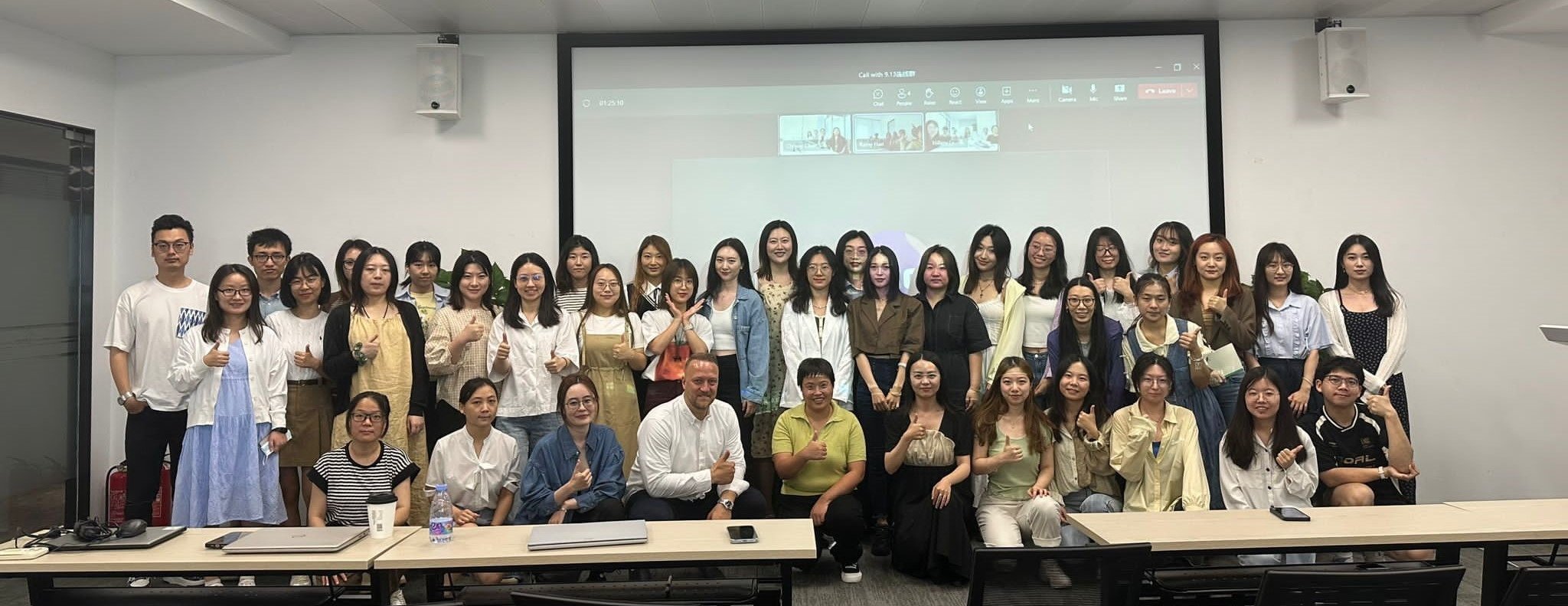 Stefan Tochev (CEO, MDPI) with the Beijing Marketing team.
Marketing Department in China
During my visit to our offices in Beijing and Wuhan, I had the opportunity to meet with, and to present to, our local marketing teams. These teams are responsible for various journal-related and corporate promotional activities, including newsletters, conferences, seminars, author training, journal awards, content creation, digital marketing, and social media.
I was pleased by the ambition and curiosity of our marketing colleagues. They showed a strong desire to collaborate and acquire knowledge and tactics to effectively market and promote MDPI-journal-related activities. I presented some of the principles and objectives that we apply in the Corporate Marketing and Communications department, and used the opportunity to strengthen our collaborative communications across offices.
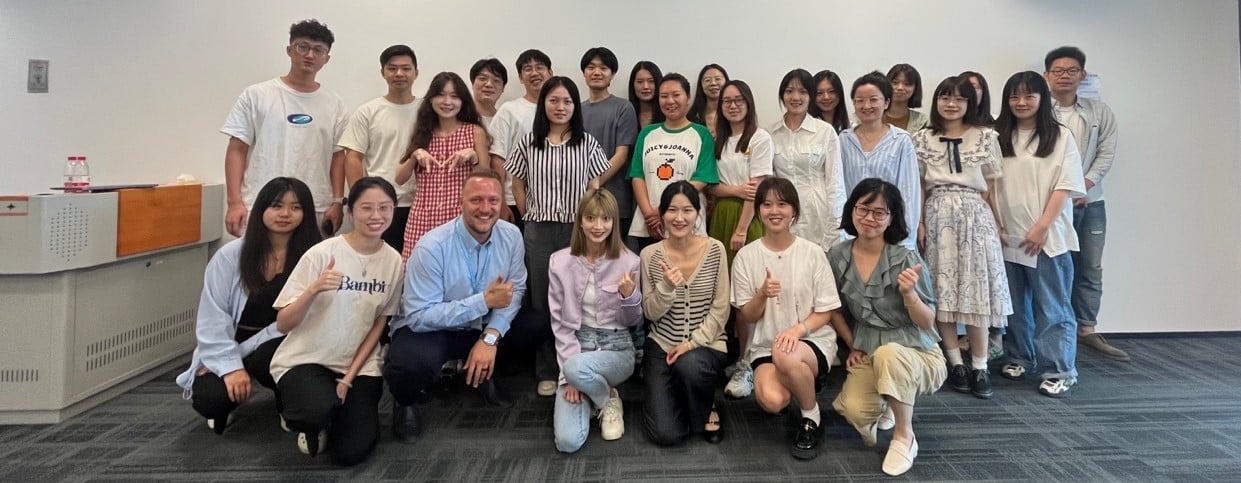 Stefan Tochev (CEO, MDPI) with the Wuhan Marketing team.
Coming Together for Science

Collaborations, Scholarships and Meetings
MDPI maintains partnerships with nearly 190 learned societies and over 800 institutions and consortia, helping to facilitate the transition to OA publishing. Our commitment to working with institutions is evident in China, where we have successfully established over 35 Institutional Open Access Programs (IOAP) with esteemed institutions such as the Tsinghua University, Huazhong University of Science and Technology, and Shanghai Jiao Tong University.
Our institutional partnerships, waiver programs, and article processing cost discounts create diverse pathways to OA publishing for researchers worldwide.
Scholarships in China
Since 2021, several MDPI journals (Sensors, Photonics, Coatings, Materials, Energies, and Journal of Fungi) have funded full scholarships for four Master’s and five Ph.D. projects in China. These scholarships align with Tianjin University, Wuhan University of Technology, Central South University, the Chinese Academy of Sciences, and the China University of Petroleum (Beijing).
Meeting with the Society of Chinese University Journals (CUJS)

Prof. Tieming Zhang (President of CUJS, centre) and MDPI colleagues at CUJS office.
I am pleased to have participated in some highly productive meetings during my visit to China, including one with the Society of Chinese University Journals (CUJS). The meeting involved Prof. Tieming Zhang (President of CUJS), Assoc. Prof. Xin Zhang (Vice President and Secretary General), and Dr. Fei Gao (Executive Member of CUJS). Alongside my colleagues Dr. Guoshi Liu, Dr. Giulia Stefenelli, and Anita Sun, I represented MDPI and held an open discussion to address any questions regarding OA and MDPI.
We discussed several methods for collaboration, including a workshop on the future of peer review, MDPI sponsoring a funding grant for early-career researchers, and transitioning journals from diamond to gold OA. I am thankful for the opportunity to have met our colleagues at CUJS in person and feel very confident about our future collaborations in support of OA publishing in China.
MDPI hosts free academic seminars, author training sessions, and academic conferences as part of its commitment to enrich and support the scholarly community. CUJS often stages academic events (e.g., conferences, editor training, and editor competitions), and I believe there are great opportunities for CUJS and MDPI to collaborate accordingly.
Meeting with National Science Library, Chinese Academy of Sciences (NSLC)
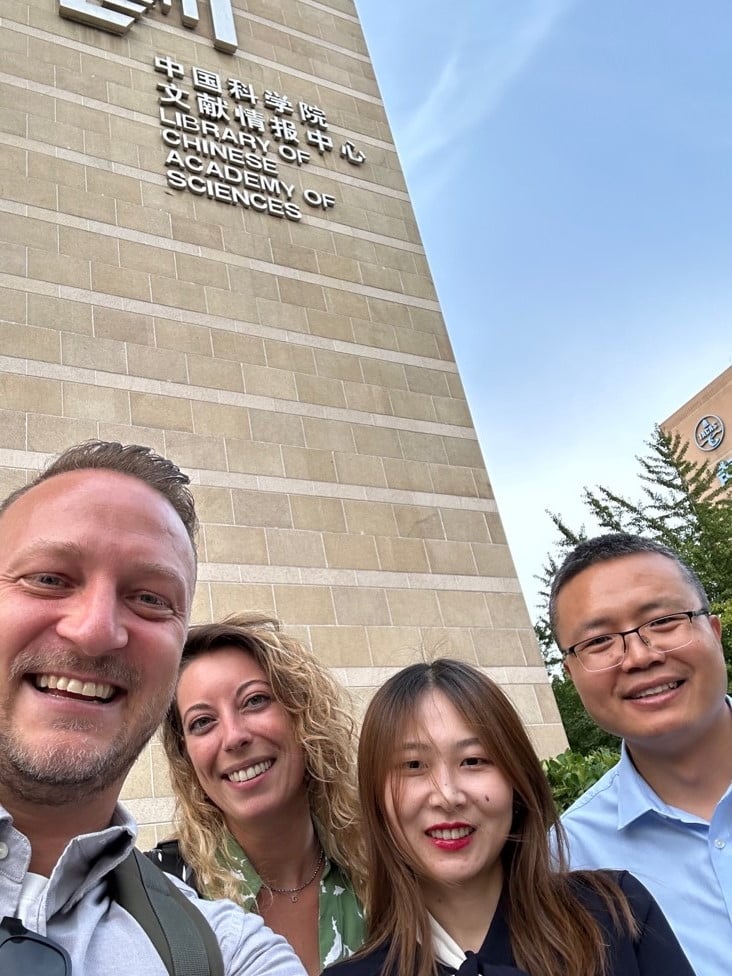
Stefan Tochev (CEO, MDPI), Dr. Giulia Stefenelli (Chair of Scientific Officers, MDPI), Anita Sun (PR Manager, MDPI) and Dr. Guoshi Liu (Managing Director, MDPI) at the National Science Library, Chinese Academy of Sciences.
We also visited the NSLC Director, Xiwen Liu, and colleagues Ying Jin, Zhesi Shen, and Sichao Tong. Following our introductions, we gave a presentation on the history and editorial process at MDPI, discussing specific details related to MDPI’s business and data. We highlighted the status of our IOAP collaborations in China and the makeup of our author base, specifically in China, and drew attention to the fact that MDPI has published research by authors from every country in the world. We then discussed the design indicators, calculation methods and implementation purposes of the ‘Early Warning Journal List’ and how we can have open communication to provide any data regarding MDPI journals. I am pleased to report that we reached a consensus on future communications, and am grateful to NSLC for hosting us in their offices.
In-person meetings with stakeholders provide an invaluable opportunity to communicate what MDPI is about and the various ways in which we serve the scholarly community. While digital marketing and online communication are essential, they are no replacement for the understanding and trust that come about through in-person interactions.
The Numbers
As at September 2023, China holds the largest position in MDPI’s global market, ranking as the largest contributor to the total number of papers published by MDPI.
At this point in time, there were more than 847,000 China mainland scholars who have published with MDPI, 51 of whom are Section-Editors-in-Chief (SEiC) of MDPI journals, with seven serving as Editors-in-Chief (EiCs) for journals such as Air, Big Data and Cognitive Computing, Blockchains, Future, Nanoenergy Advances, and Targets.
Our growth and presence in China are a true testament to the service we provide to the scholarly community, and to the relationships we foster through collaborative activities. We look forward to continuing to support the growth of the scholarly community in China, providing a valuable and trusted experience with MDPI.
Closing Thoughts
Final Reflections on our MDPI Offices in Beijing and Wuhan

Stefan Tochev (CEO, MDPI), Dr. Constanze Schelhorn (Indexing Manager, MDPI), Jiale Shang (Admin, Tongzhou, MDPI) at Beijing Capital International Airport, Beijing.
I spent approximately two weeks visiting some of our offices in China, and the first word that comes to mind when describing my experience is ‘hospitality.’ My colleagues and I were met with enthusiasm and delight at the airport by the Tongzhou Admin team (thank you, Jiale Shang, and thank you, Eric Wang, for keeping us organized on this trip!) and were taken care of with great attention. From hotels to transportation, dinners, and meetings, our stay was catered for perfectly.
Perhaps this is where MDPI’s focus on customers and service originates. At our core, we are a service company that provides a publishing platform for its authors. It’s therefore no surprise that authors consistently rate their experience with MDPI very highly.
95% of submitting authors rate their overall experience with the MDPI publication process as Excellent or Good (Springer Nature report 90%).
91% of submitting authors rate their overall experience with the MDPI peer review process as Excellent or Good.
Speed/Efficiency and Editorial Relationship are two key reasons underlying this high satisfaction score. ‘Editorial Relationship’ can be further explored, but in the past month, the most commonly noted aspects were the professionalism, kindness, availability, communicativeness, and personalized assistance provided by our editorial staff throughout the process. These attributes are at the core of our work across all our offices and continents.
Hospitality and Service
Just as our Chinese colleagues strove to keep us engaged by showing us the city sights (thank you, Thea Pan, and Jason Wu from the Wuhan Marketing team!) and sharing a variety of wonderful meals, our editorial staff are committed to serving our authors throughout their publishing journey. Our aim is to place the author at the centre of everything we do, eager to welcome our ‘guests’ and provide them with a pleasant publishing experience.
I asked my colleague Francis Wu (Senior Publisher, Wuhan office) where this hospitality originates. He responded that it is part of Chinese culture. I reflected long and deep on this answer. China is a vast country, and when visitors arrive, hosts want to ensure they feel welcomed and taken care of in order to maximize their time and visit. I can’t think of a better analogy for how I would want our authors to feel when they visit MDPI for their publishing needs. A company culture that prioritizes service, something that goes beyond products and productivity, and focuses on the overall experience. Over 6,000 people, across all MDPI offices, are ready, willing and able to go the extra mile for their colleagues and their customers. This is something I am truly proud of.
Chief Executive Officer
MDPI AG
6 September 2023
Recap of Awards Granted to Scholars in 2022

MDPI is committed to supporting the academic community, nurturing talent and advancing science. Awards are an important part of the research landscape and play a vital role in helping academics gain recognition, especially young researchers as they embark on new research avenues.
In 2022, our journals presented a total number of 394 Awards, including Travel Awards, Young Investigator Awards, Best PhD Thesis Awards, Best Paper Awards, and Outstanding Reviewer Awards, with several winners announced for some of the awards. The total prize sum amounted to just under 580,000 Swiss francs (CHF), or approximately 650,000 US dollars. Overall, more than 720 scholars were awarded.
The majority of the awards were dedicated to young researchers in relatively early stages of their careers. This encompassed 66 of the afore-mentioned Travel Awards, 60 Young Investigator Awards, supporting research projects and conference attendance, as well as 51 Best PhD Thesis Awards. Additionally, 113 Best Paper Awards were given by our journals. The selection committees were entrusted with identifying the most impactful and novel research and review articles published in their journal within a given year.
MDPI will continue its support and recognition for the academic community moving forward, sponsoring new awards across disciplines. To learn more about all the awardees and their research projects in your field of study, please visit the following pages:
To explore more MDPI awards, please click here.
31 August 2023
Meet Us at the Building Simulation 2023 (BS2023), 4–6 September 2023, Shanghai, China

A range of MDPI journals will be attending the Building Simulation 2023 (BS2023). This meeting will be held in Shanghai, China, from 4 to 6 September 2023.
At BS2023, the main themes incorporate macroscope topics concerned with building simulation regarding policy on carbon emission and control, power systems at the metropolis level, energy flow among regional cities, or even mining petascale data.
The conference/technical program will continue to bring together the interests of academics and practitioners, and on top of that, they would like to invite policymakers, in an attempt to reshape the path forward. As a tradition, the themes keep expanding the frontier of building simulation techniques, such as the simulation module from the system to the city, a better understanding of human factors, AI-assisted decision making, and seamless interoperability in modeling and design.
The following MDPI journals will be represented:
- Buildings (leading);
- Architecture;
- Sustainability;
- Electronics;
- Energies;
- Smart Cities.
If you are attending this conference, please feel free to start a conversation with us at our booth (#10-11). Our delegates look forward to meeting you in person and answering any questions that you may have. For more information about the conference, please visit https://bs2023.org/ or contact the Buildings Editorial Office at buildings@mdpi.com.
