You are currently on the new version of our website. Access the old version .

Buildings

Buildings is an international, peer-reviewed, open access journal on building science, building engineering and architecture published semimonthly online by MDPI.
The International Council for Research and Innovation in Building and Construction (CIB) is affiliated with Buildings and its members receive discounts on the article processing charges.
Quartile Ranking JCR - Q2 (Construction and Building Technology | Engineering, Civil)

All Articles (16,280)

Noncontact, high-fidelity data acquisition has enabled terrestrial laser scanning (TLS) to be widely adopted for bridge geometry measurement and condition monitoring. In TLS applications, point cloud registration directly affects data quality and the correctness of subsequent results. For long-span bridges in large-scale scenes, complex geometry and sparse sampling pose challenges to surface-based, data-driven registration methods, and may degrade registration accuracy. A data-driven approach for high-precision point cloud registration, referred to as the Iterative Closest-Surface (IC-Surface) method, is presented in this study. The method extracts neighboring surface patches via a bounding box and applies random sampling-based plane fitting to derive surface features for registration, effectively mitigating the impact of sparse points and outliers in long-span bridges. Regular points are generated on the source patch and projected onto the corresponding target patch to establish high precision correspondences, yielding a stable and accurate transformation. This method effectively overcomes the limitations of the Iterative Closest Point (ICP), which struggles with unreliable correspondences and outliers. Comparative experiments were conducted using synthetic data, large bridge segments, and full-bridge datasets against commonly used registration methods. The results show that the IC-Surface method maintains high accuracy and stability across varying levels of outliers and overlap ratios. In complex scenes, IC Surface achieves higher registration accuracy than both ICP and the sphere target method, with distance errors reduced from 3 mm to 1 mm and inter-plane angle errors reduced from 0.016 rad to 0.009 rad. These findings demonstrate the method’s broad applicability in digital construction and operation and maintenance assessments of long-span bridges.

25 January 2026

The registration procedure for spherical targets.

This study focuses on the transfer of architectural facade styles. Using the node-based visual deep learning platform ComfyUI, the system integrates the Flux Redux and Flux Depth models to establish a modular workflow. This workflow achieved style transfer of building facades guided by deep perception, encompassing key stages such as style feature extraction, depth information extraction, positive prompt input, and style image generation. The core innovation of this study lies in two aspects: Methodologically, a modular low-code visual workflow has been established. Through the coordinated operation of different modules, it ensures the visual stability of architectural forms during style conversion. In response to the novel challenges posed by generative AI in altering architectural forms, the evaluation framework innovatively introduces a “semantic inheritance degree” assessment system. This elevates the evaluation perspective beyond traditional “geometric similarity” to a new level of “semantic and imagery inheritance.” It should be clarified that the framework proposed by this research primarily provides innovative tools for architectural education, early design exploration, and visualization analysis. This workflow introduces an efficient “style-space” cognitive and generative tool for teaching architectural design. Students can use this tool to rapidly conduct comparative experiments to generate multiple stylistic facades, intuitively grasping the intrinsic relationships among different styles and architectural volumes/spatial structures. This approach encourages bold formal exploration and deepens understanding of architectural formal language.

25 January 2026

Schematic diagram of module composition. (Source: made by authors.)

Volcanic Scoria Lightweight Aggregate Concrete (VSLAC) has been identified as a material with considerable potential for use in carbon-neutral construction; however, its application is often hindered by two main issues. Firstly, the low density of scoria often results in aggregate segregation and stratification. Secondly, its high hygroscopicity can lead to shrinkage cracking. In order to address the aforementioned issues, this study proposes a multi-scale modification strategy. The cementitious matrix was first strengthened using a binary blend of Fly Ash and Ground Granulated Blast Furnace Slag (GGBS), followed by the incorporation of a ternary admixture system containing Styrene-Acrylic Emulsion (SAE), a foaming agent (FA), and alkali-treated Straw Fibres (SF) to enhance workability and durability. The findings of this study demonstrate that a mineral admixture comprising 10% Fly Ash and 10% GGBS results in a substantial enhancement of matrix compactness, culminating in a 20% increase in compressive strength. An orthogonal test was conducted to identify the optimal formulation (D13), which was found to contain 4% SAE, 0.1% FA, and 5% SF. This formulation yielded a compressive strength of 35.2 MPa, a flexural strength of 7.5 MPa, and reduced water absorption to 8.0%. A comparative analysis was conducted between the mineral admixture mix ratio (Control group) and the Optimal mix ratio (Optimization group). The results of this analysis reveal that the Optimization group exhibited superior durability and thermal characteristics. Specifically, the water penetration depth of the optimized composite was successfully restricted to within 3.18 mm, while its thermal insulation performance demonstrated a significant enhancement of 12.3%. In the context of freeze–thaw cycles, the modified concrete demonstrated notable durability, exhibiting a 51.4% reduction in strength loss and a marginal 0.64% restriction in mass loss. SEM analysis revealed that the interaction between SAE and the FA resulted in the densification of the Interfacial Transition Zone (ITZ). In addition, the 3D network formed by SF redistributed internal stresses, thereby shifting the failure mode from brittle fracture to ductile deformation. The findings demonstrate that modifying VSLAC at both micro- and macro-levels can effectively balance structural integrity with thermal efficiency for sustainable construction applications.

25 January 2026

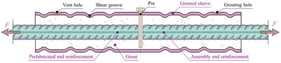
SAE-FA-SF ternary synergy mechanism.

Construction industry in Afghanistan is crucial for economic and social advancement, particularly after years of instability. However, the construction industry has been already confronting huge time overruns, affecting all stakeholders. This research aims to identify the various risks associated with time overruns in construction projects within Afghanistan and to explore effective risk management strategies to mitigate these challenges. To address time overruns, this study employed Monte Carlo simulations using RiskPert to assess time overruns by combining expert judgment with historical data. This study assesses construction project historical data from 2002 to 2023, emphasizing the political and economic circumstances of that period using a literature review and an examination of 74 construction project reports, in addition to semi-structured interviews with industry experts to determine schedule-related risks and their frequent causes. This research found 29 distinct risk indicators classified into eight categories, facilitating a methodical integration of risks into the simulation model. The Monte Carlo Simulations conducted with @RISK software (version 8.0, Palisade Corporation, New York, NY, USA) assessed the influence of these risks on project performance over 10,000 iterations, demonstrating a robust association with actual project results and a standard deviation of ±15% in durations. Time overruns in projects are linked to socio-political, organizational, and financial risks. The findings emphasize the significance of these factors on project outcomes and recommend strategies for their mitigation to improve decision-making and ensure project management success.

25 January 2026

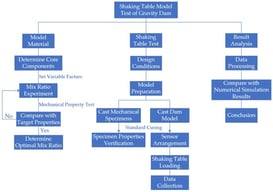
Flow diagram illustrating the research methodology and implementation steps applied in this study.

News & Conferences

Issues

Open for Submission

Editor's Choice

Reprints of Collections

Recent Studies in Static and Dynamic Behaviour of Engineering Structures
Reprint

Recent Studies in Static and Dynamic Behaviour of Engineering Structures

Editors: Xinzhi Dang, Zhihao Wang, Junfeng Jia, Xinxin Wei, Murat Dicleli

Get Alerted

Add your email address to receive forthcoming issues of this journal.

XFacebookLinkedIn
Buildings - ISSN 2075-5309