

Journal Menu
► ▼ Journal Menu-
- Energies Home
- Aims & Scope
- Editorial Board
- Reviewer Board
- Topical Advisory Panel
- Instructions for Authors
- Special Issues
- Topics
- Sections & Collections
- Article Processing Charge
- Indexing & Archiving
- Editor’s Choice Articles
- Most Cited & Viewed
- Journal Statistics
- Journal History
- Journal Awards
- Society Collaborations
- Conferences
- Editorial Office
Journal Browser
► ▼ Journal BrowserNeed Help?
Announcements
25 March 2026
Acknowledging the Contributions of Our Reviewers in 2025

As a pioneer in open access publishing, MDPI maintains rigorous publication standards. This mission relies on the dedication and expertise of our reviewers, who invest their time and knowledge to ensure the quality and integrity of the research we publish.
In 2025, over 209,000 reviewers contributed to the peer-review process at MDPI, providing more than 1.3 million review reports for our journals. To express our gratitude, MDPI’s Reviewer Recognition Program highlights reviewers across over 400 journals, featuring those who have assessed at least one manuscript and agreed to be acknowledged.
In addition, MDPI has identified its Top 1000 Reviewers of 2024 to recognize those whose expertise, dedication, and thoughtful evaluations were particularly outstanding.
Many journals have also established Outstanding Reviewer Awards to honor our reviewers’ commitment to publication excellence. Together with the Exceptional Reviewer List, we showcase the importance of reviewers’ work and their time and dedication.
These initiatives serve to express our deepest appreciation and gratitude towards the whole reviewer community. In recognition of their contributions, we also welcome new researchers to join this community. If you would like to contribute to open access publishing, learn more about the reviewers’ benefits and sign up to join us.
23 March 2026
World Meteorological Day, 23 March 2026

Observed annually on 23 March, World Meteorological Day highlights the vital role of National Meteorological and Hydrological Services in safeguarding lives, supporting sustainable development, and enhancing societal resilience to weather-, climate-, and water-related hazards. The 2026 theme, “Observing Today, Protecting Tomorrow”, underscores the importance of advancing observation systems and scientific knowledge to better anticipate risks and protect future generations.
Reflecting this mission, established MDPI journals in Environmental and Earth Sciences serve as platforms for scholarly exchange and collaboration, advancing research on climate processes, atmospheric and hydrological dynamics, environmental sustainability, disaster risk reduction, and the role of emerging technologies in Earth system observation and analysis. Through these efforts, MDPI supports meaningful dialogue and research addressing both current and emerging challenges in weather, climate, and environmental science.

| Geosciences | Environment & Ecology | ||
| ● Atmosphere; | ● Geomatics; | ● Coasts; | ● Oceans; |
| ● Climate; | ● Geosciences; | ● Energies; | ● Sustainability; |
| ● Earth; | ● Meteorology; | ● Environments; | ● Urban Science; |
| ● GeoHazards; | ● Remote Sensing. | ● Forests; | ● Water. |
| ● Hydrology; | |||
| Business & Economics | |||
| ● Forecasting. | |||


 |
 |
| Prof. Dr. John Boland, Adelaide University, Australia |
Dr. Edoardo Bucchignani, CIRA – Italian Aerospace Research Center, Italy |
 |
 |
| Dr. Dimitris Kaskaoutis, University of Western Macedonia, Greece |
Dr. Kostas Eleftheratos, National and Kapodistrian University of Athens, Greece |
Register for this webinar for free here!

“Climatic Changes Shift Macroalgal Assemblages from Cold- to Warm-Adapted Species: The Venice Lagoon as a Study Case”
by Adriano Sfriso, Yari Tomio and Andrea Augusto Sfriso
Environments 2025, 12(5), 149; https://doi.org/10.3390/environments12050149
“Urban Microclimates in a Warming World: Land Surface Temperature (LST) Trends Across Ten Major Cities on Seven Continents”
by Yiğitalp Kara and Veli Yavuz
Urban Sci. 2025, 9(4), 115; https://doi.org/10.3390/urbansci9040115
“Summer Diurnal LST Variability Across Local Climate Zones Using ECOSTRESS Data in Lecce and Milan”
by Gianluca Pappaccogli, Antonio Esposito and Riccardo Buccolieri
Atmosphere 2025, 16(4), 377; https://doi.org/10.3390/atmos16040377
“Assessing Drought Severity in Greece Using Geospatial Data and Environmental Indices”
by Constantina Vasilakou, Dimitrios E. Tsesmelis, Kleomenis Kalogeropoulos, Pantelis E. Barouchas, Ilias Machairas, Elissavet G. Feloni, Andreas Tsatsaris and Christos A. Karavitis
Geomatics 2025, 5(1), 10; https://doi.org/10.3390/geomatics5010010
“A Performance Comparison Study on Climate Prediction in Weifang City Using Different Deep Learning Models”
by Qingchun Guo, Zhenfang He, Zhaosheng Wang, Shuaisen Qiao, Jingshu Zhu and Jiaxin Chen
Water 2024, 16(19), 2870; https://doi.org/10.3390/w16192870
“Peruvian North Coast Climate Variability and Regional Ocean–Atmosphere Forcing”
by Mark R. Jury and Luis E. Alfaro-Garcia
Coasts 2024, 4(3), 508-534; https://doi.org/10.3390/coasts4030026
Special Issues:
|
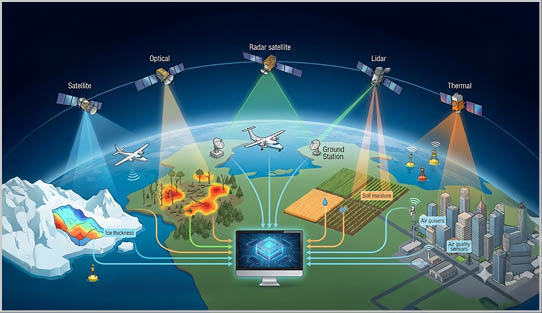
“Applications of Multi-Instrument Remote Sensing in Climate Change and Sustainability Monitoring” |
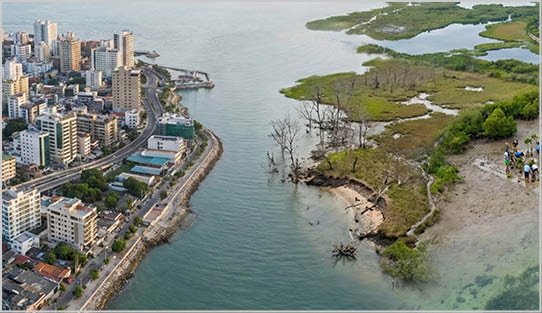
“Changing Coastal Ecosystems Under the Context of Climate Change, Restoration, Rehabilitation, and Urbanization” |
 |
 |

“Impacts of Extreme Storms in Surface Water Resources, Systems, and Infrastructure—Evidence from Storm Daniel (2023) in Greece”
by Michalis Diakakis, Petros Andriopoulos, Andromachi Sarantopoulou, Ioannis Kapris, Christos Filis, Aliki Konsolaki, Emmanuel Vassilakis and Panagiotis Nastos
GeoHazards 2026, 7(1), 14; https://doi.org/10.3390/geohazards7010014
“Wind Regime Variability and Spatiotemporal Distribution of Aeolian Sand Hazards Along a Gobi Desert Highway in the Ejin Banner, Northern China”
by Xixi Ma, Jianhua Xiao, Zhengyi Yao, Xuefeng Hong and Xinglu Gao
Sustainability 2026, 18(3), 1645; https://doi.org/10.3390/su18031645
“A Case Study of a Wintertime Low-Level Jet Associated with a Downslope Wind Event at the Tiksi Observatory (Laptev Sea, Siberia)”
by Günther Heinemann
Meteorology 2025, 4(1), 7; https://doi.org/10.3390/meteorology4010007
“Characterizing the Tropical Cyclones Activity over Arabian Sea (1982–2021)”
by Abdulhaleem H. Labban, H. M. Hasanean, Ali Almahri, Ali Salem Al-Sakkaf and Mahmoud A. A. Hussein
Oceans 2024, 5(4), 840-856; https://doi.org/10.3390/oceans5040048
“A Case Study of the Possible Meteorological Causes of Unexpected Fire Behavior in the Pantanal Wetland, Brazil”
by Flavio T. Couto, Filippe L. M. Santos, Cátia Campos, Carolina Purificação, Nuno Andrade, Juan M. López-Vega and Matthieu Lacroix
Earth 2024, 5(3), 548-563; https://doi.org/10.3390/earth5030028
Special Issues:
|
“Climate Change Scenarios and Impacts for the Mountain Regions at Middle Latitudes” |
“Observations, Modeling, and Theory of the Atmospheric Boundary Layer” |
 |
 |

“Deep Learning-Based Multi-Source Precipitation Forecasting in Arid Regions Using Different Optimizations: A Case Study from Konya, Turkey”
by Vahdettin Demir
Forecasting 2025, 7(4), 60; https://doi.org/10.3390/forecast7040060
“Climatic and Forest Drivers of Wildfires in South Korea (1980–2024): Trends, Predictions, and the Role of the Wildland–Urban Interface”
by Jinchan Park, Jihoon Suh and Minho Baek
Forests 2025, 16(9), 1476; https://doi.org/10.3390/f16091476
“Systematic Biases in Tropical Drought Monitoring: Rethinking SPI Application in Mesoamerica’s Humid Regions”
by David Romero and Eric J. Alfaro
Meteorology 2025, 4(3), 18; https://doi.org/10.3390/meteorology4030018
“Impact of Climate Conditions on the Sensitivity of Long-Term Annual River Flow in a Cascade-Dammed River System: The Brda River Case Study (Poland)”
by Dawid Szatten, Edward Zbigniew Łaszyca, Alberto Bosino, Mattia De Amicis and Oleksandr Obodovskyi
Geosciences 2025, 15(6), 197; https://doi.org/10.3390/geosciences15060197
“Challenges of Artificial Intelligence Development in the Context of Energy Consumption and Impact on Climate Change”
by Sergiusz Pimenow, Olena Pimenowa and Piotr Prus
Energies 2024, 17(23), 5965; https://doi.org/10.3390/en17235965
“The Importance and Scientific Value of Long Weather and Climate Records; Examples of Historical Marine Data Efforts across the Globe”
by Jürg Luterbacher, Rob Allan, Clive Wilkinson, Ed Hawkins, Praveen Teleti, Andrew Lorrey, Stefan Brönnimann, Peer Hechler, Kondylia Velikou and Elena Xoplaki
Climate 2024, 12(3), 39; https://doi.org/10.3390/cli12030039
“A Novel Fusion-Based Methodology for Drought Forecasting”
by Huihui Zhang, Hugo A. Loaiciga and Tobias Sauter
Remote Sens. 2024, 16(5), 828; https://doi.org/10.3390/rs16050828
Special Issues:
|
“Sustainable Management of Energy Resources, Energy Strategies and Climate Change: 3rd Edition” |
“Wildfire Hazards in a Changing Climate: Risks, Impacts, and Adaptation” |
 |
 |

 |
The 7th International Electronic Conference on Atmospheric Sciences Highlights Click here to read the full list of papers. |

 |
 |
20 March 2026
Meet Us at the 2026 MRS Spring Meeting & Exhibit, 26 April–1 May 2026, Honolulu, USA

MDPI is pleased to announce our participation in the 2026 MRS Spring Meeting & Exhibit, which will be held from 26 April to 1 May 2026, in Honolulu, USA.
The conference will convene researchers, scientists, and industry professionals from around the world for a cross-disciplinary collaboration and scientific exchange. The Meeting & Exhibit will feature breakthroughs in areas such as sustainable manufacturing, advanced characterization, and energy materials—driving forward innovation on a global scale.
MDPI is committed to supporting and disseminating high-quality research in the field of materials science.
The following MDPI journals will be represented at the event:
- Materials;
- Nanomaterials;
- Construction Materials;
- Crystals;
- Energies;
- Fibers;
- Gels;
- J. Compos. Sci.;
- Physchem;
- Polymers;
- QuBS;
- Reactions;
- Solids;
- Textiles;
- Coatings;
- Electronic Materials;
- Adhesives;
- Alloys;
- Applied Nano;
- Membranes.
If you are attending the 2026 MRS Spring Meeting & Exhibit, we warmly invite you to visit our booth. Our representatives will be available to discuss publishing opportunities, open access benefits, and our commitment to advancing materials research.
For more information about the conference, please visit the official website here.
20 March 2026
Meet Us at the 2026 KIChE Spring Meeting, 22–24 April 2026, Jeju Island, Republic of Korea

Conference: 2026 KIChE Spring Meeting
Date: 22–24 April 2026
Location: Jeju Island, Republic of Korea
The Korean Institute of Chemical Engineers (KIChE) is one of the largest chemical engineering societies in Korea with 60 years of tradition. The KIChE has more than 6,000 members with 9 regional sections and 13 technical divisions. The KIChE encourages technical, social and cultural exchanges between the members. It endeavors to improve the technological level of domestic academia and promotes the development of technology through educational–industrial cooperation.
MDPI will be attending the 2026 KIChE Spring Meeting as an exhibitor. This meeting will be held from 22 to 24 April 2026, in Jeju Island, and expects to bring together approximately 3000 participants, ranging from academic to industry. We gladly invite researchers to visit our booth and discuss their latest research with us.
The following open access journals will be represented at the conference:
- ChemEngineering;
- AppliedChem;
- Electrochem;
- Energies;
- ESA;
- Fuels;
- Materials;
- Membranes;
- Organics;
- Oxygen;
- Processes;
- Solar;
- Catalysts;
- Clean Technologies;
- Crystals;
- Reactions.
Our delegates look forward to meeting you in person at MDPI’s booth and answering any questions you may have. For more information regarding the conference, please visit the following website: https://www.kiche.or.kr/conference/greetings.
19 March 2026
MDPI Webinar | World Meteorological Day, 23 March 2026

To commemorate World Meteorological Day 2026, MDPI is honored to host a special webinar highlighting the vital role of weather, climate, and water sciences in safeguarding our shared future.
Under the theme “Observing Today, Protecting Tomorrow,” World Meteorological Day 2026 underscores the importance of advancing observation systems, scientific innovation, and data-driven decision-making in the face of a changing climate. As environmental challenges grow increasingly complex, collaboration across disciplines and borders is more crucial than ever.
Through this webinar, we aim to contribute to the global dialogue by bringing together researchers, experts, and practitioners to explore emerging insights, technological advancements, and transformative research shaping the future of meteorological science.
Join us as we celebrate World Meteorological Day 2026, a moment to reflect on progress, exchange knowledge, and strengthen our collective commitment to protecting people and planet for generations to come.
Session 1:
Keywords: meteorology; weather science; climate monitoring; atmospheric processes; forecast modelling; precipitation; temperature; satellites
Date: 23 March 2026
Time: Session 1: 10:00 a.m. CET |8:00 p.m. AEST | 5:00 p.m. CST Asia
Webinar ID: 849 8585 6650
Website: https://sciforum.net/event/WMD
Register now for free!

|
Speaker/ Presentation |
Timing in CET |
Timing in CST Asia |
|
MDPI Introduction |
10:00–10:10 a.m. |
5:00–5:10 p.m. |
|
Prof. Dr. John Boland |
10:10–10:30 a.m. |
5:10–5:30 p.m. |
|
Dr. Edoardo Bucchignani |
10:30–10:50 a.m. |
5:30–5:50 p.m. |
|
Dr. Dimitris Kaskaoutis |
10:50–11:10 a.m. |
5:50–6:10 p.m. |
|
Dr. Kostas Eleftheratos |
11:10–11:30 a.m. |
6:10–6:30 p.m. |
|
Q&A Session |
11:30–11:50 a.m. |
6:30–6:50 p.m. |
|
Closing of Webinar |
11:50 a.m.–12:00 p.m. |
6:50–7:00 p.m. |
After registering, you will receive a confirmation email with information on how to join the webinar. Registrations with academic institutional email addresses will be prioritized.
Unable to attend? Register anyway, and we will let you know when the recording is available for viewing.
Webinar Keynote Speakers:
- Prof. Dr. John Boland, School of Mathematical Sciences, Adelaide University, Australia;
- Dr. Edoardo Bucchignani, CIRA – Italian Aerospace Research Center, Italy;
- Dr. Dimitris Kaskaoutis, Chemical Engineering Department, University of Western Macedonia, Greece;
- Dr. Kostas Eleftheratos, Department of Geology and Geoenvironment, National and Kapodistrian University of Athens, Greece.
18 March 2026
Meet Us at the 34th European Biomass Conference and Exhibition (EUBCE 2026), 19–22 May 2026, The Hague, the Netherlands

Conference: 34th European Biomass Conference and Exhibition (EUBCE 2026)
Date: 19–22 May 2026
Location: The Hague, the Netherlands
MDPI will be attending the 34th European Biomass Conference and Exhibition (EUBCE 2026) as an exhibitor. We welcome researchers from different backgrounds to visit and share their latest ideas with us.
For over 40 years, the European Biomass Conference and Exhibition – EUBCE has been a key platform for reflecting on the biomass sector’s evolution and exploring future trends in bioenergy across research, industry, and policy. As one of the world’s leading biomass events, EUBCE 2026 will bring together 1,500 experts from academia, industry, and policymaking across over 60 countries to explore the latest developments in biomass, bioenergy and the circular bioeconomy. The programme offers opportunities for networking, knowledge exchange, and collaboration through a mix of workshops, exhibitions, and interactive sessions.
The following MDPI journals will be represented at the conference:
- Sustainability;
- Resources;
- Recycling;
- Biomass;
- Sustainable Chemistry;
- Fermentation;
- Energies;
- Earth;
- Fuels.
If you are planning to attend the above conference, please do not hesitate to contact us. Our delegates look forward to meeting you in person and answering any questions that you may have.
For more information about the conference, please visit the following website: https://www.eubce.com/.
9 March 2026
Meet Us at the Second International Conference on Nano Energy and Technology (ICNEAT-2026), 27–30 March 2026, Shantou, China

Conference: The Second International Conference on Nano Energy and Technology
Date: 27–30 March 2026
Location: Shantou, China
MDPI will be attending the second International Conference on Nano Energy and Technology as an exhibitor, and we are welcoming researchers from different backgrounds to visit and share their latest ideas with us.
ICNEAT-2026 will bring together these disciplines, focusing on nanostructures, energy storage and conversion, and advanced materials and devices, as well as artificial intelligence for materials. The conference will offer a global forum for leading researchers to share cutting-edge findings, for industry to engage directly with academia, and for students and early-career scientists to explore the latest advances.
The following MDPI journals will be represented:
- Nanoenergy Advances;
- Molecules;
- Nanomaterials;
- Crystals;
- Physchem;
- Reactions;
- Electrochem;
- Magnetochemistry;
- Methane;
- Energies;
- Applied Nano;
- AI Materials.
If you are planning on attending this conference, please do not hesitate to contact us. Our delegates look forward to meeting you in person and answering any questions that you may have. For more information about the conference, please visit the following website: https://sites.gtiit.edu.cn/matec/icneat2026/.
4 March 2026
Meet Us at the 4th International Conference on Green Building (ICoGB 2026), 8–10 May 2026, Shanghai, China

Conference: 4th International Conference on Green Building
Date: 8–10 May 2026
Location: Shanghai, China
The 4th International Conference on Green Building will be held from 8 to 10 May 2026 at the Theme Park Wassim Hotel. We warmly welcome you to join us in Shanghai, China, as we work together to promote the collective advancement of domestic research levels in the field of green building.
Organized by Tongji University, and co-organized by Xi'an Jiaotong University, Chang'an University, Yangtze University, Zhejiang University of Science and Technology and CoreShare Academic Exchange Center, the 2026 4th International Conference on Green Building (ICoGB 2026) will be held in Shanghai, China.
With researchers, scientists, engineers, and scholars as its contributors, ICoGB presents an open forum aiming to raise green building awareness, spur standards, and develop practical solutions for sustainable buildings by engaging the public, the industry, and the government in the world. Mankind anticipates a promising future with clean water and a clear sky. The illustrated future features better-performing buildings where energy, water, and materials are used sustainably.
The following MDPI journals will be represented at the conference:
- CivilEng;
- Construction Materials;
- Eng;
- Energies;
- Architecture;
- Urban Science;
- Geotechnics;
- Clean Technol.;
- Intelligent Infrastructure and Construction.
If you are planning to attend this conference, please do not hesitate to start an online conversation with us. Our delegates look forward to meeting you in person at the booth and answering any questions that you may have. For more information, please visit https://www.icogb.org/.
4 March 2026
MDPI’s 2025 Best Paper Awards—Award-Winning Papers Announced

MDPI is honored to announce the recipients of the 2025 Best Paper Awards, celebrating exceptional research for its scientific merit and broad impact. After a rigorous evaluation process conducted by Academic Editors, this year’s awards showcase papers that stand out for their innovation, relevance, and high-quality presentation.
Out of a highly competitive pool, 396 winning papers have been recognized for their exceptional contributions. We congratulate these authors for pushing the boundaries of their respective disciplines.
At MDPI, we are dedicated to broadening the reach of innovative science. To learn more about the award-winning papers and explore research projects in your field of study, please visit the following links:
- Biology and Life Sciences;
- Business and Economics;
- Chemistry and Materials Sciences;
- Computer Sciences and Mathematics;
- Engineering;
- Environmental and Earth Sciences;
- Medicine and Pharmacology;
- Social Sciences, Arts and Humanities;
- Physical Sciences;
- Public Health and Healthcare.
About MDPI Awards:
To reward the global research community and enhance academic dialogue, MDPI journals regularly host award programs across diverse scientific disciplines. These awards, serving as a source of inspiration and recognition, help raise the influence of talented individuals who have been credited with outstanding achievements and whose work drives the advancement of their fields.
Explore the Best Paper Awards open for participation, please click here.
28 February 2026
MDPI INSIGHTS: The CEO’s Letter #32 - MDPI China and Thailand, China Science Daily, 1,000 Partnerships, R2R

Welcome to the MDPI Insights: The CEO's Letter.
In these monthly letters, I will showcase two key aspects of our work at MDPI: our commitment to empowering researchers and our determination to facilitating open scientific exchange.
Opening Thoughts

Reflections from China: Year-End-Celebrations and Open Access Publishing
In February, I had the pleasure of joining over a thousand colleagues from our Tongzhou and Haidian offices at their end-of-year annual celebration in Beijing.
Spending time with our teams in China is also a powerful reminder of the scale and complexity of MDPI as a global organization. Our colleagues in Beijing, Wuhan, and across the country play a significant role in our day-to-day operations and long-term development. I’m grateful for the hospitality, collaboration, and commitment shown by our managers and teams in China, alongside colleagues worldwide, who have helped steadily build MDPI, brick by brick, over the years.
Below are some data on Open Access (OA) publishing in China and our collaboration in this important research market.
Open Access Publishing in China
China has been the world’s leading country in research and review article publication volume since 2019, exceeding one million publications in 2025. Over the past five years, the gap between China and the second-ranked country, the United States, has continued to widen.
In 2025:
- 47% of China’s research output was published Open Access
- Of those OA publications, 76% were Gold Open Access (approximately 382,930 articles)
- The overall OA distribution remained stable compared with 2024, with Gold OA increasing by 1%
Over the past five years (2021–2025):
- China published 4,398,050 research and review articles
- Approximately 48% of this output was OA
According to Dimensions, when comparing the top 20 countries by publication volume (2021–2025):
- China ranks 1st worldwide in publication volume
- China ranks 9th in citation performance within this group (for comparison, the US ranks 2nd in publication volume and 10th in citation ranking)
- Average citations per article: 12.51
Among the top 10 universities globally by publication volume, six are Chinese institutions, alongside Harvard University (USA), the University of São Paulo (Brazil), the University of Toronto (Canada), and the University of Oxford (UK).

MDPI and China
China is an important and long-standing part of MDPI’s global publishing ecosystem:
- In 2025, MDPI was the largest fully Open Access publisher in China
- MDPI published 22% of China’s Gold Open Access output (82,133 papers)
- We received 290,999 submissions from China-affiliated authors and published 82,133 articles
- There are 8,500+ active Editorial Board Members based in China
- 64% (5,438) have an H-index above 26
- MDPI works with:
- 117 Editors-in-Chief
- 103 Section Editors-in-Chief
- 71 China-based institutions currently hold IOAP agreements with MDPI, seven of which rank among the top 10 Chinese institutions by publication volume
China's scale in research output means that the publishing platforms chosen by Chinese scholars will continue to influence the direction of scholarly publishing. At the same time, MDPI’s strength comes from its international collaboration, with colleagues, editors, reviewers, and authors working together across regions and disciplines.
Thank you to all our colleagues in China, and around the world, who support MDPI’s publishing activities across departments and help advance open access research every day.
Impactful Research

“Progress in open science is built through trust, dialogue, and relationships”
Behind the Scenes: A Conversation with China Science Daily
During my trip to Beijing, I also had the opportunity to visit China Science Daily and take part in an interview and broader exchange with their team in Beijing. Visits like this matter because progress in open science is built not only through platforms and infrastructure, but also through trust, dialogue, and relationships across research communities and regions.
China Science Daily: History Museum
As part of the visit, I was given a tour of their History Museum, which offers a thorough perspective on the evolution of China’s first science and technology newspaper, established in 1959. The exhibition highlights how the organization developed into a trusted institution connecting research with the public and policymakers. It was a helpful reminder that at the core of publishing is stewardship, credibility, and long-term public engagement with science.

An Open Exchange on Open Science
During the visit, I met with Dr. Zhao Yan, Editor-in-Chief of ScienceNet. We had an open and engaging conversation about MDPI’s role in Open Access, the evolution of open science globally, and the potential for more collaboration going forward. He especially appreciated the candid and personal nature of our exchange, noting that this kind of dialogue feels important in a landscape where trust and transparency matter.

Interview on Open Access
I also participated in an interview with Ms. Yan Jie, from the Online Media Center and Editor-in-Chief of ScienceNet, China Science Daily. Our discussion covered the growth of Open Access over the past 30 years, MDPI’s mission and values, academic integrity, collaboration with the Chinese research community, and MDPI’s own 30th anniversary milestone. It was a great opportunity to reflect on how open science has matured, and where shared responsibility across publishers, institutions, and researchers continues to matter most.
“Progress in open science is built by more than scale and infrastructure”
I’m sharing a few photos from the visit as a glimpse behind the scenes. The full interview will be published by China Science Daily in due course, and I look forward to sharing it when it is available.

More broadly, visits like this reinforce something I’ve always believed in: progress in open science is built not only through scale and infrastructure, but also through continued dialogue, mutual respect, collaboration, and a willingness to listen across regions and perspectives. That remains central to our work, especially as MDPI reflects on 30 years of publishing, built together.
Inside MDPI

Bangkok Visit: Growth, Partnership, and Local Impact
In February, I also had the opportunity to visit our Bangkok office for the second time in two years to support their local meetings and deliver a training session on how we present MDPI at a corporate level.
It’s easy to spend time with our colleagues in Thailand. From Editorial and Production to Conferences, Marketing, Design, and our Regional Journal Relations Specialist (RJRS), the team continues to grow in scale and professionalism. I’d also like to recognize our local management and admin teams, who have been steadily expanding our office and supporting more than 500 colleagues on the ground.
Academic Partnerships
During the visit, we met with the Engineering Department at King Mongkut’s Institute of Technology Ladkrabang (KMITL). Our discussion focused on the recent MDPI developments, Institutional Open Access Program (IOAP) opportunities, Author Publishing Workshops (APW), and the potential use of JAMS to support their institutional journal.

“MDPI is the third-largest OA publisher in Thailand”
We also shared insights into the growth of Open Access (OA) in Thailand and KMITL’s own publishing trends. These conversations matter because institutions are looking for sustainable ways to support their researchers. Our IOAP agreements are one simple example of how we can provide value in this area while maintaining accessibility for authors.
Thailand and MDPI: 2025 Snapshot
Our Bangkok office, officially launched in 2022, has been growing to support over 500 staff members while continuing to expand its engagement in scholar visits, workshops, and conference collaborations. As at 2025, Thailand submissions to MDPI have increased about 21% and publications by about 25%, maintaining a rejection rate close to the company average. MDPI is the third-largest OA publisher in Thailand, publishing 15% of all Gold OA output in 2025.
Representing MDPI Externally
During the visit, I delivered a training session on how we present MDPI at external events.

This session covered topics related to:
- Our aim and guiding principles
- High-level company milestones and Indexing facts and figures
- Industry partnerships and collaborations
- Market trends in OA and subscription publishing
- Country-specific publishing data and collaborations with MDPI
- Insights from our Voice of Community report
I find that while many colleagues are very familiar with the specific journal for which they have responsibility, fewer have visibility into the broader MDPI ecosystem and the company’s global positioning. These sessions help build alignment, confidence, and consistency in how we represent the company.
What stands out most is that MDPI’s growth is not abstract: it’s visible in the people, the partnerships, and the professionalism developing across our offices.
Coming Together for Science

1,000 Institutional Partners: A Milestone Built on Trust
This month, we reached an important milestone: more than 1,000 institutions worldwide are now part of MDPI’s Institutional Open Access Program (IOAP). On paper, that is a number. In practice, it represents trust.
This milestone symbolizes thousands of conversations with libraries and institutions. It stands for negotiations, renewals, consortium expansions, and, most importantly, relationships built over time. It reflects the work of colleagues across publishing, institutional partnerships, marketing, editorial, finance, and many other teams who contribute to making these agreements operational.
In 2025 alone, more than 61,300 research articles benefited from article processing charge (APC) discounts through IOAP agreements. Tens of thousands of authors were able to publish through a simplified and structured process. At the same time, institutional administrators gained clearer oversight and streamlined workflows.

Why IOAP Matters
When we launched IOAP, the objective was straightforward: to reduce barriers for researchers while supporting institutions in navigating the evolving OA landscape. Over the past decade, the research ecosystem has changed. Funder mandates, national policies, and Plan S–aligned requirements have accelerated the transition to OA.
Institutions need publishing partners who provide transparency, scalability, and operational efficiency. IOAP was designed to support that reality.
For colleagues who would like to better understand the program, this blog-post overview of MDPI’s IOAP provides additional context, including common questions around the transition to OA and how our institutional partnerships are structured.
“Institutions need publishing partners who provide transparency, scalability, and operational efficiency”
Recent Examples
Our agreements continue to evolve across regions:
- In Sweden, MDPI signed a national Open Access publishing agreement with 96 institutions, enabling affiliated researchers to publish without managing individual APC payments.
- In Spain, we extended our flat-fee agreement with Universidad Católica de Valencia, reinforcing institutional support for OA publishing.
These examples show that institutions seek structured, predictable models that support their researchers at scale.
Looking Ahead
Crossing the threshold of 1,000 partners tells us that institutions see MDPI not just as a publisher but as a reliable operational partner in advancing open science. This milestone is not a finish line. It is a reminder that the work continues.
Thank you to the entire IOAP team and to all colleagues who contributed to reaching this achievement.
P.S. You can read about this milestone across industry outlets, including STM Publishing News, ALPSP, Research Information, EurekAlert, Brightsurf, among others. You can also read about the coverage in Poland (e.g., media-room, bomega) Korea (newstap), and Romania (EduLike).
Closing Thoughts

Reflections from the Researcher to Reader Conference
During 24–25 February, I attended the 2026 Researcher to Reader Conference in London, UK. Leaders from across scholarly publishing, research infrastructure, libraries, and technology gathered to discuss AI and research integrity, peer review reform, metadata and infrastructure, community engagement, open research policy, and the evolving role of publishers in a rapidly shifting ecosystem.
The conversations were open and honest, and at times uncomfortable – exactly what we need at times. Below are a few reflections that stayed with me.
The Battle for Knowledge: What Becomes Accepted as ‘True’?
One recurring theme was not whether science evolves but whether our infrastructure is resilient enough to sustain trust at scale. Science does not promise certainty: it promises process. As publishing systems grow more complex and become more technologically mediated, the question is how intentionally we design, monitor, and strengthen that process.
Peer Review: Speed, Credentials, and Structural Loops
Researchers consistently call for faster peer review. At the same time, reviewer credentials are often tied to publication records. This creates a structural loop. Publishing history opens reviewing opportunities, reviewing strengthens credentials, and those without early access remain outside the cycle.
There is a need for us to reflect on how opportunity circulates within our systems: we should ask how we create more inclusive pathways for researchers globally to participate in peer review.
Community Engagement Workshop
One of the highlights of R2R was the workshop format, whereby small groups met repeatedly over two days and moved from ideas to tangible strategies.
I joined the Community Engagement workshop led by Lou Peck (CEO at The International Bunch) and Godwyns Onwuchekwa (Principal Consultant at Global Tapestry Consulting). We explored two deceptively simple questions: What is a community? and What does engagement truly mean?
“Engagement requires shared design and shared responsibility”
Too often, organizations equate communication with engagement. The framework discussed mapped a maturity spectrum – from enablement (broadcasting, informing and consulting) to true engagement (collaborating and co-creating).
It was a useful reminder of the fact that if we want trust and loyalty, engagement must go beyond announcements and surveys. It requires shared design and shared responsibility.
AI: Democratization or Digital Colonialism?
I especially enjoyed the thought-provoking presentation from Nikesh Gosalia (Chief Partnership Officer at Cactus Communications), which highlighted an uncomfortable reality:

- 93% of AI-generated content is in English
- Approximately 2% is in French
- Approximately 2% is in German
- More than 7,000 languages are represented in less than 5% of the content within large AI systems
The implications are profound. Is AI democratizing access to scholarly publishing (making it easier for researchers everywhere to participate in global knowledge production)? Or are we encoding colonialism at scale (entrenching linguistic and structural hierarchies, and making it harder for voices from the Global South to be heard)?
AI is already reshaping how research is created, reviewed, discovered, and shared. Its potential is enormous. But its impact depends not only on capability, but on governance, design, and intentionality. Publishers, funders, and researchers all share responsibility in shaping how these systems evolve.
Ethicality in practice (Lightening Talk)

It was also great to have our colleague Dr Miloš Čučulović (Head of Technology Innovation at MDPI) present MDPI’s Ethicality platform during a lightning talk.
“Technology alone is not the answer”
Ethicality embeds AI-driven checks directly into the submission workflow, supporting editors proactively rather than reacting after publication. As we scale, tools like this help balance trust, efficiency, and research integrity.
This goes back into the underlying theme of the conference that technology alone is not the answer. However, technology embedded thoughtfully within clear governance frameworks can strengthen confidence in the editorial process.
Final thought
The question is no longer whether technology will transform research infrastructure: it is already doing so. The real question is what role each of us will play in shaping that transformation deliberately, with structural maturity, inclusive governance, and engagement that moves from informing to co-creating.
Science needs to evolve, responsibly. And that responsibility extends not only to what we publish, but also to how the systems behind publication are designed. Some important topics to continue reflecting on both internally and within our broader community.
Chief Executive Officer
MDPI AG
