




Sensors, Volume 17, Issue 8 (August 2017) – 233 articles
Cover Story (view full-size image):
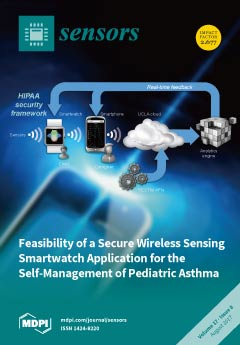
The Biomedical REAl-Time Health Evaluation (BREATHE) platform for real-time secure data communication mobile Health (mHealth) systems for pediatric asthma. Wireless physiological and environmental wireless sensors send data to a smartwatch and smartphone, where it is combined with available sensor data in real time. This data is then sent to a cloud through Health Insurance Portability and Accountability Act (HIPAA) compliant cryptography and combined with online sources to provide an enriched dataset for real-time individualized assessments of the risk of an asthma attack. The risk level (high, medium, or low risk) is then determined using a random forest classifier and sent to the smartwatch to be visualized as an animated dragon graphic for easy interpretation by children. View Paper here
- Issues are regarded as officially published after their release is announced to the table of contents alert mailing list.
- You may sign up for e-mail alerts to receive table of contents of newly released issues.
- PDF is the official format for papers published in both, html and pdf forms. To view the papers in pdf format, click on the "PDF Full-text" link, and use the free Adobe Reader to open them.
Previous Issue
Next Issue