

Journal Menu
► ▼ Journal Menu-
- Nanomaterials Home
- Aims & Scope
- Editorial Board
- Reviewer Board
- Topical Advisory Panel
- Early Career Editorial Board
- Instructions for Authors
- Special Issues
- Topics
- Sections & Collections
- Article Processing Charge
- Indexing & Archiving
- Editor’s Choice Articles
- Most Cited & Viewed
- Journal Statistics
- Journal History
- Journal Awards
- Society Collaborations
- Conferences
- Editorial Office
Journal Browser
► ▼ Journal BrowserNeed Help?
Announcements
25 June 2026
Prof. Dr. James C. L. Chow Appointed Associate Editor of Section “Biology and Medicines” in Nanomaterials
We are pleased to announce that Prof. Dr. James C. L. Chow has been appointed Associate Editor of the Section “Biology and Medicines” in Nanomaterials (ISSN: 2079-4991). With an extensive background in scientific research and publishing, he will bring a wealth of knowledge and expertise to this role.
|
|
Name: Prof. Dr. James C. L. Chow Affiliation: Department of Radiation Oncology, Temerty Faculty of Medicine, and Department of Materials Science and Engineering, Faculty of Applied Science and Engineering, University of Toronto, Toronto, ON, Canada Website: https://radonc.utoronto.ca/faculty/james-chow Interests: nanotechnology; nanoparticle-enhanced radiotherapy; nanotheranostic; nanodosimetry; computer simulation; machine learning; chatbot; cancer therapy; medical imaging; AI ethics; FLASH radiotherapy; quantum computing |

Prof. Dr. James C. L. Chow is a professor in the Department of Radiation Oncology and cross-appointed professor in the Department of Materials Science and Engineering at the University of Toronto, Canada. He is also a medical physicist at the Princess Margaret Cancer Centre and a clinician scientist at the Princess Margaret Cancer Research Institute. His research focuses on nanotechnology, nanoparticle-enhanced radiotherapy, nanotheranostics, nanodosimetry, medical imaging, artificial intelligence, machine learning, and emerging technologies for cancer diagnosis and treatment.
Prof. Dr. Chow has published extensively in the fields of medical physics, nanomedicine, radiation oncology, and biomedical engineering. He is a fellow of the Canadian College of Physicists in Medicine, the Institute of Physics, and the Institution of Engineering and Technology, as well as a senior member of IEEE. His interdisciplinary research bridges materials science, physics, medicine, and artificial intelligence to advance precision healthcare and improve patient outcomes.
The following is a short Q&A with Prof. Dr. James C. L. Chow, who shared his vision for the journal with us, as well as his views on the research area:
1. What motivated you to assume the role of Section Associate Editor for this journal?
Nanomaterials has established itself as a leading journal in the field of nanoscience and nanotechnology. My research career has focused extensively on the biomedical applications of nanomaterials, particularly nanoparticle-enhanced radiotherapy, nanotheranostics, and nanomedicine. Serving as Section Associate Editor provides an excellent opportunity to contribute to the scientific community by helping to identify and promote innovative, high-quality research that advances the translation of nanomaterials into clinical and healthcare applications. I am also motivated by the opportunity to support authors, reviewers, and readers in maintaining rigorous scientific standards and fostering interdisciplinary collaboration.
2. How do you envision the evolution of this research field in the coming years?
I believe the field will continue to move toward highly integrated and personalized approaches that combine nanomaterials, artificial intelligence, molecular imaging, and precision medicine. Future nanomaterials will be increasingly multifunctional, enabling simultaneous diagnosis, therapy, and treatment monitoring. Advances in computational modeling, machine learning, and quantum technologies may also accelerate the design and optimization of novel nanomaterials. In cancer therapy, nanotechnology is expected to play a critical role in improving treatment efficacy while reducing toxicity, ultimately supporting more personalized and effective patient care.
3. What are your thoughts on the progress of the open access model within the publishing realm?
The open access model has significantly enhanced the accessibility and dissemination of scientific knowledge. By removing subscription barriers, it allows researchers, clinicians, policymakers, and the public to access the latest findings more rapidly and equitably. Open access has also facilitated greater international collaboration and visibility for research. While challenges remain regarding publication costs and maintaining high-quality peer review, I believe the continued development of transparent editorial processes and rigorous standards will strengthen the sustainability and impact of open access publishing.
4. What advice or principles would you offer to young scholars aiming to pursue similar research paths with a focus on excellence?
I encourage young researchers to cultivate strong foundations in both fundamental science and interdisciplinary collaboration. The most impactful advances often occur at the intersection of multiple disciplines. Curiosity, persistence, scientific integrity, and a commitment to lifelong learning are essential. Researchers should focus not only on publishing results but also on addressing meaningful scientific and clinical challenges. Developing strong communication skills, engaging with international collaborators, and embracing emerging technologies such as artificial intelligence will also help young scholars make significant contributions to the field.
5. What was it like to serve as an Associate Editor for the “Biology and Medicines” Section? What are your expectations and goals in this role?
Serving as an Associate Editor is both a privilege and a responsibility. It provides a unique perspective on emerging trends, scientific rigor, and the evolving needs of the research community. My goal is to help maintain the highest standards of peer review while fostering an inclusive and constructive editorial environment. I hope to support the publication of innovative research that advances the understanding and application of nanomaterials in biology and medicine. I also look forward to promoting interdisciplinary work that bridges materials science, biomedical engineering, oncology, artificial intelligence, and translational medicine to address important healthcare challenges.
24 June 2026
Nanomaterials Receives an Updated Impact Factor of 4.8

We are pleased to announce that Nanomaterials (ISSN 2079-4991) has received a 2025 Journal Impact Factor of 4.8 in the latest Journal Citation Reports™ released by Clarivate™ in June 2026, representing an increase of approximately 11.6% compared with the previous year. Nanomaterials is ranked in Q2 in all four JCR categories in which it is indexed: “Chemistry, Multidisciplinary”; “Materials Science, Multidisciplinary”; “Nanoscience & Nanotechnology”; and “Physics, Applied”.
The 2025 Journal Impact Factor is calculated by dividing the number of citations received in 2025 to all publications in the journal from 2023 and 2024 by the total number of citable publications from those same years.
To learn more, visit our journal statistics website for detailed metrics.
The support and dedication of all the editors, reviewers, authors, and readers are an integral part of the journal’s performance. We would like to take this opportunity to thank all of you who have contributed to the journal.
23 June 2026
MDPI Webinar | International Women in Engineering Day, 23 June 2026
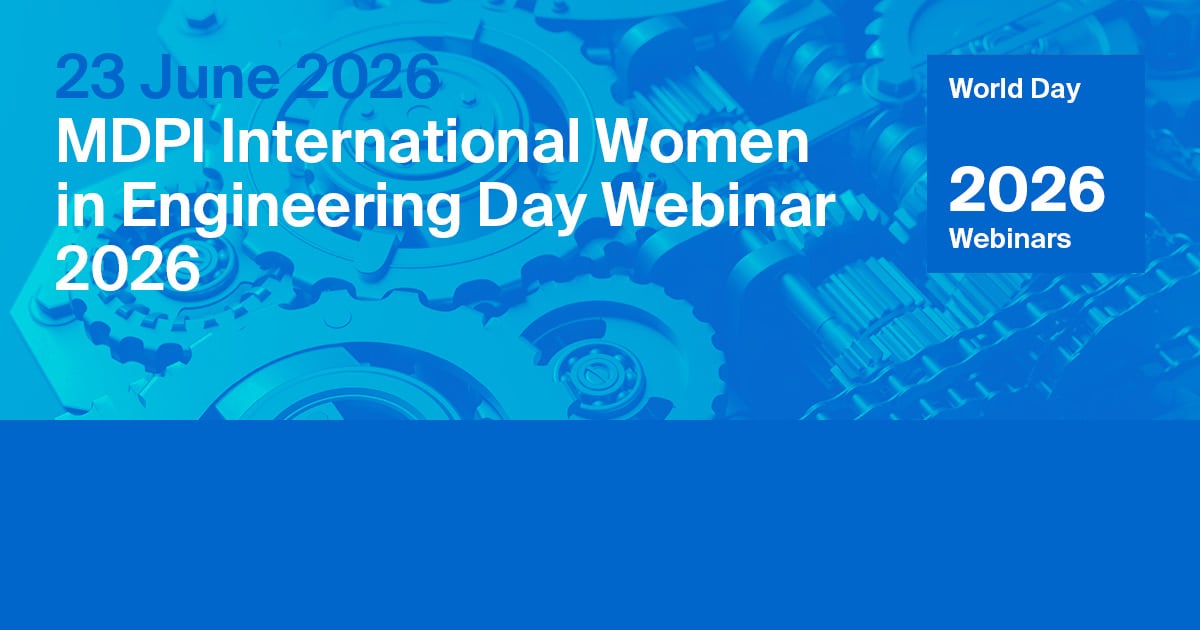
International Women in Engineering Day (INWED), observed annually on 23 June, is a global initiative that celebrates the outstanding achievements of women in engineering while inspiring more young women to pursue engineering careers. Aligned with the 2026 theme, "Engineering Intelligence", and Goal 5 (Gender Equality) of the United Nations Sustainable Development Goals (SDGs), MDPI highlights the innovative contributions of women engineers who are shaping the future through creativity, collaboration, and technological advancement. Together, we can foster a more inclusive engineering landscape and empower the next generation of women in STEM.
Join us in celebrating International Women in Engineering Day and supporting initiatives that empower women in STEM. This webinar will showcase not only the technical contributions of women engineers, but also the personal journeys, challenges, and achievements that have shaped their careers and inspired others to pursue paths in engineering and innovation.
Session 1:
Keywords: women in engineering; female engineers; innovation; STEM
Date: 12:00 p.m. CEST | 6:00 p.m. CST Asia
Webinar ID: 856 2639 9832
Webinar page: https://sciforum.net/event/INWED2026-1?subscribe
Register now for free!

| Speaker | Presentation | Time in CEST | Time in CST Asia |
| Introduction and Opening Remarks | 12:00–12:10 p.m. | 6:00–6:10 p.m. | |
| Dr. Maria Konstantaki | From Lab to Life: Application-Driven Optical Fiber Sensors | 12:10–12:30 p.m. | 6:10–6:30 p.m. |
| Prof. Gabriella Gaias | Multi-Satellite Missions for a Sustainable Use of Space | 12:30–12:50 p.m. | 6:30–6:50 p.m. |
| Prof. Sara Casaccia | Measuring Wellbeing: My Journey Through Engineering Research and Innovation in Measurement Applications | 12:50–1:10 p.m. | 6:50–7:10 p.m. |
| Assoc. Prof. Marilena De Simone | A Woman’s Perspective on the Human Factor in Energy Engineering | 1:10–1:30 p.m. | 7:10–7:30 p.m. |
| Q&A Session | 1:30–1:55 p.m. | 7:30–7:55 p.m. |
After registering, you will receive a confirmation email on how to join the webinar.
Registrations with academic institutional email addresses will be prioritized.
Unable to attend? Register anyway and we will let you know when the recording is available to view.
Webinar Keynote Speakers:
- Dr. Maria Konstantaki, Foundation for Research and Technology-Hellas (FORTH), Greece;
- Dr. Gabriella Gaias, Politecnico di Milano, Italy;
- Dr. Sara Casaccia, Università Politecnica delle Marche, Italy;
- Dr. Marilena De Simone, University of Calabria, Italy.
Session 2:
Keywords: women in engineering; female engineers; innovation; STEM
Date: 4:00 p.m. CEST | 10:00 a.m. EDT| 10:00 p.m. CST Asia
Webinar ID: 833 7384 9123
Webinar page: https://sciforum.net/event/INWED2026-2
Register now for free!
| Speaker | Presentation | Time in CEST | Time in EDT |
| MDPI Introduction | 4:00–4:10 p.m. | 10:00–10:10 a.m. | |
| Dr. Najmeh Bazmohammadi | Next-Generation Power Systems Resilience | 4:10–4:30 p.m. | 10:10–10:30 a.m. |
| Prof. Dr. Kristen Fichthorn | What Enhanced Free-Energy Sampling Techniques and Machine Learning Can Tell Us about Effective Catalysts | 4:30–4:50 p.m. | 10:30–10:50 a.m. |
| Dr. Encarna Micó-Amigo | Wearable Sensors for Real-World Health Monitoring: Algorithms and Applications | 4:50–5:10 p.m. | 10:50–11:10 a.m. |
| Prof. Dr. Yuliya Semenova | Optical Fiber Sensing Solutions From Macro- to Nanoscale | 5:10–5:30 p.m. | 11:10–11:30 a.m. |
| Prof. Dr. Sabina Merlo | TBC | 5:30–5:50 p.m. | 11:30–11:50 a.m. |
| Q&A Session | 5:50–6:15 p.m. | 11:50 a.m.–12:15 p.m. | |
| Closing Remarks | 6:15–6:20 p.m. | 12:15–12:20 p.m. |
After registering, you will receive a confirmation email on how to join the webinar. Registrations with academic institutional email addresses will be prioritized.
Unable to attend? Register anyway and we will let you know when the recording is available to view.
Webinar Keynote Speakers:
- Dr. Najmeh Bazmohammadi, Aalborg University, Denmark;
- Prof. Dr. Kristen Fichthorn, Pennsylvania State University, USA;
- Dr. Encarna Micó-Amigo, Heriot-Watt University, UK;
- Prof. Dr. Yuliya Semenova, Technological University Dublin, Ireland;
- Prof. Dr. Sabina Merlo, University of Pavia, Italy.
23 June 2026
International Women in Engineering Day—“Engineering Intelligence”, 23 June 2026

International Women in Engineering Day (INWED), led by the Women’s Engineering Society (WES) and observed annually on 23 June, is a global initiative that celebrates the outstanding achievements of women in engineering while inspiring more young women to pursue engineering careers. Under the 2026 theme “Engineering Intelligence”, INWED celebrates its 13th anniversary, highlighting the expertise, creativity, and leadership that women bring to the engineering profession.
Echoing this mission, MDPI’s established engineering journals serve as platforms for scientific communication. Through webinars, award, Special Issues, and research articles, MDPI aims to celebrate the achievements of women engineers, inspire future generations, and help shape a more inclusive future for engineering worldwide.

|
Engineering ● Actuators;● Aerospace; ● AgriEngineering; ● Applied Sciences; ● Automation; ● Bioengineering; ● Buildings; ● Drones; ● Electronics; ● Eng; |
● Inventions; ● Journal of Nuclear Engineering; ● Lubricants; ● Machines; ● Micromachines; ● Modelling; ● Powders; ● Processes; ● Sensors; ● Smart Cities; ● Telecom; |
● Vehicles; Chemistry & Materials Science ● Alloys; |


|
Date: 23 June 2026, 12:00 pm (CEST) Webinar ID: 856 2639 9832 Free to register for this webinar here! |
Date: 23 June 2026, 04:00 pm (CEST) Webinar ID: 833 7384 9123 Free to register for this webinar here! |


We are pleased to announce that the 2nd edition of the Young Women in Engineering Award is now open for nominations. This award was established to recognize the achievements of young women researchers in the field of engineering and to inspire more young women to pursue research and careers in engineering.
Nomination deadline: 30 November 2026.
Prize:
- CHF 1000;
- An electronic certificate;
- A voucher to waive the article processing charges (APCs) for one submission to a journal within the field of engineering (subject to peer review)—valid for one year.
Number of winners: 4.
For more details about the award, please visit here. Please feel free to send the nomination letter to ywe-award@mdpi.com.

We are honored to interview several outstanding female scholars in engineering field to share their research journey and your insight into being a female engineer.
 |
Name: Dr. Miriam Filippi Affiliation: Soft Robotics Laboratory, ETH Zurich, Zurich, Switzerland Winner of the inaugural Young Women in Engineering Award “The most transformative research often comes from integrating perspectives across fields and pushing beyond conventional boundaries.” Please read the full interview here. |
 |
Name: Prof. Dr. Yang Gao Affiliation: Department of Mechanical and Aerospace Engineering, Hong Kong University of Science and Technology, Hong Kong, China “I tell my students: use AI and automation aggressively but never outsource your reasoning or your conscience.” Please read the full interview here. |
 |
Name: Dr. Maria Graça Rasteiro Affiliation: CERES, Department of Chemical Engineering, University of Coimbra, Coimbra, Portugal “It is important to always analyse the potential negative consequences of relying on AI for engineering decisions.” Please read the full interview here. |

“Design and Analysis of a Compact Self-Tuning High-Voltage Controller for MFC”
by Qiong Zhu, Qiang Zhang, Hongli Ji and Jinhao Qiu
Actuators 2026, 15(3), 169; https://doi.org/10.3390/act15030169
“Nervous System-on-Chip: Innovative Microfluidic Platform to Compartmentalize hiPSC-Derived Neural Networks”
by Rahman Sabahi-Kaviani, Antigoni Gogolou, Celine Souilhol, Mark van der Kroeg, Steven A. Kushner, Femke M. S. de Vrij, Anestis Tsakiridis and Regina Luttge
Micromachines 2026, 17(2), 199; https://doi.org/10.3390/mi17020199
“Maximizing Efficiency in a Retrofitted Battery-Powered Material Handler by Novel Control Strategies”
by Marco Ferrari, Daniele Beltrami, Vinay Partap Singh, Tatiana Minav and Stefano Uberti
Actuators 2025, 14(11), 553; https://doi.org/10.3390/act14110553
“An Internet of Things Approach to Vision-Based Livestock Monitoring: PTZ Cameras for Dairy Cow Identification”
by Niken Prasasti Martono, Ryota Tsukamoto and Hayato Ohwada
Telecom 2025, 6(4), 82; https://doi.org/10.3390/telecom6040082
“Mechanisms and Control Strategies for Morphing Structures in Quadrotors: A Review and Future Prospects”
by Osman Acar, Eija Honkavaara, Ruxandra Mihaela Botez and Deniz Çınar Bayburt
Drones 2025, 9(9), 663; https://doi.org/10.3390/drones9090663
“Optimizing Local Explainability in Robotic Grasp Failure Prediction”
by Cagla Acun, Ali Ashary, Dan O. Popa and Olfa Nasraoui
Electronics 2025, 14(12), 2363; https://doi.org/10.3390/electronics14122363
“AI-Enabled IoT for Food Computing: Challenges, Opportunities, and Future Directions”
by Zohra Dakhia, Mariateresa Russo and Massimo Merenda
Sensors 2025, 25(7), 2147; https://doi.org/10.3390/s25072147
“A Review of Time-Series Forecasting Algorithms for Industrial Manufacturing Systems”
by Syeda Sitara Wishal Fatima and Afshin Rahimi
Machines 2024, 12(6), 380; https://doi.org/10.3390/machines12060380
Special Issues:
|
Guest Editor: Dr. Ines Domingues Deadline for manuscript submissions: 30 September 2026 |
“AI-Driven Intelligent Maintenance and Health Management for Complex Industrial Systems” Guest Editors: Prof. Dr. Dandan Peng, Dr. Xiaoxi Hu, Dr. Jipu Li and Prof. Dr. Chuanjiang Li Deadline for manuscript submissions: 31 October 2026 |
|
|
|
|
“Vehicle Systems and Road Infrastructure Integration for Smarter Transportation Systems” Guest Editors: Prof. Dr. Anna Granà, Prof. Dr. Elżbieta Macioszek and Dr. Maria Luisa Tumminello Deadline for manuscript submissions: 30 November 2026 |
“Intelligent Automation: Bridging Artificial Intelligence and Automation” Guest Editors: Prof. Dr. João Miguel da Costa Sousa and Dr. Susana Vieira Deadline for manuscript submissions: 30 November 2026 |
|
|
|
|
Guest Editors: Dr. Xi Kuai, Prof. Dr. Biao He, Dr. Minmin Li and Dr. Haojia Lin Deadline for manuscript submissions: 31 January 2027 |
“Actuators and Robotic Devices for Rehabilitation and Assistance—2nd Edition” Guest Editors: Dr. Monica Tiboni, Dr. Monica Malvezzi and Dr. Maria Cristina Valigi Deadline for manuscript submissions: 31 March 2027 |
 |
 |





“A Machine Learning Framework for Crop Productivity Classification and Risk Assessment”
by João Pedro de Moraes Xavier, Kelyn Schenatto, Glauco Vieira Miranda, Claudio Leones Bazzi, Ricardo Sobjak and Marlon Rodrigues
AgriEngineering 2026, 8(6), 203; https://doi.org/10.3390/agriengineering8060203
“Mechanical Modeling of Grape Destemming in a Horizontal Centrifugal Destemmer”
by Piernicola Masella, Agnese Spadi, Ferdinando Corti, Alessandro Parenti and Giulia Angeloni
AgriEngineering 2026, 8(3), 94; https://doi.org/10.3390/agriengineering8030094
“An Automated Modular Platform for Vascular Graft Assessment via Coronary-like Flow-Induced Stimulation”
by Elia Pederzani, Lucrezia Moro, Alessia Sofia Bolandrina, Sara Rega, Gianluca Lorenzo Perrucci, Gianfranco Beniamino Fiore and Monica Soncini
Bioengineering 2026, 13(2), 221; https://doi.org/10.3390/bioengineering13020221
“Biomechanical Monitoring of Exercise Fatigue Using Wearable Devices: A Review”
by Yang Chen, Siqi Li, Jian Kuang, Xu Zhang, Zhijie Zhou, En-Jing Li, Xiaoli Chen and Xianmei Meng
Bioengineering 2026, 13(1), 13; https://doi.org/10.3390/bioengineering13010013
“Applying Machine Learning Algorithms to Classify Digitized Special Nuclear Material Obtained from Scintillation Detectors”
by Sai Kiran Kokkiligadda, Cathleen Barker, Emily Gunger, Jalen Johnson, Brice Turner and Andreas Enqvist
J. Nucl. Eng. 2025, 6(3), 31; https://doi.org/10.3390/jne6030031
“Reliability Analysis of Interface Oxidation for Thermal Barrier Coating Based on Proxy Model”
by Juan Ma, Anyi Wang, Philipp Junker, Anas W. Alshawawreh, Qingya Li, Haoqi Xu and Runzhuo Xue
Modelling 2025, 6(3), 61; https://doi.org/10.3390/modelling6030061
“Classification of Metallic Powder Morphology Using Traditional and Automated Static Image Analysis: A Comparative Study”
by Cindy Charbonneau, Fabrice Bernier, Étienne Perrault, Roger Pelletier and Louis-Philippe Lefebvre
Powders 2025, 4(2), 15; https://doi.org/10.3390/powders4020015
“Advancing Brain Tumor Analysis: Current Trends, Key Challenges, and Perspectives in Deep Learning-Based Brain MRI Tumor Diagnosis”
By Namya Musthafa, Qurban A. Memon and Mohammad M. Masud
Eng 2025, 6(5), 82; https://doi.org/10.3390/eng6050082
Special Issues:
|
“AI and Data Analysis in Neurological Disease Management” Guest Editors: Dr. Bess Lam and Dr. Ka-Chun Wong Deadline for manuscript submissions: 31 August 2026 |
“Machine Learning and Artificial Intelligence in Modelling” Guest Editors: Dr. Margarita Terziyska and Dr. Miroslava Ivanova Deadline for manuscript submissions: 30 September 2026 |
|
|
|
|
“Advanced Simulation and Digital Technologies in Women’s Health and Medical Training” Guest Editor: Dr. Aida Petca Deadline for manuscript submissions: 20 October 2026 |
Guest Editors: Dr. Juan Ren and Dr. Xuan Ma Deadline for manuscript submissions: 31 October 2026 |
|
|
|
|
“Machine Learning Applications in Healthcare and Disease Prediction” Guest Editor: Dr. Chiara Iacovelli Deadline for manuscript submissions: 30 November 2026 |
“Smart Technologies for Agricultural Product Processing and Quality Detection” Guest Editors: Dr. Huertas María Díaz-Mula, Dr. Salvador Castillo-Gironés and Dr. María Nicolás-Almansa |
|
|
|






 |
 |
 |
 |
22 June 2026
Meet Us at the China Materials Conference 2026, 12–15 July 2026, Wuhan, China
Conference: China Materials Conference 2026
Date: 12–15 July 2026
Location: Wuhan, China
The China Materials Conference 2026, the annual academic conference of the Chinese Materials Research Society, will take place from 12 to 15 July 2026 in Wuhan, China.
The 2026 conference will feature a wide range of thematic sessions covering key and emerging areas, including energy materials, information materials, advanced structural materials, functional materials and devices, biomedical materials, materials for daily life and transportation, environmental materials, safety materials, and “AI + materials”, among others.
MDPI will be attending this event as an exhibitor, welcoming researchers from diverse backgrounds to visit and share their latest ideas.
The following open access journals will be represented at this conference:
If you are planning to attend this conference, please feel free to start a conversation with us. Our delegates look forward to meeting you in person and answering any questions that you may have. For more information about this event, please visit https://cmc2026.scimeeting.cn/cn/web/index/35126.
17 June 2026
2025 Impact Factors Released
Impact Factors measure how often articles in scientific journals are cited—specifically, the average number of citations received in a given year by articles published in that journal over the previous two years, as tracked in the Web of Science. For researchers, the number answers a practical question: how often is work published in this journal being picked up and built upon?
The metric is assigned to the journal as a whole, not to individual articles. A high Impact Factor tells you something useful about a journal's place in its field; it tells you less about any single paper within it.
For a complementary, article-level view, MDPI lists an Altmetric score on each article page. Where the Impact Factor tracks academic citations, the Altmetric score captures broader online attention: how an article is being shared, discussed, and referenced beyond the journal literature. Together, they offer two different ways of asking the same question: is this research reaching people?
With 2025 CiteScores from Scopus published a few weeks ago, Clarivate has now released this year's Journal Impact Factors in the Journal Citation Reports (JCR).
254 MDPI Journals Saw a Rise in Impact Factor
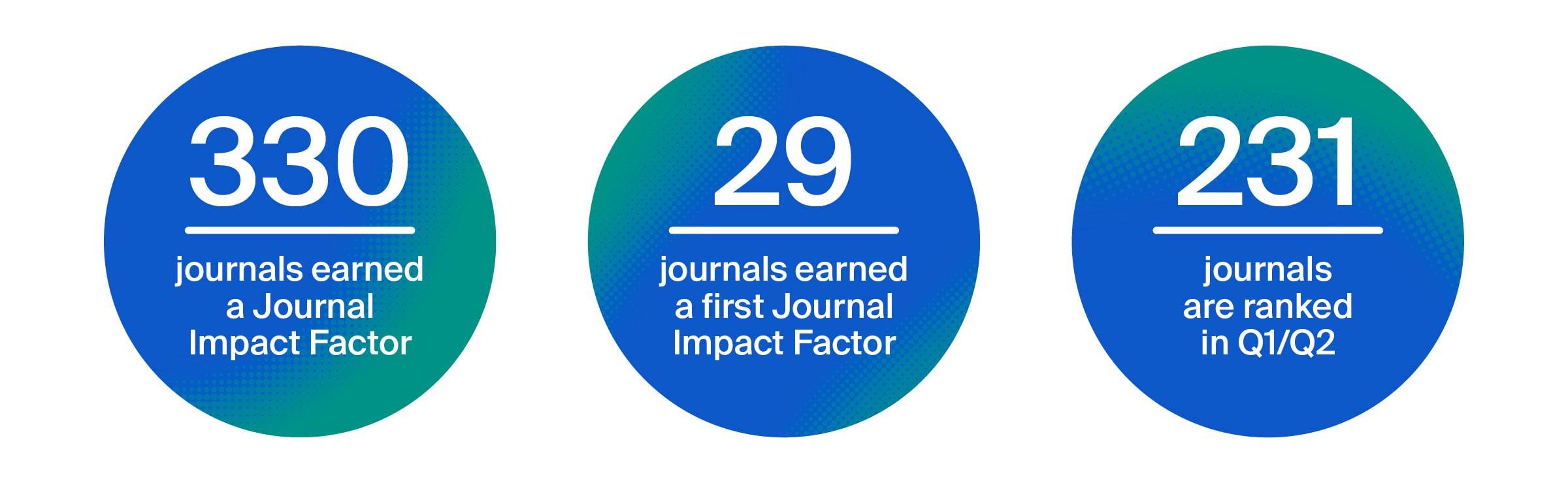
This year's JCR include 330 MDPI journals across a wide range of disciplines. Of these, 231 journals are placed in the top 50% (Q1 or Q2) of their respective subject categories, a result that spans fields as different as materials science, public health, environmental studies, and mathematics. 78 journals hold a top-quartile position (Q1), and 33 journals have a JIF of 5.0 or above.
- 330 journals earned a Journal Impact Factor (JIF)
- 29 journals earned a first JIF
- 254 journals had an increase in JIF
- 71% of ranked journals are in Q1 or Q2
For the full metrics on any MDPI journal, visit our Web of Science journals overview page or a journal's individual statistics page.
29 MDPI Journals Received Their First Journal Impact Factor
A first Impact Factor is a confirmation for an emerging journal. It marks the point at which a journal has been publishing long enough, and cited broadly enough, to enter the formal record of scientific influence. For the research communities those journals serve, it signals that the work being published is being read and built upon.
This year, 29 MDPI journals received a Journal Impact Factor for the first time, across a range of emerging and established research areas. Each represents years of editorial development and peer review—recognized in 2026 for the first time in the JCR.
This is also part of a longer shift in how science gets indexed. When the Emerging Sources Citation Index (ESCI) launched in 2016, 24 MDPI journals were included. By 2024 that number had grown to over 200, reflecting a broader change in the visibility of open access publishing within major citation tracking systems, not just at MDPI but across the sector.
Open Access with Impact
MDPI journals have received a total of 25.2 million citations in Web of Science. That figure matters less as a measure of MDPI's reach and more as a measure of what happens when research is freely available: it gets found, read, and used. Open access is only meaningful if the work actually travels and citations are one indicator that it does.
More than 4.6 million authors have published with MDPI. That breadth, across disciplines, institutions, and geographies, is what makes open access at this scale worth doing.
Thank You to the MDPI Scholarly Community
These results belong to the people who do the actual work: the Editors-in-Chief who set the standards, the Editorial Board Members and reviewers who hold them, and the authors who choose open access for their research. The numbers in the Journal Citation Reports are the downstream effect of decisions made at the desk, in the review, and at submission. Thank you for making them.
Data: 2025 Journal Impact Factors, Journal Citation Reports™ (Clarivate, 2026)
8 June 2026
Nanomaterials Receives an Increased CiteScore of 10.3

We are pleased to share that Nanomaterials (ISSN: 2079-4991) has received an increased CiteScore of 10.3 in June 2026, marking seven consecutive years of growth—an impressive achievement for a journal running in Volume 16.
Nanomaterials’ CiteScore ranks as follows:
- Q1 (33 out of 270) in the “General Chemical Engineering” category;
- Q1 (72 out of 475) in the “General Materials Science” category.
You can find more statistics on our website.
The current CiteScores measure the average number of citations within a journal over a four-year window (2022–2025). The Scopus database provides a comprehensive suite of metrics that support informed publishing strategies, research evaluation and enable benchmarking of journal performance.
This achievement reflects the collective efforts of our authors, reviewers, and editors. Together we will continue to track the progress of Nanomaterials and its growing impact in the study of nanomaterials.
4 June 2026
Open Access, Broadly Recognized: 363 MDPI Journals Receive CiteScores for 2025
The 2025 CiteScore metrics have been officially released by Scopus, and the results confirm what has become a consistent pattern for MDPI's journal portfolio: broad recognition across disciplines, steady improvement across the majority of ranked titles, and a growing presence at the top of subject category rankings.
CiteScore, published annually by Elsevier's Scopus database, measures the average citations received by articles published in a journal over a four-year window. As a complement to the Journal Impact Factor, which uses a two-year window based on the Web of Science database, CiteScore provides an alternative, long-term perspective on citation performance.
The 365 MDPI journals in Scopus (as of May 2026) are indexed across a wide range of subject categories, ensuring that open access research remains highly discoverable to a global readership through one of the most widely used platforms in academic publishing.
Data Summary (2025 CiteScores)
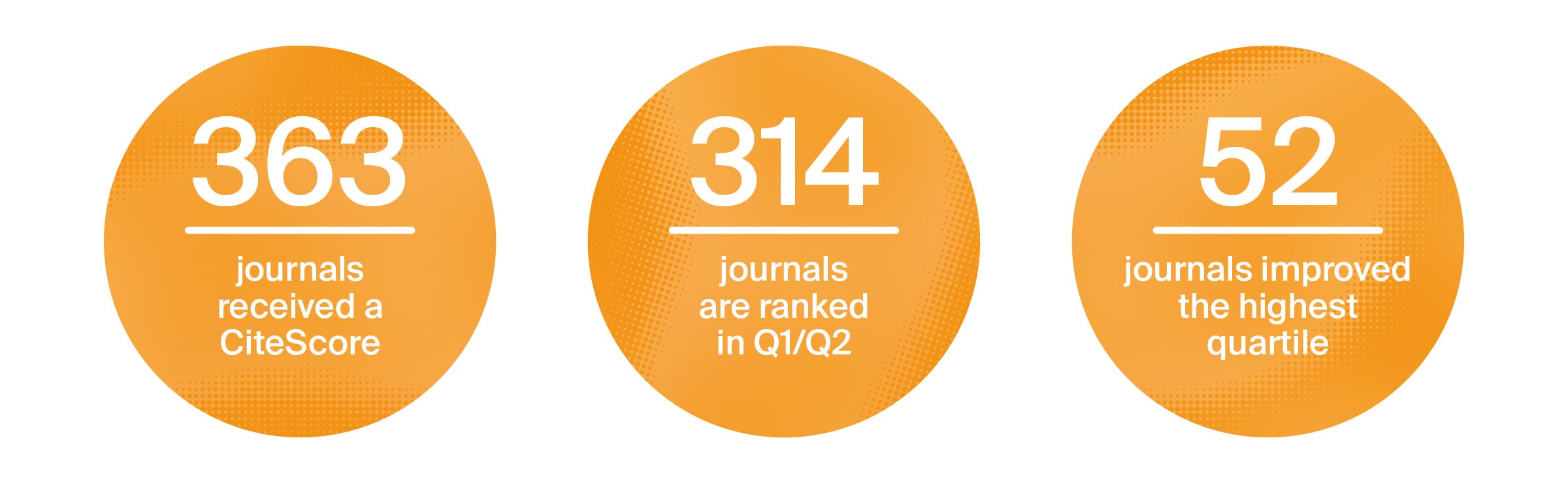
- New Additions: 41 MDPI journals received a CiteScore for the first time.
- Trending Upward: 234 of 322 previously ranked journals (73%) saw an increase in their CiteScore compared to last year.
- High Visibility: 314 journals (86%) rank in Q1 or Q2 in at least one subject category.
- Elite Performance: 42 journals rank in the top 10% of their subject categories.
Portfolio Performance
Among the 322 journals that held a CiteScore in 2024, 234 saw an increase this year. Quartile improvements outnumbered declines across the portfolio, with 52 journals moving to a higher quartile and only 20 seeing a decline. Furthermore, no previously ranked journals were removed. The 42 journals now ranked in the top 10% of their subject categories are drawn from a strong foundation of 178 journals holding a Q1 position.
With the large majority of our indexed portfolio ranked in the top half of research fields, researchers can confidently choose MDPI to meet funder mandates for high-quality, fully compliant Open Access publishing.
Exceptional Achievements for Foods and Life
Notably, both Foods and Life achieved a 99th percentile ranking in their respective subject categories for the 2025 CiteScores. This outstanding placement positions them as leading journals in their fields and highlights the high visibility and global impact of the open access research they publish.
Journal Metrics and Beyond
Journal-level metrics describe outlets, not individual articles. An increasing number of funders and institutions—including signatories of DORA and the Coalition for Advancing Research Assessment—now explicitly encourage evaluation at the article level rather than by the journal in which research appears. MDPI supports this direction: we report CiteScore alongside the Journal Impact Factor, Journal Citation Indicator, and article-level usage data because no single number captures the full reach and contribution of published research.
Thank You
These results reflect the sustained effort of thousands of editors-in-chief, editorial board members, reviewers, and authors across every field MDPI serves. The metrics are the outcome; the work is yours.
1 June 2026
MDPI INSIGHTS: The CEO’s Letter #35 – 30 Years of Open Science, Open Access Policies, Spain Summit, MMCS 2026 & Antibiotics 2026

Welcome to the MDPI Insights: The CEO's Letter.
In these monthly letters, I will showcase two key aspects of our work at MDPI: our commitment to empowering researchers and our determination to facilitating open scientific exchange.
Opening Thoughts

30 Years of Open Science, Built Together
This month, we officially launched MDPI’s 30th Anniversary campaign and dedicated anniversary website, marking an important milestone in our journey as an open access publisher. What began in 1996 with a single journal and the simple belief that scientific knowledge should be shared openly and freely has grown into a global publishing organization supporting more than 500 journals, 68,000 Editorial Board Members, and millions of researchers worldwide.
The anniversary page, entitled 30 Years of Open Science, Built Together, reflects on the people, milestones, and partnerships that have shaped MDPI over the past three decades. It includes a retrospective of our development, key moments in the evolution of open access, landmark research articles, journal anniversaries, an interview with the CEO, and perspectives from colleagues and partners who have contributed to our success.

Looking back, one of the most striking aspects of our journey is not simply our growth, but the broader transformation of scholarly publishing itself.
Open access has moved from a niche concept to a widely adopted publishing model, helping make research more accessible, discoverable, and impactful for researchers, institutions, policymakers, and society.
MDPI has been part of this transition and continues to invest in the people, technology, partnerships, and research integrity infrastructure needed to support high-quality open science at scale.
While anniversaries naturally encourage reflection, they are also an opportunity to look ahead. The challenges facing scholarly publishing today, including research integrity, artificial intelligence, accessibility, and global participation in science, will require continued collaboration across the research ecosystem. As we celebrate 30 years of publishing, our focus remains on supporting researchers, strengthening trust in open science, and helping shape the future of scholarly communication together.
I encourage you to visit the anniversary page, explore the milestones, and take a moment to reflect on the role each of us has played in contributing to MDPI’s story.
Thank you for being part of this journey.
Impactful Research

Highlights from MMCS 2026 in Beijing (14-17 May)
From 14–17 May, MDPI hosted The 5th Molecules Medicinal Chemistry Symposium (MMCS 2026) in Beijing, China, bringing together academia and industry to explore advances in chemical biology, medicinal chemistry, and drug discovery.
The conference hosted more than 230 attendees from 37 countries and regions, alongside 257 submissions and 145 accepted abstracts. With a significant increase in attendance – up by 100 participants compared with the previous edition – the popularity of MMCS continues to grow in terms of its international profile and scientific relevance within this rapidly evolving field.

The scientific program covered seven themes:
- Chemical Biology for Drug Discovery
- Medicinal Chemistry Research Progress
- Natural Products in Drug Discovery
- AI-enabled Drug Discovery
- GPCR & Ion Channel Targeted Drug Development
- Innovative Proximity-Based Drug Modalities
- Biocatalysis for Natural Product & Drug Synthesis
The event featured three plenary speakers, 14 keynote speakers, 35 selected oral presentations, and 98 poster presentations, creating opportunities for open scientific exchange and collaboration. Conference Chair Prof. Dr. Diego Muñoz-Torrero described this edition as one of the most successful MMCS events to date.
|
|
|


Thanks to our Sponsors
MMCS 2026 secured sponsorship support from 12 industrial partners, 11 of which set up on-site exhibition booths. Covering biopharmaceutical R&D, life science supplies, pharmaceutical experimental instruments, and industrial service sectors, exhibitors were able to connect their businesses directly with attendees and make connections at the conference.

30th Anniversary Celebration of Molecules
During the conference, we also celebrated the 30th anniversary of Molecules, one of MDPI’s flagship journals. The celebration brought together Section Editors-in-Chief, Editorial Board Members, MDPI leadership, and editorial colleagues to reflect on the journal’s development, achievements, and continued future growth.

Events such as MMCS 2026 highlight the important role conferences play in creating scientific exchange and collaboration, and in connecting our research communities in person.
They also reflect the continued development of MDPI’s conference portfolio and our commitment to supporting academic engagement beyond publishing alone. Thanks to everyone involved in organizing and contributing to the success of this event.
Inside MDPI

Open Access Policies Continue to Accelerate Globally
One of the clearest indicators of the continued momentum behind open access is the growing number of national and institutional policies supporting, and increasingly requiring, open dissemination of research.
Around the world, governments, funding agencies, and universities are building their open access mandates, with increasing focus on transparency, rights retention, and public accessibility of publicly funded research. While these policies vary across regions, the broader direction is clear: expectations around openness and compliance continue to accelerate.
For researchers, navigating these evolving requirements can be complex and time-consuming. Supporting the research community therefore means not only publishing high-quality open access content but also helping stakeholders better understand changing requirements and emerging opportunities. At MDPI, we see this as an important part of our role within scholarly communication.
“Expectations around openness and compliance continue to accelerate”
Through the MDPI Blog, our Content team continues to publish monthly articles overviewing different countries’ relationships with open access, exploring their histories, policies, opportunities, and statistics. All this information is centralized into an article which contains brief summaries of each country, with links to all the full articles, and is updated monthly.
Recent Policy Developments
South Africa
In 2026, South Africa’s Department of Science and Innovation introduced the South African Open Science Policy. The policy states that: “Open access shall be required for publications arising from publicly funded research, and desirable for research from all sources of funding.”
The policy envisions a coordinated and broad approach to open science that will sustainably and ethically drive socio-economic development by increasing the practice of open science through policy, training, incentivization, and infrastructure.
Canada
In Canada, the Tri-Agency OA Policy on Publications was revised, removing the 12-month embargo for research that must be deposited in a repository with an open license and with author rights retained.
The Agencies argue that “societal advancement is made possible through widespread and barrier-free access to cutting-edge research and knowledge.”
Chile
Chile is a collaborative and engaged member of the global open access movement.
The National Research and Development Agency (Agencia Nacional de Investigación y Desarrollo, or ANID) is Chile’s main funding agency for R&D. It mandates that all beneficiaries must deposit the final version of their published scientific output, with an embargo period of up to 12 months, into a repository.
ANID also supports the InES Open Science funding program, which allows universities to request funding for capacity and infrastructure building. Further, Chile is an active participant in various international initiatives, such as Redalyc, SciELO, and Red de Repositorios Latinoamericanos.
Openness Beyond Research
At MDPI, openness remains one of our core values, ensuring that research outputs are freely accessible to anyone. This commitment also extends to sharing knowledge about the scholarly publishing landscape itself, which we practice on the MDPI Blog through various topics, including open access, recent advances in science, and opportunities for researchers.
As the open access landscape continues to evolve, helping researchers, institutions, editors, and partners navigate these changes will remain an important priority for us.

Thank You
I would like to thank Jack McKenna (Senior Content Specialist, MDPI) from our Content team for his ongoing work on the MDPI Blog series covering global open access policy developments. Initiatives such as this help make complex policy discussions more accessible and useful to the wider research community.
Coming Together for Science

Reflections from the MDPI Spain Summit 2026 in Valencia (21 May)

On 21 May, we hosted the MDPI Spain Summit 2026 in Valencia.
The Summit brought together 30 Editorial Board Members and MDPI colleagues for a discussions on the future of publishing, research integrity, peer review, artificial intelligence, and the evolving research landscape in Spain.
We hosted participants from leading Spanish institutions and spoke on the importance of Spain as a major contributor to global open access (OA) research. In 2025 alone, Spain ranked among the leading countries worldwide for OA publishing, with more than 85% of publications made openly accessible. MDPI also continues to play a significant role within the Spanish research ecosystem.
MDPI in Spain
Spain remains one of MDPI's most important academic markets and a leading contributor to OA research globally. Ever since our Barcelona office opened in 2016 (Happy 10th Anniversary!), MDPI Spain has been actively supporting researchers, institutions, societies, and academic partners across the country. Today, the office plays an important role in creating engagement with the Spanish scholarly community through editorial support, partnerships, conferences, training initiatives, and outreach activities.
A cluster of high-level indicators highlight both the strength of the local research ecosystem and MDPI’s role within it:
- 43,218 total publications in Spain in 2025, of which 35,728 (83%) were open access (49% Gold OA).
- 211,200+ total publications (2021–2025), with 84% published open access.
- 13,444 MDPI publications from Spanish institutions in 2025, representing 14% of all open access publications in Spain.
- More than115,100 MDPI publications from Spanish institutions since 1996.
- More than 4,500 Editorial Board Members from Spain, including more than 150 Chief Editors and 57 Associate Editors.
- 42 institutional partners participating in MDPI’s Institutional Open Access Program (IOAP).
- Spain ranks second globally for MDPI society affiliations, with 26 affiliated society agreements currently in place.
Program Overview
What made this summit special was the openness of the discussions around the research landscape in Spain and the role MDPI plays within the market. General topics of the presentations included:
- MDPI Introduction – Stefan Tochev (CEO).
- Engagement with the Academic Community – Dr. Marta Colomer (External Affairs Lead).
- Latest Developments in the Editorial Process – Dr. Jordi Martinez (Deputy Managing Editor).
- Research integrity and Publication Ethics – Slavomir Nikodijevic (Research Integrity Specialist).
- A 360 View of Academic Publishing – Prof. Dr. Luis Angel Ruiz Fernandez (EBM of Remote Sensing).
|
|
|
|
|
|
|
|


Panel Discussion
We also hosted a panel discussion moderated by Marta, entitled “The Future of Academic Publishing” with Prof. Luis Ruiz, Prof. Marta Feliz (EBM of the journal Catalysts), Dr. Enric Sayas (Product Owner, AI & Technology Innovation), and myself. The discussion looked at the evolving role of editors, the future of peer review, and the growing importance of maintaining trust, ethics, and research integrity in an era increasingly influenced by artificial intelligence.
|
|
|
|


Themes from the Summit
Several themes emerged throughout the discussions, reflecting broader conversations taking place across publishing:
- The academic community values efficient publishing workflows, but expectations around scientific quality and editorial rigor continue to rise.
- Reviewer fatigue and long-term sustainability of peer review remain major challenges across the industry.
- AI is rapidly changing scholarly communication and requires transparent and responsible governance.
- Reputation and trust continue to depend on long-term engagement, transparency, and quality-focused decision-making.
“Maintaining an open dialogue with researchers, editors, reviewers, and institutions remains a priority for MDPI”
It was constructive to see the willingness of participants to engage directly and candidly with us. These conversations provide insights that help inform how we continue to develop our editorial processes, engagement activities, and support for the research community. While certain discussions included concerns, there was also recognition that open dialogue between publishers and the research community is essential if we want to improve scholarly communication together.
|
|
|
|


Events such as this are increasingly important for MDPI. They allow us to present our perspective, to listen to the experiences, expectations, and concerns of editors, reviewers, and researchers, and to address these accordingly.
Thank You
Thank you to our Barcelona Office and all colleagues involved in organizing the summit, as well as all participants for contributing to these thoughtful and constructive discussions.
|
|
|
|
|
|
|
|


As publishing continues to evolve, maintaining an open dialogue with researchers, editors, reviewers, and institutions remains an important priority for MDPI. Events such as the Spain Summit play an important role in helping us to build relationships, foster trust, and better understand the needs of our community.
Closing Thoughts

Highlights from Antibiotics 2026 in Barcelona (11–14 May)
This week, MDPI hosted the Antibiotics 2026 — Advances in Antimicrobial Action and Resistance conference in Barcelona, bringing together academics and industry experts to discuss one of the most important scientific and public health challenges of our time: antimicrobial resistance.
The conference welcomed 145 attendees from 42 different countries and territories, alongside 265 submissions and 127 accepted abstracts, showing the international reach of the event and the strong scientific interest in this rapidly evolving field.

Scientific Exchange on a Global Challenge
Antimicrobial resistance continues to be a global concern, creating collaboration across disciplines, institutions, and regions. The conference program focused on a range of topics including:
- Antimicrobial resistance mechanisms
- One Health approaches to antimicrobial stewardship
- Discovery of novel antimicrobial agents
- Innovation in clinical strategies and treatment approaches
- Ethnopharmacology and emerging therapies
Through keynote plenaries, invited lectures, oral presentations, and poster sessions, the conference created a platform for dialogue and scientific exchange.
|
|
|


International Participation and Collaboration
One of the highlights of the event was the diversity of participation across both geography and expertise. Researchers and speakers from Europe, North America, Asia, Africa, Australia, and Latin America took part in discussions throughout the conference, highlighting the global nature of both the challenge and the scientific response.
The scientific program included:
- 2 keynote speakers
- 10 invited speakers
- 36 selected talks
- 78 posters
The conference brought together perspectives from academia, healthcare, and industry, helping facilitate interdisciplinary collaboration around future approaches to antimicrobial research and resistance management.
|
|
|
|


The Role of Conferences in Scholarly Communication
Conferences are an important platform for collaboration, scientific exchange, and community-building. Events such as Antibiotics 2026 show the value of bringing researchers together in person to discuss emerging challenges, share new findings, and strengthen international networks across disciplines and regions.

Thank You
I would like to thank the conference chairs, speakers, participants, sponsors, and the entire MDPI conference team for their work in making this event a success. The engagement and positive feedback from attendees highlight the importance of our events in addressing some of the most pressing scientific challenges facing society today.

Chief Executive Officer
MDPI AG
29 May 2026
Nanomaterials | 2025 Highly Cited Papers Featuring Notable Graphical Abstracts
Effective visual representation clarifies research methodology and results. A clear graphical abstract allows readers to grasp a study's main points efficiently. To support our authors in preparing these materials, we have curated a list of 10 highly cited papers from Nanomaterials (ISSN: 2079-4991), published in 2025, with well-structured graphical abstracts. These selections illustrate the integration of impactful research with standard visual communication.
1. “Exposure of Polystyrene Nano- and Microplastics in Increasingly Complex In Vitro Intestinal Cell Models”
by Kristen A. Marcellus, David Prescott, Michal Scur, Nikia Ross and Santokh S. Gill
Nanomaterials 2025, 15(4), 267; https://doi.org/10.3390/nano15040267

2. “Nano- and Microplastics in the Brain: An Emerging Threat to Neural Health”
by Anna Baroni, Chantalle Moulton, Mario Cristina, Luigi Sansone, Manuel Belli and Ennio Tasciotti
Nanomaterials 2025, 15(17), 1361; https://doi.org/10.3390/nano15171361

3. “MXene/MOF-Derived Composites with Multidimensional Nanostructures: Synthesis Methods, Performance, and Applications in the Field of Energy Storage”
by Shufan Feng, Shilong Wen, Rutao Wang, Xiaokun Yang, Xiangsen Yuan, Yuxuan Liu, Jingyun Ma and Zhaoqiang Li
Nanomaterials 2025, 15(11), 841; https://doi.org/10.3390/nano15110841

4. “Progress in UV Photodetectors Based on ZnO Nanomaterials: A Review of the Detection Mechanisms and Their Improvement”
by Gaoda Li, Bolang Cheng, Haibo Zhang, Xinghua Zhu and Dingyu Yang
Nanomaterials 2025, 15(9), 644; https://doi.org/10.3390/nano15090644

5. “Strategies for Enhancing BiVO4 Photoanodes for PEC Water Splitting: A State-of-the-Art Review”
by Binh Duc Nguyen, In-Hee Choi and Jae-Yup Kim
Nanomaterials 2025, 15(19), 1494; https://doi.org/10.3390/nano15191494

6. “Advancements in Antimicrobial Surface Coatings Using Metal/Metaloxide Nanoparticles, Antibiotics, and Phytochemicals”
by Preetha Ebenezer, S. P. S. N. Buddhika Sampath Kumara, S. W. M. A. Ishantha Senevirathne, Laura J. Bray, Phurpa Wangchuk, Asha Mathew and Prasad K. D. V. Yarlagadda
Nanomaterials 2025, 15(13), 1023; https://doi.org/10.3390/nano15131023

7. “Magnetic Hyperthermia with Iron Oxide Nanoparticles: From Toxicity Challenges to Cancer Applications”
by Ioana Baldea, Cristian Iacoviță, Raul Andrei Gurgu, Alin Stefan Vizitiu, Vlad Râzniceanu and Daniela Rodica Mitrea
Nanomaterials 2025, 15(19), 1519; https://doi.org/10.3390/nano15191519

8. “Zinc Oxide Nanoparticles as Next-Generation Feed Additives: Bridging Antimicrobial Efficacy, Growth Promotion, and Sustainable Strategies in Animal Nutrition”
by Jiayi Yang, Dongwei Xiong and Miao Long
Nanomaterials 2025, 15(13), 1030; https://doi.org/10.3390/nano15131030

9. “Scaling Amphiphilicity with Janus Nanoparticles: A New Frontier in Nanomaterials and Interface Science”
by Mirela Honciuc and Andrei Honciuc
Nanomaterials 2025, 15(14), 1079; https://doi.org/10.3390/nano15141079

10. “The Use of Computational Approaches to Design Nanodelivery Systems”
by Abedalrahman Abughalia, Mairead Flynn, Paul F. A. Clarke, Darren Fayne and Oliviero L. Gobbo
Nanomaterials 2025, 15(17), 1354; https://doi.org/10.3390/nano15171354

