
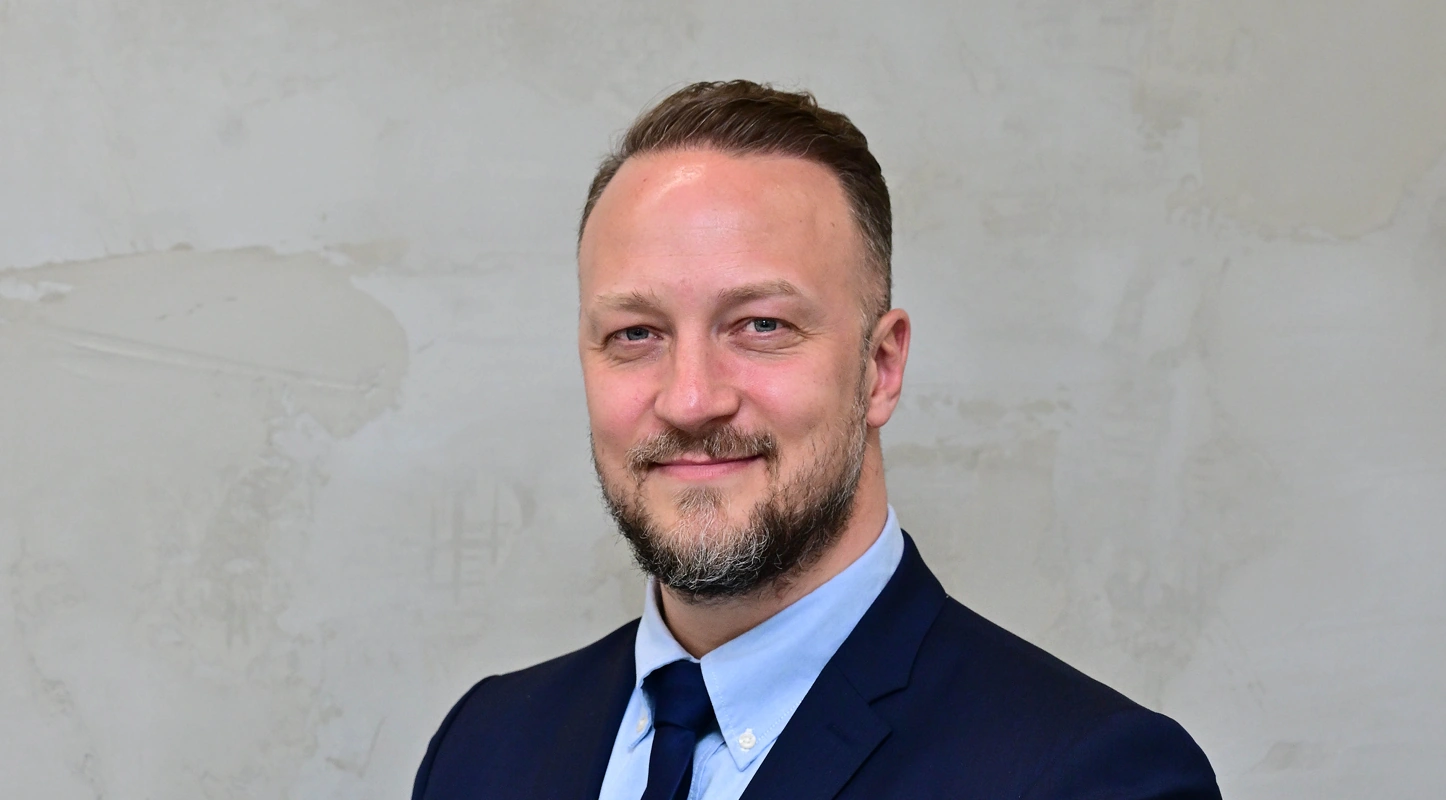
A Conversation with Stefan Tochev
On the occasion of MDPI's 30th anniversary, CEO Stefan Tochev reflects on the journey from 25 to 30, the evolution of open access publishing, and what lies ahead.
1
Stefan, MDPI is celebrating its 30th anniversary as an academic publisher in 2026. When you look back at the journey from 25 to 30, what stands out most?
The scale of transformation has been extraordinary. On our 25th anniversary in 2021, MDPI had 4,000 employees. Today we have more than 8,000 colleagues across 24 offices worldwide. MDPI now contributes a significant share of openly accessible research globally.
I joined MDPI in 2020 as Head of Marketing and Communications, and when I assumed the role of CEO in 2023, my primary focus was to build essential partnerships and collaborations within our industry. I'm a firm believer in achieving our goals by helping others achieve theirs. That mindset has guided everything from expanding institutional partnerships, to building relationships with learned societies, to positioning MDPI not just as a publisher, but as a convener of the global research community and a provider of infrastructure that others can build on.
2
In taking up leadership of MDPI, you became its fourth CEO. How has the company's culture evolved while maintaining its founding principles?
MDPI was founded on a commitment that has never wavered: helping scientists share their work openly, rapidly, and widely. What has changed is our capacity to deliver on it.
We've preserved the startup mentality of our first 25 years—being flexible, agile, focused, and reinvesting profits into people, infrastructure, and innovation. What have matured are the organization’s collective wisdom and the depth of expertise behind everything we do.
When I stepped into this role, I found an organization with tremendous momentum but also one facing new challenges: increasing scrutiny around research integrity, growing demands for cost transparency, AI-generated content, and the recognition that reaching 100% open access would require different strategies than getting to 50%. My job has been to ensure our systems and standards didn't just keep pace with that growth—they stayed ahead of it.
3
MDPI tripled the size of its Research Integrity Team in just a couple of years and strengthened its ethics governance. Why was this such a priority?
Because trust is everything. MDPI faced skepticism in our early years; critics questioned the open access business model simply because it was different from what people knew, and we proved them wrong through consistent editorial rigor. But as open access became the accepted standard, new integrity challenges emerged: sophisticated image manipulation, AI-generated submissions, paper mills targeting OA publishers.
Our response was to embed integrity checks firmly into the editorial process rather than treat them as a downstream filter. We entered a multi-year partnership with Proofig AI for early image manipulation detection, and appointed Dr. Tim Tait-Jamieson as Head of Publication Ethics to coordinate our substantially expanded infrastructure. Technology alone isn't enough, though. Our Academic Editors are the frontline of our system, and equipping them to recognize and act on integrity concerns is as important as any automated tool—the two need to work in concert.
Our rejection rate close to 60% and our more than 300 journals indexed in Web of Science and 365 in Scopus demonstrate that we can publish at scale without compromising standards. But we have to show this continuously, rebuilding our proof with every submission cycle.
4
How do you see artificial intelligence reshaping academic publishing over the next decade?
AI is already part of our editorial process—the question now is less whether to use it and more how to use it responsibly.
At MDPI, our tools are designed to support human judgment, not replace it. Ethicality, for instance, flags potential concerns during pre-screening—like excessive self-citation, possible AI-generated text, out-of-scope references—so that trained editors can assess them carefully. Final decisions always rest with our editors and independent Academic Editors.
The broader question of where AI takes publishing over the next decade is genuinely open. Submission volumes will likely keep rising, and AI will play a growing role in managing that scale—in screening, classification, and discoverability. What matters is that these tools serve the advancement of science rather than circumventing the human judgment that makes science credible. The publishers, researchers, and institutions that navigate this well will be those who treat AI as a tool in service of scientific integrity, not a substitute for it.
5
MDPI has more than a thousand partnerships with institutions across the world. How have those relationships evolved?
Dramatically. Five years ago, MDPI was still proving that large-scale open access was viable. Today we're partners with major national consortia across Germany, the UK, Switzerland, Sweden, Norway, and Canada, building partnerships with more than 100 institutions across multiple continents in 2025 alone, including our first in India.
But these aren't transactional relationships. Institutions invest in open access infrastructure; MDPI invests in the services, transparency, and support that make those commitments sustainable. The open access model is irreversible—I'm convinced of that. But as OASPA's 2025 position paper on "Embracing the Complexity of '100% OA'" revealed, the next 50% will be harder than the first. It’ll require addressing geographic exclusion, linguistic barriers, and disciplinary fragmentation, and our institutional partnerships are part of that solution.
6
MDPI now works with more than 250,000 Academic Editors and reviewers. How do you build and sustain meaningful relationships with such a large community?
We’ve learned that you can focus on growth without losing the personal touch—but keeping that balance requires a very deliberate investment. We have dedicated teams whose sole focus is the relationship between MDPI and our academic communities—supporting Editorial Board Members directly, representing our journals at conferences and events, and mentoring early-career researchers through academic publishing workshops. They are the human heartbeat of MDPI—the people who ensure that publishing remains a relationship-driven journey rather than an anonymous, transactional process.
Beyond that day-to-day support, we bring communities together through regional summits, scholar visits, and editorial salons—smaller, candid gatherings where editors, reviewers, and institutional partners tell us what's working and what isn't. These conversations have shaped how we operate in ways that no data dashboard could.
What we've learned is that Editorial Board Members aren't vendors or contractors. They're ambassadors for open science within their disciplines, and when they trust us, that trust extends outward into their communities. Building that trust—carefully, consistently, at scale—is one of the most important things we do.
7
MDPI processes well over 600,000 submissions annually. How do you balance scale with selectivity?
By investing in people and systems. Our network of more than 200,000 expert reviewers means every manuscript reaches someone with genuine domain expertise. Alongside that, our tools that flag irregular submission patterns and anomalies—out-of-scope references, signs of manipulation—mean our editorial teams can direct their attention where it matters most.
The 60% of submissions we reject are rejected on scientific grounds or down to fit, not to manage volumes or manufacture prestige. The 40% we publish are rigorously reviewed, properly indexed, and immediately accessible to anyone who needs them.
That selectivity shows in our outcomes: 298 MDPI journals now have Journal Impact Factors, with 193 ranking in the top 50% of their categories and 61 in the top quartile. Quality and scale can coexist—but only with the right investments behind them.
8
Beyond publishing, MDPI hosts dozens of academic conferences annually. Why invest so heavily in events?
Because research advances through conversation as much as publication. The 11th World Sustainability Forum in Barcelona brought together 181 participants from 53 countries. We've hosted conferences on AI sensors in Kuala Lumpur, plant science and food security in Barcelona, and environmental medicine—promoted at the Italian Senate with Nobel Laureate Sir Richard Roberts. These events aren't peripheral—they reinforce our role as a community builder, not just a publisher.
The original vision was to offer services to scholars rather than simply journals. That's expanded into conference platforms through Sciforum, a preprint platform with over 100,000 preprints, more than 400 Academic Publishing Workshops at universities worldwide in 2025, and the JAMS platform offering a free publishing gateway for smaller publishers. Publishing articles remains at our core, but we're building ecosystem infrastructure.
9
Three 2025 Nobel Prize winners had previously published with MDPI. What does that recognition mean?
It signals that our publishing model, editorial workflows, and commitment to open access are respected at the very highest levels of science. When a Nobel Laureate chooses to publish with us, they're validating the entire proposition that open access, rigorous peer review, and rapid dissemination can coexist. In total, 40 Laureates have contributed 120 articles over the course of our thirty years of publishing.
It's also motivating for our teams—for editors reviewing submissions, for Integrity Specialists checking manuscripts, and for the editorial teams helping authors navigate the process across every time zone.
10
At OASPA 2025, you made what some called provocative statements about MDPI's role in the open access transition. What did you mean?
That we didn't reach 50% OA without Gold OA, and that MDPI deserves recognition for our contributions. Fully open access publishers like MDPI have driven this transition at scale—built the infrastructure, created the business model, demonstrated that quality and openness aren't contradictory. Yet we're sometimes treated as the problematic wing of the movement rather than its engine. That needed saying.
The conversation at OASPA also shifted from "percentage to participation", recognizing that 50% open access is an important milestone, but ten million papers from the past five years remain closed—inaccessible to researchers, clinicians, and policymakers who could benefit from them. Fully OA publishers are uniquely positioned here because we're not balancing subscription revenue against open access goals. But we can't do it alone. The next 50% requires humility, collaboration, and willingness to experiment.
11
What does success look like for MDPI at 40?
Success means open access being so universal we stop tracking percentages. It means researchers worldwide can publish based on merit, not institutional budgets. It means trust in open science is unquestioned because publishers, institutions, and funders have built systems worthy of that trust.
MDPI has always been a project with an evolutionary trajectory, not a monument. We're building infrastructure for how knowledge will be created, validated, and shared for generations. That's what drives us forward.