



Next Issue
Volume 14, December
Previous Issue
Volume 14, October


Antioxidants, Volume 14, Issue 11 (November 2025) – 116 articles
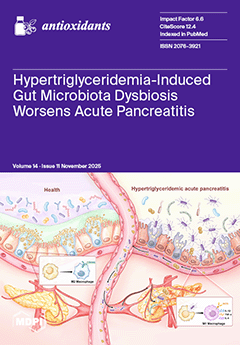
Cover Story (view full-size image): This study suggests that HTG-driven gut microbiota dysbiosis, particularly the abnormal enrichment of the pathogenic immunostimulatory bacterium Allobaculum mucilyticum, exacerbates the progression of HTGAP. A. mucilyticum degrades the colonic mucus layer, facilitating the adhesion of harmful bacteria to the intestinal epithelium and triggering M1 macrophage polarization in the lamina propria, which increases the release of pro-inflammatory cytokines and compromises intestinal barrier integrity. The resulting elevation in intestinal permeability promotes the translocation of bacteria and endotoxins to the pancreas, leading to pancreatic infection and increased infiltration of pancreatic M1 macrophages. Supplementation with Akkermansia muciniphila reversed these changes, indicating that modulation of gut microbiota may serve as a potential therapeutic strategy for HTGAP. View this paper
  • Issues are regarded as officially published after their release is announced to the table of contents alert mailing list.
  • You may sign up for e-mail alerts to receive table of contents of newly released issues.
  • PDF is the official format for papers published in both, html and pdf forms. To view the papers in pdf format, click on the "PDF Full-text" link, and use the free Adobe Reader to open them.
Order results
Result details
Section
Select all
Export citation of selected articles as:
21 pages, 3548 KB  
Article
Anti-Inflammatory and Antioxidant Mechanisms of Dendrobium moschatum Polysaccharide in Intestinal Epithelial Cells via TLR4-NF-κB and Nrf2 Signaling Pathways
by Ji Chen, Chunyan Ma, Xu Mo, Linhong Li, Lijuan Wu, Chaowen Zhang, Rui Li, Yuanfeng Zou, Fan Liu and Mengliang Tian
Antioxidants 2025, 14(11), 1384; https://doi.org/10.3390/antiox14111384 - 20 Nov 2025
Viewed by 635
Abstract
Dendrobium moschatum neutral polysaccharide (DMP-NP) was isolated using a water extraction–ethanol precipitation method, followed by purification with DEAE-cellulose anion-exchange resin and a dextran gel column. The resulting DMP-NP1 exhibited a weight-average molecular weight of 16.23 kDa. The molar ratio of monosaccharides was as [...] Read more.
Dendrobium moschatum neutral polysaccharide (DMP-NP) was isolated using a water extraction–ethanol precipitation method, followed by purification with DEAE-cellulose anion-exchange resin and a dextran gel column. The resulting DMP-NP1 exhibited a weight-average molecular weight of 16.23 kDa. The molar ratio of monosaccharides was as follows: glucose–mannose–galactose–fucose–rhamnose = 78.54:19.11:1.59:0.53:0.23, with a glucose-to-mannose ratio of 4.1:1. Infrared spectroscopic analysis revealed characteristic carbohydrate absorption peaks and confirmed the presence of pyranosidic linkages. NMR analysis revealed that DMP-NP1 possesses a backbone mainly formed by 1→4 glycosidic linkages, a small number of 1→6 branches, and O-acetyl substitutions at the C2 and C3 positions of mannose residues. In vitro experiments demonstrated that treatment with 0–20 μg/mL (0–1.23 μM) DMP-NP significantly enhanced the activities of catalase (CAT) and superoxide dismutase (SOD) in IPEC-J2 cells, along with upregulation of the corresponding antioxidant genes. Concurrently, DMP-NP reduced the secretion of key pro-inflammatory cytokines, including TNF-α, IL-1β, and IL-6, and downregulated the expression of genes associated with both antioxidant and inflammatory signaling pathways. Collectively, these findings indicate that DMP-NP not only prevents but also ameliorates LPS-induced inflammatory injury in intestinal epithelial cells, thereby providing a basis for the application of DMP-NP in intestinal inflammation mitigation. Full article
(This article belongs to the Section Health Outcomes of Antioxidants and Oxidative Stress)
Show Figures

Graphical abstract

19 pages, 6628 KB  
Article
Ammonia Stress Disrupts Intestinal Health in Litopenaeus vannamei Under Seawater and Low-Salinity Environments by Impairing Mucosal Integrity, Antioxidant Capability, Immunity, Energy Metabolism, and Microbial Community
by Yafei Duan, Yuxiu Nan, Jitao Li, Meng Xiao, Yun Wang and Ruijie Zhu
Antioxidants 2025, 14(11), 1383; https://doi.org/10.3390/antiox14111383 - 20 Nov 2025
Viewed by 452
Abstract
Ammonia is a key water quality factor limiting shrimp aquaculture. Intestinal health is closely associated with the nutrition, metabolism and immunity of shrimp. However, the response characteristics of the shrimp intestine to ammonia stress under seawater and low-salinity environments remain unclear. In this [...] Read more.
Ammonia is a key water quality factor limiting shrimp aquaculture. Intestinal health is closely associated with the nutrition, metabolism and immunity of shrimp. However, the response characteristics of the shrimp intestine to ammonia stress under seawater and low-salinity environments remain unclear. In this study, the shrimp Litopenaeus vannamei reared in seawater (salinity 30) or low-salinity (salinity 3) water were subjected to ammonia stress for 14 days, respectively. The changes in intestinal morphology, antioxidant capacity, immune response, energy metabolism, and microbial community were systematically investigated. The results showed that ammonia stress induced intestinal tissue damage in both seawater and low-salinity cultured shrimp, characterized by epithelial cell detachment and mucosal structural disruption. At the molecular level, ammonia stress triggered intestinal stress responses by interfering with key physiological processes such as antioxidant defense and endoplasmic reticulum stress. This process further led to varying degrees of disorders in physiological functions, including immune regulation, inflammatory response, and autophagic activity. In addition, ammonia stress disrupted the homeostatic balance of intestinal energy metabolism by affecting the expression of genes related to glucose metabolism, the tricarboxylic acid (TCA) cycle, and mitochondrial respiratory chain. In addition, ammonia stress increased the diversity of intestinal microbiota and caused microbial dysbiosis by increasing harmful bacteria (e.g., Vibrio) and decreasing beneficial bacterial groups (e.g., Bacillus). Ammonia stress generally enhanced intestinal microbiota chemotaxis. Specifically, predicted functions of microbiota in seawater-cultured shrimp showed increased carbohydrate, linoleic acid, and cofactor/vitamin metabolism; in low-salinity-cultured shrimp, functions including protein digestion/absorption, flavonoid/steroid hormone biosynthesis, and glycosaminoglycan degradation were reduced. These results revealed that ammonia stress compromised shrimp intestinal health by disrupting mucosal structure, triggering stress responses, and disturbing immune function, energy metabolism, and microbial homeostasis. Notably, low-salinity cultured shrimp exhibited more pronounced intestinal stress responses and greater physiological vulnerability than seawater-cultured counterparts. Full article
(This article belongs to the Special Issue Antioxidant Defenses and Oxidative Stress Management in Aquaculture)
Show Figures

Figure 1

16 pages, 3413 KB  
Article
Evaluation of Dexamethasone and Swimming Exercise as Complementary Interventions in a Rat Sciatic Nerve Injury Model
by Meral Karakoç, Hayat Ayaz, Ferhat Çelik and Fırat Aşır
Antioxidants 2025, 14(11), 1382; https://doi.org/10.3390/antiox14111382 - 20 Nov 2025
Viewed by 426
Abstract
Background: Peripheral nerve injuries frequently result in incomplete recovery despite advances in microsurgical repair. Both pharmacological and rehabilitative strategies have been investigated to enhance regeneration. Dexamethasone, a potent anti-inflammatory corticosteroid, and aerobic exercise, such as swimming, may promote repair through distinct but complementary [...] Read more.
Background: Peripheral nerve injuries frequently result in incomplete recovery despite advances in microsurgical repair. Both pharmacological and rehabilitative strategies have been investigated to enhance regeneration. Dexamethasone, a potent anti-inflammatory corticosteroid, and aerobic exercise, such as swimming, may promote repair through distinct but complementary mechanisms. Methods: A standardized rat sciatic nerve crush model was used to evaluate the effects of local dexamethasone administration (2 mg/kg/day, perineural for 10 days), swimming exercise (20 min/session, three times per week for 21 days), and their combination. Functional recovery was assessed by the Sciatic Functional Index (SFI), oxidative stress by MDA, GPX, and MPO assays, and structural recovery by histological, MBP immunohistochemical, and TEM analyses. Results: The injury group exhibited markedly elevated MDA and MPO levels and reduced GPX activity, indicating oxidative stress. Both dexamethasone and swimming exercise significantly improved these parameters, while the combination group showed values approaching controls (p < 0.001 for all comparisons vs. injury). Histological and immunohistochemical findings confirmed greater myelin preservation and higher MBP expression in treated groups, particularly in the combination group, whose g-ratio and myelin thickness were statistically indistinguishable from controls. SFI analysis revealed progressive motor improvement, with the combination therapy achieving near-normal function by day 28. Conclusions: This study demonstrates that dexamethasone and swimming exercise each contribute to peripheral nerve recovery and that their combined application provides additive benefits in terms of functional, biochemical, and structural regeneration. These results are limited to the specific dose and exercise regimen tested but support the potential of integrating anti-inflammatory pharmacotherapy with controlled physical exercise as a multimodal approach to enhance peripheral nerve repair. Full article
(This article belongs to the Special Issue Antioxidant Capacity of Natural Products—2nd Edition)
Show Figures

Figure 1

22 pages, 5849 KB  
Article
Hyperosmolarity-Induced Oxidative Stress Leads to Senescence in Human Corneal Epithelial Cells (HCEPC) via DNA Damage, Metabolic Disturbance and Mitophagy Decline
by Yongjie Zhang and Tingjun Fan
Antioxidants 2025, 14(11), 1381; https://doi.org/10.3390/antiox14111381 - 19 Nov 2025
Viewed by 496
Abstract
Background: Dry eye disease (DED), characterized by tear film hyperosmolarity, can lead to corneal epithelial damage. The mechanisms linking hyperosmotic stress to human corneal epithelial cell (HCEPC) damage are not fully understood. Methods: A DED model was established by exposing HCEPCs to sustained [...] Read more.
Background: Dry eye disease (DED), characterized by tear film hyperosmolarity, can lead to corneal epithelial damage. The mechanisms linking hyperosmotic stress to human corneal epithelial cell (HCEPC) damage are not fully understood. Methods: A DED model was established by exposing HCEPCs to sustained hyperosmotic stress (400 mOsm/L) over multiple passages in vitro. Senescence was assessed using senescence-associated-β-galactosidase (SA-β-gal) staining, 5-ethynyl-2′-deoxyuridine (EdU) assays, p16INK4A and senescence-associated secretory phenotypes (SASP) analysis. Mechanisms were investigated by measuring reactive oxygen species (ROS), mitochondrial function, energy metabolism, DNA damage, and inflammatory signaling. The role of autophagy was probed pharmacologically. Results: Hyperosmotic stress induced HCEPC senescence, driven by mitochondrial dysfunction, oxidative stress, DNA damage, bioenergetic crisis, and compromised autophagy (especially mitophagy). Autophagy and mitophagy play a key role in regulating senescence progression. Enhancing autophagy with LYN-1604 ameliorated oxidative stress, improved energy homeostasis, and attenuated senescence. Inhibiting autophagy exacerbated these states. Conclusion: Hyperosmolarity promotes HCEPC senescence via mitochondrial dysfunction and oxidative damage. Autophagy serves a critical protective role, and its enhancement represents a promising therapeutic strategy for DED. Full article
(This article belongs to the Special Issue Oxidative Stress in Cell Senescence)
Show Figures

Figure 1

23 pages, 1362 KB  
Article
Functional and Metabolomic Analyses of Chamomile Jelly Derived from Gelatin Capsule Waste with Inulin and Polydextrose as Prebiotic Sugar Substitutes
by Sasina Sanprasert, Anurak Uchuwittayakul, Pudthaya Kumnerdsiri, Lalitphan Kitsanayanyong, Anusorn Seubsai, Jaksuma Pongsetkul, Kantiya Petsong, Supatra Karnjanapratum, Chalalai Jaisan, Samart Sai-ut, Saroat Rawdkuen and Passakorn Kingwascharapong
Antioxidants 2025, 14(11), 1380; https://doi.org/10.3390/antiox14111380 - 19 Nov 2025
Viewed by 411
Abstract
Jelly is a popular confectionery, and research increasingly focuses on nutritionally enhanced formulations. In this study, gelatin capsule waste was valorized as a natural gelling base for chamomile jelly, providing an innovative approach to upcycling food-grade waste into functional products. The effects of [...] Read more.
Jelly is a popular confectionery, and research increasingly focuses on nutritionally enhanced formulations. In this study, gelatin capsule waste was valorized as a natural gelling base for chamomile jelly, providing an innovative approach to upcycling food-grade waste into functional products. The effects of replacing sugar with inulin (INU) or polydextrose (PDX) (25–100%) on chemical, physical, and sensory properties were investigated. Sugar replacement decreased carbohydrate content while increasing ash and fat, slightly increased turbidity, and reduced lightness (L*) and yellowness (b*). Gels with inulin and polydextrose exhibited higher gel strength (55.97–81.45 g) and hardness (9.77–10.20 N) than the control, whereas antioxidant activity remained largely unaffected. Among the formulations, 50% inulin (INU-50) received the highest consumer acceptance score (6.88 ± 1.05) and maintained stable quality during 21 days at 4 °C, with decreased free water content and increased gel strength. INU-50 jelly supplied essential nutrients, was cholesterol-free, and promoted Lactobacillus plantarum growth, supported by metabolomic analysis. Overall, this study demonstrates the potential of chamomile jelly with inulin substitution as a functional, health-promoting product and highlights a novel, sustainable approach to valorize gelatin capsule waste for modern health-conscious consumers. Full article
Show Figures

Figure 1

17 pages, 1029 KB  
Article
Effect of Long-Term Storage Temperature on the Quality of Extra-Virgin Olive Oil (Coratina cv.): A Multivariate Discriminant Approach
by Pasquale Crupi, Maria Lisa Clodoveo, Addolorata Desantis, Roberta Zupo and Filomena Corbo
Antioxidants 2025, 14(11), 1379; https://doi.org/10.3390/antiox14111379 - 19 Nov 2025
Viewed by 573
Abstract
Kinetic evolution of quality parameters in 21 extra-virgin olive oils (EVOOs) from Coratina cultivar was evaluated during 18 months of dark storage at room temperature (RT) and 4 °C (LT). The aim was to identify the most discriminating variables—fatty acids, peroxide value, spectrophotometric [...] Read more.
Kinetic evolution of quality parameters in 21 extra-virgin olive oils (EVOOs) from Coratina cultivar was evaluated during 18 months of dark storage at room temperature (RT) and 4 °C (LT). The aim was to identify the most discriminating variables—fatty acids, peroxide value, spectrophotometric indices, and phenolic compounds—using kinetic analysis and multivariate statistics. Fatty acids remained stable, while peroxide value and ultraviolet absorbance indices increased significantly at RT, following zero-order kinetics. Polyphenols declined markedly after 6 months, especially at RT, with degradation rates influenced by initial concentrations. Hydroxytyrosol and tyrosol followed pseudo-zero-order kinetics, whereas secoiridoids and lignans followed second-order kinetics. Discriminant analysis achieved 90% accuracy (p = 0.000012) in classifying oils by storage condition. The most relevant discriminants were associated with phenolic degradation and oxidative changes. These findings support the importance of low-temperature storage in preserving the biochemical quality and shelf life of EVOOs. Full article
Show Figures

Figure 1

15 pages, 1384 KB  
Article
Superoxide Dismutase 3 Deficiency Disrupts the Regulation of Oxidative Stress Caused by Polystyrene Nanoplastics
by Yugyeong Sim, Jin-Hyoung Kim, Jeong-Soo Lee, Jinyoung Jeong and Hyun-Ju Cho
Antioxidants 2025, 14(11), 1378; https://doi.org/10.3390/antiox14111378 - 19 Nov 2025
Viewed by 353
Abstract
Nanoplastics have been recognized as emerging pollutants posing potential risks to ecosystems and human health. They are now detected ubiquitously in the environment and even human tissues, where their small size allows for tissue accumulation and cellular penetration. Growing evidence links nanoplastics to [...] Read more.
Nanoplastics have been recognized as emerging pollutants posing potential risks to ecosystems and human health. They are now detected ubiquitously in the environment and even human tissues, where their small size allows for tissue accumulation and cellular penetration. Growing evidence links nanoplastics to oxidative stress, yet the specific contribution of extracellular accumulation to toxicity remains poorly understood. To address this, we used zebrafish, a transparent vertebrate model suitable for toxicological studies, to explore the role of extracellular antioxidant defenses in polystyrene nanoplastic (PSNP)-induced oxidative stress. In particular, we focused on superoxide dismutase 3 (SOD3), which is an enzyme that regulates extracellular reactive oxygen species by catalyzing the detoxification of superoxide radicals. Zebrafish Sod3a is a homolog of human SOD3, preserving conserved metal-binding sites critical for enzymatic function. We established sod3a mutant zebrafish and examined their responses following PSNP exposure. In sod3a mutant larvae, tissue accumulation of PSNPs was higher than in wild-type (WT), and this was associated with elevated oxidative stress, enhanced cell death, and abnormalities in intestinal function and immune responses. Collectively, these observations reveal the functional importance of SOD3 during PSNP-induced oxidative stress and provide new insight into extracellular antioxidant mechanisms that mitigate PSNP-induced toxicity. Full article
(This article belongs to the Special Issue Oxidative Stress Induced by Micro(Nano)plastics)
Show Figures

Graphical abstract

27 pages, 3518 KB  
Article
Correlation of Antioxidant and Antibacterial Activities of the Aqueous Pinus pinaster Aiton Bark Extract Within a Cytocompatible Concentration Range
by Diana Barros, Liliana Grenho, Maria Helena Fernandes, Pedro Sousa Gomes and Élia Fernandes
Antioxidants 2025, 14(11), 1377; https://doi.org/10.3390/antiox14111377 - 19 Nov 2025
Viewed by 401
Abstract
This study explores the antioxidant, antibacterial, and cytocompatibility properties of aqueous Pinus pinaster bark extract (PBE). PBE was prepared using two solvent systems—100% distilled water and 1% DMSO in aqueous solution—at a solid-to-liquid ratio of 1:20 (w/v), following ISO [...] Read more.
This study explores the antioxidant, antibacterial, and cytocompatibility properties of aqueous Pinus pinaster bark extract (PBE). PBE was prepared using two solvent systems—100% distilled water and 1% DMSO in aqueous solution—at a solid-to-liquid ratio of 1:20 (w/v), following ISO guidelines. Extract characterization included yield determination, FTIR analysis, quantification of total phenolic (TPC) and flavonoid (TFC) contents, and assessment of antioxidant activity using four complementary methods: free radical scavenging (DPPH and ABTS), metal ion reduction (FRAP), and a competitive reaction assay (ORAC). The phenolic compound profile was further examined by HPLC-DAD. The results indicated that the two extracts exhibited comparable values across all evaluated parameters when expressed per gram of PBE. The TPC and TFC were approximately 400 mg GAE (gallic acid equivalents)/g PBE and 92 mg CE (catechin equivalents)/g PBE, respectively. Antioxidant capacity values were about 880, 1030, 3210, and 585 mg TE (Trolox equivalents)/g PBE for the DPPH, ABTS, ORAC, and FRAP assays, respectively. Furthermore, in both extracts, the phenolic and flavonoid contents exhibited strong positive correlations with antioxidant activity across all four chemical assays. The 100% aqueous extract was additionally evaluated for antibacterial activity and cytocompatibility with eukaryotic cells. Compared to the control, the extract demonstrated IC50 values of 0.304, 0.678, and 0.845 mg/mL PBE for the inhibition of Staphylococcus aureus, Escherichia coli, and fibroblast cells, respectively. Antioxidant and antibacterial activities showed a positive association within concentration ranges that remained non-cytotoxic to fibroblasts. Overall, these findings indicate that the aqueous PBE retains cytocompatibility across a wide concentration range while maintaining both antioxidant and antibacterial activities, underscoring its potential for biological applications involving direct contact with eukaryotic cells. Full article
(This article belongs to the Special Issue Antioxidant Phytochemicals for Promoting Human Health and Well-Being)
Show Figures

Figure 1

23 pages, 3255 KB  
Article
Dehydroascorbic Acid Induces Cell Death in Sarcoma Stem Cells Under bFGF-Mediated Stemness-Supporting Conditions
by Maja Ledinski, Katarina Caput Mihalić, Marijana Šimić Jovičić, Karla Ostojić, Zara Škibola, Robert Kolundžić and Inga Urlić
Antioxidants 2025, 14(11), 1376; https://doi.org/10.3390/antiox14111376 - 19 Nov 2025
Viewed by 438
Abstract
The resilience of sarcomas, tumors characterized by resistance to therapy and high metastatic potential, is largely driven by the unique characteristics of a small population known as cancer stem cells (CSC). Although ascorbic acid (AA) and its oxidized form, dehydroascorbic acid (DHA), have [...] Read more.
The resilience of sarcomas, tumors characterized by resistance to therapy and high metastatic potential, is largely driven by the unique characteristics of a small population known as cancer stem cells (CSC). Although ascorbic acid (AA) and its oxidized form, dehydroascorbic acid (DHA), have shown potential for selectively targeting cancer cells, their effects on sarcoma CSCs remain insufficiently explored. Still, recent research indicates that AA can affect the specific characteristics of CSC and lead to their cytotoxicity. To investigate the sensitivity of sarcoma CSCs to ascorbate, CSCs were isolated from six sarcoma patient-derived samples using a sphere assay, and their stem identity was evaluated through gene expression profiling and dye-efflux assays. Cytotoxicity testing of AA and DHA showed that DHA has a selective cytotoxic effect on cancer stem cells. The presence of basic fibroblast growth factor (bFGF), which is commonly used to support the self-renewal of CSCs, had an influence on the cytotoxic effect of DHA. To evaluate the difference in the effect of AA and DHA, a seven-day treatment of CSCs with these forms of ascorbate was performed. The gene expression analysis revealed that DHA in the presence of bFGF had a stronger impact on response to oxidative stress and cellular metabolism. Also, investigation of somatic mutations of oncogenes and tumor suppressors revealed that in liposarcoma and rhabdomyosarcoma, there are mutations that induce proliferative signals. These proliferative signals, joined with bFGF in the presence of DHA, do not lead to proliferation but instead cause cell death. Full article
(This article belongs to the Section Health Outcomes of Antioxidants and Oxidative Stress)
Show Figures

Graphical abstract

21 pages, 2066 KB  
Article
Antioxidants Trolox and Methazolamide Protect Microvascular Endothelial Cells from Oxidative Damage Induced by Sporadic and Familial Forms of Oligomeric Amyloid-β
by Maria Luisa Valle, Bitseat Getaneh, Christopher William, Jorge Ghiso and Agueda Rostagno
Antioxidants 2025, 14(11), 1375; https://doi.org/10.3390/antiox14111375 - 19 Nov 2025
Viewed by 476
Abstract
Cerebral amyloid angiopathy (CAA), present in more than 90% of Alzheimer’s disease (AD) cases, associates with focal ischemia and neurovascular dysfunction. Genetic variants at positions 21–23 of amyloid beta (Aβ), among them the Dutch mutation (AβE22Q), are primarily linked to CAA and the [...] Read more.
Cerebral amyloid angiopathy (CAA), present in more than 90% of Alzheimer’s disease (AD) cases, associates with focal ischemia and neurovascular dysfunction. Genetic variants at positions 21–23 of amyloid beta (Aβ), among them the Dutch mutation (AβE22Q), are primarily linked to CAA and the development of cerebral hemorrhages. An important contributor to CAA pathogenesis is the dysregulation of mitochondria-mediated pathways with concomitant induction of oxidative stress. Using biochemical assays and immunofluorescence microscopy, this work demonstrates the exacerbated formation of reactive oxygen species (ROS) in human brain microvascular endothelial cells after short exposure to soluble oligomers of synthetic homologues of Aβ1-42 and the Dutch variant, inducing lipid peroxidation and protein carbonylation, both markers of oxidative stress. The heterogeneity of the soluble oligomeric assemblies inducing this oxidative response was highlighted by their reactivity with two conformational antibodies recognizing specific and mutually exclusive epitopes associated with either soluble prefibrillar oligomers or soluble fibrillar oligomers. Treatment with the multitarget antioxidants Trolox and methazolamide significantly attenuated the Aβ-mediated ROS production and reduced oxidative stress markers to basal levels. Our data highlight the damaging role of heterogeneous Aβ oligomers and the preventing effect of antioxidants, suggesting ROS modulation as a complementary therapeutic strategy to preserve neurovascular unit integrity. Full article
(This article belongs to the Special Issue Oxidative Stress and NRF2 in Health and Disease—2nd Edition)
Show Figures

Figure 1

23 pages, 4809 KB  
Systematic Review
The Nephroprotective Effects of Alpha-Mangostin for Acute Kidney Injury: A Systematic Review and Meta-Analysis
by Moragot Chatatikun, Aman Tedasen, Ratana Netphakdee, Jitbanjong Tangpong, Phichayut Phinyo, Pakpoom Wongyikul, Fumitaka Kawakami, Makoto Kubo, Motoki Imai, Wiyada Kwanhian Klangbud and Atthaphong Phongphithakchai
Antioxidants 2025, 14(11), 1374; https://doi.org/10.3390/antiox14111374 - 19 Nov 2025
Viewed by 421
Abstract
Acute kidney injury (AKI) is characterized by rapid loss of renal function due to oxidative stress, inflammation, and apoptosis, with limited targeted therapies. Alpha-mangostin (AM), a natural compound from Garcinia mangostana, exhibits antioxidant and anti-inflammatory properties in preclinical studies, but its efficacy [...] Read more.
Acute kidney injury (AKI) is characterized by rapid loss of renal function due to oxidative stress, inflammation, and apoptosis, with limited targeted therapies. Alpha-mangostin (AM), a natural compound from Garcinia mangostana, exhibits antioxidant and anti-inflammatory properties in preclinical studies, but its efficacy in AKI has not been reviewed. This systematic review and meta-analysis, registered on the Open Science Framework and adhering to PRISMA guidelines, analyzed in vivo and in vitro studies on AM’s effects in AKI models through searches of PubMed, Scopus, Embase, and Web of Science. Primary outcomes included serum creatinine and cell viability, while secondary outcomes encompassed oxidative stress markers (malondialdehyde (MDA), glutathione (GSH), reactive oxygen species (ROS)), inflammatory cytokines, apoptosis indicators, and histopathology. Data were extracted independently and assessed using the Toxicological Data Reliability Assessment Tool (ToxRTool). AM significantly reduced serum creatinine (mean difference (MD) = −0.67 mg/dL; 95% confidence interval (CI): −1.28 to −0.06; p = 0.03) and improved cell viability (MD = 28.26%; 95% CI: 17.25 to 39.26; p < 0.0001). It markedly decreased MDA and ROS, increased GSH, and enhanced antioxidant enzymes (glutathione peroxidase (GPx), glutathione reductase (GR), superoxide dismutase (SOD)). In vivo, tumor necrosis factor-alpha (TNF-α) and interleukin-6 (IL-6) were lowered, and histopathology showed reduced tubular necrosis and structural damage. Subgroup analyses indicated dose- and model-dependent effects, with lower doses often yielding greater benefits. Sensitivity analyses confirmed robustness despite heterogeneity. Preclinical evidence supports AM’s nephroprotective potential and underscores the need for dose optimization, mechanistic validation, and clinical translation. Full article
(This article belongs to the Special Issue Potential Health Benefits of Dietary Antioxidants)
Show Figures

Figure 1

21 pages, 3552 KB  
Article
Ferroptosis Enhances T Lymphocyte Infiltration into Glioblastoma Spheroids
by Anna Schwantes, Yara Shadid, Vanesa Maria Guerrero Ruiz, Blerina Aliraj, Anja Wickert, Megan A. Palmer, Sofie P. Meyer, Andreas Weigert, Bernhard Brüne and Dominik C. Fuhrmann
Antioxidants 2025, 14(11), 1373; https://doi.org/10.3390/antiox14111373 - 19 Nov 2025
Viewed by 511
Abstract
Glioblastoma is one of the most aggressive and therapeutically challenging brain tumors. It is characterized by a highly immunosuppressive tumor microenvironment and poor prognosis, requiring novel treatment strategies. Along this line, ferroptosis has been proposed. To study the impact of ferroptosis on glioblastoma [...] Read more.
Glioblastoma is one of the most aggressive and therapeutically challenging brain tumors. It is characterized by a highly immunosuppressive tumor microenvironment and poor prognosis, requiring novel treatment strategies. Along this line, ferroptosis has been proposed. To study the impact of ferroptosis on glioblastoma cells and immune cell infiltration, we established a spheroid model using LN229 glioblastoma cells and verified ferroptosis by measuring lipid peroxidation and RNA expression of ferroptosis-related genes. We then co-cultured spheroids with human peripheral blood mononuclear cells to follow the infiltration of distinct immune cell subsets by flow cytometry and immunohistochemistry. T lymphocyte infiltration into ferroptotic spheroids compared to control spheroids became apparent with the notion that ferroptotic cells attracted T cells more efficiently compared to apoptotic or necrotic cells. Mechanistically, ferroptotic glioblastoma spheroids released high amounts of ATP, which caused T cell attraction, while ATP deprivation reduced this effect. Ferroptosis appears to be an interesting therapy approach but might need co-treatments to ensure proper T cell activation. Full article
(This article belongs to the Special Issue Lipid Peroxidation and Cancer)
Show Figures

Graphical abstract

38 pages, 504 KB  
Review
Factors Influencing the Biological Effects of FLASH Irradiation
by Sergey Igorevich Glukhov, Elena Ananievna Kuznetsova and Sergey Vsevolodovich Akulinichev
Antioxidants 2025, 14(11), 1372; https://doi.org/10.3390/antiox14111372 - 19 Nov 2025
Viewed by 606
Abstract
Among the methods for increasing the specificity of tumor radiotherapy, FLASH radiotherapy (FLASH-RT) stands out, having recently entered clinical trials. A distinctive feature of this treatment method is the delivery of a therapeutic dose in a fraction of a second with a typical [...] Read more.
Among the methods for increasing the specificity of tumor radiotherapy, FLASH radiotherapy (FLASH-RT) stands out, having recently entered clinical trials. A distinctive feature of this treatment method is the delivery of a therapeutic dose in a fraction of a second with a typical mean dose rate greater than 40 Gy/s. In addition to improved patient comfort and a shorter hospital stay, this therapy potentially carries a lower risk of radiation-related side effects due to reduced damage to normal tissues. Numerous preclinical and in vivo laboratory trials of FLASH-RT have demonstrated that, in addition to reducing the severity of radiation-related complications, FLASH radiotherapy has antitumor efficacy similar to conventional radiotherapy. Partly reduced radiotoxicity after such a dose rate delivery obtained, in a broader radiobiological sense, an eponymous term FLASH effect. Although the first clinical trials aimed to evaluate the safety and efficiency of FLASH-RT against bone metastases (FAST-01/02), melanoma skin metastases (IMPulse, Flash-Skin I), Squamous Cell Carcinoma, or Basal Cell Carcinoma (LANCE) have already started or even finished and showed promising results (FAST-01), the radiobiological basis of the FLASH effect is far from a complete explanation. The fundamental factors explaining the nature of the FLASH effect are mainly considered to be the following: (1) changes in the balance of water radiolysis products and a decrease in the generation of stable reactive oxygen species (ROS), (2) differential oxygen depletion, depending on the initial oxygen concentration in tissues, and (3) physiological and metabolic, gene expression and probably epigenetic shifts in response to irradiation in normal and tumor cells. The main purpose of this review is the systematization of the radiobiological manifestations of the FLASH effect together with a consideration of the elementary processes laying in the basis of the FLASH effect in order to actualize rationale and future application developments of FLASH-RT. Full article
(This article belongs to the Special Issue Oxidative Stress, Antioxidants, and Mechanisms in FLASH Radiotherapy)
Show Figures

Graphical abstract

19 pages, 1544 KB  
Article
Phenolic Fingerprints of Spanish Olive Mill Wastewaters (Alpechin): A Step Toward Regional Valorization Through Antioxidant Recovery
by Sergio Martínez-Terol, Emilia Ferrer, Pedro V. Martínez-Culebras, Houda Berrada, Noelia Pallarés, Jose Saez-Tovar, Luciano Orden, María R. Martínez-Gallardo, Ana J. Toribio and Francisco J. Barba
Antioxidants 2025, 14(11), 1371; https://doi.org/10.3390/antiox14111371 - 18 Nov 2025
Viewed by 310
Abstract
Olive mill wastewater (OMW), a by-product of olive oil extraction, poses significant environmental challenges due to its toxicity and heterogeneity. This study evaluates the phenolic and mineral composition of OMW and alpechin sludges from abandoned ponds in Spain, and establishes a standardized conventional [...] Read more.
Olive mill wastewater (OMW), a by-product of olive oil extraction, poses significant environmental challenges due to its toxicity and heterogeneity. This study evaluates the phenolic and mineral composition of OMW and alpechin sludges from abandoned ponds in Spain, and establishes a standardized conventional method to recover phenolic fractions and promote their safe valorization as bioactive ingredients. Phenolic compounds were identified by triple-TOF-LC-MS/MS, and minerals and heavy metals were quantified by ICP-MS. Across thirteen ponds analyzed, samples from Cordoba, Tarragona, Alicante and Toledo showed higher phenolic levels, ranging from 7.2 g GAE/kg to 18.9 g GAE/kg, with methanolic extracts reaching 10.98–15.67 mg GAE/mL. Thirty-one phenolic compounds were identified, predominantly luteolin, apigenin, quercetin, and secoiridoid derivatives, notably hydroxytyrosol and tyrosol, supporting their functional potential as natural antioxidants. The mineral profile was dominated by K and Ca and showed negligible carryover to the phenolic organic fraction (<1%). Heavy metal concentrations in fresh OMW were 0.32–1.06 µg/kg for Cd and Hg and 9–43.9 µg/kg for As and Pb. In OMW sludge, they ranged between 0.033 and 0.19 mg/kg for Cd, 0.01 and 0.12 mg/kg for Hg, 5.45 and 8.06 mg/kg for As, and 4.45 and 23.70 mg/kg for Pb, whereas phenolic extracts contained only 0.15–21.50 µg/kg, remaining below EU food safety limits. This work presents one of the first integrated approaches to risk-benefit mapping of abandoned ponds in Spanish soils and advances extraction standardization by jointly considering functional potential, contaminant profiles, and matrix location. Full article
(This article belongs to the Section Extraction and Industrial Applications of Antioxidants)
Show Figures

Figure 1

2 pages, 288 KB  
Correction
Correction: Giresha et al. Sinapic Acid Inhibits Group IIA Secretory Phospholipase A2 and Its Inflammatory Response in Mice. Antioxidants 2022, 11, 1251
by Aladahalli S. Giresha, Deepadarshan Urs, Sophiya Pundalik, Rajkumar S. Meti, Siddanakoppalu N. Pramod, Ballenahalli H. Supreetha, Madhusudana Somegowda, Kattepura K. Dharmappa, Ahmed M. El-Shehawi, Sarah Albogami, Mona M. Elseehy, Abdullah Alaklabi, Hosam O. Elansary, Alanoud Omur A. Mehder and Eman A. Mahmoud
Antioxidants 2025, 14(11), 1370; https://doi.org/10.3390/antiox14111370 - 18 Nov 2025
Viewed by 220
Abstract
In the published paper [...] Full article
(This article belongs to the Section Natural and Synthetic Antioxidants)
Show Figures

Figure 11

22 pages, 1263 KB  
Systematic Review
Curcumin in the Treatment of Kidney Disease: A Systematic Review with a Focus on Drug Interactions
by Ebenezer Ofori-Attah, Abigail Aning and Layla Simón
Antioxidants 2025, 14(11), 1369; https://doi.org/10.3390/antiox14111369 - 18 Nov 2025
Viewed by 1852
Abstract
Kidney disease (KD) is a major health challenge, affecting millions of people worldwide, highlighting the need for improved prevention and management strategies. The pathophysiological mechanisms converged on a common pathway characterized by inflammation, oxidative stress, fibrosis, nephron loss and failure. Curcumin, the active [...] Read more.
Kidney disease (KD) is a major health challenge, affecting millions of people worldwide, highlighting the need for improved prevention and management strategies. The pathophysiological mechanisms converged on a common pathway characterized by inflammation, oxidative stress, fibrosis, nephron loss and failure. Curcumin, the active compound derived from turmeric (Curcuma longa), attracts considerable interest as a potential therapy for KD due to its anti-inflammatory, antioxidant and anti-fibrotic properties. Despite the benefits of curcumin, co-administration with kidney medications may cause drug interactions. Here, we systematically reviewed the efficacy of curcumin in alleviating KD and its safety when used with conventional treatments. Search terms included: curcumin AND (“diabetic nephropathy” OR “renal disease” OR “kidney disease”). Data on mechanisms of action, redox status, clinical benefits, side effects, and drug interactions were extracted and analyzed. Curcumin reduces oxidative stress, inflammation, apoptosis, fibrosis, ER stress, and lipid and glucose metabolism. Curcumin has multifaceted nephroprotective effects, while it is safe and well-tolerated. The curcumin–drug interactions reviewed were: -piperine, -epigallocatechin gallate, -losartan, -ginkgolide B, -rosuvastatin, -insulin, -cilostazol, and -ginger. These interactions improve curcumin bioavailability, and synergistic anti-inflammatory/antioxidant/antifibrotic and renoprotective effects. Future research should prioritize large-scale clinical trials to evaluate the efficacy and safety of curcumin in diverse KD populations. Full article
Show Figures

Graphical abstract

17 pages, 1060 KB  
Article
Phytochemical Screening and Biological Activity of Female and Male Cones from Pinus nigra subsp. laricio (Poir.) Maire
by Mary Fucile, Carmine Lupia, Martina Armentano, Mariangela Marrelli, Ekaterina Kozuharova, Giancarlo Statti and Filomena Conforti
Antioxidants 2025, 14(11), 1368; https://doi.org/10.3390/antiox14111368 - 18 Nov 2025
Viewed by 397
Abstract
The Corsican pine (Pinus nigra subsp. laricio (Poir.) Maire), a subspecies of black pine endemic to southern Italy, is widely known for the quality of its valuable timber, and the parts of the plant that are not used for this purpose are [...] Read more.
The Corsican pine (Pinus nigra subsp. laricio (Poir.) Maire), a subspecies of black pine endemic to southern Italy, is widely known for the quality of its valuable timber, and the parts of the plant that are not used for this purpose are considered unusable production waste. In this study, we investigated the phytochemical profile and a series of biological activities of extracts from the female and male pine cones. The extracts were prepared by maceration with ethanol and subsequently fractionated using liquid-liquid separation. The total phenolic and flavonoid content, antioxidant potential (DPPH and β-carotene bleaching tests), anti-inflammatory activity (nitric oxide inhibition in RAW 264.7 cells), and enzymatic inhibition against pancreatic lipase and α-amylase were determined. The female cones showed a higher crude extract yield and total phenolic content (76.4 mg GAE/g) than the male cones, while the latter were richer in flavonoids. The extracts from the female cones showed higher antioxidant and pancreatic lipase inhibitory activities. On the contrary, extracts from male cones showed greater activity against α-amylase, with the dichloromethane fraction proving to be the most potent (IC50 = 35.28 ± 3.08 µg/mL). The hexane fraction of female cones also showed significant anti-inflammatory activity (IC50 = 107.50 ± 15.22 µg/mL). Our results reveal that the pine cones of Pinus nigra subsp. laricio (Poir.) Maire are a rich source of bioactive compounds. These results provide the first scientific evidence of the potential of extracts from this still poorly studied part of the plant for further investigation of their antioxidant and anti-inflammatory capabilities. Full article
Show Figures

Figure 1

17 pages, 1913 KB  
Article
Resveratrol–Curcumin Hybrid Selectively Induces Chromosomal Abnormalities and Apoptosis in Colon Adenocarcinoma Cells
by Mariane Minussi Baptistella, Aléxia Polo Siqueira, Dâmaris Lizia Santos Magalhães, Bruno Zavan, Carolina Sales de Oliveira, Matheus de Freitas Silva, Ellen Tardelli Falleiros Lima, Claúdio Viegas, Jr., Bruno Martins Dala-Paula, Ester Siqueira Caixeta, Marisa Ionta and Pollyanna Francielli de Oliveira
Antioxidants 2025, 14(11), 1367; https://doi.org/10.3390/antiox14111367 - 17 Nov 2025
Viewed by 541
Abstract
Colorectal cancer (CRC) therapy frequently relies on chemotherapeutic agents with high cytotoxicity, low selectivity, and suboptimal efficacy. Thus, the search for alternative therapeutic strategies for CRC continues. In the present work, the antitumor potential of a hybrid compound, which contains fragments derived from [...] Read more.
Colorectal cancer (CRC) therapy frequently relies on chemotherapeutic agents with high cytotoxicity, low selectivity, and suboptimal efficacy. Thus, the search for alternative therapeutic strategies for CRC continues. In the present work, the antitumor potential of a hybrid compound, which contains fragments derived from resveratrol and curcumin, was evaluated. These natural compounds are known by their antioxidant, chemopreventive, and chemotherapeutic properties. Different methodologic approaches were used to investigate cytotoxic, genotoxic, antiproliferative, and antioxidant effects of a hybrid compound, named PQM-162, on HCT-8 colorectal cancer cells. The results showed that PQM-162 displays radical scavenging capacity as demonstrated by DPPH assay. Furthermore, this substance reduced cell viability and inhibited cell cycle progression at G2/M in HCT-8 cells. Antiproliferative activity of PQM-162 was associated with its ability to modulate the expression of critical regulators of G2/M transition and mitosis progression such as PLK1, AURKB, and CDKN1A. Taken together, our data indicate that PQM-162 is a promising antitumor agent due to its disruption of the redox balance in cancer cells and its modulation of the expression of regulators of the cell cycle and mitotic apparatus. Full article
Show Figures

Figure 1

17 pages, 6186 KB  
Article
5-Hydroxymethylfurfural Alleviates Lipopolysaccharide-Induced Depression-like Behaviors by Suppressing Hypothalamic Oxidative Stress and Regulating Neuroinflammation in Mice
by Bailiu Ya, Haiyan Yin, Lili Yuan, Aihong Jing, Yuxuan Li, Fenglian Yan, Hui Zhang, Huabao Xiong and Mingsheng Zhao
Antioxidants 2025, 14(11), 1366; https://doi.org/10.3390/antiox14111366 - 17 Nov 2025
Viewed by 508
Abstract
5-hydroxymethylfurfural (5-HMF) has been shown to exert neuroprotective effects in a global cerebral ischemia mouse model in our previous study, where it demonstrated antioxidant and anti-inflammatory properties. However, studies on its antidepressant mechanisms remain scarce. Since oxidative stress and neuroinflammation are closely associated [...] Read more.
5-hydroxymethylfurfural (5-HMF) has been shown to exert neuroprotective effects in a global cerebral ischemia mouse model in our previous study, where it demonstrated antioxidant and anti-inflammatory properties. However, studies on its antidepressant mechanisms remain scarce. Since oxidative stress and neuroinflammation are closely associated with depression, this study investigated the antidepressant effects of 5-HMF, focusing on its potential inhibition of oxidative stress via the Nrf2 pathway and its role in microglial M1 polarization-mediated neuroinflammation. An acute depression mouse model induced by intraperitoneal injection of lipopolysaccharide (LPS) was utilized. Mice received 5-HMF (12 mg/kg) or an equal volume of vehicle via intraperitoneal injection 30 min prior to and 5 min after LPS administration. At 24 h post-modeling, behavioral tests (sucrose preference, forced swim, and open field tests) were conducted to evaluate the antidepressant effect of 5-HMF. Histological damage in the hypothalamus was assessed using Nissl staining and terminal deoxynucleotidyl transferase-mediated dUTP nick-end labeling (TUNEL) staining. Immunofluorescence was performed to evaluate M1 polarization of hypothalamic microglia. Oxidative stress damage was assessed by measuring malondialdehyde (MDA), carbonyl groups, and 8-hydroxy-2′-deoxyguanosine (8-OHdG) levels. Nrf2 DNA-binding activity was examined using an ELISA-based assay. The expression of inflammatory cytokines, Nrf2, and downstream antioxidant proteins was analyzed by ELISA kits and Western blotting. 5-HMF significantly alleviated LPS-induced depression-like behaviors, reduced hypothalamic neuronal damage, decreased oxidative stress, and inhibited microglial M1 polarization. It also regulated the expression of inflammatory cytokines (IL-1β, IL-6, TNF-α, IL-4, and IL-10) and activated the Nrf2 signaling pathway, enhancing nuclear translocation efficiency. Notably, these effects were significantly attenuated by the Nrf2 inhibitor brusatol. In conclusion, 5-HMF exerts neuroprotective effects by modulating Nrf2-mediated oxidative stress responses and suppressing microglial M1 polarization-driven neuroinflammation. These findings suggest that 5-HMF may provide therapeutic potential for alleviating depression symptoms induced by acute inflammation. Full article
Show Figures

Figure 1

12 pages, 503 KB  
Editorial
Redox Homeostasis in Poultry/Animal Production
by Peter F. Surai, Anton Surai and Katie Earle-Payne
Antioxidants 2025, 14(11), 1365; https://doi.org/10.3390/antiox14111365 - 17 Nov 2025
Viewed by 365
Abstract
Commercial animal/poultry production is associated with a range of stresses, including physiological, environmental, technological, nutritional, and internal/immunological stresses [...] Full article
(This article belongs to the Special Issue Redox Homeostasis in Poultry/Animal Production)
Show Figures

Figure 1

28 pages, 3155 KB  
Review
Dual-Target Insight into Drug Discovery from Natural Products as Modulators of GLP-1 and the TXNIP–Thioredoxin Antioxidant System in Metabolic Syndrome
by Peter Chinedu Agu, Appolonia Fulgence Yudas and Jun Lu
Antioxidants 2025, 14(11), 1364; https://doi.org/10.3390/antiox14111364 - 17 Nov 2025
Viewed by 839
Abstract
Metabolic Syndrome (MetS), a cluster of interconnected metabolic abnormalities, poses a growing global health burden. A well-established therapeutic target for the diseases is the incretin hormone glucagon-like peptide-1 (GLP-1); however, synthetic agonists have drawbacks such as expense, injectable administration, and side effects. Concurrently, [...] Read more.
Metabolic Syndrome (MetS), a cluster of interconnected metabolic abnormalities, poses a growing global health burden. A well-established therapeutic target for the diseases is the incretin hormone glucagon-like peptide-1 (GLP-1); however, synthetic agonists have drawbacks such as expense, injectable administration, and side effects. Concurrently, one of the main pathogenic characteristics of MetS is oxidative stress, in which the Thioredoxin-Interacting Protein (TXNIP)/thioredoxin system is a critical player. The strong evidence that natural compounds derived from plant, marine, and microbiological sources can simultaneously target the TXNIP–thioredoxin antioxidant axis and GLP-1 signaling is examined in this study. These substances can limit TXNIP expression and increase thioredoxin activity while also stimulating GLP-1 secretion, inhibiting dipeptidyl peptidase-4 (DPP-4), or acting as GLP-1 receptor agonists. A cycle of reinforcement is created by these two actions: Pancreatic β-cell activity and incretin responsiveness are improved by GLP-1-mediated TXNIP downregulation, which also strengthens antioxidant defense. However, translational development must overcome major pharmacological obstacles, especially those related to bioavailability, metabolic stability, and standardization, despite encouraging preclinical effectiveness. To speed up this translational process, integrative computational techniques (such as molecular docking, network pharmacology, and artificial intelligence) are strong tools for lead optimization and creation of hypothesis. Thus, natural products can provide a special chance to discover multi-target treatments that comprehensively address the oxidative and hormonal causes of MetS. Full article
(This article belongs to the Section Health Outcomes of Antioxidants and Oxidative Stress)
Show Figures

Figure 1

18 pages, 1059 KB  
Article
Enhancing Stallion Semen Cryopreservation: Selected Antioxidant Extracts and Sperm Freezability
by Raffaele Boni, Raffaella Ruggiero, Felisia De Luca, Graziano Preziosi, Maria Antonietta Ferrara, Angela Ostuni, Simone Guerriero, Alessandra Gallo, Carola Murano and Stefano Cecchini Gualandi
Antioxidants 2025, 14(11), 1363; https://doi.org/10.3390/antiox14111363 - 16 Nov 2025
Viewed by 563
Abstract
Cryopreservation of equine semen remains challenging due to pronounced individual variability in cryotolerance. Because freezing induces oxidative stress and spermatozoa are particularly susceptible to such damage, this study aimed to comparatively evaluate the effects of natural extracts from nutraceutical compounds with high antioxidant [...] Read more.
Cryopreservation of equine semen remains challenging due to pronounced individual variability in cryotolerance. Because freezing induces oxidative stress and spermatozoa are particularly susceptible to such damage, this study aimed to comparatively evaluate the effects of natural extracts from nutraceutical compounds with high antioxidant activity, specifically matcha, spirulina, and horseradish, as well as quercetin, a well-known antioxidant molecule. These compounds were added to the freezing extender, and semen from 12 Salernitano stallions (48 ejaculates in total) was analyzed. Several parameters were assessed, including sperm kinetics, bioenergetics, oxidative and nitrosative stress markers, and the sperm DNA fragmentation index, both before and after cryopreservation. Neither the natural extracts nor quercetin significantly improved sperm freezability, likely due to the high degree of inter-individual variability. Stallion age also had a significant effect on nearly all the parameters evaluated, although no significant interactions were observed between age and treatment for any of the sperm quality traits. In conclusion, supplementation of the freezing extender with matcha, spirulina, horseradish extracts, or quercetin did not significantly enhance stallion semen cryopreservation outcomes. Conversely, stallion age and individual variability had a marked effect on sperm cryotolerance, highlighting the need for customized and holistic strategies to optimize cryotolerance in individual stallions. Full article
(This article belongs to the Special Issue Oxidative and Nitrosative Stress in Male Reproduction)
Show Figures

Figure 1

17 pages, 3383 KB  
Review
Dysfunction of the ABCA1 and ABCG1 Transporters and Their Impact on HDL Metabolism
by Kevin David Laguna-Maldonado, Daniel Uribe-Ramírez, Melissa Vázquez-Carrada, Deyamira Matuz-Mares and María Magdalena Vilchis-Landeros
Antioxidants 2025, 14(11), 1362; https://doi.org/10.3390/antiox14111362 - 14 Nov 2025
Viewed by 743
Abstract
High-density lipoprotein (HDL) metabolism depends on several key factors, including ATP-binding cassette (ABC) transporters such as ABCA1 and ABCG1. These transporters are essential for maintaining cholesterol homeostasis by mediating the efflux of cellular lipids and promoting HDL formation and maturation. Dysfunction in these [...] Read more.
High-density lipoprotein (HDL) metabolism depends on several key factors, including ATP-binding cassette (ABC) transporters such as ABCA1 and ABCG1. These transporters are essential for maintaining cholesterol homeostasis by mediating the efflux of cellular lipids and promoting HDL formation and maturation. Dysfunction in these pathways compromises HDL biogenesis, leading to lipid accumulation in macrophages and peripheral cells. Together with oxidized low-density lipoproteins (LDLs), these alterations promote foam cell formation, atherosclerotic plaque development, and the progression of cardiovascular and metabolic diseases. Oxidative stress plays a central role in disturbing lipid balance and impairing ABC transporter activity. Unlike previous reviews that have mainly summarized mechanisms of oxidative regulation, this work integrates recent molecular findings to propose a unifying framework in which oxidative stress sequentially disrupts ABCA1 and ABCG1 function, thereby altering HDL metabolism. Moreover, it highlights emerging pharmacological strategies aimed at restoring cholesterol homeostasis and mitigating oxidative damage, contributing to the prevention of cardiovascular and metabolic disorders. Full article
Show Figures

Figure 1

22 pages, 5732 KB  
Article
Exploring the Cytotoxic and Redox-Modulatory Effects of Nanoceria in MCF7 Breast Cancer Cells Using Integrated Molecular and Proteomic Analyses
by Rukhsana Gul, Hicham Benabdelkamel, Mushtaq Ahmad Dar, Arwa Bazighifan, Afshan Masood, Salini Scaria Joy, Ousman Mahmood Ousman and Assim A. Alfadda
Antioxidants 2025, 14(11), 1361; https://doi.org/10.3390/antiox14111361 - 14 Nov 2025
Viewed by 525
Abstract
Background: Cerium oxide nanoparticles (nanoceria) have attracted growing attention as promising anticancer agents due to their unique redox properties. Their selective cytotoxicity in cancer cells is thought to be mediated primarily through disruption of redox homeostasis. However, the precise molecular mechanisms underlying their [...] Read more.
Background: Cerium oxide nanoparticles (nanoceria) have attracted growing attention as promising anticancer agents due to their unique redox properties. Their selective cytotoxicity in cancer cells is thought to be mediated primarily through disruption of redox homeostasis. However, the precise molecular mechanisms underlying their action in breast cancer remain unclear. To address this gap, the present study investigates the dose-dependent cytotoxic, oxidative, and mitochondrial effects of nanoceria in MCF7 breast cancer cells, with mechanistic insights gained through gene expression and proteomic analyses. Methods: MCF7 breast cancer cells were treated with nanoceria (200 µg/mL and 400 µg/mL). Cytotoxicity, ROS levels, and mitochondrial membrane potential were assessed via MTT, DCFDA staining, and MitoTracker, respectively. Gene expression and label-free LC-MS/MS proteomics were used to evaluate molecular and pathway-level changes. Results: Nanoceria exhibited dose-dependent cytotoxicity, significantly reducing MCF7 cell viability to 61 ± 1.5% (p < 0.01) and 57 ± 1.8% (p < 0.01) at 200 µg/mL and 400 µg/mL, respectively, compared with the control. ROS levels increased 1.4-fold (p < 0.01) and 1.5-fold (p < 0.0001), accompanied by a decreased mitochondrial membrane potential by 11% (p < 0.01) and 25% (p < 0.05), indicating oxidative stress and mitochondrial dysfunction. Gene expression analysis supported activation of apoptotic pathways demonstrated by upregulation of BNIP3, the BAX/BCL-2 ratio (p < 0.05), and disruption of mitochondrial homeostasis. Proteomic profiling revealed dose-specific alterations in >150 proteins (fold change ≥ 1.5, p < 0.05) related to redox balance, mitochondrial function, apoptosis, and cell cycle regulation. Conclusions: Nanoceria induces dose-dependent oxidative stress and mitochondrial dysfunction in MCF7 breast cancer cells, triggering apoptotic pathways and widespread alterations in protein expression. These results offer valuable mechanistic insights into nanoceria’s selective anticancer activity and highlight its potential as a promising therapeutic agent for breast cancer. Full article
Show Figures

Figure 1

16 pages, 3392 KB  
Article
CoQ10-Supported HIIT Modulates Skeletal Muscle and Hippocampal Biomarkers in Rats: A Randomized, Repeated-Measures, Post-Test Controlled Design
by Büşra Yılmaz, Ömer Şenel, Ayşen Çalıkuşu, Elif Gülçiçek Abbasoğlu, Yavuz Yasul, Elvan Anadol, Fatih Sarısoy, Kerem Atalar, Meltem Bahçelioğlu and Canan Yılmaz
Antioxidants 2025, 14(11), 1360; https://doi.org/10.3390/antiox14111360 - 14 Nov 2025
Cited by 1 | Viewed by 656
Abstract
This study examined how coenzyme Q10-supported high-intensity interval training (HIIT) influences plasma lactate threshold, skeletal muscle oxidative capacity, circulating irisin and corticosterone, and hippocampal brain-derived neurotrophic factor (BDNF) and glial fibrillary acidic protein (GFAP) levels in rats. Forty-eight male Sprague Dawley rats (8 [...] Read more.
This study examined how coenzyme Q10-supported high-intensity interval training (HIIT) influences plasma lactate threshold, skeletal muscle oxidative capacity, circulating irisin and corticosterone, and hippocampal brain-derived neurotrophic factor (BDNF) and glial fibrillary acidic protein (GFAP) levels in rats. Forty-eight male Sprague Dawley rats (8 weeks old; 250.4 ± 11.2 g) were randomized into four groups: control (C), coenzyme Q10 (Supp), HIIT, and HIIT with coenzyme Q10 (HIITsupp). HIIT was performed five days per week on a treadmill following a four-stage familiarization. Coenzyme Q10 (5 mg/kg/day) was given by gavage 30 min before HIIT during weeks II–IV. Plasma lactate threshold, corticosterone, irisin, and citrate synthase (CS) activity were measured by ELISA, while hippocampal BDNF and GFAP were analyzed by both ELISA and immunohistochemistry. The HIITsupp group showed greater muscle mass, CS activity, plasma irisin, and hippocampal BDNF, along with lower GFAP and lactate threshold than the C, Supp, and HIIT groups. The Supp group had the lowest corticosterone, while the HIIT group maintained the highest lactate threshold before supplementation. Principal Component Analysis (PCA) indicated distinct clustering, with the C group closely associated with GFAP and corticosterone, whereas the HIITsupp group aligned with oxidative and neurotrophic markers. Coenzyme Q10-supported HIIT improved muscle oxidative capacity, lowered lactate, and modulated corticosterone, GFAP, and hippocampal BDNF, indicating integrated metabolic and neurobiological adaptations. Full article
(This article belongs to the Special Issue Unveiling the Essential Role of Coenzyme Q in Health)
Show Figures

Figure 1

19 pages, 9057 KB  
Article
Dynamic Characterization of Antioxidant-Related, Non-Volatile, and Volatile Metabolite Profiles of Cherry Tomato During Ripening
by Zhimiao Li, Sihui Guan, Rongqing Wang, Meiying Ruan, Qingjing Ye, Zhuping Yao, Chenxu Liu, Hongjian Wan, Guozhi Zhou and Yuan Cheng
Antioxidants 2025, 14(11), 1359; https://doi.org/10.3390/antiox14111359 - 13 Nov 2025
Viewed by 366
Abstract
Cherry tomato is a notable dietary source of metabolites associated with antioxidant functions. However, how ripening reshapes primary, specialized, and volatile metabolites remains incompletely resolved. Green-ripe and red-ripe fruits were comparatively analyzed using targeted HPLC assays for quality indices and vitamins, UPLC–MS/MS for [...] Read more.
Cherry tomato is a notable dietary source of metabolites associated with antioxidant functions. However, how ripening reshapes primary, specialized, and volatile metabolites remains incompletely resolved. Green-ripe and red-ripe fruits were comparatively analyzed using targeted HPLC assays for quality indices and vitamins, UPLC–MS/MS for non-volatile metabolites, and HS-SPME–GC–MS for volatiles. Ripening was accompanied by a pronounced accumulation of lycopene and an increase in soluble solids, reflecting a shift of sugars toward glucose and fructose while sucrose remained low. Organic acids declined overall, with citric acid remaining predominant. The free-amino-acid pool expanded, with redistribution from GABA toward glutamate and aspartate. Vitamins exhibited stage-dependent patterns; antioxidant-related vitamins (A, E, and C) were higher at the red-ripe stage, indicating a compositional enhancement relevant to nutritional quality. Non-volatile metabolomics revealed 618 differentially accumulated metabolites, with phenolic acids, flavonoids, alkaloids, amino acids, and lipids as major classes. Phenolic acids and flavonols, dominated by hydroxycinnamoyl-quinic acids and quercetin/kaempferol glycosides, accumulated at the red-ripe stage, whereas steroidal glycoalkaloids decreased, suggesting conversion away from bitter or anti-nutritional constituents. GC–MS profiling identified 788 volatiles, with esters, terpenoids, and ketones contributing more than half of the volatilome. Ripening favored fruity–floral odorants such as β-ionone and (5Z)-octa-1,5-dien-3-one, while reducing green-leaf aldehydes. These stage-specific shifts in metabolite composition jointly define the sensory and nutritional maturation of cherry tomato. The identified metabolite markers provide a foundation for evaluating fruit maturity and guiding breeding toward improved quality attributes. Full article
Show Figures

Figure 1

17 pages, 11041 KB  
Article
In Vivo and In Vitro Antioxidant Effects of Arthrospira platensis Polysaccharide Component 1 (PAP-1)
by Haifeng Yuan, Yuheng Wei, Zhaoyuan He, Xinrui Wang, Xiaoli Yu, Qiuhua Wang, Meiling Yu and Tingjun Hu
Antioxidants 2025, 14(11), 1358; https://doi.org/10.3390/antiox14111358 - 13 Nov 2025
Viewed by 378
Abstract
Arthrospira platensis polysaccharide component 1 (PAP-1), a purified polysaccharide monomer isolated from Arthrospira platensis, exhibits pronounced antioxidant activity. To investigate the in vivo and in vitro regulatory effects of PAP-1 on antioxidant enzyme activities and inflammatory mediators in mice and RAW264.7 cells, [...] Read more.
Arthrospira platensis polysaccharide component 1 (PAP-1), a purified polysaccharide monomer isolated from Arthrospira platensis, exhibits pronounced antioxidant activity. To investigate the in vivo and in vitro regulatory effects of PAP-1 on antioxidant enzyme activities and inflammatory mediators in mice and RAW264.7 cells, the mice were administered PAP-1 by gavage, and the cells were cultured with PAP-1. Subsequently, serum, lung, spleen, and thymus tissues from mice, as well as the cultured RAW264.7 cells, were collected for analysis using RNA sequencing, commercial assay kits, immunohistochemistry, RT-qPCR, and Western blotting. The results demonstrated that PAP-1 significantly reduced the levels of oxidative stress-related indicators (NO, iNOS, MDA, MPO, and XOD), while markedly enhancing the activities of antioxidant enzymes (SOD, CAT, and GSH-Px) (p < 0.05), a trend consistently observed in both in vivo and in vitro experiments. Furthermore, PAP-1 upregulated the expression of key antioxidant genes and proteins, including HO-1, NQO1, GCLM, p62, Prdx1, and SLC7A11. Collectively, these findings indicate that PAP-1 exerts regulatory antioxidant effects in mice and RAW264.7 cells by enhancing antioxidant enzyme activity and suppressing oxidative stress responses, underscoring its potential as a natural antioxidant agent. Full article
(This article belongs to the Section Health Outcomes of Antioxidants and Oxidative Stress)
Show Figures

Figure 1

22 pages, 5615 KB  
Article
Dietary Antioxidants Influence IER5 Activation and DNA Repair: Implications for Radioprotection and Healthy Aging
by Petr Novotný, Ivana Laknerová, Milan Jakubek and Jana Petrusová
Antioxidants 2025, 14(11), 1357; https://doi.org/10.3390/antiox14111357 - 13 Nov 2025
Viewed by 765
Abstract
Radioprotective agents derived from natural food sources represent promising candidates for reducing the harmful effects of ionizing radiation and supporting healthy aging. In this study, we investigated the effects of selected micronized bioactive compounds and their mixes on DNA damage response pathways in [...] Read more.
Radioprotective agents derived from natural food sources represent promising candidates for reducing the harmful effects of ionizing radiation and supporting healthy aging. In this study, we investigated the effects of selected micronized bioactive compounds and their mixes on DNA damage response pathways in human retinal epithelial cells (hTERT-RPE1). Individual compounds and their combinations were applied to cultured cells, and the expression of IER5, a radiation-inducible gene associated with DNA repair and cell survival, was evaluated, showing that most potent compound to be lycopene and quercetin. Thus, in the next step, commonly consumed foods available on the Czech market rich in moth—tomato and garlic—were analyzed for their antioxidant capacity. The results revealed marked variability in antioxidant potential among food sources, with specific cultivars exhibiting significantly higher values. Importantly, experimental mixtures of pure and micronized compounds demonstrated distinct and sometimes opposing effects on IER5 expression. These findings indicate that the radioprotective activity of dietary antioxidants depends not only on the properties of individual compounds but also on their specific combinations. Our study provides evidence that phytochemicals such as quercetin, lycopene, but also partially resveratrol and curcumin can modulate DNA-repair-associated pathways and underscores their potential as combinatory agents in strategies aimed at promoting genomic stability and potentially healthy aging. Full article
(This article belongs to the Section Health Outcomes of Antioxidants and Oxidative Stress)
Show Figures

Figure 1

28 pages, 5847 KB  
Article
Integrated Probiotic Benefits of Bacillus velezensis AAHM-BV2302 Drive Growth, Antioxidant Enhancement, and Immune Protection Against Streptococcus agalactiae in Tilapia (Oreochromis spp.)
by Pakapon Meachasompop, Benchawan Kumwan, Putita Chokmangmeepisarn, Phornphan Phrompanya, Phunsin Kantha, Patcharapong Thangsunan, Prapansak Srisapoome, Pattanapong Thangsunan, Passakorn Kingwascharapong, Kentaro Imaizumi, Natthapong Paankhao, Kanokporn Saenphet, Supap Saenphet, Wararut Buncharoen and Anurak Uchuwittayakul
Antioxidants 2025, 14(11), 1356; https://doi.org/10.3390/antiox14111356 - 13 Nov 2025
Viewed by 543
Abstract
Intensive aquaculture practices heighten oxidative stress and infectious disease risk, necessitating sustainable alternatives to antibiotics. This study evaluated the integrative probiotic and postbiotic potential of Bacillus velezensis AAHM-BV2302 in red tilapia (Oreochromis spp.), focusing on growth, antioxidant defense, immune modulation, and resistance [...] Read more.
Intensive aquaculture practices heighten oxidative stress and infectious disease risk, necessitating sustainable alternatives to antibiotics. This study evaluated the integrative probiotic and postbiotic potential of Bacillus velezensis AAHM-BV2302 in red tilapia (Oreochromis spp.), focusing on growth, antioxidant defense, immune modulation, and resistance to Streptococcus agalactiae. Whole-genome sequencing confirmed its classification as B. velezensis (4.16 Mb, GC 45.9%, ANI 99.4% with NRRL B-41580). Fish were fed diets supplemented with probiotic cells (Cell), cell-free supernatant (Cfs), or their combination (Cell + Cfs) for 30 days, followed by 30 days without probiotic supplementation. Growth performance significantly improved in Cell and Cell + Cfs groups at both Day 30 and Day 60 (p < 0.05). Antioxidant enzymes (SOD, CAT, GSH) increased significantly across tissues at Day 30, while malondialdehyde (MDA) declined (p < 0.05), indicating enhanced redox homeostasis. Humoral immunity was elevated, with higher lysozyme, bactericidal activity, and total IgM persisting post-supplementation (p < 0.05). Expression of il1b, il6, and il8 was upregulated in immune-related and mucosal tissues, reflecting robust immune activation (p < 0.05). After S. agalactiae challenge, survival rates were 55% in Cfs, 60% in Cell, and 70% in Cell + Cfs, corresponding to relative percent survivals (RPS) of 43.8%, 50.0%, and 62.5%, respectively (p < 0.05). These results demonstrate that B. velezensis AAHM-BV2302 enhances growth, antioxidant capacity, and immune resilience through complementary probiotic–postbiotic mechanisms, supporting its application as a safe, multifunctional biotic for antibiotic-free tilapia aquaculture. Full article
(This article belongs to the Special Issue Antioxidants Benefits in Aquaculture—3rd Edition)
Show Figures

Figure 1

22 pages, 3097 KB  
Article
Unlocking the Antioxidant Potential of Sea Cucumber Viscera: Pre-Treatment Modulates the Keap1-Nrf2 Pathway and Gut Microbiota to Attenuate Cold Stress-Induced Oxidative Damage
by Yang Gao, Xin Qiao, Xueyi Jing, Weiyue Li, Dongchao Zhang, Lei Pu, Jianbin Zhang, Hua Yang, Xingyao Pei and Liang Hong
Antioxidants 2025, 14(11), 1355; https://doi.org/10.3390/antiox14111355 - 13 Nov 2025
Viewed by 637
Abstract
The internal organs of sea cucumbers (SCV) are a byproduct of the seafood processing industry and hold untapped potential as a functional food. This study investigates the antioxidant capacity of SCV and its regulatory effects on the gut microbiota in a mouse model [...] Read more.
The internal organs of sea cucumbers (SCV) are a byproduct of the seafood processing industry and hold untapped potential as a functional food. This study investigates the antioxidant capacity of SCV and its regulatory effects on the gut microbiota in a mouse model of oxidative stress induced by chronic cold exposure. The results indicate that SCV possesses a rich nutritional composition, containing various components such as calcium, phosphorus, and polysaccharides, and exhibit strong scavenging activity against three types of free radicals in vitro: DPPH, OH, and O2. SCV significantly reduced MDA levels in both serum and liver, while activating the Keap1-Nrf2/HO-1 pathway, leading to a significant decrease in the expression of HSP70 and HSP90 genes and a marked increase in Nrf2 gene expression, thereby alleviating oxidative damage. Histological analysis revealed that SCV alleviated liver damage, reducing hepatocellular vacuolization and inflammatory cell infiltration. Additionally, SCV modulated the diversity of the gut microbiota, increasing the abundance of Allobaculum, Turicibacter, Bifidobacterium, and Akkermansia, while enriching the synthesis pathway of vitamin B12 (PWY-7377). This study is the first to repurpose sea cucumber viscera waste into a functional food, demonstrating its dual mechanism of alleviating oxidative stress by activating the Keap1-Nrf2/HO-1 antioxidant pathway and regulating the gut microbiota. These findings offer an innovative strategy for the high-value utilization of agricultural by-products and the development of multifunctional health-promoting products. Full article
Show Figures

Graphical abstract

Previous Issue
Next Issue
Back to TopTop
