


Journal Menu
► ▼ Journal Menu-
- Sustainability Home
- Aims & Scope
- Editorial Board
- Reviewer Board
- Topical Advisory Panel
- Early Career Editorial Board
- Instructions for Authors
- Special Issues
- Topics
- Sections & Collections
- Article Processing Charge
- Indexing & Archiving
- Editor’s Choice Articles
- Most Cited & Viewed
- Journal Statistics
- Journal History
- Journal Awards
- Society Collaborations
- Conferences
- Editorial Office
Journal Browser
► ▼ Journal BrowserNeed Help?
Announcements
16 January 2026
Meet Us Virtually at the 1st International Online Conference on Sustainable Construction (GO BUILD 2026), 18–20 November 2026
We are delighted to announce the 1st International Online Conference on Sustainable Construction: Globalize, Organize, Build, Unite, Innovate, Lead, Develop, chaired by Dr. Igor Martek, Deakin University, Australia and Dr. Mehdi Amirkhani, Adelaide University, Australia, which will take place from 18 to 20 November 2026.
GO BUILD 2026 units researchers, educators, students, industry professionals, and policymakers to highlight the vital role of sustainable building in achieving global sustainability goals. Focusing on innovation, collaboration, leadership, and education, the conference showcases cutting-edge solutions and strategies to create resilient, inclusive, and future-ready built environments, driving transformative progress in sustainable construction worldwide.
Topics of interest:
1. G – Global: Sustainable Development in the Global South: Challenges and Opportunities;
2. O – Organize: Workforce Development and Skills in the Construction Sector;
3. B – Build: Sustainable Building Practices;
4. U – Unit: Resilient Infrastructure and Disaster Management;
5. I – Innovate: Emerging Technologies for Sustainable Construction;
6. L – Lead: Building Regulations versus Technology Innovations;
7. D – Develop: Innovation and Lifelong Learning in Built Environment Education;
8. Cross-Cutting Theme: Building Science and Performance Innovations.
Important deadlines:
Abstract Submission Deadline: 18 June 2026;
Abstract Acceptance Notification Deadline: 19 August 2026;
Early Bird Registration Deadline: 22 August 2026;
Registration Deadline: 13 November 2026.
Guide for authors:
To submit your abstract, please click on the following link: https://sciforum.net/user/submission/create/1495.
To register for this event, please click on the following link: https://sciforum.net/event/GOBUILD2026?section=#registration.
For more information, please visit: https://sciforum.net/event/GOBUILD2026.
Best Oral Presentation Award and Best Poster Award:
- Total of 4 winners will be selected for the two award types;
- Each winner will receive a certificate and CHF 200.
For any enquiries regarding the event, please contact us at gobuild2026@mdpi.com. We look forward to seeing you at the 1st International Online Conference on Sustainable Construction.
22 October 2025
Meet Us at the 12th World Sustainability Forum, 21–24 August 2026, Hong Kong, China
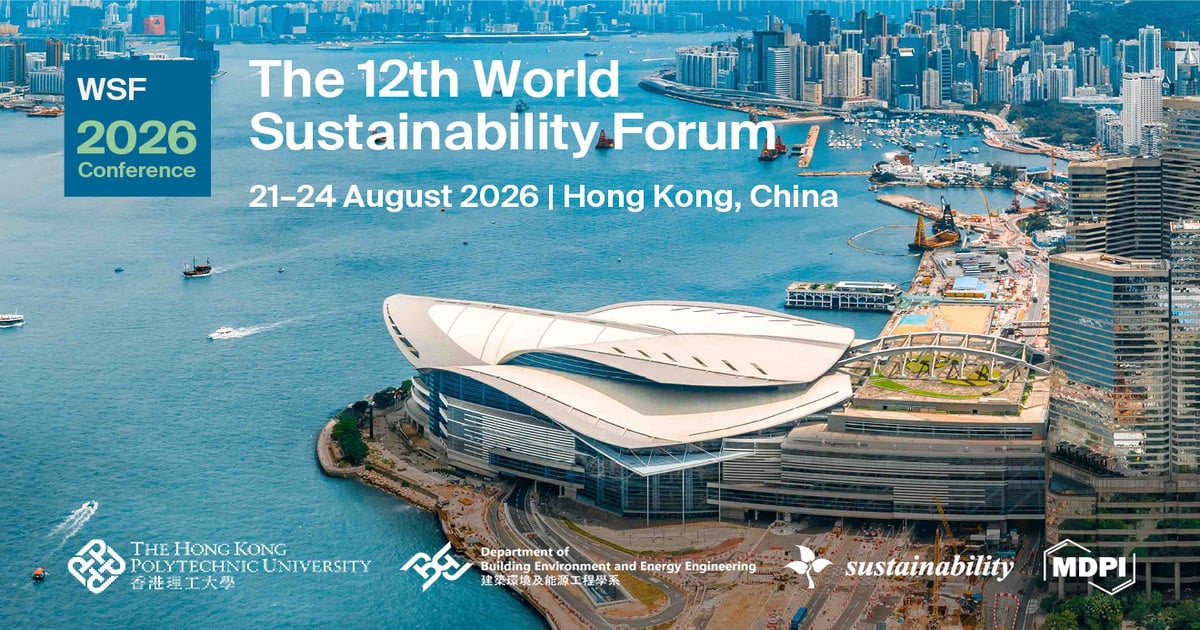
We would like to invite you to attend the 12th World Sustainability Forum, organized by MDPI’s Sustainability journal (ISSN: 2071-1050, IF 3.3), which will take place from 21 to 24 August 2026, in Hong Kong, China.
Conference Chair:
- Prof. Dr. Vivien Lu, Hong Kong Polytechnic University, Hong Kong, China.
- Prof. Dr. Weiqi Zhou, Research Center for Eco-Environmental Sciences, Chinese Academy of Sciences, Beijing, China.
- Prof. Dr. Mark A. Bonn, Florida State University, Tallahassee, USA.
Honorary Chair:
- Prof. Dr. Max Bergman, University of Basel, Basel, Switzerland.
Topics of interest:
S1. Emerging Technologies and Integrated Solutions for Sustainable, Resilient Cities and Planet;
S2. Resilient Urban Energy Infrastructure;
S3. Sustainability Education and Innovative Approaches;
S4. Climate Change and Socio-Ecological Systems;
S5. Sustainable Urban Landscapes and Low-Carbon Mobility;
S6. Circular Economy and Resource Efficiency;
S7. Renewable Energy and Smart Grids;
S8. Policy Frameworks for Equitable Green Transitions;
S9. Sustainable Economic Models and Green Finance;
S10. Tourism, Culture, Heritage and Hospitality: Global Strategies for a Sustainable Future;
S11. Inclusive Strategies for Water Quality Improvement, Ecological Restoration and Water Resource Management.
Important dates:
Abstract submission deadline: 29 May 2026;
Abstract acceptance notification: 16 June 2026.
Guide for authors:
To submit your abstract, please click on the following link: https://sciforum.net/user/submission/create/1460.
To register for the event, please click on the following link: https://sciforum.net/event/WSF-12?section=#registration
For details regarding the submission of abstracts, posters, and slides and publication opportunities, you may refer to the “Instructions for Authors” section: https://sciforum.net/event/WSF-12?subscribe§ion=#instructions.
For any enquiries regarding this event, please contact: wsf12@mdpi.com.
We look forward to seeing you at the 12th World Sustainability Forum.
5 August 2026
MDPI INSIGHTS: The CEO’s Letter #37 – Canada Summit, Sciforum Relaunch, 30 Years of Impactful Research & ISPRS 2026

Welcome to the MDPI Insights: The CEO's Letter.
In these monthly letters, I will showcase two key aspects of our work at MDPI: our commitment to empowering researchers and our determination to facilitating open scientific exchange.
Opening Thoughts

Reflections from the MDPI Canada Summit 2026 in Toronto (9–10 July)
As part of this year’s MDPI Summit events, we were delighted to host Editors-in-Chief (EiCs) and Editorial Board Members (EBMs) in Toronto for the MDPI Canada Summit 2026 this July.
Across the two days, we presented on topics including research integrity, editorial leadership, artificial intelligence, peer review, and the evolving role of the EiC. More importantly, the Summit created space for feedback and conversations with the academic community: these engagements continue play and important role in shaping how MDPI develops its journals and services.
Why Canada?
Canada has become one of the world’s leading Open Access (OA) nations. In 2025, 68% of Canadian research publications were published OA, with more than 73,000 OA articles produced during the year. Over the past five years alone, Canadian researchers have published more than 526,000 scholarly articles, showing both the scale and quality of Canadian research.
MDPI Toronto Office

“Canada has become one of the world’s leading Open Access nations”
Since opening in 2019, our Toronto office has grown to more than 85 colleagues supporting editorial operations, research integrity, marketing, societies, conferences, indexing, author services, and many other functions across North America. It was great to spend time with the team, see first-hand the energy and enthusiasm they bring to their work, and recognize the significant role they play in building relationships with the Canadian research community and delivering events such as this Summit.
MDPI and Canada
Today, Canada is an important part of the MDPI community:
- More than 53,800 articles from Canadian institutions published with MDPI since 1996
- More than 5,800 MDPI publications from Canadian researchers in 2025
- Nearly 1,900 Canadian Editorial Board Members, including 24 Editors-in-Chief; 49 Section Editors-in-Chief
- More than 30 Institutional Open Access Partnerships (IOAP) with universities across Canada

“The academic community is at the center of everything we do”
These numbers reflect the long-term partnerships with researchers, reviewers, editors, and institutions who continue to place their trust in MDPI.
Summit Program
Throughout the Summit, we presented and discussed topics against the following agenda:
- MDPI at 30: Introduction, Reflections and the Road Ahead – Stefan Tochev (CEO)
- Engagement with Academic Community and Society Partnerships – Karen Irwin (Associate Editorial Engagement Manager) and Carla Aloè (Head of Societies and Acquisition)
- Latest Developments in the Editorial Process – Summer Huggard (Operations Manager)
- Research Integrity and Publication Ethics – Renato Merki (Research Integrity Specialist)
- AI and Technology in Publishing – Dr. Barnaby Crook (Regional Engagement Editor)
- Panel Discussion – Bob Vrooman (Head of Business Development / Operations Manager, USA), Summer Huggard, Renato Merki, and myself

These presentations reinforce something we often say at MDPI: The academic community is at the center of everything we do. Each session concluded with a Q&A, allowing for discussions throughout the Summit to engage directly with our EiCs and EBMs.
Further Reading
I also had the opportunity to be interviewed by University Affairs about the evolving landscape of scholarly publishing, Open Access, and the importance of engaging with the research community. If you’re interested, you can read the interview in:
- English: University Affairs – MDPI Toronto Summit 2026: Bringing Together Leaders to Shape the Future of Scholarly Publishing
- Français: Affaires universitaires – Sommet MDPI de Toronto 2026
Thank You
As OA continues to grow around the world, events such as the MDPI Canada Summit remind us of the importance of meeting with our academic community in person. Listening to feedback, exchanging ideas, and building relationships are essential to ensuring that MDPI continues to evolve alongside the researchers, editors, reviewers, and institutions we serve.

Impactful Research

Five Journals, Five Different Stories of Success
Each year, the release of the Journal Citation Reports (JCR) provides an opportunity to look at the progress of our journal portfolio and, more importantly, the achievements of the research communities behind it.
A recent MDPI Blog article from Tommy Lax (Content Specialist, MDPI) highlights five journals whose 2025 Journal Impact Factor results show that success can take many forms – from achieving a first Impact Factor, to steady long-term growth, to leadership within highly competitive disciplines.
The featured journals include:
- Machine Learning & Knowledge Extraction (MAKE) – Among the 330 MDPI journals which received an Impact Factor in 2025, MAKE (ISSN 2504-4990) holds the accolade of having the highest rating of 8.4. The journal, which provides an advanced forum for the study of machine learning and its applications, is placed in Q1 for three subject categories: Computer science, artificial intelligence; Computer science, interdisciplinary applications; and Engineering, electrical & electronic.
- Antioxidants – Continuing its strong position across multiple scientific disciplines, Antioxidants (ISSN 2076-3921) was awarded an exceptional Impact Factor of 8.2. In addition, the journal was placed in Q1 in three subject categories: Biochemistry & molecular biology; Chemistry, medicinal; and Food science & technology.
- Biomass – This year, Biomass (ISSN 2673-8783) was recognized in the JCR for the first time, with a strong debut Impact Factor of 6.7. What makes this achievement even more impressive is the journal’s placement in Q1 of the category Engineering, chemical.
- Analytica – Remaining with the theme of growth, Analytica (ISSN 2673-4532), which provides an advanced forum for all aspects of fundamental and applied analytical chemistry, recorded one of the largest year-on-year increases in Journal Impact Factor, with a 7.4 – an astounding 3.8-point increase from its 2024 rating of 3.6.
- Batteries – Indexed in SCIE, Batteries (ISSN 2313-0105) received an updated Impact Factor of 6.3 this year, representing an increase of 1.5 versus last year, demonstrating consistent growth and increasing visibility over several years.
While citation metrics provide one perspective on journal performance, they tell only part of the story. Every milestone reflects the dedication of Editors-in-Chief, Editorial Board Members, reviewers, authors, and colleagues across MDPI who work together to uphold rigorous editorial standards and support high-quality research.
As a signatory of the Declaration on Research Assessment (DORA), MDPI supports a balanced approach to research evaluation. Journal-level metrics should be viewed alongside article-level indicators and the broader scientific and societal impact of published research.
Thank you to everyone whose commitment continues to strengthen our journals and advance Open Access across the global research community.
Inside MDPI

Building Better Tools for the Research Community: The Relaunch of Sciforum
Innovation at MDPI extends beyond journals. Over the past decade, we have continued to invest in products that support researchers, conference organizers, editors, reviewers, and institutions throughout the research lifecycle. As part of this ongoing investment, our Product and Engineering teams have been modernizing several of MDPI’s digital platforms. One important milestone in that journey is the relaunch of Sciforum, our conference management platform.
Read More: Sciforum Relaunch: Empowering Science through Seamless Event Management
Rather than simply updating an existing system, our product and engineering teams have rebuilt Sciforum, using a modern architecture designed to improve the user experience, support future growth, and continue to strengthen our position in the conference management market.
“Scalable technology is essential to delivering a high-quality experience”
Why We Rebuilt Sciforum
Technology must continue evolving alongside the needs of our users. The previous platform had served MDPI well for many years but had become difficult to extend and maintain. The new platform introduces a modular architecture that enables faster development, more flexibility, and a scalable foundation for future work.
Major improvements include:
- Simplified submission workflows
- Role-based dashboards
- A modern website builder
- Flexible pricing options
- Permanent data hosting
- A scalable architecture for future development

Supporting Our Conference Community
Sciforum is more than a software platform: it supports researchers, conference organizers, reviewers, speakers, and attendees by helping them organize, participate in, and share scientific meetings more efficiently. As MDPI continues to expand its conference activities worldwide, investing in modern, scalable technology is essential to delivering a high-quality experience for both our external partners and our internal teams.
Looking Ahead
The relaunch represents the beginning Sciforum’s next chapter. Planned improvements include: the Program Builder, Communication Hub, expanded payment options, Zoom integration, and a mobile application. These will continue to enhance the platform over the coming months.
Coming Together for Science

Highlights from ISPRS Congress 2026 – Toronto, Canada
In early July, I had the pleasure of attending the XXV ISPRS Congress in Toronto, one of the world’s leading gatherings for the geospatial and remote sensing research community. It was a great opportunity to meet researchers, editors, society leaders, and collaborators, while gaining insights into some of the latest developments in geospatial science and technology.
Over several days, I had the privilege of presenting the Jack Dangermond Award; speaking about MDPI’s approach to AI in publishing and our 30-year journey in Open Access publishing; participating in Editorial Board meetings; and engaging with members of the ISPRS community.
Below is a summary of these activities:
Celebrating excellence in research
One of the highlights of the week was presenting the Jack Dangermond Award for the best paper published in the ISPRS International Journal of Geo-Information (IJGI). Sponsored by MDPI and ESRI, the award recognizes an outstanding paper published over a four-year period and includes an ISPRS certificate together with a USD 10,000 prize.

Awards such as these remind us that journals are much more than publication platforms: they celebrate research that advances knowledge, inspires future work, and delivers meaningful impact for both science and society.
Presentations at ISPRS
I also had the pleasure to give two presentations during the congress:

1. The AI Revolution in Publishing: Challenges, Innovations, and MDPI’s Vision
The development of AI continues to transform scholarly publishing. During this session, I shared how MDPI is integrating AI responsibly, not to replace editorial judgement or peer review, but to support our staff by improving efficiency while maintaining scientific quality and research integrity.
2. MDPI: 30 Years of Open Access Publishing
I also had the opportunity to share MDP’s 30-year journey from a small publishing initiative to becoming a global Open Access publisher serving millions of researchers worldwide. As part of this session, my colleague Carla Aloè (Head of Societies and Acquisitions) introduced the ISPRS International Journal of Geo-Information (IJGI), sharing its development and contribution to the geospatial research community.

Meeting with Our Editorial Boards
Another rewarding aspect of the congress was meeting with the Editorial Boards of two of our journals:
- Remote Sensing
- ISPRS International Journal of Geo-Information
These discussions went beyond journal metrics. We heard ideas about editorial quality and emerging research areas, and we discussed reviewer engagement, diversity within editorial boards, and how journals can continue serving their communities for the future. These conversations are a great way to connect directly to the scientists who help shape our journals.


“One of our core missions has always been to make high-quality research openly accessible”
Partnerships matter
Scientific publishing is built on collaboration. Throughout the congress, our team welcomed researchers to the MDPI booth, met with authors and editors, and discussed opportunities for collaboration across our journals and society partnerships.
Special thanks to our MDPI colleagues who were present throughout the ISPRS congress supporting our Editorial Board meetings and the MDPI booth: Andy Tran, Carla Aloè, Carlo Cunanan, Diana Ribeiro Tosato, and Elena Duan.

Thank you to ISPRS for organizing this congress, to the researchers who shared their work, to our Editorial Board members, and to MDPI colleagues whose dedication continues to shape the journals and communities we support.
Closing Thoughts

Insights Into 30 Years of Impactful MDPI Research
As we celebrate 30 years of MDPI, it’s worth reflecting on the impact that the research we publish has on society. One of our core missions has always been to make high-quality research openly accessible so that it can inform new discoveries, public policy, education and innovation around the world.
A recent article on the MDPI Blog highlights several examples of MDPI publications that have gone beyond academic citations to help inform governments, international organizations and public policy discussions.
Research Creating Real-World Impact
The MDPI blog article features research that has contributed to topics including:
- protecting the Amazon rainforest through satellite mapping
- understanding climate change and urban heat inequality
- encouraging more young women to pursue STEM careers
- tackling obesity through healthier food environments
- shaping sustainable urban planning through the “15-minute city” concept
These examples remind us that publishing research is not only about producing articles: it is about helping knowledge reach the people who can use it to improve lives and address global challenges.
Thirty Years of Open Access
MDPI’s 30th Anniversary is also an opportunity to recognize the collective contribution of everyone across MDPI. Every manuscript processed, every review coordinated, every system developed, every conference organized, every partnership established and every article published contributes to a much larger purpose: helping scientific knowledge move further and faster.
You can explore the full article here: 30 Years of Impactful MDPI Research
You can also visit our 30th Anniversary page to learn more about MDPI’s journey over the past three decades.
Chief Executive Officer
MDPI AG
4 August 2026
Meet Us at the 12th World Sustainability Forum—Innovative Pathways for Sustainable, Resilient Cities and a Greener Planet, 21–24 August 2026, Hong Kong, China

Conference: The 12th World Sustainability Forum—Innovative Pathways for Sustainable, Resilient Cities and a Greener Planet
Organization: MDPI, Sustainability
Date: 21–24 August 2026
Place: Hong Kong, China
Building on the success of previous editions, we are delighted to announce that the 12th World Sustainability Forum (WSF-12) will be held in Hong Kong from 21 to 24 August 2026. In a time of rapid climate change, increasingly frequent extreme weather events, and growing resource constraints, the need for integrated, scalable solutions has never been greater.
WSF-12 will bring together global leaders, researchers and innovators to bridge science, policy, and society, fostering integrated solutions and collaborative partnerships that accelerate the transition from vision to action for a resilient and sustainable future. The forum will highlight the critical role of innovation and cross-sector partnerships in accelerating this transition.
This year’s forum will focus on seven key themes:
- Smart and Inclusive Urban Planning, and the Urban Sustainability Nexus (refers to the intersection of urban planning, resource management, and social well-being);
- The Circular Economy–Resource Efficiency Nexus;
- Waste Management, Renewable Energy Integration and Grid Modernization;
- Climate Adaptation and Ecological Conservation;
- Sustainable Transportation and Low-Carbon Mobility;
- Policy Frameworks for Equitable Green Transitions;
- Tourism, Culture, Heritage and Hospitality.
The following open access journals will be represented:
If you plan on attending this conference, please feel free to stop by our booth. Our delegates look forward to meeting you in person and answering any questions you may have.
For more information about the conference, please visit the following link: https://sciforum.net/event/WSF-12.
21 July 2026
Meet Us at the 2027 AAG Annual Meeting, 8–12 February 2027, New York, USA
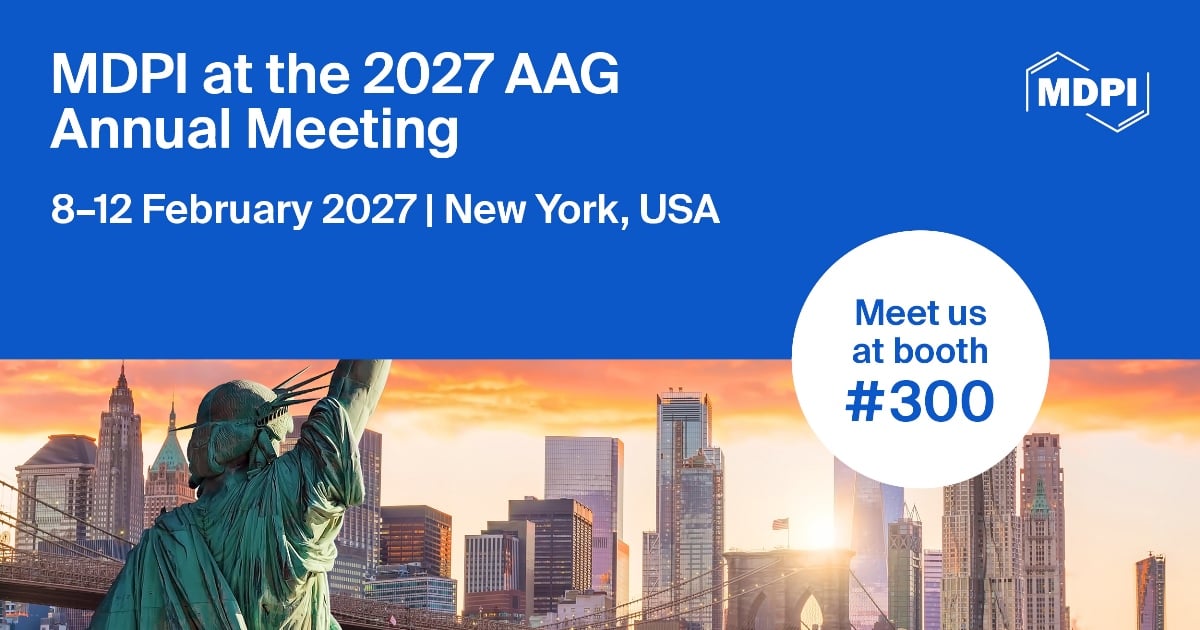
MDPI is delighted to announce its participation in the 2027 AAG Annual Meeting (AAG 2027), which will take place from 8 to 12 February 2027 in New York, New York, USA.
As the flagship event of the American Association of Geographers (AAG), the AAG Annual Meeting stands as one of the world’s largest gatherings for geographers, spatial scientists, and professionals in allied fields. Each year, this leading conference draws thousands of attendees from academia, government agencies, non-profit organizations, and the private sector. It serves as a dynamic platform for sharing cutting-edge research findings, exploring innovative technological advancements, and engaging in critical dialogues that shape the future of geography and its diverse applied domains.
The following MDPI journals will be represented at the event:
- Sustainability;
- Geographies;
- Remote Sensing;
- Land;
- Climate;
- Water;
- IJGI;
- Earth;
- GeoHazards;
- Coasts;
- Journal of Parks;
- Geomatics;
- Nitrogen;
- World;
- Quaternary.
If you are attending AAG 2027, we invite you to visit us at booth #300. Our representatives will be available to discuss publishing opportunities, the benefits of open access, and our commitment to advancing research into geosciences.
For more information about the conference, please visit its official website: https://www.aag.org/events/aag2027/.
21 July 2026
Meet Us at the 24th General Meeting of the International Mineralogical Association (IMA 2026), 20–24 August 2026, Nanjing, China

We are pleased to announce that MDPI will attend the 24th General Meeting of the International Mineralogical Association (IMA 2026) as an exhibitor. This meeting will be held in Nanjing, China, from 20 to 24 August 2026.
The Chinese Society for Mineralogy, Petrology, and Geochemistry will organize and host the 24th IMA General Meeting in Nanjing, with the theme being Mineralogy in the Future. The Chinese mineralogy community and Nanjing University are excited to welcome guests from around the world, offering high levels of accommodation and academic activities. The committee sincerely invites researchers to participate in this exciting mineralogy event focusing on the future of the field.
The following MDPI journals will be represented:
If you are attending this conference, please do not hesitate to start an online conversation with us. Our delegates look forward to meeting you in person at the booth and answering any questions you may have. For more information about the conference, please visit the following website: https://ima2026.nju.edu.cn/main.htm.
17 July 2026
Sustainability | Highly Cited Papers in 2025
1. “Heavy Metal Pollution in Coastal Environments: Ecological Implications and Management Strategies: A Review”
by Mahmoud El-Sharkawy, Modhi O. Alotaibi, Jian Li, Daolin Du and Esawy Mahmoud
Sustainability 2025, 17(2), 701; https://doi.org/10.3390/su17020701
Available online: https://www.mdpi.com/2071-1050/17/2/701
2. “The Impact of Adaptive Learning Technologies, Personalized Feedback, and Interactive AI Tools on Student Engagement: The Moderating Role of Digital Literacy”
by Husam Yaseen, Abdelaziz Saleh Mohammad, Najwa Ashal, Hesham Abusaimeh, Ahmad Ali and Abdel-Aziz Ahmad Sharabati
Sustainability 2025, 17(3), 1133; https://doi.org/10.3390/su17031133
Available online: https://www.mdpi.com/2071-1050/17/3/1133
3. “An Overview on the Role of Government Initiatives in Nanotechnology Innovation for Sustainable Economic Development and Research Progress”
by Umme Thayyiba Khatoon, and Aditya Velidandi
Sustainability 2025, 17(3), 1250; https://doi.org/10.3390/su17031250
Available online: https://www.mdpi.com/2071-1050/17/3/1250
4. “The Impact of Green Technological Innovation on Industrial Structural Optimization Under Dual-Carbon Targets: The Role of the Moderating Effect of Carbon Emission Efficiency”
by Xinyu Wang, Hongyu Su and Xiao Liu
Sustainability 2025, 17(14), 6313; https://doi.org/10.3390/su17146313
Available online: https://www.mdpi.com/2071-1050/17/14/6313
5. “Advancing Biochar Applications: A Review of Production Processes, Analytical Methods, Decision Criteria, and Pathways for Scalability and Certification”
by Diego C. B. D. Santos, Rafael B. W. Evaristo, Romulo C. Dutra, Paulo A. Z. Suarez, Edgar A. Silveira, and Grace F. Ghesti
Sustainability 2025, 17(6), 2685; https://doi.org/10.3390/su17062685
Available online: https://www.mdpi.com/2071-1050/17/6/2685
6. “Sustainable Consumption and Branding for Gen Z: How Brand Dimensions Influence Consumer Behavior and Adoption of Newly Launched Technological Products”
by Dimitrios Theocharis and Georgios Tsekouropoulos
Sustainability 2025, 17(9), 4124; https://doi.org/10.3390/su17094124
Available online: https://www.mdpi.com/2071-1050/17/9/4124
7. “Large-Scale Renewable Energy Integration: Tackling Technical Obstacles and Exploring Energy Storage Innovations”
by Sadettin Ergun, Abdullah Dik, Rabah Boukhanouf and Siddig Omer
Sustainability 2025, 17(3), 1311; https://doi.org/10.3390/su17031311
Available online: https://www.mdpi.com/2071-1050/17/3/1311
8. “Testing the Impact of Renewable Energy and Institutional Quality on Consumption-Based CO2 Emissions: Fresh Insights from MMQR Approach”
by Abdulateif A. Almulhim, Nasiru Inuwa, Maroua Chaouachi and Ahmed Samour
Sustainability 2025, 17(2), 704; https://doi.org/10.3390/su17020704
Available online: https://www.mdpi.com/2071-1050/17/2/704
9. “The Role of Digital Tourism Platforms in Advancing Sustainable Development Goals in the Industry 4.0 Era”
by Adelina Zeqiri, Adel Ben Youssef and Teja Maherzi Zahar
Sustainability 2025, 17(8), 3482; https://doi.org/10.3390/su17083482
Available online: https://www.mdpi.com/2071-1050/17/8/3482
10. “Hybrid Teaching and Learning in Higher Education: A Systematic Literature Review”
by Daina Gudoniene, Evelina Stanevicien, Isabel Huet, Jochen Dickel, Djibril Dieng, Joël Degroote, Vitor Rocio,Rita Butkiene and Diogo Casanova
Sustainability 2025, 17(2), 756; https://doi.org/10.3390/su17020756
Available online: https://www.mdpi.com/2071-1050/17/2/756
11. “The Biological Effects of Biochar on Soil’s Physical and Chemical Characteristics: A Review”
by Zetao Zhu, Yuan Zhang, Wenmei Tao, Xiaoli Zhang, Zhongda Xu and Chengcheng Xu
Sustainability 2025, 17(5), 2214; https://doi.org/10.3390/su17052214
Available online: https://www.mdpi.com/2071-1050/17/5/2214
12. “Community-Led Sustainable Tourism in Rural Areas: Enhancing Wine Tourism Destination Competitiveness and Local Empowerment”
by Milena Turčinović, Aleksandra Vujko and Nemanja Stanišić
Sustainability 2025, 17(7), 2878; https://doi.org/10.3390/su17072878
Available online: https://www.mdpi.com/2071-1050/17/7/2878
13. “Analysis of Digital Twin Applications in Energy Efficiency: A Systematic Review”
by Labouda Ba, Fatma Tangour, Ikram El Abbassi and Rafik Absi
Sustainability 2025, 17(8), 3560; https://doi.org/10.3390/su17083560
Available online: https://www.mdpi.com/2071-1050/17/8/3560
14. “Deep Learning for Sustainable Agriculture: A Systematic Review on Applications in Lettuce Cultivation”
by Yi-Ming Qin, Yu-Hao Tu, Tao Li, Yao Ni, Rui-Feng Wang, and Haihua Wang
Sustainability 2025, 17(7), 3190; https://doi.org/10.3390/su17073190
Available online: https://www.mdpi.com/2071-1050/17/7/3190
15. “Biomass Ash: A Review of Chemical Compositions and Management Trends”
by Izabella Maj, Kamil Niesporek, Piotr Płaza, Jörg Maier and Paweł Łój
Sustainability 2025, 17(11), 4925; https://doi.org/10.3390/su17114925
Available online: https://www.mdpi.com/2071-1050/17/11/4925
16. “Biomass Pyrolysis Pathways for Renewable Energy and Sustainable Resource Recovery: A Critical Review of Processes, Parameters, and Product Valorization”
by Nicoleta Ungureanu, Nicolae-Valentin Vlăduț, Sorin-Ștefan Biriș, Neluș-Evelin Gheorghiță and Mariana Ionescu
Sustainability. 2025, 17(17), 7806; https://doi.org/10.3390/su17177806
Available online: https://www.mdpi.com/2071-1050/17/17/7806
17. “Deep Learning for Sustainable Aquaculture: Opportunities and Challenges”
by An-Qi Wu, Ke-Lei Li, Zi-Yu Song, Xiuhua Lou, Pingfan Hu, Weijun Yang and Rui-Feng Wang
Sustainability. 2025, 17(11), 5084; https://doi.org/10.3390/su17115084
Available online: https://www.mdpi.com/2071-1050/17/11/5084
18. “Deep Learning in Multimodal Fusion for Sustainable Plant Care: A Comprehensive Review”
by Zhi-Xiang Yang,Yusi Li, Rui-Feng Wang, Pingfan Hu and Wen-Hao Su
Sustainability 2025, 17(12), 5255; https://doi.org/10.3390/su17125255
Available online: https://www.mdpi.com/2071-1050/17/12/5255
19. “Manure Management as a Potential Mitigation Tool to Eliminate Greenhouse Gas Emissions in Livestock Systems”
by George K. Symeon, Konstantina Akamati, Vassilios Dotas, Despoina Karatosidi, Iosif Bizelis and George P. Laliotis
Sustainability 2025, 17(2), 586; https://doi.org/10.3390/su17020586
Available online: https://www.mdpi.com/2071-1050/17/2/586
20. “Artificial Intelligence in Hydrology: Advancements in Soil, Water Resource Management, and Sustainable Development”
by Seyed M. Biazar, Golmar Golmohammadi, Rohit R. Nedhunuri, Saba Shaghaghi and Kourosh Mohammadi
Sustainability 2025, 17(5), 2250; https://doi.org/10.3390/su17052250
Available online: https://www.mdpi.com/2071-1050/17/5/2250
21. “Greening Corporate Environmental, Social, and Governance Performance: The Impact of China’s Carbon Emissions Trading Pilot Policy”
by Rui Zhou, Jiajun Lou and Bing He
Sustainability 2025, 17(3), 963; https://doi.org/10.3390/su17030963
Available online: https://www.mdpi.com/2071-1050/17/3/963
22. “A Critical Review of the Advances and Current Status of the Application of Adsorption in the Remediation of Micropollutants and Dyes Through the Use of Emerging Bio-Based Nanocomposites”
by Jordana Georgin, Claudete Gindri Ramos, Jivago Schumacher de Oliveira, Younes Dehmani, Noureddine El Messaoudi, Lucas Meili and Dison S. P. Franco
Sustainability 2025, 17(5), 2012; https://doi.org/10.3390/su17052012
Available online: https://www.mdpi.com/2071-1050/17/5/2012
23.” Topological Advances in Isolated DC–DC Converters: High-Efficiency Design for Renewable Energy Integration”
by Sergio Coelho, Vitor Monteiro and Joao L. Afonso
Sustainability 2025, 17(6), 2336; https://doi.org/10.3390/su17062336
Available online: https://www.mdpi.com/2071-1050/17/6/2336
24. “Advanced Oxidation Process in the Sustainable Treatment of Refractory Wastewater: A Systematic Literature Review”
by Jorge Alejandro Silva
Sustainability 2025, 17(8), 3439; https://doi.org/10.3390/su17083439
Available online: https://www.mdpi.com/2071-1050/17/8/3439
25. “Biomass Hydrochar: A Critical Review of Process Chemistry, Synthesis Methodology, and Applications”
by Joshua O. Ighalo, Florence C. Akaeme, Jordana Georgin, Jivago Schumacher de Oliveira and Dison S. P. Franco
Sustainability 2025, 17(4), 1660; https://doi.org/10.3390/su17041660
Available online: https://www.mdpi.com/2071-1050/17/4/1660
26. “Digital Technologies in Food Supply Chain Waste Management: A Case Study on Sustainable Practices in Smart Cities”
by Hajar Fatorachian, Hadi Kazemi and Kulwant Pawar
Sustainability 2025, 17(5), 1996; https://doi.org/10.3390/su17051996
Available online: https://www.mdpi.com/2071-1050/17/5/1996
27. “The Implications of Artificial Intelligence for Small and Medium-Sized Enterprises’ Sustainable Development in the Areas of Blockchain Technology, Supply Chain Resilience, and Closed-Loop Supply Chains”
by Syed Abdul Rehman Khan, Adnan Ahmed Sheikh, Ibrahim Rashid Al Shamsi and Zhang Yu
Sustainability 2025, 17(1), 334; https://doi.org/10.3390/su17010334
Available online: https://www.mdpi.com/2071-1050/17/1/334
28. “Research on Methane-Rich Biogas Production Technology by Anaerobic Digestion Under Carbon Neutrality: A Review”
by Shiqing Qian, Luming Chen, Sunqiang Xu, Cai Zeng, Xueqi Lian, Zitong Xia and Jintuo Zou
Sustainability 2025, 17(4), 1425; https://doi.org/10.3390/su17041425
Available online: https://www.mdpi.com/2071-1050/17/4/1425
29. “Assessing the Impact of Green Energy Transition, Technological Innovation, and Natural Resources on Load Capacity Factor in Algeria: Evidence from Dynamic Autoregressive Distributed Lag Simulations and Machine Learning Validation”
by Brahim Bergougui and Said Meziane
Sustainability 2025, 17(5), 1815; https://doi.org/10.3390/su17051815
Available online: https://www.mdpi.com/2071-1050/17/5/1815
30. “Biochar-Induced Microbial Shifts: Advancing Soil Sustainability”
by Meesha Sharma, Rishabh Kaushik, Maharaj K. Pandit and Yi-Hsuan Lee
Sustainability 2025, 17(4), 1748; https://doi.org/10.3390/su17041748
Available online: https://www.mdpi.com/2071-1050/17/4/1748
31. “Digital Twins, Extended Reality, and Artificial Intelligence in Manufacturing Reconfiguration: A Systematic Literature Review”
by Anjela Mayer, Lucas Greif, Tim Markus Häußermann, Simon Otto, Kevin Kastner, Sleiman El Bobbou, Jean-Rémy Chardonnet, Julian Reichwald, Jürgen Fleischer and Jivka Ovtcharova
Sustainability 2025, 17(5), 2318; https://doi.org/10.3390/su17052318
Available online: https://www.mdpi.com/2071-1050/17/5/2318
32. “Innovative Solutions for Combating Climate Change: Advancing Sustainable Energy and Consumption Practices for a Greener Future”
by Aylin Erdo˘gdu, Faruk Dayi, Ahmet Yanik, Ferah Yildiz and Farshad Ganji
Sustainability 2025, 17(6), 2697; https://doi.org/10.3390/su17062697
Available online: https://www.mdpi.com/2071-1050/17/6/2697
33. “Organic Acids in Food Preservation: Exploring Synergies, Molecular Insights, and Sustainable Applications”
by Kavita Bhavin Sorathiya, Adma Melo, Maria Conceição Hogg and Manuela Pintado
Sustainability 2025, 17(8), 3434; https://doi.org/10.3390/su17083434
Available online: https://www.mdpi.com/2071-1050/17/8/3434
34. “Integrating Energy Storage Technologies with Renewable Energy Sources: A Pathway Toward Sustainable Power Grids”
by Farhan H. Malik, Ghulam A. Hussain, Yahia M. S. Alsmadi, Zunaib M. Haider, Wathiq Mansoor and Matti Lehtonen
Sustainability 2025, 17(9), 4097; https://doi.org/10.3390/su17094097
Available online: https://www.mdpi.com/2071-1050/17/9/4097
35. “The Effect of Environmental, Social, and Governance (ESG) Disclosure on the Profitability of Saudi-Listed Firms: Insights from Saudi Vision 2030”
by Nadia Bushra Mohammed Ali, Hiba Awad Alla Ali Hussin, Howaida Mohammed Fadol Mohammed, Khaled Abd Alaziz Hassan Mohmmed, Amjad Abdullah S. Almutiri and Mohamed Ali Ali
Sustainability 2025, 17(7), 2977; https://doi.org/10.3390/su17072977
Available online: https://www.mdpi.com/2071-1050/17/7/2977
36. “Global Regulations for Sustainable Battery Recycling: Challenges and Opportunities”
by Dan Su, Yu Mei,Tongchao Liu and Khalil Amine
Sustainability 2025, 17(7), 3045; https://doi.org/10.3390/su17073045
Available online: https://www.mdpi.com/2071-1050/17/7/3045
37. “AI-Driven Financial Transparency and Corporate Governance: Enhancing Accounting Practices with Evidence from Jordan”
by Osama Samih Shaban and Arwa Omoush
Sustainability 2025, 17(9), 3818; https://doi.org/10.3390/su17093818
Available online: https://www.mdpi.com/2071-1050/17/9/3818
38. “Digital Transformation, Supply Chain Resilience, and Sustainability: A Comprehensive Review with Implications for Saudi Arabian Manufacturing”
by Mohammed Alquraish
Sustainability 2025, 17(10), 4495; https://doi.org/10.3390/su17104495
Available online: https://www.mdpi.com/2071-1050/17/10/4495
39. “Blockchain for Sustainable Development: A Systematic Review”
by Marsela Thanasi-Boçe and Julian Hoxha
Sustainability 2025, 17(11), 4848; https://doi.org/10.3390/su17114848
Available online: https://www.mdpi.com/2071-1050/17/11/4848
40. “A Systematic Review of Implementing Multi-Criteria Decision-Making (MCDM) Approaches for the Circular Economy and Cost Assessment”
Sustainability 2025, 17(11), 5007; https://doi.org/10.3390/su17115007
Available online: https://www.mdpi.com/2071-1050/17/11/5007
41. “Predicting Fuel Consumption and Emissions Using GPS-Based Machine Learning Models for Gasoline and Diesel Vehicles”
by Fahd Alazemi, Asmaa Alazmi, Mubarak Alrumaidhi and Nick Molden
Sustainability 2025, 17(6), 2395; https://doi.org/10.3390/su17062395
Available online: https://www.mdpi.com/2071-1050/17/6/2395
42. “Recycled Materials in Construction: Trends, Status, and Future of Research”
by Jiawei Wu, Xunrong Ye and Huachun Cui
Sustainability 2025, 17(6), 2636; https://doi.org/10.3390/su17062636
Available online: https://www.mdpi.com/2071-1050/17/6/2636
43. “Sustainable Transition of the Global Semiconductor Industry: Challenges, Strategies, and Future Directions”
by Yilong Yin and Yi Yang
Sustainability 2025, 17(7), 3160; https://doi.org/10.3390/su17073160
Available online: https://www.mdpi.com/2071-1050/17/7/3160
44. “Optimizing Facilities Management Through Artificial Intelligence and Digital Twin Technology in Mega-Facilities”
by Ahmed Mohammed Abdelalim, Ahmed Essawy, Alaa Sherif, Mohamed Salem, Manal Al-Adwani and Mohammad Sadeq Abdullah
Sustainability 2025, 17(5), 1826; https://doi.org/10.3390/su17051826
Available online: https://www.mdpi.com/2071-1050/17/5/1826
45. “Sustainable Wet Processing Technologies for the Textile Industry: A Comprehensive Review”
by Maria L. Catarino, Filipa Sampaio and Ana L. Gonçalves
Sustainability 2025, 17(7), 3041; https://doi.org/10.3390/su17073041
Available online: https://www.mdpi.com/2071-1050/17/7/3041
46. “The Role of Circular Economy Entrepreneurship, Cleaner Production, and Green Government Subsidy for Achieving Sustainability Goals in Business Performance”
by Ali Mamash, Kolawole Iyiola and Hasan Yousef Aljuhmani
Sustainability 2025, 17(9), 3990; https://doi.org/10.3390/su17093990
Available online: https://www.mdpi.com/2071-1050/17/9/3990
47. “Sustainable Entrepreneurial Intention Among University Students: Synergetic Moderation of Entrepreneurial Fear and Use of Artificial Intelligence in Teaching”
by Muzaffar Asad, Latefa Hamad Al Fryan and Mahasin Ibrahim Shomo
Sustainability 2025, 17(1), 290; https://doi.org/10.3390/su17010290
Available online: https://www.mdpi.com/2071-1050/17/1/290
48. “Optimization of Microgrid Dispatching by Integrating Photovoltaic Power Generation Forecast”
by Tianrui Zhang, Weibo Zhao, Quanfeng He and Jianan Xu
Sustainability 2025, 17(2), 648; https://doi.org/10.3390/su17020648
Available online: https://www.mdpi.com/2071-1050/17/2/648
49. “The Psychological Mechanisms of Education for Sustainable Development: Environmental Attitudes, Self-Efficacy, and Social Norms as Mediators of Pro-Environmental Behavior Among University Students”
by Jianyang Zhang and Aochen Cao
Sustainability 2025, 17(3), 933; https://doi.org/10.3390/su17030933
Available online: https://www.mdpi.com/2071-1050/17/3/933
50. “Artificial Intelligence for Sustainability: A Systematic Review and Critical Analysis of AI Applications, Challenges, and Future Directions”
by Mihaela Toderas
Sustainability 2025, 17(17), 8049; https://doi.org/10.3390/su17178049
Available online: https://www.mdpi.com/2071-1050/17/17/8049
17 July 2026
Summary of the MDPI Academic Publishing Workshop at Thaksin University Held on 8 July 2026

MDPI was pleased to partner with Thaksin University in Songkhla on 8 July 2026 for a highly productive Academic Publishing Workshop dedicated to advancing academic publishing and scholarly communication. The event was officially opened by Associate Professor Dr. Samak Kaewsuksaeng, Vice President for Research and Innovation at Thaksin University, who welcomed the MDPI speaker team and expressed his appreciation for their contribution in sharing valuable knowledge with faculty members, researchers, and students.

Associate Professor Dr. Samak Kaewsuksaeng, Vice President for Research and Innovation of Thaksin University (TSU), opened the ceremony by highlighting TSU’s commitment to strengthening its research performance through increasing high-quality scholarly publications and maximizing the academic impact of research outputs. He emphasized the importance of publishing in reputable international journals as part of the university’s research strategy. He welcomed the collaboration between Thaksin University and MDPI through the Institutional Open Access Program (IOAP), noting that the partnership provides TSU researchers with greater opportunities to publish with an international open access publisher while enhancing the global visibility and accessibility of their research. He also expressed his expectation for expanding future collaborations with MDPI, including the development of Special Issues, academic conferences, and publishing workshops to support the university’s research community further. He concluded by expressing his sincere appreciation to MDPI for its continued cooperation and conveyed his confidence in a strong and mutually beneficial partnership that would advance the interests of both organizations and the wider research community.

The opening speech was delivered by Ms. Ploy Assavajamroon, one of MDPI’s representatives, who also highlighted the recent partnership between Thaksin University and MDPI through the Institutional Open Access Program (IOAP). She began by introducing MDPI, including its core values, memberships, and collaborations with international organizations in academic publishing. She also presented an overview of MDPI’s journal portfolio, indexing status, and publishing platforms and services. To provide local context, she shared publication trends in Thailand and at Thaksin University, highlighting the increasing adoption of open access (OA) publishing. In the final part of her presentation, she acknowledged the support of the sponsoring journals—Processes, Sustainability, Energies, Conservation, and Biosphere. She concluded by introducing each journal, covering its scope, key metrics and rankings, as well as its marketing and promotional activities.

The session “How to Write Scientific Papers” was presented by Dr. Juthathip Poofery, Editorial Team Leader and Regional Engagement Editor. The presentation provided an overview of the essential elements of a well-prepared scientific manuscript, covering effective title and abstract writing, logical organization of the manuscript, clear presentation of research findings, and the importance of selecting appropriate keywords to improve research visibility. The session also emphasized publication ethics, research transparency, and the key information required in the back matter, including authorship contributions, funding, ethical statements, data availability, and conflicts of interest. The session concluded with an engaging discussion in which participants raised questions about the qualifications required to become a peer reviewer, how peer-review reports are evaluated and managed by journals, and the purpose of the various back matter statements in a manuscript. Additional topics of interest included strategies for selecting effective keywords, the use of AI tools for English-language improvement, MDPI’s English editing services, and the availability of discounts for article processing charges (APCs) and author services.

The presentation “Data Visualization and Layout Guidelines for Scientific Papers” was presented by Chatchanok Boonsanong. It introduced core principles for presenting research clearly and professionally, centering on three main areas: structuring a well-formatted manuscript, building clear and effective tables, and producing high-quality figures that accurately convey research findings. Through hands-on examples and best practices, participants came away with a stronger grasp of how strong formatting and visual design can improve the readability and quality of scientific papers.

The fourth session, titled “How to Respond to Peer Reviewers”, was presented by Ms. Hathaipat Kittirojana, a Regional Engagement Editor. She discussed the peer-review process at MDPI and guided the audience through how to revise the manuscript professionally. This session also included key tips for revision preparation and how to organize a response effectively. In conclusion, she encouraged the audience to remain positive, open-minded, and professional when replying to reviewers.

The following session, “Publication Ethics for Authors”, was delivered by Dr. Siriporn Tantiwatcharothai, Regional Engagement Editor at MDPI’s Bangkok office. She opened by underscoring how essential ethical standards are throughout the research and publishing process, then walked through common ethical challenges in scholarly publishing, along with how MDPI’s policies and guidelines address them. The discussion also touched on the growing role of artificial intelligence (AI) in research, along with the ethical concerns and risks it raises. Dr. Siriporn concluded by outlining MDPI’s process for handling ethics-related issues that surface after publication, giving attendees insight into how such cases are reviewed and resolved.

To conclude the program, a certificate-awarding ceremony was held to recognize attendees for their participation throughout the day’s sessions. The workshop provided a valuable platform for researchers to deepen their understanding of academic publishing while engaging directly with MDPI’s editorial experts on topics ranging from manuscript preparation to publication ethics and peer review. The event concluded with the signing of the Institutional Open Access Program (IOAP) agreement between MDPI and Thaksin University, further strengthening the collaboration between the two organizations. By combining researcher training with a long-term institutional partnership, the workshop marked an important step toward supporting high-quality research and enhancing the global visibility and impact of scholarly publications from Thaksin University.
16 July 2026
Meet Us at the 7th International Conference on Countermeasures to Urban Heat Islands (7th IC2UHI), 22–25 September 2026, Nanjing, China
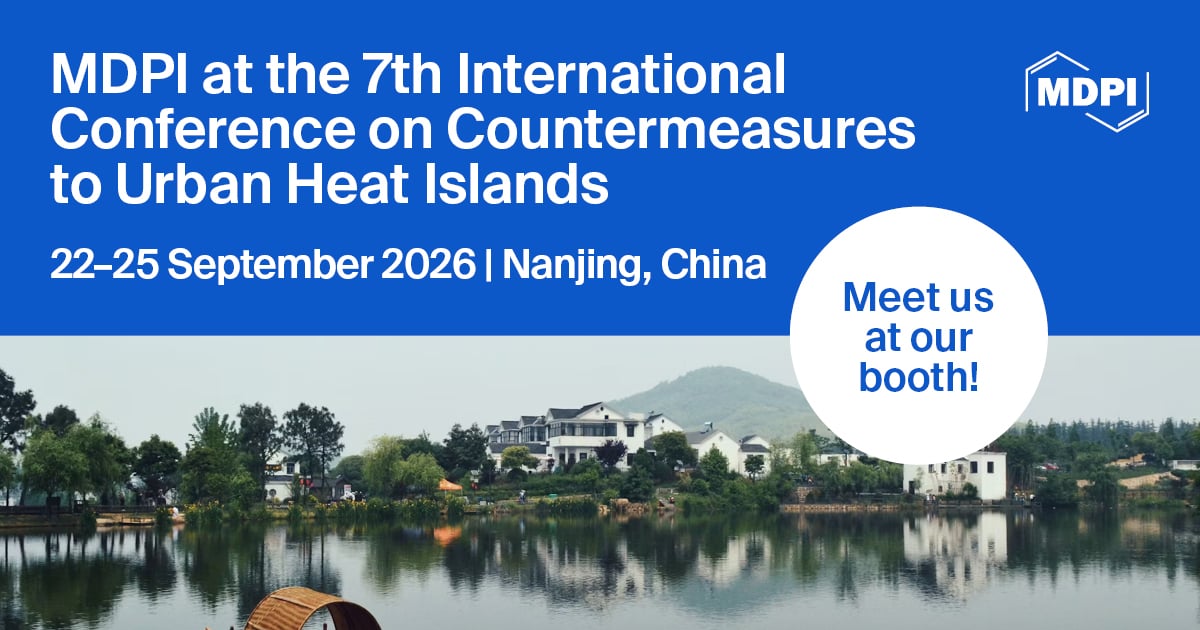
Conference: The 7th International Conference on Countermeasures to Urban Heat Islands (7th IC2UHI)
Date: 22–25 September 2026
Location: Nanjing, China
MDPI will be attending the 7th International Conference on Countermeasures to Urban Heat Islands (7th IC2UHI), which will be held from 22 September to 25 September 2026, as an exhibitor. We welcome researchers from various backgrounds to visit our booth and share their latest ideas with us.
Organized by Southeast University and supported by multiple co-organizers, the 7th International Conference on Countermeasures to Urban Heat Islands (7th IC2UHI) will be held in Nanjing, China.
The conference will focus on science, design, engineering, and public policies related to the interdisciplinary nature of effectively addressing UHI challenges. This year, it welcomes scientists, academics, engineers, architects, builders, policymakers, and government officials from around the world to exchange insights, research findings, and practical experience in mitigating urban heat islands. It covers abundant themes featuring cutting-edge progress and evidence-based solutions to relieve UHI impacts. Rich conference topics expand academic horizons and motivate innovative methods to construct sustainable, resilient and livable cities, jointly creating urban environments capable of coping with climate change and improving residents’ well-being.
We warmly welcome you to join us in Nanjing, China, as we work together to promote the collective advancement of global research in urban heat island mitigation and sustainable urban development.
The following MDPI journals will be represented at the conference:
- Buildings;
- World;
- Land;
- Geographies;
- Architecture;
- Sustainability;
- Urban Science;
- Earth.
If you are planning to attend this conference, please do not hesitate to start an online conversation with us. Our delegates look forward to meeting you in person at the booth and answering any questions that you may have. For more information, please visit https://www.ic2uhi2026.com/.
14 July 2026
Meet Us at the 23rd Annual Meeting of the Asia Oceania Geosciences Society (AOGS2026), 2–7 August 2026, Fukuoka, Japan

MDPI is pleased to announce its participation in AOGS2026, which will be taking place from 2 to 7 August 2026 at the Marine Messe Hall B, Fukuoka, Japan.
Organized by the Asia Oceania Geosciences Society (AOGS) in collaboration with the Japan Geoscience Union (JpGU), the Annual Meeting serves as one of the leading geoscience conferences in the Asia-Pacific region. Under the 2026 conference theme, the meeting brings together researchers, academics, and industry professionals from across the globe to exchange the latest scientific discoveries, foster interdisciplinary collaboration, and address pressing challenges related to the Earth, planetary, and environmental sciences.
We warmly invite conference participants to visit the MDPI booth to learn more about our portfolio of open access journals, publishing opportunities, editorial initiatives, and author services. Our team will be available throughout the conference to discuss the ways in which MDPI supports researchers at every stage of the publishing journey, as well as to answer any questions about our journals and editorial processes.
The following MDPI journals will be represented:
- Environments;
- Geographies;
- Quaternary;
- Climate;
- Water;
- GeoHazards;
- Hydrology;
- Sustainability;
- Remote Sensing;
- Limnological Review;
- Oceans;
- Geosciences;
- Journal of Marine Science and Engineering (JMSE);
- Earth.
If you plan on attending this conference, we invite you to visit our booth B10 and converse with our delegates in the Marine Messe Hall B. We are excited to meet you in person and address any questions that you may have. For further details about the conference, please visit the following website: https://www.asiaoceania.org/AOGS2026/Home.
