
Skip to Content
  • 4.1
    Impact Factor
  • 8.9
    CiteScore
  • 17 days
    Submission to First Decision
  • 4 days
    Acceptance to Publication

Sustainability

Sustainability is an international, peer-reviewed, open-access journal on environmental, cultural, economic, and social sustainability of human beings, published semimonthly online by MDPI. The Canadian Urban Transit Research & Innovation Consortium (CUTRIC), International Council for Research and Innovation in Building and Construction (CIB) and Urban Land Institute (ULI) are affiliated with Sustainability and their members receive discounts on the article processing charges.

Get Alerted

Add your email address to receive forthcoming issues of this journal.

All Articles (111,424)

  • Article
  • Open Access

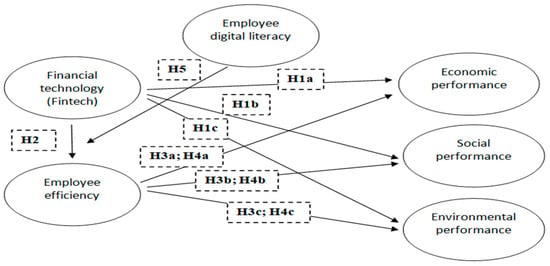
This study investigates whether the use of financial technology (Fintech) is linked to better sustainability outcomes among Saudi Arabian small- and medium-sized enterprises (SMEs), while examining employee efficiency as a mediating mechanism and employee digital literacy (EDL) as a moderating condition. Data were obtained from questionnaire responses from 265 manufacturing SMEs operating in Saudi Arabia. Partial least squares structural equation modeling (PLS-SEM) was employed to test the hypothesized paths, including the indirect pathway involving employee efficiency and the interaction with EDL. The estimates show favorable direct associations between Fintech adoption and the economic, environmental, and social pillars of firm performance, as well as indirect associations operating through employee efficiency. The Fintech–efficiency association is also significantly conditioned by EDL. Evidence from the Saudi manufacturing industry broadens the predominantly service-oriented Fintech literature and sheds light on the organizational processes connecting digital finance with sustainability. For managers, the findings point to the value of combining Fintech implementation with initiatives that enable employees to perform their work more efficiently and effectively.

Sustainability

22 November 2026

Conceptual model. Source: Author’s own creation.
  • Article
  • Open Access

Against the backdrop of global value chain restructuring and rising geopolitical risks, supply-chain resilience and sustainable operations are critical to achieving the United Nations Sustainable Development Goals. Multinational enterprises from emerging economies are commonly confronted with cross-border supply-chain disruptions. Based on panel data of Chinese A-share listed multinational enterprises spanning 2010–2025, this paper measures firms’ data-driven resources through textual mining of annual reports and empirically examines its impact on supply-chain resilience and sustainable operations. The results reveal that the adoption of data-driven resources significantly improves the supply-chain resilience and sustainability performance of multinational enterprises. This effect is positively moderated by government digital subsidies and firms’ technological absorptive capacity, with resource allocation efficiency and information transparency serving as two vital mediating channels. Such impacts are further conditioned by human capital, institutional environments, and firm-level characteristics. This study offers practical implications for firms’ overseas expansion and provides empirical references for other emerging economies worldwide to build sustainable supply chains.

Sustainability

22 November 2026

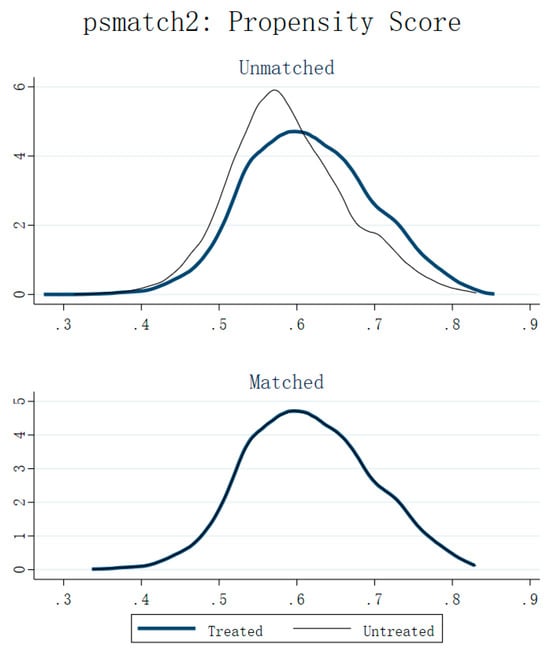
Propensity Score Density Distributions.
  • Article
  • Open Access

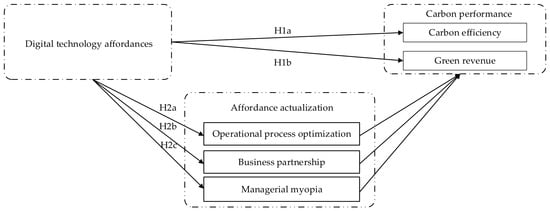
Digital technology offers new opportunities for manufacturing firms to improve their carbon performance. However, research on how digital technology influences different dimensions of carbon performance and its underlying mechanisms remain limited. To address this gap, we investigate how digital technology affordances enhance firms’ carbon performance and identify the mechanisms through which these affordances are actualized. Using a longitudinal dataset covering 312 A-share listed firms in China’s electrical machinery and equipment manufacturing industry from 2013 to 2023, we find that digital technology affordances positively affect carbon performance, including carbon efficiency and green revenue. Empirical analyses reveal differentiated mediating mechanisms: operational process optimization mediates the relationship between digital technology affordances and carbon efficiency, whereas business partnership and managerial myopia mediate their effects on green revenue. Moreover, the effects are heterogeneous: the impact of digital technology affordances is stronger in firms located in resource-based cities and highly marketized regions. Further analysis extends the significantly positive effect of digital technology affordances to external stakeholders, such as green reputation and green investors’ attention. This study provides novel and concrete insights into carbon performance, highlights the role of digital technology affordances in corporate sustainability, and offers practical guidance for firms pursuing digital-enabled green transformation.

Sustainability

22 November 2026

Conceptual research model.
  • Article
  • Open Access

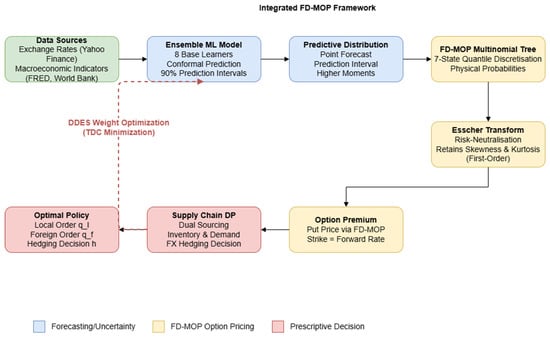
Currency volatility in emerging markets threatens the economic sustainability of global supply chains. We propose a sustainability-oriented forecast discretized multinomial option oricing (FD-MOP) decision support framework integrating ensemble forecasting, conformal probabilistic prediction, and real options pricing to manage foreign exchange (FX) risk in global supply chains. The framework comprises four modules: (1) a stacked ensemble of eight base learners (LR, LSTM, GRU, XGBoost, LightGBM, random forest, SVR, and Prophet); (2) decision-driven ensemble selection (DDES), which optimizes forecasting weights according to downstream supply chain costs; (3) conformalized quantile regression (CQR), providing distribution-free, finite-sample probabilistic forecasts; and (4) a real options analysis (ROA) approach that builds a multinomial lattice from CQR quantiles and neutralizes it via the Esscher transform. Empirical results for five emerging market currency pairs (2010–2025) show that FD-MOP substantially reduces hedging cost deviations versus standard parametric methods, is 18 times faster than Monte Carlo simulation, and saves up to 6% in operational costs, enhancing economic sustainability under high currency volatility. The framework offers supply chain managers a practical sustainability tool for maintaining operational continuity and economic resilience under financial volatility, thereby supporting sustainable development in emerging economies.

Sustainability

22 November 2026

The FD-MOP decision support framework architecture. A schematic diagram illustrating the data sources and the four integrated modules with their closed-loop interaction: (1) Ensemble forecasting with eight base learners; (2) Conformalized quantile regression generating 90% prediction intervals; (3) FD-MOP lattice pricing with the Esscher transform retaining higher-moment shape characteristics; and (4) decision-driven ensemble selection, which minimizes downstream supply chain total discounted cost and feeds optimal weights back to Module 1 (dashed arrow).

Highly Accessed Articles

News & Conferences

Latest Issues

Open for Submission

Journal Sections

XFacebookLinkedIn
Sustainability - ISSN 2071-1050