


Journal Menu
► ▼ Journal Menu-
- MPs Home
- Aims & Scope
- Editorial Board
- Topical Advisory Panel
- Instructions for Authors
- Special Issues
- Topics
- Sections & Collections
- Article Processing Charge
- Indexing & Archiving
- Editor’s Choice Articles
- Most Cited & Viewed
- Journal Statistics
- Journal History
- Journal Awards
- Conferences
- Editorial Office
Journal Browser
► ▼ Journal BrowserNeed Help?
Announcements
6 November 2025
MDPI Launches the Michele Parrinello Award for Pioneering Contributions in Computational Physical Science
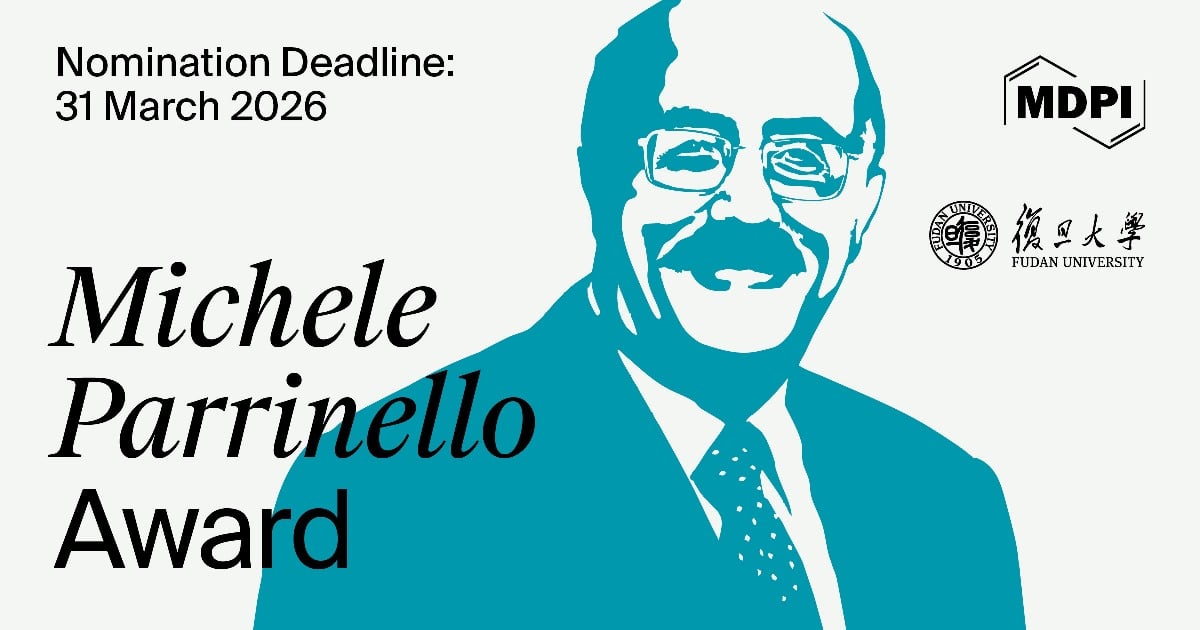
MDPI is delighted to announce the establishment of the Michele Parrinello Award. Named in honor of Professor Michele Parrinello, the award celebrates his exceptional contributions and his profound impact on the field of computational physical science research.
The award will be presented biennially to distinguished scientists who have made outstanding achievements and contributions in the field of computational physical science—spanning physics, chemistry, and materials science.
About Professor Michele Parrinello
"Do not be afraid of new things. I see it many times when we discuss a new thing that young people are scared to go against the mainstream a little bit, thinking what is going to happen to me and so on. Be confident that what you do is meaningful, and do not be afraid, do not listen too much to what other people have to say.”
——Professor Michele Parrinello
 |
Born in Messina in 1945, he received his degree from the University of Bologna and is currently affiliated with the Italian Institute of Technology. Professor Parrinello is known for his many technical innovations in the field of atomistic simulations and for a wealth of interdisciplinary applications ranging from materials science to chemistry and biology. Together with Roberto Car, he introduced ab initio molecular dynamics, also known as the Car–Parrinello method, marking the beginning of a new era both in the area of electronic structure calculations and in molecular dynamics simulations. He is also known for the Parrinello–Rahman method, which allows crystalline phase transitions to be studied by molecular dynamics. More recently, he has introduced metadynamics for the study of rare events and the calculation of free energies. |
For his work, he has been awarded many prizes and honorary degrees. He is a member of numerous academies and learned societies, including the German Berlin-Brandenburgische Akademie der Wissenschaften, the British Royal Society, and the Italian Accademia Nazionale dei Lincei, which is the major academy in his home country of Italy.
Award Committee
 |
The award committee will be chaired by Professor Xin-Gao Gong, a computational condensed matter physicist, academician of the Chinese Academy of Sciences, and professor at the Department of Physics, Fudan University. Professor Xin-Gao Gong will lead a panel of several senior experts in the field to oversee the evaluation and selection process. The Institute for Computational Physical Sciences at Fudan University (Shanghai, China), led by Professor Xin-Gao Gong, will serve as the supporting institute for the award. |
"We hope the Michele Parrinello Award will recognize scientists who have made significant contributions to the field of computational condensed matter physics and at the same time set a benchmark for the younger generation, providing clear direction for their pursuit—this is precisely the original intention behind establishing the award."
——Professor Xin-Gao Gong
The first edition of the award was officially launched on 1 November 2025. Nominations will be accepted before the end of March 2026. For further details, please visit mparrinelloaward.org.
About the MDPI Sustainability Foundation and MDPI Awards 
The Michele Parrinello Award is part of the MDPI Sustainability Foundation, which is dedicated to advancing sustainable development through scientific progress and global collaboration. The foundation also oversees the World Sustainability Award, the Emerging Sustainability Leader Award, and the Tu Youyou Award. The establishment of the Michele Parrinello Award will further enrich the existing award portfolio, providing continued and diversified financial support to outstanding professionals across various fields.
In addition to these foundation-level awards, MDPI journals also recognize outstanding contributions through a range of honors, including Best Paper Awards, Outstanding Reviewer Awards, Young Investigator Awards, Travel Awards, Best PhD Thesis Awards, Editor of Distinction Awards, and others. These initiatives aim to recognize excellence across disciplines and career stages, contributing to the long-term vitality and sustainability of scientific research.
Find more information on awards here.
9 February 2026
Acknowledgment to the Reviewers of Methods and Protocols in 2025

The editorial office of Methods and Protocols would like to extend its sincere gratitude to all reviewers who contributed to the improvement of the journal quality by providing their expert opinion and evaluation of the submitted research.
We appreciate that thorough peer review demands considerable time and intellectual investment from our reviewers. In 2025, Methods and Protocols received 872 review reports from contributors across 63 countries and territories, demonstrating the breadth of international expertise and scholarly engagement that has strengthened our publication standards.
The reviewers who agreed to have their names published this year are listed below in alphabetical order by first name. The editorial team acknowledges with gratitude all reviewers, named and anonymous alike, for their vital role in maintaining the scholarly standards of Methods and Protocols.
| Aditya Ashok | Laura Castañeda-Partida |
| Aglaia Zafeiroudi | Leslie Tive |
| Ahmad Reza Farmani | Lifei Wang |
| Ajay Pal | Lucilene Arilho Ribeiro Bicudo |
| Alberto Ospina Stella | Łukasz Jan Bryliński |
| Alexander Lomzov | Łukasz Kaźmierski |
| Alexandre Perez | Magda Psichoudaki |
| Alfonso Trinidad | Magdalena Wróbel-Kwiatkowska |
| Amalio Santacruz Varela | Małgorzata Jeziorek |
| Aman Khan | Małgorzata Olszowy-Tomczyk |
| Ana Batariuc | Manlio Tassieri |
| Ana Tomić | Manuel Cordoba-Diaz |
| Ana Isabel Flores | Marco Uttieri |
| Anas Shamsi | Maria Simonenko |
| Anatoli I. Popov | Mariagrazia Lettieri |
| Anca Stana | Mariano Andrés |
| Andreas Stafylidis | Martín Martínez-Salvador |
| Anita Galir | Mauro Fisberg |
| Anna Barbaro | Michael Munz |
| Anna Sannino | Michael Di Gioacchino |
| Annarita Signoriello | Michael G. Weller |
| António Miguel Monteiro | Michael Shackcloth |
| Ashish Pandey | Michel Charbonneau |
| Asif Ullah | Miguel Ferro |
| Austin Bow | Mikhail Inyushin |
| Aydin Eresen | Mingpeng Yang |
| Bice Avallone | Mingxing Ouyang |
| Brian De La Franier | Mladena Lalic-Popovic |
| Bunga Astria Paramashanti | Mohammad Saiful Islam |
| Caio César da Silva Barros | Natalia Tsoneva Grigorova |
| Changshuo Wang | Nattawooti Sthitmatee |
| Chen Wang | Navid J. Ayon |
| Chengbo Chen | Nelson H. Morgon |
| Chih-Hao Lee | Nenad Koropanovski |
| Chong Liu | Niko Radulović |
| Clare Hawkins | Oleg Reva |
| Claudio Casali | Omar González-Ortega |
| Cornelia Wiese-Rischke | Otto Lam |
| Cosmin Berceanu | Paola Turano |
| Daria Chudakova | Pavel Padnya |
| Dawit Bogale Alemayehu | Paweł Świt |
| Delin Shi | Pedro Fernandes |
| Devesh Kapoor | Peter Timmins |
| Dhani Prakoso | Pinaki Bhattacharjee |
| Dilyara Gritsenko | Pornchai Sathirapanya |
| Dirk Geerts | Rachel Elizabeth Turn |
| Dirk Landgraf | Radoslaw Bednarek |
| Dorota Chelminiak-Dudkiewicz | Radosław Porada |
| Marg Rogers | Rafael Barty Dextro |
| Eduardo Vignoto Fernandes | Raghav Dogra |
| Elena Leychenko | Raluca Paula Turcu |
| Elizabeth Lewkowicz | Rama Krishna Alla |
| Erhan Mutlu | Ramalingam Manikandan |
| Esther Sánchez Tirado | Rebecca Thomson |
| Ewa Joanna Hanus-Fajerska | Reza Abbasi |
| Fawzia Sha’at | Roko Bjelica |
| Filippos Gerasimos Filippatos | Rui Sales Júnior |
| Francesca Maestrelli | Sachin Gajghate |
| Friederike Pfeiffer | Safa Faraj |
| Gabriela Vochita | Sandra A. V. Eremia |
| Garri Chilingaryan | Seham M. Al Raish |
| Georgi Beev | Sergei Gennadevich Gaidin |
| George Menexes | Sharif Md Abuzar |
| Ghulam Abbas Ashraf | Shervin Hashemi |
| Gianpaolo Papaccio | Shigeho Tanaka |
| Girish H. Rajacharya | Shimshon Belkin |
| Grzegorz Węgrzyn | Simone Merlin |
| Guillaume Falgayrac | Stephen Thomas Homer |
| Hanen Jrad | Sue Rutherford Siegel |
| Hanna Bandarenka | Syama Krishnapriya |
| Haowei Tai | Takashi Okiji |
| Harminder Pal Singh | Takashi Kusaka |
| Harshraj Shinde | Tao Wang |
| Hiren Mewada | Thilini Madurangika Jayasinghe |
| Hong Feng | Tiago André Freire Almeida |
| Hongyu Zou | Timoteo Delgado Maldonado |
| Hubert Dobrowolski | Valentina Mittova |
| Inna Igorevna Zorina | Vassilios Panoutsakopoulos |
| Jaldeep Langhnoja | Vera Alexandra Da Costa Simões |
| Javier Magaña Gómez | Violeta Popovici |
| Jing Xu | Wenfeng Chen |
| Jiyoung Park | Wesam S. Ahmed |
| José Rafael de Almeida | Winkins Santosh |
| Katarzyna Kras | Wissem Dhahbi |
| Kevin Mccurdy | Xiao Chen |
| Krishna Priya Syama | Xing Liu |
| Krzysztof Kupren | Yang Jun Kang |
| Krzysztof Okoń | Yuelei Xiao |
| Kun Ning | Yukteshwar Baranwal |
| László Orosz | Yulia Basok |
| Laszlo Kotai | Zhansheng Li |
2 February 2026
MDPI INSIGHTS: The CEO's Letter #31 - MDPI 30 Years, 500 Journals, UK Summit, Z-Forum Conference, APE

Welcome to the MDPI Insights: The CEO's Letter.
In these monthly letters, I will showcase two key aspects of our work at MDPI: our commitment to empowering researchers and our determination to facilitating open scientific exchange.
Opening Thoughts

MDPI at 30: Three Decades of Open Science, Built Together
As we begin 2026, we approach a meaningful milestone in MDPI’s history: 30 years of advancing Open Science.
What began in 1996 as a small, researcher-driven initiative has grown into a global open-access publisher, supporting hundreds of journals, millions of researchers, and a shared belief that scientific knowledge should be openly available to all. Over these three decades, Open Access has moved from the margins to the mainstream, and MDPI has been proud to help shape that transformation.
To mark this anniversary year, we are pleased to share our MDPI 30th Anniversary logo.
The Anniversary logo is intentionally simple, confident, and enduring, designed to work across cultures, disciplines, and digital environments. It reflects both continuity and progress, honouring MDPI’s established identity while representing the company we are today. The green accent symbolizes our connection to the research communities we serve and the collaborative nature of Open Science itself.
Alongside the visual identity, we are also introducing our 30th Anniversary tagline:
30 Years of Open Science, Built Together.

This phrase captures what has always defined MDPI. Open Science is not the work of a single organization: it is a collective effort shaped by researchers, editors, reviewers, institutions, and the many teams who support the publishing process every day. MDPI’s role has been to provide the infrastructure and commitment that allow this collaboration to thrive.
Throughout 2026, we will mark this anniversary through regional events, global conversations, and editorial initiatives that reflect on MDPI’s evolution, its impact across disciplines, and the communities that make this work possible.
“Open Science is a collective effort”
Whether you have been part of MDPI’s journey for decades or are engaging with us for the first time this year, this milestone belongs to all of us. The past 30 years have shown what is possible when openness, trust, and collaboration are placed at the centre of scholarly communication.
As we look ahead, our focus remains clear: continuing to strengthen quality, integrity, and partnership – so that Open Science can keep moving forward, together.
Impactful Research

A Shared Milestone: MDPI’s Journal Portfolio Reaches 500 Titles
MDPI has reached an important milestone: our journal portfolio grew to more than 500 academic journals last year, spanning the fields of chemistry, engineering, biology, medicine, environmental sciences, the social sciences, and beyond.
The number itself is significant, but what matters more is what supports it: hundreds of scholarly communities that have chosen to collaborate, grow, and publish with MDPI.
From our beginnings nearly 30 years ago with a single Open Access journal (Molecules), MDPI has been guided by a simple aim: advancing Open Science. Reaching 500 journals is not an endpoint. It reflects the diversity of disciplines, ideas, and research cultures that now form part of our shared ecosystem.
Growth with Purpose
Every journal exists because a specific community believes there is a need for focus, visibility, and dialogue in a particular field. As our portfolio has expanded, so has our responsibility to ensure that scale is matched with strong editorial standards, robust research integrity practices, and meaningful academic leadership.
This milestone comes as we enter MDPI’s 30th anniversary year, a fitting moment to reflect on what scale in scholarly publishing truly requires: not only reach, but also dedicated long-term stewardship.
New Journals, New Communities
In December 2025 alone, MDPI welcomed eight newly launched journals and three journal transfers (details below), all of which published their inaugural issues by year-end.

Each of these journals is shaped by its Editors-in-Chief, Associate Editors, and Editorial Board Members, who define its scope, standards, and direction. We are grateful for the time, expertise, and commitment they bring to building these new communities.
Welcoming Transferred and Acquired Journals
We were pleased to publish the first MDPI issues of three recently transferred or acquired journals:
- Cardiovascular Medicine – advancing research on the prevention, diagnosis, and treatment of cardiovascular disease
- Germs – addressing infectious diseases through clinical, public health, and translational perspectives
- Romanian Journal of Preventive Medicine (RJPM) – supporting population health, early detection, and preventive care in collaboration with the Romanian Society of Preventive Medicine
Each of these journals brings an established identity and legacy. Our role is to support their continued development with the same editorial rigor, transparency, and Open Access principles that guide our broader portfolio.
A Collective Achievement
Reaching more than 500 journals is not the achievement of any single team or individual. It is the result of collaboration across the entire scholarly ecosystem. As such, I would like to thank our authors, reviewers, academic editors, and Editorial Board Members, as well as our colleagues across MDPI, who support these communities every day.
As we look ahead, we will continue to expand the breadth and depth of our publishing activities while remaining attentive to the evolving expectations of Open Science, research integrity, and responsible growth.
This milestone is a reminder that Open Access publishing is not only about making research available. It is about building platforms where knowledge can be shared, challenged, improved, and trusted, at scale, and with care.
Inside Research

MDPI UK Summit 2026 in Manchester (21–22 January)
On 21–22 January, we had the pleasure of hosting the MDPI UK Summit 2026 in Manchester. Over two days, we welcomed more than 20 Editors-in-Chief (EiC), Section Editors-in-Chief (SEiC), and Associate Editors for an open, in-depth conversations about how MDPI supports Open Science, editorial independence, and research standards across our journals.
What stood out most was not just the quality of the discussions, but the openness, curiosity, and mutual respect that shaped every session.
|
|
|
|
|
|
|
|


What We Covered
The programme was designed to give insight into how MDPI works behind the scenes and how different teams collaborate to support our journals and editors. Topics included:
- MDPI overview and the evolving Open Access market
- MDPI–UK collaboration and local engagement
- Editorial and peer-review processes
- Research integrity and publication ethics
- Institutional partnerships
- Indexing, journal development, and academic community engagement
Sessions were led by MDPI colleagues across editorial, research integrity, indexing, partnerships, and UK operations, showing how cross-functional our work truly is.
What We Heard
The feedback from editors was both encouraging and grounding:
- 92% rated the Summit Excellent (8% Good)
- 100% said their understanding of MDPI’s values, editorial processes, and local collaborations had significantly improved
- 69% attended primarily to stay informed about academic publishing and research integrity
- 85% felt fully heard and engaged
A few comments that stayed with me:
- “Today’s event truly gave me the opportunity to see the heart of MDPI UK.”
- “The summit was very informative – I really enjoyed seeing the behind-the-scenes operations.”
- “Keep being open to discussions and making editors feel part of the MDPI family.”
These reflections remind us that transparency, listening, and dialogue are not nice-to-haves: they are foundational to trust.
|
|
|
|


Looking Ahead
The UK Summit is one of more than 10 MDPI Summits we are organizing this year across North America, Europe, and APAC. Each one is an investment in relationships, shared understanding, and improvement.
Thank you to the MDPI UK team and supporting colleagues across departments who made this event possible. This was a positive step in strengthening our editorial engagement and kicking off a year of MDPI Summits.
Coming Together for Science

Recapping the Z-Forum 2026 Conference on Sustainability and Innovation (15–16 January 2026)
In January, MDPI supported and participated in the Z-Forum on Sustainability and Innovation, held across Zurich (ETH Zurich) and the city of Baden. With 96 participants and more than 30 speakers and panellists, the forum brought together leaders from government, academia, industry, and innovation ecosystems to explore how sustainability, Open Science, and innovation intersect in practice.
Why this mattered for MDPI
As a Swiss-based publisher with global reach, our investment in Z-Forum reflects a strategic intent: to anchor MDPI more deeply within Swiss research networks while contributing to national and international conversations on sustainability and innovation.
This was not only about visibility; it was also about relationship-building and long-term engagement with institutions shaping research policy and practice in Switzerland.
|
|
|
|
|
|
|
|
|
|


High-level participation and credibility
The forum was supported and sponsored by several key Swiss institutions, including:
- The Swiss National Science Foundation (SNSF) – Switzerland’s central research funding body
- ETH Zurich
- The University of Zurich
- The University of Basel
- Swiss Innovation Park Central
The sponsorship of SNSF lent the forum strong institutional credibility and signalled the relevance of the themes discussed, especially around sustainability, innovation frameworks, and responsible research practices.
|
|
|


Beyond the Room: Extending the Conversation
While attendance was intentionally focused to encourage dialogue, the forum’s reach extended well beyond the venue. Multiple LinkedIn posts before and during the event (e.g., Link 1, Link 2, Link 3, and more) built on the discussions and helped position MDPI as an active and credible contributor within Switzerland’s research and innovation landscape.
A Broader Strategic Signal
Z-Forum is part of a wider effort to:
- Build on MDPI’s Swiss institutional relationships
- Reinforce our leadership in Open Science and sustainability
- Engage proactively with funders, universities, and innovation bodies
- Ensure MDPI remains a visible and constructive partner in the ecosystems where research policy and practice are shaped
Thank you to our Conference team and everyone involved in supporting this event, both behind the scenes and on the ground. These moments of engagement may be small in scale, but they are foundational in impact.

Closing Thoughts

Reflections from the Academic Publishing in Europe Conference
During 13-14 January, I attended the Academic Publishing in Europe (APE) Conference in Berlin, a long-standing forum for discussing scholarly publishing and the deeper principles that support it.

MDPI was proud to be a Gold Sponsor of the 20th Anniversary of the APE conference, reflecting our continued commitment to supporting the scholarly community to engage in critical industry discussions.
This year’s program covered a range of topics, from AI and research integrity to policy, infrastructure, and trust, but one theme stood out clearly for me: academic freedom, and what it means to protect the conditions under which knowledge can be produced, evaluated, and shared responsibly.
Before turning to that, I would like to highlight the opening keynote by Carolin Sutton (CEO, STM), which helped set the tone for the conference.
An Independent Publishing Industry: The Case for Checks and Balances
In her opening remarks, Carolin focused on the importance of continually evolving systems of checks and balances, both operationally and at the marketplace level, to prevent any single actor from dominating knowledge production. Her framing emphasized shared responsibility across publishers, institutions, and research communities, rather than placing the burden on any one group.
As part of this, she revisited the work of sociologist Robert K. Merton, and his CUDOS norms of scientific ethos, first articulated in his 1942 work, The Normative Structure of Science.

Merton outlined four ideals that support healthy scientific systems:
- Communalism – knowledge as a public good
- Universalism – evaluation based on merit, not status or identity
- Disinterestedness – orientation toward truth over personal or financial gain
- Organized Skepticism – systematic, critical scrutiny of claims
While these are ideals, and not guarantees that are perfectly lived up to, they remain powerful reference points today for research systems and organizations as they aim to grow and scale.
It was interesting to see how closely these norms align with foundational principles of Open Access. For example, making research openly available supports communalism. Transparent peer review and editorial processes reinforce universalism and organized skepticism. Strong ethics frameworks and governance help counter conflicts of interest and support disinterestedness.
“Merton’s ideals remain powerful reference points today”
Safeguarding Research: Academic Freedom
Several of the conference sessions touched on the pressures faced by researchers, editors, and institutions: geopolitical tensions, online harassment, misinformation, reputational risk, shrinking resources, and politicized narratives around science.

“Integrity is not static. It must be actively maintained as systems grow.”
A particularly timely presentation came from Ilyas Saliba, who talked about academic freedom. His remarks resonated strongly and underlined the fact that safety in academia is not only physical or digital, but also intellectual.
Academic freedom means safeguarding the ability to ask difficult questions, challenge consensus, publish negative or unexpected results, and participate in scholarly debate without fear of undue personal, political, or commercial consequences. These discussions were a reminder that publishers play an important role in supporting the integrity, accessibility, and credibility of scholarly knowledge, particularly as researchers and institutions face mounting external pressures.
Looking Ahead
The discussions at APE reminded me that integrity is not static. It must be actively maintained as systems grow, expectations evolve, and pressures increase. This applies equally to research integrity, academic freedom, and the broader trust placed in scholarly communication.
I left APE encouraged by the openness of the dialogue and the willingness across publishers, institutions, and communities to engage with difficult questions rather than avoid them. Forums like this play a pivotal role in helping our industry pause, reflect, and recalibrate.
As MDPI continues to grow and as we enter our 30th anniversary, these conversations remind me of the core purpose of science: advancing knowledge for the benefit of society.
Chief Executive Officer
MDPI AG
9 January 2026
MDPI’s Newly Launched Journals in December 2025

We have expanded our open access portfolio with eight new journals publishing their inaugural issues in December 2025, as well as three journal transfers. These additions span physical sciences, social sciences, arts and humanities, environmental and Earth sciences, medicine and pharmacology, and public health and healthcare. We extend our sincere thanks to the Editors-in-Chief, Associate Editors, and Editorial Board Members who are shaping these journals’ direction. All journals uphold strong editorial standards through a thorough peer review process, ensuring impactful open access scholarship.
Please feel free to browse and discover more about the new journals below.
|
New Journals |
Founding Editor-in-Chief(s) |
Journal Topics (Selected) |
|
|
Dr. Elisa Felicitas Arias, Université PSL, France |
atomic clocks; time and frequency metrology; GNSS systems; relativity and relativistic timekeeping; fundamental physics in space | |
|
|
Prof. Dr. José F.F. Mendes, University of Aveiro, Portugal |
complex systems; network science; nonlinear dynamics and chaotic behaviour; information theory and complexity; computational complexity | |
|
|
Prof. Dr. Roberto Morandotti, Institut National de la Recherche Scientifique—Énergie, Matériaux et Télécommunications (INRS), Canada |
light generation; light sources and applications; light control and measurement; human responses to light; lighting design | |
|
|
Prof. Dr. Savvas A. Chatzichristofis, Neapolis University Pafos, Cyprus |
generative AI and large language models in education; multimodal and embodied AI; personalization and adaptive systems; assessment, feedback, and academic integrity; learning analytics | |
|
|
Prof. Dr. Jon Andoni Duñabeitia, Universidad Nebrija, Spain |
cognitive psychology; cognitive neuroscience; psycholinguistics; applied linguistics; experimental psychology | |
|
|
Prof. Dr. Caiwu Fu, Wuhan University, China; Prof. Dr. Longxi Zhang, Peking University, China |
cultural practices; cultural theory; cultural policy; cultural heritage; transregional and transnational cultural flows| |
|
|
Dr. Ghassem R. Asrar, iCREST Environmental Education Foundation, USA |
biosphere interactions, processes, and sustainability; ecosystem science and dynamics; biodiversity conservation; global change and environmental adaptation; biogeochemical cycles | |
|
|
Dr. Giuseppe Mulè, University of Palermo, Italy |
cardiorenal syndromes; chronic heart failure and chronic kidney disease; cardiorenalmetabolic syndrome; hypertension and diabetes in relation to the abovementioned syndromes; diagnostic techniques | |








|
Transferred Journals |
Editor-in-Chief |
Journal Topics (Selected) |
|
|
Prof. Dr. Peter Matt, Lucerne Cantonal Hospital (LUKS), Switzerland |
cardiology; cardiovascular and aortic surgery; cardiovascular anatomy, physiology and pathophysiology; congenital heart disease and pediatric cardiology; cardiovascular regenerative and reparative medicine | |
|
|
Prof. Dr. Oana Săndulescu, Carol Davila University of Medicine and Pharmacy, Romania; National Institute for Infectious Diseases “Prof. Dr. Matei Bals”, Romania |
infectious diseases across clinical and public health domains; epidemiology of communicable diseases; clinical microbiology and applied virology; vaccinology and immunization; host–pathogen interactions and immunity | |
|
|
Dr. Roxana Elena Bohiltea, “Carol Davila” University of Medicine and Pharmacy, Romania |
public health; disease prevention; screening and early detection; lifestyle interventions and health education; digital and innovative prevention | |



We would like to thank everyone who has supported the development of open access publishing. If you would like to create more new journals, you are welcome to send an application here, or contact the New Journal Committee (newjournal-committee@mdpi.com).
31 December 2025
MDPI INSIGHTS: The CEO's Letter #30 - Scaling with Integrity, Highly Cited Researchers, KEMÖ Consortium, Michele Parrinello, and Best PhD Thesis Awards
Welcome to the MDPI Insights: The CEO's Letter.
In these monthly letters, I will showcase two key aspects of our work at MDPI: our commitment to empowering researchers and our determination to facilitating open scientific exchange.
Opening Thoughts

With colleagues at MDPI headquarters in Basel, representing the people behind our global growth and shared commitment to integrity.
Scaling with Integrity: A Year of Growth, Responsibility, and Trust
When I look back on 2025, one phrase seems to sum up the year: “Scaling with integrity.” That was our watchword for 2025, and it will remain so as we move forward in to 2026.
Our journal portfolio continued to grow in 2025, reflecting the trust of a widening proportion of the scholarly community.
Today, MDPI has 355 journals indexed in Scopus and 330 in Web of Science – a testimonial to the scale at which our journals meet established external quality criteria. During the year, 45 of our journals were newly accepted into Scopus and 29 into Web of Science (this excludes transferred journals to our portfolio that were already indexed), following rigorous, independent evaluation by the world’s leading indexing bodies
Meeting external quality benchmarks
These results underline the fact that scaling responsibly is not only about expanding our catalogue, but also about meeting external quality benchmarks consistently, transparently, and at scale. Our indexing performance remains one of the strongest independent validations of MDPI’s commitment to rigor, trust, and long-term sustainability.
Over the course of 2025, we made targeted investments to ensure that the integrity of our editorial process scaled to keep pace with our growth. We strengthened our editorial governance by doubling down on our dedicated Publication Ethics department, appointing a Head of Ethics, and expanding our research integrity team by the addition of new specialists plus the creation of embedded editorial ethics roles across key journals. We also introduced new internal ethics guidelines, pre-review integrity checks, and monitoring dashboards to help teams identify potential issues and apply consistent standards across our portfolio.
Besides investing in systems and tools, we of course also invested heavily in our people and culture, delivering organisation-wide training on topics such as image integrity, AI use in publishing, and ethical oversight, while actively engaging with the wider publishing community through COPE and STM forums.
All these efforts reflect a simple principle: growth only matters if it is matched by rigor, responsibility, and trust.
Technology and AI: Supporting the editorial decision-making process
At MDPI, AI is designed to assist, not replace, editorial decision-making. It is one element in a broader system that combines people, technology, and processes to support scale responsibly.
In 2025, we continued to invest heavily in technology that supports quality rather than shortcuts. Our AI team doubled in size, ensuring that increased automation goes hand-in-hand with expertise and oversight. Proprietary AI tools such as Scholar Finder have significantly improved the precision of reviewer matching, while Ethicality has been widely adopted across editorial workflows to identify contextual signals, such as scope alignment and citation behaviour, so that human judgment can be applied where it matters most.
Partnerships: Institutional Open Access Program (IOAP) agreements and Societies
Our recent growth is also reflected in the strength of our partnerships. In 2025, we entered into more than 150 new IOAP agreements, bringing our total to 975 active agreements worldwide. This activity included the signing of our first-ever consortium agreements in North America, renewals of all major national consortia in the UK, Switzerland, Sweden, Norway, Austria, and Croatia, and the conclusion of several flat-fee agreements. At the same time, we concluded a total of 30 agreements, encompassing 24 new Society affiliations, four strategic publishing partnerships, and two journal acquisitions.
In 2025, we opened MDPI USA in Philadelphia – our latest global office, which complements our Toronto office in representing North America. MDPI USA is responsible for accelerating Open Access in the US through ongoing support of our scholars and for expanding our institutional and society partnerships.
On the other side of the globe, meanwhile, we signed an IOAP agreement in India, allowing researchers discounted Article Processing Charges (APCs), streamlined APC management for universities, and visibility into submissions, supporting India’s push for wider Open Access by offering flexible models and helping institutions meet national mandates such as Plan S.
Sustainability, sponsorships and awards
We continued to expand our sustainability efforts during 2025, hosting the 11th World Sustainability Forum, awarding CHF 125,000 in sustainability-related funding, and launching the Z-Forum on Sustainability and Innovation conference, which will officially take place in January 2026.
We also saw a record year for conference sponsorships and awards (while establishing new awards such as the Michele Parrinello Award), recognising scholars across disciplines and reinforcing our commitment to supporting the global research community at every stage of the academic journey.
Deepening our relationships
In 2025, I had the opportunity to travel more widely than ever before on MDPI business, meeting many of our stakeholders face to face and relishing the opportunity to gain a deeper understanding of their science communication needs. It was also excellent to visit a large number of MDPI offices and witness the commitment and service orientation of so many of our colleagues around the world. I shall resume my itinerary in the new year, and I look forward to many more such interactions.
Looking ahead to 2026, we will be celebrating a very significant milestone: 30 years of MDPI. From our foundation as a single Open Access journal in 1996 to the global publishing organisation we are today, our mission has remained consistent: advancing Open Access through rigorous and trustworthy scientific communication.
I would like to take this opportunity to thank all our stakeholders – authors, Editors-in-Chief, Editorial Board members, and reviewers – who have placed their trust in us during 2025. On behalf of the entire MDPI team, I look forward to deepening our relationships yet further in 2026 and celebrating 30 Years of Open Science at MDPI, something we’ve built together.

Basel, Switzerland, where MDPI was founded in 1996.
Impactful Research

621 MDPI Editors Named Highly Cited Researchers in 2025
I am pleased to share an important milestone for our editorial community and for MDPI. In late November, Clarivate announced the 2025 Highly Cited Researchers, and 621 MDPI Editorial Board Members were included among the most influential scientific contributors over the past decade!
The 621 editors come from 33 countries, representing 21 scientific disciplines, and account for nearly one in every ten Highly Cited Researchers globally. This recognition speaks to the depth of expertise across our Editorial Boards and the strength of the scientific communities that choose to collaborate with MDPI. It is important to note that while citation metrics are not in themselves a proxy for quality, they do offer one lens on sustained scientific influence.
“Our strength comes from the scientific communities who choose to work with us”
Why this is important
Having more than 600 editors recognized on this list highlights:
- The high level of expertise guiding peer review across our journals
- The global and disciplinary diversity within our Editorial Boards
- Our commitment to maintaining strong, knowledgeable, and engaged editorial oversight
Impactful science is of course shaped by broad, diverse research communities, and no single metric captures the full picture of research quality. However, this recognition does serve as meaningful, independent affirmation of the calibre of many editors who contribute to MDPI’s work.
A closer look at the recognition
Clarivate’s methodology highlights researchers whose publications rank in the top one per cent by citation count, reflecting consistent influence over the past decade. The process includes:
- Evaluation of c. 200,000 highly cited papers
- Removal of retracted publications
- Filtering of papers with unusually large authorship groups to focus on clear contributions
That so many of our editors meet these thresholds reflects the impact of the communities behind our journals.
What this means going forward
This recognition underlines the fact that our strength comes from the scientific communities who choose to work with us.
For authors, partners, and readers, it confirms that:
- MDPI journals benefit from editorial guidance grounded in active, high-impact research
- Our Editorial boards include leaders who are helping shape the future direction of their fields
- MDPI continues to attract experts who value openness, efficiency, and scientific integrity
For our internal teams, it is a reminder that the work we do every day (supporting editors, refining workflows, and improving systems) directly contributes to the trust placed in MDPI by researchers worldwide.
Thank you to all our editorial teams, publishing staff, and journal relationship specialists, and to everyone who collaborates with our Editorial Boards. Achievements like this are only possible because of your ongoing hard work, dedication, and collaboration.

From our first annual MDPI UK Summit in Manchester, bringing together over 30 Chief Editors and Editorial Board Members to discuss MDPI’s mission, achievements, and collaborations in the UK.
Inside MDPI

MDPI Launches the Michele Parrinello Award for Computational Physical Science
In case you missed it, in November, we announced the launch of the Michele Parrinello Award. This new biennial international award will recognize pioneering contributions in computational physical science. The award honours Michele Parrinello, one of the most influential scientists of the past half-century in atomistic simulations and computational materials research.
This award reflects MDPI’s long-standing commitment to recognizing scientific excellence, supporting foundational research, and inspiring the next generation of scholars across disciplines.
“Be confident that what you do is meaningful”
Honouring a transformative scientific legacy
Professor Parrinello’s work has fundamentally reshaped how scientists model matter at the atomic scale. Together with Roberto Car, he introduced ab initio molecular dynamics, widely known as the Car–Parrinello method, opening new pathways in electronic structure calculations and molecular simulations. His subsequent contributions, including the Parrinello–Rahman method and metadynamics, have become core tools across physics, chemistry, materials science, and increasingly biology.

“Do not be afraid of new things. I see it many times when we discuss a new thing that young people are scared to go against the mainstream a little bit, thinking, ‘What is going to happen to me?’ and so on. Be confident that what you do is meaningful, and do not be afraid, do not listen too much to what other people have to say.”
– Professor Michele Parrinello
A global, community-led award

The award committee is chaired by Xin-Gao Gong, Professor of Physics at Fudan University and academician of the Chinese Academy of Sciences.
The Institute for Computational Physical Sciences at Fudan University will serve as the supporting institute, reinforcing the award’s international and cross-cultural foundation.
Nominations for the first edition of the Michele Parrinello Award opened on 1 November 2025, with submissions accepted until March 2026. The award will recognize scientists whose work has advanced computational physical science across physics, chemistry, and materials research – fields increasingly central to energy, sustainability, advanced manufacturing, and technological innovation.
Why this matters for MDPI
The Michele Parrinello Award is part of the MDPI Sustainability Foundation, which supports science as a driver of long-term societal progress.

Alongside other foundation-level honours, including the World Sustainability Award, the Emerging Sustainability Leader Award, and the Tu Youyou Award, this new prize builds on our role in supporting excellence across career stages and disciplines.
MDPI journals and programs continue to recognize researchers through Best Paper Awards, Young Investigator Awards, Travel Awards, Best PhD Thesis Awards, and Outstanding Reviewer Awards. Together, these initiatives reflect a simple belief: strong scientific communities are built through recognition, trust, and sustained support.
As MDPI approaches its 30th anniversary, the launch of the Michele Parrinello Award highlights our commitment not only to publishing research but also to helping shape the future of science by celebrating those who expand its boundaries.
Coming Together for Science

KEMÖ Consortium (Austria) Extends Open Access Agreement with MDPI until 2027
I’m pleased to share that MDPI has renewed its Institutional Open Access Program (IOAP) agreement with the Austrian library consortium KEMÖ, extending our partnership through 2027.
The renewed agreement now includes 23 Austrian institutions, with the Medical University of Vienna and the University of Natural Resources and Life Sciences (BOKU) joining the partnership. Participating institutions benefit from APC discounts across MDPI’s more than 495 journals, with centralized funding options further reducing the administrative burden for researchers and libraries.
“This renewal reflects shared commitment to advancing Open Access publishing in Europe”
Austria continues to be an important and engaged research community for MDPI, with 525+ Austrian Editorial Board Members, eight Editors-in-Chief, and 15 Section Editors-in-Chief contributing to our journals.
This renewal reflects long-term trust and shared commitment to advancing Open Access publishing in Europe, and improves MDPI’s collaboration with national OA infrastructures such as the Open Access Monitor Austria. Such long-term agreements show how MDPI’s growth is increasingly built on institutional trust, collaboration, and shared commitment to Open Access.
A big thank-you to the IOAP team and everyone involved in supporting this partnership.
Closing Thoughts

Celebrating the Next Generation of Scholars: MDPI’s 2024 Best PhD Thesis Awards
One of the privileges of working in scholarly publishing is supporting the beginning of new scientific journeys. We recently announced the recipients of MDPI’s 2024 Best PhD Thesis Awards, recognizing some of the most promising emerging researchers across disciplines.
These awards do more than celebrate academic excellence. They reflect something deeper about our mission: supporting the next generation of authors and the future of Open Science.
Recognition of Excellence
This year, we made awards to 55 early-career researchers across seven fields:
- Biology and Life Sciences
- Chemistry and Materials Science
- Computer Science and Mathematics
- Engineering
- Environmental and Earth Sciences
- Medicine and Pharmacology
- Interdisciplinary ‘Other’ fields
For those of you who have completed a PhD, you’ll know first-hand that behind each number is a story of perseverance, curiosity, and sustained effort. These researchers represent institutions around the world, with thesis topics spanning:
- Brain–machine interfaces and neural engineering
- Sustainable materials and next-generation batteries
- Cancer genomics, tumour microenvironments, and immunotherapy
- AI-driven image analysis, robotics, and computational models
- Climate change monitoring and environmental risk assessment
- Regenerative medicine, biomaterials, and drug development
These dissertations are early signs of the scientific directions that will shape the coming decade.
“Our mission is about building a global community of authors”
Why this is important
Every year, millions of scholars begin their research careers with limited visibility and few platforms for sharing their work. By recognizing outstanding PhD theses, we elevate authors early in their academic journeys, build MDPI’s connection to the global research community, reinforce our commitment to quality and rigor, and highlight the depth and breadth of scholarship published across our portfolio (from biology to materials science to mathematics).

A foretaste of the future
These 55 awardees represent the next generation of researchers whose work will influence science, policy, and society in the years ahead. What we support today helps shape the scientific ecosystem of tomorrow. Our mission goes beyond publishing papers. It is about building a global community of authors who will define the next era of scientific discovery.
To explore more about MDPI Awards, including current and upcoming Best PhD Thesis Awards, please click here.
Thank you to the editors, reviewers, and teams across MDPI who make these awards possible each year.
Everything we achieved this year was made possible by the collective effort of our global teams and the trust placed in us by the scholarly community. Thank you again, and here’s to the successful continuation of our collaboration in 2026!
Chief Executive Officer
MDPI AG
11 December 2025
Article Layout and Template Revised for Future Volumes

We are pleased to announce updates to our article template, aimed at improving the readability and visual appeal of our publications. The following updates will be applied to articles published in volumes in 2026, starting from 19 December 2025.
Left information bar:
- Updated the logo and URL for “Check for updates”;
- Removed the “Citation” section (Note: Citation details remain accessible via “Cite” in the online article version);
- Changed the link in “Copyright” to a hyperlink format.
Footer:
- Added a DOI link at the bottom-right corner of each page.
The updated template is now available for download from the Instructions for Authors page of each journal.
We hope that the new version of the template will provide users with better experience and make the process more convenient.
For any questions or suggestions, please contact our production team at production@mdpi.com.
19 November 2025
MDPI Webinar | World Antimicrobial Resistance (AMR) Awareness Week 2025, 21 November 2025

In support of World Antimicrobial Resistance (AMR) Awareness Week 2025, MDPI is delighted to invite you to our special webinar, “MDPI World AMR Awareness Week Webinar 2025”. This year’s theme, “Act Now: Protect Our Present, Secure Our Future”, serves as a powerful call to immediate action against one of the most pressing global health threats—antimicrobial resistance.
Through this webinar, we aim to highlight the latest research, innovations, and cross-sector collaborations addressing AMR. We hope these discussions will inspire collective action to promote the prudent use of antimicrobials, strengthen prevention and surveillance systems, and accelerate global efforts to safeguard human, animal, and environmental health.
Thank you for joining us as we raise awareness, exchange insights, and reaffirm our shared commitment to a healthier, more resilient future.
keywords: antimicrobial resistance; antifungal resistance; food chain contamination; biofilm infections; nanomedicine; microbial genetics; mycology; public health
Date: 21 November 2025
Time: 9:00 a.m. CET | 4:00 p.m. CST (Asia)
Webinar ID: 883 6849 1341
Webinar Secretariat: journal.webinar@mdpi.com
Register now for free!

Program:
|
Speaker |
Presentation |
Time (CET) |
Time (CST Asia) |
|
|
Introduction |
9:00–9:10 a.m. |
4:00–4:10 p.m. |
|
Prof. Dr. José F. Cobo-Díaz |
Antimicrobial Resistance Spread on Food Chain: A Focus on Food Production Environments |
9:10–9:30 a.m. |
4:10–4:30 p.m. |
|
Dr. Ana Alastruey-Izquierdo |
Antifungal Resistance: Current Epidemiology and Emerging Challenges |
9:30–9:50 a.m. |
4:30–4:50 p.m. |
|
Dr. Anam Ahsan |
Nanomedicine Strategies to Overcome Biofilm-Associated Antimicrobial Resistance |
9:50–10:10 a.m. |
4:50–5:10 p.m. |
|
Prof. Dr. Michaela Lackner |
A One Health Framework for Tackling Antimycotic Resistance |
10:30–10:50 a.m. |
5:30–5:50 p.m. |
|
Dr. Elena Perrin |
From Genes to Global Health: Why Basic Research Matters in the Fight Against Antibiotic Resistance |
10:30–10:50 a.m. |
5:30–5:50 p.m. |
|
|
Q&A Session |
10:50–11:15 a.m. |
5:50–6:15 p.m. |
|
|
Closing of Webinar |
11:15–11:20 a.m. |
6:15–6:20 p.m. |
After registering, you will receive a confirmation email on how to join the webinar. Registrations with academic institutional email addresses will be prioritized.
Unable to attend? Register anyway, and we will let you know when the recording is available for viewing.
Webinar Speakers:
- Dr. José Cobo-Díaz, Department of Food Hygiene and Technology, University of Leon, Spain;
- Dr. Ana Alastruey-Izquierdo, National Microbiology Center, Carlos III Health Institute, Spain;
- Dr. Anam Ahsan, Clinical & Health Sciences / Centre for Pharmaceutical Innovation, University of South Australia, Australia;
- Prof. Dr. Michaela Lackner, Medical University of Innsbruck (MUI), Institute of Hygiene and Medical Microbiology (HMM), Austria;
- Dr. Elena Perrin, Department of Biology, University of Florence, Italy.
19 November 2025
World AMR Awareness Week—“Act Now: Protect Our Present, Secure Our Future”, 18–24 November 2025

World AMR Awareness Day 2025 draws attention to the urgent global challenge of antimicrobial resistance (AMR)—one of the greatest threats to public health, food security, and sustainable development. This year’s theme, “Act Now: Protect Our Present, Secure Our Future”, calls on the international community to take immediate, coordinated, and sustained action to preserve the effectiveness of life-saving antimicrobials. AMR affects every region of the world and every aspect of modern medicine, from surgery and cancer therapy to animal health and agriculture. Without effective antibiotics, common infections and minor injuries could once again become deadly.
To address this growing crisis, selected MDPI journals provide leading platforms for advancing research on antimicrobial resistance, surveillance, stewardship, and innovative therapeutic strategies. These include studies on new antibiotics, resistance mechanisms, diagnostic tools, infection control, and global policy frameworks. Through curated articles, Special Issues, and reprints, these journals foster cross-disciplinary collaboration among researchers, clinicians, and policymakers to combat AMR through innovation, education, and evidence-based practice.
World AMR Awareness Day serves as a powerful reminder that tackling antimicrobial resistance requires shared responsibility, sustained investment in research and innovation, and collective global action to secure a healthier, more resilient future for all.

|
Biology & Life Sciences |
Medicine & Pharmacology |
|
|
|
|
Engineering |
|


|
Date and time: 21 November 2025, 9:00 a.m. CET |
||||
|
Webinar ID: 883 6849 1341 |
||||
|
Feel free to register for this webinar here! |
||||
|
|
||||
|
Invited Speakers: |
||||
|
Dr. José F. Cobo-Díaz, |
Dr. Ana Alastruey-Izquierdo, |
Dr. Anam Ahsan, |
Prof. Dr. Michaela Lackner, |
Dr. Elena Perrin, |
|
|
|
|
|
|


“Antibacterial, Antifungal, Antiviral Activity, and Mechanisms of Action of Plant Polyphenols”
by Slavena Davidova, Angel S. Galabov and Galina Satchanska
Microorganisms 2024, 12(12), 2502; https://doi.org/10.3390/microorganisms12122502
”An Overview of the Recent Advances in Antimicrobial Resistance”
by Manuela Oliveira, Wilson Antunes, Salete Mota, Áurea Madureira-Carvalho, Ricardo Jorge Dinis-Oliveira and Diana Dias da Silva
Microorganisms 2024, 12(9), 1920; https://doi.org/10.3390/microorganisms12091920
“A Mini-Review of In Vitro Data for Candida Species, Including C. auris, Isolated during Clinical Trials of Three New Antifungals: Fosmanogepix, Ibrexafungerp, and Rezafunesgin”
by Ana Espinel-Ingroff and Nathan P. Wiederhold
J. Fungi 2024, 10(5), 362; https://doi.org/10.3390/jof10050362
“ESKAPE: Navigating the Global Battlefield for Antimicrobial Resistance and Defense in Hospitals”
by Kamna Ravi and Baljit Singh
Bacteria 2024, 3(2), 76-98; https://doi.org/10.3390/bacteria3020006
Special Issues:
|
“Fungal Infections and Antifungals” |
“Unraveling Genomic Mechanisms of Stress Tolerance and Antimicrobial Resistance in Foodborne Pathogens” |
|
|
|


“A Six-Step Protocol for Monitoring Antimicrobial Resistance Trends Using WHONET and R: Real-World Application and R Code Integration”
by Fabio Ingravalle, Antonio Vinci, Marco Ciotti, Carla Fontana, Francesca Pica, Emanuele Sebastiani, Clara Donnoli, Martino Guido Rizzo, Dario Tedesco, Silvia D’Arezzo et al.
Methods Protoc. 2025, 8(5), 115; https://doi.org/10.3390/mps8050115
“Improved Prognostic Accuracy of NEWS2 Score with Triage Data in Adults with Bacterial Sepsis: A Retrospective Cohort Study”
by Pietro Pozzessere, Roberto Lovero, Corrado Crocetta, Najada Firza, Vincenzo Brescia, Angela Pia Cazzolla, Mario Dioguardi, Francesco Testa, Marica Colella and Luigi Santacroce
Int. J. Transl. Med. 2025, 5(4), 44; https://doi.org/10.3390/ijtm5040044
“Prevalence and Antimicrobial Resistance of Typhoid Fever in Ghana: A Systematic Review and Meta-Analysis”
by Frederick Kungu, Aaron Awere-Duodu and Eric S. Donkor
Diseases 2025, 13(4), 113; https://doi.org/10.3390/diseases13040113
“Antimicrobial Resistance Patterns and Biofilm Analysis via Sonication in Intensive Care Unit Patients at a County Emergency Hospital in Romania”
by Ioana Roxana Codru, Bogdan Ioan Vintilă, Alina Simona Bereanu, Mihai Sava, Livia Mirela Popa and Victoria Birlutiu
Pharmaceuticals 2025, 18(2), 161; https://doi.org/10.3390/ph18020161
Special Issues:
|
“Hospital-Acquired Infections: Evolving Threats and Epidemiological Insights” |
“Global Partnerships in Response to Antimicrobial Resistance: From Policy to Practice” |
|
|
|


“Antimicrobial and Anti-Inflammatory Potentials of Silver Tungstate Nanoparticles, Cytotoxicity and Interference on the Activity of Antimicrobial Drugs”
by Washington de Souza Leal, Juliane Zacour Marinho, Isabela Penna Ceravolo, Lucas Leão Nascimento, Antonio Otávio de Toledo Patrocínio and Marcus Vinícius Dias-Souza
Drugs Drug Candidates 2025, 4(3), 30; https://doi.org/10.3390/ddc4030030
“Release Profile and Antibacterial Activity of Thymus sibthorpii Essential Oil-Incorporated, Optimally Stabilized Type I Collagen Hydrogels”
by Caglar Ersanli, Ioannis Skoufos, Konstantina Fotou, Athina Tzora, Yves Bayon, Despoina Mari, Eleftheria Sarafi, Konstantina Nikolaou and Dimitrios I. Zeugolis
Bioengineering 2025, 12(1), 89; https://doi.org/10.3390/bioengineering12010089
“Antimicrobial Peptides from Frogs of the Glandirana Genus”
by Frederick Harris, David A. Phoenix and Sarah R. Dennison
Biologics 2024, 4(4), 444-507; https://doi.org/10.3390/biologics4040027
“Phytochemical Composition and Antimicrobial and Antibiofilm Effect of Myrciaria cauliflora Hydroethanolic Extract against Staphylococcus aureus and Acinetobacter baumannii”
by Luciane Dias de Oliveira, Ana Luisa Monteiro Ribeiro, Sthéfani de Oliveira Dias, Geovani Moreira da Cruz, Raquel Teles de Menezes, Lara Steffany de Carvalho, Mariana Gadelho Gimenez Diamantino, Thaís Cristine Pereira, Maria Cristina Marcucci and Amjad Abu Hasna
Methods Protoc. 2024, 7(4), 60; https://doi.org/10.3390/mps7040060
“LL-37: Structures, Antimicrobial Activity, and Influence on Amyloid-Related Diseases”
by Surajit Bhattacharjya, Zhizhuo Zhang and Ayyalusamy Ramamoorthy
Biomolecules 2024, 14(3), 320; https://doi.org/10.3390/biom14030320
Special Issues:
|
“Development of Antibacterial Drugs to Combat Drug-Resistant Bacteria: 2nd Edition” |
“Combating Antimicrobial Resistance Spread in Food and Drinks Using Bacteriophage Technologies” |
|
|
|
|
“Targeting Biofilm-Associated Infections: Mechanistic Insights, Challenges, and Therapeutic Innovations” |
“Combating Antimicrobial Resistance: Translational Science to Clinical Practice” |
|
|
|


“Antimicrobial Resistance Gene Patterns in Traditional Montenegrin Njeguški Cheese Revealed by qPCR”
by Vesna Milanović, Giorgia Rampanti, Andrea Cantarini, Federica Cardinali, Giuseppe Paderni, Aleksandra Martinovic, Andrea Brenciani, Lucia Aquilanti, Andrea Osimani and Cristiana Garofalo
Genes 2025, 16(9), 1089; https://doi.org/10.3390/genes16091089
“Immunotherapy Potential of Animal-Sourced Probiotic Bacteria”
by Isaac Oluseun Adejumo
Biologics 2025, 5(3), 17; https://doi.org/10.3390/biologics5030017
“Screening and Genomic Profiling of Antimicrobial Bacteria Sourced from Poultry Slaughterhouse Effluents: Bacteriocin Production and Safety Evaluation”
by Nuria Peña, Irene Lafuente, Ester Sevillano, Javier Feito, Diogo Contente, Estefanía Muñoz-Atienza, Luis M. Cintas, Pablo E. Hernández and Juan Borrero
Genes 2024, 15(12), 1564; https://doi.org/10.3390/genes15121564
“The Impact of Antibiotics and Steroids on the Nasal Microbiome in Patients with Chronic Rhinosinusitis: A Systematic Review According to PICO Criteria”
by Antonella Loperfido, Carlo Cavaliere, Elona Begvarfaj, Andrea Ciofalo, Giovanni D’Erme, Marco De Vincentiis, Antonio Greco, Stefano Millarelli, Gianluca Bellocchi and Simonetta Masieri
J. Pers. Med. 2023, 13(11), 1583; https://doi.org/10.3390/jpm13111583
Special Issues:
|
“Antimicrobial Resistance (AMR) in the Food Chain: Detection Gaps and Mitigation Strategies” |
“Microbiota in Human Disease” |
|
|
|


|
|
|
|


 |
Med. Sci. Forum, 2025, ECA 2025 The 4th International Electronic Conference on Antibiotics Highlights
Click here to read the full list of papers. |
11 November 2025
Recruiting Editorial Board Members for Methods and Protocols

In order to further enhance the international influence of Methods and Protocols (MPs, ISSN: 2409-9279) and promote academic exchange among researchers, we are currently recruiting prestigious scholars from around the world to join our Editorial Board.
Recruitment:
Editorial Board Members will hold the position for two years, with the possibility of renewal for a second term.
The main responsibilities of Editorial Board Members are as follows:
- Pre-screening and making decisions on new submissions related to their research interests;
- Setting up at least one Special Issue during their term on a topic pertaining to their research interests (or supervising Special Issues related to their research field);
- Helping to garner suitable expert authors and inviting young scholars to join the Topical Advisory Panel;
- Providing input or feedback regarding journal policies;
- Helping to promote the journal among their peers or at conferences;
- Attending Board meetings to suggest journal development strategies;
- Reviewing manuscripts.
The benefits of becoming an Editorial Board Member include the following:
- A certificate recognizing you as an Editorial Board Member;
- Travel grants, offered to Editorial Board Members who make significant contributions to the journal;
- The opportunity to publish one paper per year free of charge in our journal and potential discounts for the authors of papers invited by you;
- Organizing or promoting your own conferences using our SciForum platform;
- An expanded research network providing new insights, collaborations, and opportunities for future research projects.
To apply for this position, recommend potential candidates, or request further information, please contact the MPs Editorial Office with the following two files attached:
- Your full academic CV;
- A short cover letter that details your interest and enthusiasm for the position.
MPs is a multidisciplinary peer-reviewed scientific journal that provides an advanced forum for the publication of novel approaches to tackle questions in the fields of Life Sciences, Chemistry, and Biomedical Sciences as well as in other relevant scientific fields. Our aim is to encourage scientists to publish new protocols based on established techniques as well as significant improvements and developments of cutting-edge methods. For more information about the Editorial Board team, please click on the following link: https://www.mdpi.com/journal/mps/editors.
We believe that by combining our rigorous editorial policies with your expertise, we can continue to develop our high-quality journal. We thank you in advance for your interest and look forward to collaborating with you.
MPs Editorial Office
5 November 2025
Meet Us at the Congress of Microbiology and Biotechnology 2025 (Microbiotec’25), 4–6 December 2025, Ponta Delgada, Portugal

Conference: Congress of Microbiology and Biotechnology 2025 (Microbiotec’25)
Organization: the Portuguese Society of Microbiology and the Portuguese Society of Biotechnology
Date: 4–6 December 2025
Place: Ponta Delgada, Portugal
The Microbiotec congress has been happening biannually since 2005, co-organized by the Portuguese Society of Microbiology and the Portuguese Society of Biotechnology. This biannual congress aims to create a platform for discussion and collaboration between national and international researchers and stakeholders in the diverse areas of Microbiology and Biotechnology, welcoming young researchers who are making their first steps into the scientific community.
Microbiotec’25 will be hosted at the University of Azores, from 4 to 6 December 2025. This conference aims to promote knowledge and discussion among researchers as well as between academia and the industry. It is an opportunity to share and debate scientific ideas and research, focusing on the innovations and challenges of microbiology and biotechnology research.
MDPI will be attending Microbiotec’25. We welcome researchers from different backgrounds to visit and share their latest ideas with us.
The following MDPI journals will be represented:
- MPs;
- Hygiene;
- Applied Microbiology;
- BioTech;
- Microorganisms;
- Applied Biosciences;
- Bacteria;
- Proteomes;
- Ruminants;
- BioChem;
- JPBI;
- Marine Drugs;
- Antibiotics.
