

Skip to Content

Fermentation, Volume 8, Issue 4

2022 April - 54 articles

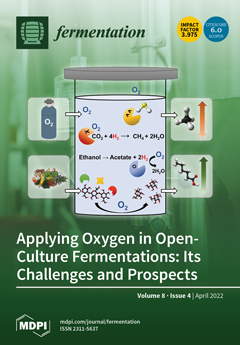
Cover Story: Oxygen micro-dosing can enhance process yields for bioenergy and biochemical production. However, due to the sensitivity of anaerobic microbiomes, robust dosing methods and precise oxygen measurements are necessary to implement this bioengineering technique reliably. This review suggests the range of effective oxygen dosing is narrow and cannot be easily targeted using existing approaches. Open-culture microbiomes are also unique. Therefore, misapplications are common and have led to undesirable and prolonged structural changes within the microbial community. This review covers many of these technical challenges as they pertain to methane- and carboxylate-forming microbiomes, while also providing insights and recommendations for the future application of microaeration. View this paper
  • Issues are regarded as officially published after their release is announced to the table of contents alert mailing list .
  • You may sign up for email alerts to receive table of contents of newly released issues.
  • PDF is the official format for papers published in both, html and pdf forms. To view the papers in pdf format, click on the "PDF Full-text" link, and use the free Adobe Reader to open them.

Articles (54)

  • Article
  • Open Access
15 Citations
5,656 Views
16 Pages

Halophytes as Feedstock for Biogas Production: Composition Analysis and Biomethane Potential of Salicornia spp. Plant Material from Hydroponic and Seawater Irrigation Systems

  • Aadila Cayenne,
  • Ariel E. Turcios,
  • Mette Hedegaard Thomsen,
  • Rui Miranda Rocha,
  • Jutta Papenbrock and
  • Hinrich Uellendahl

The halophyte plant species Salicornia europaea and Salicornia ramosissima were investigated for their potential to serve as a substrate for biogas production. Salicornia europaea was cultivated in hydroponic systems under varying salt concentrations...

(This article belongs to the Special Issue New Research on Anaerobic Digestion)
  • Article
  • Open Access
9 Citations
5,943 Views
15 Pages

Phenazine-1-carboxamide (PCN) is effective to control many plant pathogens, and improving PCN production would be of great significance in promoting its development as a biopesticide. This study was conducted to improve the PCN production of Pseudomo...

(This article belongs to the Topic Bioreactors: Control, Optimization and Applications)
  • Article
  • Open Access
44 Citations
6,849 Views
13 Pages

Functional, Physicochemical, Rheological, Microbiological, and Organoleptic Properties of Synbiotic Ice Cream Produced from Camel Milk Using Black Rice Powder and Lactobacillus acidophilus LA-5

  • Wael F. Elkot,
  • Ateteallah H. Ateteallah,
  • Maalem H. Al-Moalem,
  • Magdy Ramadan Shahein,
  • Mohamed A. Alblihed,
  • Walied Abdo and
  • Ehab Kotb Elmahallawy

Camel milk has become more popular among customers in recent years as a result of its therapeutic effects. In many parts of the world, it is considered one of the primary components of human nutrition. The present study aimed to develop a novel synbi...

(This article belongs to the Special Issue Dairy Fermentation)
  • Article
  • Open Access
15 Citations
5,002 Views
15 Pages

Cultivation of Microalgae in Unsterile Malting Effluent for Biomass Production and Lipid Productivity Improvement

  • Janak Raj Khatiwada,
  • Haipeng Guo,
  • Sarita Shrestha,
  • Chonlong Chio,
  • Xuatong Chen,
  • Aristide Laurel Mokale Kognou and
  • Wensheng Qin

Microalgae have the potential to grow in nutrient-rich environments and have the ability to accumulate nutrients from wastewater. The nutrients in malting wastewater are ideal for microalgae cultivation. However, there is limited published work on th...

(This article belongs to the Special Issue Recent Trends in Biogenic Gas, Waste and Wastewater Fermentation)
  • Review
  • Open Access
45 Citations
12,298 Views
12 Pages

The Technological Perspectives of Kombucha and Its Implications for Production

  • Ícaro Alves Cavalcante Leite de Oliveira,
  • Victória Ananias de Oliveira Rolim,
  • Roberta Paulino Lopes Gaspar,
  • Daniel Quarentei Rossini,
  • Rayane de Souza and
  • Cristina Stewart Bittencourt Bogsan

Fermentation is one of the oldest biotechnological tools employed by mankind. Fermenting food gives them better sensory and nutritional qualities, the latter including vitamins, phenolic compounds, antioxidants, and antimicrobials. Kombucha is the re...

(This article belongs to the Section Fermentation Process Design)
  • Article
  • Open Access
64 Citations
11,630 Views
14 Pages

Sewage sludge represents an important resource for reuse in the wastewater treatment field. Hence, thermophilic anaerobic digestion (TAD) could be an alternative technique to recover renewable resources from sludge. In the TAD biodegradation process,...

(This article belongs to the Special Issue Research Progress of Microorganisms in Wastewater Treatment)
  • Article
  • Open Access
11 Citations
7,669 Views
11 Pages

Kefir is traditionally produced by fermenting cow’s milk using kefir grains as a starter culture. As the viability of microbes within kefir grains is limited and preparing the grains for kefir fermentation is laborious, here, a single starter t...

(This article belongs to the Special Issue Fermented Foods: Traditional Processes, Innovative Strategies, and Challenges)
  • Article
  • Open Access
2 Citations
8,588 Views
16 Pages

Fermented foods have a long history of human use. The purpose of this study was to characterize the microbial composition of a traditional fermented wheat preparation—Nishasta— and to explore its effect in retinoic acid-induced osteoporos...

(This article belongs to the Special Issue Plant-Based Fermented Foods and Civilization Diseases)
  • Article
  • Open Access
20 Citations
11,695 Views
19 Pages

Recombinant Protein Production in E. coli Using the phoA Expression System

  • Thomas Gundinger,
  • Stefan Kittler,
  • Sabine Kubicek,
  • Julian Kopp and
  • Oliver Spadiut

Auto-inducible promoter systems have been reported to increase soluble product formation in the periplasm of E. coli compared to inducer-dependent systems. In this study, we investigated the phosphate (PO4)-sensitive phoA expression system (pAT) for...

(This article belongs to the Section Fermentation Process Design)
  • Article
  • Open Access
27 Citations
9,291 Views
13 Pages

Enhancement of PHA Production by a Mixed Microbial Culture Using VFA Obtained from the Fermentation of Wastewater from Yeast Industry

  • Carolina Ospina-Betancourth,
  • Sergio Echeverri,
  • Claudia Rodriguez-Gonzalez,
  • Julien Wist,
  • Marianny Y. Combariza and
  • Janeth Sanabria

Wastewater from the yeast production industry (WWY) is potentially harmful to surface water due to its high nitrogen and organic matter content; it can be used to produce compounds of higher commercial value, such as polyhydroxyalkanoates (PHA). PHA...

(This article belongs to the Topic Bioreactors: Control, Optimization and Applications)
  • Review
  • Open Access
28 Citations
8,604 Views
14 Pages

Bioprocess Strategy of Haematococcus lacustris for Biomass and Astaxanthin Production Keys to Commercialization: Perspective and Future Direction

  • Siti Nur Hazwani Oslan,
  • Siti Nurbaya Oslan,
  • Rosfarizan Mohamad,
  • Joo Shun Tan,
  • Abdul Hafidz Yusoff,
  • Patricia Matanjun,
  • Ruzaidi Azli Mohd Mokhtar,
  • Rossita Shapawi and
  • Nurul Huda

Haematococcus lacustris (formerly called Haematococcus pluvialis) is regarded as the most promising microalgae for the production of natural astaxanthin, which is secondary metabolism used as a dietary supplement, also for cosmetic applications, due...

(This article belongs to the Section Microbial Metabolism, Physiology & Genetics)
  • Article
  • Open Access
3 Citations
4,820 Views
12 Pages

Cistanche deserticola is a valuable Chinese herb, but traditional dry processing causes the loss of active substances. This study developed Cistanche deserticola fermented juice (CFJ) using lactic acid bacteria and optimized the fermentation process...

(This article belongs to the Section Fermentation for Food and Beverages)
  • Article
  • Open Access
4 Citations
4,531 Views
13 Pages

Wild Saccharomyces Produced Differential Aromas of Fermented Sauvignon Blanc Must

  • Sandra D. C. Mendes,
  • Stefany Grützmann Arcari,
  • Simone Silmara Werner,
  • Patricia Valente and
  • Mauricio Ramirez-Castrillon

Nine Saccharomyces strains, previously isolated from vineyards in Southern Brazil, were used as starter cultures in fermentations of Sauvignon Blanc (SB) must at laboratory scale, to study inter-strain differences in aroma profiles. The molecular pro...

(This article belongs to the Special Issue Advances in Wine Fermentation)
  • Article
  • Open Access
4 Citations
3,948 Views
13 Pages

The fermentation processes of algicidal bacteria offer an eco-friendly and promising approach for controlling harmful algae blooms (HABs). The strain Ba3, previously isolated and identified as Bacillus sp., displays robust algicidal activity against...

(This article belongs to the Special Issue Microbial Biotransformation by Bacillus)
  • Review
  • Open Access
22 Citations
10,533 Views
13 Pages

Microbial host systems remain the most efficient and cost-effective chassis for biotherapeutics production. Escherichia coli is often the preferred host due to ease of cloning, scale-up, high product yields, and most importantly, cost-effective culti...

(This article belongs to the Section Fermentation Process Design)
  • Article
  • Open Access
26 Citations
8,424 Views
16 Pages

Silage Quality and Output of Different Maize–Soybean Strip Intercropping Patterns

  • Tairu Zeng,
  • Yushan Wu,
  • Yafen Xin,
  • Chen Chen,
  • Zhaochang Du,
  • Xiaoling Li,
  • Junfeng Zhong,
  • Muhammad Tahir,
  • Bo Kang and
  • Yanhong Yan
  • + 3 authors

Intercropping improves land-use efficiency under conditions of limited land and resources, but no information is currently available pertaining to land-use efficiency and silage quality based on whole-plant utilization. Therefore, a two-year field ex...

(This article belongs to the Topic Food Processing and Preservation)
  • Article
  • Open Access
6 Citations
2,825 Views
18 Pages

This paper addresses the design and evaluation of a robust observer for second order bioprocesses considering unknown bounded disturbance terms and uncertainty in the dynamics of the unknown and known states. The observer design and the stability ana...

(This article belongs to the Section Fermentation Process Design)
  • Article
  • Open Access
5 Citations
4,347 Views
13 Pages

This study investigated the effects of supplementing feed with various levels of brewer grain meal (BGM) and enzymes (amylase, xylanase, β-glucanase, lipase, cellulase, β-mannanase, phytase, and pectinase) on growth performance, nutrient di...

(This article belongs to the Section Fermentation for Food and Beverages)
  • Article
  • Open Access
13 Citations
6,449 Views
15 Pages

As hyperlipidemia has been associated with cardiovascular diseases, this study investigated the influence of probiotic-fermented camel and cow’s milk on blood lipid profiles in hypercholesterolemic rats. When tested, probiotic-fermented camel a...

(This article belongs to the Section Fermentation for Food and Beverages)
  • Article
  • Open Access
18 Citations
4,778 Views
14 Pages

Multi-Objective Statistical Optimization of Pectinolytic Enzymes Production by an Aspergillus sp. on Dehydrated Coffee Residues in Solid-State Fermentation

  • Jimmy Núñez Pérez,
  • Brayan Santiago Chávez Arias,
  • Juan Carlos de la Vega Quintero,
  • Santiago Zárate Baca and
  • José Manuel Pais-Chanfrau

Pectinolytic enzymes are a group of enzymes widely used in the food industry. They can be obtained through a wide range of by-products and agricultural and agro-industrial waste by the action of fungi, such as Aspergillus spp., by solid-state ferment...

(This article belongs to the Section Industrial Fermentation)
  • Article
  • Open Access
9 Citations
5,891 Views
15 Pages

Enhancing the Productivity and Stability of Superoxide Dismutase from Saccharomyces cerevisiae TBRC657 and Its Application as a Free Radical Scavenger

  • Phitsanu Pinmanee,
  • Kamonwan Sompinit,
  • Jantima Arnthong,
  • Surisa Suwannarangsee,
  • Angkana Jantimaporn,
  • Mattaka Khongkow,
  • Thidarat Nimchua and
  • Prakit Sukyai

Superoxide dismutase (SOD) is crucial antioxidant enzyme that plays a role in protecting cells against harmful reactive oxygen species (ROS) which are generated inside cells. Due to its functionality, SOD is used in many applications. In this study,...

(This article belongs to the Topic Bioreactors: Control, Optimization and Applications)
  • Editorial
  • Open Access
62 Citations
10,444 Views
7 Pages

During the industrial processing of agricultural or animal products, large amounts of waste are produced. These wastes, generated in large amounts throughout the seasons of the year, can be considered the most abundant renewable resources on earth. D...

(This article belongs to the Special Issue Food Waste Valorization)
  • Article
  • Open Access
8 Citations
3,578 Views
12 Pages

Paper mulberry (Broussonetia papyrifera L.) is an unconventional forage with high crude protein content and is widely used in China. In order to evaluate the pattern of fermentation quality and the aerobic stability when inoculated with lactic acid b...

(This article belongs to the Special Issue Silage Fermentation)
  • Article
  • Open Access
3 Citations
5,901 Views
14 Pages

NTH2 1271_1272delTA Gene Disruption Results in Salt Tolerance in Saccharomyces cerevisiae

  • Alejandro Hernández-Soto,
  • José Pablo Delgado-Navarro,
  • Miguel Benavides-Acevedo,
  • Sergio A. Paniagua and
  • Andres Gatica-Arias

Trehalose is a common energy reservoir, and its accumulation results in osmotic protection. This sugar can accumulate through its synthesis or slow degradation of the reservoir by trehalase enzymes. Saccharomyces cerevisiae contains two neutral treha...

(This article belongs to the Special Issue Microbial Metabolism in Fermentation Process)
  • Article
  • Open Access
16 Citations
3,635 Views
10 Pages

The source of raw materials for hydrogen production can be expanded by using vine waste as a substrate. Likewise, the effectiveness of vine waste can also be improved. However, plant parts such as stems and leaves often differ in physicochemical prop...

(This article belongs to the Section Fermentation Process Design)
  • Article
  • Open Access
5 Citations
3,925 Views
14 Pages

Wineinformatics is among the new fields in data science that use wine as domain knowledge. To process large amounts of wine review data in human language format, the computational wine wheel is applied. In previous research, the computational wine wh...

(This article belongs to the Section Fermentation for Food and Beverages)
  • Article
  • Open Access
43 Citations
7,218 Views
13 Pages

Isolation and Characterization of a Cholesterol-Lowering Bacteria from Bubalus bubalis Raw Milk

  • Abdul Hameed,
  • Carla Condò,
  • Isfahan Tauseef,
  • Maryam Idrees,
  • Shakira Ghazanfar,
  • Arshad Farid,
  • Muhammad Muzammal,
  • Mohammed Al Mohaini,
  • Abdulkhaliq J. Alsalman and
  • Abeer A. Alanazi
  • + 5 authors

Probiotics retrieved from animal sources have substantial health benefits for both humans and animals. The present study was designed to identify lactic acid bacteria (LAB) isolated from domestic water buffalo milk (Bubalus bubalis) and to evaluate t...

(This article belongs to the Special Issue New Insights into the Application of Lactic Acid Bacteria Strain in the Fermentation)
  • Review
  • Open Access
13 Citations
8,566 Views
13 Pages

Fermented Foods and Their Role in Respiratory Health: A Mini-Review

  • Periyanaina Kesika,
  • Subramanian Thangaleela,
  • Bhagavathi Sundaram Sivamaruthi,
  • Muruganantham Bharathi and
  • Chaiyavat Chaiyasut

Fermented foods (FFs) hold global attention because of their huge advantages. Their health benefits, palatability, preserved, tasteful, and aromatic properties impart potential importance in the comprehensive evaluation of FFs. The bioactive componen...

(This article belongs to the Special Issue Food Fermentation for Better Nutrition, Health and Sustainability)
  • Review
  • Open Access
75 Citations
11,584 Views
14 Pages

Recent Developments in Lignocellulosic Biofuels, a Renewable Source of Bioenergy

  • Ashutosh Kumar Rai,
  • Naief Hamoud Al Makishah,
  • Zhiqiang Wen,
  • Govind Gupta,
  • Soumya Pandit and
  • Ram Prasad

Biofuel consists of non-fossil fuel derived from the organic biomass of renewable resources, including plants, animals, microorganisms, and waste. Energy derived from biofuel is known as bioenergy. The reserve of fossil fuels is now limited and conti...

(This article belongs to the Special Issue Biofuels Production and Processing Technology)
  • Article
  • Open Access
7 Citations
4,992 Views
13 Pages

Arthrobacter sp. BCC 72131, an obligate aerobic bacterium, was used to create anaerobic conditions, and Clostridium beijerinckii TISTR 1461 was used as a butanol producer in an acetone-butanol–ethanol (ABE) fermentation. Sweet sorghum juice (SS...

(This article belongs to the Section Fermentation Process Design)
  • Article
  • Open Access
9 Citations
3,759 Views
12 Pages

Wet anaerobic storage of algal biomass is a promising preservation approach that can ensure a continuous supply of these feedstocks to biorefineries year-round. An effective solution to preservation must ensure minimal dry matter loss and a change in...

(This article belongs to the Special Issue Algal Biomass: From Bioproducts to Biofuels)
  • Article
  • Open Access
19 Citations
4,051 Views
9 Pages

This study aimed to investigate the effects of low-temperature-tolerant lactic acid bacteria on the fermentation quality and bacterial community of oat silage. Silage treatments were designed as control (with no additives), with FO3, FO5, FO8, and L2...

(This article belongs to the Special Issue Silage Fermentation)
  • Article
  • Open Access
29 Citations
7,161 Views
16 Pages

The rice husk has the potential to be used for converting agricultural wastes into renewable energy. Therefore, this study aims to improve the hydrolysis of rice husk through Hydrogen Peroxide (HP) and Combined Hydrogen Peroxide–Aqueous Ammonia...

(This article belongs to the Section Fermentation Process Design)
  • Article
  • Open Access
23 Citations
6,484 Views
16 Pages

Fermentation Quality and Bacterial Ecology of Grass Silage Modulated by Additive Treatments, Extent of Compaction and Soil Contamination

  • Marcia Franco,
  • Ilma Tapio,
  • Juho Pirttiniemi,
  • Tomasz Stefański,
  • Taina Jalava,
  • Arto Huuskonen and
  • Marketta Rinne

New technologies related to the identification of bacterial communities in fresh forage and silage may give valuable detailed information on the best practices to produce animal feeds. The objective was to evaluate how management conditions during si...

(This article belongs to the Special Issue Silage Fermentation)
  • Article
  • Open Access
4 Citations
4,578 Views
17 Pages

Fermentation Characteristics of Rye and Sorghum Depending on Water:Feed Ratio

  • Ahmed Osman,
  • Clara Berenike Hartung,
  • Jan Berend Lingens,
  • Kerstin Rohn,
  • Tom Schreiner,
  • Marwa Fawzy Elmetwaly Ahmed,
  • Julia Hankel,
  • Amr Abd El-Wahab and
  • Christian Visscher

This study was conducted to determine the fermentation characteristics of rye or sorghum mixed with different ratios of water (25%, 37.5%, 50%, 62.5%, and 75% in dry matter (DM)), incubated up to 48 h. The pH of the fermented rye at a DM content of 2...

(This article belongs to the Section Industrial Fermentation)
  • Editorial
  • Open Access
11 Citations
5,064 Views
3 Pages

Food biotechnology innovation and development reached an estimated growth tendency rate of 28% per year [...]

(This article belongs to the Special Issue Probiotics, Prebiotics, and Their Application in the Production of Functional Foods)
  • Article
  • Open Access
16 Citations
11,622 Views
12 Pages

Production of Citric Acid by Aspergillus niger Cultivated in Olive Mill Wastewater Using a Two-Stage Packed Column Bioreactor

  • Muhannad I. Massadeh,
  • Khalid Fandi,
  • Hanan Al-Abeid,
  • Othman Alsharafat and
  • Khaled Abu-Elteen

For building a sustainable fermentation process, it is essential to reduce dependence on natural resources and lower the amount of pollution that is created. The reuse of agro-industrial wastewater after possible treatment leads to the achievement of...

(This article belongs to the Topic Bioreactors: Control, Optimization and Applications)
  • Article
  • Open Access
39 Citations
7,535 Views
17 Pages

Bacillus accelerates lignocellulose degradation, promotes the stabilization and resource utilization of compost by secreting enzymes, and plays an important role in compost formation and quality control. This study evaluated enzyme activity, lignocel...

(This article belongs to the Section Microbial Metabolism, Physiology & Genetics)
  • Article
  • Open Access
34 Citations
8,332 Views
24 Pages

Towards a Complete Exploitation of Brewers’ Spent Grain from a Circular Economy Perspective

  • Chiara Allegretti,
  • Emanuela Bellinetto,
  • Paola D’Arrigo,
  • Gianmarco Griffini,
  • Stefano Marzorati,
  • Letizia Anna Maria Rossato,
  • Eleonora Ruffini,
  • Luca Schiavi,
  • Stefano Serra and
  • Stefano Turri
  • + 2 authors

In the present work, brewers’ spent grain (BSG), which represents the major by-product of the brewing industry, was recovered from a regional brewery and fractionated in order to obtain a complete valorization. In particular, the whole process...

(This article belongs to the Special Issue Resource Recovery of Wastes by Fermentation towards a Sustainable Circular Economy)
  • Article
  • Open Access
11 Citations
5,117 Views
16 Pages

Although using non-Saccharomyces yeasts during alcoholic fermentation can improve the wine aroma, most of them are not ethanol tolerant; therefore, in 2017, this study screened 85 non-Saccharomyces yeasts isolated and identified from 24 vineyards in...

(This article belongs to the Special Issue Wine Aromas)
  • Article
  • Open Access
4 Citations
4,557 Views
14 Pages

Background: The introduction of engineered cysteine in staphylococcal protein A (SPA-cys) for site-specific conjugation results in a substantial amount of dimerized SPA due to spontaneous oxidation during its production, leading to inaccessibility an...

(This article belongs to the Section Microbial Metabolism, Physiology & Genetics)
  • Article
  • Open Access
26 Citations
5,873 Views
19 Pages

Bioethanol Production Optimization from KOH-Pretreated Bombax ceiba Using Saccharomyces cerevisiae through Response Surface Methodology

  • Misbah Ghazanfar,
  • Muhammad Irfan,
  • Muhammad Nadeem,
  • Hafiz Abdullah Shakir,
  • Muhammad Khan,
  • Irfan Ahmad,
  • Shagufta Saeed,
  • Yue Chen and
  • Lijing Chen

The present study was based on the production of bioethanol from alkali-pretreated seed pods of Bombax ceiba. Pretreatment is necessary to properly utilize seed pods for bioethanol production via fermentation. This process assures the accessibility o...

(This article belongs to the Special Issue Biofuels Production and Processing Technology)
  • Article
  • Open Access
1 Citations
3,702 Views
18 Pages

Fenton-Mediated Chlorophenol Degradation by Iron-Reducing Compounds Isolated from Endophytic Fungi in Atacama Puna Plateau Lecanicillium ATA01

  • Rómulo Oses-Pedraza,
  • Estefanía Bonnail,
  • Paris Lavin,
  • Cristina Purcarea,
  • Manuel Alarcón,
  • Danae Irribarren-Riquelme and
  • Jaime Rodríguez

Low-molecular-mass iron-reducing compounds (IRCs) were produced by entomopathogenic endophytic fungi Lecanicillium sp. ATA01 in liquid cultures. The extracellular hydrophilic extract contained three IRCs formed by peptides, iron and phenolate structu...

(This article belongs to the Special Issue Extremophiles—Source for Novel Biomolecules with Applied Potential)
  • Article
  • Open Access
10 Citations
4,303 Views
10 Pages

Effect of Rhodanese Enzyme Addition on Rumen Fermentation, Cyanide Concentration, and Feed Utilization in Beef Cattle Receiving Various Levels of Fresh Cassava Root

  • Chanadol Supapong,
  • Sukruthai Sommai,
  • Benjamad Khonkhaeng,
  • Chanon Suntara,
  • Rittikeard Prachumchai,
  • Kampanat Phesatcha,
  • Pin Chanjula and
  • Anusorn Cherdthong

Fresh cassava root is not recommended for animal feeding due to high quantities of hydrocyanic acid (HCN), which produces symptoms of poisoning. The purpose of this study was to find out how a rhodanese enzyme addition affects rumen fermentation, HCN...

(This article belongs to the Special Issue Recent Advances in Rumen Fermentation Efficiency)
  • Article
  • Open Access
5 Citations
6,207 Views
20 Pages

Several studies have shown the ability of yeast to consume peptides as a nitrogen source in single-peptide containing media. However, a suitable and cost-effective methodology to study the utilization of peptides by yeast and other microorganisms in...

(This article belongs to the Section Fermentation for Food and Beverages)
  • Article
  • Open Access
35 Citations
6,425 Views
11 Pages

Effects of Lactobacillus plantarum on Fermentation Quality and Anti-Nutritional Factors of Paper Mulberry Silage

  • Ningwei Wang,
  • Yi Xiong,
  • Xuekai Wang,
  • Linna Guo,
  • Yanli Lin,
  • Kuikui Ni and
  • Fuyu Yang

There are few studies on the application of lactic acid bacteria in the reduction of anti-nutrient factors in paper mulberry silage. This study aimed to investigate the effects of different lactic acid bacteria on the fermentation quality and the amo...

(This article belongs to the Special Issue Silage Fermentation)
  • Article
  • Open Access
11 Citations
6,737 Views
14 Pages

Efficacy of Continuous Flow Reactors for Biological Treatment of 1,4-Dioxane Contaminated Textile Wastewater Using a Mixed Culture

  • Kang Hoon Lee,
  • Imtiaz Afzal Khan,
  • Muhammad Ali Inam,
  • Rizwan Khan,
  • Young Min Wie and
  • Ick Tae Yeom

The goal of this study was to evaluate the biodegradation of 1,4–dioxane using a mixed biological culture grown in textile wastewater sludge with 1,4–dioxane as the sole carbon source. The conditions for the long-term evaluation of 1,4&nd...

(This article belongs to the Special Issue Microbiotechnology Tools for Wastewater Treatment and Waste Valorization)
  • Article
  • Open Access
17 Citations
6,984 Views
13 Pages

The present study describes the application of an acid tolerant and potentially probiotic L. paracasei SP3 strain, recently isolated from kefir grains, in the production of a novel functional beverage based on the fermentation of pomegranate juice. T...

(This article belongs to the Special Issue New Insights into the Application of Lactic Acid Bacteria Strain in the Fermentation)
  • Article
  • Open Access
16 Citations
5,663 Views
10 Pages

Co-Overexpression of RIB1 and RIB6 Increases Riboflavin Production in the Yeast Candida famata

  • Yana Petrovska,
  • Oleksii Lyzak,
  • Justyna Ruchala,
  • Kostyantyn Dmytruk and
  • Andriy Sibirny

Riboflavin or vitamin B2 is a water-soluble vitamin and a precursor of flavin coenzymes, flavin mononucleotide, and flavin adenine dinucleotide, which play a key role as enzyme cofactors in energy metabolism. Candida famata yeast is a promising produ...

(This article belongs to the Special Issue Bioconversion of Lignocellulosic Materials to Value-Added Products)
  • Article
  • Open Access
13 Citations
4,856 Views
14 Pages

Effects of Soybean Density and Sowing Time on the Yield and the Quality of Mixed Silage in Corn-Soybean Strip Intercropping System

  • Qinyu Li,
  • Tairu Zeng,
  • Yi Hu,
  • Zhaochang Du,
  • Yao Liu,
  • Moran Jin,
  • Muhammad Tahir,
  • Xiaochun Wang,
  • Wenyu Yang and
  • Yanhong Yan

Intercropping is a cropping strategy that makes efficient use of space, nutrients, and soil. A 2-year field trial was conducted in 2019 and 2020 to study the effects of different soybean sowing times (9 days before corn sowing (ST1), 0 days at corn s...

(This article belongs to the Section Fermentation for Food and Beverages)

of 2

XFacebookLinkedIn
Fermentation - ISSN 2311-5637