



Next Issue
Volume 17, November-2
Previous Issue
Volume 17, October-2
 
 
water-logo

Journal Browser

Journal Browser

Water, Volume 17, Issue 21 (November-1 2025) – 155 articles
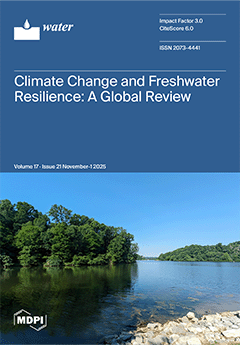
Cover Story (view full-size image): Climate change is transforming global freshwater systems, altering hydrological patterns, thermal regimes, and ecosystem resilience. This review synthesizes recent evidence (2010–2025) showing how warming, altered precipitation, and glacier retreat are reshaping rivers, lakes, wetlands, ponds, and groundwater across diverse climate zones. Using a DPSIR-based lens, the study links climatic drivers to changes in water quantity and quality, ecosystem responses, and emerging risks for water security. It also highlights adaptive pathways, including Integrated Water Resources Management, the water–energy–food–ecosystem nexus, ecosystem-based solutions, and data-driven tools such as remote sensing and AI, to support resilient freshwater management. View this paper
  • Issues are regarded as officially published after their release is announced to the table of contents alert mailing list.
  • You may sign up for e-mail alerts to receive table of contents of newly released issues.
  • PDF is the official format for papers published in both, html and pdf forms. To view the papers in pdf format, click on the "PDF Full-text" link, and use the free Adobe Reader to open them.
Order results
Result details
Section
Select all
Export citation of selected articles as:
28 pages, 2466 KB  
Article
Insights from Hydro-Economic Modeling for Climate Resilience in the Nazas–Aguanaval Watershed in Mexico
by David-Eduardo Guevara-Polo, Carlos Patiño-Gomez, Josué Medellin-Azuara and Benito Corona-Vasquez
Water 2025, 17(21), 3183; https://doi.org/10.3390/w17213183 - 6 Nov 2025
Viewed by 851
Abstract
Agriculture uses 80% of global water resources, driving several water management challenges across the world. These challenges require the exchange of effective practices. We found that California’s Tulare Lake Basin (TLB) and Mexico’s Nazas–Aguanaval watershed share key features, leading us to propose the [...] Read more.
Agriculture uses 80% of global water resources, driving several water management challenges across the world. These challenges require the exchange of effective practices. We found that California’s Tulare Lake Basin (TLB) and Mexico’s Nazas–Aguanaval watershed share key features, leading us to propose the TLB as a model of climate resilience. After contrasting the policies for TLB with those for Nazas–Aguanaval, we found that no constrained pricing policy proposal exists for the Nazas–Aguanaval watershed. We apply a hydro-economic model using Positive Mathematical Programming to support an incentive structure for reducing water use in agriculture while maximizing profits. The optimal crop policy could reduce water demand by 20%, with a trade-off of an 11% reduction in profits. This would save 185.4 hm3/year, which represents 90% of the volume required for an ongoing infrastructure project for urban water supply in the watershed. Additionally, implementing a price of 14 USD/dam3 could increase the irrigation district’s revenue, boosting farmers’ profits by up to 16% and district revenue by up to 134%. Our results demonstrate the benefits of applying Positive Mathematical Programming in a semiarid watershed to support water and agriculture policy. This research is a starting point for increasing the climate resilience of watersheds under water and financial stress. Full article
(This article belongs to the Special Issue Optimization–Simulation Modeling of Sustainable Water Resource)
Show Figures

Figure 1

18 pages, 15083 KB  
Article
Impact of Wetland Resolution on Hydraulic and Contaminant Transport Predictions
by Andrea Bottacin-Busolin, Eleonora Dallan, Gianfranco Santovito and Andrea Marion
Water 2025, 17(21), 3182; https://doi.org/10.3390/w17213182 - 6 Nov 2025
Viewed by 405
Abstract
Accurate assessment of wetland hydraulic performance and solute treatment depends on the spatial resolution of bed topography and vegetation density. To evaluate this influence, synthetic shallow-water wetlands with spatially correlated random fields of bed elevation and vegetation density were used to examine how [...] Read more.
Accurate assessment of wetland hydraulic performance and solute treatment depends on the spatial resolution of bed topography and vegetation density. To evaluate this influence, synthetic shallow-water wetlands with spatially correlated random fields of bed elevation and vegetation density were used to examine how data resolution affects predictions of hydrodynamic residence time and treatment performance. Coarse-graining of input data produced modest median errors in nominal residence time, although variability across realizations increased with greater topographic heterogeneity. The variance of residence time was the most sensitive metric, showing a consistent tendency toward underestimation as grid size increased, with maximum median errors exceeding 10% and 35% for grid sizes equal to and twice the correlation length, respectively. In contrast, outlet concentration errors remained relatively small, typically below 5% even when grid size exceeded the correlation length of bed features, indicating a stronger dependence on nominal residence time than on variance. Within the range of vegetation stem density variability considered, heterogeneous vegetation patterns in a flat-bed wetland exerted comparatively little influence on residence time metrics and contaminant concentration at the outlet. The results provide insights into the reliability of wetland models under varying data resolutions and identify conditions under which coarse-graining is acceptable, offering guidance for field measurement strategies and numerical modeling. Full article
(This article belongs to the Section Hydraulics and Hydrodynamics)
Show Figures

Figure 1

18 pages, 3351 KB  
Article
Borehole Resistivity Imaging Method for the Disaster Evolution Process of Tunnel Seepage Instability-Induced Water Inrush
by Dongjie Li, Zhanxiang Li, Yanbin Xue, Zhi-Qiang Li, Lei Han and Yi Wang
Water 2025, 17(21), 3181; https://doi.org/10.3390/w17213181 - 6 Nov 2025
Viewed by 470
Abstract
Water inrush disasters pose a serious threat during tunnel construction. Accurately evaluating their evolution process is essential for timely prevention and risk mitigation. Given the staged nature of seepage-instability-induced inrushes and the sensitivity of borehole resistivity imaging to water-bearing anomalies, this study explores [...] Read more.
Water inrush disasters pose a serious threat during tunnel construction. Accurately evaluating their evolution process is essential for timely prevention and risk mitigation. Given the staged nature of seepage-instability-induced inrushes and the sensitivity of borehole resistivity imaging to water-bearing anomalies, this study explores the use of borehole resistivity methods to monitor the evolution of such events. A four-stage geoelectrical evolution model is developed based on the characteristics of inclined fault-related water inrushes. A time-lapse evaluation method combining least squares inversion and resistivity ratio analysis is proposed to assess the inrush process. Numerical simulations show that this method achieves a localization error below 2 m for inclined water-conducting channels. Across the four stages, the resistivity ratio of the channel ranges from 0.65 to 1.40, capturing the three-dimensional expansion of the inrush pathway. These findings confirm that borehole resistivity imaging effectively characterizes the evolution of water inrush disasters and supports early warning and mitigation strategies. Full article
Show Figures

Figure 1

23 pages, 6692 KB  
Article
Internal Flow Characteristics and Modal Analysis of an Ultra-Low Specific Speed Pump as Turbine
by Wang Zheng, Yingxiao Shi, Bochen Wan, Yueyang Wang and Jianping Yuan
Water 2025, 17(21), 3180; https://doi.org/10.3390/w17213180 - 6 Nov 2025
Viewed by 462
Abstract
With the growing global demand for renewable energy, the pump as turbine (PAT) exhibits significant potential in the micro-hydropower sector. To reveal its internal unsteady flow characteristics and energy loss mechanisms, this study analyzes the internal flow field of an ultra-low specific speed [...] Read more.
With the growing global demand for renewable energy, the pump as turbine (PAT) exhibits significant potential in the micro-hydropower sector. To reveal its internal unsteady flow characteristics and energy loss mechanisms, this study analyzes the internal flow field of an ultra-low specific speed pump as turbine (USSPAT) by employing a combined approach of entropy generation theory and dynamic mode decomposition (DMD). The results indicate that the outlet pressure pulsation characteristics are highly dependent on the flow rate. Under low flow rate conditions, pulsations are dominated by low-frequency vortex bands induced by rotor-stator interaction (RSI), whereas at high flow rates, the blade passing frequency (BPF) becomes the absolute dominant frequency. Energy losses within the PAT are primarily composed of turbulent and wall dissipation, concentrated in the impeller and volute, particularly at the impeller inlet, outlet, and near the volute tongue. DMD reveals that the flow field is governed by a series of stable modes with near-zero growth rates, whose frequencies are the shaft frequency (25 Hz) and its harmonics (50 Hz, 75 Hz, 100 Hz). These low-frequency modes, driven by RSI, contain the majority of the fluctuation energy. Therefore, this study confirms that RSI between the impeller and the volute is the root cause of the dominant pressure pulsations and periodic energy losses. This provides crucial theoretical and data-driven guidance for the design optimization, efficient operation, and stability control of PAT. Full article
Show Figures

Figure 1

4 pages, 138 KB  
Editorial
Advances in Watershed Hydro-Environment Simulation: From Process Mechanisms to Sustainable Management
by Chengpeng Lu and Peipeng Wu
Water 2025, 17(21), 3179; https://doi.org/10.3390/w17213179 - 6 Nov 2025
Viewed by 449
Abstract
Groundwater (GW) and surface water (SW), two crucial factors in the water cycle, are often viewed in an artificially segmented way within scientific research, resulting in insufficient interactions between them, especially in areas in which frequent SW–GW interactions occur [...] Full article
(This article belongs to the Special Issue Advances in Surface Water and Groundwater Simulation in River Basin)
17 pages, 1572 KB  
Article
Uncovering the Drivers of Urban Flood Reports: An Environmental and Socioeconomic Analysis Using 311 Data
by Natalie R. Lerma, Jonathan L. Goodall and Julianne D. Quinn
Water 2025, 17(21), 3178; https://doi.org/10.3390/w17213178 - 6 Nov 2025
Viewed by 442
Abstract
Cities use 311 platforms for residents to report flooding, offering insight into flood-prone areas. The combined role of environmental and socioeconomic factors shaping these reports remains unexplored. This study analyzes five years of 311 flood reports in Norfolk, VA, using a logistic regression [...] Read more.
Cities use 311 platforms for residents to report flooding, offering insight into flood-prone areas. The combined role of environmental and socioeconomic factors shaping these reports remains unexplored. This study analyzes five years of 311 flood reports in Norfolk, VA, using a logistic regression model to identify salient predictors and assess their influence on flood reporting. The model includes environmental variables (precipitation, tide level, and topographic wetness index) and socioeconomic indicators (race, income, and education). The model performed well with an area under the receiver operator characteristic (ROC) curve (AUC) of 0.8. Permutation-based feature importance revealed precipitation as the most important predictor (AUC contribution: 0.27), followed by the percentage of Black residents (0.02); tide only contributed ~0.01. The influence of the percentage of Hispanics was also ~0.01. Increases in the percentage of Black residents were associated with increased reporting, while the converse was true for a higher percentage of Hispanic residents. Higher reporting in Norfolk from locations with more Black residents is distinct from findings in other cities, suggesting Norfolk may have more effective communication with these residents about 311 reporting. However, lower reporting in locations with more Hispanic residents suggests Norfolk could improve outreach to non-native speakers, for example, by adding Spanish language options to their 311 platform. Full article
(This article belongs to the Special Issue Climate Risk Management, Sea Level Rise and Coastal Impacts)
Show Figures

Figure 1

29 pages, 7845 KB  
Article
Estimating Peak Flows in Streams During the Flash Flood Event of 29 October 2024 in Spain: An Empirical Approach
by Rafael Muñoz, Juan Víctor Molner, Noelia Campillo-Tamarit and Juan Soria
Water 2025, 17(21), 3177; https://doi.org/10.3390/w17213177 - 6 Nov 2025
Viewed by 559
Abstract
The present study focuses on the extraordinary isolated high-level depression event that occurred on 29 October 2024 over the eastern Iberian Peninsula (Spain). The emphasis of the study is on the Turia and Magro river basins and the Albufera of Valencia lagoon basin, [...] Read more.
The present study focuses on the extraordinary isolated high-level depression event that occurred on 29 October 2024 over the eastern Iberian Peninsula (Spain). The emphasis of the study is on the Turia and Magro river basins and the Albufera of Valencia lagoon basin, with particular attention given to the hydrological implications of the event in these areas. It is an established fact that episodes of intense precipitation give rise to flash floods. This recurrent phenomenon has significant economic and human impacts, and is particularly prominent in the Mediterranean region, including the Valencian Community (Eastern Spain). The estimation of peak flows at key sites in the basins was achieved through the utilization of an empirical methodological approach based on fieldwork to obtain the wetted cross-section of each site of analysis. Utilizing the existent official flow-measuring data network, an estimation was made of the average velocity of the water. The results indicate that flows in several locations exceeded the carrying capacity of the watercourses, leading to substantial flooding and overflows. The maximum estimated peak flow was determined to be 5678 m3 s−1 in the Poyo ephemeral stream and 4198 m3 s−1 in the Magro river. The results were validated using the Manning equation and related stream parameters (such as roughness and slope), obtaining a normalized root mean squared error of 3.62% and normalized mean absolute error of 2.26%. This analysis identified bottlenecks in the hydrographic network and emphasized the necessity to enhance detailed knowledge of the hydraulic capacity of watercourses. This helps with the purpose of flood risk management in the event of extreme future events accentuated by climate change. Full article
(This article belongs to the Special Issue Spatial Analysis of Flooding Phenomena: Challenges and Case Studies)
Show Figures

Figure 1

32 pages, 1709 KB  
Review
The Role of Artificial Intelligence in Bathing Water Quality Assessment: Trends, Challenges, and Opportunities
by M Usman Saeed Khan, Ashenafi Yohannes Battamo, Rajendran Ravindar and M Salauddin
Water 2025, 17(21), 3176; https://doi.org/10.3390/w17213176 - 6 Nov 2025
Viewed by 604
Abstract
Bathing water quality (BWQ) monitoring and prediction are essential to safeguard public health by informing bathers about the risk of exposure to faecal indicator bacteria (FIBs). Traditional monitoring approaches, such as manual sampling and laboratory analysis, while effective, are often constrained by delayed [...] Read more.
Bathing water quality (BWQ) monitoring and prediction are essential to safeguard public health by informing bathers about the risk of exposure to faecal indicator bacteria (FIBs). Traditional monitoring approaches, such as manual sampling and laboratory analysis, while effective, are often constrained by delayed reporting, limited spatial and temporal coverage, and high operational costs. The integration of artificial intelligence (AI), particularly machine learning (ML), with automated data sources such as environmental sensors and satellite imagery has offered novel predictive and real-time monitoring opportunities in BWQ assessment. This systematic literature review synthesises current research on the application of AI in BWQ assessment, focusing on predictive modelling techniques and remote sensing approaches. Following the PRISMA methodology, 63 relevant studies are reviewed. The review identifies dominant modelling techniques such as Artificial Neural Networks (ANN), Deep Learning (DL), Decision Tree (DT), Random Forest (RF), Multiple Linear Regression (MLR), Support Vector Machine (SVM), and Hybrid and Ensemble Boosting algorithms. The integration of AI with remote sensing platforms such as Google Earth Engine (GEE) has improved the spatial and temporal solution of BWQ monitoring systems. The performance of modelling approaches varied depending on data availability, model flexibility, and integration with alternative data sources like remote sensing. Notable research gaps include short-term faecal pollution prediction and incomplete datasets on key environmental variables, data scarcity, and model interpretability of complex AI models. Emerging trends point towards the potential of near-real-time modelling, Internet of Things (IoT) integration, standardised data protocols, global data sharing, the development of explainable AI models, and integrating remote sensing and cloud-based systems. Future research should prioritise these areas while promoting the integration of AI-driven BWQ systems into public health monitoring and environmental management through multidisciplinary collaboration. Full article
Show Figures

Figure 1

15 pages, 13655 KB  
Article
Identifying Variations in Ecosystem Health of Wetlands in the Western Songnen Plain (2000–2020)
by Ling Luo, Xi Wang and Zongming Wang
Water 2025, 17(21), 3175; https://doi.org/10.3390/w17213175 - 6 Nov 2025
Viewed by 480
Abstract
An accurate understanding of the spatiotemporal variations in wetland ecosystem health is beneficial for guiding sustainable management and achieving sustainable development goals. To overcome the limitations single indicator approaches, this study proposed a multi-dimensional evaluation system based on four aspects of wetland ecosystems: [...] Read more.
An accurate understanding of the spatiotemporal variations in wetland ecosystem health is beneficial for guiding sustainable management and achieving sustainable development goals. To overcome the limitations single indicator approaches, this study proposed a multi-dimensional evaluation system based on four aspects of wetland ecosystems: pattern, quality, service, and threats. Furthermore, based on the wetland distribution dataset and MODIS products, we constructed a comprehensive wetland ecosystem health index (WEHI) from 11 indicators and applied it to assess the variations in wetland ecosystem health in the western Songnen Plain from 2000 to 2020, suggesting wetland responses to climate change and human activities. Results revealed that wetland ecosystem health was affected by variability in both hydrothermal conditions and human threats. Across the region, wetlands were primarily classified as “fair” level (0.25 ≤ WEHI < 0.50) with 63% by area, while the “good” level (0.50 ≤ WEHI < 0.75) accounted for 37%. Although the WEHI increased from 0.44 in 2000 to 0.47 in 2020, the overall health status of wetlands still requires targeted improvements. This gradual recovery was largely attributed to a combination of reduced threats, warming temperatures, and increasing precipitation. Protected areas with larger WEHI played a critical role in maintaining ecosystem health. The evaluation system developed in this study offers a reference for the wetland health assessment at a broader scale. The findings in this study are expected to inform more effective management and conservation strategies of wetlands. Full article
(This article belongs to the Special Issue Impacts of Climate Change & Human Activities on Wetland Ecosystems)
Show Figures

Figure 1

19 pages, 2716 KB  
Article
Flocculation–Electro-Osmosis-Coupled Dewatering Treatment of River-Dredged Sludge
by Ziwei Liu, Qing Wei, Chunzhen Fan, Shutian Li and Suqing Wu
Water 2025, 17(21), 3174; https://doi.org/10.3390/w17213174 - 5 Nov 2025
Viewed by 646
Abstract
The presence of organic matter can alter the dewatering characteristics of river-dredged silt and affect the dewatering efficiency. This study systematically compared the dewatering effects of cationic polyacrylamide (CPAM), ferric chloride (FeCl3), and composite flocculant (CPAM + FeCl3) for [...] Read more.
The presence of organic matter can alter the dewatering characteristics of river-dredged silt and affect the dewatering efficiency. This study systematically compared the dewatering effects of cationic polyacrylamide (CPAM), ferric chloride (FeCl3), and composite flocculant (CPAM + FeCl3) for sludge with different organic matter contents by using the combined flocculation–electro-osmotic dewatering technology. The results show that the presence of organic matter significantly hinders the dewatering of silt. After the combined treatment of low-, medium-, and high-organic-matter river-dredging sludge with composite flocculants and electro-osmotic treatment, the final water content was 39.53%, 45.08%, and 47.28%, respectively. Compared with the use of CPAM alone, its dewatering efficiency increased by 66.98%, 5.39%, and 13.72%, respectively. Three-dimensional fluorescence spectroscopy analysis (3D-EEM) indicates that the combined dewatering of flocculation and electro-osmosis can improve the dewatering performance of sludge by promoting the transformation of organic matter. Scanning electron microscopy (SEM) analysis shows that under the action of the composite flocculant, the sludge particles aggregate significantly, and after electro-osmosis, the structure becomes more compact and channels are formed, which further improves the sludge dewatering efficiency. This study provides a theoretical basis for the optimization of dewatering processes for dredged silt with different organic matter contents. Full article
(This article belongs to the Special Issue Ecological Wastewater Treatment and Resource Utilization)
Show Figures

Figure 1

17 pages, 4295 KB  
Article
Choice of Primer Pairs Affects the eDNA-Based Detection of Eukaryotic Phytoplankton Communities
by Qiting Liang, Ying Liu, Shenhao Wu, Jianyi Chen, Jie Feng, Jiajia Wu and Chunxing Chen
Water 2025, 17(21), 3173; https://doi.org/10.3390/w17213173 - 5 Nov 2025
Viewed by 468
Abstract
Environmental DNA (eDNA) has become a promising tool for phytoplankton surveys. However, the accuracy of eDNA-based detection is related to primer selection across diverse environments, and optimal primer pairs selection on phytoplankton community in human impacted ecosystems is still lacking. The aim of [...] Read more.
Environmental DNA (eDNA) has become a promising tool for phytoplankton surveys. However, the accuracy of eDNA-based detection is related to primer selection across diverse environments, and optimal primer pairs selection on phytoplankton community in human impacted ecosystems is still lacking. The aim of this study is to evaluate how primer selection shapes phytoplankton community profiles by eDNA biomonitoring diverse anthropogenically disturbed aquatic systems (rivers, reservoirs, and seas). Four primer pairs targeting the 18S rRNA (V9-1 and V9-2), chloroplast rbcL, and ITS regions, were explored and our results revealed that primer choice critically governed the accuracy of phytoplankton profiling. Significant variations in annotated phytoplankton eDNA sequences in different groups of primer pairs were observed, where the primers 18SV9-1 and rbcL demonstrated superior specificity, amplifying >90% of phytoplankton OTUs. 18S-targeted primers detected the highest species richness, while the ITS primer showed the lowest. Alpha diversity was highest and most consistent for 18S primers. Beta diversity ordination (nMDS/Bray–Curtis) further highlighted primer-dependent community structuring in which 18S primers effectively clustered reservoir and marine samples separately, whereas primer rbcL discriminated habitat-specific signatures across three ecosystems. The primer ITS failed to distinguish among different habitats. Overall, our data demonstrated the critical role of primer optimization in eDNA-based phytoplankton studies, and could provide methodological guidelines for the design of effective monitoring protocols in rapidly urbanizing aquatic systems. Full article
(This article belongs to the Section Biodiversity and Functionality of Aquatic Ecosystems)
Show Figures

Figure 1

17 pages, 2191 KB  
Article
Decadal Trends and Spatial Analysis of Irrigation Suitability Indices Based on Groundwater Quality (2015–2024) in Agricultural Regions of Korea
by So-Jin Yeob, Byung-Mo Lee, Goo-Bok Jung, Min-Kyeong Kim and Soon-Kun Choi
Water 2025, 17(21), 3172; https://doi.org/10.3390/w17213172 - 5 Nov 2025
Viewed by 507
Abstract
This study evaluated the decadal trends and spatial distribution of four irrigation suitability indices—Electrical Conductivity (EC), Sodium Adsorption Ratio (SAR), Magnesium Hazard (MH), and Kelley’s Ratio (KR)—using agricultural groundwater data collected from 157 monitoring sites across Korea between 2015 and 2024. Internationally recognized [...] Read more.
This study evaluated the decadal trends and spatial distribution of four irrigation suitability indices—Electrical Conductivity (EC), Sodium Adsorption Ratio (SAR), Magnesium Hazard (MH), and Kelley’s Ratio (KR)—using agricultural groundwater data collected from 157 monitoring sites across Korea between 2015 and 2024. Internationally recognized classification criteria were applied, long-term trends were analyzed using the Mann–Kendall test and Sen’s slope estimator, and spatial distributions for 2015, 2020, and 2024 were visualized using Inverse Distance Weighting (IDW). The results showed that EC and SAR remained at generally low absolute levels but exhibited statistically significant increasing trends with Sen’s slopes of +0.0038 and +0.0053/year, respectively, indicating the necessity of long-term salinization management. KR remained largely stable throughout the study period. In contrast, MH displayed a distinct pattern, with unsuitable levels concentrated in Jeju Island—approximately 15% of monitoring sites were classified as unsuitable for irrigation. This was interpreted as the combined effect of the basaltic aquifer’s geological and hydrological characteristics, seawater intrusion, and the relatively high mobility of Mg compared with Ca. This study uniquely integrates temporal trend tests with spatial mapping at a national scale and offers a mechanistic interpretation of MH vulnerability in Jeju’s volcanic aquifers. These findings emphasize the need for tailored regional management centered on groundwater abstraction control and continuous monitoring to ensure the sustainable use of agricultural groundwater. Full article
(This article belongs to the Section Water, Agriculture and Aquaculture)
Show Figures

Figure 1

19 pages, 501 KB  
Article
Types and Mechanisms of Government Water–Environment Governance: A Comparative Analysis of 28 Counties and Districts in Zhejiang
by Fengjiang Liao, Quan Fang and Yuelong Su
Water 2025, 17(21), 3171; https://doi.org/10.3390/w17213171 - 5 Nov 2025
Viewed by 527
Abstract
Developing countries face the dilemma of balancing economic development with the governance of the water environment. In the 21st century, water environment governance has become a core theme in Chinese society, prompting governments at all levels to introduce numerous policies in this area. [...] Read more.
Developing countries face the dilemma of balancing economic development with the governance of the water environment. In the 21st century, water environment governance has become a core theme in Chinese society, prompting governments at all levels to introduce numerous policies in this area. However, the effectiveness of governance varies widely across regions. To address the shortcomings of existing research, which often adopts overly simplistic perspectives and lacks explanatory power, this study integrates previous findings on water environment governance, drawing on theories such as structuration and policy implementation to construct an institutional-actor analytical framework. Through a qualitative comparative analysis of the “Five-Water Co-Governance” initiative in 28 counties in Zhejiang, this study identifies four distinct configurations leading to different governance outcomes: the strong upper-pressure and command-dominated type, the strong target-pressure and market-dominated type, the weak-pressure and command-market hybrid type, and the weak-pressure and command-market hybrid type. The revelation of these diverse governance types deepens the understanding of causal pathways in environmental governance and provides valuable insights into water environment governance practices in developing countries. Full article
(This article belongs to the Special Issue Water: Economic, Social and Environmental Analysis)
Show Figures

Figure 1

17 pages, 3129 KB  
Article
Microplastic Pollution in Typical Subtropical Rivers in Eastern China: A Case Study of the Feiyun River Basin
by Tingyun Tan, Aqiu Liu, Yahan Yang, Ruizhang Yu, Nansheng Lin, Qiang Ke and Qi Wang
Water 2025, 17(21), 3170; https://doi.org/10.3390/w17213170 - 5 Nov 2025
Viewed by 575
Abstract
The widespread and excessive use of plastic in our daily life has led to serious microplastic pollution in the atmosphere, water, and soil. These microplastics can enter freshwater systems and pose significant risks to the ecosystem and human health via the food chain. [...] Read more.
The widespread and excessive use of plastic in our daily life has led to serious microplastic pollution in the atmosphere, water, and soil. These microplastics can enter freshwater systems and pose significant risks to the ecosystem and human health via the food chain. This environmental problem deserves proper investigation and mitigation strategies. In this study, the abundance, morphology, color, size and polymer composition of microplastics in surface water of Feiyun River Basin were systematically studied by means of field sampling, microscopy and laser micro-Raman spectroscopy. The result showed that microplastic abundance ranged from 3.7 to 36.4 items/L, with an average of 11.0 ± 2.39 items/L. These microplastics were mainly particles, followed by fragments and fibers, with white, black, and blue being the most common colors. Most of the particles were smaller than 0.1 mm (57%), and a laser micro-Raman spectrometer was used to identify the polymer types of the microplastics. The results showed that the main polymer types identified were PET, PP, and PS. Risk assessment based on PLI, PHI, and PERI indices indicated a low ecological risk of microplastics in the study area. These findings provide further insight into the sources and distribution of microplastics in local watersheds and support future assessments of riverine transport of microplastics to estuarine and marine environments. Full article
(This article belongs to the Special Issue Research on Microplastic Pollution in Water Environment)
Show Figures

Figure 1

40 pages, 2797 KB  
Review
A Review of Riverbank Filtration with a Focus on Tropical Agriculture for Irrigation Water Supply
by Leonardo Castillo-Sánchez, Andrés Fernando Echeverri-Sánchez, Luis Darío Sánchez Torres, Edgar Leonardo Quiroga-Rubiano and Jhony Armando Benavides-Bolaños
Water 2025, 17(21), 3169; https://doi.org/10.3390/w17213169 - 5 Nov 2025
Viewed by 833
Abstract
Tropical agriculture requires sustainable irrigation solutions that balance water availability with quality and environmental protection. This review synthesizes current knowledge on riverbank filtration (RBF)—a nature-based technology for improving agricultural water quality—with objectives to elucidate design principles, water quality performance, and operational challenges specific [...] Read more.
Tropical agriculture requires sustainable irrigation solutions that balance water availability with quality and environmental protection. This review synthesizes current knowledge on riverbank filtration (RBF)—a nature-based technology for improving agricultural water quality—with objectives to elucidate design principles, water quality performance, and operational challenges specific to tropical contexts. Through systematic analysis of 128 peer-reviewed articles across topics including RBF hydrogeology, contaminant removal mechanisms, sediment transport, pathogen reduction, site selection criteria, and monitoring strategies, this work consolidates interdisciplinary evidence on RBF effectiveness for irrigation water supply. The Roldanillo–Unión–Toro (RUT) district in Valle del Cauca, Colombia, serves as a case study illustrating RBF application to sediment-rich, pathogen-prone rivers typical of tropical agricultural regions. While RBF is established for drinking water supply in temperate zones, its adaptation to tropical irrigation remains underexplored. This review identifies critical hydrogeological, environmental, and operational considerations for implementing RBF systems in tropical agricultural settings characterized by high water demand, seasonal variability, and challenging water quality conditions. Key findings are synthesized into a practitioner-oriented framework—covering site selection, design optimization, and adaptive management—intended to guide deployment of RBF for irrigation in tropical agricultural settings. Full article
(This article belongs to the Section Wastewater Treatment and Reuse)
Show Figures

Figure 1

19 pages, 2064 KB  
Article
Temporal and Spatial Distribution Characteristics and Source Analysis of Antibiotic Resistance Gene Pollution in Dongliao River Basin, China
by Hai Lu, Yang Zheng, Lijun Wang and Qiao Cong
Water 2025, 17(21), 3168; https://doi.org/10.3390/w17213168 - 5 Nov 2025
Viewed by 415
Abstract
Antibiotic resistance genes (ARGs) are regarded as a major threat to public health and ecological security globally. The Dongliao River Basin is a typical farming–pastoral ecotone in the northeast of China. It is of great practical significance to explore the pollution characteristics and [...] Read more.
Antibiotic resistance genes (ARGs) are regarded as a major threat to public health and ecological security globally. The Dongliao River Basin is a typical farming–pastoral ecotone in the northeast of China. It is of great practical significance to explore the pollution characteristics and sources of ARGs in the Dongliao River. In this study, the Dongliao River Basin was taken as the research object, and water samples were collected at five points in the wet season, the normal season and the dry season, and the qPCR technology was used to detect the ARGs, revealing its spatial and temporal distribution characteristics. The results show that the temporal difference in ARGs was mainly in the wet season, and the contribution rates of sulfonamides (SAs) and aminoglycosides (AMs)ARGs were the largest, with relative abundance reaching 13–27% and 7–37%. In the normal season, the contribution rate of AMs ARGs further increased to 26–37%, while the contribution rate of SAs and tetracyclines (TCs) ARGs also showed a high level, accounting for 12–20% and 11–16%. In dry season, the ARGs of AMs and TCs reached 29–43% and 16–22%. As far as the spatial distribution characteristics were concerned, the absolute abundance of ARGs reached the maximum value of 3.79 × 10⁶ copies/mL in the sampling section of Chengzishang during the wet season. In the normal season, the absolute abundance of ARGs was the largest at the sampling section of Heqing River, which was 2.62 × 10⁶ copies/mL; While in the dry season, the absolute abundance of ARGs reached the maximum at the sampling section of Sishuang Bridge, which was 5.30 × 10⁶ copies/mL. Furthermore, using principal component analysis–multiple linear regression (PCA–MLR) model, sul1, sul2, aadA2–03, aadA–01 genes with high absolute abundance was selected for source analysis, so as to reveal the source of ARGs pollution in Dongliao River. The results indicated that sulfonamide resistance genes (sul1, sul2) were primarily driven by nutrient salt contamination; aminoglycoside resistance genes (aadA2–03, aadA–01) exhibit sensitivity to temperature gradients, with significant proliferation during high–temperature seasons. This study provided a scientific basis for the prevention and control strategy of ARGs pollution in the Dongliao River Basin. Full article
(This article belongs to the Section Water Quality and Contamination)
Show Figures

Figure 1

28 pages, 7142 KB  
Article
Deciphering Relative Sea-Level Change in Chesapeake Bay: Impact of Global Mean, Regional Variation, and Local Land Subsidence, Part 1: Methodology
by Yi Liu and Xin Zhou
Water 2025, 17(21), 3167; https://doi.org/10.3390/w17213167 - 5 Nov 2025
Cited by 1 | Viewed by 503
Abstract
The Chesapeake Bay (CB) region faces significant risks from relative sea-level change (RSLC), driven by global mean sea-level rise (GMSLR), regional sea-level rise (RSLR), and local land subsidence (LS). This study introduces a methodology to decipher RSLC trends in the CB area by [...] Read more.
The Chesapeake Bay (CB) region faces significant risks from relative sea-level change (RSLC), driven by global mean sea-level rise (GMSLR), regional sea-level rise (RSLR), and local land subsidence (LS). This study introduces a methodology to decipher RSLC trends in the CB area by integrating these components. We develop trend equations spanning 1900–2100, incorporating acceleration for GMSLR and RSLR since 1992, with linear LS estimation using tide gauge, satellite altimetry, and InSAR data. Our approach employs dynamic RSLC equations, Maclaurin series expansions, and inverse simulations to project RSLC trends through 2100. Stable RSLC rates require over 122 years of data for reliable linear trend estimation, with the Baltimore tide gauge providing the necessary long-term dataset. Similarity in monthly mean sea-level variations within a coastal region enables a new method to identify LS from short-term tide gauge data by correlating it with corresponding long-term data at Baltimore. LS is categorized into bedrock-surface subsidence (BSS) and compaction subsidence (CS), with methods proposed to map BSS contours and estimate CS. CS is further classified into primary consolidation, secondary consolidation, construction-induced, and negative subsidence to determine specific compaction types. The projection model highlights the dominant influence of GMSLR acceleration since 1992, with local LS and RSLR influenced by ocean circulation, density changes, and gravitational, rotational, and deformational (GRD) effects. This integrated approach enhances understanding and predictive reliability for RSLC trends, supporting resilience planning and infrastructure adaptation in coastal CB communities. Full article
(This article belongs to the Special Issue Climate Risk Management, Sea Level Rise and Coastal Impacts)
Show Figures

Figure 1

16 pages, 1931 KB  
Article
Who Ate Whom—Competition and Predation in a Freshwater Microcosm
by Goran Kovačević, Damir Sirovina, Petra Tramontana Ljubičić, Daniela Petrinec, Mirela Sertić Perić, Davor Želježić, Maja Novosel and Maria Špoljar
Water 2025, 17(21), 3166; https://doi.org/10.3390/w17213166 - 5 Nov 2025
Viewed by 489
Abstract
Rapid environmental change is reshaping freshwater ecosystems, influencing food availability and predator–prey dynamics. This study examined interactions among four freshwater invertebrates—the cnidarian Hydra viridissima (HV), the turbellarians Polycelis felina (PF) and Dugesia gonocephala (DG), and the cladoceran Daphnia magna (DM)—under controlled microcosm conditions. [...] Read more.
Rapid environmental change is reshaping freshwater ecosystems, influencing food availability and predator–prey dynamics. This study examined interactions among four freshwater invertebrates—the cnidarian Hydra viridissima (HV), the turbellarians Polycelis felina (PF) and Dugesia gonocephala (DG), and the cladoceran Daphnia magna (DM)—under controlled microcosm conditions. We investigated the effects of temperature, light regime, and predator satiation on predation intensity, prey survival, and interspecific behavior during the 24 h period. DM served as a universal prey, with survival strongly affected by both temperature and predator feeding state. Predation was generally higher at 25 °C and among hungry individuals. HV proved to be the most efficient predator and competitor, whereas DG dominated among planarians by preying on PF and adopting its dark pigmentation—a potential camouflage strategy enabling mimicry of both prey and habitat. PF responded by forming defensive groups, highlighting species-specific behavioral adaptations. PF simultaneously exhibited traits of both predators and prey. These findings demonstrate that microcosm experiments can reproducibly capture natural freshwater interaction patterns. Moreover, this study provides the first evidence of a planarian predator exhibiting both prey mimicry and environmental camouflage, revealing a novel behavioral strategy in flatworm ecology. Full article
(This article belongs to the Section Biodiversity and Functionality of Aquatic Ecosystems)
Show Figures

Figure 1

14 pages, 4300 KB  
Article
Quantifying the Impact of Significant Wave Height on Mariculture Productivity: An Empirical Study in the Bohai and Yellow Seas
by Zhonghao Yuan, Ning Yu, Jianping Wang, Kaili Han, Xiaoyu Chang, Guiqin Sun, Mingming Zhu, Jinlong Zhu, Yanyan Yang and Huawei Qin
Water 2025, 17(21), 3165; https://doi.org/10.3390/w17213165 - 5 Nov 2025
Viewed by 338
Abstract
Accurately understanding the impact of Significant Wave Height (SWH) on mariculture productivity is crucial for developing a sustainable blue economy and mitigating the effects of increasing marine extreme events under climate change. However, a significant research gap exists in macroscale empirical tools capable [...] Read more.
Accurately understanding the impact of Significant Wave Height (SWH) on mariculture productivity is crucial for developing a sustainable blue economy and mitigating the effects of increasing marine extreme events under climate change. However, a significant research gap exists in macroscale empirical tools capable of quantifying the complex, non-linear, and spatially non-stationary relationships between SWH and mariculture yield. Addressing this, our study focused on the Bohai and Yellow Seas, a critical mariculture region in China. We developed five novel SWH indices (LSDI, MSDI, HSDI, RSI, NDSI) to statistically link SWH with the Unit Area Yield (UAY) using buoy-calibrated ERA5 reanalysis data and regional fishery statistics. Geographically Weighted Regression (GWR) was further employed to uncover the spatial heterogeneity of this relationship. Results demonstrated that the Normalized Difference SWH Index (NDSI) most effectively captured the SWH-UAY relationship (r = 0.61, R2 = 0.37), as its non-linear form integrates the positive effects of low SWH conditions and the negative effects of high SWH conditions. GWR analysis revealed significant spatial non-stationarity, with the SWH impact on yield being stronger in the eastern and southern open waters of the Yellow Sea and weaker in the northern semi-enclosed Bohai Sea. The index framework and spatial analysis method developed in this study provide a transferable tool for quantifying the impact of physical oceanographic processes on mariculture productivity at a macro scale, which can offer a scientific basis for climate-resilient mariculture zoning and adaptive management. Full article
(This article belongs to the Section Water, Agriculture and Aquaculture)
Show Figures

Figure 1

32 pages, 5095 KB  
Article
Groundwater Seepage into Lined Urban Channels: An Overlooked Source of Nutrients and Trace Elements in the Upper Los Angeles River
by Barry Hibbs, Arianna Camarena, Margaret Drummond, Lillian Alwood, Maria Peralta and Chris Eastoe
Water 2025, 17(21), 3164; https://doi.org/10.3390/w17213164 - 5 Nov 2025
Viewed by 518
Abstract
Concrete-lined river channels are generally assumed to prevent groundwater exchange, functioning as inert conduits that isolate surface flow. Along the Upper Los Angeles River of Southern California, United States, however, field observations show that during dry summer months, groundwater seepage contributes nearly half [...] Read more.
Concrete-lined river channels are generally assumed to prevent groundwater exchange, functioning as inert conduits that isolate surface flow. Along the Upper Los Angeles River of Southern California, United States, however, field observations show that during dry summer months, groundwater seepage contributes nearly half of the dry-weather flow to a 9.5-km concrete-lined reach above Sepulveda Basin. This baseflow substantially modifies river chemistry, diluting some solutes while enriching others. To characterize these interactions, hydrochemical sampling was conducted in summer 2022, with additional selenium and tritium analyses from 2024 to 2025, covering tributaries, river sites, groundwater seeps, wastewater discharges, and tap water. Analyses included major ions, nutrients, selenium, and tritium. Upstream tributaries were highly saline (TDS ≈ 1670 mg/L; sulfate up to 980 mg/L; chloride ≈ 280 mg/L), whereas groundwater was moderately saline (TDS 990 to 1765 mg/L) but contained elevated nitrate-nitrogen (5.8 to 12.9 mg/L) and selenium (4.5–44.0 µg/L). Mixing analysis indicated that approximately 45% of the river’s dry-weather flow (~70.5 L/s) originated from groundwater, increasing riverine selenium above the 5 µg/L aquatic-life criterion. Downstream, where the concrete lining ends, wastewater inflows from the Donald C. Tillman Water Reclamation Plant reduced salinity but introduced additional nitrate-nitrogen. The results reveal a three-part sequence; saline tributary inputs at the headwaters, groundwater-driven nitrate and selenium enrichment within the lined reach, and effluent dilution downstream. These findings demonstrate that even concrete-lined channels can host active groundwater–surface water exchange, highlighting the need to incorporate such interactions in urban river management and channel design. Full article
Show Figures

Figure 1

24 pages, 12895 KB  
Review
Hydrodynamic Interactions of Turbulent Jets with Surface Waves or Rigid Vegetation: A Review
by Michele Mossa
Water 2025, 17(21), 3163; https://doi.org/10.3390/w17213163 - 5 Nov 2025
Viewed by 334
Abstract
Thisreview provides a comprehensive synthesis of recent theoretical and experimental advances on turbulent plane jets interacting with surface waves or rigid vegetation. In wave-affected conditions, a unified mathematical framework based on velocity decomposition and the integral balances of momentum and energy reveals the [...] Read more.
Thisreview provides a comprehensive synthesis of recent theoretical and experimental advances on turbulent plane jets interacting with surface waves or rigid vegetation. In wave-affected conditions, a unified mathematical framework based on velocity decomposition and the integral balances of momentum and energy reveals the fundamental scaling laws governing jet spreading and momentum exchange. The analysis demonstrates that wave-induced shear alters classical entrainment mechanisms, leading to modified power-law relationships for jet width and centerline velocity, consistent with laboratory and numerical evidence. In obstructed environments, such as canopies of rigid or flexible vegetation, distributed drag induces a transition from entrainment to detrainment. The resulting momentum loss is captured analytically by incorporating drag-induced dissipation into the Reynolds-averaged momentum equations, yielding exponential decay of jet momentum and reduced mixing efficiency. Together, these models elucidate how environmental forcing—dynamic (waves) and structural (vegetation)—controls the evolution of turbulent jets in natural and engineered aquatic systems. The review highlights key scaling relationships, theoretical developments, and experimental findings, offering a coherent basis for future studies on mixing, dispersion, and transport in complex coastal and vegetated flows. Full article
(This article belongs to the Section Hydraulics and Hydrodynamics)
Show Figures

Figure 1

18 pages, 7423 KB  
Article
Unstructured Modflow Model for Numerical Simulations of Groundwater Flow in Three-Dimensional Quaternary Aquifer of Beijing Plain, China
by Sarah Fatim Camara, Jinjun Zhou and Yongxiang Zhang
Water 2025, 17(21), 3162; https://doi.org/10.3390/w17213162 - 5 Nov 2025
Viewed by 465
Abstract
Numerical simulation models are very useful for assessing groundwater flow and levels in a given region. With the scarcity of available groundwater resources after the 2000s, the city of Beijing adopted policies for the rehabilitation of these resources. This study establishes a numerical [...] Read more.
Numerical simulation models are very useful for assessing groundwater flow and levels in a given region. With the scarcity of available groundwater resources after the 2000s, the city of Beijing adopted policies for the rehabilitation of these resources. This study establishes a numerical simulation model that evaluates the influence of these projects on groundwater levels over a given period. To achieve this, an unstructured model was established for the Beijing Plain region and run using GMS 10.6 software with a finer mesh around reservoirs, water stations, major rivers and flow boundaries. The calibration and the identification results indicated a correlation R2 = 0.98 between calculated and observed heads. The model’s accuracy is good and the overall average relative error is less than 20%. The comparison of the calculated water balance with the results of numerous studies shows that the reliability of the equilibrium analysis result is relatively high. The groundwater numerical model is running to simulate the water level over a period of 15 years. Groundwater generally flows in a northwest/southeast direction. The simulation results also demonstrate the impact of some projects related to the South-to-North Water Transfer Project implemented for the restoration of overexploited groundwater resources. The model predicts a stabilized and significantly increasing groundwater level at the center of the Beijing area. Full article
Show Figures

Figure 1

14 pages, 1890 KB  
Article
Impact of Rice–Fish Co-Culture on Sediment Phosphorus Forms and Resuspension in the Aquaculture Ponds
by Mengjie Wang, Ting Bao, Tong Yang, Jinfei Feng, Chunchun Xu, Fuping Fang and Fengbo Li
Water 2025, 17(21), 3161; https://doi.org/10.3390/w17213161 - 5 Nov 2025
Viewed by 494
Abstract
Most of the phosphorus (P) input from feed ends up accumulating in the pond water or sediment, ultimately harming the environment. Rice demonstrates remarkable bioremediation potential. However, the mechanisms by which long-term rice impacts the sediment P cycle in aquaculture environments remain unclear. [...] Read more.
Most of the phosphorus (P) input from feed ends up accumulating in the pond water or sediment, ultimately harming the environment. Rice demonstrates remarkable bioremediation potential. However, the mechanisms by which long-term rice impacts the sediment P cycle in aquaculture environments remain unclear. This study investigated the effects of a six-year rice–fish co-culture on sediment resuspension-driven P release, P speciation, and removal efficiency in intensive aquaculture. Our results indicated that the rice–fish co-culture (RF) system enhanced the P utilization efficiency by 128.36% while decreasing P residue in water and sediment by 77.42% and 34.62%, compared to the monoculture (F) system. The RF system reduced labile P pool (H2O-IP, NaHCO3-IP) contents, leading to a 74.89% and 82.20% reduction in sediment resuspension and P release rates, respectively. Concurrently, stable P pool (NaOH-IP, NaOH-OP) contents increased by 14.21% and 52.99%. Microbial mineralization in the 5–10 cm layer was enhanced, with acid phosphatase activity and relative abundance of functional gene phoC increasing by 19.69% and 327.61%. Our results showed that the six-year RF system enhanced sediment P cycling, reducing P release risk and improving P utilization. These findings inform eco-efficient aquaculture optimization, with future research needing isotope tracing and metagenomics to explore microbial roles. Full article
(This article belongs to the Section Water, Agriculture and Aquaculture)
Show Figures

Figure 1

17 pages, 5150 KB  
Article
Combination of UAV Imagery and Deep Learning to Estimate Vegetation Height over Fluvial Sandbars
by Yiwei Guo, Michael Nones, Yuexia Zhou, Runye Zhu and Wenfeng Ding
Water 2025, 17(21), 3160; https://doi.org/10.3390/w17213160 - 4 Nov 2025
Viewed by 480
Abstract
Vegetation colonizing fluvial sandbars provides many noteworthy functions in river and floodplain systems, but it also influences hydrodynamic processes, mainly during flooding events. Numerical modelling is generally used to evaluate the impact of floods, but its reliability is very much connected with the [...] Read more.
Vegetation colonizing fluvial sandbars provides many noteworthy functions in river and floodplain systems, but it also influences hydrodynamic processes, mainly during flooding events. Numerical modelling is generally used to evaluate the impact of floods, but its reliability is very much connected with the accuracy of the bed and bank roughness, which is eventually altered by the presence of vegetation and its height. However, for the sake of simplicity, most models tend to ignore how the sandbar roughness varies over space and time, as a function of the local vegetation dynamics (spatial distribution and height). To determine the long-term dynamic vegetation condition using remote sensing multispectral indexes, this study leverages a deep-learning method to establish a relationship between vegetation height (h), a critical parameter for vegetation roughness estimation, and vegetation indexes (VIs) collected by an uncrewed aerial vehicle (UAV). A field campaign was performed in October 2024 covering the Baishazhou sandbar, located along a straight section of the Wuhan reach of the Changjiang River Basin, China. The results show that the R2 and RMSE between the real and predicted vegetation height by the trained Fully Connected Neural Network (FCNN) are 0.85, 1.10 m, and the relative error reaches a maximum of 17.2%, meaning that the trained FCNN model performs rather well. Despite being tested on a single case study, the workflow presented here demonstrates the opportunity to use UAVs for depicting vegetation characteristics such as height over large areas, eventually using them to inform numerical models that consider sandbar roughness. Full article
(This article belongs to the Special Issue Machine Learning Applications in the Water Domain)
Show Figures

Figure 1

13 pages, 5775 KB  
Article
Wasting Water, Wasting Food: Structural Inefficiencies in Spain’s Irrigated Agribusiness Model
by Jaime Martínez-Valderrama, Javier Martí-Talavera, Jorge Olcina, Emilio Guirado, Juanma Cintas and Fernando T. Maestre
Water 2025, 17(21), 3159; https://doi.org/10.3390/w17213159 - 4 Nov 2025
Viewed by 1043
Abstract
Food production is among the most environmentally intensive human activities, and its impacts are intensifying under population growth and increasingly resource-demanding consumption patterns. Agricultural practices have responded through the expansion of irrigated croplands, aiming to secure food supply but also fostering a complex [...] Read more.
Food production is among the most environmentally intensive human activities, and its impacts are intensifying under population growth and increasingly resource-demanding consumption patterns. Agricultural practices have responded through the expansion of irrigated croplands, aiming to secure food supply but also fostering a complex agribusiness system with inherent contradictions. A central issue is the systematic overproduction of perishable crops. When supply surpasses demand, prices often fall below production costs, resulting in the routine disposal of large volumes of fresh produce—frequently before entering distribution channels. This study quantifies the environmental burden of this waste by calculating the water and carbon footprints of discarded fruits and vegetables in Spain between 2018 and 2024, based on official data. Across this period, 483,624 tons of surplus produce were discarded, equivalent to a water footprint of nearly 36 hm3 and a carbon footprint of 36,694 tCO2-eq. In a region already facing severe water stress, widespread groundwater overexploitation, and growing dependence on inter-basin transfers and desalination, such chronic waste represents a significant inefficiency. The results highlight the urgent need to reassess current food production practices and address systemic imbalances to support a more sustainable and resource-efficient agricultural model. Full article
Show Figures

Figure 1

9 pages, 1158 KB  
Article
P-k-C* Modeling of Treatment Efficiency in Vertical-Flow Constructed Wetlands with Various Substrates
by Paweł Malinowski and Wojciech Dąbrowski
Water 2025, 17(21), 3158; https://doi.org/10.3390/w17213158 - 4 Nov 2025
Viewed by 453
Abstract
Constructed wetland beds are in widespread use for treating wastewater. Their use is well known, and current research is focused on the use of new substrates and different bed configurations, or on assisting the oxygenation process. The authors conducted an extended experiment using [...] Read more.
Constructed wetland beds are in widespread use for treating wastewater. Their use is well known, and current research is focused on the use of new substrates and different bed configurations, or on assisting the oxygenation process. The authors conducted an extended experiment using VF CWs with two types of filling: gravel, and a waste material called Certyd. Certyd is produced in the sintering process of coal ash, and is a type of waste from combined heat and power (CHP) plant operation. Both beds worked in parallel in order to compare their effectiveness, taking into account seasonality. The obtained database was used for statistical modeling using the P-k-C* model with correction for a trend change at a specific temperature. The obtained models were characterized by good fits to measured quantities. The study demonstrates that Certyd is a viable alternative to gravel. At all temperatures, a bed filled with Certyd has better treatment efficiency. When the temperature at which the trend changes is high, then no additional temperature dependence is recorded when this temperature is exceeded; otherwise, there is a steeper dependency below this temperature, especially in the case of the gravel-filled bed. This result suggests application of Certyd for beds located in colder climates. Full article
(This article belongs to the Section Wastewater Treatment and Reuse)
Show Figures

Figure 1

20 pages, 4476 KB  
Article
Effects of Permeability and Pyrite Distribution Heterogeneity on Pyrite Oxidation in Flooded Lignite Mine Dumps
by Tobias Schnepper, Michael Kühn and Thomas Kempka
Water 2025, 17(21), 3157; https://doi.org/10.3390/w17213157 - 4 Nov 2025
Viewed by 480
Abstract
The role of sedimentary heterogeneity in reactive transport processes is becoming increasingly important as closed open-pit lignite mines are converted into post-mining lakes or pumped hydropower storage reservoirs. Flooding of the open pits introduces constant oxygen-rich inflows that reactivate pyrite oxidation within internal [...] Read more.
The role of sedimentary heterogeneity in reactive transport processes is becoming increasingly important as closed open-pit lignite mines are converted into post-mining lakes or pumped hydropower storage reservoirs. Flooding of the open pits introduces constant oxygen-rich inflows that reactivate pyrite oxidation within internal mine dumps. A reactive transport model coupling groundwater flow, advection–diffusion–dispersion, and geochemical reactions was applied to a 2D cross-section of a water-saturated mine dump to determine the processes governing pyrite oxidation. Spatially correlated fields representing permeability and pyrite distributions were generated via exponential covariance models reflecting the end-dumping depositional architecture, supported by a suite of scenarios with systematically varied correlation lengths and variances. Simulation results covering a time span of 100 years quantify the impact of heterogeneous permeability fields that result in preferential flow paths, which advance tracer breakthrough by ~15 % and increase the cumulative solute outflux up to 139 % relative to the homogeneous baseline. Low initial pyrite concentrations (0.05 wt %) allow for deeper oxygen penetration, extending oxidation fronts over the complete length of the modeling domain. Here, high initial pyrite concentrations (0.5 wt %) confine reactions close to the inlet. Kinetic oxidation allows for more precise simulation of redox dynamics, while equilibrium assumptions substantially reduce the computational time (>10×), but may oversimplify the redox system. We conclude that reliable risk assessments for post-mining redevelopment should not simplify numerical models by assuming average homogeneous porosity and mineral distributions, but have to incorporate site-specific spatial heterogeneity, as it critically controls acid generation, sulfate mobilization, and the timing of contaminant release. Full article
Show Figures

Figure 1

18 pages, 4299 KB  
Article
The Effect of Shallow Water-Bearing Sand on the Surface Subsidence Characteristics Under Thick Loose Formations
by Qiang Fu, Qiukai Gai, Hongxu Song, Yubing Gao, Xiaoding Xu, Qing Ma, Hainan Gao and Zhun Li
Water 2025, 17(21), 3156; https://doi.org/10.3390/w17213156 - 4 Nov 2025
Viewed by 443
Abstract
This study investigates the influence of shallow water-bearing sand layers on surface subsidence characteristics in coal mining areas with thick loose strata, with the ultimate goal of contributing to sustainable environmental protection. Firstly, a numerical simulation test was designed to analyze and study [...] Read more.
This study investigates the influence of shallow water-bearing sand layers on surface subsidence characteristics in coal mining areas with thick loose strata, with the ultimate goal of contributing to sustainable environmental protection. Firstly, a numerical simulation test was designed to analyze and study the influence of the loose layer thickness, mining height, bedrock slope, and sand inclusion on the surface movement and deformation characteristics. Secondly, the mechanical model of seepage flow in the sand layer was established to study the influence mechanism of the internal stress distribution of the sand layer and the seepage of the water body after mining on the surface subsidence. Finally, by studying the law of surface subsidence corresponding to the mining of 3205 working face in a mine, it was found that mining caused the partial overlying soil layer to move integrally and generate a large displacement difference with the adjacent layer, which verifies the conclusions of numerical simulation and mechanical analysis. The results of the study show that the thickness of the loose layer is the main control factor that causes the surface subsidence range and the building damage to increase; the shallow water-bearing sand-bearing layer has two types of movements: displacement and flow. The critical hydraulic slope has not reached the sand. The layer has a linearly increasing horizontal displacement value in the thickness direction; when the critical hydraulic slope is reached, the sand layer cannot transmit the frictional force, causing the overlying soil layer to slide as a whole. Both forms are prone to tensile damage on the surface. The research results provide a theoretical basis and practical case for surface subsidence reduction and green mining under similar geological conditions. Full article
Show Figures

Figure 1

31 pages, 4943 KB  
Article
Wolfgang Cyclone Landfall in October 2023: Extreme Sea Level and Erosion on the Southern Baltic Sea Coasts
by Tomasz Arkadiusz Łabuz and Kacper Eryk Łabuz
Water 2025, 17(21), 3155; https://doi.org/10.3390/w17213155 - 4 Nov 2025
Viewed by 526
Abstract
This paper presents the hydrological and meteorological parameters of the Wolfgang storm surge on the southern Baltic Sea coast and the storm’s impact on coastal areas with highly urbanised and developed zones. The surge emerged during a rare cyclonic system that was located [...] Read more.
This paper presents the hydrological and meteorological parameters of the Wolfgang storm surge on the southern Baltic Sea coast and the storm’s impact on coastal areas with highly urbanised and developed zones. The surge emerged during a rare cyclonic system that was located over Western Europe in October 2023. A high difference in air pressure between the western and eastern parts of the Baltic coast led to the high-velocity wind blowing from the eastern direction to the centre of the cyclone located over Denmark. It caused high sea levels in the western part of the Baltic Sea. On the German and Danish coasts, the inflow of water at a high wind velocity perpendicular to the coast caused a very high surge of the sea and strong undulation. In this part of the Baltic Sea, the storm caused an increase in the sea level ranging from 1.5 to 2.2 m above average. It was lower on the eastern part of the Polish coast, exceeding 0.9 m above average sea level. The erosion of the base of cliffs ranged from 2 to 7 m, depending on the sea level. The dune erosion was larger but more varied, which resulted from different heights of the beach, at a maximum of up to 18 m. The water run-up reached 5.2 m above mean sea level (AMSL). The run-up parameter is a more accurate indicator of the potential threat than the sea level height. As a result of water run-up on the coast, lowlands situated even as far as 300 m from the shore were flooded. The storm caused significant damage to the coastal infrastructure and harbours. Research was conducted based on field studies and the analysis of digital documentation from websites, with the records of water run-up and the effects of the storm. Field studies were based on measures of coast retreat. Sea levels and wind were studied based on collected data. Full article
(This article belongs to the Special Issue Risks of Hydrometeorological Extremes)
Show Figures

Figure 1

27 pages, 4065 KB  
Article
Coastal Restoration Agreements Under Climate Change: Barriers and Enablers
by Margaret M. Dietrich, Agustín Sánchez-Arcilla, Jr., Xavier Sánchez-Artús, Vicente Gracia, Nuno Caiola, Catarina Dabalà, Julien Dalle, Susan Gallon, Rosaria E. Musumeci, Grzegorz Różyński, Albert Vos, Olivier Boutron, Simon Nemtzov, Nikolay Valchev, Joanna Staneva, Mindert de Vries, Daniel González-Marco and Agustín Sánchez-Arcilla, Sr.
Water 2025, 17(21), 3154; https://doi.org/10.3390/w17213154 - 4 Nov 2025
Viewed by 590
Abstract
Coastal ecosystems are becoming less resilient under climate (e.g., sea-level rise, warming, acidification) and human (e.g., urbanization, coastal hardening, and river regulation) pressures, forcing local communities to face increasing risk levels. This lack of resilience is linked to an adaptation deficit that can [...] Read more.
Coastal ecosystems are becoming less resilient under climate (e.g., sea-level rise, warming, acidification) and human (e.g., urbanization, coastal hardening, and river regulation) pressures, forcing local communities to face increasing risk levels. This lack of resilience is linked to an adaptation deficit that can be recovered through restoration. Yet, restoration faces barriers related to governance, funding, technical practice, and social context. To overcome such barriers, the REST-COAST project has developed a framework that reckons with coastal restoration platforms and restoration agreements, supported by “enablers” that support the upscaling and implementation of restoration projects. The proposed agreements and platforms can effectively overcome barriers by embedding governance, technical, financial, and social enablers into the agreements among stakeholders. Tailored, place-based approaches foster collaboration, long-term adaptive management, and the scaling of restoration to address accelerating climate-driven risks. The proposed agreements build on hands-on restoration lessons, offering transferable insights for global coastal resilience. Full article
(This article belongs to the Section Oceans and Coastal Zones)
Show Figures

Figure 1

Previous Issue
Back to TopTop
