


Abstract
The application of Artificial Intelligence (AI) in river basin pollution control shows great potential to improve governance efficiency through real-time monitoring, pollution prediction, and intelligent decision-making. However, its rapid development also brings regulatory challenges, including data privacy, algorithmic bias, responsibility definition, and cross-regional coordination. Based on the SETO loop framework (Scoping, Existing Regulation Assessment, Tool Selection, and Organizational Design), this paper systematically analyzes the regulatory needs and pathways for AI in watershed water pollution control through typical case studies from countries such as China and the United States. The study first defines the regulatory scope, focusing on protecting the ecological environment, public health, and data security. It then assesses the shortcomings of existing environmental regulations in governing AI, such as their inability to adapt to dynamic pollution sources. Subsequently, it explores suitable regulatory tools, including information disclosure requirements, algorithmic transparency standards, and hybrid regulatory models. Finally, it proposes a multi-tiered organizational scheme that integrates international norms, national legislation, and local practices to achieve flexible and effective regulation. This study demonstrates that the SETO loop provides a viable framework for balancing technological innovation with risk prevention and control. It offers a scientific basis for policymakers and calls for establishing a dynamic, layered regulatory system to address the complex challenges of AI in environmental governance.
1. Introduction
In recent years, the global water crisis has become increasingly severe, and water pollution control is facing unprecedented challenges. The traditional governance model seems inadequate in dealing with complex and dynamic watershed pollution problems, while the rapid development of artificial intelligence (AI) technology has brought revolutionary changes to this field. Machine learning algorithms can handle large amounts of monitoring data, deep learning models can accurately predict the trend of pollution spread, and intelligent decision-making systems can optimize governance plans. These technological advancements have significantly improved the efficiency of water pollution control in watershed areas. The practice in regions such as the Yangtze River Economic Belt in China and the Mississippi River Basin in the United States has demonstrated the enormous potential of AI technology in watershed pollution monitoring and control. However, historical experience has shown that technological innovation often precedes institutional innovation, and the application of AI in watershed governance faces a series of institutional regulatory challenges. The issues of data privacy protection, insufficient algorithm transparency, ambiguous responsibility identification, and lack of cross-border collaboration mechanisms are becoming increasingly prominent. These issues not only limit the full utilization of technological benefits, but may also trigger new governance risks. This study aims to construct a dynamic regulatory framework that can adapt to technological iterations while balancing efficiency and fairness, to systematically address the institutional challenges faced by AI in watershed water pollution control.
The current research on AI regulation has obvious limitations in two aspects. One is that technology-oriented research focuses too much on algorithm optimization and neglects institutional adaptability. In addition, policy research often lags behind technological development and lacks a long-term development perspective. This study innovatively introduces the SETO loop (Scope Existing regulations Tools Organization), and systematically analyzes the regulatory challenges of AI watershed governance through four progressive dimensions of “scope definition, regulation evaluation, tool selection, organizational design”. The advantage of this framework lies in its dynamic adaptability, which can meet the dual needs of technological innovation and risk management.
The core innovation of this article lies in the systematic introduction of the SETO loop analysis framework into the field of environmental governance. A dynamic adaptive methodology for AI regulation has been constructed through a four-step closed-loop model of “selecting organizational design for regulatory evaluation tools”, which solves the structural contradiction of traditional regulation lagging behind technological development.
This study innovatively proposes a hybrid regulatory model of three-dimensional collaboration among “technology, system and organization”, integrating multiple tools such as algorithm transparency grading standards, mandatory data disclosure, and industry self-regulatory certification. At the same time, a multi-level governance network featuring coordination by international organizations, supervision by national systems, and innovation through local practices should be established to achieve an organic unity of rigid constraints and flexible guidance.
Another breakthrough of this article lies in incorporating social equity into the core dimension of AI environmental regulation. Through empirical analysis, the problem of regional governance capacity differentiation caused by the deployment cost of intelligent monitoring systems and the adaptation dilemma of ecologically fragile areas caused by training data bias has been revealed. This article proposes innovative solutions such as lightweight processing techniques and patterned data representation, providing a new paradigm for the specific study of ethical risks in AI.
The first part of this article serves as an introduction, elaborating on the application background and potential risks of AI in watershed pollution control, clarifying the research questions and research value; Section 2 conducts a literature review, systematically sorting out relevant research in the field of AI regulation and environmental governance at home and abroad, identifying gaps and deficiencies in existing studies; Section 3 elaborates on the research design, introduces the SETO loop analysis framework, and explains the methodological basis for its application in environmental regulation; Section 4 presents the research results, with a focus on analyzing the three types of risks associated with AI in watershed governance and the corresponding regulatory tool selection options; Section 5 conducts in-depth discussions to explore the theoretical significance of the research findings and proposes a multi-level organizational implementation plan that combines international coordination, national legislation, and industry self-regulation; Finally, Section 6 summarizes the research conclusions and policy implications, and points out future research directions. The logic of each section is closely connected, forming a complete research system together.
2. Literature Review
The application of AI technology in the field of watershed water pollution prevention and control is rapidly expanding, especially in pollution monitoring, tracking, control, and governance decision-making, showing very objective prospects (Table 1). However, its practical application also faces multiple challenges, such as technical reliability, ethical compliance, and regulatory adaptability [1,2]. Its application scope has expanded from traditional pollutant monitoring to new pollutant identification, pollution process simulation, and treatment strategy optimization. However, the rapid development and iteration of technology have gradually exposed a series of systemic problems, such as insufficient algorithm transparency, inadequate data governance, and lagging regulatory frameworks. It is urgent to build a collaborative governance system from multiple dimensions, such as technology, management, and policy. This article systematically reviews the research progress of AI in water environment governance from three dimensions: the current status of technological applications, risks and regulatory challenges, and collaborative governance paths. The focus is on the innovation of technology integration, the systematization of risk management, and the adaptability of policy design, to provide theoretical reference and practical guidance for building an intelligence-driven precision environmental governance system.
Table 1.
Summary of AI applications in water pollution control.
2.1. Multi-Level Application of AI in Water Pollution Control
AI technology has penetrated various aspects of water environment governance, demonstrating outstanding performance in pollution monitoring, process control, and system optimization. The current applications can be critically examined through three distinct, yet interconnected, functional categories.
Firstly, at the monitoring and identification level, low-cost water quality monitoring systems based on the Internet of Things and lightweight AI provide feasible technical solutions for rural and remote areas [3]. These systems combine sensor networks with machine learning algorithms to achieve real-time collection and analysis of key indicators such as pH value, dissolved oxygen, and heavy metal content. The combination of remote sensing technology and AI has achieved dynamic tracking of water quality on a large scale [4]. Through hyperspectral imaging and deep learning models, large-scale pollution phenomena such as algal blooms, oil spills, and eutrophication can be effectively identified. In terms of pollutant identification, AI has demonstrated high precision and efficiency in emerging pollutant detection, such as microplastics [5,6], antibiotics [7], and heavy metals [8]. Among them, algorithms such as Convolutional Neural Networks (CNN) and Support Vector Machines (SVM) have shown particularly outstanding performance in image recognition and spectral analysis.
Secondly, moving from observation to intervention, AI applications in pollution control have shown significant promise. In terms of pollution control, AI has been used to optimize advanced oxidation processes [9], membrane water treatment [10], and catalytic degradation processes [11], and predict treatment effects through neural networks and fuzzy inference systems [12].
Thirdly, at the overarching system management level, AI supports watershed hydrological simulation and ecological restoration [13], water resource scheduling [14], and agricultural non-point source pollution control [15], especially in watershed flood risk management, AI driven methods are used to overcome data bias and enhance decision-making capabilities [16], promoting the development of water resource management towards intelligence and refinement [17,18]. Of particular note is that the combination of digital twin technology and AI provides a new approach for watershed management, by constructing virtual simulation systems to achieve pollution diffusion prediction and optimization of treatment plans [19,20].
Despite the fruitful achievements at the application level, a key tension lies in the fact that the high complexity of these advanced technologies goes against the requirements for transparency and interpretability in practical management. The inherent contradiction between this “technological black box” and “governance transparency” constitutes the core obstacle for it to move from experimentation to widespread governance.
2.2. Technical Risks and Regulatory Challenges of AI Applications
Despite the broad prospects of AI applications, its development and promotion still face multiple challenges, such as technology, ethics, and regulation. These challenges can be categorized into three interconnected domains, which collectively expose the fragmented nature of current risk assessments.
First, at the core technical level, inherent flaws in AI models present direct operational risks. The problem of algorithmic black boxes is very serious, especially in high-risk decisions that lack transparency and interpretability [21,22], which limits the application of AI systems in critical scenarios such as environmental emergency decision-making. However, data bias may lead to a decrease in the applicability of the AI model in ecologically fragile areas or marginalized populations [23,24]. Uneven geographical coverage of training data and neglect of socio-economic factors can also affect the generalization ability of the model. In addition, the insufficient generalization ability of the model is also an important challenge. Models trained in a certain watershed are often difficult to directly apply to other areas with significant differences in hydrological characteristics [25], which requires the establishment of more standardized data collection standards and model transfer learning frameworks.
Second, these technical shortcomings escalate into significant ethical and compliance risks, creating a trust deficit. Ethical and compliance risks are equally prominent, including patient data privacy [26], algorithmic discrimination [27], and accountability dilemmas [28], particularly in environments where conflicts between healthcare and data sharing and privacy protection are particularly evident.
Third, and most critically, the existing regulatory systems are fundamentally misaligned with the pace and nature of AI innovation. In terms of the regulatory system, current environmental regulations are difficult to adapt to the dynamic characteristics of AI technology, and there are problems such as regulatory lag [29], rule conflicts [30], and cross-border data flow restrictions [31]. Many studies have pointed out that there is a lack of specialized regulations and technical standards for AI applications in fields such as healthcare [32], finance [33], and environment [34,35], and there is an urgent need to establish a full chain regulatory framework that covers algorithm development, deployment, and auditing [36,37].
Thus, the existing research clearly reveals risks, but a significant gap is that these discussions are often fragmented-technical reliability, data ethics, and institutional lag are discussed in parallel, but there is a lack of a unified framework to systematically analyze how they interact and jointly constrain the effective application of AI in cross-administrative and multi-stakeholder co-governance watershed scenarios.
2.3. Collaborative Governance Innovation and Breakthrough Direction
To address the aforementioned challenges, a diversified and collaborative governance model has gradually become a consensus in the academic community. The proposed solutions can be synthesized into three complementary governance pillars, which together aim to bridge the gap between technological innovation and regulatory oversight.
In terms of technological governance, it is advocated to use explainable AI (XAI) [21], joint learning [38], and blockchain [39] to enhance transparency, protect data privacy, and improve system reliability. XAI technology enhances the credibility and acceptability of models by providing visual explanations of decision logic; Federated learning enables multiple institutions to jointly train models while protecting local data, making it particularly suitable for cross-border watershed cooperation scenarios; Blockchain technology provides an immutable technical foundation for data sharing and model auditing.
At the policy level, researchers call for the establishment of international coordination mechanisms [40], national regulatory agencies [41], and adaptive legislative frameworks [42], while promoting innovative policy tools such as regulatory sandboxes [43] and industry certifications [44]. Regulatory sandboxes can provide limited experimental space for innovative technologies, and their safety and effectiveness can be fully validated before being introduced to the market. The multi-level water pollution AI regulatory system built on the SETO loop considers the “regulatory sandbox” as an important policy tool in its “tool selection” stage. SETO is a macro, holistic strategic plan, while the regulatory sandbox is a tactical tool used in a controlled manner to stimulate specific technological innovation under this plan. SETO did not stop at proposing the use of a single tool (such as a sandbox), but instead proposed a dynamic, layered regulatory system that can integrate multiple tools, such as sandboxes, to address more complex systemic challenges.
The third pillar emphasizes a multi-stakeholder governance model and identifies key breakthrough areas for integrated solutions. The pluralistic governance model emphasizes the joint participation of government, enterprises, research institutions, and the public [45] and enhances governance effectiveness through ethical education [46], public supervision [47], and socially responsible investment [48]. The key areas that urgently need breakthroughs in this field are algorithm fairness [49], cross-border data sharing [50], and sustainable development synergy [51], especially exploring the potential of AI technology in achieving the synergistic goals of pollution reduction and carbon reduction [51]. At the same time, it is necessary to strengthen the integration of edge computing and cloud platforms [52], develop a water quality early warning system adapted to extreme weather events [53], and establish an AI technology full life cycle environmental impact assessment system [54] to promote the efficient, fair, and controllable application of AI in water pollution treatment [55,56,57]. Although the collaborative governance path is widely advocated, the tension inherent in it has not been fully explored.
There is a core contradiction in current research: there is a huge tension between the rapid development of technology applications and the lagging governance framework. Most literature focuses on exploring technical feasibility, but fails to fully answer how to incorporate these dispersed innovations into a coherent, fair, and effective regulatory system.
3. Materials and Methods
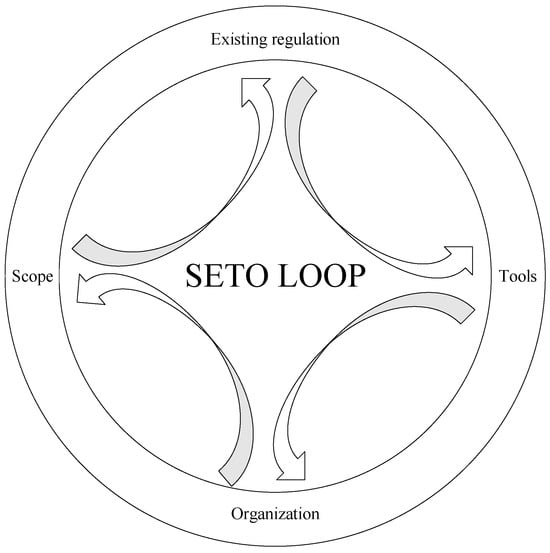
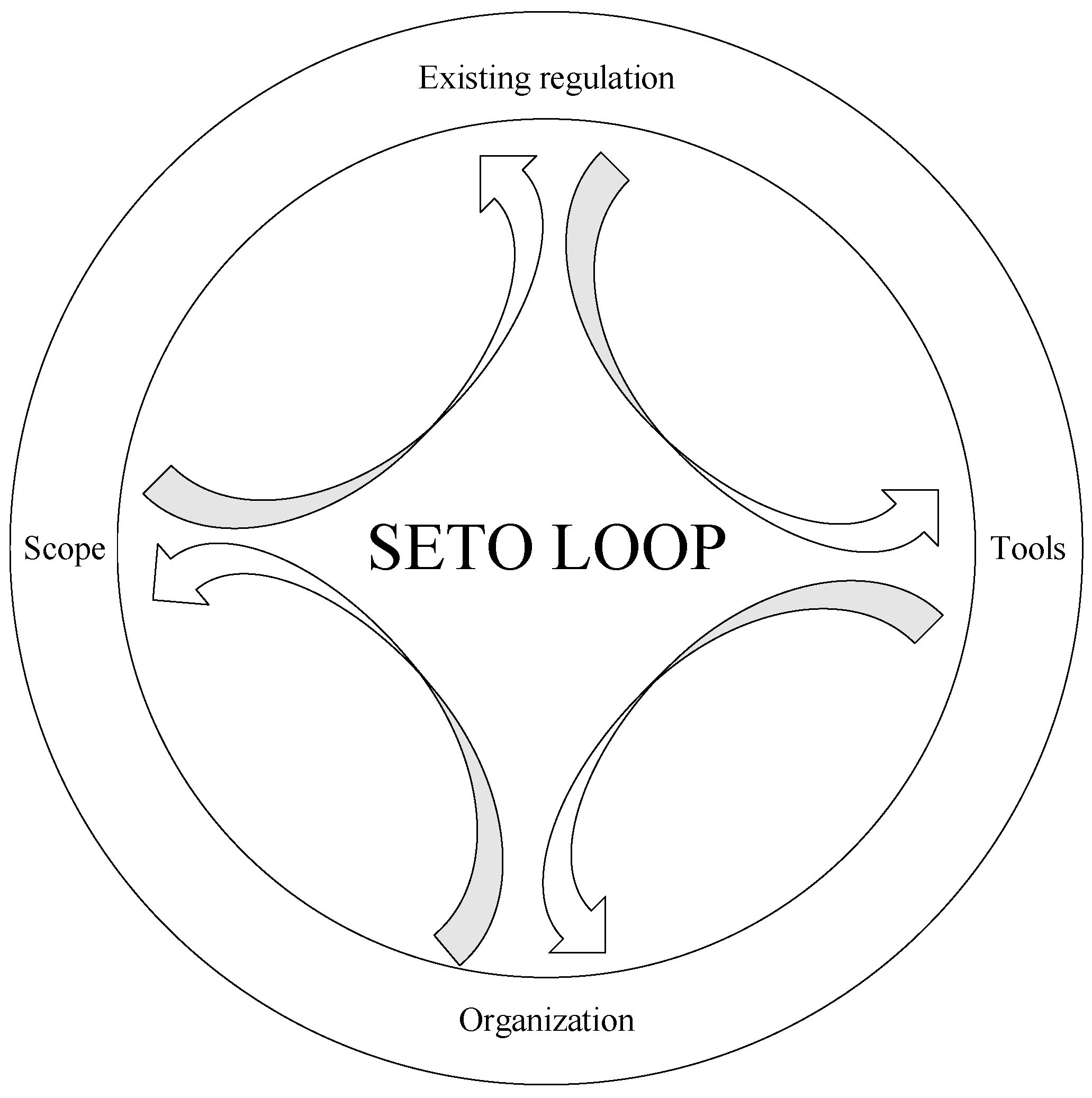
The SETO loop (Figure 1) is an AI regulatory systematic methodology proposed by the Brooks Institute for Technology Policy at Cornell University [58]. Its core is to construct a dynamic and flexible regulatory system through four progressive steps (Scope, Existing Regulation, Tools, Organization). The specific content of the analysis framework is based on the scenario of watershed pollution control.
Figure 1.
SETO LOOP analysis framework for AI application regulation.
3.1. Scope
The application of AI technology in environmental governance presents a complex risk map that requires systematic identification from three dimensions: human, national, and individual. At the human level, the high-cost characteristics of intelligent monitoring systems exacerbate inequality in global environmental governance. Developed countries rely on technological advantages to build advanced monitoring networks, while developing countries are trapped in a vicious cycle of lagging governance capabilities due to resource limitations. This phenomenon is similar to the problem of algorithm singularity, where the applicability of the prediction model will be greatly reduced when it is trained only on specific regional data. To solve this dilemma, it is necessary to establish a global technology sharing mechanism, develop differentiated solutions, and be vigilant about the “Matthew effect” of environmental governance caused by the technological divide.
At the national level, there are core challenges facing data sovereignty and security. The watershed environmental data contains strategic information such as hydrological characteristics and pollution distribution, and its cross-border flow is not only related to international cooperation needs, but also involves national security considerations. The coordination mechanism of current international regulations in cross-border environmental data exchange is still incomplete, especially in the context of cross-border watershed governance. How to strike a balance between data sharing and sovereignty protection has become a key issue. We can draw on the experience of EU regulations to construct a regulatory framework that balances safety and efficiency, while developing an independent and controllable technological system to reduce external dependence.
The protection of individual rights is an essential dimension of AI governance that cannot be ignored. The application of black box algorithms in environmental decision-making may improve efficiency, but it may also undermine public participation rights. The lack of transparency in water quality assessment systems and insufficient representativeness of monitoring data can weaken the democratic foundation of decision-making. It is necessary to establish an algorithm audit system and a public participation mechanism to ensure the interpretability and accountability of AI systems. The three levels of risk are intertwined, requiring regulators to adopt a systematic thinking approach, collaborate on measures such as technology transfer, data sovereignty, and algorithm transparency, and build a precise governance system. This article discusses the policy background of China and the United States, as well as practical cases from other countries.
3.2. Existing Regulations
In the SETO regulatory framework, the existing regulatory evaluation stage plays a crucial strategic role in bridging the gap between the current legal system and the rapidly developing characteristics of AI technology. Its core value lies in systematically identifying and evaluating the structural adaptation gap between the current legal system and AI technology. This fundamental step requires regulatory agencies to adopt a full-stack perspective to examine the technology ecosystem, from the lowest level of computing infrastructure (such as chips and cloud services) to the algorithm models in the middle layer, and then to the specific application services at the top layer, analyzing the coverage blind spots and regulatory effectiveness of existing regulations layer by layer. By checking the coordination and consistency of multidimensional legal systems such as environmental protection laws, data security laws, telecommunications management regulations, and intellectual property protection laws in different fields, regulatory costs can be saved and regulatory efficiency can be improved. This comprehensive evaluation provides a solid experiential foundation for the precise selection of regulatory tools in subsequent stages, ensuring compatibility between newly formulated regulatory measures and the existing legal system, while also addressing institutional gaps in key areas such as algorithm transparency and data quality certification. Ultimately, while effectively promoting technological innovation, ensure the optimal balance between regulatory efficiency and risk control.
3.3. Tools
In the SETO regulatory framework, the “tool selection” stage is crucial, with its core role being to select specific and feasible regulatory interventions based on early risk identification and regulatory assessment. This step requires regulatory agencies to accurately match the most suitable governance measures from various toolboxes based on the characteristics, risk levels, and application scenarios of AI technology. These measures include mandatory legislation, economic incentives, technical standards, certification systems, sandbox supervision, etc., and the final confirmed tools can be combined in one or more forms. By distinguishing the selection of regulatory tools, it is possible to avoid a one-size-fits-all regulatory approach that suppresses technological innovation, while effectively limiting specific risks. For example, cross-border data flow risks can be addressed through data localization requirements, and algorithm transparency issues can be resolved through industry standard certification. This step is conducive to the innovation of regulatory paradigms, encourages the adoption of new governance tools such as “intelligent supervision”, and establishes a sustainable balance mechanism between risk prevention and innovation promotion.
3.4. Organizational
In the SETO regulatory framework, the organizational design phase plays a crucial role in ensuring implementation. The core lies in building a multi-level collaborative governance system with clear responsibilities and high efficiency. This stage can transform the previous steps of risk analysis, regulatory assessment, and tool selection into executable regulatory practices. This step requires the establishment of a comprehensive organizational structure from international to local, from government to market: establishing a standard setting and coordination mechanism at the international level, such as setting up a cross-border data governance committee to coordinate regulatory policies of various countries; Clarify the collaborative relationship between the main regulatory departments at the national level and relevant ministries to avoid regulatory overlap or vacuum; Promote the establishment of industry level technical standard organizations and self-regulatory supervision bodies, and develop industry guidelines and certification systems; At the enterprise level, it is necessary to establish internal governance structures and compliance processes to ensure ethical compliance in technology development. This three-dimensional organizational design not only solves the core issues of “who will supervise” and “how to collaborate”, but also ensures that the governance system can adapt to the rapid iteration of technology by establishing innovative systems such as regular evaluation mechanisms, expert advisory committees, and regulatory sandboxes, ultimately providing sustainable institutional guarantees and organizational support for the healthy development of AI.
The advantage of the SETO loop lies in its integration of the core concepts of adaptive governance, the breadth of PESTEL’s analysis, and the ability to incorporate specific tools such as regulatory sandboxes into its system, thus forming a systematic and actionable solution designed specifically to address the complex regulatory challenges posed by rapidly iterating technologies such as AI (Table 2). Risks are systematically identified by mapping potential adverse impacts across three interconnected dimensions: the human level concerning global governance inequality, the national level focusing on data sovereignty and security, and the individual level centered on the protection of public participation rights. Existing regulations were assessed through a comprehensive evaluation that examined the coverage, coordination, and structural adaptation gaps of the current legal system in relation to the entire AI technology ecosystem. Regulatory tools were then evaluated via a targeted matching process, which aligned specific instruments such as mandatory legislation or technical standards with the identified risks and application scenarios to ensure precise and effective intervention.
Table 2.
Comparison of the SETO loop with other governance and analysis models.
4. Results
4.1. Determination of Regulatory Scope
The study first defined the regulatory scope, with a focus on protecting the ecological environment, public health, and data security. Through a systematic analysis of the SETO loop, the application of AI in watershed water pollution control was clearly included in the regulatory perspective, with a focus on core aspects such as data collection accuracy of intelligent monitoring systems, algorithmic transparency of prediction models, and responsibility attribution for decision execution. In terms of ecological environment, the regulatory scope covers the deployment standards of water quality monitoring equipment and data protection requirements for ecologically sensitive areas; At the level of public health, emphasis is placed on standardizing the response mechanism of pollution warning systems and public data disclosure standards; In the field of data security, it is necessary to clarify the regulatory red lines for cross-border data flows and the compliance responsibilities of technology suppliers, to build a multi-level and full chain regulatory coverage system.
4.2. Evaluation of Existing Regulations
This article evaluates the shortcomings of existing environmental regulations in the application of AI technology (Table 3 and Table 4). Research has found that traditional environmental regulatory frameworks are mainly designed for static pollution sources and are difficult to cope with the real-time data streams and dynamic pollution control models brought by AI technology. There is a significant gap in the transparency requirements of algorithms in existing regulations, and most regulations cannot require companies to disclose the black box decision-making process of deep learning models, which leads to key blind spots in the regulatory process. At the same time, some relevant regulations of the data governance system lack standardized requirements for the representativeness of training data regions, and there is a lack of unified standards for the accuracy certification of data collection equipment. In addition, legal conflicts between cross-border data flows and sovereign jurisdiction, the legal validity of AI decisions in environmental emergency response, and the connection between traditional law enforcement methods and intelligent warning systems have all exposed structural mismatches between regulatory systems and AI technology features. These institutional shortcomings make it difficult for regulatory authorities to effectively supervise AI-driven environmental governance, and there is an urgent need to make up for the shortcomings of the existing regulatory system through specialized legislation and standard updates.
Table 3.
Review of relevant laws and regulations on the application supervision of AI in river basins (China).
Table 4.
Review of relevant laws and regulations on the application supervision of AI in river basins (U.S.).
4.3. Tool Selection
This section explores appropriate regulatory tools, including information disclosure requirements, algorithmic transparency standards, and hybrid regulatory models. Aiming to build a precise regulatory system that matches the application characteristics of AI environments. In terms of information disclosure, research suggests establishing a mandatory environmental data disclosure system with hierarchical classification, requiring AI system operators to disclose the sources, sampling methods, and potential biases of non-confidential training data, and regularly release model performance evaluation reports to address information asymmetry issues. At the level of algorithm transparency, an “interpretability grading” standard is proposed, requiring high-risk applications (such as pollution source tracing decisions) to provide simplified decision-making logic explanations for public supervision, while medium and low-risk applications need to file core algorithm parameters with regulatory authorities to ensure a balance between regulatory rights and intellectual property rights. Finally, the study advocates for a hybrid regulatory model that combines government led mandatory standard setting (such as the “Compliance Guidelines for Environmental Artificial Intelligence Applications”), industry self-regulatory organizations’ certification mechanisms (such as the “Trusted Environment AI” label certification), and market driven insurance systems (such as algorithmic liability insurance) to form a governance pattern of multi-party collaboration and a balance of rigidity and flexibility, which not only prevents technological risks but also maintains innovation vitality.
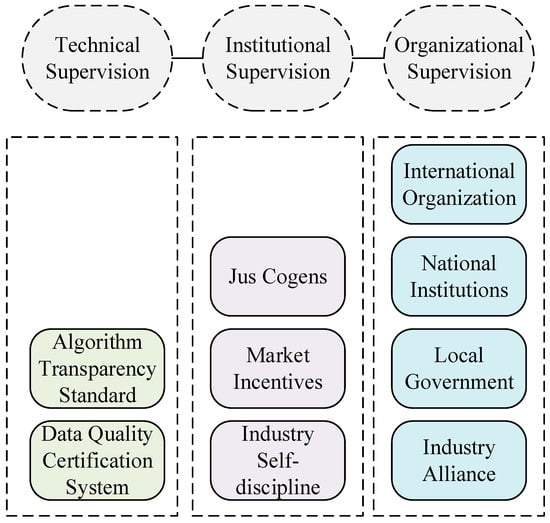
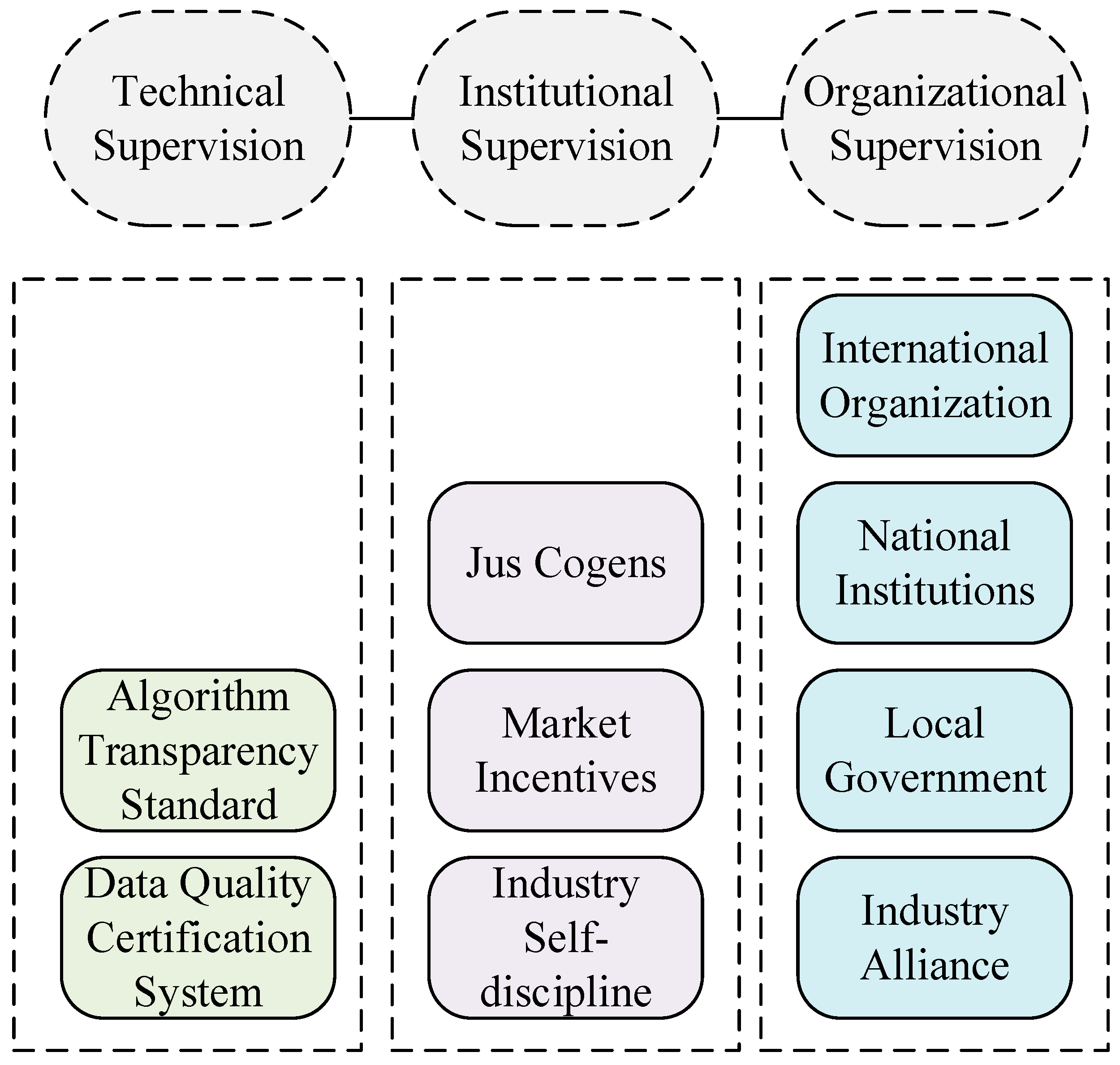
The hybrid regulatory model (Figure 2) of “technology system organization” three-dimensional collaboration is a comprehensive regulatory framework for the application of AI in environmental governance. This model establishes algorithm transparency standards and data quality certification systems at the technical regulatory level to ensure the reliability and interpretability of AI systems; Combining mandatory regulations, market incentives, and industry self-discipline at the institutional regulatory level to form a multi-level constraint and guidance mechanism; Build a multi-party collaborative network of international organizations, national institutions, local governments, and industry alliances at the organizational and regulatory level, and clarify the division of responsibilities among each regulatory body. These three dimensions support and dynamically adapt to each other: technical standards provide a basis for institutional implementation, institutional frameworks clarify rules for organizational collaboration, and organizational implementation provides guarantees for technology implementation, jointly forming an agile governance system that can prevent technological risks and promote innovative applications. A strong example is the collaborative system established by the US Environmental Protection Agency in the Chesapeake Bay watershed management: at the technical level, a de facto transparency standard and quality certification have been established through unified data standards and open source models; At the institutional level, it integrates the mandatory constraints of the Clean Water Act, market incentives from government funds, and industry self-regulation from technology company alliances; At the organizational level, a multilateral network has been formed with federal agencies leading, local governments implementing, industry alliances providing technical support, and international organizations providing methodological guidance. This practice has successfully verified the governance effectiveness of the three-dimensional hybrid regulatory model through multi-level collaboration, which can ensure technical reliability and stimulate innovation vitality.
Figure 2.
Hybrid regulatory model of three-dimensional collaboration from US practice.
4.4. Organizational Design
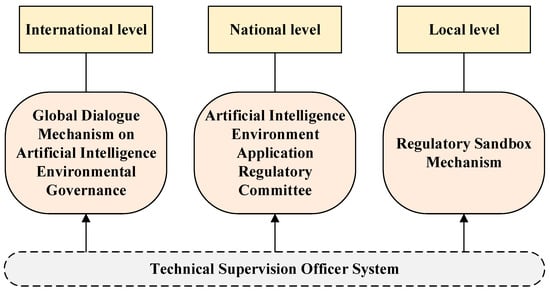
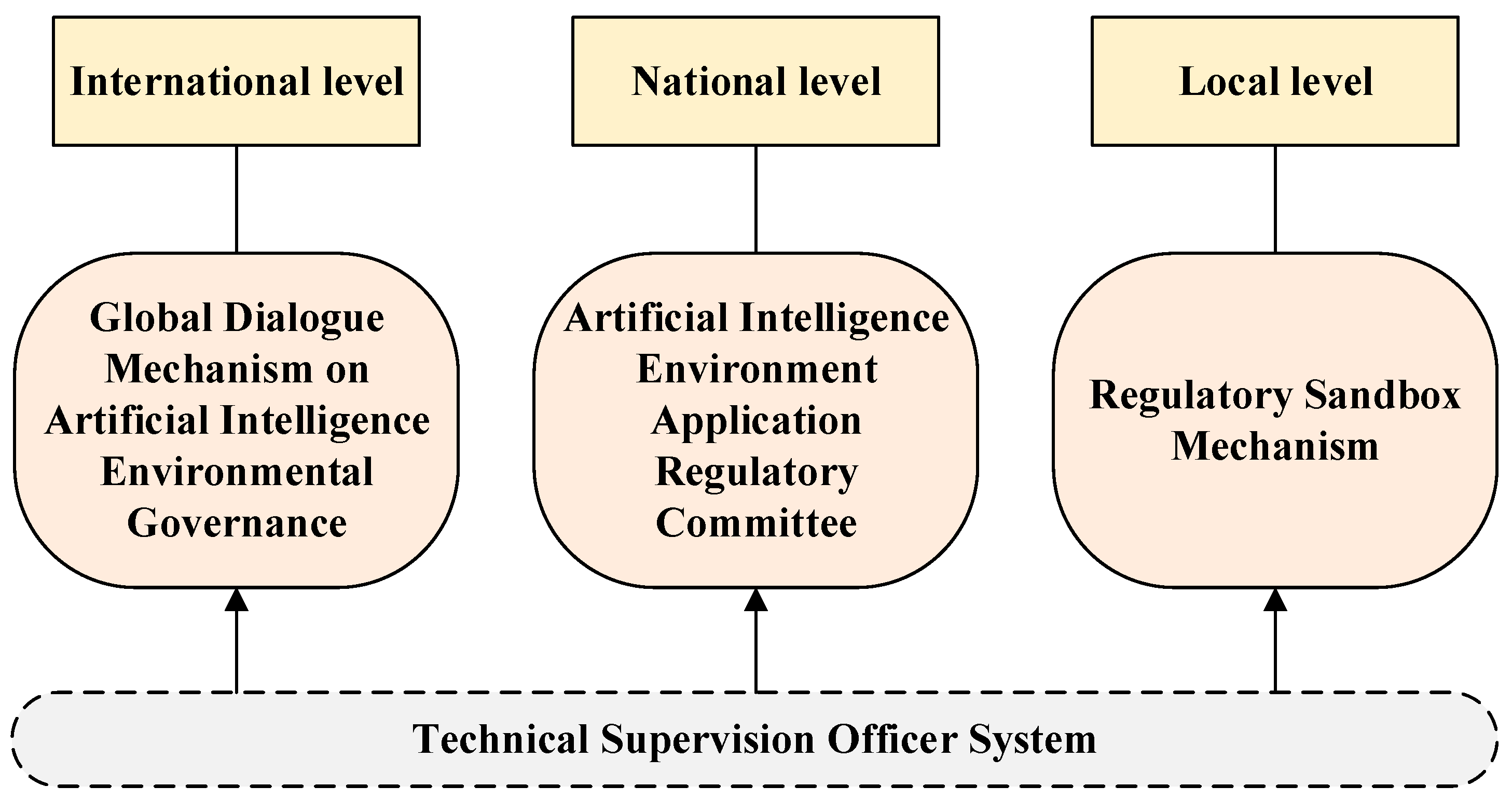
A multi-level organizational collaboration plan (Figure 3) has been proposed, combining international norms, national legislation, and local practices to achieve flexible and effective regulation. This plan first advocates for the establishment of a “Global Dialogue Mechanism on Artificial Intelligence Environmental Governance” at the international level, promoting the development of soft law norms such as cross-border data sharing and algorithm ethical certification. Referring to the model of nationally determined contributions under the Paris Agreement, it allows countries to adopt differentiated implementation paths under common goals. At the national level, it is recommended to establish a cross departmental “Artificial Intelligence Environmental Application Supervision Committee” to coordinate the powers of institutions such as the Ministry of Ecology and Environment, Cyberspace Administration of China, and Ministry of Industry and Information Technology, formulate national level AI environmental governance technology standards and certification systems, and authorize provincial departments to carry out pilot demonstrations. At the local level, it is encouraged to establish a “regulatory sandbox” mechanism, allowing local governments and enterprises to conduct innovative application testing in specific river basins, and continuously improve regulatory rules through practical feedback. Finally, the plan emphasizes the establishment of a “technical supervision officer” system, embedding professionals who understand both technology and regulations in key environmental protection projects, achieving dynamic supervision throughout the entire process, ensuring an organic linkage between top-level design and grassroots practice, and ultimately building a governance network that combines principles and adaptability. A real example that can strongly support this multi-level organizational collaboration plan is the governance architecture design of the EU’s Artificial Intelligence Act. This framework has established a dedicated “European Artificial Intelligence Office” at the EU level as the central coordinating body responsible for the development of unified rules and standards; Simultaneously, it requires member states to establish corresponding national regulatory agencies to ensure the implementation and supervision of directives at the local level; In addition, the plan also includes a “regulatory sandbox” mechanism that encourages controlled innovation testing in the real world. This mature “EU member state” dual-layer practice perfectly embodies the multi-level and collaborative regulatory organization design from international norms to local practices.
Figure 3.
The multi-level organizational collaboration plan from EU practice.
5. Discussion
This study systematically analyzed the regulatory challenges faced by the application of AI in watershed water pollution control by introducing the SETO loop (Scope, Existing Regulation Assessment, Tool Selection, Organizational Design), and proposed corresponding governance paths. The research results indicate that the SETO loop has strong systematicity and dynamic adaptability, and can effectively cope with the complexity and uncertainty brought by AI technology in environmental governance.
Firstly, in the scoping stage, this study identified the multidimensional risks of AI applications from three levels: human, national, and individual, particularly the governance inequality caused by the technological divide, conflicts between data sovereignty and cross-border flows, and the erosion of public participation rights by algorithmic black boxes. This indicates that AI regulation should not only stay at the technical level, but should also incorporate broader social, ethical, and political dimensions. Secondly, in the Existing Regulation Assessment, this study reveals the structural lag and insufficient applicability of current environmental regulations in response to AI technology. There are obvious institutional gaps, especially in terms of algorithm transparency, data quality certification and accountability mechanisms. This indicates that the traditional environmental legal system is no longer able to effectively regulate the environmental governance behavior in which AI participates. In terms of tool selection, the hybrid regulatory model proposed in this study has strong practical guidance significance. Especially the “explanatory rating” standard and the “trustworthy environment artificial intelligence” certification mechanism can ensure the effectiveness of regulation and prevent excessive intervention in technological innovation. Finally, at the organizational design level, the international, national, and local collaborative governance network constructed in this study embodies the modern governance concept of multi-level and multi-subject participation. In addition, the design of the “regulatory sandbox” and “technical supervision” systems provides an operational implementation path for the application of AI in the environmental field.
The SETO loop not only provides a systematic analysis method for the supervision of AI applications in watershed environmental governance, but also provides a complete logical chain from problem discovery to solution implementation for watershed environmental governance decision-makers. The innovation of this study lies in the organic combination of technological governance, institutional design, and organizational mechanisms, which constructs a dynamic and collaborative regulatory system for the application of AI in watershed environmental governance. Although the SETO loop proposed in this study provides a systematic approach for watershed governance and regulation using AI, there are still certain limitations. The construction of the framework still largely relies on theoretical deduction and policy text analysis, and has not been empirically tested through large-scale practical applications; At the same time, research focuses on the design of regulatory frameworks, and there is a lack of in-depth exploration on how to implement this framework differentially in regions with different levels of development, especially in terms of technological capabilities and funding investment. Future research should focus on conducting pilot empirical studies on the framework, collecting practical feedback to optimize its operability, and focusing on how to design more inclusive and adaptive flexible regulatory pathways under the principle of “common but differentiated responsibilities” to ensure that the regulatory framework is both forward-looking and rooted in practice.
Furthermore, this study places equity and ethical considerations at the core of the proposed regulatory system. The SETO loop, as applied, systematically exposes how technological disparities can exacerbate global governance inequality—a fundamental equity issue between developed and developing nations. Ethically, it directly addresses the threats posed by algorithmic black boxes to procedural justice and public participation rights. By mandating algorithmic transparency and establishing public oversight mechanisms within the ‘Tool Selection’ and ‘Organizational Design’ phases, the framework provides a structural solution to mitigate algorithmic bias and ensure that AI-driven environmental governance does not marginalize vulnerable communities or undermine democratic accountability. Therefore, the framework serves not only as a tool for risk management but also as a guardian for promoting fair and equitable environmental outcomes.
6. Conclusions and Policy Recommendations
This study systematically analyzes the regulatory challenges of AI in watershed pollution control through the SETO loop. While AI enhances governance efficiency via real-time monitoring and predictive capabilities, it introduces complex challenges in data privacy, algorithmic bias, and cross-jurisdictional coordination. The SETO loop proves effective in structuring a dynamic, collaborative regulatory system that balances innovation with risk prevention.
Based on the findings, we propose the following actionable recommendations:
Immediate Regulatory Pilots: We recommend that environmental protection agencies, in collaboration with standards organizations, pilot a two-tiered “Algorithmic Explainability Standard” for water quality prediction models. Concurrently, a “Regulatory Sandbox for Cross-Border Water Data” should be established in select transboundary river basins to test data-sharing protocols based on federated learning, with the State Council’s Environmental Protection Office taking the lead in coordination.
Institutional Capacity Building: It is critical to mandate the creation of a “Technical Compliance Officer” role within enterprises operating watershed AI systems. Furthermore, we advise the establishment of an inter-departmental “AI Environmental Governance Committee” under the Ministry of Ecology and Environment, integrating officials from water resources management, industry, and cybersecurity to dismantle regulatory silos.
Targeted Future Research: Future work should be precisely focused on validating this study’s framework. This includes empirical case studies on the application of the SETO loop in specific, data-scarce river basins to refine its adaptability, and a dedicated investigation into the operational thresholds of “explainable AI” (XAI) that are both technically feasible and satisfy public accountability requirements in environmental decision-making contexts.
Author Contributions
Conceptualization, methodology, software, and validation, R.Z.; formal analysis, investigation, resources, data curation, and writing—original draft preparation, C.H.; writing—review and editing, R.Z. All authors have read and agreed to the published version of the manuscript.
Funding
The research was supported by the Open Fund of Tuojiang River Basin High-quality Development Research Center (TJGZL2025-43), the Chizhou University High level Talent Research Start up Fund (CZ2025YJRC43, CZ2025YJRC40), and Chizhou University (2024XJYXM01). The APC was funded by the Chizhou University High level Talent Research Start up Fund (CZ2025YJRC43, CZ2025YJRC40).
Data Availability Statement
The original contributions presented in this study are included in the article. Further inquiries can be directed to the corresponding author.
Conflicts of Interest
The authors declare no conflicts of interest.
References
- Wang, P.; Yao, J.; Wang, G.; Hao, F.; Shrestha, S.; Xue, B.; Peng, Y. Exploring the application of artificial intelligence technology for identification of water pollution characteristics and tracing the source of water quality pollutants. Sci. Total Environ. 2019, 693, 133440. [Google Scholar] [CrossRef] [Scilit]
- Bhatt, D.; Swain, M.; Yadav, D. Artificial intelligence based detection and control strategies for river water pollution: A comprehensive review. J. Contam. Hydrol. 2025, 271, 104541. [Google Scholar] [CrossRef] [Scilit]
- Bhati, A.; Hiran, K.K.; Vyas, A.K.; Mijwil, M.M.; Aljanabi, M.; Metwally, A.S.M.; Ahmad, H. Low cost artificial intelligence Internet of Things based water quality monitoring for rural areas. Internet Things 2024, 27, 101255. [Google Scholar] [CrossRef] [Scilit]
- Sun, Y.; Wang, D.; Li, L.; Ning, R.; Yu, S.; Gao, N. Application of remote sensing technology in water quality monitoring: From traditional approaches to artificial intelligence. Water Res. 2024, 267, 122546. [Google Scholar] [CrossRef] [Scilit]
- Hu, B.; Dai, Y.; Zhou, H.; Sun, Y.; Yu, H.; Dai, Y.; Zhou, P. Using artificial intelligence to rapidly identify microplastics pollution and predict microplastics environmental behaviors. J. Hazard. Mater. 2024, 474, 134865. [Google Scholar] [CrossRef] [Scilit]
- Jin, H.; Kong, F.; Li, X.; Shen, J. Artificial intelligence in microplastic detection and pollution control. Environ. Res. 2024, 262, 119812. [Google Scholar] [CrossRef] [Scilit]
- Keitemoge, M.K.; Onu, M.A.; Sadare, O.O.; Seedat, N.; Roopchund, R.; Moothi, K. Antibiotic Removal in South African Water Using Artificial Neural Networks and Adaptive Neuro-Fuzzy Inference System Models: A Review. S. Afr. J. Chem. Eng. 2025, 54, 371–389. [Google Scholar] [CrossRef] [Scilit]
- Maurya, B.M.; Yadav, N.; Amudha, T.; Satheeshkumar, J.; Sangeetha, A.; Parthasarathy, V.; Vellingiri, B. Artificial intelligence and machine learning algorithms in the detection of heavy metals in water and wastewater: Methodological and ethical challenges. Chemosphere 2024, 353, 141474. [Google Scholar] [CrossRef] [Scilit] [PubMed]
- Ding, Y.; Sun, Q.; Lin, Y.; Ping, Q.; Peng, N.; Wang, L.; Li, Y. Application of artificial intelligence in (waste)water disinfection: Emphasizing the regulation of disinfection by-products formation and residues prediction. Water Res. 2024, 253, 121267. [Google Scholar] [CrossRef] [Scilit]
- Alaswad, S.O.; Almatrafi, E. Artificial intelligence applications in forward osmosis for water treatment: Recent developments and research directions. Desalination Water Treat. 2024, 319, 100551. [Google Scholar] [CrossRef] [Scilit]
- Mohd Adnan, M.A.; Majnis, M.F.; Wan Md Adnan, W.N.; Abdullah, N.H.; Baharom, A.S.; Muhd Julkapli, N. Deep insights into the integration of Artificial Neural Networks (ANNs) for predicting the photocatalytic activities of metal-based catalysts in water pollutant reduction. J. Environ. Chem. Eng. 2025, 13, 116350. [Google Scholar] [CrossRef] [Scilit]
- Krishnan, A.; Sundaram, T.; Nagappan, B.; Devarajan, Y.; Bhumika. Integrating artificial intelligence in nanomembrane systems for advanced water desalination. Results Eng. 2024, 24, 103321. [Google Scholar] [CrossRef] [Scilit]
- Morante-Carballo, F.; Arcentales-Rosado, M.; Caicedo-Potosí, J.; Carrión-Mero, P. Artificial intelligence applications in hydrological studies and ecological restoration of watersheds: A systematic review. Watershed Ecol. Environ. 2025, 7, 230–248. [Google Scholar] [CrossRef] [Scilit]
- Ou, Z.; He, F.; Zhu, Y.; Lu, P.; Wang, L. Analysis of driving factors of water demand based on explainable artificial intelligence. J. Hydrol. Reg. Stud. 2023, 47, 101396. [Google Scholar] [CrossRef] [Scilit]
- Sow, S.; Ranjan, S.; Seleiman, M.F.; Alkharabsheh, H.M.; Kumar, M.; Kumar, N.; Wasonga, D.O. Artificial Intelligence for Maximizing Agricultural Input Use Efficiency: Exploring Nutrient, Water and Weed Management Strategies. Phyton-Int. J. Exp. Bot. 2024, 93, 1569–1598. [Google Scholar] [CrossRef] [Scilit]
- Wang, P.G.; Wu, X.X.; Chen, Y. Ai-driven approaches to flood risk management: Overcoming data bias and enhancing decision-making. Clim. Risk Manag. 2025, 50, 100752. [Google Scholar] [CrossRef] [Scilit]
- Sapitang, M.; Dullah, H.; Latif, S.D.; Ng, J.L.; Huang, Y.F.; Malek, M.B.A.; Ahmed, A.N. Application of integrated artificial intelligence geographical information system in managing water resources: A review. Remote Sens. Appl. Soc. Environ. 2024, 35, 101236. [Google Scholar] [CrossRef] [Scilit]
- Kamyab, H.; Khademi, T.; Chelliapan, S.; SaberiKamarposhti, M.; Rezania, S.; Yusuf, M.; Ahn, Y. The latest innovative avenues for the utilization of artificial Intelligence and big data analytics in water resource management. Results Eng. 2023, 20, 101566. [Google Scholar] [CrossRef] [Scilit]
- Eldin Elzain, H.; Abdalla, O.; Al-Maktoumi, A.; Kacimov, A.; Eltayeb, M. A novel approach to forecast water table rise in arid regions using stacked ensemble machine learning and deep artificial intelligence models. J. Hydrol. 2024, 640, 131668. [Google Scholar] [CrossRef] [Scilit]
- Otamendi, U.; Maiza, M.; Olaizola, I.G.; Sierra, B.; Florez, M.; Quartulli, M. Integrated water resource management in the Segura Hydrographic Basin: An artificial intelligence approach. J. Environ. Manag. 2024, 370, 122526. [Google Scholar] [CrossRef] [Scilit]
- Infant, S.S.; Vickram, S.; Saravanan, A.; Mathan Muthu, C.M.; Yuarajan, D. Explainable artificial intelligence for sustainable urban water systems engineering. Results Eng. 2025, 25, 104349. [Google Scholar] [CrossRef] [Scilit]
- Shen, G.; Sun, L.; Zhang, B.; Tan, N. Uncovering water quality impact mechanisms through interpretable hybrid artificial intelligence models. J. Water Process Eng. 2025, 76, 108145. [Google Scholar] [CrossRef] [Scilit]
- Kundu, S.; Datta, P.; Pal, P.; Ghosh, K.; Das, A.; Das, B.K. Unveiling the hidden connections: Using explainable artificial intelligence to assess water quality criteria in nine giant rivers. J. Clean. Prod. 2025, 492, 144861. [Google Scholar] [CrossRef] [Scilit]
- Monaco, A.; Caruso, M.; Bellantuono, L.; Cazzolla Gatti, R.; Fania, A.; Lacalamita, A.; Bellotti, R. Measuring water pollution effects on antimicrobial resistance through explainable artificial intelligence. Environ. Pollut. 2025, 367, 125620. [Google Scholar] [CrossRef] [Scilit]
- Tian, P.; Xu, Z.; Fan, W.; Lai, H.; Liu, Y.; Yang, P.; Yang, Z. Exploring the effects of climate change and urban policies on lake water quality using remote sensing and explainable artificial intelligence. J. Clean. Prod. 2024, 475, 143649. [Google Scholar] [CrossRef] [Scilit]
- Ross, J.; Hammouche, S.; Chen, Y.; Rockall, A.G.; Alabed, S.; Chen, M.; Shelmerdine, S. Beyond regulatory compliance: Evaluating radiology artificial intelligence applications in deployment. Clin. Radiol. 2024, 79, 338–345. [Google Scholar] [CrossRef] [Scilit] [PubMed]
- El-Sayed, A.; Lovat, L.B.; Ahmad, O.F. Clinical Implementation of Artificial Intelligence in Gastroenterology: Current Landscape, Regulatory Challenges, and Ethical Issues. Gastroenterology 2025, 169, 518–530. [Google Scholar] [CrossRef] [Scilit] [PubMed]
- Cabanas, A.M.; Martín-Escudero, P.; Pagán, J.; Mery, D. Technical and regulatory challenges in artificial intelligence-based pulse oximetry: A proposed development pipeline. Br. J. Anaesth. 2025, 134, 1295–1299. [Google Scholar] [CrossRef] [Scilit]
- Harvey, H.B.; Gowda, V. Regulatory Issues and Challenges to Artificial Intelligence Adoption. Radiol. Clin. N. Am. 2021, 59, 1075–1083. [Google Scholar] [CrossRef] [Scilit]
- Liang, N.L.; Chung, T.K.; Vorp, D.A. The regulatory environment for artificial intelligence–enabled devices in the United States. Semin. Vasc. Surg. 2023, 36, 435–439. [Google Scholar] [CrossRef] [Scilit] [PubMed]
- Thakkar, S.; Slikker, W.; Yiannas, F.; Silva, P.; Blais, B.; Chng, K.R.; Tong, W. Artificial intelligence and real-world data for drug and food safety—A regulatory science perspective. Regul. Toxicol. Pharmacol. 2023, 140, 105388. [Google Scholar] [CrossRef] [Scilit] [PubMed]
- Chau, M. Ethical, legal, and regulatory landscape of artificial intelligence in Australian healthcare and ethical integration in radiography: A narrative review. J. Med. Imaging Radiat. Sci. 2024, 55, 101733. [Google Scholar] [CrossRef] [Scilit] [PubMed]
- Wall, L.D. Some financial regulatory implications of artificial intelligence. J. Econ. Bus. 2018, 100, 55–63. [Google Scholar] [CrossRef] [Scilit]
- Gounden, S. Artificial intelligence in anatomical pathology—Ethical and regulatory considerations. Pathology 2024, 56, S3. [Google Scholar] [CrossRef] [Scilit]
- Pantanowitz, L.; Hanna, M.; Pantanowitz, J.; Lennerz, J.; Henricks, W.H.; Shen, P.; Rashidi, H.H. Regulatory Aspects of Artificial Intelligence and Machine Learning. Mod. Pathol. 2024, 37, 100609. [Google Scholar] [CrossRef] [Scilit]
- Chen, S.; Lobo, B.C. Regulatory and Implementation Considerations for Artificial Intelligence. Otolaryngol. Clin. N. Am. 2024, 57, 871–886. [Google Scholar] [CrossRef] [Scilit]
- Chen, W.; Teng, W.; Kuo, C.B.; Yen, Y.; Lian, J.; Sing, M.; Chen, P. Regulatory Insights From 27 Years of Artificial Intelligence/Machine Learning–Enabled Medical Device Recalls in the United States: Implications for Future Governance. JMIR Med. Inform. 2025, 13, e67552. [Google Scholar] [CrossRef] [Scilit]
- Nti, E.K.; Cobbina, S.J.; Attafuah, E.E.; Senanu, L.D.; Amenyeku, G.; Gyan, M.A.; Safo, A. Water pollution control and revitalization using advanced technologies: Uncovering artificial intelligence options towards environmental health protection, sustainability and water security. Heliyon 2023, 9, e18170. [Google Scholar] [CrossRef] [Scilit]
- Olawade, D.B.; Wada, O.Z.; Ige, A.O.; Egbewole, B.I.; Olojo, A.; Oladapo, B.I. Artificial intelligence in environmental monitoring: Advancements, challenges, and future directions. Hyg. Environ. Health Adv. 2024, 12, 100114. [Google Scholar] [CrossRef] [Scilit]
- Sun, E.; Littenberg, G. Reimbursement and Regulatory Landscape for Artificial Intelligence in Medical Technology. Gastrointest. Endosc. Clin. N. Am. 2025, 35, 469–484. [Google Scholar] [CrossRef] [Scilit]
- Aquino, Y.S.J.; Rogers, W.A.; Jacobson, S.L.S.; Richards, B.; Houssami, N.; Woode, M.E.; Carter, S.M. Defining change: Exploring expert views about the regulatory challenges in adaptive artificial intelligence for healthcare. Health Policy Technol. 2024, 13, 100892. [Google Scholar] [CrossRef] [Scilit]
- Shah, N.; Mourby, M.; Matin, R.N. Regulatory and Legal Considerations with Artificial Intelligence in Dermatology. Dermatol. Clin. 2025, 43, 611–623. [Google Scholar] [CrossRef] [Scilit]
- Lin, Y.; Liu, Y. Industrial pollution control based on artificial intelligence: A synergistic model using social network analysis and machine learning. J. Innov. Knowl. 2025, 10, 100777. [Google Scholar] [CrossRef] [Scilit]
- Bagheri, M.; Farshforoush, N.; Bagheri, K.; Shemirani, A.I. Applications of artificial intelligence technologies in water environments: From basic techniques to novel tiny machine learning systems. Process Saf. Environ. Prot. 2023, 180, 10–22. [Google Scholar] [CrossRef] [Scilit]
- Ruiz, I.; Pompeu, J.; Ruano, A.; Franco, P.; Balbi, S.; Sanz, M.J. Combined artificial intelligence, sustainable land management, and stakeholder engagement for integrated landscape management in Mediterranean watersheds. Environ. Sci. Policy 2023, 145, 217–227. [Google Scholar] [CrossRef] [Scilit]
- Caldas De Lima, J.B.; Griffin, I.; Gemmell, J.S.; Davis, K.; Amanamba, U.; Zanjani, N.A.; Hochhegger, B. Ethical, Regulatory, and Practical Challenges in Artificial Intelligence-Driven Chest Imaging. Semin. Roentgenol. 2025, 60, 422–438. [Google Scholar] [CrossRef] [Scilit]
- Duan, Q.; Zhang, Q.; Quan, X.; Zhang, H.; Huang, L. Innovations of water pollution traceability technology with artificial intelligence. Earth Crit. Zone 2024, 1, 100009. [Google Scholar] [CrossRef] [Scilit]
- Nie, C.; Huang, Z.; Feng, Y. Evaluating the pollution abatement effect of artificial intelligence policy: Evidence from a quasi-natural experiment in China. Urban Clim. 2025, 61, 102402. [Google Scholar] [CrossRef] [Scilit]
- Meng, L.; Yan, Y.; Jing, H.; Yousuf Jat Baloch, M.; Du, S.; Du, S. Large-scale groundwater pollution risk assessment research based on artificial intelligence technology: A case study of Shenyang City in Northeast China. Ecol. Indic. 2024, 169, 112915. [Google Scholar] [CrossRef] [Scilit]
- Patel, A.; Kethavath, A.; Kushwaha, N.L.; Naorem, A.; Jagadale, M.; Sheetal, K.R.; Renjith, P.S. Review of artificial intelligence and internet of things technologies in land and water management research during 1991–2021: A bibliometric analysis. Eng. Appl. Artif. Intell. 2023, 123, 106335. [Google Scholar] [CrossRef] [Scilit]
- Dian, J.; Li, S.; Song, T. Achieving the synergy of pollution and carbon emission reductions: Can artificial intelligence applications work? China Econ. Rev. 2025, 91, 102389. [Google Scholar] [CrossRef] [Scilit]
- Zare, A.; Ablakimova, N.; Kaliyev, A.A.; Mussin, N.M.; Tanideh, N.; Rahmanifar, F.; Tamadon, A. An update for various applications of Artificial Intelligence (AI) for detection and identification of marine environmental pollutions: A bibliometric analysis and systematic review. Mar. Pollut. Bull. 2024, 206, 116751. [Google Scholar] [CrossRef] [Scilit]
- Pérez-Beltrán, C.H.; Robles, A.D.; Rodriguez, N.A.; Ortega-Gavilán, F.; Jiménez-Carvelo, A.M. Artificial intelligence and water quality: From drinking water to wastewater. TrAC Trends Anal. Chem. 2024, 172, 117597. [Google Scholar] [CrossRef] [Scilit]
- Rarima, R.; Veerasingam, S. Towards cleaner waters: Advancing pollutant detection with artificial intelligence-assisted digital in-line holographic microscopy. Opt. Laser Technol. 2025, 192, 113402. [Google Scholar] [CrossRef] [Scilit]
- Luo, Q.; Feng, P. Exploring artificial intelligence and urban pollution emissions: "Speed bump" or "accelerator" for sustainable development? J. Clean. Prod. 2024, 463, 142739. [Google Scholar] [CrossRef] [Scilit]
- Ma, X.; Weng, S.; Zhao, X.; Li, J.; Haider, S. Investigating the impact of artificial intelligence development on water pollution in China. Gondwana Res. 2024, 132, 182–192. [Google Scholar] [CrossRef] [Scilit]
- Yu, W.; Zhou, Z.; Yang, Y.; Li, X.; Lu, Z.; Liu, Y.; Liu, Y. Artificial intelligence in chemical dosing for drinking water treatment: A systematic review of algorithmic applications, implementation frameworks, and future challenges. J. Environ. Chem. Eng. 2025, 13, 118936. [Google Scholar] [CrossRef] [Scilit]
- Kreps, S.; Rao, A. AI and the Regulatory Challenge: A New Framework Using the SETO Loop; Working Paper; SSRN: Rochester, NY, USA, 2023. [Google Scholar]
- GB/T 41867-2022; Information Technology—Artificial Intelligence—Terminology. State Administration for Market Regulation, Standardization Administration of China: Beijing, China, 2022.

Disclaimer/Publisher’s Note: The statements, opinions and data contained in all publications are solely those of the individual author(s) and contributor(s) and not of MDPI and/or the editor(s). MDPI and/or the editor(s) disclaim responsibility for any injury to people or property resulting from any ideas, methods, instructions or products referred to in the content. |
© 2025 by the authors. Licensee MDPI, Basel, Switzerland. This article is an open access article distributed under the terms and conditions of the Creative Commons Attribution (CC BY) license (https://creativecommons.org/licenses/by/4.0/).