

Journal Menu
► ▼ Journal Menu-
- Minerals Home
- Aims & Scope
- Editorial Board
- Reviewer Board
- Topical Advisory Panel
- Early Career Editorial Board
- Instructions for Authors
- Special Issues
- Topics
- Sections & Collections
- Article Processing Charge
- Indexing & Archiving
- Editor’s Choice Articles
- Most Cited & Viewed
- Journal Statistics
- Journal History
- Journal Awards
- Conferences
- Editorial Office
Journal Browser
► ▼ Journal BrowserNeed Help?
Announcements
31 March 2026
MDPI INSIGHTS: The CEO’s Letter #33 - 2025 Annual Report, Preprints.org, IWD, Recapping Viruses 2026 & Romania Salon

Welcome to the MDPI Insights: The CEO's Letter.
In these monthly letters, I will showcase two key aspects of our work at MDPI: our commitment to empowering researchers and our determination to facilitating open scientific exchange.
Opening Thoughts

Scaling Open Access with Integrity: MDPI Annual Report 2025
I am pleased to share the release of MDPI’s 2025 Annual Report, reflecting our continued progress as one of the world’s leading open access publishers. The report highlights not only our growth, but also the continued evolution of our publishing model and our commitment to quality, transparency, and collaboration.
You can explore the full report here: https://mdpi-res.com/data/mdpi_annual_report_2025_0401.pdf?1775045421
Or visit the interactive page: https://www.mdpi.com/annual-report-2025/
A Year of Growth and Responsibility
2025 was a year of significant growth for MDPI. We received over 669,000 manuscript submissions, the highest in our history, while maintaining a rejection rate above 60%, reinforcing our commitment to both scale and quality.
We published 261,576 peer-reviewed open access articles across a portfolio of 500 journals, supported by a global community of more than 68,000 Editorial Board Members and 209,000 reviewers.
Scaling with Integrity
Growth alone is not the objective; how we grow matters.
Our 2025 Annual Report, Scaling Open Access with Integrity, reflects our continued focus on building the systems and processes that support reliable and trustworthy publishing. As submission volumes increase globally, so too does the importance of robust editorial workflows, research integrity frameworks, and the infrastructure required to support them.
In 2025, we continued to invest in:
- Research integrity and quality assurance processes
- Editorial support and reviewer engagement
- Transparency across the publishing workflow
These efforts ensure that scale does not come at the expense of rigor, but rather reinforces it.
Validation Through Indexing and Visibility
As MDPI continues to grow, validation of quality remains essential.
In 2025, the number of MDPI journals indexed in the Web of Science Core Collection increased from 298 to 329, while Scopus coverage reached 355 journals, including 45 new acceptances. Coverage in major biomedical databases (PMC/Medline/PubMed) expanded to 95 journals, and indexing in Ei Compendex increased significantly.
These milestones reflect the strength of our editorial processes and the trust placed in our journals by independent indexing bodies.
Importantly:
- 96% of all MDPI articles are indexed in Web of Science databases
- More than 1.75 million articles are indexed, with an average of 13 citations per article
Recognition through Journal Citation Reports also continues to grow:
- 298 journals received Impact Factors
- 65% ranked in the top half of their categories
- 61 journals achieved top-quartile positions
These developments demonstrate that growth and quality are advancing together, supported by strong editorial oversight and consistent performance across our journal portfolio.
Strengthening Partnerships and Community
Open access is a collaborative endeavor.
In 2025, we expanded our institutional partnerships to more than 1,000 IOAP agreements, helping simplify publishing for researchers and institutions worldwide.
We also hosted 60 in-person conferences and virtual events, bringing together more than 28,000 participants to exchange ideas, share research, and strengthen connections across the global scientific community.
At the heart of everything we do is this community of authors, editors, reviewers, and partners who make open science possible.
Looking Ahead
Open access continues to move toward becoming the standard model for sharing research globally. With that growth comes increased responsibility.
Our focus moving forward is to continue building a publishing ecosystem that is:
- Collaborative, to serve the research community
- Rigorous, to ensure quality
- Transparent, to support trust
- Scalable, to meet global demand
We believe that open access, when combined with strong editorial standards and integrity, is the most effective way to accelerate scientific progress.
Thank you to all the scholarly community who collaborated with us and our MDPI staff for your continued dedication and contributions in making 2025 a successful year.
Impactful Research

Celebrating Ten Years of Preprints.org: Accelerating Open Research
In 2026, MDPI’s preprints server Preprints.org marked its 10th anniversary as a platform dedicated to accelerating the dissemination of research. Since its launch, Preprints.org has grown into a global platform that hosts more than 120,000 preprints contributed by hundreds of thousands of researchers worldwide, generating tens of millions of views and downloads and demonstrating the value of sharing research openly and rapidly.
At MDPI, we are proud to celebrate ten years of Preprints.org supporting the mission of open science. Over the past decade, we have seen how early sharing of research can accelerate collaboration and help ideas move more quickly from discovery to impact.
The Evolution of Preprints
While Preprints.org launched in 2016, the idea behind it has deeper roots. The concept of rapid research dissemination has existed for decades, with early preprint servers showing how open sharing can accelerate scientific progress.
Over the past decade, preprints have become an increasingly important part of scholarly communication. Researchers across disciplines are looking at faster ways to share their discoveries, exchange ideas, and receive feedback from the global scientific community.
Preprints in a Growing Research Ecosystem
The global preprint landscape has expanded significantly over the past decade, with multiple platforms serving different research communities. The figure below (sourced from James Butcher newsletter), based on data from Dimensions (Digital Science), shows the growth of preprint outputs across several major platforms over time.

Among these platforms, arXiv (the pioneering preprint server) has experienced great growth in recent years. At the same time, other platforms have continued to expand their reach across disciplines, capturing increasing global interest in early research sharing.
Preprints.org contributes to this evolving ecosystem by providing a multidisciplinary platform that works in synergy with academic journals, helping researchers bridge the gap between rapid dissemination and the formal publication process.
Celebrating the First Decade
To commemorate this milestone, Preprints.org launched a 10th Anniversary celebration hub highlighting the impact of preprints and the researchers who contribute to them.

One of the central initiatives is the Popular Preprints of the Decade Award, recognizing influential preprints published between 2016 and 2026 across multiple research fields. Through community voting, the award will recognize research that has generated high engagement and visibility within the global research community.
Looking Ahead: The Next Decade of Preprints
As research communication continues to evolve, preprints will continue to play an important role in enabling faster collaboration, improving transparency, and expanding access to knowledge. The next decade may bring further integration between preprint platforms and journals, new tools for discovery and evaluation, and greater global participation in open science.
At MDPI, we remain committed to supporting researchers through platforms that encourage the open exchange of ideas. The success of Preprints.org over the past ten years reflects the engagement and trust of the global research community – authors, readers, reviewers, and collaborators who believe in the value of sharing knowledge openly.
Congratulations to everyone involved in the development and growth of Preprints.org over the past decade!
Inside MDPI

Beyond International Women’s Day: Supporting Women in Research
International Women’s Day (IWD) offers an opportunity to recognize the achievements of women around the world and reflect on how we can continue building a more inclusive future. In research and academia, this conversation carries particular importance, as scientific progress depends on diverse perspectives, and supporting women in science is essential to strengthening the global research ecosystem.
For MDPI, IWD is an opportunity to celebrate the achievements of women in research and highlight the initiatives, conversations, and collaborations that help support researchers across disciplines and career stages.
Highlighting Women in Science Across MDPI
This year, MDPI marked International Women’s Day with a global campaign highlighting research, awards, and perspectives that support women in science. Throughout the week, our teams shared content across MDPI’s social media channels sharing the work of women researchers and encouraging engagement across the academic community.

As part of this initiative, MDPI published several blog articles exploring important themes related to gender equity in research. One article, Give Support, Gain Progress: Retaining Women in Science, discusses the importance of mentorship, institutional support, and inclusive research environments in helping women build sustainable scientific careers.
Another featured article, Bridging the Gap in Women’s Health Research, highlights the ongoing need to address disparities in health research and ensure that women’s health receives the scientific attention and investment it deserves.
These topics capture the notion that supporting women in science benefits not only individual researchers but the entire scientific community. When researchers from diverse backgrounds can contribute their perspectives and ideas, the scope and impact of scientific discovery expand.
Creating Spaces for Dialogue
Beyond online content, MDPI is also supporting conversations about women in research through community engagement.

On 10 March, MDPI UK hosted the “Women in Research” event, bringing together researchers and professionals to share experiences and discuss the opportunities and challenges women face throughout their scientific careers. Events like these are an opportunity for open dialogue, mentorship, and networking to create more inclusive research communities.
Looking Beyond a Single Day
While IWD is an important moment of recognition, progress requires ongoing effort.
Supporting women in research involves many forms of engagement: from mentorship and collaboration to creating inclusive environments in which diverse voices are heard and valued. Publishers, institutions, and researchers all play a role in building this ecosystem.
At MDPI, we remain committed to supporting the global research community and to promoting open access publishing as a foundation for accessible and inclusive knowledge-sharing.
As we reflect on IWD this year, we recognize the many women who contribute to research as authors, reviewers, editors, mentors, and educators; we also recognize the impact they continue to have on the advancement of science. The influence of women in research extends far beyond a single day of recognition, reminding us that supporting them is a commitment that continues throughout the year.
Coming Together for Science

Highlights from Viruses 2026 – New Horizons in Virology (11–13 March)
Through 11–13 March, we successfully delivered the Viruses 2026 – New Horizons in Virology MDPI conference in Barcelona, bringing together an international community of researchers, editors, and partners dedicated to advancing the field of virology.
Conference Highlights
Viruses 2026 in numbers:
- 198 total registrations, with 171 attendees on site
- 233 submissions, with 122 accepted
- 42 short talks, 9 flash talks, and 80 posters
- 13 invited speakers and 1 keynote speaker

The strong level of participation and quality of submissions once again demonstrate the relevance of the Viruses community.
A standout moment was the keynote lecture by Dr. Ho, which also attracted an NBC documentary film crew, highlighting the broader impact of the research being presented.
Scientific Programme
The conference programme covered areas across modern virology, including viral replication, pathogenesis, immunology, and public health. Sessions explored topics on antiviral therapeutics and vaccines, innate immunity, virus–host interactions, and the structure and mechanisms of virus replication.
Together, these discussions highlighted both the fundamental biology of viruses and the translational challenges of addressing emerging infectious diseases, reflecting the breadth and continued importance of virology research in a global context. The programme also included a sponsored workshop on research data management in virology, further emphasizing the importance of data practices in advancing the field.
Thank You
Feedback from participants has been very positive, and I would like to thank the Conference team for the organization and delivery of this year’s event.

Thank you to our Viruses journal team and all colleagues involved behind the scenes in supporting the delivery of the event. As noted by Dr. Eric Freed (EiC of Viruses), the success of this edition gives us strong momentum as we look ahead to the next conference in 2028, with opportunities to further expand participation and engagement.
Closing Thoughts

Recap from MDPI Romania Salon in Cluj-Napoca (24 March)
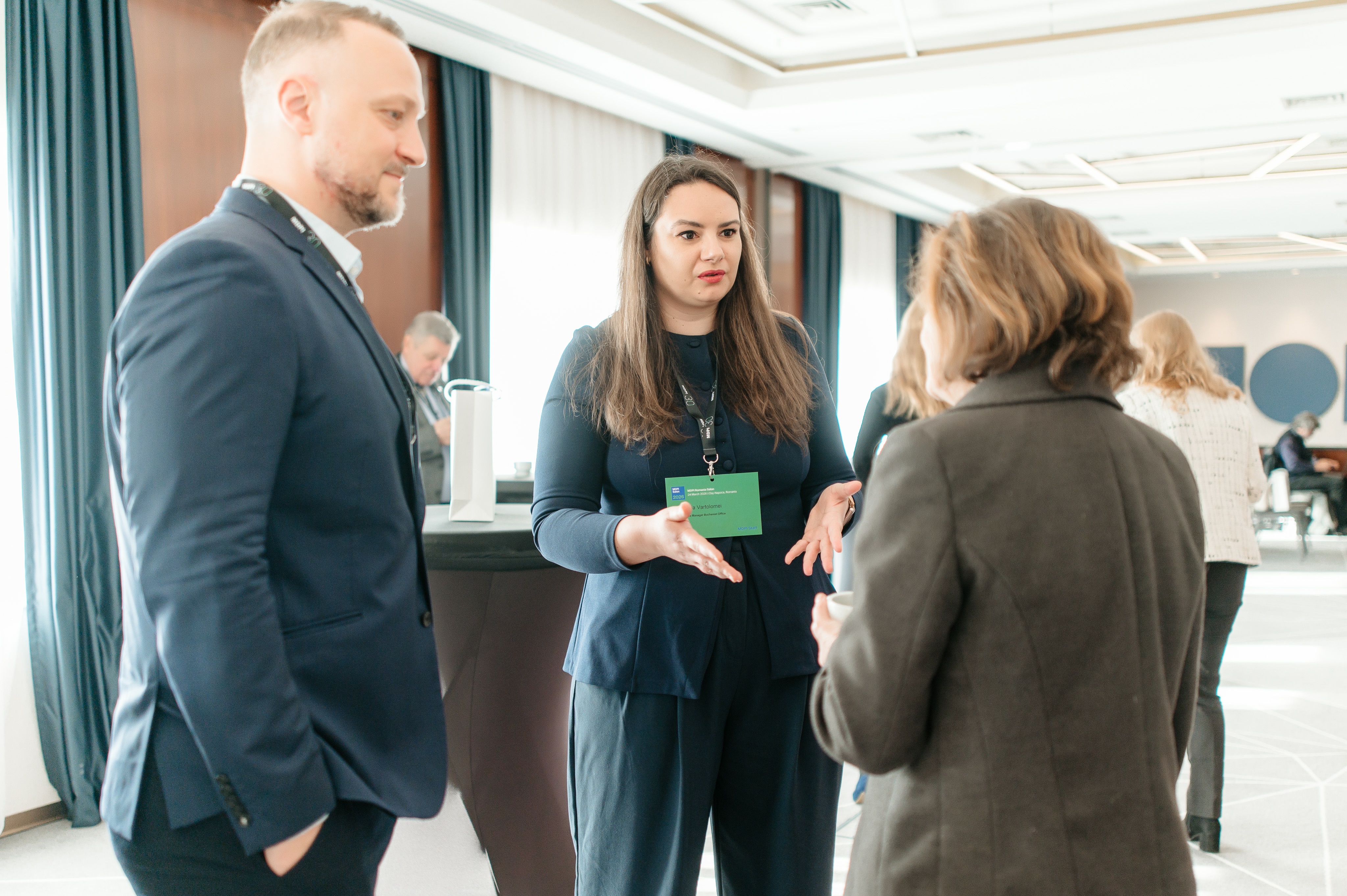
On 24 March, we had the opportunity to meet with members of the Romanian research community in Cluj-Napoca at our MDPI Romania Salon. The event was a space for presentations, open discussion, and the exchange of perspectives on publishing and the research landscape in Romania.

We welcomed 39 participants, including 27 researchers from institutions across Romania, representing cities such as Cluj-Napoca, Timișoara, and Reșița. Among them were Editorial Board Members, Associate Editors, and Guest Editors, all of whom play an important role in collaborating with MDPI and shaping the quality and direction of academic publishing.
|
|
|
|


A Shared Commitment to Research Excellence
These events reflect MDPI’s commitment to connecting with and supporting researchers by means of transparency, dialogue, and collaboration. During the day, MDPI colleagues shared a series of presentations covering different parts of our publishing ecosystem:
- MDPI’s presence in Romania – Anamaria Vartolomei (Journal Relationship Specialist (JRS), Section Managing Editor (ME))
- MDPI’s performance, growth, and impact in Romania – Stefan Tochev (CEO)
- Academic services, initiatives, and projects supporting researchers – Ioana Preda (JRS, Section ME)
- Best practices and standards in publication ethics – Lavinia Rogojina (Research Integrity Manager)
- Panel session on ethics, AI, and peer review – Lavinia Rogojina, Ioana Preda, Doris Larisa Albu (JRS, Section ME), Cristina Georgiana Spelmezan (JRS, Section ME)
- Closing remarks – Lavinia Dumitrela Cozma (Operations Manager, Section ME)

Feedback from participants was very positive, particularly regarding the quality of discussions, the relevance of the topics, and the opportunity to engage directly with MDPI colleagues. What stood out most was the openness of the discussion. These events are important not only for the purposes of presenting what we do, but also as an opportunity to listen, understand concerns, and continue to build alignment with the research community.
Romania and the Growth of Open Access Publishing
The Romanian research landscape continues to show growth in open access (OA) publishing.
In 2025:
- 72% of all publications in Romania were published as OA
- Of these, 74% were Gold Open Access
Over the past five years, Romania has produced more than 109,000 publications, with approximately 71% available openly, highlighting a sustained shift toward accessibility and knowledge-sharing.
Within this landscape, MDPI continues to play a significant role:

- MDPI is the leading OA publisher in Romania, contributing 42% of all OA publications in 2025
- More than 37,000 articles have been published with MDPI by Romanian institutions since 1996
- This figure includes over 7,500 publications in 2025 alone
- More than 400 Editorial Board Members from Romania collaborate with MDPI across disciplines
These trends show the growth of OA and the strength of collaboration between MDPI and the Romanian research community.
Looking Ahead
As academic publishing continues to evolve, maintaining open and transparent communication with researchers is essential. Events such as our Salons and Summits provide great opportunities to exchange perspectives and to build trust and collaboration.
Thank you to all participants who joined us in Cluj, and to our teams in Romania for delivering a successful event. A special thank-you to Alina-Florina Agafitei (Marketing Specialist) for her care and attention to detail in delivering the Salon.
Chief Executive Officer
MDPI AG
25 March 2026
Acknowledging the Contributions of Our Reviewers in 2025

As a pioneer in open access publishing, MDPI maintains rigorous publication standards. This mission relies on the dedication and expertise of our reviewers, who invest their time and knowledge to ensure the quality and integrity of the research we publish.
In 2025, over 209,000 reviewers contributed to the peer-review process at MDPI, providing more than 1.3 million review reports for our journals. To express our gratitude, MDPI’s Reviewer Recognition Program highlights reviewers across over 400 journals, featuring those who have assessed at least one manuscript and agreed to be acknowledged.
In addition, MDPI has identified its Top 1000 Reviewers of 2024 to recognize those whose expertise, dedication, and thoughtful evaluations were particularly outstanding.
Many journals have also established Outstanding Reviewer Awards to honor our reviewers’ commitment to publication excellence. Together with the Exceptional Reviewer List, we showcase the importance of reviewers’ work and their time and dedication.
These initiatives serve to express our deepest appreciation and gratitude towards the whole reviewer community. In recognition of their contributions, we also welcome new researchers to join this community. If you would like to contribute to open access publishing, learn more about the reviewers’ benefits and sign up to join us.
4 March 2026
MDPI’s 2025 Best Paper Awards—Award-Winning Papers Announced

MDPI is honored to announce the recipients of the 2025 Best Paper Awards, celebrating exceptional research for its scientific merit and broad impact. After a rigorous evaluation process conducted by Academic Editors, this year’s awards showcase papers that stand out for their innovation, relevance, and high-quality presentation.
Out of a highly competitive pool, 396 winning papers have been recognized for their exceptional contributions. We congratulate these authors for pushing the boundaries of their respective disciplines.
At MDPI, we are dedicated to broadening the reach of innovative science. To learn more about the award-winning papers and explore research projects in your field of study, please visit the following links:
- Biology and Life Sciences;
- Business and Economics;
- Chemistry and Materials Sciences;
- Computer Sciences and Mathematics;
- Engineering;
- Environmental and Earth Sciences;
- Medicine and Pharmacology;
- Social Sciences, Arts and Humanities;
- Physical Sciences;
- Public Health and Healthcare.
About MDPI Awards:
To reward the global research community and enhance academic dialogue, MDPI journals regularly host award programs across diverse scientific disciplines. These awards, serving as a source of inspiration and recognition, help raise the influence of talented individuals who have been credited with outstanding achievements and whose work drives the advancement of their fields.
Explore the Best Paper Awards open for participation, please click here.
4 March 2026
Meet Us at the American Geophysical Union (AGU) Annual Meeting 2026, 7–11 December 2026, San Francisco, USA

Conference: American Geophysical Union (AGU) Annual Meeting 2026
Organization: American Geophysical Union
Date: 7–11 December 2026
Place: San Francisco, USA
Booth: #330
MDPI journals will be attending the American Geophysical Union (AGU) Annual Meeting 2026 as an exhibitor. AGU’s annual meeting, the largest gathering of Earth and space scientists, convenes 25,000+ attendees from 100+ countries to share research and connect with friends and colleagues. Scientists, educators, policymakers, journalists and communicators attend AGU26 to better understand our planet and environment, opening pathways to discovery, opening greater awareness to address climate change, opening greater collaborations to lead to solutions and opening the fields and professions of science to a whole new age of justice equity, diversity, inclusion and belonging.
The following MDPI journals will be represented:
- Remote Sensing;
- Water;
- Atmosphere;
- Geosciences;
- World;
- Hydrology;
- Environments;
- Coasts;
- Land;
- Biosphere;
- Fire;
- Earth;
- GeoHazards;
- Glacies;
- Geomatics;
- Meteorology;
- Mining;
- Minerals;
- Oceans;
- Quaternary;
- Stratigraphy and Sedimentology.
If you plan on attending this conference, feel free to stop by our booth, #330. Our delegates look forward to meeting you in person to answer any questions you may have.
For more information about the conference, please visit the following link: https://www.agu.org/annual-meeting.
28 February 2026
MDPI INSIGHTS: The CEO’s Letter #32 - MDPI China and Thailand, China Science Daily, 1,000 Partnerships, R2R
Welcome to the MDPI Insights: The CEO's Letter.
In these monthly letters, I will showcase two key aspects of our work at MDPI: our commitment to empowering researchers and our determination to facilitating open scientific exchange.
Opening Thoughts

Reflections from China: Year-End-Celebrations and Open Access Publishing
In February, I had the pleasure of joining over a thousand colleagues from our Tongzhou and Haidian offices at their end-of-year annual celebration in Beijing.
Spending time with our teams in China is also a powerful reminder of the scale and complexity of MDPI as a global organization. Our colleagues in Beijing, Wuhan, and across the country play a significant role in our day-to-day operations and long-term development. I’m grateful for the hospitality, collaboration, and commitment shown by our managers and teams in China, alongside colleagues worldwide, who have helped steadily build MDPI, brick by brick, over the years.
Below are some data on Open Access (OA) publishing in China and our collaboration in this important research market.
Open Access Publishing in China
China has been the world’s leading country in research and review article publication volume since 2019, exceeding one million publications in 2025. Over the past five years, the gap between China and the second-ranked country, the United States, has continued to widen.
In 2025:
- 47% of China’s research output was published Open Access
- Of those OA publications, 76% were Gold Open Access (approximately 382,930 articles)
- The overall OA distribution remained stable compared with 2024, with Gold OA increasing by 1%
Over the past five years (2021–2025):
- China published 4,398,050 research and review articles
- Approximately 48% of this output was OA
According to Dimensions, when comparing the top 20 countries by publication volume (2021–2025):
- China ranks 1st worldwide in publication volume
- China ranks 9th in citation performance within this group (for comparison, the US ranks 2nd in publication volume and 10th in citation ranking)
- Average citations per article: 12.51
Among the top 10 universities globally by publication volume, six are Chinese institutions, alongside Harvard University (USA), the University of São Paulo (Brazil), the University of Toronto (Canada), and the University of Oxford (UK).

MDPI and China
China is an important and long-standing part of MDPI’s global publishing ecosystem:
- In 2025, MDPI was the largest fully Open Access publisher in China
- MDPI published 22% of China’s Gold Open Access output (82,133 papers)
- We received 290,999 submissions from China-affiliated authors and published 82,133 articles
- There are 8,500+ active Editorial Board Members based in China
- 64% (5,438) have an H-index above 26
- MDPI works with:
- 117 Editors-in-Chief
- 103 Section Editors-in-Chief
- 71 China-based institutions currently hold IOAP agreements with MDPI, seven of which rank among the top 10 Chinese institutions by publication volume
China's scale in research output means that the publishing platforms chosen by Chinese scholars will continue to influence the direction of scholarly publishing. At the same time, MDPI’s strength comes from its international collaboration, with colleagues, editors, reviewers, and authors working together across regions and disciplines.
Thank you to all our colleagues in China, and around the world, who support MDPI’s publishing activities across departments and help advance open access research every day.
Impactful Research

“Progress in open science is built through trust, dialogue, and relationships”
Behind the Scenes: A Conversation with China Science Daily
During my trip to Beijing, I also had the opportunity to visit China Science Daily and take part in an interview and broader exchange with their team in Beijing. Visits like this matter because progress in open science is built not only through platforms and infrastructure, but also through trust, dialogue, and relationships across research communities and regions.
China Science Daily: History Museum
As part of the visit, I was given a tour of their History Museum, which offers a thorough perspective on the evolution of China’s first science and technology newspaper, established in 1959. The exhibition highlights how the organization developed into a trusted institution connecting research with the public and policymakers. It was a helpful reminder that at the core of publishing is stewardship, credibility, and long-term public engagement with science.

An Open Exchange on Open Science
During the visit, I met with Dr. Zhao Yan, Editor-in-Chief of ScienceNet. We had an open and engaging conversation about MDPI’s role in Open Access, the evolution of open science globally, and the potential for more collaboration going forward. He especially appreciated the candid and personal nature of our exchange, noting that this kind of dialogue feels important in a landscape where trust and transparency matter.

Interview on Open Access
I also participated in an interview with Ms. Yan Jie, from the Online Media Center and Editor-in-Chief of ScienceNet, China Science Daily. Our discussion covered the growth of Open Access over the past 30 years, MDPI’s mission and values, academic integrity, collaboration with the Chinese research community, and MDPI’s own 30th anniversary milestone. It was a great opportunity to reflect on how open science has matured, and where shared responsibility across publishers, institutions, and researchers continues to matter most.
“Progress in open science is built by more than scale and infrastructure”
I’m sharing a few photos from the visit as a glimpse behind the scenes. The full interview will be published by China Science Daily in due course, and I look forward to sharing it when it is available.

More broadly, visits like this reinforce something I’ve always believed in: progress in open science is built not only through scale and infrastructure, but also through continued dialogue, mutual respect, collaboration, and a willingness to listen across regions and perspectives. That remains central to our work, especially as MDPI reflects on 30 years of publishing, built together.
Inside MDPI

Bangkok Visit: Growth, Partnership, and Local Impact
In February, I also had the opportunity to visit our Bangkok office for the second time in two years to support their local meetings and deliver a training session on how we present MDPI at a corporate level.
It’s easy to spend time with our colleagues in Thailand. From Editorial and Production to Conferences, Marketing, Design, and our Regional Journal Relations Specialist (RJRS), the team continues to grow in scale and professionalism. I’d also like to recognize our local management and admin teams, who have been steadily expanding our office and supporting more than 500 colleagues on the ground.
Academic Partnerships
During the visit, we met with the Engineering Department at King Mongkut’s Institute of Technology Ladkrabang (KMITL). Our discussion focused on the recent MDPI developments, Institutional Open Access Program (IOAP) opportunities, Author Publishing Workshops (APW), and the potential use of JAMS to support their institutional journal.

“MDPI is the third-largest OA publisher in Thailand”
We also shared insights into the growth of Open Access (OA) in Thailand and KMITL’s own publishing trends. These conversations matter because institutions are looking for sustainable ways to support their researchers. Our IOAP agreements are one simple example of how we can provide value in this area while maintaining accessibility for authors.
Thailand and MDPI: 2025 Snapshot
Our Bangkok office, officially launched in 2022, has been growing to support over 500 staff members while continuing to expand its engagement in scholar visits, workshops, and conference collaborations. As at 2025, Thailand submissions to MDPI have increased about 21% and publications by about 25%, maintaining a rejection rate close to the company average. MDPI is the third-largest OA publisher in Thailand, publishing 15% of all Gold OA output in 2025.
Representing MDPI Externally
During the visit, I delivered a training session on how we present MDPI at external events.

This session covered topics related to:
- Our aim and guiding principles
- High-level company milestones and Indexing facts and figures
- Industry partnerships and collaborations
- Market trends in OA and subscription publishing
- Country-specific publishing data and collaborations with MDPI
- Insights from our Voice of Community report
I find that while many colleagues are very familiar with the specific journal for which they have responsibility, fewer have visibility into the broader MDPI ecosystem and the company’s global positioning. These sessions help build alignment, confidence, and consistency in how we represent the company.
What stands out most is that MDPI’s growth is not abstract: it’s visible in the people, the partnerships, and the professionalism developing across our offices.
Coming Together for Science

1,000 Institutional Partners: A Milestone Built on Trust
This month, we reached an important milestone: more than 1,000 institutions worldwide are now part of MDPI’s Institutional Open Access Program (IOAP). On paper, that is a number. In practice, it represents trust.
This milestone symbolizes thousands of conversations with libraries and institutions. It stands for negotiations, renewals, consortium expansions, and, most importantly, relationships built over time. It reflects the work of colleagues across publishing, institutional partnerships, marketing, editorial, finance, and many other teams who contribute to making these agreements operational.
In 2025 alone, more than 61,300 research articles benefited from article processing charge (APC) discounts through IOAP agreements. Tens of thousands of authors were able to publish through a simplified and structured process. At the same time, institutional administrators gained clearer oversight and streamlined workflows.

Why IOAP Matters
When we launched IOAP, the objective was straightforward: to reduce barriers for researchers while supporting institutions in navigating the evolving OA landscape. Over the past decade, the research ecosystem has changed. Funder mandates, national policies, and Plan S–aligned requirements have accelerated the transition to OA.
Institutions need publishing partners who provide transparency, scalability, and operational efficiency. IOAP was designed to support that reality.
For colleagues who would like to better understand the program, this blog-post overview of MDPI’s IOAP provides additional context, including common questions around the transition to OA and how our institutional partnerships are structured.
“Institutions need publishing partners who provide transparency, scalability, and operational efficiency”
Recent Examples
Our agreements continue to evolve across regions:
- In Sweden, MDPI signed a national Open Access publishing agreement with 96 institutions, enabling affiliated researchers to publish without managing individual APC payments.
- In Spain, we extended our flat-fee agreement with Universidad Católica de Valencia, reinforcing institutional support for OA publishing.
These examples show that institutions seek structured, predictable models that support their researchers at scale.
Looking Ahead
Crossing the threshold of 1,000 partners tells us that institutions see MDPI not just as a publisher but as a reliable operational partner in advancing open science. This milestone is not a finish line. It is a reminder that the work continues.
Thank you to the entire IOAP team and to all colleagues who contributed to reaching this achievement.
P.S. You can read about this milestone across industry outlets, including STM Publishing News, ALPSP, Research Information, EurekAlert, Brightsurf, among others. You can also read about the coverage in Poland (e.g., media-room, bomega) Korea (newstap), and Romania (EduLike).
Closing Thoughts

Reflections from the Researcher to Reader Conference
During 24–25 February, I attended the 2026 Researcher to Reader Conference in London, UK. Leaders from across scholarly publishing, research infrastructure, libraries, and technology gathered to discuss AI and research integrity, peer review reform, metadata and infrastructure, community engagement, open research policy, and the evolving role of publishers in a rapidly shifting ecosystem.
The conversations were open and honest, and at times uncomfortable – exactly what we need at times. Below are a few reflections that stayed with me.
The Battle for Knowledge: What Becomes Accepted as ‘True’?
One recurring theme was not whether science evolves but whether our infrastructure is resilient enough to sustain trust at scale. Science does not promise certainty: it promises process. As publishing systems grow more complex and become more technologically mediated, the question is how intentionally we design, monitor, and strengthen that process.
Peer Review: Speed, Credentials, and Structural Loops
Researchers consistently call for faster peer review. At the same time, reviewer credentials are often tied to publication records. This creates a structural loop. Publishing history opens reviewing opportunities, reviewing strengthens credentials, and those without early access remain outside the cycle.
There is a need for us to reflect on how opportunity circulates within our systems: we should ask how we create more inclusive pathways for researchers globally to participate in peer review.
Community Engagement Workshop
One of the highlights of R2R was the workshop format, whereby small groups met repeatedly over two days and moved from ideas to tangible strategies.
I joined the Community Engagement workshop led by Lou Peck (CEO at The International Bunch) and Godwyns Onwuchekwa (Principal Consultant at Global Tapestry Consulting). We explored two deceptively simple questions: What is a community? and What does engagement truly mean?
“Engagement requires shared design and shared responsibility”
Too often, organizations equate communication with engagement. The framework discussed mapped a maturity spectrum – from enablement (broadcasting, informing and consulting) to true engagement (collaborating and co-creating).
It was a useful reminder of the fact that if we want trust and loyalty, engagement must go beyond announcements and surveys. It requires shared design and shared responsibility.
AI: Democratization or Digital Colonialism?
I especially enjoyed the thought-provoking presentation from Nikesh Gosalia (Chief Partnership Officer at Cactus Communications), which highlighted an uncomfortable reality:

- 93% of AI-generated content is in English
- Approximately 2% is in French
- Approximately 2% is in German
- More than 7,000 languages are represented in less than 5% of the content within large AI systems
The implications are profound. Is AI democratizing access to scholarly publishing (making it easier for researchers everywhere to participate in global knowledge production)? Or are we encoding colonialism at scale (entrenching linguistic and structural hierarchies, and making it harder for voices from the Global South to be heard)?
AI is already reshaping how research is created, reviewed, discovered, and shared. Its potential is enormous. But its impact depends not only on capability, but on governance, design, and intentionality. Publishers, funders, and researchers all share responsibility in shaping how these systems evolve.
Ethicality in practice (Lightening Talk)

It was also great to have our colleague Dr Miloš Čučulović (Head of Technology Innovation at MDPI) present MDPI’s Ethicality platform during a lightning talk.
“Technology alone is not the answer”
Ethicality embeds AI-driven checks directly into the submission workflow, supporting editors proactively rather than reacting after publication. As we scale, tools like this help balance trust, efficiency, and research integrity.
This goes back into the underlying theme of the conference that technology alone is not the answer. However, technology embedded thoughtfully within clear governance frameworks can strengthen confidence in the editorial process.
Final thought
The question is no longer whether technology will transform research infrastructure: it is already doing so. The real question is what role each of us will play in shaping that transformation deliberately, with structural maturity, inclusive governance, and engagement that moves from informing to co-creating.
Science needs to evolve, responsibly. And that responsibility extends not only to what we publish, but also to how the systems behind publication are designed. Some important topics to continue reflecting on both internally and within our broader community.
Chief Executive Officer
MDPI AG
20 February 2026
MDPI Virtual Academic Publishing Workshop (New Harvest), 25 February 2026

This Academic Publishing Workshop will be led by MDPI Regional Journal Relations Specialist, Dr. Sally Wu, on “Author Training”. Participants will receive practical advice on essential aspects of writing academic articles. Participants will leave with a clearer understanding of the academic publishing landscape and how to successfully contribute to it.
Date: 25 February 2026
Time: 11:30 a.m.–1:30 p.m. EST
Schedule:
|
Speaker |
Program |
Time in EST |
|
Dr. Sally Wu |
Introduction |
11:30–11:40 a.m. |
|
Dr. Sally Wu |
Tips for Writing Great Research Papers
|
11:40 a.m.–12:15 p.m. |
|
Dr. Sally Wu |
How to Respond to Peer Reviewers
|
12:15–12:50 p.m. |
|
Dr. Sally Wu |
AI in Publishing: Challenges and Opportunities
|
12:50–13:30 p.m. |
Speakers:
|
|
Dr. Sally Wu received a PhD in medical science from the University of Toronto in the fall of 2025. She joined MDPI in February 2025 as an Assistant Editor for Cells. She was recently promoted to Regional Journal Relations Specialist position in August. In this role, she works with many journals, liaising with authors, board members, and EiCs. She has attended several conferences across North America, hosted scholar visits, and taken part in other outreach events. |

18 February 2026
MDPI’s Open Access Program Reaches 1,000 Institutions Worldwide

MDPI has surpassed the milestone of 1,000 partners within the Institutional Open Access Program (IOAP). The agreements span 59 countries, covering North and South America, Europe, Asia, Africa, and Oceania.
Last year alone, more than 150 new libraries and academic institutions joined MDPI’s IOAP. With the expansion of an existing consortium deal in Sweden we welcomed a further 75 partners to the program in January 2026, enabling us to surpass the 1,000-partners milestone.
The IOAP supports affiliated researchers by streamlining submission processes, reducing administrative burdens, and offering discounted Article Processing Charges (APCs). Through IOAP membership, more than 61,300 research articles received APC discounts in 2025, driving greater visibility and accessibility for partner institutions and global research communities alike.
"This milestone marks a significant step towards expanding MDPI’s global impact," said Stefan Tochev, MDPI's CEO. "Reaching 1,000 IOAP partnerships is a true testament to the growing trust and collaboration we’ve built with universities, libraries, and research organizations worldwide. We are proud to lead the way in Open Access publishing, ensuring researchers have the support they need to reach global audiences." "The success of our program is reflected in the growing global demand for Open Science and quality publishing services," said Becky Castellon, MDPI institutional partnerships manager. "Equally, institutions are increasingly seeking Open Access publishing options that support funder and national mandates. Joining the IOAP makes compliance simple."
9 February 2026
Acknowledgment to the Reviewers of Minerals in 2025

The editorial office of Minerals would like to extend its sincere gratitude to all reviewers who contributed to the improvement of the journal quality by providing their expert opinion and evaluation of the submitted research.
We appreciate that thorough peer review demands considerable time and intellectual investment from our reviewers. In 2025, Minerals received 7146 review reports from contributors across 95 countries and territories, demonstrating the breadth of international expertise and scholarly engagement that has strengthened our publication standards.
The reviewers who agreed to have their names published this year are listed below in alphabetical order by first name. The editorial team acknowledges with gratitude all reviewers, named and anonymous alike, for their vital role in maintaining the scholarly standards of Minerals.
| Abbas Abbaszadeh Shahri | Gopinathan Periyasamy | Oxana Karimova |
| Abdellah Mourak | Goshtasp Cheraghian | Oya Cengiz |
| Abdulmutalib Raafat Sarhat | Guanglai Li | Özer Sevim |
| Adam Cwudziński | Guangli Zhu | Özlem Kaya |
| Adel Diab Mohammed Kotb | Guannan Liu | Pablo Caldevilla Domínguez |
| Adel Mokhtar | Guilherme José Oliveira Cubi | Panagiotis M. Angelopoulos |
| Adel Shirazy | Guilherme Loriato Potratz | Panagiotis Papazotos |
| Ademir Marques Junior | Guocai Tian | Patrick Zhang |
| Adeshina Adewale Adewumi | Guorong Wu | Paula Alexandra Gonçalves |
| Adnan Ahmed | Haitao Sun | Paulo Victor Luiz Gomes da Costa Pereira |
| Adriana-Gabriela Schiopu | Hamad Ur Rahim | Pavel Grudinsky |
| Agnieszka Gładysz-Płaska | Hamdan Ali Hamdan | Pavel Kepezhinskas |
| Agnieszka Surowiak | Hamdy Hamed Abd El-Naby | Pavlina Kousi |
| Agueda Elena Ceniceros-Gómez | Hamdy Nour | Paweł Pęczkowski |
| Ahmad Afshar | Hans-Rudolf Wenk | Paweł Tomach |
| Ahmed A. Gheni | Hao Wu | Pedro Henrique Alves Campos |
| Ahmed E. Abdel Gawad | Harald van der Werff | Peilong Lu |
| Ahmed Gad | Hasan Ali Taner | Peixin Du |
| Ahmed Khaled | Håvard Gautneb | Per Kalvig |
| Ahmed M. Abdel-Rahman | Heber Hernández | Peter Davis |
| Ahmed Metwally | Helena Paula Nierwinski | Péter Horváth |
| Ahmed Sabry Afify | Heng Peng | Peter Klint Jensen |
| Ahmer Bilal | Hengqian Zhao | Petlovanyi Mykhailo |
| Aimin Liu | Henryk Otwinowski | Petr Belousov |
| Ajinkya Pal | Hiroshi Sasamoto | Petrie van Wyk |
| Akumbom Vishiti | Homa Saeidfirozeh | Philippe Colomban |
| Alan Lolaev | Hossein Shalchian | Pier Franco Lattanzi |
| Alanielson Ferreira | Houssa Ouali | Pietro Romano |
| Alberto Collareta | Huan He | Ping Gao |
| Aleem Zahid | Huayi Chen | Ping Zhu |
| Aleksandar M. Mitrašinović | Hussein Kanbar | Pongsiri Julapong |
| Aleksander Kowalski | Hussein Marey Mahmoud | Prabhu Kolandhasamy |
| Aleksandra Šaponjić | Iaroslav M. Pasternak | Prasandi Abdul Aziz |
| Alexander A. Nikolaev | Igor Buddo | Pura Alfonso |
| Alexander Kalinkin | Igor S. Peretyazhko | Qi Li |
| Alexander Marfin | Ildar Rakhimov | Qiaoqing Hu |
| Alexander Parshin | Ilias Lazos | Qichun Yin |
| Alexander Vladimirovich Snachev | Ilies Tebbiche | Qichun Zhang |
| Alexey Ariskin | Ilknur Durukan | Qingshang Shi |
| Alexey Safonov | Ilutiu-Varvara Dana Adriana | Qingze Chen |
| Alfons van den Kerkhof | Ilyos Kalandarov | Quentin Wehrung |
| Alfredo Juan | Inna Derbeko | Rabah Kechiched |
| Ali Maged | Inna Tolpeshta | Rafael Gordilho Barbosa |
| Ali Wahid | Ioan Seghedi | Rafael Iosifovich Shakirzyanov |
| Ali Zaidi | Ioannis Kapageridis | Rafał Morga |
| Alok K. Singh | Irena Žmak | Rafat Amin |
| Altynay Amangeldikyzy | Irfan Marwanza | Raham Jalil |
| Ameneh Amani | Irina Kircheva Marinova | Raimundas Šiaučiūnas |
| Amilton Barbosa Botelho Junior | Irina Vishnevskaya | Rajashekhar Marthi |
| Amir Fayyaz | Irina Yu. Melekestseva | Ram Chandra Chaurasia |
| Amirabbas Karbalaeiramezanali | Issam Hanafi | Rama Murthy Yanamandra |
| Amirhossein Mohammadi | Iwona Kuźniarska-Biernacka | Rama Swami Kantamani |
| Amr Abd El-Raouf | Izzat Naim Shamsul Kahar | Rasha Hosny |
| Anamarija Stanković | Jacek Nowak | Ratoi Bogdan Gabriel |
| Anas Aleksandrovich Karimov | Jacek Pietraszek | Raul Carrillo-Pedroza |
| Anastasiya Afanasova | Jaime Estevão Scandolâra | Raúl Miranda Avilés |
| Anatoly Germanovich Nikolaev | Jajati Mandal | Raymond V. Rivera Virtudazo |
| Anca Vijdea | Jakub Ciazela | Régis Casimiro Leal |
| Andongma Wanduku Tende | Jakub Hlosta | Richard Jones |
| André Sampaio Mexias | James C. Hower | Richard Lee |
| Andrei Buzatu | Jan Golonka | Robert Kusiorowski |
| Andrei Poliakov | Ján Štubňa | Robert Matos |
| Andrés Ramírez | Jasminka Alijagić | Roberto Bizzarri |
| Andrey Goryachev | Javier Fernandez Reynes | Roberto Bruno |
| Andrey Kazak | Javier García Serrano | Roberto Calabrò |
| Andrey Leonidovich Samusev | Jean-Jacques Royer | Roberto Pérez-Garibay |
| Angela Manka Tita | Jelea Stela Gabriela | Rodrigo Magalhães de Carvalho |
| Anja Terzic | Jesús Alvarado-Ortega | Roland Nádaskay |
| Anna Gololobova | Jesus Baldenebro-Lopez | Roman Skala |
| Anna Młynarczykowska | Jiachen Li | Roman Veselovskiy |
| Anna Valerievna Spivak | Jiangbo Ren | Ronan Le Bras |
| Anna Waldeck | Jianqiang Wang | Ronny Winarko |
| Anton Georgievich Kalmykov | Jie Li | Rosario García-Giménez |
| Anton Ivanovich Volkov | Jinan Guan | Rosina Nkuna |
| Antonina Karlina | Jinlin Wang | Rostislav Rusalev |
| Antonio Abel Gonzalez Carrasquilla | Jinwei Li | Rui Tang |
| António Fiuza | Jiří Svoboda | Ruyue Wang |
| Antonios Stratakis | Joan Cecilia Casila | Saeed Parnow |
| Anup Krishna Prasad | Joana Alexandra Ferreira | Saeid Asadzadeh |
| Aoly Ur Rahman | Joanna Kolodziejczyk | Sahand Sarbishei |
| Aref Shirazi | Joanna Mastalska-Popławska | Saïd Ilmen |
| Argyro Asvesta | João Pedro Hippertt | Sajid Iqbal |
| Ariane Santos da Silveira | Johannes Hommel | Sajjad Talesh Hosseini |
| Arianit Reka | John McBride | Samad Narimani |
| Arie Naftali Hawu Hede | John S. Armstrong-Altrin | Samir Basha Eskander |
| Arkoprovo Biswas | John Vogrin | Samira Mohammadkhani |
| Armstrong Ighodalo Omoregie | Jojo P. Joseph | Sampath Rathnayaka |
| Arnaud Broussolle | Jolanta Domańska | Samuel Porcar |
| Artem V. Moiseev | Jonathan Castillo | Sandeep Kumar Jena |
| Artur Spat Ruviaro | Jorge García Gutiérrez | Sangyun Seo |
| Asadullah Memon | Jorge Luis Costafreda Mustelier | Sanjeev Kumar |
| Ashraf Torkian | Jose Adilson Dias Cavalcanti | Santanu Banerjee |
| Atefeh Azizi | José Anderson Machado Oliveira | Santiago Pozo-Antonio |
| Áttila Leães Rodrigues | José Gaete | Sara Valadas |
| Augusto Nobre | Josef Zeman | Saravanan Somasundaram |
| Ayse Nur Esen | Joud Hwalla | Savaş Özün |
| Bahattin Güllü | Juan Carlos Salas | Scherger Ezequiel Leonardo |
| Bai Yang | Juan M. Menendez-Aguado | Sebastian Hippmann |
| Baisui Han | Juan Morales | Sefiu O. Adewuyi |
| Bangjun Liu | Juhua Zhang | Sergei Shevyrev |
| Basak Tuna | Julian Ortiz | Sergey A. Kovachev |
| Basuony El-Garhy | Jun Liu | Sergey Khromykh |
| Beata Smieja-Król | Junhui Xiao | Sergey Skublov |
| Behnaz Safar Ali Najar | Junjian Zhang | Sergey V. Krivovichev |
| Behrouz Rafiei | Junmo Ahn | Serkan Tuylu |
| Benjamin Musuku | Juye Shi | Sevgi Polat |
| Bernard Leake | Kalenda Mutombo | Seyed Kourosh Mahjour |
| Bernd Kleimt | Kamal Kolo | Seyed Morteza Davarpanah |
| Bernhardt Saini-Eidukat | Kamran Esmaeili | Seyedahmad Mehrishal |
| Bettina Rutrecht | Karabelo Macmillan Moloantoa | Shaban Shahzad |
| Bhagirath Joshi | Karthikeyan Balasubramanian | Shahab Varkouhi |
| Billel Sennaoui | Katerina Hruzova | Shahe Shnorhokian |
| Bin Yang | Kathryn Dooley | Shahed Shahrestani |
| Bisse Salomon Betrant | Ke Hu | Shahriar Abubakri |
| Bogdan Langier | Kenan Çinku | Shalini Annadurai |
| Bojana B. Laban | Kira E. Vostrikova | Shehata Ali |
| Boris Chako-Tchamabé | Kirsten Corin | Sheng Zeng |
| Boris Ginzburg | Konstantinos Modis | Shengli Wang |
| Brian Kawenski Cook | Krzysztof Bukowski | Sherif Mansour |
| Brian Keith-Normabuena | Krzysztof Skrzypkowski | Sherry Bremner |
| Brian Melde | Kseniia Nepeina | Shichong Yuan |
| Bruno Portela | Kunwoo Han | Shofiqul Shofiqul Islam |
| Can Gungoren | Kwaku Boateng Owusu | Shohreh Hassanpour |
| Carlos Marcello Dias Fernandes | Kyriaki Kiskira | Shokrullah Hussaini |
| Carlos Montalvo | Laszlo Kotai | Shouchuan Zhang |
| Carlos Pérez-Garrido | Lei Sun | Shu Wang |
| Carlos Spier | Leonardo Negrao | Shuai Guo |
| Carlos Villaseca | Leonid Dubrovinsky | Siddharth Gautam |
| Caster Prinz Martin | Leonid Perelomov | Silvia Fornasaro |
| Caterina Previato | Leyla Kalender | Simon Johnson |
| Çetin Yeşilova | Liliana Lefticariu | Simone Dilaria |
| Chao Liu | Lingan Bai | Soledad Ortiz Ruiz |
| Chao Ni | Linglin Zhong | Soner Top |
| Chao Zhang | Liviu Dumitrache | Soumyadip Mondal |
| Chaojie Cheng | Lixia Li | Spencer G. Lucas |
| Chen Guo | Ljudmilla Bokányi | Spyridon Bellas |
| Chengmin Huang | Lotfi Tahar | Sri Chandana Panchangam |
| Chenhu Zhang | Lu Yang | Stanislaw Pietrzyk |
| Chenyang Sun | Lucas Martins Lino | Stavros Kalaitzidis |
| Chiara Elmi | Luis José Andrade Pais | Stavros Triantafyllidis |
| Chris Harris | Luis Vinnett | Stefano Naitza |
| Christian Schröder | Luiz Saturnino Andrade | Stéphane Brochot |
| Christiane Wagner | Luminita Ghervase | Steven J. Goldstein |
| Christoph Gauert | Luzheng Chen | Syed Ali |
| Christos L. Stergiou | Lyudmila Pokhilenko | Syed Muhammad Ibad |
| Chunfu Liu | M. Tolga Esetlili | Syed Sikandar Shah |
| Cihan Yalçın | Machiel Bos | Sylvia Kratz |
| Ciprian Chelariu | Machodi Mathaba | Tamara Yakich |
| Ciprian Constantina | Maciej Wędrychowicz | Tania Hidalgo |
| Claudio Gerheim Porto | Madhusoodhan Satish-kumar | Tao Huang |
| Colin John Andrew | Madhusudan Puttaswamy | Tao Li |
| Crina Bucur | Magdalena Duchnowska | Tao Song |
| Cristina Gama | Mahmoud Abo El-Wafa | Tatiana Kalashnikova |
| Cun Zhang | Maja Poznanović Spahić | Tatiana Setkova |
| Dalibor Kuhinek | Makoto Nagasawa | Teerapong Panboonyuen |
| Daniel de Oliveira | Maksim Tretiak | Temenuzhka Hristova Radoykova |
| Daniel Ko | Mallieswaran Kuppusamy | Terefe Hanchiso Sodango |
| Daniel Kowol | Manfred Sager | Teresa Pi-Puig |
| Daniel Sturmer | Marcello Merli | Terrence Mernagh |
| Danijela Smiljanić | Marcelo Esteves Almeida | Theerayut Phengsaart |
| Dariusz Botor | Marcin Dreger | Thomas Längle |
| Darko Spahić | Marco Antonio Cotrina-Teatino | Thomas Luxbacher |
| David Ben-Shlomo | Marco Mancini | Tianyu Zhao |
| David C. Fernández-Remolar | Marcus V. T. Soares | Titus Nghipulile |
| David Dotse Wemegah | Maria Economou-Eliopoulos | Tomasz Gawenda |
| David J. Lowe | Maria Francesca Carfora | Tomasz Stasiak |
| Davide Ciceri | Maria Gertsen | Tommaso Pini |
| Débora Correia Rios | María Isabel Martín-Hernández | Tony Venelinov |
| Denis Pankratov | Maria Josefina Pons | Toshiyuki Kanakubo |
| Denis Rogozhnikov | Maria Luisa Fernandez-Marcos | Trevor Chiweshe |
| Denise Levitan | Maria Schutesky | Tristana Y. Duvallet |
| Derk Brouwer | Mariana Tonini de Araújo | Tuğba Deniz Tombal Kara |
| Désiré Tsozué | Marija Stulovic | Túlio Moreira Campos |
| Devarangadi Manikanta | Marina Clausi | Ufuk Malayoglu |
| Dexian Zhang | Marina Tugarova | Ufuk Tasci |
| Diana V. Manukovskaya | Mark Smith | Ugur Ulusoy |
| Diego de Souza Sardinha | Markus Pracht | Urs Klötzli |
| Diego Mesa | Marta Domini | Vahid Reza Ouhadi |
| Diego Quintero Balbas | Martina Laubertova | Vahid Tavakoli |
| Difei Zhao | Martina Maria Calvino | Vaibhav Kumar Srivastava |
| Dilmurod Bakhtiyarovich Makhmarezhabov | Maryam Hasani Zonoozi | Valentin Kuznetsov |
| Dimitar A. Dimov | Maryam Khosravi | Valentine Afanasiev |
| Dmitrii Butylskii | Massimo D'Antonio | Valeria Di Renzo |
| Dmitrii Pankin | Massimo Rossi | Vanderson Eney de Matos |
| Dmitry Bocharov | Mathieu Firmin Henry | Vasco Fassina |
| Dmitry Zinoveev | Mattia Lopresti | Vedat Deniz |
| Donggao Zhao | Mátyás Hencz | Velma Beri Kimbi Yaah |
| Dongmei Tang | Mauricio Acosta Grinok | Vika G. Eder |
| Dongna Liu | Maurizio Angelone | Vinod K. Singh |
| Dragana Životić | Maxim Muravyov | Violeta Moreno-Megías |
| Dundappa Mumbaraddi | Mayla Alhelí Ramos Vázquez | Virginia McLemore |
| Duško Kostić | Maziar E. Sauber | Vladimir Cheverda |
| Edgar Juárez-Arriaga | Md. Shahidul Islam | Vladimir Jokovic |
| Edinson Andrés Solarte Casanova | Mehmet Ali Erturk | Vladimir Nikolaevich Kuleshov |
| Eduardo Torres | Mehmet Ali Gücer | Vladimir Nikolić |
| Ekaterina Ovdina | Mehmet Emin Şeker | Vladimir V. Silantiev |
| Ekaterina Selivanova | Meng Wang | Vladimir Zeigarnik |
| Ekin Köken | Merlin Gountié Dedzo | Volkan Bozkurt |
| Eleazar Salinas | Michael Modigell | Wael Saied Matter |
| Elena A. Filonova | Michał Rejdak | Waldemar Kępys |
| Elena Ifandi | Michel Cathelineau | Walid Maherzi |
| Elena Luisa Iatan-Codrean | Michelly dos Santos Oliveira | Walter Leopold Pohl |
| Elena Shaparenko | Miguel Pérez | Washington Franca-Rocha |
| Elena Zhitova | Milena Rosić | Watheq J. Al-Mudhafar |
| Eleni Gianni | Ming Liu | Wei Gao |
| Elham Kordi Ghasrodashti | Ming Zhang | Weichao Du |
| Eliseo Cristiani-Urbina | Mingming Zhang | Weichao Yan |
| Elizaveta Konstantinova | Mohamad Nur Heriawan | Weihua Yang |
| El-Sayed Hassan | Mohamed Ahmed Mohamed | Weiquan Zhan |
| Emilian Mosnegutu | Mohamed Faisal | Wei-Ting Lin |
| Emmanuel Anuoluwapo Oke | Mohamed Gado | Weitong Du |
| Emmanuel Daanoba Sunkari | Mohamed Gobashy | Wenbin Jiang |
| Enrique Torres | Mohamed Reda | Wendell Fabricio-Silva |
| Eric Fimbinger | Mohammad Faiq Adenan | Wengang Liu |
| Ersin Kaygısız | Mohammadbagher Fathi | Wenyuan Gao |
| Eskandar Keshavarz Alamdari | Mohammed Albaroot | Weslei M. Ambrós |
| Eun Young Lee | Mohsen Mhadhbi | Xavier Emery |
| Eva Pescatore | Mokhles K. Azer | Xiang Zhang |
| Evgenii Kuzin | Mona Fawzy | Xiangkuan Gong |
| Evgeniy Kislov | Moro Daniele | Xiao Long |
| Ewelina Grabias-Blicharz | Mostafa Sabouhi | Xiaofeng Wang |
| Ezher Tagliasacchi | Mouhamadou Sali | Xiaohu He |
| Fábio David Alves Aarão Reis | Muammer Kaya | Xiaojia Jiang |
| Fan-Wei Liu | Muazzez Çelik Karakaya | Xiaoshi Li |
| Farhad Moosakazemi | Mubashir Mehmood | Xuefeng Li |
| Farouk Zaoui | Muhammad Ahsan Mahboob | Xue-Ming Yang |
| Fatai Kolawole Ikumapayi | Muhammad Atif Bilal | Yajian Shao |
| Federica Zaccarini | Muhammad Jamil | Yakup Umucu |
| Fenghao Duan | Muhammad Qasim | Yang Huang |
| Ferdi Cihangir | Muhammad Syamsul Imran Zaini | Yangrui Guo |
| Fernanda Gontijo Fernandes Niquini | Muhammet Mustafa Kahraman | Yanhui Dong |
| Fernando Brondani Minussi | Mukuna Patrick Mubiayi | Ye Liu |
| Fernando Nieto García | Murat Dirican | Ye Yuan |
| Fethi Kooli | Murat Hatipoğlu | Yerik Merkibayev |
| Fırat Atalay | Mustafa K. Güner | Yi Zhao |
| Fırat Burat | Muyiwa Michael Orosun | Yibing Li |
| Frederico Marques Penha | Nadezhda Krivolutskaya | Yifan Gu |
| Fuchuan Chen | Nadezhda Nikolaeva | Yih Jeng |
| Fulya Kahrıman | Nadezhda Shchipalkina | Yijiang Li |
| Gabriela Ioana Stan | Nadia Mery | Yilan Liu |
| Gabriele Carnevale | Narine Vardanyan | Ying Mu |
| Gaidi Seifeddine | Nassirddine Youbi | Yousef Bahrami |
| Galina Vitkina | Natalya Fomchenko | Yousif Mohammad |
| Gan Cheng | Nazan Yalçin Erik | Yuanzhong Zhang |
| Ganfeng Tu | Nessipbay Kuandykovich Tussupbayev | Yubo Wen |
| Gang Hui | Neven Ukrainczyk | Yue Sun |
| Gang Liu | Nicholas J. Van Buer | Yuliia Igorevna Karlina |
| Gavril Sabau | Nikolay Matushkin | Yunfeng Zhang |
| Gema Olivo | Nima Nezafati | Yun-Sheng Ren |
| Gemma Aiello | Nina Nemchinova | Yuta Matsushima |
| George Xiroudakis | Ningning Liao | Zakaria Al-Qodah |
| Georges Kogge Kome | Nomampondo Penelope Magwa | Zeynel Abidin Sarı |
| Georgy Chelnokov | Norbert Németh | Zezhang Song |
| Georgy Cherkashov | Nymphodora Papassiopi | Zhangcai Yin |
| Gerald Wimmer | Ochir Gerel | Zhanglin Li |
| Gerardo Andrés Caicedo Pineda | Octavian G. Duliu | Zhaohua Sun |
| Gheorghe Branoiu | Okay Altun | Zhelong Jiang |
| Gian Andrea Pini | Oktay Erten | Zhelyazko Damyanov |
| Gianvito Scaringi | Olabode Modupe Bankole | Zhenjiang Liu |
| Gilles Levresse | Oleg S. Vereshchagin | Zhigang Song |
| Giovanni Grieco | Olena Artiushenko | Zhimin Zhu |
| Girma Woldetinsae | Olev Vinn | Zhong Xu |
| Gisleiva Cristina dos Santos Ferreira | Olga Mary Mahlmann Muniz de Moura Neves | Zhongjin Xiang |
| Giulio Vignoli | Oliwia Krauze | Zhongrui Wu |
| Giuseppe Pintaude | Omar Fawwaz Najm | Zita Takacova |
| Giuseppe Protano | Omar Ouro Salim | Zoran Anđić |
| Gönenç Göçmengil | Orfanos Orfanos | Zsuzsanna Balogh-Brunstad |
| Gonzalo Luis Bia | Oscar G. de Lucio |
2 February 2026
MDPI INSIGHTS: The CEO's Letter #31 - MDPI 30 Years, 500 Journals, UK Summit, Z-Forum Conference, APE
Welcome to the MDPI Insights: The CEO's Letter.
In these monthly letters, I will showcase two key aspects of our work at MDPI: our commitment to empowering researchers and our determination to facilitating open scientific exchange.
Opening Thoughts

MDPI at 30: Three Decades of Open Science, Built Together
As we begin 2026, we approach a meaningful milestone in MDPI’s history: 30 years of advancing Open Science.
What began in 1996 as a small, researcher-driven initiative has grown into a global open-access publisher, supporting hundreds of journals, millions of researchers, and a shared belief that scientific knowledge should be openly available to all. Over these three decades, Open Access has moved from the margins to the mainstream, and MDPI has been proud to help shape that transformation.
To mark this anniversary year, we are pleased to share our MDPI 30th Anniversary logo.
The Anniversary logo is intentionally simple, confident, and enduring, designed to work across cultures, disciplines, and digital environments. It reflects both continuity and progress, honouring MDPI’s established identity while representing the company we are today. The green accent symbolizes our connection to the research communities we serve and the collaborative nature of Open Science itself.
Alongside the visual identity, we are also introducing our 30th Anniversary tagline:
30 Years of Open Science, Built Together.

This phrase captures what has always defined MDPI. Open Science is not the work of a single organization: it is a collective effort shaped by researchers, editors, reviewers, institutions, and the many teams who support the publishing process every day. MDPI’s role has been to provide the infrastructure and commitment that allow this collaboration to thrive.
Throughout 2026, we will mark this anniversary through regional events, global conversations, and editorial initiatives that reflect on MDPI’s evolution, its impact across disciplines, and the communities that make this work possible.
“Open Science is a collective effort”
Whether you have been part of MDPI’s journey for decades or are engaging with us for the first time this year, this milestone belongs to all of us. The past 30 years have shown what is possible when openness, trust, and collaboration are placed at the centre of scholarly communication.
As we look ahead, our focus remains clear: continuing to strengthen quality, integrity, and partnership – so that Open Science can keep moving forward, together.
Impactful Research

A Shared Milestone: MDPI’s Journal Portfolio Reaches 500 Titles
MDPI has reached an important milestone: our journal portfolio grew to more than 500 academic journals last year, spanning the fields of chemistry, engineering, biology, medicine, environmental sciences, the social sciences, and beyond.
The number itself is significant, but what matters more is what supports it: hundreds of scholarly communities that have chosen to collaborate, grow, and publish with MDPI.
From our beginnings nearly 30 years ago with a single Open Access journal (Molecules), MDPI has been guided by a simple aim: advancing Open Science. Reaching 500 journals is not an endpoint. It reflects the diversity of disciplines, ideas, and research cultures that now form part of our shared ecosystem.
Growth with Purpose
Every journal exists because a specific community believes there is a need for focus, visibility, and dialogue in a particular field. As our portfolio has expanded, so has our responsibility to ensure that scale is matched with strong editorial standards, robust research integrity practices, and meaningful academic leadership.
This milestone comes as we enter MDPI’s 30th anniversary year, a fitting moment to reflect on what scale in scholarly publishing truly requires: not only reach, but also dedicated long-term stewardship.
New Journals, New Communities
In December 2025 alone, MDPI welcomed eight newly launched journals and three journal transfers (details below), all of which published their inaugural issues by year-end.

Each of these journals is shaped by its Editors-in-Chief, Associate Editors, and Editorial Board Members, who define its scope, standards, and direction. We are grateful for the time, expertise, and commitment they bring to building these new communities.
Welcoming Transferred and Acquired Journals
We were pleased to publish the first MDPI issues of three recently transferred or acquired journals:
- Cardiovascular Medicine – advancing research on the prevention, diagnosis, and treatment of cardiovascular disease
- Germs – addressing infectious diseases through clinical, public health, and translational perspectives
- Romanian Journal of Preventive Medicine (RJPM) – supporting population health, early detection, and preventive care in collaboration with the Romanian Society of Preventive Medicine
Each of these journals brings an established identity and legacy. Our role is to support their continued development with the same editorial rigor, transparency, and Open Access principles that guide our broader portfolio.
A Collective Achievement
Reaching more than 500 journals is not the achievement of any single team or individual. It is the result of collaboration across the entire scholarly ecosystem. As such, I would like to thank our authors, reviewers, academic editors, and Editorial Board Members, as well as our colleagues across MDPI, who support these communities every day.
As we look ahead, we will continue to expand the breadth and depth of our publishing activities while remaining attentive to the evolving expectations of Open Science, research integrity, and responsible growth.
This milestone is a reminder that Open Access publishing is not only about making research available. It is about building platforms where knowledge can be shared, challenged, improved, and trusted, at scale, and with care.
Inside Research

MDPI UK Summit 2026 in Manchester (21–22 January)
On 21–22 January, we had the pleasure of hosting the MDPI UK Summit 2026 in Manchester. Over two days, we welcomed more than 20 Editors-in-Chief (EiC), Section Editors-in-Chief (SEiC), and Associate Editors for an open, in-depth conversations about how MDPI supports Open Science, editorial independence, and research standards across our journals.
What stood out most was not just the quality of the discussions, but the openness, curiosity, and mutual respect that shaped every session.
|
|
|
|
|
|
|
|


What We Covered
The programme was designed to give insight into how MDPI works behind the scenes and how different teams collaborate to support our journals and editors. Topics included:
- MDPI overview and the evolving Open Access market
- MDPI–UK collaboration and local engagement
- Editorial and peer-review processes
- Research integrity and publication ethics
- Institutional partnerships
- Indexing, journal development, and academic community engagement
Sessions were led by MDPI colleagues across editorial, research integrity, indexing, partnerships, and UK operations, showing how cross-functional our work truly is.
What We Heard
The feedback from editors was both encouraging and grounding:
- 92% rated the Summit Excellent (8% Good)
- 100% said their understanding of MDPI’s values, editorial processes, and local collaborations had significantly improved
- 69% attended primarily to stay informed about academic publishing and research integrity
- 85% felt fully heard and engaged
A few comments that stayed with me:
- “Today’s event truly gave me the opportunity to see the heart of MDPI UK.”
- “The summit was very informative – I really enjoyed seeing the behind-the-scenes operations.”
- “Keep being open to discussions and making editors feel part of the MDPI family.”
These reflections remind us that transparency, listening, and dialogue are not nice-to-haves: they are foundational to trust.
|
|
|
|


Looking Ahead
The UK Summit is one of more than 10 MDPI Summits we are organizing this year across North America, Europe, and APAC. Each one is an investment in relationships, shared understanding, and improvement.
Thank you to the MDPI UK team and supporting colleagues across departments who made this event possible. This was a positive step in strengthening our editorial engagement and kicking off a year of MDPI Summits.
Coming Together for Science

Recapping the Z-Forum 2026 Conference on Sustainability and Innovation (15–16 January 2026)
In January, MDPI supported and participated in the Z-Forum on Sustainability and Innovation, held across Zurich (ETH Zurich) and the city of Baden. With 96 participants and more than 30 speakers and panellists, the forum brought together leaders from government, academia, industry, and innovation ecosystems to explore how sustainability, Open Science, and innovation intersect in practice.
Why this mattered for MDPI
As a Swiss-based publisher with global reach, our investment in Z-Forum reflects a strategic intent: to anchor MDPI more deeply within Swiss research networks while contributing to national and international conversations on sustainability and innovation.
This was not only about visibility; it was also about relationship-building and long-term engagement with institutions shaping research policy and practice in Switzerland.
|
|
|
|
|
|
|
|
|
|


High-level participation and credibility
The forum was supported and sponsored by several key Swiss institutions, including:
- The Swiss National Science Foundation (SNSF) – Switzerland’s central research funding body
- ETH Zurich
- The University of Zurich
- The University of Basel
- Swiss Innovation Park Central
The sponsorship of SNSF lent the forum strong institutional credibility and signalled the relevance of the themes discussed, especially around sustainability, innovation frameworks, and responsible research practices.
|
|
|


Beyond the Room: Extending the Conversation
While attendance was intentionally focused to encourage dialogue, the forum’s reach extended well beyond the venue. Multiple LinkedIn posts before and during the event (e.g., Link 1, Link 2, Link 3, and more) built on the discussions and helped position MDPI as an active and credible contributor within Switzerland’s research and innovation landscape.
A Broader Strategic Signal
Z-Forum is part of a wider effort to:
- Build on MDPI’s Swiss institutional relationships
- Reinforce our leadership in Open Science and sustainability
- Engage proactively with funders, universities, and innovation bodies
- Ensure MDPI remains a visible and constructive partner in the ecosystems where research policy and practice are shaped
Thank you to our Conference team and everyone involved in supporting this event, both behind the scenes and on the ground. These moments of engagement may be small in scale, but they are foundational in impact.

Closing Thoughts

Reflections from the Academic Publishing in Europe Conference
During 13-14 January, I attended the Academic Publishing in Europe (APE) Conference in Berlin, a long-standing forum for discussing scholarly publishing and the deeper principles that support it.

MDPI was proud to be a Gold Sponsor of the 20th Anniversary of the APE conference, reflecting our continued commitment to supporting the scholarly community to engage in critical industry discussions.
This year’s program covered a range of topics, from AI and research integrity to policy, infrastructure, and trust, but one theme stood out clearly for me: academic freedom, and what it means to protect the conditions under which knowledge can be produced, evaluated, and shared responsibly.
Before turning to that, I would like to highlight the opening keynote by Carolin Sutton (CEO, STM), which helped set the tone for the conference.
An Independent Publishing Industry: The Case for Checks and Balances
In her opening remarks, Carolin focused on the importance of continually evolving systems of checks and balances, both operationally and at the marketplace level, to prevent any single actor from dominating knowledge production. Her framing emphasized shared responsibility across publishers, institutions, and research communities, rather than placing the burden on any one group.
As part of this, she revisited the work of sociologist Robert K. Merton, and his CUDOS norms of scientific ethos, first articulated in his 1942 work, The Normative Structure of Science.

Merton outlined four ideals that support healthy scientific systems:
- Communalism – knowledge as a public good
- Universalism – evaluation based on merit, not status or identity
- Disinterestedness – orientation toward truth over personal or financial gain
- Organized Skepticism – systematic, critical scrutiny of claims
While these are ideals, and not guarantees that are perfectly lived up to, they remain powerful reference points today for research systems and organizations as they aim to grow and scale.
It was interesting to see how closely these norms align with foundational principles of Open Access. For example, making research openly available supports communalism. Transparent peer review and editorial processes reinforce universalism and organized skepticism. Strong ethics frameworks and governance help counter conflicts of interest and support disinterestedness.
“Merton’s ideals remain powerful reference points today”
Safeguarding Research: Academic Freedom
Several of the conference sessions touched on the pressures faced by researchers, editors, and institutions: geopolitical tensions, online harassment, misinformation, reputational risk, shrinking resources, and politicized narratives around science.

“Integrity is not static. It must be actively maintained as systems grow.”
A particularly timely presentation came from Ilyas Saliba, who talked about academic freedom. His remarks resonated strongly and underlined the fact that safety in academia is not only physical or digital, but also intellectual.
Academic freedom means safeguarding the ability to ask difficult questions, challenge consensus, publish negative or unexpected results, and participate in scholarly debate without fear of undue personal, political, or commercial consequences. These discussions were a reminder that publishers play an important role in supporting the integrity, accessibility, and credibility of scholarly knowledge, particularly as researchers and institutions face mounting external pressures.
Looking Ahead
The discussions at APE reminded me that integrity is not static. It must be actively maintained as systems grow, expectations evolve, and pressures increase. This applies equally to research integrity, academic freedom, and the broader trust placed in scholarly communication.
I left APE encouraged by the openness of the dialogue and the willingness across publishers, institutions, and communities to engage with difficult questions rather than avoid them. Forums like this play a pivotal role in helping our industry pause, reflect, and recalibrate.
As MDPI continues to grow and as we enter our 30th anniversary, these conversations remind me of the core purpose of science: advancing knowledge for the benefit of society.
Chief Executive Officer
MDPI AG
28 January 2026
Meet Us at the TMS 2026 Annual Meeting & Exhibition, 15–19 March 2026, San Diego, California, USA

Conference: TMS 2026 Annual Meeting & Exhibition
Date: 15–19 March 2026
Location: San Diego, California, USA
The TMS Annual Meeting & Exhibition brings together more than 4,000 engineers, scientists, business leaders, and other professionals in the minerals, metals, and materials fields for a comprehensive, cross-disciplinary exchange of technical knowledge.
MDPI will be attending the TMS 2026 Annual Meeting & Exhibition as an exhibitor, welcoming researchers from diverse backgrounds to visit and share their latest ideas.
The following MDPI journals will be represented at the conference:
- Materials;
- Metals;
- Molecules;
- Polymers;
- Ceramics;
- Corrosion and Materials Degradation;
- Construction Materials;
- Crystals;
- Fibers;
- Gels;
- Journal of Composites Science;
- Minerals;
- Physchem;
- Processes;
- Solids;
- Textiles;
- Coatings;
- Alloys;
- Applied Nano.
If you will be attending this conference, please feel free to start a conversation with us. Our delegates look forward to meeting you in person and answering any questions that you may have.
For more information about the conference, please visit https://www.tms.org/TMS2026.
