Skip to Content

Advancing Open Science

A global leader in open access publishing, supporting research communities and accelerating scientific discovery

  • 7.5 billion
    Article Views
  • 4.5 million
    Total Authors
  • 97%
    Web of Science Coverage

News & Announcements

Journals

Most Recent Articles

    • Article
    • Open Access

    Seasonal Forecasts as a Tool for Agricultural Drought Early Warning in Portugal

    • Daniel Garcia,
    • Diogo Simão and
    • Paula Paredes
    • + 2 authors

    The increasing frequency and severity of agricultural drought pose a growing threat to Mediterranean farming systems, intensifying soil water deficits, crop water stress, productivity losses, and degradation of water quality. This study evaluates ECMWF SEAS5 seasonal forecasts (SFs) for drought monitoring and early warning in Portugal, considering the accumulation period, lead time, event type, seasonality, and spatial variability. Forecast performance was assessed by comparing the Standardized Precipitation Evapotranspiration Index (SPEI) from SEAS5 forecasts (2017–2024) with SPEI from bias-corrected ERA5-Land reanalysis, using Cohen’s Kappa and confusion-matrix metrics (True Positive Fraction—TPF; False Positive Fraction—FPF). SF generally reproduced the main spatial gradients and seasonal variability of climatic water availability and captured the major drought episodes. However, some limitations were identified, notably the SF’s coarse spatial resolution and a persistent warm-season wet bias, resulting in drought severity underestimation. Exact categorical agreement was limited (29–42%), though quadratically weighted Kappa indicated that most disagreements occurred between adjacent SPEI classes. Although forecast performance decreased with lead time, it improved with accumulation period, with SPEI-9 retaining substantial agreement (quadratically weighted Kappa ≥ 0.6) through the sixth lead month in the warm season. Dry conditions were better identified during the cool season (TPF up to 60%) and wet conditions in the warm season (TPF up to 89%), the latter linked to higher false alarm rates (FPF 6–11%). Extreme SF percentiles occasionally reduced the wet bias and improved detection, but generally showed larger errors, whereas the SF median provided the most balanced skill. Overall, these findings suggest that SFs have the potential to provide meaningful added value for drought early warning in Portugal, while bias correction, downscaling methodologies, and multi-system integration represent promising pathways to further enhance their usability for agricultural decision-making.

    Climate

    3 November 2026

    • Article
    • Open Access

    Tandem photoelectrochemical (PEC) cells made exclusively of earth-abundant oxides are a promising route to solar hydrogen, but bias-free operation and durability remain challenging, particularly in acidic environments. This work presents a 1 cm2 zero-gap tandem PEC cell, operated without housing and fed only with deionized water, that integrates an electrodeposited nanostructured WO3 photoanode (band gap 2.75 eV), a spray-coated nanostructured CuFe2O4 photocathode (1.43 eV) and a Nafion 117 proton-exchange membrane acting as solid electrolyte and separator. Mott–Schottky analysis in N2-purged 0.1 M HClO4 confirms the expected n-type and p-type semiconductor character, with a band-edge alignment compatible with unassisted operation. Under simulated AM 1.5G sunlight, the device delivers ≈42 µA cm−2 at zero bias (solar-to-hydrogen efficiency ≈ 0.05%, assuming unity Faradaic efficiency) and a saturated photocurrent density of 0.47 mA cm−2 at −1.0 V (throughput efficiency 0.70%). After 96 h of operation (48 h at 0 V and 48 h at −0.7 V), the photocurrent decreases by only ≈5–6%. Impedance spectroscopy and distribution of relaxation times analysis identify a dominant millisecond-scale interfacial charge-transfer process. Post-operando analyses reveal that WO3 undergoes only mild surface reduction, whereas CuFe2O4 shows partial Cu2+ → Cu+ reduction and local delamination, identifying the photocathode as the lifetime-limiting component.

    Nanomaterials

    3 November 2026

    • Article
    • Open Access

    Region-specific skin appendage phenotypes enable animals to meet diverse environmental and functional demands, yet the molecular basis of this specialization remains incompletely understood. Feathers vary markedly in size and shape across the avian body. Here, we investigate the relationship between regional feather phenotypes and morphogen signaling using bulk RNA sequencing, single-cell transcriptomics, spatial expression mapping, and in vivo functional perturbation. Adult chicken feathers from the scalp, neck, back, breast, forelimb, hindlimb, and tail each exhibit distinct morphogen signatures involving Wnt–Frizzled, FGF, IGF, and BMP pathway members. Elongated flight and sickle feathers shared an IGF-associated signature but differed in Wnt- and FGF-associated profiles, suggesting that similar phenotypes can arise through partially distinct molecular programs. Spatial mapping revealed region-specific Frizzled receptor expression within the proximal flight feather follicle. RCAS-mediated misexpression demonstrated that Wnt–Frizzled signaling is required for adult flight feather follicle regeneration and morphogenesis. Perturbation of individual Frizzled family members differentially affected flight feather follicle organization, cell survival, and feather filament elongation. Together, these findings show that region-specific feather phenotypes arise from combinations of core morphogen signaling modules that are differentially tuned by individual pathway components, providing a framework for understanding how a shared developmental toolkit generates diverse and convergent skin appendage phenotypes.

    J. Dev. Biol.

    3 November 2026

    • Review
    • Open Access

    Background/Objectives: Polymethyl methacrylate (PMMA)-based acrylic materials are widely used in dentistry, but they are not completely biologically inert and have been associated with hypersensitivity and allergic reactions in both patients and dental personnel. This narrative review aimed to synthesize the available evidence on (meth)acrylate-related hypersensitivity reactions in dentistry, with an emphasis on clinical manifestations, immunological mechanisms, and risk factors. Methods: A structured literature search was conducted in PubMed, Web of Science, and Scopus (15 August–1 September 2026), following the SANRA (Scale for the Assessment of Narrative Review Articles) guideline. After screening 408 records, 17 core articles were selected and grouped into four thematic categories: prevalence and clinical relevance, molecular and immunological mechanisms, clinical manifestations in patients, and occupational sensitization in dental personnel. Results: Confirmed (meth)acrylate sensitization ranges from 1.4% to 8% depending on population and testing methodology, remaining lower than metal allergy but clinically relevant. Haptenization through covalent binding of electrophilic monomers to host proteins underlies sensitization, while sublethal HEMA (2-hydroxyethyl methacrylate) exposure can induce measurable cellular stress independent of overt cytotoxicity. Patient presentations range from localized contact stomatitis to acute facial swelling, whereas dental personnel, particularly dental technicians, show disproportionately high occupational incidence rates. Testing restricted to HEMA alone may miss a substantial proportion of sensitized individuals. Conclusions: (Meth)acrylate hypersensitivity, although relatively uncommon, warrants increased diagnostic vigilance, broader patch-test panels, and improved occupational preventive measures. The current literature remains methodologically heterogeneous, underscoring the need for standardized testing series and larger prospective studies.

    J. Clin. Med.

    3 November 2026

    • Systematic Review
    • Open Access

    Background/Objectives: The Crohn’s disease exclusion diet (CDED) offers a structured nutritional strategy for adults with Crohn’s disease. We evaluated remission outcomes by comparator, assessment time, and analysis population to clarify its clinical interpretation. Methods: Six databases were searched from January 2014 to 2 September 2026. Week-6 clinical remission was primary; later assessments were secondary. Randomized comparisons were analyzed separately by comparator and time point. Uncontrolled proportions were reported individually using exact binomial confidence intervals. Risk of bias and certainty were assessed using design-specific tools. The protocol was registered in PROSPERO (CRD420261381711), with broader activity-range inclusion and exploratory analyses reported as deviations. Results: Seven studies comprised two randomized trials and five uncontrolled studies. At week 6, remission occurred in 13/19 participants receiving CDED plus partial enteral nutrition versus 12/21 receiving CDED alone (risk ratio 1.20, 95% confidence interval 0.74–1.94). A separate trial favored CDED over a Mediterranean diet at week 12 (17/24 versus 8/21; 1.86, 1.02–3.40). Comparative certainty was very low or low. Descriptive, exploratory uncontrolled week-6 remission proportions in clinically active populations were 30/48 (62.5%) and 23/30 (76.7%). Objective inflammatory outcomes were inconsistently assessed and showed no consistent comparative advantage accompanying symptomatic remission. Conclusions: Adult evidence identifies a symptomatic remission signal that differs by comparator and assessment time. Comparative biochemical or endoscopic superiority remains unestablished. This synthesis clarifies the population and treatment question represented by each estimate. Trials should assess inflammatory control, nutritional adequacy, adherence, and longer-term outcomes during treatment and after cessation.

    Nutrients

    3 November 2026

    • Article
    • Open Access

    Maize in Mexico suffers severe economic losses due to root-feeding and defoliating pests, among which Macrodactylus nigripes is particularly damaging, attacking roots during its larval stage and reducing pollination in adults. The intensive use of chemical insecticides has generated environmental impacts and resistance risks, driving the search for sustainable alternatives. In this study, the efficacy of entomopathogenic fungi (Beauveria bassiana and Metarhizium anisopliae), diatomaceous earth, and a chemical control was evaluated against larvae and adults of M. nigripes under laboratory (controlled) conditions. A completely randomized factorial design was employed, and mortality and survival were assessed using Abbott’s correction, Kaplan–Meier survival analysis, and Probit regression. Results revealed highly significant differences among treatments. The native strain of B. bassiana (MA-Bb1) achieved the highest Abbott-corrected cumulative mortality in L1 larvae (99.4 ± 1.0%) and adults (75.3 ± 3.9%), with lethal times (LT50) of approximately 1.1–1.3 days in larvae and 1.6 days in adults, outperforming commercial strains and diatomaceous earth. Chemical control exhibited immediate action (LT50 < 0.4 days). These findings highlight the potential of entomopathogenic fungi, particularly the native strain MA-Bb1 exhibited high pathogenicity against M. nigripes under laboratory conditions and represents a promising candidate for future biological control programs. Additional studies under semi-field and field conditions are required to confirm its effectiveness under agricultural production systems.

    Appl. Biosci.

    3 November 2026

    • Article
    • Open Access

    The growing adoption of artificial intelligence in space communications has imposed increasingly demanding efficiency requirements on deep learning training for tasks such as intelligent signal processing and resource allocation. However, performance disparities and workload fluctuations across heterogeneous nodes cause synchronization delays, while gradient aggregation and redundant parameter updates further increase training overhead. This paper proposes a data-parallel training method that combines dynamic load balancing with communication optimization. The Iteration-Level Dynamic Batch Adjustment algorithm (IDAT) estimates node processing rates online and dynamically assigns local batch sizes while maintaining a fixed global batch size, with a time-variation threshold, integer adjustment, and GPU memory constraints used to control overhead. The communication optimization algorithm (MRA) integrates Reduce-Scatter, sharded parameter updates, and All-Gather into a unified workflow to reduce communication startup and redundant update costs. Experiments using ResNet-50, AlexNet, and VGG-16 on a cluster of three servers and five NVIDIA V100-series GPUs show that IDAT achieves a 1.03×–1.04× speedup over the baseline, while the combined IDAT–MRA scheme achieves a 1.41×–1.82× speedup over the native PyTorch DDP 1.12.1 and Horovod 0.28.1 configurations, with an absolute accuracy difference of no more than 0.02 percentage points. These results demonstrate the effectiveness of the proposed framework in improving synchronous data-parallel training efficiency on the evaluated heterogeneous cluster and indicate its potential applicability to the training of intelligent models for space communication systems.

    Aerospace

    3 November 2026

    • Review
    • Open Access

    Autoimmune diseases (AIDs), a group of diseases induced by dysfunction of the immune system, are currently prompting the search for novel intervention strategies. Recent studies have found that plant-derived exosome-like nanoparticles (PELNs) have the potential to restore immune homeostasis. In particular, preclinical evidence indicates that PELNs can modulate the immune microenvironment, inhibit inflammatory pathways, and exert antioxidant and tissue-repair effects. Meanwhile, molecular loading, targeted modification and novel engineering strategies have significantly improved the Intervention precision of PELNs. Based on this, this review summarizes the biological functions, functional advantages, and regulatory mechanisms of PELNs in AIDs and discusses the prospects for their large-scale clinical application in terms of engineering modification, preparation standardization, and multidimensional safety assessment, with the aim of providing a theoretical basis and reference for the development of novel intervention strategies for AIDs.

    Int. J. Mol. Sci.

    3 November 2026

Partnerships

Special Issues

Topics

Highly Accessed Articles

  • Article
  • Open Access

I argue that the emerging sciences of synthetic morphology and diverse intelligence suggest non-physicalist models of mind and show how they can be empirically investigated. Whence the anatomical, physiological, molecular-biological, and behavioral properties of engineered new beings that have never before existed, and do not have a history of selection? Understanding, predicting, and guiding new forms of life and mind requires characterizing a structured latent space of patterns. Developmental, synthetic, and behavioral biology should take seriously, and exploit, the kinds of non-physicalist ideas that are already a staple of Platonist mathematics. I propose the following hypotheses. (1) Patterns in this space span a highly variable degree of agency, comprising a spectrum ranging from static truths studied by mathematicians to active ones studied by behavioral scientists (i.e., some patterns on the same spectrum as mathematical truths are kinds of minds). (2) The relationship between mind and body is the same as the relationship between causally instructive mathematical facts and physics. (3) Living beings have no monopoly on the “free lunches” provided by the ingression of these patterns into the physical world. While traditional computationalist views of living and cognitive systems are insufficient, my framework erases artificial distinctions between organisms and machines, framing all physical constructs (natural or engineered) as being, to various degrees, in-formed by patterns from the latent space. I sketch a research program, already begun, inspired by these ideas. Such frameworks, while contradicting long-held assumptions of both mechanists and organicists, could have many implications for evolutionary biology, regenerative medicine, AI, and the ethics of synthbiosis with the forthcoming immense diversity of morally important beings.

Philosophies

9 September 2026

79,339 Views
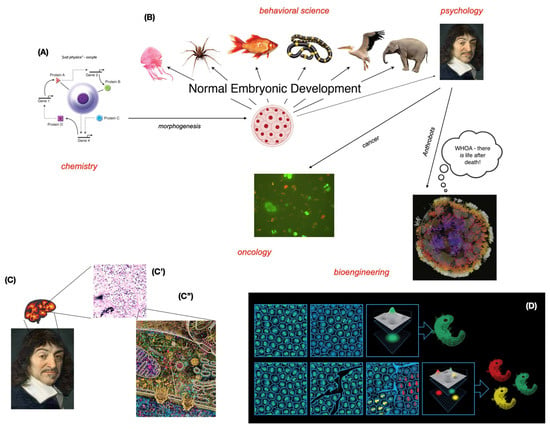
Bodies and minds self-assemble from single cells as a process of alignment and autopoiesis. (A) Most complex biological forms begin as one cell—a fertilized oocyte, commonly thought to be well-described by the laws of physics and chemistry. (B) A gradual, slow process of developmental morphogenesis results in the final form of the organism, which may have complex structure and a mind which may not believe it is a “machine”. Our transformation from a chemical soup into an active embodied mind is continuous but heterogeneous: (C) while we commonly think of ourselves as a unified intelligence with a “centralized” brain, the fact is that even the pineal gland, of which there is only one in the brain, is made of cells (C′) and those cells in turn are made of myriad other active components (C″)—we are a collective intelligence at all scales. (D) The creation of an “individual” out of an excitable medium such as an embryonic blastoderm with hundreds of thousands of cells is a dynamic process that is not hardwired: scratches made in that blastoderm would result in independent self-organization in each island, resulting in multiple embryos forming. This reveals the potentiality for some non-pre-determined number of minds to arise out of the same substrate. Images in (A,B,D) courtesy of Jeremy Guay of Peregrine Creative, used previously in [29]. Image (B) used with permission from [30]. Image in (C′) courtesy of Jose Calvo, Science Photo Library. Image in (C″) courtesy of Evan Ingersoll and Gaël McGill. Image (D) used with permission from [31].
  • Review
  • Open Access

Background: Chlorine dioxide (ClO2), formulated as an aqueous solution (CDS), has been proposed as a therapeutic agent, yet its classification among oxidizing compounds is frequently confounded with chemically distinct species—sodium chlorite (NaClO2) and sodium hypochlorite (NaOCl). Objective: This study aimed to synthesize the physicochemical, mechanistic and cellular basis of ClO2 action and to delineate the distinctions between ClO2 and related oxidants, with explicit separation of established data from hypothesized data. Methods: The methodology includes a narrative synthesis of electrochemical data, primary toxicological and clinical literature (PubMed) and the redox-biology literature on low-dose oxidant signaling. Results: ClO2 is a neutral free radical that acts via one-electron transfer (E°′ = +0.95 V vs. SHE for the half-reaction ClO2 + e− → ClO2−, essentially pH-independent over pH 4–8, pH-independent) without chlorination. Its antimicrobial action is attributable to oxidation of thiol-dependent enzymes and membrane constituents and to the inhibition of bacterial respiratory metabolism; host-cell sparing is consistent with differential glutathione-dependent buffering. Controlled human ingestion studies at low concentrations report a favorable short-term safety profile; conversely, the principal metabolite (chlorite) is associated with documented developmental toxicity in animals and regulatory caution by EPA/WHO. Low-dose ClO2 exposure is hypothesized—but not yet directly demonstrated—to elicit dose-dependent adaptive redox responses and redox-regulatory modulation. Conclusions: The one-electron, non-chlorinating chemistry of ClO2 provides a coherent mechanistic framework. The translation of this framework into clinical application requires prospective trials and direct mechanistic measurement, ideally conducted by independent investigators. The following mechanisms are hypothesized and have not yet been directly demonstrated in vivo: modulation of oxidative phosphorylation, mitochondrial oxygenation, and associated redox-regulatory signaling. Reported antimicrobial efficacy typically occurs in the low-ppm range (0.1–5 ppm), whereas adverse effects on mammalian cells in the reviewed literature are reported at concentrations at least one order of magnitude higher; direct head-to-head cytotoxicity comparisons remain scarce and are identified as a priority for future work. This differential thiol buffering—in particular, the higher glutathione content of many mammalian cells relative to many pathogens—has been proposed as a contributing basis for host-cell sparing; direct quantitative confirmation in vivo is not yet available. Bacterial species possess their own thiol-based defense systems (e.g., mycothiol in actinomycetes, bacillithiol in Firmicutes), and the interplay between ClO2 and these systems requires further investigation.

Biophysica

21 September 2026

14,306 Views
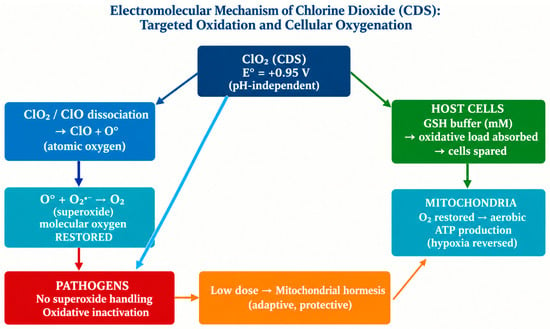
Mechanistic overview. ClO2 acts via one-electron oxidation of microbial targets (thiol oxidation, envelope and nucleic acid damage, respiratory inhibition); host cells are spared through glutathione-dependent redox buffering. The proposed low-dose hormetic response is a hypothesis requiring direct experimental confirmation, as discussed in Section 4.2.
  • Review
  • Open Access

Neglected tropical diseases (NTDs) caused by Leishmania and Schistosoma species continue to impose a significant health burden in endemic regions, largely due to limited therapeutic options, drug resistance, and incomplete understanding of parasite biology at the molecular level. A major restriction in the development of targeted interventions is the structural inaccessibility of parasite membrane-associated proteins, which are central to host invasion, nutrient transport, immune evasion, and survival. Recent advances in cryogenic electron microscopy (cryo-EM) have expanded the structural biology toolkit available for studying difficult parasite proteins, particularly large and membrane-associated macromolecular assemblies. However, experimentally resolved cryo-EM structures remain limited for many of the Leishmania and Schistosoma targets relevant to therapeutic and vaccine development. This review therefore distinguishes experimentally determined structures from partial structural information and computational models and examines how potential cryo-EM approaches may address unresolved structural questions. We discuss current structural knowledge of selected parasite targets, approaches for recombinant expression and membrane-protein stabilization, membrane-mimetic systems for structural characterization, and computational methods that complement experimental structural biology. We further examine how experimentally supported structural information, complemented by computational predictions where appropriate, could contribute to structure-guided drug discovery, vaccine design, and targeted nanomedicine. At present, however, the direct translation of parasite structural information into rational nanotherapeutic design remains limited. Key gaps include the scarcity of experimentally resolved parasite membrane protein structures, challenges in their expression and structural characterization, and limited integration of structural biology with nanoparticle engineering. Resolving these gaps may improve the prospects for structure-informed therapeutic and nanomedicine applications against leishmaniasis, schistosomiasis, and other NTDs.

Curr. Issues Mol. Biol.

30 September 2026

8,090 Views
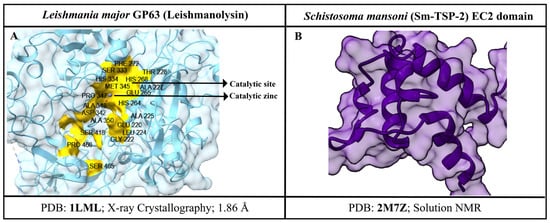
Molecular representation of experimentally characterized structural regions of selected Leishmania and Schistosoma targets (extracted from the PDB database and visualized with ChimeraX software). (A) X-ray crystal structure of Leishmania major leishmanolysin (GP63; PDB 1LML), showing the experimentally determined protein architecture and catalytic zinc-containing region. (B) Solution NMR structure of the extracellular EC2 domain of Schistosoma mansoni Sm-TSP-2 (PDB 2M7Z). The Sm-TSP-2 structure represents an 81-residue extracellular domain and does not resolve the complete four-pass membrane protein or its organization within the native tegument. The structures illustrate the different levels and experimental methods of structural evidence available for these parasite targets.
  • Article
  • Open Access

Animal material culture is most often discussed in relation to tool use and foraging, while non-foraging object use remains poorly documented in many taxa. This study reports opportunistic observations of a novel object-directed behavior in the critically endangered pygmy raccoon (Procyon pygmaeus), an island-endemic species restricted to Cozumel, Mexico. During fieldwork on tourism effects between January and February 2026, researchers used direct observation, site assessment, photography, videography, and interviews to document raccoon behavior at several sites. At one beach club, two juvenile female siblings were observed retrieving paper waste, dipping it in water, rolling and compacting it with sand, and using the resulting balls in play. One juvenile first performed the full sequence while the other observed and then attempted the behavior; the second juvenile later completed the sequence independently after her sister had been removed from the site. However, at a comparable tourism site with juvenile raccoons and access to paper and water, this behavior was not observed. These observations provide potential evidence of socially mediated material engagement in pygmy raccoons. The findings expand the known behavioral repertoire of the species and support continued field-based behavioral monitoring, especially where tourism, waste exposure, and juvenile development overlap.

Wild

25 August 2026

15,244 Views
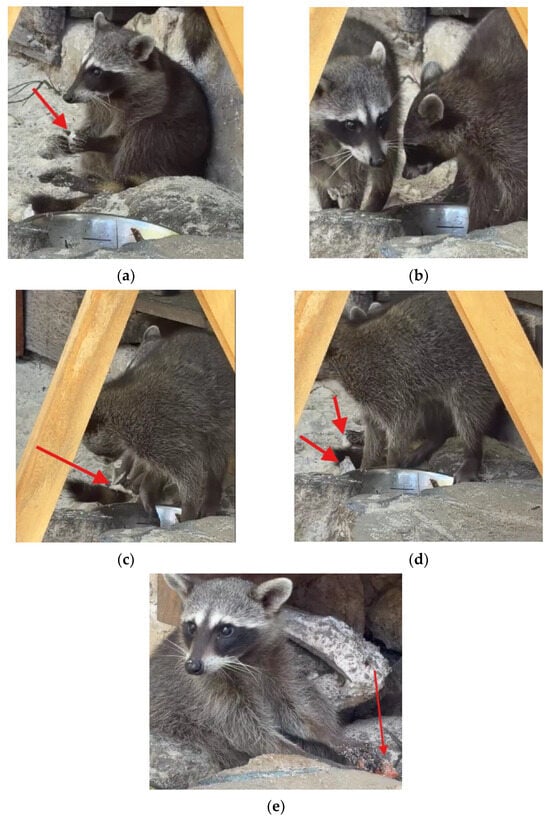
Paper transformation behavior in two juvenile pygmy raccoons: (a) Juvenile 1 making a paper ball. (b) Juvenile 2 observing and approaching. (c) Juvenile 2 retrieves paper from the trash and attempts to make a ball without success. Juvenile 1 watches this attempt. (d) Juvenile 1 takes the paper from Juvenile 2 and begins to make a ball while Juvenile 2 plays with Juvenile 1’s first ball. (e) After the illness and subsequent removal of Juvenile 1, Juvenile 2 is seen turning a hamburger wrapper into a ball.

Our Products

Professional networking platform that connects researchers, academics, and scientific professionals, enabling them to showcase their publications, track citations, and collaborate with peers across disciplines worldwide.

Discover

Scientific literature tracking and analysis tool for researchers and institutions. Providing insights on publication trends, citations, and collaborative opportunities.

Discover

Open access book publishing platform for comprehensive scientific works. Offering wide distribution of monographs, edited volumes, and reference works.

Discover

Early sharing of research papers before peer review. Enabling rapid dissemination of findings and community feedback on preliminary work.

Discover

Editor's Choice Articles

  • Article
  • Open Access

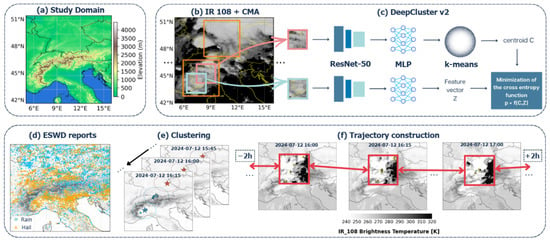
Extreme precipitation and hail events over complex terrain are strongly dependent on the multiscale evolution of convective systems, yet their development remains challenging to observe and model. In this study, we apply a self-supervised learning (SSL) framework to Meteosat infrared 10.8 μm imagery over the Alpine region to derive physically meaningful representations of convective cloud organization across the full daily cycle. The learned representation organizes convective cloud scenes into three primary regimes: early convection (EC), deep convection (DC), and overcast anvil systems (OA), each exhibiting distinct cloud-top properties, spatial structures, and day–night distributions consistent with established convective development stages. Within the developed SSL framework, reported extreme precipitation and hail events are preferentially associated with these regimes, occupying the upper tail of cloud-top height, optical thickness, and cloud coverage distributions within the latent space. This indicates that extremes correspond to rare, intense realizations of continuous convective variability. Two dominant pathways of cloud structure evolution are identified: a rapid EC→DC transition and a persistent DC mode. The former is characterized by fast cloud growth and intensification, while the latter corresponds to mature convective systems with sustained cloud properties. Overall, the results demonstrate that infrared-based SSL representations capture physically consistent convective stages and their transitions, providing a novel observational framework for characterizing extreme convective events and supporting the evaluation of convection-resolving numerical weather prediction models.

Remote Sens.

23 October 2026

(a) Elevation map of the Alpine study domain. Training dataset: (b) Example of the random cropping procedure over the Alpine domain. Two randomly positioned 100 × 100 pixel crops (orange frame) are extracted at each timestep from the IR 10.8 μm channel. Black pixels correspond to a BT of 320 K (see colorbar in panel f) and represent clear-sky pixels masked using the cloud mask. In each crop, we extract a random pair of image views (pink and light-blue frames). (c) DeepCluster-v2 architecture used for the SSL model trained using the two views. Test dataset: (d) Collection of extreme precipitation and hail reports from the ESWD. (e) Aggregation of reports into 15-min intervals and spatial clustering (stars denote cluster centers). (f) Reconstruction of ESWD-based trajectories by linking cluster centers across consecutive timestamps, interpolating missing timestamps within 1 h, and extending trajectories by ±2 h beyond the observation period. Satellite crops (100 × 100 pixels) are then extracted at each cluster center.
  • Article
  • Open Access

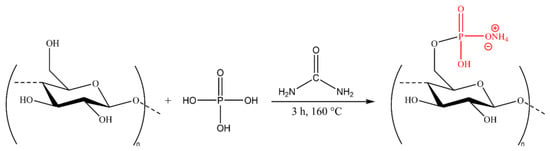
Cellulose fibers are abundant, renewable biopolymers with significant potential to replace petroleum-based materials, yet their high flammability limits their use in fire-sensitive applications such as protective packaging, electrical insulation, and interior building materials. In this study, softwood kraft fibers were phosphorylated without solvent or chemical pre-treatment using a molten urea/phosphoric acid system at 160 °C for 3 h (molar ratio of 6:3:1 for urea, H3PO4, and cellulose anhydroglucose units). After water quenching, disintegration, and washing, the modified fibers were blended with unmodified kraft fibers at various ratios (0, 20, 40, 60, 80, and 100 wt.%) to prepare standard paper handsheets (85–90 g/m2) dried at 120 °C. Fiber characterization confirmed successful phosphate ester grafting, yielding a phosphorus content of 5.9%, a nitrogen content of 8.7%, and a total charge increase from 92 to 4676 mmol/kg, while preserving fiber length (decreasing slightly from 2.04 to 1.93 mm). Thermogravimetric analysis revealed enhanced thermal stability, generating a residual char mass of 31.12 wt.% at 900 °C compared to 6.9 wt.% for untreated fibers. Handsheet apparent density varied from 0.260 g/cm3 for KFP60 to 0.316 g/cm3 for KFP100. Inter-fiber phosphate crosslinking during hot drying significantly improved mechanical performance, increasing maximum load from 10.27 N to 42.29 N and Young’s modulus from 39.77 to 99.78 MPa. Vertical flammability tests demonstrated that handsheets containing ≥60 wt.% phosphorylated fibers preserved their structural integrity after 30 s of flame exposure, whereas untreated handsheets burned completely. These results highlight phosphorylation as a scalable, halogen-free, and effective strategy for producing mechanically robust, fire-resistant cellulose materials.

Fibers

19 October 2026

Phosphorylation of kraft fibers using phosphoric acid and urea.
  • Article
  • Open Access

The growing global demand for particleboards has generated large quantities of waste in recent years. This waste mainly arises from manufacturing processes, furniture industry offcuts, and end-of-life disposal. In response to waste management challenges, recycling and reuse technologies have advanced significantly. In this context, this study evaluates the feasibility of producing new particleboards using recycled particles obtained from laminated particleboard waste. Recycled particles were treated with hot water, oxalic acid, and a combination of both, and the most effective treatment was selected for panel production. Hot water treatment was insufficient to remove the cured UF resin and promote particle separation, whereas oxalic acid successfully achieved both. Three-layer panels were then manufactured using oxalic acid-treated recycled particles at incorporation levels of 0%, 25%, 50%, 75%, and 100% in the core layer. The average density, vertical density profile, and physical and mechanical properties, as well as the formaldehyde emissions, were assessed. The results showed that the inclusion of recycled particles did not significantly impact the average density or the vertical density profiles of the panels. Thickness swelling and water absorption after 24 h immersion were similar across all panels, indicating good dimensional stability. Internal bond (IB) strength showed no consistent trend with increasing recycled particle content, and panels with 75% recycled particles achieved the highest IB strength (0.48 MPa). In contrast, bending properties decreased when the proportion of recycled particles exceeded 25%. All panels satisfied the requirements of the LD-2 Grade for low-density particleboards specified by the ANSI A208.1-2022 standard. An increase in formaldehyde emissions was observed in panels containing more than 25% recycled particles compared to the control panels. These findings indicate that particleboards can incorporate up to 75% recycled particles in the core, while maintaining physical and mechanical properties comparable to those of the control panels.

Fibers

19 October 2026

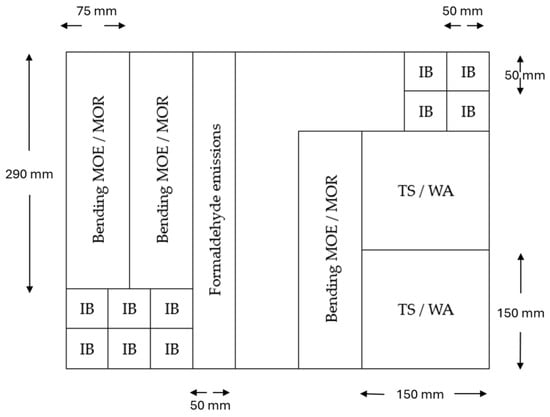
Cutting layout for panel samples used to test physical and mechanical properties and formaldehyde emissions. Sample dimensions: internal bond (IB) strength: 50 mm × 50 mm; bending modulus of elasticity (MOE)/modulus of rupture (MOR): 290 mm × 75 mm; thickness swelling (TS) and water absorption (WA): 150 mm × 150 mm; and formaldehyde emissions: 400 mm × 50 mm.
  • Article
  • Open Access

Uniform deposition of nanoparticle suspensions over large-area substrates remains challenging because coating formation is strongly influenced by suspension properties and spraying conditions. Therefore, this study employed computational fluid dynamics (CFD) to simulate the air-assisted spray deposition of nano-Al2O3 suspensions, with method validation. The effects of nanoparticle volume fraction, feed rate, and air pressure on deposition morphology and coating thickness distribution were investigated. Increasing the nanoparticle volume fraction from 1% to 4% improved thickness uniformity, reducing the normalized root-mean-square error and coefficient of variation (CV) to 5.52% and 38.90%, respectively, while a further increase to 5% provided no additional improvement. Increasing the feed rate from 1 g/s to 5 g/s increased the mean coating thickness from 3.09 μm to 10.97 μm and the effective coverage area from 2.5 × 104 mm2 to 4 × 104 mm2, but intensified local thickness accumulation. Increasing the air pressure from 0.1 MPa to 0.3 MPa enhanced droplet dispersion, increasing the effective coverage area from 2.45 × 104 mm2 to 3.57 × 104 mm2 while decreasing the mean coating thickness from 10.25 μm to 6.99 μm. These findings provide a reference for process selection in large-area nanoparticle suspension deposition.

Coatings

15 October 2026

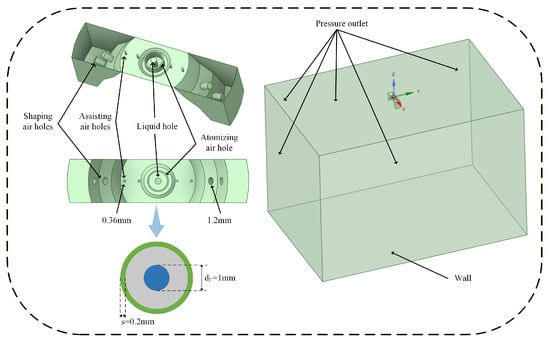
Schematic of the simplified air spray gun model and computational domain.