You are currently viewing a new version of our website. To view the old version click .
  • 0.4Impact Factor
  • 24 daysTime to First Decision

Craniomaxillofacial Trauma & Reconstruction

Craniomaxillofacial Trauma & Reconstruction (CMTR) is an international, peer-reviewed, open access journal that covers all types of research in surgery of the head, face and jaw, and is published quarterly online and a member of the Committee on Publication Ethics (COPE). 
It is the official journal of the AO Craniomaxillofacial Surgery (AO CMF). Foundation members receive discounts on the article processing charges.
Indexed in PubMed | Quartile Ranking JCR - Q4 (Dentistry, Oral Surgery and Medicine)

All Articles (849)

Background: Although orbital fractures are common in trauma care, age-specific mechanisms and admission physiology-based risk stratification have not been systematically characterized. This study aimed to identify age–mechanism interaction patterns and develop an admission-based physiological risk score for orbital fracture patients. Methods: This retrospective cohort study analyzed 41,464 adult orbital fracture patients from the National Trauma Data Bank (2018–2020). A three-component physiological risk score was developed using admission vital signs: severe hypotension (<90 mmHg, 2 points), tachycardia (>100 bpm, 1 point), and severe traumatic brain injury (GCS ≤ 8, 1 point). Risk stratification performance was validated against composite adverse outcomes. Results: Distinct age–mechanism patterns emerged: 74.0% of elderly patients (≥65 years) sustained falls, while young adults demonstrated a bimodal distribution with motor vehicle crashes (31.2%) and violence (28.4%). Violence-related injuries occurred in younger patients (40.3 vs. 55.0 years) but had lower injury severity scores (10.0 vs. 14.4) and mortality (2.8% vs. 5.2%) than accidental mechanisms. High-/critical-risk patients (8.4% of the cohort) had 16.2% mortality versus 2.1% in stable patients. Complex facial injuries demonstrated 11-fold higher mortality (7.7% vs. 0.7%). The physiologic risk score achieved AUC 0.79 (95% CI: 0.78–0.80). Conclusions: Age–mechanism interactions revealed distinct bimodal injury patterns in young adults. Admission physiologic parameters effectively identify 8.4% of patients requiring intensive resources, while violence-related injuries paradoxically demonstrate better outcomes than accidental mechanisms.
6 December 2025

(a) Age Distribution Patterns by Mechanism of Injury Grouped bar chart showing percentage distribution of three adult age groups (young &lt; 35 years, middle-aged 35–64 years, elderly ≥ 65 years) across five injury mechanisms. Age-specific injury patterns were demonstrated, with elderly patients predominantly sustaining falls (74.0%), young adults predominantly sustaining motor vehicle crashes (31.2%) and violence (28.4%), and middle-aged patients showing violence as the leading mechanism (28.5%). p &lt; 0.001 for age–mechanism interaction. (b) Physiological Risk Marker Prevalence by Mechanism of Injury Grouped bar chart showing prevalence of three physiologic risk markers (severe hypotension &lt; 90 mmHg, tachycardia &gt; 100 bpm, severe TBI GCS ≤ 8) across five injury mechanisms. Motor vehicle crashes and other/unknown mechanisms demonstrate highest rates of tachycardia (34.7% and 32.3%) and severe TBI (19.7% and 23.5%), while falls show lowest rates across all physiologic markers. p &lt; 0.001 for all comparisons.
Introduction: Facial trauma is a public health concern, with reports of about 25% of all traumas having a component of facial injury. Alcohol and illicit drug use have previously been shown to exacerbate the severity of trauma injuries. This study investigates the relationship between illicit drug use and clinical outcomes amongst patients presenting with facial fracture injuries. Methods: A retrospective multicenter cohort study through the TriNetX database was performed. Drug Involved Facial fracture injury with illicit drug use (DIFFI+) was compared to a Non-Drug Involved Facial Fracture Injury group (DIFFI−). After propensity score matching, measures of hospital burden outcomes, surgical intervention, and underlying psychiatric diagnosis outcomes were compared. Results: A total of 27,863 propensity score-matched DIFFI+ cases were used for analysis. DIFFI+ patients were younger (mean age 33.8 vs. 42.0 years, p < 0.001), more often male (75% vs. 56%, p < 0.001), and more likely to be Black/African American (21% vs. 14%, p < 0.001), with cannabis and opioid use most common. DIFFI+ patients had a significantly higher odds of hospital burden outcomes, including psychiatry services (OR = 8.40), ventilator management (OR = 5.18), and critical care services (OR = 3.83). Conclusions/Discussion: DIFFI+ was significantly correlated with greater hospital burden in all analyzed clinical outcomes. DIFFI+ patients have a higher odds of receiving surgery but lower odds of receiving a fracture diagnosis. Having a psychiatric diagnosis increases risk for DIFFI+ injury.

5 December 2025

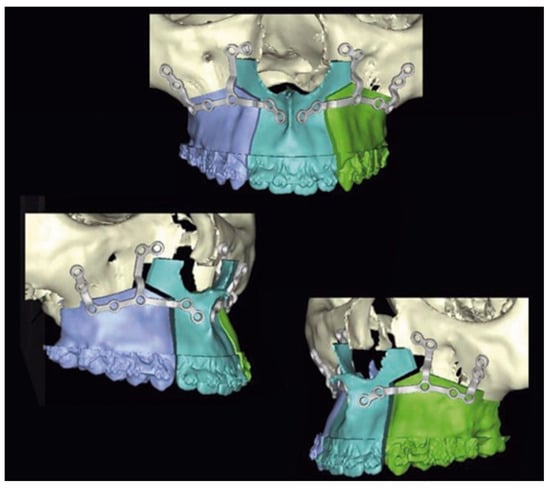
Zygomaticomaxillary complex (ZMC) fractures are among the most common midfacial injuries, with significant implications for both function and facial esthetics. Optimal management requires restoring the normal anatomical alignment and symmetry of the zygomatic region to prevent long-term deformity and functional deficits. However, the decision-making surrounding surgical intervention, particularly in isolated ZMC fractures with moderate displacement, remains nuanced. This review discusses contemporary surgical approaches for isolated ZMC fractures and examines how objective morphometric analysis can guide critical decisions such as the timing of surgery, choice of surgical approach, and extent of fixation. Conventional assessment tools like computed tomography (CT), cephalometric measurements, and intraoperative imaging provide foundational data on fracture anatomy. Emerging technologies, including three-dimensional (3D) photogrammetry, stereophotogrammetry, artificial intelligence (AI)-based symmetry analysis, and surgical navigation systems, offer advanced means to quantify facial symmetry and bone alignment. By integrating these objective metrics into clinical practice, surgeons can enhance preoperative planning and postoperative outcome evaluation, with a particular focus on achieving facial symmetry for optimal esthetic and functional results. We also outline clinical decision-making frameworks that incorporate quantitative measurements, and we discuss current limitations, future directions, and the potential for standardizing protocols in the management of ZMC fractures.

29 November 2025

CMTR—Aims and Scope Update

  • Kathleen Fan,
  • Yiu Yan Leung and
  • Florian M. Thieringer

The journal Craniomaxillofacial Trauma & Reconstruction (CMTR) (ISSN 1943-3883) was launched in 2008 and officially transferred to MDPI in 2025 [...]

27 November 2025

News & Conferences

Issues

Open for Submission

Editor's Choice

Get Alerted

Add your email address to receive forthcoming issues of this journal.

XFacebookLinkedIn
Craniomaxillofac. Trauma Reconstr. - ISSN 1943-3883