


Journal Menu
► ▼ Journal Menu-
- Molecules Home
- Aims & Scope
- Editorial Board
- Reviewer Board
- Topical Advisory Panel
- Instructions for Authors
- Special Issues
- Topics
- Sections & Collections
- Article Processing Charge
- Indexing & Archiving
- Editor’s Choice Articles
- Most Cited & Viewed
- Journal Statistics
- Journal History
- Journal Awards
- Society Collaborations
- Conferences
- Editorial Office
- 30th Anniversary
Journal Browser
► ▼ Journal Browser-
arrow_forward_ios
Forthcoming issue
arrow_forward_ios Current issue - Vol. 31 (2026)
- Vol. 30 (2025)
- Vol. 29 (2024)
- Vol. 28 (2023)
- Vol. 27 (2022)
- Vol. 26 (2021)
- Vol. 25 (2020)
- Vol. 24 (2019)
- Vol. 23 (2018)
- Vol. 22 (2017)
- Vol. 21 (2016)
- Vol. 20 (2015)
- Vol. 19 (2014)
- Vol. 18 (2013)
- Vol. 17 (2012)
- Vol. 16 (2011)
- Vol. 15 (2010)
- Vol. 14 (2009)
- Vol. 13 (2008)
- Vol. 12 (2007)
- Vol. 11 (2006)
- Vol. 10 (2005)
- Vol. 9 (2004)
- Vol. 8 (2003)
- Vol. 7 (2002)
- Vol. 6 (2001)
- Vol. 5 (2000)
- Vol. 4 (1999)
- Vol. 3 (1998)
- Vol. 2 (1997)
- Volumes not published by MDPI
Need Help?
Announcements
27 January 2026
Meet Us at the 5th Molecules Medicinal Chemistry Symposium, 14–17 May 2026, Beijing, China

Conference: 5th MMCS: New Trends in Chemical Biology and Drug Discovery
Date: 14–17 May 2026, Beijing Time
Conference website: https://sciforum.net/event/MMCS2026
This conference is organized by the MDPI journal Molecules (ISSN: 1420-3049, IF: 4.2, and CiteScore: 7.4) and will take place in Beijing, China, from 14 to 17 May 2026 (Beijing time).
Conference Chairs:
- Prof. Dr. Xiaoguang Lei, College of Chemistry and Molecular Engineering, Peking University, China;
- Prof. Dr. Diego Muñoz-Torrero, Faculty of Pharmacy and Food Sciences, and Institute of Biomedicine (IBUB), University of Barcelona, Spain.
Topics of interest:
S1. Chemical biology for drug discovery;
S2. AI for drug discovery;
S3. New proximity-based drug modalities;
S4. Natural products in drug discovery;
S5. Biocatalysis for natural product and drug synthesis;
S6. Drug discovery targeting GPCRs and ion channels;
S7. DNA-encoded libraries in drug discovery;
S8. Medicinal chemistry tales.
Important dates:
Deadline for abstract submission: 13 March 2026;
Abstract acceptance notification: 27 March 2026;
Early bird registration deadline: 3 April 2026;
Covering author registration deadline: 3 April 2026;
Registration deadline: 14 May 2026.
Guide for authors:
To submit your abstract, please visit the following link: https://sciforum.net/user/submission/create/1319.
To register for the event, please visit the following link: https://sciforum.net/event/MMCS2026?section=#registration.
For more information, you may refer to the following link: https://sciforum.net/event/MMCS2026.
For any inquiries regarding the event, please contact mmcs2026@mdpi.com.
We look forward to seeing you at the 5th MMCS: New Trends in Chemical Biology and Drug Discovery.
22 January 2026
“Do Not Be Afraid of New Things”: Prof. Michele Parrinello on Scientific Curiosity and the Importance of Fundamental Research
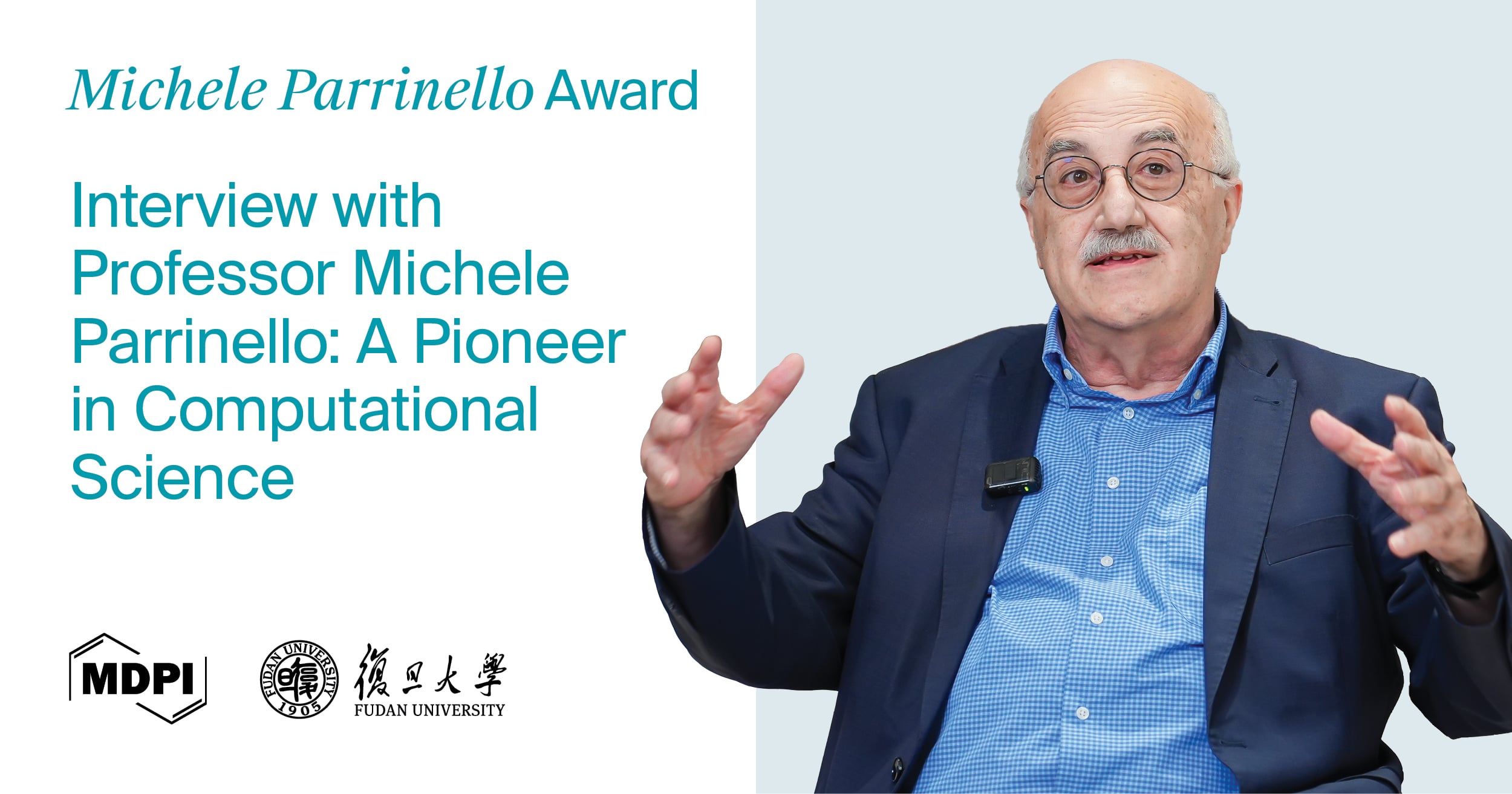
In atomic and molecular simulation, researchers have long-needed efficient ways to predict material properties in order to focus on the most promising real laboratory tests instead of redundant work. Addressing this challenge, Prof. Michele Parrinello introduced two transformative methods that have redefined the field: the Car–Parrinello method, which serves as a “virtual lab” for studying reactions and electronic properties, and the Parrinello–Rahman method, a cornerstone for crystal phase transition studies. His work has reshaped the way that we study atomic systems, earning him the status of one of the most cited scholars in his field.
To honor his enduring legacy and continued impact, MDPI has established the Michele Parrinello Award. This award celebrates innovation and recognizes senior scientists who have made outstanding contributions to computational physical sciences, spanning the fields of physics, chemistry, and materials science.
We had the great honor of speaking with Prof. Parrinello in an exclusive interview, where he shared his perspectives on his current research focus, personal scientific experiences, support for basic research, and his advice for global researchers.

Access the full interview to hear his insights in this conversation.
3 December 2025
Meet Us at the 5th Molecules Medicinal Chemistry Symposium, 14–17 May 2026, Beijing, China
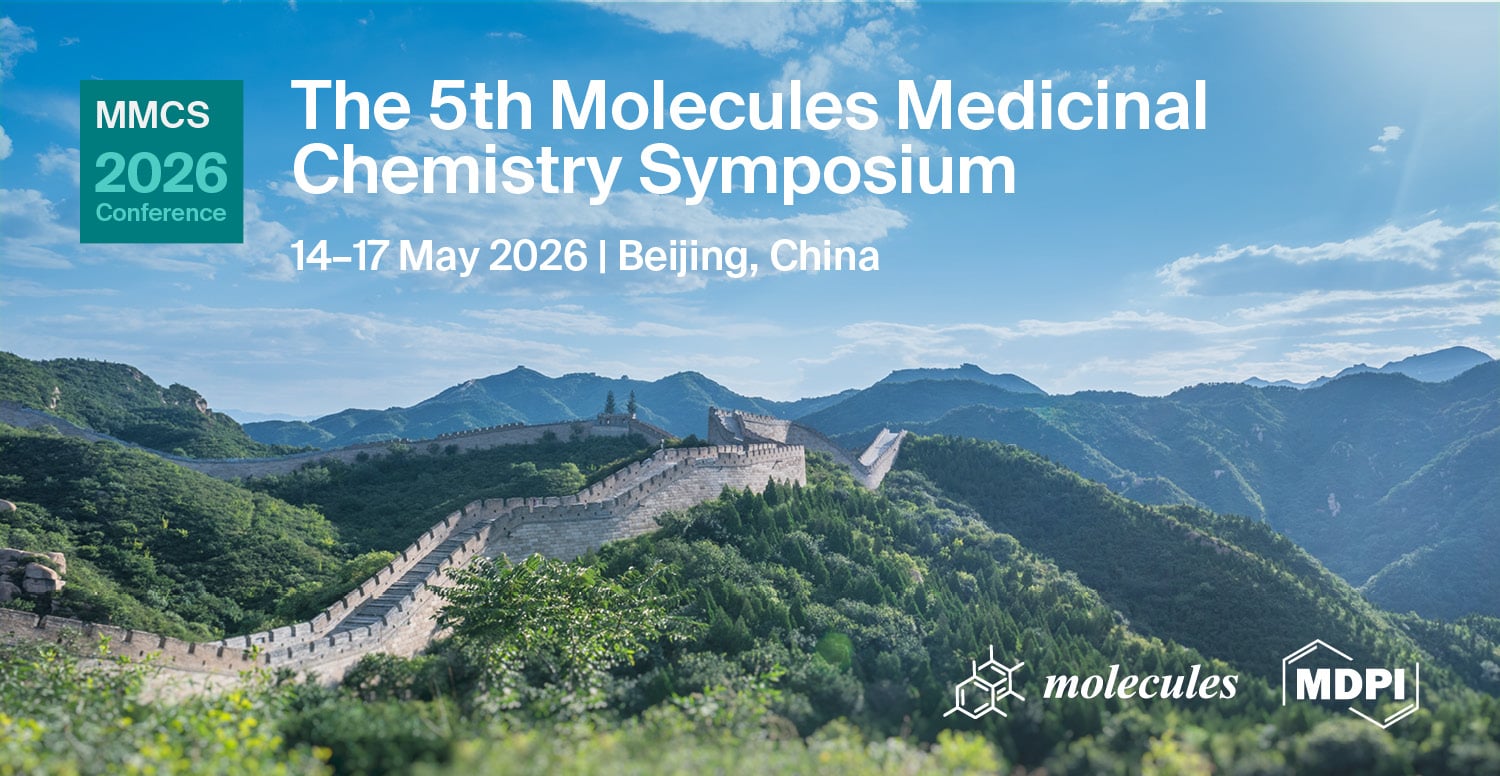
Conference: 5th MMCS: New Trends in Chemical Biology and Drug Discovery
Date: 14–17 May 2026, Beijing Time
Conference website: https://sciforum.net/event/MMCS2026
This conference is organized by the MDPI journal Molecules (ISSN: 1420-3049, IF: 4.2, and CiteScore: 7.4) and will take place in Beijing, China, from 14 to 17 May 2026 (Beijing time).
Conference Chairs:
- Prof. Dr. Xiaoguang Lei, College of Chemistry and Molecular Engineering, Peking University, China;
- Prof. Dr. Diego Muñoz-Torrero, Faculty of Pharmacy and Food Sciences, and Institute of Biomedicine (IBUB), University of Barcelona, Spain.
Topics of interest:
S1. Chemical biology for drug discovery;
S2. AI for drug discovery;
S3. New proximity-based drug modalities;
S4. Natural products in drug discovery;
S5. Biocatalysis for natural product and drug synthesis;
S6. Drug discovery targeting GPCRs and ion channels;
S7. DNA-encoded libraries in drug discovery;
S8. Medicinal chemistry tales.
Important dates:
Deadline for abstract submission: 13 March 2026;
Abstract acceptance notification: 27 March 2026;
Early bird registration deadline: 3 April 2026;
Covering author registration deadline: 3 April 2026;
Registration deadline: 14 May 2026.
Guide for authors:
To submit your abstract, please visit the following link: https://sciforum.net/user/submission/create/1319.
To register for the event, please visit the following link: https://sciforum.net/event/MMCS2026?section=#registration.
For more information, you may refer to the following link: https://sciforum.net/event/MMCS2026.
For any inquiries regarding the event, please contact mmcs2026@mdpi.com.
We look forward to seeing you at the 5th MMCS: New Trends in Chemical Biology and Drug Discovery.
6 November 2025
MDPI Launches the Michele Parrinello Award for Pioneering Contributions in Computational Physical Science
MDPI is delighted to announce the establishment of the Michele Parrinello Award. Named in honor of Professor Michele Parrinello, the award celebrates his exceptional contributions and his profound impact on the field of computational physical science research.
The award will be presented biennially to distinguished scientists who have made outstanding achievements and contributions in the field of computational physical science—spanning physics, chemistry, and materials science.
About Professor Michele Parrinello
"Do not be afraid of new things. I see it many times when we discuss a new thing that young people are scared to go against the mainstream a little bit, thinking what is going to happen to me and so on. Be confident that what you do is meaningful, and do not be afraid, do not listen too much to what other people have to say.”
——Professor Michele Parrinello
 |
Born in Messina in 1945, he received his degree from the University of Bologna and is currently affiliated with the Italian Institute of Technology. Professor Parrinello is known for his many technical innovations in the field of atomistic simulations and for a wealth of interdisciplinary applications ranging from materials science to chemistry and biology. Together with Roberto Car, he introduced ab initio molecular dynamics, also known as the Car–Parrinello method, marking the beginning of a new era both in the area of electronic structure calculations and in molecular dynamics simulations. He is also known for the Parrinello–Rahman method, which allows crystalline phase transitions to be studied by molecular dynamics. More recently, he has introduced metadynamics for the study of rare events and the calculation of free energies. |
For his work, he has been awarded many prizes and honorary degrees. He is a member of numerous academies and learned societies, including the German Berlin-Brandenburgische Akademie der Wissenschaften, the British Royal Society, and the Italian Accademia Nazionale dei Lincei, which is the major academy in his home country of Italy.
Award Committee
 |
The award committee will be chaired by Professor Xin-Gao Gong, a computational condensed matter physicist, academician of the Chinese Academy of Sciences, and professor at the Department of Physics, Fudan University. Professor Xin-Gao Gong will lead a panel of several senior experts in the field to oversee the evaluation and selection process. The Institute for Computational Physical Sciences at Fudan University (Shanghai, China), led by Professor Xin-Gao Gong, will serve as the supporting institute for the award. |
"We hope the Michele Parrinello Award will recognize scientists who have made significant contributions to the field of computational condensed matter physics and at the same time set a benchmark for the younger generation, providing clear direction for their pursuit—this is precisely the original intention behind establishing the award."
——Professor Xin-Gao Gong
The first edition of the award was officially launched on 1 November 2025. Nominations will be accepted before the end of March 2026. For further details, please visit mparrinelloaward.org.
About the MDPI Sustainability Foundation and MDPI Awards 
The Michele Parrinello Award is part of the MDPI Sustainability Foundation, which is dedicated to advancing sustainable development through scientific progress and global collaboration. The foundation also oversees the World Sustainability Award, the Emerging Sustainability Leader Award, and the Tu Youyou Award. The establishment of the Michele Parrinello Award will further enrich the existing award portfolio, providing continued and diversified financial support to outstanding professionals across various fields.
In addition to these foundation-level awards, MDPI journals also recognize outstanding contributions through a range of honors, including Best Paper Awards, Outstanding Reviewer Awards, Young Investigator Awards, Travel Awards, Best PhD Thesis Awards, Editor of Distinction Awards, and others. These initiatives aim to recognize excellence across disciplines and career stages, contributing to the long-term vitality and sustainability of scientific research.
Find more information on awards here.
28 January 2026
Meet Us at the TMS 2026 Annual Meeting & Exhibition, 15–19 March 2026, San Diego, California, USA
Conference: TMS 2026 Annual Meeting & Exhibition
Date: 15–19 March 2026
Location: San Diego, California, USA
The TMS Annual Meeting & Exhibition brings together more than 4,000 engineers, scientists, business leaders, and other professionals in the minerals, metals, and materials fields for a comprehensive, cross-disciplinary exchange of technical knowledge.
MDPI will be attending the TMS 2026 Annual Meeting & Exhibition as an exhibitor, welcoming researchers from diverse backgrounds to visit and share their latest ideas.
The following MDPI journals will be represented at the conference:
- Materials;
- Metals;
- Molecules;
- Polymers;
- Ceramics;
- Corrosion and Materials Degradation;
- Construction Materials;
- Crystals;
- Fibers;
- Gels;
- Journal of Composites Science;
- Minerals;
- Physchem;
- Processes;
- Solids;
- Textiles;
- Coatings;
- Alloys;
- Applied Nano.
If you will be attending this conference, please feel free to start a conversation with us. Our delegates look forward to meeting you in person and answering any questions that you may have.
For more information about the conference, please visit https://www.tms.org/TMS2026.
23 January 2026
International Day of Clean Energy—“Clean Energy: For All and for Our Planet”, 26 January 2026
26 January marks the International Day of Clean Energy, a global initiative that aims to drive equitable and sustainable energy transitions, leaving no one behind and protecting our planet. As emphasized by the UN, clean energy is essential for closing the energy access gap (an estimated 1.5 billion people in rural areas still use unsafe, unhealthy and inefficient cooking systems) and for combatting climate change (over 75% of global greenhouse gas emissions are caused by fossil fuel energy production). Clean energy fuels socio-economic progress, empowering vulnerable communities in terms of education, healthcare and livelihoods, while also addressing the issue of polluting fuels, which are linked to 3.2 million premature deaths each year.
Join us in celebrating this International Day of Clean Energy by exploring research that turns global goals, such as Sustainable Development Goal 7, into actionable solutions. Together, these works amplify the UN’s call to action, uniting researchers, policymakers, and innovators to build a future in which clean energy benefits everyone and safeguards our planet.

|
|
|
|
|
|
|
|
|
|
|
|
|
|
|













“Solar, Wind, Hydrogen, and Bioenergy-Based Hybrid System for Off-Grid Remote Locations: Techno-Economic and Environmental Analysis”
by Roksana Yasmin, Md. Nurun Nabi, Fazlur Rashid and Md. Alamgir Hossain
Clean Technol. 2025, 7(2), 36; https://doi.org/10.3390/cleantechnol7020036
“Quantifying Cybersecurity Impacts on Clean Energy Market Volatility: A Time-Frequency Approach”
by Catalin Gheorghe and Oana Panazan
Mathematics 2025, 13(8), 1320; https://doi.org/10.3390/math13081320
“Lifecycle Management of Hydrogen Pipelines: Design, Maintenance, and Rehabilitation Strategies for Canada’s Clean Energy Transition”
by Myo Myo Khaing and Shunde Yin
Energies 2025, 18(2), 240; https://doi.org/10.3390/en18020240
“A Comprehensive Review of Green Energy Technologies: Towards Sustainable Clean Energy Transition and Global Net-Zero Carbon Emissions”
by Vinod Kumar Sharma, Giulia Monteleone, Giacobbe Braccio, Cosmas N. Anyanwu and Nneoma N. Aneke.
Processes 2025, 13(1), 69; https://doi.org/10.3390/pr13010069
“Integration of Crops, Livestock, and Solar Panels: A Review of Agrivoltaic Systems”
by Diego Soto-Gómez
Agronomy 2024, 14(8), 1824; https://doi.org/10.3390/agronomy14081824
“Long-Term Energy System Modelling for a Clean Energy Transition and Improved Energy Security in Botswana’s Energy Sector Using the Open-Source Energy Modelling System”
by Ranea Saad, Fernando Plazas-Niño, Carla Cannone, Rudolf Yeganyan, Mark Howells and Hannah Luscombe
Climate 2024, 12(6), 88; https://doi.org/10.3390/cli12060088
“Long-Term Energy System Modelling for a Clean Energy Transition in Egypt’s Energy Sector”
by Anna Gibson, Zen Makuch, Rudolf Yeganyan, Naomi Tan, Carla Cannone and Mark Howells
Energies 2024, 17(10), 2397; https://doi.org/10.3390/en17102397
“Magnesium-Based Hydrogen Storage Alloys: Advances, Strategies, and Future Outlook for Clean Energy Applications”
by Yaohui Xu, Yang Zhou, Yuting Li, Yechen Hao, Pingkeng Wu and Zhao Ding
Molecules 2024, 29(11), 2525; https://doi.org/10.3390/molecules29112525
“Real-Time Monitoring of Wind Turbine Bearing Using Simple Neural Network on Raspberry Pi”
by Tianhao Wang, Hongying Meng, Rui Qin, Fan Zhang and Asoke Kumar Nandi.
Appl. Sci. 2024, 14(7), 3129; https://doi.org/10.3390/app14073129
“A Sustainability Approach between the Water–Energy–Food Nexus and Clean Energy”
by Gricelda Herrera-Franco, Lady Bravo-Montero, Jhon Caicedo-Potosí and Paúl Carrión-Mero
Water 2024, 16(7), 1017; https://doi.org/10.3390/w16071017
“Energy Management Strategy for DC Micro-Grid System with the Important Penetration of Renewable Energy”
by Christian Bipongo Ndeke, Marco Adonis and Ali Almaktoof
Appl. Sci. 2024, 14(6), 2659; https://doi.org/10.3390/app14062659
“Energy Transition in Vietnam: A Strategic Analysis and Forecast”
by Minh Phuong Nguyen, Tatiana Ponomarenko and Nga Nguyen
Sustainability 2024, 16(5), 1969; https://doi.org/10.3390/su16051969
“Natural Gas Matters: LNG and India’s Quest for Clean Energy”
by Subhadip Ghosh, Rajarshi Majumder and Bidisha Chatterjee
Gases 2024, 4(1), 1-17; https://doi.org/10.3390/gases4010001
“Assessment of Bioenergy Potential from Biomass Waste to Improve Access to Clean Energy for Cooking in Mali”
by Iván Segura-Rodríguez and Ramchandra Bhandari
Sustainability 2024, 16(1), 455; https://doi.org/10.3390/su16010455

|
“Sustainable Valorization of Biomass for Clean Energy and High-Value Products” |
“Clean Energy Technologies for Climate Change Mitigation” |
|
|
|
|
“Unconventional Energy, Clean Energy and Carbon Sequestration: Progress in Technology” |
“New Challenges in Clean Energy Technologies: Waste-to-Energy for Circular Economy” |
|
|
|


|
|
|
|
|


22 January 2026
Prof. Xin-Gao Gong Appointed Chair of the Michele Parrinello Award Committee
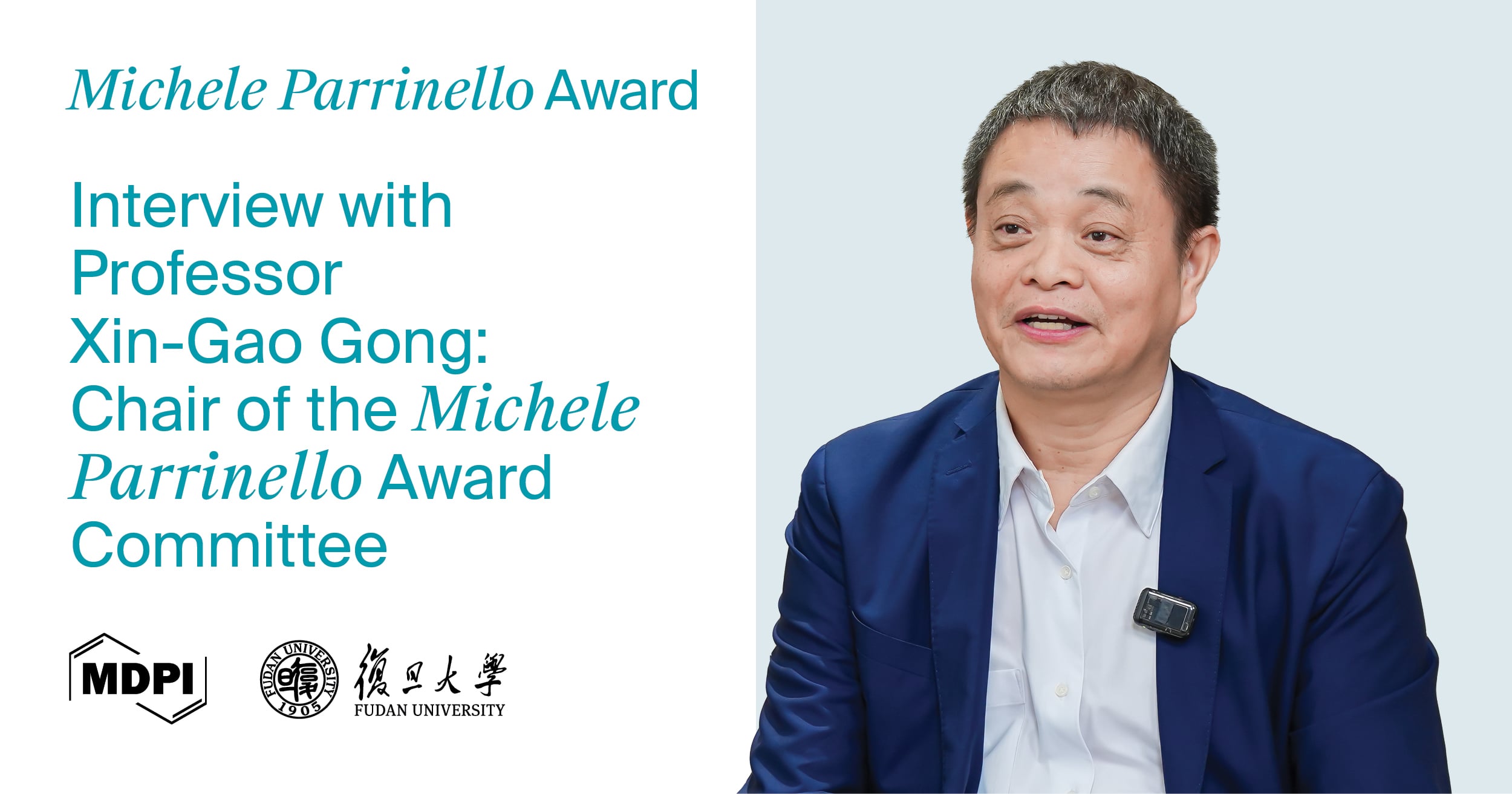
We are honored to announce that Prof. Xin-Gao Gong will serve as the Chair of the Michele Parrinello Award Committee.
Prof. Xin-Gao Gong is a distinguished computational condensed matter physicist and an Academician of the Chinese Academy of Sciences. He serves as a professor and doctoral advisor at Fudan University, where his groundbreaking research has profoundly advanced our understanding of material properties through computational methods. Widely recognized for his leadership in the field, Prof. Gong was elected a Fellow of the American Physical Society in 2009. He also directs the Key Laboratory of Computational Physical Sciences at Fudan University—a hub of innovation and discovery.

Under Prof. Gong’s leadership, the committee will focus on identifying innovative research in computational physical sciences, a multidisciplinary field that bridges physics, chemistry, and materials science. The committee will highlight fundamental advances with potential to drive progress across these domains, as the Michele Parrinello Award continues its mission to inspire excellence and recognize contributions that push scientific boundaries.
We recently had the honor of organizing an exclusive interview with Prof. Xin-Gao Gong. In this inspiring interview, Prof. Gong shares his academic journey from China to Italy, where he studied under the renowned Prof. Michele Parrinello and worked with one of the strongest research groups in condensed matter physics.
Prof. Gong also discusses the origins of the Michele Parrinello Award, which he proposed to honor excellence in computational physical sciences. Now chairing the award committee, he emphasizes its role in recognizing both senior researchers and inspiring young scientists to pursue innovation in fields like computational physics, chemistry, and materials science, especially in the age of AI-driven simulation.
Watch the full interview to hear his story and vision for the future of scientific excellence.
15 January 2026
Molecules | Selected Papers in the “Organometallic Chemistry” Section

1. “Mercury Monohalides as Ligands in Transition Metal Complexes”
by Matteo Busato, Jesús Castro, Domenico Piccolo and Marco Bortoluzzi
Molecules 2025, 30(1), 145; https://doi.org/10.3390/molecules30010145
Available online: https://www.mdpi.com/1420-3049/30/1/145
2. “Synthesis of Branched Cyclo-Olefin Copolymers Using Neutral α-Sulfonate-β-Diimine Nickel Catalyst”
by Donghui Li, Lixia Pei, Wenbo Du, Xieyi Xiao, Heng Gao, Handou Zheng and Haiyang Gao
Molecules 2025, 30(1), 157; https://doi.org/10.3390/molecules30010157
Available online: https://www.mdpi.com/1420-3049/30/1/157
3. “o-Halogenation and -Alkoxylation of Phenylglycine Derivatives by Pd-Mediated C-H Functionalization: Scope and Limitations”
by Eduardo Laga, Sonia Nieto, Carlos Cativiela and Esteban P. Urriolabeitia
Molecules 2025, 30(2), 236; https://doi.org/10.3390/molecules30020236
Available online: https://www.mdpi.com/1420-3049/30/2/236
4. “Mechanochemistry to Form Substituted Imidazoles, Imidazolium Salts and NHC–Gold Complexes with Fluorine-Containing Groups”
by Chloé Salis, Sabrina Mohammedi, Lucia Turazza, Yuna Blandin, Maritie Garnier, Catherine Hemmert, Michel Baltas and Heinz Gornitzka
Molecules 2025, 30(3), 522; https://doi.org/10.3390/molecules30030522
Available online: https://www.mdpi.com/1420-3049/30/3/522
5. “Chiroptical Spectroscopy, Theoretical Calculations, and Symmetry of a Chiral Transition Metal Complex with Low-Lying Electronic States”
by Mutasem Alshalalfeh and Yunjie Xu
Molecules 2025, 30(4), 804; https://doi.org/10.3390/molecules30040804
Available online: https://www.mdpi.com/1420-3049/30/4/804
6. “The Facile Synthesis of Exogenous Lewis-Base-Free Amidoalanes: A Structural Comparison”
by Jake Hemsworth, Andrej Vinogradov, William Lewis, Simon Woodward and Darren Willcox
Molecules 2025, 30(5), 986; https://doi.org/10.3390/molecules30050986
Available online: https://www.mdpi.com/1420-3049/30/5/986
7. “Liquid-Assisted Grinding Enables Efficient Ni-Catalyzed, Mn-Mediated Denitrogenative Cross-Electrophile Coupling of Benzotriazinones with Benzyl Chlorides”
by Xuanxuan Zhang, Yingying Hong and Gang Zou
Molecules 2025, 30(5), 1060; https://doi.org/10.3390/molecules30051060
Available online: https://www.mdpi.com/1420-3049/30/5/1060
8. “Free Radical Scavenging Activity and Inhibition of Enzyme-Catalyzed Oxidation by trans-aryl-Palladium Complexes”
by Koffi Sénam Etsè, Mohamed Anouar Harrad, Kodjo Djidjolé Etsè, Guillermo Zaragoza, Albert Demonceau and Ange Mouithys-Mickalad
Molecules 2025, 30(5), 1122; https://doi.org/10.3390/molecules30051122
Available online: https://www.mdpi.com/1420-3049/30/5/1122
9. “Gold(III) Complexes with 2-(1-Ethylbenzyl)pyridine as Promising Antimicrobial and Antitumor Agents”
by Antonio Zucca, Bruna Canu, Maria I. Pilo, Sergio Stoccoro, Giacomo Senzacqua, Sara Fais, Giuseppina Pichiri and Alessandra Scano
Molecules 2025, 30(7), 1611; https://doi.org/10.3390/molecules30071611
Available online: https://www.mdpi.com/1420-3049/30/7/1611
10. “A Modified Fenton’s System Fe2+–EGTA–H2O2 Reveals That Redox Activities of Simple Polyphenols Are Suppressed in Binary Mixtures”
by Michał Nowak, Krzysztof Sasak, Anna Wlodarczyk, Izabela Grabska-Kobylecka, Agata Sarniak and Dariusz Nowak
Molecules 2025, 30(11), 2269; https://doi.org/10.3390/molecules30112269
Available online: https://www.mdpi.com/1420-3049/30/11/2269
15 January 2026
Molecules | Selected Papers in the “Natural Products Chemistry” Section

1. “Chemical Composition of Essential Oils and Their Potential Applications in Postharvest Storage of Cereal Grains”
by Jianmei Yu
Molecules 2025, 30(3), 683; https://doi.org/10.3390/molecules30030683
Available online: https://www.mdpi.com/1420-3049/30/3/683
2. “Antioxidant and Anti-Inflammatory Effects of Vanillic Acid in Human Plasma, Human Neutrophils, and Non-Cellular Models In Vitro”
by Anna Magiera, Joanna Kołodziejczyk-Czepas and Monika Anna Olszewska
Molecules 2025, 30(3), 467; https://doi.org/10.3390/molecules30030467
Available online: https://www.mdpi.com/1420-3049/30/3/467
3. “Grape Pomace: A Review of Its Bioactive Phenolic Compounds, Health Benefits, and Applications”
by Joana de C. Lima, Fabio M. A. Margaça, Sandra C. Vieira and João M. Margaça
Molecules 2025, 30(2), 362; https://doi.org/10.3390/molecules30020362
Available online: https://www.mdpi.com/1420-3049/30/2/362
4. “Analytical Strategies for Green Extraction, Characterization, and Bioactive Evaluation of Polyphenols, Tocopherols, Carotenoids, and Fatty Acids in Agri-Food Bio-Residues”
by David Vicente-Zurdo, Esther Gómez-Mejía, Sonia Morante-Zarcero, Noelia Rosales-Conrado and Isabel Sierra
Molecules 2025, 30(6), 1326; https://doi.org/10.3390/molecules30061326
Available online: https://www.mdpi.com/1420-3049/30/6/1326
5. “Bioactive Compounds from Guava Leaves (Psidium guajava L.): Characterization, Biological Activity, Synergistic Effects, and Technological Applications”
by Hoang Duy Huynh, Parushi Nargotra, Hui-Min David Wang, Chwen-Jen Shieh, Yung-Chuan Liu and Chia-Hung Kuo
Molecules 2025, 30(6), 1278; https://doi.org/10.3390/molecules30061278
Available online: https://www.mdpi.com/1420-3049/30/6/1278
6. “Microalgae: A Promising Source of Bioactive Polysaccharides for Biotechnological Applications”
by Chiara Magnabosco, Giovanna Santaniello and Giovanna Romano
Molecules 2025, 30(9), 2055; https://doi.org/10.3390/molecules30092055
Available online: https://www.mdpi.com/1420-3049/30/9/2055
7. “Anti-Inflammatory Activity of Thymol and Thymol-Rich Essential Oils: Mechanisms, Applications, and Recent Findings”
by Custódia Gago, Ana Serralheiro and Maria da Graça Miguel
Molecules 2025, 30(11), 2450; https://doi.org/10.3390/molecules30112450
Available online: https://www.mdpi.com/1420-3049/30/11/2450
8. “Tocotrienols in Eleven Species of Hypericum Genus Leaves”
by Danija Lazdiņa, Inga Mišina and Paweł Górnaś
Molecules 2025, 30(3), 662; https://doi.org/10.3390/molecules30030662
Available online: https://www.mdpi.com/1420-3049/30/3/662
9. “Biological Activity of Monoterpene-Based Scaffolds: A Natural Toolbox for Drug Discovery”
by Jarosław Mołdoch, Monika Agacka-Mołdoch, Grzegorz Jóźwiak and Karolina Wojtunik-Kulesza
Molecules 2025, 30(7), 1480; https://doi.org/10.3390/molecules30071480
Available online: https://www.mdpi.com/1420-3049/30/7/1480
10. “Curcumin in Ophthalmology: Mechanisms, Challenges, and Emerging Opportunities”
by Adriana Ribeiro, Daniele Oliveira and Helena Cabral-Marques
Molecules 2025, 30(3), 457; https://doi.org/10.3390/molecules30030457
Available online: https://www.mdpi.com/1420-3049/30/3/457
11. “Changes in Lysine Methylation Contribute to the Cytotoxicity of Curcumin in Colon Cancer Cells”
by Roberta Santarelli, Paola Currà, Michele Di Crosta,Roberta Gonnella, Maria Saveria Gilardini Montani and Mara Cirone
Molecules 2025, 30(2), 335; https://doi.org/10.3390/molecules30020335
Available online: https://www.mdpi.com/1420-3049/30/2/335
15 January 2026
Molecules | Selected Papers in the “Physical Chemistry” Section

1. “Recent Advances in Vanadate-Based Materials for Photocatalytic Hydrogen Production”
by Kandasamy Sasikumar and Heongkyu Ju
Molecules 2025, 30(4), 789; https://doi.org/10.3390/molecules30040789
Available online: https://www.mdpi.com/1420-3049/30/4/789
2. “Parametric Studies of Polyacrylamide Adsorption on Calcite Using Molecular Dynamics Simulation”
by Keat Yung Hue, Jin Hau Lew, Omar K. Matar, Paul F. Luckham and Erich A. Müller
Molecules 2025, 30(2), 285; https://doi.org/10.3390/molecules30020285
Available online: https://www.mdpi.com/1420-3049/30/2/285
3. “Improving Bitumen Properties with Chitosan: A Sustainable Approach to Road Construction”
by Paolino Caputo, Cesare Oliviero Rossi, Pietro Calandra, Debora Policastro, Eugenia Giorno, Nicolas Godbert and Iolinda Aiello
Molecules 2025, 30(5), 1170; https://doi.org/10.3390/molecules30051170
Available online: https://www.mdpi.com/1420-3049/30/5/1170
4. “Thermally Induced Phenomena in Amorphous Nifedipine: The Correlation Between the Structural Relaxation and Crystal Growth Kinetics”
by Roman Svoboda
Molecules 2025, 30(1), 175; https://doi.org/10.3390/molecules30010175
Available online: https://www.mdpi.com/1420-3049/30/1/175
5. “Thermodynamic Properties of γ- and δ-Lactones: Exploring Alkyl Chain Length Effect and Ring-Opening Reactions for Green Chemistry Applications”
by Ana L. R. Silva, Gastón P. León, Vladimír Lukeš, Erik Klein and Maria D. M. C. Ribeiro da Silva
Molecules 2025, 30(2), 399; https://doi.org/10.3390/molecules30020399
Available online: https://www.mdpi.com/1420-3049/30/2/399
6. “Potential Push-Pull Carbon Superbases Based on Methyl Substitution of Rare Tautomers of Imines”
by Ewa Daniela Raczyńska, Jean-François Gal and Pierre-Charles Maria
Molecules 2025, 30(3), 474; https://doi.org/10.3390/molecules30030474
Available online: https://www.mdpi.com/1420-3049/30/3/474
7. “Dynamic Mechanical and Charlesby-Pinner Analyses of Radiation Cross-Linked Ethylene-Vinyl Acetate Copolymer (EVA)”
by Anna Svarcova and Petr Svoboda
Molecules 2025, 30(7), 1485; https://doi.org/10.3390/molecules30071485
Available online: https://www.mdpi.com/1420-3049/30/7/1485
8. “Gold(III) Ions Sorption on Amberlite XAD-16 Impregnated with TBP After Leaching Smart Card Chips”
by Karolina Zinkowska, Zbigniew Hubicki and Grzegorz Wójcik
Molecules 2025, 30(1), 151; https://doi.org/10.3390/molecules30010151
Available online: https://www.mdpi.com/1420-3049/30/1/151
9. “Hydrogen Bonding of Trialkyl-Substituted Urea in Organic Environment”
by Zuzana Morávková, Jiří Podešva,Valeriia Shabikova, Sabina Abbrent and Miroslava Dušková-Smrčková
Molecules 2025, 30(7), 1410; https://doi.org/10.3390/molecules30071410
Available online: https://www.mdpi.com/1420-3049/30/7/1410
10. “The Role of Polarizability in Isoelectronic Ions: The Case of Pseudohalides”
by Mert Acar, Duccio Tatini, Barry W. Ninham and Pierandrea Lo Nostro
Molecules 2025, 30(2), 323; https://doi.org/10.3390/molecules30020323
Available online: https://www.mdpi.com/1420-3049/30/2/323
