

Need Help?
Announcements
4 March 2026
MDPI’s 2025 Best Paper Awards—Award-Winning Papers Announced
MDPI is honored to announce the recipients of the 2025 Best Paper Awards, celebrating exceptional research for its scientific merit and broad impact. After a rigorous evaluation process conducted by Academic Editors, this year’s awards showcase papers that stand out for their innovation, relevance, and high-quality presentation.
Out of a highly competitive pool, 396 winning papers have been recognized for their exceptional contributions. We congratulate these authors for pushing the boundaries of their respective disciplines.
At MDPI, we are dedicated to broadening the reach of innovative science. To learn more about the award-winning papers and explore research projects in your field of study, please visit the following links:
- Biology and Life Sciences;
- Business and Economics;
- Chemistry and Materials Sciences;
- Computer Sciences and Mathematics;
- Engineering;
- Environmental and Earth Sciences;
- Medicine and Pharmacology;
- Social Sciences, Arts and Humanities;
- Physical Sciences;
- Public Health and Healthcare.
About MDPI Awards:
To reward the global research community and enhance academic dialogue, MDPI journals regularly host award programs across diverse scientific disciplines. These awards, serving as a source of inspiration and recognition, help raise the influence of talented individuals who have been credited with outstanding achievements and whose work drives the advancement of their fields.
Explore the Best Paper Awards open for participation, please click here.
16 April 2026
MDPI’s Newly Launched Journals in the First Quarter of 2026
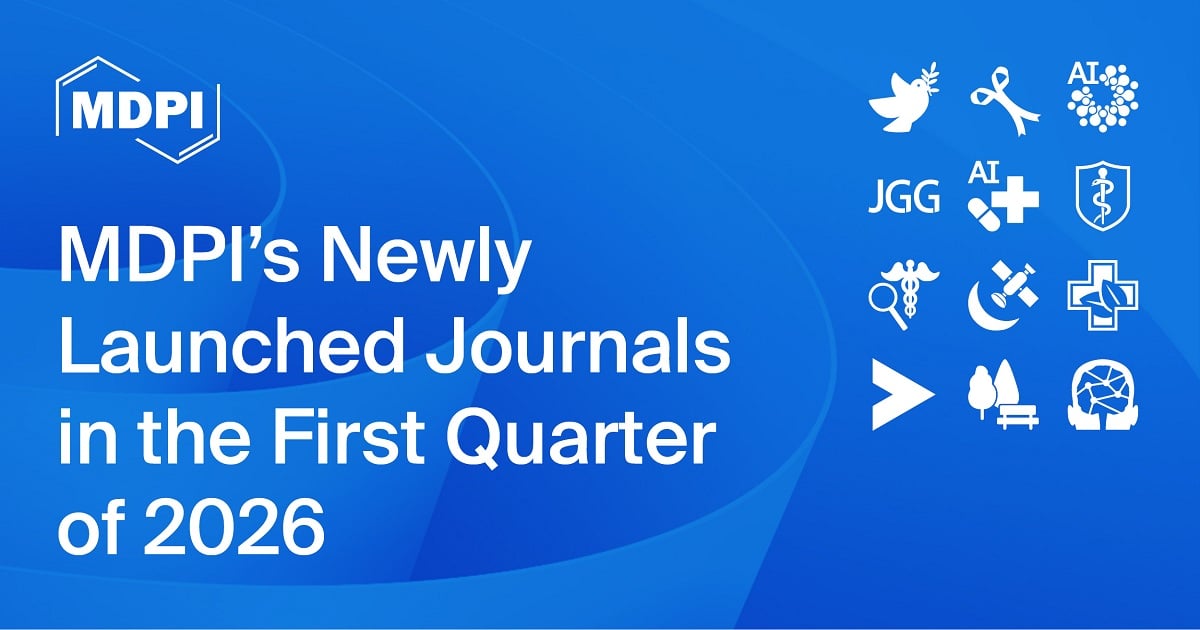
Our portfolio of journals available for publishing up-to-date research in immediate open access format has been further expanded. In the first quarter of 2026, nine new journals released their inaugural issues and three transferred journals released their first issue as part of MDPI, covering the subjects of clinical medicine, chemistry, computer science & mathematics, engineering, environment & ecology, and social sciences & psychology.
We extend our gratitude to the Editors-in-Chief, Associate Editors, and Editorial Board Members who will shape the future course of these brand-new journals. Each journal is dedicated to upholding strong editorial standards through a thorough peer review process, ensuring impactful open access scholarship.
Please feel free to browse and discover more about the new journals below.
|
New Journals |
Founding Editor(s)-in-Chief |
Journal Topics (Selected) |
|
|
Prof. Dr. Matt Oehlschlaeger, |
AI-based chemical data analysis, prediction, and discovery; AI-enabled chemical reaction prediction, synthesis planning, and retrosynthesis; AI in bioorganic chemistry and chemical biology; digital twins and simulation of chemical processes; AI-powered chemical education and pedagogy | |
|
|
Prof. Dr. Guang Jia, |
occupational hazards and exposure science; occupational health effects and susceptibility; occupational risk assessment and management; occupational health intervention, promotion, and policy | |
|
|
Prof. Dr. Alessandro Miani, |
environmental exposures and health; the built environment and public health; One Health approach; environmental justice and health equity; environmental policies and interventions | |
|
|
Prof. Dr. Miriam H. A. Bopp, |
neuroimaging technology and tool; multimodal neuroimaging integration and analysis; |
|
|
Prof. Dr. Raul A. Urrutia, |
personalized translational and clinical oncology research that contribute to a deeper understanding of cancer diagnoses, prognoses, prevention, and treatment specifically for individual patients | |
|
|
Prof. Dr. Pierre Boulanger, |
AI in disease detection, diagnosis, prediction, and treatment; medical informatics; AI in genomics and precision medicine; AI in drug discovery and development; |
|
|
Prof. Dr. Zhaokui Wang, |
astrodynamics; spacecraft technology; satellite technology; space transportation; space vehicle design, propulsion, and avionics; space energy, power and propulsion | |
|
|
Prof. Dr. Richard J Hauer, |
park design, planning, and evaluation; park and art; park, industrialization, urbanization, and civilization; park and education; park and smart society; park role in SDGs; park services for humans | |
|
|
Prof. Dr. Stacey L. Connaughton, |
conflict resolution; peacebuilding; peacemaking; mediation, reconciliation, and transitional justice; sustaining peace | |


|
Transferred Journals |
Editor(s)-in-Chief |
Journal Topics (Selected) |
|
|
Prof. Dr. Gianluigi Vendemiale, |
physiology and pathology of aging; biogerontology; epidemiology; clinical geriatrics; pharmacology; geriatric nursing | |
|
|
Prof. Dr. Michele Maffia, |
cellular and developmental biology; physiology, pathophysiology and endocrinology; diagnostic tools, therapies and public health | |
|
|
Dr. Warren S. Joseph, |
foot and ankle medicine; podiatric medicine | |


We would like to thank everyone who has supported the development of open access publishing. If you would like to create a new journal, you are welcome to send an application here or contact the New Journal Committee (newjournal-committee@mdpi.com).
8 April 2026
Meet Us at the 22nd International May Conference on Strategic Management (IMCSM 2026), 28–29 May 2026, Belgrade, Serbia

MDPI will be attending the 22nd International May Conference on Strategic Management (IMCSM 2026) in Belgrade, Serbia, which will take place from the 28 to 29 of May 2026. The Technical Faculty in Bor, University of Belgrade (Department of Engineering Management), has organized the conference since 2002. Each year, it has attracted an increasing number of participants, both domestic and international, from the fields of strategic management and related disciplines—including engineering management, risk management, project management, environmental management, information technologies, economics, quality management, marketing, entrepreneurship, and human resource management.
The following MDPI journals will be represented:
- Accounting and Auditing;
- Administrative Sciences;
- Businesses;
- Economies;
- International Journal of Financial Studies;
- Journal of Risk and Financial Management;
- Logistics.
If you are attending the conference, please feel free to visit our booth. Our delegates look forward to meeting you in person and answering any questions that you may have. For more information about the conference, please visit the following link: https://mksm.tfbor.bg.ac.rs/.
2 April 2026
2026 Tu Youyou Award—Open for Nominations
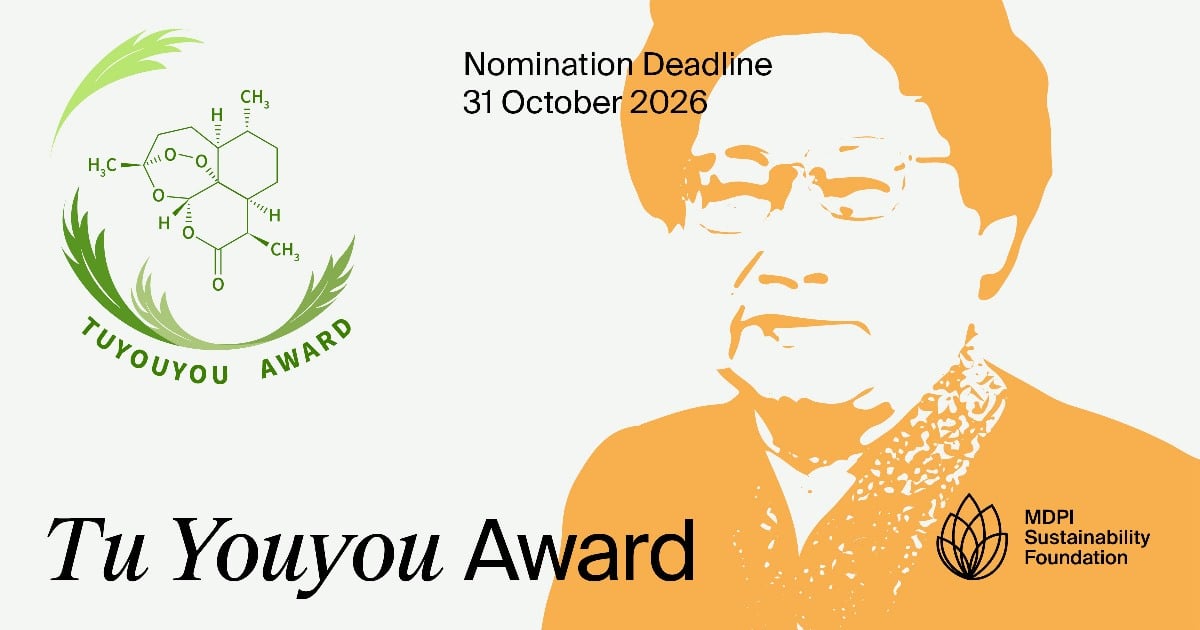
We are delighted to announce that nominations are now open for the 2026 Tu Youyou Award. Named after Nobel Laureate Tu Youyou, whose discovery of artemisinin has saved millions of lives, this award recognizes researchers whose work advances the fields of natural products chemistry and medicinal chemistry, while also contributing to human health.
Prize
– CHF 100,000;
– A medal;
– A certificate.
The monetary prize will be shared equally should there be multiple recipients.
Who May Be Nominated?
– Scientists with outstanding achievements and contributions in the fields of natural products chemistry and medicinal chemistry.
Nominees must be individuals; team or group nominations are not permitted. Nominations are valid only for the current award cycle.
Who May Submit a Nomination?
– The director of the nominee’s host research institution or recognized scientists within the field.
Self-nominations will not be considered.
Nomination Materials
– A biographical sketch;
– A detailed description of the nominee’s contributions;
– 5–10 representative academic publications;
– A list of academic honors, awards, and funded projects;
– A nomination letter signed by two nominators.
How to Submit?
Submit nominations online via the following link: https://tuyouyouprize.org/nomination
Important Dates
– Nomination Deadline: 31 October 2026
– Winner Announcement: March 2027
For further information, please visit the Tu Youyou Award website (https://tuyouyouprize.org/). For any inquiries, please contact the Tu Youyou Award Team at tuyouyouaward@mdpi.com.
31 March 2026
MDPI INSIGHTS: The CEO’s Letter #33 - 2025 Annual Report, Preprints.org, IWD, Recapping Viruses 2026 & Romania Salon

Welcome to the MDPI Insights: The CEO's Letter.
In these monthly letters, I will showcase two key aspects of our work at MDPI: our commitment to empowering researchers and our determination to facilitating open scientific exchange.
Opening Thoughts

Scaling Open Access with Integrity: MDPI Annual Report 2025
I am pleased to share the release of MDPI’s 2025 Annual Report, reflecting our continued progress as one of the world’s leading open access publishers. The report highlights not only our growth, but also the continued evolution of our publishing model and our commitment to quality, transparency, and collaboration.
You can explore the full report here: https://mdpi-res.com/data/mdpi_annual_report_2025_0401.pdf?1775045421
Or visit the interactive page: https://www.mdpi.com/annual-report-2025/
A Year of Growth and Responsibility
2025 was a year of significant growth for MDPI. We received over 669,000 manuscript submissions, the highest in our history, while maintaining a rejection rate above 60%, reinforcing our commitment to both scale and quality.
We published 261,576 peer-reviewed open access articles across a portfolio of 500 journals, supported by a global community of more than 68,000 Editorial Board Members and 209,000 reviewers.
Scaling with Integrity
Growth alone is not the objective; how we grow matters.
Our 2025 Annual Report, Scaling Open Access with Integrity, reflects our continued focus on building the systems and processes that support reliable and trustworthy publishing. As submission volumes increase globally, so too does the importance of robust editorial workflows, research integrity frameworks, and the infrastructure required to support them.
In 2025, we continued to invest in:
- Research integrity and quality assurance processes
- Editorial support and reviewer engagement
- Transparency across the publishing workflow
These efforts ensure that scale does not come at the expense of rigor, but rather reinforces it.
Validation Through Indexing and Visibility
As MDPI continues to grow, validation of quality remains essential.
In 2025, the number of MDPI journals indexed in the Web of Science Core Collection increased from 298 to 329, while Scopus coverage reached 355 journals, including 45 new acceptances. Coverage in major biomedical databases (PMC/Medline/PubMed) expanded to 95 journals, and indexing in Ei Compendex increased significantly.
These milestones reflect the strength of our editorial processes and the trust placed in our journals by independent indexing bodies.
Importantly:
- 96% of all MDPI articles are indexed in Web of Science databases
- More than 1.75 million articles are indexed, with an average of 13 citations per article
Recognition through Journal Citation Reports also continues to grow:
- 298 journals received Impact Factors
- 65% ranked in the top half of their categories
- 61 journals achieved top-quartile positions
These developments demonstrate that growth and quality are advancing together, supported by strong editorial oversight and consistent performance across our journal portfolio.
Strengthening Partnerships and Community
Open access is a collaborative endeavor.
In 2025, we expanded our institutional partnerships to more than 1,000 IOAP agreements, helping simplify publishing for researchers and institutions worldwide.
We also hosted 60 in-person conferences and virtual events, bringing together more than 28,000 participants to exchange ideas, share research, and strengthen connections across the global scientific community.
At the heart of everything we do is this community of authors, editors, reviewers, and partners who make open science possible.
Looking Ahead
Open access continues to move toward becoming the standard model for sharing research globally. With that growth comes increased responsibility.
Our focus moving forward is to continue building a publishing ecosystem that is:
- Collaborative, to serve the research community
- Rigorous, to ensure quality
- Transparent, to support trust
- Scalable, to meet global demand
We believe that open access, when combined with strong editorial standards and integrity, is the most effective way to accelerate scientific progress.
Thank you to all the scholarly community who collaborated with us and our MDPI staff for your continued dedication and contributions in making 2025 a successful year.
Impactful Research

Celebrating Ten Years of Preprints.org: Accelerating Open Research
In 2026, MDPI’s preprints server Preprints.org marked its 10th anniversary as a platform dedicated to accelerating the dissemination of research. Since its launch, Preprints.org has grown into a global platform that hosts more than 120,000 preprints contributed by hundreds of thousands of researchers worldwide, generating tens of millions of views and downloads and demonstrating the value of sharing research openly and rapidly.
At MDPI, we are proud to celebrate ten years of Preprints.org supporting the mission of open science. Over the past decade, we have seen how early sharing of research can accelerate collaboration and help ideas move more quickly from discovery to impact.
The Evolution of Preprints
While Preprints.org launched in 2016, the idea behind it has deeper roots. The concept of rapid research dissemination has existed for decades, with early preprint servers showing how open sharing can accelerate scientific progress.
Over the past decade, preprints have become an increasingly important part of scholarly communication. Researchers across disciplines are looking at faster ways to share their discoveries, exchange ideas, and receive feedback from the global scientific community.
Preprints in a Growing Research Ecosystem
The global preprint landscape has expanded significantly over the past decade, with multiple platforms serving different research communities. The figure below (sourced from James Butcher newsletter), based on data from Dimensions (Digital Science), shows the growth of preprint outputs across several major platforms over time.

Among these platforms, arXiv (the pioneering preprint server) has experienced great growth in recent years. At the same time, other platforms have continued to expand their reach across disciplines, capturing increasing global interest in early research sharing.
Preprints.org contributes to this evolving ecosystem by providing a multidisciplinary platform that works in synergy with academic journals, helping researchers bridge the gap between rapid dissemination and the formal publication process.
Celebrating the First Decade
To commemorate this milestone, Preprints.org launched a 10th Anniversary celebration hub highlighting the impact of preprints and the researchers who contribute to them.

One of the central initiatives is the Popular Preprints of the Decade Award, recognizing influential preprints published between 2016 and 2026 across multiple research fields. Through community voting, the award will recognize research that has generated high engagement and visibility within the global research community.
Looking Ahead: The Next Decade of Preprints
As research communication continues to evolve, preprints will continue to play an important role in enabling faster collaboration, improving transparency, and expanding access to knowledge. The next decade may bring further integration between preprint platforms and journals, new tools for discovery and evaluation, and greater global participation in open science.
At MDPI, we remain committed to supporting researchers through platforms that encourage the open exchange of ideas. The success of Preprints.org over the past ten years reflects the engagement and trust of the global research community – authors, readers, reviewers, and collaborators who believe in the value of sharing knowledge openly.
Congratulations to everyone involved in the development and growth of Preprints.org over the past decade!
Inside MDPI

Beyond International Women’s Day: Supporting Women in Research
International Women’s Day (IWD) offers an opportunity to recognize the achievements of women around the world and reflect on how we can continue building a more inclusive future. In research and academia, this conversation carries particular importance, as scientific progress depends on diverse perspectives, and supporting women in science is essential to strengthening the global research ecosystem.
For MDPI, IWD is an opportunity to celebrate the achievements of women in research and highlight the initiatives, conversations, and collaborations that help support researchers across disciplines and career stages.
Highlighting Women in Science Across MDPI
This year, MDPI marked International Women’s Day with a global campaign highlighting research, awards, and perspectives that support women in science. Throughout the week, our teams shared content across MDPI’s social media channels sharing the work of women researchers and encouraging engagement across the academic community.

As part of this initiative, MDPI published several blog articles exploring important themes related to gender equity in research. One article, Give Support, Gain Progress: Retaining Women in Science, discusses the importance of mentorship, institutional support, and inclusive research environments in helping women build sustainable scientific careers.
Another featured article, Bridging the Gap in Women’s Health Research, highlights the ongoing need to address disparities in health research and ensure that women’s health receives the scientific attention and investment it deserves.
These topics capture the notion that supporting women in science benefits not only individual researchers but the entire scientific community. When researchers from diverse backgrounds can contribute their perspectives and ideas, the scope and impact of scientific discovery expand.
Creating Spaces for Dialogue
Beyond online content, MDPI is also supporting conversations about women in research through community engagement.

On 10 March, MDPI UK hosted the “Women in Research” event, bringing together researchers and professionals to share experiences and discuss the opportunities and challenges women face throughout their scientific careers. Events like these are an opportunity for open dialogue, mentorship, and networking to create more inclusive research communities.
Looking Beyond a Single Day
While IWD is an important moment of recognition, progress requires ongoing effort.
Supporting women in research involves many forms of engagement: from mentorship and collaboration to creating inclusive environments in which diverse voices are heard and valued. Publishers, institutions, and researchers all play a role in building this ecosystem.
At MDPI, we remain committed to supporting the global research community and to promoting open access publishing as a foundation for accessible and inclusive knowledge-sharing.
As we reflect on IWD this year, we recognize the many women who contribute to research as authors, reviewers, editors, mentors, and educators; we also recognize the impact they continue to have on the advancement of science. The influence of women in research extends far beyond a single day of recognition, reminding us that supporting them is a commitment that continues throughout the year.
Coming Together for Science

Highlights from Viruses 2026 – New Horizons in Virology (11–13 March)
Through 11–13 March, we successfully delivered the Viruses 2026 – New Horizons in Virology MDPI conference in Barcelona, bringing together an international community of researchers, editors, and partners dedicated to advancing the field of virology.
Conference Highlights
Viruses 2026 in numbers:
- 198 total registrations, with 171 attendees on site
- 233 submissions, with 122 accepted
- 42 short talks, 9 flash talks, and 80 posters
- 13 invited speakers and 1 keynote speaker

The strong level of participation and quality of submissions once again demonstrate the relevance of the Viruses community.
A standout moment was the keynote lecture by Dr. Ho, which also attracted an NBC documentary film crew, highlighting the broader impact of the research being presented.
Scientific Programme
The conference programme covered areas across modern virology, including viral replication, pathogenesis, immunology, and public health. Sessions explored topics on antiviral therapeutics and vaccines, innate immunity, virus–host interactions, and the structure and mechanisms of virus replication.
Together, these discussions highlighted both the fundamental biology of viruses and the translational challenges of addressing emerging infectious diseases, reflecting the breadth and continued importance of virology research in a global context. The programme also included a sponsored workshop on research data management in virology, further emphasizing the importance of data practices in advancing the field.
Thank You
Feedback from participants has been very positive, and I would like to thank the Conference team for the organization and delivery of this year’s event.

Thank you to our Viruses journal team and all colleagues involved behind the scenes in supporting the delivery of the event. As noted by Dr. Eric Freed (EiC of Viruses), the success of this edition gives us strong momentum as we look ahead to the next conference in 2028, with opportunities to further expand participation and engagement.
Closing Thoughts

Recap from MDPI Romania Salon in Cluj-Napoca (24 March)
On 24 March, we had the opportunity to meet with members of the Romanian research community in Cluj-Napoca at our MDPI Romania Salon. The event was a space for presentations, open discussion, and the exchange of perspectives on publishing and the research landscape in Romania.

We welcomed 39 participants, including 27 researchers from institutions across Romania, representing cities such as Cluj-Napoca, Timișoara, and Reșița. Among them were Editorial Board Members, Associate Editors, and Guest Editors, all of whom play an important role in collaborating with MDPI and shaping the quality and direction of academic publishing.
|
|
|
|



A Shared Commitment to Research Excellence
These events reflect MDPI’s commitment to connecting with and supporting researchers by means of transparency, dialogue, and collaboration. During the day, MDPI colleagues shared a series of presentations covering different parts of our publishing ecosystem:
- MDPI’s presence in Romania – Anamaria Vartolomei (Journal Relationship Specialist (JRS), Section Managing Editor (ME))
- MDPI’s performance, growth, and impact in Romania – Stefan Tochev (CEO)
- Academic services, initiatives, and projects supporting researchers – Ioana Preda (JRS, Section ME)
- Best practices and standards in publication ethics – Lavinia Rogojina (Research Integrity Manager)
- Panel session on ethics, AI, and peer review – Lavinia Rogojina, Ioana Preda, Doris Larisa Albu (JRS, Section ME), Cristina Georgiana Spelmezan (JRS, Section ME)
- Closing remarks – Lavinia Dumitrela Cozma (Operations Manager, Section ME)

Feedback from participants was very positive, particularly regarding the quality of discussions, the relevance of the topics, and the opportunity to engage directly with MDPI colleagues. What stood out most was the openness of the discussion. These events are important not only for the purposes of presenting what we do, but also as an opportunity to listen, understand concerns, and continue to build alignment with the research community.
Romania and the Growth of Open Access Publishing
The Romanian research landscape continues to show growth in open access (OA) publishing.
In 2025:
- 72% of all publications in Romania were published as OA
- Of these, 74% were Gold Open Access
Over the past five years, Romania has produced more than 109,000 publications, with approximately 71% available openly, highlighting a sustained shift toward accessibility and knowledge-sharing.
Within this landscape, MDPI continues to play a significant role:

- MDPI is the leading OA publisher in Romania, contributing 42% of all OA publications in 2025
- More than 37,000 articles have been published with MDPI by Romanian institutions since 1996
- This figure includes over 7,500 publications in 2025 alone
- More than 400 Editorial Board Members from Romania collaborate with MDPI across disciplines
These trends show the growth of OA and the strength of collaboration between MDPI and the Romanian research community.
Looking Ahead
As academic publishing continues to evolve, maintaining open and transparent communication with researchers is essential. Events such as our Salons and Summits provide great opportunities to exchange perspectives and to build trust and collaboration.
Thank you to all participants who joined us in Cluj, and to our teams in Romania for delivering a successful event. A special thank-you to Alina-Florina Agafitei (Marketing Specialist) for her care and attention to detail in delivering the Salon.
Chief Executive Officer
MDPI AG
25 March 2026
Acknowledging the Contributions of Our Reviewers in 2025

As a pioneer in open access publishing, MDPI maintains rigorous publication standards. This mission relies on the dedication and expertise of our reviewers, who invest their time and knowledge to ensure the quality and integrity of the research we publish.
In 2025, over 209,000 reviewers contributed to the peer-review process at MDPI, providing more than 1.3 million review reports for our journals. To express our gratitude, MDPI’s Reviewer Recognition Program highlights reviewers across over 400 journals, featuring those who have assessed at least one manuscript and agreed to be acknowledged.
In addition, MDPI has identified its Top 1000 Reviewers of 2024 to recognize those whose expertise, dedication, and thoughtful evaluations were particularly outstanding.
Many journals have also established Outstanding Reviewer Awards to honor our reviewers’ commitment to publication excellence. Together with the Exceptional Reviewer List, we showcase the importance of reviewers’ work and their time and dedication.
These initiatives serve to express our deepest appreciation and gratitude towards the whole reviewer community. In recognition of their contributions, we also welcome new researchers to join this community. If you would like to contribute to open access publishing, learn more about the reviewers’ benefits and sign up to join us.
13 March 2026
MDPI’s Journal Cluster of Business, Management & Digital Commerce: Academic Publishing Workshop at Rajamangala University of Technology Isan, 1 April 2026

MDPI is pleased to announce the Academic Publishing Workshop, organized in collaboration with the Rajamangala University of Technology Isan. This initiative reflects the shared commitment of both institutions to advancing interdisciplinary research that addresses global challenges through innovative methodologies, cross-sector engagement and impactful solutions.
Serving as the foundation for a long-term partnership focused on strengthening research capacity, this workshop is designed to support and empower the academic community at the Rajamangala University of Technology Isan. The workshop will showcase emerging trends across multiple disciplines, promote best practices in open access publishing, and offer participants direct opportunities to engage with journal editors and industry professionals. Designed with early-stage researchers and innovators in mind, the sessions will equip attendees with practical tools to amplify their academic impact and cultivate international research connections.
Date: 1 April 2026
Time: 10:00 a.m.—3:30 p.m.
Location: Room 901, 9th Floor, Business Administration Building, Rajamangala University of Technology Isan
Registration: https://www.surveymonkey.com/r/JPVJJHF
|
Speaker |
Program |
Time |
|
Dr. Anirut Pipatprapa, Dean of the Faculty of Business Administration, Rajamangala University of Technology Isan |
Opening Speech |
10:00–10:10 a.m. |
|
Dr. Siriporn Tantiwatcharothai |
MDPI Introduction |
10:10–10:30 a.m. |
|
Dr. Juthathip Poofery |
Editorial Series: How to Write Scientific Papers |
10:30–11:00 a.m. |
|
|
Q&A Session |
11:00–11:10 a.m. |
|
Ms. Hathaipat Kittoriojan |
Editorial Series: How to Respond to Peer Reviewers |
11:10–11:40 a.m. |
|
|
Q&A Session |
11:40–11:50 a.m. |
|
Ms. Ploy Assavajamroon |
Editorial Series: Artificial Intelligence in Scientific Publishing |
11:50 a.m.–12:20 p.m. |
|
|
Q&A Session |
12:20–12:30 p.m. |
|
|
Lunch Break |
12:30–1:30 p.m. |
|
Ms. Varattaya Saengchaisukhonkit |
Production Series: How to Write a Well-Formatted Paper |
1:30–2:00 p.m. |
|
|
Q&A Session |
2:00–2:10 p.m. |
|
Ms. Sirathikarn Teoh |
Production Series: How to Make Good Figures for Scientific Papers |
2:10–2:40 p.m. |
|
|
Q&A Session |
2:40–2:50 p.m. |
|
Ms. Sirathikarn Teoh |
Production Series: How to Design Tables in Scientific Papers |
2:50–3:20 p.m. |
|
|
Q&A Session |
3:20–3:30 p.m. |
|
Chair: |
|
|
|
Assoc. Prof. Dr. Thanapong Champahom is an Associate Professor of Transportation Engineering and a lecturer at the Faculty of Business Administration, Rajamangala University of Technology Isan. Dr. Thanapong completed his combined MS & PhD degree in transportation engineering at Suranaree University of Technology. His research interests include transportation safety, road safety, transportation planning, public transportation, logistics management, and injury severity research. Dr. Thanapong has published numerous papers in various international journals. |

|
MDPI Speakers: |
|
 |
Dr. Siriporn Tantiwatcharothai obtained her PhD in applied chemistry from the Faculty of Science, King Mongkut's Institute of Technology Ladkrabang. She joined MDPI in December 2022 as an Assistant Editor for Catalysts. In 2024, she was promoted to Section Managing Editor, and as of April 2025, she has been serving as the Chief Section Managing Editor. |
 |
Dr. Juthathip Poofery holds a PhD in biochemistry from the Faculty of Medicine, Chiang Mai University, Thailand. She began working at MDPI in 2021 as an Assistant Editor for Medicina and advanced to the position of Section Managing Editor in 2022. Since 2023, Dr. Poofery has been serving as the Group Leader of the “Medical Science” Section, where she oversees editorial operations and contributes to the advancement of research in the field. |
 |
Ms. Hathaipat Kittirojana obtained her master’s degree in food science and biotechnology from Teesside University. She joined MDPI in December 2020 as an Assistant Editor for the Journal of Imaging. She was appointed as a Section Managing Editor in March 2023 and a Regional Journal Relations Specialist for the Asia–Pacific region in July 2024. |
 |
Ms. Ploy Assavajamroon obtained her master’s degree in chemistry from Thammasat University, Thailand, in 2020 and joined MDPI as an Assistant Editor for the journal Crystals in the same year. She became a Section Managing Editor in 2021 and a Group Leader in 2022. She is currently one of MDPI's Regional Journal Relations Specialists for the Asia–Pacific region. |
 |
Ms. Varattaya Saengchaisukhonkit graduated from Chulalongkorn University with a bachelor’s degree in microbiology. She joined MDPI in October 2022 as a Production Assistant. In 2024, she was promoted to the position of Production Group Leader, where she oversees production workflows, supports team development, and ensures high-quality publication standards. She also contributes to staff training and process improvement within the Bangkok Production team. |
 |
Ms. Sirathikarn Teoh graduated from Naresuan University with a bachelor’s degree in microbiology. She joined MDPI in August 2024 as a Production Assistant and has since consistently demonstrated high productivity and strong work quality. She has quickly adapted to new management responsibilities and is recognized for her strong communication skills and effective problem-solving abilities. |
12 March 2026
Interview with Dr. Alixander Sikander Khan—Winner of the Tomography Travel Award

Dr. Alixander Sikander Khan is currently a postdoc at the MR Research Centre of Aarhus University, working on using Deuterium Metabolic Imaging (DMI) and hyperpolarized 13C pyruvate to measure the conversion of glucose to other products for probing brain disease. We would like to congratulate Dr. Alixander Sikander Khan on winning the Tomography 2026 Travel Award.
The following is an interview with Dr. Khan:
1. Congratulations on winning the Tomography 2026 Travel Award. Could you briefly introduce yourself and your current research at the MR Research Centre, Aarhus University?
Thank you so much for this award, it is a real honor. I am a postdoc at the MR Research Centre, looking at metabolic imaging of the brain using novel MR methods. We are working on using Deuterium Metabolic Imaging (DMI) and hyperpolarised 13C pyruvate to measure the conversion of glucose to other products for probing brain disease.
This offers highly sensitive measurement of metabolic changes that current methods may be unable to measure. At the MR Research Centre, Aarhus University, we have been working on its application to a number of diseases that could offer improved understanding of the disease, earlier diagnosis, and better clinical management. This award has allowed me to present our work investigating the application of Deuterium Metabolic Imaging for measurement of Glioblastoma treatment response, which was performed in collaboration with Cambridge University’s Department of Radiology. This work in particular vital given the current challenges in managing glioblastoma, where prognosis is often poor and determining treatment efficacy early remains difficult.
2. When and how did you become aware of the Tomography journal, and what motivated you to apply for the Tomography 2025 Travel Award?
Tomography publishes several relevant articles in my field, and so I have followed the journal for some time and often enjoy reading its articles. A colleague in my department (Dr. Esben Hansen) saw the award and suggested I apply for it. I was unsure if it was worth applying for, as I did not expect to be awarded it, but I am very glad that I did!
3. How will you promote the Tomography journal at the conference? Apart from conferences, what are your preferred avenues for promoting Tomography within your community?
I will, of course, thank the journal for their support during my presentation, as well as discussing the publication with colleagues. Tomography is an excellent journal, and beyond the conference, I will encourage and promote publishing research in the journal and promote articles from the journal.
4. Do you have any other suggestions regarding how our journal could further support young researchers and the academic community?
I think Tomography is currently doing a great job with award offerings such as the travel award and PhD thesis awards that reward young researchers for their achievements. Mentorship programs can help young researchers to learn from experienced senior researchers, especially in the context of editorial boards, which can be complex and difficult to navigate for young early-career researchers.
5. As the winner of this award, would you like to take a moment to share your thoughts with our readers or express gratitude towards those who have played a significant role in your research accomplishments?
I have been lucky to be surrounded by kind and supportive mentors throughout my (short!) research career. Professor Ferdia Gallagher and Dr. Mary McLean were my supervisors during my PhD at the University of Cambridge, and they were phenomenal and were fundamental to ensuring that I successfully completed my PhD! They were always so encouraging and happy to help, and I will always be grateful for that. During my PhD, my sanity was also kept in check by fellow students, in particular Dr. Ines Horvat-Menih who started her PhD at the same time as me and helped to make sure we stayed on track and were having fun!
Finally, I am deeply grateful to Professor Christoffer Lausten, who took me under his wing after my PhD and welcomed me into his research group. He is a great example of a mentor who is always open for an interesting discussion about new ideas. Despite moving to a new country, admittedly not too far from home, he has made sure I feel welcome in the group, and I continue to learn a great number of things from him!
4 March 2026
International Women’s Day—“Give to Gain”

We are delighted to join the global community in celebrating International Women’s Day on 8 March. As an open access publisher, we believe that diversity in science strengthens collaboration, broadens perspectives, and supports the open exchange of knowledge.
This year’s theme, “Give to Gain”, highlights the value of shared support and collective progress. It reflects how collaboration, recognition, and community engagement contribute to inclusive participation in research and advance science and society alike.
At MDPI, we support inclusive scholarly communication by amplifying scholars’ voices and highlighting research that advances women’s health, gender equity, and other areas of scientific inquiry. Explore our curated selection of journals, Special Issues, books, blogs, and research articles.
We also invite you to learn more about our open award applications and upcoming Women in Research event in Manchester.
Join us in celebrating the contributions and achievements of women in science and discover how open access publishing supports a more equitable global research community.
From all of us at MDPI—happy International Women’s Day.


Explore our curated selection of journals led by female Editors-in-Chief across diverse scientific fields.
|
Biology and Life Sciences Computer Science and Mathematics Physics |
Chemistry and Materials Science Environmental and Earth Sciences |
Medicine and Pharmacology Business and Economics Social Sciences, Arts and Humanities |

Nominations are now open for MDPI awards in the fields of mathematics and land science. We welcome applications and invite you to read the interviews with past award winners who share their experiences, insights, and advice to inspire the next generation of women in science.
Mathematics Women Mathematician Award
|
Nomination deadline: 31 May 2026. The prize:
Learn more and nominate here. |
“My advice to aspiring young researchers is that if there is a will, there will be a way. People find their way without needing to plan every step. It is also important not to fear failure, because failure often leads to success.” - Prof. Dr. Apala Majumdar, University of Strathclyde, UK Read the full interview here. |

Land Female Researcher in Land System Science
|
Nomination deadline: 31 December 2026. The prize:
Learn more and nominate here. |
“Don't be afraid to develop your technical skills. Don't think that you can't do it. But also […] talk to people, listen to people, so that you have really strong mixed methods approaches to research that triangulate.” - Prof. Dr. Dawn Cassandra Parker, University of Waterloo, Canada Interview is coming soon. |


 |
 |
|
| Bridging the Gap in Women’s Health Research | Give Support, Gain Progress: Retaining Women in Science | Land MDPI: Journal Spotlight |

 |
When: 10 March, 18:00–21:00 (GMT / UTC+0) Speakers: Prof. Rachel Cowen, Prof. Toni Haastrup, Dr. Amelia Bonea, Dr. Noushin Karimian and Dr. Sarah Woolner Join MDPI UK for a panel discussion that aims to foster connections among women in the research industry, while providing a dedicated space to share stories and experiences of this demanding yet deeply rewarding career path. |

“A Randomized Controlled Crossover Lifestyle Intervention to Improve Metabolic and Mental Health in Female Healthcare Night-Shift Workers”
by Laura A. Robinson, Sarah Lennon, Alexandrea R. Pegel, Kelly P. Strickland, Christine A. Feeley, Sarah O. Watts, William J. Van Der Pol, Michael D. Roberts, Michael W. Greene and Andrew D. Frugé
Nutrients 2025, 17(21), 3342; https://doi.org/10.3390/nu17213342
“Suffering in Silence: Reasons Why Victims of Gender-Based Violence in Higher Education Institutions Choose Not to Report Their Victimization”
by Lungelo Cynthia Mdletshe and Mandisa Samukelisiwe Makhaye
Soc. Sci. 2025, 14(6), 336; https://doi.org/10.3390/socsci14060336
“From Effectuation to Empowerment: Unveiling the Impact of Women Entrepreneurs on Small and Medium Enterprises’ Performance—Evidence from Indonesia”
by Sherly Theresia, Sabrina Oktaria Sihombing and Ferdi Antonio
Adm. Sci. 2025, 15(6), 198; https://doi.org/10.3390/admsci15060198
“Exploring Self-Perceived Stress and Anxiety Throughout Pregnancy: A Longitudinal Study”
by Mar Miguel Redondo, Cristina Liebana-Presa, Javier Pérez-Rivera, Cristian Martín-Vázquez, Natalia Calvo-Ayuso and Rubén García-Fernández
Diseases 2025, 13(4), 121; https://doi.org/10.3390/diseases13040121
“Women’s Entrepreneurship in the Tourism Industry: A Bibliometric Study”
by Ainhoa del Pino Rodríguez-Vera, Dolores Rando-Cueto and Carlos de las Heras Pedrosa
Adm. Sci. 2025, 15(4), 130; https://doi.org/10.3390/admsci15040130
“Video Games That Educate: Breaking Gender Stereotypes and Promoting Gender Equality with a Serious Video Game”
by Alma Gloria Barrera Yañez, Cristina Alonso-Fernández and Baltasar Fernández-Manjón
Information 2025, 16(3), 199; https://doi.org/10.3390/info16030199
“Bridging the Gap: The Impact of Gender Equality on CO2 Emissions Across Countries”
by Diana Sanchez-Olmedo, Paula Ortiz-Yepez and Marco Faytong-Haro
World 2025, 6(1), 26; https://doi.org/10.3390/world6010026
“Elevated Serum Levels of Acid Sphingomyelinase in Female Patients with Episodic and Chronic Migraine”
by Alberto Ouro, Mónica Castro-Mosquera, Mariña Rodríguez-Arrizabalaga, Manuel Debasa-Mouce, Antía Custodia, Marta Aramburu-Núñez, Daniel Romaus-Sanjurjo, Josefina Casas, Isabel Lema, José Castillo et al.
Antioxidants 2025, 14(2), 159; https://doi.org/10.3390/antiox14020159
“Are Women More Risk Averse? A Sequel”
by Christos I. Giannikos and Efstathia D. Korkou
Risks 2025, 13(1), 12; https://doi.org/10.3390/risks13010012
“The Impact of Benevolent Sexism on Women’s Career Growth: A Moderated Serial Mediation Model”
by Shuang Song and Po-Chien Chang
Behav. Sci. 2025, 15(1), 59; https://doi.org/10.3390/bs15010059

| “Diet in Women with Polycystic Ovary Syndrome” Guest Editors: Dr. Joanna Grzesik-Gąsior and Dr. Ewa Rzońca Submissions deadline: 25 May 2026 |
“The Mobilization of Social Justice and Gender Equality” Guest Editor: Dr. Ada L. Sinacore Submissions deadline: 31 July 2026 |
 |
 |
| “Women's Health and Well-Being: A Focus on Obstetrics and Gynecologic Medicine” Guest Editor: Prof. Dr. Luca Roncati Submissions deadline: 30 September 2026 |
“Women’s Voices in the Media Guest Editor: Dr. Kathryn Shine” Submissions deadline: 31 October 2026 |
 |
 |

 |
 |
28 February 2026
MDPI INSIGHTS: The CEO’s Letter #32 - MDPI China and Thailand, China Science Daily, 1,000 Partnerships, R2R
Welcome to the MDPI Insights: The CEO's Letter.
In these monthly letters, I will showcase two key aspects of our work at MDPI: our commitment to empowering researchers and our determination to facilitating open scientific exchange.
Opening Thoughts

Reflections from China: Year-End-Celebrations and Open Access Publishing
In February, I had the pleasure of joining over a thousand colleagues from our Tongzhou and Haidian offices at their end-of-year annual celebration in Beijing.
Spending time with our teams in China is also a powerful reminder of the scale and complexity of MDPI as a global organization. Our colleagues in Beijing, Wuhan, and across the country play a significant role in our day-to-day operations and long-term development. I’m grateful for the hospitality, collaboration, and commitment shown by our managers and teams in China, alongside colleagues worldwide, who have helped steadily build MDPI, brick by brick, over the years.
Below are some data on Open Access (OA) publishing in China and our collaboration in this important research market.
Open Access Publishing in China
China has been the world’s leading country in research and review article publication volume since 2019, exceeding one million publications in 2025. Over the past five years, the gap between China and the second-ranked country, the United States, has continued to widen.
In 2025:
- 47% of China’s research output was published Open Access
- Of those OA publications, 76% were Gold Open Access (approximately 382,930 articles)
- The overall OA distribution remained stable compared with 2024, with Gold OA increasing by 1%
Over the past five years (2021–2025):
- China published 4,398,050 research and review articles
- Approximately 48% of this output was OA
According to Dimensions, when comparing the top 20 countries by publication volume (2021–2025):
- China ranks 1st worldwide in publication volume
- China ranks 9th in citation performance within this group (for comparison, the US ranks 2nd in publication volume and 10th in citation ranking)
- Average citations per article: 12.51
Among the top 10 universities globally by publication volume, six are Chinese institutions, alongside Harvard University (USA), the University of São Paulo (Brazil), the University of Toronto (Canada), and the University of Oxford (UK).

MDPI and China
China is an important and long-standing part of MDPI’s global publishing ecosystem:
- In 2025, MDPI was the largest fully Open Access publisher in China
- MDPI published 22% of China’s Gold Open Access output (82,133 papers)
- We received 290,999 submissions from China-affiliated authors and published 82,133 articles
- There are 8,500+ active Editorial Board Members based in China
- 64% (5,438) have an H-index above 26
- MDPI works with:
- 117 Editors-in-Chief
- 103 Section Editors-in-Chief
- 71 China-based institutions currently hold IOAP agreements with MDPI, seven of which rank among the top 10 Chinese institutions by publication volume
China's scale in research output means that the publishing platforms chosen by Chinese scholars will continue to influence the direction of scholarly publishing. At the same time, MDPI’s strength comes from its international collaboration, with colleagues, editors, reviewers, and authors working together across regions and disciplines.
Thank you to all our colleagues in China, and around the world, who support MDPI’s publishing activities across departments and help advance open access research every day.
Impactful Research

“Progress in open science is built through trust, dialogue, and relationships”
Behind the Scenes: A Conversation with China Science Daily
During my trip to Beijing, I also had the opportunity to visit China Science Daily and take part in an interview and broader exchange with their team in Beijing. Visits like this matter because progress in open science is built not only through platforms and infrastructure, but also through trust, dialogue, and relationships across research communities and regions.
China Science Daily: History Museum
As part of the visit, I was given a tour of their History Museum, which offers a thorough perspective on the evolution of China’s first science and technology newspaper, established in 1959. The exhibition highlights how the organization developed into a trusted institution connecting research with the public and policymakers. It was a helpful reminder that at the core of publishing is stewardship, credibility, and long-term public engagement with science.

An Open Exchange on Open Science
During the visit, I met with Dr. Zhao Yan, Editor-in-Chief of ScienceNet. We had an open and engaging conversation about MDPI’s role in Open Access, the evolution of open science globally, and the potential for more collaboration going forward. He especially appreciated the candid and personal nature of our exchange, noting that this kind of dialogue feels important in a landscape where trust and transparency matter.

Interview on Open Access
I also participated in an interview with Ms. Yan Jie, from the Online Media Center and Editor-in-Chief of ScienceNet, China Science Daily. Our discussion covered the growth of Open Access over the past 30 years, MDPI’s mission and values, academic integrity, collaboration with the Chinese research community, and MDPI’s own 30th anniversary milestone. It was a great opportunity to reflect on how open science has matured, and where shared responsibility across publishers, institutions, and researchers continues to matter most.
“Progress in open science is built by more than scale and infrastructure”
I’m sharing a few photos from the visit as a glimpse behind the scenes. The full interview will be published by China Science Daily in due course, and I look forward to sharing it when it is available.

More broadly, visits like this reinforce something I’ve always believed in: progress in open science is built not only through scale and infrastructure, but also through continued dialogue, mutual respect, collaboration, and a willingness to listen across regions and perspectives. That remains central to our work, especially as MDPI reflects on 30 years of publishing, built together.
Inside MDPI

Bangkok Visit: Growth, Partnership, and Local Impact
In February, I also had the opportunity to visit our Bangkok office for the second time in two years to support their local meetings and deliver a training session on how we present MDPI at a corporate level.
It’s easy to spend time with our colleagues in Thailand. From Editorial and Production to Conferences, Marketing, Design, and our Regional Journal Relations Specialist (RJRS), the team continues to grow in scale and professionalism. I’d also like to recognize our local management and admin teams, who have been steadily expanding our office and supporting more than 500 colleagues on the ground.
Academic Partnerships
During the visit, we met with the Engineering Department at King Mongkut’s Institute of Technology Ladkrabang (KMITL). Our discussion focused on the recent MDPI developments, Institutional Open Access Program (IOAP) opportunities, Author Publishing Workshops (APW), and the potential use of JAMS to support their institutional journal.

“MDPI is the third-largest OA publisher in Thailand”
We also shared insights into the growth of Open Access (OA) in Thailand and KMITL’s own publishing trends. These conversations matter because institutions are looking for sustainable ways to support their researchers. Our IOAP agreements are one simple example of how we can provide value in this area while maintaining accessibility for authors.
Thailand and MDPI: 2025 Snapshot
Our Bangkok office, officially launched in 2022, has been growing to support over 500 staff members while continuing to expand its engagement in scholar visits, workshops, and conference collaborations. As at 2025, Thailand submissions to MDPI have increased about 21% and publications by about 25%, maintaining a rejection rate close to the company average. MDPI is the third-largest OA publisher in Thailand, publishing 15% of all Gold OA output in 2025.
Representing MDPI Externally
During the visit, I delivered a training session on how we present MDPI at external events.

This session covered topics related to:
- Our aim and guiding principles
- High-level company milestones and Indexing facts and figures
- Industry partnerships and collaborations
- Market trends in OA and subscription publishing
- Country-specific publishing data and collaborations with MDPI
- Insights from our Voice of Community report
I find that while many colleagues are very familiar with the specific journal for which they have responsibility, fewer have visibility into the broader MDPI ecosystem and the company’s global positioning. These sessions help build alignment, confidence, and consistency in how we represent the company.
What stands out most is that MDPI’s growth is not abstract: it’s visible in the people, the partnerships, and the professionalism developing across our offices.
Coming Together for Science

1,000 Institutional Partners: A Milestone Built on Trust
This month, we reached an important milestone: more than 1,000 institutions worldwide are now part of MDPI’s Institutional Open Access Program (IOAP). On paper, that is a number. In practice, it represents trust.
This milestone symbolizes thousands of conversations with libraries and institutions. It stands for negotiations, renewals, consortium expansions, and, most importantly, relationships built over time. It reflects the work of colleagues across publishing, institutional partnerships, marketing, editorial, finance, and many other teams who contribute to making these agreements operational.
In 2025 alone, more than 61,300 research articles benefited from article processing charge (APC) discounts through IOAP agreements. Tens of thousands of authors were able to publish through a simplified and structured process. At the same time, institutional administrators gained clearer oversight and streamlined workflows.

Why IOAP Matters
When we launched IOAP, the objective was straightforward: to reduce barriers for researchers while supporting institutions in navigating the evolving OA landscape. Over the past decade, the research ecosystem has changed. Funder mandates, national policies, and Plan S–aligned requirements have accelerated the transition to OA.
Institutions need publishing partners who provide transparency, scalability, and operational efficiency. IOAP was designed to support that reality.
For colleagues who would like to better understand the program, this blog-post overview of MDPI’s IOAP provides additional context, including common questions around the transition to OA and how our institutional partnerships are structured.
“Institutions need publishing partners who provide transparency, scalability, and operational efficiency”
Recent Examples
Our agreements continue to evolve across regions:
- In Sweden, MDPI signed a national Open Access publishing agreement with 96 institutions, enabling affiliated researchers to publish without managing individual APC payments.
- In Spain, we extended our flat-fee agreement with Universidad Católica de Valencia, reinforcing institutional support for OA publishing.
These examples show that institutions seek structured, predictable models that support their researchers at scale.
Looking Ahead
Crossing the threshold of 1,000 partners tells us that institutions see MDPI not just as a publisher but as a reliable operational partner in advancing open science. This milestone is not a finish line. It is a reminder that the work continues.
Thank you to the entire IOAP team and to all colleagues who contributed to reaching this achievement.
P.S. You can read about this milestone across industry outlets, including STM Publishing News, ALPSP, Research Information, EurekAlert, Brightsurf, among others. You can also read about the coverage in Poland (e.g., media-room, bomega) Korea (newstap), and Romania (EduLike).
Closing Thoughts

Reflections from the Researcher to Reader Conference
During 24–25 February, I attended the 2026 Researcher to Reader Conference in London, UK. Leaders from across scholarly publishing, research infrastructure, libraries, and technology gathered to discuss AI and research integrity, peer review reform, metadata and infrastructure, community engagement, open research policy, and the evolving role of publishers in a rapidly shifting ecosystem.
The conversations were open and honest, and at times uncomfortable – exactly what we need at times. Below are a few reflections that stayed with me.
The Battle for Knowledge: What Becomes Accepted as ‘True’?
One recurring theme was not whether science evolves but whether our infrastructure is resilient enough to sustain trust at scale. Science does not promise certainty: it promises process. As publishing systems grow more complex and become more technologically mediated, the question is how intentionally we design, monitor, and strengthen that process.
Peer Review: Speed, Credentials, and Structural Loops
Researchers consistently call for faster peer review. At the same time, reviewer credentials are often tied to publication records. This creates a structural loop. Publishing history opens reviewing opportunities, reviewing strengthens credentials, and those without early access remain outside the cycle.
There is a need for us to reflect on how opportunity circulates within our systems: we should ask how we create more inclusive pathways for researchers globally to participate in peer review.
Community Engagement Workshop
One of the highlights of R2R was the workshop format, whereby small groups met repeatedly over two days and moved from ideas to tangible strategies.
I joined the Community Engagement workshop led by Lou Peck (CEO at The International Bunch) and Godwyns Onwuchekwa (Principal Consultant at Global Tapestry Consulting). We explored two deceptively simple questions: What is a community? and What does engagement truly mean?
“Engagement requires shared design and shared responsibility”
Too often, organizations equate communication with engagement. The framework discussed mapped a maturity spectrum – from enablement (broadcasting, informing and consulting) to true engagement (collaborating and co-creating).
It was a useful reminder of the fact that if we want trust and loyalty, engagement must go beyond announcements and surveys. It requires shared design and shared responsibility.
AI: Democratization or Digital Colonialism?
I especially enjoyed the thought-provoking presentation from Nikesh Gosalia (Chief Partnership Officer at Cactus Communications), which highlighted an uncomfortable reality:

- 93% of AI-generated content is in English
- Approximately 2% is in French
- Approximately 2% is in German
- More than 7,000 languages are represented in less than 5% of the content within large AI systems
The implications are profound. Is AI democratizing access to scholarly publishing (making it easier for researchers everywhere to participate in global knowledge production)? Or are we encoding colonialism at scale (entrenching linguistic and structural hierarchies, and making it harder for voices from the Global South to be heard)?
AI is already reshaping how research is created, reviewed, discovered, and shared. Its potential is enormous. But its impact depends not only on capability, but on governance, design, and intentionality. Publishers, funders, and researchers all share responsibility in shaping how these systems evolve.
Ethicality in practice (Lightening Talk)

It was also great to have our colleague Dr Miloš Čučulović (Head of Technology Innovation at MDPI) present MDPI’s Ethicality platform during a lightning talk.
“Technology alone is not the answer”
Ethicality embeds AI-driven checks directly into the submission workflow, supporting editors proactively rather than reacting after publication. As we scale, tools like this help balance trust, efficiency, and research integrity.
This goes back into the underlying theme of the conference that technology alone is not the answer. However, technology embedded thoughtfully within clear governance frameworks can strengthen confidence in the editorial process.
Final thought
The question is no longer whether technology will transform research infrastructure: it is already doing so. The real question is what role each of us will play in shaping that transformation deliberately, with structural maturity, inclusive governance, and engagement that moves from informing to co-creating.
Science needs to evolve, responsibly. And that responsibility extends not only to what we publish, but also to how the systems behind publication are designed. Some important topics to continue reflecting on both internally and within our broader community.
Chief Executive Officer
MDPI AG
