Precis. Oncol. 2026, 1(2), 8; https://doi.org/10.3390/precisoncol1020008 - 17 Apr 2026
Abstract
►
Show Figures
Background/Objectives: Prostate cancer (PCa) incidence is rising, with radical prostatectomy (RP) as the main curative surgery for localised cases, which includes removing seminal vesicles (SV). SV invasion (SVI) predicts poor oncological outcomes, making accurate preoperative staging to identify SVI crucial for surgical
[...] Read more.
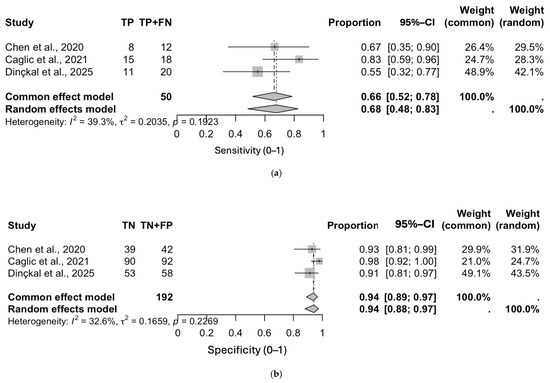
Background/Objectives: Prostate cancer (PCa) incidence is rising, with radical prostatectomy (RP) as the main curative surgery for localised cases, which includes removing seminal vesicles (SV). SV invasion (SVI) predicts poor oncological outcomes, making accurate preoperative staging to identify SVI crucial for surgical planning. This ensures oncological safety by enabling wide excision when needed, while preserving tissue to maintain function. This review synthesises current evidence on pre-biopsy MRI findings and/or clinicopathological parameters to diagnose SVI in PCa. Methods: A literature search (2005–2025) using OVID for studies assessing pre-biopsy MRI findings, with a priori eligibility for clinicopathological or combined MRI–clinicopathological models (index tests), for detecting SVI (outcome) compared to RP histopathology (standard reference) in patients with primary localised PCa (patients). This systematic review was conducted in accordance with the Preferred Reporting Items for Systematic Reviews and Meta-Analyses (PRISMA) guidelines. Risk of bias was evaluated with QUADAS-2, and pooled diagnostic accuracy metrics and study heterogeneity were analysed. Results: Five studies qualified, while three used binary mpMRI classification and were quantitatively analysed. No eligible studies assessed clinicopathological predictors or combined MRI–clinicopathological models; all included studies evaluated pre-biopsy MRI findings only, and none included high-dimensional radiomics. The pooled sensitivity was 0.66 (95% CI: 0.52–0.78), specificity 0.94 (0.89–0.97), positive predictive value (PPV) 0.76 (0.60–0.87), negative predictive value (NPV) 0.92 (0.85–0.94), and diagnostic odds ratio 30.13 (12.36–73.47), with moderate heterogeneity. All included studies were retrospective cohorts with considerable risk of bias. Conclusions: In the small number of heterogeneous, single-centre retrospective studies available, pre-biopsy MRI findings show high specificity and NPV for preoperative detection of SVI but only moderate sensitivity, which limits its reliability as a standalone tool. The pooled diagnostic accuracy estimates should be interpreted as exploratory. These findings should therefore be interpreted cautiously. Future studies must integrate MRI with clinicopathological data, addressing this key evidence gap before firm conclusions can be drawn or clinical practice changed.
Full article
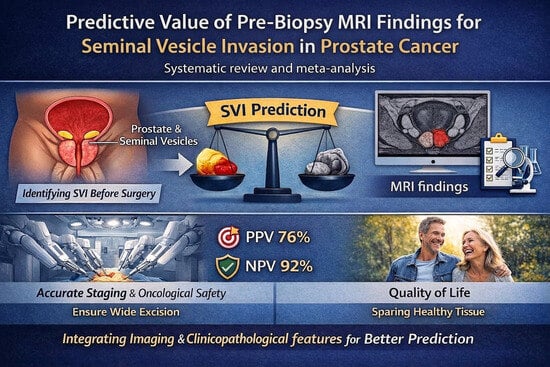
Graphical abstract