Int. J. Environ. Med. 2026, 1(2), 7; https://doi.org/10.3390/ijem1020007 - 10 Apr 2026
Abstract
►
Show Figures
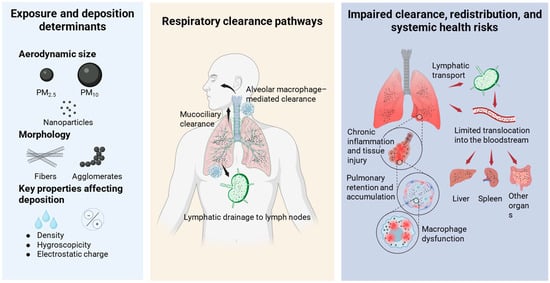
Environmental exposure to particulate matter, including PM2.5 and engineered nanomaterials, is a major global health concern. Although acute toxic effects have been widely documented, new evidence suggests that the retained particle burden arising from incomplete clearance, tissue retention, and redistribution plays a
[...] Read more.
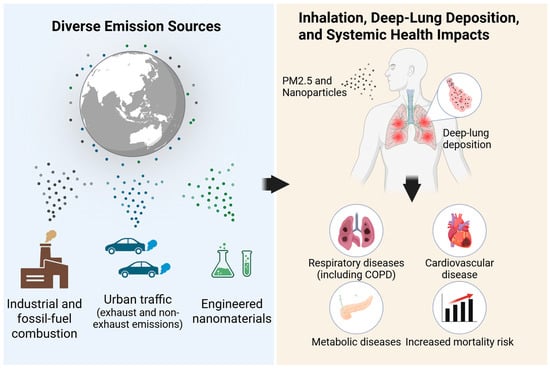
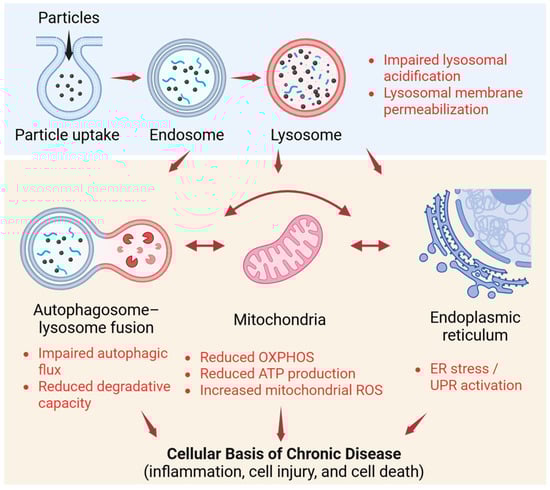
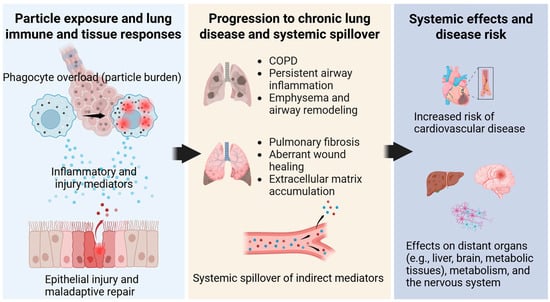
Environmental exposure to particulate matter, including PM2.5 and engineered nanomaterials, is a major global health concern. Although acute toxic effects have been widely documented, new evidence suggests that the retained particle burden arising from incomplete clearance, tissue retention, and redistribution plays a key role in long-term health outcomes. This review synthesizes knowledge on particle accumulation at multiple biological levels. It examines how particles are retained in pulmonary and lymphoid tissues, their uptake by immune cells, and their sequestration within organelles, particularly the endo-lysosomal system. The mechanisms by which lysosomal dysfunction can cause mitochondrial stress, redox and metabolic disturbances, and impaired autophagy are also discussed. These disruptions can alter the status of immune cells and disturb immune homeostasis. This review also examines how immune perturbation from accumulation may contribute to chronic lung diseases. Understanding these mechanisms explains the persistent health effects associated with low-dose exposure and supports more effective risk assessment and prevention.
Full article
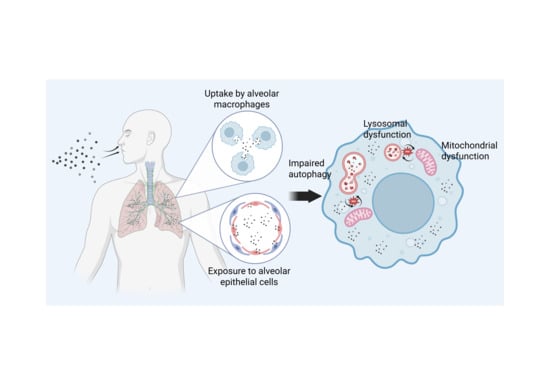
Graphical abstract