
Skip to Content
You are currently on the new version of our website. Access the old version .
  • 25 days
    Submission to First Decision
  • 6 days
    Acceptance to Publication

Journal of Interdisciplinary Research Applied to Medicine

Journal of Interdisciplinary Research Applied to Medicine (JDReAM) is an international, peer-reviewed, open access journal on health-related researches coming from different scientific sectors—such as biology, biotechnology, biomedicine as well as physics and statistics, informatics, technologies, computer engineering, nano-biomaterials, as well as neuroscience, psychology, pedagogy and human sciences—published quarterly online by MDPI (since Volume 6, Issue 1 - 2026). The Interdisciplinary Laboratory of Applied Research in Medicine (DReAM) is affiliated with JDReAM, which serves as its official journal. The members receive discounts on the article processing charges.
  • Open Access— free for readers, with article processing charges (APC) paid by authors or their institutions.
  • Rapid Publication: manuscripts are peer-reviewed and a first decision is provided to authors approximately 24.9 days after submission; acceptance to publication is undertaken in 5.6 days (median values for papers published in this journal in the first half of 2026).
  • Recognition of Reviewers: Reviewers whose reports are timely and of high quality receive an APC discount voucher for a future publication in an MDPI journal. Become a reviewer.

Get Alerted

Add your email address to receive forthcoming issues of this journal.

All Articles (64)

  • Article
  • Open Access

A 3D-Printed Tooth Simulation Model for Electronic Apex Locator Training: A Feasibility Study

  • Shlomo Elbahary,
  • Bradford R. Johnson and
  • Rachel Habbal
  • + 2 authors

In current pre-clinical endodontic education, extracted human teeth are the primary resource for students, and Commission on Dental Accreditation (CODA) has no requirements mandating usage of electronic apex locators (EALs). The introduction of digital dentistry has improved the ability to create simulation models for pre-clinical education. While previous studies have confirmed the accuracy of EALs and explored the usage of EALs in simulation models, no study has documented the exposure and importance of pre-clinical education using EALs. The primary objective of this study is to assess the feasibility and educational value of integrating Cone-Beam Computed Tomography (CBCT)-derived 3D-printed tooth replicas into a conductive simulation model for EAL training. By capturing a CBCT of an extracted human tooth, a 3D-printed tooth replica was created and integrated into a simulation model. The model included a conductive circuit that allowed the use of an EAL. Twenty-three pre-doctoral dental students each recorded the working length at five identically configured stations (115 measurements in total) and completed pre- and post-activity surveys. Overall, 59.1% of all measurements achieved clinical accuracy within ±0.5 mm of the actual working length. Self-reported confidence in EAL use increased significantly (from 3.14 to 4.09 on a five-point scale; p = 0.015), whereas the increase in self-rated theoretical understanding (p = 0.106) and the decrease in anxiety (p = 0.349) were not statistically significant. The CBCT-derived conductive simulation model was a feasible, functional platform for preclinical EAL training and was associated with improved self-reported confidence; whether these gains translate into improved clinical performance remains to be determined.

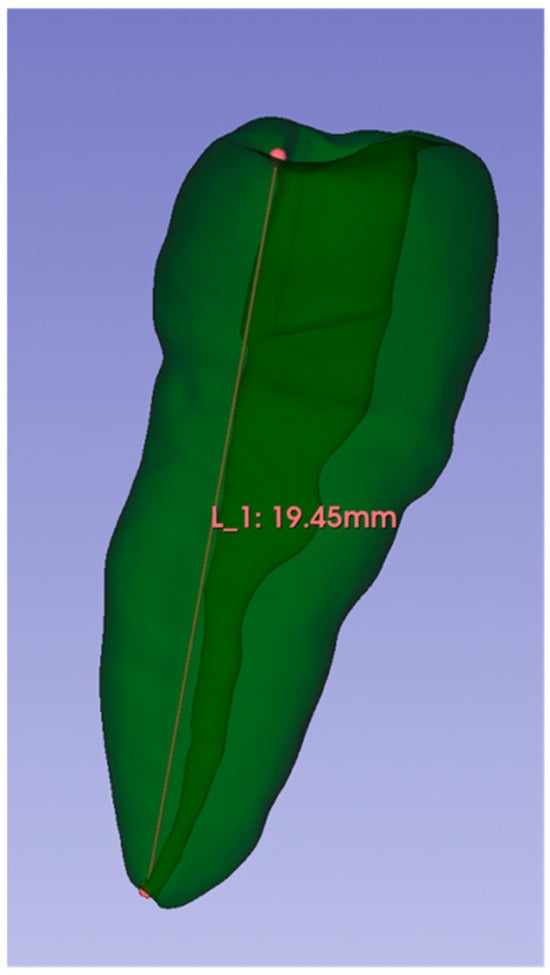
Three-dimensional model of the extracted tooth generated with the segmentation tool, with the canal digitally hollowed. A preliminary working length of 19.45 mm was measured in 3D Slicer; the working length was subsequently verified on each printed replica to confirm that no clinically relevant dimensional change occurred during printing.
  • Review
  • Open Access

The rapid expansion of generative artificial intelligence (AI) in daily life and mental health contexts has generated both enthusiasm and concern. Within schizophrenia spectrum disorders (SSDs), generative AI use is sometimes framed as inherently destabilizing or unsafe. Such blanket assertions risk reinforcing longstanding stigmatizing assumptions that individuals with SSDs cannot engage responsibly with emerging technologies. Drawing on emerging literature on generative AI in mental health and SSDs, as well as the integrated model of metacognition, we propose a conceptual framework in which baseline metacognitive capacity may influence how individuals engage with generative AI tools. Individuals with relatively intact metacognitive capacity may be better able to approach and utilize generative AI in a reflective manner. In contrast, individuals with more limited metacognitive capacity may be more vulnerable to passively accepting AI-generated content, outsourcing reflection, or experiencing adverse outcomes. We hypothesize that metacognitive capacity may represent one individual-level factor influencing the relationship between generative AI engagement and outcomes, alongside characteristics of the individual, technology, and broader clinical and social context. These proposed relationships remain theoretical and require empirical validation. We conclude with anti-stigma implications, calling for nuanced approaches to generative AI use in SSDs and greater inclusion of individuals with lived experience in conversations about technological innovation.

  • Case Report
  • Open Access

Distinguishing infectious collections from underlying malignancies may represent a significant diagnostic challenge, particularly when tumors present with necrotic, cystic, perforated, or abscess-like components. Here, we introduce the descriptive concept of “cancer–abscess” as a practical imaging-oriented framework for recognizing underlying malignancies presenting as presumed infectious collections. The first case involves an appendiceal-region malignancy initially interpreted as a postoperative pericecal collection after appendectomy; the second concerns a locally advanced rectal carcinoma complicated by abscess formation and fistulization into the gluteal region. Ultrasound, computed tomography, and magnetic resonance imaging findings are reviewed to highlight recurrent diagnostic red flags, including persistent mass-like architecture, enhancing solid components, irregular soft-tissue proliferation, necrotic-colliquative areas associated with pathological enhancement, suspicious nodal or implant-like disease, and atypical extension patterns. Recognition of these features may support earlier suspicion of malignancy, guide further diagnostic work-up, and reduce delays in oncologic treatment. The “cancer–abscess” concept should be considered whenever presumed infectious collections show atypical or persistent imaging characteristics.

  • Perspective
  • Open Access

The new therapeutic options now available for patients with hepatocellular carcinoma (HCC) have made their assessment more complex, especially due to the different stages of liver cirrhosis typically associated with this tumor. The management of the disease therefore requires an interdisciplinary approach aimed at identifying the most appropriate treatment based on the risk–benefit profile and residual liver function, as well as in relation to the patient’s age and potential for a full or partial recovery, risk of complications, and cancer recurrence. Another factor to be carefully considered in patients with hepatocellular carcinoma is the frequent comorbidities and the associated socio-health variables (substance abuse, addictions, unfavorable economic or family circumstances), which can impact patient management or the possibilities for long-term monitoring, thus influencing the choice of the most appropriate therapeutic pathway. The healthcare services offered in the Province of Salerno (Campania Region, Southern Italy) to ensure all possible diagnostic and therapeutic options for these patients can be difficult to access due to the territorial extension of the Local Health Authority, characterized by clinics and hospitals located in distant locations, as well as the potential fragmentation of expertise between the University Hospital and ambulatorial facilities or small hospitals. An interdisciplinary consensus conference on the management of patients with HCC has been set with the aim of involving clinicians and surgeons working in healthcare facilities located in Salerno and its Province for the optimal care and effective management of these patients, taking into account all the clinical characteristics of the disease and individual health needs or expectations, from the perspective of personalized medicine.

Highly Accessed Articles

News & Conferences

Latest Issues

Open for Submission

Journal Sections

XFacebookLinkedIn
J. Interdiscip. Res. Appl. Med. - ISSN 2532-7518