Occup. Health 2026, 1(3), 29; https://doi.org/10.3390/occuphealth1030029 - 8 Jul 2026
Abstract
►
Show Figures
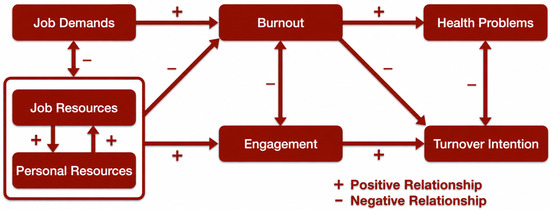
In the healthcare sector, burnout has become a critical concern due to the combination of high job demands and sustained emotional strain. Burnout is closely linked to systemic and organizational pressures, and psychosocial risks are widely recognized as central determinants of burnout. Within
[...] Read more.
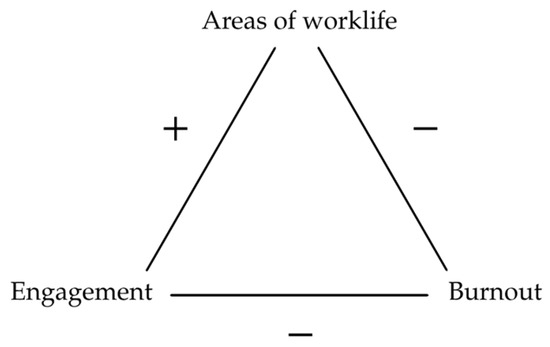
In the healthcare sector, burnout has become a critical concern due to the combination of high job demands and sustained emotional strain. Burnout is closely linked to systemic and organizational pressures, and psychosocial risks are widely recognized as central determinants of burnout. Within this multidimensional framework, Work Values are understood as an integral component of psychosocial risks, shaping how professionals interpret and respond to these pressures. The present study aims to analyze whether emotional intelligence moderates the relationship between psychosocial risk factors, namely work values conflict and burnout, among healthcare professionals. A cross-sectional online survey, based on a snowball sample with 205 healthcare professionals, was performed. Measurement instruments included the Burnout Assessment Tool (BAT-23), used to assess burnout dimensions; the Health and Work Survey (ERPS_INSAT), used to evaluate psychosocial risk factors; and the Wong and Law Emotional Intelligence Scale (WLEIS-P), used to assess emotional intelligence. A moderation analysis using the PROCESS macro (model 1) was conducted to examine whether emotional intelligence moderates the relationship between psychosocial risk, work values factor, and burnout among healthcare professionals. The results show that the psychosocial risk–work values dimension was a significant positive associated factor of burnout (total scale: B = 0.27, p < 0.001; Exhaustion: B = 0.33, p < 0.001; Mental distance: B = 0.32, p < 0.001; Cognitive Impairment: B = 0.14, p < 0.001; Emotional Impairment: B = 0.30, p < 0.001), indicating that higher perceived risk was associated with higher burnout symptoms. Emotional intelligence did not significantly predict burnout on its own (total scale: B = 0.07, p > 0.05; Exhaustion: B = 0.09, p > 0.05; Mental Distance: B = 0.11, p > 0.05; Cognitive Impairment: B = 0.11, p > 0.05; Emotional Impairment: B = −0.04, p > 0.05). The interaction term (psychosocial risk = work values × emotional intelligence) was not significant, suggesting that no significant moderating effect was detected in this sample for emotional intelligence in the relationship between work values and burnout. These findings highlight the central role of psychosocial risk factors in the development of burnout among healthcare professionals, and emotional intelligence does not seem to have a significant moderating effect against burnout in this study. Such findings highlight the crucial role that organizational-level interventions at the workplace play in resolving conflicts between work values and lower burnout and improved worker wellbeing.
Full article
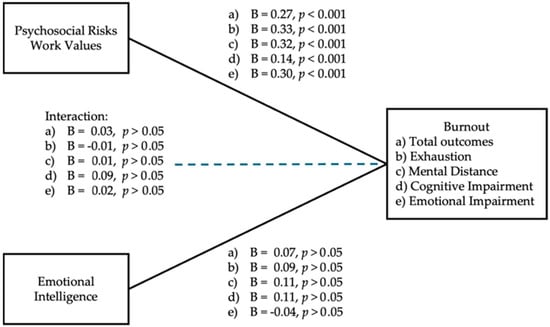
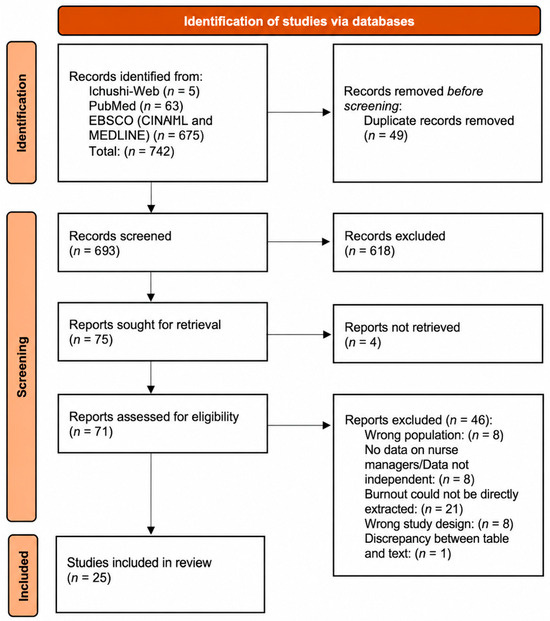
Figure 1