

Journal Menu
► ▼ Journal Menu-
- Earth Home
- Aims & Scope
- Editorial Board
- Reviewer Board
- Topical Advisory Panel
- Early Career Editorial Board
- Instructions for Authors
- Special Issues
- Topics
- Sections
- Article Processing Charge
- Indexing & Archiving
- Editor’s Choice Articles
- Most Cited & Viewed
- Journal Statistics
- Journal History
- Journal Awards
- Conferences
- Editorial Office
Journal Browser
► ▼ Journal BrowserNeed Help?
Announcements
29 September 2026
Tu Youyou Award—Final Call for Nominations
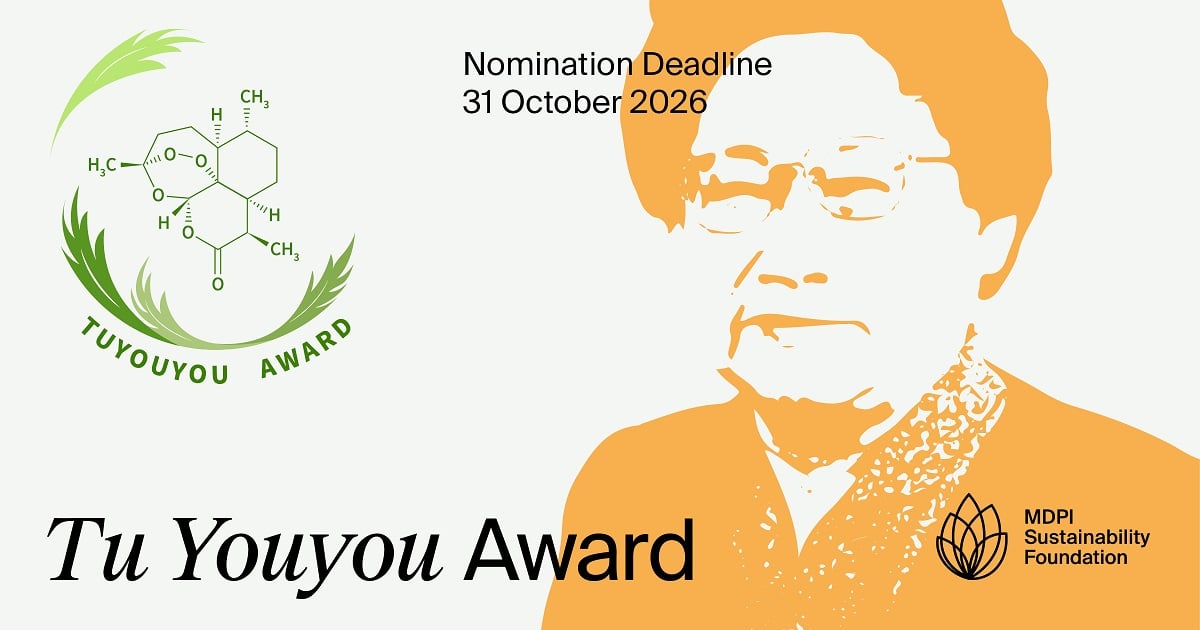
The nomination deadline for the Tu Youyou Award is approaching. Researchers are encouraged to submit nominations by 31 October 2026 (UTC-12).
The Tu Youyou Award recognizes outstanding researchers whose work has made significant contributions to natural products chemistry and medicinal chemistry, advancing scientific innovation and human health. It is named after Nobel laureate Tu Youyou, whose discovery of artemisinin has saved millions of lives.
The current award committee is chaired by Prof. Dr. William Gerwick, a Distinguished Professor at the University of California San Diego, USA, and a renowned expert in marine natural products chemistry and pharmacology. Under his leadership, the committee will evaluate nominations and recognize impactful research achievements in the related fields.
Prize:
- CHF 100,000
- A medal
- A certificate
The monetary prize will be shared equally should there be multiple recipients.
Who may be nominated?
- Scientists with outstanding achievements and contributions in the fields of natural products chemistry and medicinal chemistry.
Nominees must be individuals; team or group nominations are not permitted. Nominations are valid only for the current award cycle.
Who may submit a nomination?
- The director of the nominee’s host research institution or a recognized scientist within the field.
Self-nominations will not be considered.
Nomination materials:
- A biographical sketch
- A detailed description of the nominee’s contributions
- 5–10 representative academic publications
- A list of academic honors, awards, and funded projects
- A nomination letter signed by two nominators
How to submit?
Submit your nomination by 31 October 2026 via: https://tuyouyouprize.org/nomination/form.
For further information, please visit the Tu Youyou Award website. For any inquiries, please contact the Tu Youyou Award Team at tuyouyouaward@mdpi.com.
30 September 2026
2026 Nobel Prize—Where Breakthroughs Meet Open Sciences
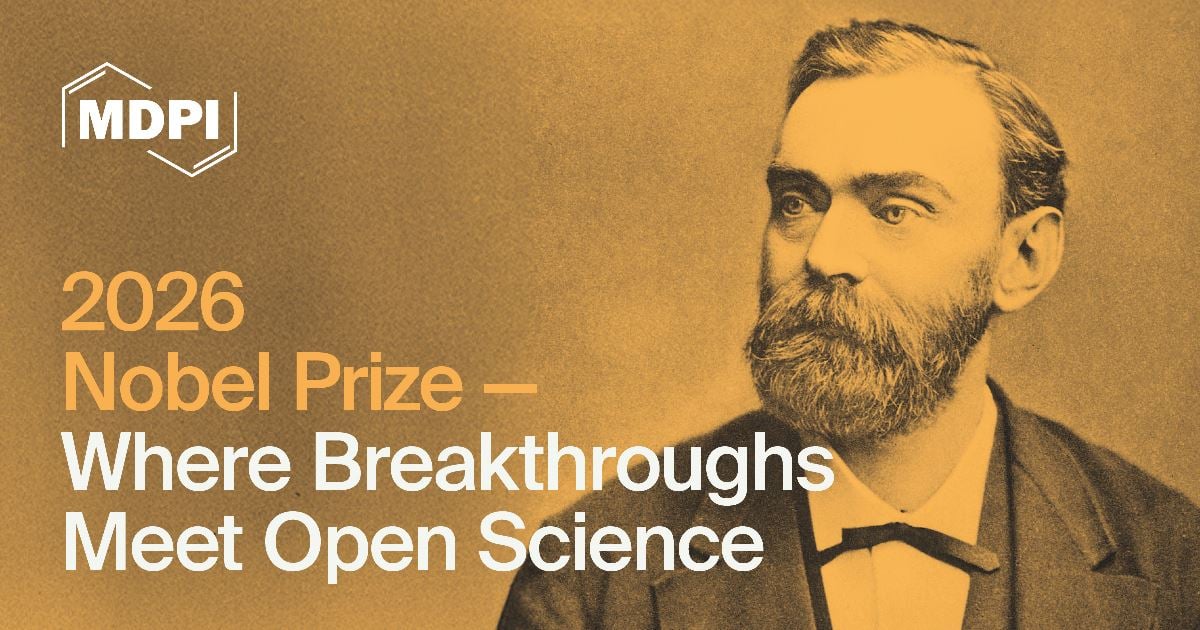
Each October, the Nobel Prizes turn the world’s attention toward the discoveries that have redrawn the boundaries of science. They are science’s most prestigious recognition, and increasingly its most interdisciplinary. Recent laureates have been honored for work spanning quantum dots, machine learning, and molecular medicine, fields that rarely stay within a single discipline’s borders for long.
Open access has a growing role in that story. To date, more than 40 Nobel laureates have published their research in MDPI journals—a body of work spanning genetics, physics, chemistry, and medicine. Publishing openly means a laureate’s findings reach not only fellow scientists, but the students, clinicians, policymakers, and curious readers who would otherwise meet that work only secondhand, if at all. Open access doesn’t just carry Nobel-level research, it amplifies the voice behind it, letting the discovery speak directly to everyone it stands to affect.
This is also where MDPI’s breadth becomes an advantage. With over 500 journals covering the full spectrum of scientific inquiry, our platform mirrors the reality of modern discovery—where breakthroughs increasingly emerge at the intersection of fields, not within the walls of one. It’s this structure that lets us support interdisciplinary work from first submission to global publication, connecting researchers across borders and disciplines alike.
As this year’s laureates are announced, we’ll continue spotlighting where Nobel Prize–winning research intersects with the work of our authors, editors, and reviewers—celebrating both the achievements being recognized and the open access model that helps ensure they reach the widest possible audience.
Explore selected works by Nobel laureates within the MDPI portfolio below, and join us in celebrating the global impact of their ideas.

Put your scientific intuition to the test and join MDPI’s 2026 Nobel Prize Prediction Challenge! As we honor three decades of open research, we invite you to cast your votes for the next trailblazing laureates in chemistry, physics, and physiology or medicine. Predict the pioneer minds shaping tomorrow’s scientific legacy for a chance to win 100 CHF voucher of MDPI Video Service.
Deadline: 4 October 2026 | 18:00 CEST
Winner announcement: 16 October 2026


Discover high-impact research driving tomorrow’s breakthroughs. Browse our open access selections in Chemistry & Materials Science, Medicine & Pharmacology, and Physical Sciences, featuring key studies aligned with this year’s top Nobel prize-contending topics.
|
|
|
|


Join our distinguished Editors-in-Chief and Section Editors-in-Chief for an exclusive live discussion on this year’s Nobel Prize announcements. Our expert panel will break down the winning breakthroughs, explore their global impact, and discuss the future trajectories of open science across Chemistry, Physics, and Medicine. Don’t miss this opportunity to engage with leading voices in research.
|
|
2026 Nobel Medicine & Pharmacology Roundtable
|
|
|
2026 Nobel Physics Roundtable
|
|
|
2026 Nobel Chemistry & Materials Roundtable
|
|
|
2026 Nobel Chemistry & Materials Roundtable Session #2
|


MDPI remains committed to ensuring that the breakthroughs of today—and tomorrow—are shared, debated, and built upon by the global research community. Explore science, join the conversation, and be part of the next chapter.
30 September 2026
MDPI INSIGHTS: The CEO’s Letter #39 - Peer Review Week, Chief Publishing Officer, Tu Youyou Award, OASPA & AI

Welcome to the MDPI Insights: The CEO's Letter.
In these monthly letters, I will showcase two key aspects of our work at MDPI: our commitment to empowering researchers and our determination to facilitating open scientific exchange.
Opening Thoughts

Recognizing the People Behind Peer Review
September marked Peer Review Week 2026, this year focused on “Peer Review Capacity: Volume, Speed, and Quality.” The theme reflects a challenge across scholarly publishing: research output and submissions continue to grow, while the time and expertise researchers can dedicate to reviewing are finite.
At MDPI, more than 200,000 reviewers contribute their expertise each year. Their work is fundamental to maintaining the quality and integrity of the research we publish, and Peer Review Week gave us an opportunity not only to thank them, but also to reflect on how we can better support their contribution.

This year, we highlighted three commitments that guide our approach: protecting reviewers’ time and judgment, ensuring high-quality and efficient processes, and recognizing and rewarding reviewers for their contribution. We also shared results from our 2026 Voice of the Community surveys. Among 1,627 reviewer respondents, 86% rated their experience with MDPI as “Good” or “Excellent,” 88% said manuscripts matched their expertise, and 92% found our reviewer instructions clear and helpful. From the author perspective, 95% of 16,795 respondents agreed that reviewers’ comments helped improve their manuscripts.

Recognition is an important part of this relationship too. Through our Top 1000 Reviewers program, 743 scholars accepted awards this year, with a combined CHF 526,500 returned directly to the reviewer community through cash awards and APC vouchers. During Peer Review Week, we also created opportunities for reviewers to share their own experiences through webinars, including The Reviewer’s Perspective: Navigating Volume, Speed, and Quality in Peer Review and our UK Reviewer Club.

Peer review ultimately depends on people choosing to give their time and expertise to the work of other researchers. As publishing continues to evolve, including through new technologies and increasing research volumes, we should not lose sight of that human contribution. Thank you to all the reviewers who work with MDPI, and to our colleagues who support them every day.
Read more about Peer Review Week 2026 here.
Inside MDPI

Welcoming Dr. Constanze Schelhorn as MDPI’s Chief Publishing Officer
This month, we announced the appointment of Dr. Constanze Schelhorn as MDPI’s Chief Publishing Officer (CPO). The appointment marks an important step for MDPI and the latest chapter in a journey within the organization that now spans a decade.

Stefan Tochev (CEO, MDPI) with Constanze at STM, Frankfurt, Germany, October 2025.
Constanze joined MDPI in June 2016 and has taken on several different responsibilities across editorial, indexing, and publishing over the years.
Since 2023, she has held leadership roles as Head of Indexing and later Head of Publishing, before taking on the role of Chief Publishing Officer.
I’ve had the opportunity to work with Constanze over many of those years and to see her take on increasingly important responsibilities.
What I’ve always appreciated is the growth mindset and expertise she brings to her work, together with a commitment to quality.
She understands how MDPI works and how the publishing environment is evolving to meet the expectations of the academic communities we serve.
Looking Ahead
Publishing has changed considerably over the past decade, and that change is only accelerating. Research integrity, artificial intelligence, editorial standards, indexing requirements, new publishing models, and changing expectations from researchers and institutions are just some of the areas we are navigating.

Stefan Tochev (CEO, MDPI) with Constanze and Prof. Dr. Manoj Gupta, Editor-in-Chief of MDPI journal Technologies, in Singapore, January 2025.
MDPI has changed considerably too. As we celebrate our 30th anniversary this year, our journal portfolio now includes more than 540 titles, and the scale of our work brings greater opportunities and responsibilities.
Continuing to develop our publishing practices and ensuring that we respond to changes in academic publishing will remain important priorities for us.
Constanze’s experience across several areas of MDPI puts her in a position to help us do that.
As CPO, she will help provide strategic direction across our publishing functions while working with colleagues throughout the organization. She will also represent MDPI with external stakeholders, including industry organizations and indexing partners, ensuring that we remain engaged in the conversations shaping the future of publishing.
“Please join me in congratulating Constanze on her appointment”
Growing Together
There is another aspect of this appointment that I think is worth recognizing about MDPI. I appreciate seeing people develop alongside the organization. Constanze’s journey from joining MDPI in 2016 to becoming our Chief Publishing Officer ten years later is a good example of what can happen when experience, knowledge, and responsibility build over time.
Our 30th anniversary naturally gives us an opportunity to look back at how far MDPI has come. But it should also make us think about the people who will shape where we go next. I’m pleased that Constanze will be one of those people.
Please join me in congratulating Constanze on her appointment as we look forward to continuing to work with her in this new role and seeing what we can accomplish together.

P.S. A fun fact about Constanze: she loves climbing. So, if she’s visiting your city and you’re wondering how to make her feel at home, point her towards the nearest climbing gym.
Here’s a photo from a climbing session during our visit to the Singapore office in January 2025.
Impactful Research

A Decade of the Tu Youyou Award: Celebrating Scientific Excellence
Few examples demonstrate the potential impact of scientific research as clearly as Professor Tu Youyou's discovery of artemisinin. Her team’s work contributed to the development of artemisinin-based combination therapies for malaria, which the World Health Organization (WHO) recommends as the main treatment for P. falciparum malaria.
Behind that achievement is also a remarkable scientific journey: drawing on knowledge from traditional Chinese medicine, Professor Tu and her team investigated hundreds of extracts before identifying artemisinin and helping transform the treatment of malaria.
This legacy is at the heart of the Tu Youyou Award, established by MDPI in 2016 to recognize outstanding achievements in natural products chemistry and medicinal chemistry.
“Professor Tu Youyou's scientific journey is an extraordinary example”
Ten Years of the Tu Youyou Award
This year marks a decade since the award was established. Over that time, six scholars have been recognized as Tu Youyou laureates for their contributions to research and innovation.
The connection between MDPI and Professor Tu Youyou’s work goes back even further. In 2009, MDPI Founder and President, Dr. Shu-Kun Lin, launched a Special Issue in MDPI journal Molecules commemorating Professor Tu’s 80th birthday, several years before the establishment of the award.
Below is a photo of Professor Tu Youyou with MDPI Founder and President Dr. Shu-Kun Lin during an MDPI visit to congratulate Professor Tu on receiving the 2015 Nobel Prize in Physiology or Medicine.

The 2026 Tu Youyou Award continues this tradition, awarding CHF 100,000, together with a medal and certificate, to recognize the achievements in natural products chemistry and medicinal chemistry.
Scientific Excellence and Impact
Professor Dr. William Gerwick, Chair of the 2026 Tu Youyou Award Committee, recently reflected on what distinguishes the award: “This award is truly special in that it recognizes scientific excellence as well as impact.”
I think this combination is important. Research advances our understanding, but its influence can extend much further: inspiring new discoveries, informing new treatments, addressing societal challenges, and ultimately improving people’s lives.
Professor Tu Youyou's scientific journey is an extraordinary example. Her work combined rigorous scientific investigation with a problem of enormous human importance, ultimately contributing to treatments that have transformed the fight against malaria.
Recognizing researchers who continue this tradition allows us to celebrate both scientific achievement and the broader contribution research can make to society.
Nominations Open Until 31 October
Nominations for the 2026 Tu Youyou Award are now open to scientists with outstanding achievements and contributions in natural products chemistry and medicinal chemistry. Nominations may be submitted by directors of nominees’ host research institutions or scientists within the field. Self-nominations are not accepted.
The nomination deadline is 31 October 2026, with the announcement of the winner planned for March 2027.
Learn More
Coming Together for Science

OASPA 2026: Conversations Shaping the Future of Open Access
From 21–23 September, I attended the 2026 Conference of the Open Access Scholarly Publishing Association (OASPA) in Zagreb, Croatia.
MDPI has been a Platinum Sponsor of the OASPA conference for several years, supporting an event that brings together the open access (OA) community to discuss some of the opportunities and challenges shaping publishing. This year, MDPI also sponsored the conference reception at the City Museum of Zagreb.

The program covered topics from sustainable publishing and research assessment to open infrastructure, new models for OA agreements, and, of course, the growing influence of artificial intelligence (AI). For me, though, the value of conferences like OASPA goes beyond the program. It’s about hearing different perspectives from across publishing, reconnecting with familiar faces, building new relationships, and having conversations that sometimes lead somewhere unexpected.

Stefan Tochev (CEO, MDPI) at the OASPA conference in Zagreb, Croatia.
Open Access in the Age of AI
One discussion I particularly enjoyed was the opening-day panel, “Does open access still matter in a Gen AI world?” As AI continues to become an interface through which people discover and interact with research, making knowledge openly available remains important. But questions around trust, provenance, governance, and responsibility are becoming more difficult to separate from the OA conversation.
Who is responsible for ensuring that AI-generated or AI-mediated information can be trusted? What responsibilities sit with publishers, researchers, institutions, infrastructure providers, and AI companies? And, perhaps most importantly, how do we work together rather than trying to address these challenges in isolation?
There are no simple answers, but hearing these discussions highlighted the fact that many of us across publishing are working with similar questions. Creating spaces where we can explore them together is valuable.
“Who is responsible for ensuring that AI-generated or AI-mediated information can be trusted?”
Conversations That Lead Somewhere
The conference also reminded me of the value of simply meeting people. I had a great conversation with César Pallares from Consortia Colombia about the publishing ecosystem in Colombia and the possibility of exploring a consortium agreement with MDPI in Colombia. César was very open to continuing the conversation, and I’ve already connected this opportunity with colleagues from our Institutional Open Access Program (IOAP) team.
I also caught up with Yvonne Campfens, Executive Director of OA Switchboard, who has recently taken on the role of Director for the Academic Publishing in Europe (APE) conference. We look forward to continuing to support APE as part of MDPI’s broader commitment to academic and publishing-industry events.

And, of course, it was good to connect with familiar faces from previous OASPA conferences and meet new ones. These conversations happen over coffee, between sessions, at receptions, or sometimes while walking through a city. Not every conversation needs to result in a project or partnership. Sometimes the value is simply understanding another perspective, sharing what we’re working on, or beginning a relationship that develops over time.
Thank you to the OASPA team, speakers, moderators, participants, and fellow sponsors for creating that space in Zagreb. I’m pleased that MDPI could once again support the conference and, more importantly, be part of the conversations taking place there. I look forward to seeing where some of them lead.
Closing Thoughts

AI Is Making Science More Accessible. How Do We Keep It Trustworthy?
Artificial Intelligence (AI) is changing how people find, understand, and interact with scientific research.
For decades, one of the biggest barriers to engaging with scientific research was access. Open Access (OA) has helped change that, with around 61% of global journal articles, reviews, and conference papers published in 2025 now openly accessible. AI is now beginning to lower another barrier: understanding. Researchers can quickly navigate large volumes of literature, patients can ask for complex medical research to be explained in plain language, and policymakers can more easily explore findings outside their own areas of expertise.

But easier access and understanding don’t automatically make scientific information easier to trust.
This is the topic explored by our Scientific Communications Lead, Dr. Giulia Stefenelli, in her recent article for Research Information, Scientific literacy must keep pace with artificial intelligence.
A recent study cited in the article found that when GPT-4o was tested without external retrieval and asked to cite recent scientific literature, it fabricated citations in 78–90% of cases. By contrast, OpenScholar, a specialized AI system that retrieves information from millions of OA papers, achieved citation accuracy comparable to human experts.
One line about the gap between AI content generation and verification particularly stood out to me: “Generation is becoming cheap, but verification is not.” While AI can reproduce the appearance of credible scientific information, verifying the underlying data, references, methods, and conclusions still requires time, expertise, and access to the evidence.
“The important question is whether the underlying research can be trusted”
Detection Is Not Verification
Giulia’s distinction between AI detection and research verification is particularly relevant to scholarly publishing. A manuscript can contain AI-assisted language and report sound research. Equally, something written entirely by a person can contain fabricated data, inappropriate methods, or unsupported conclusions. The important question isn’t only “Was AI used?” but whether the underlying research can be trusted.
For publishers, this makes strong editorial processes, expert peer review, research integrity checks, transparency, and human accountability increasingly important.
A Shared Responsibility
Giulia argues that publishers cannot address this challenge alone. Researchers, institutions, publishers, technology providers, and readers all have a role to play in how scientific information is created, evaluated, communicated, and understood.
As AI continues to develop, our understanding of scientific literacy must develop alongside it. Making knowledge accessible and helping people understand it are important. The next question is: how do we make it easier for people to examine where information comes from and decide how much confidence it deserves?
You can read the full article on Research Information. It is a great example of the expertise within MDPI contributing to conversations about the future of scientific publishing and communications. Technology can help us address some of these challenges, but ultimately people must remain accountable for the decisions that shape the scientific record.
Chief Executive Officer
MDPI AG
29 September 2026
Meet Us at the American Geophysical Union (AGU) Annual Meeting 2026 (AGU26), 7–11 December 2026, San Francisco, CA, USA

We are pleased to announce that MDPI will be participating as an exhibitor at the American Geophysical Union (AGU) Annual Meeting 2026, which will be held from 7 to 11 December 2026 in San Francisco, CA, USA.
AGU26 is the world’s largest premier scientific gathering for Earth and space sciences, with the official theme being “Where Science Connects”. More than 25,000 participants from over 100 countries will attend this conference, including researchers, policymakers, students and industry professionals. The meeting spans a broad spectrum of disciplines such as climate science, global water cycle, cryosphere, oceanography, geology, seismology, planetary science, remote sensing, Earth system modelling and environmental sustainability, featuring plenaries, keynotes, union interdisciplinary sessions, oral presentations, poster sessions, workshops and town halls. Thus, AGU26 serves as a global hub for sharing cutting-edge findings, building international collaborations and advancing discovery and solution science across the Earth and space science community.
As part of our commitment to supporting high-quality research in these fields, MDPI is proud to sponsor the event through the participation of the following journals:
- Remote Sensing;
- Water;
- Air;
- Atmosphere;
- Hydrology;
- Land;
- Meteorology;
- Minerals;
- World;
- Coasts;
- Environments;
- GeoHazards;
- Geomatics;
- Glacies;
- Mining;
- Oceans;
- Quaternary;
- Biosphere;
- Earth;
- Stratigraphy and Sedimentology;
- Geosciences.
Our editorial team will be available on site and would be delighted to meet with attendees. Should you attend the conference, do not hesitate to stop by our booth to learn more about our open access publishing opportunities, ongoing Special Issues, and the ways in which we support researchers in advancing their work.
We cordially invite you to participate in this momentous meeting and look forward to meeting you in San Francisco!
22 September 2026
Meet Us at the 2026 National Conference on Physical Geography, 22–24 October 2026, Nanjing, China

Conference Name: 2026 National Conference on Physical Geography
Date: 22–24 October 2026
Location: Nanjing, China
MDPI will be attending the 2026 National Conference on Physical Geography. The conference will take place in Nanjing, from Thursday 22 to Saturday 24 October 2026.
This conference is organized by the Geographical Society of China and hosted by the School of Geography and Ocean Science, Nanjing University, together with the Physical Geography Commission of the Geographical Society of China.
Centered on the theme of “Frontiers and Social Services of Physical Geography”, the conference will systematically review and summarize the theoretical advances and practical explorations of physical geography in China over the past decade, fully showcase the latest achievements of physical geography in basic research, methodological innovation, and applied services, and conduct in-depth discussions on emerging issues and challenges facing physical geography in the era of digital intelligence in fields including ecological environment, resource utilization, and sustainable development.
The following journals will be represented at the event:
If you plan on attending this conference, please feel free to stop by our booth. Our delegates look forward to meeting you in person to answer any questions you may have!
For more information about the conference, please visit the following link: https://www.gsc.org.cn/gsc/xueshuDetail.html?id=54&contentId=2344.
21 September 2026
Meet Us at the 16th International Conference on Atmospheric Sciences and Applications to Air Quality, 26–28 October 2026, Hong Kong, China

Conference: The 16th International Conference on Atmospheric Sciences and Applications to Air Quality
Date: 26–28 October 2026
Location: Hong Kong, China
The conference is a leading event dedicated to sharing advances and promoting collaboration in air quality, atmospheric sciences, and climate studies across Asia, and will be held at the Hong Kong Polytechnic University.
The following are the titles of the symposiums:
“Synergizing Innovation and Resilience: New Frontiers in Atmospheric Sciences and Air Quality”
- Session 1. Urban air quality in a warming climate: Heat Islands, Wildfires, and Extreme Ozone/PM Pollution Events;
- Session 2. Atmospheric Chemistry, Aerosols, Ozone, and Their Climate Feedback;
- Session 3. Data-Driven Atmospheric Science: AI, Machine Learning & Advanced Modelling;
- Session 4. Emerging Air Quality Monitoring: From Ground-level Monitoring and Low-Cost Sensors to UAVs and Satellite Networks;
- Session 5. Policy, Health Impacts, and Community Engagement for Air Quality and Climate Resilience.
The following open access journals will be represented:
If you plan on attending this conference, please do not hesitate to stop by our booth. Our delegates look forward to meeting you in person.
For more information about the conference, please visit the following link: https://events.polyu.edu.hk/asaaq2026/home.
21 September 2026
Meet Us at the 4th Youth Innovation Forum on Digital Earth, 16–19 October 2026, Xuzhou, China

Conference: 4th Youth Innovation Forum on Digital Earth
Date: 16–19 October 2026
Location: Xuzhou, China
Against the backdrop of global population growth, rapid economic development, and escalating climate change, issues such as resource scarcity and ecological degradation have emerged as core challenges to sustainable development. Digital Earth technologies, through the construction of high-precision and dynamic digital twins of the Earth, provide revolutionary tools for resource investigation, monitoring, assessment, and management. This forum, themed “Digital Earth Empowering Sustainable Development and Utilization of Resources”, aims to establish an interdisciplinary and cross-sectoral international platform. It seeks to bring together young scholars, experts, government agencies, corporate representatives, and organizations from around the world to jointly explore innovative applications, key challenges, and future directions for Digital Earth in the sustainable use of resources, thereby contributing to the achievement of the United Nations Sustainable Development Goals (SDGs).
We will attend the 4th Youth Innovation Forum on Digital Earth. We welcome researchers from different backgrounds to visit and share their latest ideas with us.
The following open access journals will be represented:
- ISPRS International Journal of Geo-Information (IJGI);
- Remote Sensing;
- Mining;
- Smart Cities;
- Earth;
- Geomatics;
- Land.
If you will be attending this conference, please feel free to visit our booth. Our delegates look forward to meeting you in person and answering any questions that you may have. For more information about the conference, please visit the official website: http://yifde.cumt.edu.cn/ISDE_YSIN/.
14 September 2026
Meet Us at the 45th EARSeL Symposium, 29 September–2 October 2026, Athens, Greece

We are delighted to announce that MDPI will be participating as an exhibitor at the 45th EARSeL Symposium, which will be held from 29 September to 2 October at the main building and the Department of Geography of the Harokopio University of Athens in Athens, Greece.
The following open access journals will be represented at the conference:
- Geomatics;
- Remote Sensing;
- Climate;
- Sustainability;
- Bioresources and Bioproducts;
- Earth;
- Drones;
- Biosphere;
- Journal of Parks;
- Land;
- Glacies.
If you are planning to attend this conference, we sincerely encourage you to visit our booth and speak to our representatives. We are eager to meet you in person and assist you with any queries that you may have. For more information about the conference, please visit the official website at: https://athens2026.earsel.org/.
12 September 2026
Meet Us at the Italian Conference on Geomatics and Geospatial Technologies (ASITA 2026), 17–20 November 2026, Bologna, Italy

Conference: The Italian Conference on Geomatics and Geospatial Technologies (ASITA 2026)
Organizer: ASITA Federation
Date: 17–20 November 2026
Place: Bologna, Italy
Booth: #30
The Italian Conference on Geomatics and Geospatial Technologies (ASITA 2026) explores key advancements in Geomatics, focusing on its theoretical foundations, technical methods, and practical applications. This year's overarching theme is “Agents of Change: From Resilience to Territorial Regeneration”.
Attendees are invited to discuss recent case studies from dedicated agencies and programs, the growing need for data standardization and validation in Earth Observation, and the strategic integration of geospatial technology within broader European sustainability frameworks. Key topics highlight how Geomatics addresses real-world challenges in areas such as urban planning, natural hazard management, environmental conservation, and cultural heritage protection.
The following journals will be represented at the conference:
- Geomatics;
- ISPRS International Journal of Geo-Information;
- Glacies;
- Applied Sciences;
- Atmosphere;
- GeoHazards;
- Heritage;
- Remote Sensing;
- Sensors;
- Earth;
- Geographies;
- Land.
If you are planning to attend the above conference, please feel free to stop by our booth. Our delegates look forward to meeting you in person to answer any questions you may have!
For more information about the conference, please visit the following website: https://www.asita.it/en/asita2026-conference/.
9 September 2026
International Day of Caves and Karst—“Explore, Understand and Protect: Towards Sustainable Management of Caves and Karst”, 13 September 2026

The 2026 International Day of Caves and Karst, celebrated on 13 September, highlights the hidden yet indispensable role of underground landscapes in sustaining life on Earth. With the theme “Explore, Understand and Protect: Towards Sustainable Management of Caves and Karst”, this year’s observance emphasizes how karst systems and cave environments—functioning as natural reservoirs, biodiversity hotspots, and climate archives—offer nature-based solutions to pressing global challenges. By revealing the intricate connections between surface and subsurface ecosystems, caves continue to deepen our understanding of Earth’s history and resilience. Journals published by MDPI support this mission by providing platforms for advancing research that explores the complexity and fragility of these subterranean realms.
MDPI invites researchers and readers to engage with open access journals, Special Issues, and collaborative platforms dedicated to advancing cave and karst science. Discover freely accessible studies spanning from speleogenesis and hydrogeology to subterranean ecology and heritage conservation, participate in global discussions through interdisciplinary forums, and contribute to open science efforts that bridge above‑ground and below‑ground perspectives. Together, let us embrace the mystery and significance of the underground to spark new dialogue, empower collective stewardship, and illuminate pathways toward a more sustainable coexistence with the hidden half of our planet.

 |
 |
 |
 |
 |
 |
 |
 |
 |

“Challenges in the Detection of Water-Filled Cavities in Karst Environments Using Electrical Resistivity Tomography”
by Sergio Negri and Dora Francesca Barbolla
Geosciences 2025, 15(9), 349; https://doi.org/10.3390/geosciences15090349
“Microclimate Variability in a Highly Dynamic Karstic System”
by Diego Gil, Mario Sánchez-Gómez and Joaquín Tovar-Pescador
Geosciences 2025, 15(8), 280; https://doi.org/10.3390/geosciences15080280
“Aeolian Landscapes and Paleoclimatic Legacy in the Southern Chacopampean Plain, Argentina”
by Enrique Fucks, Yamile Rico, Luciano Galone, Malena Lorente, Sebastiano D’Amico and María Florencia Pisano
Geographies 2025, 5(3), 33; https://doi.org/10.3390/geographies5030033
“Spatiotemporal Evolution and Driving Factors of Karst Rocky Desertification in Guangxi, China, Under Climate Change and Human Activities”
by Jialei Su, Meiling Liu, Qin Yang, Xiangnan Liu, Zeyan Wu and Yanan Wen
Remote Sens. 2025, 17(13), 2294; https://doi.org/10.3390/rs17132294
“Detection of Sedimentary Basins and Karstic Faults in the Yucatán Peninsula by Gravity Inversion and Euler Deconvolution”
by José Carlos Ortiz-Alemán, Mauricio Nava-Flores, Jaime Humberto Urrutia-Fucugauchi, Sebastián Ortiz-Aguilar, Mauricio Gabriel Orozco-del-Castillo and Sebastian López-Juárez
Earth 2025, 6(2), 42; https://doi.org/10.3390/earth6020042
“Reassessing the Global Significance of Geological Heritage in the Miné-Akiyoshidai Karst Plateau Aspiring UNESCO Global Geopark”
by Koji Wakita, Hokuto Obara, Nozomu Oyama and Takashi Murakami
Geosciences 2025, 15(2), 56; https://doi.org/10.3390/geosciences15020056
“Matese Mts. and Caserta District Karst Bauxites (Campania Region, Southern Italy): Insights on Geochemistry, Paleoclimate, Paleoenvironment, and Parental Affinity”
by Roberto Buccione and Giovanni Mongelli
Minerals 2024, 14(12), 1253; https://doi.org/10.3390/min14121253
“Hydrothermal Karstification of the Pre-Messinian Eonile Canyon: Geomorphological and Geochemical Evidences for Hypogene Speleogenesis in the Middle Nile Valley of Egypt”
by Ashraf A. Mostafa, Hatem M. El-Desoky, Diaa A. Saadawi, Ahmed M. Abdel-Rahman, John Webb, Hassan Alzahrani, Fahad Alshehri, Abdurraouf Okok, Ahmed E. Khalil and Eman A. Marghani
Minerals 2024, 14(9), 946; https://doi.org/10.3390/min14090946
“A New Species of Spelaeometra Polhemus & Ferreira, 2018 (Hemiptera: Heteroptera: Hydrometridae) from a Hotspot of Troglobites in Brazil, Serra do Ramalho Karst Area”
by Isabelle R. S. Cordeiro, Maria Elina Bichuette and Felipe F. F. Moreira
Animals 2023, 13(20), 3199; https://doi.org/10.3390/ani13203199
“Winter Dietary Analysis Reveals the Foraging Differences of Wild Boar (Sus scrofa) in Different Regions of a Karst Mountainous Area”
by Heqin Cao, Xiongwei Yang, Caichun Peng, Yeying Wang, Qunyi Guo and Haijun Su
Animals 2023, 13(4), 727; https://doi.org/10.3390/ani13040727

|
“Illuminating the Void: Advances in Geophysical Imaging of Caves and Karst Systems” |
“Cave Life: Creatures That Lurk in the Shadows” |
 |
 |
