




Journal Menu
► ▼ Journal Menu-
- Children Home
- Aims & Scope
- Editorial Board
- Reviewer Board
- Topical Advisory Panel
- Early Career Editorial Board
- Instructions for Authors
- Special Issues
- Topics
- Sections & Collections
- Article Processing Charge
- Indexing & Archiving
- Editor’s Choice Articles
- Most Cited & Viewed
- Journal Statistics
- Journal History
- Journal Awards
- Conferences
- Editorial Office
Journal Browser
► ▼ Journal BrowserNeed Help?
Announcements
15 May 2026
Nutrients 2026—Clinical Nutrition: From Research to Practice—Submissions Approaching & Plenary Speaker Announcement, 22–24 October 2026, Barcelona, Spain

Conference: Nutrients 2026—Clinical Nutrition: From Research to Practice
Date: 22–24 October 2026
Website: https://sciforum.net/event/Nutrients2026
We cordially invite you to attend this event organized by MDPI’s Nutrients (ISSN: 2072-6643, impact factor: 5.0, CiteScore: 9.1). It will take place from 22 to 24 October 2026 at UAB Casa Convalescencia, Barcelona, Spain.
Conference Chairs:
- Prof. Dr. Maria Luz Fernandez, University of Connecticut, USA;
- Prof. Dr. Lluis Serra Majem, University of Las Palmas de Gran Canaria, Spain;
- Dr. Francisco Jose Perez Cano, University of Barcelona, Spain.
The topics of interest:
S1. Personalized nutrition based on diet–gene interactions;
S2. Innovations in clinical nutrition;
S3. Novel dietary recommendations for specific chronic diseases;
S4. Understanding the role of microbiota in clinical practice;
S5. The potential role of AI in clinical practice;
S6. Lifestyle and prevention of chronic diseases.
Plenary speaker announcement:
We are honoured to have Dr. Carlo La Vechia, from the University of Milan (“La Statale”), Italy, as Nutrients 2026 Plenary Speaker for Session 6: Lifestyle and prevention of chronic diseases.
Other renowned researchers from internationally prestigious universities and institutes, including Yale School of Public Health, University of Connecticut, Qatar University, Icahn Medical School of Mount Sinai, and many more, are contributing with us as keynote speakers and scientific committee members.
To view all contributing researchers, please click the following links:
https://sciforum.net/event/Nutrients2026?section=#event_chairs .
Academic supporters:
Nutrients 2026 is currently supported by and partnered with esteemed universities, institutes, and societies.
To view all supporting organizations and partners, please click on the following links:
https://sciforum.net/event/Nutrients2026?section=#sup_org.
Important dates:
Deadline for abstract submissions: 24 June 2026;
Notification of acceptance: 20 July 2026;
Deadline for early bird registration: 24 July 2026;
Deadline for covering author registration: 24 July 2026.
Guide for authors:
To submit your abstract, please click on the following link: https://sciforum.net/user/submission/create/1496.
To register for the event, please click on the following link: https://sciforum.net/event/Nutrients2026?section=#registration.
For details regarding abstract submission, poster and slide submission, and publication opportunities, you may refer to the “Instructions for Authors” section below: https://sciforum.net/event/Nutrients2026?section=#instructions.
For any enquiries regarding the event, please contact nutrients2026@mdpi.com.
We look forward to seeing you at Nutrients 2026.
2 June 2026
Children | Highly Cited Papers Published in 2024–2025 in the “Pediatric Dentistry & Oral Medicine” Section

Children (ISSN: 2227-9067) is an international, open access journal dedicated to the streamlined yet scientifically rigorous dissemination of peer-reviewed science related to childhood health and disease.
The Section “Pediatric Dentistry & Oral Medicine” accepts articles related to the diagnosis and treatment of child and adolescent disorders of the stomatognathic system (oral cavity, teeth and dental arches, bones, temporomandibular joint, muscles, etc.). The Editorial Office has selected a list of highly cited articles from 2024 to 2025. We invite you to read these papers and share them with your peers. More research related to this section is available at the following link: https://www.mdpi.com/search?journal=children§ion=1768.
1. “The Global Occurrences of Cleft Lip and Palate in Pediatric Patients and Their Association with Demographic Factors: A Narrative Review”
by Farah Asnely Putri, Madhuri Pattamatta, Sheylla Edu September Anita and Tantry Maulina
Children 2024, 11(3), 322; https://doi.org/10.3390/children11030322
Available online: https://www.mdpi.com/2227-9067/11/3/322
2. “A Narrative Review on Advancing Pediatric Oral Health: Comprehensive Strategies for the Prevention and Management of Dental Challenges in Children”
by Sung-Ying Han, Chia-Lin Chang, Yung-Li Wang, Ching-Shuen Wang, Wei-Ju Lee, Thi Thuy Tien Vo, Yuh-Lien Chen, Chueh-Yi Cheng and I-Ta Lee
Children 2025, 12(3), 286; https://doi.org/10.3390/children12030286
Available online: https://www.mdpi.com/2227-9067/12/3/286
3. “Harnessing the Power of Artificial Intelligence in Cleft Lip and Palate: An In-Depth Analysis from Diagnosis to Treatment, a Comprehensive Review”
by Khalid A. Almoammar
Children 2024, 11(2), 140; https://doi.org/10.3390/children11020140
Available online: https://www.mdpi.com/2227-9067/11/2/140
4. “Silver Diamine Fluoride in Pediatric Dentistry: Effectiveness in Preventing and Arresting Dental Caries—A Systematic Review”
by Alexandrina Muntean, Soundouss Myriam Mzoughi, Mariana Pacurar, Sebastian Candrea, Alessio Danilo Inchingolo, Angelo Michele Inchingolo, Laura Ferrante, Gianna Dipalma, Francesco Inchingolo, Andrea Palermo et al.
Children 2024, 11(4), 499; https://doi.org/10.3390/children11040499
Available online: https://www.mdpi.com/2227-9067/11/4/499
5. “Clear Aligners in the Growing Patient: A Systematic Review”
by Alessio Danilo Inchingolo, Gianna Dipalma, Irene Ferrara, Fabio Viapiano, Anna Netti, Anna Maria Ciocia, Antonio Mancini, Giuseppina Malcangi, Andrea Palermo, Angelo Michele Inchingolo et al.
Children 2024, 11(4), 385; https://doi.org/10.3390/children11040385
Available online: https://www.mdpi.com/2227-9067/11/4/385
6. “The Differential Impact of Clear Aligners and Fixed Orthodontic Appliances on Periodontal Health: A Systematic Review”
by Gianna Dipalma, Alessio Danilo Inchingolo, Arianna Fiore, Liviana Balestriere, Paola Nardelli, Lucia Casamassima, Daniela Di Venere, Andrea Palermo, Francesco Inchingolo and Angelo Michele Inchingolo
Children 2025, 12(2), 138; https://doi.org/10.3390/children12020138
Available online: https://www.mdpi.com/2227-9067/12/2/138
7. “Oral Breathing Effects on Malocclusions and Mandibular Posture: Complex Consequences on Dentofacial Development in Pediatric Orthodontics”
by Dana Feștilă, Cristina Dora Ciobotaru, Tudor Suciu, Cristian Doru Olteanu and Mircea Ghergie
Children 2025, 12(1), 72; https://doi.org/10.3390/children12010072
Available online: https://www.mdpi.com/2227-9067/12/1/72
8. “Non-Cariogenic Effect of Milk and Dairy Products on Oral Health in Children and Adolescents: A Scoping Review”
by Flavia Vitiello, Denis Bourgeois, Giulia Orilisi, Giovanna Orsini and Florence Carrouel
Children 2024, 11(2), 149; https://doi.org/10.3390/children11020149
Available online: https://www.mdpi.com/2227-9067/11/2/149
9. “Exploring Interleukin Levels in Type 1 Diabetes and Periodontitis: A Review with a Focus on Childhood”
by Silvia D’Agostino, Giulia Valentini and Marco Dolci
Children 2024, 11(2), 238; https://doi.org/10.3390/children11020238
Available online: https://www.mdpi.com/2227-9067/11/2/238
10. “Treatment Outcomes of Pulpotomy in Primary Teeth with Irreversible Pulpitis: A Systematic Review and Meta-Analysis”
by Galvin Sim Siang Lin, Yu Jie Chin, Rob Son Choong, Sharifah Wade’ah Wafa Syed Saadun Tarek Wafa, Nabihah Dziaruddin, Fadzlinda Baharin and Ahmad Faisal Ismail
Children 2024, 11(5), 574; https://doi.org/10.3390/children11050574
Available online: https://www.mdpi.com/2227-9067/11/5/574
11. “Spontaneous Mandibular Dentoalveolar Changes after Rapid Maxillary Expansion (RME), Slow Maxillary Expansion (SME), and Leaf Expander—A Systematic Review”
by Alessandro Ugolini, Andrea Abate, Margherita Donelli, Francesca Gaffuri, Alessandro Bruni, Cinzia Maspero and Valentina Lanteri
Children 2024, 11(4), 501; https://doi.org/10.3390/children11040501
Available online: https://www.mdpi.com/2227-9067/11/4/501
12. “Autism Spectrum Disorder, Oral Implications, and Oral Microbiota”
by Emiliana D’Angelo, Fausto Fiori, Giuseppe A. Ferraro, Assunta Tessitore, Luca Nazzaro, Rosario Serpico and Maria Contaldo
Children 2025, 12(3), 368; https://doi.org/10.3390/children12030368
Available online: https://www.mdpi.com/2227-9067/12/3/368
13. “Periodontal Status and Herpesiviridae, Bacteria, and Fungi in Gingivitis and Periodontitis of Systemically Compromised Pediatric Subjects: A Systematic Review”
by Federica Di Spirito, Massimo Pisano, Maria Pia Di Palo, Giuseppina De Benedetto, Iman Rizki, Gianluigi Franci and Massimo Amato
Children 2025, 12(3), 375; https://doi.org/10.3390/children12030375
Available online: https://www.mdpi.com/2227-9067/12/3/375
14. “The Use of Audiovisual Distraction Tools in the Dental Setting for Pediatric Subjects with Special Healthcare Needs: A Review and Proposal of a Multi-Session Model for Behavioral Management”
by Massimo Pisano, Alessia Bramanti, Giuseppina De Benedetto, Carmen Martin Carreras-Presas and Federica Di Spirito
Children 2024, 11(9), 1077; https://doi.org/10.3390/children11091077
Available online: https://www.mdpi.com/2227-9067/11/9/1077
15. “Effectiveness of Dental Restorative Materials in the Atraumatic Treatment of Carious Primary Teeth in Pediatric Dentistry: A Systematic Review”
by Gianna Dipalma, Angelo Michele Inchingolo, Lucia Casamassima, Paola Nardelli, Danilo Ciccarese, Paolo De Sena, Francesco Inchingolo, Andrea Palermo, Marco Severino, Cinzia Maria Norma Maspero et al.
Children 2025, 12(4), 511; https://doi.org/10.3390/children12040511
Available online: https://www.mdpi.com/2227-9067/12/4/511
You can submit your next manuscript to Children and choose a suitable Section via the following link: https://www.mdpi.com/journal/children/sections.
We look forward to receiving your articles.
Children Editorial Office
1 June 2026
MDPI INSIGHTS: The CEO’s Letter #35 – 30 Years of Open Science, Open Access Policies, Spain Summit, MMCS 2026 & Antibiotics 2026

Welcome to the MDPI Insights: The CEO's Letter.
In these monthly letters, I will showcase two key aspects of our work at MDPI: our commitment to empowering researchers and our determination to facilitating open scientific exchange.
Opening Thoughts

30 Years of Open Science, Built Together
This month, we officially launched MDPI’s 30th Anniversary campaign and dedicated anniversary website, marking an important milestone in our journey as an open access publisher. What began in 1996 with a single journal and the simple belief that scientific knowledge should be shared openly and freely has grown into a global publishing organization supporting more than 500 journals, 68,000 Editorial Board Members, and millions of researchers worldwide.
The anniversary page, entitled 30 Years of Open Science, Built Together, reflects on the people, milestones, and partnerships that have shaped MDPI over the past three decades. It includes a retrospective of our development, key moments in the evolution of open access, landmark research articles, journal anniversaries, an interview with the CEO, and perspectives from colleagues and partners who have contributed to our success.

Looking back, one of the most striking aspects of our journey is not simply our growth, but the broader transformation of scholarly publishing itself.
Open access has moved from a niche concept to a widely adopted publishing model, helping make research more accessible, discoverable, and impactful for researchers, institutions, policymakers, and society.
MDPI has been part of this transition and continues to invest in the people, technology, partnerships, and research integrity infrastructure needed to support high-quality open science at scale.
While anniversaries naturally encourage reflection, they are also an opportunity to look ahead. The challenges facing scholarly publishing today, including research integrity, artificial intelligence, accessibility, and global participation in science, will require continued collaboration across the research ecosystem. As we celebrate 30 years of publishing, our focus remains on supporting researchers, strengthening trust in open science, and helping shape the future of scholarly communication together.
I encourage you to visit the anniversary page, explore the milestones, and take a moment to reflect on the role each of us has played in contributing to MDPI’s story.
Thank you for being part of this journey.
Impactful Research

Highlights from MMCS 2026 in Beijing (14-17 May)
From 14–17 May, MDPI hosted The 5th Molecules Medicinal Chemistry Symposium (MMCS 2026) in Beijing, China, bringing together academia and industry to explore advances in chemical biology, medicinal chemistry, and drug discovery.
The conference hosted more than 230 attendees from 37 countries and regions, alongside 257 submissions and 145 accepted abstracts. With a significant increase in attendance – up by 100 participants compared with the previous edition – the popularity of MMCS continues to grow in terms of its international profile and scientific relevance within this rapidly evolving field.

The scientific program covered seven themes:
- Chemical Biology for Drug Discovery
- Medicinal Chemistry Research Progress
- Natural Products in Drug Discovery
- AI-enabled Drug Discovery
- GPCR & Ion Channel Targeted Drug Development
- Innovative Proximity-Based Drug Modalities
- Biocatalysis for Natural Product & Drug Synthesis
The event featured three plenary speakers, 14 keynote speakers, 35 selected oral presentations, and 98 poster presentations, creating opportunities for open scientific exchange and collaboration. Conference Chair Prof. Dr. Diego Muñoz-Torrero described this edition as one of the most successful MMCS events to date.
|
|
|


Thanks to our Sponsors
MMCS 2026 secured sponsorship support from 12 industrial partners, 11 of which set up on-site exhibition booths. Covering biopharmaceutical R&D, life science supplies, pharmaceutical experimental instruments, and industrial service sectors, exhibitors were able to connect their businesses directly with attendees and make connections at the conference.

30th Anniversary Celebration of Molecules
During the conference, we also celebrated the 30th anniversary of Molecules, one of MDPI’s flagship journals. The celebration brought together Section Editors-in-Chief, Editorial Board Members, MDPI leadership, and editorial colleagues to reflect on the journal’s development, achievements, and continued future growth.

Events such as MMCS 2026 highlight the important role conferences play in creating scientific exchange and collaboration, and in connecting our research communities in person.
They also reflect the continued development of MDPI’s conference portfolio and our commitment to supporting academic engagement beyond publishing alone. Thanks to everyone involved in organizing and contributing to the success of this event.
Inside MDPI

Open Access Policies Continue to Accelerate Globally
One of the clearest indicators of the continued momentum behind open access is the growing number of national and institutional policies supporting, and increasingly requiring, open dissemination of research.
Around the world, governments, funding agencies, and universities are building their open access mandates, with increasing focus on transparency, rights retention, and public accessibility of publicly funded research. While these policies vary across regions, the broader direction is clear: expectations around openness and compliance continue to accelerate.
For researchers, navigating these evolving requirements can be complex and time-consuming. Supporting the research community therefore means not only publishing high-quality open access content but also helping stakeholders better understand changing requirements and emerging opportunities. At MDPI, we see this as an important part of our role within scholarly communication.
“Expectations around openness and compliance continue to accelerate”
Through the MDPI Blog, our Content team continues to publish monthly articles overviewing different countries’ relationships with open access, exploring their histories, policies, opportunities, and statistics. All this information is centralized into an article which contains brief summaries of each country, with links to all the full articles, and is updated monthly.
Recent Policy Developments
South Africa
In 2026, South Africa’s Department of Science and Innovation introduced the South African Open Science Policy. The policy states that: “Open access shall be required for publications arising from publicly funded research, and desirable for research from all sources of funding.”
The policy envisions a coordinated and broad approach to open science that will sustainably and ethically drive socio-economic development by increasing the practice of open science through policy, training, incentivization, and infrastructure.
Canada
In Canada, the Tri-Agency OA Policy on Publications was revised, removing the 12-month embargo for research that must be deposited in a repository with an open license and with author rights retained.
The Agencies argue that “societal advancement is made possible through widespread and barrier-free access to cutting-edge research and knowledge.”
Chile
Chile is a collaborative and engaged member of the global open access movement.
The National Research and Development Agency (Agencia Nacional de Investigación y Desarrollo, or ANID) is Chile’s main funding agency for R&D. It mandates that all beneficiaries must deposit the final version of their published scientific output, with an embargo period of up to 12 months, into a repository.
ANID also supports the InES Open Science funding program, which allows universities to request funding for capacity and infrastructure building. Further, Chile is an active participant in various international initiatives, such as Redalyc, SciELO, and Red de Repositorios Latinoamericanos.
Openness Beyond Research
At MDPI, openness remains one of our core values, ensuring that research outputs are freely accessible to anyone. This commitment also extends to sharing knowledge about the scholarly publishing landscape itself, which we practice on the MDPI Blog through various topics, including open access, recent advances in science, and opportunities for researchers.
As the open access landscape continues to evolve, helping researchers, institutions, editors, and partners navigate these changes will remain an important priority for us.

Thank You
I would like to thank Jack McKenna (Senior Content Specialist, MDPI) from our Content team for his ongoing work on the MDPI Blog series covering global open access policy developments. Initiatives such as this help make complex policy discussions more accessible and useful to the wider research community.
Coming Together for Science

Reflections from the MDPI Spain Summit 2026 in Valencia (21 May)

On 21 May, we hosted the MDPI Spain Summit 2026 in Valencia.
The Summit brought together 30 Editorial Board Members and MDPI colleagues for a discussions on the future of publishing, research integrity, peer review, artificial intelligence, and the evolving research landscape in Spain.
We hosted participants from leading Spanish institutions and spoke on the importance of Spain as a major contributor to global open access (OA) research. In 2025 alone, Spain ranked among the leading countries worldwide for OA publishing, with more than 85% of publications made openly accessible. MDPI also continues to play a significant role within the Spanish research ecosystem.
MDPI in Spain
Spain remains one of MDPI's most important academic markets and a leading contributor to OA research globally. Ever since our Barcelona office opened in 2016 (Happy 10th Anniversary!), MDPI Spain has been actively supporting researchers, institutions, societies, and academic partners across the country. Today, the office plays an important role in creating engagement with the Spanish scholarly community through editorial support, partnerships, conferences, training initiatives, and outreach activities.
A cluster of high-level indicators highlight both the strength of the local research ecosystem and MDPI’s role within it:
- 43,218 total publications in Spain in 2025, of which 35,728 (83%) were open access (49% Gold OA).
- 211,200+ total publications (2021–2025), with 84% published open access.
- 13,444 MDPI publications from Spanish institutions in 2025, representing 14% of all open access publications in Spain.
- More than115,100 MDPI publications from Spanish institutions since 1996.
- More than 4,500 Editorial Board Members from Spain, including more than 150 Chief Editors and 57 Associate Editors.
- 42 institutional partners participating in MDPI’s Institutional Open Access Program (IOAP).
- Spain ranks second globally for MDPI society affiliations, with 26 affiliated society agreements currently in place.
Program Overview
What made this summit special was the openness of the discussions around the research landscape in Spain and the role MDPI plays within the market. General topics of the presentations included:
- MDPI Introduction – Stefan Tochev (CEO).
- Engagement with the Academic Community – Dr. Marta Colomer (External Affairs Lead).
- Latest Developments in the Editorial Process – Dr. Jordi Martinez (Deputy Managing Editor).
- Research integrity and Publication Ethics – Slavomir Nikodijevic (Research Integrity Specialist).
- A 360 View of Academic Publishing – Prof. Dr. Luis Angel Ruiz Fernandez (EBM of Remote Sensing).
|
|
|
|
|
|
|
|


Panel Discussion
We also hosted a panel discussion moderated by Marta, entitled “The Future of Academic Publishing” with Prof. Luis Ruiz, Prof. Marta Feliz (EBM of the journal Catalysts), Dr. Enric Sayas (Product Owner, AI & Technology Innovation), and myself. The discussion looked at the evolving role of editors, the future of peer review, and the growing importance of maintaining trust, ethics, and research integrity in an era increasingly influenced by artificial intelligence.
|
|
|
|


Themes from the Summit
Several themes emerged throughout the discussions, reflecting broader conversations taking place across publishing:
- The academic community values efficient publishing workflows, but expectations around scientific quality and editorial rigor continue to rise.
- Reviewer fatigue and long-term sustainability of peer review remain major challenges across the industry.
- AI is rapidly changing scholarly communication and requires transparent and responsible governance.
- Reputation and trust continue to depend on long-term engagement, transparency, and quality-focused decision-making.
“Maintaining an open dialogue with researchers, editors, reviewers, and institutions remains a priority for MDPI”
It was constructive to see the willingness of participants to engage directly and candidly with us. These conversations provide insights that help inform how we continue to develop our editorial processes, engagement activities, and support for the research community. While certain discussions included concerns, there was also recognition that open dialogue between publishers and the research community is essential if we want to improve scholarly communication together.
|
|
|
|


Events such as this are increasingly important for MDPI. They allow us to present our perspective, to listen to the experiences, expectations, and concerns of editors, reviewers, and researchers, and to address these accordingly.
Thank You
Thank you to our Barcelona Office and all colleagues involved in organizing the summit, as well as all participants for contributing to these thoughtful and constructive discussions.
|
|
|
|
|
|
|
|


As publishing continues to evolve, maintaining an open dialogue with researchers, editors, reviewers, and institutions remains an important priority for MDPI. Events such as the Spain Summit play an important role in helping us to build relationships, foster trust, and better understand the needs of our community.
Closing Thoughts

Highlights from Antibiotics 2026 in Barcelona (11–14 May)
This week, MDPI hosted the Antibiotics 2026 — Advances in Antimicrobial Action and Resistance conference in Barcelona, bringing together academics and industry experts to discuss one of the most important scientific and public health challenges of our time: antimicrobial resistance.
The conference welcomed 145 attendees from 42 different countries and territories, alongside 265 submissions and 127 accepted abstracts, showing the international reach of the event and the strong scientific interest in this rapidly evolving field.

Scientific Exchange on a Global Challenge
Antimicrobial resistance continues to be a global concern, creating collaboration across disciplines, institutions, and regions. The conference program focused on a range of topics including:
- Antimicrobial resistance mechanisms
- One Health approaches to antimicrobial stewardship
- Discovery of novel antimicrobial agents
- Innovation in clinical strategies and treatment approaches
- Ethnopharmacology and emerging therapies
Through keynote plenaries, invited lectures, oral presentations, and poster sessions, the conference created a platform for dialogue and scientific exchange.
|
|
|


International Participation and Collaboration
One of the highlights of the event was the diversity of participation across both geography and expertise. Researchers and speakers from Europe, North America, Asia, Africa, Australia, and Latin America took part in discussions throughout the conference, highlighting the global nature of both the challenge and the scientific response.
The scientific program included:
- 2 keynote speakers
- 10 invited speakers
- 36 selected talks
- 78 posters
The conference brought together perspectives from academia, healthcare, and industry, helping facilitate interdisciplinary collaboration around future approaches to antimicrobial research and resistance management.
|
|
|
|


The Role of Conferences in Scholarly Communication
Conferences are an important platform for collaboration, scientific exchange, and community-building. Events such as Antibiotics 2026 show the value of bringing researchers together in person to discuss emerging challenges, share new findings, and strengthen international networks across disciplines and regions.

Thank You
I would like to thank the conference chairs, speakers, participants, sponsors, and the entire MDPI conference team for their work in making this event a success. The engagement and positive feedback from attendees highlight the importance of our events in addressing some of the most pressing scientific challenges facing society today.

Chief Executive Officer
MDPI AG
29 May 2026
Interview with Dr. María Natividad Elvira-Zorzo—Children Exceptional Reviewer 2026
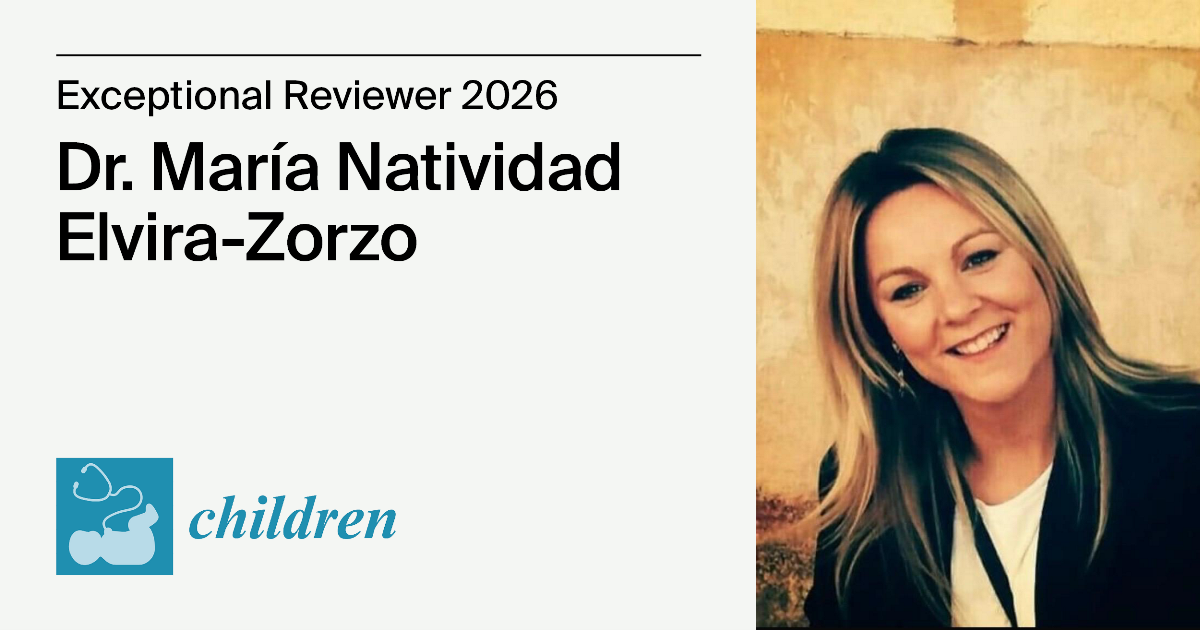
To show appreciation for our reviewers, the Editorial Office of Children (ISSN: 2227-9067) will announce our Exceptional Reviewers each month. You can find the award list here:
https://www.mdpi.com/about/announcements/15639.
We wish to congratulate Dr. María Natividad Elvira-Zorzo (University of Salamanca, Spain) on being a Children Exceptional Reviewer. She also shared some professional opinions about the current peer-review process.
The following is an interview with Dr. María Natividad Elvira-Zorzo:
1. Could you briefly introduce yourself and your current research topic to our readers, as well as the important role of your research area in promoting children's health?
I hold a PhD in psychology and am a lecturer in the field of social psychology, focusing my research on the psychosocial aspects of health and well-being. My main areas of research include active ageing, retirement, inclusive education, mental health, and the analysis of attitudes and stigma. I have also conducted research on children and adolescents, particularly in relation to mental health and suicidal behavior, as well as on educational processes and psychological well-being. I believe these areas are key to promoting children’s health from a preventive, inclusive and socially contextual perspective.
2. What criteria do you consider most important when evaluating a manuscript?
When evaluating a manuscript, I consider the relevance and topicality of the subject, methodological rigor and consistency between objectives, results and conclusions, as well as the clarity of presentation and contribution to scientific knowledge, to be particularly important.
3. How do you view the role of a reviewer in shaping the quality and integrity of newly submitted research? What are your thoughts on the use of AI tools in the academic publishing industry, and what are your recommendations for ensuring quality control in the future?
The reviewer plays a fundamental role in ensuring the quality, rigor and integrity of scientific research. Regarding the use of AI tools, I believe they can be useful as a support in the editorial process, provided their use is transparent and complementary to expert judgement. It is essential to establish clear criteria that ensure the quality, ethics and reliability of published work.
4. What advice would you give to early-career researchers who want to become strong peer reviewers? Or any suggestions for the peer review process? Would you like to recommend that more scholars join us as reviewers to promote the scientific quality of peer review?
I would recommend that early-career researchers train in research methodology and critical reading, as well as gradually becoming involved in peer review under criteria of responsibility and rigor. I also consider it essential to encourage the participation of more academics in the peer review process, given that their contribution is key to maintaining scientific quality.
To continue helping the journal improve the peer review process, the office encourages scholars related to the topics of Children to join us via this link: https://www.mdpi.com/reviewers.
Children Editorial Office
29 May 2026
Children | Highly Cited Published Papers in the “Pediatric Radiology” Section
Children (ISSN: 2227-9067) is an international, open access journal dedicated to the streamlined yet scientifically rigorous dissemination of peer-reviewed research related to childhood health and disease. For more information about the journal, please visit the following link: https://www.mdpi.com/journal/children.
We are delighted to share some highly cited published papers in Children of the Section “Pediatric Radiology”.
1. “Cerebral Ultrasound at Term-Equivalent Age: Correlations with Neuro-Motor Outcomes at 12–24 Months Corrected Age”
by Adrian Ioan Toma, Vlad Dima, Lidia Rusu, Alexandra Floriana Nemes, Bogdan Florin Gont, Alexandra Arghirescu, Andreea Necula, Alina Fieraru, Roxana Stoiciu, Larisa Andrășoaie et al.
Children 2025, 12(1), 30; https://doi.org/10.3390/children12010030
Available online: https://www.mdpi.com/2227-9067/12/1/30
2. “Cranial Ultrasound in the Management of Hydrocephalus in Newborns: A Case Series”
by Bogdan Florin Gonț, Loredana Mitran, Vlad Dima and Simona Vlădăreanu
Children 2025, 12(4), 419; https://doi.org/10.3390/children12040419
Available online: https://www.mdpi.com/2227-9067/12/4/419
3. “The Expanding Frontier: The Role of Artificial Intelligence in Pediatric Neuroradiology”
by Alessia Guarnera, Antonio Napolitano, Flavia Liporace, Fabio Marconi, Maria Camilla Rossi-Espagnet, Carlo Gandolfo, Andrea Romano, Alessandro Bozzao and Daniela Longo
Children 2025, 12(9), 1127; https://doi.org/10.3390/children12091127
Available online: https://www.mdpi.com/2227-9067/12/9/1127
4. “Leptomeningeal Dissemination in Choroid Plexus Tumors: Magnetic Resonance Imaging Appearance and Risk Factors”
by Daniel Nunes do Espirito Santo, Monika Warmuth-Metz, Camelia-Maria Monoranu, Martin Hasselblatt, Christian Thomas, Torsten Pietsch, Jürgen Krauß, Tilmann Schweitzer, Brigitte Bison, Matthias Eyrich et al.
Children 2025, 12(1), 82; https://doi.org/10.3390/children12010082
Available online: https://www.mdpi.com/2227-9067/12/1/82
5. “Tetralogy of Fallot: The Burden of Pulmonary Atresia in the NICU Set-Up: Two Case Reports and a Literature Review”
by Ion Dragomir, Diana Iulia Vasilescu, Adriana Mihaela Dan, Diana Voicu, Sorin Liviu Vasilescu, Laura Andreea Stefan, Alin Nicolescu and Monica Mihaela Cîrstoiu
Children 2025, 12(6), 780; https://doi.org/10.3390/children12060780
Available online: https://www.mdpi.com/2227-9067/12/6/780
6. “Paediatric Thoracic Imaging in Cystic Fibrosis in the Era of Cystic Fibrosis Transmembrane Conductance Regulator Modulation”
by Patrick W. O’Regan, Niamh E. Stevens, Niamh Logan, David J. Ryan and Michael M. Maher
Children 2024, 11(2), 256; https://doi.org/10.3390/children11020256
Available online: https://www.mdpi.com/2227-9067/11/2/256
7. “Still an Unsolved Question: The Place of Cranial Magnetic Resonance Imaging in Acute Acquired Concomitant Esotropia”
by Luisa Mittendorf, Matthias K. Bernhard, Ina Sterker, Wieland Kiess, Janina Gburek-Augustat and Andreas Merkenschlager
Children 2024, 11(5), 519; https://doi.org/10.3390/children11050519
Available online: https://www.mdpi.com/2227-9067/11/5/519
To read other high-quality Editor’s Choice Articles, please visit the following website: https://www.mdpi.com/journal/children/editors_choice.
To submit your next manuscript to this Section of “Pediatric Radiology” in Children, please visit the following website and choose the Section “Pediatric Radiology”:
https://www.mdpi.com/user/manuscripts/upload/?journal=children.
We look forward to receiving your articles.
Children Editorial Office
25 May 2026
Children | An Interview with Exceptional Reviewer Dr. Marcos Antonio Japiassu Resende Montes

To thank our reviewers, the Children (ISSN: 2227-9067) Editorial Office will announce our Exceptional Reviewers each month. You can get the award list here: https://www.mdpi.com/about/announcements/15639.
We wish to congratulate Dr. Marcos Antonio Japiassu Resende Montes (University of Pernambuco (UPE), Brazil) on this list. He also shared some professional opinions about the current peer-review process.
The following is an interview with Dr. Marcos Antonio Japiassu Resende Montes:
1. Could you briefly introduce yourself and your current research topic to our readers, as well as the important role of your research area in promoting children's health?
I am a faculty member at the Faculty of Dentistry of Pernambuco, University of Pernambuco (FOP/UPE), Brazil, with a research focus on restorative dentistry and dental materials. My work primarily investigates the mechanical, physical, and biological properties of resin-based composites and adhesive systems, including their long-term performance and biocompatibility.
In the context of children’s health, this research is particularly relevant because restorative materials are widely used in pediatric dentistry. Ensuring that these materials are durable, safe, and biologically compatible is essential for maintaining oral health, preventing treatment failures, and minimizing the need for repeated interventions in children. Additionally, understanding the interaction between dental materials and biological tissues contributes to safer clinical protocols and improved patient outcomes.
2. What criteria do you consider most important when evaluating a manuscript?
When evaluating a manuscript, I prioritize scientific rigor and methodological transparency. The most important criteria include the appropriateness of the study design to answer the research question, the clarity and reproducibility of the methods, and the correct application of statistical analyses.
I also assess whether the conclusions are adequately supported by the data, avoiding overinterpretation. Clarity of presentation, logical organization, and relevance to the field are essential, as well as the originality and potential impact of the work. Finally, adherence to reporting guidelines and ethical standards is fundamental.
3. How do you view the role of a reviewer in shaping the quality and integrity of newly submitted research? What are your thoughts on the use of AI tools in the academic publishing industry, and what are your recommendations for ensuring quality control in the future?
Reviewers play a central role in maintaining the quality, credibility, and integrity of scientific literature. Beyond simply identifying flaws, a reviewer should provide constructive, evidence-based feedback that helps authors improve their work and communicate their findings more clearly.
Regarding AI tools, I believe they can be valuable in supporting the peer-review and editorial process, particularly for language improvement, plagiarism detection, and preliminary screening. However, they must not replace critical scientific judgment. The responsibility for evaluating scientific validity, originality, and ethical compliance must remain with qualified human reviewers.
To ensure quality control in the future, it is important to combine AI-assisted tools with rigorous editorial oversight, clear guidelines for their appropriate use, and transparency in how they are applied. Training reviewers to critically assess AI-generated content will also be increasingly necessary.
For early career researchers, I recommend developing a strong foundation in research methodology and critical appraisal. Reading high-quality articles, understanding reporting guidelines, and practicing structured evaluation are essential steps. Reviewing should be approached as a learning process, where the goal is not only to critique but also to contribute constructively.
Clarity, objectivity, and professionalism are key. Providing specific, actionable feedback is far more valuable than general comments. It is also important to remain aware of one’s own limitations and avoid reviewing outside one’s area of expertise.
Regarding the peer-review process, I strongly encourage more researchers to engage as reviewers. Peer review is a cornerstone of scientific progress, and broader participation helps distribute the workload, improve diversity of perspectives, and enhance the overall quality of published research.
21 May 2026
Meet Us at the 44th Annual Meeting of the European Society for Paediatric Infectious Diseases, 1–5 June 2026, Bologna, Italy
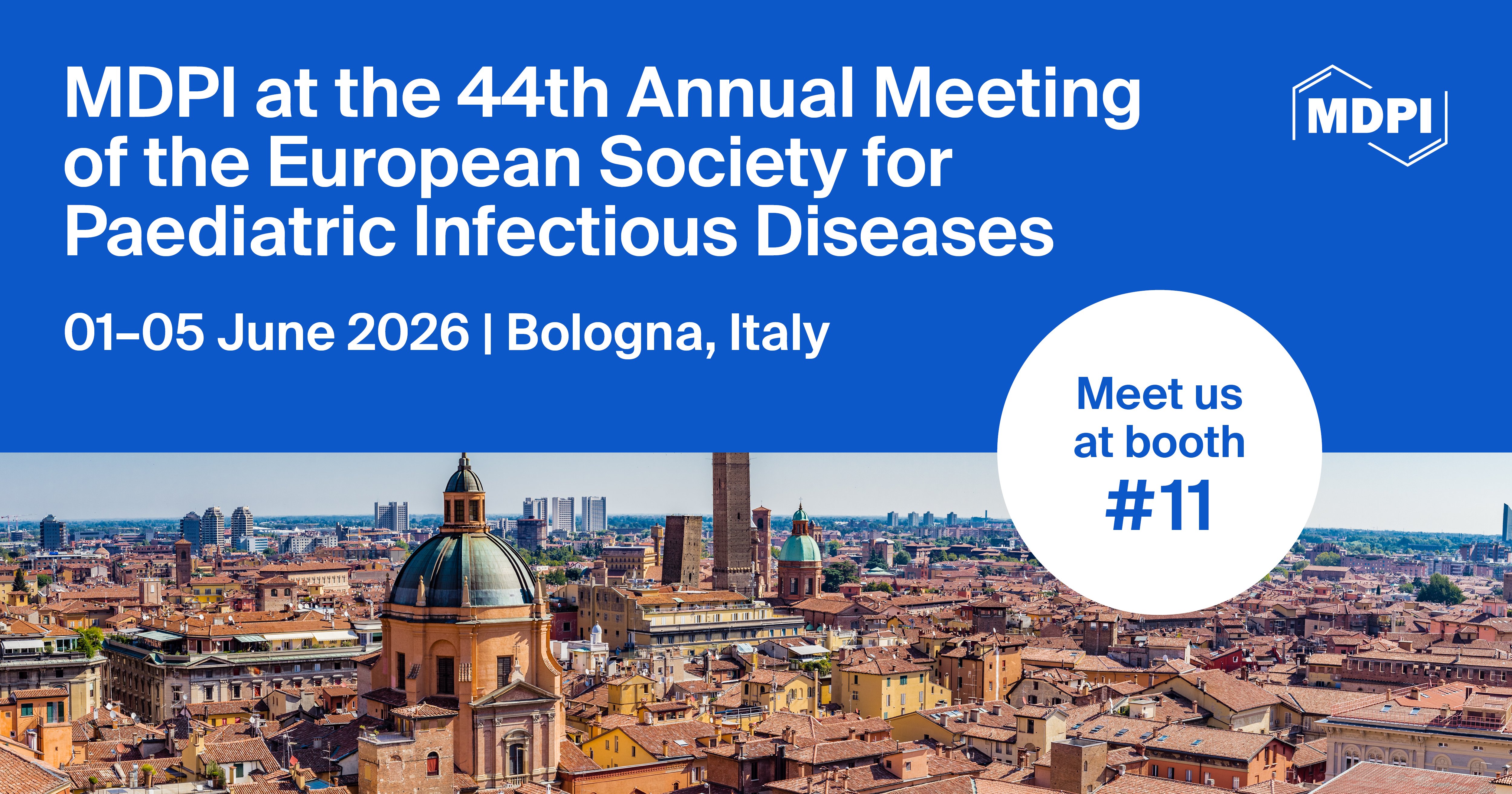
MDPI will be attending the 44th Annual Meeting of the European Society for Paediatric Infectious Diseases, which will be held from 1 to 5 June 2026 in Bologna, Italy, and online.
This prestigious meeting will bring together top experts from across Europe and beyond, united in their dedication to advancing the research, treatment, and prevention of infectious diseases in children.
The following MDPI journals will be represented at the conference:
- Pediatric Reports;
- Children;
- Vaccines;
- Journal of Clinical Medicine (JCM);
- International Journal of Translational Medicine (IJTM);
- Infectious Disease Reports;
- Germs;
- Hygiene;
- Diseases;
- Therapeutics;
- Pharmacy;
- Epidemiologia;
- Pathogens;
- TropicalMed;
- BioMed;
- Immuno.
If you are planning to attend the conference, we encourage you to visit our booth and speak with our representatives. We are eager to meet you in person and assist you with any queries that you may have.
For more information about the conference, please visit the official website at https://espidmeeting.org/.
20 May 2026
Children | Highly Cited Papers Published in the “Pediatric Pulmonary and Sleep Medicine” Section

Children (ISSN: 2227-9067) is an international, open access journal dedicated to the streamlined, yet scientifically rigorous dissemination of peer-reviewed science related to childhood health and disease.
More information about the journal can be found at the following link: https://www.mdpi.com/journal/children.
We are delighted to share some of the most highly cited papers published in Children in the Section “Pediatric Pulmonary and Sleep Medicine”.
1. “Melatonin Use in Pediatrics: A Clinical Review on Indications, Multisystem Effects, and Toxicity”
by Pranita Shenoy, Adriana Etcheverry, Jalyn Ia, Manisha Witmans and Mary Anne Tablizo
Children 2024, 11(3), 323; https://doi.org/10.3390/children11030323
Available online: https://www.mdpi.com/2227-9067/11/3/323
2. “Recurrent Respiratory Infections in Children with Down Syndrome: A Review”
by Michele Ghezzi, Nicolò Garancini, Raffaella De Santis, Laura Gianolio, Salvatore Zirpoli, Anna Mandelli, Andrea Farolfi, Enza D’Auria and Gian Vincenzo Zuccotti
Children 2024, 11(2), 246; https://doi.org/10.3390/children11020246
Available online: https://www.mdpi.com/2227-9067/11/2/246
3. “Imaging of Acute Complications of Community-Acquired Pneumonia in the Paediatric Population—From Chest Radiography to MRI”
by Efthymia Alexopoulou, Spyridon Prountzos, Maria Raissaki, Argyro Mazioti, Pablo Caro-Dominguez, Franz Wolfgang Hirsch, Jovan Lovrenski and Pierluigi Ciet
Children 2024, 11(1), 122; https://doi.org/10.3390/children11010122
Available online: https://www.mdpi.com/2227-9067/11/1/122
4. “Dysfunctional Breathing in Children: A Literature Review”
by Georgia Karkouli, Konstantinos Douros, Dafni Moriki, Paraskevi Moutsatsou, Ioanna Giannopoulou, Eirini Maratou and Despoina Koumpagioti
Children 2024, 11(5), 556; https://doi.org/10.3390/children11050556
Available online: https://www.mdpi.com/2227-9067/11/5/556
5. “Postnatal Development of the Circadian Rhythmicity of Human Pineal Melatonin Synthesis and Secretion (Systematic Review)”
by Ekkehart Paditz
Children 2024, 11(10), 1197; https://doi.org/10.3390/children12070941
Available online: https://www.mdpi.com/2227-9067/12/7/941
6. “Exploring the Complex Interplay of Obesity, Allergic Diseases, and Sleep-Disordered Breathing in Children”
by Chiara Voltan, Francesca Concer, Luca Pecoraro, Angelo Pietrobelli, Giorgio Piacentini and Marco Zaffanello
Children 2024, 11(5), 595; https://doi.org/10.3390/children11050595
Available online: https://www.mdpi.com/2227-9067/11/5/595
7. “Continuous Spike–Waves during Slow Sleep Today: An Update”
by Annio Posar and Paola Visconti
Children 2024, 11(2), 169; https://doi.org/10.3390/children11020169
Available online: https://www.mdpi.com/2227-9067/11/2/169
8. “The Clinical Pulmonary Infection Score Combined with Procalcitonin and Lung Ultrasound (CPIS-PLUS), a Good Tool for Ventilator Associated Pneumonia Early Diagnosis in Pediatrics”
by Judit Becerra-Hervás, Carmina Guitart, Aina Covas, Sara Bobillo-Pérez, Javier Rodríguez-Fanjul, Josep L. Carrasco-Jordan, Francisco José Cambra Lasaosa, Iolanda Jordan and Mònica Balaguer
Children 2024, 11(5), 592; https://doi.org/10.3390/children11050592
Available online: https://www.mdpi.com/2227-9067/11/5/592
9. “Acute Respiratory Failure in Children: A Clinical Update on Diagnosis”
by Beatrice Panetti, Ilaria Bucci, Armando Di Ludovico, Giulia Michela Pellegrino, Paola Di Filippo, Sabrina Di Pillo, Francesco Chiarelli, Marina Attanasi and Giuseppe Francesco Sferrazza Papa
Children 2024, 11(1232), 283; https://doi.org/10.3390/children11101232
Available online: https://www.mdpi.com/2227-9067/11/10/1232
10. “Progress in the Application of Bronchoscopic Cryotherapy in Pediatric Pulmonary Diseases”
by Xiaofen Tao, Shuxian Li, Hujun Wu, Fang Jin, Guoping Jin and Lei Wu
Children 2024, 11(9), 1130; https://doi.org/10.3390/children11091130
Available online: https://www.mdpi.com/2227-9067/11/9/1130
11. “Severe Asthma in School-Age Children: An Updated Appraisal on Biological Options and Challenges in This Age Group”
by Cristiana Indolfi, Angela Klain, Maria Cristina Capuano, Simone Colosimo, Renata Rapillo and Michele Miraglia del Giudice
Children 2025, 12(2), 167; https://doi.org/10.3390/children12020167
Available online: https://www.mdpi.com/2227-9067/12/2/167
12. “Obstructive Sleep Apnea in Pediatrics and Adolescent Women: A Systematic Review of Sex-Based Differences Between Girls and Boys”
by Sofía Romero-Peralta, Cristina Rubio, María Castillo-García, Pilar Resano, Miguel Alonso, Esther Solano-Pérez, Laura Silgado, Esther Viejo-Ayuso, Leticia Álvarez-Balado and Olga Mediano
Children 2024, 11(1376), 167; https://doi.org/10.3390/children11111376
Available online: https://www.mdpi.com/2227-9067/11/11/1376
13. “Clinical Application of Pediatric Sleep Endoscopy: An International Survey”
by Giannicola Iannella, Armando De Virgilio, Antonino Maniaci, Jerome R. Lechien, Giuseppe Magliulo, Antonio Greco, Christian Calvo-Henriquez, Ahmed Yassin Bahgat, Manuele Casale, Rodolfo Lugo et al.
Children 2024, 11(1376), 94; https://doi.org/10.3390/children11010094
Available online: https://www.mdpi.com/2227-9067/11/1/94
14. “Cardiac Implications of Adenotonsillar Hypertrophy and Obstructive Sleep Apnea in Pediatric Patients: A Comprehensive Systematic Review”
by Marco Zaffanello, Refika Hamutcu Ersu, Luana Nosetti, Giulio Beretta, Massimo Agosti and Giorgio Piacentini
Children 2024, 11(2), 208; https://doi.org/10.3390/children11020208
Available online: https://www.mdpi.com/2227-9067/11/2/208
15. “Risk and Protective Factors for Obstructive Sleep Apnea Syndrome Throughout Lifespan: From Pregnancy to Adolescence”
by Duilio Petrongari, Francesca Ciarelli, Paola Di Filippo, Armando Di Ludovico, Sabrina Di Pillo, Francesco Chiarelli, Giulia Maria Pellegrino, Giuseppe Francesco Sferrazza Papa, Luana Nosetti and Marina Attanasi
Children 2025, 12(2), 216; https://doi.org/10.3390/children12020216
Available online: https://www.mdpi.com/2227-9067/12/2/216
You can read other high-quality Editor’s Choice Articles via the following link: https://www.mdpi.com/journal/children/editors_choice.
You can submit your next manuscript to Children and choose a suitable Section via the following link: https://www.mdpi.com/journal/children/sections.
We look forward to receiving your articles.
Children Editorial Office
15 May 2026
Meet Us at the European Hematology Association 2026 Congress, 11–14 June 2026, Stockholm, Sweden
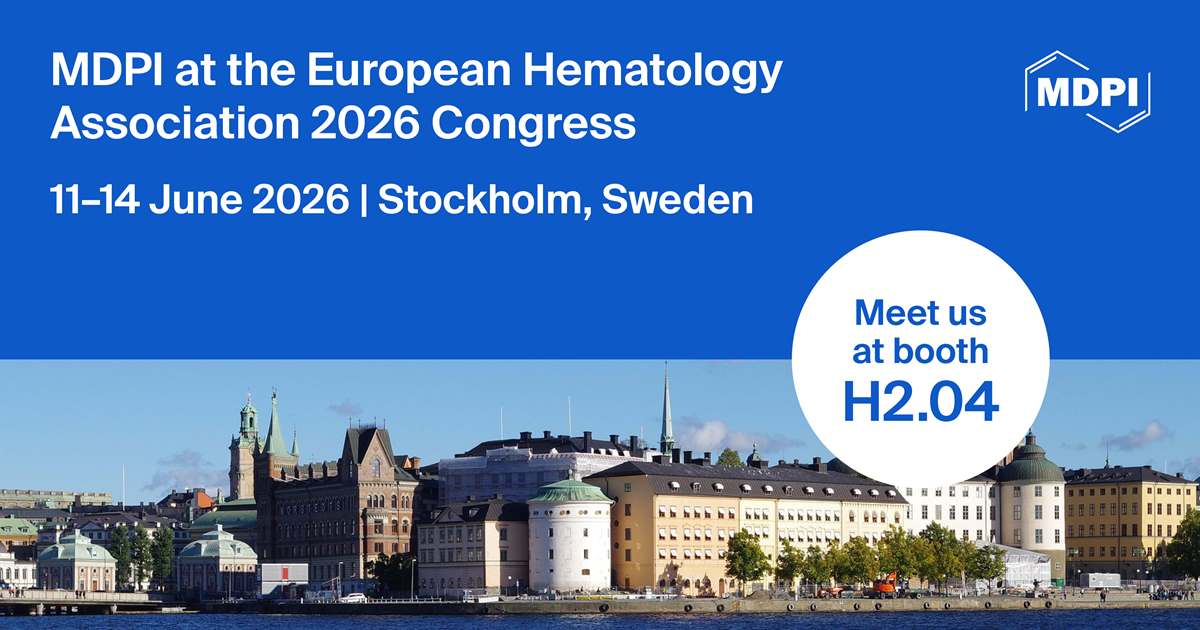
Conference: European Hematology Association 2026 Congress
Date: 11–14 June 2026
Location: Stockholm, Sweden
We are pleased to announce that MDPI will be featured in the upcoming European Hematology Association 2026 Congress (EHA 2026). The EHA 2026 is organized by the European Hematology Association, intended for the global hematology community to share the latest clinical and research updates in the subject of hematology. The conference brings together hematologists, researchers, and healthcare professionals to discuss advancements in blood disorders and treatments.
Topics include, but are not limited to, the following:
- Advancing innovation and scientific discovery across basic, translational, and clinical hematology;
- Enhancing diagnostics, treatment strategies, and evidence-based hematology practice;
- Strengthening collaboration, education, patient communication, and professional development within the hematology community.
The following MDPI journals will be represented:
- Thalassemia Reports;
- Hematology Reports;
- Hemato;
- Transplantology;
- Journal of Clinical Medicine (JCM);
- Journal of Cardiovascular Development and Disease (JCDD);
- Medicina;
- Current Oncology;
- Lymphatics;
- Clinics and Practice;
- Cancers;
- Children;
- Neurology International;
- Surgical Techniques Development;
- Therapeutics.
If you are attending this conference, please feel free to start an online conversation with us. Our delegates look forward to meeting you in person at booth H2.04 and answering any questions that you may have. For more information about the conference, please visit the following website: https://ehaweb.org/connect-network/eha2026-congress.
7 May 2026
Recruiting Guest Editors for Children

Children (ISSN: 2227-9067) is an international, open access journal dedicated to a streamlined, yet scientifically rigorous, dissemination of peer-reviewed science related to childhood health and disease in developed and developing countries.
We are now recruiting Guest Editors for the “Pediatric Infectious Diseases” Section of this journal. If you are an active researcher in this field and are passionate about publishing cutting-edge research, please do not hesitate to contact us at children@mdpi.com.
The responsibilities of Guest Editors include the following:
- Defining the aims and scopes of Special Issues;
- Carrying out pre-checks and making final decisions as to whether a paper is acceptable (according to the review reports);
- Providing potential author lists and inviting high-quality contributions.
The benefits for Guest Editors include the following:
- A certificate in recognition of your role as a Guest Editor of Children;
- A book that could be published if more than eight papers are published in a Special Issue;
- Travel grant opportunities to attend featured conferences;
- Consideration as a Children Editorial Board Member candidate if a Special Issue is successful.
We would like to receive applications from leading experts in the childhood health and disease academic fields. We welcome and encourage you to apply.
You can submit your application directly via the following link: https://www.mdpi.com/journalproposal/sendproposalspecialissue/children.
We look forward to receiving your proposal. If you have any questions before or after applying, please do not hesitate to contact us at children@mdpi.com.
Children Editorial Office
