



Journal Menu
► ▼ Journal Menu-
- Nutrients Home
- Aims & Scope
- Editorial Board
- Reviewer Board
- Topical Advisory Panel
- Early Career Editorial Board
- Instructions for Authors
- Special Issues
- Topics
- Sections & Collections
- Article Processing Charge
- Indexing & Archiving
- Editor’s Choice Articles
- Most Cited & Viewed
- Journal Statistics
- Journal History
- Journal Awards
- Society Collaborations
- Conferences
- Editorial Office
Journal Browser
► ▼ Journal BrowserNeed Help?
Announcements
16 September 2026
Meet Us at the 14th AISTEC Conference “From Commodity to Specialty: How Research Adds Value to Cereals and Legumes”, 21–23 October 2026, Foggia, Italy

The 14th AISTEC Conference “From Commodity to Specialty: How Research Adds Value to Cereals and Legumes” will be held from 21 to 23 October 2026 in Foggia, Italy. The conference will be hosted by the Italian Association for Cereal Science and Technology.
The areas of focus for the conference include the following:
- Genetic Characteristics and Agronomic Models;
- Genetic Resources and Climatic Factors;
- Utility Value and Quality of Raw Materials;
- Process and Product Innovations;
- Unconventional Ingredients and Value Addition of Byproducts;
- Food Safety Issues;
- Nutrition, Consumers, and Regulatory Issues.
The following MDPI journals will be represented at the conference:
- Foods;
- Plants;
- Agronomy;
- Agriculture;
- Beverages;
- Dietetics;
- Nutrients;
- Gastronomy;
- Crops;
- Grain Science;
- Legumes.
If you are planning to attend the above conference, please feel free to start an online conversation with us. Our delegates also look forward to meeting you in person and answering any questions that you may have.
For more information about the conference, please visit the following link: https://www.aistec.it/info.php?id=104&tit=14%C2%B0-CONVEGNO-AISTEC.
14 September 2026
Interview with Dr. Yong Li—Winner of the Nutrients Best PhD Thesis Award
1. Congratulations on winning the Nutrients 2026 Best PhD Thesis Award! Could you briefly introduce yourself?
Thank you very much. It is a great honor to receive the Nutrients 2026 Best PhD Thesis Award, and I am sincerely grateful for this recognition.
I recently completed my PhD at King’s College London in the United Kingdom, and I am currently undertaking postdoctoral research in China. Since beginning my PhD, my primary research interests have focused on polyphenols and their relationship with cardiometabolic health, as well as their potential implications for other health outcomes.
Throughout my doctoral studies, I became particularly interested in methodological approaches for assessing polyphenol intake and investigating their associations with human health. This continues to be an important direction for my current research, and I hope to further develop this area throughout my academic career.
2. What motivated you to pursue your current research topic?
My interest in nutrition and its relationship with non-communicable diseases began before my PhD. When I joined Professor Ana Rodriguez-Mateos’s research group, I became increasingly familiar with her work on polyphenols, and this gradually led me to focus my doctoral research on polyphenols and cardiometabolic health.
What particularly attracted me to this field was its methodological complexity. Polyphenols represent an exceptionally diverse group of bioactive compounds, with thousands of different compounds identified to date. Compared with some other nutritional components, accurately assessing polyphenol exposure can therefore be particularly challenging.
Rather than discouraging me, these challenges strengthened my interest in the field. I became increasingly interested in two fundamental questions: how can we assess polyphenol intake more accurately, and how can improved assessment methods help us better understand their potential health effects?
There are still many methodological questions that remain to be explored, and I find this particularly motivating. The opportunity to contribute to improving these methods and, ultimately, to a better understanding of the relationship between polyphenols and human health continues to inspire my research.
3. What were some of the biggest challenges you faced during your PhD journey, and how did you overcome them?
One of the greatest challenges was the strongly methodological nature of my PhD. A substantial proportion of my thesis involved developing and applying methodological approaches, particularly for organizing polyphenol databases, managing large datasets, conducting advanced statistical analyses, and eventually applying machine-learning techniques.
When I began, I had relatively limited experience with several of the statistical and computational tools required for this work. Moreover, this methodological direction was relatively new within my immediate research environment, which meant that there was not always someone available with direct experience of the specific problems I was trying to solve.
Consequently, I had to become a highly independent learner. I spent considerable time studying the literature, learning statistical software and programming, examining existing methodologies, and gradually developing the necessary analytical skills. Some projects, particularly those involving metabolic signatures and machine-learning approaches such as elastic net and ridge regression, required me to begin with very little prior knowledge.
Although this was challenging, it ultimately became one of the most valuable aspects of my PhD. It taught me that research often requires us to work beyond our existing expertise. By approaching difficult problems systematically, reading extensively, learning independently, and remaining persistent, I was able to develop skills that I now consider fundamental to my research career.
4. What advice would you give to students who are starting their thesis journey or approaching the end of theirs?
The most important advice I would give is not to expect the first version to be perfect. Start, complete the first version, and then improve it.
During my PhD, I found it extremely helpful to establish clear and relatively strict timelines for individual tasks—for example, completing a statistical analysis, preparing figures, or producing the first draft of a manuscript. Having a complete first version, even if it is imperfect, gives you something concrete to evaluate, discuss with your supervisors and colleagues, and progressively refine.
I would also encourage students not to become overwhelmed by considering the thesis as one enormous task. Instead, divide it into smaller, manageable components and focus on completing them one at a time. A PhD can appear intimidating when viewed in its entirety, but individual problems are usually much more manageable when approached systematically.
Finally, I think it is important to have confidence in your ability to learn. There will inevitably be moments when you encounter unfamiliar methods or difficult research questions. You do not need to know everything at the beginning. Research itself is a process of learning. Once you begin working on a problem, seeking appropriate resources, discussing your ideas, and making incremental progress, challenges that initially appeared overwhelming often become much more manageable.
For students approaching the end of their PhD, I would particularly emphasize the importance of continuing to move forward rather than waiting for every section to feel perfect. Finish the first complete version, seek feedback, revise carefully, and trust the progress you have made throughout your doctoral journey.
5. Would you like to share your experience with Nutrients? Do you have any suggestions for the editorial team?
My experience with Nutrients has accompanied several important stages of my academic development, which makes receiving this award particularly meaningful to me.
My first experience submitting to Nutrients was during my master’s studies at Peking University. That submission was unsuccessful, and as an early-career researcher, receiving a rejection was naturally disappointing. However, the experience became part of my development as a researcher.
Later, during my PhD, Nutrients became the journal in which I published my first first-author paper from my doctoral research. I remember that publication particularly well because completing and publishing the first paper of a PhD can be a significant milestone. The editorial and peer-review process was efficient, and successfully publishing that work gave me greater confidence as I progressed with my subsequent research.
Receiving the Nutrients Best PhD Thesis Award therefore feels like another important milestone in this journey—from experiencing an early rejection, to publishing my doctoral research in the journal, and now to receiving this recognition.
Regarding suggestions for the editorial team, I particularly appreciate initiatives that recognize and support PhD students and early-career researchers. Awards such as this can provide meaningful encouragement at a formative stage of an academic career. I would therefore encourage Nutrients to continue developing opportunities that recognize high-quality work by early-career researchers and support their continued academic development.
6. What motivated you to apply for the Best PhD Thesis Award? As the winner, is there someone you would like to thank or something you wish to express?
I first learned about the Nutrients Best PhD Thesis Award during the first year of my PhD, when information about the award was circulated within our department. Although graduation was still several years away, I saved the information and thought that, when the time came, I would like to challenge myself and apply.
By the end of my PhD, I had also received recognition for my doctoral thesis at King’s College London, which encouraged me to submit my work for the Nutrients award. I was aware that previous winners had very strong academic records, so I certainly did not assume that I would win. Nevertheless, I believed that applying was worthwhile. Receiving the award has therefore been both an honor and an important source of encouragement as I begin the next stage of my research career.
Most importantly, I would like to express my sincere gratitude to my primary supervisor, Professor Ana Rodriguez-Mateos, and my secondary supervisor, Dr Rachel Gibson.
Professor Rodriguez-Mateos played a particularly important role in shaping the direction of my PhD. During the early stage of my doctoral studies, the COVID-19 pandemic disrupted the randomized controlled trial that I had initially prepared to undertake. At a difficult point in my PhD, she encouraged me to explore a new methodological research direction, despite the fact that it was unfamiliar and challenging. Her confidence in my ability to undertake this work gave me the motivation to continue and ultimately shaped much of what became my doctoral thesis.
Throughout my PhD, both of my supervisors provided valuable scientific guidance, encouragement, and opportunities to develop as an independent researcher. Professor Rodriguez-Mateos also supported my collaborations and helped me gain experience working with large cohort datasets, which became an important part of my methodological development.
I am sincerely grateful for their trust, patience, guidance, and continued encouragement. This award represents not only my own work but also the support, mentorship, and collaboration I received throughout my doctoral journey.
Finally, I would like to thank Nutrients and the award committee for this recognition. Receiving this award at the transition from my PhD to the next stage of my academic career is particularly meaningful. It gives me additional confidence and motivation to continue exploring the relationship between polyphenols, nutrition, and cardiometabolic health and to contribute further to the field.
9 September 2026
Meet Us at Nutrients 2026—Clinical Nutrition: from Research to Practice, 22–24 October 2026, Barcelona, Spain
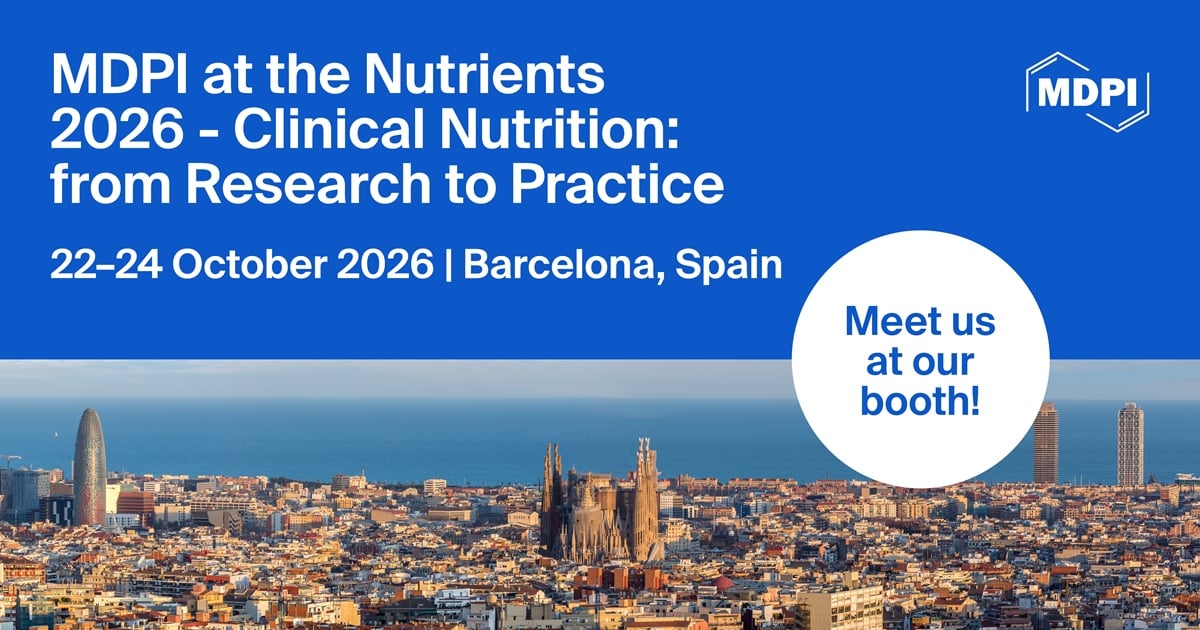
MDPI will attend the Nutrients 2026 Conference as the organizer and exhibitor. This event will be held in Barcelona, Spain, from 22 to 24 October 2026.
As a leading academic conference in the field of nutrition and health sciences, this event gathers renowned experts, scholars, clinicians and industry practitioners from around the world. It covers frontier research and practical applications in nutritional intervention, metabolic health, pediatric care, dairy nutrition, dietary management and antioxidant science, with multiple parallel sessions and keynote forums to promote in-depth academic exchange and industry collaboration.
The following open access journals will be represented at the conference:
If you are planning to attend the above event, please feel free to start an online conversation with us. Our delegates look forward to meeting you in person at our booth and answering any questions you may have. For more information about the conference, please visit the following website: https://sciforum.net/event/Nutrients2026.
3 September 2026
Meet Us at the American Public Health Association 2026 Annual Meeting and Expo (APHA 2026), 1–4 November 2026, San Antonio, USA
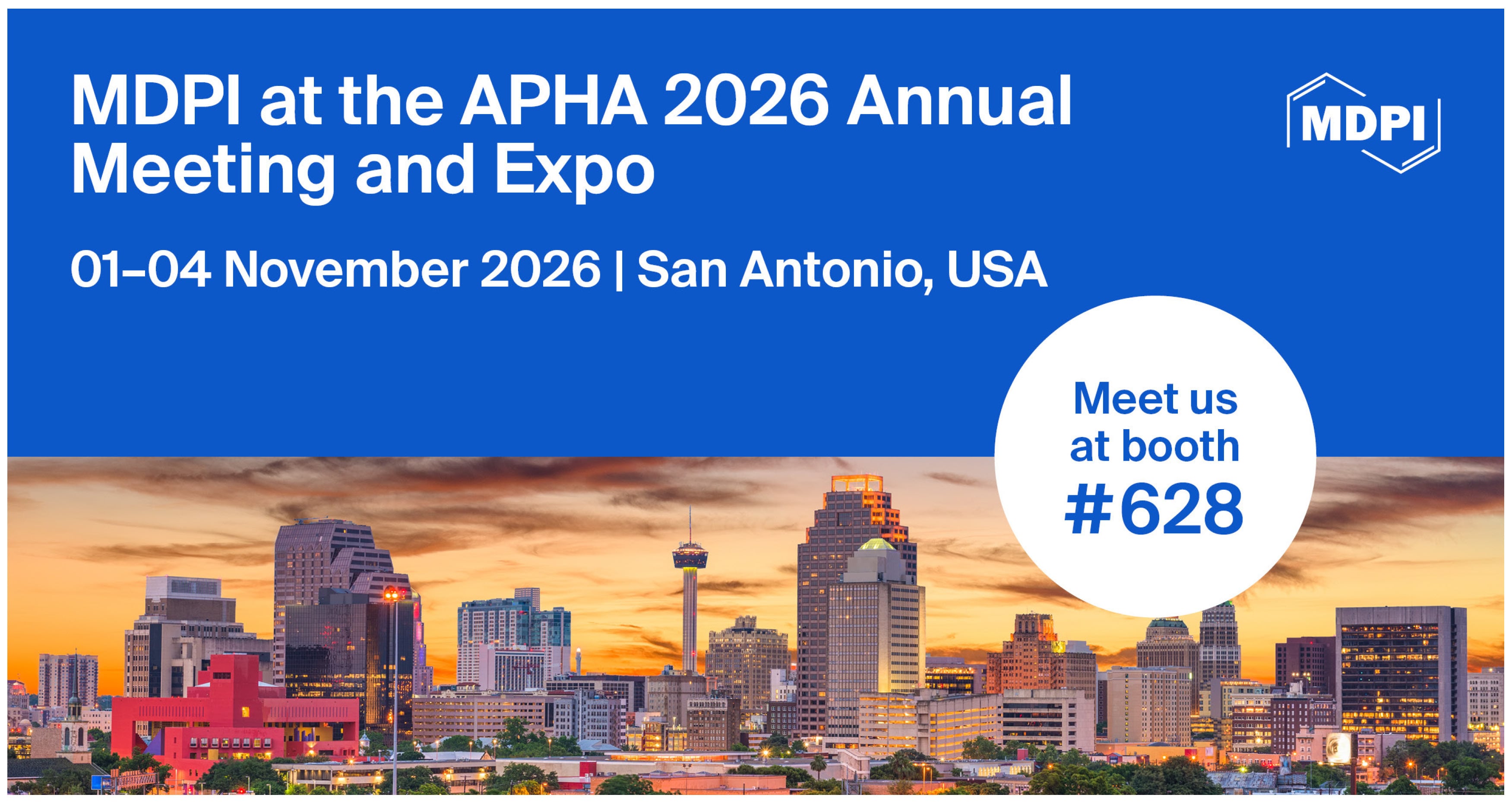
Conference: American Public Health Association 2026 Annual Meeting and Expo (APHA 2026)
Date: 1–4 November 2026
Location: San Antonio, USA
Each year, APHA’s Annual Meeting and Expo brings together about 11,000 public health professionals and partners from around the world to engage, collaborate and grow, gathering a broad spectrum of professionals across a variety of disciplines. As the largest public health gathering of the year, this is a meeting you will not want to miss. This year's theme is Together We Thrive: Health Across the Lifespan, and MDPI looks forward to welcoming you at Booth #628.
The following open access journals will be represented at APHA 2026:
- International Journal of Environmental Research and Public Health (IJERPH);
- COVID;
- Sports;
- Gastroenterology Insights;
- Epidemiologia;
- Nutrients;
- Allergies;
- Psychiatry International;
- TropicalMed;
- Children;
- Therapeutics;
- Nursing Reports;
- Hygiene;
- European Journal of Investigation in Health, Psychology and Education (EJIHPE);
- Green Health;
- Trends in Public Health.
Our delegates are excited to connect with you in person at our booth and answer any questions you may have. For more information regarding this conference, please visit the following link: https://www.apha.org/events-and-meetings/annual.
1 September 2026
Nutrients | Articles Recommended by the Section Editor-in-Chief of Section “Nutrition and Obesity”

We are pleased to share the following articles recommended by Prof. Javier Gómez-Ambrosi, Section Editor-in-Chief of the “Nutrition and Obesity” Section of Nutrients (ISSN 2072-6643). We believe these will be of interest to you.
1. “Lifestyle Medicine for Obesity in the Era of Highly Effective Anti-Obesity Treatment”
by Deepa Sannidhi, Ruth Abeles, William Andrew, Jonathan P. Bonnet, Kenneth Vitale, Varalakshmi Niranjan, Mahima Gulati, Kaitlyn Pauly, Ryan Moran, Lydia Alexander, Cassidy Le, Suraj Rajan and Camila Romero
Nutrients 2025, 17(14), 2382; https://doi.org/10.3390/nu17142382
Available online: https://www.mdpi.com/2072-6643/17/14/2382
2. “Revising BMI Cut-Off Points for Overweight and Obesity in Male Athletes”
by Chiara Milanese, Leila Itani, Valentina Cavedon, Dana Saadeddine, Silvia Raggi, Elisa Berri and Marwan El Ghoch
Nutrients 2025, 17(5), 908; https://doi.org/10.3390/nu17050908
Available online: https://www.mdpi.com/2072-6643/17/5/908
3. “A Multi-Level Approach to Childhood Obesity Prevention and Management: Lessons from Japan and the United States”
by Qutaibah Oudat, Sarah E. Messiah and Alia Dawlat Ghoneum
Nutrients 2025, 17(5), 838; https://doi.org/10.3390/nu17050838
Available online: https://www.mdpi.com/2072-6643/17/5/838
4. “The Effect of Creatine Supplementation on Lean Body Mass with and Without Resistance Training”
by Imtiaz Desai, Anurag Pandit, Abbie E. Smith-Ryan, David Simar, Darren G. Candow, Nadeem O. Kaakoush and Amanda D. Hagstrom
Nutrients 2025, 17(6), 1081; https://doi.org/10.3390/nu17061081
Available online: https://www.mdpi.com/2072-6643/17/6/1081
5. “Nutrient-Induced Remodeling of the Adipose-Cardiac Axis: Metabolic Flexibility, Adipokine Signaling, and Therapeutic Implications for Cardiometabolic Disease”
by Nikola Pavlović, Petar Todorović, Mirko Maglica, Marko Kumrić and Joško Božić
Nutrients 2025, 17(24), 3945; https://doi.org/10.3390/nu17243945
Available online: https://www.mdpi.com/2072-6643/17/24/3945
6. “Personalized Nutrition Through the Gut Microbiome in Metabolic Syndrome and Related Comorbidities”
by Julio Plaza-Diaz, Lourdes Herrera-Quintana, Jorge Olivares-Arancibia and Héctor Vázquez-Lorente
Nutrients 2026, 18(2), 290; https://doi.org/10.3390/nu18020290
Available online: https://www.mdpi.com/2072-6643/18/2/290
7. “Obesity, Bariatric Surgery, and Cancer Risk: Nutritional Perspectives and Long-Term Clinical Implications”
by Claudia Reytor-González, Gerardo Sarno, Martha Montalvan, Ludovica Verde, Giuseppe Annunziata, Luigi Barrea, Giovanna Muscogiuri and Daniel Simancas-Racines
Nutrients 2026, 18(4), 685; https://doi.org/10.3390/nu18040685
Available online: https://www.mdpi.com/2072-6643/18/4/685
1 September 2026
MDPI INSIGHTS: The CEO’s Letter #38 – 2 Million Published Articles, Outstanding Reviewers, Michele Parrinello Award, AIS 2026 & WSF-12

Welcome to the MDPI Insights: The CEO's Letter.
In these monthly letters, I will showcase two key aspects of our work at MDPI: our commitment to empowering researchers and our determination to facilitating open scientific exchange.
Opening Thoughts

MDPI Reaches 2 million Published Articles
This month, MDPI reached an important milestone: the publication of our two-millionth article.
It is a number that would have been difficult to imagine in 1996, when MDPI’s first journal, Molecules, published its first volume of 74 papers. It took 25 years to reach our first million published articles in December 2022, and less than four years to reach the second million in August 2026.
From 74 Papers to Two Million Articles
The milestone also comes during our 30th anniversary year, providing another opportunity to reflect on how both MDPI and Open Access publishing have developed over the past three decades. Today, more than half of the world’s published research is Open Access, while MDPI has grown into a portfolio of journals supported by more than 70,000 Editorial Board Members. In 2025 alone, articles published in MDPI journals received 1.9 billion views and downloads.
While two million is an impressive number, what matters most is what sits behind it. Every article represents research conducted and shared by authors, editorial decisions made by academic editors, expertise contributed by reviewers, and the work of colleagues across MDPI supporting the publication and dissemination of research.
Many of the stories in this month’s CEO Letter reflect these communities. We recognize the contributions of the more than 209,000 reviewers who supported MDPI journals in 2025, celebrate scientific excellence through the inaugural Michele Parrinello Award, and look at how communities continue to develop through AIS 2026 and the 12th World Sustainability Forum.
“In 2025 alone, articles published in MDPI journals received 1.9 billion views and downloads”
Publishing at Scale, with Purpose
Reaching two million articles is an important milestone in MDPI’s history, but it is also a reminder of the responsibility that comes with publishing at this scale. As we look ahead, our focus remains on quality, research integrity, strong editorial standards, and providing researchers with reliable and efficient ways to share their work openly with the world.
Thank you to our authors, editors, reviewers, institutional partners, and colleagues around the world who have contributed to this journey.
Impactful Research

Recognizing Scientific Excellence: The Michele Parrinello Award
Supporting researchers means more than publishing and disseminating scientific work. It also means recognizing the researchers, editors, reviewers, and scholars whose contributions advance their fields.
I’m pleased to highlight the inaugural Michele Parrinello Award, which has been awarded to Prof. Ursula Röthlisberger of the École Polytechnique Fédérale de Lausanne (EPFL), Switzerland. Prof. Röthlisberger was recognized for her contributions to computational chemistry and molecular simulation, particularly her pioneering work in ab initio molecular dynamics and quantum mechanical/molecular mechanical (QM/MM) multiscale simulation methods.
Prof. Röthlisberger leads the Laboratory of Computational Chemistry and Biochemistry at EPFL, developing computational approaches to understand complex chemical, biological, and materials systems at the atomic level. Her work also extends to next-generation photovoltaic materials, demonstrating the interdisciplinary reach of computational science.
The Michele Parrinello Award was established in 2025 to honor Prof. Michele Parrinello's pioneering contributions to atomistic simulation and computational science. Presented biennially, it recognizes senior researchers who have made significant contributions across physics, chemistry, and materials science. The recipient receives a EUR 50,000 prize, commemorative medal, and certificate.
Awarding Scientific Excellence
The selection was overseen by an international Award Committee, chaired by Prof. Dr. Xin-Gao Gong of Fudan University and a group of researchers from institutions in China, Italy, the UK, and the USA. Nominations were evaluated based on rigor, integrity, and academic excellence. In announcing the winner, Prof. Gong highlighted the impact of Prof. Röthlisberger’s research across multiple scientific disciplines, alongside her contributions to education and leadership within the international research community.
Recognizing Contributions Across the Research Community
The Michele Parrinello Award is part of MDPI’s broader commitment to recognizing excellence across different disciplines, contributions, and career stages.
Our journal awards include:
- Best Paper Awards – recognizing outstanding published research
- Young Investigator Awards – supporting exceptional early-career researchers
- Best PhD Thesis Awards – recognizing promising emerging scholars
- Outstanding Reviewer Awards – acknowledging the essential contribution of peer reviewers
- Travel Awards – helping early-career researchers participate in international conferences
- Editor of Distinction Awards – recognizing exceptional contributions from Editorial Board Members.
Alongside these journal awards, MDPI supports flagship initiatives including the Tu Youyou Award, the World Sustainability Award, the Emerging Sustainability Leader Award, and now the Michele Parrinello Award.
Learn More:
Inside MDPI

Recognizing the People Behind Peer Review: MDPI’s 2025 Outstanding Reviewer Awards
Behind every published article is a network of people contributing their expertise to the scholarly record. Among them, reviewers play an essential role, providing independent assessment, feedback, and subject expertise that help editors make informed decisions and authors build on their research.
In 2025, more than 209,000 individuals contributed their expertise as reviewers for MDPI journals. This represents an enormous contribution of time and knowledge from researchers around the world, occurring often alongside their own research, teaching, and professional responsibilities.
I’m pleased to share the recipients of MDPI’s 2025 Outstanding Reviewer Awards, recognizing reviewers who have shown great dedication, expertise, and responsiveness throughout the peer-review process.
Outstanding Reviewers
As at July 2026, 181 MDPI journals have presented Outstanding Reviewer Awards to 412 recipients, highlighting their work across disciplines ranging from biology, chemistry, engineering, and medicine to environmental sciences, public health, and the social sciences. To learn more about the list of outstanding reviewers, please visit the following pages:
- Biology and Life Sciences;
- Business and Economics;
- Chemistry and Materials Science;
- Computer Science and Mathematics;
- Engineering;
- Environmental and Earth Sciences;
- Medicine and Pharmacology;
- Physical Sciences;
- Public Health and Healthcare;
- Social Sciences, Arts and Humanities.
While these awards highlight a select group of outstanding contributors, they also create an opportunity to acknowledge our entire reviewer community. Peer review depends on researchers sharing their knowledge and experience with others. Their feedback can improve manuscripts, support editors in making informed decisions, and contribute to maintaining the quality and integrity of the scientific record.
“Reviewers play an essential role, providing independent assessment, feedback, and subject expertise”
Supporting the Academic Community
The Outstanding Reviewer Awards are part of MDPI’s awards program, through which our journals recognize contributions across the academic community, including those from researchers, early-career scholars, reviewers, and Editorial Board Members.
Bringing these contributions to the forefront is important because much of the work that supports scholarly publishing happens behind the scenes. The time, expertise, and critical feedback provided by reviewers are essential to a rigorous and constructive peer-review process.
As MDPI celebrates its 30th anniversary, I would like to thank the more than 209,000 reviewers who contributed to our journals in 2025 and to congratulate the 412 Outstanding Reviewer Award recipients recognized for going above and beyond in supporting their respective research communities.
Coming Together for Science

AIS 2026: Growing a Community Around AI and Sensor Research
One of the most rewarding aspects of our conference program is seeing scientific communities develop over time. A conference may begin by bringing together researchers around an emerging field, but with each edition it can create new relationships, collaborations, and opportunities for researchers to reconnect and exchange ideas.
The 3rd International Conference on AI Sensors and Transducers (AIS 2026) is a good example of this growth.

“What stands out is the community developing around AIS”
This year’s conference took place from 2 to 7 August in Jeju, South Korea, welcoming over 560 participants – an increase of 225 attendees compared with 2025 and 160 compared with the inaugural conference of 2024. Across the program, participants contributed 373 presentations and 109 poster displays, including four plenary presentations, 52 keynote speeches, 192 invited talks, and 125 oral presentations.
Building an International Research Community
Beyond the numbers, what stands out is the community developing around AIS. Many researchers have now participated in all three editions of the conference, with delegates already expressing their intention to return for AIS 2027. The program also brought together established researchers from across the field for discussions on AI sensors and emerging sensing technologies.
 |
 |
Building Engagement in South Korea
This year’s conference reflects our continued engagement with the research community in South Korea. AIS 2026 welcomed 150 participants from the Korean academic community and strengthened our cooperation with the Korean Sensors Society.

This is an important part of what our conferences can achieve. By bringing researchers together in person, we create opportunities to present the latest research and build relationships between scholars, institutions, societies, and at MDPI that can continue after an event concludes.
Looking Ahead
With this momentum, AIS 2027 is planned for 29 July to 3 August 2027 in Kunming, Yunnan, China, with the participation of an international group of Conference Chairs already confirmed from institutions in Europe, North America, and Asia-Pacific.
Three editions into AIS, the continued growth of this conference shows what is possible when we invest consistently in scientific communities. The objective is not simply to organize larger conferences each year but to create spaces where researchers return, new collaborations develop, and scientific communities become stronger.
Many thanks to the Conference Chairs, speakers, sponsors, supporting organizations, participants, and all MDPI colleagues who contributed to AIS 2026. Growing an international event takes years of relationship-building and considerable work behind the scenes, and this year’s conference reflects that collective effort.

Closing Thoughts

World Sustainability Forum 12: Coming Together for a More Sustainable Future
Sustainability challenges rarely sit within a single discipline, institution, or country. Addressing them requires researchers, policymakers, industry, and communities to exchange ideas and work across traditional boundaries.
This is one of the ideas behind the World Sustainability Forum (WSF), which has now reached its 12th edition.
 |
 |
From 21 to 24 August, the 12th World Sustainability Forum (WSF-12) took place in Hong Kong, bringing together more than 300 experts, scholars, policymakers, and industry representatives from over 100 universities and research institutions across 53 countries and regions. The Forum received 543 abstract submissions, showcasing international interest in sustainability research.
Connecting Research, Policy, and Industry
Across four days, the scientific program featured 230 onsite presentations, including plenary, keynote, invited and oral presentations, together with 53 poster presentations. The program also included a plenary panel discussion, Connecting Sustainability Solutions Across Sectors, presenting perspectives from academia, government, and industry.
 |
 |
This interdisciplinary exchange is particularly important in sustainability research. Challenges relating to our cities, environment, energy systems, economies, and societies are increasingly interconnected, and progress depends on creating opportunities for different disciplines and sectors to learn from one another.
WSF-12 also generated opportunities for industry participation. As a Strategic Partner, the China National Petroleum Corporation (CNPC) E-Light International Communication Brand contributed to industry engagement throughout the Forum.

MDPI Sustainability Foundation Awards
Another highlight of WSF-12 was the presentation of three MDPI Sustainability Foundation Awards, celebrating the 2025 and 2026 winners of the World Sustainability Award and the 2026 winner of the Emerging Sustainability Leader Award.
 |
 |
 |
Recognizing researchers and emerging leaders in their fields is an important part of supporting scientific communities. These awards are an opportunity to celebrate individual achievements and highlight research that contributes to a more sustainable future.
Looking Ahead to WSF-13
After twelve editions, WSF is a great example of how a scientific community can develop over time. This is also what we hope to achieve through MDPI’s broader conference program. Scientific meetings should be more than individual events: by investing consistently in research communities, we can create spaces where people return, new relationships develop, different perspectives meet, and collaboration continues beyond the conference itself.

The next chapter is already taking shape. The 13th World Sustainability Forum(WSF-13) will take place from 8 to 11 June 2027 in Nice, France. Chaired by Prof. Dr. Adel Ben Youssef and organized by MDPI and the journal Sustainability in collaboration with Université Côte d’Azur, WSF-13 will continue the Forum’s interdisciplinary approach across the natural sciences, engineering, and social sciences.
Thank You
Many thanks to the Conference Chairs, speakers, strategic partners, sponsors, supporting organizations, participants, and all MDPI colleagues who contributed to WSF-12. Events of this scale require considerable coordination and collaboration behind the scenes, and the continued growth of WSF reflects the collective efforts of the MDPI Conference Department and a global community committed to sustainability research, innovation, and collaboration.

Chief Executive Officer
MDPI AG
27 August 2026
Meet Us at the XXIX IFSO World Congress 2026, 1–4 September 2026, Toronto, ON, Canada
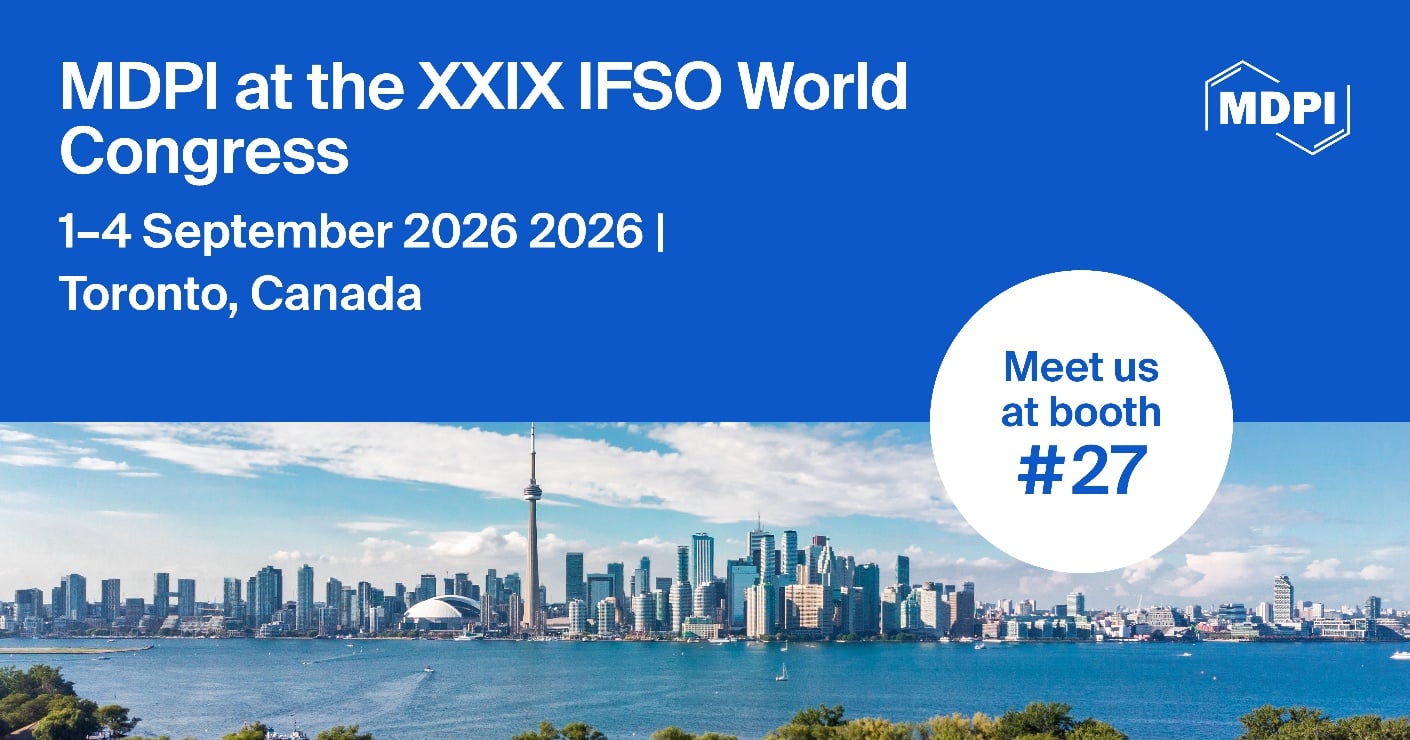
We are pleased to announce that MDPI will be exhibiting at the XXIX IFSO World Congress 2026, taking place from 1 to 4 September 2026 in Toronto, ON, Canada.
This year’s IFSO World Congress theme, “The Future of Obesity Management: From Weight Loss to Health Gain”, highlights a pivotal shift in managing metabolic conditions from a focus on weight reduction toward comprehensive health improvement and the effective resolution of obesity-associated diseases.
This Congress will unite global leaders from diverse disciplines, including metabolic bariatric surgeons, medical specialists, allied healthcare providers, researchers, and industry innovators, to redefine best practices in medical and surgical treatments, ultimately improving patient outcomes and enhancing quality of life.
Why visit MDPI’s booth?
Join us at MDPI’s booth to discover how we are advancing open science by supporting rapid, transparent, and accessible research dissemination.
- Learn more about MDPI’s open access publishing model and commitment to advancing open science;
- Explore journals covering medicine, pharmacology, public health, healthcare, and clinical sciences;
- Connect with the MDPI’s editorial team to discuss publishing opportunities and collaborations;
- Pick up conference materials and MDPI giveaways.
Confirmed MDPI Journals Being Represented:
- Children;
- Clinics and Practice;
- Diseases;
- International Journal of Environmental Research and Public Health;
- Journal of Aesthetic Medicine;
- Nutraceuticals;
- Nutrients;
- Obesities;
- Surgeries;
- Women.
If you are planning to attend the XXIX IFSO World Congress 2026, we would be delighted to meet you in person. Visit us at booth #27 to speak with our team and learn how MDPI can support the visibility and impact of your research.
We look forward to welcoming you in Toronto!
27 August 2026
Nutrients Webinar | Trace Elements for Brain Health and Cognitive Ageing, 23 September 2026

Welcome to the Nutrients Special Issue webinar, “Trace Elements for Brain Health and Cognitive Ageing”. This webinar brings together leading researchers to discuss the latest evidence on the role of trace elements in maintaining brain health and preventing cognitive decline across the life course. Through expert presentations on iodine, lithium, vitamin A, and n-3 PUFA–ApoE interactions, we will explore emerging findings from nutritional epidemiology, biomarker research, and public health nutrition, highlighting both current evidence and future research directions. We hope that this webinar provides a valuable platform for scientific exchange, interdisciplinary collaboration, and discussion on how trace element research can contribute to healthier brain ageing and improved population health.
Date: 23 September 2026 at 3:00 p.m. CEST | 9:00 a.m. EDT
Webinar ID: 834 7295 5947
Register now for free!

Program:
|
Speaker/Presentation |
Time in CEST |
Time in EDT |
|
Dr. Zheng Ma |
3:00–3:15 p.m. |
9:00–9:15 a.m. |
|
Dr. Zheng Ma |
3:15–3:40 p.m. |
9:15–9:40 a.m. |
|
Dr. Agostinho Almeida |
3:40–4:05 p.m. |
9:40–10:05 a.m. |
|
Dr. Shaobo Zhou |
4:05 – 4:30 p.m. |
10:05–10:30 a.m. |
|
Q&A Session |
4:30–4:50 p.m. |
10:30–10:50 a.m. |
|
Dr. Zheng Ma |
4:50–5:00 p.m. |
10:50–11:00 a.m. |
After registering, you will receive a confirmation email containing information on how to join the webinar.
Registrations with academic institutional email addresses will be prioritized.
If you cannot attend, please register anyway, and we will let you know when the recording is available to watch.
Webinar Chair and Keynote Speakers:
- Dr. Zheng Ma, Centre for Public Health and Wellbeing, School of Health and Social Wellbeing, College of Health, University of the West of England, Bristol, United Kingdom;
- Dr. Agostinho Almeida, LAQV/REQUIMTE, Department of Chemical Sciences, Faculty of Pharmacy, University of Porto, Portugal;
- Dr. Shaobo Zhou, School of Science, Faculty of Engineering and Science, University of Greenwich, Chatham, United Kingdom.
Relevant Topics:
“Trace Elements for Brain Health and Cognitive Ageing”
Guest Editors: Dr. Zheng Ma and Dr. Agostinho Almeida
Manuscript submission deadline: 25 November 2026
For more information about this webinar, please visit the following website: https://sciforum.net/event/NUTRIENTS-29.
If you have any questions about this event, please contact journal.webinar@mdpi.com.
Nutrients Webinar Secretariat
21 August 2026
Meet Us at the 6th International Congress “Food Technology, Quality and Safety – FoodTech 2026”, 27–29 October 2026, Novi Sad, Serbia
Conference: 6th International Congress “Food Technology, Quality and Safety – FoodTech 2026”
Organizer: Kenes Group
Date: 27–29 October 2026
Location: Novi Sad, Serbia
The 6th International Congress “Food Technology, Quality and Safety – FoodTech 2026”, to be held from 27 to 29 October 2026 in Novi Sad, Serbia, comes at a landmark moment for our institution and for the wider scientific and professional community. FINS is celebrating 20 years since its establishment, marking two decades of scientific progress, technological innovation, and strong collaboration within the food sector.
Guided by the motto “Reshaping the Future of Food - Two Decades of Science”, FoodTech 2026 symbolizes the continuity of knowledge and a forward-looking vision in which science plays a key role in transforming food and feed systems. FoodTech 2026 is conceived as a dynamic platform bringing together researchers, innovators, industry leaders, and decision-makers around a shared goal: the development of sustainable, safe, digitally supported, and consumer-driven food systems. The congress builds on two decades of advancement of knowledge and the institutional role of FINS as a meeting point between science and industry, where research ideas are transformed into innovative and applicable solutions.
Over the years, FoodTech has established itself as a space where ideas flow freely between science and industry. The 2026 edition continues this mission through plenary lectures, thematic scientific sessions, interactive formats for early-career researchers and innovators, and numerous opportunities to initiate new collaborations and joint innovative projects.
By marking the 20th anniversary of FINS, FoodTech 2026 is not only a scientific congress but also an opportunity to collectively reflect on achieved results and to open new pathways for the coming decades of research, development, and innovation in the field of food technologies.
We warmly invite you to join us in Novi Sad and become part of a congress that looks ahead—toward more resilient, sustainable, and healthier food systems for all.
The following open access journals will be represented at the conference:
If you are planning to attend the above conference, please feel free to stop by our booth. Our delegates look forward to meeting you in person and answering any questions that you may have.
For more information about the conference, please visit the following website:
https://congress.fins.uns.ac.rs/.
19 August 2026
Interview with Dr. Jose Antonio—Winner of the Nutrients Best Paper Award
1. Congratulations on winning the Nutrients 2026 Best Paper Award! Could you please briefly introduce yourself to our readers?
Absolutely. My name is Dr. Jose Antonio. I am a professor at Nova Southeastern University in the Department of Health and Human Performance, and I am also the Chief Executive Officer of the International Society of Sports Nutrition.
2. Could you introduce the key focus and main findings of your award-winning paper?
The genesis of the paper was that, if you go back 20 or 30 years, there was very much an anti-supplement standpoint in most academic societies. Fast forward to 2026, and I think that has changed quite a bit. We wanted to write a paper looking at the supplements that have the most supporting data, including creatine monohydrate, beta-alanine, nitrates, caffeine, and protein.
The main point was to show that there are dietary supplements that have value for sports, but also potentially for general health and well-being. Non-scientists are often exposed to a lot of negative messages about supplements, when in fact there are several very good supplements that I think athletes and the general population can use.
3. What research topics in the field of sports nutrition supplements interest you today, and what do you think will be of particular interest to the research community in the coming years?
My research team works on a wide variety of topics. We have done quite a bit of research on energy drinks, basically comparing caffeine with energy drinks containing an equal amount of caffeine and with a control or placebo drink.
We are also doing some work on creatine, looking at its effects on the extraocular muscles—the muscles of the eye. Of course, we are always interested in studying ergogenic aids and anything that may enhance athletic or human performance. That is something my research team and I continue to have a strong interest in.
4. We are glad that you chose to submit your work to Nutrients. Do you have any suggestions on how we could better support researchers or improve our editorial process?
That is an interesting question because I have been an Editor-in-Chief of a journal for over 20 years. I would say the best way to support the editorial process is to support the review process. One of the most difficult aspects of scientific publishing today is getting reviewers. The volume of scientific papers submitted to journals is so high that it can be extremely difficult to find people to review manuscripts. Providing waivers or other support to reviewers can therefore be a big help.
In terms of supporting researchers, another important issue is helping scientists in developing countries who may not have the same financial resources as researchers in countries such as the United States, the UK, Canada, or Australia. Finding ways to help those researchers with publication costs would be very helpful.
I also think the journal could publicize its awards more. I was surprised to discover during our conversation how many awards Nutrients offers, including the Young Investigator Award and Travel Award. I think many researchers may simply not know that these opportunities are available.
5. As the winner of this award, is there something you would like to express, or someone you wish to thank most?
When you try to write an article or paper that is this extensive, you really need a team. If you go back 30 or 40 years, you often saw single-author publications, but that is rare now.
My team included PhD students Cassie Evans, Flavia Pereira, and Jose Rojas, who helped quite a bit with the paper. Since then, two of them have received their PhDs, while one is still a PhD student. Jason Curtis, who is a faculty member at Belmont University in Tennessee, also contributed significantly.
If you have a good team working with you, it is fun to write these papers, and it is rewarding when you receive something like a Best Paper Award. I was actually surprised that we won the award, so it was certainly very nice to receive that recognition.
6. From the perspective of a field expert, what advice on supplements can you give to our general readers who are looking to improve their athletic performance or overall health?
This is probably one of the most common questions I get. If you want to learn more about this field and you are not necessarily an expert, the important question is where you should go to get reliable information. To me, perhaps the best approach is to look at scientific journals. I would recommend the Journal of the International Society of Sports Nutrition (JISSN) first, followed by Nutrients.
With artificial intelligence, you can also ask AI to simplify scientific information. For example, you could take an article discussing the top five supplements we recommend and ask AI to explain it in a way that is understandable to someone in high school or college. I think one of the benefits of AI is that it can simplify this material so that the average non-scientist can find it useful.
Scientists often communicate the work of other scientists, but we really need to get this information out to people who are not scientists. I think that is very important, and AI can help with that.
