




Journal Menu
► ▼ Journal Menu-
- Sensors Home
- Aims & Scope
- Editorial Board
- Reviewer Board
- Topical Advisory Panel
- Early Career Editorial Board
- Instructions for Authors
- Special Issues
- Topics
- Sections & Collections
- Article Processing Charge
- Indexing & Archiving
- Editor’s Choice Articles
- Most Cited & Viewed
- Journal Statistics
- Journal History
- Journal Awards
- Society Collaborations
- Conferences
- Editorial Office
Journal Browser
► ▼ Journal Browser-
arrow_forward_ios
Forthcoming issue
arrow_forward_ios Current issue - Vol. 26 (2026)
- Vol. 25 (2025)
- Vol. 24 (2024)
- Vol. 23 (2023)
- Vol. 22 (2022)
- Vol. 21 (2021)
- Vol. 20 (2020)
- Vol. 19 (2019)
- Vol. 18 (2018)
- Vol. 17 (2017)
- Vol. 16 (2016)
- Vol. 15 (2015)
- Vol. 14 (2014)
- Vol. 13 (2013)
- Vol. 12 (2012)
- Vol. 11 (2011)
- Vol. 10 (2010)
- Vol. 9 (2009)
- Vol. 8 (2008)
- Vol. 7 (2007)
- Vol. 6 (2006)
- Vol. 5 (2005)
- Vol. 4 (2004)
- Vol. 3 (2003)
- Vol. 2 (2002)
- Vol. 1 (2001)
Need Help?
Announcements
19 May 2023
Sensors Webinar | 5G-Enabled IoT and Digital Twins: Cybersecurity and Resilience, 24 May 2023

The fifth generation of wireless technology (5G) is the backbone of modern IoT-based critical sectors and it offers several benefits, including high speed, low latency, and greater availability. IoT devices and their related systems are expected to grow in number over the next few years. The 5G-enabled IoT has applications in a wide range of domains, such as transportation, healthcare, smart cities, and energy; however, it is also prone to cybersecurity threats. As a result, efficient and end-to-end security solutions are needed to ensure data integrity, confidentiality, and availability of 5G-enabled IoT networks. Digital twins (DTs), as virtual representations of a physical object, process, or service, are also receiving significant attention from academia and industry. DT technology is more efficient than simulations since it uses real data to mimic processes; it also provides significant benefits, such as saving costs and enhancing the decision-making process in a variety of application domains. DT technology can help organizations and industries to identify potential cyber threats, such as sensor attacks, spoof-node attacks, hardware manipulation attacks, energy manipulation attacks, sniffing, distributed denial of service, sensitive data leakage, and fault tolerance, by creating virtual clones. However, by creating a DT of any system, the potential attack surface effectively doubles. Therefore, the cybersecurity of 5G-enabled IoT systems employing DT technology, and the opportunities for DTs themselves to mitigate cybersecurity risks, must be considered.
In this webinar, we will be discussing 5G-enabled IoT and DT technology with respect to cybersecurity and resilience.
This webinar is supported by the Center for Research-Based Innovation (SFI), the Norwegian Center for Cybersecurity in Critical Sectors (NORCICS), the International Alliance for Strengthening Cybersecurity and Privacy in Healthcare (CybAlliance), and the European Knowledge Hub and Policy Testbed for Critical Infrastructure Protection (EU-CIP) projects.
Date: 24 May 2023 at 9:00 a.m. CEST | 3:00 a.m. EDT | 3:00 p.m. CST Asia
Webinar ID: 821 1625 2811
Register now for free!

|
Speaker/Presentation |
Time in CEST |
Time in EDT |
Time in CST Asia |
|
Sandeep Pirbhulal |
09:00–09:05 a.m. |
03:00–03:05 a.m. |
03:00–03:05 p.m. |
|
Joaquin Garcia-Alfaro |
09:05–09:35 a.m. |
03:05–03:35 a.m. |
03:05–03:35 p.m. |
|
Q&A Session |
09:35–09:45 a.m. |
03:35–03:45 a.m. |
03:35–03:45 p.m. |
|
Emiliano Marquesini |
09:45–10:15 a.m. |
03:45–04:15 a.m. |
03:45–04:15 p.m. |
|
Q&A Session |
10:15–10:25 a.m. |
04:15–04:25 a.m. |
04:15–04:25 p.m. |
|
Open Discussion |
10:25–10:55 a.m. |
04:25–04:55 a.m. |
04:25–04:55 p.m. |
|
Sandeep Pirbhulal |
10:55–11:00 a.m. |
04:55–05:00 a.m. |
04:55–05:00 p.m. |
After registering, you will receive a confirmation email containing information on how to join the webinar. Registrations with academic institutional email addresses will be prioritized.
Unable to attend? Register anyway and we will let you know when the recording is available to watch.
Webinar Chairs and Speakers:
|
General Chair:
|
Name: Dr. Sandeep Pirbhulal Email: sandeep@nr.no Affiliation: Norsk Regnesentral (Norwegian Computing Center, NR), 0373 Oslo, Norway Biography: Dr. Sandeep Pirbhulal is currently working as a Senior Research Scientist at the Norwegian Computing Center, Norway. Dr. Pirbhulal received his Ph.D. in pattern recognition and intelligent systems from the Shenzhen Institute of Advanced Technology, Chinese Academy of Sciences (SIAT-CAS), China (2014-2018). He was a postdoctoral researcher at the Department of Information Security and Communication Technology, Norwegian University of Science and Technology, Norway (2020-2021). He also served as a postdoctoral researcher at SIAT-CAS China (2018-2019) and UBI Portugal (2019-2020). Dr. Pirbhulal has vast experience from 10 years of working in academia and research. His current research focuses on cyber security, digital twins, critical infrastructure protection, tele-healthcare, risk management, ML/DL/AI learning, privacy and security for WSNs, 5G, and the Internet of Things. He has published several scientific articles (including peer-reviewed journals and international conferences) in IEEE Transactions, Elsevier’s JCR in Q1, and other high-impact-factor venues. Dr. Pirbhulal has extensive management experience in national and international research projects. He was the Principal Investigator/Team Lead of the project titled “Parallel Structure-based Biometric Authentication Mechanism for Secure Transmission of Sensitive Clinical Information”, China Postdoctoral Science Foundation (2018-2019). Dr. Pirbhulal has reviewed more than 80 papers in reputed peer-reviewed journals, such as IEEE Access, IEEE JBHI, and IEEE Transactions. He is an Editorial Board Member of Springer’s International Journal of Information Security (since 2022) and the MDPI journal Signals (since 2020). For three years (2019-2021) he was the Organizing Chair of the Workshop on Decentralized Technologies and Applications for IoT (D’IoT) in conjunction with the IEEE Vehicular Technology Conference (VTC). He is an organizer of the international workshop on System Security Assurance (SecAssure 2022 and 2023) with ESORICS. He also serves as a TPC member of several conferences, seminars, and workshops at national and international levels. |
|
Co-Chair:
|
Name: Dr. Ankur Shukla Email: Ankur.Shukla@ife.no Affiliation: Institute for Energy Technology, 1777 Halden, Norway Biography: Dr. Ankur Shukla is currently working as a Research Scientist at the Department of Risk and Security, Institute of Energy Technology (IFE), Halden, Norway. He received his Ph.D. in software reliability from the Indian Institute of Technology (ISM), Dhanbad, India. He also worked as a postdoctoral researcher in the Department of Information Security and Communication Technology (IIK), Norwegian University of Science and Technology (NTNU), Norway. He has more than 10 years of experience in teaching and research. Dr. Shukla’s research focuses on the cybersecurity and reliability of various systems, including IoT, digital twins, cloud computing, software applications, and web applications. He is working on the development of efficient and high-level security assurance methods and techniques to secure services within various application domains, including energy, transport, smart cities, and healthcare. He was awarded the Alain Bensoussan Fellowship by the European Research Consortium for Informatics and Mathematics (ERCIM). He is an organizer of the international workshop on System Security Assurance (SecAssure 2022 and 2023) with ESORICS and served as a TPC member at several national and international conferences and workshops. |
|
Co-Chair:
|
Name: Dr. Habtamu Abie Email: abie@nr.no Affiliation: Norsk Regnesentral (Norwegian Computing Center, NR), 0373 Oslo, Norway Biography: Habtamu Abie, Ph.D., is currently a Chief Research Scientist at NR. He received his B.Sc., M.Sc., and Ph.D. from the University of Oslo, and has many years of experience in computing, both as a practitioner and researcher. He has a solid and extensive background in the design and development of real-time systems and the design, modeling, and development of adaptive security for distributed computing systems. His current research interests include adaptive security, critical infrastructure protection, cybersecurity, adaptive threat hunting and intelligence, risk management, 5G and beyond, Internet of Things, and digital twins for enhancing cybersecurity and resilience. |
|
Speakers:
|
Name: Mr. Emiliano Marquesini Affiliation: Digital Smart Group, Barcelona, Spain Email: emiliano@digitalsmartgroup.com Presentation: “5G High-Performance Mobile Broadband Kit for IoT and OT-Cybersecurity Mission-Critical Applications and Infrastructure” Biography: Emiliano Marquesini is a Co-Founder of Digital Smart Group and VP S&M. Emiliano graduated as an Electronic and Electrical Engineer, with more than 30 years working in Industrial Automation and Utility segments across multiple countries with specialization in Software Solutions for Industrial and Utilities customers and Data Communications for Operational Technology. He has got strong and practical knowledge of IoT/IIoT and cybersecurity for OT (Operational Technology). He has experience of working and living abroad, including 3 years in Singapore and France, 17 years in the UK (overseas customers), 4.5 years in the Middle East (UAE/Dubai), and 5 years in Barcelona, Spain. |
|
|
Name: Prof. Joaquin Garcia-Alfaro Affiliation: Télécom SudParis, Paris, France Email: joaquin.garcia_alfaro@telecom-sudparis.eu Presentation: “Digital Twins and Cybersecurity in Critical Sectors” Biography: Prof. Dr. Joaquin Garcia-Alfaro is a full professor at the Networks and Telecommunication Services Department at Télécom SudParis (Institut Mines-Télécom) and an adjunct research professor at Carleton University (Ottawa, Canada). His research interests include a wide range of cybersecurity problems, with an emphasis on the management of formal policies, analysis of vulnerabilities, and enforcement of countermeasures. He holds a double Ph.D. diploma in computer science and a research Habilitation from Sorbonne Université. He is involved in several research projects at National and European levels related to ICT security. He has served as general chair of conferences such as RAID and ATC, and in the technical committee of conferences such as ESORICS and AsiaCCS. He has been the recipient of several awards for excellence in his career. His work has also been disseminated in terms of patents, industrial transfer of proof-of-concept tools, and science divulgation magazines. |





Relevant Special Issue:
“Cybersecurity and Reliability for 5G and Beyond and IoT Applications”
Edited by: Dr. Sandeep Pirbhulal and Dr. Habtamu Abie
14 May 2023
2023 World Telecommunication and Information Society Day
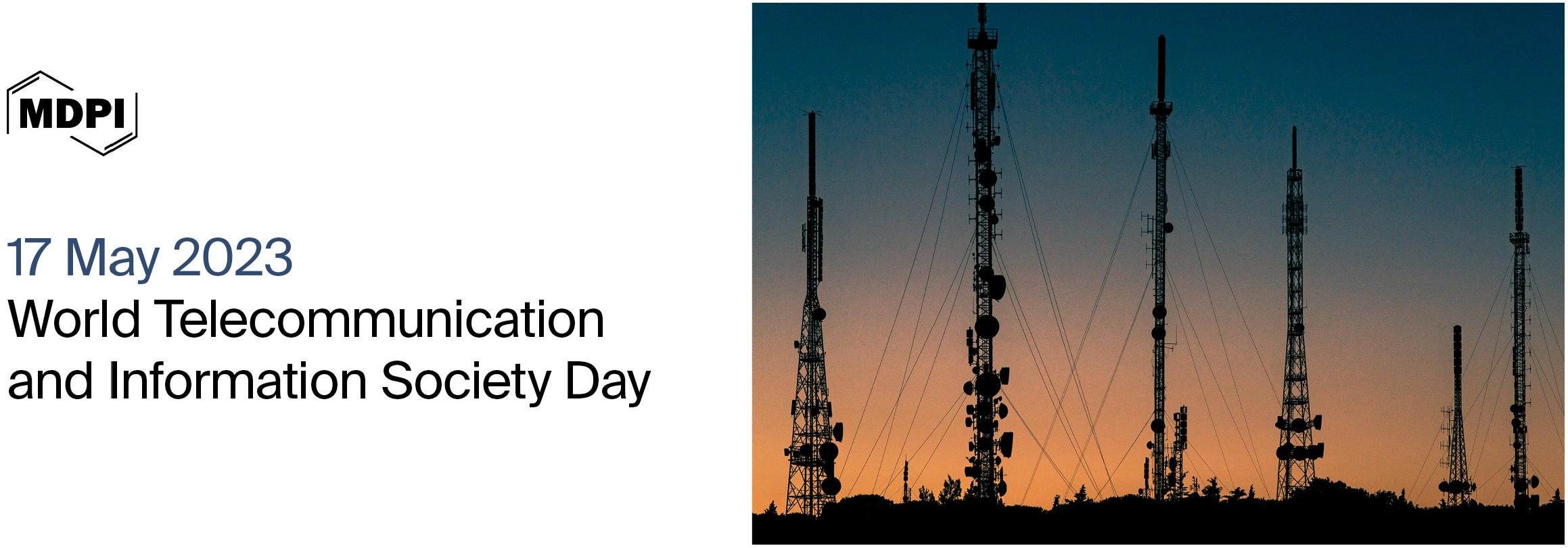
The purpose of the World Telecommunication and Information Society Day is to help raise awareness of the possibilities that the use of the Internet and other information and communication technologies (ICTs) can bring to societies and economies, as well as of ways to bridge the digital divide. 17 May marks the anniversary of the signing of the first International Telegraph Convention and the creation of the International Telecommunication Union (ITU).
This year, World Telecommunication and Information Society Day focuses on “Empowering the least developed countries (LDCs) through information and communication technologies.” As the world becomes increasingly adept at leveraging the Internet for value creation, LDCs risk falling further behind. To further explore the information about digital transformation in these LDCs and communication technologies in the rest of the world on the 2023 World Telecommunication and Information Society Day, we have gathered academic research from several journals on the topic of digital communication, all of which are open access, enabling practitioners, policymakers and people around the world to access and share up-to-date scientific knowledge.
Let us celebrate the World Telecommunication and Information Society Day together.

|
|
|
|
|
|
|
|
|
|
|
|
|
|
|
|












|
ParlTech: Transformation Framework for the Digital Parliament |
|
|
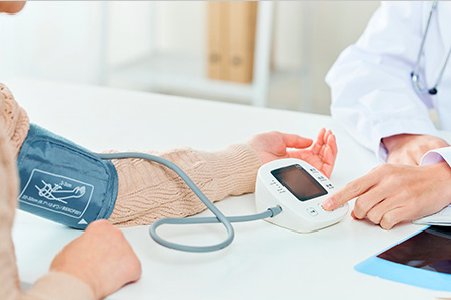
Impactful Digital Twin in the Healthcare Revolution |
|
|
Managerial Practices for the Digital Transformation of Manufacturers |
|
|
Blockchain-Enabled IoT for Rural Healthcare: Hybrid-Channel Communication with Digital Twinning |
|
|
Applied Data Science for Social Good |
The Digital Transformation of Healthcare |
|
|
|






|
|
|
|



9 May 2023
Meet Us at the Japan Geoscience Union Meeting 2023 (JpGU 2023), 21–26 May 2023, Chiba, Japan

MDPI is attending the Japan Geoscience Union Meeting 2023 (JpGU 2023). The event will be held at the Makuhari Messe in Chiba, Japan, from 21 to 26 May 2023, and it is organized by the Japan Geoscience Union (JpGU). JpGU is an academic union that encompasses all the Earth and planetary science disciplines and related fields; additionally, it has been organizing annual meetings since 2005. JpGU 2023 will cover a wide range of Earth and planetary sciences, including space and planetary sciences, atmospheric and hydrospheric sciences, human geosciences, solid Earth sciences, and biogeosciences. The JpGU annual meeting provides participants with a good opportunity to become familiar with cutting-edge research and unique approaches to research objects within their own special field and beyond. Representatives of the following MDPI journals will be attending:
- Land;
- Remote Sensing;
- Minerals;
- Sustainability;
- Drones;
- Geographies;
- Climate;
- Geomatics;
- Geosciences;
- Water;
- Quaternary;
- Sensors;
- Earth.
If you are also attending this conference, please feel free to stop by our booth (#Pub05). Our delegates look forward to meeting you in person to answer any questions you may have. For more information about the conference, please visit: https://www.jpgu.org/meeting_e2023/.
21 April 2023
Meet Us at the 40th Annual Conference of Chinese Society for Imaging Science and Technology (SCIST 2023), 13–16 May 2023, Kunming, Yunnan, China

A range of MDPI journals will be attending the 40th Annual Conference of Chinese Society for Imaging Science and Technology (SCIST 2023) as exhibitors. This meeting will be held in Kunming, Yunnan, China, from 13 to 16 May 2023.
The theme of this conference is "Strengthening the Driven by Technological Innovation and Building the Future of Photosensitive Imaging". The conference will invite well-known experts and scholars in the field of photosensitive imaging and related fields to make special reports and keynote reports of the conference. It will also organize academic exchanges in 17 sub-sessions in conjunction with various professional committees. The scale of the meeting is expected to be 1000 people.
The following MDPI journals will be represented:
- Applied Sciences;
- J. Imaging;
- Sensors;
- Chemosensors;
- Photonics.
If you are attending this conference, please feel free to start a conversation with us at our booth #1-12. Our delegates look forward to meeting you in person and answering any questions that you may have.
For more information about the conference, please visit https://2021csist.scimeeting.cn/cn/web/index/, or contact the Applied Sciences Editorial Office at applsci@mdpi.com.
13 March 2023
MDPI’s Newly Launched Journals in December 2022
As a leading open access publisher, MDPI provides scholars with a high-quality and rich academic exchange platform by continuously expanding into new and exciting research areas.
In December 2022, MDPI launched five new journals, covering multiple subjects such as life sciences, biology, medicine and pharmacology, social sciences and humanities. These new journals are being edited by established scholars across the world.
|
Journal |
Founding Editor-in-Chief |
Journal Topics (Selected) |
|
|
Prof. Dr. Fabio Gresta, University of Messina, Italy| Editorial | view inaugural issue |
grass/forage/turf production; grassland management; pasture monitoring; grazing and livestock; grass agro-ecosystems| view journal scope | submit an article |
|
|
Prof. Dr. Christos G. Athanassiou, University of Thessaly, Greece| Editorial | view inaugural issue |
pesticides; fungicides; herbicides; fertilizers; soil conditioners| view journal scope | submit an article |
|
|
Prof. Dr. Stephen H. Safe, Texas A&M University, USA| Editorial | view inaugural issue |
receptor structure; receptor function; receptor signaling; receptor expression and regulation; receptor interactions with drugs| view journal scope | submit an article |
|
|
Dr. Jean Jacques Vanden Eynde, University of Mons-UMONS, Belgium| Editorial | view inaugural issue |
drug discovery; medicinal chemistry; preclinical and clinical research; marketed drugs; intellectual property and regulatory affairs| view journal scope | submit an article |
|
|
Prof. Dr. Heather Kanuka, University of Alberta, Canada| Editorial | view inaugural issue |
higher education; tertiary education; policy and practice in higher education; educational leadership in higher education; educational administration and management in higher education| view journal scope | submit an article |





If you are interested in creating more open access journals with us to publish cutting-edge research, please send your journal proposal application to newjournal-committee@mdpi.com.
8 March 2023
Sensors | Top 10 Cited Papers in 2021 in the Section “Internet of Things”
1. “IoT and Interpretable Machine learning based Framework for Disease Prediction in Pearl Millet”
by Nidhi Kundu, Geeta Rani, Vijaypal Singh Dhaka, Kalpit Gupta, Siddaiah Chandra Nayak, Sahil Verma, Muhammad Fazal Ijaz and Marcin Woźniak
Sensors 2021, 21(16), 5386; https://doi.org/10.3390/s21165386
Available online: https://www.mdpi.com/1424-8220/21/16/5386
2. “Enabling Technologies for Urban Smart Mobility: Recent Trends, Opportunities and Challenges”
by Sara Paiva, Mohd Abdul Ahad, Gautami Tripathi, Noushaba Feroz and Gabriella Casalino
Sensors 2021, 21(6), 2143; https://doi.org/10.3390/s21062143
Available online: https://www.mdpi.com/1424-8220/21/6/2143
3. “Internet of Things: Evolution, Concerns and Security Challenges”
by Parushi Malhotra, Yashwant Singh, Pooja Anand, Deep Kumar Bangotra, Pradeep Kumar Singh and Wei-Chiang Hong
Sensors 2021, 21(5), 1809; https://doi.org/10.3390/s21051809
Available online: https://www.mdpi.com/1424-8220/21/5/1809
4. “Deep Reinforcement Learning-Based Task Scheduling in IoT Edge Computing”
by Shuran Sheng, Peng Chen, Zhimin Chen, Lenan Wu and Yuxuan Yao
Sensors 2021, 21(5), 1666; https://doi.org/10.3390/s21051666
Available online: https://www.mdpi.com/1424-8220/21/5/1666
5. “A Blockchain-Based Trust Model for the Internet of Things Supply Chain Management”
by Mabrook S. Al-Rakhami and Majed Al-Mashari
Sensors 2021, 21(5), 1759; https://doi.org/10.3390/s21051759
Available online: https://www.mdpi.com/1424-8220/21/5/1759
6. “Advanced Feature Extraction and Selection Approach Using Deep Learning and Aquila Optimizer for IoT Intrusion Detection System”
by Abdulaziz Fatani, Abdelghani Dahou, Mohammed A. A. Al-qaness, Songfeng Lu and Mohamed Abd Elaziz
Sensors 2022, 22(1), 140; https://doi.org/10.3390/s22010140
Available online: https://www.mdpi.com/1424-8220/22/1/140
7. “UTM-Chain: Blockchain-Based Secure Unmanned Traffic Management for Internet of Drones”
by Azza Allouch, Omar Cheikhrouhou, Anis Koubâa, Khalifa Toumi, Mohamed Khalgui and Tuan Nguyen Gia
Sensors 2021, 21(9), 3049; https://doi.org/10.3390/s21093049
Available online: https://www.mdpi.com/1424-8220/21/9/3049
8. “Monitoring Soil and Ambient Parameters in the IoT Precision Agriculture Scenario: An Original Modeling Approach Dedicated to Low-Cost Soil Water Content Sensors”
by Pisana Placidi, Renato Morbidelli, Diego Fortunati, Nicola Papini, Francesco Gobbi and Andrea Scorzoni
Sensors 2021, 21(15), 5110; https://doi.org/10.3390/s21155110
Available online: https://www.mdpi.com/1424-8220/21/15/5110
9. “Sequential Model Based Intrusion Detection System for IoT Servers Using Deep Learning Methods”
by Ming Zhong, Yajin Zhou and Gang Chen
Sensors 2021, 21(4), 1113; https://doi.org/10.3390/s21041113
Available online: https://www.mdpi.com/1424-8220/21/4/1113
10. “SMOTE-DRNN: A Deep Learning Algorithm for Botnet Detection in the Internet-of-Things Networks”
by Segun I. Popoola, Bamidele Adebisi, Ruth Ande, Mohammad Hammoudeh, Kelvin Anoh and Aderemi A. Atayero
Sensors 2021, 21(9), 2985; https://doi.org/10.3390/s21092985
Available online: https://www.mdpi.com/1424-8220/21/9/2985
7 March 2023
Displaying Co-Authors’ Email Addresses on the Webpage of Published Papers
MDPI is pleased to announce that we now display the co-authors’ email addresses in addition to the corresponding author’s email address on the webpage of published papers, protected by Captcha. For more information about this change, please visit the journal’s instructions for authors page.
We believe this change will facilitate academic discussions and advance our cause of open science and research. The corresponding authors are responsible for communicating with their co-authors and indicating in our system (https://susy.mdpi.com/) if co-authors would prefer for their email addresses not to be displayed.
3 March 2023
Sensors | Top 10 Cited Papers in 2021 in the Section “Sensor Networks”
1. “Unobtrusive Health Monitoring in Private Spaces: The Smart Home”
by Ju Wang, Nicolai Spicher, Joana M. Warnecke, Mostafa Haghi, Jonas Schwartze and Thomas M. Deserno
Sensors 2021, 21(3), 864; https://doi.org/10.3390/s21030864
Available online: https://www.mdpi.com/1424-8220/21/3/864
2. “LoRa Communications as an Enabler for Internet of Drones towards Large-Scale Livestock Monitoring in Rural Farms”
by Mehran Behjati, Aishah Binti Mohd Noh, Haider A. H. Alobaidy, Muhammad Aidiel Zulkifley, Rosdiadee Nordin and Nor Fadzilah Abdullah
Sensors 2021, 21(15), 5044; https://doi.org/10.3390/s21155044
Available online: https://www.mdpi.com/1424-8220/21/15/5044
3. “A Secure and Lightweight Authentication Protocol for IoT-Based Smart Homes”
by JiHyeon Oh, SungJin Yu, JoonYoung Lee, SeungHwan Son, MyeongHyun Kim and YoungHo Park
Sensors 2021, 21(4), 1488; https://doi.org/10.3390/s21041488
Available online: https://www.mdpi.com/1424-8220/20/14/4051
4. “Deployment Strategies of Soil Monitoring WSN for Precision Agriculture Irrigation Scheduling in Rural Areas”
by Laura García, Lorena Parra, Jose M. Jimenez, Mar Parra, Jaime Lloret, Pedro V. Mauri and Pascal Lorenz
Sensors 2021, 21(5), 1693; https://doi.org/10.3390/s21051693
Available online: https://www.mdpi.com/1424-8220/21/5/1693
5. “Energy-Efficient Clustering Multi-Hop Routing Protocol in a UWSN”
by Nhat-Tien Nguyen, Thien T. T. Le, Huy-Hung Nguyen and Miroslav Voznak
Sensors 2021, 21(2), 627; https://doi.org/10.3390/s21020627
Available online: https://www.mdpi.com/1424-8220/21/2/627
6. “WSN-SLAP: Secure and Lightweight Mutual Authentication Protocol for Wireless Sensor Networks”
by Deok Kyu Kwon, Sung Jin Yu, Joon Young Lee, Seung Hwan Son and Young Ho Park
Sensors 2021, 21(3), 936; https://doi.org/10.3390/s21030936
Available online: https://www.mdpi.com/1424-8220/21/3/936
7. “An Enhanced Indoor Positioning Algorithm Based on Fingerprint Using Fine-Grained CSI and RSSI Measurements of IEEE 802.11n WLAN”
by Jingjing Wang and Joongoo Park
Sensors 2021, 21(8), 2769; https://doi.org/10.3390/s21082769
Available online: https://www.mdpi.com/1424-8220/21/8/2769
8. “ECS-NL: An Enhanced Cuckoo Search Algorithm for Node Localisation in Wireless Sensor Networks”
by Vaibhav Kotiyal, Abhilash Singh, Sandeep Sharma, Jaiprakash Nagar and Cheng-Chi Lee
Sensors 2021, 21(11), 3576; https://doi.org/10.3390/s21113576
Available online: https://www.mdpi.com/1424-8220/21/11/3576
9. “Development and Implementation of a Hybrid Wireless Sensor Network of Low Power and Long Range for Urban Environments”
by Juan Bravo-Arrabal, J. J. Fernandez-Lozano, Javier Serón, Jose Antonio Gomez-Ruiz and Alfonso García-Cerezo
Sensors 2021, 21(2), 567; https://doi.org/10.3390/s21020567
Available online: https://www.mdpi.com/1424-8220/21/2/567
10. “A Multi-Layer LoRaWAN Infrastructure for Smart Waste Management”
by David Baldo, Alessandro Mecocci, Stefano Parrino, Giacomo Peruzzi and Alessandro Pozzebon
Sensors 2021, 21(8), 2600; https://doi.org/10.3390/s21082600
Available online: https://www.mdpi.com/1424-8220/21/8/2600
2 March 2023
Sensors | Top 10 Cited Papers in 2021 in the Section “Physical Sensors”
1. “Review of Current Guided Wave Ultrasonic Testing (GWUT) Limitations and Future Directions”
by Samuel Chukwuemeka Olisa, Muhammad A. Khan and Andrew Starr
Sensors 2021, 21(3), 811; https://doi.org/10.3390/s21030811
Available online: https://www.mdpi.com/1424-8220/21/3/811
2. “A Deep Neural Network-Based Feature Fusion for Bearing Fault Diagnosis”
by Duy Tang Hoang, Xuan Toa Tran, Mien Van and Hee Jun Kang
Sensors 2021, 21(1), 244; https://doi.org/10.3390/s21010244
Available online: https://www.mdpi.com/1424-8220/21/1/244
3. “Serial MTJ-Based TMR Sensors in Bridge Configuration for Detection of Fractured Steel Bar in Magnetic Flux Leakage Testing”
by Zhenhu Jin, Muhamad Arif Ihsan Mohd Noor Sam, Mikihiko Oogane and Yasuo Ando
Sensors 2021, 21(2), 668; https://doi.org/10.3390/s21020668
Available online: https://www.mdpi.com/1424-8220/21/2/668
4. “Chiroptical Metasurfaces: Principles, Classification, and Applications”
by Joohoon Kim, Ahsan Sarwar Rana, Yeseul Kim, Inki Kim, Trevon Badloe, Muhammad Zubair, Muhammad Qasim Mehmood and Junsuk Rho
Sensors 2021, 21(13), 4381; https://doi.org/10.3390/s21134381
Available online: https://www.mdpi.com/1424-8220/21/13/4381
5. “A High-Resolution Reflective Microwave Planar Sensor for Sensing of Vanadium Electrolyte”
by Nazli Kazemi, Kalvin Schofield and Petr Musilek
Sensors 2021, 21(11), 3759; https://doi.org/10.3390/s21113759
Available online: https://www.mdpi.com/1424-8220/21/11/3759
6. “An Estimation Method of Continuous Non-Invasive Arterial Blood Pressure Waveform Using Photoplethysmography: A U-Net Architecture-Based Approach”
by Tasbiraha Athaya and Sunwoong Choi
Sensors 2021, 21(5), 1867; https://doi.org/10.3390/s21051867
Available online: https://www.mdpi.com/1424-8220/21/5/1867
7. “Sensors and Measurements for Unmanned Systems: An Overview”
by Eulalia Balestrieri, Pasquale Daponte, Luca De Vito and Francesco Lamonaca
Sensors 2021, 21(4), 1518; https://doi.org/10.3390/s21041518
Available online: https://www.mdpi.com/1424-8220/21/4/1518
8. “MoS2 Based Photodetectors: A Review”
by Alberto Taffelli, Sandra Dirè, Alberto Quaranta and Lucio Pancheri
Sensors 2021, 21(8), 2758; https://doi.org/10.3390/s21082758
Available online: https://www.mdpi.com/1424-8220/21/8/2758
9. “Flexural Damage Diagnosis in Reinforced Concrete Beams Using a Wireless Admittance Monitoring System—Tests and Finite Element Analysis”
by Constantin E. Chalioris, Violetta K. Kytinou, Maristella E. Voutetaki and Chris G. Karayannis
Sensors 2021, 21(3), 679; https://doi.org/10.3390/s21030679
Available online: https://www.mdpi.com/1424-8220/21/3/679
10. “Review on Conductive Polymer/CNTs Nanocomposites Based Flexible and Stretchable Strain and Pressure Sensors”
by Olfa Kanoun, Ayda Bouhamed, Rajarajan Ramalingame, Jose Roberto Bautista-Quijano, Dhivakar Rajendran and Ammar Al-Hamry
Sensors 2021, 21(2), 341; https://doi.org/10.3390/s21020341
Available online: https://www.mdpi.com/1424-8220/21/2/341
2 March 2023
Sensors | Top 10 Cited Papers in 2021 in the Section “Chemical Sensors”
1. “Recent Advances in Enzymatic and Non-Enzymatic Electrochemical Glucose Sensing”
by Mohamed H. Hassan, Cian Vyas, Bruce Grieve and Paulo Bartolo
Sensors 2021, 21(14), 4672; https://doi.org/10.3390/s21144672
Available online: https://www.mdpi.com/1424-8220/21/14/4672
2. “A Review on Functionalized Graphene Sensors for Detection of Ammonia”
by Xiaohui Tang, Marc Debliquy, Driss Lahem, Yiyi Yan and Jean-Pierre Raskin
Sensors 2021, 21(4), 1443; https://doi.org/10.3390/s21041443
Available online: https://www.mdpi.com/1424-8220/21/4/1443
3. “An Outlook of Recent Advances in Chemiresistive Sensor-Based Electronic Nose Systems for Food Quality and Environmental Monitoring”
by Alishba T. John, Krishnan Murugappan, David R. Nisbet and Antonio Tricoli
Sensors 2021, 21(7), 2271; https://doi.org/10.3390/s21072271
Available online: https://www.mdpi.com/1424-8220/21/7/2271
4. “Identification of the Olfactory Profile of Rapeseed Oil as a Function of Heating Time and Ratio of Volume and Surface Area of Contact with Oxygen Using an Electronic Nose”
by Robert Rusinek, Dominik Kmiecik, Marzena Gawrysiak-Witulska, Urszula Malaga-Toboła, Sylwester Tabor, Pavol Findura, Aleksander Siger and Marek Gancarz
Sensors 2021, 21(1), 303; https://doi.org/10.3390/s21010303
Available online: https://www.mdpi.com/1424-8220/21/1/303
5. “Fiber-Optic Localized Surface Plasmon Resonance Sensors Based on Nanomaterials”
By Seunghun Lee, Hyerin Song, Heesang Ahn, Seungchul Kim, Jong-ryul Choi and Kyujung Kim
Sensors 2021, 21(3), 819; https://doi.org/10.3390/s21030819
Available online: https://www.mdpi.com/1424-8220/21/3/819
6. “Preparation and Research of a High-Performance ZnO/SnO2 Humidity Sensor”
by Fan Li, Peng Li and Hongyan Zhang
Sensors 2022, 22(1), 293; https://doi.org/10.3390/s22010293
Available online: https://www.mdpi.com/1424-8220/22/1/293
7. “Molecularly Imprinted Polymer-Based Sensors for Priority Pollutants”
by Mashaalah Zarejousheghani, Parvaneh Rahimi, Helko Borsdorf, Stefan Zimmermann and Yvonne Joseph
Sensors 2021, 21(7), 2406; https://doi.org/10.3390/s21072406
Available online: https://www.mdpi.com/1424-8220/21/7/2406
8. “Recent Advances in Quenchbody, a Fluorescent Immunosensor”
by Jinhua Dong and Hiroshi Ueda
Sensors 2021, 21(4), 1223; https://doi.org/10.3390/s21041223
Available online: https://www.mdpi.com/1424-8220/21/4/1223
9. “Electrochemical Sensors Based on the Electropolymerized Natural Phenolic Antioxidants and Their Analytical Application”
by Guzel Ziyatdinova, Ekaterina Guss and Elvira Yakupova
Sensors 2021, 21(24), 8385; https://doi.org/10.3390/s21248385
Available online: https://www.mdpi.com/1424-8220/21/24/8385
10. “Nanomaterial-Integrated Cellulose Platforms for Optical Sensing of Trace Metals and Anionic Species in the Environment”
by Carlos Bendicho, Isela Lavilla, Francisco Pena-Pereira, Inmaculada de la Calle and Vanesa Romero
Sensors 2021, 21(2), 604; https://doi.org/10.3390/s21020604
Available online: https://www.mdpi.com/1424-8220/21/2/604
