



Journal Menu
► ▼ Journal Menu-
- Land Home
- Aims & Scope
- Editorial Board
- Reviewer Board
- Topical Advisory Panel
- Early Career Editorial Board
- Instructions for Authors
- Special Issues
- Topics
- Sections & Collections
- Article Processing Charge
- Indexing & Archiving
- Editor’s Choice Articles
- Most Cited & Viewed
- Journal Statistics
- Journal History
- Journal Awards
- Society Collaborations
- Conferences
- Editorial Office
Journal Browser
► ▼ Journal BrowserNeed Help?
Announcements
4 June 2026
Open Access, Broadly Recognized: 363 MDPI Journals Receive CiteScores for 2025
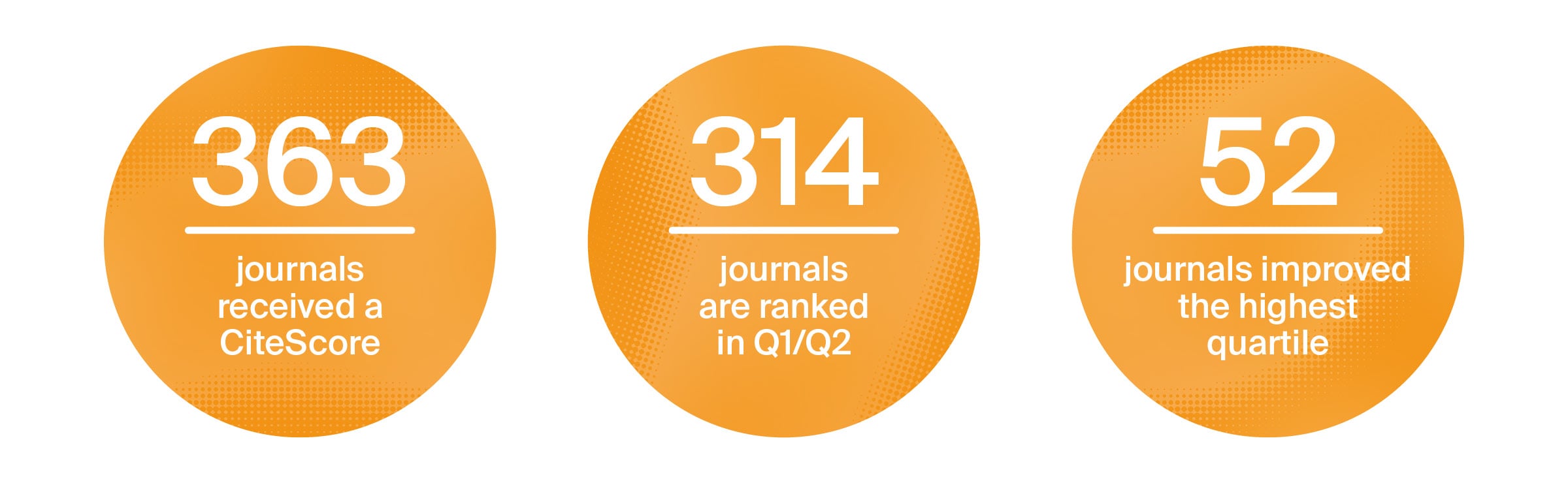
The 2025 CiteScore metrics have been officially released by Scopus, and the results confirm what has become a consistent pattern for MDPI's journal portfolio: broad recognition across disciplines, steady improvement across the majority of ranked titles, and a growing presence at the top of subject category rankings.
CiteScore, published annually by Elsevier's Scopus database, measures the average citations received by articles published in a journal over a four-year window. As a complement to the Journal Impact Factor, which uses a two-year window based on the Web of Science database, CiteScore provides an alternative, long-term perspective on citation performance.
The 365 MDPI journals in Scopus (as of May 2026) are indexed across a wide range of subject categories, ensuring that open access research remains highly discoverable to a global readership through one of the most widely used platforms in academic publishing.
Data Summary (2025 CiteScores)
- New Additions: 41 MDPI journals received a CiteScore for the first time.
- Trending Upward: 234 of 322 previously ranked journals (73%) saw an increase in their CiteScore compared to last year.
- High Visibility: 314 journals (86%) rank in Q1 or Q2 in at least one subject category.
- Elite Performance: 42 journals rank in the top 10% of their subject categories.
Portfolio Performance
Among the 322 journals that held a CiteScore in 2024, 234 saw an increase this year. Quartile improvements outnumbered declines across the portfolio, with 52 journals moving to a higher quartile and only 20 seeing a decline. Furthermore, no previously ranked journals were removed. The 42 journals now ranked in the top 10% of their subject categories are drawn from a strong foundation of 178 journals holding a Q1 position.
With the large majority of our indexed portfolio ranked in the top half of research fields, researchers can confidently choose MDPI to meet funder mandates for high-quality, fully compliant Open Access publishing.
Exceptional Achievements for Foods and Life
Notably, both Foods and Life achieved a 99th percentile ranking in their respective subject categories for the 2025 CiteScores. This outstanding placement positions them as leading journals in their fields and highlights the high visibility and global impact of the open access research they publish.
Journal Metrics and Beyond
Journal-level metrics describe outlets, not individual articles. An increasing number of funders and institutions—including signatories of DORA and the Coalition for Advancing Research Assessment—now explicitly encourage evaluation at the article level rather than by the journal in which research appears. MDPI supports this direction: we report CiteScore alongside the Journal Impact Factor, Journal Citation Indicator, and article-level usage data because no single number captures the full reach and contribution of published research.
Thank You
These results reflect the sustained effort of thousands of editors-in-chief, editorial board members, reviewers, and authors across every field MDPI serves. The metrics are the outcome; the work is yours.
4 June 2026
Land | “Land, Soil and Water” Section’s Information Update
To further enhance the quality of Land (ISSN: 2073-445X) and the papers published in the “Land, Soil and Water” Section, under the guidance of our Section Editor-in-Chief, Prof. Dr. Nick B. Comerford, the journal has updated and revised the section information. The term Land, as defined by the United Nations, includes the biosphere immediately above and below the ground. The soil and water of these terrestrial ecosystems encompass a myriad of ecosystem services that are related to physical, biological, and chemical processes occurring in this realm. These processes and interactions between the soil and water can define ecosystem health and land productivity, while helping define land management decisions. Therefore, it is appropriate that the Land, Soil and Water Section of the Land journal accepts submissions embracing the breadth of these topics.
The original and the updated versions are listed below:
Section information (new version):
The Land, Soil, and Water section of the journal Land invites papers and opinions addressing the nexus between land, soil and water. The section encompasses all the attributes of the biosphere immediately above and below the surface of terrestrial ecosystems. Therefore, soil ecosystem services provide a robust platform for describing and limiting the scope of this nexus. The aim of this section is to promote the evaluation, documentation and management of this nexus. Specifically, we are inviting manuscripts addressing the interaction of soils and water in a terrestrial environment. Manuscripts can be theoretical, applied, ‘state of the science’ reviews and opinion papers. Interdisciplinary manuscripts are particularly welcome. The scope of this section is defined by these recommended topics which include, but are not limited to, the following:
- Support of food, fiber, fuel and water production.
- Soil/Water management in the context of agriculture, urbanization and forestry.
- Role of soil fertility, other soil chemical properties, and soil physical properties in the use and management of systems such as precision agriculture.
- Soil and water control of nutrient cycling.
- Land/soil degradation and reclamation related to human activity and/or climate change due to agents of modification such as soil erosion, chemical pollution, and desertification, as examples.
- Soil health.
- Soil biological dynamics that control/affect soil use.
- Climate change mitigation and methods of adaptation, with special emphasis on soil carbon sequestration.
- Aesthetics and other cultural land ecosystem services that are a function of soil, landscape form and history.
- Surface runoff as a function of landform (slope changes affecting surface runoff). This would include human changes to the landscape that affect water movement and the contaminants within, such as urbanization, agriculture use of fertilizers, and the use of other chemicals affecting water quality.
- Soil mapping, interpretation, prediction (such as digital mapping, AI and modeling).
- Description and/or evaluation of soil ecosystem services.
Section information (old version):
The Land, Soil, and Water section of Land invites papers and opinions addressing the protection, restoration and promotion of the sustainable use of terrestrial ecosystems. Soil ecosystem services provide a robust platform for accomplishing these goals. Specifically, we are inviting manuscripts addressing the role of soils related to the above goals through the following avenues:
- Food, fiber, fuel and water production.
- Regulation of water control, soil erosion, flood control, carbon sequestration, and nutrient cycling.
- Protection and restoration from soil degradation and desertification.
- Maintenance of soil biodiversity habitat.
- Protection of cultural enrichment dependent on the soil system.
1 June 2026
The International Federation of Landscape Architects (IFLA) Now an Affiliated Society Member of Land and Architecture

We are pleased to announce that the International Federation of Landscape Architects (IFLA) is now affiliated with the journals Land (ISSN: 2073-445X) and Architecture (ISSN: 2673-8945). All members of the IFLA will receive discounts on the article processing charges.
The International Federation of Landscape Architects (IFLA) is the only international non-governmental, non-profit organization dedicated to promoting landscape architecture and enhancing the quality and sustainability of natural and built environments worldwide.
Representing 82 national member associations across five regions—IFLA Africa, IFLA Americas, IFLA APR, IFLA Europe, and IFLA Middle East—the IFLA unites over 100,000 landscape architects worldwide.
The mission of the IFLA is to foster excellence in landscape architecture through collaboration with related professions; promote the highest standards in education, training, research, and professional practice; and provide leadership and advocacy. The IFLA collaborates with international organizations such as the United Nations, UN-Habitat, UNEP, UNESCO, ICOMOS, FAO, IUCN, and WHO, offering expertise and support to strengthen the profession worldwide.
We look forward to collaborating with the IFLA and publishing state-of-the-art research from its members in this field.
1 June 2026
MDPI INSIGHTS: The CEO’s Letter #35 – 30 Years of Open Science, Open Access Policies, Spain Summit, MMCS 2026 & Antibiotics 2026

Welcome to the MDPI Insights: The CEO's Letter.
In these monthly letters, I will showcase two key aspects of our work at MDPI: our commitment to empowering researchers and our determination to facilitating open scientific exchange.
Opening Thoughts

30 Years of Open Science, Built Together
This month, we officially launched MDPI’s 30th Anniversary campaign and dedicated anniversary website, marking an important milestone in our journey as an open access publisher. What began in 1996 with a single journal and the simple belief that scientific knowledge should be shared openly and freely has grown into a global publishing organization supporting more than 500 journals, 68,000 Editorial Board Members, and millions of researchers worldwide.
The anniversary page, entitled 30 Years of Open Science, Built Together, reflects on the people, milestones, and partnerships that have shaped MDPI over the past three decades. It includes a retrospective of our development, key moments in the evolution of open access, landmark research articles, journal anniversaries, an interview with the CEO, and perspectives from colleagues and partners who have contributed to our success.

Looking back, one of the most striking aspects of our journey is not simply our growth, but the broader transformation of scholarly publishing itself.
Open access has moved from a niche concept to a widely adopted publishing model, helping make research more accessible, discoverable, and impactful for researchers, institutions, policymakers, and society.
MDPI has been part of this transition and continues to invest in the people, technology, partnerships, and research integrity infrastructure needed to support high-quality open science at scale.
While anniversaries naturally encourage reflection, they are also an opportunity to look ahead. The challenges facing scholarly publishing today, including research integrity, artificial intelligence, accessibility, and global participation in science, will require continued collaboration across the research ecosystem. As we celebrate 30 years of publishing, our focus remains on supporting researchers, strengthening trust in open science, and helping shape the future of scholarly communication together.
I encourage you to visit the anniversary page, explore the milestones, and take a moment to reflect on the role each of us has played in contributing to MDPI’s story.
Thank you for being part of this journey.
Impactful Research

Highlights from MMCS 2026 in Beijing (14-17 May)
From 14–17 May, MDPI hosted The 5th Molecules Medicinal Chemistry Symposium (MMCS 2026) in Beijing, China, bringing together academia and industry to explore advances in chemical biology, medicinal chemistry, and drug discovery.
The conference hosted more than 230 attendees from 37 countries and regions, alongside 257 submissions and 145 accepted abstracts. With a significant increase in attendance – up by 100 participants compared with the previous edition – the popularity of MMCS continues to grow in terms of its international profile and scientific relevance within this rapidly evolving field.

The scientific program covered seven themes:
- Chemical Biology for Drug Discovery
- Medicinal Chemistry Research Progress
- Natural Products in Drug Discovery
- AI-enabled Drug Discovery
- GPCR & Ion Channel Targeted Drug Development
- Innovative Proximity-Based Drug Modalities
- Biocatalysis for Natural Product & Drug Synthesis
The event featured three plenary speakers, 14 keynote speakers, 35 selected oral presentations, and 98 poster presentations, creating opportunities for open scientific exchange and collaboration. Conference Chair Prof. Dr. Diego Muñoz-Torrero described this edition as one of the most successful MMCS events to date.
|
|
|


Thanks to our Sponsors
MMCS 2026 secured sponsorship support from 12 industrial partners, 11 of which set up on-site exhibition booths. Covering biopharmaceutical R&D, life science supplies, pharmaceutical experimental instruments, and industrial service sectors, exhibitors were able to connect their businesses directly with attendees and make connections at the conference.

30th Anniversary Celebration of Molecules
During the conference, we also celebrated the 30th anniversary of Molecules, one of MDPI’s flagship journals. The celebration brought together Section Editors-in-Chief, Editorial Board Members, MDPI leadership, and editorial colleagues to reflect on the journal’s development, achievements, and continued future growth.

Events such as MMCS 2026 highlight the important role conferences play in creating scientific exchange and collaboration, and in connecting our research communities in person.
They also reflect the continued development of MDPI’s conference portfolio and our commitment to supporting academic engagement beyond publishing alone. Thanks to everyone involved in organizing and contributing to the success of this event.
Inside MDPI

Open Access Policies Continue to Accelerate Globally
One of the clearest indicators of the continued momentum behind open access is the growing number of national and institutional policies supporting, and increasingly requiring, open dissemination of research.
Around the world, governments, funding agencies, and universities are building their open access mandates, with increasing focus on transparency, rights retention, and public accessibility of publicly funded research. While these policies vary across regions, the broader direction is clear: expectations around openness and compliance continue to accelerate.
For researchers, navigating these evolving requirements can be complex and time-consuming. Supporting the research community therefore means not only publishing high-quality open access content but also helping stakeholders better understand changing requirements and emerging opportunities. At MDPI, we see this as an important part of our role within scholarly communication.
“Expectations around openness and compliance continue to accelerate”
Through the MDPI Blog, our Content team continues to publish monthly articles overviewing different countries’ relationships with open access, exploring their histories, policies, opportunities, and statistics. All this information is centralized into an article which contains brief summaries of each country, with links to all the full articles, and is updated monthly.
Recent Policy Developments
South Africa
In 2026, South Africa’s Department of Science and Innovation introduced the South African Open Science Policy. The policy states that: “Open access shall be required for publications arising from publicly funded research, and desirable for research from all sources of funding.”
The policy envisions a coordinated and broad approach to open science that will sustainably and ethically drive socio-economic development by increasing the practice of open science through policy, training, incentivization, and infrastructure.
Canada
In Canada, the Tri-Agency OA Policy on Publications was revised, removing the 12-month embargo for research that must be deposited in a repository with an open license and with author rights retained.
The Agencies argue that “societal advancement is made possible through widespread and barrier-free access to cutting-edge research and knowledge.”
Chile
Chile is a collaborative and engaged member of the global open access movement.
The National Research and Development Agency (Agencia Nacional de Investigación y Desarrollo, or ANID) is Chile’s main funding agency for R&D. It mandates that all beneficiaries must deposit the final version of their published scientific output, with an embargo period of up to 12 months, into a repository.
ANID also supports the InES Open Science funding program, which allows universities to request funding for capacity and infrastructure building. Further, Chile is an active participant in various international initiatives, such as Redalyc, SciELO, and Red de Repositorios Latinoamericanos.
Openness Beyond Research
At MDPI, openness remains one of our core values, ensuring that research outputs are freely accessible to anyone. This commitment also extends to sharing knowledge about the scholarly publishing landscape itself, which we practice on the MDPI Blog through various topics, including open access, recent advances in science, and opportunities for researchers.
As the open access landscape continues to evolve, helping researchers, institutions, editors, and partners navigate these changes will remain an important priority for us.

Thank You
I would like to thank Jack McKenna (Senior Content Specialist, MDPI) from our Content team for his ongoing work on the MDPI Blog series covering global open access policy developments. Initiatives such as this help make complex policy discussions more accessible and useful to the wider research community.
Coming Together for Science

Reflections from the MDPI Spain Summit 2026 in Valencia (21 May)

On 21 May, we hosted the MDPI Spain Summit 2026 in Valencia.
The Summit brought together 30 Editorial Board Members and MDPI colleagues for a discussions on the future of publishing, research integrity, peer review, artificial intelligence, and the evolving research landscape in Spain.
We hosted participants from leading Spanish institutions and spoke on the importance of Spain as a major contributor to global open access (OA) research. In 2025 alone, Spain ranked among the leading countries worldwide for OA publishing, with more than 85% of publications made openly accessible. MDPI also continues to play a significant role within the Spanish research ecosystem.
MDPI in Spain
Spain remains one of MDPI's most important academic markets and a leading contributor to OA research globally. Ever since our Barcelona office opened in 2016 (Happy 10th Anniversary!), MDPI Spain has been actively supporting researchers, institutions, societies, and academic partners across the country. Today, the office plays an important role in creating engagement with the Spanish scholarly community through editorial support, partnerships, conferences, training initiatives, and outreach activities.
A cluster of high-level indicators highlight both the strength of the local research ecosystem and MDPI’s role within it:
- 43,218 total publications in Spain in 2025, of which 35,728 (83%) were open access (49% Gold OA).
- 211,200+ total publications (2021–2025), with 84% published open access.
- 13,444 MDPI publications from Spanish institutions in 2025, representing 14% of all open access publications in Spain.
- More than115,100 MDPI publications from Spanish institutions since 1996.
- More than 4,500 Editorial Board Members from Spain, including more than 150 Chief Editors and 57 Associate Editors.
- 42 institutional partners participating in MDPI’s Institutional Open Access Program (IOAP).
- Spain ranks second globally for MDPI society affiliations, with 26 affiliated society agreements currently in place.
Program Overview
What made this summit special was the openness of the discussions around the research landscape in Spain and the role MDPI plays within the market. General topics of the presentations included:
- MDPI Introduction – Stefan Tochev (CEO).
- Engagement with the Academic Community – Dr. Marta Colomer (External Affairs Lead).
- Latest Developments in the Editorial Process – Dr. Jordi Martinez (Deputy Managing Editor).
- Research integrity and Publication Ethics – Slavomir Nikodijevic (Research Integrity Specialist).
- A 360 View of Academic Publishing – Prof. Dr. Luis Angel Ruiz Fernandez (EBM of Remote Sensing).
|
|
|
|
|
|
|
|


Panel Discussion
We also hosted a panel discussion moderated by Marta, entitled “The Future of Academic Publishing” with Prof. Luis Ruiz, Prof. Marta Feliz (EBM of the journal Catalysts), Dr. Enric Sayas (Product Owner, AI & Technology Innovation), and myself. The discussion looked at the evolving role of editors, the future of peer review, and the growing importance of maintaining trust, ethics, and research integrity in an era increasingly influenced by artificial intelligence.
|
|
|
|


Themes from the Summit
Several themes emerged throughout the discussions, reflecting broader conversations taking place across publishing:
- The academic community values efficient publishing workflows, but expectations around scientific quality and editorial rigor continue to rise.
- Reviewer fatigue and long-term sustainability of peer review remain major challenges across the industry.
- AI is rapidly changing scholarly communication and requires transparent and responsible governance.
- Reputation and trust continue to depend on long-term engagement, transparency, and quality-focused decision-making.
“Maintaining an open dialogue with researchers, editors, reviewers, and institutions remains a priority for MDPI”
It was constructive to see the willingness of participants to engage directly and candidly with us. These conversations provide insights that help inform how we continue to develop our editorial processes, engagement activities, and support for the research community. While certain discussions included concerns, there was also recognition that open dialogue between publishers and the research community is essential if we want to improve scholarly communication together.
|
|
|
|


Events such as this are increasingly important for MDPI. They allow us to present our perspective, to listen to the experiences, expectations, and concerns of editors, reviewers, and researchers, and to address these accordingly.
Thank You
Thank you to our Barcelona Office and all colleagues involved in organizing the summit, as well as all participants for contributing to these thoughtful and constructive discussions.
|
|
|
|
|
|
|
|


As publishing continues to evolve, maintaining an open dialogue with researchers, editors, reviewers, and institutions remains an important priority for MDPI. Events such as the Spain Summit play an important role in helping us to build relationships, foster trust, and better understand the needs of our community.
Closing Thoughts

Highlights from Antibiotics 2026 in Barcelona (11–14 May)
This week, MDPI hosted the Antibiotics 2026 — Advances in Antimicrobial Action and Resistance conference in Barcelona, bringing together academics and industry experts to discuss one of the most important scientific and public health challenges of our time: antimicrobial resistance.
The conference welcomed 145 attendees from 42 different countries and territories, alongside 265 submissions and 127 accepted abstracts, showing the international reach of the event and the strong scientific interest in this rapidly evolving field.

Scientific Exchange on a Global Challenge
Antimicrobial resistance continues to be a global concern, creating collaboration across disciplines, institutions, and regions. The conference program focused on a range of topics including:
- Antimicrobial resistance mechanisms
- One Health approaches to antimicrobial stewardship
- Discovery of novel antimicrobial agents
- Innovation in clinical strategies and treatment approaches
- Ethnopharmacology and emerging therapies
Through keynote plenaries, invited lectures, oral presentations, and poster sessions, the conference created a platform for dialogue and scientific exchange.
|
|
|


International Participation and Collaboration
One of the highlights of the event was the diversity of participation across both geography and expertise. Researchers and speakers from Europe, North America, Asia, Africa, Australia, and Latin America took part in discussions throughout the conference, highlighting the global nature of both the challenge and the scientific response.
The scientific program included:
- 2 keynote speakers
- 10 invited speakers
- 36 selected talks
- 78 posters
The conference brought together perspectives from academia, healthcare, and industry, helping facilitate interdisciplinary collaboration around future approaches to antimicrobial research and resistance management.
|
|
|
|


The Role of Conferences in Scholarly Communication
Conferences are an important platform for collaboration, scientific exchange, and community-building. Events such as Antibiotics 2026 show the value of bringing researchers together in person to discuss emerging challenges, share new findings, and strengthen international networks across disciplines and regions.

Thank You
I would like to thank the conference chairs, speakers, participants, sponsors, and the entire MDPI conference team for their work in making this event a success. The engagement and positive feedback from attendees highlight the importance of our events in addressing some of the most pressing scientific challenges facing society today.

Chief Executive Officer
MDPI AG
25 May 2026
Meet Us at AET CÁCERES 2026, 8–11 June 2026, Cáceres, Spain
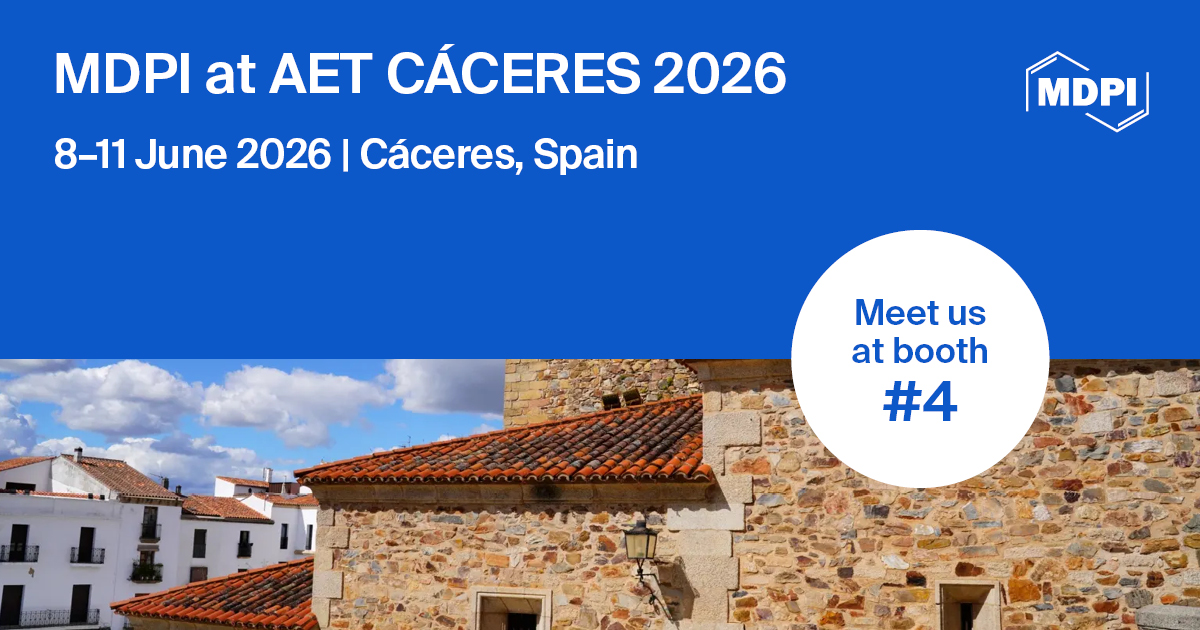
Conference: AET CÁCERES 2026
Date: 8–11 June
Location: Cáceres, Spain
MDPI will attend AET CÁCERES 2026 as an exhibitor. This meeting will be held in Cáceres, Spain.
The AET CÁCERES 2026 is a scientific meeting that brings together researchers, professionals, and students working in geosciences, engineering, environmental systems, and related fields, with the aim of sharing advances and fostering interdisciplinary collaboration.
The most relevant thematic areas include:
- Instrumentation, data processing, and geoscience data systems;
- Climate and meteorological impacts;
- Big GeoDATA and data-driven geoscience;
- Natural hazards and risk assessment;
- Hydrological sciences and water resources engineering;
- Remote sensing and close-range observation techniques;
- Smart cities and urban development;
- Civil and industrial engineering applications.
The following open access journals will be represented:
- Geomatics;
- Remote Sensing;
- Sensors;
- Atmosphere;
- Land;
- AgriEngineering;
- GeoHazards;
- Climate;
- Geographies;
- Minerals;
- ISPRS International Journal of Geo-Information (IJGI);
- Hydrology;
- Smart Cities;
- Glacies;
- Geosciences;
- Earth.
If you are attending this conference, please feel free to start an online conversation with us. Our delegates look forward to meeting you in person at booth #4 and answering any questions that you may have. For more information about the conference, please visit the following website: https://aetcc2026.es/.
22 May 2026
Land | Invitation to Read Papers and Hot Topic Special Issues Related to Urban Biodiversity Conservation

We are delighted to share some papers on urban biodiversity conservation research that were published in our journal Land (ISSN: 2073-445X) between 2024 and 2026. In addition, some Special Issues related to this topic are currently open for submission.
The following is a list of articles and Special Issues that we believe will interest you:
1. “Managing Landscape Urbanization and Assessing Biodiversity of Wildlife Habitats: A Study of Bobcats in San Jose, California”
by Yongli Zheng, Yuxi Wang, Xinyi Wang, Yuhan Wen and Shuying Guo
Land 2024, 13(2), 152; https://doi.org/10.3390/land13020152
2. “Analysis of Spatial Divergence in Bird Diversity Driven by Built Environment Characteristics of Ecological Corridors in High-Density Urban Areas”
by Di Wang, Lang Zhang, Qicheng Zhong, Guilian Zhang, Xuanying Chen and Qingping Zhang
Land 2024, 13(9), 1359; https://doi.org/10.3390/land13091359
3. “The Effects of Spatial Structure and Development Intensity of the Urban Landscape on Bird Biodiversity in Anhui Province”
by Minglu Hu, Xinghao Lu and Yuncai Wang
Land 2024, 13(10), 1660; https://doi.org/10.3390/land13101660
4. “Assessing Urban Agriculture’s Potential for Biodiversity Conservation, Carbon Sequestration, and Community Development: A Comparative Study of Residents’ Perceptions in Three Western Romanian Cities”
by Simona Gavrilaș, Oana Brînzan, Eugenia Tigan, Radu Lucian Blaga and Tiberiu Iancu
Land 2025, 14(2), 271; https://doi.org/10.3390/land14020271
5. “Wealth and Altitude Explain Urban Plant Diversity in Residential Areas of Hainan, China”
by Linke Su, Huiting Tang, Gong He, Mir Muhammad Nizamani and Huafeng Wang
Land 2025, 14(2), 328; https://doi.org/10.3390/land14020328
6. “The New Zealand Biodiversity Factor—Residential (NZBF-R): A Tool to Rapidly Score the Relative Biodiversity Value of Urban Residential Developments”
by Jacqueline Theis, Christopher K. Woolley, Philip J. Seddon, Danielle F. Shanahan, Claire Freeman, Maibritt Pedersen Zari and Yolanda van Heezik
Land 2025, 14(3), 526; https://doi.org/10.3390/land14030526
7. “Reconciling Urban Expansion with Biodiversity: Habitat Dynamics and Ecological Connectivity in Xiong’an New Area’s Full-Cycle Development”
by Zihao Huang, Kai Su, Sufang Yu, Xuebing Jiang, Chuang Li, Shihui Chang and Yongfa You
Land 2025, 14(3), 533; https://doi.org/10.3390/land14030533
8. “Phytoplankton Diversity, Abundance and Toxin Synthesis Potential in the Lakes of Natural and Urban Landscapes in Permafrost Conditions”
by Sophia Barinova, Viktor A. Gabyshev, Olga I. Gabysheva, Yanzhima A. Naidanova and Ekaterina G. Sorokovikova
Land 2025, 14(4), 721; https://doi.org/10.3390/land14040721
9. “Investigation of Avian Diversity and Habitat Variations in Urban Parks: A Case Study of Xuzhou Quanshan Forest Park”
by Yuan Kang, Haolian Luan, Pingjia Luo, Yuchen Dong and Shiyuan Zhou
Land 2025, 14(4), 797; https://doi.org/10.3390/land14040797
10. “Factors Shaping Biodiversity in Urban Voids: A Systematic Literature Review”
by Jian Cui, Ehsan Sharifi, Carlos Bartesaghi Koc, Linna Yi and Scott Hawken
Land 2025, 14(4), 821; https://doi.org/10.3390/land14040821
11. “The Role of Urban Tree Areas for Biodiversity Conservation in Degraded Urban Landscapes”
by Sonja Jovanović, Vesna Janković-Milić, Jelena J. Stanković and Marina Stanojević
Land 2025, 14(9), 1815; https://doi.org/10.3390/land14091815
12. “Investigating the Impact of Urban Parks on Bird Habitats and Diversity Through Remote Sensing: A Case Study of Chengdu City (China)”
by Chenyang Liao, Yumeng Jiang, Mingle Yang, Kexin Feng and Jiazhen Zhang
Land 2025, 14(10), 2086; https://doi.org/10.3390/land14102086
13. “Tree Supports—A Method for Managing the Protection of Habitat Trees, Increasing Biodiversity and the Resilience of Urban Ecosystems”
by Wojciech Bobek
Land 2025, 14(11), 2200; https://doi.org/10.3390/land14112200
14. “Threshold Effects of Biodiversity on Ecological Resilience: Evidence from Guangdong’s Prefecture-Level Cities”
by Xin Huang, Yiwen Chen, Chang Liu, Kailun Fang and Tingting Chen
Land 2025, 14(12), 2327; https://doi.org/10.3390/land14122327
15. “Speculative Drawing as a Tool for Developing Biodiversity Scenarios in the Cityscape Within the New European Bauhaus Framework”
by Snežana Zlatković and Ana Nikezić
Land 2026, 15(5), 726; https://doi.org/10.3390/land15050726
Special Issues:
“Urban Planning and Ecosystem Protection: A Path to Mutual Benefits”
Guest Editors: Naglaa A. Megahed, Khalid S. Al-Hagla and Asmaa Mohammed Hassan
Submission deadline: 1 October 2026

“Reconsidering Urban Green Spaces: Biodiversity Functionality, Accessibility, and Wellbeing in Cities”
Guest Editors: Melissa Anne Beryl Vogt and Alessio Russo
Submission deadline: 30 November 2026

“Enhancing Biodiversity-Friendly Built Environments in Line with the New European Bauhaus”
Guest Editors: Ana Nikezić, Slađana Lazarević and Marco Acri
Submission deadline: 31 December 2026

22 May 2026
Meet Us at the 23rd World Congress of Soil Science, 7–12 June 2026, Nanjing, China
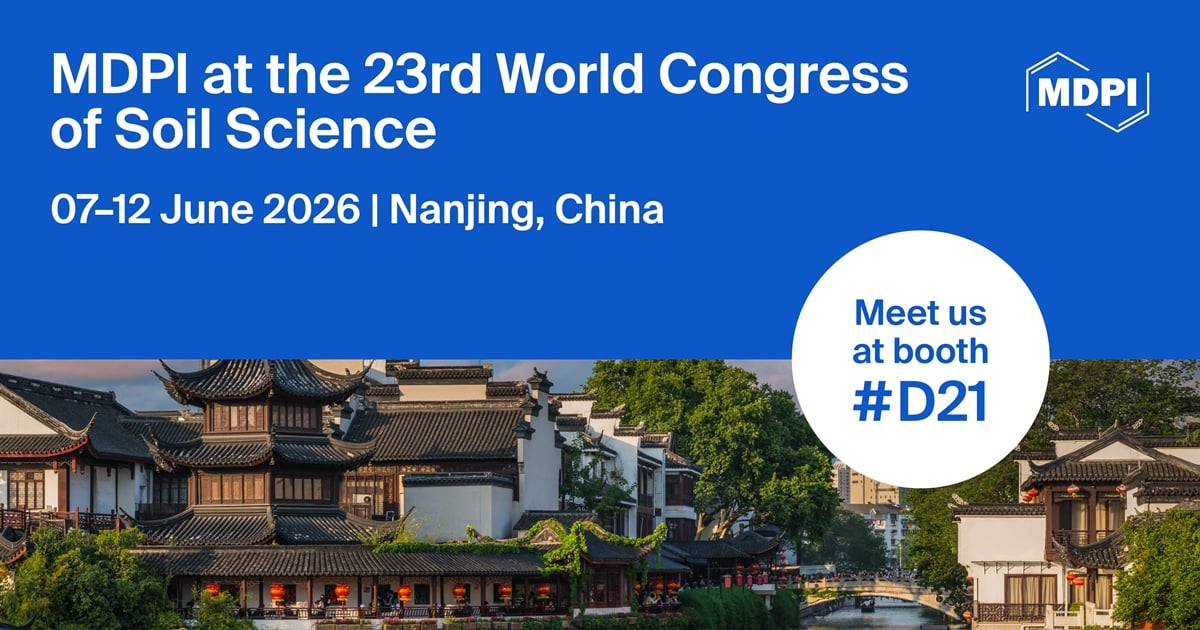
Conference: The 23rd World Congress of Soil Science
Date: 7–12 June 2026
Location: Nanjing, China
MDPI will be attending the 23rd World Congress of Soil Science as an exhibitor, and we are welcoming researchers from different backgrounds to visit and share their latest ideas.
The 23rd World Congress of Soil Science brings together leading researchers, practitioners, and policymakers from around the world to exchange the latest advances in soil science. The congress focuses on promoting sustainable soil management and addressing key global challenges such as soil health, climate change, land degradation, and ecosystem resilience. It provides a dynamic platform for scientific discussion, knowledge sharing, and interdisciplinary collaboration across all areas of soil research.
The following MDPI journals will be represented:
If you are planning to attend this conference, please do not hesitate to contact us. Our delegates look forward to meeting you in person and answering any questions that you may have. For more information about the conference, please visit the following website: https://www.23wcss.org.cn.
19 May 2026
Land | Invitation to Read Papers and Hot Topic Special Issues Related to Vegetation Biodiversity and Conservation

Biodiversity is truly the foundation of all life on Earth. This year’s International Day for Biological Diversity (IDB) 2026 introduces the theme “Acting locally for global impact”—a call for all of us to protect biodiversity and take care of our shared home, planet Earth.
We are delighted to share a collection of papers on vegetation biodiversity and conservation research that were published in our journal Land (ISSN: 2073-445X) in 2025. In addition, several Special Issues related to this topic are currently open for submission.
The following is a list of articles and Special Issues that we believe will interest you:
1. “Adoption and Diversity of Agroforestry Systems in the Amazon Biome: A Bibliometric Overview”
by Daniela Pauletto, Marcelo Francia Arco-Verde, Ivan Crespo Silva, Lucas Sérgio de Sousa Lopes, Anselmo Junior Correa Araújo, Flávia Cristina Araújo Lucas, Seidel Ferreira dos Santos, Thiago Almeida Vieira, Carlos Tadeu dos Santos Dias and Lucieta Guerreiro Martorano
Land 2025, 14(3), 524; https://doi.org/10.3390/land14030524
2. “Scale-Dependent Diversity Patterns in Subalpine Grasslands: Homogenization vs. Complexity”
by Tsvetelina Terziyska, James Tsakalos, Sándor Bartha, Iva Apostolova and Desislava Sopotlieva
Land 2025, 14(4), 823; https://doi.org/10.3390/land14040823
3. “Enhancing Climate Resilience and Food Security in Greece Through Agricultural Biodiversity”
by Efstratios Loizou, Konstantinos Spinthiropoulos, Stavros Kalogiannidis, Fotios Chatzitheodoridis, Dimitrios Kalfas and George Tzilantonis
Land 2025, 14(4), 838; https://doi.org/10.3390/land14040838
4. “Effects of Bothriochloa ischaemum on the Diversity of Pannonian Sandy Grasslands”
by Szilárd Szentes, Károly Penksza, Eszter Saláta-Falusi, László Sipos, Veronika Kozma-Bognár, Richárd Hoffmann and Zsombor Wagenhoffer
Land 2025, 14(5), 1107; https://doi.org/10.3390/land14051107
5. “Integrating Remote Sensing, Landscape Metrics, and Random Forest Algorithm to Analyze Crop Patterns, Factors, Diversity, and Fragmentation in a Kharif Agricultural Landscape”
by Surajit Banerjee, Tuhina Nandi, Vishwambhar Prasad Sati, Wiem Mezlini, Wafa Saleh Alkhuraiji, Djamil Al-Halbouni and Mohamed Zhran
Land 2025, 14(6), 1203; https://doi.org/10.3390/land14061203
6. “Modeling Plant Diversity Responses to Fire Recurrence in Disjunct Amazonian Savannas”
by Mariana Martins Medeiros de Santana, Rodrigo Nogueira de Vasconcelos, Salustiano Vilar da Costa Neto, Eduardo Mariano Neto and Washington de Jesus Sant’Anna da Franca Rocha
Land 2025, 14(7), 1455; https://doi.org/10.3390/land14071455
7. “From Diversity to Homogenisation: Assessing Two Decades of Temperate Native Forest Replaced by Exotic Plantations in the Nahuelbuta Mountain Range”
by Rebeca Martínez-Retureta, Rosa Reyes-Riveros, Iongel Duran-Llacer, Lien Rodríguez-López, Clara Margarita Tinoco-Navarro and Norberto J. Abreu
Land 2025, 14(8), 1648; https://doi.org/10.3390/land14081648
8. “Preliminary Evaluation of High-Diversity Herbaceous Seed Sowings in Different Substrates”
by Judit Doma-Tarcsányi, Attila Gergely, Ádám Serdült and Krisztina Szabó
Land 2025, 14(9), 1746; https://doi.org/10.3390/land14091746
9. “Interactions Between Soil Texture and Cover Crop Diversity Shape Carbon Dynamics and Aggregate Stability”
by Vladimír Šimanský and Martin Lukac
Land 2025, 14(10), 2044; https://doi.org/10.3390/land14102044
10. “Integrating Microtopographic Engineering with Native Plant Functional Diversity to Support Restoration of Degraded Arid Ecosystems”
by Yassine Fendane, Mohamed Djamel Miara, Hassan Boukcim, Sami D. Almalki, Shauna K. Rees, Abdalsamad Aldabaa, Ayman Abdulkareem and Ahmed H. Mohamed
Land 2025, 14(12), 2445; https://doi.org/10.3390/land14122445
Special Issues:
“Wetland Plant Diversity and Ecosystem FunctionWetland Plant Diversity and Ecosystem Function”
Guest Editors: Maria Sarika and Anastasios Zotos
Submission deadline: 30 June 2026

“Vegetation Facing Environmental Changes in Terrestrial Systems: Research and Management—Second Edition”
Guest Editor: Eusebio Cano Carmona
Submission deadline: 18 November 2026

13 May 2026
Land | Invitation to Read the Papers Selected from Volume 15, Issue 4, April 2026

We are delighted to announce that Issue 4, Volume 15 of Land (ISSN: 2073-445X), was released in April 2026. The following is a list of partial articles which we believe will be of interest to you:
Cover Story:
|
|
“Evaluating and Improving the Effectiveness of Protected Areas to Conserve Plant Diversity Under Climate and Land-Use Changes” |

Section: “Land Systems and Global Change”
“An Ecosystem-Based Approach: Strategic Planning and Decision-Making in Wells Gray Provincial Park”
by Andrea Patino and Courtney W. Mason
Land 2026, 15(4), 613; https://doi.org/10.3390/land15040613
Section: “Landscape Ecology”
“Investigating Old-Growth Forests in Tuscany (Italy): Structural Heterogeneity and Plant Diversity Across Forest Types and Novel Candidate Sites for the National Network“
by Federico Selvi, Marco Cabrucci, Giammarco Dadà and Elisa Carrari
Land 2026, 15(4), 640; https://doi.org/10.3390/land15040640
Section: “Land, Soil and Water”
“Soil Fertility and Carbon Stocks in Cacao (Theobroma cacao L.) Production Systems Under Acid Soils”
by Andrés Felipe Góngora-Duarte, Francisco José Morales-Espitia, Juan Manuel Trujillo-González, Marco Aurelio Torres-Mora and Raimundo Jimenez-Ballesta
Land 2026, 15(4), 607; https://doi.org/10.3390/land15040607
Section: “Land Socio-Economic and Political Issues”
“After-Use Trajectories of Peatlands Under Alternative Policy Pathways in Latvia”
by Normunds Stivrins, Ilze Ozola, Maikls Andriksons, Jovita Pilecka-Ulcugaceva and Inga Grinfelde
Land 2026, 15(4), 558; https://doi.org/10.3390/land15040558
Section: “Urban Contexts and Urban-Rural Interactions”
“Plot Subdivision Heterogeneity and Urban Resilience: Preservation, Multifunctionality, and Socio-Cultural Adaptability Across Global Case Studies”
by Jose Antonio Lara-Hernandez and Alessandro Melis
Land 2026, 15(4), 540; https://doi.org/10.3390/land15040540
Section: “Land–Climate Interactions”
“Land-Use-Mediated Pathways of Regional Carbon Storage Under Natural and Human Constraints: Evidence from Shaanxi Province, China”
by Yicong Wang and Kimihiko Hyakumura
Land 2026, 15(4), 550; https://doi.org/10.3390/land15040550
Section: “Landscape Archaeology”
“An Artificial Canal Connecting the Roman Burgus at Trebur-Astheim (Upper Rhine Graben, Germany) with the River Rhine”
by Elena Appel, Dennis Wilken, Thomas Becker, Henrik Leif Schäfer, Markus Scholz, Sarah Bäumler, Peter Fischer, Timo Willershäuser, Udo Recker and Andreas Vött
Land 2026, 15(4), 526; https://doi.org/10.3390/land15040526
Section: “Land, Biodiversity, and Human Wellbeing”
“Prioritizing Crucial Habitats for Biodiversity Conservation in Temperate and Tropical North America and the Caribbean: A Fine-Scale Indexing Approach”
by Emmanuel Oceguera-Conchas, Jose W. Valdez, Lea A. Schulte and Patrick J. Comer
Land 2026, 15(4), 664; https://doi.org/10.3390/land15040664
Section: “Land Use, Impact Assessment and Sustainability”
“Social–Ecological Memory, Agroecological Diversity and Resilience: A Comparative Analysis After a 10-Year Megadrought Affecting Mapuche and Non-Mapuche Farming Systems in Chile”
by René Montalba, Clara Nicholls, Florencia Spirito, Lorena Vieli and Miguel Altieri
Land 2026, 15(4), 565; https://doi.org/10.3390/land15040565
Section: “Land Innovations–Data and Machine Learning”
“GeoAI-Driven Land Cover Change Prediction Using Copernicus Earth Observation and Geospatial Data for Law-Compliant Territorial Planning in the Aosta Valley (Italy)”
by Tommaso Orusa, Duke Cammareri and Davide Freppaz
Land 2026, 15(4), 533; https://doi.org/10.3390/land15040533
Section: “Water, Energy, Land and Food (WELF) Nexus”
“Trade-Offs or Synergy? Unraveling the Coupling Mechanisms and Critical Thresholds in the Food-Water-Land-Ecosystem Nexus”
by Zheng Zuo, Li Tian, Haiqing Yang, Hui Zhao, Jing Wang, Lili Fan, Qirui Wang and Jinju Yang
Land 2026, 15(4), 547; https://doi.org/10.3390/land15040547
Section: “Land–Observation and Monitoring”
“Enhanced Machine Learning for Reliable Water Body Extraction of Plateau Wetlands Caohai Using Remote Sensing and Big Geospatial Data from Optical Zhuhai-1 and Radar Sat-2 Satellites”
by Yanwu Zhou, Yu Zhang, Guanglai Zhu, Chaoyong Shen, Youliang Tian, Juan Zhou, Yi Guo, Jing Hu and Guanglei Qiu
Land 2026, 15(4), 530; https://doi.org/10.3390/land15040530
Section: “Land Planning and Landscape Architecture”
“Integration of Landscape Ecological Data in Spatial Planning in Slovakia”
by Zita Izakovičová and František Petrovič
Land 2026, 15(4), 549; https://doi.org/10.3390/land15040549
General
“New Contribution to Knowledge on Pleistocene Pediment Deposits in the Montefeltro Region (Marche–Romagna Apennines, Italy)”
by Laura Valentini, Olivia Nesci, Valentina Ugolini and Cristiano Guerra
Land 2026, 15(4), 525; https://doi.org/10.3390/land15040525
“GIS-Based Analysis and Thematic Mapping of LULC Changes over 35 Years in the Historical Lateral Mobility Zone (HLMZ) of the Sele River (Southern Italy)”
by Edoardo Guido D’Onofrio, Floriana Angelone and Paolo Magliulo
Land 2026, 15(4), 581; https://doi.org/10.3390/land15040581
12 May 2026
Land | Special Issue “Cultural Landscapes in Transition: Balancing Heritage, Development, and Sustainability” Reprint
We are delighted to share with you a reprint of the Special Issue published in May 2026 in Land (ISSN: 2073-445X), comprising 13 articles. You can access more Land Special Issue reprints at the following link: https://www.mdpi.com/books/search.

“Cultural Landscapes in Transition: Balancing Heritage, Development, and Sustainability”
Edited by Isabel Vaz De Freitas and Fátima Matos Silva
ISBN 978-3-7258-7366-1 (Hardback)
ISBN 978-3-7258-7367-8 (PDF)
If you are interested in editing a Special Issue, please apply at the following link: https://www.mdpi.com/journalproposal/sendproposalspecialissue/land.
