



Inorganics, Volume 13, Issue 12 (December 2025) – 35 articles
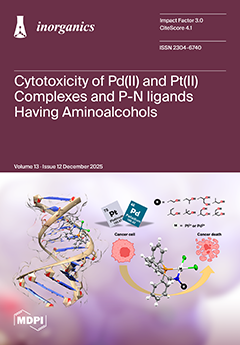
Cover Story (view full-size image):
A series of novel Pd(II) and Pt(II) iminophosphine complexes incorporating aminoalcohols as biologically active moieties have been synthesized and their preliminary in vitro cytotoxic study conducted on different cancerous cell lines exhibiting remarkable selectivities and activities surpassing those of cisplatin. Furthermore, in silico analysis indicated a higher binding energy of these complexes to DNA when compared to cisplatin. View this paper
- Issues are regarded as officially published after their release is announced to the table of contents alert mailing list.
- You may sign up for e-mail alerts to receive table of contents of newly released issues.
- PDF is the official format for papers published in both, html and pdf forms. To view the papers in pdf format, click on the "PDF Full-text" link, and use the free Adobe Reader to open them.
Previous Issue
Next Issue
