


Journal Menu
► ▼ Journal Menu-
- Energies Home
- Aims & Scope
- Editorial Board
- Reviewer Board
- Topical Advisory Panel
- Early Career Editorial Board
- Instructions for Authors
- Special Issues
- Topics
- Sections & Collections
- Article Processing Charge
- Indexing & Archiving
- Editor’s Choice Articles
- Most Cited & Viewed
- Journal Statistics
- Journal History
- Journal Awards
- Society Collaborations
- Conferences
- Editorial Office
Journal Browser
► ▼ Journal BrowserNeed Help?
Announcements
29 September 2026
Tu Youyou Award—Final Call for Nominations
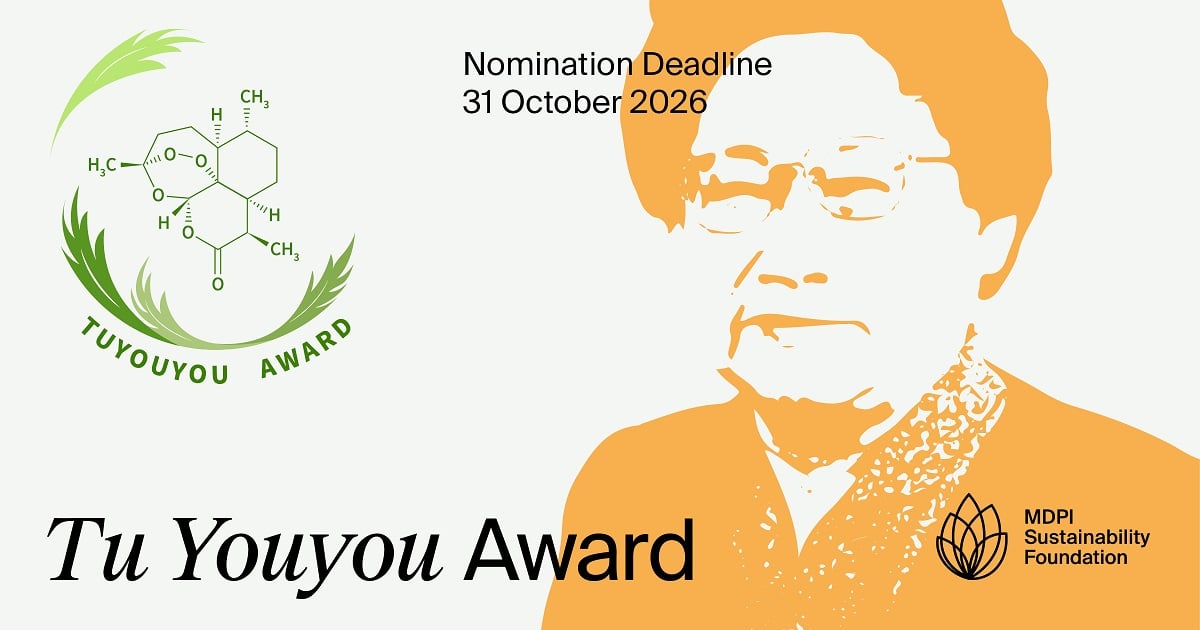
The nomination deadline for the Tu Youyou Award is approaching. Researchers are encouraged to submit nominations by 31 October 2026 (UTC-12).
The Tu Youyou Award recognizes outstanding researchers whose work has made significant contributions to natural products chemistry and medicinal chemistry, advancing scientific innovation and human health. It is named after Nobel laureate Tu Youyou, whose discovery of artemisinin has saved millions of lives.
The current award committee is chaired by Prof. Dr. William Gerwick, a Distinguished Professor at the University of California San Diego, USA, and a renowned expert in marine natural products chemistry and pharmacology. Under his leadership, the committee will evaluate nominations and recognize impactful research achievements in the related fields.
Prize:
- CHF 100,000
- A medal
- A certificate
The monetary prize will be shared equally should there be multiple recipients.
Who may be nominated?
- Scientists with outstanding achievements and contributions in the fields of natural products chemistry and medicinal chemistry.
Nominees must be individuals; team or group nominations are not permitted. Nominations are valid only for the current award cycle.
Who may submit a nomination?
- The director of the nominee’s host research institution or a recognized scientist within the field.
Self-nominations will not be considered.
Nomination materials:
- A biographical sketch
- A detailed description of the nominee’s contributions
- 5–10 representative academic publications
- A list of academic honors, awards, and funded projects
- A nomination letter signed by two nominators
How to submit?
Submit your nomination by 31 October 2026 via: https://tuyouyouprize.org/nomination/form.
For further information, please visit the Tu Youyou Award website. For any inquiries, please contact the Tu Youyou Award Team at tuyouyouaward@mdpi.com.
8 October 2026
Energies | Most Downloaded Papers in 2025 (III)

1. “Technical Challenges of AI Data Center Integration into Power Grids—A Survey”
by Elinor Ginzburg-Ganz, Pavel Lifshits, Ram Machlev, Juri Belikov, Ziv Krieger and Yoash Levron
Energies 2026, 19(1), 137; https://doi.org/10.3390/en19010137
Available online: https://www.mdpi.com/1996-1073/19/1/137
2. “DC Microgrid Deployments and Challenges: A Comprehensive Review of Academic and Corporate Implementations”
by Adewale W. Adegboyega, Saeed Sepasi, Harun Or Rashid Howlader, Brian Griswold, Marc Matsuura and Leon R. Roose
Energies 2025, 18(5), 1064; https://doi.org/10.3390/en18051064
Available online: https://www.mdpi.com/1996-1073/18/5/1064
3. “A Review of Earth-Air Heat Exchangers: From Fundamental Principles to Hybrid Systems with Renewable Energy Integration”
by Hanna Koshlak
Energies 2025, 18(5), 1017; https://doi.org/10.3390/en18051017
Available online: https://www.mdpi.com/1996-1073/18/5/1017
4. “Advancements and Challenges in Photovoltaic Power Forecasting: A Comprehensive Review”
by Paolo Di Leo, Alessandro Ciocia, Gabriele Malgaroli and Filippo Spertino
Energies 2025, 18(8), 2108; https://doi.org/10.3390/en18082108
Available online: https://www.mdpi.com/1996-1073/18/8/2108
5. “Minimizing the Environmental Impact of Aircraft Engines with the Use of Sustainable Aviation Fuel (SAF) and Hydrogen”
by Łukasz Brodzik, Wojciech Prokopowicz, Bartosz Ciupek and Andrzej Frąckowiak
Energies 2025, 18(3), 472; https://doi.org/10.3390/en18030472
Available online: https://www.mdpi.com/1996-1073/18/3/472
6. “Data-Driven Technologies for Energy Optimization in Smart Buildings: A Scoping Review”
by Joy Dalmacio Billanes, Zheng Grace Ma and Bo Nørregaard Jørgensen
Energies 2025, 18(2), 290; https://doi.org/10.3390/en18020290
Available online: https://www.mdpi.com/1996-1073/18/2/290
7. “Advancements and Challenges in Direct Air Capture Technologies: Energy Intensity, Novel Methods, Economics, and Location Strategies”
by Janusz Kotowicz, Kamil Niesporek and Oliwia Baszczeńska
Energies 2025, 18(3), 496; https://doi.org/10.3390/en18030496
Available online: https://www.mdpi.com/1996-1073/18/3/496
8. “Study on Biodiesel Production: Feedstock Evolution, Catalyst Selection, and Influencing Factors Analysis”
by Fangyuan Zheng and Haeng Muk Cho
Energies 2025, 18(10), 2533; https://doi.org/10.3390/en18102533
Available online: https://www.mdpi.com/1996-1073/18/10/2533
9. “Current Status and Reflections on Ocean CO2 Sequestration: A Review”
by Shanling Zhang, Sheng Jiang, Hongda Li, Peiran Li, Xiuping Zhong, Chen Chen, Guigang Tu, Xiang Liu and Zhenhua Xu
Energies 2025, 18(4), 942; https://doi.org/10.3390/en18040942
Available online: https://www.mdpi.com/1996-1073/18/4/942
by Chun-Yu Yang, Yu-An Tzeng, Yu-Ti Jhan, Chih-Wen Cheng and Shun-Han Yang
Energies 2025, 18(3), 490; https://doi.org/10.3390/en18030490
Available online: https://www.mdpi.com/1996-1073/18/3/490
8 October 2026
Energies | Most Downloaded Papers in 2025 (II)

1. “A Review of Electricity Price Forecasting Models in the Day-Ahead, Intra-Day, and Balancing Markets”
by Ciaran O’Connor, Mohamed Bahloul, Steven Prestwich and Andrea Visentin
Energies 2025, 18(12), 3097; https://doi.org/10.3390/en18123097
Available online: https://www.mdpi.com/1996-1073/18/12/3097
2. “A Review on Biohydrogen Production Through Dark Fermentation, Process Parameters and Simulation”
by Babak Mokhtarani, Jafar Zanganeh and Behdad Moghtaderi
Energies 2025, 18(5), 1092; https://doi.org/10.3390/en18051092
Available online: https://www.mdpi.com/1996-1073/18/5/1092
3. “Numerical and Experimental Study of Fluid Flow and Heat Transfer in Porous Media: A Review Article”
by Ramin Ranjbarzadeh and Giuseppe Sappa
Energies 2025, 18(4), 976; https://doi.org/10.3390/en18040976
Available online: https://www.mdpi.com/1996-1073/18/4/976
4. “A Comprehensive Review of Solar PV Integration with Smart-Grids: Challenges, Standards, and Grid Codes”
by Gowthamraj Rajendran, Reiko Raute and Cedric Caruana
Energies 2025, 18(9), 2221; https://doi.org/10.3390/en18092221
Available online: https://www.mdpi.com/1996-1073/18/9/2221
5. “Research Progress of Thermoelectric Materials—A Review”
by Jun Wang, Yonggao Yin, Chunwen Che and Mengying Cui
Energies 2025, 18(8), 2122; https://doi.org/10.3390/en18082122
Available online: https://www.mdpi.com/1996-1073/18/8/2122
6. “Battery Energy Storage Systems: Energy Market Review, Challenges, and Opportunities in Frequency Control Ancillary Services”
by Gian Garttan, Sanath Alahakoon, Kianoush Emami and Shantha Gamini Jayasinghe
Energies 2025, 18(15), 4174; https://doi.org/10.3390/en18154174
Available online: https://www.mdpi.com/1996-1073/18/15/4174
7. “Advances in Numerical Modeling for Heat Transfer and Thermal Management: A Review of Computational Approaches and Environmental Impacts”
by Łukasz Łach and Dmytro Svyetlichnyy
Energies 2025, 18(5), 1302; https://doi.org/10.3390/en18051302
Available online: https://www.mdpi.com/1996-1073/18/5/1302
8. “Grid Impacts of Electric Vehicle Charging: A Review of Challenges and Mitigation Strategies”
by Asiri Tayri and Xiandong Ma
Energies 2025, 18(14), 3807; https://doi.org/10.3390/en18143807
Available online: https://www.mdpi.com/1996-1073/18/14/3807
9. “A Brief Review of Recent Research on Reversible Francis Pump Turbines in Pumped Storage Plants”
by Xiuli Mao, Jiaren Hu, Zhongyong Pan, Pengju Zhong and Ning Zhang
Energies 2025, 18(2), 394; https://doi.org/10.3390/en18020394
Available online: https://www.mdpi.com/1996-1073/18/2/394
by Romeo Danielis, Arsalan Muhammad Khan Niazi, Mariangela Scorrano, Manuela Masutti and Asees Muhammad Awan
Energies 2025, 18(2), 429; https://doi.org/10.3390/en18020429
Available online: https://www.mdpi.com/1996-1073/18/2/429
8 October 2026
Energies | Most Downloaded Papers in 2025 (I)

1. “Lithium Battery Degradation and Failure Mechanisms: A State-of-the-Art Review”
by Joselyn Stephane Menye, Mamadou-Baïlo Camara and Brayima Dakyo
Energies 2025, 18(2), 342; https://doi.org/10.3390/en18020342
Available online: https://www.mdpi.com/1996-1073/18/2/342
2. “Next Generation of Electric Vehicles: AI-Driven Approaches for Predictive Maintenance and Battery Management”
by Muhammed Cavus, Dilum Dissanayake and Margaret Bell
Energies 2025, 18(5), 1041; https://doi.org/10.3390/en18051041
Available online: https://www.mdpi.com/1996-1073/18/5/1041
3. “Regenerative Braking Systems in Electric Vehicles: A Comprehensive Review of Design, Control Strategies, and Efficiency Challenges”
by Emilia M. Szumska
Energies 2025, 18(10), 2422; https://doi.org/10.3390/en18102422
Available online: https://www.mdpi.com/1996-1073/18/10/2422
4. “Sustainable Aviation Fuels: A Comprehensive Review of Production Pathways, Environmental Impacts, Lifecycle Assessment, and Certification Frameworks”
by Weronika Klimczyk, Remigiusz Jasiński, Jakub Niklas, Maciej Siedlecki and Andrzej Ziółkowski
Energies 2025, 18(14), 3705; https://doi.org/10.3390/en18143705
Available online: https://www.mdpi.com/1996-1073/18/14/3705
5. “Green Hydrogen for Energy Transition: A Critical Perspective”
by Ruggero Angelico, Ferruccio Giametta, Biagio Bianchi and Pasquale Catalano
Energies 2025, 18(2), 404; https://doi.org/10.3390/en18020404
Available online: https://www.mdpi.com/1996-1073/18/2/404
6. “A Review and Comparative Analysis of Solar Tracking Systems”
by Reza Sadeghi, Mattia Parenti, Samuele Memme, Marco Fossa and Stefano Morchio
Energies 2025, 18(10), 2553; https://doi.org/10.3390/en18102553
Available online: https://www.mdpi.com/1996-1073/18/10/2553
7. “Real Options-Based Feasibility Evaluation of Offshore Wind Farm Development in Korea’s Idle Coastal Areas”
by Seoungbeom Na, Jaebin Lee and Woosik Jang
Energies 2025, 18(18), 4976; https://doi.org/10.3390/en18184976
Available online: https://www.mdpi.com/1996-1073/18/18/4976
8. “Pyrolysis Process, Reactors, Products, and Applications: A Review”
by Prakhar Talwar, Mariana Alzate Agudelo and Sonil Nanda
Energies 2025, 18(11), 2979; https://doi.org/10.3390/en18112979
Available online: https://www.mdpi.com/1996-1073/18/11/2979
9. “A Review on Perovskite/Silicon Tandem Solar Cells: Current Status and Future Challenges”
by Jingyu Huang and Lin Mao
Energies 2025, 18(16), 4327; https://doi.org/10.3390/en18164327
Available online: https://www.mdpi.com/1996-1073/18/16/4327
by Orlando Corigliano, Pietropaolo Morrone and Angelo Algieri
Energies 2025, 18(2), 296; https://doi.org/10.3390/en18020296
Available online: https://www.mdpi.com/1996-1073/18/2/296
8 October 2026
Meet Us at the 2026 International Conference on Electrical Machines and Systems (ICEMS 2026), 24–27 November 2026, Singapore

MDPI will attend the 2026 International Conference on Electrical Machines and Systems (ICEMS 2026), which will take place in Singapore, from 24 November to 27 November 2026.
Started in Beijing in 1987, the ICEMS is now established as a regular annual event in the field of electrical machines and systems, where experts from all over the world gather to share their knowledge and experience and to encourage scientific exchange and fellowship amongst industry colleagues and professionals globally. The conference serves as an expansive and invigorating platform for leading scientists, researchers, and engineers worldwide to showcase cutting-edge ideas, innovative methods, and pioneering prototypes. Through the multiple days of exhibitions and discussions, the conference aims to inspire fresh ideas in the new generation of researchers and enhance connections amongst international colleagues.
The following open access journals will be represented at the conference:
- World Electric Vehicle Journal (WEVJ);
- Machines;
- Eng;
- J;
- Applied Sciences;
- Energies;
- Industries;
- Magnetism;
- Clean Technol.;
- Inventions;
- Electronics;
- Hardware;
- Automation.
If you are planning on attending this conference, please do not hesitate to stop by our booth and start a conversation with us. Our delegates look forward to meeting you in person and answering any questions that you may have. For more information about the conference, please visit the following website: https://www.icems2026.org/.
8 October 2026
MDPI Topic Editor Club 2026 | Engineering Session, 15 October 2026

MDPI warmly invites you to the 2026 MDPI Topic Editor Club webinar series. This global platform connects worldwide Topic Editors, featuring emerging research themes, practical editorial experience sharing and academic communication. MDPI Topics are interdisciplinary thematic paper collections published across multiple MDPI journals. Led by professional Topic Editor teams and supported by MDPI’s efficient open access publishing workflow, they facilitate academic collaboration and help research reach broader global audiences.
Focusing on engineering, this session brings together Topic Editors to showcase editorial work, discuss the successes and challenges of Topic development, and share innovative strategies for building high-impact Topics. It offers a great chance for peer learning and cross-disciplinary collaboration to advance open access research in this field.
We welcome your participation in the 2026 MDPI Topic Editor Club, and look forward to your insights and questions during the live Q&A session.
Date: 15 October 2026 at 13:00 CEST | 7:00 EDT | 19:00 CST Asia
Webinar ID: 815 5310 9262
Landing page: https://sciforum.net/event/MTEC2026-ENG
Register now for free!

Program:
|
Speaker |
Presentation Title |
Time in CEST |
Time in EDT |
Time in CST Asia |
|
Mr. Marko Stojadinov |
MDPI Introduction |
13:00–13:10 |
7:00–7:10 |
19:00–19:10 |
|
Dr. Mehdi Amirkhani and Dr. Igor Martek |
MDPI Topics on Sustainable Construction: Challenges and Opportunities |
13:10–13:30 |
7:10–7:30 |
19:10–19:30 |
|
Q&A Session |
13:30–13:40 |
7:30–7:40 |
19:30–19:40 |
|
|
Prof. Azidine Guezzaz |
From AI-Based Intrusion Detection to Autonomous Cybersecurity |
13:40–14:00 |
7:40–8:00 |
19:40–20:00 |
|
Q&A Session |
14:00–14:10 |
8:00–8:10 |
20:00–20:10 |
|
|
Dr. Hafiz Muhammad Asif |
Next-Generation Wireless Communication Systems |
14:10–14:30 |
8:10–8:30 |
20:10–20:30 |
|
Q&A Session |
14:30–14:40 |
8:30–8:40 |
20:30–20:40 |
|
|
Mr. Marko Stojadinov |
Introduction of MDPI Topics |
14:40–15:00 |
8:40–9:00 |
20:40–21:00 |
|
Q&A Session |
15:00–15:10 |
9:00–9:10 |
21:00–21:10 |
|
|
Mr. Marko Stojadinov |
Closing of Webinar |
15:10–15:15 |
9:10–9:15 |
21:10–21:15 |
After registering, you will receive a confirmation email containing information on how to join the webinar. Registrations with academic institutional email addresses will be prioritized.
Unable to attend? Register anyway and we’ll let you know when the recording is available to watch.
Webinar Speakers:
- Dr. Mehdi Amirkhani, University of South Australia, Adelaide, Australia;
- Dr. Igor Martek, Deakin University, Geelong, Australia;
- Prof. Azidine Guezzaz, Cadi Ayyad University, Essaouira, Morocco;
- Dr. Hafiz Muhammad Asif, Sultan Qaboos University, Muscat, Oman;
- Mr. Marko Stojadinov, MDPI.
Relevant Topics:
“Sustainable Building Development and Promotion”
Edited by Igor Martek and Mehdi Amirkhani
Manuscript submission deadline: 31 December 2026
“Cybersecurity Symmetry: Encryption, AI, and Attack Patterns”
Edited by Mobyen Uddin Ahmed and Azidine Guezzaz
Manuscript submission deadline: 31 March 2027
“Revitalizing Buildings and Our Urban Heritage”
Edited by Igor Martek, Mehdi Amirkhani and Chayakan Siamphukdee
Manuscript submission deadline: 31 May 2027
“Blockchain for Sustainability: Applications in Energy, Supply Chain, and Green Finance”
Edited by Firdous Kausar, Hafiz Muhammad Asif and Mian Muhammad Waseem Iqbal
Manuscript submission deadline: 31 May 2027
“Sustainable Construction: Globalize, Organize, Build, Unite, Innovate, Lead, Develop”
Edited by Igor Martek and Mehdi Amirkhani
Manuscript submission deadline: 31 July 2028
8 October 2026
Meet Us at the 2026 International Conference on Energy Chemistry (ICEC2026), 23–25 October 2026, Nanchang, China

We are pleased to announce that MDPI will be participating as an exhibitor at the 2026 International Conference on Energy Chemistry (ICEC2026), which will be held from 23 to 25 October 2026 at the Binjiang Hotel in Nanchang, China.
ICEC2026 continues the Energy Chemistry conference series, which has been held since 2018 with the support of the Elsevier journal EnergyChem, promoting extensive exchange and collaboration between scientists and industry. The theme of this year’s conference is “Energy Chemistry Driving a Carbon-Neutral Future”. The program will feature plenary lectures, keynote lectures, invited talks, oral presentations, and poster sessions covering varied topics related to energy chemistry, including hydrogen energy, solar cell technologies, photocatalysis, next-generation batteries, carbon capture and utilization, electrocatalysis and electrochemical synthesis, metal–organic frameworks, carbon materials, new energy materials, and theoretical calculations, artificial intelligence, and characterization.
The conference is hosted by Jiangxi Normal University and Fudan University, as well as co-organized by a number of institutions, including Jiangxi University of Science and Technology, Jiangxi Agricultural University, Nanchang Hangkong University, and the Jiangxi Provincial Key Laboratory of Green Hydrogen Energy and Advanced Catalysis, among others. ICEC2026 will bring together leading figures from the energy chemistry community and related industries to share and discuss the latest research ideas, progress, and breakthroughs.
The following MDPI journals will be represented:
If you are planning to attend this conference, please feel free to visit our booth and start a conversation with us. Our delegates look forward to meeting you in person and answering any questions you may have about our journals, the open access publishing model, and potential collaborations.
For more information about the conference, please visit the official conference website:
https://my.31huiyi.com/site/pages/index/index?pageId=019e9a7c-f866-7925-908f-a930082f1883.
We look forward to seeing you in Nanchang!
30 September 2026
Prof. Dr. Adrian Ilinca Appointed Section Editor-in-Chief of Section “A: Sustainable Energy” in Energies
Energies (ISSN 1996-1073) is pleased to announce the appointment of Prof. Dr. Adrian Ilinca (École de technologie supérieure (ÉTS), Université du Québec, Canada) as Section Editor-in-Chief (SEiC) of the journal’s “A: Sustainable Energy” Section.
Prof. Dr. Adrian Ilinca is a professor of mechanical engineering at École de technologie supérieure (ÉTS), a constituent engineering school of the Université du Québec, Canada. His research focuses on hybrid renewable energy systems, energy storage technologies, artificial intelligence for sustainable energy systems, carbon capture, utilization and storage (CCUS), climate-resilient energy systems, and the integration of renewable energy technologies for the low-carbon energy transition.
As Section Editor-in-Chief, Prof. Dr. Adrian Ilinca will work closely with the Editorial Office and the journal’s academic editors to promote scientific excellence, encourage emerging research directions, support high-quality submissions, and further strengthen the “A: Sustainable Energy” Section as a leading international forum for sustainable energy research.
The following is a short Q&A with Prof. Dr. Adrian Ilinca, who has shared his vision for the journal with us, as well as his views on the research area and open access publishing:
What appealed to you about the journal and what made you want to take the role of its Section Editor-in-Chief?
As an author, I have greatly enjoyed working with MDPI and, in particular, with Energies. One of the aspects I value most is the respect shown toward authors throughout the publication process. Communication with the Editorial Office is efficient and transparent, and authors are kept informed at every stage. Having published with many different publishers, I have experienced situations in which authors wait a year, or even longer, before receiving an initial decision. In my view, such delays are difficult to justify and do not serve either the authors or the scientific community.
At Energies, even when a manuscript is not accepted, authors receive a timely decision accompanied by constructive, informative reviews. The emphasis is not simply on identifying shortcomings, but on providing meaningful feedback that helps authors improve their work and advance their research. I have always appreciated this philosophy, which views peer review as an opportunity to strengthen scientific contributions rather than merely as a gatekeeping exercise.
Another feature that distinguishes Energies is its ability to combine editorial efficiency with scientific rigor. A rapid publication process should never come at the expense of quality, and my experience shows that the journal maintains this balance. The objective is to publish the strongest possible research through a rigorous yet constructive peer-review process, while ensuring that authors receive fair, timely, and well-reasoned editorial decisions.
I believe this approach has contributed significantly to the journal’s growth and international recognition. It also aligns closely with my own vision of scientific publishing: promoting excellence while fostering collaboration, innovation, and the timely dissemination of knowledge. Having contributed to Energies over the years as both an author and an editor, accepting the role of Section Editor-in-Chief felt like a natural progression. It offers an opportunity to contribute more actively to the journal’s continued development, helps identify emerging research directions, and supports a vibrant scientific community working to address the complex challenges of sustainable energy.
What is your vision for this Section?
My vision for the “A: Sustainable Energy” Section is to promote research that addresses energy challenges from a broad, systems-level, and increasingly interdisciplinary perspective. The energy transition can no longer be addressed through individual technologies alone. It requires integrating engineering, environmental science, economics, public policy, digital technologies, and social sciences to develop solutions that are technically sound, economically viable, environmentally sustainable, and socially acceptable.
Several developments will, in my opinion, shape the future of sustainable energy research. Climate change and the need for both mitigation and adaptation remain among the most pressing global challenges. At the same time, artificial intelligence and digitalization are transforming the way energy systems are designed, operated, and optimized. Together, these trends are redefining research priorities and creating new opportunities for innovation.
Reducing greenhouse gas emissions will continue to require rapid progress in renewable energy technologies, but also in complementary areas such as advanced energy storage, energy efficiency, carbon capture, utilization and storage (CCUS), low-carbon fuels, and integrated energy systems. Recent geopolitical developments have also highlighted the strategic importance of energy security, system resilience, and supply-chain robustness. I therefore see the future of sustainable energy not simply as increasing renewable energy deployment, but as building flexible, intelligent, and resilient energy systems that can respond to evolving environmental and societal challenges.
Another priority for the Section will be to encourage research that connects different components of the energy transition rather than considering technologies in isolation. Future energy systems will increasingly combine renewable generation, energy storage, electrification, hydrogen, smart grids, advanced control systems, and data-driven decision support. Understanding how these technologies interact will become just as important as improving the performance of each individual component.
Artificial intelligence will play a particularly important role in this transformation. Beyond improving renewable resource forecasting, AI is enabling predictive maintenance, intelligent energy management, digital twins, real-time system optimization, and climate-informed planning. At the same time, the rapidly growing energy demand associated with AI infrastructure presents an important challenge for the energy community itself, reinforcing the need to develop sustainable and efficient energy systems capable of supporting the digital economy.
I also hope to encourage research that shows how innovative energy technologies can address multiple societal challenges at once. My own work on wave energy converters, for example, has explored their potential not only for renewable electricity generation but also for mitigating coastal erosion caused by extreme climate events. I find this integrated, multidisciplinary thinking particularly compelling because it shows how well-designed engineering solutions can deliver multiple environmental and societal benefits.
One of my priorities as Section Editor-in-Chief will therefore be to identify emerging research directions and promote them through carefully selected Special Issues and collaborations with leading researchers. Themes I find especially promising include AI-enabled renewable energy systems, integrated energy infrastructures, climate-resilient energy systems, energy storage, carbon management, digitalization, and interdisciplinary approaches to sustainable energy.
Finally, my vision is not to create competition between the different Sections of Energies, but rather to contribute to the journal’s overall scientific excellence. If a manuscript is better suited to another Section, I fully support assigning it where it will have the greatest scientific impact. My objective is to help strengthen Energies as a whole by fostering high-quality research, encouraging interdisciplinary collaboration and ensuring that the “A: Sustainable Energy” Section remains a forum for innovative ideas and emerging directions in energy research.
What does the future of this field of research look like?
The future of sustainable energy research will, in my view, be shaped by the convergence of several major developments rather than by the evolution of individual technologies. Renewable energy, artificial intelligence, digitalization, energy storage, climate resilience, and interdisciplinary collaboration are becoming increasingly interconnected, and future progress will depend on our ability to integrate these dimensions into coherent and resilient energy systems.
Artificial intelligence will undoubtedly become one of the main enabling technologies of the energy transition. Its applications extend well beyond renewable resource forecasting to include intelligent energy management, predictive maintenance, digital twins, system optimization, autonomous control, and decision support for increasingly complex energy infrastructures. As renewable energy systems continue to expand in scale and complexity, AI will become an essential tool for improving efficiency, reliability, and operational flexibility.
At the same time, the growing deployment of artificial intelligence presents an important paradox. While AI can significantly improve energy-system performance, the computing infrastructure required to support increasingly sophisticated models is itself becoming a major consumer of electricity. This creates one of the defining challenges for the scientific community: we must develop energy systems that are sufficiently sustainable, reliable, and resilient to support the rapid growth of digital technologies, while simultaneously using those same technologies to optimize energy production and consumption. The relationship between AI and energy will therefore become increasingly symbiotic.
I also expect energy research to move decisively toward integrated energy systems rather than isolated technologies. Future infrastructures will combine renewable generation, energy storage, hydrogen, electrification, smart grids, flexible demand, and advanced digital control into highly interconnected systems. Understanding the interactions among these components will become just as important as improving the performance of each individual technology. This system’s perspective will require new modeling approaches, new optimization methods, and closer collaboration across traditional disciplinary boundaries.
Climate change will remain another defining driver of research. Beyond reducing greenhouse gas emissions, energy systems must become increasingly resilient to changing climatic conditions and more frequent extreme events. Future research will therefore place greater emphasis on adaptation as well as mitigation, considering not only energy production but also infrastructure resilience, environmental impacts, resource management, and long-term sustainability. The challenge is no longer simply to produce clean energy, but to design energy systems capable of supporting resilient and sustainable societies under rapidly evolving environmental conditions.
These challenges cannot be addressed by engineering alone. The future of sustainable energy research will require close collaboration among engineers, computer scientists, environmental researchers, economists, social scientists, policymakers, and industry. Many of the barriers to the energy transition are no longer purely technological; they also involve economics, regulation, public acceptance, environmental stewardship, and societal priorities. Bringing these perspectives together will be essential for translating scientific advances into practical and widely adopted solutions.
I see an important role for the “A: Sustainable Energy” Section of Energies in supporting this evolution. Beyond publishing high-quality research, the Section should help identify emerging scientific directions, encourage interdisciplinary dialog, and provide a platform for innovative ideas that address the complex and interconnected challenges of the global energy transition. By fostering collaboration across disciplines and promoting forward-looking research, I hope the Section will help shape the next generation of sustainable energy systems.
What do you think of the development of open access in the publishing field?
I see the continued development of open access as a natural evolution of scientific publishing and, more broadly, of the way research is conducted and shared today. Scientific progress depends on the rapid exchange of ideas, and researchers increasingly seek not only to publish their work but also to ensure that it reaches the widest possible audience. Open access supports this objective by removing traditional barriers to knowledge dissemination and making research immediately available to scientists, industry, policymakers, and society as a whole.
The growing adoption of open access also reflects the increasingly collaborative and interdisciplinary nature of modern research. Many of today’s scientific challenges, such as climate change, sustainable energy, public health, and artificial intelligence, require international collaboration across disciplines and institutions. Broad and unrestricted access to scientific results facilitates these collaborations and accelerates innovation by enabling researchers around the world to build upon each other’s work.
At the same time, open access must be supported by a sustainable publishing model. High-quality scientific publishing depends on rigorous peer review, professional editorial management, production, long-term archiving, and effective dissemination, all of which require significant resources. The challenge is therefore not simply to make research freely available, but to ensure that openness is accompanied by high editorial standards, scientific integrity, and long-term financial sustainability.
One aspect I particularly appreciate about MDPI is that open access has been part of its publishing model from the outset. The principles and associated publication model are therefore transparent to authors from the beginning, and the journal has developed considerable experience in operating within this framework. At the same time, a scientific journal’s reputation is not built by its publishing model alone. It is earned over many years through rigorous editorial standards, high-quality publications, and the confidence of the research community. I believe the continued development and growing international recognition of Energies reflect this sustained commitment to scientific excellence.
Looking ahead, I hope to see further expansion of institutional agreements between publishers, universities, and research organizations. Such partnerships can help reduce financial barriers for researchers while providing a stable and sustainable framework for open access publishing. They also reinforce the idea that access to scientific knowledge is a shared responsibility involving authors, institutions, funding agencies, and publishers.
Ultimately, I expect open access to become the dominant model of scientific communication because it aligns with the fundamental mission of research: generating knowledge and ensuring that it can be disseminated, scrutinized, and applied for the benefit of society. The priority for all stakeholders will be to preserve the balance between accessibility, scientific quality, editorial integrity, and long-term sustainability. If that balance can be maintained, open access will continue to strengthen both the visibility and the impact of scientific research.
We wish Prof. Dr. Adrian Ilinca every success in his new role as Section Editor-in-Chief and look forward to the leadership, vision, and scientific contributions he will bring to the continued growth and international impact of the “A: Sustainable Energy” Section and Energies.
30 September 2026
World Space Week—“Rocket Revolution”, 4–10 October 2026
World Space Week 2026 highlights the rapid progress in rocket technology and its pivotal role in enabling sustainable access to space. This year’s theme, “Rocket Revolution”, invites us to reflect on the challenges and opportunities brought by reusable launchers, lower launch costs, and growing mission frequency.
Selected MDPI journals, including Aerospace, Applied Sciences, Computation, Energies, Sensors, Signals, and Symmetry, provide key platforms for advancing global dialogue on space research. Through a curation of articles, Special Issues and reprints, these journals explore topics such as launch vehicle design and propulsion, and spacecraft sensing and control, fostering collaboration among scientists, engineers, and institutions worldwide.
World Space Week underscores the importance of rocket innovation and our shared responsibility to develop and apply launch technologies responsibly for a bright and sustainable future.

 |
 |
 |
 |
 |
 |
 |

“Embedded Wireless Flexible Sensor for Monitoring Interface Stress of Solid Rocket Motor”
by Bei Yan , Xiaozhou Lü, Kecai Ding, Yipeng Heng and Yong Li
Sensors 2026, 26(9), 2807; https://doi.org/10.3390/s26092807
“Sustainable Aviation Fuels: A Review of Current Techno Economic Viability and Life Cycle Impacts”
by Md Nasir Uddin and Feng Wang
Energies 2025, 18(20), 5510; https://doi.org/10.3390/en18205510
“Fuzzy Lyapunov-Based Gain-Scheduled Control for Mars Entry Vehicles: A Computational Framework for Robust Non-Linear Trajectory Stabilization”
by Hongyang Zhang, Na Min and Shengkun Xie
Computation 2025, 13(9), 205; https://doi.org/10.3390/computation13090205
“Sustainable Aviation Fuels: A Comprehensive Review of Production Pathways, Environmental Impacts, Lifecycle Assessment, and Certification Frameworks”
by Weronika Klimczyk, Remigiusz Jasiński, Jakub Niklas, Maciej Siedlecki and Andrzej Ziółkowski
Energies 2025, 18(14), 3705; https://doi.org/10.3390/en18143705
“Cost Effectiveness of Reusable Launch Vehicles Depending on the Payload Capacity”
by Si-Yoon Kang, Min-Seon Jo, Jeong-Yeol Choi and Soo Seok Yang
Aerospace 2025, 12(5), 364; https://doi.org/10.3390/aerospace12050364
“Reliability Assessment of a Series System with Weibull-Distributed Components Based on Zero-Failure Data”
by Ziang Li, Huimin Fu and Jianchao Guo
Appl. Sci. 2025, 15(5), 2869; https://doi.org/10.3390/app15052869
“RANS Simulations of Advanced Nozzle Performance and Retro-Flow Interactions for Vertical Landing of Reusable Launch Vehicles”
by Giuseppe Scarlatella, Jan Sieder-Katzmann, Martin Propst, Theodor Heutling, Jannis Petersen, Felix Weber, Marco Portolani, Marco Garutti, Daniele Bianchi, Dario Pastrone et al.
Aerospace 2025, 12(2), 124; https://doi.org/10.3390/aerospace12020124
“Decision-Making Framework for Aviation Safety in Predictive Maintenance Strategies”
by Igor Kabashkin, Roman Fedorov and Vladimir Perekrestov
Appl. Sci. 2025, 15(3), 1626; https://doi.org/10.3390/app15031626
“A Decreasing Horizon Model Predictive Control for Landing Reusable Launch Vehicles”
by Guillermo Zaragoza Prous, Enric Grustan-Gutierrez and Leonard Felicetti
Aerospace 2025, 12(2), 111; https://doi.org/10.3390/aerospace12020111
“Acoustic Rocket Signatures Collected by Smartphones”
by Sarah K. Popenhagen and Milton A. Garcés
Signals 2025, 6(1), 5; https://doi.org/10.3390/signals6010005
“Minimizing the Environmental Impact of Aircraft Engines with the Use of Sustainable Aviation Fuel (SAF) and Hydrogen”
by Łukasz Brodzik, Wojciech Prokopowicz, Bartosz Ciupek and Andrzej Frąckowiak
Energies 2025, 18(3), 472; https://doi.org/10.3390/en18030472
“Comprehensive Review of RF MEMS Switches in Satellite Communications”
by Bingqian Shao, Chengjian Lu, Yinjie Xiang, Feixiong Li and Mingxin Song
Sensors 2024, 24(10), 3135; https://doi.org/10.3390/s24103135
“Space Robot Sensor Noise Amelioration Using Trajectory Shaping”
by Emily Kuck and Timothy Sands
Sensors 2024, 24(2), 666; https://doi.org/10.3390/s24020666
“Symmetry-Breaking-Induced Internal Mixing Enhancement of Droplet Collision”
by Yupeng Leng, Chengming He, Qian Wang, Zhixia He, Nigel Simms and Peng Zhang
Symmetry 2024, 16(1), 47; https://doi.org/10.3390/sym16010047

|
“Advanced Signal Processing Technologies: Integrating AI, Future Communications, and Innovative Applications” |
“Human Body Communication and Wireless Sensing for Space and Challenging Environments” |
 |
 |
|
“Guidance and Control of Advanced Aerospace Vehicle from Near Space to Orbit” |
“Precise Orbit Determination of the Spacecraft (2nd Edition)” |
 |
 |
|
“Aircraft Aerodynamic Design and Analysis” |
“Integrated Computer Technologies in Mechanical Engineering—Synergetic Engineering V” |
 |
 |

 |
 |
 |
30 September 2026
2026 Nobel Prize—Where Breakthroughs Meet Open Sciences
Each October, the Nobel Prizes turn the world’s attention toward the discoveries that have redrawn the boundaries of science. They are science’s most prestigious recognition, and increasingly its most interdisciplinary. Recent laureates have been honored for work spanning quantum dots, machine learning, and molecular medicine, fields that rarely stay within a single discipline’s borders for long.
Open access has a growing role in that story. To date, more than 40 Nobel laureates have published their research in MDPI journals—a body of work spanning genetics, physics, chemistry, and medicine. Publishing openly means a laureate’s findings reach not only fellow scientists, but the students, clinicians, policymakers, and curious readers who would otherwise meet that work only secondhand, if at all. Open access doesn’t just carry Nobel-level research, it amplifies the voice behind it, letting the discovery speak directly to everyone it stands to affect.
This is also where MDPI’s breadth becomes an advantage. With over 500 journals covering the full spectrum of scientific inquiry, our platform mirrors the reality of modern discovery—where breakthroughs increasingly emerge at the intersection of fields, not within the walls of one. It’s this structure that lets us support interdisciplinary work from first submission to global publication, connecting researchers across borders and disciplines alike.
As this year’s laureates are announced, we’ll continue spotlighting where Nobel Prize–winning research intersects with the work of our authors, editors, and reviewers—celebrating both the achievements being recognized and the open access model that helps ensure they reach the widest possible audience.
Explore selected works by Nobel laureates within the MDPI portfolio below, and join us in celebrating the global impact of their ideas.

Put your scientific intuition to the test and join MDPI’s 2026 Nobel Prize Prediction Challenge! As we honor three decades of open research, we invite you to cast your votes for the next trailblazing laureates in chemistry, physics, and physiology or medicine. Predict the pioneer minds shaping tomorrow’s scientific legacy for a chance to win 100 CHF voucher of MDPI Video Service.
Deadline: 4 October 2026 | 18:00 CEST
Winner announcement: 16 October 2026


Discover high-impact research driving tomorrow’s breakthroughs. Browse our open access selections in Chemistry & Materials Science, Medicine & Pharmacology, and Physical Sciences, featuring key studies aligned with this year’s top Nobel prize-contending topics.
|
|
|
|


Join our distinguished Editors-in-Chief and Section Editors-in-Chief for an exclusive live discussion on this year’s Nobel Prize announcements. Our expert panel will break down the winning breakthroughs, explore their global impact, and discuss the future trajectories of open science across Chemistry, Physics, and Medicine. Don’t miss this opportunity to engage with leading voices in research.
|
|
2026 Nobel Medicine & Pharmacology Roundtable
|
|
|
2026 Nobel Physics Roundtable
|
|
|
2026 Nobel Chemistry & Materials Roundtable
|
|
|
2026 Nobel Chemistry & Materials Roundtable Session #2
|


MDPI remains committed to ensuring that the breakthroughs of today—and tomorrow—are shared, debated, and built upon by the global research community. Explore science, join the conversation, and be part of the next chapter.
