Skip to Content

Advancing Open Science

A global leader in open access publishing, supporting research communities and accelerating scientific discovery

  • 7.5 billion
    Article Views
  • 4.5 million
    Total Authors
  • 97%
    Web of Science Coverage

News & Announcements

Journals

Most Recent Articles

    • Article
    • Open Access

    An analysis of phytoplankton diversity and quantitative characteristics was conducted on the large Lake Bolshoe Toko to establish baseline indicators for ecosystem services in the permafrost zone. Data were collected in 2015—prior to any anthropogenic impact from a coal mining complex and a railway on this protected lake—thereby serving as a baseline characterization of its ecosystem. Samples were collected from a network of stations across the lake surface and at depths of up to 50 m, at both the beginning and the end of the short growing season. Seasonal differences in the water temperature distribution were identified, with the highest warming observed in the shallow half of the lake in late July. The communities comprised species from eight phyla, dominated by diatoms, green algae, chrysophytes, and charophytes. The spatial distribution of species composition across the lake showed a slight gradient but varied by season. Phytoplankton abundance and biomass were highest at the warmer stations and were concentrated at a depth of approximately 2 m. Dominant species were identified among the diatoms, green algae, and chrysophytes. Significant differences in dominant species were observed between day and night communities. Synchronous fluctuations in water temperature, species richness, and quantitative phytoplankton metrics suggest that water temperature—correlated with solar radiation intensity—may be the primary regulatory factor in the permafrost zone. The key hydrochemical parameters of the lake and the quantitative indicators of its phytoplankton have been classified from an ecosystem perspective. The lake has been characterized as oligotrophic and oligosaprobic. These criteria are recommended for assessing the effectiveness of ecosystem services. Consequently, species composition, abundance, biomass, and water temperature during the period of peak water warming are proposed as baseline indicators for monitoring ecosystem services in permafrost-zone lakes.

    Water

    25 November 2026

    • Commentary
    • Open Access

    Some DNA viruses persist in humans long after primary infection, yet why viral burden differs so markedly between individuals has remained unclear. A recent study by Kamitaki et al. reveals that host genetic variation, particularly within human leukocyte antigen (HLA) and antigen-processing pathways, is associated with the persistent DNA virome in a virus-specific manner. We argue that viral type and sample source matter when interpreting these associations and their relevance to disease. Paired longitudinal sampling and studies of antigen recognition could help clarify these links.

    Viruses

    25 November 2026

    • Review
    • Open Access

    Ferrite materials have long played an important role in nonreciprocal microwave devices. M-type hexaferrites, such as SrFe12O19 and BaFe12O19, are particularly attractive because of their strong magnetic anisotropy, chemical stability, and low cost. Ferrite-based circulators and isolators (CIs) are widely used in microwave systems, including superconducting-qubit readout chains. However, their size, magnetic bias requirements, and limited on-chip integrability present challenges for scalable quantum computing. These limitations have motivated the development of alternative nonreciprocal technologies. This review first examines the crystal structures, magnetic properties, ferromagnetic resonance behavior, and microwave losses of hexagonal, garnet, and spinel ferrites. Particular attention is given to cryogenic performance and device integration. We then discuss recent advances in quantum nonreciprocal microwave devices as comparative examples, focusing on their operating principles, design methods, and experimental demonstrations. Representative technologies are compared using reported experimental data, including insertion loss, nonreciprocity, bandwidth, temperature, driving conditions, and magnetic bias requirements. Integration challenges and compatibility with quantum systems are also discussed. Finally, we outline future research directions for ferrite materials, including cryogenic characterization, microwave loss reduction, self-biased device design, and integration with superconducting circuits.

    Magnetochemistry

    25 November 2026

    • Article
    • Open Access

    Rare Causes of Autosomal Dominant Optic Atrophy in a Polish Patient Cohort

    • Anna Skorczyk-Werner,
    • Joanna Walczak-Sztulpa and
    • Maciej Robert Krawczyński
    • + 3 authors

    Autosomal dominant optic atrophy (ADOA), alongside Leber hereditary optic neuropathy (LHON), is the most common form of hereditary optic atrophy, with a prevalence of about 1 in 35,000 births. ADOA is a relatively mild, progressive form of vision loss that may manifest in early childhood, with features including visual field defects and tritanopia. ADOA is caused by pathogenic variants in nuclear genes encoding mitochondrial proteins, predominantly heterozygous variants in the OPA1 gene. We evaluated a cohort of 57 independently ascertained (apparently unrelated) families (59 patients) with ADOA or ADOA-plus (a condition with extraocular symptoms) with identified nuclear gene variants, using next-generation sequencing (NGS)-based targeted gene panels for optic atrophy or inherited retinal dystrophy (IRD). While OPA1 variants accounted for the vast majority of molecular diagnoses (identified in 45 families, including 4 with candidate variants of uncertain significance), this report focuses on 12 independent families harboring causative or candidate variants across ACO2, AFG3L2 (OPA12), SSBP1 (OPA13), and WFS1. Six of these variants are novel (including two candidate variants), broadening the mutational spectrum of these genes. Furthermore, pathogenic variants in ACO2, AFG3L2, and SSBP1 are reported for the first time in Polish patients, with ACO2 and AFG3L2 emerging as the most frequent non-OPA1 contributors (four families with causative variants and one with a candidate variant each). Overall, our findings underscore the pivotal role of targeted NGS in identifying rare genetic etiologies of optic atrophy.

    Int. J. Mol. Sci.

    25 November 2026

    • Review
    • Open Access

    Toll-like receptors (TLRs) are key innate immune sensors that recognize damage-associated molecular patterns (DAMPs) released during metabolic stress, oxidative injury, and renal inflammation. Renal TLR cascades, particularly TLR2 and TLR4, are increasingly activated in chronic kidney disease (CKD). CKD affects more than 700 million people worldwide. TLR activation modulates downstream NF-κB, MAPK, and IRF signaling pathways, promoting pro-inflammatory cytokine production, interstitial fibrosis, and loss of renal function. Current CKD treatments focus on symptom and hemodynamic management, but targeting TLR-mediated inflammatory pathways could be a novel disease-modifying strategy. Recent findings suggest that fat- and water-soluble vitamins can act as multi-target immunomodulators, altering TLR signaling at the transcriptional and epigenetic levels. Fat-soluble vitamins have been shown in preclinical and clinical models to suppress TLR2/4 expression, impair TLR4–MD-2 assembly, and enhance antioxidant defense through Nrf2. Meanwhile, water-soluble vitamins indirectly reduce TLR-mediated inflammation by reducing mitochondrial oxidative stress, regulating homocysteine, and blocking toxic glycolytic flux. This narrative review evaluates the potential role of fat-soluble (A, D, E and K) and water-soluble (B-complex and C) vitamins in modulating TLR-associated inflammatory responses in kidney diseases and summarizes the literature on small-molecule inhibitors and vitamin-based therapeutics, including current preclinical, clinical, and marketed therapies. This evidence also highlights key translational research gaps and provides a scientific basis for future investigations into the therapeutic potential of vitamins for CKD management.

    Int. J. Transl. Med.

    25 November 2026

    • Article
    • Open Access

    This study presents a pilot test evaluating the use of satellite imagery and clustering algorithms as a methodology involving multi-temporal measures based on the Copernicus Sentinel-5P mission for the prevention, monitoring, and forecasting of environmental pollution in selected Balkan countries, as well as their potential future policies. Nine countries were analyzed at two administrative levels for the period 2019–2024. To perform the classification, the study applies both k-means and hierarchical clustering techniques to the annual pollutant values, and then evaluates the resulting clusters using the Dunn and Davies–Bouldin indices. The study’s novelty lies in the construction of a harmonized, cross-border environmental framework built exclusively on open-access satellite indicators. We can outline three results: first, the construction of a comparable framework for environmental taxonomy and regional fund prioritization; secondly, the proposal of an optimized framework for strategic positioning of ground-level monitoring infrastructure; and third, the modelling of a seasonally coordinated cross-border governance framework. The findings indicate that a universal environmental monitoring approach is ineffective for the Balkans; instead, spatially differentiated strategies are needed. As part of the European Union’s strategic landscape, Balkan nations require more advanced algorithms to calculate levels of pollutants such as NO2 and CO. The main limitation of this research is related to some missing observations, mainly for ADM 2 for some years. Nevertheless, the representativeness of the data in this research allows policymakers and environmental agencies to offer a scalable and reproducible framework for environmental fund allocation, monitoring infrastructure planning, and seasonally targeted mitigation policies.

    Land

    25 November 2026

    • Review
    • Open Access

    Pancreatic ductal adenocarcinoma (PDAC) vaccine trials require a clear distinction between biological activity and clinical benefit. This critical narrative review integrates selected vaccine studies with established immune-assay, biomarker, and trial-design methods to propose a PDAC-focused planning framework. Five complementary evidentiary claims are distinguished: strategy deliverability, antigen-specific immune induction, tumor engagement, molecular disease modulation, and clinical benefit. The framework separates assignment before vaccine preparation from randomization after product readiness, aligns clinical and biological assessment times, and specifies participant denominators and missing-data handling. PDAC-specific applications address preparation alongside adjuvant chemotherapy, early recurrence, tissue availability, antigen selection, and interpretation of carbohydrate antigen 19-9 and circulating tumor DNA. Historical and contemporary trials illustrate why immune activity cannot substitute for a randomized clinical effect. A trial summary, schematic, design tables, and sixteen-item checklist translate existing principles into prospective decisions. The contribution is their integration around PDAC vaccine development questions, not new estimand methodology or validated surrogate endpoints. The proposed framework requires independent evaluation and does not establish vaccine efficacy.

    Cancers

    25 November 2026

Partnerships

Special Issues

Topics

Highly Accessed Articles

  • Article
  • Open Access

I argue that the emerging sciences of synthetic morphology and diverse intelligence suggest non-physicalist models of mind and show how they can be empirically investigated. Whence the anatomical, physiological, molecular-biological, and behavioral properties of engineered new beings that have never before existed, and do not have a history of selection? Understanding, predicting, and guiding new forms of life and mind requires characterizing a structured latent space of patterns. Developmental, synthetic, and behavioral biology should take seriously, and exploit, the kinds of non-physicalist ideas that are already a staple of Platonist mathematics. I propose the following hypotheses. (1) Patterns in this space span a highly variable degree of agency, comprising a spectrum ranging from static truths studied by mathematicians to active ones studied by behavioral scientists (i.e., some patterns on the same spectrum as mathematical truths are kinds of minds). (2) The relationship between mind and body is the same as the relationship between causally instructive mathematical facts and physics. (3) Living beings have no monopoly on the “free lunches” provided by the ingression of these patterns into the physical world. While traditional computationalist views of living and cognitive systems are insufficient, my framework erases artificial distinctions between organisms and machines, framing all physical constructs (natural or engineered) as being, to various degrees, in-formed by patterns from the latent space. I sketch a research program, already begun, inspired by these ideas. Such frameworks, while contradicting long-held assumptions of both mechanists and organicists, could have many implications for evolutionary biology, regenerative medicine, AI, and the ethics of synthbiosis with the forthcoming immense diversity of morally important beings.

Philosophies

9 September 2026

82,754 Views
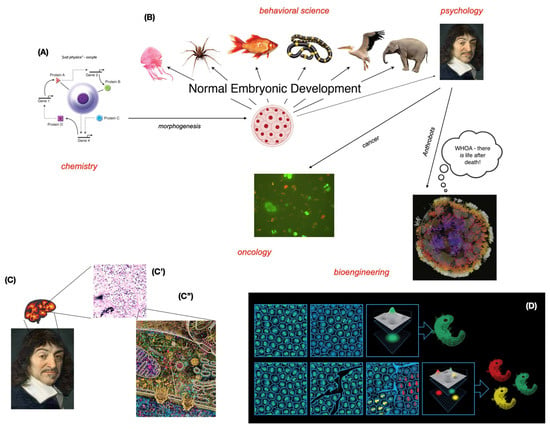
Bodies and minds self-assemble from single cells as a process of alignment and autopoiesis. (A) Most complex biological forms begin as one cell—a fertilized oocyte, commonly thought to be well-described by the laws of physics and chemistry. (B) A gradual, slow process of developmental morphogenesis results in the final form of the organism, which may have complex structure and a mind which may not believe it is a “machine”. Our transformation from a chemical soup into an active embodied mind is continuous but heterogeneous: (C) while we commonly think of ourselves as a unified intelligence with a “centralized” brain, the fact is that even the pineal gland, of which there is only one in the brain, is made of cells (C′) and those cells in turn are made of myriad other active components (C″)—we are a collective intelligence at all scales. (D) The creation of an “individual” out of an excitable medium such as an embryonic blastoderm with hundreds of thousands of cells is a dynamic process that is not hardwired: scratches made in that blastoderm would result in independent self-organization in each island, resulting in multiple embryos forming. This reveals the potentiality for some non-pre-determined number of minds to arise out of the same substrate. Images in (A,B,D) courtesy of Jeremy Guay of Peregrine Creative, used previously in [29]. Image (B) used with permission from [30]. Image in (C′) courtesy of Jose Calvo, Science Photo Library. Image in (C″) courtesy of Evan Ingersoll and Gaël McGill. Image (D) used with permission from [31].
  • Review
  • Open Access

Background: Chlorine dioxide (ClO2), formulated as an aqueous solution (CDS), has been proposed as a therapeutic agent, yet its classification among oxidizing compounds is frequently confounded with chemically distinct species—sodium chlorite (NaClO2) and sodium hypochlorite (NaOCl). Objective: This study aimed to synthesize the physicochemical, mechanistic and cellular basis of ClO2 action and to delineate the distinctions between ClO2 and related oxidants, with explicit separation of established data from hypothesized data. Methods: The methodology includes a narrative synthesis of electrochemical data, primary toxicological and clinical literature (PubMed) and the redox-biology literature on low-dose oxidant signaling. Results: ClO2 is a neutral free radical that acts via one-electron transfer (E°′ = +0.95 V vs. SHE for the half-reaction ClO2 + e− → ClO2−, essentially pH-independent over pH 4–8, pH-independent) without chlorination. Its antimicrobial action is attributable to oxidation of thiol-dependent enzymes and membrane constituents and to the inhibition of bacterial respiratory metabolism; host-cell sparing is consistent with differential glutathione-dependent buffering. Controlled human ingestion studies at low concentrations report a favorable short-term safety profile; conversely, the principal metabolite (chlorite) is associated with documented developmental toxicity in animals and regulatory caution by EPA/WHO. Low-dose ClO2 exposure is hypothesized—but not yet directly demonstrated—to elicit dose-dependent adaptive redox responses and redox-regulatory modulation. Conclusions: The one-electron, non-chlorinating chemistry of ClO2 provides a coherent mechanistic framework. The translation of this framework into clinical application requires prospective trials and direct mechanistic measurement, ideally conducted by independent investigators. The following mechanisms are hypothesized and have not yet been directly demonstrated in vivo: modulation of oxidative phosphorylation, mitochondrial oxygenation, and associated redox-regulatory signaling. Reported antimicrobial efficacy typically occurs in the low-ppm range (0.1–5 ppm), whereas adverse effects on mammalian cells in the reviewed literature are reported at concentrations at least one order of magnitude higher; direct head-to-head cytotoxicity comparisons remain scarce and are identified as a priority for future work. This differential thiol buffering—in particular, the higher glutathione content of many mammalian cells relative to many pathogens—has been proposed as a contributing basis for host-cell sparing; direct quantitative confirmation in vivo is not yet available. Bacterial species possess their own thiol-based defense systems (e.g., mycothiol in actinomycetes, bacillithiol in Firmicutes), and the interplay between ClO2 and these systems requires further investigation.

Biophysica

21 September 2026

16,890 Views
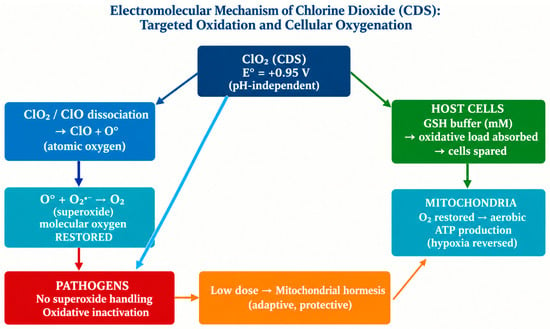
Mechanistic overview. ClO2 acts via one-electron oxidation of microbial targets (thiol oxidation, envelope and nucleic acid damage, respiratory inhibition); host cells are spared through glutathione-dependent redox buffering. The proposed low-dose hormetic response is a hypothesis requiring direct experimental confirmation, as discussed in Section 4.2.
  • Article
  • Open Access

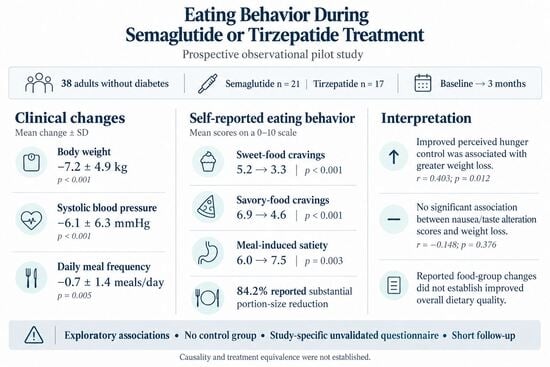
Background: This pilot study evaluated changes in eating behavior, appetite, and dietary habits during semaglutide or tirzepatide treatment in adults with obesity. Methods: In this prospective observational study, 38 non-diabetic adults with obesity (mean age 56.1 ± 11.3 years; 73.7% female; BMI 32.7 ± 4.5 kg/m2) initiating semaglutide (n = 21) or tirzepatide (n = 17) were assessed at baseline and after 3 months. Clinical parameters and self-reported eating behaviors were evaluated using standardized measurements and a study-specific questionnaire. Results: Mean body weight decreased by 7.2 ± 4.9 kg (p < 0.001), and systolic blood pressure decreased by 6.1 ± 6.3 mm Hg (p < 0.001). Cravings for sweet and savory foods, difficulty resisting hunger between meals, and daily meal frequency decreased, whereas perceived meal-induced satiety increased (all p ≤ 0.005). A substantial reduction in meal portion size was reported by 84.2% of participants. Reported food-group consumption changed, but improved overall dietary quality was not established. Conclusions: Over 3 months, incretin-based treatment was accompanied by weight loss and changes in self-reported eating behavior. The observational design, absence of a control group, and unvalidated questionnaire limit interpretation. Larger controlled studies using validated measures are warranted.

Nutrients

5 November 2026

6,457 Views
Absolute percentage changes in the proportion of regular consumers across specific food categories from baseline (T0) to 3 months (T1) (N = 38). Bars extending to the left (red) indicate a reduction in the proportion of participants consuming the specified food item, whereas bars extending to the right (green) reflect an increase. Data were derived from self-reported consumption (“YES” responses) on the structured dietary questionnaire.
  • Article
  • Open Access

Electric drive units are a key component of the powertrain in today’s electric vehicles. As innovations and advancements in the field of electrified powertrains have progressed, the product topologies of the motor and the associated manufacturing techniques have evolved. China has established itself as the leading global market and a pioneer in electric mobility, and is therefore one of the innovation leaders in the field of electric drive units. To identify key manufacturing and product development trends in this globally influential and dynamic Chinese market environment, this paper primarily analyses electric motors from electric vehicles on the Chinese market and compares them with European and U.S. electric motors. To this end, 115 electric traction motors installed in 80 electric vehicles from 2019 through 2025 are subjected to a systematic analysis. The investigation is conducted using a top-down analysis that begins with a macroscopic examination of the electric motor and concludes with a microscopic analysis of individual components at the power electronics, transmission, stator, and rotor levels. The collected and analysed data is then compared with existing data on electric motors from European and U.S. vehicle manufacturers to identify similarities and differences in product design and related manufacturing processes. The main contribution of this study is thus an extended and updated dataset that builds on an existing benchmarking framework and available data.

Energies

6 November 2026

5,599 Views
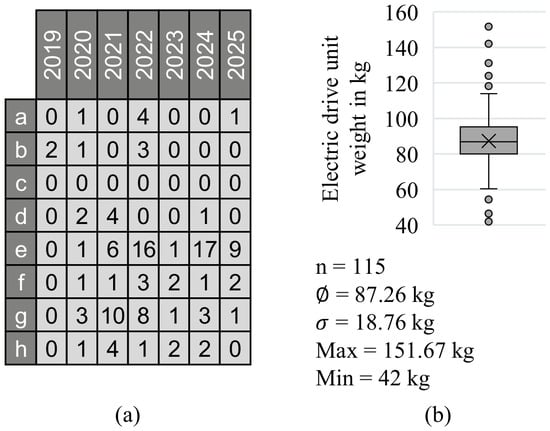
Overview of the different housing structures according to Drexler et al. [25] by model year (a) and an evaluation of the distribution of the electric drive unit’s weight in kilograms (b).

Our Products

Professional networking platform that connects researchers, academics, and scientific professionals, enabling them to showcase their publications, track citations, and collaborate with peers across disciplines worldwide.

Discover

Scientific literature tracking and analysis tool for researchers and institutions. Providing insights on publication trends, citations, and collaborative opportunities.

Discover

Open access book publishing platform for comprehensive scientific works. Offering wide distribution of monographs, edited volumes, and reference works.

Discover

Early sharing of research papers before peer review. Enabling rapid dissemination of findings and community feedback on preliminary work.

Discover

Editor's Choice Articles

  • Review
  • Open Access

Genetic and Molecular Basis of Heat Stress Resilience in Pigs: Mechanisms, Genomic Regions, and Breeding Perspectives

  • Vasileios G. Papatsiros,
  • Georgios I. Papakonstantinou and
  • Georgios Michailidis
  • + 4 authors

Background/Objectives: Heat stress is one of the most economically and physiologically important constraints on pig (Sus scrofa domesticus) production, affecting welfare, reducing feed intake, growth, and reproductive efficiency, while increasing morbidity and mortality; because pigs lack functional eccrine sweat glands and have a limited capacity for evaporative heat dissipation, their ability to cope with high ambient temperature depends heavily on behavioral, physiological, and cellular stress-response mechanisms, which vary among individuals and genetic backgrounds. This review synthesizes current knowledge of the genetic and molecular pathways underlying the pig heat-stress response, spanning the HSF1–heat shock protein axis and epigenetic regulation, as well as genomic regions, candidate genes, nutrigenomic modulation, and reproductive consequences in boars and sows. Methods: A narrative literature review, informed by key principles of the PRISMA 2020 statement, synthesized 58 peer-reviewed transcriptomic, genomic, epigenomic, proteomic, and physiological studies published mainly between 1998 and 2026. Results: Heat exposure activates HSF1-driven heat shock protein transcription, oxidative stress, gut tight-junction disruption, hypothalamic–pituitary proteomic remodeling, and sex-dimorphic apoptotic/inflammatory transcriptional programs that also compromise boar semen quality. GWAS and QTL studies have mapped genomic regions and candidate genes for thermoregulatory, reproductive, and growth traits. At the same time, breed comparisons suggest, but do not prove on their own, a genetic contribution to the smaller physiological responses observed in some tropical and Mediterranean-adapted breeds. Heritability estimates for individual heat-stress-related traits, rather than for heat tolerance as a composite phenotype, range from low (0.02–0.20) for reproductive traits, to moderate (0.35–0.39) for thermoregulatory traits in lactating sows, to moderate-to-high (0.49–0.83) for physiological responses to acute heat challenge in gilts; circulating cortisol (h2 ≈ 0.68) is a heritable biomarker of the stress response rather than a measure of heat tolerance itself. Conclusions: Several traits associated with the response to heat stress in pigs are heritable and polygenic, supporting the potential of genomic selection, reaction-norm modeling, and marker-assisted introgression, although functional validation of candidate genes and larger multi-population studies, together with an explicit definition of heat tolerance as a composite selection objective, remain priorities.

DNA

5 November 2026

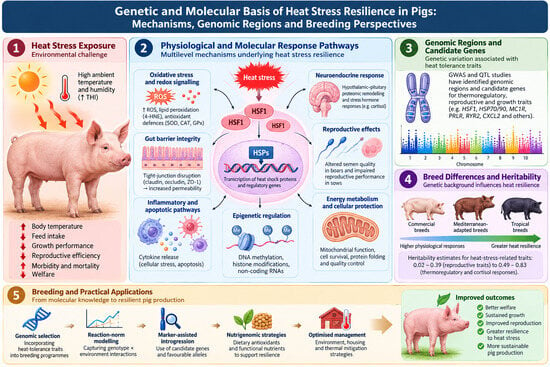
An integrative overview of the genetic and molecular pathways underlying heat-stress resilience in pigs. Environmental heat stress and an elevated temperature–humidity index (THI) impose anatomical and physiological constraints that trigger cellular and molecular stress responses, including heat-shock and oxidative, inflammatory, neuroendocrine, intestinal, and epigenetic pathways. These responses interact with genomic variation, candidate genes, and breed-specific adaptation to influence thermoregulatory, reproductive, growth, health, and welfare phenotypes. The resulting genetic and phenotypic information can support precision phenotyping, genomic selection, reaction-norm modeling, and complementary management and nutrigenomic strategies for improving heat resilience in pigs. The figure integrates direct porcine evidence with conserved mammalian mechanisms and proposed applications discussed throughout the review.
  • Review
  • Open Access

Somatic hematopoietic mutations, particularly clonal hematopoiesis of indeterminate potential (CHIP), represent an emerging link between aging, inflammation and cardiovascular disease beyond their established relevance in hematology. This narrative review examines how acquired mutations in hematopoietic stem and progenitor cells contribute to cardiovascular pathogenesis and how this knowledge may inform precision prevention and therapy. Evidence from experimental, clinical and population studies was synthesized with emphasis on clonal expansion, variant allele fraction, gene-specific mechanisms and cardiovascular phenotypes. The reviewed data indicate that driver mutations in DNMT3A, TET2, ASXL1, JAK2, TP53 and PPM1D can promote chronic myeloid inflammation, NLRP3/IL-1β and IL-6 signaling, endothelial dysfunction, atherosclerotic plaque instability, myocardial fibrosis, adverse remodeling, thrombosis, arrhythmias and cardio-oncology complications. The cardiovascular impact of CHIP appears heterogeneous and depends on the mutated gene, clone size, inflammatory phenotype, age, sex, treatment exposures and traditional risk factors. Anti-inflammatory, antithrombotic and mutation-oriented strategies, including IL-1β/NLRP3 blockade and pathway-specific approaches, are promising but remain incompletely validated. Somatic hematopoietic mutations should be considered cardiovascular risk modifiers rather than uniform disease entities. Future studies are needed to define screening thresholds, clinical utility and safety of CHIP-guided risk stratification and targeted therapy.

Cardiogenetics

3 November 2026

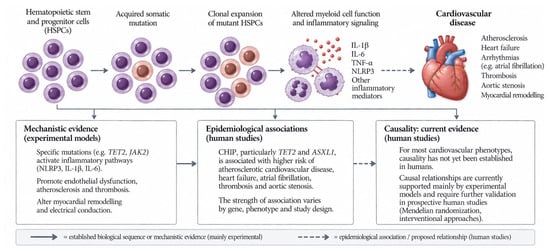
Clonal Expansion and Stepwise Mutation Accumulation in Hematopoietic Stem and Progenitor Cells. This figure illustrates the biological basis of clonal hematopoiesis, showing how acquired somatic mutations in hematopoietic stem and progenitor cells (HSPCs) can confer a selective advantage, leading to clonal expansion and altered myeloid cell function and inflammatory signaling. Clonal hematopoiesis of indeterminate potential (CHIP), particularly involving mutations in TET2 and ASXL1, has been associated with an increased risk of cardiovascular disease, including atherosclerosis, heart failure, arrhythmias, thrombosis, aortic stenosis, and myocardial remodeling. Experimental studies support potential mechanistic links between specific mutations, inflammation, endothelial dysfunction, and cardiovascular pathology. However, epidemiological associations do not establish causality, and causal relationships remain incompletely demonstrated in humans. Further accumulation of somatic mutations may also contribute to progression toward hematologic malignancy, although this process is not depicted explicitly in the figure. Abbreviations: HSPCs, hematopoietic stem and progenitor cells; CHIP, clonal hematopoiesis of indeterminate potential; IL, interleukin; TNF-α, tumor necrosis factor alpha; NLRP3, NLR family pyrin domain containing 3.
  • Review
  • Open Access

Organic aerosol constitutes a major fraction of atmospheric particulate matter. Secondary organic aerosol (SOA), which is formed through the atmospheric aging of volatile organic compounds (VOCs), semi-volatile organic compounds (SVOCs), and intermediate-volatility organic compounds (IVOCs), has important impacts on air quality, climate, and human health. Biomass burning emits a chemically complex mixture of gaseous and particulate organic compounds, which serve as a major source of SOA precursors. These compounds undergo coupled aging processes involving gas–particle partitioning, re-volatilization, multiphase reactions, and radical-initiated oxidation, thereby contributing to SOA formation. However, the formation pathways of SOA from biomass-burning precursors and the relative contributions of different precursor classes remain poorly understood. Oxidation flow reactors (OFRs), characterized by high oxidant exposure, short residence times, and the ability to simulate several days or even weeks of equivalent atmospheric aging within minutes, have become an important experimental platform for investigating SOA formation from biomass-burning emissions. This review systematically summarizes the structural configurations, construction materials, and oxidant systems of OFRs, with particular emphasis on their applications in studying SOA formation from the aging of VOCs, SVOCs, and IVOCs emitted from biomass burning. Briefly described the characteristics of OFRs and smog chambers in atmospheric simulation. Finally, current challenges in applying OFRs to biomass-burning SOA research are discussed, and future research priorities are proposed to improve their atmospheric representativeness and mechanistic interpretation.

Atmosphere

30 October 2026

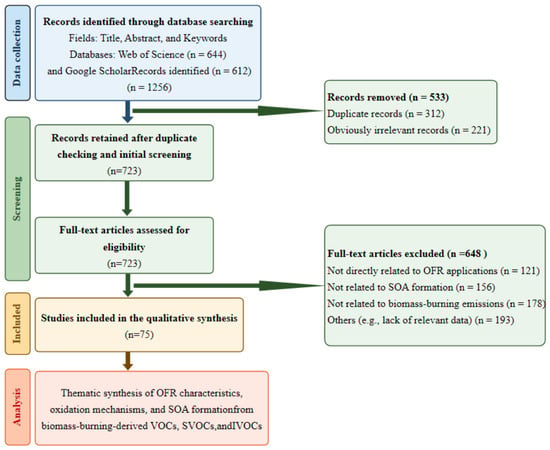
Shows the methodology used to choose the publications that were reviewed.
  • Article
  • Open Access

The Source–Environment–Response (SER) framework introduced a decomposition of radon transport into source-driven and environmental components, but treated the environment as a passive correction rather than an active memory accumulator. We present QSER (Generalized Source–Environment–Response), which extends the SER framework by making memory a central property of the radon transport phenomenon. The framework separates the governing transport operator into conservative (advective) and dissipative (diffusive and decay) parts, revealing the observed concentration as the difference between a conservative source field S and an environmental field E that accumulates the history of dissipative interactions. The continuity equation quantifies how the two fields interact to produce the observed concentration, and dissipation is the mechanism that writes history into E. For the forward case, the QSER steady plume is consistent with the Gaussian-plume structure of industry-standard atmospheric dispersion models (e.g., RESRAD-OFFSITE), exactly at the level of the Gaussian and sector structure and structurally at the level of the model-specific closures. For the inverse case, three routes are formulated and compared. The direct route exactly recovers the traditional fitting method, and the flexibility of QSER is demonstrated. QSER allows for hybridization with different methods and adds a physical layer to current forward and inverse approaches, giving additional insight into how radon transport processes evolve. The framework supports parameter estimation for radon monitoring applications in lithosphere–atmosphere coupling, earthquake precursor studies, uranium exploration, and atmospheric transport.

Atmosphere

30 October 2026

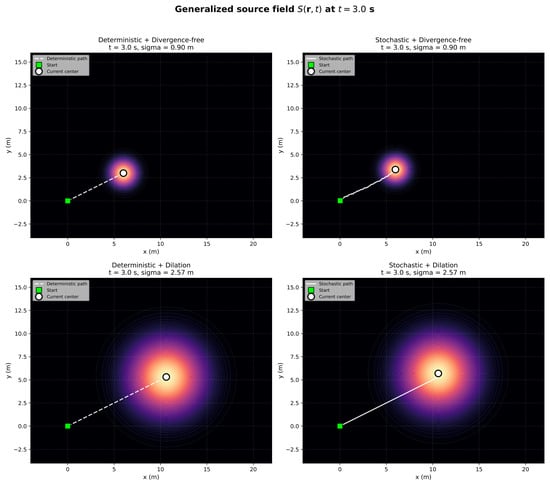
Four realizations of the generalized source field 
  
    S
    (
    r
    ,
    t
    )
  
 at 
  
    t
    =
    3.0
  
 s, obtained from the conservative form 
  
    
      ∂
      t
    
    S
    +
    ∇
    ·
    
      (
      v
      S
      )
    
    =
    F
  
. The top row shows divergence-free flow; the bottom row shows dilation flow. In all panels, the green square marks the initial source position and the white circle marks the instantaneous source center. Total mass 
  
    
      M
      S
    
    
      (
      t
      )
    
    =
    ∫
    S
    
    d
    r
    =
    
      F
      0
    
    H
    
      (
      t
      )
    
  
 is conserved in all four cases to within grid resolution.