




Nutrients, Volume 17, Issue 23 (December-1 2025) – 179 articles
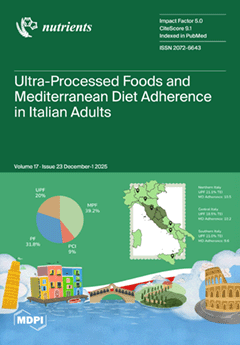
Cover Story (view full-size image):
Ultra-processed foods (UPFs) are increasingly prevalent in daily food choices, yet updated evidence for Italy are limited. In this nationwide survey of 1629 adults, we quantified UPF intake using the NOVA classification and explored how consumption varies across sociodemographic factors and adherence to the Mediterranean Diet (MD). UPFs contributed about 20% of total energy intake, with lower consumption among older individuals and those living in Central and Southern Italy. An inverse association between UPF intake and MD adherence emerged, underscoring the protective role of Italy’s traditional dietary pattern. View this paper
- Issues are regarded as officially published after their release is announced to the table of contents alert mailing list.
- You may sign up for e-mail alerts to receive table of contents of newly released issues.
- PDF is the official format for papers published in both, html and pdf forms. To view the papers in pdf format, click on the "PDF Full-text" link, and use the free Adobe Reader to open them.
Previous Issue
Next Issue
