Abstract
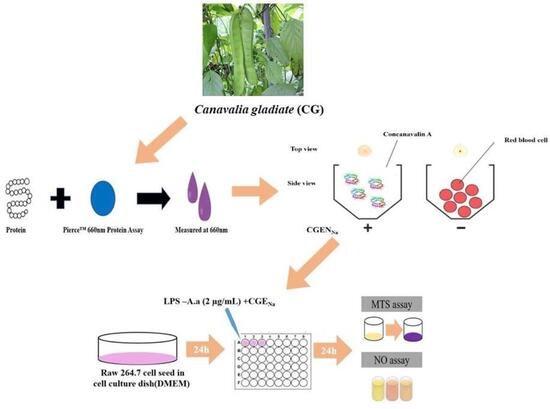
Objectives: Canavalia gladiata (Jacq.) DC. (C. gladiata) has been used in traditional medicine to treat suppurative inflammatory conditions. Its antibacterial activity against oral pathogens and potential use as a non-alcoholic mouthwash have also been reported. This study aimed to elucidate the biological activity of Con A from C. gladiata, evaluate nitric oxide (NO) production induced by Aggregatibacter actinomycetemcomitans (A. actinomycetemcomitans), and as-sess its potential association with periodontal inflammation. Methods: In this study, a 0.5 M NaCl extract of C. gladiata (CGENa) was prepared, and its protein content was quantified. The Concanavalin A equivalent (Con Aeq.) of CGENa was determined via a hemagglutination assay, and its effect on NO production was evaluated in RAW 264.7 macrophages stimulated with lipopolysaccharide (LPS-A.a.) derived from A. actinomycetemcomitans. LPS was extracted from six A. actinomycetemcomitans strains and used to induce inflammatory activation. Result: CGENa treatment significantly inhibited LPS-induced NO production at concentrations below 6.25 μg/mL without cytotoxic effects, suggesting an anti-inflammatory potential associated with lectin-like components. Conclusions: These results suggest that C. gladiata extract suppresses LPS-A.a.-mediated macrophage activation. Further studies are required to determine whether Con A specifically mediates this response and to evaluate its therapeutic relevance in the context of periodontal inflammation.
1. Introduction
Canavalia gladiata (Jacq.) DC. (C. gladiata), commonly known as sword bean, is native to tropical regions of East Asia and is currently cultivated in Korea []. The Jack bean contains non-protein amino acids such as Canavanine and Concanavalin A (Con A), as well as hemagglutinins found in many leguminous plants []. The Con A protein is a lectin, characterized by its ability to specifically bind to sugars on the cell surface and to be specifically inhibited by sugars []. Nevertheless, in Korea and Japan, the seeds and pods of C. gladiata have been used as a coffee substitute [,,]. In folk medicine, C. gladiata has been employed to treat suppurative inflammatory conditions such as sinusitis, hemorrhoids, and boils, and its anticancer and antidiabetic activities have also been reported [,,,]. Moreover, C. gladiata exhibits strong antioxidant properties, and ethanol extracts have demonstrated anti-inflammatory effects in dextran sulfate sodium (DSS)-induced colitis models [,].
Recent studies further indicate notable antibacterial activities of C. gladiata against several pathogenic microorganisms. These include the methyl gallate–dependent inhibition of Staphylococcus aureus by methanolic extracts []; methanol or ethanol extract–mediated inhibition of foodborne pathogens such as S. aureus, Vibrio parahaemolyticus, and Shigella sonnei []; and the antibacterial activity of 80% ethanol extracts against Vibrio vulnificus and V. cholerae, with no inhibitory effect observed against Streptococcus mutans []. In addition, recent evidence—including that of the present study—demonstrates that sword bean extracts suppress the growth of Porphyromonas gingivalis and Fusobacterium nucleatum, as well as inhibit gingipain (Rgp and Kgp) activities, highlighting its potential as a natural agent for oral infection control and periodontal disease prevention []. Although the antimicrobial and anti-inflammatory properties of C. gladiata have been documented, most previous studies employed ethanol or methanol extraction. In contrast, the present study utilized a 0.5 M NaCl extraction to obtain Con A–containing preparations from C. gladiata, thereby enabling a focused evaluation of its lectin-associated bioactivity.
The Gram-negative oral bacterium Aggregatibacter actinomycetemcomitans (A. actinomycetemcomitans) plays a significant role in periodontal disease, particularly during the destructive phase involving rapid gingival and alveolar bone destruction [,]. The lipopolysaccharide of A. actinomycetemcomitans (LPS-A.a.) is a potent substance that induces the secretion of pro-inflammatory mediators from various cells, including epithelial cells, fibroblasts, and macrophages [,,]. It has been reported that LPS-A.a. induces nitric oxide (NO) production in a macrophage cell line (J774) at concentrations 100 times lower than LPS derived from enteric bacteria []. Catalyzed by the three isoforms of NOS—neuronal NOS (nNOS), endothelial NOS (eNOS), and inducible NOS (iNOS)—L-arginine is metabolized into the gaseous molecule NO, which plays a crucial role in the cardiovascular, nervous, and immune systems []. Increased expression of iNOS has been reported in inflamed human periodontal tissues [,] and in experimental periodontitis in animal models [,], suggesting that oral bacteria such as A. actinomycetemcomitans, which induce periodontal tissue destruction [], are responsible for the increased iNOS expression in periodontal tissues. This study aimed to characterize the biological activity of Con A derived from C. gladiata and to assess its potential association with periodontal inflammation by evaluating NO production induced by A. actinomycetemcomitans.
2. Methods
2.1. Extraction of Canavalia gladiata with 0.5 M NaCl (CGENa)
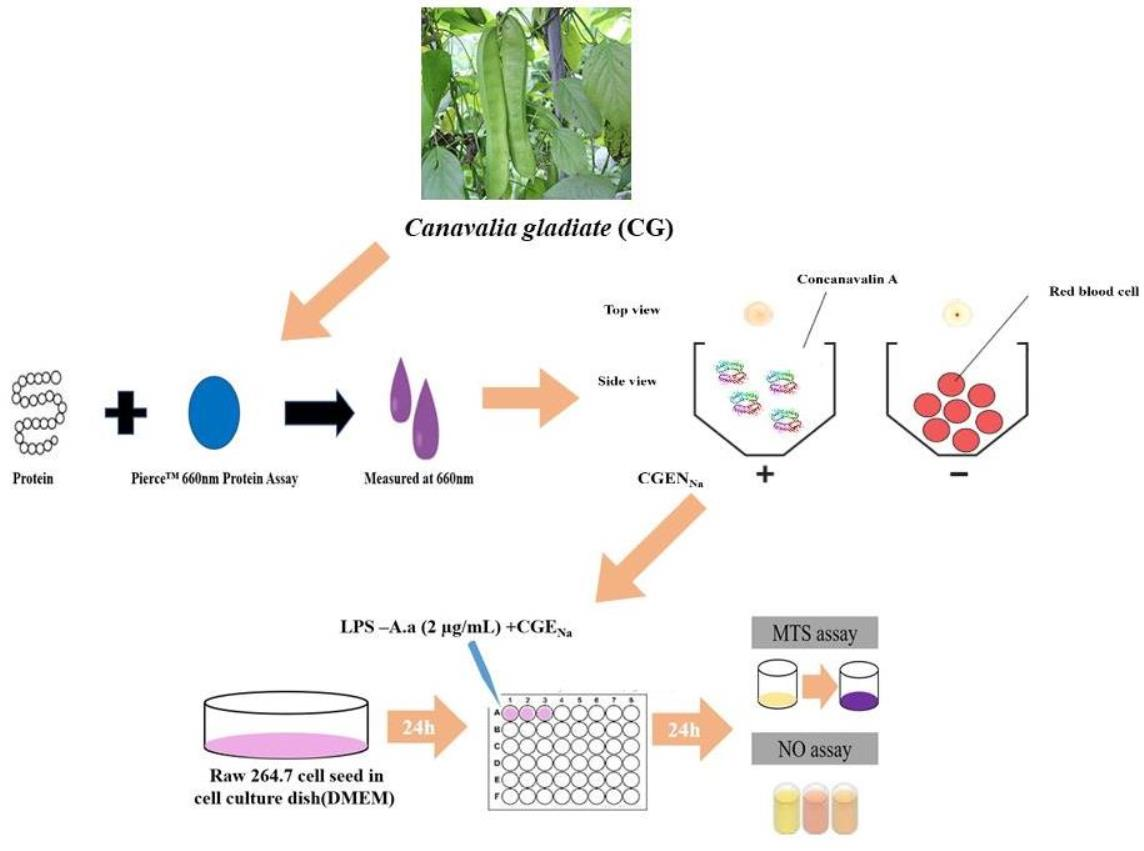
Dried C. gladiata was purchased from Greenload Co. (Iksan, Republic of Korea) identified by Dr. Seung Il Jeong at the Jeonju Agrobio-materials Institute (Jeonju, Republic of Korea) and stored at 4 °C until use. Voucher specimen (no: 3-05-23) was stored in the Herbarium of the Department of Oral Biochemistry, School of Dentistry, at Wonkwang University. C. gladiata was pulverized using a grinder (Hanil Mixer, Gimpo, Republic of Korea), and 400 g of the powder was extracted in 500 mL of 0.5 M NaCl for 72 h at 4 °C. The mixture was then filtered through filter paper (Grade 5, 2.5 µm, Whatman International Ltd., Maidstone, UK) and centrifuged at 10,000 rpm for 20 min at 4 °C. After the resulting supernatant was filtered through a syringe filter, the protein concentration was determined using the Pierce™ 660nm Protein Assay Kit (Thermo scientific, Rockford, IL, USA) to standardize the protein content of the extract. The final concentration was adjusted with buffer, and the prepared extract was stored at −70 °C until use.
2.2. Chemicals and Reagents
3-(4,5-Dimethylthiazol-2-yl)-5-(3-carboxymethoxyphenyl)-2-(4-sulfophenyl)-2H-tetrazolium (MTS) was purchased from Promega (Madison, WI, USA). Griess Reagent (1% sulfanilamide in 5% H3PO4, 0.1% N-(1-naphthyl)-ethylenediamine dihydrochloride).
2.3. Bacterial Strains
A. actinomycetemcomitans ATCC 25923, 25922, and 33384 were purchased from the ATCC (Manassas, VA, USA). A. actinomycetemcomitans strains 1304, 1306, and CO114, isolated from Korean Collection of Oral Microbiology in Chosun University (Gwangju, Republic of Korea). The strains were cultured on Brain Heart Infusion (BHI) (Difco Laboratories, Detroit, MI, USA) at 37 °C in a 5% CO2 incubator.
2.4. Preparation of Erythrocytes
Erythrocytes were collected from rats. Whole blood samples were collected in centrifuge tubes containing an anticoagulant (sodium heparin), immediately washed five times with PBS (pH 7.2), and centrifuged at 1000 rpm for 30 min. The erythrocytes were resuspended in PBS and stored at 4 °C for experimental use. Animal welfare and experimental procedures were approved by the Institutional Review Board (IRB) of Wonkwang University (IRB No.: WKU25-60).
2.5. Hemagglutination Assay
Hemagglutination activity was assessed according to the technique described by Yunfei Zhang []. Briefly, the assay was performed using 96-well V-bottom microtiter plates (SPL, Pocheon, Republic of Korea). The CGENa (25 µg/mL) and Con A (1.67 µg/mL, hemagglutination standard) were prepared by serial two-fold dilutions in PBS, after which an equal volume (50 μL) of erythrocytes (1% v/v) in PBS was added to each well. The plates were incubated for 1 h at 4 °C or 37 °C, until the erythrocytes in the negative control wells had completely precipitated.
2.6. Extraction of A. actinomycetemcomitans LPS
A. actinomycetemcomitans was centrifuged at 12,000 rpm at 4 °C to completely remove the medium, and the pellet was washed three times with PBS. Lipopolysaccharide (LPS) from washed A. actinomycetemcomitans cells was extracted using a commercial LPS Extraction Kit (iNtRON Biotechnology, Seongnam, Republic of Korea) according to the manufacturer’s instructions. Briefly, 1 × 10⁹ A. actinomycetemcomitans cells were used for each extraction. The resulting LPS pellet was dissolved in 30 μL of 10 mM Tris-HCl buffer (pH 8.0) and stored at −20 °C until analysis. The working concentration of LPS-A.a. was set to 30 μg, based on the yield provided for E. coli in the manufacturer’s guidelines.
2.7. Cytotoxicity Assessment
To evaluate the cytotoxicity of CGENa, RAW 264.7 cells (KCLB 40069, Korean Cell Line Bank, Seoul, Republic of Korea) were seeded in a 24-well plate at a density of 1.0 × 10⁵ cells/well and stabilized for 24 h. The cells were then treated with the extract at various concentrations (3.125, 6.25, 12.5, 25, and 50 µg/mL) and incubated for 48 h. After incubation, 3-(4,5-dimethylthiazol-2-yl)-5-(3-carboxymethoxyphenyl)-2-(4-sulfophenyl)-2H-tetrazolium (MTS, Promega, Fitchburg, WI, USA) reagent was added to the culture medium, and after 4 h, the absorbance was measured at 490 nm using an ELISA microplate reader.
2.8. Nitric Oxide Measurement
RAW 264.7 cells were seeded in a 24-well cell culture plate at a density of 1 × 10⁵ cells/mL per well and incubated for 24 h at 37 °C in a 5% CO2 incubator. To evaluate the post-treatment efficacy of CGENa on activated macrophages, RAW 264.7 cells were first stimulated with LPS-A.a. (2 µg/mL) for 1 h to initiate an inflammatory response, followed by treatment with CGENa for 48 h. The amount of NO produced was then measured by reading the absorbance at 570 nm using the Griess reagent [].
2.9. Statistical Analysis
All experiments were performed in triplicate. Data were analyzed using the SPSS software (Statistical Package for the Social Sciences, version 19.5) and are presented as the mean ± standard deviation (SD). One-way analysis of variance (ANOVA) was conducted to evaluate differences among groups, followed by Tukey’s multiple-comparison test to determine statistical significance between individual means. Differences with a p-value of less than 0.05 were considered statistically significant.
3. Results
3.1. Analysis of Con Aeq in CGENa
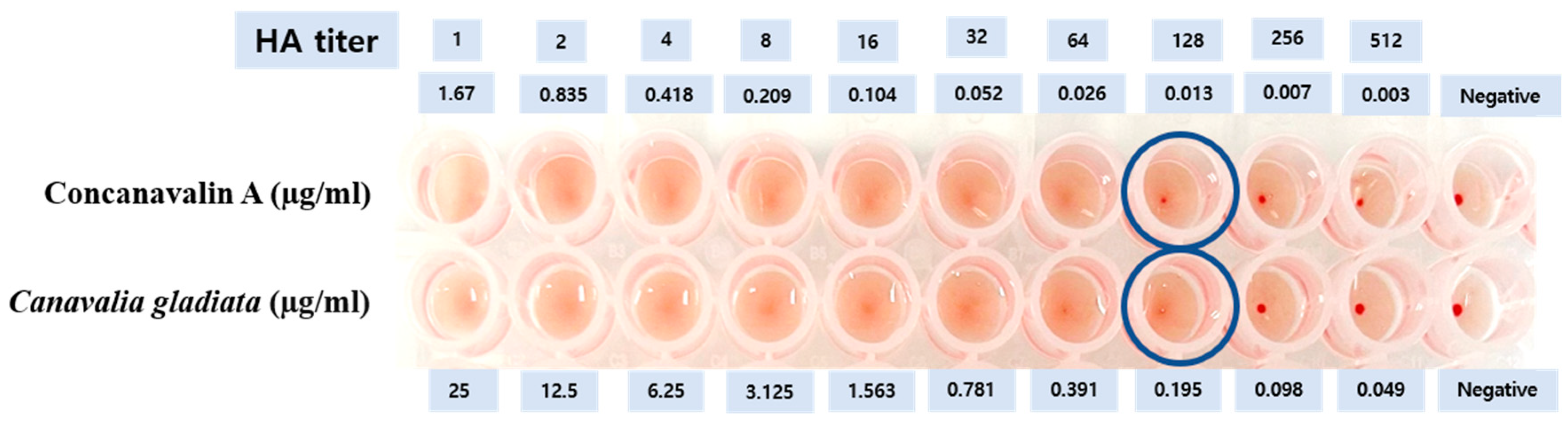
The Con A equivalent content (Con Aeq) of CGENa was determined using a hemagglutination-based functional assay, following previously established protocols [,]. This assay provides a relative index of lectin activity (Con Aeq) in comparison with standard Con A, and the values obtained reflect biofunctional equivalence rather than absolute quantification. In this study, the Con A content of CGENa was analyzed via a hemagglutination assay. The hemagglutination activity was compared to a Con A standard and converted to Con Aeq []. The calculation formula, based on a previous method [], is presented below. According to the formula, 25 µg/mL of CGENa yielded 1.67 µg/mL of Con Aeq (Table 1, Figure 1). In this study, considering the cytotoxicity profile of CGENa, a concentration of 6.25 μg/mL was selected for subsequent experiments. At this concentration, the extract was determined to contain 0.4175 μg/mL of Con A equivalents (Con Aeq).
Table 1.
Con A content of CGENa.
Figure 1.
Determination of Con Aeq using the hemagglutination assay (HA). The wells indicated by circles represent the minimum concentration that exhibits hemagglutination.
The formula for calculating Con Aeq (Con A-equivalent) is as follows:
CCon A-eq = MACstd × Tsample = 26.09375 ng/mL × 64 = 1.67 µg/mL
C0,std: Initial concentration of standard (Con A = 1.67 µg/mL);
T: Titer of Con A (Titer = 64);
MACstd (ng/mL): Minimum agglutination concentration of Con A;
Tsample: Reciprocal of sample titer (Titer = 64).
All assays were performed in triplicate to ensure reproducibility.
3.2. Cytotoxicity Assessment of CGENa
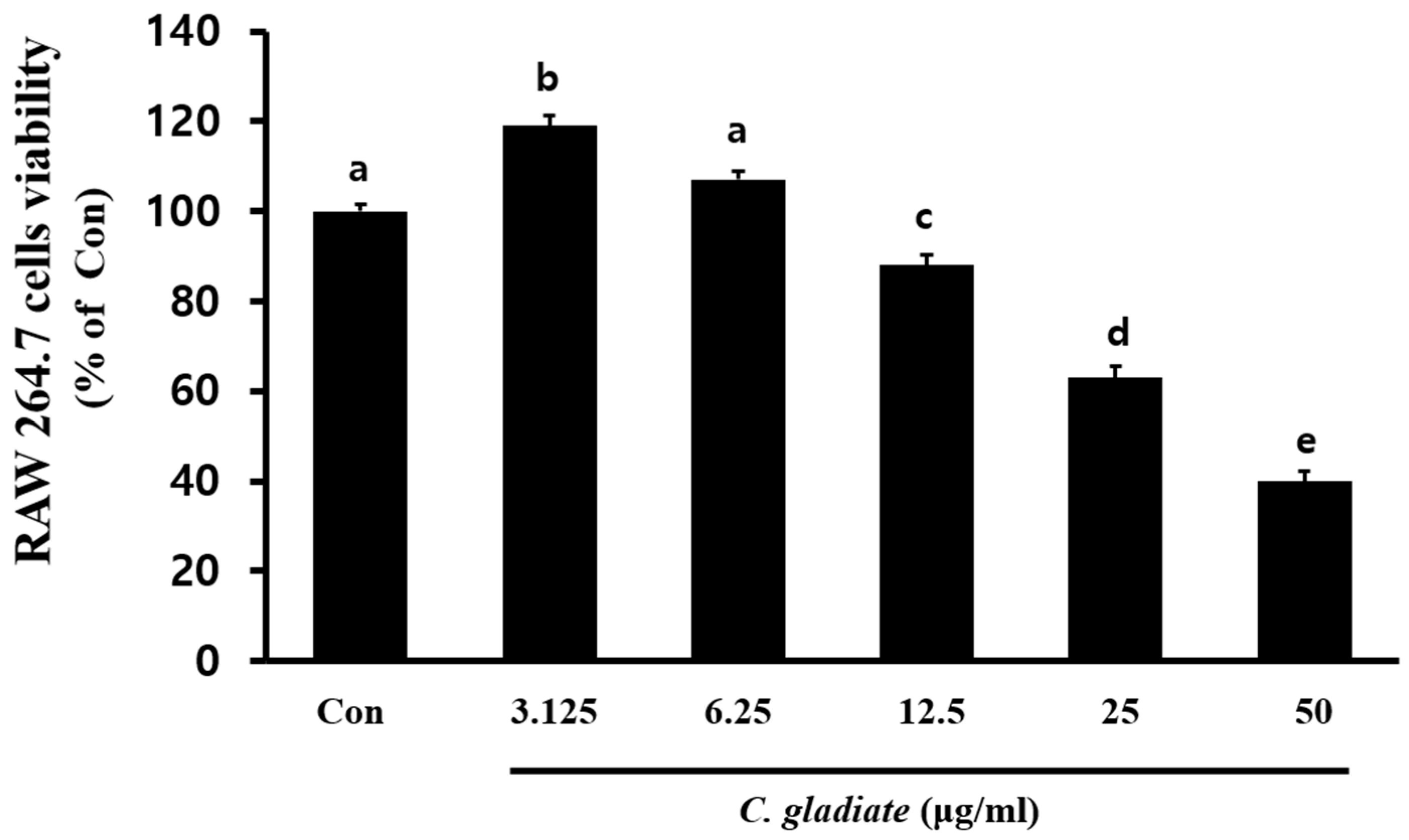
To evaluate the cytotoxicity of CGENa on RAW 264.7 macrophages, the cells were treated with various concentrations of CGENa (3.125, 6.25, 12.5, 25, and 50 µg/mL), and cell viability was measured using the MTS assay. As a result, cell viabilities were observed to be 119 ± 2.4, 107 ± 1.8, 88 ± 2.3, 63 ± 2.5, and 40 ± 2.1% relative to the control group, respectively, indicating no toxic effects at concentrations of 6.25 µg/mL or less. A minor elevation of NO levels was observed at the lowest CGENa concentration (3.125 µg/mL), possibly due to transient macrophage activation or assay variability. Thus, the slight increase at 3.125 µg/mL may reflect the lower end of such a biphasic response curve rather than a genuine pro-inflammatory effect (Figure 2).
Figure 2.
Cytotoxic effect of CGENa on RAW 264.7 cells. Cell viability was tested using the MTS assay. Data represent the results of three independent experiments and are expressed as the mean ± SD. Different superscript letters (a–e) denote statistically significant differences among treatment groups, as determined by one-way ANOVA followed by Tukey’s multiple comparison test (p < 0.05).
3.3. Analysis of NO Production by Con A, an Active Component of C. gladiata, in RAW 264.7 Cells
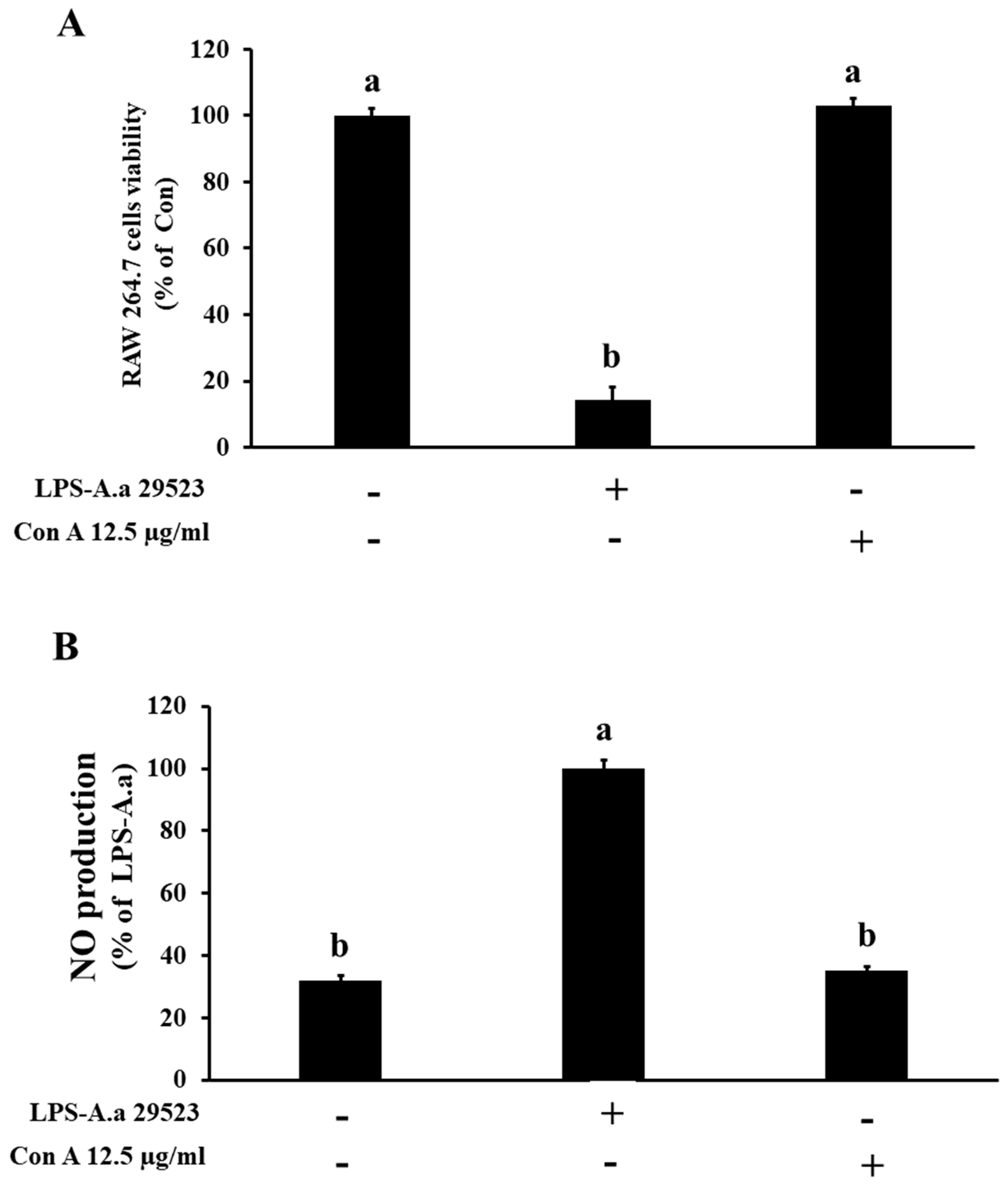
To evaluate the effect of Con A, an active compound of C. gladiata, on NO production, RAW 264.7 cells were treated with LPS-A.a. (ATCC 25923; 2 µg/mL) or Con A (12.5 µg/mL). Cytotoxicity and NO generation were assessed. Unlike preventive assays where compounds are applied before LPS exposure, this study employed a post-treatment design to examine whether CGENa could attenuate ongoing inflammatory responses, reflecting a therapeutic relevance for established inflammation. Compared with the control (100 ± 2.1%), cell viability decreased markedly after LPS treatment (14.2 ± 3.8%), whereas Con A maintained normal viability (103 ± 2.3%). NO analysis showed that, relative to the LPS group (100 ± 2.6%), the control and Con A (12.5 µg/mL) treatments produced 32.1 ± 1.5% and 35.2 ± 1.2%, respectively (Figure 3).
Figure 3.
Inhibitory effects of Con A on NO production induced by LPS-A.a. in RAW 264.7 macrophages (ATCC strain 29523). (A) Cell viability measured by the MTS assay. (B) NO production measured using the Griess reagent. Cells were treated with 2 µg/mL LPS and 12.5 µg/mL Con A for 48 h. Data represent the mean ± SD (n = 3). Superscript letters (a, b) indicate statistically significant differences between groups according to one-way ANOVA followed by Tukey’s multiple comparison test (p < 0.05). +: Treatment, -: No treatment.
3.4. Inhibitory Effect of CGENa on NO Production in RAW 264.7 Cells
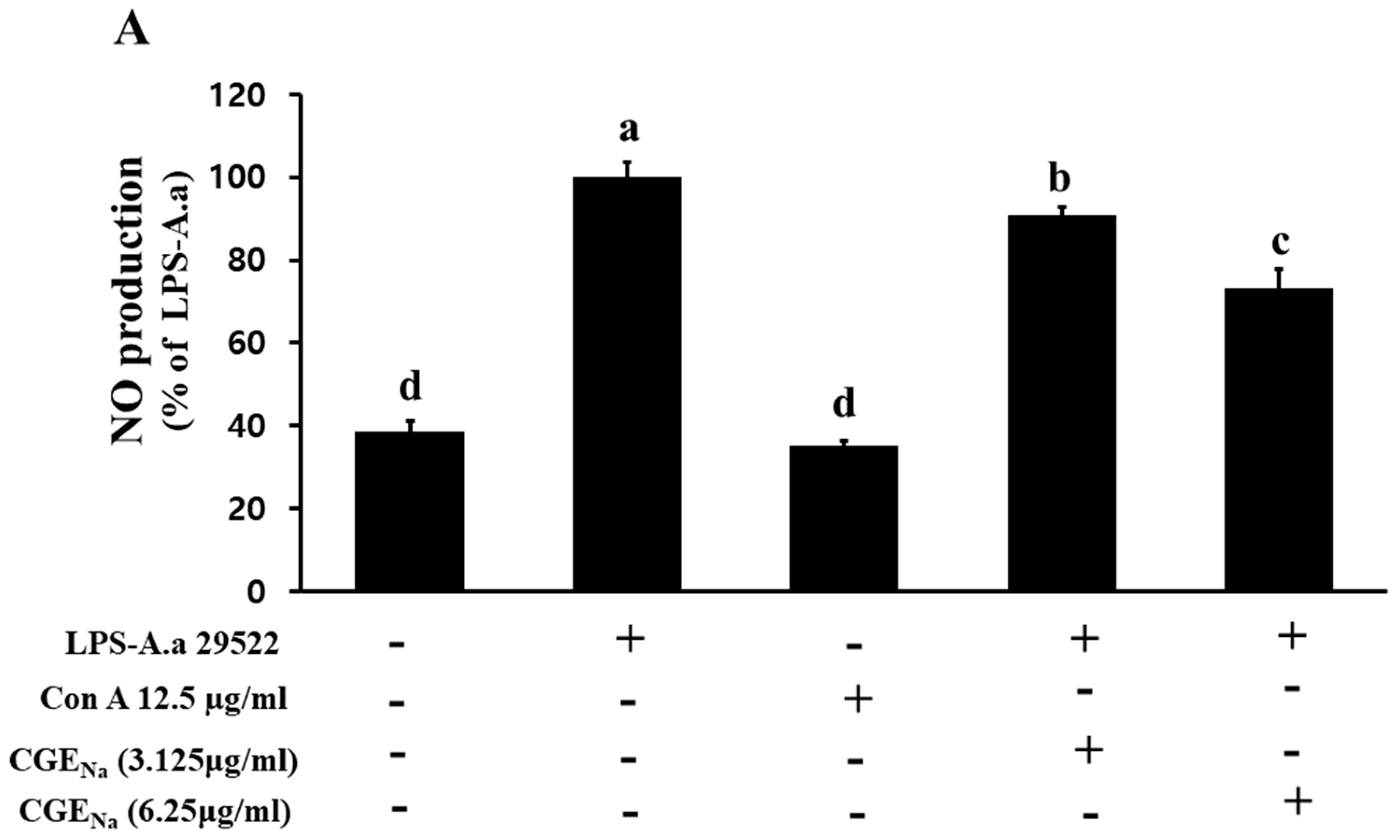
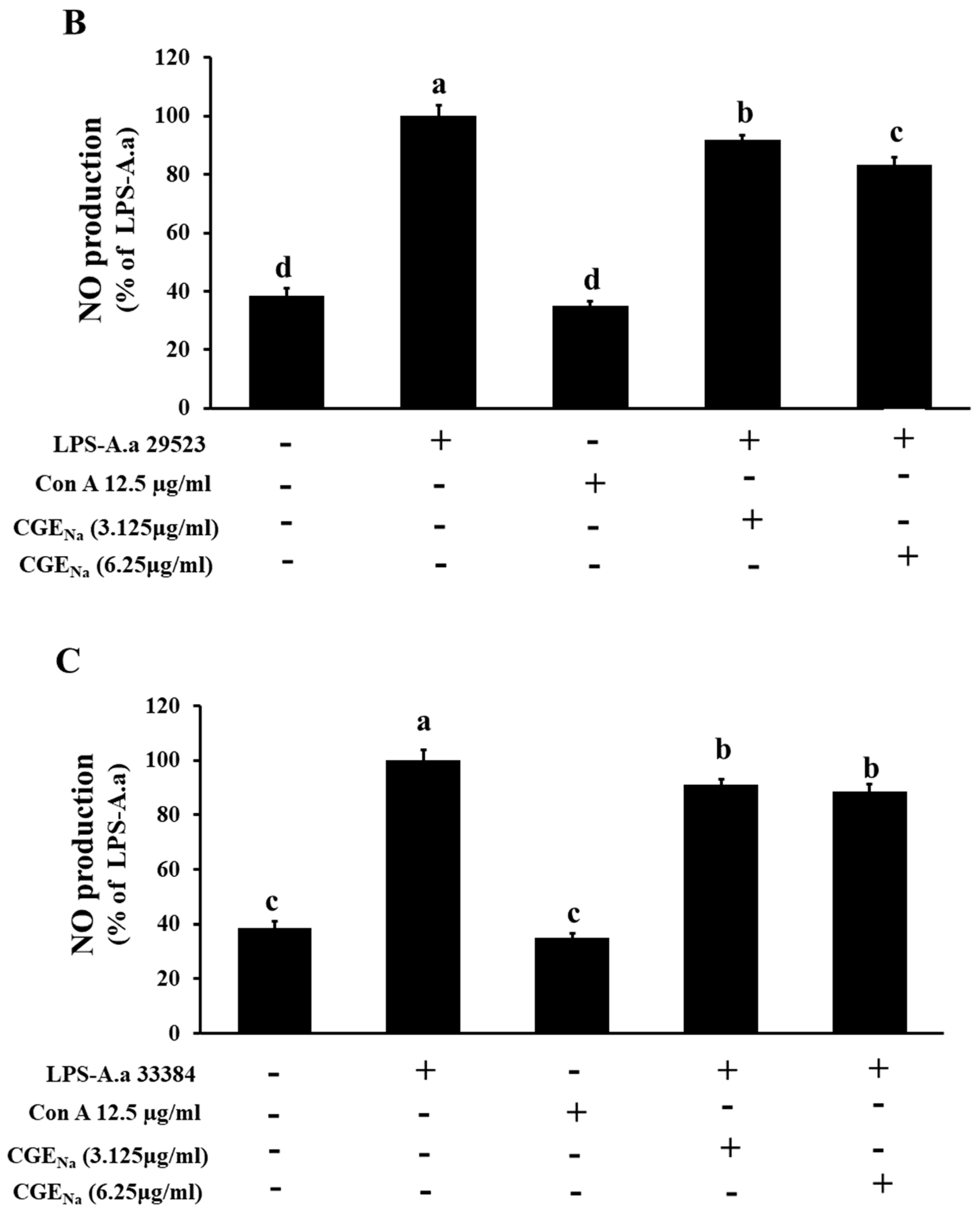
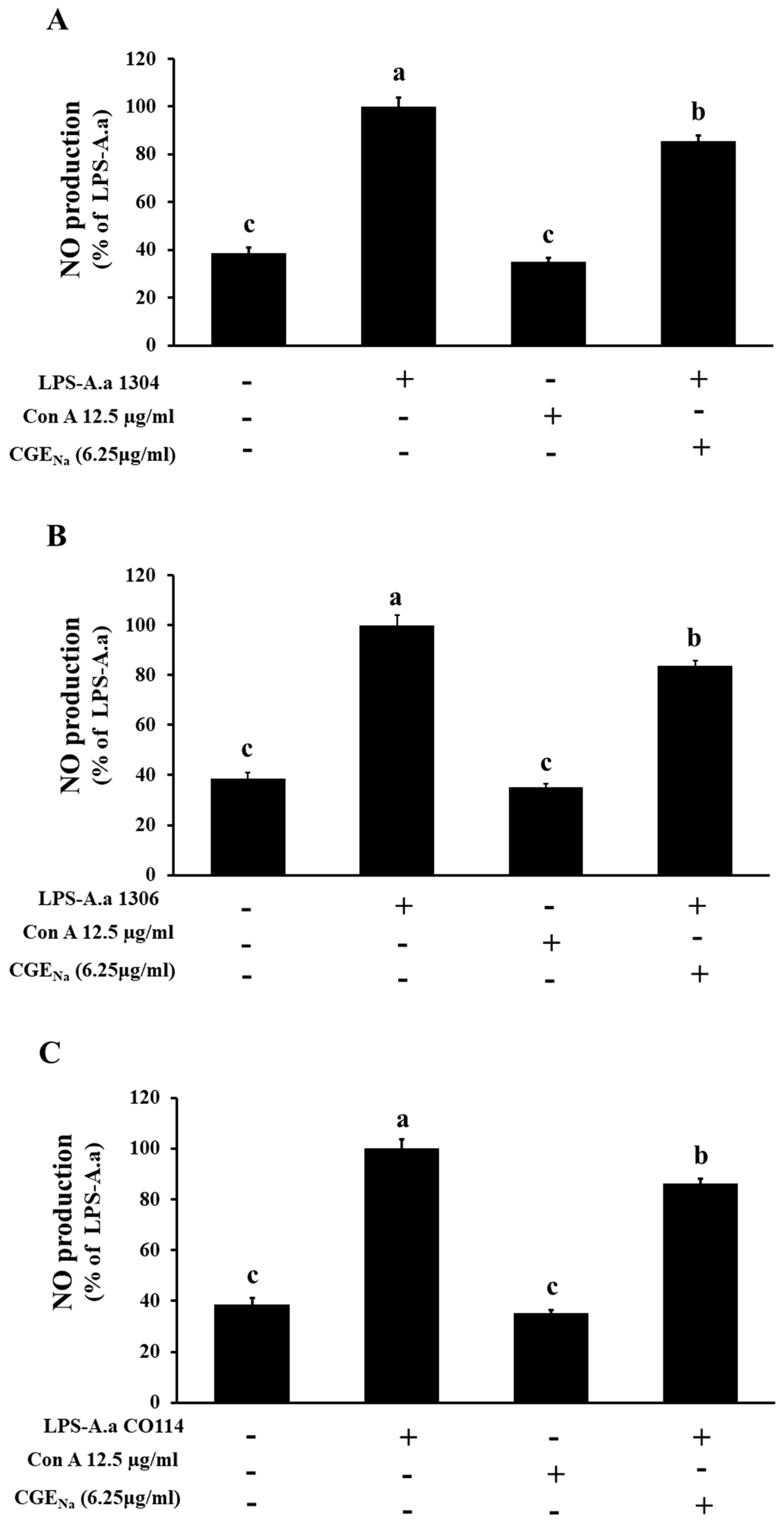
To evaluate the inhibitory effect of CGENa on NO production, LPS (2 µg/mL) extracted from both A. actinomycetemcomitans ATCC reference strains and Korean clinical isolates were used to stimulate RAW 264.7 macrophages for 1 h. Subsequently, the cells were treated with CGENa at concentrations of 3.125 and 6.25 µg/mL and incubated for 48 h. The NO content in the culture supernatants was then quantified using the Griess reagent. As shown in Figure 4 and Figure 5, treatment with 3.125 µg/mL CGENa resulted in NO inhibition rates of 90.8 ± 2.1%, 91.9 ± 1.5%, and 91.0 ± 2.1% against LPS derived from ATCC strains 29522, 29523, and 33384, respectively. At 6.25 µg/mL, the inhibition rates were 73.2 ± 4.8%, 83.5 ± 2.4%, and 88.6 ± 2.7% for the same strains. Similarly, LPS extracted from the Korean isolates (strains 1304, 1306, and CO114) showed inhibition rates of 85.6 ± 2.2%, 82.6 ± 4.2%, and 86.4 ± 3.2%, respectively, when treated with 6.25 µg/mL CGENa. These results clearly demonstrate that CGENa effectively sup-presses NO production induced by LPS from both reference and clinically isolated A. actinomycetemcomitans strains (Figure 4 and Figure 5).

Figure 4.
Inhibitory effects of CGENa on nitric oxide (NO) production induced by LPS-A.a. in RAW 264.7 macrophages (ATCC strains 29522; (A), 29523; (B), and 33384; (C)). Experimental conditions are shown in Figure 3. Cells were stimulated with 2 µg/mL LPS for 1 h and then treated with 3.125 or 6.25 µg/mL CGENa for 48 h. NO production in culture supernatants was quantified using Griess reagent. Data represent the mean ± SD (n = 3). Each superscript (a–d) indicates a statistically significant difference between treatment groups, as determined by one-way ANOVA followed by Tukey’s multiple comparison test (p < 0.05). +: Treatment, -: No treatment.
Figure 5.
Effect of CGENa on nitric oxide (NO) production induced by LPS from Korean clinical isolates of A. actinomycetemcomitans (1304; (A), 1306; (B), and CO114; (C)). Experimental conditions are shown in Figure 4. The Korean isolate was treated only with CGENa, a concentration of 6.25 µg/mL, which exhibits a pronounced NO inhibitory effect. Data represent the mean ± SD (n = 3). Each superscript (a–c) indicates a statistically significant difference between treatment groups, as determined by one-way ANOVA followed by Tukey’s multiple comparison test (p < 0.05). +: Treatment, -: No treatment.
The data in Table 2 were analyzed using one-way ANOVA followed by Tukey’s post hoc test (p < 0.05). Within each A. actinomycetemcomitans strain group, means labeled with different superscript letters (a–c) indicate statistically significant differences. Across all strains (ATCC 29522, 29523, 33384, 1304, 1306, and 114), treatment with LPS alone markedly increased NO production, which was normalized to 100 ± 3–5% (superscript c). In contrast, both the control and Con A (12.5 µg/mL) groups showed similarly low basal NO levels (approximately 35–39%), and these values were statistically identical (superscript a), indicating that Con A itself did not stimulate NO production. Notably, CGENa (6.25 µg/mL) significantly reduced LPS-induced NO production in all tested strains, showing intermediate values (73–89%) that were statistically distinct from both the LPS group (c) and the control/Con A groups (a) (superscript b). This pattern confirms that CGENa exerted a measurable inhibitory effect on NO production triggered by LPS-A.a. (Table 2).
Table 2.
Inhibitory effect of CGENa (6.25 µg/mL) on NO production induced by LPS-A.a.
4. Discussion
A. actinomycetemcomitans is one of the many bacterial species that constitute the oral microbiota []. Since the first reported case of endocarditis caused by A. actinomycetemcomitans in 1964 [,], this organism—although primarily an oral commensal—has been recognized as an opportunistic pathogen capable of causing a variety of systemic infections, including endocarditis, arthritis, meningitis, osteomyelitis, and pulmonary abscesses []. Periodontal disease is an inflammatory disorder of the tooth-supporting tissues that is primarily initiated by biofilm-forming oral bacteria such as A. actinomycetemcomitans []. The lipopolysaccharide (LPS) of A. actinomycetemcomitans acts as a potent virulence factor, triggering the release of inflammatory mediators that promote alveolar bone resorption []. Although antimicrobial agents have been investigated for their therapeutic efficacy in treating A. actinomycetemcomitans-associated periodontitis [], the increasing prevalence of antibiotic resistance has highlighted the urgent need to develop novel therapeutic alternatives targeting this pathogen []. Con A is widely reported as a toxin in various literature, raising safety concerns []. However, while many beneficial medicinal effects of C. gladiata have been reported, its practical application is limited due to the toxicity of its Con A. This study estimated the Con A content of CGENa by calculating its Con Aeq, which was derived from mouse erythrocyte agglutination activity. Because the structure and binding specificity of the agglutinin in C. gladiata are very similar to those of Con A, analyzing Con A content via Con Aeq is a convenient method, though it is not a precise quantitative analysis []. Therefore, this study concluded that hemagglutination-based estimation of Con Aeq provides a functional index of lectin activity rather than an exact quantification of protein concentration. This bioassay offers a convenient comparative measure, it does not substitute for more precise analytical methods such as HPLC, Western blot. So, the values reported here should be interpreted as relative estimates of lectin activity within CGENa, not as absolute Con A concentrations. In this study, we observed the NO production effect of CGENa on LPS-A.a. induction by Con Aeq. At a CGENa concentration of 25 µg/mL, the Con Aeq was estimated to be 1.67 µg/mL, corresponding to approximately 6.7% of the extract. This level is markedly lower than concentrations reported to induce toxicity in vivo. For example, one study [] demonstrated that Con A at 500 µg/mL triggered NO generation in the vitreous body of rabbit eyes, indicating that substantially higher doses are required to exert measurable toxic or pro-inflammatory effects. The concentrations employed in our experiments fall well below this threshold, supporting the safety of CGENa within the tested range. Nonetheless, given the known mitogenic and immunostimulatory properties of purified Con A, further systematic evaluation—including dose-dependent cytotoxicity, receptor-mediated responses, and in vivo tolerability—will be essential for determining whether Con A–containing extracts such as CGENa may be feasible for clinical translation. Furthermore, Con A made mouse peritoneal macrophages more susceptible to TLR ligand-induced NO production []. In peritoneal resident cells, concanavalin A-derived lectin induced NO production in mouse peritoneal cells in vitro and induced NO production both in vitro and in vivo []. Although most previous studies have reported that Con A induces NO production, oral administration of C. gladiata ethanol extract following DSS stimulation in a DSS-induced colitis mouse model resulted in the downregulation of NO signaling-related proteins. Con A has also been shown to inhibit NO synthesis by downregulating pro-inflammatory cytokines and suppressing NF-κB activation []. The influence of Con A on NO generation appears to depend on multiple factors, including its concentration, duration of exposure, and the specific cell type involved, which may explain the variability in NO responses observed across studies. Therefore, it can be inferred that Con A may elicit distinct NO responses depending on the experimental context and biological conditions.
In previous studies evaluating the inhibition of nitric oxide production induced by LPS-A.a., conventional anti-inflammatory reference compounds such as Nω-monomethyl-L-arginine (L-NAME) and polymyxin B have been used as positive controls. For instance, L-NAME has been reported to reduce NO production by approximately 80% at 500 μM under stimulation with 10 μg/mL LPS-A.a., whereas polymyxin B at 1 μg/mL and L-NAME at 1 μM demonstrated inhibitory effects of roughly 30% and 40%, respectively [,]. In comparison, CGENa at 6.25 μg/mL showed a moderate inhibitory effect on LPS-A.a.–induced NO production in our study, with suppression levels lower than those previously reported for these established positive controls. However, direct comparison should be interpreted with caution, as the LPS concentration used to induce inflammation varies substantially among studies and likely contributes to differences in the observed inhibitory efficacy. However, to further clarify these differences, it is important to note that CGENa contains a mixture of proteins, including Con A equivalents, whose inhibitory effects are likely mediated through indirect modulation of LPS-induced inflammatory signaling rather than direct enzymatic inhibition. In contrast, L-NAME is a competitive inhibitor of nitric oxide synthase (NOS) and therefore produces a more immediate and potent reduction in NO synthesis at the enzymatic level. Likewise, polymyxin B directly binds to the lipid A moiety of LPS, neutralizing endotoxin activity and preventing LPS–TLR4 engagement, a mechanism that is inherently more direct and robust than the multi-component, pathway-modulating activity of CGENa. Finally, differences in molecular stability, bioavailability, and metabolic behavior between purified pharmacological agents and natural extracts may also contribute to the observed variability in inhibitory potency. Despite these mechanistic distinctions, the inhibitory activity demonstrated by CGENa suggests a biologically meaningful anti-inflammatory potential and supports further investigation under standardized and harmonized experimental conditions.
However, direct evaluation of iNOS mRNA or protein expression was not included. Therefore, the precise mechanism by which CGENa exerts its inhibitory effect—whether through the suppression of iNOS transcription, translation, or enzymatic activity—remains to be elucidated. Future studies will focus on quantifying iNOS and COX-2 expression and analyzing the involvement of the NF-κB and MAPK signaling pathways to clarify the molecular mechanisms underlying the anti-inflammatory effects of CGENa. Therefore, the findings of this study provide a foundational basis for future investigations into the potential mechanisms by which C. gladiata may contribute to the amelioration of periodontal inflammation.
In summary, treatment with 6.25 µg/mL of CGENa, equivalent to 0.419 µg/mL of Con A, exhibited no cytotoxicity and significantly reduced nitric oxide production in macrophages stimulated with LPS-A.a., indicating a non-toxic anti-inflammatory effect. Moreover, CGENa further attenuated NO generation directly induced by A. actinomycetemcomitans. These results suggest that Con A-containing components of CGENa immunomodulatory properties that may contribute to the suppression of periodontal inflammation. Collectively, this study provides preliminary evidence supporting the potential of C. gladiata-derived lectin-rich extracts as safe and effective candidates for the development of novel therapeutic approaches to manage A. actinomycetemcomitans-associated periodontal disease.
5. Conclusions
The Con A equivalent content of CGENa was estimated to establish a safe concentration range, and inhibition of NO production induced by LPS-A.a., a key virulence factor in periodontal disease, was observed. Significant NO suppression was confirmed across six A. actinomycetemcomitans strains, including three ATCC reference strains (29522, 29523, 33384) and three Korean clinical isolates (1304, 1306, CO114). Although the precise molecular mechanism remains to be clarified, these findings indicate that Con A-containing components of C. gladiata represent promising candidates for further anti-inflammatory and periodontal therapeutic research.
Author Contributions
E.-S.K. performed data analysis and interpretation and drafted the manuscript. Y.-S.L. conducted the experiments and resources. J.K. carried out the preliminary experiments. Y.-O.Y. performed data analysis and interpretation and critically revised the manuscript. K.-J.K. conceived the research idea, conceptualization, Writing—review and editing and critically revised. All authors have read and agreed to the published version of the manuscript.
Funding
This research received no external funding.
Institutional Review Board Statement
Animal welfare and experimental procedures were approved by the Institutional Review Board (IRB) of Wonkwang University (IRB No.: WKU25-60, 4 September 2025).
Informed Consent Statement
Not applicable.
Data Availability Statement
All data generated or analyzed during this study are available from the corresponding authors on reasonable request. The data are not publicly available due to legal and ethical reasons.
Acknowledgments
This paper was supported by the Wonkwang University in 2025.
Conflicts of Interest
The authors declare no conflicts of interest.
References
- Jang, J.H.; Ji, K.-Y.; Choi, H.S.; Yang, W.K.; Kim, H.Y.; Kim, K.; Kang, H.S.; Lee, Y.C.; Kim, S.H. Suppression of colon cancer by administration of Canavalia gladiata D.C. and Arctium lappa L., Redix extracts in tumor-bearing mice model. Korean J. Herbol. 2017, 32, 27–38. [Google Scholar] [CrossRef]
- Ekanayake, S.; Skog, K.; Asp, N.G. Canavanine content in sword bean (Canavalia gladiata): Analysis and effect of processing. Food Chem. Toxicol. 2007, 45, 797–803. [Google Scholar] [CrossRef] [PubMed]
- Jang, C.S.; Oh, M.-J.; No, G.S. Purification and biochemical characterization of lectin from Viscum album. Korean J. Biotechnol. Bioeng. 1999, 14, 578–584. [Google Scholar]
- Nishizawa, K.; Masuda, T.; Takenaka, Y.; Masui, H.; Tani, F.; Arii, Y. Precipitation of sword bean proteins by heating and addition of magnesium chloride in a crude extract. Biosci. Biotechnol. Biochem. 2016, 80, 1623–1631. [Google Scholar] [CrossRef]
- Bae, H.C.; Kim, H.S.; Kim, E.H.; Moon, J.H. Antioxidant activity of coffee added with sword bean. Korean J. Food Preserv. 2020, 27, 385–392. [Google Scholar] [CrossRef]
- Bae, H.C.; Park, J.U.; Moon, J.H. Anti-inflammatory effects of a mixture of coffee and sword bean extracts. Korean J. Food Sci. Technol. 2020, 52, 237–243. [Google Scholar] [CrossRef]
- Hwang, K.-A.; Heo, W.; Hwang, H.-J.; Han, B.K.; Song, M.C.; Kim, Y.J. Anti-Inflammatory Effect of Immature Sword Bean Pod (Canavalia gladiata) in Lipopolysaccharide-Induced RAW264.7 Cells. J. Med. Food. 2020, 23, 1183–1191. [Google Scholar] [CrossRef]
- Qian, H.; Meng, D.; Yue, L.; Xu, H.; Feng, K.; Wang, J. Ethnobotanical Use, Phytochemistry, Pharmacology, and Toxicity of Canavalia gladiata. Drug Des. Devel. Ther. 2025, 19, 3779–3803. [Google Scholar] [CrossRef]
- Jeon, K.S.; Na, H.J.; Kim, Y.M.; Kwon, H.J. Antiangiogenic activity of 4-O-methylgallic acid from Canavalia gladiata, dietary legume. Biochem. Biophys. Res. Commun. 2005, 330, 1268–1274. [Google Scholar] [CrossRef]
- Nimenibo-Uadia, R. Effect of aqueous extract of Canavalia ensiformis seeds on hyperlipidaemia and hyperketonaemia in alloxan-induced diabetic rats. Biokemistri 2003, 15, 7–15. [Google Scholar]
- Kim, J.P.; Lee, H.H.; Moon, J.H.; Ha, D.R.; Kim, E.S.; Kim, J.H.; Seo, K.W. Isolation and identification of antioxidants from methanol extract of sword bean (Canavalia gladiata). Korean J. Food Sci. Technol. 2013, 45, 777–784. [Google Scholar] [CrossRef]
- Lee, H.J.; Park, J.U.; Guo, R.H.; Kang, B.Y.; Park, I.K.; Kim, Y.R. Anti-inflammatory effects of Canavalia gladiata in macrophage cells and DSS-induced colitis mouse model. Am. J. Chin. Med. 2019, 47, 1571–1588. [Google Scholar] [CrossRef]
- Lee, H.Y.; Jeong, H.S. Isolation and Identification of Antimicrobial Substance from Canavalia gladiata. Food Sci. Biotechnol. 2005, 14, 268–274. [Google Scholar]
- Chung, J.; Lee, J.; Ha, D. Antimicrobial Activities of Sword Bean (Canavalia gladiata) Extracts Against Food Poisoning Bacteria. J. Food Hyg. Saf. 2014, 29, 376–382. [Google Scholar] [CrossRef]
- Kim, H.; Moon, H.; Jeong, Y.; Park, J.; Kim, Y.R. Antioxidant, Skin Whitening, and Antibacterial Effects of Canavalia gladiata Extracts. Med. Biol. Sci. Eng. 2018, 1, 11–17. [Google Scholar] [CrossRef]
- Nakatsuka, Y.; Nagasawa, T.; Yumoto, Y.; Nakazawa, F.; Furuichi, Y. Inhibitory effects of sword bean extract on alveolar bone resorption induced in rats by Porphyromonas gingivalis infection. J. Periodontal Res. 2014, 49, 801–809. [Google Scholar] [CrossRef]
- Sosroseno, W.; Herminajeng, E. The immunopathology of chronic inflammatory periodontal disease. FEMS Immunol. Med. Microbiol. 1995, 10, 171–180. [Google Scholar] [CrossRef]
- Meyer, D.H.; Fives Taylor, P.M. The role of Actinobacillus actinomycetemcomitans in the pathogenesis of periodontal disease. Trends Microbiol. 1997, 5, 224–228. [Google Scholar] [CrossRef] [PubMed]
- Wilson, M.; Reddi, K.; Henderson, B. Cytokine-inducing components of periodontopathogenic bacteria. J. Periodontal Res. 1996, 31, 393–407. [Google Scholar] [CrossRef]
- O’Brien-Simpson, N.M.; Veith, P.D.; Dashper, S.G.; Reynolds, E.C. Antigens of bacteria associated with periodontitis. Periodontol. 2000 2004, 35, 101–134. [Google Scholar] [CrossRef] [PubMed]
- Bodet, C.; Chandad, F.; Grenier, D. Anti-inflammatory activity of a high-molecular-weight cranberry fraction on macrophages stimulated by lipopolysaccharides from periodontopathogens. J. Dent. Res. 2006, 85, 235–239. [Google Scholar] [CrossRef] [PubMed]
- Blix, I.J.S.; Helgeland, K. LPS from Actinobacillus actinomycetemcomitans and production of nitric oxide in murine macrophages J774. Eur. J. Oral Sci. 1998, 106, 576–581. [Google Scholar] [CrossRef]
- Rodriguez, P.C.; Ochoa, A.C.; Al Khami, A.A. Arginine metabolism in myeloid cells shapes innate and adaptive immunity. Front. Immunol. 2017, 8, 93. [Google Scholar] [CrossRef]
- Özdemir, B.; Özmeric, N.; Elgün, S.; Barış, E. Smoking and gingivitis: Focus on inducible nitric oxide synthase, nitric oxide and basic fibroblast growth factor. J. Periodontal Res. 2016, 51, 596–603. [Google Scholar] [CrossRef]
- Lucarini, G.; Tirabassi, G.; Zizzi, A.; Balercia, G.; Quaranta, A.; Rubini, C.; Aspriello, S.D. Uncoupling of vascular endothelial growth factor (VEGF) and inducible nitric oxide synthase (iNOS) in gingival tissue of type 2 diabetic patients. Inflammation 2016, 39, 632–642. [Google Scholar] [CrossRef]
- Gyurko, R.; Shoji, H.; Battaglino, R.A.; Boustany, G.; Gibson, F.C.; Genco, C.A.; Stashenko, P.; Van Dyke, T.E. Inducible nitric oxide synthase mediates bone development and P. gingivalis-induced alveolar bone loss. Bone 2005, 36, 472–479. [Google Scholar] [CrossRef]
- Silva, M.J.; Sousa, L.M.; Lara, V.P.; Cardoso, F.P.; Júnior, G.M.; Totola, A.H.; Caliari, M.V.; Romero, O.B.; Silva, G.A.; Ribeiro-Sobrinho, A.P.; et al. The role of iNOS and PHOX in periapical bone resorption. J. Dent. Res. 2011, 90, 495–500. [Google Scholar] [CrossRef] [PubMed]
- Herbert, B.A.; Novince, C.M.; Kirkwood, K.L. Aggregatibacter actinomycetemcomitans, a potent immunoregulator of the periodontal host defense system and alveolar bone homeostasis. Mol. Oral Microbiol. 2016, 31, 207–227. [Google Scholar] [CrossRef] [PubMed]
- Zhang, Y.; Han, L.; Xia, L.; Yuan, Y.; Hu, H. Assessment of hemagglutination activity of porcine deltacoronavirus. J. Vet. Sci. 2020, 21, e12. [Google Scholar] [CrossRef]
- Posadas, I.; Terencio, M.C.; Guillén, I.; Ferrándiz, M.L.; Coloma, J.; Payá, M.; Alcaraz, M.J. Co-regulation between cyclo-oxygenase-2 and inducible nitric oxide synthase expression in the time course of murine inflammation. Naunyn Schmiedebergs Arch. Pharmacol. 2000, 361, 98–106. [Google Scholar] [CrossRef]
- Kojima, A.K.; Ogawa, H.; Seno, N.; Matsumoto, I. Purification and characterization of Canavalia gladiata agglutinin. Carbohydr. Res. 1991, 213, 275–282. [Google Scholar] [CrossRef]
- Li, X.; Liu, Y.; Yang, X.; Li, C.; Song, Z. The oral microbiota: Community composition, influencing factors, pathogenesis, and interventions. Front. Microbiol. 2022, 13, 895537. [Google Scholar] [CrossRef]
- Mitchell, R.G.; Gillespie, W.A. Bacterial endocarditis due to an Actinobacillus. J. Clin. Pathol. 1964, 17, 511–512. [Google Scholar] [CrossRef]
- Paturel, L.; Casalta, J.-P.; Habib, G.; Nezri, M.; Raoult, D. Actinobacillus actinomycetemcomitans endocarditis. Clin. Microbiol. Infect. 2004, 10, 98–118. [Google Scholar] [CrossRef]
- Nørskov-Lauritsen, N.; Claesson, R.; Jensen, A.B.; Åberg, C.H.; Haubek, D. Aggregatibacter actinomycetemcomitans: Clinical significance of a pathobiont subjected to ample changes in classification and nomenclature. Pathogens 2019, 8, 243. [Google Scholar] [CrossRef] [PubMed]
- Fives-Taylor, P.M.; Meyer, D.H.; Mintz, K.P.; Brissette, C. Virulence factors of Actinobacillus actinomycetemcomitans. Periodontol. 2000 1999, 20, 136–167. [Google Scholar] [CrossRef]
- Nakamura, H.; Fukusaki, Y.; Yoshimura, A.; Shiraishi, C.; Kishimoto, M.; Kaneko, T.; Hara, Y. Lack of toll-like receptor 4 decreases lipopolysaccharide-induced bone resorption in C3H/HeJ mice in vivo. Oral Microbiol. Immunol. 2008, 23, 190–195. [Google Scholar] [CrossRef] [PubMed]
- Feres, M.; Figueiredo, L.C.; Soares, G.M.S.; Faveri, M. Systemic antibiotics in the treatment of periodontitis. Periodontol. 2000 2015, 67, 131–186. [Google Scholar] [CrossRef] [PubMed]
- Mensah, A.; Rodgers, A.M.; Larrañeta, E.; McMullan, L.; Tambuwala, M.; Callan, J.F.; Courtenay, A.J. Treatment of periodontal infections: The possible role of hydrogels as antibiotic drug-delivery systems. Antibiotics 2023, 12, 1073. [Google Scholar] [CrossRef]
- Ballerstadt, R.; Evans, C.; McNichols, R.; Gowda, A. Concanavalin A for in vivo glucose sensing: A biotoxicity review. Biosens. Bioelectron. 2006, 22, 275–284. [Google Scholar] [CrossRef]
- Kim, Y.J.; Kim, I.S.; Kim, J.C.; Shyn, K.H. The role of nitric oxide on cataractogenesis in uveitis model induced by concanavalin A and lipopolysaccharide. J. Korean Ophthalmol. Soc. 2000, 41, 562–575. [Google Scholar]
- Sodhi, A.; Tarang, S.; Kesherwani, V. Concanavalin A induced expression of toll-like receptors in murine peritoneal macrophages in vitro. Int. Immunopharmacol. 2007, 7, 454–463. [Google Scholar] [CrossRef]
- Andrade, J.L.; Arruda, S.; Barbosa, T.; Paim, L.; Ramos, M.V.; Cavada, B.S.; Barral-Netto, M. Lectin-induced nitric oxide production. Cell. Immunol. 1999, 194, 98–102. [Google Scholar] [CrossRef]
- Vanessa, H.; Daniel, G.; Fatiha, C. Protective effects of grape seed proanthocyanidins against oxidative stress induced by lipopolysaccharides of periodontopathogens. J. Periodontol. 2006, 77, 1371–1379. [Google Scholar] [CrossRef] [PubMed]
- Sosroseno, W.; Barid, I.; Herminajeng, E.; Susilowati, H. Nitric oxide production by a murine macrophage cell line (RAW264.7) stimulated with lipopolysaccharide from Actinobacillus actinomycetemcomitans. Oral Microbiol Immunol. 2002, 17, 72–78. [Google Scholar] [CrossRef] [PubMed]
Disclaimer/Publisher’s Note: The statements, opinions and data contained in all publications are solely those of the individual author(s) and contributor(s) and not of MDPI and/or the editor(s). MDPI and/or the editor(s) disclaim responsibility for any injury to people or property resulting from any ideas, methods, instructions or products referred to in the content. |
© 2025 by the authors. Licensee MDPI, Basel, Switzerland. This article is an open access article distributed under the terms and conditions of the Creative Commons Attribution (CC BY) license (https://creativecommons.org/licenses/by/4.0/).