Rhubarb-Derived Extracellular Vesicles Mitigate Oxidative Stress and Metabolic Dysfunction in an Alzheimer’s Cellular Model

 , , , ,
  ,
, 
 ,
,  and
and 
Abstract
1. Introduction
2. Materials and Methods
2.1. Materials
2.2. PDEVs from Rheum Rhabarbarum Purification Method
2.3. Nanoparticle Tracking Analysis (NTA) and Scanning Electron Microscopy (SEM)
2.4. Dynamic Light Scattering (DLS)
2.5. Immunoblotting Analysis
2.6. In Vitro Antioxidant Capacity
2.7. Determination of Total Phenolic Content (TPC)
2.8. Untargeted Analysis of Polyphenol Content by Q-TOF LC/MS Mass Spectrometry
2.9. Cell Treatments
2.9.1. Cell Culture
2.9.2. R. rhabarbarum EV Cellular Uptake
2.9.3. MTT Cytotoxicity Assay
2.9.4. Trypan Blue Exclusion Assay
2.9.5. Intracellular ROS Production Assay
2.9.6. Immunoblot Analysis in CTRL and AD Cells
2.10. Seahorse Glycolytic Activity Analysis
2.11. Statistical Analysis
3. Results
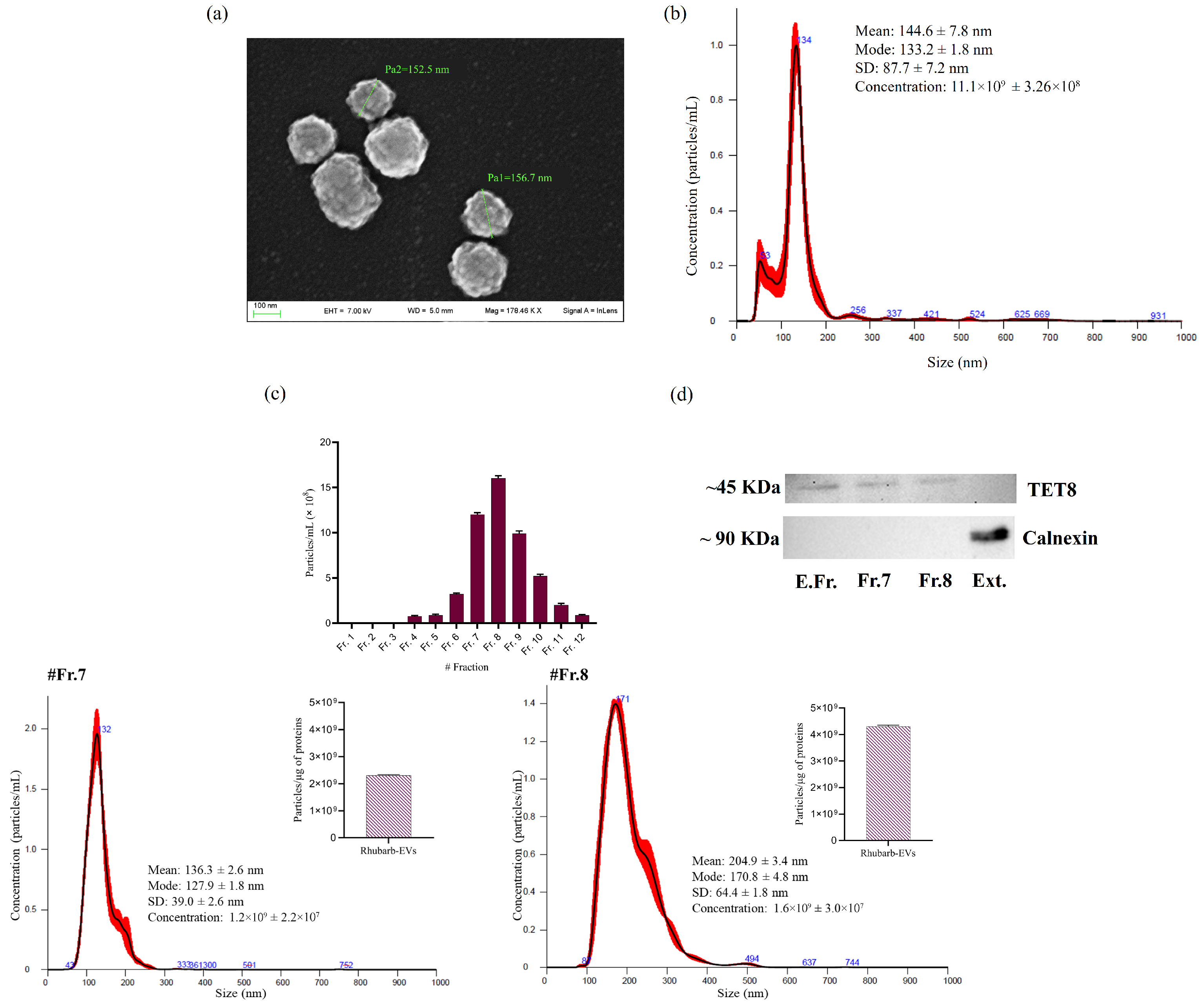
3.1. Rhubarb-Derived Extracellular Vesicle Characterization: NTA and SEM Analysis
3.2. In Vitro Antioxidant Capacity of Rhubarb-Derived Extracellular Vesicles
3.3. Untargeted Polyphenol Analysis Through LC/MS
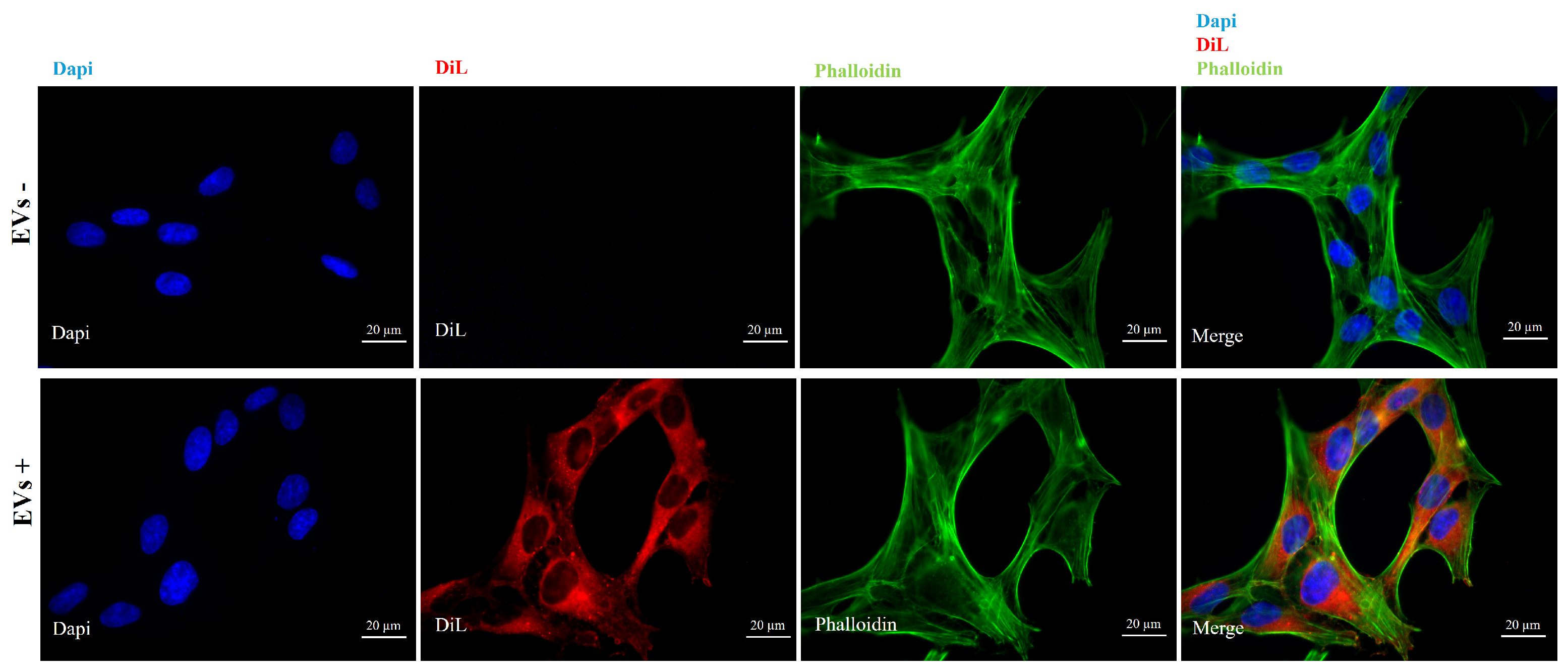
3.4. Rhubarb-Derived Extracellular Vesicle Uptake
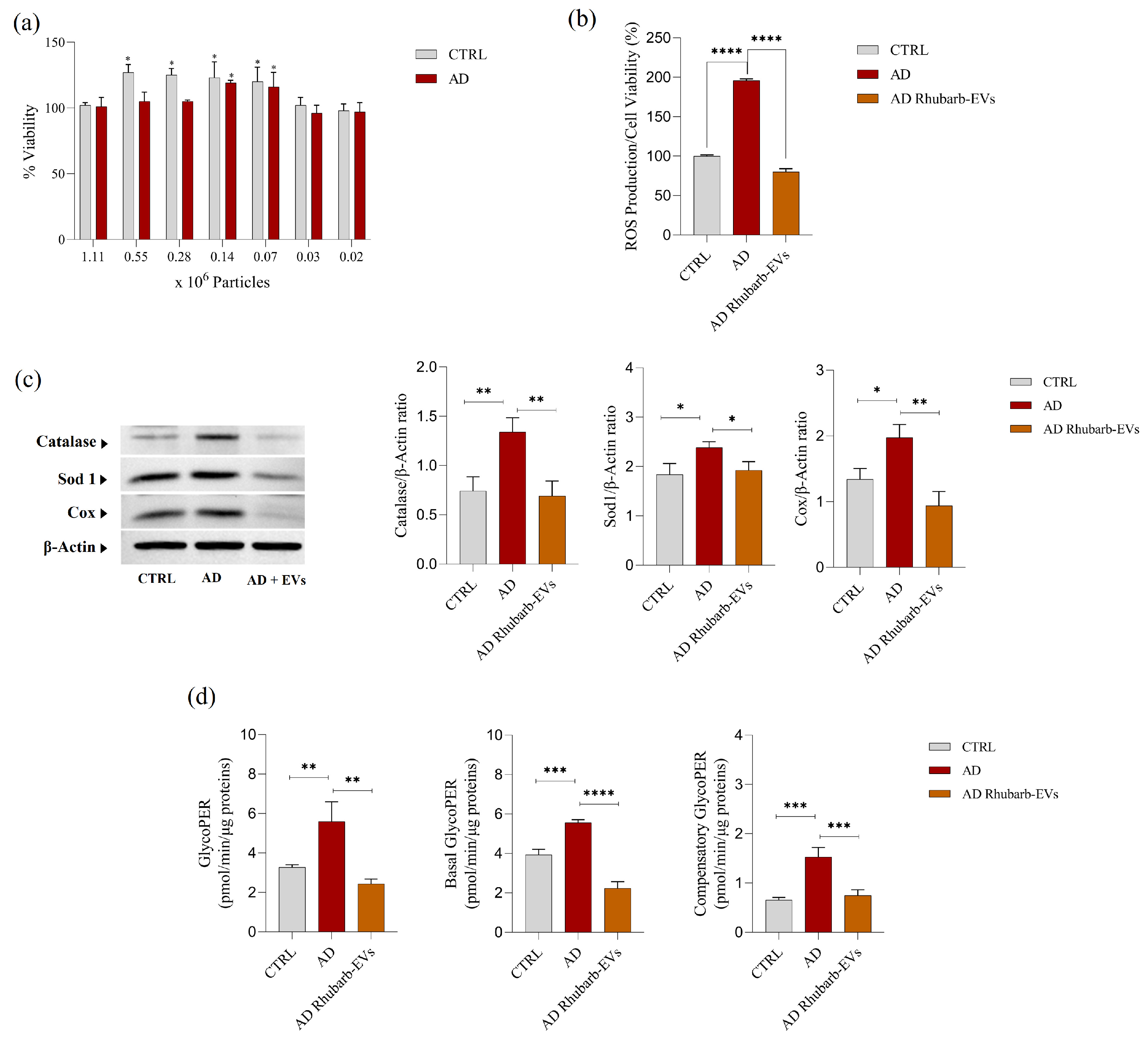
3.5. Intracellular Antioxidant Activity of Rhubarb-Derived EVs
4. Discussion
5. Conclusions
Supplementary Materials
Author Contributions
Funding
Institutional Review Board Statement
Informed Consent Statement
Data Availability Statement
Acknowledgments
Conflicts of Interest
Abbreviations
| AD | Alzheimer’s Disease |
| PDEVs | Plant-Derived Extracellular Vesicles |
| EVs | Extracellular Vesicles |
| SEM | Scanning Electron Microscopy |
| NTA | Nanoparticle Tracking Analysis |
| DPPH | 2,2-Diphenyl-1-picrylhydrazyl |
| ABTS | 2,2′-Azino-bis(3-ethylbenzothiazoline-6-sulfonic acid) |
| FRAP | Ferric-Reducing Antioxidant Power |
| CUPRAC | Cupric-Ion-Reducing Antioxidant Capacity |
| ROS | Reactive Oxygen Species |
| TEs | Trolox Equivalents |
| TPC | Total Polyphenol Content |
| SOD1 | Superoxide Dismutase 1 |
| COX | Cyclooxygenase |
| GlycoPER | Glycolytic Proton Efflux Rate |
| OCR | Oxygen Consumption Rate |
| ECAR | Extracellular Acidification Rate |
References
- Sun, X.; Li, X. Editorial: Aging and Chronic Disease: Public Health Challenge and Education Reform. Front. Public. Health 2023, 11, 1175898. [Google Scholar] [CrossRef]
- Keshavarzi, Z.; Shakeri, F.; Maghool, F.; Jamialahmadi, T.; Johnston, T.P.; Sahebkar, A. A Review on the Phytochemistry, Pharmacology, and Therapeutic Effects of Rheum Ribes. In Natural Products and Human Diseases: Pharmacology, Molecular Targets, and Therapeutic Benefits; Sahebkar, A., Sathyapalan, T., Eds.; Springer International Publishing: Cham, Switzerland, 2021; pp. 447–461. ISBN 978-3-030-73234-9. [Google Scholar]
- Thakur, M. Rhubarb (Rheum Sp.): A Rare and Endangered Medicinal Plant of the Himalayas. In Advances in Medicinal and Aromatic Plants; Apple Academic Press: Oakville, ON, USA, 2024; ISBN 978-1-032-68690-5. [Google Scholar]
- Ma, C.; Yang, L.; Degen, A.A.; Ding, L. The Water Extract of Rheum. Palmatum Has Antioxidative Properties and Inhibits ROS Production in Mice. J. Ethnopharmacol. 2024, 335, 118602. [Google Scholar] [CrossRef]
- Wen, Y.; Yan, P.-J.; Fan, P.-X.; Lu, S.-S.; Li, M.-Y.; Fu, X.-Y.; Wei, S.-B. The Application of Rhubarb Concoctions in Traditional Chinese Medicine and Its Compounds, Processing Methods, Pharmacology, Toxicology and Clinical Research. Front. Pharmacol. 2024, 15, 1442297. [Google Scholar] [CrossRef]
- Kolodziejczyk-Czepas, J.; Liudvytska, O. Rheum Rhaponticum and Rheum Rhabarbarum: A Review of Phytochemistry, Biological Activities and Therapeutic Potential. Phytochem. Rev. 2021, 20, 589–607. [Google Scholar] [CrossRef]
- Liudvytska, O.; Bandyszewska, M.; Skirecki, T.; Krzyżanowska-Kowalczyk, J.; Kowalczyk, M.; Kolodziejczyk-Czepas, J. Anti-Inflammatory and Antioxidant Actions of Extracts from Rheum. Rhaponticum and Rheum. Rhabarbarum in Human Blood Plasma and Cells in Vitro. Biomed. Pharmacother. 2023, 165, 115111. [Google Scholar] [CrossRef]
- Shahrajabian, M.H.; Cheng, Q.; Sun, W. Wonderful Natural Drugs with Surprising Nutritional Values, Rheum Species, Gifts of the Nature. Lett. Org. Chem. 2022, 19, 818–826. [Google Scholar] [CrossRef]
- Bhat, R. Bioactive Compounds of Rhubarb (Rheum Species). In Bioactive Compounds in Underutilized Vegetables and Legumes; Murthy, H.N., Paek, K.Y., Eds.; Springer International Publishing: Cham, Switzerland, 2021; pp. 239–254. ISBN 978-3-030-57415-4. [Google Scholar]
- Kalisz, S.; Oszmiański, J.; Kolniak-Ostek, J.; Grobelna, A.; Kieliszek, M.; Cendrowski, A. Effect of a Variety of Polyphenols Compounds and Antioxidant Properties of Rhubarb (Rheum. Rhabarbarum). LWT 2020, 118, 108775. [Google Scholar] [CrossRef]
- Shang, X.; Dai, L.; He, J.; Yang, X.; Wang, Y.; Li, B.; Zhang, J.; Pan, H.; Gulnaz, I. A High-Value-Added Application of the Stems of Rheum. Palmatum L. as a Healthy Food: The Nutritional Value, Chemical Composition, and Anti-Inflammatory and Antioxidant Activities. Food Funct. 2022, 13, 4901–4913. [Google Scholar] [CrossRef] [PubMed]
- Ambrosone, A.; Barbulova, A.; Cappetta, E.; Cillo, F.; De Palma, M.; Ruocco, M.; Pocsfalvi, G. Plant Extracellular Vesicles: Current Landscape and Future Directions. Plants 2023, 12, 4141. [Google Scholar] [CrossRef]
- Calzoni, E.; Bertoldi, A.; Cusumano, G.; Buratta, S.; Urbanelli, L.; Emiliani, C. Plant-Derived Extracellular Vesicles: Natural Nanocarriers for Biotechnological Drugs. Processes 2024, 12, 2938. [Google Scholar] [CrossRef]
- Rutter, B.D.; Innes, R.W. Extracellular Vesicles Isolated from the Leaf Apoplast Carry Stress-Response Proteins. Plant Physiol. 2017, 173, 728–741. [Google Scholar] [CrossRef]
- Zhou, Q.; Ma, K.; Hu, H.; Xing, X.; Huang, X.; Gao, H. Extracellular Vesicles: Their Functions in Plant–Pathogen Interactions. Mol. Plant Pathol. 2022, 23, 760–771. [Google Scholar] [CrossRef]
- Cai, Q.; Halilovic, L.; Shi, T.; Chen, A.; He, B.; Wu, H.; Jin, H. Extracellular Vesicles: Cross-Organismal RNA Trafficking in Plants, Microbes, and Mammalian Cells. Extracell. Vesicles Circ. Nucl. Acids 2023, 4, 262–282. [Google Scholar] [CrossRef]
- Kim, M.; Jang, H.; Kim, W.; Kim, D.; Park, J.H. Therapeutic Applications of Plant-Derived Extracellular Vesicles as Antioxidants for Oxidative Stress-Related Diseases. Antioxidants 2023, 12, 1286. [Google Scholar] [CrossRef] [PubMed]
- Lo, K.-J.; Wang, M.-H.; Ho, C.-T.; Pan, M.-H. Plant-Derived Extracellular Vesicles: A New Revolutionization of Modern Healthy Diets and Biomedical Applications. J. Agric. Food Chem. 2024, 72, 2853–2878. [Google Scholar] [CrossRef]
- Fan, S.-J.; Chen, J.-Y.; Tang, C.-H.; Zhao, Q.-Y.; Zhang, J.-M.; Qin, Y.-C. Edible Plant Extracellular Vesicles: An Emerging Tool for Bioactives Delivery. Front. Immunol. 2022, 13, 1028418. [Google Scholar] [CrossRef]
- Buratta, S.; Latella, R.; Chiaradia, E.; Salzano, A.M.; Tancini, B.; Pellegrino, R.M.; Urbanelli, L.; Cerrotti, G.; Calzoni, E.; Alabed, H.B.R.; et al. Characterization of Nanovesicles Isolated from Olive Vegetation Water. Foods 2024, 13, 835. [Google Scholar] [CrossRef] [PubMed]
- Calzoni, E.; Bertoldi, A.; Cesaretti, A.; Alabed, H.B.R.; Cerrotti, G.; Pellegrino, R.M.; Buratta, S.; Urbanelli, L.; Emiliani, C. Aloe Extracellular Vesicles as Carriers of Photoinducible Metabolites Exhibiting Cellular Phototoxicity. Cells 2024, 13, 1845. [Google Scholar] [CrossRef]
- Fang, Z.; Liu, K. Plant-Derived Extracellular Vesicles as Oral Drug Delivery Carriers. J. Control. Release 2022, 350, 389–400. [Google Scholar] [CrossRef]
- Zhou, S.; Cao, Y.; Shan, F.; Huang, P.; Yang, Y.; Liu, S. Analyses of Chemical Components and Their Functions in Single Species Plant-Derived Exosome like Vesicle. TrAC Trends Anal. Chem. 2023, 167, 117274. [Google Scholar] [CrossRef]
- Jurcău, M.C.; Andronie-Cioara, F.L.; Jurcău, A.; Marcu, F.; Ţiț, D.M.; Pașcalău, N.; Nistor-Cseppentö, D.C. The Link between Oxidative Stress, Mitochondrial Dysfunction and Neuroinflammation in the Pathophysiology of Alzheimer’s Disease: Therapeutic Implications and Future Perspectives. Antioxidants 2022, 11, 2167. [Google Scholar] [CrossRef] [PubMed]
- González-Reyes, R.E.; Nava-Mesa, M.O.; Vargas-Sánchez, K.; Ariza-Salamanca, D.; Mora-Muñoz, L. Involvement of Astrocytes in Alzheimer’s Disease from a Neuroinflammatory and Oxidative Stress Perspective. Front. Mol. Neurosci. 2017, 10, 427. [Google Scholar] [CrossRef]
- Jalouli, M.; Rahman, M.A.; Biswas, P.; Rahman, H.; Harrath, A.H.; Lee, I.-S.; Kang, S.; Choi, J.; Park, M.N.; Kim, B. Targeting Natural Antioxidant Polyphenols to Protect Neuroinflammation and Neurodegenerative Diseases: A Comprehensive Review. Front. Pharmacol. 2025, 16, 1492517. [Google Scholar] [CrossRef]
- Kruszka, J.; Martyński, J.; Szewczyk-Golec, K.; Woźniak, A.; Nuszkiewicz, J. The Role of Selected Flavonoids in Modulating Neuroinflammation in Alzheimer’s Disease: Mechanisms and Therapeutic Potential. Brain Sci. 2025, 15, 485. [Google Scholar] [CrossRef] [PubMed]
- Nájera-Maldonado, J.M.; Salazar, R.; Alvarez-Fitz, P.; Acevedo-Quiroz, M.; Flores-Alfaro, E.; Hernández-Sotelo, D.; Espinoza-Rojo, M.; Ramírez, M. Phenolic Compounds of Therapeutic Interest in Neuroprotection. J. Xenobiotics 2024, 14, 227–246. [Google Scholar] [CrossRef]
- WMA. The World Medical Association-WMA Declaration of Helsinki—Ethical Principles for Medical Research Involving Human Participants. JAMA 2025, 333, 71–74. [Google Scholar] [CrossRef]
- Chiaradia, E.; Tancini, B.; Emiliani, C.; Delo, F.; Pellegrino, R.M.; Tognoloni, A.; Urbanelli, L.; Buratta, S. Extracellular Vesicles under Oxidative Stress Conditions: Biological Properties and Physiological Roles. Cells 2021, 10, 1763. [Google Scholar] [CrossRef] [PubMed]
- Bradford, M.M. A Rapid and Sensitive Method for the Quantitation of Microgram Quantities of Protein Utilizing the Principle of Protein-Dye Binding. Anal. Biochem. 1976, 72, 248–254. [Google Scholar] [CrossRef]
- Blois, M.S. Antioxidant Determinations by the Use of a Stable Free Radical. Nature 1958, 181, 1199–1200. [Google Scholar] [CrossRef]
- Miller, N.J.; Rice-Evans, C.; Davies, M.J.; Gopinathan, V.; Milner, A. A Novel Method for Measuring Antioxidant Capacity and Its Application to Monitoring the Antioxidant Status in Premature Neonates. Clin. Sci. 1993, 84, 407–412. [Google Scholar] [CrossRef]
- Harrabi, B.; Ben Nasr, H.; Amri, Z.; Brahmi, F.; El Feki, A.; Zeghal, K.; Ghozzi, H.; Siddiqui, A.J.; Adnan, M.; Aloufi, B.; et al. Chemical Composition, Nutritional Value, Antioxidative, and In Vivo Anti-Inflammatory Activities of Opuntia Stricta Cladode. ACS Omega 2024, 9, 26724–26734. [Google Scholar] [CrossRef]
- Apak, R.; Güçlü, K.; Özyürek, M.; Karademi˙r, S.E.; Altun, M. Total Antioxidant Capacity Assay of Human Serum Using Copper(II)-Neocuproine as Chromogenic Oxidant: The CUPRAC Method. Free Radic. Res. 2005, 39, 949–961. [Google Scholar] [CrossRef]
- Benzie, I.F.F.; Strain, J.J. The Ferric Reducing Ability of Plasma (FRAP) as a Measure of “Antioxidant Power”: The FRAP Assay. Anal. Biochem. 1996, 239, 70–76. [Google Scholar] [CrossRef]
- Ainsworth, E.A.; Gillespie, K.M. Estimation of Total Phenolic Content and Other Oxidation Substrates in Plant Tissues Using Folin–Ciocalteu Reagent. Nat. Protoc. 2007, 2, 875–877. [Google Scholar] [CrossRef]
- Alabed, H.B.R.; Pellegrino, R.M.; Buratta, S.; Lema Fernandez, A.G.; La Starza, R.; Urbanelli, L.; Mecucci, C.; Emiliani, C.; Gorello, P. Metabolic Profiling as an Approach to Differentiate T-Cell Acute Lymphoblastic Leukemia Cell Lines Belonging to the Same Genetic Subgroup. Int. J. Mol. Sci. 2024, 25, 3921. [Google Scholar] [CrossRef] [PubMed]
- Calzoni, E.; Cesaretti, A.; Montegiove, N.; Valicenti, M.L.; Morena, F.; Misra, R.; Carlotti, B.; Martino, S. Phenothiazine-Based Nanoaggregates: Dual Role in Bioimaging and Stem Cell-Driven Photodynamic Therapy. Nanomaterials 2025, 15, 894. [Google Scholar] [CrossRef] [PubMed]
- Laemmli, U.K. Cleavage of Structural Proteins during the Assembly of the Head of Bacteriophage T4. Nature 1970, 227, 680–685. [Google Scholar] [CrossRef] [PubMed]
- Sakamuri, S.S.V.P.; Sure, V.N.; Kolli, L.; Liu, N.; Evans, W.R.; Sperling, J.A.; Busija, D.W.; Wang, X.; Lindsey, S.H.; Murfee, W.L.; et al. Glycolytic and Oxidative Phosphorylation Defects Precede the Development of Senescence in Primary Human Brain Microvascular Endothelial Cells. GeroScience 2022, 44, 1975–1994. [Google Scholar] [CrossRef]
- Jin, J.; Qiu, S.; Wang, P.; Liang, X.; Huang, F.; Wu, H.; Zhang, B.; Zhang, W.; Tian, X.; Xu, R.; et al. Cardamonin Inhibits Breast Cancer Growth by Repressing HIF-1α-Dependent Metabolic Reprogramming. J. Exp. Clin. Cancer Res. 2019, 38, 377. [Google Scholar] [CrossRef]
- Webber, J.; Clayton, A. How Pure Are Your Vesicles? J. Extracell. Vesicles 2013, 2, 19861. [Google Scholar] [CrossRef]
- Li, S.; Ye, Z.; Zhao, L.; Yao, Y.; Zhou, Z. Evaluation of Antioxidant Activity and Drug Delivery Potential of Cell-Derived Extracellular Vesicles from Citrus Reticulata Blanco Cv. ‘Dahongpao’. Antioxidants 2023, 12, 1706. [Google Scholar] [CrossRef] [PubMed]
- Gonzalez Suarez, N.; Fernandez-Marrero, Y.; Hébert, M.P.A.; Roy, M.-E.; Boudreau, L.H.; Annabi, B. EGCG Inhibits the Inflammation and Senescence Inducing Properties of MDA-MB-231 Triple-Negative Breast Cancer (TNBC) Cells-Derived Extracellular Vesicles in Human Adipose-Derived Mesenchymal Stem Cells. Cancer Cell Int. 2023, 23, 240. [Google Scholar] [CrossRef]
- Chen, J.; Chen, Y.; Zheng, Y.; Zhao, J.; Yu, H.; Zhu, J. The Relationship between Procyanidin Structure and Their Protective Effect in a Parkinson’s Disease Model. Molecules 2022, 27, 5007. [Google Scholar] [CrossRef]
- Nie, C.; Li, T.; Fan, M.; Wang, Y.; Sun, Y.; He, R.; Zhang, X.; Qian, H.; Ying, H.; Wang, L.; et al. Polyphenols in Highland Barley Tea Inhibit the Production of Advanced Glycosylation End-Products and Alleviate the Skeletal Muscle Damage. Mol. Nutr. Food Res. 2022, 66, 2200225. [Google Scholar] [CrossRef]
- Kagawa, N.; Iguchi, H.; Henzan, M.; Hanaoka, M. Drying the Leaves of Perilla Frutescens Increases Their Content of Anticancer Nutraceuticals. Food Sci. Nutr. 2019, 7, 1494–1501. [Google Scholar] [CrossRef]
- Bibi Sadeer, N.; Montesano, D.; Albrizio, S.; Zengin, G.; Mahomoodally, M.F. The Versatility of Antioxidant Assays in Food Science and Safety—Chemistry, Applications, Strengths, and Limitations. Antioxidants 2020, 9, 709. [Google Scholar] [CrossRef]
- Domanskyi, A.; Parlato, R. Oxidative Stress in Neurodegenerative Diseases. Antioxidants 2022, 11, 504. [Google Scholar] [CrossRef]
- Ginckels, P.; Holvoet, P. Oxidative Stress and Inflammation in Cardiovascular Diseases and Cancer: Role of Non-Coding RNAs. Yale J. Biol. Med. 2022, 95, 129–152. [Google Scholar]
- Perut, F.; Roncuzzi, L.; Avnet, S.; Massa, A.; Zini, N.; Sabbadini, S.; Giampieri, F.; Mezzetti, B.; Baldini, N. Strawberry-Derived Exosome-Like Nanoparticles Prevent Oxidative Stress in Human Mesenchymal Stromal Cells. Biomolecules 2021, 11, 87. [Google Scholar] [CrossRef] [PubMed]
- Charoensedtasin, K.; Norkaew, C.; Naksawat, M.; Kheansaard, W.; Roytrakul, S.; Tanyong, D. Anticancer Effects of Pomegranate-Derived Peptide PG2 on CDK2 and miRNA-339-5p-Mediated Apoptosis via Extracellular Vesicles in Acute Leukemia. Sci. Rep. 2024, 14, 27367. [Google Scholar] [CrossRef] [PubMed]
- Chintapula, U.; Oh, D.; Perez, C.; Davis, S.; Ko, J. Anti-Cancer Bioactivity of Sweet Basil Leaf Derived Extracellular Vesicles on Pancreatic Cancer Cells. J. Extracell. Biol. 2024, 3, e142. [Google Scholar] [CrossRef]
- Thapa, R.; Gupta, G.; Dave, P.; Singh, S.K.; Raizaday, A.; Almalki, W.H.; Vyas, G.; Singh, S.K.; Dua, K.; Singh, Y. Current Update on the Protective Effect of Epicatechin in Neurodegenerative Diseases. EXCLI J. 2022, 21, 897–903. [Google Scholar] [CrossRef]
- Ferruzzi, M.G.; Lobo, J.K.; Janle, E.M.; Cooper, B.; Simon, J.E.; Wu, Q.-L.; Welch, C.; Ho, L.; Weaver, C.; Pasinetti, G.M. Bioavailability of Gallic Acid and Catechins from Grape Seed Polyphenol Extract Is Improved by Repeated Dosing in Rats: Implications for Treatment in Alzheimer’s Disease. J. Alzheimers Dis. 2009, 18, 113–124. [Google Scholar] [CrossRef]
- Kundo, N.K.; Manik, M.I.N.; Biswas, K.; Khatun, R.; Al-Amin, M.Y.; Alam, A.H.M.K.; Tanaka, T.; Sadik, G. Identification of Polyphenolics from Loranthus Globosus as Potential Inhibitors of Cholinesterase and Oxidative Stress for Alzheimer’s Disease Treatment. BioMed Res. Int. 2021, 2021, 9154406. [Google Scholar] [CrossRef]
- Harahap, U.; Syahputra, R.A.; Ahmed, A.; Nasution, A.; Wisely, W.; Sirait, M.L.; Dalimunthe, A.; Zainalabidin, S.; Taslim, N.A.; Nurkolis, F.; et al. Current Insights and Future Perspectives of Flavonoids: A Promising Antihypertensive Approach. Phytother. Res. 2024, 38, 3146–3168. [Google Scholar] [CrossRef]
- Bondonno, C.P.; Yang, X.; Croft, K.D.; Considine, M.J.; Ward, N.C.; Rich, L.; Puddey, I.B.; Swinny, E.; Mubarak, A.; Hodgson, J.M. Flavonoid-Rich Apples and Nitrate-Rich Spinach Augment Nitric Oxide Status and Improve Endothelial Function in Healthy Men and Women: A Randomized Controlled Trial. Free Radic. Biol. Med. 2012, 52, 95–102. [Google Scholar] [CrossRef] [PubMed]
- Huang, J.; Wu, F.; Cao, W.; Chen, Y.; Yao, Q.; Cen, P.; Wang, J.; Hong, L.; Zhang, X.; Zhou, R.; et al. Ultrasmall Iron-Gallic Acid Coordination Polymer Nanoparticles for Scavenging ROS and Suppressing Inflammation in Tauopathy-Induced Alzheimer’s Disease. Biomaterials 2025, 317, 123042. [Google Scholar] [CrossRef] [PubMed]
- Obafemi, T.O.; Ekundayo, B.E.; Adewale, O.B.; Obafemi, B.A.; Anadozie, S.O.; Adu, I.A.; Onasanya, A.O.; Ekundayo, S.K. Gallic Acid and Neurodegenerative Diseases. Phytomedicine Plus 2023, 3, 100492. [Google Scholar] [CrossRef]
- Sun, J.; Li, Y.; Ding, Y.; Wang, J.; Geng, J.; Yang, H.; Ren, J.; Tang, J.; Gao, J. Neuroprotective Effects of Gallic Acid against Hypoxia/Reoxygenation-Induced Mitochondrial Dysfunctions in Vitro and Cerebral Ischemia/Reperfusion Injury in Vivo. Brain Res. 2014, 1589, 126–139. [Google Scholar] [CrossRef]
- Yin, Z.; Geng, X.; Zhang, Z.; Wang, Y.; Gao, X. Rhein Relieves Oxidative Stress in an Aβ1-42 Oligomer-Burdened Neuron Model by Activating the SIRT1/PGC-1α-Regulated Mitochondrial Biogenesis. Front. Pharmacol. 2021, 12, 746711. [Google Scholar] [CrossRef]
- Yin, Z.; Gao, D.; Du, K.; Han, C.; Liu, Y.; Wang, Y.; Gao, X. Rhein Ameliorates Cognitive Impairment in an APP/PS1 Transgenic Mouse Model of Alzheimer’s Disease by Relieving Oxidative Stress through Activating the SIRT1/PGC-1α Pathway. Oxidative Med. Cell. Longev. 2022, 2022, 2524832. [Google Scholar] [CrossRef]
- Ramamoorthy, M.; Sykora, P.; Scheibye-Knudsen, M.; Dunn, C.; Kasmer, C.; Zhang, Y.; Becker, K.G.; Croteau, D.L.; Bohr, V.A. Sporadic Alzheimer Disease Fibroblasts Display an Oxidative Stress Phenotype. Free Radic. Biol. Med. 2012, 53, 1371–1380. [Google Scholar] [CrossRef]
- Cecchi, C.; Fiorillo, C.; Sorbi, S.; Latorraca, S.; Nacmias, B.; Bagnoli, S.; Nassi, P.; Liguri, G. Oxidative Stress and Reduced Antioxidant Defenses in Peripheral Cells from Familial Alzheimer’s Patients. Free Radic. Biol. Med. 2002, 33, 1372–1379. [Google Scholar] [CrossRef]
- Ibáñez-Salazar, A.; Bañuelos-Hernández, B.; Rodríguez-Leyva, I.; Chi-Ahumada, E.; Monreal-Escalante, E.; Jiménez-Capdeville, M.E.; Rosales-Mendoza, S. Oxidative Stress Modifies the Levels and Phosphorylation State of Tau Protein in Human Fibroblasts. Front. Neurosci. 2017, 11, 495. [Google Scholar] [CrossRef]
- Misrani, A.; Tabassum, S.; Yang, L. Mitochondrial Dysfunction and Oxidative Stress in Alzheimer’s Disease. Front. Aging Neurosci. 2021, 13, 617588. [Google Scholar] [CrossRef]
- Angelova, P.R.; Esteras, N.; Abramov, A.Y. Mitochondria and Lipid Peroxidation in the Mechanism of Neurodegeneration: Finding Ways for Prevention. Med. Res. Rev. 2021, 41, 770–784. [Google Scholar] [CrossRef]
- Shkryl, Y.; Tsydeneshieva, Z.; Menchinskaya, E.; Rusapetova, T.; Grishchenko, O.; Mironova, A.; Bulgakov, D.; Gorpenchenko, T.; Kazarin, V.; Tchernoded, G.; et al. Exosome-like Nanoparticles, High in Trans-δ-Viniferin Derivatives, Produced from Grape Cell Cultures: Preparation, Characterization, and Anticancer Properties. Biomedicines 2024, 12, 2142. [Google Scholar] [CrossRef] [PubMed]
- Trentini, M.; Zanolla, I.; Zanotti, F.; Tiengo, E.; Licastro, D.; Dal Monego, S.; Lovatti, L.; Zavan, B. Apple Derived Exosomes Improve Collagen Type I Production and Decrease MMPs during Aging of the Skin through Downregulation of the NF-κB Pathway as Mode of Action. Cells 2022, 11, 3950. [Google Scholar] [CrossRef] [PubMed]
- Addi, M.; Elbouzidi, A.; Abid, M.; Tungmunnithum, D.; Elamrani, A.; Hano, C. An Overview of Bioactive Flavonoids from Citrus Fruits. Appl. Sci. 2022, 12, 29. [Google Scholar] [CrossRef]
- Olufunmilayo, E.O.; Gerke-Duncan, M.B.; Holsinger, R.M.D. Oxidative Stress and Antioxidants in Neurodegenerative Disorders. Antioxidants 2023, 12, 517. [Google Scholar] [CrossRef] [PubMed]
- Zhang, X.; Alshakhshir, N.; Zhao, L. Glycolytic Metabolism, Brain Resilience, and Alzheimer’s Disease. Front. Neurosci. 2021, 15, 662242. [Google Scholar] [CrossRef] [PubMed]
- Wilkins, H.M.; Carl, S.M.; Greenlief, A.C.S.; Festoff, B.W.; Swerdlow, R.H. Bioenergetic Dysfunction and Inflammation in Alzheimer’s Disease: A Possible Connection. Front. Aging Neurosci. 2014, 6, 311. [Google Scholar] [CrossRef] [PubMed]



| µmol TE/106 Particles | IC 50 (µg/106 Particles) | |
|---|---|---|
| ABTS | 120.65 ± 6.75 | 7.50 ± 0.26 |
| DPPH | 92.6 ± 11.45 | 4.5 ± 0.09 |
| FRAP | 342.65 ± 6.95 | 31.10 ± 2.85 |
| CUPRAC | 722.50 ± 2.30 | 250.80 ± 12.65 |
| Identified Metabolite in Rhubarb-Derived EVs | Concentration (µg/gr of Starting Material) |
|---|---|
| (-)-epicatechin | 4.73 ± 1.89 |
| Gallic acid | 2.66 ± 1.06 |
| rhein | 2.48 ± 0.99 |
| epicatechin gallate | 0.52 ± 0.21 |
| Procyanidin B1 | 0.46 ± 0.18 |
| Procyanidin B2 | 0.10 ± 0.04 |
| 6-Cinnamoyl-1-galloylglucose | 0.45 ± 0.18 |
| Emodin | 0.25 ± 0.10 |
| trans-4-Coumaric acid | 0.21 ± 0.08 |
| Naringenin | 0.11 ± 0.04 |
| Salicylic acid | 0.08 ± 0.03 |
| Emodin 8-O-(beta)-D-glucoside | 0.04 ± 0.02 |
| Methyl gallate | 0.04 ± 0.02 |
| 2-Hydroxyphenylacetic acid | 0.03 ± 0.01 |
| [3,4,5-trihydroxy-6-[[(E)-3-(4-hydroxyphenyl)prop-2-enoyl]oxymethyl]oxan-2-yl] 3,4,5-trihydroxybenzoate | 0.03 ± 0.01 |
| feruloyltyramine | 0.03 ± 0.01 |
| Eriodictyol-7-O-glucoside | 0.02 ± 0.01 |
| 2,5-dihydroxy benzoic acid | 0.02 ± 0.01 |
| Lecanoric Acid | 0.02 ± 0.01 |
| Phloretin-2′-O-glucoside | 0.02 ± 0.01 |
| 1,6-Digalloyl-beta-D-glucopyranose | 0.01 ± 0.01 |
| Biochanin-7-O-glucoside | 0.01 ± 0.00 |
| Homoeriodictyol | 0.01 ± 0.00 |
| Isoquercitrin | 0.01 ± 0.00 |
| isorhamnetin-3-rutinoside | 0.01 ± 0.00 |
| Kaempferol-3-O-glucoside-3″-rhamnoside | 0.01 ± 0.00 |
| p-Hydroxybenzaldehyde | 0.01 ± 0.00 |
| Quercitrin | 0.01 ± 0.00 |
Disclaimer/Publisher’s Note: The statements, opinions and data contained in all publications are solely those of the individual author(s) and contributor(s) and not of MDPI and/or the editor(s). MDPI and/or the editor(s) disclaim responsibility for any injury to people or property resulting from any ideas, methods, instructions or products referred to in the content. |
© 2025 by the authors. Licensee MDPI, Basel, Switzerland. This article is an open access article distributed under the terms and conditions of the Creative Commons Attribution (CC BY) license (https://creativecommons.org/licenses/by/4.0/).
Share and Cite
Calzoni, E.; Cusumano, G.; Bertoldi, A.; Alabed, H.B.R.; Pellegrino, R.M.; Buratta, S.; Urbanelli, L.; Zengin, G.; Emiliani, C. Rhubarb-Derived Extracellular Vesicles Mitigate Oxidative Stress and Metabolic Dysfunction in an Alzheimer’s Cellular Model. Nutrients 2025, 17, 3771. https://doi.org/10.3390/nu17233771
Calzoni E, Cusumano G, Bertoldi A, Alabed HBR, Pellegrino RM, Buratta S, Urbanelli L, Zengin G, Emiliani C. Rhubarb-Derived Extracellular Vesicles Mitigate Oxidative Stress and Metabolic Dysfunction in an Alzheimer’s Cellular Model. Nutrients. 2025; 17(23):3771. https://doi.org/10.3390/nu17233771
Chicago/Turabian StyleCalzoni, Eleonora, Gaia Cusumano, Agnese Bertoldi, Husam B. R. Alabed, Roberto Maria Pellegrino, Sandra Buratta, Lorena Urbanelli, Gokhan Zengin, and Carla Emiliani. 2025. "Rhubarb-Derived Extracellular Vesicles Mitigate Oxidative Stress and Metabolic Dysfunction in an Alzheimer’s Cellular Model" Nutrients 17, no. 23: 3771. https://doi.org/10.3390/nu17233771
APA StyleCalzoni, E., Cusumano, G., Bertoldi, A., Alabed, H. B. R., Pellegrino, R. M., Buratta, S., Urbanelli, L., Zengin, G., & Emiliani, C. (2025). Rhubarb-Derived Extracellular Vesicles Mitigate Oxidative Stress and Metabolic Dysfunction in an Alzheimer’s Cellular Model. Nutrients, 17(23), 3771. https://doi.org/10.3390/nu17233771