Tracking Evidences of Dandelion for the Treatment of Cancer: From Chemical Composition, Bioactivity, Signaling Pathways in Cancer Cells to Perspective Study


Abstract
1. Introduction
2. The Nutritional and Development Value of Dandelion
2.1. Development of Fresh Food and Edible Products
2.2. Development of Dandelion-Related Health Products
2.3. Development of Dandelion Characteristic Tea Products
3. Chemical Composition
3.1. Flavonoids
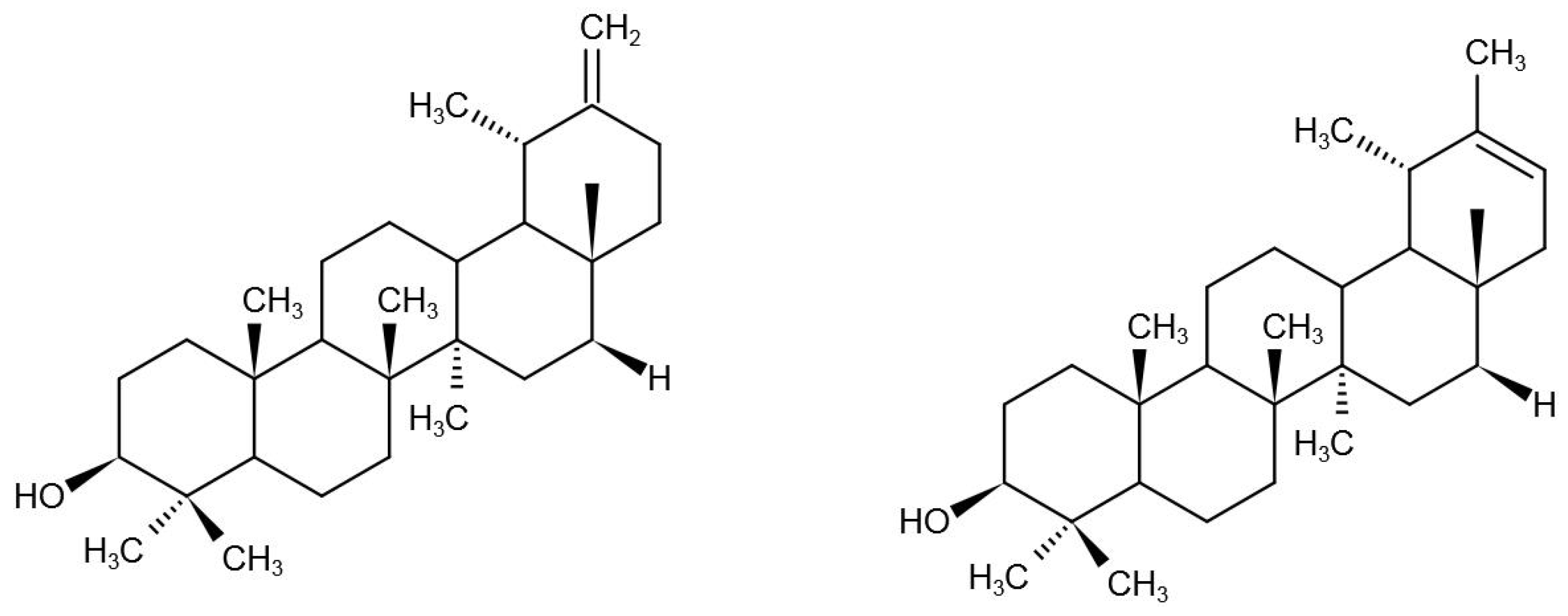
3.2. Terpenoids
3.3. Phenolic Acids
3.4. Polysaccharides
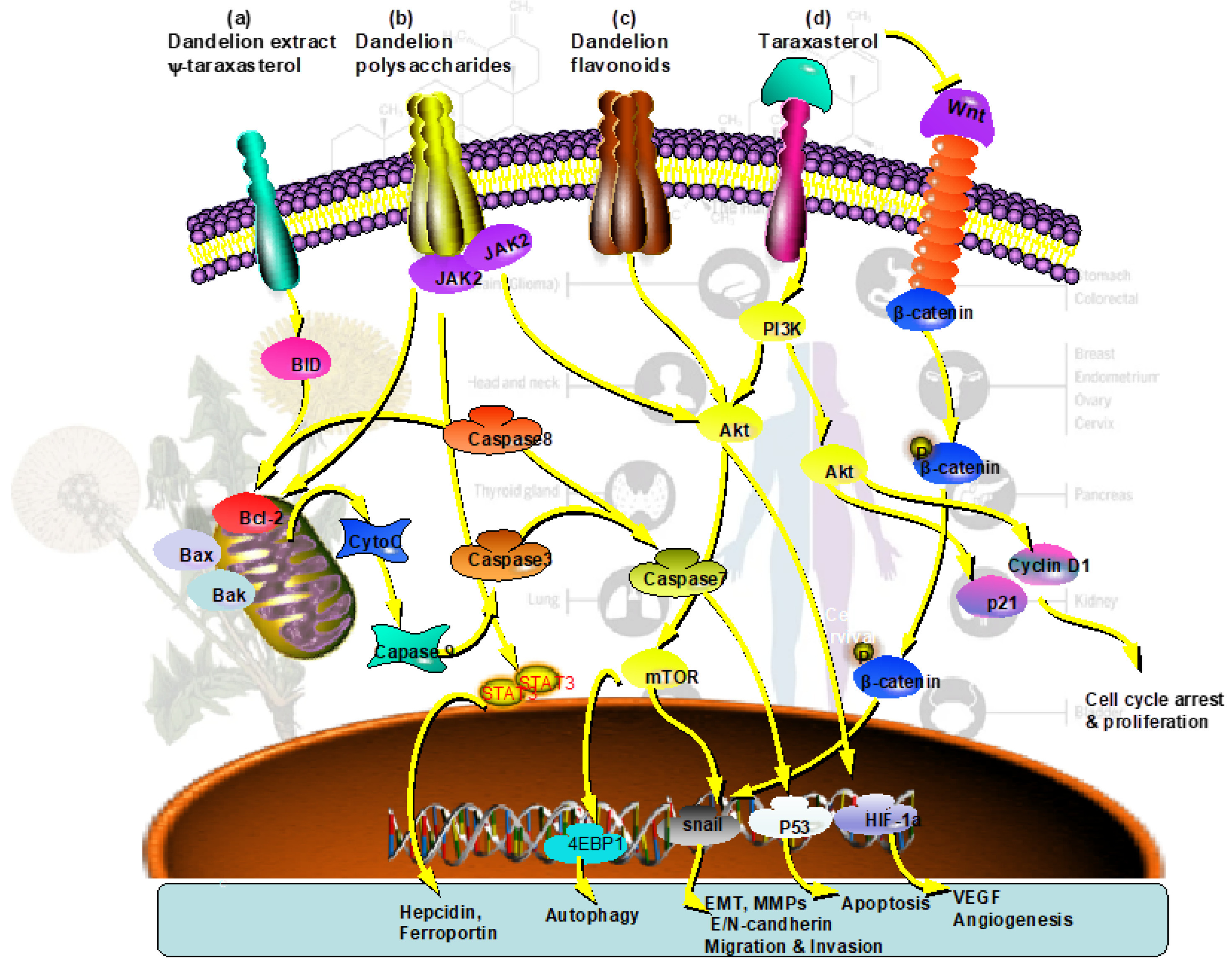
4. Signaling Pathways in Cancer Cells by Bioactive Components from Dandelion
4.1. Cell Cycle Arrest and Anti-Proliferation in Cancer Cells
4.2. Induction of Cell Apoptosis in Cancer Cells
4.3. Inhibition of Migration and Invasion of Cancer Cells
4.4. Induction of Autophagy in Cancer Cells
4.5. Regulation of the Metabolism of Cancer Cells
4.6. Anti-Angiogenesis in Cancer Cells
4.7. Other Pathways
5. Perspectives
6. Conclusions
Author Contributions
Funding
Data Availability Statement
Acknowledgments
Conflicts of Interest
References
- Li, T.; Zhang, H.; Lian, M.; He, Q.; Lv, M.; Zhai, L.; Zhou, J.; Wu, K.; Yi, M. Global status and attributable risk factors of breast, cervical, ovarian, and uterine cancers from 1990 to 2021. J. Hematol. Oncol. 2025, 18, 5. [Google Scholar] [CrossRef]
- Filho, A.M.; Laversanne, M.; Ferlay, J.; Colombet, M.; Piñeros, M.; Znaor, A.; Parkin, D.M.; Soerjomataram, I.; Bray, F. The GLOBOCAN 2022 cancer estimates: Data sources, methods, and a snapshot of the cancer burden worldwide. Int. J. Cancer 2025, 156, 1336–1346. [Google Scholar] [CrossRef] [PubMed]
- Ngwa, W.; Irabor, O.C.; Schoenfeld, J.D.; Hesser, J.; Demaria, S.; Formenti, S.C. Using immunotherapy to boost the abscopal effect. Nat. Rev. Cancer 2018, 18, 313–322. [Google Scholar] [CrossRef] [PubMed]
- Dutta, S.; Mahalanobish, S.; Saha, S.; Ghosh, S.; Sil, P.C. Natural products: An upcoming therapeutic approach to cancer. Food Chem. Toxicol. 2019, 128, 240–255. [Google Scholar] [CrossRef]
- Ma, L.; Zhang, M.; Zhao, R.; Wang, D.; Ma, Y.; Li, A. Plant Natural Products: Promising Resources for Cancer Chemoprevention. Molecules 2021, 26, 933. [Google Scholar] [CrossRef]
- Liu, Y.; Yang, S.; Wang, K.; Lu, J.; Bao, X.; Wang, R.; Qiu, Y.; Wang, T.; Yu, H. Cellular senescence and cancer: Focusing on traditional Chinese medicine and natural products. Cell Prolif. 2020, 53, e12894. [Google Scholar] [CrossRef]
- Wang, S.; Hao, H.F.; Jiao, Y.N.; Fu, J.L.; Guo, Z.W.; Guo, Y.; Yuan, Y.; Li, P.P.; Han, S.Y. Dandelion extract inhibits triple-negative breast cancer cell proliferation by interfering with glycerophospholipids and unsaturated fatty acids metabolism. Front. Pharmacol. 2022, 13, 942996. [Google Scholar] [CrossRef]
- Zhu, H.; Zhao, H.; Zhang, L.; Xu, J.; Zhu, C.; Zhao, H.; Lv, G. Dandelion root extract suppressed gastric cancer cells proliferation and migration through targeting lncRNA-CCAT1. Biomed. Pharmacother. 2017, 93, 1010–1017. [Google Scholar] [CrossRef]
- Yang, K.; Wang, Y. Dandelion root extracts and taraxasterol inhibit LPS-induced colorectal cancer cell viability by blocking TLR4-NFκB-driven ACE2 and TMPRSS2 pathways. Exp. Ther. Med. 2024, 27, 256. [Google Scholar] [CrossRef]
- Zhang, Y.; Hu, Y.F.; Li, W.; Xu, G.Y.; Wang, K.R.; Li, L.; Luo, H.; Zou, L.; Wu, J.S. Updates and advances on pharmacological properties of Taraxacum mongolicum Hand.-Mazz and its potential applications. Food Chem. 2022, 373, 131380. [Google Scholar] [CrossRef]
- Liu, H.; Ye, J.; Yu, Y. Development of taraxacum coarse cereal biscuits. Sci. Technol. Cereals Oils Foods 2017, 25, 24–29. [Google Scholar]
- Su, J.; Zhang, H.; Wang, R. Research on the Processing Technology of Citrus and Dandelion Health Drink. Grain Sci. Technol. Econ. 2020, 45, 115–119. [Google Scholar]
- Sun, Y.; Wang, B.; Jiang, Q.; Yang, C.; Tang, X. Development and utilization of wild dandelion. Food Res. Dev. 2003, 24, 101–103. [Google Scholar]
- Zhang, J.; Wen, N.; Liu, Y.; Weng, R.; Tan, Z.; Chen, J.; Xu, S. Extraction of Polysaccharide from the Dandelion Root and Development of its Beverage. Farm Prod. Process. 2018, 1, 13–17. [Google Scholar]
- Yarley, O.P.N.; Kojo, A.B.; Zhou, C.; Yu, X.; Gideon, A.; Kwadwo, H.H.; Richard, O. Reviews on mechanisms of in vitro antioxidant, antibacterial and anticancer activities of water-soluble plant polysaccharides. Int. J. Biol. Macromol. 2021, 183, 2262–2271. [Google Scholar] [CrossRef]
- Ni, L. A Kind of Purslane and Dandelion Juice for Removing Rash, as Well as Its Usage, Food, Medicinal Juice, Daily Chemical Product, and Physiotherapy Juice. CN107595918A, 29 August 2017. [Google Scholar]
- Gao, Y.; Yan, L.; Ge, Q. A Dandelion Acne-Removing and Beauty-Nourishing Facial Mask and Its Preparation Method. CN105267125A, 18 November 2015. [Google Scholar]
- Shan, C. Research and development of dandelion’s health care value. Heilongjiang Sci. Technol. Inf. 2010, 17, 42. [Google Scholar]
- Xue, X. Changes in the Main Active Components and Quality Control During the Processing of Dandelion Black Tea. Master’s Thesis, Shandong Agricultural University, Taian, China, 2020. [Google Scholar]
- Zhao, M.; Zhou, Z.T.; Zhang, W.D. Antifugal susceptibility testing and antifugal traditional Chinese medicines screening of oral Candida isolated from head and neck cancer patients treated with radiotherapy or chemotherapy. Hua Xi Kou Qiang Yi Xue Za Zhi 2006, 24, 131–134. [Google Scholar]
- Wang, L.; Li, T.; Liu, F.; Liu, D.; Xu, Y.; Yang, Y.; Zhao, Y.; Wei, H. Ultrasonic-assisted enzymatic extraction and characterization of polysaccharides from dandelion (Taraxacum officinale) leaves. Int. J. Biol. Macromol. 2019, 126, 846–856. [Google Scholar] [CrossRef]
- Cai, L.; Chen, B.; Yi, F.; Zou, S. Optimization of extraction of polysaccharide from dandelion root by response surface methodology: Structural characterization and antioxidant activity. Int. J. Biol. Macromol. 2019, 140, 907–919. [Google Scholar] [CrossRef]
- Li, S.; Shen, M. Content changes of functional components in Taraxacum mongolicum at different harvest times. J. Jilin Agric. Univ. 2013, 35, 438. [Google Scholar]
- Hu, R.; Wang, J.; Yu, H.; Jiang, S.; Liu, W.; Tang, S.; Li, W. The Characteristic spectrum-based study on the effect of harvesting time on the chemical composition in taraxacum roots. J. Jilin Agric. Univ. 2023, 1, 1–12. [Google Scholar]
- López-García, J.; Kuceková, Z.; Humpolíček, P.; Mlček, J.; Sáha, P. Polyphenolic extracts of edible flowers incorporated onto atelocollagen matrices and their effect on cell viability. Molecules 2013, 18, 13435–13445. [Google Scholar] [CrossRef]
- Xie, S.; Yang, X.; Ding, Z.; Li, M.; Zhao, J. Chemical Constituents and Pharmacological Effects of Taraxacum mongolicum Hand. Mazz. Nat. Prod. Res. Dev. 2011, 24, 141–151. [Google Scholar]
- Schütz, K.; Carle, R.; Schieber, A. Taraxacum--a review on its phytochemical and pharmacological profile. J. Ethnopharmacol. 2006, 107, 313–323. [Google Scholar] [CrossRef]
- Berté, T.E.; Dalmagro, A.P.; Zimath, P.L.; Gonçalves, A.E.; Meyre-Silva, C.; Bürger, C.; Weber, C.J.; Dos Santos, D.A.; Cechinel-Filho, V.; de Souza, M.M. Taraxerol as a possible therapeutic agent on memory impairments and Alzheimer’s disease: Effects against scopolamine and streptozotocin-induced cognitive dysfunctions. Steroids 2018, 132, 5–11. [Google Scholar] [CrossRef]
- Zhuang, X.; Shi, W.; Shen, T.; Cheng, X.; Wan, Q.; Fan, M.; Hu, D. Research Updates and Advances on Flavonoids Derived from Dandelion and Their Antioxidant Activities. Antioxidants 2024, 13, 1449. [Google Scholar] [CrossRef]
- Warashina, T.; Umehara, K.; Miyase, T. Constituents from the roots of Taraxacum platycarpum and their effect on proliferation of human skin fibroblasts. Chem. Pharm. Bull. 2012, 60, 205–212. [Google Scholar] [CrossRef]
- Shi, S.; Zhou, C.; Xu, Y.; Tao, Q.; Bai, H.; Lu, F.; Lin, W.; Chen, H.; Zheng, W.; Wang, L.; et al. Studies on chemical constituents from herbs of Taraxacum mongolicum. China J. Chin. Mater. Medica 2008, 33, 1147–1157. [Google Scholar]
- Peng, D.; Gao, J.; Guo, X.; Wang, J.; Zhang, S. Chemical constituents from roots of Taraxacum mongolicum. Chin. Tradit. Pat. Med. 2014, 36, 1462–1466. [Google Scholar]
- Huang, Y.; Wu, P.; Ying, J.; Dong, Z.; Chen, X.D. Mechanistic study on inhibition of porcine pancreatic α-amylase using the flavonoids from dandelion. Food Chem. 2021, 344, 128610. [Google Scholar] [CrossRef] [PubMed]
- Han, J.Y.; Jo, H.J.; Kwon, E.K.; Choi, Y.E. Cloning and Characterization of Oxidosqualene Cyclases Involved in Taraxasterol, Taraxerol and Bauerenol Triterpene Biosynthesis in Taraxacum coreanum. Plant Cell Physiol. 2019, 60, 1595–1603. [Google Scholar] [CrossRef]
- Yan, Q.; Xing, Q.; Liu, Z.; Zou, Y.; Liu, X.; Xia, H. The phytochemical and pharmacological profile of dandelion. Biomed. Pharmacother. 2024, 179, 117334. [Google Scholar] [CrossRef]
- Selvaraj, C. Therapeutic targets in cancer treatment: Cell cycle proteins. Adv. Protein Chem. Struct. Biol. 2023, 135, 313–342. [Google Scholar] [PubMed]
- Huo, B.; Song, Y.; Tan, B.; Li, J.; Zhang, J.; Zhang, F.; Chang, L. Research on the mechanisms of taraxerol for the treatment of gastric cancer effect based on network pharmacology. Int. J. Immunopathol. Pharmacol. 2022, 36, 20587384211063962. [Google Scholar] [CrossRef] [PubMed]
- Bao, T.; Ke, Y.; Wang, Y.; Wang, W.; Li, Y.; Wang, Y.; Kui, X.; Zhou, Q.; Zhou, H.; Zhang, C.; et al. Taraxasterol suppresses the growth of human liver cancer by upregulating Hint1 expression. J. Mol. Med. 2018, 96, 661–672. [Google Scholar] [CrossRef] [PubMed]
- Ren, F.; Zhang, Y.; Qin, Y.; Shang, J.; Wang, Y.; Wei, P.; Guo, J.; Jia, H.; Zhao, T. Taraxasterol prompted the anti-tumor effect in mice burden hepatocellular carcinoma by regulating T lymphocytes. Cell Death Discov. 2022, 8, 264. [Google Scholar] [CrossRef]
- Chen, W.; Li, J.; Li, C.; Fan, H.N.; Zhang, J.; Zhu, J.S. Network pharmacology-based identification of the antitumor effects of taraxasterol in gastric cancer. Int. J. Immunopathol. Pharmacol. 2020, 34, 2058738420933107. [Google Scholar] [CrossRef]
- Niu, H. The Effect of Dandelion Polysaccharides on the Proliferation and Apoptosis in Breast Cancer Cells. Ph.D. Thesis, Shangdong University, Jinan, China, 2017. [Google Scholar]
- Li, H.; Fan, J.; Zhao, Y.; Yang, J.; Xu, H.; Manthari, R.K.; Cheng, X.; Wang, J.; Wang, J. Calcium alleviates fluoride-induced kidney damage via FAS/FASL, TNFR/TNF, DR5/TRAIL pathways in rats. Ecotoxicol. Environ. Saf. 2021, 226, 112851. [Google Scholar] [CrossRef]
- Menke, K.; Schwermer, M.; Felenda, J.; Beckmann, C.; Stintzing, F.; Schramm, A.; Zuzak, T.J. Taraxacum officinale extract shows antitumor effects on pediatric cancer cells and enhance mistletoe therapy. Complement. Ther. Med. 2018, 40, 158–164. [Google Scholar] [CrossRef]
- Mou, W.; Zhang, P.; Cui, Y.; Yang, D.; Zhao, G.; Xu, H.; Zhang, D.; Liang, Y. Mechanistic Study on the Inhibitory Effect of Dandelion Extract on Breast Cancer Cell Proliferation and Its Induction of Apoptosis. Biology 2025, 14, 910. [Google Scholar] [CrossRef]
- Chang, H.; Zhang, D.; Guo, G.; Xiao, R. The aqueous extract of dandelion root regulates apoptosis and migration of human tongue cancer cell line Tca-8113 through the phosphatidylinositol 3-kinase-protein kinase B pathway. Chin. Remedies Clin. 2020, 20, 2301–2304. [Google Scholar]
- Yao, X.; Lu, B.; Lü, C.; Bai, Q.; Yan, D.; Xu, H. Taraxerol Induces Cell Apoptosis through A Mitochondria-Mediated Pathway in HeLa Cells. Cell J. 2017, 19, 512–519. [Google Scholar]
- Liu, S.J.; Dang, H.X.; Lim, D.A.; Feng, F.Y.; Maher, C.A. Long noncoding RNAs in cancer metastasis. Nat. Rev. Cancer 2021, 21, 446–460. [Google Scholar] [CrossRef]
- Mittal, V. Epithelial Mesenchymal Transition in Tumor Metastasis. Annu. Rev. Pathol. 2018, 13, 395–412. [Google Scholar] [CrossRef] [PubMed]
- Sang, L.; Wu, J.; Cao, Y.; Bai, X.; Bao, X. Effects of Flavonoids Extract from Dandelion on the Proliferation and Invasion of Human Esophageal Squamous Cell Carcinoma. Sci. Technol. Food Ind. 2020, 4, 291–295. [Google Scholar]
- Guo, Q. The Effect of Dandelion on Human Gastric Cancer BGC823 Cells and Mouse Liver Cancer H22 Cells. Master’s Thesis, Lanzhou University, Lanzhou, China, 2015. [Google Scholar]
- Zhu, J.; Li, X.; Zhang, S.; Liu, J.; Yao, X.; Zhao, Q.; Kou, B.; Han, P.; Wang, X.; Bai, Y.; et al. Taraxasterol inhibits TGF-β1-induced epithelial-to-mesenchymal transition in papillary thyroid cancer cells through regulating the Wnt/β-catenin signaling. Hum. Exp. Toxicol. 2021, 40, S87–S95. [Google Scholar] [CrossRef] [PubMed]
- Zhang, L.; Ge, S.; Cao, B. Long non-coding RNA MIAT promotes cervical cancer proliferation and migration. J. Biochem. 2020, 168, 183–190. [Google Scholar] [CrossRef]
- Han, L.; Zhou, W.; Wu, F. Long non-coding RNA LOC284454 promotes hepatocellular carcinoma cell invasion and migration by inhibiting E-cadherin expression. Oncol. Rep. 2021, 45, 5. [Google Scholar] [CrossRef]
- Meng, R.; Zheng, X.; Zhu, L.; Wang, L.; Wu, L. Effect of Dandelion Terpenol on Invasion and Metastasis of Bladder Cancer Cells Through Regulating Epithelial Mesenchymal Transition Mediated by ABHD11-AS1. J. Chin. Oncol. 2022, 28, 53–57. [Google Scholar]
- Duan, X.; Pan, L.; Deng, Y.; Liu, Y.; Han, X.; Fu, H.; Li, Y.; Li, M.; Wang, T. Dandelion root extract affects ESCC progression via regulating multiple signal pathways. Food Funct. 2021, 12, 9486–9502. [Google Scholar] [CrossRef]
- Deng, X.X.; Jiao, Y.N.; Hao, H.F.; Xue, D.; Bai, C.C.; Han, S.Y. Taraxacum mongolicum extract inhibited malignant phenotype of triple-negative breast cancer cells in tumor-associated macrophages microenvironment through suppressing IL-10/STAT3/PD-L1 signaling pathways. J. Ethnopharmacol. 2021, 274, 113978. [Google Scholar] [CrossRef]
- Liu, S.; Yao, S.; Yang, H.; Liu, S.; Wang, Y. Autophagy: Regulator of cell death. Cell Death Dis. 2023, 14, 648. [Google Scholar] [CrossRef]
- Debnath, J.; Gammoh, N.; Ryan, K.M. Autophagy and autophagy-related pathways in cancer. Nat. Rev. Mol. Cell Biol. 2023, 24, 560–575. [Google Scholar] [CrossRef]
- Zhu, K.; Ding, M.; Li, Y.; Piao, Y.; Chen, L. Effect of Taraxerol in Inducing Autophagy in Breast Cancer Cells via mTOR Signaling Pathway. Chin. J. Exp. Tradit. Med. Formulae 2019, 25, 32–37. [Google Scholar]
- Tang, C.T.; Yang, J.; Liu, Z.D.; Chen, Y.; Zeng, C. Taraxasterol acetate targets RNF31 to inhibit RNF31/p53 axis-driven cell proliferation in colorectal cancer. Cell Death Discov. 2021, 7, 66. [Google Scholar] [CrossRef] [PubMed]
- Mao, Y.; Xia, Z.; Xia, W.; Jiang, P. Metabolic reprogramming, sensing, and cancer therapy. Cell Rep. 2024, 43, 115064. [Google Scholar] [CrossRef] [PubMed]
- Yang, K.; Wang, X.; Song, C.; He, Z.; Wang, R.; Xu, Y.; Jiang, G.; Wan, Y.; Mei, J.; Mao, W. The role of lipid metabolic reprogramming in tumor microenvironment. Theranostics 2023, 13, 1774–1808. [Google Scholar] [CrossRef]
- Tan, Y.; Li, J.; Zhao, G.; Huang, K.C.; Cardenas, H.; Wang, Y.; Matei, D.; Cheng, J.X. Metabolic reprogramming from glycolysis to fatty acid uptake and beta-oxidation in platinum-resistant cancer cells. Nat. Commun. 2022, 13, 4554. [Google Scholar] [CrossRef]
- Li, Z.; Zhang, H. Reprogramming of glucose, fatty acid and amino acid metabolism for cancer progression. Cell Mol. Life Sci. 2016, 73, 377–392. [Google Scholar] [CrossRef]
- Liu, D.; Zhao, P.; Wang, L.; Lan, F.; Wei, X.; Zhang, H. Effect of taraxerol on proliferation and glycolysis of lung cancer cells. J. Clin. Pathol. Res. 2018, 38, 465–471. [Google Scholar]
- Zhao, Y.; Zhang, L.; Guo, M.; Yang, H. Taraxasterol suppresses cell proliferation and boosts cell apoptosis via inhibiting GPD2-mediated glycolysis in gastric cancer. Cytotechnology 2021, 73, 815–825. [Google Scholar] [CrossRef]
- Chen, Y.; Fan, Z.; Yang, Y.; Gu, C. Iron metabolism and its contribution to cancer (Review). Int. J. Oncol. 2019, 54, 1143–1154. [Google Scholar] [CrossRef]
- Ren, F.; Yang, Y.; Wu, K.; Zhao, T.; Shi, Y.; Song, M.; Li, J. The Effects of Dandelion Polysaccharides on Iron Metabolism by Regulating Hepcidin via JAK/STAT Signaling Pathway. Oxid. Med. Cell Longev. 2021, 2021, 7184760. [Google Scholar] [CrossRef]
- Bian, X.; Liu, R.; Meng, Y.; Xing, D.; Xu, D.; Lu, Z. Lipid metabolism and cancer. J. Exp. Med. 2021, 218, e20201606. [Google Scholar] [CrossRef]
- Man, J.; Wu, L.; Han, P.; Hao, Y.; Li, J.; Gao, Z.; Wang, J.; Yang, W.; Tian, Y. Revealing the metabolic mechanism of dandelion extract against A549 cells using UPLC-QTOF MS. Biomed. Chromatogr. 2022, 36, e5272. [Google Scholar] [CrossRef] [PubMed]
- Liu, Z.L.; Chen, H.H.; Zheng, L.L.; Sun, L.P.; Shi, L. Angiogenic signaling pathways and anti-angiogenic therapy for cancer. Signal Transduct. Target. Ther. 2023, 8, 198. [Google Scholar] [CrossRef] [PubMed]
- Ren, F.; Wu, K.; Yang, Y.; Yang, Y.; Wang, Y.; Li, J. Dandelion Polysaccharide Exerts Anti-Angiogenesis Effect on Hepatocellular Carcinoma by Regulating VEGF/HIF-1α Expression. Front. Pharmacol. 2020, 11, 460. [Google Scholar] [CrossRef] [PubMed]
- Rezaie, H.; Alipanah-Moghadam, R.; Jeddi, F.; Clark, C.C.T.; Aghamohammadi, V.; Nemati, A. Combined dandelion extract and all-trans retinoic acid induces cytotoxicity in human breast cancer cells. Sci. Rep. 2023, 13, 15074. [Google Scholar] [CrossRef]
- Qu, J.; Ke, F.; Yang, X.; Wang, Y.; Xu, H.; Li, Q.; Bi, K. Induction of P-glycoprotein expression by dandelion in tumor and heart tissues: Impact on the anti-tumor activity and cardiotoxicity of doxorubicin. Phytomedicine 2022, 104, 154275. [Google Scholar] [CrossRef]
- Nguyen, C.; Mehaidli, A.; Baskaran, K.; Grewal, S.; Pupulin, A.; Ruvinov, I.; Scaria, B.; Parashar, K.; Vegh, C.; Pandey, S. Dandelion Root and Lemongrass Extracts Induce Apoptosis, Enhance Chemotherapeutic Efficacy, and Reduce Tumour Xenograft Growth In Vivo in Prostate Cancer. Evid. Based Complement. Altern. Med. 2019, 2019, 2951428. [Google Scholar] [CrossRef]
- Kang, L.; Miao, M.S.; Song, Y.G.; Fang, X.Y.; Zhang, J.; Zhang, Y.N.; Miao, J.X. Total flavonoids of Taraxacum mongolicum inhibit non-small cell lung cancer by regulating immune function. J. Ethnopharmacol. 2021, 281, 114514. [Google Scholar] [CrossRef]
- Li, Y.; Deng, Y.; Zhang, X.; Fu, H.; Han, X.; Guo, W.; Zhao, W.; Zhao, X.; Yu, C.; Li, H.; et al. Dandelion Seed Extract Affects Tumor Progression and Enhances the Sensitivity of Cisplatin in Esophageal Squamous Cell Carcinoma. Front. Pharmacol. 2022, 13, 897465. [Google Scholar] [CrossRef]
- Qu, J.; Ke, F.; Liu, Z.; Yang, X.; Li, X.; Xu, H.; Li, Q.; Bi, K. Uncovering the mechanisms of dandelion against triple-negative breast cancer using a combined network pharmacology, molecular pharmacology and metabolomics approach. Phytomedicine 2022, 99, 153986. [Google Scholar] [CrossRef]



| NO | Types of Components | Representative Compounds | Reference |
|---|---|---|---|
| 1 | Flavonoids | luteolin | [25] |
| quercetin | [25] | ||
| luteolin-7-O-β-D-glucoside | [25] | ||
| luteolin-4-O-β-D-glucoside | [25] | ||
| luteolin-3-O-β-D-glucoside | [25] | ||
| quercetin-7-O-β-D-glucoside | [26] | ||
| isorhamnetin-3-O-β-D-glucoside | [26] | ||
| rhamnetin-3,7-O-β-D-diglucoside | [26] | ||
| 2 | Terpenoids | taraxastrol | [27] |
| pseudotaraxastrol | [27] | ||
| 21-peroxyhydroxy-taraxastrol acetate | [28] | ||
| 30-peroxyhydroxy-pseudotaraxastrol acetate | [28] | ||
| taraxastatin, | [29] | ||
| isodonsesquitin A, | [29] | ||
| taraxastatin B | [29] | ||
| sesquiterpene lactone | [29] | ||
| artecalin, | [30] | ||
| arsanin | [30] | ||
| desacetylmatricarin | [30] | ||
| 3 | Phenolic acids | p-hydroxybenzoic acid | [26,28,31,32] |
| phenylacetic acid | [26,28,31,32] | ||
| protocatechuic acid | [26,28,31,32] | ||
| p-coumaric acid | [26,28,31,32] | ||
| caffeic acid | [26,28,31,32] | ||
| ferulic acid | [26,28,31,32] | ||
| 4 | Polysaccharides | DLP-I | [21] |
| DRP-2b | [22] | ||
| DRP-3a | [22] |
| NO | Signaling Pathways | Cancer Types | Cancer Cells Lines or Animals | Targeting Proteins | Components | Reference |
|---|---|---|---|---|---|---|
| 1 | Cell cycle arrest and anti-proliferation | Gastric cancer | HGC-27, NCI-N87 MKN-28 gastriccells in mice | Cyclin D1, p21, PCNA, EGFR/AKT1 | ψ-taraxasterol taraxasterol | [37] [40] |
| Hepatocellular carcinoma | SK-Hep1, HepG2, Hepatocellular carcinoma-bearing mice | Hint1, Cyclin D1, Ki-67 | taraxasterol | [38,39] | ||
| Breast cancer | MCF-7 | p53 | dandelion polysaccharides | [41] | ||
| 2 | Induction of cell apoptosis | Pediatric tumor | SH-SY5Y, Kelly | Mitochondrial membrane potential | dandelion extract | [43] |
| Breast cancer | MDA-MB-231 | Mitochondrial membrane potential, Caspase-9, Caspase-3, Bcl-2 | dandelion root extract | [44] | ||
| Tongue cancer | Tca-8113 | Bcl-2, PI3K/Akt | dandelion root extract | [45] | ||
| Cervical cancer and Gastric cancer | HeLa, HGC-27, NCI-N87 | Bax, Bcl-2, Caspase-9, PI3K/Akt | taraxasterol | [46] | ||
| 3 | Inhibition of invasion and metastasis | Esophageal squamous cell carcinoma | KYSE30, TE-1 KYSE 450, NEC | zinc finger transcription factor-1, zonula occludens-1, N-cadherin, E-cadherin, PI3K/Akt and Ras/Raf/Erk | flavonoids from the ethanol extract of dandelion extract of dandelion | [49] [55] |
| Gastric cancer | BGC823, SGC7901 | MMP-2 mRNA, LncRNA CCAT-1 | dandelion extract, dandelion root extract | [8,50] | ||
| Thyroid papillary carcinoma | TPC-1, BCPAP | Wnt/β-catenin, MMP-2 and MMP-9 | taraxasterol | [51] | ||
| Bladder cancer | EJ | LncRNA α/β hydrolase domain 11 antisense RNA1 | ψ-taraxasterol | [54] | ||
| Breast cancer | MDA-MB-231 | STAT3, PD-L1, TNF-α, IL-8, iNOS, IL-10, CD206, Arginase-1, TGF-β | dandelion extract | [56] | ||
| 4 | Induction of autophagy | Breast cancer | MCF-7 | mTOR/4EBP1, Beclin1, LC3-II, LC3-I | ψ-taraxasterol | [59] |
| Colon cancer | HCT116, SW480 | RNF31, p53 | taraxasterol | [60] | ||
| 5 | Regulation of cellular metabolism | Lung cancer | H1299, A549 A549 | Hexokinase Synthesis of PC and glycerophospholipid metabolism | ψ-taraxastero, dandelion extract | [65] [70] |
| Gastric cancer | HGC-27 | glyceraldehyde-3-phosphate dehydrogenase | taraxasterol | [66] | ||
| Hepatocellular carcinoma | Huh7, HepG2, mice bearing hepatocellular carcinoma Hepa1-6 and H22 | hepcidin, ferroportin | dandelion polysaccharides | [68] | ||
| 6 | Inhibition of tumor angiogenesis | Hepatocellular carcinoma | HepG2 | hypoxia-inducible factor-1α, VEGF | dandelion polysaccharides | [72] |
Disclaimer/Publisher’s Note: The statements, opinions and data contained in all publications are solely those of the individual author(s) and contributor(s) and not of MDPI and/or the editor(s). MDPI and/or the editor(s) disclaim responsibility for any injury to people or property resulting from any ideas, methods, instructions or products referred to in the content. |
© 2025 by the authors. Licensee MDPI, Basel, Switzerland. This article is an open access article distributed under the terms and conditions of the Creative Commons Attribution (CC BY) license (https://creativecommons.org/licenses/by/4.0/).
Share and Cite
Wang, A.; Xiong, W.; Cheng, C.; Zou, L.; Niu, B.; Liu, Y. Tracking Evidences of Dandelion for the Treatment of Cancer: From Chemical Composition, Bioactivity, Signaling Pathways in Cancer Cells to Perspective Study. Nutrients 2025, 17, 3769. https://doi.org/10.3390/nu17233769
Wang A, Xiong W, Cheng C, Zou L, Niu B, Liu Y. Tracking Evidences of Dandelion for the Treatment of Cancer: From Chemical Composition, Bioactivity, Signaling Pathways in Cancer Cells to Perspective Study. Nutrients. 2025; 17(23):3769. https://doi.org/10.3390/nu17233769
Chicago/Turabian StyleWang, Anqi, Wugui Xiong, Cui Cheng, Liang Zou, Bei Niu, and Ying Liu. 2025. "Tracking Evidences of Dandelion for the Treatment of Cancer: From Chemical Composition, Bioactivity, Signaling Pathways in Cancer Cells to Perspective Study" Nutrients 17, no. 23: 3769. https://doi.org/10.3390/nu17233769
APA StyleWang, A., Xiong, W., Cheng, C., Zou, L., Niu, B., & Liu, Y. (2025). Tracking Evidences of Dandelion for the Treatment of Cancer: From Chemical Composition, Bioactivity, Signaling Pathways in Cancer Cells to Perspective Study. Nutrients, 17(23), 3769. https://doi.org/10.3390/nu17233769