


Journal Menu
► ▼ Journal Menu-
- Nutrients Home
- Aims & Scope
- Editorial Board
- Reviewer Board
- Topical Advisory Panel
- Early Career Editorial Board
- Instructions for Authors
- Special Issues
- Topics
- Sections & Collections
- Article Processing Charge
- Indexing & Archiving
- Editor’s Choice Articles
- Most Cited & Viewed
- Journal Statistics
- Journal History
- Journal Awards
- Society Collaborations
- Conferences
- Editorial Office
Journal Browser
► ▼ Journal BrowserNeed Help?
Announcements
15 May 2026
Nutrients 2026—Clinical Nutrition: From Research to Practice—Submission Deadline Extended

Conference: Nutrients 2026—Clinical Nutrition: From Research to Practice
Date: 22–24 October 2026, CEST, Barcelona, Spain
Website: https://sciforum.net/event/Nutrients2026
We cordially invite you to attend and submit an abstract to this event, organized by MDPI’s Nutrients (ISSN 2072-6643, Impact Factor: 5.8, CiteScore: 10.2). It will take place from 22 to 24 October 2026, CEST, at UAB Casa Convalescencia, Barcelona, Spain.
Conference Chairs:
- Prof. Dr. Maria Luz Fernandez, University of Connecticut, USA;
- Prof. Dr. Lluis Serra Majem, University of Las Palmas de Gran Canaria, Spain;
- Dr. Francisco Jose Perez Cano, University of Barcelona, Spain.
Topics of Interest:
S1. Personalized nutrition based on diet–gene interactions;
S2. Innovations in clinical nutrition;
S3. Novel dietary recommendations for specific chronic diseases;
S4. Understanding the role of microbiota in clinical practice;
S5. The potential role of AI in clinical practice;
S6. Lifestyle and prevention of chronic diseases.
Plenary Speaker Announcement:
We are honored to have Dr. Carlo La Vechia, from the University of Milan ("La Statale"), Italy, as Nutrients 2026 Plenary Speaker for Session 6: Lifestyle and prevention of chronic diseases.
Other renowned researchers from internationally prestigious universities and institutes, including Yale School of Public Health, University of Connecticut, Qatar University, Icahn Medical School of Mount Sinai, and many more, are contributing with us as keynote speakers and scientific committee members.
To view all contributing researchers, please click the following link:
https://sciforum.net/event/Nutrients2026?section=#event_chairs.
Academic Supporters:
Nutrients 2026 is currently supported by and partnered with esteemed universities, institutes, and societies.
To view all supporting organizations and partners, please click on the following link:
https://sciforum.net/event/Nutrients2026?section=#sup_org.
Important Dates:
Deadline for abstract submissions: 24 July 2026;
Notification of acceptance: 14 August 2026;
Deadline for early bird registration: 28 August 2026;
Deadline for covering author registration: 28 August 2026.
Guide for Authors
To submit your abstract, please click on the following link: https://sciforum.net/user/submission/create/1496.
To register for the event, please click on the following link: https://sciforum.net/event/Nutrients2026?section=#registration.
For details regarding abstract submission, poster and slide submission, and publication opportunities, you may refer to the “Instructions for Authors” section below: https://sciforum.net/event/Nutrients2026?section=#instructions.
For any enquiries regarding the event, please contact nutrients2026@mdpi.com.
We look forward to seeing you at Nutrients 2026.
23 July 2025
Nutrients 2026—Clinical Nutrition: From Research to Practice—Open for Submissions

Conference: Nutrients 2026—Clinical Nutrition: From Research to Practice
Date: 22–24 October 2026, CEST, Barcelona, Spain
Website: https://sciforum.net/event/Nutrients2026
We cordially invite you to attend this event organized by MDPI’s Nutrients (ISSN: 2072-6643, impact factor: 5.0, CiteScore: 9.1). It will take place on 22 to 24 October 2026, CEST, in Barcelona, Spain.
Conference Chairs:
- Prof. Dr. Maria Luz Fernandez, University of Connecticut, USA;
- Prof. Dr. Lluis Serra Majem, University of Las Palmas de Gran Canaria, Spain.
The Topics of Interest:
S1. Personalized nutrition based on diet–gene interactions;
S2. Innovations in clinical nutrition;
S3. Novel dietary recommendations for specific chronic diseases;
S4. Understanding the role of microbiota in clinical practice;
S5. The potential role of AI in clinical practice;
S6. Lifestyle and prevention of chronic diseases.
Important Dates
Deadline for abstract submissions: 24 June 2026;
Notification of acceptance: 20 July 2026;
Deadline for early bird registration: 24 July 2026;
Deadline for covering author registration: 24 July 2026.
Guide for Authors
To submit your abstract, please click on the following link: https://sciforum.net/user/submission/create/1496.
To register for the event, please click on the following link: https://sciforum.net/event/Nutrients2026?section=#registration.
For details regarding abstract submission, poster and slide submission, and publication opportunities, you may refer to the “Instructions for Authors” section below: https://sciforum.net/event/Nutrients2026?section=#instructions.
For any enquiries regarding the event, please contact nutrients2026@mdpi.com.
We look forward to seeing you at Nutrients 2026.
2 July 2026
MDPI INSIGHTS: The CEO’s Letter #36 – Basel Anniversary Summit, 2025 Impact Factors & CiteScores, CSAL Partnership & ncRNA2026

Welcome to the MDPI Insights: The CEO's Letter.
In these monthly letters, I will showcase two key aspects of our work at MDPI: our commitment to empowering researchers and our determination to facilitating open scientific exchange.
Opening Thoughts

Reflections from the MDPI 30th Anniversary Summit in Basel
On 4 June, we welcomed 30 Editors-in-Chief (EiCs) from across Europe, North America, and Asia-Pacific to A 66, MDPI’s former headquarters in Basel, for our 30th Anniversary Summit.
In the middle of the year that we celebrate 30 years since MDPI’s founding in 1996, the Summit provided an opportunity to reflect on our journey and recognize the academic community that has helped shape MDPI over the past three decades.
Designed as a small invitation-only event, the Summit brought together long-standing editorial leaders whose experience and perspectives continue to shape our journals. Throughout the day, one message emerged consistently: strong journals are built together, through partnership between publishers, editors, reviewers, and researchers.
MDPI at 30
During my opening presentation, I reflected on MDPI’s evolution from a single journal (Molecules) to a global Open Access (OA) publisher supporting more than 500 peer-reviewed journals, thousands of editors, and millions of researchers worldwide.
While our growth has been significant, our purpose remains unchanged: to help researchers communicate their work openly, efficiently, and responsibly.

I also took the opportunity to recognize that MDPI’s success has never been achieved alone. It has been built alongside our EiCs, Editorial Board Members, reviewers, authors, institutional partners, and colleagues around the world.
Agenda
The agenda combined moments for reflection, discussion, and direct engagement with our guests. The event was moderated by Damaris Critchlow (Editorial Engagement Manager, MDPI) and the program focused on dialogue rather than presentations alone, combining expert talks, panel discussions, and open forums covering:
- MDPI at 30: reflections and the road ahead
- Research integrity and editorial responsibility
- Partnerships and collaboration in publishing
- Editorial leadership and journal development
- Artificial intelligence and the future of scholarly publishing
|
|
|
|


|
|
|
|
|
|


Research Integrity and Editorial Responsibility
A key theme throughout the summit was the continued importance of research integrity and editorial independence. Tim Tait-Jamieson provided an overview of MDPI’s approach to publication ethics, emerging industry challenges, and ongoing investments in prevention, detection, and post-publication oversight. This was a key topic, as it created discussions on the evolving role of publishers, editors, and institutions in safeguarding the scientific record while maintaining transparency and trust.

Editors Panel: Building Journals and Communities
The EiC panel focused on the role of editorial leadership in developing journals and academic communities. Discussions highlighted the importance of active editorial boards, constructive peer review, community engagement, and maintaining quality as scholarly publishing continues to evolve. Thank you to our panelists: Dr. Ester Ballana (Viruses), Dr. Dilantha Fernando (Plants), and Dr. Ting Chi (Journal of Theoretical and Applied Electronic Commerce Research).

MDPI Panel: The Future of Scholarly Publishing
We also had a roundtable discussion on the future of scholarly publishing. Topics included:
- Artificial intelligence and its role in publishing workflows
- Technology and innovation in scholarly communication
- Research integrity and quality assurance
- The future of peer review
- Open Access and Open Science
- The evolving expectations of researchers, institutions, and funders
|
|
|
|


Recognizing Editorial Leadership
A highlight of the Summit was recognizing EiCs whose long-term leadership has helped strengthen both their journals and their research communities.
Through the Decade of Editorial Leadership Award and the Outstanding Editorial Impact Award, we celebrated individuals whose dedication has made a lasting contribution to scientific publishing.
|
|
|
|


As we look ahead to MDPI’s next chapter, partnerships with our editors and the wider academic community will remain central to everything we do.
Thank You
My sincere thanks to everyone who participated, and to the many colleagues whose planning and commitment made the Summit such a memorable event.
|
|
|
|
|


Impactful Research

2025 Impact Factors Released
June marked another important milestone, with the release of the 2025 Journal Citation Reports (JCR).
Learn more: https://www.mdpi.com/about/announcements/17055
This year:
- 330 MDPI journals received a Journal Impact Factor
- 254 journals increased their Impact Factor
- 29 journals received their first Journal Impact Factor
- 71% of ranked journals are now positioned in Q1 or Q2
- MDPI publications have now accumulated 25 million citations
While journal metrics should never be viewed as the sole measure of research quality, they remain an important indicator of journal visibility, community engagement, and scientific influence.
These achievements reflect the collective work of our Editors-in-Chief, Editorial Board Members, reviewers, authors, Publishing teams, and everyone involved in developing our journals.
Congratulations to every journal team that contributed to these results.
Inside MDPI

MDPI Journals Receive 2025 CiteScores
In June, Scopus published the 2025 CiteScores, providing another positive indication of the continued development of MDPI journals.
You can find more details about the 2025 CiteScore release here: Open Access, Broadly Recognized: 363 MDPI Journals Receive CiteScores for 2025
This year’s highlights include:
- 363 journals received a CiteScore
- 41 journals received a CiteScore for the first time
- 314 journals (86%) rank in Q1 or Q2
- 42 journals are now within the top 10% of their subject categories
Although no single metric defines journal quality, these results demonstrate the continued recognition and visibility of our journals across many research disciplines.
Particularly encouraging is the growing number of journals receiving their first CiteScore, reflecting years of sustained editorial development, successful indexing, and close collaboration between our Publishing teams, Indexing team, editors, and academic communities.
Thank you to everyone across MDPI whose daily work contributes to these achievements.
Coming Together for Science

Supporting Open Access in Switzerland: MDPI Renews Agreement with CSAL
I am pleased to share that MDPI has renewed its Open Access (OA) publishing agreement with the Consortium of Swiss Academic Libraries (CSAL), extending support for researchers across 24 Swiss institutions through our Institutional Open Access Program (IOAP).
As a Swiss-founded publisher, we are particularly proud to continue supporting Switzerland’s research community through long-term institutional partnerships that improve accessibility to Open Access publishing.
The renewal also coincides with the release of our 2025 Switzerland Country Report, highlighting continued national leadership in Open Science. Between 2021 and 2025, Switzerland maintained an OA publication rate of approximately 65–70%, while more than 14,000 Switzerland-affiliated papers have been published with MDPI since 2021.
“We are particularly proud to continue supporting Switzerland’s research community”
The announcement also received coverage across several leading international publishing and research news platforms, including STM, Research Information, EurekAlert!, Bytes Europe, and EdTech Innovation Hub, helping increase visibility for both the partnership and the broader discussion around OA.
My thanks to our IOAP, External Affairs, Communications, and Publishing teams, whose work continues to strengthen relationships with institutions around the world.
Closing Thoughts

Highlights from MDPI Conference ncRNA2026 in Leuven, Belgium (24–26 June)
From 24–26 June, MDPI hosted the ncRNA2026: From Molecular Mechanisms to Clinical Impact Conference in Leuven, Belgium.
The conference welcomed 125 participants from 22 countries and territories, providing an international forum for exchange across molecular biology, medicine, biotechnology, artificial intelligence, and translational research.

Bringing the Global Research Community Together
Over three days, participants exchanged ideas through:
- 4 Chair Talks
- 8 Invited Lectures
- 29 Selected Oral Presentations
- 51 Poster Presentations
Sessions covered topics including molecular biology, clinical applications, artificial intelligence, and emerging non-coding RNA research, creating a dynamic forum for scientific exchange.
|
|
|


Beyond the scientific program, the conference created opportunities for researchers, journal teams, sponsors, and academic partners to exchange ideas, build existing relationships, and create new collaborations across the global research community.
|
|
|


Our thanks to Conference Chairs Professors George Calin, Manuela Ferracin, Eleonora Leucci, and Isidore Rigoutsos, together with the invited speakers, for delivering an outstanding scientific program.
|
|
|


“By creating opportunities for researchers to exchange ideas, we continue to support the advancement of research worldwide”
Recognizing the Team
The conference also took place during an exceptional heatwave in Belgium, with temperatures reaching 38°C. Thanks to the excellent planning by the Conference team and collaboration with the venue, additional cooling measures and attendee support ensured that the event ran safely and successfully despite challenging conditions.
|
|
|
|


It is often these behind-the-scenes efforts that make the greatest difference to the participant experience. Thank you to everyone involved for your professionalism, flexibility, and commitment throughout the event.
Thank You
My sincere thanks to the Conference Chairs, invited speakers, sponsors, Editorial Office, Conference team, Marketing colleagues, volunteers, and everyone who contributed to making ncRNA2026 such a success.

As MDPI celebrates its 30th anniversary, events such as ncRNA2026 remind us that our contribution extends well beyond publishing journals. By creating opportunities for researchers to exchange ideas, establish collaborations, and build scientific communities, we continue to support the advancement of research worldwide.
Thank you for your continued dedication throughout another busy month, and I wish you all an enjoyable July!
Chief Executive Officer
MDPI AG
25 June 2026
Meet Us at the International Association for Food Protection 2026 Annual Meeting, 26–29 July 2026, New Orleans, USA

Conference: The International Association for Food Protection 2026 Annual Meeting
Date: 26–29 July 2026
Location: New Orleans, USA
MDPI will be attending the International Association for Food Protection 2026 Annual Meeting, which will be held from 26 to 29 July 2026 in New Orleans, USA.
This conference, with the core theme of “Exploring the Frontiers of Food Safety and Building a Global Dietary Defense Line Together”, has brought together over 3,500 food industry experts, academic researchers and regulatory officials from more than 60 countries across six continents. They engaged in in-depth exchanges and collaborations on key industry topics. Returning in 2026, IAFP’s highlights include:
- Presenting over 1000 high-quality technical papers, special seminars and poster presentations, covering cutting-edge fields such as microbial risk control, food chemical hazards, allergen management, and low-moisture food sterilization processes;
- Five special pre-conference workshops will be held (from 23–25 July), covering topics such as “AI-driven Cultural Construction for Food Safety: Practical Cases for Professionals” and “Process Selection and Validation for Reducing Pathogens in Low-Humidity Foods and Ingredients”.
The following MDPI journals will be represented at the conference:
If you are planning to attend the conference, we encourage you to visit our booth and speak to our representatives. We are eager to meet you in person and assist you with any queries that you may have. For more information about the conference, please visit the official website: https://www.foodprotection.org/annualmeeting/.
24 June 2026
Nutrients | Editor’s Choice Articles Published in 2024–2026

Editor’s Choice Articles are selected based on suggestions from Nutrients’ Academic Editors worldwide. The Editors select a small number of recently published articles that they consider particularly interesting to our readers or important in their respective fields of research. You are welcome to read the updated 2024–2026 Editor’s Choice Articles, a curated list of high-quality articles from Nutrients (ISSN 2072-6643). The full list of Editor’s Choice Articles can be viewed at the following link: https://www.mdpi.com/journal/nutrients/editors_choice. The list of relevant papers can be seen below.
1. “Chlorogenic Acid: A Systematic Review on the Biological Functions, Mechanistic Actions, and Therapeutic Potentials”
by Vi Nguyen, Elaine G. Taine, Dehao Meng, Taixing Cui and Wenbin TanNutrients
Nutrients 2024, 16(7), 924; https://doi.org/10.3390/nu16070924
Cited by 287+ | Viewed by 38990+
2. “Healthy Lifestyle and Cancer Risk: Modifiable Risk Factors to Prevent Cancer”
by Pasquale Marino, Mariangela Mininni, Giovanni Deiana, Graziella Marino, Rosa Divella, Ilaria Bochicchio, Alda Giuliano, Stefania Lapadula, Alessandro Rocco Lettini and Francesca Sanseverino
Nutrients 2024, 16(6), 800; https://doi.org/10.3390/nu16060800
Cited by 190+ | Viewed by 36980+
3. “The Development and Evaluation of a Literature-Based Dietary Index for Gut Microbiota”
by Bezawit E. Kase, Angela D. Liese, Jiajia Zhang, Elizabeth Angela Murphy, Longgang Zhao and Susan E. Steck
Nutrients 2024, 16(7), 1045; https://doi.org/10.3390/nu16071045
Cited by 179+ | Viewed by 19230+
4. “Applications of Artificial Intelligence, Machine Learning, and Deep Learning in Nutrition: A Systematic Review”
by Tagne Poupi Theodore Armand, Kintoh Allen Nfor, Jung-In Kim and Hee-Cheol Kim
Nutrients 2024, 16(7), 1073; https://doi.org/10.3390/nu16071073
Cited by 192+ | Viewed by 37620+
5. “Personalized Nutrition: Tailoring Dietary Recommendations through Genetic Insights”
by Saiful Singar, Ravinder Nagpal, Bahram H. Arjmandi and Neda S. Akhavan
Nutrients 2024, 16(16), 2673; https://doi.org/10.3390/nu16162673
Cited by 121+ | Viewed by 45650+
6. “Visceral Adipose Tissue: The Hidden Culprit for Type 2 Diabetes”
by Sneha Dhokte and Krzysztof Czaja
Nutrients 2024, 16(7), 1015; https://doi.org/10.3390/nu16071015
Cited by 83+ | Viewed by 16980+
7. “Prebiotics and Probiotics for Gastrointestinal Disorders”
by Sameeha Rau, Andrew Gregg, Shelby Yaceczko and Berkeley Limketkai
Nutrients 2024, 16(6), 778; https://doi.org/10.3390/nu16060778
Cited by 89+ | Viewed by 32080+
8. “The Role of Nutrition on Thyroid Function”
by Anna-Mariia Shulhai, Roberta Rotondo, Maddalena Petraroli, Viviana Patianna, Barbara Predieri, Lorenzo Iughetti, Susanna Esposito and Maria Elisabeth Street
Nutrients 2024, 16(15), 2496; https://doi.org/10.3390/nu16152496
Cited by 78+ | Viewed by 61290+
9. “Unraveling the Gut Microbiota: Implications for Precision Nutrition and Personalized Medicine”
by Alessio Abeltino, Duaa Hatem, Cassandra Serantoni, Alessia Riente, Michele Maria De Giulio, Marco De Spirito, Flavio De Maio and Giuseppe Maulucci
Nutrients 2024, 16(22), 3806; https://doi.org/10.3390/nu16223806
Cited by 72+ | Viewed by 15270+
10. “The Role of the FODMAP Diet in IBS”
by Luisa Bertin, Miriana Zanconato, Martina Crepaldi, Giovanni Marasco, Cesare Cremon, Giovanni Barbara, Brigida Barberio, Fabiana Zingone and Edoardo Vincenzo Savarino
Nutrients 2024, 16(3), 370; https://doi.org/10.3390/nu16030370
Cited by 70+ | Viewed by 50990+
11. “Minerals and Human Health: From Deficiency to Toxicity”
by Mohammed S. Razzaque and Sunil J. Wimalawansa
Nutrients 2025, 17(3), 454; https://doi.org/10.3390/nu17030454
Cited by 106+ | Viewed by 51250+
12. “Gut Microbiota Modulation Through Mediterranean Diet Foods: Implications for Human Health”
by Pasquale Perrone and Stefania D’Angelo
Nutrients 2025, 17(6), 948; https://doi.org/10.3390/nu17060948
Cited by 95+ | Viewed by 19690+
13. “Functional Foods in Modern Nutrition Science: Mechanisms, Evidence, and Public Health Implications”
by Mónika Fekete, Andrea Lehoczki, Agata Kryczyk-Poprawa, Virág Zábó, János Tamás Varga, Madarász Bálint, Vince Fazekas-Pongor, Tamás Csípő, Elżbieta Rząsa-Duran and Péter Varga
Nutrients 2025, 17(13), 2153; https://doi.org/10.3390/nu17132153
Cited by 75+ | Viewed by 38595+
14. “Effects of GLP-1 Analogues and Agonists on the Gut Microbiota: A Systematic Review”
by Krzysztof Ksawery Gofron, Andrzej Wasilewski and Sylwia Małgorzewicz
Nutrients 2025, 17(8), 1303; https://doi.org/10.3390/nu17081303
Cited by 61+ | Viewed by 18850+
15. “Effects of the Mediterranean Diet on the Components of Metabolic Syndrome Concerning the Cardiometabolic Risk”
by Stefania Scaglione, Tiziana Di Chiara, Mario Daidone and Antonino Tuttolomondo
Nutrients 2025, 17(2), 358; https://doi.org/10.3390/nu17020358
Cited by 58+ | Viewed by 28770+
16. “Breastfeeding: The Multifaceted Impact on Child Development and Maternal Well-Being”
by Aleksandra Purkiewicz, Kamila J. Regin, Wajeeha Mumtaz and Renata Pietrzak-Fie´cko
Nutrients 2025, 17(8), 1326; https://doi.org/10.3390/nu17081326
Cited by 51+ | Viewed by 39530+
17. “Unlocking Polyphenol Efficacy: The Role of Gut Microbiota in Modulating Bioavailability and Health Effects”
by Laura Mahdi, Annarita Graziani, Gyorgy Baffy, Emilie K. Mitten, Piero Portincasa and Mohamad Khalil
Nutrients 2025, 17(17), 2793; https://doi.org/10.3390/nu17172793
Cited by 48+ | Viewed by 9450+
18. “L-Arginine and Nitric Oxide in Vascular Regulation—Experimental Findings in the Context of Blood Donation”
by Natalia Kurhaluk and Halina Tkaczenko
Nutrients 2025, 17(4), 665; https://doi.org/10.3390/nu17040665
Cited by 46+ | Viewed by 26410+
19. “Protective Role of Dietary Polyphenols in the Management and Treatment of Type 2 Diabetes Mellitus”
by Monika Martiniakova, Anna Sarocka, Noemi Penzes, Roman Biro, Veronika Kovacova, Vladimira Mondockova, Aneta Sevcikova, Sona Ciernikova and Radoslav Omelka
Nutrients 2025, 17(2), 275; https://doi.org/10.3390/nu17020275
Cited by 41+ | Viewed by 13960+
20. “Nutrition and Lifestyle Interventions in Managing Dyslipidemia and Cardiometabolic Risk”
by Hygerta Berisha, Reham Hattab, Laura Comi, Claudia Giglione, Silvia Migliaccio and Paolo Magni
Nutrients 2025, 17(5), 776; https://doi.org/10.3390/nu17050776
Cited by 40+ | Viewed by 22950+
21. “Personalized Nutrition Through the Gut Microbiome in Metabolic Syndrome and Related Comorbidities”
by Julio Plaza-Diaz, Lourdes Herrera-Quintana, Jorge Olivares-Arancibia and Héctor Vázquez-Lorente
Nutrients 2026, 18(2), 290; https://doi.org/10.3390/nu18020290
Cited by 7+ | Viewed by 3400+
22. “The Multidirectional Biological Activity of Resveratrol: Molecular Mechanisms, Systemic Effects and Therapeutic Potential—A Review”
by Łukasz Kogut, Czesław Puchalski, Danuta Katryńska and Grzegorz Zaguła
Nutrients 2026, 18(2), 313; https://doi.org/10.3390/nu18020313
Cited by 5+ | Viewed by 2320+
23. “Serotonin, Kynurenine, and Indole Pathways of Tryptophan Metabolism in Humans in Health and Disease”
by Milan Holeček
Nutrients 2026, 18(3), 507; https://doi.org/10.3390/nu18030507
Cited by 4+ | Viewed by 4310+
24. “Evaluating a Smoothie-Based Nutrition Education Program to Improve Nutrition Security in Rural Adolescents”
by Amelia Sullivan, Emma Watras, Bryn Kubinsky, Kathyrn Yerxa, Kayla Gayer, Elizabeth Hufnagel,
Kathleen A. Savoie and Jade McNamara
Nutrients 2026, 18(2), 305; https://doi.org/10.3390/nu18020305
Cited by 3+ | Viewed by 1040+
25. “The Ketogenic Diet in Type 2 Diabetes and Obesity: A Narrative Review of Clinical Evidence”
by Julia Kilian, Dominika Szlęzak, Malgorzata Tyszka-Czochara, Elżbieta Filipowicz-Popielarska
and Patrycja Bronowicka-Adamska
Nutrients 2026, 18(3), 397; https://doi.org/10.3390/nu18030397
Cited by 3+ | Viewed by 4020+
17 June 2026
2025 Impact Factors Released
Impact Factors measure how often articles in scientific journals are cited—specifically, the average number of citations received in a given year by articles published in that journal over the previous two years, as tracked in the Web of Science. For researchers, the number answers a practical question: how often is work published in this journal being picked up and built upon?
The metric is assigned to the journal as a whole, not to individual articles. A high Impact Factor tells you something useful about a journal's place in its field; it tells you less about any single paper within it.
For a complementary, article-level view, MDPI lists an Altmetric score on each article page. Where the Impact Factor tracks academic citations, the Altmetric score captures broader online attention: how an article is being shared, discussed, and referenced beyond the journal literature. Together, they offer two different ways of asking the same question: is this research reaching people?
With 2025 CiteScores from Scopus published a few weeks ago, Clarivate has now released this year's Journal Impact Factors in the Journal Citation Reports (JCR).
254 MDPI Journals Saw a Rise in Impact Factor
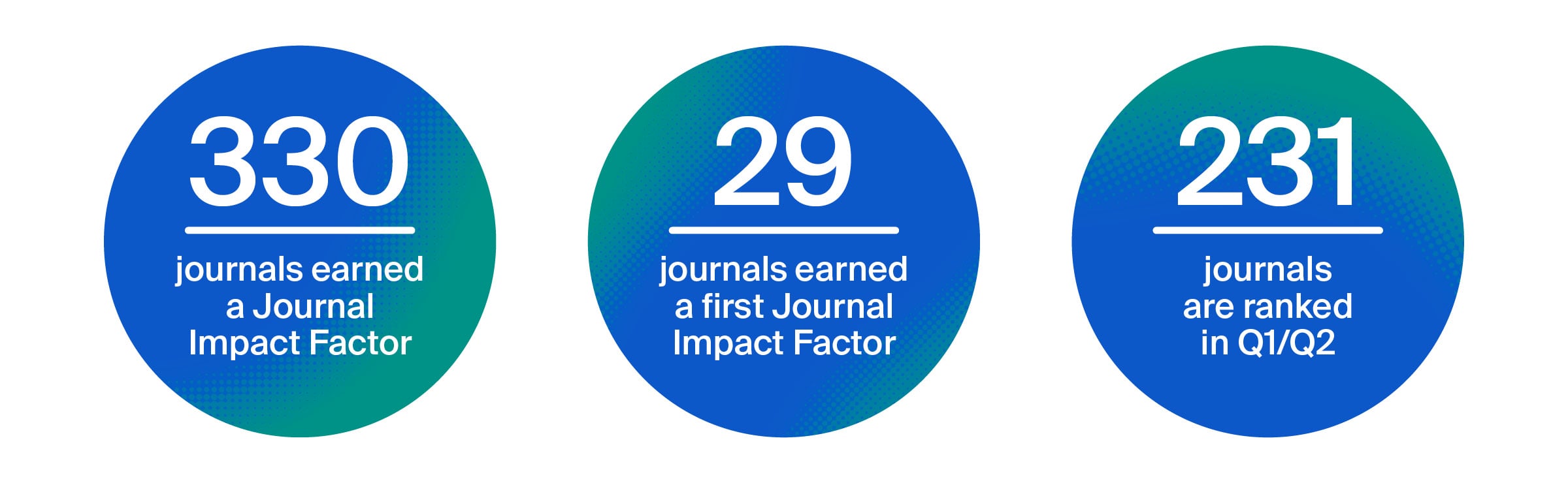
This year's JCR include 330 MDPI journals across a wide range of disciplines. Of these, 231 journals are placed in the top 50% (Q1 or Q2) of their respective subject categories, a result that spans fields as different as materials science, public health, environmental studies, and mathematics. 78 journals hold a top-quartile position (Q1), and 33 journals have a JIF of 5.0 or above.
- 330 journals earned a Journal Impact Factor (JIF)
- 29 journals earned a first JIF
- 254 journals had an increase in JIF
- 71% of ranked journals are in Q1 or Q2
For the full metrics on any MDPI journal, visit our Web of Science journals overview page or a journal's individual statistics page.
29 MDPI Journals Received Their First Journal Impact Factor
A first Impact Factor is a confirmation for an emerging journal. It marks the point at which a journal has been publishing long enough, and cited broadly enough, to enter the formal record of scientific influence. For the research communities those journals serve, it signals that the work being published is being read and built upon.
This year, 29 MDPI journals received a Journal Impact Factor for the first time, across a range of emerging and established research areas. Each represents years of editorial development and peer review—recognized in 2026 for the first time in the JCR.
This is also part of a longer shift in how science gets indexed. When the Emerging Sources Citation Index (ESCI) launched in 2016, 24 MDPI journals were included. By 2024 that number had grown to over 200, reflecting a broader change in the visibility of open access publishing within major citation tracking systems, not just at MDPI but across the sector.
Open Access with Impact
MDPI journals have received a total of 25.2 million citations in Web of Science. That figure matters less as a measure of MDPI's reach and more as a measure of what happens when research is freely available: it gets found, read, and used. Open access is only meaningful if the work actually travels and citations are one indicator that it does.
More than 4.6 million authors have published with MDPI. That breadth, across disciplines, institutions, and geographies, is what makes open access at this scale worth doing.
Thank You to the MDPI Scholarly Community
These results belong to the people who do the actual work: the Editors-in-Chief who set the standards, the Editorial Board Members and reviewers who hold them, and the authors who choose open access for their research. The numbers in the Journal Citation Reports are the downstream effect of decisions made at the desk, in the review, and at submission. Thank you for making them.
Data: 2025 Journal Impact Factors, Journal Citation Reports™ (Clarivate, 2026)
12 June 2026
Nutrients Receives an Increased CiteScore of 10.2

We are pleased to share that Nutrients (ISSN 2072-6643) has received an updated CiteScore of 10.2 in June 2026. The CiteScore ranks the journal 12 out of 147 titles (Q1) in the “Nutrition and Dietetics” category, an impressive achievement for a journal running in Volume 18.
You can find more statistics on our website.
The current CiteScores measure the average number of citations within a journal over a four-year window (2022–2025). The Scopus database provides a comprehensive suite of metrics that support informed publishing strategies, research evaluation and enable benchmarking of journal performance.
This achievement reflects the collective efforts of our authors, reviewers, and editors. Together we will continue to track the progress of Nutrients and its growing impact in Nutrition and Dietetics.
8 June 2026
Interview with Dr. Hyun Kang—Winner of the Nutrients Outstanding Reviewer Award

1. Introduction and current research
My research spans functional materials, natural products, biomaterials, and regenerative medicine—fields I have devoted myself to throughout my career, working across academic institutions and industry both in Korea and abroad. Over the decades, my work has centered on biomaterial development, natural product-derived health functional foods, and bio-healthcare innovation.
I have been particularly drawn to functional materials sourced from terrestrial and marine plants—investigating their bioactive mechanisms and bridging that foundational science toward real-world application. At present, my laboratory is focused on identifying novel functional materials capable of promoting health and preventing disease, with a clear translational mandate: bringing these discoveries into health functional foods, advanced biomaterials, and next-generation bio-healthcare platforms.
Underlying all of this is a conviction I have held throughout my career—that basic science only fulfills its promise when it reaches people. That belief continues to drive every project I take on.
2. Discovering Nutrients and what keeps me coming back
My path to Nutrients was shaped by a pivotal experience: participating in the research and development of a natural product-based material that earned Korea’s first individual recognition approval for bronchial health improvement as a health functional food. That milestone deepened my engagement with the broader field of nutritional and functional materials science, and through that immersion, Nutrients emerged as an essential reference.
My years conducting biomaterials research at MIT sharpened this perspective further. That experience made viscerally clear how intimately nutrition, functional materials, and biomaterials are woven into human health—a thread I have followed ever since.
What I find most compelling about Nutrients is its intellectual breadth. It refuses to confine nutrition to dietary science alone, instead situating it within a much larger conversation—one that encompasses functional materials, natural products, metabolic disease, preventive medicine, and the life sciences broadly. That integrative vision, connecting basic inquiry to applied outcomes and industrial relevance, is rare and genuinely valuable.
3. On receiving this award
This recognition carries real weight for me. Publishing original research is, of course, central to a scientist’s purpose. But I have long believed that rigorously and fairly evaluating the work of fellow researchers is an equally serious scholarly obligation—one that demands expertise, intellectual honesty, and genuine engagement. Peer review is not incidental to science; it is the mechanism by which the field holds itself accountable.
I receive this award as both an affirmation and a reminder. An affirmation that the care I have brought to this work has been noticed—and a reminder that the standard must be maintained. I intend to honor both.
4. The reviewer’s role
A reviewer is not a gatekeeper. That framing, while common, fundamentally undersells the role.
At its best, peer review is a collaborative act—a seasoned scientist lending their expertise to strengthen work that is not their own. It demands objective evaluation of scientific validity, originality, reproducibility, and scholarly contribution, but it demands something more as well: the willingness to engage constructively, to identify not only what is weak but what has genuine promise and how that promise might be more fully realized.
The finest reviews I have encountered—and aspired to write—do not merely diagnose problems. They illuminate a path forward. That is where the real value lies, both for the author and for the field.
5. Balancing depth and efficiency
My approach is deliberate and sequential. I begin by assessing whether the research objectives and hypotheses are stated with sufficient clarity—because if that foundation is unclear, everything built upon it is suspicious. From there, I work through study design, experimental methodology, data analysis, interpretation, and the internal consistency of the conclusions.
Throughout, I keep my attention anchored to what matters most: does the evidence actually support what the authors claim? Is the experimental design genuinely capable of answering the question being asked? Where are the assumptions, and are they defensible?
I am equally attentive to the practical utility of my feedback. Criticism that is too broad or too abstract offers authors little to work with. I make it a point to provide specific, actionable guidance—the kind that can be directly addressed in revision. That commitment, I have found, is what allows a review to be both thorough and efficient.
6. What distinguishes exceptional peer review—and how I recognize AI-generated reports
A high-quality review is not a structured summary of a paper’s merits and shortcomings. It is an act of deep scientific engagement—one that interrogates the work’s validity, originality, and contribution with rigor, and equips the authors with the insight they need to do better.
My own process begins with the figures and tables. The data, before any narrative is layered over it, tells the most honest story. I look for coherence between results and conclusions, probe for overreach in interpretation, and ask whether the work is genuinely advancing the field or rehearsing what is already known.
This is precisely where AI-generated reviews tend to fall short. They can produce fluent, well-organized prose—but they rarely demonstrate the kind of granular, experience-earned insight that characterizes expert evaluation. A reviewer who truly knows the field will engage with specific experimental conditions, interrogate particular statistical choices, surface subtle methodological limitations, and often propose concrete directions for follow-up work. That depth of judgment cannot be simulated; it is accumulated.
Peer review, at its core, exists to protect and elevate the integrity of science. That purpose will not become obsolete—and it cannot be outsourced.
7. My experience with Nutrients
My experience with Nutrients has been consistently rewarding. The editorial team operates with a responsiveness and professionalism that I genuinely respect, and the review process itself is structured in a way that reflects serious institutional commitment to quality.
What has impressed me most is the journal’s scope—not merely its breadth, but the coherence with which it holds together such a diverse range of inquiries. Nutrition, functional materials, natural products, health functional foods, metabolic disease, life sciences: in lesser hands, a portfolio this wide, risks becoming diffuse. Nutrients manages it with intellectual integrity.
By spanning basic research, clinical investigation, and applied industrial science, the journal creates a rare kind of academic commons—a space where researchers across these domains can encounter one another’s work and find genuine points of connection.
I look forward to Nutrients’ continued growth as a leading international platform in this field. And I intend to remain part of that endeavor—as both a researcher and a reviewer—for as long as I am able to contribute something worthwhile.
8 June 2026
Nutrients | Interview with Dr. Claude Billeaud, the Event Chair of the 6th International Online Conference on Nutrients (IOCNU 2027)

1. Could you please briefly introduce yourself?
I am Dr. Claude Billeaud, MD, MSc, PhD, HDR, with over 40 years of experience in pediatrics, neonatology, and neonatal nutrition. Since 1983, I have served as Clinical Assistant Director at the University of Bordeaux in Pediatrics, Neonatology, and Intensive Care, while also practicing as a pediatrician in the neonatal unit of the Children’s Hospital of Bordeaux.
I am the scientific director of the Bordeaux–Marmande Human Milk Bank and head of research (HDR) and lecturer in neonatal nutrition at the University of Bordeaux Medical School.
I also serve as President of the European Association for Paediatrics Education (AEEP/EAPE) and am a member of the European Academy of Paediatrics, with active involvement in several international scientific organizations in perinatal medicine.
Throughout my career, I have maintained strong international academic collaborations, including guest professorships in Canada and Argentina, and long-standing engagement with the French Human Milk Banking Association (ADLF). My current research focuses on human milk composition and neonatal nutrition.
2. What were the important turning points or challenges in your academic career, and how did you overcome them?
A key turning point in my career was my early specialization in neonatology and nutrition, beginning in 1978 through training in Belgium and at the Sainte-Justine Hospital in Montréal.
Another major milestone was the creation of the Pediatric Clinical Investigation Center at the Bordeaux University Hospital (CHU Bordeaux) in 2000, supported by the Nadine de Rothschild Foundation grant.
Leading the Bordeaux–Marmande Human Milk Bank also represented a significant development in my career, strengthening both clinical practice and research.
Finally, my long-term involvement in pediatric education through AEEP/EAPE, starting from 1990, and my current presidency of the association, has allowed me to contribute to European-level medical education and research collaboration.
3. In your opinion, what are the most important qualities of an outstanding researcher?
An outstanding researcher should first demonstrate integrity (probity), curiosity, and a strong foundation in both theoretical and practical training throughout their career.
Equally important are the abilities to build and lead research teams, secure public or private research funding, communicate effectively, and contribute to teaching.
Finally, consistent scientific publication and international collaboration are essential components of impactful research.
4. In an environment with a highly competitive academic atmosphere and strong pressure on research output, how do you maintain your original aspiration and focus on research?
Maintaining focus requires determination, clear objectives, and a strong commitment to one’s scientific and clinical mission, even in a highly competitive academic environment.
5. What was the primary goal or inspiration for establishing this edition of the conference with the focus on innovations in neonatal and early childhood nutrition?
The European Association for Paediatrics Education (AEEP/EAPE) aims to provide up-to-date pediatric knowledge and training.
As President, I strongly support initiatives that promote the dissemination of scientific knowledge, particularly through accessible formats such as web-based congresses.
Human milk serves as the natural model for infant development. Innovations in pediatric nutrition aim to replicate and better understand the bioactive components of human milk in order to improve infant health and development.
6. What exclusive gains can participants obtain from this event, and why should young researchers and first-time attendees join?
This conference offers access to up-to-date knowledge in pediatric nutrition, which can directly inspire new research projects and clinical approaches.
For young researchers, it provides valuable opportunities for free participation, as well as awards for the best scientific contributions, serving as strong motivation and encouragement.
7. What is the role of the European Association for Paediatrics Education (AEEP/EAPE) in advancing education and collaboration in pediatric nutrition and child health research?
AEEP/EAPE is a long-established European association dedicated to promoting education and pedagogical excellence in pediatrics.
Nutrition plays a fundamental role in infant health and primary care, and the association actively promotes knowledge dissemination in this field.
As an affiliated society of the European Academy of Paediatrics, AEEP collaborates closely with academic researchers and institutions. Its website and international network facilitate the dissemination of congresses, webinars, and educational resources, including previous joint initiatives with MDPI.
8. In what ways does the collaboration between AEEP and IOCNU 2027 strengthen the scientific and educational value of this conference for participants, and especially early career researchers?
The collaboration between AEEP/EAPE and IOCNU 2027 is mutually beneficial and significantly strengthens the scientific and educational value of the conference.
AEEP’s mission is to disseminate up-to-date pediatric knowledge freely to clinicians and researchers, while maintaining strong academic collaboration.
Nutrition research is sometimes perceived as being closely linked to commercial publishing environments; however, AEEP provides an academic and educational bridge that reinforces scientific rigor and neutrality.
This partnership therefore creates a win–win situation, enhancing visibility, accessibility, and academic impact for both organizations and participants, particularly early career researchers.
Introduction of IOCNU 2027:
Conference date: 10–11 February 2027;
Deadline for abstract submission: 12 October 2026;
Deadline for registration: 5 February 2027.
Conference Chairs:
- Dr. Claude Billeaud, Hôpital des Enfants, CHU Pellegrin, Bordeaux, France, European Association for Paediatrics Education CEO;
- Dr. Francisco J. Pérez-Cano, University of Barcelona, Barcelona and Nutrition and Food Safety Research Institute (INSA), Spain.
For more details please visit the following link https://sciforum.net/event/IOCNu2027.
For any inquiries regarding the event, please get in touch with iocnu2027@mdpi.com.
4 June 2026
Open Access, Broadly Recognized: 363 MDPI Journals Receive CiteScores for 2025

The 2025 CiteScore metrics have been officially released by Scopus, and the results confirm what has become a consistent pattern for MDPI's journal portfolio: broad recognition across disciplines, steady improvement across the majority of ranked titles, and a growing presence at the top of subject category rankings.
CiteScore, published annually by Elsevier's Scopus database, measures the average citations received by articles published in a journal over a four-year window. As a complement to the Journal Impact Factor, which uses a two-year window based on the Web of Science database, CiteScore provides an alternative, long-term perspective on citation performance.
The 365 MDPI journals in Scopus (as of May 2026) are indexed across a wide range of subject categories, ensuring that open access research remains highly discoverable to a global readership through one of the most widely used platforms in academic publishing.
Data Summary (2025 CiteScores)
- New Additions: 41 MDPI journals received a CiteScore for the first time.
- Trending Upward: 234 of 322 previously ranked journals (73%) saw an increase in their CiteScore compared to last year.
- High Visibility: 314 journals (86%) rank in Q1 or Q2 in at least one subject category.
- Elite Performance: 42 journals rank in the top 10% of their subject categories.
Portfolio Performance
Among the 322 journals that held a CiteScore in 2024, 234 saw an increase this year. Quartile improvements outnumbered declines across the portfolio, with 52 journals moving to a higher quartile and only 20 seeing a decline. Furthermore, no previously ranked journals were removed. The 42 journals now ranked in the top 10% of their subject categories are drawn from a strong foundation of 178 journals holding a Q1 position.
With the large majority of our indexed portfolio ranked in the top half of research fields, researchers can confidently choose MDPI to meet funder mandates for high-quality, fully compliant Open Access publishing.
Exceptional Achievements for Foods and Life
Notably, both Foods and Life achieved a 99th percentile ranking in their respective subject categories for the 2025 CiteScores. This outstanding placement positions them as leading journals in their fields and highlights the high visibility and global impact of the open access research they publish.
Journal Metrics and Beyond
Journal-level metrics describe outlets, not individual articles. An increasing number of funders and institutions—including signatories of DORA and the Coalition for Advancing Research Assessment—now explicitly encourage evaluation at the article level rather than by the journal in which research appears. MDPI supports this direction: we report CiteScore alongside the Journal Impact Factor, Journal Citation Indicator, and article-level usage data because no single number captures the full reach and contribution of published research.
Thank You
These results reflect the sustained effort of thousands of editors-in-chief, editorial board members, reviewers, and authors across every field MDPI serves. The metrics are the outcome; the work is yours.
