

Journal Menu
► ▼ Journal Menu-
- Sustainability Home
- Aims & Scope
- Editorial Board
- Reviewer Board
- Topical Advisory Panel
- Early Career Editorial Board
- Instructions for Authors
- Special Issues
- Topics
- Sections & Collections
- Article Processing Charge
- Indexing & Archiving
- Editor’s Choice Articles
- Most Cited & Viewed
- Journal Statistics
- Journal History
- Journal Awards
- Society Collaborations
- Conferences
- Editorial Office
Journal Browser
► ▼ Journal BrowserNeed Help?
Announcements
16 January 2026
Meet Us Virtually at the 1st International Online Conference on Sustainable Construction (GO BUILD 2026), 18–20 November 2026
We are delighted to announce the 1st International Online Conference on Sustainable Construction: Globalize, Organize, Build, Unite, Innovate, Lead, Develop, chaired by Dr. Igor Martek, Deakin University, Australia and Dr. Mehdi Amirkhani, Adelaide University, Australia, which will take place from 18 to 20 November 2026.
GO BUILD 2026 units researchers, educators, students, industry professionals, and policymakers to highlight the vital role of sustainable building in achieving global sustainability goals. Focusing on innovation, collaboration, leadership, and education, the conference showcases cutting-edge solutions and strategies to create resilient, inclusive, and future-ready built environments, driving transformative progress in sustainable construction worldwide.
Topics of interest:
1. G – Global: Sustainable Development in the Global South: Challenges and Opportunities;
2. O – Organize: Workforce Development and Skills in the Construction Sector;
3. B – Build: Sustainable Building Practices;
4. U – Unit: Resilient Infrastructure and Disaster Management;
5. I – Innovate: Emerging Technologies for Sustainable Construction;
6. L – Lead: Building Regulations versus Technology Innovations;
7. D – Develop: Innovation and Lifelong Learning in Built Environment Education;
8. Cross-Cutting Theme: Building Science and Performance Innovations.
Important deadlines:
Abstract Submission Deadline: 18 June 2026;
Abstract Acceptance Notification Deadline: 19 August 2026;
Early Bird Registration Deadline: 22 August 2026;
Registration Deadline: 13 November 2026.
Guide for authors:
To submit your abstract, please click on the following link: https://sciforum.net/user/submission/create/1495.
To register for this event, please click on the following link: https://sciforum.net/event/GOBUILD2026?section=#registration.
For more information, please visit: https://sciforum.net/event/GOBUILD2026.
Best Oral Presentation Award and Best Poster Award:
- Total of 4 winners will be selected for the two award types;
- Each winner will receive a certificate and CHF 200.
For any enquiries regarding the event, please contact us at gobuild2026@mdpi.com. We look forward to seeing you at the 1st International Online Conference on Sustainable Construction.
22 October 2025
Meet Us at the 12th World Sustainability Forum, 21–24 August 2026, Hong Kong, China

We would like to invite you to attend the 12th World Sustainability Forum, organized by MDPI’s Sustainability journal (ISSN: 2071-1050, IF 3.3), which will take place from 21 to 24 August 2026, in Hong Kong, China.
Conference Chair:
- Prof. Dr. Vivien Lu, Hong Kong Polytechnic University, Hong Kong, China.
- Prof. Dr. Weiqi Zhou, Research Center for Eco-Environmental Sciences, Chinese Academy of Sciences, Beijing, China.
- Prof. Dr. Mark A. Bonn, Florida State University, Tallahassee, USA.
Honorary Chair:
- Prof. Dr. Max Bergman, University of Basel, Basel, Switzerland.
Topics of interest:
S1. Emerging Technologies and Integrated Solutions for Sustainable, Resilient Cities and Planet;
S2. Resilient Urban Energy Infrastructure;
S3. Sustainability Education and Innovative Approaches;
S4. Climate Change and Socio-Ecological Systems;
S5. Sustainable Urban Landscapes and Low-Carbon Mobility;
S6. Circular Economy and Resource Efficiency;
S7. Renewable Energy and Smart Grids;
S8. Policy Frameworks for Equitable Green Transitions;
S9. Sustainable Economic Models and Green Finance;
S10. Tourism, Culture, Heritage and Hospitality: Global Strategies for a Sustainable Future;
S11. Inclusive Strategies for Water Quality Improvement, Ecological Restoration and Water Resource Management.
Important dates:
Abstract submission deadline: 29 May 2026;
Abstract acceptance notification: 16 June 2026.
Guide for authors:
To submit your abstract, please click on the following link: https://sciforum.net/user/submission/create/1460.
To register for the event, please click on the following link: https://sciforum.net/event/WSF-12?section=#registration
For details regarding the submission of abstracts, posters, and slides and publication opportunities, you may refer to the “Instructions for Authors” section: https://sciforum.net/event/WSF-12?subscribe§ion=#instructions.
For any enquiries regarding this event, please contact: wsf12@mdpi.com.
We look forward to seeing you at the 12th World Sustainability Forum.
23 June 2026
Sustainability Receives an Increased CiteScore of 8.9

We are pleased to share that Sustainability (ISSN 2071-1050) has received an increased CiteScore of 8.9 in June 2026. The CiteScore ranks the journal 66 out of 876 titles (Q1) in the “Geography, Planning and Development” category, 38 out of 307 titles (Q1) in the “Environmental Science (miscellaneous)” category, 65 out of 347 titles (Q1) in the “Energy Engineering and Power Technology” category, an impressive achievement for a journal running in Volume 18.
You can find more statistics on our website.
The current CiteScores measure the average number of citations within a journal over a four-year window (2022–2025). The Scopus database provides a comprehensive suite of metrics that support informed publishing strategies, research evaluation and enable benchmarking of journal performance.
This achievement reflects the collective efforts of our authors, reviewers, and editors. Together we will continue to track the progress of Sustainability and its growing impact in research of sustainability and sustainable development.
23 June 2026
Sustainability | Highly Viewed Papers in 2025
- “Advancing Renewable Energy in Indonesia: A Comprehensive Analysis of Challenges, Opportunities, and Strategic Solutions”
by Indra A. Aditya, Tito Wijayanto and Dzikri F. Hakam
Sustainability 2025, 17(5), 2216; https://doi.org/10.3390/su17052216
Available online: https://www.mdpi.com/2071-1050/17/5/2216 - “Digital Transformation, Supply Chain Resilience, and Sustainability: A Comprehensive Review with Implications for Saudi Arabian Manufacturing”
by Mohammed Alquraish
Sustainability 2025, 17(10), 4495; https://doi.org/10.3390/su17104495
Available online: https://www.mdpi.com/2071-1050/17/10/4495 - “Analysis of Digital Twin Applications in Energy Efficiency: A Systematic Review”
by Labouda Ba, Fatma Tangour, Ikram El Abbassi and Rafik Absi
Sustainability 2025, 17(8), 3560; https://doi.org/10.3390/su17083560
Available online: https://www.mdpi.com/2071-1050/17/8/3560 - “A Review of Wildlife–Vehicle Collisions: A Multidisciplinary Path to Sustainable Transportation and Wildlife Protection”
by Linas Balčiauskas, Andrius Kučas and Laima Balčiauskienė
Sustainability 2025, 17(10), 4644; https://doi.org/10.3390/su17104644
Available online: https://www.mdpi.com/2071-1050/17/10/4644 - “The Effects of Digital Transformation, IT Innovation, and Sustainability Strategies on Firms’ Performances: An Empirical Study”
by Andrea Billi and Alessandro Bernardo
Sustainability 2025, 17(3), 823; https://doi.org/10.3390/su17030823
Available online: https://www.mdpi.com/2071-1050/17/3/823 - “Research Perspectives on Innovation in the Automotive Sector”
by Abedassalam Braidy, Shaligram Pokharel and Tarek Y. ElMekkawy
Sustainability 2025, 17(7), 2795; https://doi.org/10.3390/su17072795
Available online: https://www.mdpi.com/2071-1050/17/7/2795 - “Food Waste Reduction: A Systematic Literature Review on Integrating Policies, Consumer Behavior, and Innovation”
by Raquel Carvalho, Maria Raquel Lucas and Ana Marta-Costa
Sustainability 2025, 17(7), 3236; https://doi.org/10.3390/su17073236
Available online: https://www.mdpi.com/2071-1050/17/7/3236 - “Sustainable Wet Processing Technologies for the Textile Industry: A Comprehensive Review”
by Maria L. Catarino, Filipa Sampaio and Ana L. Gonçalves
Sustainability 2025, 17(7), 3041; https://doi.org/10.3390/su17073041
Available online: https://www.mdpi.com/2071-1050/17/7/3041 - “The Evolution of Digital Tourism Marketing: From Hashtags to AI-Immersive Journeys in the Metaverse Era”
by Evangelos Christou, Antonios Giannopoulos and Ioanna Simeli
Sustainability 2025, 17(13), 6016; https://doi.org/10.3390/su17136016
Available online: https://www.mdpi.com/2071-1050/17/13/6016 - “Artificial Turf Versus Natural Grass: A Case Study of Environmental Effects, Health Risks, Safety, and Cost”
by Iman S. Cumberbatch, Leonard Richardson, Emma Grant-Bier, Mustafa Kayali, Mutanu Mbithi, Roberto F. Riviere, Eline Xia, Hailey Spinks, Gabrielle Mills and Amy R. Tuininga
Sustainability 2025, 17(14), 6292; https://doi.org/10.3390/su17146292
Available online: https://www.mdpi.com/2071-1050/17/14/6292 - “Barriers to Visibility in Supply Chains: Challenges and Opportunities of Artificial Intelligence Driven by Industry 4.0 Technologies”
by Fernanda Delgado, Susana Garrido and Barbara Stolte Bezerra
Sustainability 2025, 17(7), 2998; https://doi.org/10.3390/su17072998
Available online: https://www.mdpi.com/2071-1050/17/7/2998 - “Analysis of Key Factors of Cost Overrun in Construction Projects Based on Structural Equation Modeling”
by Sizi Dong, Mukhtar Ahmed and Vuttichai Chatpattananan
Sustainability 2025, 17(5), 2119; https://doi.org/10.3390/su17052119
Available online: https://www.mdpi.com/2071-1050/17/5/2119 - “The Role of the Workplace Environment in Shaping Employees’ Well-Being”
by Simona Dumitriu, Claudiu George Bocean, Anca Antoaneta Vărzaru, Andreea Teodora Al-Floarei, Natalița Maria Sperdea, Florentina Luminița Popescu and Ionuț-Cosmin Băloi
Sustainability 2025, 17(6), 2613; https://doi.org/10.3390/su17062613
Available online: https://www.mdpi.com/2071-1050/17/6/2613 - “Heavy Metal Pollution in Coastal Environments: Ecological Implications and Management Strategies: A Review”
by Mahmoud El-Sharkawy, Modhi O. Alotaibi, Jian Li, Daolin Du and Esawy Mahmoud
Sustainability 2025, 17(2), 701; https://doi.org/10.3390/su17020701
Available online: https://www.mdpi.com/2071-1050/17/2/701 - “Large-Scale Renewable Energy Integration: Tackling Technical Obstacles and Exploring Energy Storage Innovations”
by Sadettin Ergun, Abdullah Dik, Rabah Boukhanouf and Siddig Omer
Sustainability 2025, 17(3), 1311; https://doi.org/10.3390/su17031311
Available online: https://www.mdpi.com/2071-1050/17/3/1311 - “The Role of Augmented and Virtual Reality in Shaping Retail Marketing: A Meta-Analysis”
by Xiaowei Fan, Jiyao Xun, Les Dolega and Lin Xiong
Sustainability 2025, 17(2), 728; https://doi.org/10.3390/su17020728
Available online: https://www.mdpi.com/2071-1050/17/2/728 - “The Impact of AI-Powered Try-On Technology on Online Consumers’ Impulsive Buying Intention: The Moderating Role of Brand Trust”
by Yanlei Gao and Jingwen Liang
Sustainability 2025, 17(7), 2789; https://doi.org/10.3390/su17072789
Available online: https://www.mdpi.com/2071-1050/17/7/2789 - “Hybrid Teaching and Learning in Higher Education: A Systematic Literature Review”
by Daina Gudoniene, Evelina Staneviciene, Isabel Huet, Jochen Dickel, Djibril Dieng, Joël Degroote, Vitor Rocio, Rita Butkiene and Diogo Casanova
Sustainability 2025, 17(2), 756; https://doi.org/10.3390/su17020756
Available online: https://www.mdpi.com/2071-1050/17/2/756 - “Impact of Democratic Leadership on Employee Innovative Behavior with Mediating Role of Psychological Safety and Creative Potential”
by Muhammad Imran, Jizu Li, Sher Bano and Waqas Rashid
Sustainability 2025, 17(5), 1879; https://doi.org/10.3390/su17051879
Available online: https://www.mdpi.com/2071-1050/17/5/1879 - “Sustaining Digital Marketing Strategies to Enhance Customer Engagement and Brand Promotion: Position as a Moderator”
by Marjan Kamyabi, Hale Özgit and Japheth Nuhu Ahmed
Sustainability 2025, 17(7), 3270; https://doi.org/10.3390/su17073270
Available online: https://www.mdpi.com/2071-1050/17/7/3270 - “Evaluating the Impact of Sustainability Practices on Customer Relationship Quality: An SEM-PLS Approach to Align with SDG”
by Nasser Ali M. Khalufi, Riyaz Abdullah Sheikh, Syed Md Faisal Ali Khan and Choo Wou Onn
Sustainability 2025, 17(2), 798; https://doi.org/10.3390/su17020798
Available online: https://www.mdpi.com/2071-1050/17/2/798 - “Energy Consumption of Crypto Mining: Consequences and Sustainable Solutions Using Systems Thinking and System Dynamics Analysis”
by Mohamd Laimon, Rula Almadadha and Steven Goh
Sustainability 2025, 17(8), 3522; https://doi.org/10.3390/su17083522
Available online: https://www.mdpi.com/2071-1050/17/8/3522 - “The Impact of Green Perceived Value Through Green New Products on Purchase Intention: Brand Attitudes, Brand Trust, and Digital Customer Engagement”
by Xuan Liu, Tae-Hoo Kim and Min-Jae Lee
Sustainability 2025, 17(9), 4106; https://doi.org/10.3390/su17094106
Available online: https://www.mdpi.com/2071-1050/17/9/4106 - “Recent Advances in Flexible Solar Cells; Materials, Fabrication, and Commercialization”
by Maoz Maoz, Zohair Abbas, Syed Abdul Basit Shah and Vanni Lughi
Sustainability 2025, 17(5), 1820; https://doi.org/10.3390/su17051820
Available online: https://www.mdpi.com/2071-1050/17/5/1820 - “The Role of Talent Management in Enhancing Employee Retention: Mediating the Influence of Psychological Empowerment”
by Dalila B. S. Menezes, Megi Gumashivili and Kiti Kanokon
Sustainability 2025, 17(7), 3277; https://doi.org/10.3390/su17073277
Available online: https://www.mdpi.com/2071-1050/17/7/3277 - “Cloud Computing’s Impact on the Digital Transformation of the Enterprise: A Mixed-Methods Approach”
by Tereza Raquel Merlo, Fariba Fard and Suliman Hawamdeh
Sustainability 2025, 17(13), 5755; https://doi.org/10.3390/su17135755
Available online: https://www.mdpi.com/2071-1050/17/13/5755 - “The Role of Social Media in Green Marketing: How Eco-Friendly Content Influences Brand Attitude and Consumer Engagement”
by Elnur Nabivi
Sustainability 2025, 17(5), 1965; https://doi.org/10.3390/su17051965
Available online: https://www.mdpi.com/2071-1050/17/5/1965 - “Triple Bottom Line in Sustainable Development: A Comprehensive Bibliometric Analysis”
by Ionuț Nica, Nora Chiriță and Irina Georgescu
Sustainability 2025, 17(5), 1932; https://doi.org/10.3390/su17051932
Available online: https://www.mdpi.com/2071-1050/17/5/1932 - “Drivers, Barriers, and Innovations in Sustainable Food Consumption: A Systematic Literature Review”
by Bogdan Nichifor, Luminita Zait and Laura Timiras
Sustainability 2025, 17(5), 2233; https://doi.org/10.3390/su17052233
Available online: https://www.mdpi.com/2071-1050/17/5/2233 - “Sustainable Campus Operations in Higher Education Institutions: A Systematic Literature Review”
by Miguel Carvalho Oliveira and João Proença
Sustainability 2025, 17(2), 607; https://doi.org/10.3390/su17020607
Available online: https://www.mdpi.com/2071-1050/17/2/607 - “Green Cosmetics—The Effects of Package Design on Consumers’ Willingness-to-Pay and Sustainability Perceptions”
by Jens K. Perret, Alicia Gómez Velázquez and Audrey Mehn
Sustainability 2025, 17(6), 2581; https://doi.org/10.3390/su17062581
Available online: https://www.mdpi.com/2071-1050/17/6/2581 - “Remote Work and Psychological Distance: Organizational Belongingness as a Resource Against Work Stressors and Employee Performance Impairment and Distress”
by Laura Petitta and Valerio Ghezzi
Sustainability 2025, 17(4), 1342; https://doi.org/10.3390/su17041342
Available online: https://www.mdpi.com/2071-1050/17/4/1342 - “Mediterranean Diet: From Ancient Traditions to Modern Science—A Sustainable Way Towards Better Health, Wellness, Longevity, and Personalized Nutrition”
by Anka Trajkovska Petkoska, Violeta Ognenoska and Anita Trajkovska-Broach
Sustainability 2025, 17(9), 4187; https://doi.org/10.3390/su17094187
Available online: https://www.mdpi.com/2071-1050/17/9/4187 - “Digital Solutions in Tourism as a Way to Boost Sustainable Development: Evidence from a Transition Economy”
by Anna Polukhina, Marina Sheresheva, Dmitry Napolskikh and Vladimir Lezhnin
Sustainability 2025, 17(3), 877; https://doi.org/10.3390/su17030877
Available online: https://www.mdpi.com/2071-1050/17/3/877 - “Advancing Biochar Applications: A Review of Production Processes, Analytical Methods, Decision Criteria, and Pathways for Scalability and Certification”
by Diego C. B. D. Santos, Rafael B. W. Evaristo, Romulo C. Dutra, Paulo A. Z. Suarez, Edgar A. Silveira and Grace F. Ghesti
Sustainability 2025, 17(6), 2685; https://doi.org/10.3390/su17062685
Available online: https://www.mdpi.com/2071-1050/17/6/2685 - “ESG Rating Divergence: Existence, Driving Factors, and Impact Effects”
by Yong Shi and Tongsheng Yao
Sustainability 2025, 17(10), 4717; https://doi.org/10.3390/su17104717
Available online: https://www.mdpi.com/2071-1050/17/10/4717 - “Organic Acids in Food Preservation: Exploring Synergies, Molecular Insights, and Sustainable Applications”
by Kavita Bhavin Sorathiya, Adma Melo, Maria Conceição Hogg and Manuela Pintado
Sustainability 2025, 17(8), 3434; https://doi.org/10.3390/su17083434
Available online: https://www.mdpi.com/2071-1050/17/8/3434 - “The Use of Multimedia in the Teaching and Learning Process of Higher Education: A Systematic Review”
by Evelina Staneviciene and Gintarė Žekienė
Sustainability 2025, 17(19), 8859; https://doi.org/10.3390/su17198859
Available online: https://www.mdpi.com/2071-1050/17/19/8859 - “Global Regulations for Sustainable Battery Recycling: Challenges and Opportunities”
by Dan Su, Yu Mei, Tongchao Liu and Khalil Amine
Sustainability 2025, 17(7), 3045; https://doi.org/10.3390/su17073045
Available online: https://www.mdpi.com/2071-1050/17/7/3045 - “Enhancing Project-Based Learning: A Framework for Optimizing Structural Design and Implementation—A Systematic Review with a Sustainable Focus”
by Rosa Sánchez-García and Salvador Reyes-de-Cózar
Sustainability 2025, 17(11), 4978; https://doi.org/10.3390/su17114978
Available online: https://www.mdpi.com/2071-1050/17/11/4978 - “Agroecology and Sustainable Agriculture: Conceptual Challenges and Opportunities—A Systematic Literature Review”
by Karla Terán-Samaniego, Jesús Martín Robles-Parra, Irasema Vargas-Arispuro, Miguel Ángel Martínez-Téllez, María Cristina Garza-Lagler, David Félix-Gurrlola, Mayra Lucía Maycotte-de la Peña, Julio César Tafolla-Arellano, Jorge Alan García-Figueroa and Pablo César Espinoza-López
Sustainability 2025, 17(5), 1805; https://doi.org/10.3390/su17051805
Available online: https://www.mdpi.com/2071-1050/17/5/1805 - “Blockchain for Sustainable Development: A Systematic Review”
by Marsela Thanasi-Boçe and Julian Hoxha
Sustainability 2025, 17(11), 4848; https://doi.org/10.3390/su17114848
Available online: https://www.mdpi.com/2071-1050/17/11/4848 - “Sustainable Consumption and Branding for Gen Z: How Brand Dimensions Influence Consumer Behavior and Adoption of Newly Launched Technological Products”
by Dimitrios Theocharis and Georgios Tsekouropoulos
Sustainability 2025, 17(9), 4124; https://doi.org/10.3390/su17094124
Available online: https://www.mdpi.com/2071-1050/17/9/4124 - “Artificial Intelligence for Sustainability: A Systematic Review and Critical Analysis of AI Applications, Challenges, and Future Directions”
by Mihaela Toderas
Sustainability 2025, 17(17), 8049; https://doi.org/10.3390/su17178049
Available online: https://www.mdpi.com/2071-1050/17/17/8049 - “Artificial Intelligence in Tourism: A Systematic Literature Review and Future Research Agenda”
by Siqi Wang, Qingjin Wang, Qian Cui and Tian Lan
Sustainability 2025, 17(20), 9080; https://doi.org/10.3390/su17209080
Available online: https://www.mdpi.com/2071-1050/17/20/9080 - “A New Breakthrough in Travel Behavior Modeling Using Deep Learning: A High-Accuracy Prediction Method Based on a CNN”
by Xuli Wen and Xin Chen
Sustainability 2025, 17(2), 738; https://doi.org/10.3390/su17020738
Available online: https://www.mdpi.com/2071-1050/17/2/738 - “Recycled Materials in Construction: Trends, Status, and Future of Research”
by Jiawei Wu, Xunrong Ye and Huachun Cui
Sustainability 2025, 17(6), 2636; https://doi.org/10.3390/su17062636
Available online: https://www.mdpi.com/2071-1050/17/6/2636 - “The Impact of Adaptive Learning Technologies, Personalized Feedback, and Interactive AI Tools on Student Engagement: The Moderating Role of Digital Literacy”
by Husam Yaseen, Abdelaziz Saleh Mohammad, Najwa Ashal, Hesham Abusaimeh, Ahmad Ali and Abdel-Aziz Ahmad Sharabati
Sustainability 2025, 17(3), 1133; https://doi.org/10.3390/su17031133
Available online: https://www.mdpi.com/2071-1050/17/3/1133 - “Sustainable Transition of the Global Semiconductor Industry: Challenges, Strategies, and Future Directions”
by Yilong Yin and Yi Yang
Sustainability 2025, 17(7), 3160; https://doi.org/10.3390/su17073160
Available online: https://www.mdpi.com/2071-1050/17/7/3160 - “The Role of Digital Tourism Platforms in Advancing Sustainable Development Goals in the Industry 4.0 Era”
by Adelina Zeqiri, Adel Ben Youssef and Teja Maherzi Zahar
Sustainability 2025, 17(8), 3482; https://doi.org/10.3390/su17083482
Available online: https://www.mdpi.com/2071-1050/17/8/3482
17 June 2026
Empowering Academic Growth with MDPI Academic Publishing Workshop at Thaksin University, 8 July 2026

We are delighted to announce the MDPI Academic Publishing Workshop, organized in partnership with the Institution of Research and Innovation, Thaksin University, Songkhla. This event reflects a shared commitment to advancing academic research through open access publishing, cross-sector collaboration, and innovative scholarly communication.
As part of our ongoing dedication to researcher development, the workshop aims to improve academic writing skills, facilitate scholarly communication, and guide authors in selecting appropriate journals for submission. Designed especially for young researchers, PhD and master’s students, and potential researchers, the workshop will provide practical skills to enhance the visibility and impact of scholarly work while fostering meaningful connections with MDPI journal editors and publishing professionals.
Date: 8 July 2026
Time: 9:00 a.m.–12:00 p.m.
Location: Self-Access Learning Center, Room 18503, 50th Anniversary Building (Building 18), Thaksin University, Songkhla Campus
Language: Thai
Registration: https://docs.google.com/forms/d/e/1FAIpQLSfqO_1rUP508T43ak_uSISkp3CjcLhU9U-ol5_V_GQyZMAwAQ/viewform
| Speaker | Program | Time |
| Assoc. Prof. Dr. Samak Kaewsuksaeng | Opening Speech | 09:00–09:10 |
| Ms. Ploy Assavajamroon | MDPI and Journal Introduction | 09:10–09:30 |
| Dr. Juthathip Poofery | Writing Scientific Papers | 09:30–10:00 |
| Ms. Chatchanok Boonsanong | Data Visualization and Layout Guidelines for Scientific Papers | 10:00–10:45 |
| Coffee Break | 10:45–11:00 | |
| Ms. Hathaipat Kittirojana | How to Respond to Peer Reviewers | 11:00–11:20 |
| Q&A | 11:20–11:30 | |
| Dr. Siriporn Tantiwatcharothai | Publication Ethics for Authors | 11:30–11:50 |
| Q&A | 11:50–12:00 |
| Chair: | |
 |
Assoc. Prof. Dr. Samak Kaewsuksaeng is the Vice President for Research and Innovation at Thaksin University, Thailand. He obtained his PhD in postharvest technology from King Mongkut’s University of Technology Thonburi. With extensive experience in research management, he has served as Acting Deputy Director of the Research and Development Institute at Thaksin University (2019–2022), Director in 2022, and currently holds the position of Acting Director. His research expertise focuses on postharvest handling systems of fruits and vegetables, plant pigments, protein purification in plants, and the physiology and biochemistry of fruits, vegetables, and ornamental plants after harvesting. |
| MDPI Speakers: | |
 |
Ms. Ploy Assavajamroon obtained her master’s degree in chemistry from Thammasat University, Thailand, in 2020 and joined MDPI as an Assistant Editor for the journal Crystals in the same year. She became a Section Managing Editor in 2021 and a Group Leader in 2022. She is currently one of MDPI’s Regional Engagement Editors for the Asia–Pacific region. |
 |
Dr. Juthathip Poofery holds a PhD in biochemistry from the Faculty of Medicine, Chiang Mai University, Thailand. She joined MDPI in 2021 as an Assistant Editor for Medicina and was promoted to Section Managing Editor in 2022. Since 2023, Dr. Poofery has served as the Editorial Team Leader of the Medical Sciences Section, overseeing editorial operations and supporting the advancement of research in the medical sciences. She currently works as a Regional Engagement Editor for the Asia–Pacific region. |
 |
Ms. Chatchanok Boonsanong graduated from Prince of Songkla University in biology and has been with MDPI since November 2022. She brings a strong and well-rounded production background, currently serving as a Final Checker, Cross Checker, LaTeX Editor, Quality Checker, and Website Editor. Thanks to her extensive hands-on experience across these key production roles, Chatchanok has also taken on the responsibility of a production tutor, training and guiding many new employees. |
 |
Ms. Hathaipat Kittirojana obtained her master’s degree in food science and biotechnology from Teesside University. She joined MDPI in December 2020 as an Assistant Editor for the Journal of Imaging. She was appointed as a Section Managing Editor in March 2023 and a Regional Engagement Editor for the Asia–Pacific region in July 2024. |
 |
Dr. Siriporn Tantiwatcharothai obtained her PhD in applied chemistry from the Faculty of Science, King Mongkut's Institute of Technology Ladkrabang. She joined MDPI in December 2022 as an Assistant Editor for Catalysts. In 2024, she was promoted to Section Managing Editor, and served as a Chief Section Managing Editor in April 2025. Currently, she is one of MDPI's Regional Engagement Editors for the Asia–Pacific region. |
17 June 2026
2025 Impact Factors Released
Impact Factors measure how often articles in scientific journals are cited—specifically, the average number of citations received in a given year by articles published in that journal over the previous two years, as tracked in the Web of Science. For researchers, the number answers a practical question: how often is work published in this journal being picked up and built upon?
The metric is assigned to the journal as a whole, not to individual articles. A high Impact Factor tells you something useful about a journal's place in its field; it tells you less about any single paper within it.
For a complementary, article-level view, MDPI lists an Altmetric score on each article page. Where the Impact Factor tracks academic citations, the Altmetric score captures broader online attention: how an article is being shared, discussed, and referenced beyond the journal literature. Together, they offer two different ways of asking the same question: is this research reaching people?
With 2025 CiteScores from Scopus published a few weeks ago, Clarivate has now released this year's Journal Impact Factors in the Journal Citation Reports (JCR).
254 MDPI Journals Saw a Rise in Impact Factor
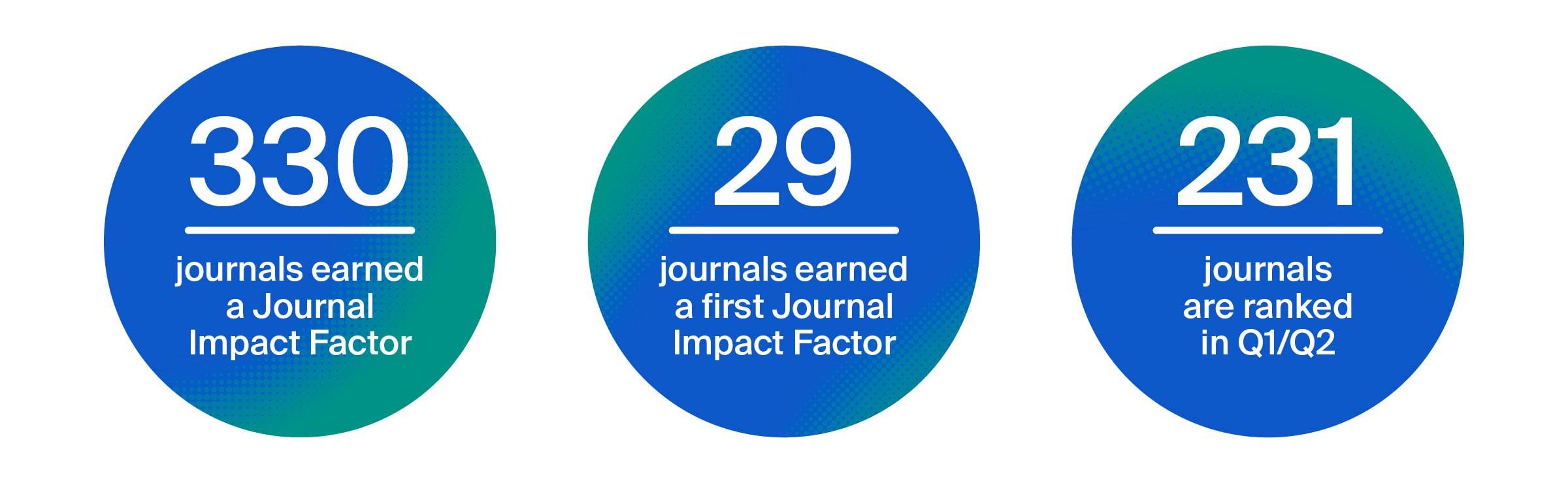
This year's JCR include 330 MDPI journals across a wide range of disciplines. Of these, 231 journals are placed in the top 50% (Q1 or Q2) of their respective subject categories, a result that spans fields as different as materials science, public health, environmental studies, and mathematics. 78 journals hold a top-quartile position (Q1), and 33 journals have a JIF of 5.0 or above.
- 330 journals earned a Journal Impact Factor (JIF)
- 29 journals earned a first JIF
- 254 journals had an increase in JIF
- 71% of ranked journals are in Q1 or Q2
For the full metrics on any MDPI journal, visit our Web of Science journals overview page or a journal's individual statistics page.
29 MDPI Journals Received Their First Journal Impact Factor
A first Impact Factor is a confirmation for an emerging journal. It marks the point at which a journal has been publishing long enough, and cited broadly enough, to enter the formal record of scientific influence. For the research communities those journals serve, it signals that the work being published is being read and built upon.
This year, 29 MDPI journals received a Journal Impact Factor for the first time, across a range of emerging and established research areas. Each represents years of editorial development and peer review—recognized in 2026 for the first time in the JCR.
This is also part of a longer shift in how science gets indexed. When the Emerging Sources Citation Index (ESCI) launched in 2016, 24 MDPI journals were included. By 2024 that number had grown to over 200, reflecting a broader change in the visibility of open access publishing within major citation tracking systems, not just at MDPI but across the sector.
Open Access with Impact
MDPI journals have received a total of 25.2 million citations in Web of Science. That figure matters less as a measure of MDPI's reach and more as a measure of what happens when research is freely available: it gets found, read, and used. Open access is only meaningful if the work actually travels and citations are one indicator that it does.
More than 4.6 million authors have published with MDPI. That breadth, across disciplines, institutions, and geographies, is what makes open access at this scale worth doing.
Thank You to the MDPI Scholarly Community
These results belong to the people who do the actual work: the Editors-in-Chief who set the standards, the Editorial Board Members and reviewers who hold them, and the authors who choose open access for their research. The numbers in the Journal Citation Reports are the downstream effect of decisions made at the desk, in the review, and at submission. Thank you for making them.
Data: 2025 Journal Impact Factors, Journal Citation Reports™ (Clarivate, 2026)
4 June 2026
Open Access, Broadly Recognized: 363 MDPI Journals Receive CiteScores for 2025
The 2025 CiteScore metrics have been officially released by Scopus, and the results confirm what has become a consistent pattern for MDPI's journal portfolio: broad recognition across disciplines, steady improvement across the majority of ranked titles, and a growing presence at the top of subject category rankings.
CiteScore, published annually by Elsevier's Scopus database, measures the average citations received by articles published in a journal over a four-year window. As a complement to the Journal Impact Factor, which uses a two-year window based on the Web of Science database, CiteScore provides an alternative, long-term perspective on citation performance.
The 365 MDPI journals in Scopus (as of May 2026) are indexed across a wide range of subject categories, ensuring that open access research remains highly discoverable to a global readership through one of the most widely used platforms in academic publishing.
Data Summary (2025 CiteScores)
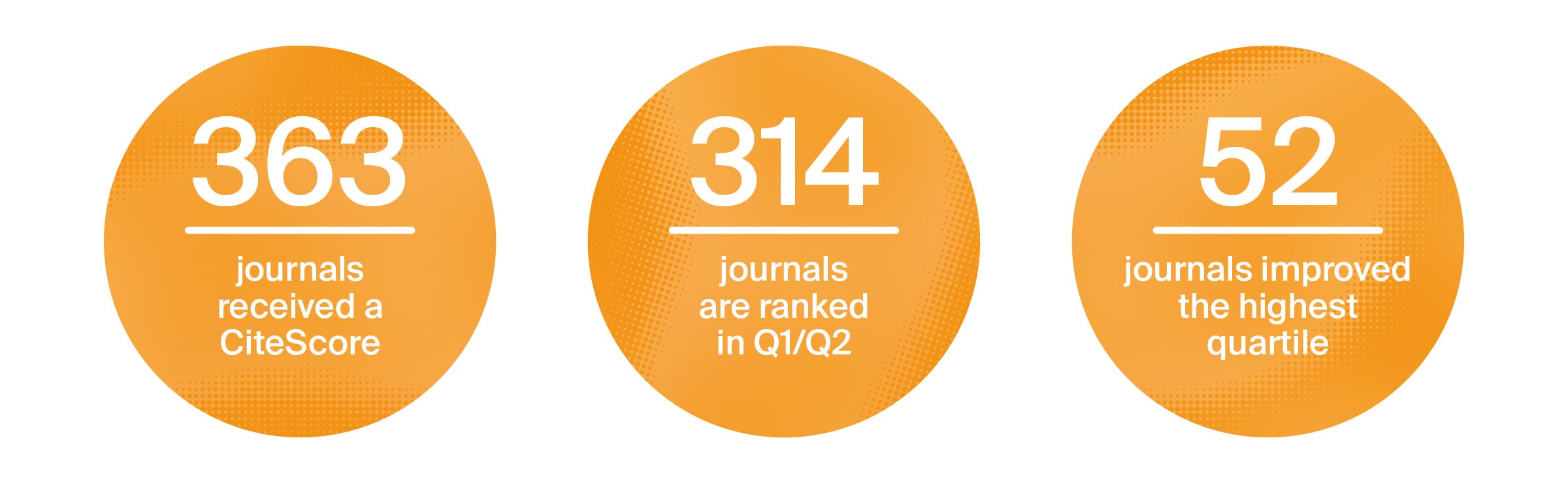
- New Additions: 41 MDPI journals received a CiteScore for the first time.
- Trending Upward: 234 of 322 previously ranked journals (73%) saw an increase in their CiteScore compared to last year.
- High Visibility: 314 journals (86%) rank in Q1 or Q2 in at least one subject category.
- Elite Performance: 42 journals rank in the top 10% of their subject categories.
Portfolio Performance
Among the 322 journals that held a CiteScore in 2024, 234 saw an increase this year. Quartile improvements outnumbered declines across the portfolio, with 52 journals moving to a higher quartile and only 20 seeing a decline. Furthermore, no previously ranked journals were removed. The 42 journals now ranked in the top 10% of their subject categories are drawn from a strong foundation of 178 journals holding a Q1 position.
With the large majority of our indexed portfolio ranked in the top half of research fields, researchers can confidently choose MDPI to meet funder mandates for high-quality, fully compliant Open Access publishing.
Exceptional Achievements for Foods and Life
Notably, both Foods and Life achieved a 99th percentile ranking in their respective subject categories for the 2025 CiteScores. This outstanding placement positions them as leading journals in their fields and highlights the high visibility and global impact of the open access research they publish.
Journal Metrics and Beyond
Journal-level metrics describe outlets, not individual articles. An increasing number of funders and institutions—including signatories of DORA and the Coalition for Advancing Research Assessment—now explicitly encourage evaluation at the article level rather than by the journal in which research appears. MDPI supports this direction: we report CiteScore alongside the Journal Impact Factor, Journal Citation Indicator, and article-level usage data because no single number captures the full reach and contribution of published research.
Thank You
These results reflect the sustained effort of thousands of editors-in-chief, editorial board members, reviewers, and authors across every field MDPI serves. The metrics are the outcome; the work is yours.
1 June 2026
MDPI INSIGHTS: The CEO’s Letter #35 – 30 Years of Open Science, Open Access Policies, Spain Summit, MMCS 2026 & Antibiotics 2026

Welcome to the MDPI Insights: The CEO's Letter.
In these monthly letters, I will showcase two key aspects of our work at MDPI: our commitment to empowering researchers and our determination to facilitating open scientific exchange.
Opening Thoughts

30 Years of Open Science, Built Together
This month, we officially launched MDPI’s 30th Anniversary campaign and dedicated anniversary website, marking an important milestone in our journey as an open access publisher. What began in 1996 with a single journal and the simple belief that scientific knowledge should be shared openly and freely has grown into a global publishing organization supporting more than 500 journals, 68,000 Editorial Board Members, and millions of researchers worldwide.
The anniversary page, entitled 30 Years of Open Science, Built Together, reflects on the people, milestones, and partnerships that have shaped MDPI over the past three decades. It includes a retrospective of our development, key moments in the evolution of open access, landmark research articles, journal anniversaries, an interview with the CEO, and perspectives from colleagues and partners who have contributed to our success.

Looking back, one of the most striking aspects of our journey is not simply our growth, but the broader transformation of scholarly publishing itself.
Open access has moved from a niche concept to a widely adopted publishing model, helping make research more accessible, discoverable, and impactful for researchers, institutions, policymakers, and society.
MDPI has been part of this transition and continues to invest in the people, technology, partnerships, and research integrity infrastructure needed to support high-quality open science at scale.
While anniversaries naturally encourage reflection, they are also an opportunity to look ahead. The challenges facing scholarly publishing today, including research integrity, artificial intelligence, accessibility, and global participation in science, will require continued collaboration across the research ecosystem. As we celebrate 30 years of publishing, our focus remains on supporting researchers, strengthening trust in open science, and helping shape the future of scholarly communication together.
I encourage you to visit the anniversary page, explore the milestones, and take a moment to reflect on the role each of us has played in contributing to MDPI’s story.
Thank you for being part of this journey.
Impactful Research

Highlights from MMCS 2026 in Beijing (14-17 May)
From 14–17 May, MDPI hosted The 5th Molecules Medicinal Chemistry Symposium (MMCS 2026) in Beijing, China, bringing together academia and industry to explore advances in chemical biology, medicinal chemistry, and drug discovery.
The conference hosted more than 230 attendees from 37 countries and regions, alongside 257 submissions and 145 accepted abstracts. With a significant increase in attendance – up by 100 participants compared with the previous edition – the popularity of MMCS continues to grow in terms of its international profile and scientific relevance within this rapidly evolving field.

The scientific program covered seven themes:
- Chemical Biology for Drug Discovery
- Medicinal Chemistry Research Progress
- Natural Products in Drug Discovery
- AI-enabled Drug Discovery
- GPCR & Ion Channel Targeted Drug Development
- Innovative Proximity-Based Drug Modalities
- Biocatalysis for Natural Product & Drug Synthesis
The event featured three plenary speakers, 14 keynote speakers, 35 selected oral presentations, and 98 poster presentations, creating opportunities for open scientific exchange and collaboration. Conference Chair Prof. Dr. Diego Muñoz-Torrero described this edition as one of the most successful MMCS events to date.
|
|
|


Thanks to our Sponsors
MMCS 2026 secured sponsorship support from 12 industrial partners, 11 of which set up on-site exhibition booths. Covering biopharmaceutical R&D, life science supplies, pharmaceutical experimental instruments, and industrial service sectors, exhibitors were able to connect their businesses directly with attendees and make connections at the conference.

30th Anniversary Celebration of Molecules
During the conference, we also celebrated the 30th anniversary of Molecules, one of MDPI’s flagship journals. The celebration brought together Section Editors-in-Chief, Editorial Board Members, MDPI leadership, and editorial colleagues to reflect on the journal’s development, achievements, and continued future growth.

Events such as MMCS 2026 highlight the important role conferences play in creating scientific exchange and collaboration, and in connecting our research communities in person.
They also reflect the continued development of MDPI’s conference portfolio and our commitment to supporting academic engagement beyond publishing alone. Thanks to everyone involved in organizing and contributing to the success of this event.
Inside MDPI

Open Access Policies Continue to Accelerate Globally
One of the clearest indicators of the continued momentum behind open access is the growing number of national and institutional policies supporting, and increasingly requiring, open dissemination of research.
Around the world, governments, funding agencies, and universities are building their open access mandates, with increasing focus on transparency, rights retention, and public accessibility of publicly funded research. While these policies vary across regions, the broader direction is clear: expectations around openness and compliance continue to accelerate.
For researchers, navigating these evolving requirements can be complex and time-consuming. Supporting the research community therefore means not only publishing high-quality open access content but also helping stakeholders better understand changing requirements and emerging opportunities. At MDPI, we see this as an important part of our role within scholarly communication.
“Expectations around openness and compliance continue to accelerate”
Through the MDPI Blog, our Content team continues to publish monthly articles overviewing different countries’ relationships with open access, exploring their histories, policies, opportunities, and statistics. All this information is centralized into an article which contains brief summaries of each country, with links to all the full articles, and is updated monthly.
Recent Policy Developments
South Africa
In 2026, South Africa’s Department of Science and Innovation introduced the South African Open Science Policy. The policy states that: “Open access shall be required for publications arising from publicly funded research, and desirable for research from all sources of funding.”
The policy envisions a coordinated and broad approach to open science that will sustainably and ethically drive socio-economic development by increasing the practice of open science through policy, training, incentivization, and infrastructure.
Canada
In Canada, the Tri-Agency OA Policy on Publications was revised, removing the 12-month embargo for research that must be deposited in a repository with an open license and with author rights retained.
The Agencies argue that “societal advancement is made possible through widespread and barrier-free access to cutting-edge research and knowledge.”
Chile
Chile is a collaborative and engaged member of the global open access movement.
The National Research and Development Agency (Agencia Nacional de Investigación y Desarrollo, or ANID) is Chile’s main funding agency for R&D. It mandates that all beneficiaries must deposit the final version of their published scientific output, with an embargo period of up to 12 months, into a repository.
ANID also supports the InES Open Science funding program, which allows universities to request funding for capacity and infrastructure building. Further, Chile is an active participant in various international initiatives, such as Redalyc, SciELO, and Red de Repositorios Latinoamericanos.
Openness Beyond Research
At MDPI, openness remains one of our core values, ensuring that research outputs are freely accessible to anyone. This commitment also extends to sharing knowledge about the scholarly publishing landscape itself, which we practice on the MDPI Blog through various topics, including open access, recent advances in science, and opportunities for researchers.
As the open access landscape continues to evolve, helping researchers, institutions, editors, and partners navigate these changes will remain an important priority for us.

Thank You
I would like to thank Jack McKenna (Senior Content Specialist, MDPI) from our Content team for his ongoing work on the MDPI Blog series covering global open access policy developments. Initiatives such as this help make complex policy discussions more accessible and useful to the wider research community.
Coming Together for Science

Reflections from the MDPI Spain Summit 2026 in Valencia (21 May)

On 21 May, we hosted the MDPI Spain Summit 2026 in Valencia.
The Summit brought together 30 Editorial Board Members and MDPI colleagues for a discussions on the future of publishing, research integrity, peer review, artificial intelligence, and the evolving research landscape in Spain.
We hosted participants from leading Spanish institutions and spoke on the importance of Spain as a major contributor to global open access (OA) research. In 2025 alone, Spain ranked among the leading countries worldwide for OA publishing, with more than 85% of publications made openly accessible. MDPI also continues to play a significant role within the Spanish research ecosystem.
MDPI in Spain
Spain remains one of MDPI's most important academic markets and a leading contributor to OA research globally. Ever since our Barcelona office opened in 2016 (Happy 10th Anniversary!), MDPI Spain has been actively supporting researchers, institutions, societies, and academic partners across the country. Today, the office plays an important role in creating engagement with the Spanish scholarly community through editorial support, partnerships, conferences, training initiatives, and outreach activities.
A cluster of high-level indicators highlight both the strength of the local research ecosystem and MDPI’s role within it:
- 43,218 total publications in Spain in 2025, of which 35,728 (83%) were open access (49% Gold OA).
- 211,200+ total publications (2021–2025), with 84% published open access.
- 13,444 MDPI publications from Spanish institutions in 2025, representing 14% of all open access publications in Spain.
- More than115,100 MDPI publications from Spanish institutions since 1996.
- More than 4,500 Editorial Board Members from Spain, including more than 150 Chief Editors and 57 Associate Editors.
- 42 institutional partners participating in MDPI’s Institutional Open Access Program (IOAP).
- Spain ranks second globally for MDPI society affiliations, with 26 affiliated society agreements currently in place.
Program Overview
What made this summit special was the openness of the discussions around the research landscape in Spain and the role MDPI plays within the market. General topics of the presentations included:
- MDPI Introduction – Stefan Tochev (CEO).
- Engagement with the Academic Community – Dr. Marta Colomer (External Affairs Lead).
- Latest Developments in the Editorial Process – Dr. Jordi Martinez (Deputy Managing Editor).
- Research integrity and Publication Ethics – Slavomir Nikodijevic (Research Integrity Specialist).
- A 360 View of Academic Publishing – Prof. Dr. Luis Angel Ruiz Fernandez (EBM of Remote Sensing).
|
|
|
|
|
|
|
|


Panel Discussion
We also hosted a panel discussion moderated by Marta, entitled “The Future of Academic Publishing” with Prof. Luis Ruiz, Prof. Marta Feliz (EBM of the journal Catalysts), Dr. Enric Sayas (Product Owner, AI & Technology Innovation), and myself. The discussion looked at the evolving role of editors, the future of peer review, and the growing importance of maintaining trust, ethics, and research integrity in an era increasingly influenced by artificial intelligence.
|
|
|
|


Themes from the Summit
Several themes emerged throughout the discussions, reflecting broader conversations taking place across publishing:
- The academic community values efficient publishing workflows, but expectations around scientific quality and editorial rigor continue to rise.
- Reviewer fatigue and long-term sustainability of peer review remain major challenges across the industry.
- AI is rapidly changing scholarly communication and requires transparent and responsible governance.
- Reputation and trust continue to depend on long-term engagement, transparency, and quality-focused decision-making.
“Maintaining an open dialogue with researchers, editors, reviewers, and institutions remains a priority for MDPI”
It was constructive to see the willingness of participants to engage directly and candidly with us. These conversations provide insights that help inform how we continue to develop our editorial processes, engagement activities, and support for the research community. While certain discussions included concerns, there was also recognition that open dialogue between publishers and the research community is essential if we want to improve scholarly communication together.
|
|
|
|


Events such as this are increasingly important for MDPI. They allow us to present our perspective, to listen to the experiences, expectations, and concerns of editors, reviewers, and researchers, and to address these accordingly.
Thank You
Thank you to our Barcelona Office and all colleagues involved in organizing the summit, as well as all participants for contributing to these thoughtful and constructive discussions.
|
|
|
|
|
|
|
|


As publishing continues to evolve, maintaining an open dialogue with researchers, editors, reviewers, and institutions remains an important priority for MDPI. Events such as the Spain Summit play an important role in helping us to build relationships, foster trust, and better understand the needs of our community.
Closing Thoughts

Highlights from Antibiotics 2026 in Barcelona (11–14 May)
This week, MDPI hosted the Antibiotics 2026 — Advances in Antimicrobial Action and Resistance conference in Barcelona, bringing together academics and industry experts to discuss one of the most important scientific and public health challenges of our time: antimicrobial resistance.
The conference welcomed 145 attendees from 42 different countries and territories, alongside 265 submissions and 127 accepted abstracts, showing the international reach of the event and the strong scientific interest in this rapidly evolving field.

Scientific Exchange on a Global Challenge
Antimicrobial resistance continues to be a global concern, creating collaboration across disciplines, institutions, and regions. The conference program focused on a range of topics including:
- Antimicrobial resistance mechanisms
- One Health approaches to antimicrobial stewardship
- Discovery of novel antimicrobial agents
- Innovation in clinical strategies and treatment approaches
- Ethnopharmacology and emerging therapies
Through keynote plenaries, invited lectures, oral presentations, and poster sessions, the conference created a platform for dialogue and scientific exchange.
|
|
|


International Participation and Collaboration
One of the highlights of the event was the diversity of participation across both geography and expertise. Researchers and speakers from Europe, North America, Asia, Africa, Australia, and Latin America took part in discussions throughout the conference, highlighting the global nature of both the challenge and the scientific response.
The scientific program included:
- 2 keynote speakers
- 10 invited speakers
- 36 selected talks
- 78 posters
The conference brought together perspectives from academia, healthcare, and industry, helping facilitate interdisciplinary collaboration around future approaches to antimicrobial research and resistance management.
|
|
|
|


The Role of Conferences in Scholarly Communication
Conferences are an important platform for collaboration, scientific exchange, and community-building. Events such as Antibiotics 2026 show the value of bringing researchers together in person to discuss emerging challenges, share new findings, and strengthen international networks across disciplines and regions.

Thank You
I would like to thank the conference chairs, speakers, participants, sponsors, and the entire MDPI conference team for their work in making this event a success. The engagement and positive feedback from attendees highlight the importance of our events in addressing some of the most pressing scientific challenges facing society today.

Chief Executive Officer
MDPI AG
28 May 2026
MDPI Webinar | World Environment Day, 5 June 2026

World Environment Day is celebrated annually in June and encourages awareness and action for the protection of the environment. To contribute to the fight against climate change, MDPI will be holding a webinar in conjunction, in line with 2026’s theme, “A Global Call for Climate Action”, whereby the United Nations Environment Program’s global campaign calls on all of us to step in #NowForClimate and steer a world already in motion.
Register now and join us!
Date: 5 June 2026
Time: 12:00 p.m. CEST | 6:00 p.m. CST Asia
Webinar ID: 857 7303 7011
Webinar Secretariat: journal.webinar@mdpi.com
Register now for free!

Program:
|
Speaker/Presentation |
Time in CEST |
Time in CST Asia |
|
Host – Natasa Miladinovic |
12:00–12:05 p.m. |
6:00–6:05 p.m. |
|
Dr. Chiara Martino |
12:05–12:25 p.m. |
6:05–6:25 p.m. |
|
Prof. Dr. Bruce Glavovic |
12:25–12:45 p.m. |
6:25–6:45 p.m. |
|
Q&A Session |
12:45–12:55 p.m. |
6:45–6:55 p.m. |
|
Host – Natasa Miladinovic |
12:55–1:00 p.m. |
6:55–7:00 p.m. |
After registering, you will receive a confirmation email outlining how to join this webinar. Registrations with academic institutional email addresses will be prioritized.
Unable to attend? Register anyway, and we will let you know when the recording is available to watch.
Webinar Chairs and Keynote Speakers:
- Dr. Chiara Martino, Department of Biological, Chemical and Pharmaceutical Sciences and Technologies (STEBICEF), University of Palermo, Italy;
- Prof. Dr. Bruce Glavovic, Resource and Environmental Planning Programme, Massey University, New Zealand.
Related Special Issues:
“Drought Risk and Human Vulnerability Under Climate Change: Assessment Frameworks for Water Security and SDGs”
Guest Editors: Dr. João Filipe Santos and Dr. Miguel Potes
Deadline for manuscript submissions: 25 August 2026
“Renewable Energy and Nearly-Zero Emissions Energy Systems”
Guest Editors: Dr. Nikolaos Sifakis, Dr. Nikolaos Savvakis and Dr. George Arampatzis
Deadline for manuscript submissions: 1 September 2026
“Air Pollution and Sustainability”
Guest Editor: Dr. Pallav Purohit
Deadline for manuscript submissions: 8 September 2026
“Sustainable Development Pathways and Climate Actions”
Guest Editor: Dr. Md Saidul Islam
Deadline for manuscript submissions: 30 September 2026
Related Journal Cluster:
MDPI’s Journal Cluster of Environmental Sciences
MDPI journals offer a wide range of open access platforms for environmental science researchers to reach their target audience. From broad, wide-reaching mega-journals like Sustainability to more specific, targeted journals like Waste and Aerobiology, we strive to cater to the publishing needs of scientists working across different environmental disciplines.
27 May 2026
Sustainability Webinar | Pathways to a Plastic-Smart and Sustainable Future: Innovations in Monitoring, Mitigation, and Resource Recovery, 17 June 2026

The webinar “Pathways to a Plastic-Smart and Sustainable Future: Innovations in Monitoring, Mitigation, and Resource Recovery” aims to strengthen scientific understanding and promote practical strategies that reduce microplastic contamination and its impact on marine environments. This webinar will feature two presentations that highlight both environmental implications of plastics and emerging resource recovery solutions.
We warmly encourage scientists and researchers to attend this event to enhance discussion, exchange ideas, and raise questions that can help shape the direction of research related on plastics. Your engagement is essential in driving collaborative, interdisciplinary solutions toward a plastic-smart future.
Date: 17 June 2026 at 11 a.m. CEST | 5 p.m. CST Asia
Webinar ID: 892 2604 3802
Register now for free!

Program:
| Speaker/Presentation | Time in CEST | Time in CST Asia |
| Dr. Ionut Alexandru Spanu Journal Introduction & Overview of Submission Process |
11:00–11:10 a.m. | 5:00–5:10 p.m. |
| Dr. Layla Hazeem Webinar Opening & Relevant Special Issue Introduction |
11:10–11:15 a.m. | 5:10–5:15 p.m. |
| Prof. Richard Lampitt Changes to Particulate Plastics Over Time in the Natural Environment and the Harms to Ecosystem Structure and Function |
11:15–11:40 a.m. | 5:15–5:40 p.m. |
| Prof. Rabah Boukherroub Upcycling Plastic Waste into Advanced Materials and Fuels |
11:40–12:05 p.m. | 5:40–6:05 p.m. |
| Q&A Session | 12:05–12:25 p.m. | 6:05–6:25 p.m. |
| Dr. Layla Hazeem Closing of Webinar |
12:25–12:30 p.m. | 6:25–6:30 p.m. |
After registering, you will receive a confirmation email containing information on how to join the webinar. Registrations with academic institutional email addresses will be prioritized.
Unable to attend? Register anyway, and we will let you know when the recording is available to watch.
Webinar Chair and Keynote Speakers:
- Dr. Layla Hazeem, University of Bahrain, Kingdom of Bahrain;
- Prof. Richard Lampitt, National Oceanography Centre, UK;
- Prof. Rabah Boukherroub, Université Lille, France.
Relevant Special Issue:
“Advancing Marine Ecosystem Sustainability Through Microplastic Pollution Mitigation”
Guest Editors: Layla Hazeem, Abdulkarim Hasan Rashed and Suad Ahmed Rashdan
Deadline for manuscript submissions: 6 January 2027
