Environ. Remediat. 2026, 1(2), 8; https://doi.org/10.3390/environremediat1020008 - 4 Sep 2026
Abstract
►
Show Figures
Antimony (Sb) is an emerging environmental pollutant due to its toxicity, persistence, and extensive industrial applications. Despite the growing need for sustainable remediation strategies, research on the potential of phytoremediation for Sb-contaminated soils remains limited. This study investigates the suitability of Cynara cardunculus
[...] Read more.
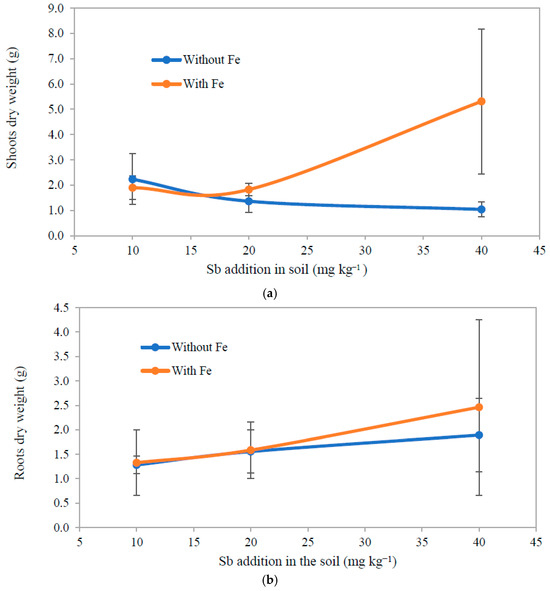
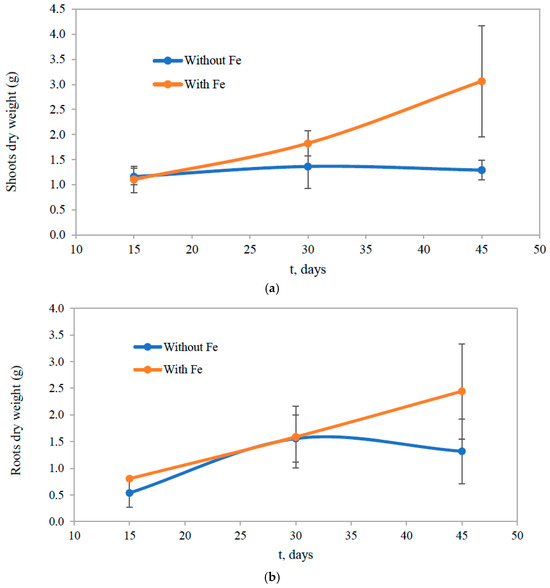
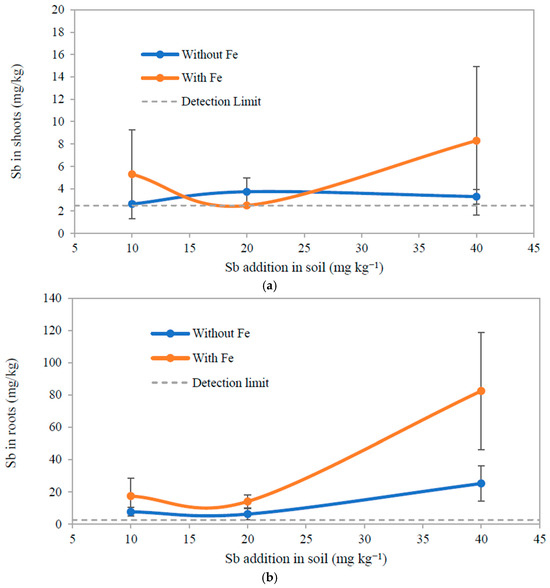
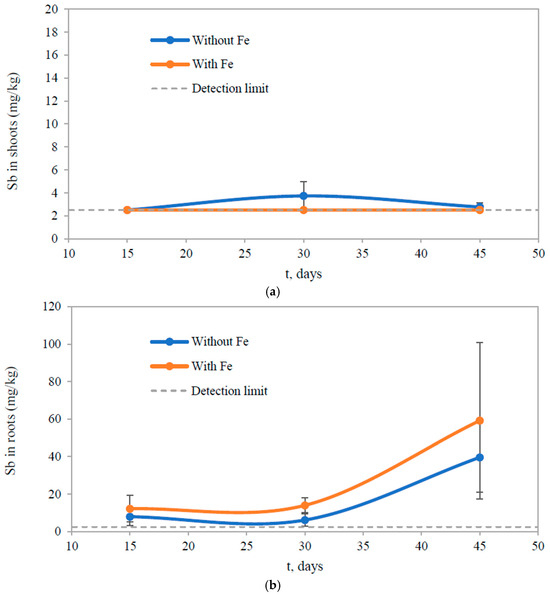
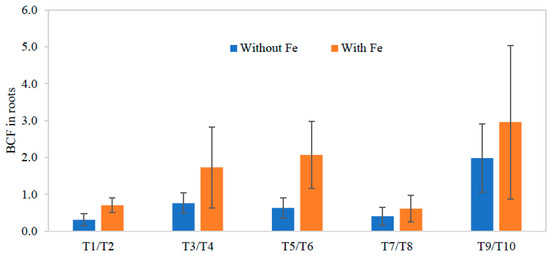
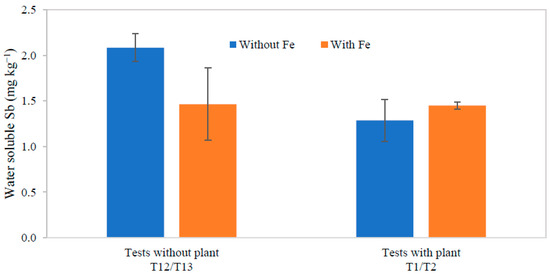
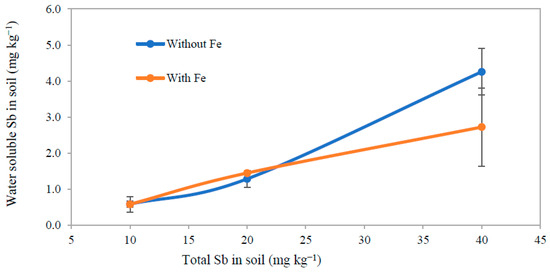
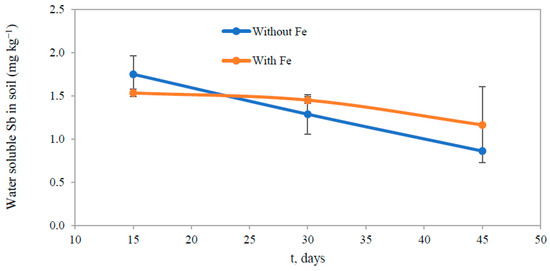
Antimony (Sb) is an emerging environmental pollutant due to its toxicity, persistence, and extensive industrial applications. Despite the growing need for sustainable remediation strategies, research on the potential of phytoremediation for Sb-contaminated soils remains limited. This study investigates the suitability of Cynara cardunculus (cardoon), a high-biomass bioenergy crop, for the remediation of Sb-polluted soils and evaluates the effect of Fe(II) supplementation on plant performance and Sb behavior. Pot experiments were conducted using soils amended with 10–40 mg Sb kg−1, under treatments with and without Fe(II). In the absence of iron, cardoon showed high tolerance to Sb exposure, with no significant growth inhibition even at 40 mg Sb kg−1 after 30 days of cultivation. Iron addition significantly enhanced plant growth, resulting in a 2.3-fold increase in aboveground biomass compared with non-amended soils under the 20 mg Sb kg−1 treatment after 45 days of cultivation. Sb accumulation was mainly restricted to the root system, indicating limited phytoextraction capacity. However, the species demonstrated strong phytostabilization potential, as the presence of plants reduced the water-soluble Sb fraction in soil by up to 50% compared with unplanted controls. These results suggest that C. cardunculus is a promising candidate for phytostabilization of Sb-contaminated soils. Its combined use with iron amendments may enhance biomass production and support integrated soil remediation and bioenergy production strategies.
Full article
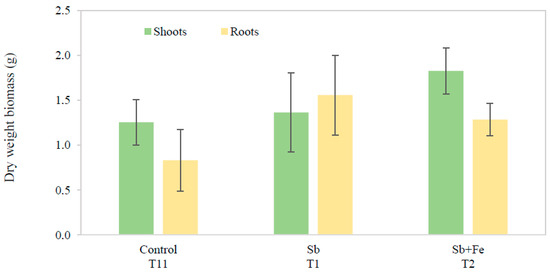
Figure 1