Journal Description
Sustainability
Sustainability
is an international, peer-reviewed, open-access journal on environmental, cultural, economic, and social sustainability of human beings, published semimonthly online by MDPI. The Canadian Urban Transit Research & Innovation Consortium (CUTRIC), International Council for Research and Innovation in Building and Construction (CIB) and Urban Land Institute (ULI) are affiliated with Sustainability and their members receive discounts on the article processing charges.
- Open Access— free for readers, with article processing charges (APC) paid by authors or their institutions.
- High Visibility: indexed within Scopus, SCIE and SSCI (Web of Science), GEOBASE, GeoRef, Inspec, RePEc, CAPlus / SciFinder, and other databases.
- Journal Rank: JCR - Q2 (Environmental Studies) / CiteScore - Q1 (Geography, Planning and Development)
- Rapid Publication: manuscripts are peer-reviewed and a first decision is provided to authors approximately 17.9 days after submission; acceptance to publication is undertaken in 3.6 days (median values for papers published in this journal in the second half of 2025).
- Recognition of Reviewers: reviewers who provide timely, thorough peer-review reports receive vouchers entitling them to a discount on the APC of their next publication in any MDPI journal, in appreciation of the work done.
- Testimonials: See what our editors and authors say about Sustainability.
- Companion journals for Sustainability include: World, Sustainable Chemistry, Conservation, Future Transportation, Architecture, Standards, Merits, Bioresources and Bioproducts, Accounting and Auditing, Environmental Remediation and Green.
- Journal Cluster of Environmental Science: Sustainability, Land, Clean Technologies, Environments, Nitrogen, Recycling, Urban Science, Safety, Air, Waste, Aerobiology and Toxics.
Impact Factor:
3.3 (2024);
5-Year Impact Factor:
3.6 (2024)
Latest Articles
Sustainability-Oriented Techno-Economic Assessment of Sulphur Compliance Strategies for an Aging Cruise Vessel Under SOx and GHG Constraints
Sustainability 2026, 18(11), 5485; https://doi.org/10.3390/su18115485 (registering DOI) - 30 May 2026
Abstract
►
Show Figures
Maritime transport remains a significant source of air pollution and greenhouse gas emissions, while existing vessels face increasing pressure to comply with both local pollutant limits and emerging carbon intensity constraints. This study presents a sustainability-oriented techno-economic assessment of alternative sulphur compliance strategies
[...] Read more.
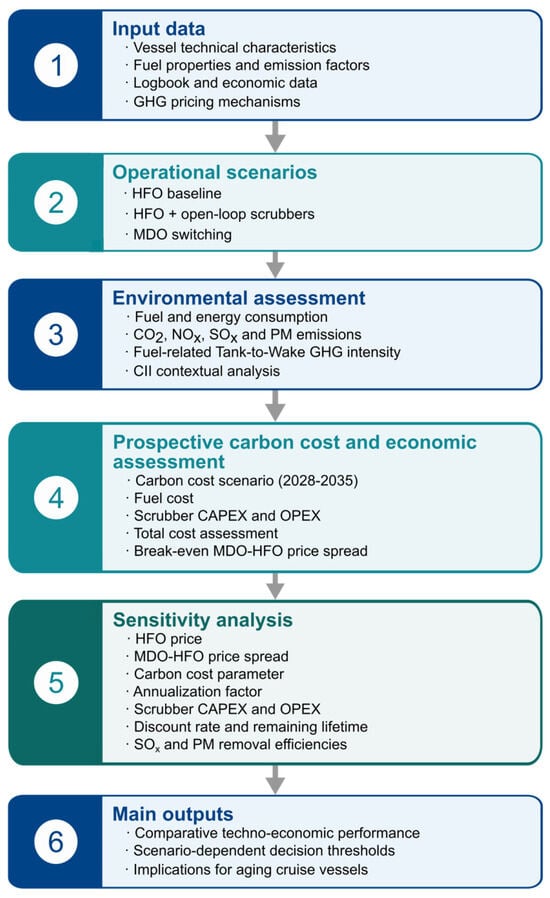
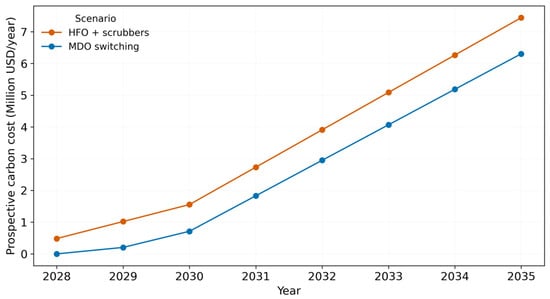
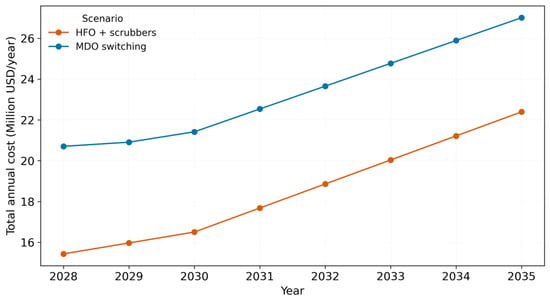
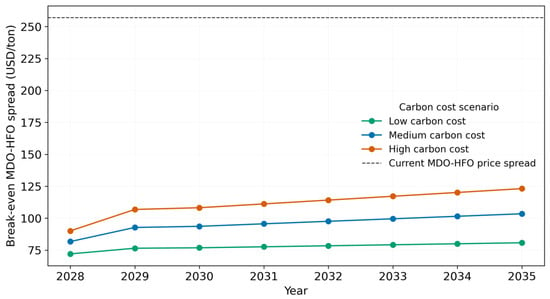
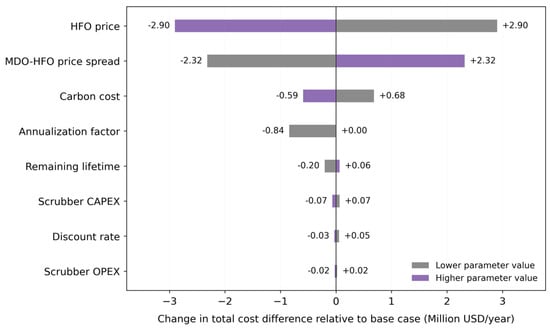
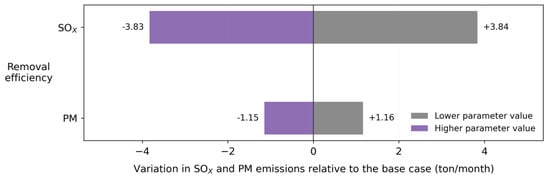
Maritime transport remains a significant source of air pollution and greenhouse gas emissions, while existing vessels face increasing pressure to comply with both local pollutant limits and emerging carbon intensity constraints. This study presents a sustainability-oriented techno-economic assessment of alternative sulphur compliance strategies using real operational data from a 1998-built cruise vessel. Three scenarios were evaluated: a counterfactual heavy fuel oil baseline, heavy fuel oil operation with open-loop scrubbers, and full switching to marine diesel oil. Pollutant emissions were estimated using a Tier 3-oriented approach, while fuel-related Tank-to-Wake greenhouse gas intensity, prospective carbon cost exposure, total cost, break-even fuel price spread and sensitivity analyses were integrated into a decision support framework. Results show that scrubbers reduce SOx emissions by 96.9%, but increase fuel consumption, CO2 emissions and NOx emissions by approximately 3.6%. Marine diesel oil switching reduces SOx by more than 99%, particulate matter by 88.8% and CO2 by 4.6%, while also lowering prospective carbon cost exposure. However, under base case fuel price assumptions, heavy fuel oil operation with scrubbers remains the lower cost strategy, with a 2035 cost advantage of 4.03 to 5.30 million USD/year, depending on the carbon cost scenario. The findings show that the contribution of sulphur compliance strategies to sustainable maritime operation depends strongly on fuel price spreads, carbon cost exposure and remaining vessel lifetime under evolving regulatory conditions. By quantifying the trade-offs between local air pollution reduction, fuel-related carbon exposure and economic viability, this study contributes to sustainable maritime decision-making for aging vessels and supports compliance planning under regulatory uncertainty.
Full article
Open AccessReview
Non-Destructive Testing as a Sustainability Assessment Tool for Detecting Chloride and Sulfate Ion Deterioration in Reinforced Concrete
by
Saman Hedjazi
Sustainability 2026, 18(11), 5484; https://doi.org/10.3390/su18115484 (registering DOI) - 30 May 2026
Abstract
►▼
Show Figures
Chloride and sulfate ion attacks are among the leading causes of deterioration in reinforced concrete structures, leading to the corrosion of steel reinforcement, expansion, cracking, and premature structural failure. Early detection of these ion-induced deteriorations is essential not only for maintaining safety but
[...] Read more.
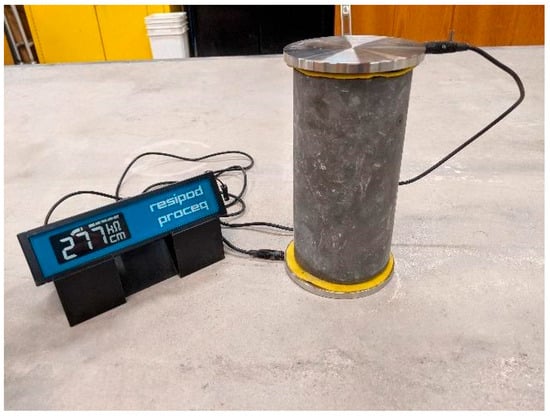
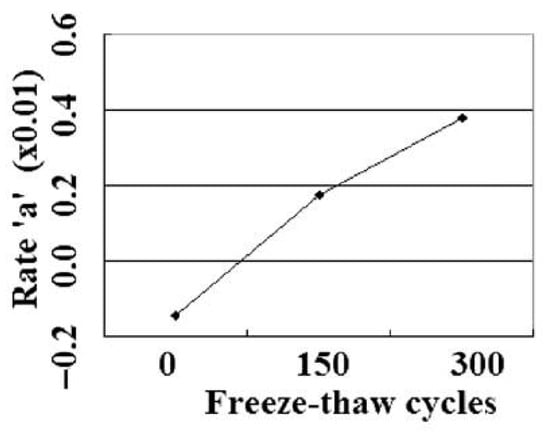
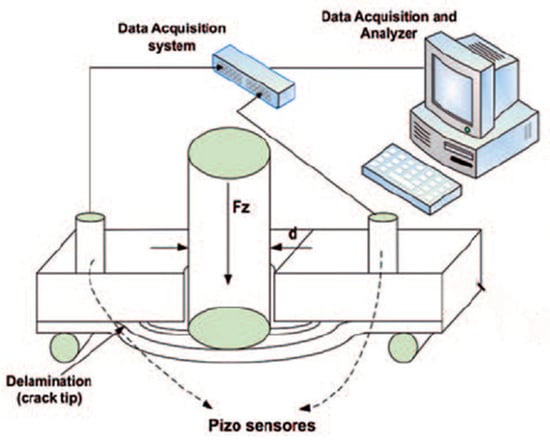
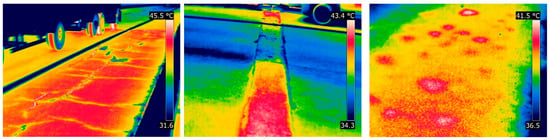
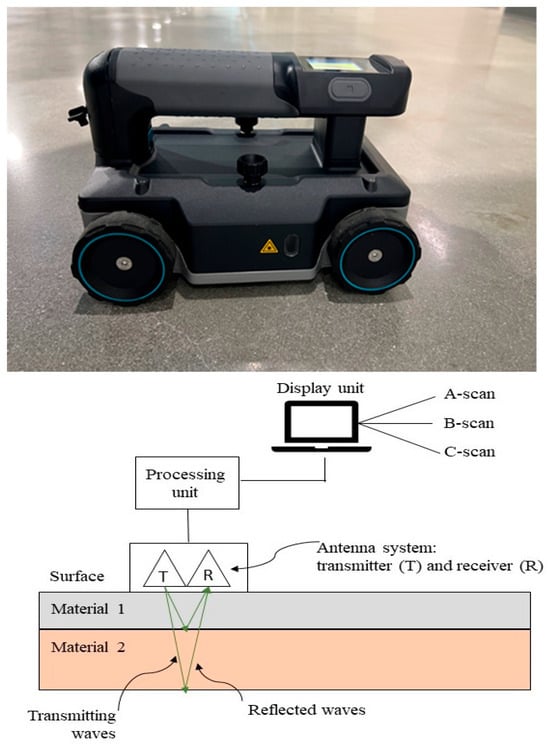
Chloride and sulfate ion attacks are among the leading causes of deterioration in reinforced concrete structures, leading to the corrosion of steel reinforcement, expansion, cracking, and premature structural failure. Early detection of these ion-induced deteriorations is essential not only for maintaining safety but also for supporting sustainability objectives by extending service life, reducing material consumption, and minimizing carbon-intensive repairs. This review synthesizes current advances in non-destructive testing (NDT) techniques used to identify and quantify the impacts of chloride and sulfate ions in reinforced concrete. The mechanisms of ion ingress and their associated degradation processes are examined together with the operating principles, strengths, and limitations of key NDT methods, including electrical resistivity, acoustic emission, infrared thermography, ground penetrating radar, and ultrasonic pulse velocity. By enabling timely maintenance decisions and reducing unnecessary demolition or intrusive testing, these NDT methods contribute directly to sustainable infrastructure management. Through comparative analysis and real-world case studies, the paper highlights the most effective NDT applications for deterioration scenarios and outlines emerging innovations that enhance accuracy, data interpretation, and long-term monitoring capabilities. The findings demonstrate how advancements in NDT support the development and preservation of durable and sustainable concrete structures.
Full article

Figure 1

Open AccessReview
Organic Compared to Conventional Crop Yields: A Mini-Review
by
Peter Juroszek
Sustainability 2026, 18(11), 5483; https://doi.org/10.3390/su18115483 (registering DOI) - 30 May 2026
Abstract
Organic farming is an alternative method to produce agricultural products. Here, an update of results is provided related to the internationally important topic organic compared to conventional crop yields. The most recently published meta-analyses continue to show that organic crop yields, average across
[...] Read more.
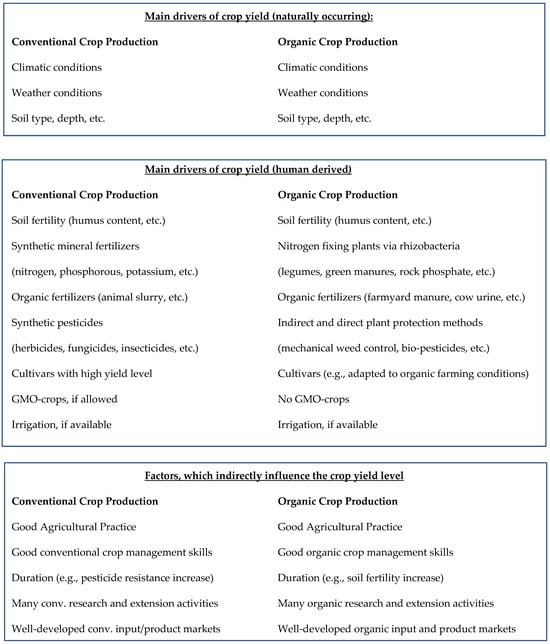
Organic farming is an alternative method to produce agricultural products. Here, an update of results is provided related to the internationally important topic organic compared to conventional crop yields. The most recently published meta-analyses continue to show that organic crop yields, average across all crop species worldwide, are roughly about 15–25% lower than yields of conventionally produced crops. Organic cereal and potato yields are often 30–40% lower, whereas legume and animal pollinator-dependent crop species are able to match conventional crop yields quite often. Thus, the level of the yield difference is dependent on the crop species among many other factors such as the geographic origin of the yield comparison studies. Here, a summary of informative articles is provided, which can be a useful guide for people, who are interested in the topic organic compared to conventional crop yields. This mini-review concludes that organic farming should be promoted, among other farming systems, although organic compared to conventional crop yields are usually lower, because organic farming has many strengths. For example, in general, organic farming is environmentally friendly, thus a sustainable farming system. Therefore, it might be wise to promote a fair and respectful co-existence of different agricultural production systems, including organic agriculture.
Full article
(This article belongs to the Section Sustainable Agriculture)
►▼
Show Figures

Figure 1
Open AccessArticle
University Research for the Improvement of SDGs: A Framework for Mapping and Assessing SDG Science at the Country Level
by
Sérgio Evangelista Silva, Savio Figueira Corrêa, Cecília Silva Monnerat and Rafael Lucas Machado Pinto
Sustainability 2026, 18(11), 5482; https://doi.org/10.3390/su18115482 (registering DOI) - 30 May 2026
Abstract
Humankind is facing the enormous challenge of ensuring a sustainable future for new generations. A key guide to addressing this challenge is the Sustainable Development Goals (SDGs), which aim to promote economic and social development and environmental preservation. Despite the good intentions embedded
[...] Read more.
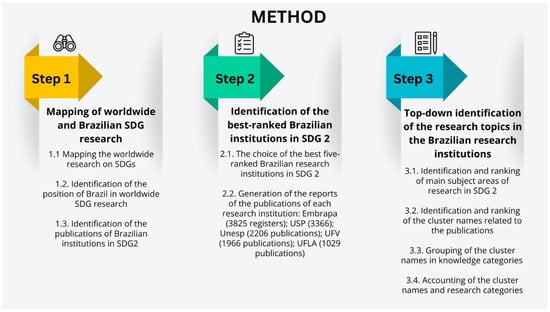
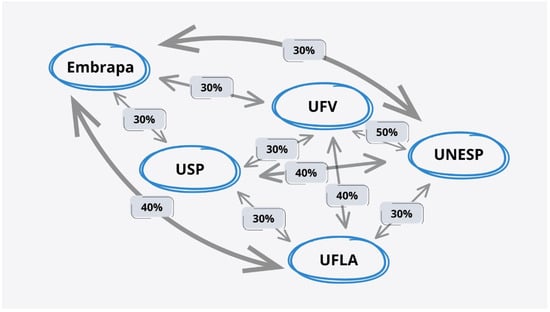
Humankind is facing the enormous challenge of ensuring a sustainable future for new generations. A key guide to addressing this challenge is the Sustainable Development Goals (SDGs), which aim to promote economic and social development and environmental preservation. Despite the good intentions embedded in the SDGs, current performance worldwide remains below expectations. To be effective, the progress on the SDGs depends on the creation of new scientific knowledge. In this context, universities and research institutes should play a fundamental role in generating new scientific knowledge. Although recent models have been developed to assess universities’ knowledge creation to advance the SDGs, it remains necessary to develop new models that can more effectively evaluate and detail this capability. The goal of this article is to introduce a three-level framework for identifying SDG science at the country level across universities and research institutes. This model is validated through a documentary study based on SciVal-Elsevier data, on Brazilian universities, and a research institute in the context of SDG 2 research—zero hunger—between 2015 and 2024. As the main results, the framework provides three levels of knowledge mapping based on subject areas, knowledge categories, and cluster names, whereas the first and the last are used in the Scopus database, and the third is proposed in this study. As a result, this framework consists of a practical instrument for the mapping of the effective issues addressed in each SDG, and for comparing the effective content of SDG science between research institutions. As the main contribution, this article introduces a practical instrument for the assessment of the contribution of universities and research institutes in SDG science. Theoretically, this framework provides a practical process for rapidly identifying the current SDG science performance in research institutions at the country level. For practical purposes, this study can be used by universities, research institutes, and policymakers to understand the current state of SDG science in a country or region and to develop new research programmes and strategies for SDG science and innovation.
Full article
(This article belongs to the Special Issue A Framework for Sustainable Food Systems: Balancing Environmental, Nutritional, and Socioeconomic Goals)
►▼
Show Figures

Figure 1
Open AccessReview
Water Management Across the SDGs: Gaps and Needs
by
Neil Grigg
Sustainability 2026, 18(11), 5481; https://doi.org/10.3390/su18115481 (registering DOI) - 30 May 2026
Abstract
►▼
Show Figures
Most Sustainable Development Goals (SDGs) involve water, but integrated water resources management (IWRM) does not address them explicitly, especially the important health and sanitation goals. IWRM has structural problems and has been used mainly as a development tool rather than a way to
[...] Read more.
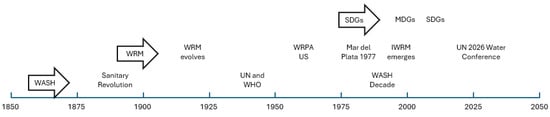
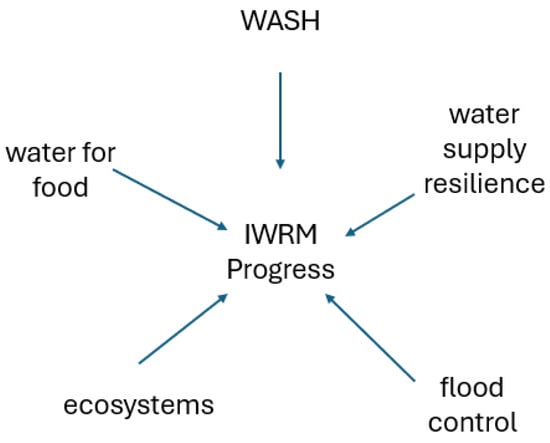
Most Sustainable Development Goals (SDGs) involve water, but integrated water resources management (IWRM) does not address them explicitly, especially the important health and sanitation goals. IWRM has structural problems and has been used mainly as a development tool rather than a way to manage water. There is no consensus among the professional communities about the methods and value of IWRM, and its inherent problems make assessment of its success difficult. It surveys national levels while most applications are at local levels. Efforts to improve and assess progress in the water, sanitation, and hygiene (WASH) sector faced similar obstacles, and a new approach based on household surveys was adopted. The mismatch between IWRM and WASH is caused by the polarization between communities of practice for public health and water management. Tools posted by the Global Water Partnership (GWP) do not address WASH explicitly, and the public health profession does not embrace IWRM. These problems can be mitigated by a new definition of IWRM that combines WASH with other water-related issues. To address its complexity, situational archetypes can be mapped to local levels and explained by case studies. To assess progress in IWRM implementation, a new approach should focus on results at local levels rather than methods at the national levels and address the polarization with WASH. SDG reporting relating to water should focus on local outcomes with WASH included, as well as key purposes that include water for food, flood control, drought resilience, and the sustainability of ecosystems. Progress could be assessed via outcome data collected by sector organizations. The GWP program could adopt a new definition of IWRM and new methods of assessment.
Full article

Figure 1
Open AccessReview
Reframing Questioning in Science Education for Sustainability: A Transformative Pedagogical and Epistemic Practice
by
Patrícia Albergaria-Almeida
Sustainability 2026, 18(11), 5480; https://doi.org/10.3390/su18115480 (registering DOI) - 30 May 2026
Abstract
Questioning is widely recognised as a key dimension of learning in science education, yet learner questioning has often been treated as a secondary aspect of classroom participation rather than as a central pedagogical and epistemic practice. This article offers a conceptual examination of
[...] Read more.
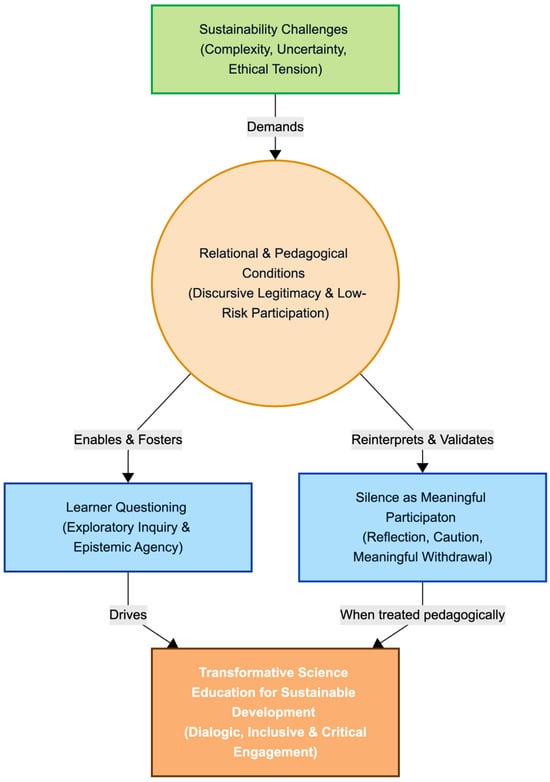
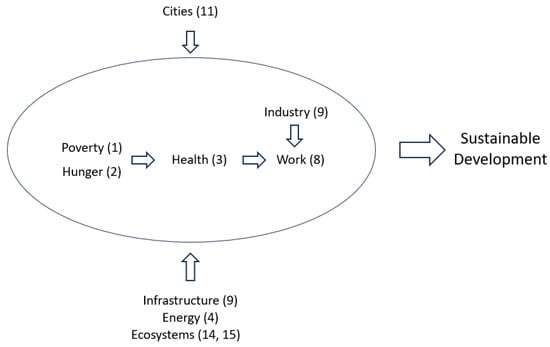
Questioning is widely recognised as a key dimension of learning in science education, yet learner questioning has often been treated as a secondary aspect of classroom participation rather than as a central pedagogical and epistemic practice. This article offers a conceptual examination of questioning in relation to science education for sustainability, informed by a critical interpretive engagement with literature on questioning, participation, classroom dialogue, engagement, and science education. It argues that science education for sustainability requires more than the transmission of scientific knowledge, calling instead for pedagogical spaces in which learners can engage with complexity, uncertainty, interpretation, and the ethical and social dimensions of socio-scientific issues. The article’s main contribution lies in repositioning learner questioning as a central condition of science education for sustainability and in showing that questioning is shaped not only by knowledge and motivation, but also by participation, hesitation, silence, and broader dynamics of voice, legitimacy, and power. In this perspective, fostering questioning becomes essential to more inclusive, dialogic, reflexive, and transformative approaches to science education for sustainability. The article further argues that fostering questioning in this way contributes directly to the educational ambitions embedded in SDG 4, SDG 13, and SDG 16—making questioning-centred pedagogy not merely a methodological choice, but a condition for more democratic, just, and transformative science education for sustainable development.
Full article
(This article belongs to the Special Issue Transformative Education for Sustainable Development: Innovation and Challenge)
►▼
Show Figures

Figure 1
Open AccessArticle
Probabilistic Streamflow Forecasting for Hydropower Early Warning in the Paute River Basin, Ecuador
by
Angel Bayron Correa-Guamán and Jorge Daniel Inga-Lafebre
Sustainability 2026, 18(11), 5479; https://doi.org/10.3390/su18115479 (registering DOI) - 29 May 2026
Abstract
Hydropower-dominated electricity systems are increasingly exposed to hydroclimatic variability, making anticipatory streamflow information essential for energy security, operational resilience, and sustainable planning. This study develops a transparent monthly early-warning framework for the Paute River basin, Ecuador, a strategically important hydrological system for national
[...] Read more.
Hydropower-dominated electricity systems are increasingly exposed to hydroclimatic variability, making anticipatory streamflow information essential for energy security, operational resilience, and sustainable planning. This study develops a transparent monthly early-warning framework for the Paute River basin, Ecuador, a strategically important hydrological system for national hydropower generation. Using a 42-year series of observed and compiled monthly streamflow records from 1984 to 2025 (n = 504), the framework derives seasonal low-flow thresholds (P20 warning and P10 critical) and fits a Seasonal Autoregressive Integrated Moving Average model to log-transformed flows. The resulting lognormal predictive distribution provides point forecasts, prediction intervals, and probabilities of low-flow events. Predictive skill was assessed through a 2016–2025 rolling-origin validation with 120 one-step-ahead forecasts and benchmarks against Error–Trend–Seasonal Holt–Winters and seasonal naive models. The SARIMA-log specification achieved the best point accuracy (MAE = 38.80 m3/s, RMSE = 47.62 m3/s, sMAPE = 32.63%) and modest but useful probabilistic skill (CRPSS = 0.069; Brier Skill Score = 0.169 for Q < P20 and 0.274 for Q < P10). A threshold-sensitivity analysis showed that the 0.15 and 0.30 alert thresholds represent a deliberate trade-off between early detection and false-alarm reduction. For 2026, August displayed the highest low-flow probability (P(Q < P20) = 0.303), triggering a moderate Hydropower Low-Flow Risk Traffic-Light category. The contribution is not a new forecasting algorithm but an operationally auditable integration of seasonal thresholds, probabilistic forecasting, verification, and risk communication for hydropower energy-security governance in the tropical Andes.
Full article
(This article belongs to the Special Issue Energy Security and Sustainable Energy Development)
Open AccessArticle
Eco-Hydrological Change and Its Implications for Sustainable Dryland Management in Xinjiang, China: A Multi-Source Remote Sensing Assessment
by
Qing Zhang, Yuqi Ji, Donghui Zhang and Aijun Zhu
Sustainability 2026, 18(11), 5478; https://doi.org/10.3390/su18115478 (registering DOI) - 29 May 2026
Abstract
Dryland sustainability depends on how vegetation productivity and water-use processes respond to climatic variability and human intervention. Focusing on Xinjiang, China, this study assessed eco-hydrological change from 2000 to 2023 using multi-source remote sensing and climatic datasets. We integrated vegetation productivity and water-use
[...] Read more.
Dryland sustainability depends on how vegetation productivity and water-use processes respond to climatic variability and human intervention. Focusing on Xinjiang, China, this study assessed eco-hydrological change from 2000 to 2023 using multi-source remote sensing and climatic datasets. We integrated vegetation productivity and water-use efficiency into a composite EcoIndex, combined anomaly-based diagnostics with eco-hydrological synchrony analysis, and used pixel-level random forest attribution to identify dominant climatic and anthropogenic controls. The results show clear regional differentiation. Northern Xinjiang remained primarily climate-driven and maintained relatively stronger vegetation–water coupling, whereas Southern Xinjiang exhibited more pronounced human-induced restructuring, especially in oasis and cultivated areas. Eastern Xinjiang functioned as a transitional zone with weak coupling and high sensitivity to multiple pressures. Across Xinjiang, 63.27% of the area was classified as climate-dominated, 22.41% as human-dominated, and 14.32% as mixed influence. The results indicate that improvements in vegetation condition do not necessarily imply improved eco-hydrological coordination, and that mixed-influence zones may represent early-warning areas of sustainability risk. This study provides a spatial diagnostic framework for supporting sustainable land and water management, regional adaptation planning, and resilience-oriented governance in arid and semi-arid regions.
Full article
(This article belongs to the Special Issue Advancing Sustainability Through Remote Sensing: Addressing Climate Change Challenges)
Open AccessArticle
Environmental Performance of Circular Cascade Hydroponic Systems: A PEFCR-Based Comparative Life Cycle Assessment of Greenhouse Cucumber and Melon Production
by
Styliani Konstantinidi, Anna Vatsanidou, Vasileios Anestis, Nikolaos Katsoulas and Thomas Bartzanas
Sustainability 2026, 18(11), 5477; https://doi.org/10.3390/su18115477 (registering DOI) - 29 May 2026
Abstract
Conventional hydroponic systems, although resource-efficient, face significant sustainability challenges due to the discharge of nutrient-rich effluents, resulting in severe environmental pressures. In alignment with the European Union’s “Farm to Fork” strategy, innovative circular economy approaches are required to decouple crop production from environmental
[...] Read more.
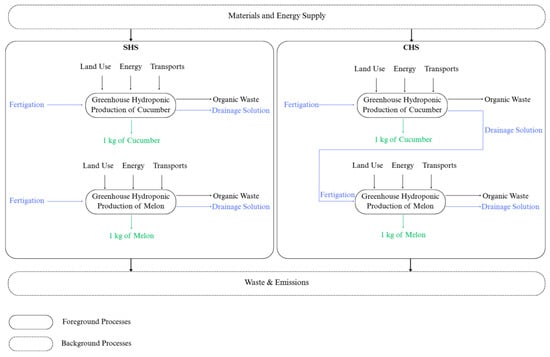
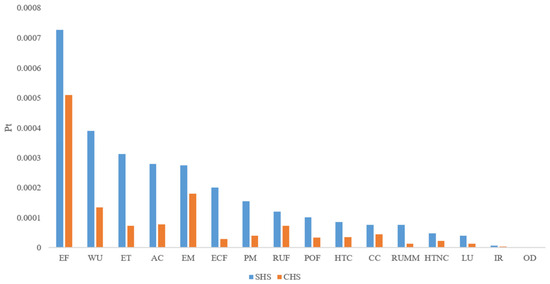
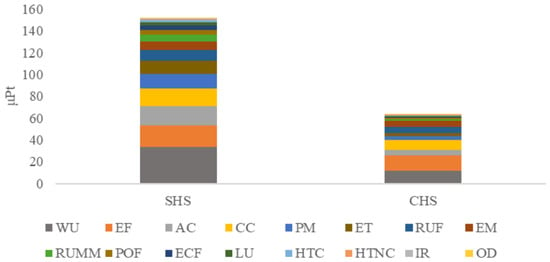
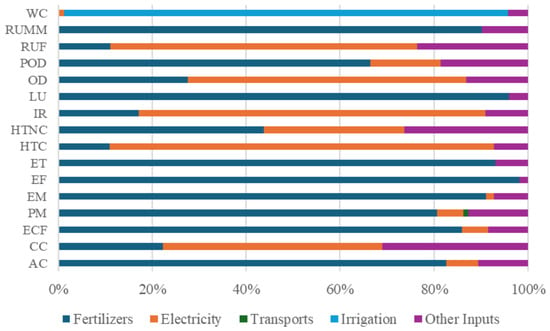
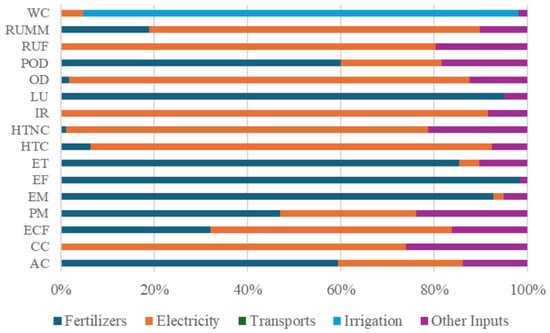
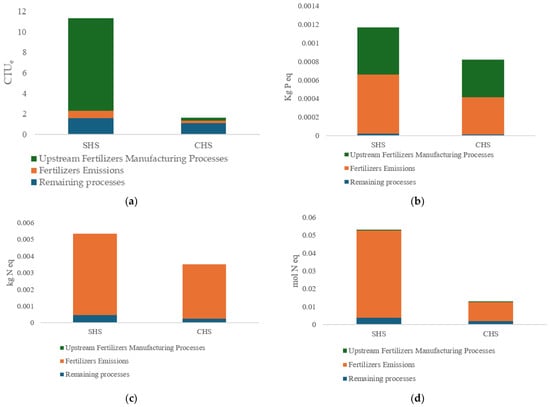
Conventional hydroponic systems, although resource-efficient, face significant sustainability challenges due to the discharge of nutrient-rich effluents, resulting in severe environmental pressures. In alignment with the European Union’s “Farm to Fork” strategy, innovative circular economy approaches are required to decouple crop production from environmental degradation. This study evaluates a novel Cascade Hydroponic System (CHS), designed to maximize resource utility by recovering and reusing the drainage from a primary salt-sensitive crop (cucumber) to a secondary, more salt-tolerant cultivation (melon). A comparative Life Cycle Assessment (LCA) is performed in accordance with the Product Environmental Footprint Category Rules (PEFCRs), utilizing primary operational data and direct monitoring of nutrient concentrations in the system’s effluent. The convergence of these elements establishes the novelty of this study. The CHS is benchmarked against a conventional Separated Hydroponic System (SHS) for a functional unit (FU) defined as “the simultaneous production of 1.0 kg of cucumber and 1.0 kg of melon”. The CHS demonstrated lower characterized impacts compared to SHS across all 16 assessed Environmental Footprint categories under the examined pilot-scale conditions. The key findings include reductions of 65.7%, 41.8%, and 30% in Water Use, Climate Change, and Freshwater Eutrophication scores, respectively. Based on the normalization results, the CHS revealed a 58% lower total environmental footprint score compared to SHS. Process contribution analysis indicates that the marked decrease in the environmental burden is associated with the use of fertilizers. While these inputs represent a significant share of the conventional system’s impact scores, their contribution was substantially lower in the CHS. Although based on pilot-scale operational data from a single crop cycle, the results highlight the considerable environmental potential of cascading nutrient reuse configurations, thus enhancing resource use efficiency and mitigating the associated environmental impacts while also contributing novel empirical knowledge to a field that has been limitedly studied.
Full article
(This article belongs to the Special Issue Sustainable Horticulture: Innovations in Crop Production and Resource Management)
►▼
Show Figures

Figure 1
Open AccessArticle
Life Cycle Assessment of Bio-Based Ethers and Esters: Synthesis from Waste Biomass and Application in Extraction Processes
by
Elisabetta Pigni, Daniele Cespi, Paola Galletti, Pietro Rodolfo Natale, Igor Terrarossa, Chiara Samorì and Serena Righi
Sustainability 2026, 18(11), 5476; https://doi.org/10.3390/su18115476 (registering DOI) - 29 May 2026
Abstract
Bio-based solvents are often claimed to make the processes in which they are used more sustainable from an environmental point of view; such claims usually come from their bio-based origin or their safety profile, which is sometimes better than that of fossil-based solvents.
[...] Read more.
Bio-based solvents are often claimed to make the processes in which they are used more sustainable from an environmental point of view; such claims usually come from their bio-based origin or their safety profile, which is sometimes better than that of fossil-based solvents. Herein, we intended to deepen the environmental sustainability of the synthesis of two bio-based esters (γ-valerolactone and ethyl lactate) and two bio-based ethers (2-methyl tetrahydrofuran and cyclopentyl methyl ether) from a life cycle perspective. To this purpose, a Life Cycle Assessment (LCA) was first carried out to compare the environmental impacts of the four bio-based solvent syntheses with those of six fossil-based solvents that they could potentially replace. The assessment was then extended to evaluate the potential benefits of their application in two processes: the extraction of polyethylene from multilayer plastic waste and the extraction of polyhydroxyalkanoates from bacteria. The impacts associated with the synthesis of the four bio-based solvents were substantially higher than those of fossil-based solvents. These higher impacts translate into poorer environmental performance when bio-based solvents were used in the polyethylene extraction processes but not when they were applied to the polyhydroxyalkanoate extraction. These results suggest that the feedstock renewability alone may not be sufficient to improve the sustainability of chemical processes, mainly because of the challenges associated with converting biomass into useful chemicals. Nevertheless, it should be noted that the bio-based routes were largely reconstructed from literature sources and laboratory-scale experiments, while the fossil-based references are based on mature industrial datasets.
Full article
(This article belongs to the Topic Green and Sustainable Chemical Products and Processes)
Open AccessArticle
Digitalisation and Entrepreneurial Ecosystems as Drivers of Energy Start-Ups: Evidence from Cross-Country Panel Data
by
Maksym W. Sitnicki, Bożena Iwanowska, Yan Kapranov, Jurij Klapkiv, Oleksandr Dluhopolskyi, Valentyna Panasyuk and Dmytro Halynskyi
Sustainability 2026, 18(11), 5475; https://doi.org/10.3390/su18115475 (registering DOI) - 29 May 2026
Abstract
The accelerating energy transition and digital transformation have increased the importance of understanding the drivers of energy-related entrepreneurship and investment across countries. This study aims to investigate how digitalisation and entrepreneurial ecosystem development influence the number and funding of energy-related start-ups, with particular
[...] Read more.
The accelerating energy transition and digital transformation have increased the importance of understanding the drivers of energy-related entrepreneurship and investment across countries. This study aims to investigate how digitalisation and entrepreneurial ecosystem development influence the number and funding of energy-related start-ups, with particular attention to stage-specific effects, lagged dynamics, and non-linear relationships in a cross-country panel setting. The analysis is based on panel data from the European Commission (DESI), the International Energy Agency, and StartupBlink, covering 25 countries (2017–2022) and a global sample (2019–2023), and is estimated using Poisson pseudo-maximum likelihood models with fixed effects, lagged variables, and non-linear specifications in R. The findings show that digitalisation has a limited, selective relationship with energy-related entrepreneurship, whereas entrepreneurial ecosystem development plays a more consistent role. Digital connectivity is associated mainly with improved early-stage funding conditions, whereas broader digitalisation indicators do not systematically explain start-up formation. Stronger entrepreneurial ecosystems are linked to both higher green start-up activity and a shift in investment from early-stage ventures to more mature digital energy firms. The non-linear results further suggest diminishing returns to ecosystem development in later-stage green funding, indicating potential saturation effects in highly developed ecosystems. These findings suggest that policies aimed at accelerating sustainable energy entrepreneurship should go beyond general digitalisation strategies and focus more directly on strengthening inclusive entrepreneurial ecosystems, improving access to finance across the start-up lifecycle, and preventing excessive investment concentration in already mature ventures.
Full article
(This article belongs to the Special Issue Digital Economy Transformation: Driving Sustainability Through Innovative Management)
Open AccessArticle
Compound and Consecutive Extreme Events in Salzburg Under Different Climate Change Scenarios: Combining Stakeholder Insights with Future Climate Model Projections
by
Marianne Bügelmayer-Blaschek, Barry Evans, Romana Berg, Kristofer Hasel and Albert S. Chen
Sustainability 2026, 18(11), 5474; https://doi.org/10.3390/su18115474 (registering DOI) - 29 May 2026
Abstract
Compound and consecutive extreme events are increasingly understood as key contributors to climate risk, as their interactions can intensify impacts beyond those produced by individual hazards alone threatening the long-term sustainability of regional infrastructure. Compound coincident events involve multiple climate drivers or hazards
[...] Read more.
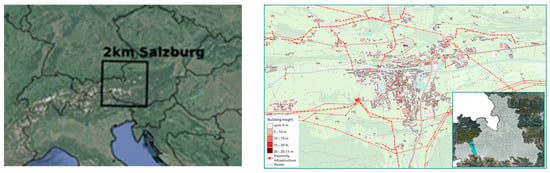
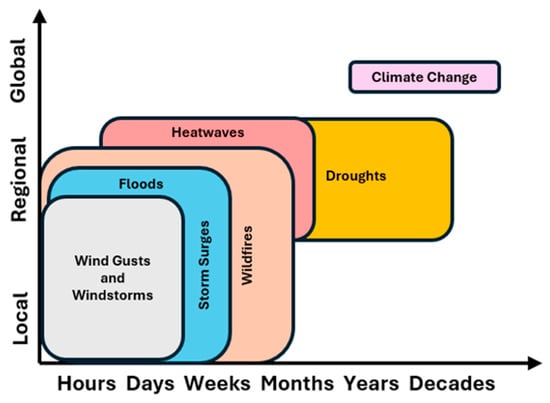
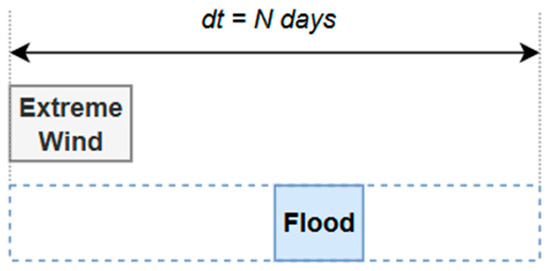
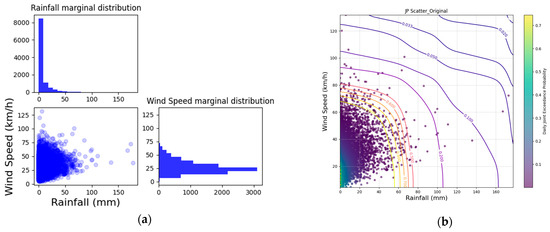
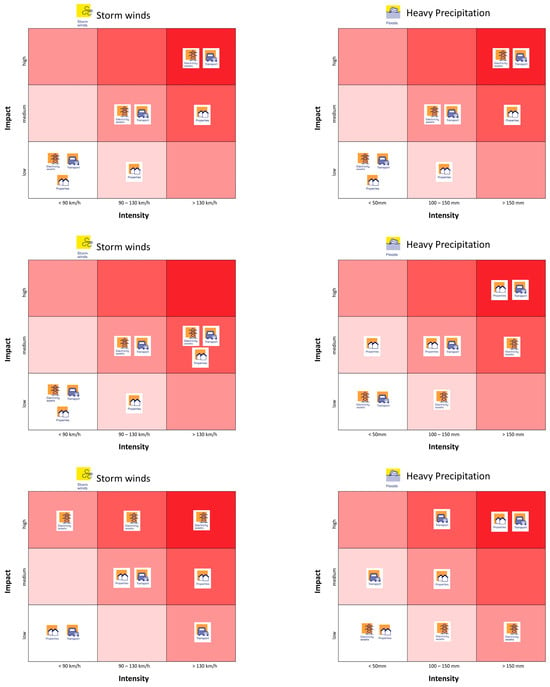
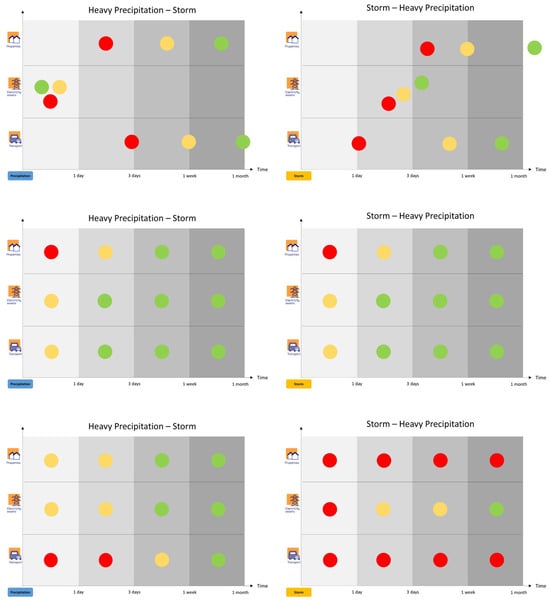
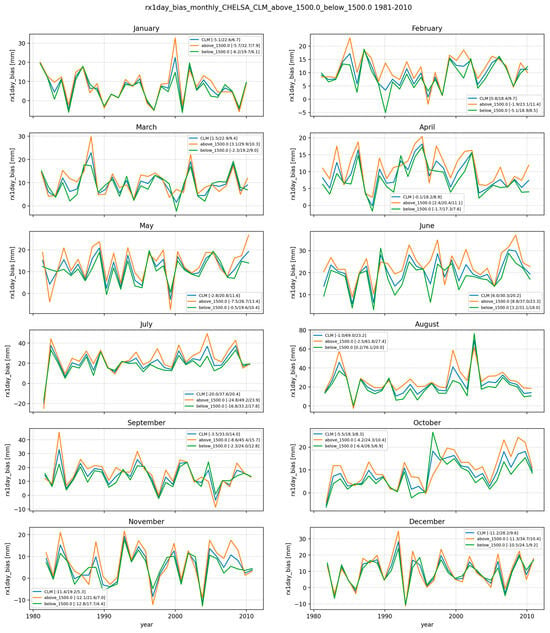
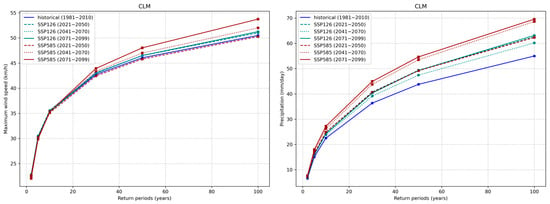
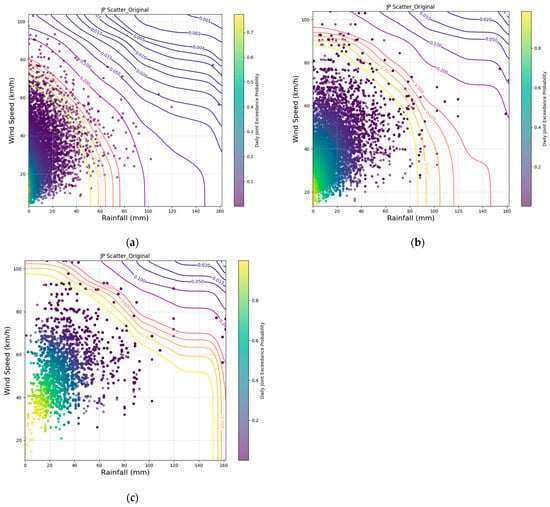
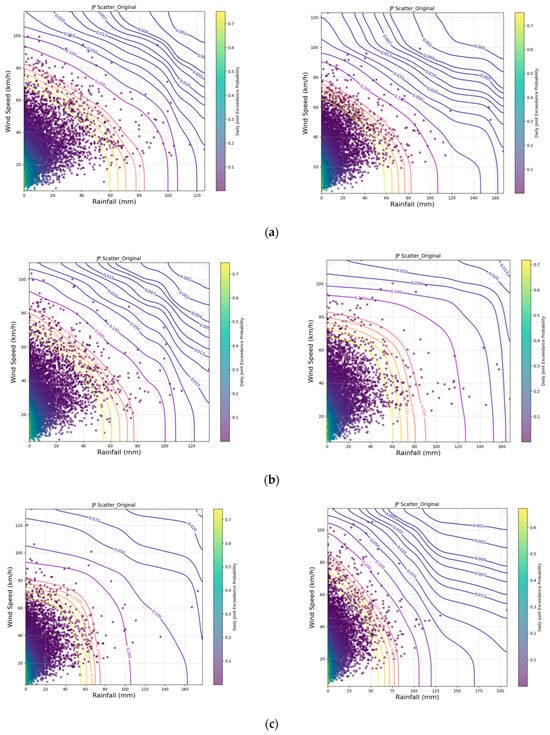
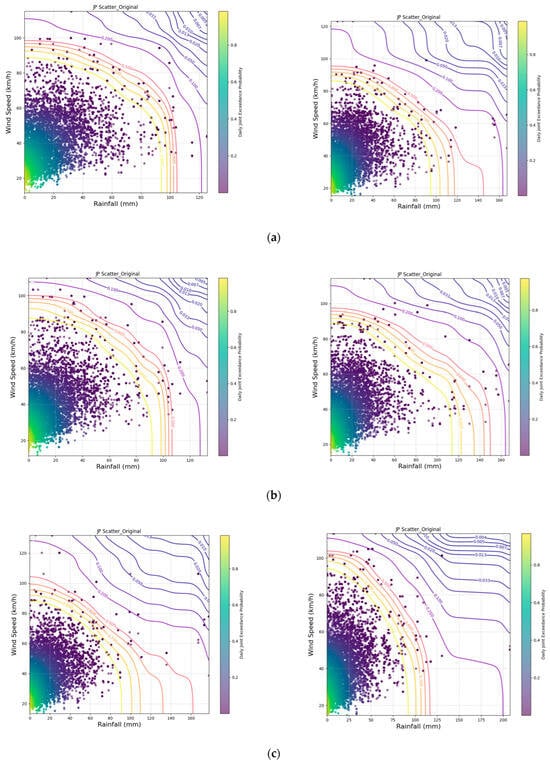
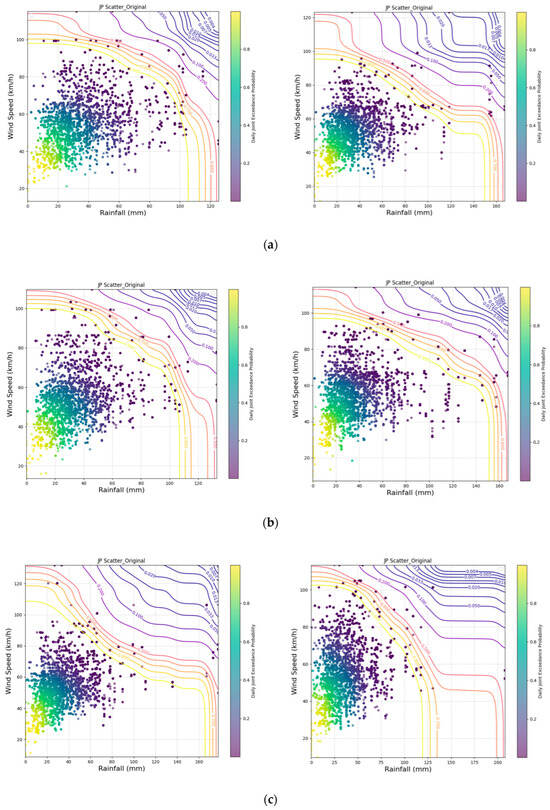
Compound and consecutive extreme events are increasingly understood as key contributors to climate risk, as their interactions can intensify impacts beyond those produced by individual hazards alone threatening the long-term sustainability of regional infrastructure. Compound coincident events involve multiple climate drivers or hazards that occur simultaneously or in close temporal proximity, exhibiting overlapping spatial and temporal characteristics. For assessing multi-hazards, information on critical thresholds of the events investigated (extreme precipitation and wind gusts in the presented study) is key, as is the time frame needed to determine the probability of event B after an event A. As this data is location-specific, stakeholder integration provides a potential tool for gathering this information to enable socially robust disaster risk management. The presented study displays a potential interdisciplinary approach to how multi-hazards and their occurrence can be investigated locally. Therefore, stakeholder integration is combined with climate model output and a copula-based analysis of compound coincident and consecutive extreme daily wind and precipitation events for the Salzburg region under different climate change scenarios (SSP1-2.6, SSP5-8.5). Through stakeholder integration, relevant thresholds and potential time frames were identified. Our findings indicate that the thresholds critical to the considered assets (properties, transport, energy) are well aligned between different stakeholders; however, the time frame of increased vulnerability due to a previous event differs strongly between them. Compared to the baseline scenarios, the ranges within the climate model used for rainfall and wind speed intensity under SSP1-2.6 and SSP5-8.5 scenarios are examined, and, for rainfall, have expanded to greater values for both compound coincident and consecutive events, highlighting challenges and future research needs for sustainable adaptation and regional policy.
Full article
(This article belongs to the Special Issue Improving Climate Resilience of Critical Asset: Asset-Level Modelling to Achieve A Better Understanding of Climate-Related Impacts)
►▼
Show Figures

Figure 1
Open AccessArticle
Supply Chain Finance and Corporate Zero-Carbon Transition: An Empirical Study from China
by
Chenting Wang and Guoping Ding
Sustainability 2026, 18(11), 5473; https://doi.org/10.3390/su18115473 (registering DOI) - 29 May 2026
Abstract
This study examines the impact of supply chain finance on corporate zero-carbon transition using data from Chinese A-share listed companies from 2008 to 2023. Through text analysis, this study constructs a corporate zero-carbon transition index containing 285 keywords and a supply chain finance
[...] Read more.
This study examines the impact of supply chain finance on corporate zero-carbon transition using data from Chinese A-share listed companies from 2008 to 2023. Through text analysis, this study constructs a corporate zero-carbon transition index containing 285 keywords and a supply chain finance indicator based on a specialized dictionary. The results show that supply chain finance significantly promotes corporate zero-carbon transition, and the findings remain robust after a series of robustness and endogeneity tests. Further analysis indicates that the promoting effect is more pronounced among non-heavy-polluting firms, firms located in eastern regions, and firms with relatively weaker bargaining power within supply chains. Mechanism analysis reveals that supply chain finance mainly facilitates zero-carbon transition by alleviating financing constraints, stimulating green technological innovation, and improving green supply chain management practices. It should be noted that the text-based indicators primarily reflect firms’ strategic disclosures and may not fully capture the actual implementation of zero-carbon practices. Overall, this study provides empirical evidence on the green governance role of supply chain finance and offers policy implications for advancing coordinated decarbonization across supply chains.
Full article
Open AccessArticle
From Participation to Advocacy: How Reward and Gameful Experience Influence Users’ Advocacy Intention in the Carbon Generalized System of Preferences
by
Zhuoran Ma, Lingling Wang, Xiangting Li, Hebin Yun and Shang Zhang
Sustainability 2026, 18(11), 5472; https://doi.org/10.3390/su18115472 (registering DOI) - 29 May 2026
Abstract
As climate governance increasingly shifts toward consumption-side intervention, digital platforms such as the Carbon Generalized System of Preferences have become important tools for promoting low-carbon behavior. However, existing studies have mainly focused on participation and engagement, paying limited attention to users’ advocacy intentions.
[...] Read more.
As climate governance increasingly shifts toward consumption-side intervention, digital platforms such as the Carbon Generalized System of Preferences have become important tools for promoting low-carbon behavior. However, existing studies have mainly focused on participation and engagement, paying limited attention to users’ advocacy intentions. Drawing on the perceived value perspective and Social Exchange Theory, this study examines how perceived rewards and gameful experiences influence advocacy intentions through perceived benefits and low perceived costs. A three-wave survey of Chinese respondents was analyzed using Partial Least Squares Structural Equation Modeling (PLS-SEM) and Fuzzy-set Qualitative Comparative Analysis (fsQCA). The results show that perceived rewards enhance perceived benefits, while gameful experiences increase perceived benefits and reduce users’ actual perceived burden. In turn, perceived benefits and lower perceived costs both promote advocacy intentions. The mediation analysis confirms the important roles of perceived benefits and low perceived costs, while the fsQCA results identify three distinct configurations leading to high advocacy intentions. This study extends CGSP research from participation to advocacy and offers practical implications for designing digital low-carbon platforms.
Full article
(This article belongs to the Section Sustainable Management)
Open AccessArticle
Exploring the Feasibility, Challenges, and Limitations of the URBAIR® Second-Generation Gaussian Model for Sustainable Regional Air Quality Simulations
by
João Basso, Sílvia Coelho, Vera Rodrigues, Bruno Augusto, Hélder Relvas, Daniel Graça, Myriam Lopes, Ana Isabel Miranda and Joana Ferreira
Sustainability 2026, 18(11), 5471; https://doi.org/10.3390/su18115471 (registering DOI) - 29 May 2026
Abstract
Ambient air pollution remains a major public health concern, contributing to millions of premature deaths worldwide according to the World Health Organization. Regional air quality assessments are commonly performed using chemical-transport models that require substantial computational resources due to their detailed representation of
[...] Read more.
Ambient air pollution remains a major public health concern, contributing to millions of premature deaths worldwide according to the World Health Organization. Regional air quality assessments are commonly performed using chemical-transport models that require substantial computational resources due to their detailed representation of atmospheric processes. This study explores the feasibility of applying the second-generation dispersion model URBAIR® as a computationally efficient alternative for long-term regional air quality simulations. URBAIR® was implemented for three European case studies within the DISTENDER project to simulate particulate matter (PM10) and nitrogen dioxide (NO2) concentrations for 2018 under different spatial and temporal resolutions. Model performance was assessed against background monitoring stations and compared across grid configurations. The results show that the model successfully reproduces annual mean concentration patterns, particularly in urban areas, with R2 values ranging mostly between 0.2–0.6, RMSE between 16–36 µg.m−3, and mean bias from −8 to 5 µg.m−3, indicating overall acceptable statistical performance. Within the specific configurations evaluated in this study, increasing spatial resolution was not consistently associated with improved model performance. However, because spatial resolution covaried with other factors including meteorological temporal resolution, domain characteristics, and monitoring station density, the present analysis does not allow the independent effect of spatial resolution to be isolated. Moreover, a key limitation of the modeling approach is the absence of chemical transformation processes, which may affect the representation of secondary pollutants. Overall, the dispersion-based modeling framework substantially reduces computational demand and input complexity, proving suitable for long-term exposure and climate-related applications when annual average concentrations are the primary objective. In future studies, the modeling approach should be applied to other case studies to consolidate the findings of this exploratory work so that it may contribute to sustainability-oriented decision making by facilitating regional assessments of air quality and potential health impacts related to climate change.
Full article
(This article belongs to the Special Issue Research Trends in Urban Air Quality, Climate and Pollution)
Open AccessArticle
Automation and Robotization for Enhancing Occupational Safety, Ergonomics, and Social Sustainability in Plastic Crate Production Processes
by
Roksana Pawełczyk, Patrycja Kabiesz, Grażyna Płaza and Mohammad Gheibi
Sustainability 2026, 18(11), 5470; https://doi.org/10.3390/su18115470 (registering DOI) - 29 May 2026
Abstract
This study investigates the impact of selected automation scenarios on occupational safety, ergonomics, and operational performance in a plastic crate production workstation. The research focuses on a specific case from the discrete manufacturing sector and aims to develop an integrated analytical framework combining
[...] Read more.
This study investigates the impact of selected automation scenarios on occupational safety, ergonomics, and operational performance in a plastic crate production workstation. The research focuses on a specific case from the discrete manufacturing sector and aims to develop an integrated analytical framework combining ergonomic assessment with process simulation for the evaluation of organizational and technological improvements in manual handling operations. This study applies a simulation-based production model developed in the DBR77 discrete-event simulation environment to analyze alternative workstation configurations. The assessment framework integrates Ishikawa analysis for root-cause identification and the RULA and REBA methods for ergonomic risk evaluation. The investigated workstation was characterized by repetitive manual handling activities, awkward working postures, and increased physical workload associated with palletizing and transport operations. Several organizational and technological variants were analyzed, including additional operator support, robot-assisted palletizing, conveyor integration, and automated guided vehicle (AGV) transport. The simulation results indicated that the AGV-supported configuration achieved the shortest cycle time (1270 s per batch of 30 units), whereas the robot-assisted variant resulted in the longest cycle time (1520 s). Ergonomic assessment showed a reduction in RULA scores from 6–7 to 3–4 and REBA scores from 8–10 to 4–5 in the automated scenarios. The contribution of this study lies in the integration of ergonomic risk assessment and discrete-event simulation within a unified evaluation framework for workstation redesign in discrete manufacturing environments. The findings demonstrate how simulation-supported analysis can support decision-making regarding the balance between manual labor and automation under specific operational conditions. Due to the single-case-study design, the results should be interpreted as context-specific and exploratory rather than directly generalizable to all manufacturing systems.
Full article
(This article belongs to the Section Sustainable Engineering and Science)
Open AccessArticle
Operationalising SDGs in India’s Built Environment: Synergies and Structural Divergences Between Circular Economy and Green Building
by
Usha Iyer-Raniga, Janappriya Jayawardana and Akvan Gajanayake
Sustainability 2026, 18(11), 5469; https://doi.org/10.3390/su18115469 (registering DOI) - 29 May 2026
Abstract
Circular economy (CE) and green building (GB) are playing increasingly prominent roles in operationalising the Sustainable Development Goals (SDGs) within the built environment, including in rapidly urbanising Global South contexts such as India. Although often assumed to be complementary, their integration remains insufficiently
[...] Read more.
Circular economy (CE) and green building (GB) are playing increasingly prominent roles in operationalising the Sustainable Development Goals (SDGs) within the built environment, including in rapidly urbanising Global South contexts such as India. Although often assumed to be complementary, their integration remains insufficiently examined, particularly in terms of their structural alignment and divergence. This study investigates the synergies and structural divergences between CE and GB through an empirical and analytical approach grounded in the Indian built environment sector. Qualitative data were collected from a multi-stakeholder participatory workshop with built environment practitioners in India and through follow-up interviews and analysed using qualitative content analysis to identify patterns in how these approaches are interpreted and applied in a participatory setting. The findings indicate that GB predominantly engages SDGs through performance-oriented, asset-level interventions, while CE operates through system-level strategies focused on material circulation and value-chain transformation. Although areas of convergence are evident, particularly in relation to SDGs 11 and 12, important structural divergences emerge across three key dimensions: scale, temporality, and underlying mental models. These divergences influence how sustainability interventions are framed and implemented with SDG targets. The alignment of CE and GB requires systemic reforms that incorporate circularity criteria within building rating systems, align CE and GB within unified regulatory and procurement frameworks, and embed systems thinking and life cycle approaches within professional education to translate CE from a conceptual framework into an operational paradigm in the built environment.
Full article
(This article belongs to the Special Issue Synergistic Approaches to Energy Transition, Circular Economy and the Sustainable Development Goals (SDGs))
Open AccessArticle
Composition and Spatial Distribution of Biodiversity-Based Biofactories in Brazilian Amazonia
by
Diego Oliveira Brandão, Julia Arieira, J. Marion Adeney, Gabriel Sperandeo, Camila Duarte Ritter, Pedro Aurélio Costa Lima Pequeno, Lauro Euclides Soares Barata and Carlos Afonso Nobre
Sustainability 2026, 18(11), 5468; https://doi.org/10.3390/su18115468 (registering DOI) - 29 May 2026
Abstract
Understanding the composition and spatial distribution of Amazonia’s bioindustry enterprises is essential for sustainable development. Based on an analysis of primary and secondary data, we offer a preliminary overview of biodiversity-based biofactories, which transform raw materials derived from Amazonian biodiversity into industrialized products,
[...] Read more.
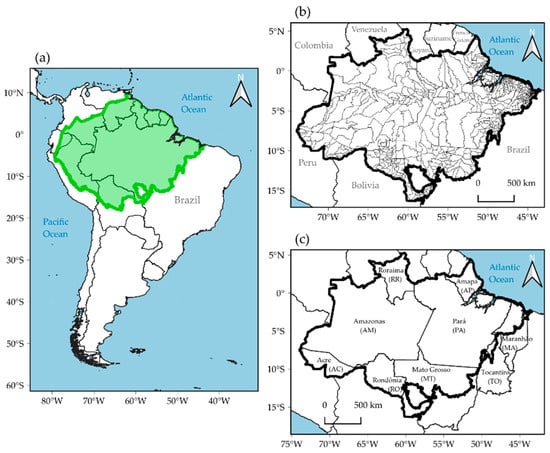
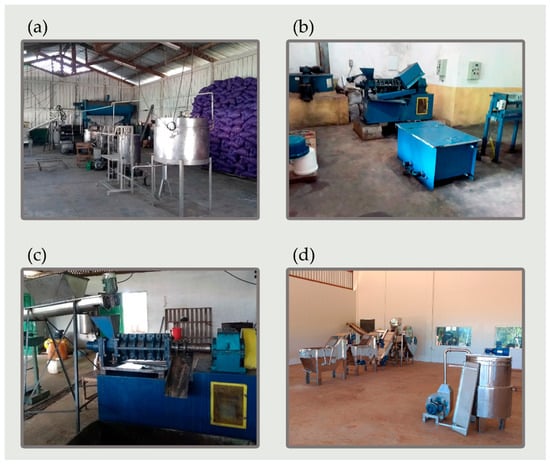
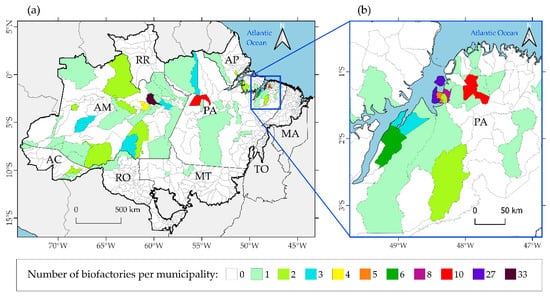
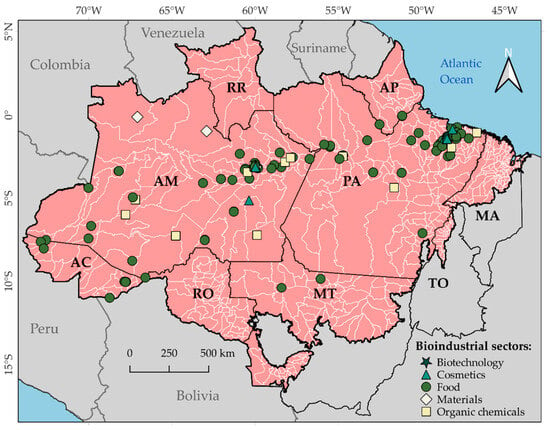
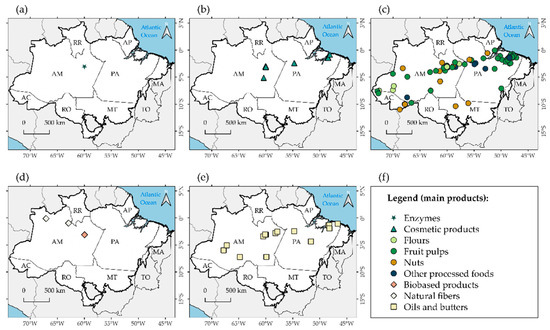
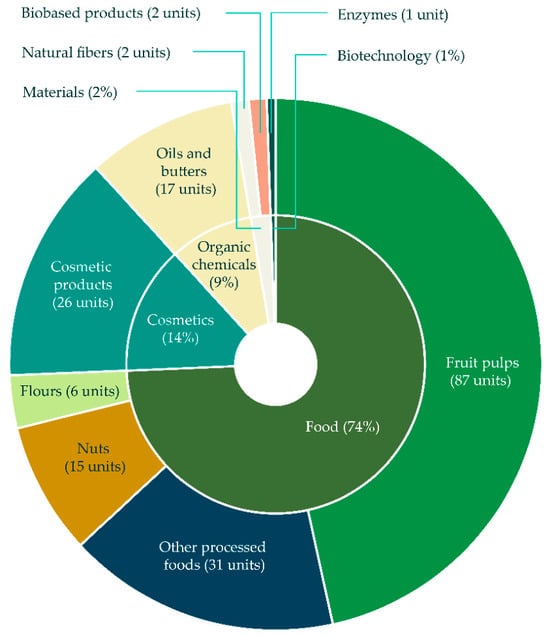
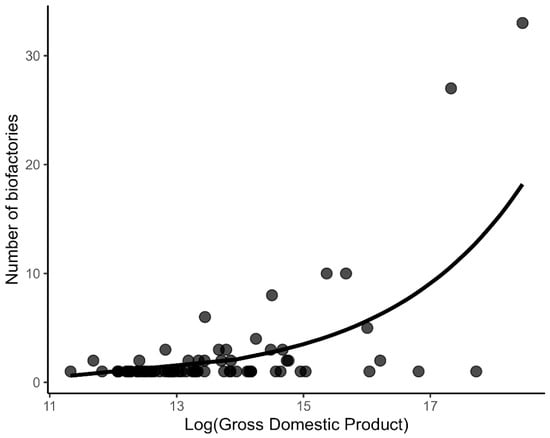
Understanding the composition and spatial distribution of Amazonia’s bioindustry enterprises is essential for sustainable development. Based on an analysis of primary and secondary data, we offer a preliminary overview of biodiversity-based biofactories, which transform raw materials derived from Amazonian biodiversity into industrialized products, in Brazilian Amazonia. Of the 187 biofactories we identified, most operate in the food sector (74%), followed by cosmetics (14%) and organic chemicals (9%). Records identified biofactories in 72 of the study area’s 559 municipalities. Fifty percent of biofactories are in the municipalities of Manaus, Belém, Castanhal, Santarém, Benevides, and Igarapé-Miri, which together hold 18% of the study area’s population. Conversely, none were identified in the consulted sources for 487 municipalities, comprising 62% of the study area’s population—about 14 million people. Statistical modeling among municipalities with identified units revealed a positive association between municipal gross domestic product and biofactory abundance. While some units may be undetected because they operate outside formal networks, the available records suggest that these businesses are geographically unevenly distributed and mostly of low technological intensity. Moreover, a significant portion of the population may lack direct access to local industrial infrastructure for processing biodiversity resources, highlighting potential territorial inequalities in regional processing capacity.
Full article
(This article belongs to the Section Development Goals towards Sustainability)
►▼
Show Figures

Figure 1
Open AccessArticle
Assessment of Battery-Integrated Hybrid Wind–Solar Plants: A Spanish Case Study
by
Santiago Alonso-del-Viejo, Juan José Graña-Magariños, Isabel C. Gil-García and Ana Fernández-Guillamón
Sustainability 2026, 18(11), 5467; https://doi.org/10.3390/su18115467 (registering DOI) - 29 May 2026
Abstract
The increasing penetration of variable renewable energy sources requires flexible solutions to ensure system stability and economic efficiency. In this context, this study presents a comprehensive assessment of hybrid plants combining wind farms (WF) and photovoltaic (PV) systems integrated with battery energy storage
[...] Read more.
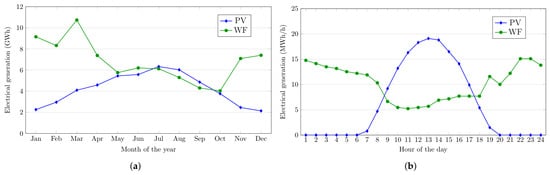
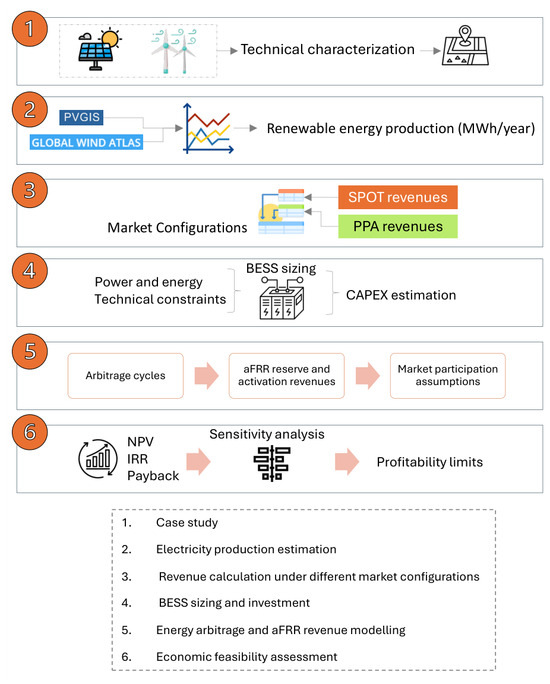
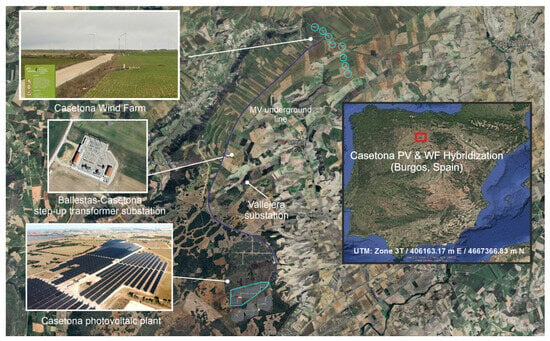
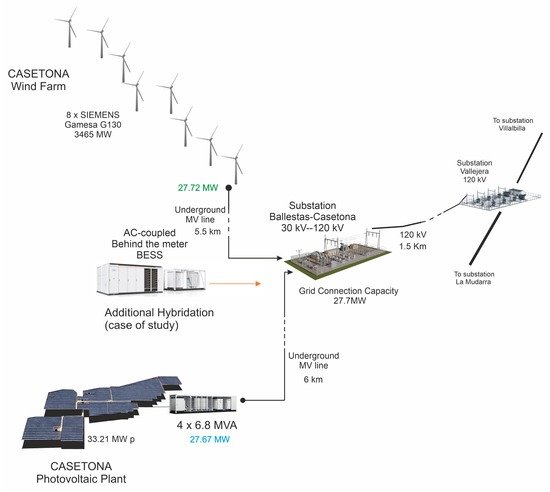
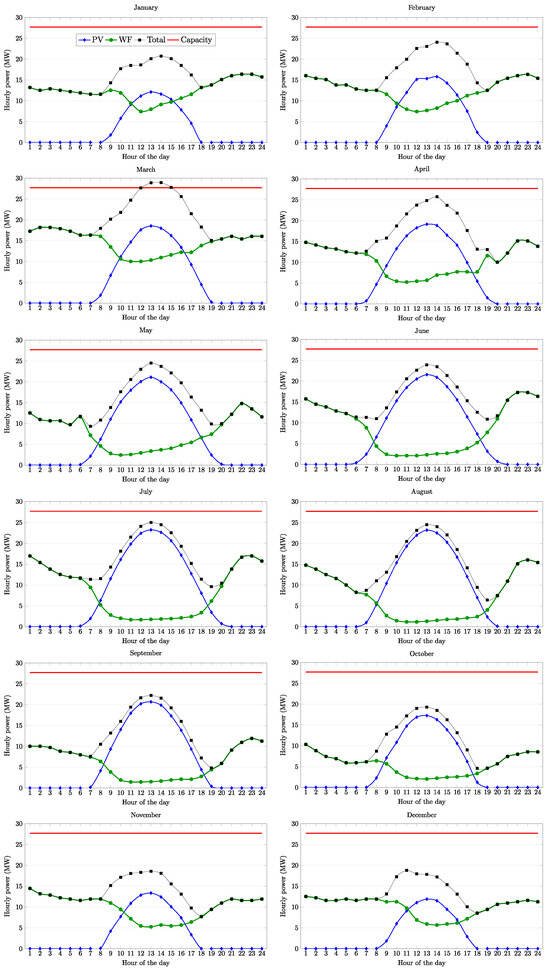
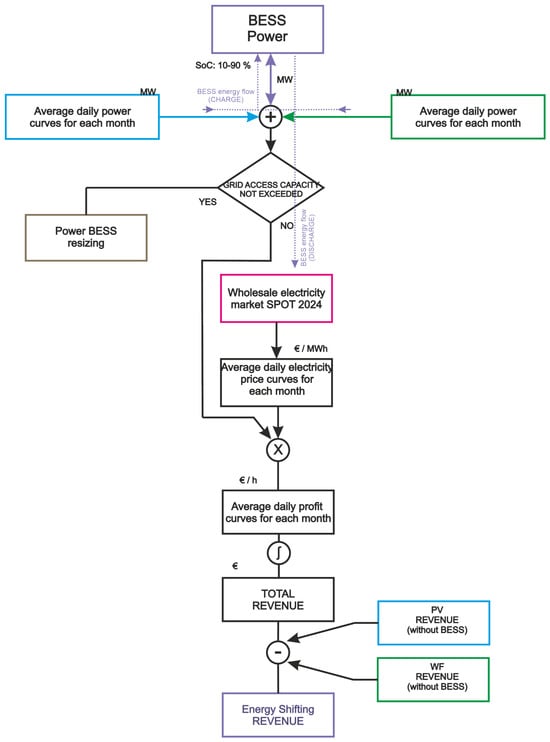
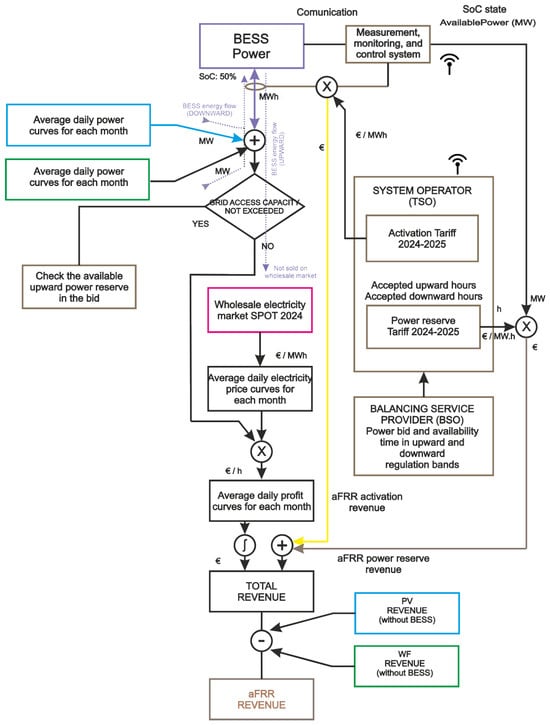
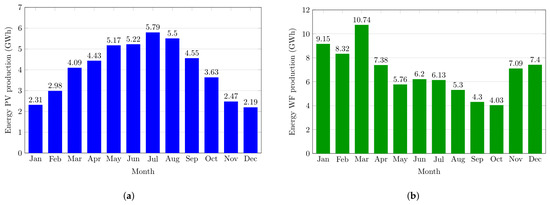
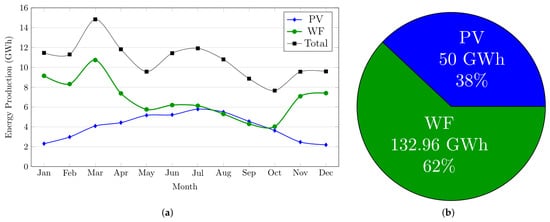
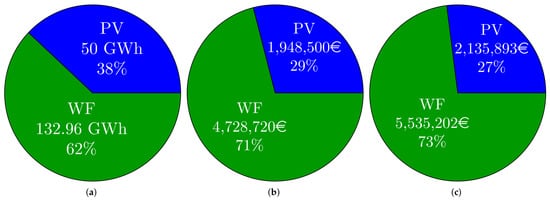
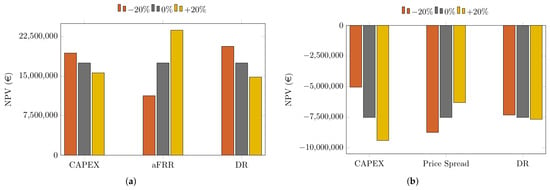
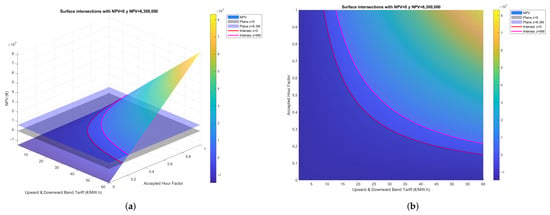
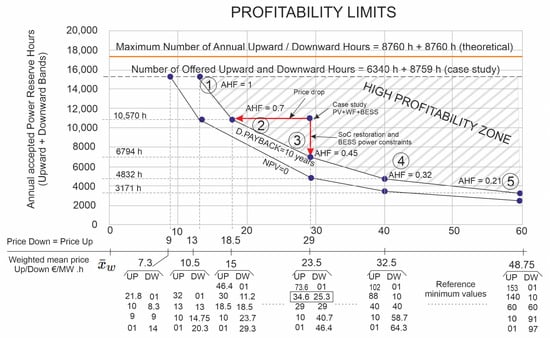
The increasing penetration of variable renewable energy sources requires flexible solutions to ensure system stability and economic efficiency. In this context, this study presents a comprehensive assessment of hybrid plants combining wind farms (WF) and photovoltaic (PV) systems integrated with battery energy storage systems (BESS), using the Casetona project in Spain as a real-world study. Three configurations (PV + WF + BESS, PV + BESS, and WF + BESS) are evaluated based on 2024 operational data combined with simulation tools. Under the assumptions of this study (2024 data, Spanish market), the results indicate that WF generation outperforms PV, mainly due to higher capacity factors and better alignment with high-price periods, while PV output is affected by price cannibalization. Under current Spanish market conditions and at the assumed BESS cost (236 €/kWh), energy arbitrage is not economically viable, yielding negative net present value across all configurations. In contrast, participation in automatic frequency restoration reserve services provides higher revenues under current Spanish market conditions, with the WF + BESS configuration achieving the best performance. From the perspective adopted in this study, the sustainability analysis reveals that the hybrid system enables annual greenhouse gas emissions reductions between 13,695 and 49,195 , depending on the displaced generation source. Although BESS does not directly reduce emissions, it enhances renewable integration, reduces curtailment, and improves grid flexibility. The results also highlight the importance of regulatory frameworks and market design in determining the economic viability of storage systems. While the quantitative results are specific to the case study and sensitive to regulatory parameters, this study provides a comprehensive and transferable methodology for evaluating hybrid renewable systems with storage, supporting informed decision-making in the transition toward low-carbon and resilient energy systems.
Full article
(This article belongs to the Section Energy Sustainability)
►▼
Show Figures

Figure 1
Open AccessEssay
Spatial and Temporal Evolution of Human–Land Relationships and the Factors Driving Them in Northeast China
by
Meiyu Yang, Jiping Liu and Dandan Zhao
Sustainability 2026, 18(11), 5466; https://doi.org/10.3390/su18115466 (registering DOI) - 29 May 2026
Abstract
The relationship between humans and the land has always been a topic in geographical studies. Northeast China, one of the regions with the shortest history in China, is also one of the regions most representative of changes in human–land relationships. However, scholars have
[...] Read more.
The relationship between humans and the land has always been a topic in geographical studies. Northeast China, one of the regions with the shortest history in China, is also one of the regions most representative of changes in human–land relationships. However, scholars have rarely conducted quantitative region-scale research on the dynamic changes in, and drivers of, human–land relationships in this region. This study utilizes Landsat remote sensing imagery to identify changes in the distribution of land use types in Northeast China from 1985 to 2022. By constructing a human–land coordination model, it measures the intensity of human activity and levels of human–land coordination, analyzes their spatiotemporal dynamic characteristics, and further uses the Geodetector model to explore the factors driving and interactions influencing this evolution. (1) The results show that, from 1985 to 2022, the level of human–land coordination in Northeast China generally exhibited a spatial distribution pattern decreasing from northwest to southeast. The area of imbalanced human–land relationships continuously decreased, while coordinated areas steadily increased, indicating gradual improvement in human–land relations. The predominant type of coordination was moderate imbalance, with high imbalance as a secondary level. (2) The results also demonstrate that population size, GDP, and tertiary industry output have significant explanatory power regarding levels of human–land coordination. The importance of economic development level, natural resource endowment, and natural environmental characteristics to the evolution of human–land has progressively increased.
Full article
Journal Menu
► ▼ Journal Menu-
- Sustainability Home
- Aims & Scope
- Editorial Board
- Reviewer Board
- Topical Advisory Panel
- Early Career Editorial Board
- Instructions for Authors
- Special Issues
- Topics
- Sections & Collections
- Article Processing Charge
- Indexing & Archiving
- Editor’s Choice Articles
- Most Cited & Viewed
- Journal Statistics
- Journal History
- Journal Awards
- Society Collaborations
- Conferences
- Editorial Office
Journal Browser
► ▼ Journal BrowserHighly Accessed Articles
Latest Books
E-Mail Alert
News
Topics
Topic in
Materials, Mining, Recycling, Resources, Sustainability, Minerals, Geosciences, Environments
Sustainable Recycling and Reuse of Industrial By-Products or Waste from Geo-Resource Exploitation
Topic Editors: Sossio Fabio Graziano, Rossana Bellopede, Giovanna Antonella Dino, Nicola CaredduDeadline: 30 May 2026
Topic in
ChemEngineering, Chemistry, Energies, Processes, Sustainability, Technologies
Advances in Green Energy and Energy Derivatives
Topic Editors: Muhammad Sajid, Nisar Ali, Muhammad Farooq, Mairui ZhangDeadline: 20 June 2026
Topic in
Batteries, Energies, Processes, Sustainability
Advanced Battery Thermal Management Solution for Electric Vehicles, 2nd Edition
Topic Editors: Hamidreza Behi, Masud Behnia, Danial KarimiDeadline: 30 June 2026
Topic in
Businesses, Economies, Humanities, Land, Sustainability, Tourism and Hospitality, Urban Science
Human–Environmental Relations: Ecotourism and Sustainability
Topic Editors: Tamara Gajić, Minja Bolesnikov, Aleksandar ErcegDeadline: 15 July 2026
Conferences
Special Issues
Special Issue in
Sustainability
Atmospheric Pollution and Microenvironmental Air Quality
Guest Editors: Hui Chen, Lan YaoDeadline: 30 May 2026
Special Issue in
Sustainability
The Role of Industry 4.0 in Advancing Circular Economy and Sustainability
Guest Editors: Marco Marconi, Giorgia PietroniDeadline: 30 May 2026
Special Issue in
Sustainability
The Future of Renewable Energy: The Role of Solar Power in Sustainable Development
Guest Editors: Stefania Perrella, Daniela CironeDeadline: 30 May 2026
Special Issue in
Sustainability
Sustainable Engineering Trends and Challenges Toward Industry 4.0
Guest Editors: Andreea Cristina Ionica, Jose MachadoDeadline: 30 May 2026
Topical Collections
Topical Collection in
Sustainability
The Social Influence of Emotions on Sustainability
Collection Editor: Arik Cheshin
Topical Collection in
Sustainability
Digital Economy and Sustainable Development
Collection Editors: Weixin Yang, Yunpeng Yang
Topical Collection in
Sustainability
Cultural Crossovers and Social Sustainability
Collection Editor: Pier Sacco
Topical Collection in
Sustainability
Green Building Technologies
Collection Editors: Steve Kardinal Jusuf, Chew Beng Soh